Results by title
4743 books match the query 'Religion' and 1168 start with t
The One and Only Law
Walter Benjamin and the Second CommandmentJames R. Martel
University of Michigan Press, 2014
The One by Whom Scandal Comes
René Girard (Translated by M. B. DeBevoise)
Michigan State University Press, 2014
The One, the Many, and the Trinity
Joseph A. Bracken and the Challenge of Process MetaphysicsMarc A. Pugliese
Catholic University of America Press, 2011
The Only True God
Early Christian Monotheism in Its Jewish ContextJames F. McGrath
University of Illinois Press, 2012
The Open Door
A Passover HaggadahRabbi Sue Levi Elwell
Central Conference of American Rabbis, 2002
The Opuscula and the Dispute with Pyrrhus
The Theological and Polemical WorksKevin M. St. Maximus the Confessor
Catholic University of America Press, 2026
The Origin and Development of the Pueblo Katsina Cult
E. Charles Adams
University of Arizona Press, 1991
The Origins of Catholic Evolutionism, 1831-1950
Kenneth W. Kemp
Catholic University of America Press, 2025
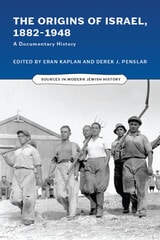
The Origins of Israel, 1882–1948
A Documentary HistoryEran Kaplan
University of Wisconsin Press, 2011
In 1880 the Jewish community in Palestine encompassed some 20,000 Orthodox Jews; within sixty-five years it was transformed into a secular proto-state with well-developed political, military, and economic institutions, a vigorous Hebrew-language culture, and some 600,000 inhabitants. The Origins of Israel, 1882–1948: A Documentary History chronicles the making of modern Israel before statehood, providing in English the texts of original sources (many translated from Hebrew and other languages) accompanied by extensive introductions and commentaries from the volume editors.
This sourcebook assembles a diverse array of 62 documents, many of them unabridged, to convey the ferment, dissent, energy, and anxiety that permeated the Zionist project from its inception to the creation of the modern nation of Israel. Focusing primarily on social, economic, and cultural history rather than Zionist thought and diplomacy, the texts are organized in themed chapters. They present the views of Zionists from many political and religious camps, factory workers, farm women, militants, intellectuals promoting the Hebrew language and arts—as well as views of ultra-Orthodox anti-Zionists. The volume includes important unabridged documents from the origins of the Arab-Israeli conflict that are often cited but are rarely read in full. The editors, Eran Kaplan and Derek J. Penslar, provide both primary texts and informative notes and commentary, giving readers the opportunity to encounter voices from history and make judgments for themselves about matters of world-historical significance.
Best Special Interest Books, selected by the Public Library Reviewers
Best Books for General Audiences, selected by the American Association of School Librarians
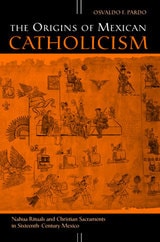
The Origins of Mexican Catholicism
Nahua Rituals and Christian Sacraments in Sixteenth-Century MexicoOsvaldo F. Pardo
University of Michigan Press, 2004
---Fernando Cervantes, Bristol University, UK
"Pardo does an excellent job of balancing and contrasting sixteenth-century Catholic theology with Nahua thought and belief."
---John F. Schwaller, University of Minnesota
At first glance, religious conversion may appear to be only a one-way street. When studying sixteenth-century Mexico, one might assume that colonial coercion was the driving force behind the religious conversion of the native population. But The Origins of Mexican Catholicism shows how Spanish missionaries instead drew on existing native ceremonies in order to make Christianity more accessible to the Nahua population whom they were trying to convert.
Osvaldo F. Pardo explains that religious figures not only shaped native thought, but that indigenous rituals had an impact on the religion itself. This work illustrates the complex negotiations that took place in the process of making the Christian sacraments available to the native peoples, and at the same time, forced the missionaries to reexamine the meaning of their sacraments through the eyes of an alien culture.
For Spanish missionaries, ritual not only became a focus of evangelical concern but also opened a window to the social world of the Nahuas. Missionaries were able to delve into the Nahua's notions of self, emotions, and social and cosmic order. By better understanding the sociological aspects of Nahua culture, Christians learned ways to adequately convey their religion through mutual understanding instead of merely colonial oppression.
Given its interdisciplinary approach, this book will be of interest to specialists in Latin American intellectual and literary history, the history of religion, and anthropology, and to anyone interested in cross-cultural processes.

The Origins of Violence
Religion, History and GenocideJohn Docker
Pluto Press, 2008
Genocide is commonly understood to be a terrible aberration in human behaviour, performed by evil, murderous regimes such as the Nazis and dictators like Suharto and Pinochet. John Docker argues that the roots of genocide go far deeper into human nature than most people realise.
Genocide features widely in the Bible, the literature of ancient Greece and Rome, and debates about the Enlightenment. These texts are studied in depth to trace the origins of violence through time and across civilisations. Developing the groundbreaking work of Raphaël Lemkin, who invented the term 'genocide', Docker guides us from the dawn of agricultural society, through classical civilisation to the present, showing that violence between groups has been integral to all periods of history.
This revealing book will be of great interest to those wishing to understand the roots of genocide and why it persists in the modern age.
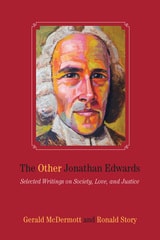
The Other Jonathan Edwards
Selected Writings on Society, Love, and JusticeGerald McDermott
University of Massachusetts Press, 2015
Widely regarded as perhaps America's greatest theologian, Jonathan Edwards still suffers the stereotype of hellfire preacher obsessed with God's wrath. In this anthology, Gerald McDermott and Ronald Story seek to correct that common view by showing that Edwards was also a compassionate, socially conscious minister of the first order.
Through a selection of sermons and primary writings, McDermott and Story reveal an Edwards who preached love toward all humanity regardless of belief or appearance; who demanded private and public charity to the poor; who criticized hard-hearted business dealings as impious and socially destructive; and who condemned envy and status-seeking as anti-Christian and anti-community. This “other” Jonathan Edwards preached about grace and the love of God but also about responsive constitutional government, the iniquities of hypocrisy and corruption, and the nature of wise leadership. He acknowledged the need for national defense but left room for popular revolt from tyranny. He anticipated a millennial age of peace and prosperity and believed that people should live in the world as they would live through grace in heaven.
Jonathan Edwards was, in sum, a worldly as well as spiritual reformer who resisted the materialistic, acquisitive, and individualistic currents of American culture. For these reasons, McDermott and Story think he may have lessons to teach us today.
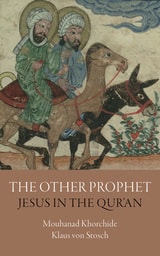
The Other Prophet
Jesus in the Qur’anMouhanad Khorchide and Klaus von Stosch
Gingko, 2025
The Qur’an identifies Jesus as a sign of God, and he holds a place as one of the most important prophets in Islam. Looking at Jesus in Islam also reveals both deep differences from and rich connections to the view of Jesus in Christianity. In The Other Prophet, Mouhanad Khorchide and Klaus von Stosch explore and explain the position of the Qur’anic Jesus, with one scholar working from the Muslim and the other from the Christian theological perspective. Their combined research presents a history of Jesus’ presence in the Qur’an and provides astute observations to deepen the understanding of both Christians and Muslims. Here we find that a common view of Jesus from the Muslim and Christian sides is not only possible but also expands our understanding of Jesus and his message.

The Oven
An Anti-LectureIlan Stavans
University of Massachusetts Press, 2018
The Palm at the End of the Mind
Relatedness, Religiosity, and the RealMichael Jackson
Duke University Press, 2009
Through sixty-one beautifully crafted essays based on sojourns in Europe, West Africa, the United States, Australia, and New Zealand, and taking his cue from Wallace Stevens’s late poem, “Of Mere Being,” Jackson explores a range of experiences where “the palm at the end of the mind” stands “beyond thought,” on “the edge of space,” “a foreign song.” Moments of crisis as well as everyday experiences in cafés, airports, and offices disclose the subtle ways in which a single life shades into others, the boundaries between cultures become blurred, fate unfolds through genealogical time, elective affinities make their appearance, and different values contend.

The Panarion of Epiphanius of Salamis
Book I (Sects 1–46)Frank Williams
SBL Press, 2016
Now in Paperback!
Epiphanius, monastic founder and bishop of Salamis on Cyprus for almost forty years of the fourth century, threw heart and soul into the controversies of the time and produced the Panario or Medicine Chest, a historical encyclopedia of sects and heresies and their refutations. Book I deals with material that is also found in Nag Hammadi, other Gnostic writings, and in such patristic authors as Irenaeus and Hippolytus. Students of Nag Hammadi and Gnosticism, patrologists, historians of religion, church historians, and Judaism have found this translation useful.
Features:
- Paperback format of an essential Brill reference set
- Coverage of Gnostic and Jewish Christian groups
- Documents not available elsewhere in paperback
The Papacy, the Jews, and the Holocaust
Frank J. Coppa
Catholic University of America Press, 2006
The Papist Represented
Literature and the English Catholic Community, 1688-1791Geremy Carnes
University of Delaware Press, 2017
The Papist Represented reincorporates the history of the English Catholic community into the field of eighteenth-century literary studies. It examines the intersections of literary, religious, and cultural history as they pertain to the slow acceptance by both Protestants and Catholics of the latter group’s permanent minority status. By focusing on the Catholic community’s perspectives and activities, it deepens and complicates our understanding of the cultural processes that contributed to the significant progress of the Catholic emancipation movement over the course of the century. At the same time, it reveals that this community’s anxieties and desires (and the anxieties and desires it provoked in Protestants) fuel some of the most popular and experimental literary works of the century, in forms and modes including closet drama, elegy, the novel, and the Gothic. By returning the Catholic community to eighteenth-century literary history, The Papist Represented challenges the assumption that eighteenth-century literature was a fundamentally Protestant enterprise.
Published by University of Delaware Press. Distributed worldwide by Rutgers University Press.
The Passion Book
A Tibetan Guide to Love and SexGendun Chopel
University of Chicago Press, 2018
Gendun Chopel here condemns the hypocrisy of both society and church, portraying sexual pleasure as a force of nature and a human right for all. On page after page, we find the exuberance of someone discovering the joys of sex, made all the more intense because they had been forbidden to him for so long: he had taken the monastic vow of celibacy in his youth and had only recently renounced it. He describes in ecstatic and graphic detail the wonders he discovered. In these poems, written in beautiful Tibetan verse, we hear a voice with tints of irony, self-deprecating wit, and a love of women not merely as sources of male pleasure but as full partners in the play of passion.
The Passion of Love in the <i>Summa Theologiae</i> of Thomas Aquinas
Daniel Joseph Gordon
Catholic University of America Press, 2023
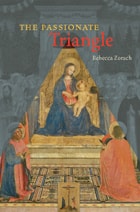
The Passionate Triangle
Rebecca Zorach
University of Chicago Press, 2011
Triangles abounded in the intellectual culture of early modern Europe—the Christian Trinity was often mapped as a triangle, for instance, and perspective, a characteristic artistic technique, is based on a triangular theory of vision. Renaissance artists, for their part, often used shapes and lines to arrange figures into a triangle on the surface of a painting—a practice modern scholars call triangular composition. But is there secret meaning in the triangular arrangements artists used, or just a pleasing symmetry? What do triangles really tell us about the European Renaissance and its most beguiling works of art?
In this book, Rebecca Zorach takes us on a lively hunt for the triangle’s embedded significance. From the leisure pursuits of Egyptian priests to Jacopo Tintoretto’s love triangles, Zorach explores how the visual and mathematical properties of triangles allowed them to express new ideas and to inspire surprisingly intense passions. Examining prints and paintings as well as literary, scientific, and philosophical texts, The Passionate Triangle opens up an array of new ideas, presenting unexpected stories of the irrational, passionate, melancholic, and often erotic potential of mathematical thinking before the Scientific Revolution.
The Pastoral Theology of the Early Church
Andrew J. Summerson
Catholic University of America Press, 2026
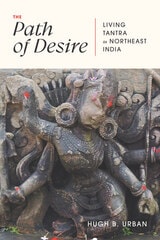
The Path of Desire
Living Tantra in Northeast IndiaHugh B. Urban
University of Chicago Press, 2024
Tantra, one of the most important religious currents in South Asia, is often misrepresented as little more than ritualized sex. Through a mixture of ethnography and history, Hugh B. Urban reveals a dynamic living tradition behind the sensationalist stories. Urban shows that Tantric desire goes beyond the erotic, encompassing such quotidian experiences as childbearing and healing. He traces these holistic desires through a series of unique practices: institutional Tantra centered on gurus and esoteric rituals; public Tantra marked by performance and festival; folk Tantra focused on magic and personal well-being; and popular Tantra imagined in fiction, film, and digital media. The result is a provocative new description of Hindu Tantra that challenges us to approach religion as something always entwined with politics and culture, thoroughly entangled with ordinary needs and desires.
The People beside Paul
The Philippian Assembly and History from BelowJoseph A. Marchal
SBL Press, 2015
Who are the people beside Paul, and what can we know about them?
This volume brings together an international and interdisciplinary group of scholars with a broad range of expertise and a common interest: Philippi in antiquity. Each essay engages one set of contextual particularities for Paul and the ordinary people of the Philippian assembly, while simultaneously placing them in wider settings. This 'people's history' uses both traditional and more cutting-edge methods to reconsider archaeology and architecture, economy and ethnicity, prisons and priestesses, slavery, syncretism, stereotypes of Jews, the colony of Philippi, and a range of communities. The contributors are Valerie Abrahamsen, Richard S. Ascough, Robert L. Brawley, Noelle Damico, Richard A. Horsley, Joseph A. Marchal, Mark D. Nanos, Peter Oakes, Gerardo Reyes Chavez, Angela Standhartinger, Eduard Verhoef, and Antoinette Clark Wire.
Features
- An examination of the social forms and forces that shaped and affected the Philippian church
- Essays offer insight into standard questions about the letter s hymn and audience, Paul's 'opponents,' and the sites of the community and of Paul's imprisonment
- A focused exploration of more marginalized topics and groups, including women, slaves, Jews, and members of localized cults
The Personalism of Edith Stein
A Synthesis of Thomism and PhenomenologyRobert McNamara
Catholic University of America Press, 2023
The Personalism of John Henry Newman
John Crosby
Catholic University of America Press, 2014
The Pew and the Picket Line
Christianity and the American Working ClassEdited by Christopher D. Cantwell, Heath W. Carter, and Janine Giordano Drake
University of Illinois Press, 2016
The Phantom Holocaust
Soviet Cinema and Jewish CatastropheGershenson, Olga
Rutgers University Press, 2013
Focusing on work by both celebrated and unknown Soviet directors and screenwriters, Olga Gershenson has written the first book about all Soviet narrative films dealing with the Holocaust from 1938 to 1991. In addition to studying the completed films, Gershenson analyzes the projects that were banned at various stages of production.
The book draws on archival research and in-depth interviews to tell the sometimes tragic and sometimes triumphant stories of filmmakers who found authentic ways to represent the Holocaust in the face of official silencing. By uncovering little known works, Gershenson makes a significant contribution to the international Holocaust filmography.
The Phenomenological Study of Religion
Key Texts and SourcesChristina M. Gschwandtner
Northwestern University Press, 2026
Presenting a wide-ranging selection of works and commentary in religious phenomenology
Phenomenology is a central method employed to study religious phenomena within religious studies, philosophy of religion, and philosophical theology. This expertly edited collection brings together historical sources and newly commissioned essays from various ways of investigating religion phenomenologically both to diversify the field and to make available important works that have not been previously translated into English. The Phenomenological Study of Religion includes not only representative texts from well-known phenomenological philosophers and scholars of religion but also selections from significant thinkers that have not been studied as widely, along with contributions from leading contemporary voices. This volume offers scholars and students at all levels of expertise broad exposure to the various configurations of the phenomenological study of religion.
The Philistines and Other Sea Peoples in Text and Archaeology
Ann E. Killebrew
SBL Press, 2013
The Philo of Alexandria Scripture Index
Sean A. Adams
SBL Press, 2023
The Philo of Alexandria Scripture Index identifies and lists every instance in which Philo of Alexandria cites or alludes to passages from Jewish Scripture. With 7,831 references, this book is the most comprehensive study of its kind to date. Unlike other volumes with a single index of Philo’s citations and allusions organized by biblical book, this volume includes a second index that follows Philo’s treatise order. This second format allows students and scholars easily to examine Philo’s engagement with Scripture in individual treatises and to interrogate how Philo collected and grouped intertexts. In addition to the indices, Sean A. Adams and Zanne Domoney-Lyttle provide an introduction to their methodology and their selection of texts, including Philo’s fragmentary works and those that survive only in the Armenian tradition.
The Philosophy of Hegel as a Doctrine of the Concreteness of God and Humanity
Volume One: The Doctrine of GodI. A. Il’in, Translated by Philip T. Grier
Northwestern University Press, 2010
This landmark two-volume translation from Russian of The Philosophy of Hegel as a Doctrine of the Concreteness of God and Humanity marks the first appearance in English of any of the works of Russian philosopher Ivan Aleksandrovich Il’in (Ilyin). Originally published in 1918, on the eve of the Russian civil war, Il'in's commentary on Hegel marked both an apogee of Russian Silver Age philosophy and a significant manifestation of the resurgence of interest in Hegel that began in the early twentieth century.
A. F. Losev accurately observed in the same year it appeared: “Neither the study of Hegel nor the study of contemporary Russian philosophical thought is any longer thinkable without this book of I. A. Il’in’s.” Some Hegel scholars may know this work through the abridged translation into German that Il’in produced himself in 1946. However, that edition omitted most of the original volume two. Noted Hegel scholar Philip T. Grier’s edition—with an introduction setting Il’in’s work in its proper historical, cultural, and philosophical contexts and annotation throughout—represents the first opportunity for non-Russian-speaking readers to acquaint themselves with the full scope of Il’in’s still provocative interpretation of Hegel.
Volume 1 is "The Doctrine of God." Volume 2 is "The Doctrine of Humanity."
The Philosophy of Hegel as a Doctrine of the Concreteness of God and Humanity
Volume Two: The Doctrine of HumanityI. A. Il’in, Translated by Philip T. Grier
Northwestern University Press, 2011
The publication of volume 2 of Philip T. Grier’s translation of The Philosophy of Hegel as a Doctrine of the Concreteness of God and Humanity completes the first appearance in English of any of the works of Russian philosopher I. A. Il’in (Ilyin).
Most of the contents of volume 2 will be unknown even to those who have read the 1946 German version prepared by Il’in, because in that version he omitted eight of the original ten chapters. These omitted chapters provide an extended reflection on the central categories of Hegel’s moral, legal, and political philosophies, as well as of the philosophy of history. The topics examined are, in order: freedom, humanity, will, right, morality, ethical life, personhood and its virtue, and the state. Contained within these chapters are some notably insightful expositions of core doctrines in Hegel’s philosophy.
Il’in’s colleague A. F. Losev accurately observed in the same year the text first appeared: “Neither the study of Hegel nor the study of contemporary Russian philosophical thought is any longer thinkable without this book of I. A. Il’in’s.”
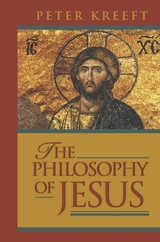
The Philosophy of Jesus
Peter Kreeft
St. Augustine's Press, 2007
Amazingly, no one ever seems to have looked at Jesus as a philosopher, or his teaching as philosophy. Yet no one in history has ever had a more radically new philosophy, or made more of a difference to philosophy, than Jesus. He divided all human history into two, into "B.C." and "A.D."; and the history of philosophy is crucial to human history, since philosophy is crucial to man; so how could He not also divide philosophy?
This book (1) looks at Jesus as a complete human being (as well as divine), therefore also as a philosopher; (2) looks at philosophy as Jesus' pre-modern contemporaries did, as a wisdom, a world-view, and a way of life rather than as a super-science (Descartes, Hegel) or as a servant-science (Hobbes, Hume); and (3) looks at philosophy in light of Jesus rather than at Jesus in light of philosophy. It explores the consequences of Etienne Gilson's point that when St. John brought Christianity and Greek philosophy into contact and identified the Messiah the Jews had most deeply sought with the logos that the Greeks had most deeply sought, nothing happened to Christ but something happened to the logos.
This book explores the most radical revolution in the history of philosophy, the differences Jesus made to metaphysics (the philosophy of being), to epistemology (the philosophy of knowing), to anthropology (the philosophy of man), and to philosophical ethics and politics.
And, besides, it has the greatest ending of any philosophy book in a century.
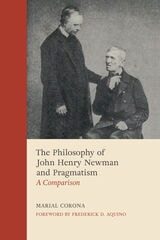
The Philosophy of John Henry Newman and Pragmatism
A ComparisonMarial Corona
Catholic University of America Press, 2023
The Philosophy, Theology, and Rhetoric of Marius Victorinus
Stephen A. Cooper
SBL Press, 2022
Pagan rhetor, (Neo-)Platonist philosopher, Christian theologian
This collection of essays is devoted to the rhetoric, Neoplatonic philosophy, and Christian theology of Marius Victorinus, a mid-fourth-century professor of rhetoric and philosopher who converted to Christianity late in life. Scholars from eight different countries, some of whom have not previously published in English, reflect on debates about his writings and theological development. These topics include Victorinus's deployment of philosophical sources for trinitarian theology, possible connections in his work to Origen, Augustine, Plotinus, Porphyry, and Gnosticism, as well as his contributions to Latin rhetoric and dialectic. Contributors include Jan Dominik Bogataj, Michael Chase, Nello Cipriani, Stephen A. Cooper, Volker Henning Drecoll, Lenka Karfíková, Josef Lössl, Václav Němec, Thomas Riesenweber, Guadalupe Lopetegui Semperena, Miran Špelič, Chiara O. Tommasi, John D. Turner, and Florian Zacher. The chapters in this volume are of great interest to students of late antique philosophy, Christian theology, and Latin rhetoric.
The Pinckaers Reader
Renewing Thomistic Moral TheologyServais Pinckaers O.P.
Catholic University of America Press, 2005
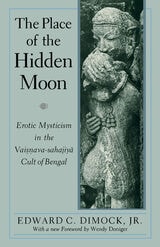
The Place of the Hidden Moon
Erotic Mysticism in the Vaisnava-Sahajiya Cult of BengalEdward C. Dimock Jr.
University of Chicago Press, 1989
"This is a magnificent book—painstakingly researched and gracefully written. . . . Professor Dimock's book is one of the most rewarding and stimulating studies to appear in recent years."—G. Richard Weldon, Journal of Asian Studies
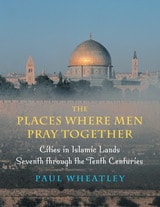
The Places Where Men Pray Together
Cities in Islamic Lands, Seventh through the Tenth CenturiesPaul Wheatley
University of Chicago Press, 2001
Building on the tenth-century geographer al-Maqdisi's writings on urban centers of the Islamic world, buttressed by extensive comparative material from roadbooks, topographies, histories, adab literatures, and gazetteers of the time, Wheatley identifies the main functions of different Islamic urban centers. Chapters on each of the thirteen centers that al-Maqdisi identified, ranging from the Atlantic to the Indus and from the Caspian to the Sudan, form the heart of this book. In each case Wheatley shows how specific agglomeration and accessibility factors combined to make every city functionally distinct as a creator of effective space. He also demonstrates that, far from revolutionizing every aspect of life in these cities, the adoption of Islam often affected the development of these cities less than previously existing local traditions.
The Places Where Men Pray Together is a monumental work that will speak to scholars and readers across a broad variety of disciplines, from historians, anthropologists, and sociologists to religious historians, archaeologists, and geographers.
The Poems of St. John of the Cross
St. John of the Cross
University of Chicago Press, 1979
This dual-language edition makes available the original Spanish from the Codex of Sanlúcon de Barrameda with facing English translations. The work concludes with two essays—a critique of the poetry and a short piece on the Spanish text that appears alongside the translation—as well as brief notes on the individual poems.
The Poisoned Chalice
Eucharistic Grape Juice and Common-Sense Realism in Victorian MethodismJennifer L. Woodruff Tait
University of Alabama Press, 2011
This work examines the introduction of grape juice into the celebration of Holy Communion in the late 19th century Methodist Episcopal Church and reveals how a 1,800-year-old practice of using fermented communion wine became theologically incomprehensible in a mere forty years. Through study of denominational publications, influential exegetical works, popular fiction and songs, and didactic moral literature, Jennifer Woodruff Tait charts the development of opposing symbolic associations for wine and grape juice. She argues that 19th century Methodists, steeped in Baconian models of science and operating from epistemological presuppositions dictated by common-sense realism, placed a premium on the ability to perceive reality accurately in order to act morally. They therefore rejected any action or substance that dulled or confused the senses (in addition to alcohol, this included “bad” books, the theatre, stimulants, etc., which were all seen as unleashing unchecked, ungovernable thoughts and passions incompatible with true religion).
The Political Economy of Distributism
Property, Liberty, and the Common GoodAlexander William Salter
Catholic University of America Press, 2023
The Political Language of Islam
Bernard Lewis
University of Chicago Press, 1988
What does jihad really mean? What is the Muslim conception of law? What is Islam's stance toward unbelievers? Probing literary and historical sources, Bernard Lewis traces the development of Islamic political language from the time of the Prophet to the present. His analysis of documents written in Arabic, Persian, and Turkish illuminates differences between Muslim political thinking and Western political theory, and clarifies the perception, discussion, and practices of politics in the Islamic world.
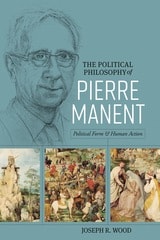
The Political Philosophy of Pierre Manent
Political Form and Human ActionJoseph Wood
Catholic University of America Press, 2024
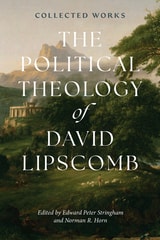
The Political Theology of David Lipscomb
Collected WorksDavid Lipscomb; Edited by Edward Peter Stringham and Norman R. Horn
Vanderbilt University Press, 2026
Few figures shaped the Stone-Campbell Restoration movement more than David Lipscomb, whose influence on its theology and practice rivaled that of any of his contemporaries. Yet the writings in this volume have long been unavailable to general readers, and most people are no longer familiar with his ideas, including his belief that Christians should not participate in secular politics.
In the early decades of the Stone-Campbell movement, adherents argued their positions in person and in print, and the direction of the movement was decided by these wide-ranging theological discussions. Dissent was built into the discourse and considered a part of the spiritual well-being of the movement. Followers were expected to read and have opinions on all these discussions. And now most of these books and articles have all but vanished from circulation—not just Lipscomb’s but many of the nineteenth-century Campbellite theologians’ writings.
This volume comprises three of Lipscomb’s most important works regarding Christians’ relationship to civil government, along with an introduction by Edward Peter Stringham and Norman R. Horn that explains how Lipscomb’s political writings receded from view within the movement he once shaped.

The Politics of Compassion and Transformation
And TransformationDick Simpson
Ohio University Press, 1989
In our time, we require a religion, ethics, and politics adequate to confront the global crises we face. In our scientific era of “progress,” we might expect to look with confidence to the “scientific” disciplines of political science, sociology, and economics to solve the problems of our civilization. We might also look to the older disciplines of religion and ethics to determine our values and to tell us what we ought to do. But the sad truth is that the dominant paradigms, methods, and conclusions of the social sciences and humanities are inadequate to this task. We need a new “politics of compassion and transformation.”

The Politics of Hate
How the Christian Right Darkened America's Political SoulAngelia R. Wilson
Temple University Press, 2025
Based on original research, participant observation at events, and data collection, Wilson follows the money to provide a meticulous analysis of how Christian Right political elites operate. She traces the evolutionary development of the Christian Right’s political professionalism and their allegiance to a grand vision that articulates a grammar of war to fulfill their Biblical worldview.
The Politics of Hate demonstrates how Christian Right organizations educate and train networks of soldiers to tactically engage the enemy in local, state, and national legal and political battles. Wilson carefully documents their history of co-belligerency, their strategies of political warfare, and, importantly, the impact of this war that has, over the past fifty years, forever changed American politics.
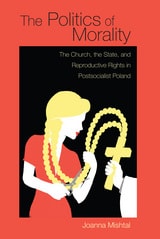
The Politics of Morality
The Church, the State, and Reproductive Rights in Postsocialist PolandJoanna Mishtal
Ohio University Press, 2015
After the fall of the state socialist regime and the end of martial law in 1989, Polish society experienced both a sense of relief from the tyranny of Soviet control and an expectation that democracy would bring freedom. After this initial wave of enthusiasm, however, political forces that had lain concealed during the state socialist era began to emerge and establish a new religious-nationalist orthodoxy. While Solidarity garnered most of the credit for democratization in Poland, it had worked quietly with the Catholic Church, to which a large majority of Poles at least nominally adhered. As the church emerged as a political force in the Polish Sejm and Senate, it precipitated a rapid erosion of women’s reproductive rights, especially the right to abortion, which had been relatively well established under the former regime.
The Politics of Morality is an anthropological study of this expansion of power by the religious right and its effects on individual rights and social mores. It explores the contradictions of postsocialist democratization in Poland: an emerging democracy on one hand, and a declining tolerance for reproductive rights, women’s rights, and political and religious pluralism on the other. Yet, as this thoroughly researched study shows, women resist these strictures by pursuing abortion illegally, defying religious prohibitions on contraception, and organizing into advocacy groups. As struggles around reproductive rights continue in Poland, these resistances and unofficial practices reveal the sharp limits of religious form of governance.
The Politics of Pessimism in Ecclesiastes
A Social-Science PerspectiveMark R. Sneed
SBL Press, 2012

The Politics of Religion in an Age of Revival
Studies in Nineteenth-century Europe and Latin AmericaEdited by Austen Ivereigh
University of London Press, 2010