Results by title
3745 books match the query 'Europe' and 973 start with t

The Saxon War
Bruno of Merseburg
Catholic University of America Press, 2022
The Scarith of Scornello
A Tale of Renaissance ForgeryIngrid D. Rowland
University of Chicago Press, 2004
As recounted here with relish by Ingrid D. Rowland, Curzio preyed on the Italian fixation with ancestry to forge an array of ancient Latin and Etruscan documents. For authenticity's sake, he stashed the counterfeit treasure in scarith (capsules made of hair and mud) near Scornello. To the seventeenth-century Tuscans who were so eager to establish proof of their heritage and history, the scarith symbolized a link to the prestigious culture of their past. But because none of these proud Italians could actually read the ancient Etruscan language, they couldn't know for certain that the documents were frauds. The Scarith of Scornello traces the career of this young scam artist whose "discoveries" reached the Vatican shortly after Galileo was condemned by the Inquisition, inspiring participants on both sides of the affair to clash again—this time over Etruscan history.
An expert on the Italian Renaissance and one of only a few people in the world to work with the Etruscan language, Rowland writes a tale so enchanting it seems it could only be fiction. In her investigation of this seventeenth-century caper, Rowland will captivate readers with her sense of humor and obvious delight in Curzio's far-reaching prank. And even long after the inauthenticity of Curzio's creation had been established, this practical joke endured: the scarith were stolen in the 1980s by a thief who mistook them for the real thing.
The Science of Character
Human Objecthood and the Ends of Victorian RealismS. Pearl Brilmyer
University of Chicago Press, 2022
In 1843, the Victorian philosopher John Stuart Mill called for the establishment of a new science, “the science of the formation of character.” Although Mill’s proposal failed as scientific practice, S. Pearl Brilmyer maintains that it found its true home in realist fiction of the period, which employed the literary figure of character to investigate the nature of embodied experience. Bringing to life Mill’s unrealized dream of a science of character, novelists such as George Eliot, Thomas Hardy, and Olive Schreiner turned to narrative to explore how traits and behaviors in organisms emerge and develop, and how aesthetic features—shapes, colors, and gestures—come to take on cultural meaning through certain categories, such as race and sex. Engaged with materialist science and philosophy, these authors transformed character from the liberal notion of the inner truth of an individual into a materially determined figuration produced through shifts in the boundaries between the body’s inside and outside. In their hands, Brilmyer argues, literature became a science, not in the sense that its claims were falsifiable or even systematically articulated, but in its commitment to uncovering, through a fictional staging of realistic events, the laws governing physical and affective life. The Science of Character redraws late Victorian literary history to show how women and feminist novelists pushed realism to its aesthetic and philosophical limits in the crucial span between 1870 and 1920.
The Science of Describing
Natural History in Renaissance EuropeBrian W. Ogilvie
University of Chicago Press, 2006
In the late fifteenth and early sixteenth centuries, naturalists focused on understanding ancient and medieval descriptions of the natural world, but by the mid-sixteenth century naturalists turned toward distinguishing and cataloguing new plant and animal species. To do so, they developed new techniques of observing and recording, created botanical gardens and herbaria, and exchanged correspondence and specimens within an international community. By the early seventeenth century, naturalists began the daunting task of sorting through the wealth of information they had accumulated, putting a new emphasis on taxonomy and classification.
Illustrated with woodcuts, engravings, and photographs, The Science of Describing is the first broad interpretation of Renaissance natural history in more than a generation and will appeal widely to an interdisciplinary audience.
The Science of Sympathy
Morality, Evolution, and Victorian CivilizationRob Boddice
University of Illinois Press, 2016
The Science of Walking
Investigations into Locomotion in the Long Nineteenth CenturyAndreas Mayer
University of Chicago Press, 2020
Looking back at more than a century of locomotion research, Mayer charts, for the first time, the rise of scientific endeavors to control and codify locomotion and analyzes their social, political, and aesthetic ramifications throughout the long nineteenth century. In an engaging narrative that weaves together science and history, Mayer sets the work of the most important representatives of the physiology of locomotion—including Wilhelm and Eduard Weber and Étienne-Jules Marey—in their proper medical, political, and artistic contexts. In tracing the effects of locomotion studies across other cultural domains, Mayer reframes the history of the science of walking and gives us a deeper understanding of human movement.
The Science of the Swastika
Bernard Mees
Central European University Press, 2008

The Sciences in Enlightened Europe
Edited by William Clark, Jan Golinski, and Simon Schaffer
University of Chicago Press, 1999
The contributors examine the production of new disciplines through work with instruments and techniques; consider how institutions of public taste and conversation helped provide a common frame for the study of human and nonhuman natures; and explore the regional operations of scientific culture at the geographical fringes of Europe.
Implicated in the rise of both fascism and liberal secularism, the moral and political values that shaped the Enlightenment remain controversial today. Through careful scrutiny of how these values influenced and were influenced by the concrete practices of its sciences, this book gives us an entirely new sense of the Enlightenment.
The Sciences of the Soul
The Early Modern Origins of PsychologyFernando Vidal
University of Chicago Press, 2011
Fernando Vidal’s trailblazing text on the origins of psychology traces the development of the discipline from its appearance in the late sixteenth century to its redefinition at the end of the seventeenth and its emergence as an institutionalized field in the eighteenth. Originally published in 2011, The Sciences of the Soul continues to be of wide importance in the history and philosophy of psychology, the history of the human sciences more generally, and in the social and intellectual history of eighteenth-century Europe.

The Scientific Enterprise in Early Modern Europe
Readings from IsisEdited by Peter Dear
University of Chicago Press, 1997
The anthology features classic and prize-winning articles by renowned scholars, including "Totius in verba: Rhetoric and Authority in the Early Royal Society," by Peter Dear; "The Melanchthon Circle, Rheticus, and the Wittenberg Interpretation of the Copernican Theory," by Robert S. Westman; "Laboratory Design and the Aim of Science," by Owen Hannaway; "Geography as Self-Definition in Early Modern England," by Lesley B. Cormack; "What Happened to Occult Qualities in the Scientific Revolution?" by Keith Hutchison; and "Galileo, Motion, and Essences," by Margaret J. Osler.
Also, "Scientific Patronage: Galileo and the Telescope," by Richard S. Westfall; "The Telescope in the Seventeenth Century," by Albert Van Helden; "Descartes on Refraction," by Bruce S. Eastwood; "Early Seventeenth-Century Atomism," by Christoph Meinel; "Robert Boyle and Structural Chemistry in the Seventeenth Century," by Thomas S. Kuhn; "Newton's Alchemy and His Theory of Matter," by B. J. T. Dobbs; "The House of Experiment in Seventeenth-Century England," by Steven Shapin; and "Maria Winkelmann at the Berlin Academy," by Londa Scheibinger.
This carefully structured collection will help readers approach complex questions—involving argument and experiment, audience and agency, authority and institutions.

The Scientific Life
A Moral History of a Late Modern VocationSteven Shapin
University of Chicago Press, 2008
Conventional wisdom has long held that scientists are neither better nor worse than anyone else, that personal virtue does not necessarily accompany technical expertise, and that scientific practice is profoundly impersonal. Shapin, however, here shows how the uncertainties attending scientific research make the virtues of individual researchers intrinsic to scientific work. From the early twentieth-century origins of corporate research laboratories to the high-flying scientific entrepreneurship of the present, Shapin argues that the radical uncertainties of much contemporary science have made personal virtues more central to its practice than ever before, and he also reveals how radically novel aspects of late modern science have unexpectedly deep historical roots. His elegantly conceived history of the scientific career and character ultimately encourages us to reconsider the very nature of the technical and moral worlds in which we now live.
Building on the insights of Shapin’s last three influential books, featuring an utterly fascinating cast of characters, and brimming with bold and original claims, The Scientific Life is essential reading for anyone wanting to reflect on late modern American culture and how it has been shaped.
The Scientific Revolution
Steven Shapin
University of Chicago Press, 2018
“An excellent book.”—Anthony Gottlieb, New York Times Book Review
“Timely and highly readable. . . . A book which every scientist curious about our predecessors should read.”—Trevor Pinch, New Scientist
“Shapin's account is informed, nuanced, and articulated with clarity. . . . This is not to attack or devalue science but to reveal its richness as the human endeavor that it most surely is. . . . Shapin's book is an impressive achievement.”—David C. Lindberg, Science
“It's hard to believe that there could be a more accessible, informed or concise account. . . . The Scientific Revolution should be a set text in all the disciplines. And in all the indisciplines, too.”—Adam Phillips, London Review of Books
The Scientific Revolution
A Historiographical InquiryH. Floris Cohen
University of Chicago Press, 1994
Cohen's discussions range from scholarly interpretations of Galileo, Kepler, and Newton, to the question of why the Scientific Revolution took place in seventeenth-century Western Europe, rather than in ancient Greece, China, or the Islamic world. Cohen contends that the emergence of early modern science was essential to the rise of the modern world, in the way it fostered advances in technology.
A valuable entrée to the literature on the Scientific Revolution, this book assesses both a controversial body of scholarship, and contributes to understanding how modern science came into the world.
The Scope of History
Studies in the Historiography of Alfonso el SabioCharles F. Fraker
University of Michigan Press, 1996
In his introduction the author addresses the place of Alfonso's work in its own time, giving the reader a notion of what other works in the genre were like and how they differ. The connecting thread running through these chapters is a continuing focus on the art of the compiler. Medieval historical compilations are by definition scissors-and-paste jobs, stringing older texts together to tell new, different stories. But the Alfonsine editors bend the rules: in the short run they make their work yield the themes they think important, and in the long run they build a literary monument of impressive architecture.
Charles F. Fraker is Professor Emeritus in Romance Languages, University of Michigan.

The Scots Irish of Early Pennsylvania
A Varied PeopleJudith A. Ridner
Temple University Press, 2018
The Scots Irish were one of early Pennsylvania’s largest non-English immigrant groups. They were stereotyped as frontier ruffians and Indian haters. In The Scots Irish of Early Pennsylvania, historian Judith Ridner insists that this immigrant group was socio-economically diverse. Servants and free people, individuals and families, and political exiles and refugees from Ulster, they not only pioneered new frontier settlements, but also populated the state’s cities—Philadelphia and Pittsburgh—and its towns, such as Lancaster, Easton, and Carlisle.
Ridner provides a much-overdue synthesis and reassessment of this immigrant group, tracing a century of Scotch-Irish migration from 1720 to 1820. These men and women brought their version of Ulster to the colonies in their fierce commitments to family, community, entrepreneurship, Presbyterianism, republican politics, and higher education. The settlements they founded across the state, including many farms, businesses, meetinghouses, and colleges, ensured that Pennsylvania would be their cradle in America, and these settlements stand as powerful testaments to their legacy to the state’s history and development.

The Search for Medieval Music in Africa and Germany, 1891-1961
Scholars, Singers, MissionariesAnna Maria Busse Berger
University of Chicago Press, 2020
The book unfolds in three parts. Busse Berger starts with the origins of comparative musicology circa 1900, when early proponents used ideas from comparative linguistics to test whether parallels could be drawn between nonwestern and medieval European music. She then turns to youth movements of the era—the Wandervogel, Jugendmusikbewegung, and Singbewegung—whose focus on joint music making influenced many musicologists. Finally, she considers case studies of Protestant and Catholic mission societies in what is now Tanzania, where missionaries—many of them musicologists and former youth-group members—extended the discipline via ethnographic research and a focus on local music and communities. In highlighting these long-overlooked transnational connections and the role of global music in early musicology, Busse Berger shapes a fresh conception of music scholarship during a pivotal part of the twentieth century.
The Second Part of the Popular Errors
Laurent Joubert
University of Alabama Press, 1995
English translation of the second volume of Laurent Joubert’s 1578 French work Erreurs Populaires
Joubert proposed to dispel folk remedies and folklore still relied on by doctors and care-givers in France. It also challenged medical theories and advice from classical Greek and Latin writers that French doctors followed uncritically.

The Secret of Secrets
The Scholarly Career of a Pseudo-Aristotelian Text in the Latin Middle AgesSteven J. Williams
University of Michigan Press, 2003
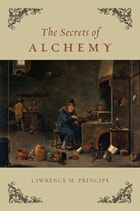
The Secrets of Alchemy
Lawrence M. Principe
University of Chicago Press, 2012
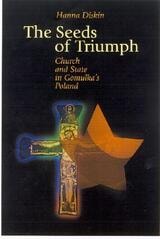
The Seeds of Triumph
Church and State in Gomulka's PolandHannah Diskin
Central European University Press, 2001
The Roman Catholic Church has played a unique role in the history of Poland in the twentieth century: the people and the Church drew closer and closer together during Nazi rule, the Stalinist period and the somewhat milder, though strongly anti-religious and repressive Gomulka regime (1956-1970). The power struggle between the Church and the communist government did in fact play a role in shaping world politics, the Polish Church having been the force behind the opposition movement in Poland. Against this background, a Polish pope appeared and made a major contribution to the collapse of communism.
The Seeds of Triumph, the most comprehensive recent book on the opposition of Church and State in post-war Poland, compares the characteristics and consequences of this relationship during three different periods: the first and second periods of Gomulka's rule, and the Stalinist era between the two Gomulka periods. It examines the balance of power, studying to what degree the Church and other factors in the political environment influenced governmental policy-making. The author disproves the common stereotype, held at the time, that domestic conditions played only a marginal role. In examining the regime's policies, she covers the legal background, the general policy characteristics, the specific policies implemented during the period, and the role of the individual actors, most notably the pivotal role of the two main protagonists, Cardinal Wyszynski and Wladislaw Gomulka.
In her landmark study, Diskin makes a significant contribution to the study of authoritarian systems and greatly enhances our understanding of the centrality of the Church in recent Polish history.
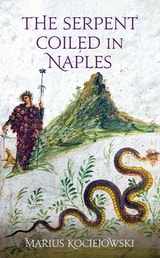
The Serpent Coiled in Naples
Marius Kociejowski
Haus Publishing, 2023
In recent years Naples has become, for better or worse, the new destination in Italy. While many of its more unusual features are on display for all to see, the stories behind them remain largely hidden. In Marius Kociejowski’s portrait of this baffling city, the serpent can be many things: Vesuvius, the mafia-like Camorra, the outlying Phlegrean Fields (which, geologically speaking, constitute the second most dangerous area on the planet). It is all these things that have, at one time or another, put paid to the higher aspirations of Neapolitans themselves. Naples is simultaneously the city of light, sometimes blindingly so, and the city of darkness, although often the stuff of cliché. The boundary that separates death from life is porous in the extreme: the dead inhabit the world of the living and vice versa. The Serpent Coiled in Naples is a travelogue, a meditation on mortality, and much else besides.
The Sexuality of History
Modernity and the Sapphic, 1565-1830Susan S. Lanser
University of Chicago Press, 2014
In The Sexuality of History, Susan S. Lanser shows how intimacies between women became harbingers of the modern, bringing the sapphic into the mainstream of some of the most significant events in Western Europe. Ideas about female same-sex relations became a focal point for intellectual and cultural contests between authority and liberty, power and difference, desire and duty, mobility and change, order and governance. Lanser explores the ways in which a historically specific interest in lesbians intersected with, and stimulated, systemic concerns that would seem to have little to do with sexuality. Departing from the prevailing trend of queer reading whereby scholars ferret out hidden content in “closeted” texts, Lanser situates overtly erotic representations within wider spheres of interest. The Sexuality of History shows that just as we can understand sexuality by studying the past, so too can we understand the past by studying sexuality.
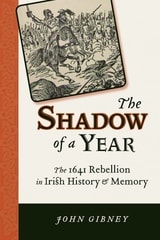
The Shadow of a Year
The 1641 Rebellion in Irish History and MemoryJohn Gibney
University of Wisconsin Press, 2013
Was the 1641 rebellion a justified response to dispossession and repression? Or was it an unprovoked attempt at sectarian genocide? John Gibney comprehensively examines three centuries of this debate. The struggle to establish and interpret the facts of the past was also a struggle over the present: if Protestants had been slaughtered by vicious Catholics, this provided an ideal justification for maintaining Protestant privilege. If, on the other hand, Protestant propaganda had inflated a few deaths into a vast and brutal “massacre,” this justification was groundless.
Gibney shows how politicians, historians, and polemicists have represented (and misrepresented) 1641 over the centuries, making a sectarian understanding of Irish history the dominant paradigm in the consciousness of the Irish Protestant and Catholic communities alike.
The Shock of Medievalism
Kathleen Biddick
Duke University Press, 1998
Biddick describes how the discipline of medieval studies was defined by a process of isolation and exclusion—a process that not only ignored significant political and cultural issues of the nineteenth century but also removed the period from the forces of history itself. Wanting to separate themselves from popular studies of medieval culture, and valuing their own studies as scientific, nineteenth-century academics created an exclusive discipline whose structure is consistently practiced today, despite the denials of most contemporary medieval scholars. Biddick supports her argument by discussing the unavowed melancholy that medieval Christians felt for Jews and by revealing the unintentional irony of nineteenth-century medievalists’ fabrication of sentimental objects of longing (such as the “gothic peasant”). The subsequent historical distortions of this century-old sentimentality, the relevance of worker dislocation during the industrial revolution, and other topics lead to a conclusion in which Biddick considers the impact of an array of factors on current medieval studies.
Simultaneously displacing disciplinary stereotypes and altering an angle of historical inquiry, The Shock of Medievalism challenges accepted thinking even as it produces a new direction for medieval studies. This book will provoke scholars in this field and appeal to readers who are interested in how historicizing processes can affect the development of academic disciplines.
The Shock of the Ancient
Literature and History in Early Modern FranceLarry F. Norman
University of Chicago Press, 2011
The cultural battle known as the Quarrel of the Ancients and Moderns served as a sly cover for more deeply opposed views about the value of literature and the arts. One of the most public controversies of early modern Europe, the Quarrel has most often been depicted as pitting antiquarian conservatives against the insurgent critics of established authority. The Shock of the Ancient turns the canonical vision of those events on its head by demonstrating how the defenders of Greek literature—rather than clinging to an outmoded tradition—celebrated the radically different practices of the ancient world.
At a time when the constraints of decorum and the politics of French absolutism quashed the expression of cultural differences, the ancient world presented a disturbing face of otherness. Larry F. Norman explores how the authoritative status of ancient Greek texts allowed them to justify literary depictions of the scandalous. The Shock of the Ancient surveys the diverse array of aesthetic models presented in these ancient works and considers how they both helped to undermine the rigid codes of neoclassicism and paved the way for the innovative philosophies of the Enlightenment. Broadly appealing to students of European literature, art history, and philosophy, this book is an important contribution to early modern literary and cultural debates.
The Short Chronicle
A Poor Clare's Account of the Reformation of GenevaJeanne de Jussie
University of Chicago Press, 2006
First published in French in 1611, Jussie’s Short Chronicle is translated here for an English-speaking audience for the first time, providing a fresh perspective on struggles for religious and political power in sixteenth-century Geneva and a rare glimpse at early modern monastic life.

The Sinking of the Lisbon Maru
Britain’s Forgotten Wartime TragedyTony Banham
Hong Kong University Press, 2006
The Sins of the Fathers
Germany, Memory, MethodJeffrey K. Olick
University of Chicago Press, 2016
Nowhere has this precarious balance been more potent, or important, than in the Federal Republic of Germany, where the devastation and atrocities of two world wars have weighed heavily in virtually every moment and aspect of political life. The Sins of the Fathers confronts that difficulty head-on, exploring the variety of ways that Germany’s leaders since 1949 have attempted to meet this challenge, with a particular focus on how those approaches have changed over time. Jeffrey K. Olick asserts that other nations are looking to Germany as an example of how a society can confront a dark past—casting Germany as our model of difficult collective memory.
The Sixteenth Century Journal, volume 54 number 1-2 (Spring 2023)
The University of Chicago Press
University of Chicago Press Journals, 2023
The Sixteenth Century Journal, volume 54 number 3-4 (Fall 2023)
The University of Chicago Press
University of Chicago Press Journals, 2023
The Sixteenth Century Journal, volume 55 number 1-2 (Spring 2024)
The University of Chicago Press
University of Chicago Press Journals, 2024
The Sixteenth Century Journal, volume 55 number 3-4 (Fall 2024)
The University of Chicago Press
University of Chicago Press Journals, 2024
The Sixteenth Century Journal, volume 56 number 1 (Spring 2025)
The University of Chicago Press
University of Chicago Press Journals, 2025
The Sixteenth Century Journal, volume 56 number 2 (Summer 2025)
The University of Chicago Press
University of Chicago Press Journals, 2025
The Sixteenth Century Journal, volume 56 number 3 (Fall 2025)
The University of Chicago Press
University of Chicago Press Journals, 2025
The Sixteenth Century Journal, volume 56 number 4 (Winter 2025)
The University of Chicago Press
University of Chicago Press Journals, 2025
The Sixteenth Century Journal, volume 57 number 1 (Spring 2026)
The University of Chicago Press
University of Chicago Press Journals, 2026
The Sixteenth Century Journal, volume 57 number 2 (Summer 2026)
The University of Chicago Press
University of Chicago Press Journals, 2026
The Sixteenth Century Journal, volume 57 number 3 (Fall 2026)
The University of Chicago Press
University of Chicago Press Journals, 2026
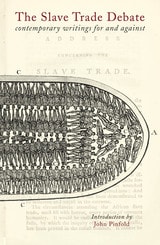
The Slave Trade Debate
Contemporary Writings For and AgainstEdited by the Bodleian Library
Bodleian Library Publishing, 2007
More than fifty years before the question of slavery launched the United States into the bloody turmoil of the American Civil War, Britain wrestled passionately with the same issues. A flood of pamphlets published by both abolitionists and slavery proponents fueled the debate, and they are now collected here in this fascinating volume in commemoration of the Abolition of the Slave Trade Act, 1807.
Written during the 1780s and 1790s, the pamphlets confront the issues surrounding slavery, such as the Rights of Man, the economic health of the British colonies, poverty in England, and, most prominently, the economic and moral condition of the African slaves. The authors on both sides of the debate—including such prominent figures as the eventual King William IV, Sir John Gladstone (father of the future Prime Minister William Gladstone), and the leading abolitionist William Wilberforce—draw upon biblical scriptures to justify their positions, providing illuminating insights into the theological debates of the time as well. Also included in the volume are an excerpt of abolitionist James Ramsay’s journal and an informative introduction that places the writings in their historical and social contexts. The Slave Trade Debate is an essential resource for scholars of transatlantic slavery and British history.
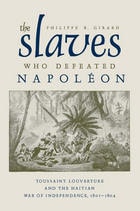
The Slaves Who Defeated Napoléon
Toussaint Louverture and the Haitian War of Independence, 1801–1804Philippe R. Girard
University of Alabama Press, 2011
A deeply researched and definitive account of the climactic battle at the end of the Haitian Revolution
Among the many rebellions against European colonial empires, the Haitian Revolution against France is among the most dramatic and complex. Having begun in 1791 as France was in the throes of its own young revolution, the conflict reached its dramatic climax when Napoleon dispatched a heavily armed expeditionary force led by his brother-in-law Charles Leclerc to re-establish slavery and the sugar economy that had so enriched France. Philippe Girard’s Slaves Who Defeated Napoleon is a deeply researched and engrossing account of this invasion and its spectacular defeat.
For this ambitious account, Philippe Girard has studied not only primary records in Haiti itself but also rare documents from nineteen public and private archives and research libraries in French, U.S., British, and Spanish collections. His more inclusive approach provides a fuller, more accurate and detailed narrative. He reveals not only key military movements, but also less-known aspects like the activities of U.S. merchants, in-fighting within Napoleon’s government, and communication between both sides and other European powers. Girard fills the work with unforgettable stories of those who led or were caught up in the war, people like poorly armed Black soldiers who ambushed Bonaparte’s columns, French child drummers, Jewish bankers in Kingston, weapon smugglers from Quaker Philadelphia, Polish artillerists, and mixed-raced people struggling to preserve their freedom against both Black and white opponents.
Transcending pat ideological and racial categories, the book brings into focus an Atlantic society at the crossroads of African and European influences, where Haitian rebels fought France while embracing its ideals.

The Slavs in European History and Civilization
Dvornik, Francis
Rutgers University Press, 1975
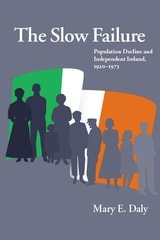
The Slow Failure
Population Decline and Independent Ireland, 1920–1973Mary E. Daly
University of Wisconsin Press, 2006
Today Ireland’s population is rising, immigration outpaces emigration, most families have two or at most three children, and full-time farmers are in steady decline. But the opposite was true for more than a century, from the great famine of the 1840s until the 1960s. Between 1922 and 1966—most of the first fifty years after independence—the population of Ireland was falling, in the 1950s as rapidly as in the 1880s. Mary Daly’s The Slow Failure examines not just the reasons for the decline, but the responses to it by politicians, academics, journalists, churchmen, and others who publicly agonized over their nation’s “slow failure.” Eager to reverse population decline but fearful that economic development would undermine Irish national identity, they fashioned statistical evidence to support ultimately fruitless policies to encourage large, rural farm families. Focusing on both Irish government and society, Daly places Ireland’s population history in the mainstream history of independent Ireland.
Daly’s research reveals how pastoral visions of an ideal Ireland made it virtually impossible to reverse the fall in population. Promoting large families, for example, contributed to late marriages, actually slowing population growth further. The crucial issue of emigration failed to attract serious government attention except during World War II; successive Irish governments refused to provide welfare services for emigrants, leaving that role to the Catholic Church. Daly takes these and other elements of an often-sad story, weaving them into essential reading for understanding modern Irish history
The Social Politics of Medieval Diplomacy
Anglo-German Relations (1066-1307)Joseph P. Huffman
University of Michigan Press, 2000

The Song Is Over
A Jewish Girl in DresdenHenny Brenner
University of Alabama Press, 2010
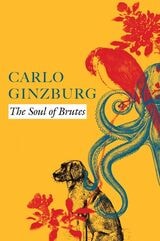
The Soul of Brutes
Carlo Ginzburg
Seagull Books, 2022
Carlo Ginzburg has been at the forefront of the discipline of microhistory ever since his earliest works were published to great acclaim in the 1970s. The Soul of Brutes brings together four of Ginzburg’s recent scintillating essays and lectures that testify to the diversity of his thoughts on history and philosophy.
“Civilization and Barbarism” resurrects a sixteenth-century debate between two thinkers in Spain about the humanness, or lack thereof, of Native Americans, and highlights the influence of classical thinkers, from Herodotus to Aristotle, and the iterations and interpretations through which their writings have traversed down to the Cinquecento. In “The Soul of Brutes” Ginzburg traces the genealogy of the debate on the rationality of animals and the limits of their imagination, from Plutarch and Aristotle to sixteenth-century thinkers like Pietro Pomponazzi and Girolamo Rorario. Following Montaigne, he provokes, are we to beasts as they seem to us? In “Calvino, Manzoni and the Grey Zone,” Carlo Ginzburg pithily writes about the mental dialogue between Holocaust survivor Primo Levi and two Italians who profoundly influenced Levi’s search for these “unexplored pockets of exception”—his contemporary Italo Calvino and the nineteenth-century novelist and philosopher Alessandro Manzoni. And finally, in “Schema and Bias”, he probes whether the historian can clearly see into the past, peering through the layers of bias, which include their own prejudices, or if relativism is the only path.
With several beautifully reproduced color illustrations, The Soul of Brutes will interest not only scholars of history, philosophy, and art, but also general intellectual readers.
The Sounds of Ethnicity
Listening to German North America, 1850 - 1914Barbara Lorenzkowski
University of Manitoba Press, 2010
The Sovereigns
A Jewish Family in the German CountrysideEric Lucas
Northwestern University Press, 2001
But anti-Semites, under the protection of the Nazi regime, began to settle old scores, and targeted the economically successful rural Jews. New laws stripped Jewish meat dealers of their rights, and Aryan competitors eagerly forced them aside. That was only the beginning. In the Holocaust that followed, some members of the family escaped. Others did not.

The Soviet Nuclear Archipelago
A Historical Geography of Atomic-Powered CommunismPer Högselius
Central European University Press, 2024
The war in Ukraine, with the exposure of nuclear power stations and the danger of atomic warfare, has made the legacy of the Soviet nuclear sector of critical importance.
The two authors map the Soviet nuclear industry in a shifting historical context, making sense of a complex socio-technical and environmental history. Taking an innovative approach, this book explores the history of atomic power in the former Soviet Union using the spatial dimensions of the nuclear industry as a point of departure. The key concept is that of the archipelago – a network of nuclear facilities spread throughout the Soviet territory, but mutually reliant on each other and densely connected.
The story traces the emergence of nuclear science and technology for military and civilian purposes through to the post-Soviet Russian nuclear corporations as providers of resources and technology. The book explains how nuclear developments in the Soviet Union interacted with processes of environmental and landscape change. The spatial lens offers an analytically fruitful and pedagogically stimulating way to comprehend the nuclear histories of the Soviet Union and its successor states.
The Space of Boredom
Homelessness in the Slowing Global OrderBruce O'Neill
Duke University Press, 2017