Results by title
3390 books match the query 'Fiction' and 1041 start with t
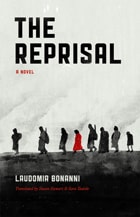
The Reprisal
A NovelLaudomia Bonanni
University of Chicago Press, 2013
Based on a number of incidents that took place in Abruzzo during the war, Laudomia Bonanni’s compact and tragic novel explores the overwhelming conflicts between ideology and community, justice and vengeance. The story is embedded in the cruel reality of Italian fascism, but its themes of revenge, sacrifice, and violence emerge as universal, delivered in prose that is at once lyrical and brutal.

The Rest Is Slander
Five StoriesThomas Bernhard
Seagull Books, 2022
“The cold increases with the clarity,” said Thomas Bernhard while accepting a major literary prize in 1965. That clarity was the postwar realization that the West’s last remaining cultural reference points were being swept away by the ever-greater commodification of humankind. Collecting five stylistically transitional tales by Bernhard, all of which take place in sites of extreme cold, this volume extends that bleak vision of the master Austrian storyteller.
In “Ungenach,” the reluctant heir of an enormous estate chooses to give away his legacy to an assortment of oddballs as he discovers the past of his older brother, who was murdered during a career in futile colonialist philanthropy. In “The Weatherproof Cape,” a lawyer tries to maintain a sense of familial solidarity with a now-dead client with the help of an unremarkable piece of clothing. “Midland in Stilfs” casts a jaundiced eye on the laughable efforts of a cosmopolitan foreigner to attain local authenticity on a moribund Alpine farmstead. In “At the Ortler,” two middle-aged brothers—one a scientist, the other an acrobat—meditate on their unusual career paths while they climb a mountain to reclaim a long-abandoned family property. And in “At the Timberline,” the unexpected arrival of a young couple in a mountain village leads to the discovery of a scandalous crime that casts a shadow on the personal life of the policeman investigating it.
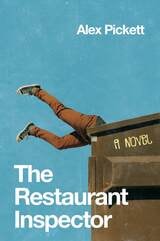
The Restaurant Inspector
Alex Pickett
University of Wisconsin Press, 2021
This antic, raunchy send-up of small-town life gets deep into the minds and hearts of its characters and their entanglements. Alex Pickett exposes the fault lines in Midwestern Nice and reveals how corruption can take hold in even the most unlikely of places.
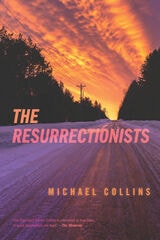
The Resurrectionists
Collins, Michael
University of Iowa Press, 2021
Haunted by the deaths of his parents and uncle, Frank Cassidy journeys north to dispute a cousin's claim to the family farm, where he meets a stranger who might resolve mysteries about Frank's past.

The Return of Philip Latinowicz
Miroslav Krleza
Northwestern University Press, 1995
The first and most enduring work by preeminent Croatian writer Miroslav Krleza, The Return of Philip Latinowicz was highly praised by Jean-Paul Sartre.
The Return of the Omniscient Narrator
Authorship and Authority in Twenty-First Century FictionPaul Dawson
The Ohio State University Press, 2013
To address this phenomenon, the book reformulates existing definitions of literary omniscience, shifting attention away from questions of narratorial knowledge and toward omniscient narration as a rhetorical performance of narrative authority that invokes and projects a historically specific figure of authorship. Through a study of fiction by authors such as Zadie Smith, Jonathan Franzen, Richard Powers, Martin Amis, Rick Moody, Edward P. Jones, and Nicola Barker, the book analyzes how the conventional narrative authority of omniscient narrators is parlayed into claims for the cultural authority of authors and of the novel itself.
In the course of its investigation, The Return of the Omniscient Narrator engages with major movements in narrative theory—rhetorical, cognitive, and feminist—to challenge and reconsider many key narratological categories, including Free Indirect Discourse, the relation between voice and focalization, and the narrative communication model. This challenge is framed by an argument for a discursive approach to narrative fiction that addresses the neglect of authorship in narrative theory.
The Rhetoric of Fiction
Wayne C. Booth
University of Chicago Press, 1983
For this new edition, Wayne C. Booth has written an extensive Afterword in which he clarifies misunderstandings, corrects what he now views as errors, and sets forth his own recent thinking about the rhetoric of fiction. The other new feature is a Supplementary Bibliography, prepared by James Phelan in consultation with the author, which lists the important critical works of the past twenty years—two decades that Booth describes as "the richest in the history of the subject."
The Rhetoric of Fictionality
Narrative Theory and the Idea of FictionRichard Walsh
The Ohio State University Press, 2007

The Rhetoric of Modernist Fiction
From a New Point of ViewMorton Levitt
University Press of New England, 2005
The Rise of Jonas Olsen
A Norwegian Immigrant’s SagaJohannes Wist
University of Minnesota Press, 2005
The Rise of Jonas Olsen is at once an immigrant novel, business novel, political novel, and a western, offering a rich and panoramic view of Scandinavian immigrant life in the Upper Midwest. Wist combines realism and satire to depict the role Norwegian Americans played in the economic, political, and cultural life of the Upper Midwest.
Originally published serially in the Norwegian-language newspaper the Decorah Posten in the 1920s, The Rise of Jonas Olsen illustrates an immigrant’s struggle to preserve his identity and heritage while striving to become fully accepted as an American.
Johannes B. Wist (1864–1923) was a journalist and editor of the Decorah Posten from 1900 to 1923.
Orm Øverland is professor of American literature at the University of Bergen, Norway, and the author of The Western Home: A Literary History of Norwegian America and Immigrant Minds, American Identities: Making the United States Home, 1870-1930.
Todd W. Nichol is editor of the Norwegian-American Historical Association publication program.
Published in cooperation with the Norwegian-American Historical Association.
The River Gods
Brian Kiteley
University of Alabama Press, 2009
Each of the voices--including a character named Brian Kiteley and his family, the original Native American inhabitants, the actor Richard Burton, Sojourner Truth, Richard Nixon, Ludwig Wittgenstein, Jonathan Edwards, and many nameless others--ruminate on a past that is startlingly present and tangible. The main character, though, is the world of Northampton, irrevocably woven into the fabric of Western history, yet still grounded by the everyday concerns of health, money, food, love, and family. It is a novel of voices, the living and the dead, that illuminate the passage of time.
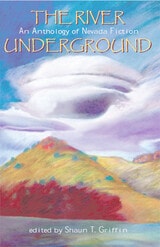
The River Underground
An Anthologyof Nevada FictionShaun T. Griffin
University of Nevada Press, 2001
Here we find a delightful and long-forgotten story by the doyen of Nevada writers, Robert Laxalt; a moving story by Adrian C. Louis, a Native American from Lovelock who has found national acclaim for his powerful fiction and poetry about reservation life; and excerpts from work by best-selling writers Teresa Jordan, Steven Nightingale, Douglas Unger, and Richard Wiley.
Settings range from rural Nevada to rural post-revolutionary China, from the glitz of Las Vegas to a Basque immigrant household in Carson City, from the hills of Appalachia to the Pacific during World War II. Characters include a pair of Mormon teenagers trying to escape the moral rigors of their faith, a fugitive Shoshone Indian trying to preserve the ways of his ancestors against the pressures of history, an immigrant family in Las Vegas coping with the father’s final illness, a trio of escaped prisoners bent on revenge, and an aging African American jazz musician. There is work by writers whose names are known to readers of fine fiction everywhere and work by talented newcomers.
Editor Griffin has provided for each selection a brief biographical sketch of the author and some comments on the qualities of the piece that prompted its inclusion in the anthology. As a collection of fiction, this is exciting reading—provocative, often moving, sometimes startling in its brilliance. It demonstrates unequivocally that writing, and writers, are flourishing in Nevada, and that the state’s literary community is remarkably abundant in talent, creativity, and the range of its voices and concerns.
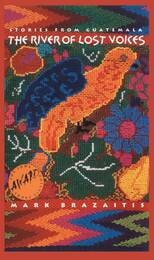
The River of Lost Voices
Stories from GuatemalaMark Brazaitis
University of Iowa Press, 1998
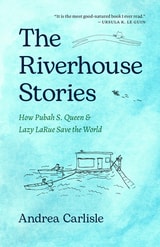
The Riverhouse Stories
How Pubah S. Queen and Lazy LaRue Save the WorldAndrea Carlisle
Oregon State University Press, 1986
40th anniversary edition of a rediscovered classic
When Pubah and Lazy LaRue move to a houseboat on an Oregon river, they find themselves immersed in a life filled with whimsical adventures. Even though their dwelling is ancient, tippy, and in need of endless repairs, their affection for it, for river life, and for one another does not wane. These linked stories teem with life and with love for their friends and for new neighbors—other houseboat people, ducks, beavers, muskrats, and all else the river has to offer. Lazy LaRue writes stories; Pubah is an apprentice electrician. Their world encompasses the mundane and the fanciful—from lassoing logs and rewiring a houseboat to dreaming of new inventions and traveling in a hot air balloon.
Filled with humor, optimism, and playful exploration, the stories in these pages bring warmth and inspiration. Illustrations by Mary Narkiewicz capture the quirky quality of the tales with splendid charm and add to the dreamlike quality of the storytelling. A new afterword by the author reflects on writing The Riverhouse Stories and on the cultural climate of the time, showing how much the world has changed over four decades.
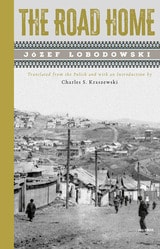
The Road Home
The Ukrainian Trilogy, Part 3Józef Lobodowski
Central European University Press, 2026
Set amid the violence and social disintegration of the revolutionary period, there is no hatred in Lobodowski's work. Instead, it offers a vivid and nuanced portrayal of the Kuban, a multinational area in the northwestern Caucasus near the Sea of Azov, as a landscape where brutality and compassion coexist. Within spaces marked by deprivation and upheaval, bonds of loyalty, honor, and care emerge in unexpected ways, and strangers become protectors and guides.This volume presents a powerful meditation on endurance, identity, and the persistence of humanity in an age of collapse.
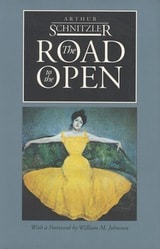
The Road to the Open
Arthur Schnitzler
Northwestern University Press, 1991
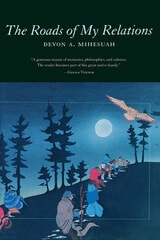
The Roads of My Relations
Devon A. Mihesuah
University of Arizona Press, 2001
"I've traveled a lot of roads, but never alone. My relations are with me," says Billie McKenney, one of the matriarchs of the complex family of Choctaws searching for peace as the white world rapidly encroaches on their tribal land, politics, and values. In her first collection of stories, Native American writer Devon A. Mihesuah chronicles the lives of several generations of a close-knit Choctaw family as they are forced from their traditional homeland in nineteenth-century Mississippi and endure unspeakable sorrows during their journey before settling in southeastern Oklahoma.
Blending family lore, stark realism, and vivid imagination, The Roads of My Relations relays a strong sense of Choctaw culture and world view in absorbing tales of history and legend. Unfolding through the voices and actions of family members, confused half-bloods, and unlikely heroes—not all of them living or even human—the stories tell of the horrors of forced removal, the turbulence of post Civil War Indian Territory, the terrifying violence suffered at the hands of immortal Crow witches, and the family's ultimate survival against forces of evil. Time-traveling ghosts, mysterious medicine men, and eerie shape-shifters share the pages with proud matriarchs, mischievous schoolgirls, and loving siblings.
Together, these interwoven stories express the strength and persistence of a tribe whose identity and pride have survived the disruptions of colonialism. With The Roads of My Relations, Devon A. Mihesuah has created a universal and timeless exploration of heritage, spirituality, and the importance of preserving and passing on tradition.
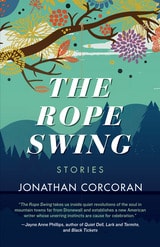
The Rope Swing
StoriesJonathan Corcoran
West Virginia University Press, 2016
A once-booming West Virginia rail town no longer has a working train. The residents left behind in this tiny hamlet look to the mountains that surround them on all sides: The outside world encroaches, and the buildings of the gilded past seem to crumble more every day.
These are the stories of outsiders—the down and out. What happens to the young boy whose burgeoning sexuality pushes him to the edge of the forest to explore what might be love with another boy? What happens when one lost soul finally makes it to New York City, yet the reminders of his past life are omnipresent? What happens when an old woman struggles to find a purpose and reinvent herself after decades of living in the shadow of her platonic life partner? What happens to those who dare to live their lives outside of the strict confines of the town’s traditional and regimented ways?
The characters in The Rope Swing—gay and straight alike—yearn for that which seems so close but impossibly far, the world over the jagged peaks of the mountains.
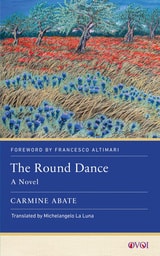
The Round Dance
A NovelCarmine Abate
Rutgers University Press, 2024
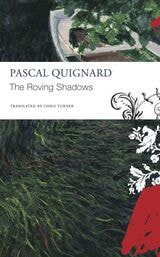
The Roving Shadows
Pascal Quignard
Seagull Books, 2010
The first book in Pascal Quignard’s Last Kingdom series, The Roving Shadows can be read as a long meditation on reading and writing that strives to situate these otherwise innocuous activities in a profound relationship to sex and death. Writing and reading can in fact be linked to our animal natures and artistic strivings, to primal forces and culturally persistent fascinations. With dexterity and inventiveness, Quignard weaves together historical anecdotes, folktales from the East and West, fragments of myth, and speculative historical reconstructions. The whole, written in a musical style not far removed from that of Couperin, whose piano composition Les Ombres errantes lends the book its title, coheres into a work of literature that reverberates in the psyche long after one has laid it down.
The Roving Shadows is a rare and wondrous tour de force that cements Quignard’s reputation in contemporary world literature. Available now in English, this boldly adventurous work will find a new and welcoming audience.

The Rumphulus
Joseph G. Peterson
University of Iowa Press, 2020
Romulus was the founder of Rome; and those tossed outside the city-gate are not Romulus’s children but the cast-offs living in hovels, the Rumphulus. However, this isn’t ancient Rome, but rather the nature preserve of a contemporary American suburb. The outcasts don’t understand why they’ve been relegated to the
woods. Nor do they know if they will ever summon the courage to cross the roads that act as a physical and psychological barrier to their reentry into conventional society. Daily they negotiate the harsh conditions of the wild and the dangerous presence of one another while they contemplate their exiles. That is until society
comes for one of them.
The Rumphulus have grown their beards long, and when they can no longer stand life they howl like wolves; only they are not wolves but the stranded city outcasts who howl in pain.
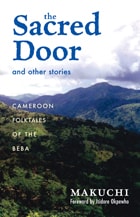
The Sacred Door and Other Stories
Cameroon Folktales of the BebaMakuchi
Ohio University Press, 2007
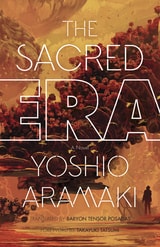
The Sacred Era
A NovelAramaki Yoshio
University of Minnesota Press, 2017
The magnum opus of a Japanese master of speculative fiction, and a book that established Yoshio Aramaki as a leading representative of the genre, The Sacred Era is part post-apocalyptic world, part faux-religious tract, and part dream narrative. In a distant future ruled by a new Papal Court serving the Holy Empire of Igitur, a young student known only as K arrives at the capital to take The Sacred Examination, a text that will qualify him for metaphysical research service with the court. His performance earns him an assignment in the secret Planet Bosch Research Department; this in turn puts him on the trail of a heretic executed many years earlier, whose headless ghost is still said to haunt the Papal Court, which carries him on an interplanetary pilgrimage across the Space Taklamakan Desert to the Planet Loulan, where time stands still, and finally to the mysterious, supposedly mythical Planet Bosch, a giant, floating plant-world that once orbited Earth but has somehow wandered 1,000 light years away.
K’s journey to this strange world, seemingly sprung from Hieronymus Bosch’s Garden of Earthly Delights, is a journey into inner and outer space, as the novel traffics in mystic and metaphysical questions only to transform them into technical and astrophysical problems, translating the substance of religious and mythic texts into the language of science fiction.
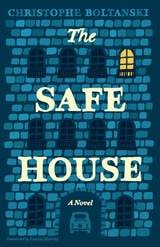
The Safe House
A NovelChristophe Boltanski
University of Chicago Press, 2017
When the Nazis came, Étienne Boltanski divorced his wife and walked out the front door, never to be seen again during the war. So far as the outside world knew, the Jewish doctor had fled. The truth was that he had sneaked back to hide in a secret crawl space at the heart of the house. There he lived for the duration of the war. With the Liberation, Étienne finally emerged, but he and his family were changed forever—anxious, reclusive, yet proudly eccentric. Their lives were spent, amid Bohemian disarray and lingering wartime fears, in the mansion’s recesses or packed comically into the protective cocoon of a Fiat.
That house (and its vehicular appendage) is at the heart of Christophe Boltanski’s ingeniously structured, lightly fictionalized account of his grandparents and their extended family. The novel unfolds room by room—each chapter opening with a floorplan—introducing us to the characters who occupy each room, including the narrator’s grandmother—a woman of “savage appetites”—and his uncle Christian, whose haunted artworks would one day make him famous. “The house was a palace,” Boltanski writes, “and they lived like hobos.” Rejecting convention as they’d rejected the outside world, the family never celebrated birthdays or even marked the passage of time, living instead in permanent stasis, ever more closely bonded to the house itself.
The Safe House was a literary sensation when published in France in 2015 and won the Prix de Prix, France’s most prestigious book prize. A French-language film adaptation, La cache, was released in 2025 from director Lionel Baier. With hints of Oulipian playfulness and an atmosphere of dark humor, The Safe House is an unforgettable portrait of a self-imprisoned family.
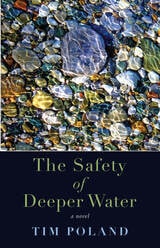
The Safety of Deeper Water
A NovelTim Poland
West Virginia University Press, 2009
When Sandy Holston is on dry land, she’s nothing special: a nurse who wears her hair in a ponytail and prefers a fishing lure as an earring. But once she dons waders, picks up a fly rod, and steps into a river, she becomes a remarkable, elegant fisherwoman who’s at peace with the world.
After surviving her marriage to Vernon - her violent, incarcerated ex-husband - peace is just what Sandy needs. So she moves to Damascus, a small town on the Ripshin River, where she plans to enjoy the fishing and the solitude. Finally she is on the brink of a life she desires in a place she loves. But as the Ripshin’s trout mysteriously die off, and as Sandy grows closer to a reclusive neighbor who has a propensity for fishing naked, her plans are put in jeopardy. Will Sandy be able to find peace - in the river or out - once Vernon is released from prison and fulfills his promise to hunt her down?
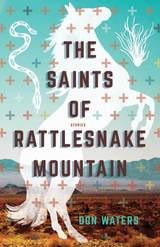
The Saints of Rattlesnake Mountain
StoriesDon Waters
University of Nevada Press, 2017
Soldiers, seekers, priests, prisoners, and surfers pursue their fate amid bizarre, sometimes overwhelming circumstances. In “La Luz de Jesús,” a gutless Los Angeles screenwriter, a believer in nothing but the god of Hollywood, must reorient after he encounters a group of penitents in New Mexico’s Sangre de Cristo Mountains. The decorated soldier in “Española” faces more chaos back home than he did during his tour in Iraq. And “The Saints of Rattlesnake Mountain” pairs a “trustee” prison inmate and a wild mustang horse, both wards of the state of Nevada, as they fumble toward a spiritual truth.
These stories capture the spirit of a region and its people. Once again Waters assembles an unconventional cast of characters, capturing their foibles and imperfections, and always rendering them with compassion as these modern-day martyrs and spiritually haunted survivors strive for some kind of redemption.
Ingenious, sometimes forbidding, often absurd, and altogether original, The Saints of Rattlesnake Mountain is a stirring tribute to the lives, loves, and hopes of the faithful and the dispossessed.

The Salamander and Other Gothic Tales
Vladimir Odoevsky
Northwestern University Press, 1992
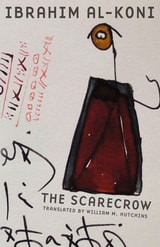
The Scarecrow
By Ibrahim al-Koni, translated by William M. Hutchins
University of Texas Press, 2015
The Scarecrow is the final volume of Ibrahim al-Koni’s Oasis trilogy, which chronicles the founding, flourishing, and decline of a Saharan oasis. Fittingly, this continuation of a tale of greed and corruption opens with a meeting of the conspirators who assassinated the community’s leader at the end of the previous novel, The Puppet. They punished him for opposing the use of gold in business transactions—a symptom of a critical break with their nomadic past—and now they must search for a leader who shares their fetishistic love of gold. A desert retreat inspires the group to select a leader at random, but their “choice,” it appears, is not entirely human. This interloper from the spirit world proves a self-righteous despot, whose intolerance of humanity presages disaster for an oasis besieged by an international alliance. Though al-Koni has repeatedly stressed that he is not a political author, readers may see parallels not only to a former Libyan ruler but to other tyrants—past and present—who appear as hollow as a scarecrow.
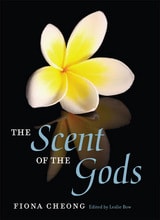
The Scent of the Gods
Fiona Cheong
University of Illinois Press, 2010

The Schlemiel as Metaphor, Revised and Enlarged Edition
Studies in Yiddish and American Jewish FictionSanford Pinsker
Southern Illinois University Press, 1991
The certainty that deep down we are all schlemiels is perhaps what makes America love an inept ball team or a Woody Allen who unburdens his neurotic heart in public.
In this unique, revised history of the schlemiel, Sanford Pinsker uses psychological, linguistic, and anecdotal approaches, as well as his considerable skills as a spritely storyteller, to trace the schlemiel from his beginnings in the Old Testament through his appearance in the nineteenth-century literature of Mendele Mocher Seforim and Sholom Aleichem to his final development as the beautiful loser in the works of Isaac Bashevis Singer, Bernard Malamud, Saul Bellow, Philip Roth, and Woody Allen. Horatio Alger might have once been a good emblem of the American sensibility, but today Woody Allen’s anxious, bespectacled punin (face) seems closer, and truer, to our national experience. His urban, end-of-the-century anxieties mirror—albeit in exaggeration—our own.
This expanded study of the schlemiel is especially relevant now, when scholarship of Yiddish and American Jewish literature is on the increase. By sketching the family tree of that durable anti-hero the schlemiel, Pinsker proves that Jewish humor is built upon the very foundations of the Jewish experience. Pinsker shows the evolution of the schlemiel from the comic butt of Yiddish jokes to a literary figure that speaks to the heart of our modern problems, and he demonstrates the way that Yiddish humor provides a sorely needed correction, a way of pulling down the vanities we all live by.
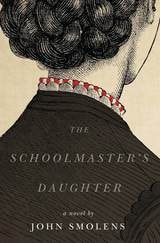
The Schoolmaster's Daughter
John Smolens
Michigan State University Press, 2019
The Science Fiction of Kris Neville
Barry N. Malzberg
Southern Illinois University Press, 1984
Other stories in this anthology are “Old Man Henderson,” “The Hunter,” “Underground Movement,” “The Forest of Zil,” and “From the Government Printing Office.”
In most of the stories Neville writes of loneliness, isolation, alienation, intolerance of anything or anyone different, and of insanity created by the pressures of living. Along with madness of various kinds, his stories explore the essence of human nature and individuals interacting with one another as well as with society. As Malzberg notes, Neville, unlike many science fiction writers, was a serious author interested in “Big ideas.”
The Science Fiction of Mark Clifton
Edited by Barry N. Malzberg and Martin H. Greenberg.
Southern Illinois University Press, 1980
This collection of the best short stories of Mark Clifton makes these fine tales readily available for the first time in two decades.
Winner with Frank Riley of the 1955 Hugo Award for They’d Rather Be Right,Clifton has for a variety of reasons unrelated to the quality of his writing all but disappeared from the awareness of today’s science fiction audience. Never a prolific writer he had published only about twenty-five short stories before his death in 1963.But with those stories and his three novels he irrevocably altered the course of contemporary science fiction.
Almost single-handedly he introduced the full range of psychological insights to the commonly occurring themes of the genre—alien invasion, expanding technology, revolution against political theocracy, and space exploration and colonization—to ever more truthfully portray how humanity would react to a future that could be either mindless or intellectually stunning.
With his first published story, “What Have I Done?” Clifton initiated the theme of a starkly realistic world in which, at its best, humanity is inalterably vile—a theme that became an inextricable part of all his subsequent works. In his later works Clifton occasionally clothed his bitter indictment in the garb of comedy.
The stories collected here include “What Have I Done?” “Star, Bright,” “Crazy Joey,” “What Thin Partitions,” “Sense from Thought Divide,” “How Allied,” “Remembrance and Reflection,” “Hide! Hide! Witch!” “Clerical Error,” “What Now, Little Man?” and “Hang Head, Vandal!”
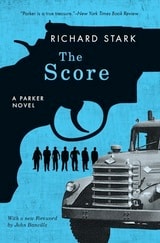
The Score
A Parker NovelRichard Stark
University of Chicago Press, 2009
The absolute wildest of all the novels in the classic hard-boiled crime series starring Parker, the deadliest heister of all!
Richard Stark's Parker novels are the hardest of hard-boiled, classic crime novels where the heists are huge, the body counts are high, and the bad guys usually win.
The Parker novels have been a huge influence on countless writers and filmmakers, including Quentin Tarantino, Stephen King, George Pelecanos, Colson Whitehead, Lucy Sante, John Banville, and many more. Their stripped-down language and hard-as-nails amorality create an unforgettable world where the next score could be the big one, but your next mistake could also be your last. There's nothing else like them.
It was an impossible crime: knock off an entire town—a huge plant payroll, all the banks, and all the stores—in one night. But there was one thief good enough to try—Parker. In The Score, Parker takes on his biggest job yet. All he needs are the right men, the right plan, and the right kind of help from Lady Luck. But as everyone knows, you can never count on that last one. This chilling caper could either be the perfect crime . . . or a set-up that would land him in jail—for life.

The Scummers
A NovelLEE MAYNARD
West Virginia University Press, 2012
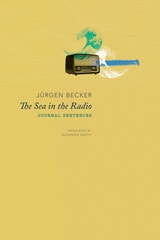
The Sea in the Radio
Journal SentencesJürgen Becker
Seagull Books, 2021
Jürgen Becker’s The Sea in the Radio is a collection of “journal sentences” divided into three sections called notebooks. In this great concert of a novel, language has been pared down to a minimum: fragments, phrases, and short sentences combine and make up a life both banal and profound. It is a life in which many of the details remain unstated or, as in miniatures, float just beyond the edges of the frame. Though at first the narrative may seem to move in a relatively harmless manner, soon enough we begin to realize that the story to be told may indeed be more unsettling than we had suspected.
The Sea in the Radio is a novel that bears witness not only to one’s final years but also to one’s place within history in general and Germany’s cataclysmic twentieth-century past in particular.
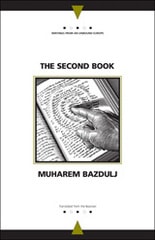
The Second Book
Muharem Bazdulj
Northwestern University Press, 2005
Muharem Bazdulj has broken from the pack of new Eastern European writers influenced by innovators such as Danilo Kiš, Milan Kundera, and Jorge Luis Borges. Employing a light touch, a daring anti-nationalist tone, and the kind of ambition that inspires nothing less than a rewriting of Bosnian and Yugoslavian history, Bazdulj weaves the imagined realities of history into fiction and fiction into history. To quote one critic, for Bazdulj history "is the sum of interpretations while imagination is the sum of facts."

The Secret Lives of Church Ladies
Deesha Philyaw
West Virginia University Press, 2020
*FINALIST for the 2020 National Book Award for Fiction*
*WINNER of the 2021 PEN/Faulkner Award*
*WINNER of the 2020 Story Prize*
*WINNER of the 2020 L.A. Times Book Prize, Art Seidenbaum Award for First Fiction*
“Beguiling.” —The New Yorker
“Tender, fierce, proudly black and beautiful, these stories will sneak inside you and take root.” —Kirkus Reviews (starred review)
“Triumphant.” —Publishers Weekly
“Cheeky, insightful, and irresistible.” —Ms. Magazine
“This collection marks the emergence of a bona fide literary treasure.” —Minneapolis Star Tribune
“Full of lived-in humanity, warmth, and compassion.” —Pittsburgh Current
The Secret Lives of Church Ladies explores the raw and tender places where Black women and girls dare to follow their desires and pursue a momentary reprieve from being good. The nine stories in this collection feature four generations of characters grappling with who they want to be in the world, caught as they are between the church’s double standards and their own needs and passions.
There is fourteen-year-old Jael, who has a crush on the preacher’s wife. At forty-two, Lyra realizes that her discomfort with her own body stands between her and a new love. As Y2K looms, Caroletta’s “same time next year” arrangement with her childhood best friend is tenuous. A serial mistress lays down the ground rules for her married lovers. In the dark shadows of a hospice parking lot, grieving strangers find comfort in each other.
With their secret longings, new love, and forbidden affairs, these church ladies are as seductive as they want to be, as vulnerable as they need to be, as unfaithful and unrepentant as they care to be, and as free as they deserve to be.

The Selected Stories of Ann Scott-Moncrief
Ann Scott-Moncrief
Catholic University of America Press, 2026
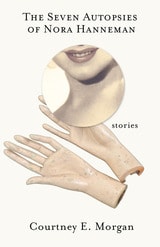
The Seven Autopsies of Nora Hanneman
StoriesCourtney E. Morgan
University of Alabama Press, 2017
In unfamiliar and sometimes bizarre narrative turns, the stories in Courtney E. Morgan’s The Seven Autopsies of Nora Hanneman traverse the gamut of female/human experience, both grounded in reality and in the irreal. Two schoolgirls culminate their sexual exploration in a surreal act of cannibalism. A sister molds her dead brother’s body into a bird. A woman gives birth to balls of twine and fur (among other things). A sex worker engages a version of herself in a brothel of prostituted body parts.
Morgan tears apart a host of archetypes and tropes of femininity—dismembering them, skinning them, and then draping them one by one over her characters like fur coats—revealing them as ill-fitting, sometimes comedic, sometimes monstrous, and always insufficient, masks. Along with these skins of the cultural “feminine,” the collection tries on an array of genres—dissecting, mutating, and breeding them together—from fairy tale to horror, surrealism to confessional (non)fiction, and erotica to (un)creation myth.
The book weaves around questions of sexuality, identity, and subjectivity. Mutability, instability, and liminality are foregrounded, both in content and form, character and language—blurring the lines between birth and death, death and sex, tugging at the transitional spaces of adolescence and gestation. Even as its treatment is essentialized, gender is muddied and obscured. Morgan shows off her linguistic range in this collection, from sharp-as-nails prose to lyrical moments of poetic reach—probing the extremes of the human condition through both narrative line and language itself.
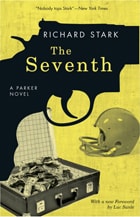
The Seventh
A Parker NovelRichard Stark
University of Chicago Press, 2009
An action-packed entry in the classic hard-boiled crime series starring Parker, the heister you don't want to cross!
Richard Stark's Parker novels are the hardest of hard-boiled, classic crime novels where the heists are huge, the body counts are high, and the bad guys usually win.
The Parker novels have been a huge influence on countless writers and filmmakers, including Quentin Tarantino, Stephen King, George Pelecanos, Colson Whitehead, Lucy Sante, John Banville, and many more. Their stripped-down language and hard-as-nails amorality create an unforgettable world where the next score could be the big one, but your next mistake could also be your last. There's nothing else like them.
The robbery was a piece of cake. The getaway was clean. The only thing left to do is split the cash—then it all goes wrong. In The Seventh, the heist of a college football game turns sour and the take is stolen from right under Parker’s nose. With the cops on his tail, Parker must figure out who crossed him—and how he can pay the culprit back.
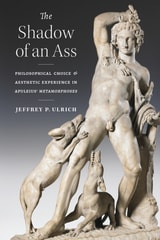
The Shadow of an Ass
Philosophical Choice and Aesthetic Experience in Apuleius' MetamorphosesJeffrey P. Ulrich
University of Michigan Press, 2024
Situating the novel in a long history of philosophical and literary conversations, Ulrich suggests that the Metamorphoses anticipates much of the philosophical burlesque we tend to associate with early modern fiction, from Don Quixote to Lewis Carroll.

The Shanghai Intrigue
Michael S. Koyama
Seagull Books, 2017
As the complex plot to bring down a major financial institution unfolds at a rapid pace, American and Japanese officials scramble to prevent a crisis with international implications. Set against the backdrop of the political and financial practices of Japan, China, and the US, The Shanghai Intrigue brings with it murder, betrayal, romance, even a natural disaster, as the plot races to a most unpredictable outcome. The book’s breakneck speed and thrilling twists and turns will leave readers spellbound from the first page.
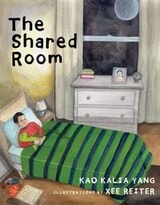
The Shared Room
Kao Kalia Yang
University of Minnesota Press, 2020
A family gradually moves forward after the loss of a child—a story for readers of all ages
When someone you love dies, you know what doesn’t die? Love. On the hot beach, among colorful umbrellas blooming beneath a bright sun, no one saw a little girl walk into the water. Now, many months later, her bedroom remains empty, her drawers hold her clothes, her pillows and sheets still have her scent, and her mother and father, brothers and sister carry her in their hearts, along with their grief, which takes up so much space. Then one snowy day, the mother and father ask the girl’s older brother, “Would you like a room of your own?” He wants to know, “Whose?” They say, “Your sister’s.”
Tenderly, and with refreshing authenticity, beloved Minnesota writer Kao Kalia Yang tells the story of a Hmong American family living with loss and tremendous love. Her direct and poignant words are accompanied by the evocative and expressive drawings of Hmong American artist Xee Reiter. The Shared Room brings a message of comfort and hope to readers young and old.
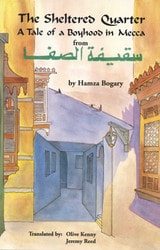
The Sheltered Quarter
A Tale of a Boyhood in MeccaBy Hamza Bogary
University of Texas Press, 1991
Hamza Bogary describes a bygone way of life that has now irreversibly disappeared. He speaks of life in Mecca before the advent of oil. Only partly autobiographical, the memoir is nevertheless rich in remembered detail based on Bogary's early observations of life in Mecca. He has transformed his knowledge into art through his sense of humor, empathy, and remarkable understanding of human nature. This work not only entertains; it also informs its readers about the Arabia of the first half of the twentieth century in a graphic and fascinating way. The narrator, young Muhaisin, deals with various aspects of Arabian culture, including education, pilgrimages, styles of clothing, slavery, public executions, the status of women, and religion. Muhaisin is frank in his language and vivid in his humor. The reader quickly comes to love the charming and mischievous boy in this universal tale.
The Ship of Widows
I. Grekova
Northwestern University Press, 1994
The Shop on Main Street
Ladislav Grosman
Karolinum Press, 2019
The Short Cut
Ennio Flaiano
Northwestern University Press, 1992
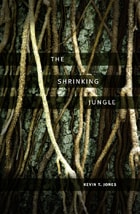
The Shrinking Jungle
Kevin T. Jones
University of Utah Press, 2012
Anthropologist Kevin Jones takes the reader on a journey into the world of the Aché, hunter-gatherers of the deep jungles of Paraguay. The Aché were among the last tribal peoples to come into peaceful contact with the outside world, with some bands leaving the forest only in the late 1970s. Jones was fortunate to live among them while conducting ethnoarchaeological fieldwork as part of his graduate studies. Their stories were so compelling and the insights into their lives so profound that he wove them into this fictional account, seeking to share the uniqueness of the culture while illustrating the universal nature of the Achés’ concerns.
The Shrinking Jungle tells the story of a fictional Aché band forced to deal with the tribulations of living in a forest gradually diminished by the encroachments of loggers and farmers. It follows the lives of one family and their band as they grapple for existence in a world of waning resources. The unfolding narrative captures the human struggle to live, love, care for family, fend off danger, and dream and hope for a bright future.
A compassionate look at the lives of people affected by the expansion of modern industrial society, The Shrinking Jungle gives a face to the human cost of tropical forest habitat loss. It also provides a realistic glimpse into the lifeways that were common to all human beings for much of our history.
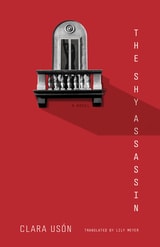
The Shy Assassin
A NovelClara Usón; translated from Spanish by Lily Meyer
Vanderbilt University Press, 2025
In September 1977, Sandra Mozarowsky—a seventeen-year-old Spanish erotic film actress and purported lover of King Juan Carlos I—died after leaping from her fourth-floor balcony in Madrid. The mysterious circumstances surrounding her death drew immediate public interest and generated conspiracy theories. Was her death a suicide? A covert murder? A cry for help? In The Shy Assassin, award-winning Spanish novelist Clara Usón uses the tragic death of Mozarowsky to provide a powerful philosophical meditation on suicide and the turbulent years of the Spanish transition to democracy. Playfully drawing upon the work of philosophers like Ludwig Wittgenstein and Jean-Paul Sartre, Usón weaves together her own experiences as a rebellious teenager with those of Mozarowsky with great power and emotion. Winner of the prestigious Sor Juana Inés de la Cruz Prize, Usón’s novel is a funny, provocative, and deeply entertaining look at Spanish culture during a time of historic political and cultural change.