Results by title
3745 books match the query 'Europe' and 973 start with t
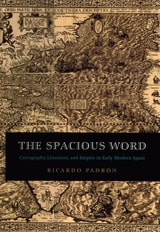
The Spacious Word
Cartography, Literature, and Empire in Early Modern SpainRicardo Padrón
University of Chicago Press, 2004
Padrón contends too that maps and geographic writings heavily influenced the Spanish imperial imagination. During the early modern period, the idea of "America" was still something being invented in the minds of Europeans. Maps of the New World, letters from explorers of indigenous civilizations, and poems dramatizing the conquest of distant lands, then, helped Spain to redefine itself both geographically and imaginatively as an Atlantic and even global empire. In turn, such literature had a profound influence on Spanish ideas of nationhood, most significantly its own.
Elegantly conceived and meticulously researched, The Spacious Word will be of enormous interest to historians of Spain, early modern literature, and cartography.
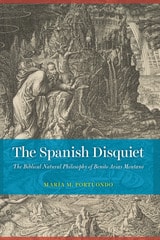
The Spanish Disquiet
The Biblical Natural Philosophy of Benito Arias MontanoMaría M. Portuondo
University of Chicago Press, 2019
Foremost among them was Benito Arias Montano—Spain’s most prominent biblical scholar and exegete of the sixteenth century. He was also a widely read member of the European intellectual community, and his motivation to reform natural philosophy shows that the Spanish Disquiet was a local manifestation of greater concerns about Aristotelian natural philosophy that were overtaking Europe on the eve of the Scientific Revolution. His approach to the study of nature framed the natural world as unfolding from a series of events described in the Book of Genesis, ultimately resulting in a new metaphysics, cosmology, physics, and even a natural history of the world. By bringing Arias Montano’s intellectual and personal biography into conversation with broader themes that inform histories of science of the era, The Spanish Disquiet ensures an appreciation of the variety and richness of Arias Montano’s thought and his influence on early modern science.
The Spanish Foreign Legion in the Spanish Civil War, 1936
José E. Alvarez
University of Missouri Press, 2016

The Specter of the Archive
Political Practice and the Information State in Early Modern BritainNicholas Popper
University of Chicago Press, 2024
We are used to thinking of ourselves as living in a time when more information is more available than ever before. In The Specter of the Archive, Nicholas Popper shows that earlier eras had to grapple with the same problem—how to deal with too much information at their fingertips.
He reveals that early modern Britain was a society newly drowning in paper, a light and durable technology whose spread allowed statesmen to record drafts, memoranda, and other ephemera that might otherwise have been lost, and also made it possible for ordinary people to collect political texts. As original paperwork and copies alike flooded the government, information management became the core of politics. Focusing on two of the primary political archives of early modern England, the Tower of London Record Office and the State Paper Office, Popper traces the circulation of their materials through the government and the broader public sphere. In this early media-saturated society, we find the origins of many issues we face today: Who shapes the archive? Can we trust the pictures of the past and the present that it shows us? And, in a more politically urgent vein: Does a huge volume of widely available information (not all of it accurate) risk contributing to polarization and extremism?
The Spectral Jew
Conversion and Embodiment in Medieval EuropeSteven F. Kruger
University of Minnesota Press, 2006
Looking closely at how medieval Jewish and Christian identities are distinguished from each other, yet intimately intertwined, Kruger demonstrates how Jews were often corporealized in ways that posited them as inferior to Christians—archaic and incapable of change—even as the two mutually shaped each other. But such attempts to differentiate Jews and Christians were inevitably haunted by the knowledge that Christianity had emerged out of Judaism and was, in its own self-understanding, a community of converts.
Examining the points of contact between Christian and Jewish communities, Kruger discloses the profound paradox of the Jew as different in all ways, yet capable of converting to fully Christian status. He draws from central medieval authors and texts such as Peter Damian, Guibert of Nogent, the Barcelona Disputation, and the Hebrew chronicles of the First Crusade, as well as lesser known writings such as the disputations of Ceuta, Majorca, and Tortosa and the immensely popular Dialogues of Peter Alfonsi.
By putting the conversion narrative at the center of this analysis, Kruger exposes it as a disruption of categories rather than a smooth passage and reveals the prominent role Judaism played in the medieval Christian imagination.
Steven F. Kruger is professor of English and medieval studies at Queens College and the Graduate Center, CUNY. He is author of several books and editor with Glenn Burger of Queering the Middle Ages (Minnesota, 2001).

The Spirit of the Oxford Movement
Christopher Dawson
Catholic University of America Press, 2022

The Squatters' Movement in Europe
Commons and Autonomy as Alternatives to CapitalismEdited by Squatting Europe Kollective
Pluto Press, 2014
The Squatters' Movement in Europe is the first definitive guide to squatting as an alternative to capitalism. It offers a unique insider's view on the movement – its ideals, actions and ways of life. At a time of growing crisis in Europe with high unemployment, dwindling social housing and declining living standards, squatting has become an increasingly popular option.
The book is written by an activist-scholar collective, whose members have direct experience of squatting: many are still squatters today. There are contributions from the Netherlands, Spain, the USA, France, Italy, Germany, Switzerland and the UK.
In an age of austerity and precarity this book shows what has been achieved by this resilient social movement, which holds lessons for policy-makers, activists and academics alike.
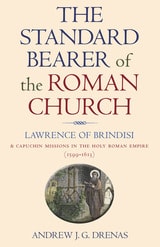
The Standard Bearer of the Roman Church
Lawrence of Brindisi and Capuchin Missions in the Holy Roman Empire (1599-1613)Andrew J.G. Drenas
Catholic University of America Press, 2018
The State of Europe
Transformation of Statehood from a European PerspectiveEdited by Sonja Puntscher Riekmann, Monika Mokre, and Michael Latzer
Campus Verlag, 2004

The Story of All Things
Writing the Self in English Renaissance Narrative PoetryMarshall Grossman
Duke University Press, 1998
Relating subjectivity to the nature of language, Grossman uses the theories of Lacan to analyze the concept of the self as it encounters a transforming environment. He shows how ideological tensions arose from the reorganization and "modernization" of social life in revolutionary England and how the major poets of the time represented the division of the self in writings that are suspended between lyric and narrative genres. Beginning with the portrayals of the self inherited from Augustine, Dante, and Petrarch, he describes the influence of historic developments such as innovations in agricultural technology, civil war and regicide, and the emergence of republican state institutions on the changing representation of characters in the works of Spenser, Donne, Marvell, and Milton. Furthering this psychoanalytic critique of literary history, Grossman probes the linguistic effects of social and personal factors such as Augustine’s strained relationship with his mother and the marital disharmony of Milton and Mary Powell. With its focus on these and other "literary historical events," The Story of All Things not only proposes a new structural theory of narrative but constitutes a significant challenge to New Historicist conceptions of the self.
The Story of Wamba
Julian of Toledo's Historia Wambae regisJoaquín Martínez Julian of Toledo
Catholic University of America Press, 2005
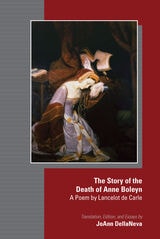
The Story of the Death of Anne Boleyn
A Poem by Lancelot de CarleEdited, Translated, and with Essays by JoAnn DellaNeva
Arizona Center for Medieval and Renaissance Studies, 2021
The Story of the Death of Anne Boleyn is a critical edition and translation of a long narrative poem written by the secretary to the French ambassador in London within two weeks of Anne Boleyn’s execution. It was intended as a diplomatic dispatch, relating the astonishing news of the queen’s demise (along with that of five alleged lovers). Uniquely among diplomatic correspondence, this dispatch was written in verse form. It thus straddles the domains of literature and history, of chronicle and fiction.
The base text for this edition is a previously unstudied manuscript housed at the British Library. Variants are given from all other known manuscripts found in Europe, including several key verses that were previously unpublished and that shed new light on the interpretation of the poem. The book features a sense-for-sense translation into modern English in free verse form, along with extensive explanatory notes. It also provides a study focusing on the historical background to the poem, an essay on the poet and the reception of his work, and a literary analysis of the poem.
The Strange Death of Marxism
The European Left in the New MillenniumPaul Edward Gottrfied
University of Missouri Press, 2005
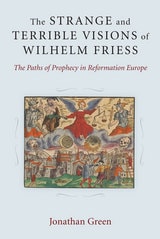
The Strange and Terrible Visions of Wilhelm Friess
The Paths of Prophecy in Reformation EuropeJonathan Green
University of Michigan Press, 2014
Dutch scholars have recognized that Frans Fraet was executed for printing a prognostication by Willem de Vriese, but this prognostication was thought to be lost. A few scholars of sixteenth-century German apocalypticism have briefly noted the prophecies of Wilhelm Friess but have not studied them in depth. The Strange and Terrible Visions of Wilhelm Friess is the first to connect de Vriese and Friess, as well as recognize the prophecy of Wilhelm Friess as an adaptation of a French version of theVademecum of Johannes de Rupescissa, making these pamphlets by far the most widespread source for Rupescissa’s apocalyptic thought in Reformation Germany. The book explains the connection between the first and second prophecies of Wilhelm Friess and discovers the Calvinist context of the second prophecy and its connection to Johann Fischart, one of the most important German writers of the time.
Jonathan Green provides a study of how textual history interacts with print history in early modern pamphlets and proposes a model of how early modern prophecies were created and transmitted. The Strange and Terrible Visions of Wilhelm Friess makes important contributions to the study of early modern German and Dutch literature, apocalypticism and confessionalization during the Reformation, and the history of printing in the sixteenth century.
The Stranger in Medieval Society
Frank. R. P. Akehurst and Stephanie Cain Van D’Elden, Editors
University of Minnesota Press, 1998
The Stranger in Medieval Society was first published in 1998. Minnesota Archive Editions uses digital technology to make long-unavailable books once again accessible, and are published unaltered from the original University of Minnesota Press editions.
The Stranger in Medieval Society examines the presence of outsiders in medieval Europe. Whether welcome or unwelcome, voluntary or involuntary, strangers appear in every society; they leave their own communities, venture into new environments, confront differences, and often spark changes. The first collection in medieval studies to concentrate on the notion of the stranger, these essays show how outsiders influenced the culture of Europe in the Middle Ages.
Among the topics explored are Edward III and Sir Gawain and the Green Knight as historical and literary instances of chivalric skill and courage; political conflict in the late French epic Renaut de Montauban; and a group of people who were doubly strangers-some thirty thousand Jews, who after being expelled from France in 1306 returned under an experimental agreement a few years later.
Contributors: William Calin, U of Florida; Susan Crane, Rutgers; Maria Dobozy, U of Utah; Edward R. Haymes, Cleveland State U; William Chester Jordan, Princeton U; Derek Pearsall, Harvard U; William D. Phillips Jr., U of Minnesota; Kathryn L. Reyerson, U of Minnesota; and Janet L. Solberg, Kalamazoo College.
F. R. P. Akehurst is professor of French in the Department of French and Italian at the University of Minnesota. Stephanie Cain Van D'Elden is director of graduate studies for the program in Germanic philology at the University of Minnesota.
This is volume 12 in the Medieval Cultures Series
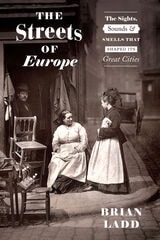
The Streets of Europe
The Sights, Sounds, and Smells That Shaped Its Great CitiesBrian Ladd
University of Chicago Press, 2020
Merchants’ shouts, jostling strangers, aromas of fresh fish and flowers, plodding horses, and friendly chatter long filled the narrow, crowded streets of the European city. As they developed over many centuries, these spaces of commerce, communion, and commuting framed daily life. At its heyday in the 1800s, the European street was the place where social worlds connected and collided.
Brian Ladd recounts a rich social and cultural history of the European city street, tracing its transformation from a lively scene of trade and crowds into a thoroughfare for high-speed transportation. Looking closely at four major cities—London, Paris, Berlin, and Vienna—Ladd uncovers both the joys and the struggles of a past world. The story takes us up to the twentieth century, when the life of the street was transformed as wealthier citizens withdrew from the crowds to seek refuge in suburbs and automobiles. As demographics and technologies changed, so did the structure of cities and the design of streets, significantly shifting our relationships to them. In today’s world of high-speed transportation and impersonal marketplaces, Ladd leads us to consider how we might draw on our history to once again build streets that encourage us to linger.
By unearthing the vivid descriptions recorded by amused and outraged contemporaries, Ladd reveals the changing nature of city life, showing why streets matter and how they can contribute to public life.
The Strength of Our Commitments
National Human Rights Institutions in Europe and BeyondCorina Lacatus
University of Chicago Press, 2024
A deep dive into the mechanics of national human rights institutions and the forces that make or break their success.
In the years since World War II, the endeavor to promote human rights has gained momentum and become increasingly important within international relations. Yet these efforts often run into serious problems of enforcement.
Many countries formed national human rights institutions (NHRIs) with independent mandates to support and monitor government compliance with international human rights law. Be they commissions, ombudsmen, or tribunals, these institutions vary in their power and impact. For this book, Corina Lacatus surveyed NHRIs in Europe and around the world to determine their effectiveness and explain why some succeed while others fail.
The Strength of Our Commitments explores the relationship between the domestic and international support an institution receives and its ability to secure resources, credibility, and tangibly improve human rights conditions. Lacatus shows that NHRIs can be models of resilience, even in the face of opposition from political elites. Although their impact on human rights is difficult to measure, The Strength of Our Commitments shows how NHRIs’ strength comes from clearly defined formal powers, strong institutional leadership, and independence from political interference.
The Strozzi of Florence
Widowhood and Family Solidarity in the RenaissanceAnn Crabb
University of Michigan Press, 2000
The Strozzi correspondence tells the story of the decline and recovery of one Florentine patrician family. Eventually, the Strozzi brothers earned the greatest fortune of their era, and, after the repeal of their exile, Filippo, the eldest, most successful, and longest lived, spent the last years of his life in Florence as one of its foremost citizens. Set in the context of other documentary evidence and of modern historical and anthropological studies, Crabb's study illuminates the role of women, kinship, solidarity, honor, and profit. These letters provide nuanced insights into values and practices that more impersonal sources cannot rival.
As well as appealing to those interested in the Renaissance, Florence, and Italy, this book will attract those wanting to read about topics in social history that cross time periods: women, family and kinship, business, and honor. It confronts issues of Renaissance Florentine historiography by presenting a more positive view of the role of women than does current orthodoxy, by providing evidence of the impact of extended kinship ties, a controversial issue, and by illuminating further the value placed on honor and profit.
Ann Crabb teaches medieval history at James Madison University.
The Struggle for Constitutional Justice in Post-Communist Europe
Herman Schwartz
University of Chicago Press, 2000
"Those who are interested in understanding the behavior of constitutional courts in transitional regimes cannot afford to ignore this important book. . . . [It] is fecund with hypotheses of interest to political scientists, and we are indebted to Professor Schwartz for his comprehensive analysis."—James L. Gibson, Law and Politics Book Review

The Struggle for Inclusion
Muslim Minorities and the Democratic EthosElisabeth Ivarsflaten and Paul M. Sniderman
University of Chicago Press, 2022
Notwithstanding the turbulence and violence of the last decade over issues of immigration and of Muslims in the West, the results of this study demonstrate that the largest number of citizens in contemporary liberal democracies are more open to inclusion of Muslims than has been recognized. Not less important, the book reveals limits on inclusion that follow from the friction between liberal democratic values. This pioneering work thus brings to light both pathways to progress and polarization traps.
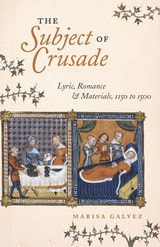
The Subject of Crusade
Lyric, Romance, and Materials, 1150 to 1500Marisa Galvez
University of Chicago Press, 2020
In The Subject of Crusade, Marisa Galvez offers a nuanced view of holy war and crusade poetry, reading these lyric works within a wider conversation with religion and culture. Arguing for an interdisciplinary treatment of crusade lyric, she shows how such poems are crucial for understanding the crusades as a complex cultural and historical phenomenon. Placing them in conversation with chronicles, knightly handbooks, artworks, and confessional and pastoral texts, she identifies a particular “crusade idiom” that emerged out of the conflict between pious and earthly duties. Galvez fashions an expanded understanding of the creative works made by crusaders to reveal their experiences, desires, ideologies, and reasons for taking up the cross.
The Subject of Elizabeth
Authority, Gender, and RepresentationLouis Montrose
University of Chicago Press, 2006
Montrose offers a masterful account of the texts, pictures, and performances in which the Queen was represented to her people, to her court, to foreign powers, and to Elizabeth herself. Retrieving this “Elizabethan imaginary” in all its richness and fascination, Montrose presents a sweeping new account of Elizabethan political culture. Along the way, he explores the representation of Elizabeth within the traditions of Tudor dynastic portraiture; explains the symbolic manipulation of Elizabeth’s body by both supporters and enemies of her regime; and considers how Elizabeth’s advancing age provided new occasions for misogynistic subversions of her royal charisma.
This book, the remarkable product of two decades of study by one of our most respected Renaissance scholars, will be welcomed by all historians, literary scholars, and art historians of the period.
The Sugar Act and the American Revolution
Ken Shumate
Westholme Publishing, 2022
The Sugar Act and the American Revolution by Ken Shumate is the only book-length treatment of this first great challenge of the revolutionary era. For each of the three incarnations of the act, the author provides a clause-by-clause description, including the British reasoning behind the duties and trade restrictions, and a summary of the resulting American grievance. Following the explanation of each act are chapters describing the protests of American merchants and popular leaders, and the British response to those protests. As a consequence of further parliamentary acts of taxation, the story ends with the demand in 1774 by the First Continental Congress for Parliament to repeal the Sugar Act as being “essentially necessary in order to restore harmony between Great Britain and the American colonies.”
The Symphony Concert in Nazi Germany
Neil Gregor
University of Chicago Press, 2025
In the years after the Nazis came to power in January 1933 and throughout the Second World War, all aspects of life in Germany changed. Despite the social and political upheaval, gentile citizens continued to attend concerts. In this book, historian Neil Gregor surveys how the classical concert scene was impacted in Nazi Germany. Taking the perspective of the audience, rather than institutions or performers, Gregor delves into the cultural lives of ordinary Germans under conditions of dictatorship. Did the ways in which Germans heard music in the period change? Did a Nazi way of listening emerge?
For audiences, Gregor shows, changes to the concert experience were small and often took place around the edges. This, combined with the preserved idea of the concert hall as a space of imagined civility and cultivation, led many concertgoers and music lovers to claim after the war that their field and their practice had been innocent—a place to retreat from the vicious violence and racism of the Nazi regime. Drawing on untapped archival sources, The Symphony Concert in Nazi Germany reveals that the true history was one of disruption but also of near seamless adaptation. Through countless small acts, the symphony concert was reframed within the languages of strident nationalism, racism, and militarism to ensure its place inside the cultural cosmos of National Socialist Germany.
The System of Professions
An Essay on the Division of Expert LaborAndrew Abbott
University of Chicago Press, 1988

The Tactics of Toleration
A Refugee Community in the Age of Religious WarsJesse Spohnholz
University of Delaware Press, 2011
The Tactics of Toleration examines the preconditions and limits of toleration during an age in which Europe was sharply divided along religious lines. During the Age of Religious Wars, refugee communities in borderland towns like the Rhineland city of Wesel were remarkably religiously diverse and culturally heterogeneous places. Examining religious life from the perspective of Calvinists, Lutherans, Mennonites, and Catholics, this book examines how residents dealt with pluralism during an age of deep religious conflict and intolerance. Based on sources that range from theological treatises to financial records and from marriage registries to testimonies before secular and ecclesiastical courts, this project offers new insights into the strategies that ordinary people developed for managing religious pluralism during the Age of Religious Wars.
Historians have tended to emphasize the ways in which people of different faiths created and reinforced religious differences in the generations after the Reformation’s break-up of Christianity, usually in terms of long-term historical narratives associated with modernization, including state building, confessionalization, and the subsequent rise of religious toleration after a century of religious wars. In contrast, Jesse Spohnholz demonstrates that although this was a time when Christians were engaged in a series of brutal religious wars against one another, many were also learning more immediate and short-term strategies to live alongside one another. This book considers these “tactics for toleration” from the vantage point of religious immigrants and their hosts, who learned to coexist despite differences in language, culture, and religion. It demands that scholars reconsider toleration, not only as an intellectual construct that emerged out of the Enlightenment, but also as a dynamic set of short-term and often informal negotiations between ordinary people, regulating the limits of acceptable and unacceptable behavior.
Published by University of Delaware Press. Distributed worldwide by Rutgers University Press.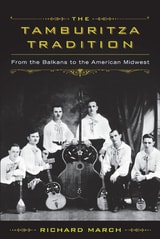
The Tamburitza Tradition
From the Balkans to the American MidwestRichard March
University of Wisconsin Press, 2013

The Terezín Album of Mariánka Zadikow
Annotated by Debórah Dwork
University of Chicago Press, 2008
An imprisoned bookbinder wrote these words in a small blank book that he had secretly crafted from pilfered materials at the Terezín (Theresienstadt) concentration camp in September 1944. He presented the album to a fellow prisoner, twenty-one-year-old Marianka Zadików. Over the next several months, as the Nazis pressed forward with mass deportations from Terezín to Auschwitz, Marianka began to collect inscriptions and sketches from her fellow inmates.
Marianka Zadików’salbum, presented here in a facsimile edition, is a poignant document from the last months of the Holocaust. The words and images inscribed here—by children and grandparents, factory workers and farmhands, professionals and intellectuals, musicians and artists—reflect both joy and trepidation. They include passages of remembered verse, lovingly executed drawings, and hurried farewells on the eve of transport to Auschwitz. The great German-Jewish scholar Rabbi Leo Baeck, one of the elders of the camp, offers Marianka an inscription about Jewish self-discovery, and participants in Terezín’s now-famous musical performances fill several pages with musical annotation.
Facing-page translations render the book’s multitude of languages into English, while historical and biographical notes give details, where known, of the fates of those whose words are recorded here. An introduction by acclaimed Holocaust scholar Debórah Dwork tells the story of the Terezín camp and how Marianka and her family fared while imprisoned there.
The array of voices and the glimpses into individual lives afforded us by The Terezín Album make it an arresting reminder of the sustaining power of care, community, and hope amid darkness.
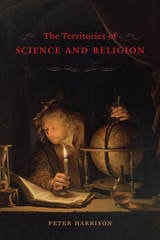
The Territories of Science and Religion
Peter Harrison
University of Chicago Press, 2015
In The Territories of Science and Religion, Harrison dismantles what we think we know about the two categories, then puts it all back together again in a provocative, productive new way. By tracing the history of these concepts for the first time in parallel, he illuminates alternative boundaries and little-known relations between them—thereby making it possible for us to learn from their true history, and see other possible ways that scientific study and the religious life might relate to, influence, and mutually enrich each other.
A tour de force by a distinguished scholar working at the height of his powers, The Territories of Science and Religion promises to forever alter the way we think about these fundamental pillars of human life and experience.
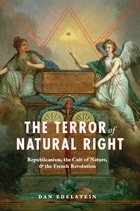
The Terror of Natural Right
Republicanism, the Cult of Nature, and the French RevolutionDan Edelstein
University of Chicago Press, 2009
Natural right—the idea that there is a collection of laws and rights based not on custom or belief but that are “natural” in origin—is typically associated with liberal politics and freedom. In The Terror of Natural Right, Dan Edelstein argues that the revolutionaries used the natural right concept of the “enemy of the human race”—an individual who has transgressed the laws of nature and must be executed without judicial formalities—to authorize three-quarters of the deaths during the Terror. Edelstein further contends that the Jacobins shared a political philosophy that he calls “natural republicanism,” which assumed that the natural state of society was a republic and that natural right provided its only acceptable laws. Ultimately, he proves that what we call the Terror was in fact only one facet of the republican theory that prevailed from Louis’s trial until the fall of Robespierre.
A highly original work of historical analysis, political theory, literary criticism, and intellectual history, The Terror of Natural Right challenges prevailing assumptions of the Terror to offer a new perspective on the Revolutionary period.
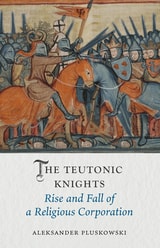
The Teutonic Knights
Rise and Fall of a Religious CorporationAleksander Pluskowski
Reaktion Books, 2024
This book provides a concise and incisive introduction to the knights of the Teutonic Order, the last of the great military orders established in the twelfth century. The book traces the Order’s evolution from a crusader field hospital into a major territorial ruler in northeastern Europe. Notably, the knights constructed distinctive fortified convents, including their headquarters in Western Christendom’s largest castle. The narrative concludes with the Order’s fifteenth-century decline due to the combined effects of a devastating war with Poland-Lithuania and the Protestant Reformation. The result is an accessible overview of this pivotal corporation in European history.
The Theater of Narration
From the Peripheries of History to the Main Stages of ItalyJuliet Guzzetta
Northwestern University Press, 2021
This book examines the theater of narration, an Italian performance genre and aesthetic that revisits historical events of national importance from local perspectives, drawing on the rich relationship between personal experiences and historical accounts. Incorporating original research from the private archives of leading narrators—artists who write and perform their work—Juliet Guzzetta argues that the practice teaches audiences how ordinary people aren’t simply witnesses to history but participants in its creation.
The theater of narration emerged in Italy during the labor and student protests, domestic terrorism, and social progress of the 1970s. Developing Dario Fo and Franca Rame’s style of political theater, influenced by Jerzy Grotowski and Bertolt Brecht, and following in the freewheeling actor‑author traditions of the commedia dell’arte, narrators created a new form of popular theater that grew in prominence in the 1990s and continues to gain recognition. Guzzetta traces the history of the theater of narration, contextualizing its origins—both political and intellectual—and centers the contributions of Teatro Settimo, a performance group overlooked in previous studies. She also examines the genre’s experiments in television and media.
The first full-length book in English on the subject, The Theater of Narration leverages close readings and a wealth of primary sources to examine the techniques used by narrators to remake history—a process that reveals the ways in which history itself is a theater of narration.
The Theatre Couple in Early Modern Italy
Self-Fashioning and Mutual MarketingSerena Laiena
University of Delaware Press, 2024
Who were the first celebrity couples? How was their success forged? Which forces influenced their self-fashioning and marketing strategies?
These questions are at the core of this study, which looks at the birth of a phenomenon, that of the couple in show business, with a focus on the promotional strategies devised by two professional performers: Giovan Battista Andreini (1576–1654) and Virginia Ramponi (1583–ca.1631). This book examines their artistic path – a deliberately crafted and mutually beneficial joint career – and links it to the historical, social, and cultural context of post-Tridentine Italy. Rooted in a broad research field, encompassing theatre history, Italian studies, celebrity studies, gender studies, and performance studies, The Theatre Couple in Early Modern Italy revises the conventional view of the Italian diva, investigates the deployment of Catholic devotion as a marketing tool, and argues for the importance of the couple system in the history of Commedia dell’Arte, a system that continues to shape celebrity today.
The Theatrical Event
Dynamics of Performance and PerceptionWillmar Sauter
University of Iowa Press, 2000

The Theological-Political Origins of the Modern State
The Controversy between James I of England and Cardinal BellarmineBernard Bourdin
Catholic University of America Press, 2010
The Third Sex
Willy. Translated and with an Introduction by Lawrence R. Schehr
University of Illinois Press, 2007
Thirty-two years before Simone de Beauvoir's classic The Second Sex, popular French novelist Willy published The Third Sex, a vivid description of the world of European homosexuals in France, Italy, and Germany during the late 1920s. Stepping directly into the heart of gay men's culture, Willy follows homosexual nightlife into music halls, nightclubs, casinos, bars, and saunas. While he finds plenty of drug and alcohol abuse, he also discovers homosexual publishers, scientific societies, group rivalries, and opinions--both medical and political--about the nature of homosexuality itself. Lawrence R. Schehr's introduction provides context and translator's notes for this first-ever English edition.
The Three Cs of Higher Education
Competition, Collaboration and ComplementarityMark O'Hara
Central European University Press, 2019
The Three Orders
Feudal Society ImaginedGeorges Duby
University of Chicago Press, 1980
The Tocco of the Greek Realm
Nobility, Power and Migration in Latin Greece (14th – 15th centuries)Nada Zečević
Central European University Press, 2015
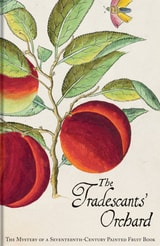
The Tradescants' Orchard
The Mystery of a Seventeenth-Century Painted Fruit BookBarrie Juniper and Hanneke Grootenboer
Bodleian Library Publishing, 2013
The Tradescants’ Orchard reproduces for the first time the entire manuscript, traditionally associated with the renowned father-and-son nurserymen the John Tradescants. The paintings pose many questions: Who painted them and why? What is the significance of the wildlife—birds, butterflies, frogs, and snails—that appear throughout? Why is there only one depiction of an apple tree despite its popularity? Were there others that have since gone missing?
A visual feast that will appeal to botany and gardening enthusiasts, the book also includes an introduction that maps out the mystery of how and why these enigmatic watercolors were made.
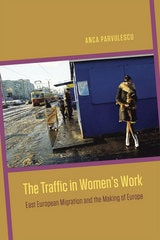
The Traffic in Women's Work
East European Migration and the Making of EuropeAnca Parvulescu
University of Chicago Press, 2014
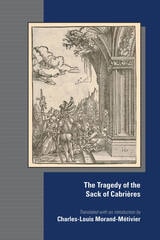
The Tragedy of the Sack of Cabrières
Translated by Charles-Louis Morand-Métivier
Arizona Center for Medieval and Renaissance Studies, 2022
April 1542 saw a massacre of epic proportions in the Luberon, in southeastern France, of its Waldensian population, who had been peacefully living there after they settled in a few centuries before. This massacre foreshadowed the wars of religion, which tore apart the kingdom for almost forty years. The Tragédie du Sac de Cabrières is the only play devoted to these events. This is a critical edition and English translation of the French play. Three critical editions of the play have been published in 1927, 1928, and 1998, and this new edition complements the previous works. This is the first English translation of the play and makes it available to an international audience of scholars and students of the early modern period.
This edition “translates” the moment of the play's creation, the representation of the event, and its importance in the narrative of religious persecutions in sixteenth-century France. It explains how history is dramatized through the creation of the scenic story and scenic play of Cabrières. and how the specific retelling of the events of Cabrières makes this a tool of historical narration, thus allowing the audience to participate in the unfolding of history before their eyes. Therefore, they become part of history, because it is played before their eyes so that they can not only witness it but also propagate the glory of the martyrs for future generations. This is not only a translation and a work of literary scholarship, it is an analysis of the literary, political, and religious production of this period, and a multidisciplinary analysis of Waldensianism in southeastern France.
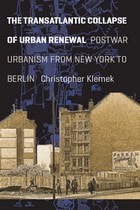
The Transatlantic Collapse of Urban Renewal
Postwar Urbanism from New York to BerlinChristopher Klemek
University of Chicago Press, 2011
The Transatlantic Collapse of Urban Renewal examines how postwar thinkers from both sides of the Atlantic considered urban landscapes radically changed by the political and physical realities of sprawl, urban decay, and urban renewal. With a sweep that encompasses New York, London, Berlin, Philadelphia, and Toronto, among others, Christopher Klemek traces changing responses to the challenging issues that most affected the lives of the world’s cities.
In the postwar decades, the principles of modernist planning came to be challenged—in the grassroots revolts against the building of freeways through urban neighborhoods, for instance, or by academic critiques of slum clearance policy agendas—and then began to collapse entirely. Over the 1960s, several alternative views of city life emerged among neighborhood activists, New Left social scientists, and neoconservative critics. Ultimately, while a pessimistic view of urban crisis may have won out in the United States and Great Britain, Klemek demonstrates that other countries more successfully harmonized urban renewal and its alternatives. Thismuch anticipated book provides one of the first truly international perspectives on issues central to historians and planners alike, making it essential reading for anyone engaged with either field.
The Transatlantic Materials of American Literature
Publishing US Writing in Britain, 1830–1860Katie McGettigan
University of Massachusetts Press, 2023
Winner, Transatlantic Studies Association and Cambridge University Press Book Prize, 2023
During the antebellum period, British publishers increasingly brought out their own authorized and unauthorized editions of American literary works as the popularity of print exploded and literacy rates grew. Playing a formative role in the shaping of American literature, the industry championed the work of US-based writers, highlighted the cultural value of American literary works, and intervened in debates about the future of American literature, authorship, and print culture.
The Transatlantic Materials of American Literature examines the British editions of American fiction, poetry, essays, and autobiographies from writers like Edgar Allan Poe, Harriet Beecher Stowe, Frederick Douglass, and Hannah Flagg Gould. Putting these publications into historical context, Katie McGettigan considers key issues of the day, including developments in copyright law, changing print technologies, and the financial considerations at play for authors and publishers. This innovative study also uncovers how the transatlantic circulation of these works exposed the racial violence and cultural nationalism at the heart of the American experiment, producing overlapping and competing visions of American nationhood in the process.
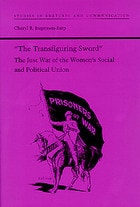
The Transfiguring Sword
The Just War of the Women's Social and Political UnionCheryl R. Jorgensen-Earp
University of Alabama Press, 1997
Provides a new understanding of the recurrent rhetorical need to employ conservative rhetoric in support of a radical cause
The Women’s Social and Political Union, the militant branch of the English women’s suffrage movement, turned to arson, bombing, and widespread property destruction as a strategy to achieve suffrage for women. Because of its comparative rarity, terrorist violence by reform (as opposed to revolutionary) movements is underexplored, as is the discursive rhetoric that accompanies this violence. Largely because of the moral stance that drives such movements, the need to justify violence is greater for the reformist than for the revolutionary terrorist. The burden of rhetorical justification falls even more heavily on women utilizing violence, an option generally perceived as open only to men.The militant suffragettes justified their turn to limited terrorism by arguing that their violence was part of a “just war.” Appropriating the rhetoric of a just war in defense of reformist violence allowed the suffragettes to exercise a traditional rhetorical vision for the sake of radical action. The concept of a just war allowed a spinning out of a fantasy of heroes, of a gallant band fighting against the odds. It challenged the imagination of the public to extend to women a heroic vision usually reserved for men and to accept the new expectations inherent in that vision. By incorporating the concept of a just war into their rhetoric, the WSPU leaders took the most conventional justification that Western tradition provides for the use of violence and adapted it to meet their unique circumstance as women using violence for political reform.
This study challenges the common view that the suffragettes’ use of military metaphors, their vilification of the government, and their violent attacks on property were signs of hysteria and self-destruction. Instead, what emerges is a picture of a deliberate, if controversial, strategy of violence supported by a rhetorical defense of unusual power and consistency.

The Transformation of Family Law
State, Law, and Family in the United States and Western EuropeMary Ann Glendon
University of Chicago Press, 1989
"Glendon is generally acknowledged to be the premier comparative law scholar in the area of family law. This volume, which offers an analytical survey of the changes in family law over the past twenty-five years, will burnish that reputation. Essential reading for anyone interested in evaluating the major changes that occurred in the law of the family. . . . [And] of serious interest to those in the social sciences as well."—James B. Boskey, Law Books in Review
"Poses important questions and supplies rich detail."—Barbara Bennett Woodhouse, Texas Law Review
"An impressive scholarly documentation of the legal changes that comprise the development of a conjugally-centered family system."—Debra Friedman, Contemporary Sociology
"She has painted a portrait of the family in which we recognize not only ourselves but also unremembered ideological forefathers. . . . It sends our thoughts out into unexpected adventures."—Inga Markovits, Michigan Law Review
The Transformation of Old Age Security
Class and Politics in the American Welfare StateJill Quadagno
University of Chicago Press, 1988
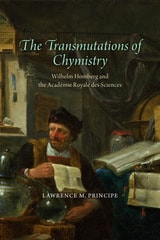
The Transmutations of Chymistry
Wilhelm Homberg and the Académie Royale des SciencesLawrence M. Principe
University of Chicago Press, 2020
Principe, the leading authority on the subject, recounts how Homberg’s radical vision promoted chymistry as the most powerful and reliable means of understanding the natural world. Homberg’s work at the Académie and in collaboration with the future regent, Philippe II d’Orléans, as revealed by a wealth of newly uncovered documents, provides surprising new insights into the broader changes chymistry underwent during, and immediately after, Homberg. A human, disciplinary, and institutional biography, The Transmutations of Chymistry significantly revises what was previously known about the contours of chymistry and scientific institutions in the early eighteenth century.
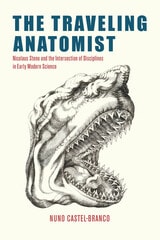
The Traveling Anatomist
Nicolaus Steno and the Intersection of Disciplines in Early Modern ScienceNuno Castel-Branco
University of Chicago Press, 2025
Nicolaus Steno (1638–1686) was a renowned anatomist in his lifetime. He reformed the anatomical understanding of glands, argued that the heart was a muscle, renamed the so-called female testicles as ovaries, and developed a mathematical model for understanding muscle contraction—discoveries that were fundamental to the fields of anatomy and physiology. However, other aspects of Steno’s life have come to define him: his claim that mountains’ strata reveal the history of the Earth and his conversion to Catholicism as a practicing scientist. This excessive attention to his geological discoveries and to asking whether science and religion are compatible, Nuno Castel-Branco argues, has obscured his significant accomplishments as an anatomist. The Traveling Anatomist thus restores Steno to his rightful place as a crucial figure in early modern science.
Using Steno’s extensive travels as a framework, this book depicts him as an active participant in the Republic of Letters. Castel-Branco traverses Leiden, Paris, Copenhagen, Florence, and Rome as he follows Steno in his sojourns through different scientific academies, courts, and artisanal workshops. There he developed new friends, some of whom were women, with whom he researched and exchanged ideas. Drawing on Steno’s books, correspondence, and novel archival material, Castel-Branco invites us to approach Steno and his accomplishments in anatomy, mathematics, and geology through the eyes of his contemporaries. Doing so, Castel-Branco reconstructs the rich and overlapping worlds of scientific disciplines that shaped Steno’s work, revealing the richness of interdisciplinary research in early modern intellectual life. And through Steno, he illustrates larger developments and new networks of significance in mid-seventeenth-century science. By focusing on ideas, scientific genres, institutions, and friendships, Castel-Branco offers a way others might also productively study science from the early modern period until today.
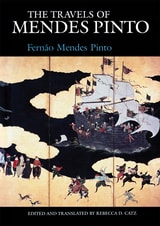
The Travels of Mendes Pinto
Fernão Mendes Pinto
University of Chicago Press, 1989
"[T]here is plenty here for the modern reader. . . . The vivid descriptions of swashbuckling military campaigns and exotic locations make this a great adventure story. . . . Mendes Pinto may have been a sensitive eyewitness, or a great liar, or a brilliant satirist, but he was certainly more than a simple storyteller."—Stuart Schwartz, The New York Times