Results by title
3390 books match the query 'Fiction' and 1041 start with t

The Tale of Matsura
Fujiwara Teika’s Experiment in FictionTranslated with an Introduction and Notes by Wayne P. Lammers
University of Michigan Press, 1992
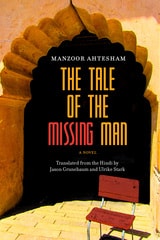
The Tale of the Missing Man
A NovelManzoor Ahtesham, translated from the Hindi by Jason Grunebaum and Ulrike Stark
Northwestern University Press, 2018
The Tale of the Missing Man (Dastan-e Lapata) is a milestone in Indo-Muslim literature. A refreshingly playful novel, it explores modern Muslim life in the wake of the 1947 partition of India and Pakistan. Zamir Ahmad Khan suffers from a mix of alienation, guilt, and postmodern anxiety that defies diagnosis. His wife abandons him to his reflections about his childhood, writing, ill-fated affairs, and his hometown, Bhopal, as he attempts to unravel the lies that brought him to his current state (while weaving new ones).
A novel of a heroic quest gone awry, The Tale of the Missing Man artfully twists the conventions of the Urdu romance, or dastan, tradition, where heroes chase brave exploits that are invariably rewarded by love. The hero of Ahtesham’s tale, living in the fast-changing city of Bhopal during the 1970s and ’80s, suffers an identity crisis of epic proportions: he is lost, missing, and unknown both to himself and to others. The result is a twofold quest in which the fate of protagonist and writer become inextricably and ironically linked. The lost hero sets out in search of himself, while the author goes in search of the lost hero, his fictionalized alter ego.
New York magazine cited the book as one of “the world's best untranslated novels.” In addition to raising important questions about Muslim identity, Ahtesham offers a very funny and thoroughly self-reflective commentary on the modern author’s difficulties in writing autobiography.
The Global Humanities Translation Prize is awarded annually to a previously unpublished translation that strikes the delicate balance between scholarly rigor, aesthetic grace, and general readability, as judged by a rotating committee of Northwestern faculty, distinguished international scholars, writers, and public intellectuals. The Prize is organized by the Global Humanities Initiative, which is jointly supported by Northwestern University’s Buffett Institute for Global Studies and Kaplan Institute for the Humanities.

The Talking Room
Marianne Hauser
University of Alabama Press, 1976
The Talking Room reflects an apocalyptic vision of the late 20th century, seen through the eyes of a pregnant thirteen-year-old who may not be a test tube baby. The Lesbian relationship between the mother J—wild, lost, beautiful—and competent Aunt V, a businesswoman, reveals itself to the reader as “the talking room” becomes the sounding board for the endless fights, endless reconciliations. V’s desperate search for the beloved J through the nights of waterfront bars is lightened by wildly comic excursions reminiscent of our great American humorists. With wit, poetic clarity and compassion, Marianne Hauser explores the paradoxes of our age—need for love yet flight from love, search for self yet self-destruction—a dilemma shared alike by today’s heterosexual and homosexual world. The author’s multifaceted view defies dogma or simplification as her characters draw us into their turbulent and deeply human drama.
The Tallons
William March
University of Alabama Press, 1964
In The Tallons, the second novel in the "Pearl County" series, March tells the story of two farm boys, Andrew and Jim Tallon. Their placid and predictable life is upended by a girl from Georgia, Myrtle Bickerstaff. The conflict which engulfs these three arises from a series of carefully chosen and extraordinarily telling incidents to a dramatic climax which will be remembered long after the book is set aside. March framed the novel as "a study in paranoia" and to the end of his life considered it one of his strongest works.
The Tango Player
Christoph Hein
Northwestern University Press, 1994
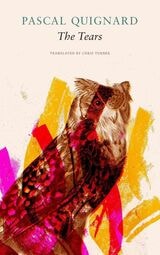
The Tears
Pascal Quignard
Seagull Books, 2023
The Tears is, at one level, a novel about the turbulent lives of twins, the sons of Charlemagne’s daughter Bertha. The studious and scholarly Nithard succeeds his father Angilbert as lay abbot of the Abbey of Saint Riquier in Normandy and accompanies his cousin the emperor Charles the Bald on his military campaigns. His twin brother Hartnid strikes out boldly for more exotic parts—including, eventually, Baghdad—in a seemingly deranged quest to track down the elusive female face that haunts his dreams. Yet this novel of intersecting historical threads and patches of poetic reimagining is crisscrossed by a host of other themes: the enigmatic joys afforded by nature, the intimate relation between living creatures which literature has since earliest times depicted, and the mysterious power of contingent events that have shaped entire cultures—including the birth of the French language itself. This heady brew of medieval chronicle, miraculous folktale, and speculative reconstruction of history further strengthens Pascal Quignard’s status as one of France’s most imaginative contemporary writers.
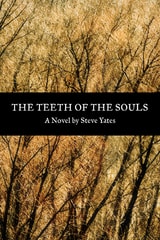
The Teeth of the Souls
A NovelSteve Yates
Moon City Press, 2015
The story begins just after the Civil War when Leighton Shea Morkan, son of Irish immigrants, marries Patricia Grünhaagen Weitzer, daughter of a German banking family. Yet he can’t let go of his childhood love and wartime confidante, the house hand and former slave, Judith. Both unions produce children, one a shrouded secret, and one the heir to the Morkan legacy: the limestone quarries of Springfield, Missouri, and the bloody past, what Judith calls “The Teeth of the Souls.”
Grounded in broad historical research and spanning Missouri’s reconstruction, vigilantism, and fall from grace, The Teeth of the Souls chronicles the violent melding of immigrant strains—Irish, German, Scots-Irish, and African American—into the fabric of the Ozarks.
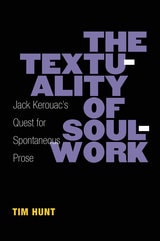
The Textuality of Soulwork
Jack Kerouac's Quest for Spontaneous ProseTim Hunt
University of Michigan Press, 2014
Tim Hunt’s The Textuality of Soulwork: Jack Kerouac’s Quest for Spontaneous Proseexamines Kerouac’s work from a new critical perspective with a focus on the author’s unique methods of creating and working with text. Additionally, The Textuality of Soulwork delineates Kerouac’s development of “Spontaneous Prose” to differentiate the preliminary experiment of On the Road from the more radical experiment of Visions of Cody, and to demonstrate Kerouac’s transition from working within the textual paradigm of modern print to the textual paradigm of secondary orality. From these perspectives, Tim Hunt crafts a new critical approach to Beat poetics and textual theory, marking an important contribution to the current revival of Kerouac and Beat studies underway at universities in the U.S. and abroad, as reflected by a growing number of conferences, courses, and a renewal in scholarship.
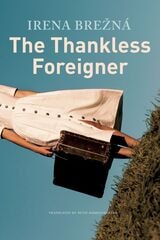
The Thankless Foreigner
Irena Brežná
Seagull Books, 2022
In 1968, in search of a better world, a young person flees her country and ends up in Switzerland, the land of hard cheese. There she’s told not to talk nonsense, or not to “talk cheese,” as they say in the local dialect. Home is where you can grumble, but here you have to be grateful. Her new environs seem unwieldy, aloof, and she rebels against this host country that insists on her following its rules, that won’t let her be herself. But as an interpreter, she meets many others who have ended up here—petty criminals, depressives, hustlers, refugees, victims of exploitation, and others who have gone out of their way to assimilate, people who share a hope that they can make something new of their lives. Gradually she learns to experience the richness of exile and foreignness, to build bridges between cultures. A brilliantly written novel about the search for identity between assimilation and resistance, Irena Brežná’s The Thankless Foreigner is a significant addition to the important literature of immigrant experience.
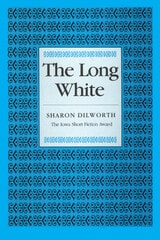
The The Long White
Sharon Dilworth
University of Iowa Press, 1988
In the sparsely settled hills of Michigan's Upper Peninsula, winter's toughness is matched only by the animosity and affection of its inhabitants for each other and for the land that unnerves them. In The Long White, Sharon Dilworth evokes a place dominated by two great lakes whose power and ferocity influence the lives of every inhabitant. The particularities of place and character come together with the clarity and exactitude of a fresh snowfall that both veils and illuminates a landscape.

The Theater in the Fiction of Marcel Proust
John Gaywood Linn
The Ohio State University Press, 1900
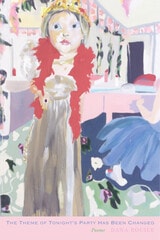
The Theme of Tonight's Party Has Been Changed
PoemsDana Roeser
University of Massachusetts Press, 2014
Sui generis, Dana Roeser's poems are spoken by a stand-up comic having a bad night at the local club. The long extended syntax, spread over her quirky, syncopated short lines, contains (barely) the speaker's anxieties over an aging father with Parkinson's, the maturation of two daughters, friends at twelve-step meetings and their sometimes suicidal urges—acted on or resisted—and her own place in a world that seems about to spin out of control. Bad weather and tiny economy cars speeding down the interstate next to Jurassic semis become the metaphor, or figurative vehicle, for this poet's sense of her own precariousness.
Roeser brings a host of characters into her poems—a Catholic priest raging against the commercialism of Mother's Day, the injured tennis player James Blake, a man struck by lightning, drunk partygoers, an ex-marine, Sylvia Plath's son Nicholas Hughes, a neighbor, travelers encountered in airport terminals, various talk therapists—and lets them speak. She records with high fidelity the nuances of our ordinary exigencies so that the poems become extraordinary arias sung by a husky-voiced diva with coloratura phrasing to die for, “the dark notes” that Lorca famously called the duende. The book is infused with the energy of misfortune, accident, coincidence, luck, grace, panic, hilarity. The characters and narrator, in extremis, speak their truths urgently.
The Thickets
Józef Lobodowski
Central European University Press, 2026
In The Thickets, Lobodowski paints a stark, unforgettable portrait of the turmoil that engulfed the former Russian Empire after the fall of the Tsar and Kerensky’s government. For Stas, once a student at a classical gymnasium, survival now means peddling contraband on the black market. Through his eyes, the reader is plunged into the chaos of war, revolution, and occupation—rendered with visceral power and human urgency.
The Thief of Words
Anthony Bukoski
University of Wisconsin Press, 2025
The lightly interconnected stories in this riveting collection are split between the Polish American communities of northern Wisconsin and Louisiana, where refugees from World War II were resettled. Exploring themes of dislocation and assimilation, love and loneliness, and generational conflict, Anthony Bukoski admirably paints portraits of people doing their best, despite the odds and their sometimes-thwarted attempts to follow the urgings of their better angels.
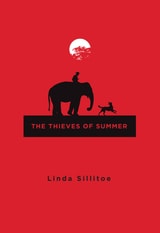
The Thieves of Summer
Linda Sillitoe
Signature Books, 2014
Prin-cess Al-ice in Liberty Park
Munch-es ba-nan-as ’til way after dark.
Princess Alice is an elephant the children of Utah purchased by donating nickels and dimes to a circus. The girls don’t know this, but her handler takes the mammoth princess out on late-night strolls around the park when the moon is out. What they do know is that the elephant sometimes escapes and goes on a rampage, crashing through front-yard fences and collecting collars of clothesline laundry around her neck, a persistent train of barking dogs following behind. The girls’ father is a police officer who is investigating a boy’s disappearance. As the case unfolds, the perception of the park, with its eighty acres of trees and grass, will change from the epitome of freedom to a place to be avoided, even as Princess Alice moves to a secure confinement at a new zoo at the mouth of Emigration Canyon. The story is loosely based on the exploits of a real live elephant that lived in Liberty Park a decade before Sillitoe’s childhood in the neighborhood.
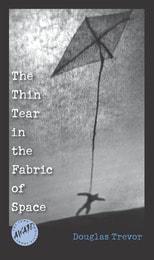
The Thin Tear In The Fabric Of Space
Douglas Trevor
University of Iowa Press, 2005
The Thin Tear in the Fabric of Space gathers stories about coping with grief, trying to love people who have died, and—more broadly—leaving old versions of the self behind, sometimes by choice and sometimes out of necessity. In each of the nine stories, Douglas Trevor’s characters are forced to face uncomfortable realities. For Elena Gavrushnekov in the title story, that means admitting after the death of her beloved that she still longs for contact with other human bodies. For Peter in “Central Square,” it is realizing that, like his deceased father before him, he is drinking himself to death. Unable to confront his incapacitated mother and the memory of the plane crash that killed his father, Edwin Morris in “Saint Francis in Flint” is compelled to acknowledge that his saintly aspirations are not what they appear to be, while Sharon Mackaney in “The Surprising Weight of the Body's Organs” struggles with uncontrollable outbursts of rage in the wake of her young son’s death.
In moments of great pain and loss, when self-expression seems impossible and terribly useless, the characters in these stories nonetheless discover the tenderness of others. In “The River,” the narrator finds that the friendship he has forged with a French girl with whom he can only just communicate has bred intense, almost intuitive compassion, while in “Fellowship of the Bereaved,” the disconsolate brother of the deceased sister who occupies the empty center of the story uncovers not only anger in his parents but also empathy and humor. As these characters persevere in their own lives, they do so mindful of, and humanized by, the experiences of having seen people they know and love slip unexpectedly into the thin tear in the fabric of space: that quiet chasm that so resolutely separates the living from the dead.
The Third Bank of the Jordan River
Hussein Barghouthi
Seagull Books, 2026
In this profound and evocative novel, acclaimed Palestinian author Hussein Barghouthi invites readers on an extraordinary, youthful journey through a landscape of memory, longing, alienation, and exile. Translated with great sensitivity by his son, Áthar Barghouthi, this deeply personal narrative unfurls as a stream-of-consciousness odyssey, blurring the lines between reality and dream. Haunted by a pervasive sense of loss, the prose, rich with poetic imagery, explores themes of displacement, identity, and the enduring shadows of a contested homeland.
The Third Bank of the Jordan River is a powerful, meditative work that defies conventional boundaries. With unflinching honesty, Barghouthi confronts the political through deeply human stories, capturing the restless search for meaning and the enduring human hunger for connection and freedom.
The Third Body
Helene Cixous
Northwestern University Press, 2009
The Third Brother
An Andy Hayes MysteryAndrew Welsh-Huggins
Ohio University Press, 2018
It’s a violent encounter that private investigator Andy Hayes could have done without. One minute he’s finishing up some grocery shopping ahead of a custody visit with his sons. The next, he must come to the rescue of a Somali American mother and her young children as anti-immigrant bullies torment them.
Grateful for his intervention, the Somali community hires Andy to find a missing teenager who vanished without a trace and is now accused of plotting a terror attack in his adopted hometown of Columbus, Ohio. The government is certain that nineteen-year-old Abdi Mohamed followed in the footsteps of his brother, who died in Syria a few months earlier in a jihadi assault. But Mohamed’s family isn’t convinced, describing a soccer-loving American kid who renounced his brother’s actions and planned to attend college in the fall and become a diplomat someday.
Soon Andy is fending off fed-up FBI agents and dueling with a mysterious foe with links to the white supremacist movement. As he draws ever closer to the truth behind Mohamed’s disappearance, Hayes stumbles onto a conspiracy that could put hundreds of lives in danger, including his own two boys.
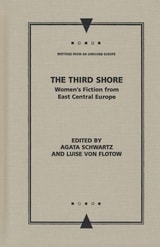
The Third Shore
Women's Fiction from East Central EuropeAgatha Schwartz
Northwestern University Press, 2006
A rich compendium of fiction by twenty-five women from eighteen different nations ranging from Lithuania to Ukraine to Poland, the Czech Republic, Romania, Albania, and Slovenia, The Third Shore brings to light a whole spectrum of women's literary accomplishment and experience virtually unknown in the West. Gracefully translated, and with an introduction that establishes their political, historical, and literary context, these stories written in the decade after the fall of the Iron Curtain are tales of the familiar-of illness and death, love and desire, motherhood and war, feminism, and patriarchy-reconceived and turned into something altogether new by the distinctive experience they reflect.
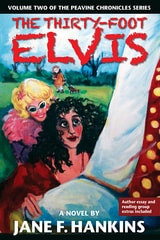
The Thirty-Foot Elvis
A novelJane F. Hankins
Parkhurst Brothers, Inc., 2013

The Three Marias
By Rachel de Queiroz
University of Texas Press, 1963
Through this translation of As Três Marias the literary achievements of Rachel de Queiroz may at last be judged and appreciated by the English-reading public. Since none of her four novels has previously been translated into English, The Three Marias will be, for many non-Brazilians, an introduction to this nationally known South American author whose books have been widely praised for their artistic merits. Her literary works are colored by her projected personality, by an intense feeling for her own people, by an omnipresent social consciousness, and by personal experiences in the arid backlands of her native state of Ceará.
Basing this story on certain of her own recollections from the nineteen-twenties, Rachel de Queiroz tells of a girl growing up in the seaport town of Fortaleza, in northeastern Brazil. Fred P. Ellison, whose special field is Brazilian and Spanish-American literature, has captured in his translation the author's graceful style and simplicity of language, and has successfully retained the perspective of an idealistic and gradually maturing girl.
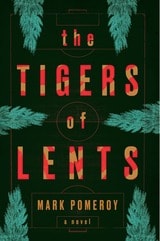
The Tigers of Lents
Mark Pomeroy
University of Iowa Press, 2024
2025 Independent Publishers Book Awards (IPPY Awards) gold medalist, Best Regional Fiction: West-Pacific
This is the story of the Garrison family, who live in Lents, an outer neighborhood of Portland, Oregon. At the heart of it all, there are the three Garrison sisters: Sara, the eldest, a fiery soccer star on the precipice of pulling herself out of the life of poverty she’s always known; Elaine, shy and struggling with the weight she carries both physically and mentally; and Rachel, a reader and poet whose imagination stalls at trying to picture a better life.
As the Garrisons struggle to communicate with each other, as they battle self-doubts and self-sabotage, they too draw on a fierce shared strength that allows them to push back at the reality that’s been handed to them. Each Garrison fights to hold on to their dignity—often through daily acts of grace and good humor, to say nothing of quiet perseverance—and to prove to themselves and each other that they shouldn’t be underestimated.
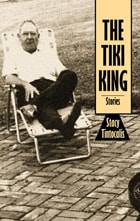
The Tiki King
StoriesStacy Tintocalis
Ohio University Press, 2010
A Lebanese housewife, a former horror-film maker, and a cantankerous Russian librarian are among the inhabitants of the offbeat world found in this impressive debut collection. Stacy Tintocalis’s stories take us from a defunct women’s shelter off a Missouri country road to the streets of low-income Hollywood, where her characters yearn for the love that is always just out of reach.
The title story explores the conflicted emotions an adolescent boy feels toward a father who obsessively returns to his childhood home. In “Too Bad about Howie,” a divorced poet finds comfort in stolen moments with his ex-wife’s dog. Despite their longing for connection, these characters are victims of their own foibles, trapped in terrifying moments of psychic violence that risk driving away the very people they love.
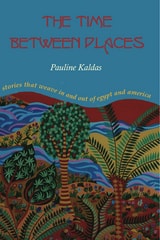
The Time between Places
Stories That Weave In and Out of Egypt and AmericaPauline Kaldas
University of Arkansas Press, 2010
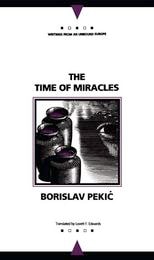
The Time of Miracles
Borislav Pekic
Northwestern University Press, 1994
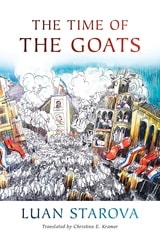
The Time of the Goats
Luan Starova; Translated by Christina E. Kramer
University of Wisconsin Press, 2012
The Time of the Goats is the second novel in Luan Starova’s acclaimed multivolume Balkan saga. It follows the main characters from My Father’s Books and the tragicomic events of their lives in Skopje as the narrator’s intellectual father and the head goatherd become friends. As local officials clumsily carry out absurd policies, Starova conveys the bonds of understanding and mutual support that form in Skopje’s poorest neighborhoods. At once historical and allegorical, folkloric and fantastic, The Time of the Goats draws lyrically on Starova’s own childhood.
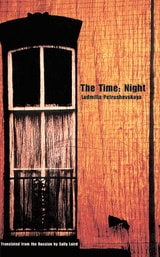
The Time
NightLudmilla Petrushevskaya
Northwestern University Press, 2000
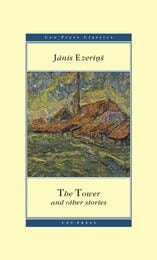
The Tower
and other storiesJanis Ezerins
Central European University Press, 2012
The Town of N
Leonid Dobychin
Northwestern University Press, 1998
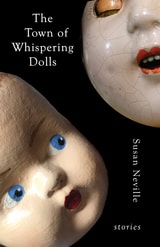
The Town of Whispering Dolls
StoriesSusan Neville, Foreword by Shelley Jackson
University of Alabama Press, 2020
WINNER OF FC2’S CATHERINE DOCTOROW INNOVATIVE FICTION PRIZE
Stories haunted by the remains of the industrial Midwest, the opioid epidemic, and the technology of war
Located somewhere in the rust belt in the early twenty-first century, residents of the town of Whispering Dolls dream of a fabled and illusory past, even as new technologies reshape their world into something different and deeply strange. Dolls walk down the streets, cradling their empty heads and letting the wind turn them into flutes. A politician heads to Washington, DC, and leaves a toxic underground plume in his wake. A woman eats car parts instead of confronting the children who have forgotten her. A young woman falls in love with the robot who took her job at the candy factory.
In The Town of Whispering Dolls, it is usually the grandmothers and the children who grieve. Feeling invisible, in the story “Here,” a woman who has buried her children looks up at the sky where commercial and military jets fly overhead and tries to express her rage to the rich and powerful: “Keep flying above us in your planes. From one coast to the other, keep right on flying over us! We test your bombs and your beloved warriors. Here. Right here. Look down.”
The Track Of The Cat
Walter Van Tilburg Clark
University of Nevada Press, 1993
The Tragic Menagerie
Lydia Zinovieva-Annibal
Northwestern University Press, 1999
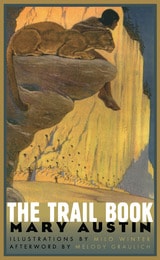
The Trail Book
Mary Austin
University of Nevada Press, 2004
This edition of The Trail Book includes an afterword by Austin scholar Melody Graulich that addresses Austin’s motives in writing the book and its significance as an early example of interdisciplinary multicultural literature. The illustrations by Milo Winter that enlivened the original edition are included, as are Austin’s appendix giving historical background and a glossary of Indian and Spanish names.
The Train That Had Wings
Selected Stories of M. MukundanM. Mukundan; Translated from the Malayalam by Donald R. Davis Jr.
University of Michigan Press, 2005
The Train Was on Time
Heinrich Boll
Northwestern University Press, 1994
The Train to Estelline
The First Novel in a TrilogyJane Roberts Wood
University of North Texas Press, 2000
The Travels of Increase Joseph
A Historical Novel about a Pioneer PreacherJerry Apps
University of Wisconsin Press, 2010
Link Lake, Wisconsin, 1852: Preacher Increase Link and the Standalone Fellowship settle near a lake that they name in his honor. Increase’s gifted tongue calls people to his mission to protect the land: “Unless we take care of the land we shall all perish.” To finance the fellowship activities, Increase sells his special cure-all tonic—fifty cents per bottle!
Inspired by actual events that took place in upstate New York and Wisconsin in the mid-nineteenth century, The Travels of Increase Joseph is the first in Jerry Apps’s series set in fictional Ames County, Wisconsin. The four novels in the series—which also includes In a Pickle, Blue Shadows Farm, and the forthcoming Cranberry Red—all take place around Link Lake at different points in history. They convey Apps’s deep knowledge of rural life and his own concern for land stewardship.
The Tree Stump
An Arabic Historical NovelSamiha Khrais
Michigan State University Press, 2017
The Tree of Life, Book One
On the Brink of the Precipice, 1939Chava Rosenfarb
University of Wisconsin Press, 2004
Winner of the 1972 J. J. Segal Prize and the 1979 Manger Prize for Yiddish Literature
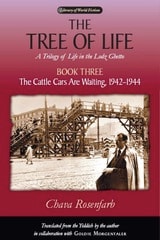
The Tree of Life, Book Three
The Cattle Cars Are Waiting, 1942–1944Chava Rosenfarb
University of Wisconsin Press, 2006
The third volume in this powerful trilogy, The Cattle Cars Are Waiting follows the tragic fate of the inhabitants of the ghetto. Chava Rosenfarb, herself a survivor of the Lodz Ghetto, Auschwitz, and Bergen-Belsen, draws on her own history to create characters who struggle daily to retain a sense of humanity and dignity despite the physical and psychological effects of ghetto life. Although the novel depicts horrendous experiences, the light of faith in the human spirit shines through every page.
Winner, Georges Bugnet Award for Best Novel, Writers Guild of Alberta
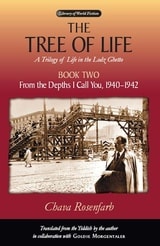
The Tree of Life, Book Two
From the Depths I Call You, 1940–1942Chava Rosenfarb
University of Wisconsin Press, 2005
This volume describes the lives of the novel’s protagonists in the Lodz Ghetto at the beginning of World War II. Chava Rosenfarb, herself a survivor of the Lodz Ghetto, Auschwitz, and Bergen-Belsen, draws on her own history to create realistic characters who struggle daily to retain a sense of humanity and dignity despite the physical and psychological effects of ghetto life. Although horrendous experiences are depicted, the light of faith in the human spirit shines through this novel’s every page.
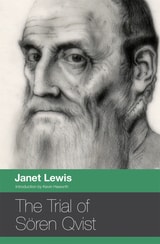
The Trial of Sören Qvist
Janet Lewis
Ohio University Press, 2013
Originally published in 1947, The Trial of Sören Qvist has been praised by a number of critics for its intriguing plot and Janet Lewis’s powerful writing. And in the introduction to this new edition, Swallow Press executive editor and author Kevin Haworth calls attention to the contemporary feeling of the story—despite its having been written more than fifty years ago and set several hundred years in the past. As in Lewis’s best-known novel, The Wife of Martin Guerre, the plot derives from Samuel March Phillips’s nineteenth-century study, Famous Cases of Circumstantial Evidence, in which this British legal historian considered the trial of Pastor Sören Qvist to be the most striking case.
The Trouble with Being Born
A NovelJeffrey DeShell
University of Alabama Press, 2008

The True Adventures of Huckleberry Finn
John Seelye
University of Illinois Press, 1987
funnier than the original, and also more moving, since Seelye's Huck Finn is
even less sentimental about life and Tom Sawyer than Twain's Huck Finn. He is
also more perceptive about black people than the original."
-- Hughes Rudd, CBS News
"Seelye has stitched together
a whale of a book. Without reference to Twain's own version, it is almost impossible
to see the seams where 1970 joins 1884."
-- Geoffrey Wolff, Newsweek
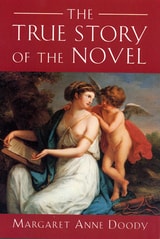
The True Story of the Novel
Margaret Anne Doody
Rutgers University Press, 1997
Twentieth-century historians and critics defending the novel have emphasized its role as superseding something else, as a sort of legitimate usurper that deposed the Epic, a replacement of myth, or religious narrative. To say that the Age of Early Christianity was really also the Age of the Novel rumples such historical tidiness––but so it was. From the outset of her discussion, Doody rejects the conventional Anglo-Saxon distinction between Romance and Novel. This eighteenth-century distinction, she maintains, served both to keep the foreign––dark-skinned peoples, strange speakers, Muslims, and others––largely out of literature, and to obscure the diverse nature of the novel itself.
This deeply informed and truly comparative work is staggering in its breadth. Doody treats not only recognized classics, but also works of usually unacknowledged subgenres––new readings of novels like The Pickwick Papers, Puddn’head Wilson, L’Assommoir, Death in Venice, and Beloved are accompanied by insights into Death on the Nile or The Wind in the Willows. Non-Western writers like Chinua Achebe and Witi Ihimaera are also included. In her last section, Doody goes on to show that Chinese and Japanese novels, early and late, bear a strong and not incidental affinity to their Western counterparts. Collectively, these readings offer the basis for a serious reassessment of the history and the nature of the novel.
The True Story of the Novel marks the beginning of the twenty-first century’s understanding of fiction and of culture. It is essential reading for anyone with an interest in literature.
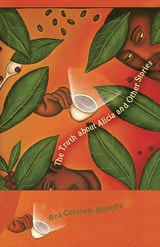
The Truth about Alicia
and Other StoriesAna Consuela Matiella
University of Arizona Press, 2002
Alicia is not the only woman with problems. In these stories about contemporary and traditional Latinas, Ana Consuelo Matiella uses sensitivity and wit to address issues faced by women of color and women everywhere—issues largely having to do with love: between men and women, mothers and daughters, women and friends. In engaging stories about family myths, gossip, and lies, comadres converse over afternoon café con leche. "I'm sure that I was the only wife whose husband was teaching their daughter to do Cheech Marin imitations," remarks one of Matiella's characters. Another sings the praises of the chocolate milkshake diet: "That’s one advantage of living on the border. You get to try all the latest gringo inventions as soon as they hit the streets." Through encounters with angels, conversations with dogs, and relationships with men overly concerned with the dimensions of their manhood, Matiella offers a new exploration of the human condition—one showing us that if we cannot laugh at life, no matter how tragic the circumstances, we are surely doomed.
With humor and insight that come only through close observation of her fellow human beings, this gifted writer brings new twists to familiar scenes. The Truth about Alicia and Other Stories is an authentic portrayal of the world of contemporary Chicanas that will delight everyone who enters it.
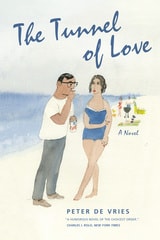
The Tunnel of Love
A NovelPeter De Vries
University of Chicago Press, 2015

The Turban and the Hat
Sonallah Ibrahim
Seagull Books, 2022
The Napoleonic-era French invasion and occupation of Egypt are often seen as the Arab world’s first encounter with the military and technological prowess of the West—and it came as a terrible shock. The Turban and the Hat tells the story of those three tumultuous years from the perspective of a young Egyptian living in late-eighteenth-century Cairo. Knowing some French, he works as a translator for the occupiers. He meets their scientists and artists, has an affair with Bonaparte’s mistress, and accompanies the disastrous campaign to take Syria, where he witnesses the ravages of the plague and the horrific barbarism of war. He is astonished by the invaders’ lies and propaganda, but he finds that much of what he thought he knew about his fellow Egyptians was also an illusion. Convincing in its history but rich in themes that resonate today, The Turban and the Hat is a story of resistance, but also of collaboration, cooperation, and corruption. Sonallah Ibrahim, one of Egypt’s foremost novelists, gives us a marvelous account of the Western occupation of an Arab land, one that will resonate with contemporary readers. His portrayal of this tragic—and at times comic—“clash of civilizations” is never didactic, even as it reminds us that so many lessons of history go unlearned.
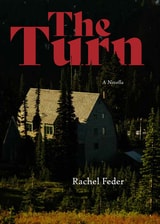
The Turn
A NovellaRachel Feder
Northwestern University Press, 2026
A contemporary gothic delving into the power of unmoored lust and familial bonds
When Baxter, a young writer and recent college graduate, accepts a live-in nanny position for an affluent professor’s family in the foothills of the Rocky Mountains, she rapidly becomes aware of strange happenings orbiting the family and their children, Quinn and Thebes. After the father becomes estranged and the mother disappears into the night with only one child, Baxter is left utterly lost and in charge of the baby, Thebes, as she struggles to make sense of the bizarre occurrences within the family, the house, and even her own body. But the unnatural occurrences are far from over, and as Baxter stumbles in the dark to protect the child, something sinister stalks the night, looking to sink in its teeth.
For fans of gothic classics such as The Turn of the Screw and Carmilla, The Turn is an eerie and magnificent modern gothic tale about the monstrous bond of love between caregiver and child.