Results by title
4155 books match the query 'State & Local' and 925 start with t
The World, the Flesh, and the Devil
A History of Colonial St. LouisPatricia Cleary
University of Missouri Press, 2018
The Worlds between Two Rivers
Perspectives on American Indians in IowaGretchen M. Bataille
University of Iowa Press, 2000
The Worlds of William Penn
Murphy, Andrew R
Rutgers University Press, 2019
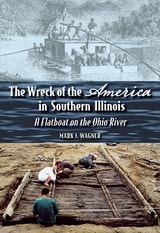
The Wreck of the "America" in Southern Illinois
A Flatboat on the Ohio RiverMark J. Wagner
Southern Illinois University Press, 2015
Winner, Illinois State Historical Society Superior Achievement, 2016
Flatboats were the most prolific type of vessel on the Ohio and Mississippi Rivers during the early 1800s. Thousands of these boats descended the two rivers each year, carrying not only valuable cargo to New Orleans but also western-bound emigrants to newly opened territories. By the late 1800s, flatboats had completely disappeared, and no intact examples were known to exist. Our knowledge of these historic vessels had been limited to illustrations, memoirs, and traveler accounts.
That changed in 2000 after local residents found a wreck on the Ohio River shoreline in Illinois. Archaeologist Mark J. Wagner and his colleagues from Southern Illinois University Carbondale investigated extensively and established that the wreck was a pre–Civil War flatboat, which they named America, after a nearby town.
In The Wreck of the America in Southern Illinois: A Flatboat on the Ohio River, Wagner provides a brief description and general history of flatboats and the various reasons they wrecked—such as poor workmanship and encounters with pirates, storms, rocks, and floating trees. Wagner describes the remains of the America, how it was constructed, the artifacts found nearby and inside—including pewter spoons, utensils with bone handles, metal buttons, and an iron felling axe—and the probable cause of its sinking. Wagner concludes with a history of the America since its discovery in 2000 and a plea that the boat be removed from the riverbank and preserved before the Ohio washes it away.
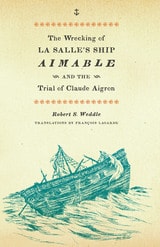
The Wrecking of La Salle's Ship Aimable and the Trial of Claude Aigron
By Robert S. Weddle
University of Texas Press, 2009
When Robert Cavelier, sieur de La Salle, landed on the Texas coast in 1685, bent on founding a French colony, his enterprise was doomed to failure. Not only was he hundreds of miles from his intended landfall—the mouth of the Mississippi—but his supply ship, Aimable, was wrecked at the mouth of Matagorda Bay, leaving the colonists with scant provisions and little protection against local Indian tribes. In anger and disgust, he struck out at the ship's captain, Claude Aigron, accusing him of wrecking the vessel purposely and maliciously.
Captain Aigron and his crew escaped the doomed colony by returning to France on the warship that had escorted the expedition on its ocean crossing. Soon after reaching France, Aigron found himself defendant in a civil suit filed by two of his officers seeking recompense for lost salary and personal effects, and then imprisoned on order of King Louis XIV while La Salle's more serious accusations were being investigated.
In this book, Robert Weddle meticulously recounts, through court documents, the known history of Aigron and the Aimable, and finds that despite La Salle's fervent accusations, the facts of the case offer no clear indictment. The court documents, deftly translated by François Lagarde, reveal Captain Aigron's successful defense and illuminate the circumstances of the wreck with Aigron's testimony. Much is also revealed about the French legal system and how the sea laws of the period were applied through the French government's L'Ordonnance de la Marine.
The Younge Site
An Archaeological Record from MichiganEmerson F. Greenman
University of Michigan Press, 1937
The Yuma Reclamation Project
Irrigation, Indian Allotment, and Settlement Along the Lower Colorado RiverRobert Sauder
University of Nevada Press, 2009
In the arid American West, settlement was generally contingent on the availability of water to irrigate crops and maintain livestock and human residents. Early irrigation projects were usually the cooperative efforts of pioneer farmers, but by the early twentieth century they largely reflected federal intentions to create new farms out of the western public domain. The Yuma Reclamation Project, authorized in 1904, was one of the earliest federal irrigation projects initiated in the western United States and the first authorized on the Colorado River. Its story exemplifies the range of difficulties associated with settling the nation’s final frontier—the remaining irrigable lands in the arid West, including Indian lands—and illuminates some of the current issues and conflicts concerning the Colorado River. Author Robert Sauder’s detailed, meticulously researched examination of the Yuma Project illustrates the complex multiplicity of problems and challenges associated with the federal government’s attempt to facilitate homesteading in the arid West. He examines the history of settlement along the lower Colorado River from earliest times, including the farming of the local Quechan people and the impact of Spanish colonization, and he reviews the engineering problems that had to be resolved before an industrial irrigation scheme could be accomplished. The study also sheds light on myriad unanticipated environmental, economic, and social challenges that the government had to confront in bringing arid lands under irrigation, including the impact on the Native American population of the region.The Yuma Reclamation Project is an original and significant contribution to our understanding of federal reclamation endeavors in the West. It provides new and fascinating information about the history of the Yuma Valley and, as a case study of irrigation policy, it offers compelling insights into the history and consequences of water manipulation in the arid West.

Theatres of the Body
Dance and Discourse in Antebellum PhiladelphiaLynn Matluck Brooks
Temple University Press, 2025
Reviewing print culture in the 1840s, Brooks shows how newspapers, magazines, and popular fiction provided documentation of dancing in Philadelphia as well as the responses of dance commentators, practitioners, and moralists. Theatres of the Body also considers the interplay of science with dance in the 1850s, which impacted both dance practices and reception.
Providing an expansive historiography of these significant contributions to dance in the United States, Brooks deepens our understanding of antebellum culture and history.
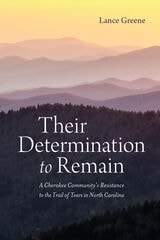
Their Determination to Remain
A Cherokee Community's Resistance to the Trail of Tears in North CarolinaLance Greene
University of Alabama Press, 2023
The remarkable story of a North Carolina Cherokee community who avoided forced removal on the Trail of Tears
During the 1838 forced Cherokee removal by the US government, a number of close-knit Cherokee communities in the Southern Appalachian Mountains refused to relinquish their homelands, towns, and way of life. Using a variety of tactics, hundreds of Cherokees avoided the encroaching US Army and remained in the region.
In his book Their Determination to Remain: A Cherokee Community’s Resistance to the Trail of Tears in North Carolina, Lance Greene explores the lives of wealthy plantation owners Betty and John Welch who lived on the southwestern edge of the Cherokee Nation. John was Cherokee and Betty was White. Although few Cherokees in the region participated in slavery, the Welches held nine African Americans in bondage.
During removal, the Welches assisted roughly 100 Cherokees hiding in the steep mountains. Afterward, they provided land for these Cherokees to rebuild a new community, Welch’s Town. Betty became a wealthy and powerful plantation mistress because her husband could no longer own land. Members of Welch’s Town experienced a transitional period in which they had no formal tribal government or clear citizenship yet felt secure enough to reestablish a townhouse, stickball fields, and dance grounds.
Greene’s innovative study uses an interdisciplinary approach, incorporating historical narrative and archaeological data, to examine how and why the Welches and members of Welch’s Town avoided expulsion and reestablished their ways of life in the midst of a growing White population who resented a continued Cherokee presence. The Welch strategy included Betty’s leadership in demonstrating outwardly their participation in modern Western lifestyles, including enslavement, as John maintained a hidden space—within the boundaries of their land—for the continuation of traditional Cherokee cultural practices. Their Determination to Remain explores the complexities of race and gender in this region of the antebellum South and the real impacts of racism on the community.
There Goes the Neighborhood
Rural School Consolidation at the Grass Roots in Early Twentieth-Century IowaDavid R. Reynolds
University of Iowa Press, 2002

There's Hope for the World
The Memoir of Birmingham, Alabama's First African American MayorRichard Arrington
University of Alabama Press, 2008
On a sultry September morning in 1955, a young African American man, the son of share croppers, boarded a Greyhound bus in Birmingham, Alabama, to leave his home state for the first time in his life. He was headed for the University of Detroit on a teaching scholarship from MilesCollege. Richard Arrington could not have guessed then that his future as a teacher would be postponed for decades by big-city politics--and that he would serve a record-setting five terms as chief executive of Alabama’s largest city.
Under Arrington’s leadership, Birmingham rebuilt itself from a foundering, steel-driven industrial center to one of the most diversified metropolitan areas in the Southeast, with an economy fueled by health care, biomedical research, engineering, telecommunications, and banking. As mayor, Arrington’s economic legacy is impressive. When he left office, Birmingham boasted a record number of jobs and the lowest unemployment rate in its history. Additionally, Birmingham had built the strongest tax base in Alabama, expanded its city limits by 60 square miles, reduced crime to its lowest level in 25 years, and funded a $260 million school construction program. Today Birmingham is financially sound and is the only city in the Southeast with a $100 million endowment fund.
There's More to New Jersey than the Sopranos
Mappen, Marc
Rutgers University Press, 2009
Even fans of that popular show, one that held viewers captive, may be a bit disheartened to discover that the first thing that pops into minds around the world about New Jersey is a dysfunctional crime family, just an exit or two off the infamous N.J. Turnpike. But there's no need to live in fear that the only culture and history that the state is known for is, well, let's say, a bit of bada bing. Actually, the echo of the Big Bangùthe cosmic event that marked the birth of our universe some 13.7 billion years agoùwas first identified by scientists from Bell Labs in Murray Hill, New Jersey.
In this lively romp through history from the primitive past to the present day, Marc Mappen's message resonatesùThere's More to New Jersey than the Sopranos. Real tales, wise tales, tall tales abound throughout the pages of Mappen's collection, filled with zest, humor, scandal, and occasionally tragedy. Annie Oakley. Ulysses S. Grant. Benedict Arnold. Ezra Pound. Shoeless Joe Jackson. These luminaries and many others share a common bond with the state that witnessed prehistoric elephants roaming its pastures, the explosion on the USS Princeton, a Martian invasion, famous firsts like the phonograph, electric light, and movies, and, well, step aside Tony Soprano: mobster Al Capone strolling along the Atlantic City boardwalk.
Providing a lens into American history through lively prose and more than twenty-five illustrations, There's More to New Jersey than the Sopranos is as much fun as a trip to the Jersey Shore and definitely more rewarding than a night home watching televisionù simply stated, this book is one you can't refuse to read.

These Granite Islands
A NovelSarah Stonich
University of Minnesota Press, 2013
These Granite Islands is an arresting novel about a woman who, on her deathbed, recalls the haunting and fateful summer of 1936, a summer that forever changed her life. Sarah Stonich’s debut novel, set on the Iron Range of Minnesota, is an intimate and gripping story of a friendship, a portrait of marriage, and a meditation on the tragedy of loss.
These Rugged Days
Alabama in the Civil WarJohn S. Sledge
University of Alabama Press, 2017
Alabama’s Civil War story—told with grit, grace, and truth.
In These Rugged Days: Alabama in the Civil War, John S. Sledge offers a riveting and readable account of Alabama’s Civil War saga. Focused on the conflict’s turning points within the state’s borders, Sledge recounts residents’ experiences from secession’s early days to its tumultuous collapse, when 75,000 blue-coated soldiers were on the move statewide. Sledge brings these tumultuous years to life in an impressive array of primary and secondary sources, including official records, diaries, newspapers, memoirs, correspondence, sketches, and photographs. He also highlights such colorful personalities as John Pelham, the youthful Jacksonville artillerist who was shipped home in an iron casket with a glass faceplate; Gus Askew, a nine-year-old Barbour County slave who vividly recalled the day the Yankees marched in; Augusta Jane Evans, the Mobile novelist who was given a gold pen by a daring blockade runner; and Emma Sansom, a plucky Gadsden teenager who acted as a scout and guide to Nathan Bedford Forrest.
These Rugged Days is an enthralling tale of action, courage, pride, and tragedy. The Civil War has left indelible marks on Alabama’s land, culture, economy, and people, and Sledge offers a refreshing take on the state's role in the conflict. His narrative is a dramatic account that will be enjoyed by lay readers as well as students and scholars of Alabama and the Civil War.
They Came to Bowl
How Milwaukee Became America’s Tenpin CapitalDoug Schmidt
Wisconsin Historical Society Press, 2007
A frozen rope. A urethane split on the drives. Chicken tracks on the telescore.* Do you know your bowling lingo? You will along with much more when you read They Came to Bowl: How Milwaukee Became America's Tenpin Capital. From the thrill of the perfect strike to the agony of a ball gone astray, anyone who has rolled a ball down the lanes will find themselves or someone they know in the people, places and stories covered in this book.
In this authoritative and lively book, Doug Schmidt traces bowling's roots from a German religious rite centuries ago to the sport that made Milwaukee famous. From the taverns and saloons that housed recreational games to the sell-out crowds and million-dollar beer sponsorships of televised tournaments, this well-illustrated book covers both sport and city, charting the changing face of bowling over the century. Packed with memorable showdowns and improbable heroes, They Came to Bowl will take you back to the changing lanes of bowling in Milwaukee — and the sport as a whole.
* frozen rope=a ball rolled with excessive speed almost straight to the pocket; urethane split=2-8-10 or 3-7-9 split caused by sharp breaking point of reactive resin balls; drives=alleys; chicken tracks=string of strikes
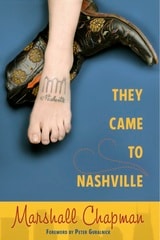
They Came to Nashville
Marshall Chapman
Vanderbilt University Press, 2010
In They Came to Nashville, Chapman records the personal stories of musicians shaping the modern history of music in Nashville, from the mouths of the musicians themselves. The trials, tribulations, and evolution of Music City are on display, as she sits down with influential figures like Kris Kristofferson, Emmylou Harris, and Miranda Lambert, and a dozen other top names, to record what brought each of them to Nashville and what inspired them to persevere. The book culminates in a hilarious and heroic attempt to find enough free time with Willie Nelson to get a proper interview. Instead, she's brought along on his raucous 2008 tour and winds up onstage in Beaumont, Texas singing "Good-Hearted Woman" with Willie.
They Came to Nashville reveals the daily struggle facing newcomers to the music business, and the promise awaiting those willing to fight for the dream.
Co-published with the Country Music Foundation Press
They Came to Wisconsin
Julia Pferdehirt
Wisconsin Historical Society Press, 2002
They Came to Wisconsin presents three themes of the state’s immigrant history: leaving the homeland, making the journey, and enduring the first year of settlement. Journal and diary entries and letters from European groups and oral histories from African American, Latino, Hmong, and Amish sources make this book dynamic and wholly inclusive. They Came to Wisconsin breaks fresh ground in presenting document-centered Wisconsin history to a young audience. More important, these firsthand stories add a real human dimension to history, helping students to compare the experiences of the varied groups who came to Wisconsin in the last two hundred years.
Distributed for the Wisconsin Historical Society Press.
They Came to Wisconsin
Teacher's Guide and Student MaterialsHarriet Brown
Wisconsin Historical Society Press, 2002
Distributed for the Wisconsin Historical Society Press.
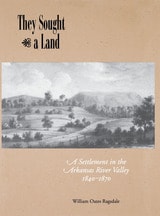
They Sought a Land
A Settlement in the Arkansas River Valley, 1840–1870William Oates Ragsdale
University of Arkansas Press, 1997
Pisgah grew and prospered, developing increasingly successful farming practices, landholding patterns, and trading strategies. But the Civil War took a heavy toll, taking workers away from farms, subjecting those left on the home front to deprivation and violence, and creating division in the community. By 1870, the people of Pisgah had dispersed into Arkansas’s larger developing society.
Absorbing to read and rich with colorful detail, They Sought a Land is an important story of the westward expansion of the United States and the settling of the American South during the nineteenth century.
Things You Need to Hear
Collected Memories of Growing Up in Arkansas, 1890–1980Margaret Jones Bolsterli
University of Arkansas Press, 2016
Thinking with Stone
Deep Time in the San Rafael SwellBrian Rajski
University of Utah Press, 2026
An intellectual journey through 250 million years of stone
In the San Rafael Swell, geologic forces have tilted and exposed the strata so that over 250 million years of geologic history can be observed simply by traveling across the rocky landscape, with its dramatic variety of colors and forms. Largely neglected by visitors to the state’s national parks and monuments and overlooked by many nature writers of the Colorado Plateau, the exceptional “Swell” offers a unique opportunity to think about people’s connections to the layers of earth beneath our feet.
Thinking with Stone takes readers on an intellectual journey across the Swell, moving from the youngest rocks at its edges to the oldest near its center and guiding readers through the features and histories of each geological layer. Drawing on personal experience and scientific research, Brian Rajski explores how creatively engaging with geology by using rocks as the foundation for thinking can generate new ideas about art, ethics, and the environment. Ultimately, the book reimagines the relationships between history and deep time, humanity and geology, and the individual and the stories told by stone.

Third Worlds Within
Multiethnic Movements and Transnational SolidarityDaniel Widener
Duke University Press, 2024

Thirteen Loops
Race, Violence, and the Last Lynching in AmericaB. J. Hollars
University of Alabama Press, 2011
The death of Vaudine Maddox—and the lynchings that followed—serves as a cautionary tale about the violence that occurred in the same region nearly fifty-years later, highlighting the cowardice, ignorance, and happenstance that sustained a culture of racial intolerance far into the future.Nearly half a century later, after a black bank robber was acquitted for the murder of police Sergeant Gene Ballard, two Klansmen took it upon themselves to exact revenge on an innocent victim--nineteen-year-old African American Michael Donald. Donald's murder--deemed the last lynching in America--reignited the race debate in America and culminated in a courtroom drama in which the United Klans of America were at long last put on trial.
While tracing the relationships among these murders, B. J. Hollars's research led him deep into the heart of Alabama’s racial, political, and legal landscapes. A work of literary journalism, Thirteen Loops draws upon rarely examined primary sources, court documents, newspaper reports, and first-hand accounts in an effort to unravel the twisted tale of a pair of interconnected murders that forever altered United States' race relations.
Thirteen Mississippi Ghosts and Jeffrey
Commemorative EditionKathryn Tucker Windham
University of Alabama Press, 2015
A deluxe, commemorative edition of famed southern author and folklorist Kathryn Tucker Windham’s introduction to Mississippi’s thirteen most famous haunted houses and ghostly visitations.
For as long as Mississippi has existed (and then some), flocks of phantoms have haunted the mortal inhabitants of the Magnolia State. In Thirteen Mississippi Ghosts and Jeffrey, best-selling folklorist Kathryn Tucker Windham, along with her trusty spectral companion Jeffrey, introduces thirteen of the state’s most famous ghost stories.
Although stories about Mississippi’s spirits seemingly outnumber the ghosts themselves, Windham observes that “Southern ghost tales are disappearing because people no longer sit around on the porch on summer nights and tell stories. The old folks who grew up with these stories are dying now, and the stories are dying with them.”
Fortunately for us, Windham was a writer dedicated to preserving these tales in print. The veteran author spent many years tracking down these stories and chronicling the best ones. From the ghost of Mrs. McEwen still wearing her beloved cameo pin and keeping a watchful eye over Featherston Place, her home in Holly Springs, where, she swore, she would stay forever, to the ghostly visage fixed permanently on the bedroom window pane of Catherine McGehee, who searched the horizon ardently for her unrequited love to come to her as promised at Cold Spring Plantation in Pinckneyville, Windham’s stories cover the breadth and depth of Mississippi—at times more moonlight than magnolia.
An enduring classic, this commemorative edition restores Thirteen Mississippi Ghosts and Jeffrey to the ghastly grandeur of its original 1974 edition.

Thirteen Sisters
The 1979 Boston Murders and the Resistance They InspiredAndrew S. Baer
University of Chicago Press, 2027
The murder of thirteen women and girls in 1979 and the social movement they launched.
In four terrifying months in 1979, thirteen women and girls—twelve Black, one white—were murdered in Boston. All were found in or near Roxbury, a predominantly Black neighborhood in a city famously beset by racial strife and division. Fears of a serial killer spread within Black communities. But the authorities wouldn’t hear of it: these were just ordinary, everyday murders of unimportant people, killed by men they knew. The police said Black residents had nothing to fear—and the media implied that white people could safely ignore the carnage.
Yet Black feminists refused to accept the murders of Black women and girls. The real serial killers, they argued, were chronic racism, sexism, poverty, and domestic violence, including violence committed by Black men. Something had to be done.
Thirteen Sisters tells the gripping stories of the women who died—their lives, their brutal deaths, the attempts to solve them—and the renowned Combahee River Collective, whose activism in the wake of the murders brought national attention to the overlapping oppressions that made Black women and girls so vulnerable to violence. Historian Andrew S. Baer interviews family members and activists to introduce readers to the victims as complete people and investigate the events surrounding their deaths, unspooling a fast-paced and urgent narrative about crime, race, and marginalization. Baer also pays tribute to the Black feminists who saw the social roots of this violence and called for radical change, demands that remain all too relevant today.
Riveting, enraging, and humane, Thirteen Sisters is an indictment of the neglectful institutions that have failed Black women and a testament to the activists who transformed how we understand systemic oppression.
Thirteen Tennessee Ghosts and Jeffrey
Commemorative EditionKathryn Tucker Windham
University of Alabama Press, 2016
A deluxe, commemorative edition of famed southern author and folklorist Kathryn Tucker Windham’s introduction to the Volunteer State’s most enduring ghost stories.
In Thirteen Tennessee Ghosts and Jeffrey, beloved and best-selling folklorist Kathryn Tucker Windham presents a spine-tingling collection of Tennessee’s eeriest ghost tales. Accompanied by her faithful companion, Jeffrey, a friendly spirit who resided in her home, Windham traveled from the mysterious muds of Memphis to the haunted hollow’s of east Tennessee to collect the spookiest collection of Volunteer State revenants ever written.
In these perennial favorites, Windham captures the gentle folk humor of native Tennesseans as well as fascinating facts about the state’s rich history. In “The Dark Legend,” Windham recounts the story of explorer Merriwether Lewis, who met an untimely end on the Natchez Trace 1809 and whose spirit, it is said, still treads through Tennessee’s forests. Windham also visits central Tennessee’s Chapel Hill, where people who know the town say those who stand on the train tracks on dark, lonely nights can often see a disembodied light floating along the tracks. Neighbors say it’s the ghost of a headless flagman who returns to cavort with night-time guests.
High in Tennessee’s Appalachian mountains, Windham encounters Martin, the phantom fiddler of Johnson County. Legend has it that in life Martin’s musical skills so mesmerized the snakes of the Stone Mountains that they would slither from their dens to listen tamely to his fiddling. Intrepid visitors to the rocky tops of northeast Tennessee’s mountains say you can still hear Martin’s ghost fiddling in the hollows.
This handsome, new commemorative hardback edition returns Windham’s suspenseful classic to its original keepsake quality and includes a new afterword by the author’s children.

Thirty Rooms to Hide In
Insanity, Addiction, and Rock ‘n’ Roll in the Shadow of the Mayo ClinicLuke Longstreet Sullivan
University of Minnesota Press, 2014
Author Luke Longstreet Sullivan has a simple way of describing his new memoir: “It’s like The Shining . . . only funnier.” Thirty Rooms to HideIn tells the astonishing story of Sullivan’s father and his descent from one of the world’s top orthopedic surgeons at the Mayo Clinic to a man who is increasingly abusive, alcoholic, and insane, ultimately dying alone on the floor of a Georgia motel room. For his wife and six sons, the years prior to his death were characterized by turmoil, anger, and family dysfunction; but somehow they were also a time of real happiness for Sullivan and his brothers, full of dark humor and much laughter.
Through the 1950s and 1960s, the six brothers had a wildly fun and thoroughly dysfunctional childhood living in a forbidding thirty-room mansion, known as the Millstone, on the outskirts of Rochester, Minnesota. The many rooms of the immense home, as well as their mother’s loving protection, allowed the Sullivan brothers to grow up as normal, mischievous boys. Against a backdrop of the times—the Cold War, the Cuban Missile Crisis, fallout shelters, JFK’s assassination, and the Beatles—the cracks in their home life and their father’s psyche continue to widen. When their mother decides to leave the Millstone and move the family across town, the Sullivan boys are able to find solace in each other and in rock ’n’ roll.
As Thirty Rooms to HideIn follows the story of the Sullivan family—at times grim, at others poignant—a wonderful, dark humor lifts the narrative. Tragic, funny, and powerfully evocative of the 1950s and 1960s, Thirty Rooms to Hide In is a tale of public success and private dysfunction, personal and familial resilience, and the strange power of humor to give refuge when it is needed most, even if it can’t always provide the answers.
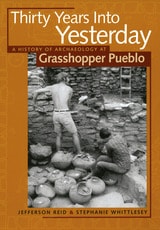
Thirty Years Into Yesterday
A History of Archaeology at Grasshopper PuebloJefferson Reid and Stephanie Whittlesey
University of Arizona Press, 2005
Like the enigmatic Mogollon culture it sought to explore and earlier University of Arizona field schools in the Forestdale Valley and at Point of Pines, Grasshopper research engendered decades of controversy that still lingers in the pages of professional journals. Jefferson Reid and Stephanie Whittlesey, players in the controversy who are intimately familiar with the field school that ended in 1992, offer a historical account of this major archaeological project and the intellectual debates it fostered.
Thirty Years Into Yesterday charts the development of the Grasshopper program under three directors and through three periods dominated by distinct archaeological paradigms: culture history, processual archaeology, and behavioral archaeology. It examines the contributions made each season, the concepts and methods each paradigm used, and the successes and failures of each. The book transcends interests of southwestern archaeologists in demonstrating how the three archaeological paradigms reinterpreted Grasshopper, illustrating larger shifts in American archaeology as a whole. Such an opportunity will not come again, as funding constraints, ethical concerns, and other issues no doubt will preclude repeating the Grasshopper experience in our lifetimes.
Ultimately, Thirty Years Into Yesterday continues the telling of the Grasshopper story that was begun in the authors’ previous books. In telling the story of the archaeologists who recovered the material residue of past Mogollon lives and the place of the Western Apache people in their interpretations, Thirty Years Into Yesterday brings the story full circle to a stunning conclusion.

This Bright Light of Ours
Stories from the Voting Rights FightMaria Gitin
University of Alabama Press, 2014
Combining memoir with oral history, creates a vivid and searing portrait of the Freedom Summer of 1965.
This Bright Light of Ours offers a tightly focused insider’s view of the community-based activism that was the heart of the civil rights movement. A celebration of grassroots heroes, this book details through first-person accounts the contributions of ordinary people who formed the nonviolent army that won the fight for voting rights.
Combining memoir and oral history, Maria Gitin fills a vital gap in civil rights history by focusing on the neglected Freedom Summer of 1965 when hundreds of college students joined forces with local black leaders to register thousands of new black voters in the rural South. Gitin was an idealistic nineteen-year-old college freshman from a small farming community north of San Francisco who felt called to action when she saw televised images of brutal attacks on peaceful demonstrators during Bloody Sunday, in Selma, Alabama.
Atypical among white civil rights volunteers, Gitin came from a rural low-income family. She raised funds to attend an intensive orientation in Atlanta featuring now-legendary civil rights leaders. Her detailed letters include the first narrative account of this orientation and the only in-depth field report from a teenage Summer Community Organization and Political Education (SCOPE) project participant.
Gitin details the dangerous life of civil rights activists in Wilcox County, Alabama, where she was assigned. She tells of threats and arrests, but also of forming deep friendships and of falling in love. More than four decades later, Gitin returned to Wilcox County to revisit the people and places that she could never forget and to discover their views of the “outside agitators” who had come to their community. Through conversational interviews with more than fifty Wilcox County residents and former civil rights workers, she has created a channel for the voices of these unheralded heroes who formed the backbone of the civil rights movement.

This Grand and Magnificent Place
The Wilderness Heritage of the White MountainsChristopher Johnson
University of New Hampshire Press, 2020
This is the complex story of New Hampshire's White Mountains, from the range's days as the majestic homeland of the Abenaki, first seen by English colonists four centuries ago, to its unassailable standing today as one of America's most beloved national forests, comprising 112,000 acres of protected wilderness.
Christopher Johnson, an avid hiker intimately familiar with the White Mountains, achieves two important objectives in This Grand and Magnificent Place. He lovingly explores their rich ecological, political, economic, and cultural history and, more broadly, opens a panoramic window on the evolution of American attitudes and policies toward wilderness over time.
Two competing visions of wilderness historically have coexisted in America: the instrumental, in which the wilderness is seen as a conglomeration of resources to be exploited for the benefit of entrepreneurs and consumers, and the aesthetic, in which the wilderness is appreciated for its natural beauty, the personal growth that it stimulates, the national pride it engenders, and the spiritual truth it offers. Johnson never loses sight of this fundamental dichotomy as he shares marvelous true tales of the first intrepid European settlers who “tamed” the Whites. He discusses Ethan Allen Crawford, the area's first innkeeper, the emergence of tourism, and America's love affair with the “wilderness experience”; and he explores tales of Thomas Cole, Nathaniel Hawthorne, and other renowned artists who immortalized these mountains in their works. He considers the coming of grand resort hotels—and the contemporaneous wilderness revival—in the late nineteenth century and the passing of the landmark 1911 Weeks Act, which was instrumental in preserving American wilderness in the face of development and threats of irreparable environmental damage. Johnson traces the perilous course of the twentieth-century movement toward wilderness preservation, which has successfully conserved the Whites, an extraordinary American treasure, for future generations. Finally, he poses thoughtful and essential questions regarding the destiny of this American wilderness, exploring the balance between maintaining its usefulness while conserving its glorious heritage.
This skillful and accessible history will rivet general readers, students, and professionals interested in the history, culture, and politics of the White Mountains, as well as those fascinated by environmental history and wilderness protection everywhere.
This Happy Land
The Jews of Colonial and Antebellum CharlestonJames William Hagy
University of Alabama Press, 1993

This Is New Jersey
Cunningham, John T
Rutgers University Press, 1995

This Is the Plate
Utah Food TraditionsEdited by Carol Edison, Eric A Eliason, and Lynne S McNeill
University of Utah Press, 2019
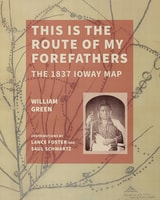
This Is the Route of My Forefathers
The 1837 Ioway MapWilliam Green
University of Iowa Press, 2025
Illustrating nearly 200 years of Ioway history, the 1837 Ioway map provides insights into the tribe’s political and diplomatic strategies, their relationships with neighboring nations, and how they resisted and negotiated in the face of dispossession. This Is the Route of My Forefathers uses an interdisciplinary approach to reveal how group accounts may fade over time, while accounts of origin—legendary histories—remain rich and vibrant.
This Place of Promise
A Historian's Perspective on 200 Years of Missouri HistoryGary R. Kremer
University of Missouri Press, 2023
Key elements of the book include the centrality of race to the Missouri experience—from the time Missourians began to seek statehood in 1817 all the way up to the Black Lives Matter movement of the 21st century—as well as ongoing tensions created by the urban-rural divide and struggle to define the proper role of government in society.
This Soldier Life
The Diaries of Romine H. Ostrander, 1863 and 1865, in Colorado TerritoryPaul A. Malkoski
University Press of Colorado, 2006
Jan. 24, 1865:
"I have had pretty spirited arguments with these third reg't ducks sometimes about the barbarity of indiscriminately murdering defenseless women and children of the Indians at sand creek. Some of them deny that any thing of the kind was done except in the general action when there was no telling the difference; and some acknowledge that there were women and children killed after the general action was over; but argue that it was right because Indians have done the same."
Oct. 17, 1863:
"I know that I have written a great many foolish - yes silly things in this book, and - well, what of it? What if I have? Who's business is it? Who's going to read them? I am!"
Published by the Colorado Historical Society
This Storied River
Legend & Lore of the Upper MississippiDennis McCann
Wisconsin Historical Society Press, 2017
This Superior Place
Stories of Bayfield and the Apostle IslandsDennis McCann
Wisconsin Historical Society Press, 2013
Picturesque little Bayfield on Lake Superior is Wisconsin’s smallest city by population but one of its most popular visitor destinations. This book captures those unique qualities that keep tourists coming back year after year and offers a historically reliable look at the community as it is today and how it came to be. Abundantly illustrated with both historical and contemporary images, This Superior Place showcases, as author Dennis McCann writes, “a community where the past was layered with good times and down times, where natural beauty was the one resource that could not be exhausted by the hand of man, and where history is ever present.”
Because Bayfield serves as “the gateway to the Apostle Islands,” the book also includes chapters on the Apostle Islands National Lakeshore, Madeline Island, and the nearby Red Cliff Ojibwe community. It also covers the significant eras in the city’s history: lumbering, quarrying, commercial fishing, and the advent of the orchards visitors see today. It is not a guidebook as such but more of a visual and written tour of the city and the major elements that came together to make it what it is. Colorful stories from the past, written in Dennis McCann’s casual, humorous style, give a sense of the unique characters and events that have shaped this charming city on the lake.
This Terrible Sound
The Battle of ChickamaugaPeter Cozzens
University of Illinois Press, 1992
In this study of the campaign, the first to appear in over thirty years and the most comprehensive account ever written on Chickamauga, Peter Cozzens presents a vivid narrative about an engagement that was crucial to the outcome of the war in the West. Drawing upon a wealth of previously untapped sources, Cozzens offers startling new interpretations that challenge the conventional wisdom on key moments of the battle, such as Rosecrans's fateful order to General Wood and Thomas's historic defense of Horseshoe Ridge.
Chickamauga was a battle of missed opportunities, stupendous tactical blunders, and savage fighting by the men in ranks. Cozzens writes movingly of both the heroism and suffering of the common soldiers and of the strengths and tragic flaws of their commanders. Enhanced by the detailed battle maps and original sketches by the noted artist Keith Rocco, this book will appeal to all Civil War enthusiasts and students of military history.
This Vast Book of Nature
Writing the Landscape of New Hampshire’s White Mountains, 1784–1911Pavel Cenkl
University of Iowa Press, 2006
Starting with an exploration of Jeremy Belknap’s 1784 expedition to Mount Washington, which Cenkl links to the origins of tourism in the White Mountains, to the transformation of touristic and residential relationships to landscape, This Vast Book of Nature explores the ways competing visions of the landscape have transformed the White Mountains culturally and physically, through settlement, development, and—most recently—preservation, a process that continues today.
This War So Horrible
The Civil War Diary of Hiram Smith Williams, 40th Alabama Confederate PioneerHiram Smith Williams
University of Alabama Press, 1993
The Civil War diary of Hiram Smith Williams is extremely unusual. A carriage maker and native of New Jersey, Williams only arrived in the Deep South in 1959 and yet enlisted in the Confederate Army. As a middle-class craftsman, he represented neither wealthy Southern planters nor yeoman farmers. Part of the 40th Alabama Volunteer Regiment, he was first in Mobile, where he attempted to transfer to the CSA Navy. Failing that, he went with his regiment to Atlanta to engage in the great battle there.
A careful writer, Williams paid the same attention to his composition as he did to his carriages. Unlike many Civil War veterans, he never revised his diary to embellish his record or heroism. Prized by historians both for providing an unique point of view as well as an exceptionally articulate narrative, Williams' diary is an important addition to any Civil War library.
This Wicked Rebellion
Wisconsin Civil War Soldiers Write HomeJohn Zimm
Wisconsin Historical Society Press, 2012
Over one hundred and fifty years after it began, the Civil War still fascinates us—the vast armies marching to war, iconic leaders like Abraham Lincoln and Robert E. Lee, the drama of a nation divided. But the Civil War was also about individuals, the hundreds of thousands of ordinary men and boys who fought and died on either side and the families and friends left at home.
This Wicked Rebellion: Wisconsin Civil War Soldiers Write Home tells this other side of the story. Drawing from over 11,000 letters in the Wisconsin Historical Society’s Civil War collection, it gives a unique and intimate glimpse of the men and women who took part in the War for the Union. Follow Wisconsin soldiers as they sign up or get drafted, endure drill and picket duty, and get their first experiences of battle. Join them as they fight desperation and fear, encounter the brutality of slavery, and struggle with the reasons for war.
From impressions of army life and the South to the hardships of disease and battle, these letters tell the story of the war through the eyes and pens of those who fought in it. This Wicked Rebellion brings to life the heroism and heartache, mayhem and misery of the Civil War, and the powerful role Wisconsin played in it.
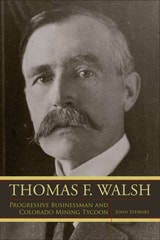
Thomas F. Walsh
Progressive Businessman and Colorado Mining TycoonJohn Stewart
University Press of Colorado, 2007
In the first complete biography of Thomas Walsh, John Stewart recounts the tycoon's life from his birth in 1850 and his beginnings as a millwright and carpenter in Ireland to his tenacious, often fruitless mining work in the Black Hills and Colorado, which finally led to his discovery of an extremely rich vein of gold ore in the Imogene Basin. Walsh's Camp Bird Mine yielded more than $20 million worth of gold and other minerals in twenty years, and the mine's 1902 sale to British investors made Walsh very wealthy.
He achieved national prominence, living with his family in mansions in Colorado and Washington, D.C., and maintaining a rapport with Presidents McKinley, Theodore Roosevelt, and Taft, as well as King Leopold II of Belgium.
Despite his fame and lavish lifestyle, Walsh is remembered as an unassuming and philanthropic man who treated his employees well. In addition to making many anonymous donations, he established the Walsh Library in Ouray and a library near his Irish birthplace, and helped establish a research fund for the study of radium and other rare western minerals at the Colorado School of Mines. Walsh gave his employees at the Camp Bird Mine top pay and lodged them in an alpine boardinghouse featuring porcelain basins, electric lighting, and excellent food.
Stewart's engaging account explores the exceptional path of this Colorado mogul in detail, bringing Walsh and his time to life.
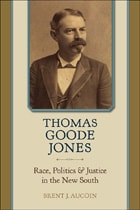
Thomas Goode Jones
Race, Politics, and Justice in the New SouthBrent J. Aucoin
University of Alabama Press, 2016
Thomas Goode Jones of Alabama is the first comprehensive biography of a key Alabama politician and federal jurist whose life and times embody the conflicts and transformations in the Deep South between the Civil War and World War I.
A man who both represented and differed from his class, Thomas Goode Jones offers contemporary readers and scholars an ideal subject of study to understand a period of southern history that still shapes American life today. Often overshadowed by the pharaonic antebellum period, the Civil War, and the luminous heights of the civil rights movement, the deceptively placid decades at the turn of the century were, in fact, a period when southerners fiercely debated the course of the South’s future. In tracing Jones’s career, Brent J. Aucoin offers vivid accounts of the great events and trends of that pivotal period: Reconstruction, the birth of the “Solid South,” the Populist Revolt, and the establishment of racial disenfranchisement and segregation.
Born in 1844, Jones served in the Confederate army and after the war identified as a conservative “Bourbon” Democrat. He served as Alabama's governor from 1890 to 1894 and as a federal judge from 1901 until his death in 1914. As a veteran, politician, and judge, Jones embodied numerous roles in the shifting political landscape of the South.
Jones was not, however, a reflexive conformist and sometimes pursued policies at odds with his party. Jones’s rhetoric and support of African American civil rights were exceptional and earned him truculent criticism from unrepentant racist factions in his party. His support was so fearless that it inspired Booker T. Washington to recommend Jones to Republican president Theodore Roosevelt as a federal judge. On the bench, Jones garnered national attention for his efforts to end peonage and lynching, and yet he also enabled the establishment of legalized segregation in Alabama, confounding attempts easily to categorize him as an odious reactionary or fearless progressive.
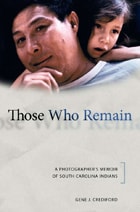
Those Who Remain
A Photographer's Memoir of South Carolina IndiansGene J. Crediford
University of Alabama Press, 2009
Through interviews and a generous photograph montage stretching over two decades, reveals the commonality and diversity among these people of Indian identity
When DeSoto (in 1540) and later Juan Pardo (in 1567) marched through what was known as the province of Cofitachequi (which covered the southern part of today’s North Carolina and most of South Carolina), the native population was estimated at well over 18,000. Most shared a common Catawba language, enabling this confederation of tribes to practice advanced political and social methods, cooperate and support each other, and meet their common enemy. The footprint of the Cofitachequi is the footprint of this book.
The contemporary Catawba, Midland, Santee, Natchez-Kusso, Varnertown, Waccamaw, Pee Dee, and Lumbee Indians of North and South Carolina, have roots in pre-contact Cofitachequi. Names have changed through the years; tribes split and blended as the forces of nature, the influx of Europeans, and the imposition of federal government authority altered their lives. For a few of these tribes, the system has worked well—or is working well now. For others, the challenge continues to try to work with and within the federal government’s system for tribal recognition—a system governing Indians but not created by them. Through interviews and a generous photograph montage stretching over two decades, Gene Crediford reveals the commonality and diversity among these people of Indian identity; their heritage, culture, frustrations with the system, joys in success of the younger generation, and hope for the future of those who come after them. This book is the story of those who remain.

Thousand-Mile War
World War II in Alaska and the AleutiansBrian Garfield
University of Alaska Press, 1995
The war in the Aleutians was fought in some of the worst climatic conditions on earth for men, ships, and airplanes. The sea was rough, the islands craggy and unwelcoming, but the most fearful enemy was the weather—the savage wind, fog, and rain of the Aleutian chain. The fog seemed to reach even into the minds of the military commanders on both sides, as they directed their men into situations with often had tragic results. Frustrating, befuddling, and still the subject of debate, the Aleutian campaign nevertheless marked an important turn of the war in favor of the United States.
More than half a century after the war ended, more of the fog has been lifted. In this updated edition, Garfield supplements his original account drawn from statistics, personal interviews, letters, and diaries, with more recently declassified photographs and significant additional illustrations.
Three Capitals
St. Stephens, Huntsville, and Cahawba, 1818-1826William H. Brantley Jr
University of Alabama Press, 1976
"Three Capitals is an in-depth study of Alabama's first three seats of government--St. Stephens, Huntsville, and Cahawba.... The University of Alabama Press has reprinted the book in a handsome new edition with a pertinent introduction by Malcolm C. McMillan. Brantley's study is a tribute to the accomplishments of an amateur historian and contains a wealth of useful information."
--Bulletin of the History of the Early American Republic

Three Friends
Roy Bedichek, J. Frank Dobie, Walter Prescott WebbBy William A. Owens
University of Texas Press, 1975
Roy Bedichek, J. Frank Dobie, and Walter Prescott Webb—a naturalist, a folklorist, and a historian—all taught at the University of Texas, lived only a few blocks apart, and saw each other almost every day. The true cement of their friendship, however, was the correspondence that makes up much of this book. They wrote not to exchange information, but to communicate ideas, to nail down the generalities of conversation, and, above all, to challenge, encourage, and stimulate one another.
William A. Owens, who knew all three personally, has tied their letters together with his own observations and with transcripts of tape interviews with the men. The result is a unique book, a combination of biography and personal history that portrays not only the three friends, but the land they loved as well.
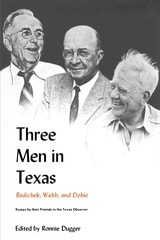
Three Men in Texas
Bedichek, Webb, and DobieEssays by their Friends in the <em>Texas Observer</em>, Edited by Ronnie Dugger
University of Texas Press, 1967
Three Voyages
Rene Laudonniere
University of Alabama Press, 2001
This translation of an eyewitness account by a major participant offers valuable information about all three attempts to establish a French colony on the south Atlantic coast of North America.
Rene Laudonniere's account of the three attempts by France to colonize what is now the United States is uniquely valuable because
he played a major role in each of the ventures—first, in 1562, as second in command during the founding of the ill-fated Charlesport, then as commander for the establishment of Fort Caroline on Florida's St. Johns River in 1564, and finally as the one to welcome French reinforcements the following year. It was also Laudonniere's destiny to witness the tragic fall of Fort Caroline to Spanish claims one month later.
Laudonniere wrote his chronicle, L'histoire Notable de la Floride, in 1565 following the fall of Fort Caroline as he recuperated in England. Much more than an account of his feelings and adventures, Laudonniere's history reveals him to be an exceedingly able and accurate geographer with a highly developed interest in anthropology.
The first English translation was published by Richard Hakluyt in 1587. Charles E. Bennett's graceful and accurate rendering in modern English was first published in 1975 by the University Press of Florida. Besides the account, thoroughly annotated and with present-day names identifying sites visited by the Frenchman, this volume includes a valuable introductory essay. The appendices to the volume are four noteworthy documents, the last of which—a guide to plants of 16th-century Florida—will be of exceptional interest to naturalists, gardeners, and students of folklore. The account itself will fascinate professional historians and anthropologists as well as general readers interested in the exciting and often moving
events of early European settlement in the New World.
Rene Laudonniere was a French adventurer and explorer of the 16th century who wrote L'histoire Notable de la Floride. Charles E. Bennett is a historian and former Florida congressman. He was coauthor of the Moss-Bennett legislation and was instrumental in the establishment of the Fort Caroline National Memorial and the Timucuan Ecological and Historical Preserve. Jerald T. Milanich is Curator in Archaeology at the Florida Museum of Natural History.