Results by title
8113 books match the query 'Literary Criticism' and 1818 start with t
The Neuroscientific Turn
Transdisciplinarity in the Age of the BrainMelissa M. Littlefield and Jenell M. Johnson, editors
University of Michigan Press, 2012
The New Anthology of American Poetry
Modernisms: 1900-1950Edited by Steven Gould Axelrod and Camille Roman
Rutgers University Press, 2005
The New Anthology of American Poetry
Postmodernisms 1950-PresentAxelrod, Steven Gould
Rutgers University Press, 2012
Steven Gould Axelrod, Camille Roman, and Thomas Travisano continue the standard of excellence set in Volumes I and II of this extraordinary anthology. Volume III provides the most compelling and wide-ranging selection available of American poetry from 1950 to the present. Its contents are just as diverse and multifaceted as America itself and invite readers to explore the world of poetry in the larger historical context of American culture.
Nearly three hundred poems allow readers to explore canonical works by such poets as Elizabeth Bishop, Robert Lowell, and Sylvia Plath, as well as song lyrics from such popular musicians as Bob Dylan and Queen Latifah. Because contemporary American culture transcends the borders of the continental United States, the anthology also includes numerous transnational poets, from Julia de Burgos to Derek Walcott. Whether they are the works of oblique avant-gardists like John Ashbery or direct, populist poets like Allen Ginsberg, all of the selections are accompanied by extensive introductions and footnotes, making the great poetry of the period fully accessible to readers for the first time.
The New Anthology of American Poetry
Traditions and Revolutions, Beginnings to 1900Edited by Steven Gould Axelrod, Camille Roman, and Thomas Travisano
Rutgers University Press, 2002
Volume I begins with a generous selection of Native American materials, then spans the years from the establishment of the American colonies to about 1900, a world on the brink of World War I and the modern era. Part One focuses on poetry from the very beginnings through the end of the eighteenth century. The expansion and development of a newly forged nation engendered new kinds of poetry. Part Two includes works from the early nineteenth century through the time of the Civil War. The poems in Part Three reflect the many issues affecting a nation undergoing tumultuous change: the Civil War, immigration, urbanization, industrialization, and cultural diversification.
Such well-recognized names as Anne Bradstreet, Edward Taylor, Phillis Wheatley, Edgar Allan Poe, Herman Melville, Walt Whitman, Emily Dickinson, and Stephen Crane appear in this anthology alongside such less frequently anthologized poets as George Horton, Sarah Helen Whitman, Elizabeth Oakes-Smith, Frances Harper, Rose Terry Cooke, Helen Hunt Jackson, Adah Menken, Sarah Piatt, Ina Coolbrith, Emma Lazarus, Albery Whitman, Owl Woman (Juana Manwell) Sadakichi Hartmann, Ernest Fenollosa, James Weldon Johnson, Paul Laurence Dunbar, and—virtually unknown as a poet—Abraham Lincoln. It also includes poems and songs reflecting the experiences of a variety of racial and ethnic groups.

The New Apologists for Poetry
Murray Krieger
University of Minnesota Press, 1956
The New Apologists for Poetry was first published in 1956. Minnesota Archive Editions uses digital technology to make long-unavailable books once again accessible, and are published unaltered from the original University of Minnesota Press editions.
The author's purpose is to clear the ground for a systematic aesthetics of poetry consistent with the insights of our most influential contemporary literary critics. The book is concerned with those of the so-called "new critics" who are trying to answer the need, forced on them by historical and cultural pressures, to justify poetry by securing for it a unique function for which modern "scientism" cannot find a substitute.
This volume provides intensive analyses of work by critics of several persuasions: T. E. Hulme, T. S. Eliot, I. A. Richards, John Crowe Ransom, Yvor Winters, Allen Tate, and Cleanth Brooks, and, for purposes of contrast, D. G. James, R. S. Crane, Elder Olson, and Max Eastman.
Allen Tate, the poet and critic, writes: "Mr. Krieger's book is the most searching in scholarship and the most profound in critical analysis of the existing books in this field."
Robert B. Heilman, critic and teacher, comments: "The author's knowledge of a complex field and his mastery of the analytical techniques which he is applying to a chosen set of critical positions are very impressive. He not only clarifies the positions of various contemporary critics by examining them in the light of the same set of general principles, but also provides some helpful, at times brilliant, insights into the works of various critics from the Greeks up to the present. He traces the history of concepts and thus establishes relationships among individual critics and critical schools."
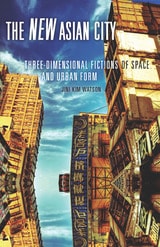
The New Asian City
Three-Dimensional Fictions of Space and Urban FormJini Kim Watson
University of Minnesota Press, 2011
Under Jini Kim Watson’s scrutiny, the Asian Tiger metropolises of Seoul, Taipei, and Singapore reveal a surprising residue of the colonial environment. Drawing on a wide array of literary, filmic, and political works, and juxtaposing close readings of the built environment, Watson demonstrates how processes of migration and construction in the hypergrowth urbanscapes of the Pacific Rim crystallize the psychic and political dramas of their colonized past and globalized present.
Examining how newly constructed spaces—including expressways, high-rises, factory zones, department stores, and government buildings—become figured within fictional and political texts uncovers how massive transformations of citizenries and cities were rationalized, perceived, and fictionalized. Watson shows how literature, film, and poetry have described and challenged contemporary Asian metropolises, especially around the formation of gendered and laboring subjects in these new spaces. She suggests that by embracing the postwar growth-at-any-cost imperative, they have buttressed the nationalist enterprise along neocolonial lines.
The New Asian City provides an innovative approach to how we might better understand the gleaming metropolises of the Pacific Rim. In doing so, it demonstrates how reading cultural production in conjunction with built environments can enrich our knowledge of the lived consequences of rapid economic and urban development.
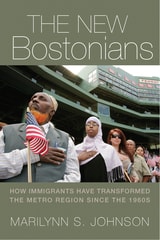
The New Bostonians
How Immigrants Have Transformed the Metro Area since the 1960sMarilynn S. Johnson
University of Massachusetts Press, 2015
How immigrants helped rebuild a city—and redefined what it means to be American
Among the most consequential pieces of Great Society legislation, the Immigration Act of 1965 opened the nation's doors to large-scale immigration from Africa, Asia, and Latin America. A half century later, the impact of the "new immigration" is evident in the transformation of the country's demographics, economy, politics, and culture, particularly in urban America.
In The New Bostonians, Marilynn S. Johnson examines the historical confluence of recent immigration and urban transformation in greater Boston, a region that underwent dramatic decline after World War II. Since the 1980s, the Boston area has experienced an astounding renaissance—a development, she argues, to which immigrants have contributed in numerous ways. From 1970 to 2010, the percentage of foreign-born residents of the city more than doubled, representing far more diversity than earlier waves of immigration. Like the older Irish, Italian, and other European immigrant groups whose labor once powered the region's industrial economy, these newer migrants have been crucial in re-building the population, labor force, and metropolitan landscape of the New Boston, although the fruits of the new prosperity have not been equally shared.
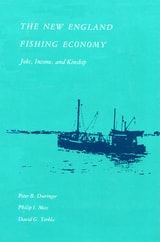
The New England Fishing Economy
Jobs, Income, and KinshipPeter B. Doeringer
University of Massachusetts Press, 1987
The authors also present new data on the skills, job attachment, and economic options of workers in key New England ports, particularly Gloucester and New Bedford. The fishing industry is concentrated in economically fragile ports, and the authors show the importance of a strong fishing industry and a growth economy for easing adjustment problems. The study develops a set of innovative recommendations for fisheries management and addresses policies for promoting stabilization and growth in port economies.
The New Gods
E. M. Cioran
University of Chicago Press, 1974
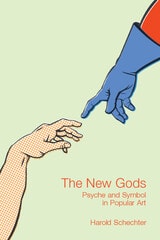
The New Gods
Psyche and Symbol in Popular ArtHarold Schechter
University of Wisconsin Press, 1980
Harold Schechter looks at the impossible tales and images of popular art--the space odysseys and extraterrestrial civilizations, the caped crusaders and men of steel, and monsters from the ocean floor--and finds close connections between religious myth and popular entertainment.
The New Hegemony in Literary Studies
Contradictions in TheoryTony Hilfer
Northwestern University Press, 2003
The problem Hilfer identifies is one of logical consistency, but also of moral and psychological implications, and it can be found operating across the whole spectrum of literary Theory. It is, however, as this book makes blindingly clear, not immune from scrutiny. With quiet erudition and consistent incisiveness, Hilfer shows how the various methods, while ostensibly at odds, actually fit together, all sharing the same peculiar structure and logic, and all wearing an identical set of ideological blinders. He offers examples of theorists-and assumptions-hard at work on particular texts, and again and again (often letting these theorists refute themselves) pinpoints the blindspots that have become endemic in the practice of Theory.
Written with great care and a deep commitment to the value and integrity of literary criticism and theory, this tonic work stands as a corrective to the misuse of theory, and a bracing reminder of how a critical approach works when it is well and judiciously applied.
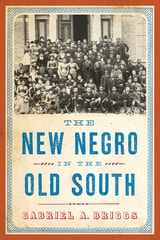
The New Negro in the Old South
Briggs, Gabriel A
Rutgers University Press, 2015
In this groundbreaking historical study, Gabriel A. Briggs makes the compelling case that the New Negro first emerged long before the Great Migration to the North. The New Negro in the Old South reconstructs the vibrant black community that developed in Nashville after the Civil War, demonstrating how it played a pivotal role in shaping the economic, intellectual, social, and political lives of African Americans in subsequent decades. Drawing from extensive archival research, Briggs investigates what made Nashville so unique and reveals how it served as a formative environment for major black intellectuals like Sutton Griggs and W.E.B. Du Bois.
The New Negro in the Old South makes the past come alive as it vividly recounts little-remembered episodes in black history, from the migration of Colored Infantry veterans in the late 1860s to the Fisk University protests of 1925. Along the way, it gives readers a new appreciation for the sophistication, determination, and bravery of African Americans in the decades between the Civil War and the Harlem Renaissance.
The New Poetries and Some Old
Richard Kostelanetz
Southern Illinois University Press, 1991
This collection of twenty-nine essays represents a summation of Kostelanetz’s thoughts on poetry since the publication of his earlier work The Old Poetries and the New.
In sections on “The New Poetries,” “Some Old,” and “Autobiographical Addenda,” the essays range from sketches of Kenneth Burke, John Berryman, and Northrop Frye through considerations of the latest sound-text poetry to Kostelanetz’s justification of his own work. These pieces reflect Kostelanetz’s ongoing commitment to the esthetics he ascribes to high modernism—innovation, abstraction, intelligence, and complexity in all the arts.

The New Short Story Theories
Charles E. May
Ohio University Press, 1994
The first edition of May’s Short Story Theories (1976) opened with an essay entitled “The Short Story: An Underrated Art.” Almost two decades later, the short story suffers no such slight. Publishers and critics have become increasingly interested in the form, which has enjoyed a renaissance led by such writers as Raymond Carver, Tobias Wolff, Ann Beattie, Bobbie Ann Mason, and Mary Robison. An important part of this revival of interest, Short Story Theories has continued to attract a strong and loyal audience among students and teachers.
The New Short Story Theories includes a few basic pieces from the earlier volume—Poe’s Hawthorne review, Brander Matthew’s extension and formalization of Poe’s theories, and essays by Randall Jarrell, Elizabeth Bowen, and Nadine Gordimer—but most of the essays are new to the collection.
Addressing problems of definition, historical considerations, issues of technique, and cognitive approaches, essays include:
“The Tale as Genre in Short Story Fiction,” by W. S. Penn
“O. Henry and the Theory of the Short Story,” by Suzanne C. Ferguson
“On Writing,” by Raymond Carver
“From Tale to Short Story,” by Robert F. Marler
“A Cognitive Approach to Storyness,” by Susan Lohafer
May’s new collection will continue to highlight the short story, to provoke debate, and to enrich our experience of a demanding and rewarding literary form.
The New Woman Gothic
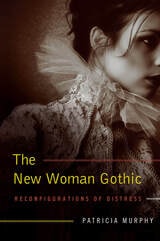
Reconfigurations of DistressPatricia Murphy
University of Missouri Press, 2026
The controversial and compelling figure of the New Woman in late Victorian fiction has garnered extensive scholarly attention, but rarely has she been investigated through the fascinating lens of the Gothic. Yet the presence of sinister Gothic elements is so widespread in the generally realisitic British novels that the term "New Woman Gothic" readily comes to mind. Drawing from and reworking Gothic conventions of Romantic and later literature, the New Woman version is marshaled during this tumultuous cultural moment of gender anxieties either to defend or revile the complex individual who sought improvements in educational, marital, and professional realms.
The New Woman
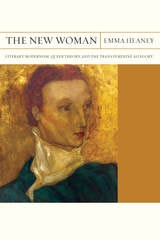
Literary Modernism, Queer Theory, and the Trans Feminine AllegoryEmma Heaney
Northwestern University Press, 2017
The book is the first to identify the process by which medical sources simplified the diversity of trans feminine experience into a single diagnostic narrative. It then demonstrates that this medical figure became an archetype for the "sexual anarchy" of the Modernist period in works by Aldous Huxley, James Joyce, Djuna Barnes, T. S. Eliot, and Jean Genet.
Thus illuminating the trans feminine's Modernist provenance, the book examines foundational works of Queer Theory that resuscitated the trans feminine allegory at the end of the twentieth century. Insightful and seminal, The New Woman debunks the pervasive reflex beginning in the 1990s to connect trans experience to a late twentieth-century collapse of sexual differences by revealing the Modernist roots of that very formulation.
The News at the Ends of the Earth
The Print Culture of Polar ExplorationHester Blum
Duke University Press, 2019
The News from Poems
Essays on the 21st-Century American Poetry of EngagementJeffrey Gray and Ann Keniston
University of Michigan Press, 2016
The News from Poems brings together newly commissioned essays by eminent poets and scholars of poetry and serves as a companion volume to an earlier anthology of engaged poetry compiled by the editors. Essays by Bob Perelman, Steven Gould Axelrod, Tony Hoagland, Eleanor Wilner, and others reveal how recent poetry has redefined our ideas of politics, authorship, identity, and poetics.
The volume showcases the diversity of contemporary American poetry, discussing mainstream and experimental poets, including some whose work has sparked significant controversy. These and other poets of our time, the volume suggests, are engaged not only with public events and topics but also with new ways of imagining subjectivity, otherness, and poetry itself.
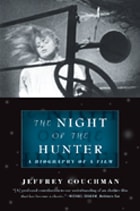
The Night of the Hunter
A Biography of a FilmJeffrey Couchman
Northwestern University Press, 2009
Reaching simultaneously into the realms of film and literature, this detailed exploration of The Night of the Hunter examines the genesis and the eclectic form of each work and the process of transformation by which the novel became a motion picture. It provides the first major study of the long-lost first-draft screenplay by James Agee and confronts a fifty-year controversy about the authorship of the film. This is a story of artistic convergence on many levels--of novelist and director, director and actor, and cinematic form and tastes. The novel, a 1953 debut from Davis Grubb, was a popular and critical success, remaining on the New York Times best-seller list for four months. Hollywood responded to its atmospheric lyricism, and in the hands of first time director Charles Laughton, the book became a film that is equal parts thriller, allegory, and fever dream, filled with slow, inexorable suspense. On the set, Laughton functioned both as an auteur and a collaborator to create his vision of the book, mixing cinematic flourishes both realistic and abstract in sometimes tense situations. The talents that clashed or came together along the road from book to movie make the final film a product of rich stylistic contradiction and rewarding complexity. Through biography, production history, and critical analysis of the novel and film, author Jeffrey Couchman makes the case that this initially overlooked cinematic gem is a prismatic work that continually reveals new aspects of itself.
The Nigrescent Beyond
Mexico, the United States, and the Psychic Vanishing of BlacknessRicardo A. Wilson II
Northwestern University Press, 2020
Wilson models a practice of reading that honors the disruptive possibilities offered by an ever-present awareness of that which lies, irretrievable, beyond the horizon of vanishing itself. In doing so, he engages with historical accounts detailing maroon activities in early New Spain, contemporary coverage of the push to make legible Afro-Mexican identities, the electronic archives of the Obama presidency, and the work of Carlos de Sigüenza y Góngora, Octavio Paz, Ivan Van Sertima, Miguel Covarrubias, Steven Spielberg, and Colson Whitehead, among others.
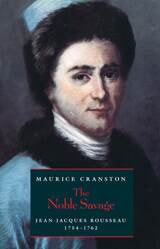
The Noble Savage
Jean-Jacques Rousseau, 1754-1762Maurice Cranston
University of Chicago Press, 1991
"Luckily for us, Maurice Cranston's The Noble Savage: Jean-Jacques Rousseau, 1754-1762 has managed to craft a highly detailed account of eight key years of Rousseau's life in such a way that we can both understand and even, on occasion, sympathize."—Olivier Bernier, Wall Street Journal
Maurice Cranston (1920-1993), a distinguished scholar and recipient of the James Tait Black Memorial Prize for his biography of John Locke, was professor of political science at the London School of Economics. His numerous books include The Romantic Movement and Philosophers and Pamphleteers, and translations of Rousseau's The Social Contract and Discourse on the Origins of Inequality.
The Noose
A PlayFrankétienne; Translated from the Kreyòl by Asselin Charles
Vanderbilt University Press, 2026
With recent productions in Canada and the United States, the publication of this play in English will provide a new generation of audiences access to this important text, accompanied by an introduction by translator Asselin Charles and an afterword by Jean Jonassaint, both preeminent scholars of Frankétienne’s literary output.
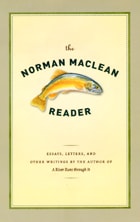
The Norman Maclean Reader
Norman Maclean
University of Chicago Press, 2008
In his eighty-seven years, Norman Maclean played many parts: fisherman, logger, firefighter, scholar, teacher. But it was a role he took up late in life, that of writer, that won him enduring fame and critical acclaim—as well as the devotion of readers worldwide. Though the 1976 collection A River Runs Through It and Other Stories was the only book Maclean published in his lifetime, it was an unexpected success, and the moving family tragedy of the title novella—based largely on Maclean’s memories of his childhood home in Montana—has proved to be one of the most enduring American stories ever written.
The Norman Maclean Reader is a wonderful addition to Maclean’s celebrated oeuvre. Bringing together previously unpublished materials with incidental writings and selections from his more famous works, the Reader will serve as the perfect introduction for readers new to Maclean, while offering longtime fans new insight into his life and career.
In this evocative collection, Maclean as both a writer and a man becomes evident. Perceptive, intimate essays deal with his career as a teacher and a literary scholar, as well as the wealth of family stories for which Maclean is famous. Complete with a generous selection of letters, as well as excerpts from a 1986 interview, The Norman Maclean Reader provides a fully fleshed-out portrait of this much admired author, showing us a writer fully aware of the nuances of his craft, and a man as at home in the academic environment of the University of Chicago as in the quiet mountains of his beloved Montana.
Various and moving, the works collected in The Norman Maclean Reader serve as both a summation and a celebration, giving readers a chance once again to hear one of American literature’s most distinctive voices.
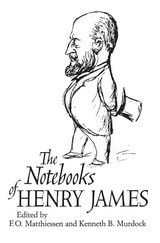
The Notebooks of Henry James
Henry James
University of Chicago Press, 1981
"The Notebooks take us into his study, and here we can observe him, at last, in the very act of creation at his writing table."—Leon Edel, Atlantic Monthly
"A document of prime importance."—Edmund Wilson, New Yorker
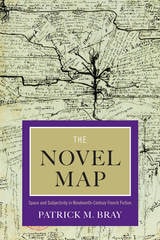
The Novel Map
Space and Subjectivity in Nineteenth-Century French FictionPatrick M. Bray
Northwestern University Press, 2013
Focusing on Stendhal, Gérard de Nerval, George Sand, Émile Zola, and Marcel Proust, The Novel Map: Mapping the Self in Nineteenth-Century French Fiction explores the ways that these writers represent and negotiate the relationship between the self and the world as a function of space in a novel turned map.
With the rise of the novel and of autobiography, the literary and cultural contexts of nineteenth-century France reconfigured both the ways literature could represent subjects and the ways subjects related to space. In the first-person works of these authors, maps situate the narrator within the imaginary space of the novel. Yet the time inherent in the text’s narrative unsettles the spatial self drawn by the maps and so creates a novel self, one which is both new and literary. The novel self transcends the rigid confines of a map. In this significant study, Patrick M. Bray charts a new direction in critical theory.
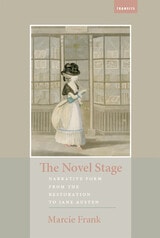
The Novel Stage
Narrative Form from the Restoration to Jane AustenMarcie Frank
Bucknell University Press, 2020
2020 Choice Outstanding Academic Title
Marcie Frank’s study traces the migration of tragicomedy, the comedy of manners, and melodrama from the stage to the novel, offering a dramatic new approach to the history of the English novel that examines how the collaboration of genres contributed to the novel’s narrative form and to the modern organization of literature. Drawing on media theory and focusing on the less-examined narrative contributions of such authors as Aphra Behn, Frances Burney, and Elizabeth Inchbald, alongside those of Samuel Richardson, Henry Fielding, and Jane Austen, The Novel Stage tells the story of the novel as it was shaped by the stage.
Published by Bucknell University Press. Distributed worldwide by Rutgers University Press.

The Novel and Neoliberalism
Nancy Armstrong and John Marx, special issue editors
Duke University Press, 2018
Contributors
Nancy Armstrong, Jane Elliott, Matthew Hart, Nathan Hensley, Nicholas Huber, Jeanne-Marie Jackson, John Marx, Tom McCarthy, Vaughn Rasberry, Deisdra Reber, Lily Saint, Emilio Sauri, Rachel Greenwald Smith, Paul Stasi
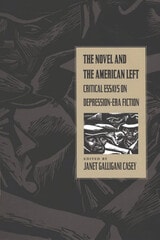
The Novel and the American Left
Critical Essays on Depression-Era FictionJanet Galligani Casey
University of Iowa Press, 2004
The first collection of critical essays to focus specifically on the fiction produced by American novelists of the Depression era, The Novel and the American Left contributes substantially to the newly emerging emphasis on twentieth-century American literary radicalism. Recent studies have recovered this body of work and redefined in historical and theoretical terms its vibrant contribution to American letters. Casey consolidates and expands this field of study by providing a more specific consideration of individual novels and novelists, many of which are reaching new contemporary audiences through reprints.
The Novel and the American Left focuses exclusively on left-leaning fiction of the Depression era, lending visibility and increased critical validity to these works and showing the various ways in which they contributed not only to theorizations of the Left but also to debates about the content and form of American fiction. In theoretical terms, the collection as a whole contributes to the larger reconceptualization of American modernity currently under way. More pragmatically, individual essays suggest specific authors, texts, and approaches to teachers and scholars seeking to broaden and/or complicate more traditional “American modernism” syllabi and research agendas.
The selected essays take up, among others, such “hard-core"” leftist writers as Mike Gold and Myra Page, who were associated with the Communist Party; the popular novels of James M. Cain and Kenneth Fearing, whose works were made into successful films; and critically acclaimed but nonetheless “lost” novelists such as Josephine Johnson, whose Now in November (Pulitzer Prize, 1936) anticipates and complicates the more popular agrarian mythos of Steinbeck’s The Grapes of Wrath.
This volume will be of interest not only to literary specialists but also to historians, social scientists, and those interested in American cultural studies.
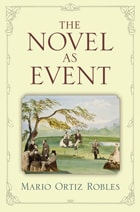
The Novel as Event
Mario Ortiz Robles
University of Michigan Press, 2010
"The Novel as Event brilliantly does two things: presents a strikingly new theory of the way novels have effect in the social world, and also presents original readings of five major Victorian novels as demonstrations of the way that theory may be exemplified in practice. No other book that I know of does either of these two things in at all the same way."
---J. Hillis Miller, University of California, Irvine
"I have no doubt that this book will become an important part of a renewed questioning of a certain unchallenged historicism prevalent in Victorian novel studies from the beginning."
---Kevin McLaughlin, Brown University
The Novel as Event is a timely reconsideration of the historical role of the Victorian novel from the perspective of its performativity. In a highly original application of the work of Jacques Derrida, Paul de Man, Pierre Bourdieu, Judith Butler, and other readers of J. L. Austin, Mario Ortiz Robles argues that the language of the novel is paramount and that the current emphasis on the representational and physical aspects of the novel tends to obscure this fact. He provides brilliant original readings of five major Victorian novels: Dickens's Our Mutual Friend, Brontë's Jane Eyre, George Eliot's Middlemarch, Thackeray's Vanity Fair, and Collins's The Woman in White, illustrating that it is impossible to fully grasp the cultural power of the novel, from its role in the cultivation of manners and the conduct of courtship to the consolidation of bourgeois ideology and the construction of the subject, without an adequate account of the performativity of its language. By considering the novel as a linguistic event, Ortiz Robles offers a new explanatory model for understanding how novels intervene materially in the reality they describe, and, in doing so, he seeks to reinvigorate critical debate on the historicity of the realist novel and current methods of cultural criticism. The Novel as Event serves as a well-timed corrective to the narrow historicist approach to the materiality of the novel that currently holds sway.
Mario Ortiz Robles is Assistant Professor of English at the University of Wisconsin, Madison.
Cover art: "Untitled page from Constance Sackville West Album." Courtesy of George Eastman House, International Museum of Photography and Film.
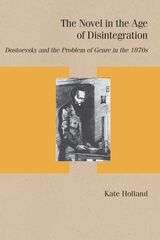
The Novel in the Age of Disintegration
Dostoevsky and the Problem of Genre in the 1870sKate Holland
Northwestern University Press, 2013
Scholars have long been fascinated by the creative struggles with genre manifested throughout Dostoevsky’s career. In The Novel in the Age of Disintegration, Kate Holland brings historical context to bear, showing that Dostoevsky wanted to use the form of the novel as a means of depicting disintegration brought on by various crises in Russian society in the 1860s. This required him to reinvent the genre. At the same time he sought to infuse his novels with the capacity to inspire belief in social and spiritual reintegration, so he returned to some older conventions of a society that was already becoming outmoded.
In thoughtful readings of Demons, The Adolescent, A Writer’s Diary, and The Brothers Karamazov, Holland delineates Dostoevsky’s struggle to adapt a genre to the reality of the present, with all its upheavals, while maintaining a utopian vision of Russia’s future mission.
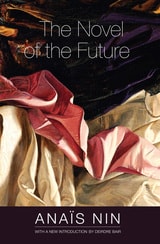
The Novel of the Future
Anaïs Nin
Ohio University Press, 2014
In The Novel of the Future, Anaïs Nin explores the act of creation—in film, art, and dance as well as literature—to chart a new direction for the young artist struggling against what she perceived as the sterility, formlessness, and spiritual bankruptcy afflicting much of mid-twentieth-century fiction. Nin offers, instead, an argument for and synthesis of the poetic novel and discusses her own efforts in this genre as well as its influence on the development of such writers as D. H. Lawrence, Henry Miller, Lawrence Durrell, Marguerite Young, and Djuna Barnes. In chapters devoted to the pursuit of the hidden self, the genesis of fiction, and the relationship between the diary and fiction, she addresses the materials, techniques, and nourishment of the arts, and the functions of art itself.
Originally published in 1968, The Novel of the Future remains a classic among both creative writers and literary scholars. This new Swallow Press edition includes an introduction by Nin biographer Deirdre Bair.
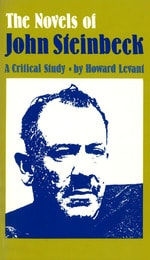
The Novels of John Steinbeck
A Critical StudyHoward Levant
University of Missouri Press, 1983
Too often, Steinbeck’s work has been studied piecemeal, even when the intention was for a rounded view. In this study, Howard Levant analyzes the patterns in Steinbeck’s work, taking an approach that permits a judgment of each novel in the context of a greater appreciation of the shape of Steinbeck’s long career.
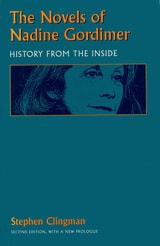
The Novels of Nadine Gordimer
History from the InsideStephen Clingman
University of Massachusetts Press, 1986
In Nadine Gordimer's view, the novel can present history as historians cannot. Moreover, this presentation is not fictional in the sense of being “untrue.” Rather, fiction deals with an area of activity usually inaccessible to the sciences of greater externally: the area in which historical process is registered as the subjective experience of individuals in society; fiction give us “history from the inside.” Gordimer's novels give us an extraordinary and unique insight into historical experience in the period in which she writes.
The Novels of Theodore Dreiser
A Critical StudyDonald Pizer
University of Minnesota Press, 1976
The Novels of Theodore Dreiser was first published in 1976. Minnesota Archive Editions uses digital technology to make long-unavailable books once again accessible, and are published unaltered from the original University of Minnesota Press editions.
Relying heavily on the manuscripts and letters in the Dreiser Collection of the University of Pennsylvania Library, Professor Pizer seeks to establish the facts of the sources and composition of each of Dreiser's eight novels and to study the themes and form of the completed works. In this study he relates what can be discovered about the factual reality of a novel to its imaginative reality. His interpretation of the novels avoids the suggestion that there is a single overriding theme or direction in Dreiser's work and emphasizes that Dreiser deserves examination primarily on the basis of the individuality and worth of each of his novels. A separate chapter is devoted to each of the novels: Sister Carrie, Jennie Gerhardt, The "Genius," The Financier, The Titan, An American Tragedy, The Bulwark, and The Stoic.
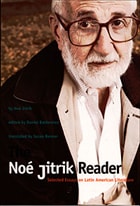
The Noé Jitrik Reader
Selected Essays on Latin American LiteratureNoé Jitrik
Duke University Press, 2005
The Noé Jitrik Reader showcases Jitrik’s reflections on marginality and the canon, exile and return, lack and excess, autobiography, Argentine nationalism, the state of literary criticism, the avant-garde, and the so-called Boom in Latin American literature. Among the writers whose work he analyzes in the essays collected here are Jorge Luis Borges, Esteban Echeverría, Domingo Faustino Sarmiento, José Martí, César Vallejo, José Bianco, Juan Carlos Onetti, José María Arguedas, Julio Cortázar, and Augusto Roa Bastos. The Noé Jitrik Reader offers English-language readers a unique opportunity to appreciate the rigor and thoughtfulness of one of Latin America’s most informed and persuasive literary critics.
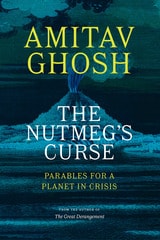
The Nutmeg's Curse
Parables for a Planet in CrisisAmitav Ghosh
University of Chicago Press, 2021
A powerful work of history, essay, testimony, and polemic, Amitav Ghosh’s new book traces our contemporary planetary crisis back to the discovery of the New World and the sea route to the Indian Ocean. The Nutmeg’s Curse argues that the dynamics of climate change today are rooted in a centuries-old geopolitical order constructed by Western colonialism. At the center of Ghosh’s narrative is the now-ubiquitous spice nutmeg. The history of the nutmeg is one of conquest and exploitation—of both human life and the natural environment. In Ghosh’s hands, the story of the nutmeg becomes a parable for our environmental crisis, revealing the ways human history has always been entangled with earthly materials such as spices, tea, sugarcane, opium, and fossil fuels. Our crisis, he shows, is ultimately the result of a mechanistic view of the earth, where nature exists only as a resource for humans to use for our own ends, rather than a force of its own, full of agency and meaning.
Writing against the backdrop of the global pandemic and the Black Lives Matter protests, Ghosh frames these historical stories in a way that connects our shared colonial histories with the deep inequality we see around us today. By interweaving discussions on everything from the global history of the oil trade to the migrant crisis and the animist spirituality of Indigenous communities around the world, The Nutmeg’s Curse offers a sharp critique of Western society and speaks to the profoundly remarkable ways in which human history is shaped by non-human forces.
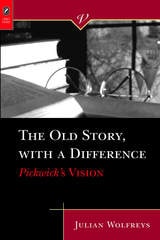
The OLD STORY, WITH A DIFFERENCE
Pickwick’s VisionJulian Wolfreys
The Ohio State University Press, 2006
The Old Story, with a Difference: Pickwick’s Vision explores in radically different ways from most approaches to nineteenth-century studies the tropes and metaphors of vision in Dickens’ first novel, The Pickwick Papers. Julian Wolfreys provides a close reading of Dickens’ Pickwick Papers and argues that this novel is an exemplary text for the re-consideration of concepts such as literature, history, the novel, and the whole notion of Victorian studies. True to the purpose of the Victorian Critical Interventions Series, Wolfreys challenges scholars to rethink the use of a canonical text in Victorian literature.
Challenging the commonplaces of historicist criticism, and demonstrating the need for a return to close reading, The Old Story, with a Difference presents a reading of the novel grounded in the twinned rigors of materialist historiography and theoretical inflections tending toward attentiveness to epistemological and linguistic concerns. Through such an orientation, Wolfreys unpacks the relation between the tropes of visuality and matters of memory, history, and the necessity of fiction to bear witness to the cultures, past and present, from which literature becomes generated and which it mediates. In doing so, he situates an argument for rethinking Dickens’ novel as the inaugural novel of Victorian fiction par excellence, in that novel’s efforts to remain open to the traces of the past in particular ways.
The Old Story, with a Difference holds profound implications for the study not only of Dickens’ works but Victorian literature and culture in general. Provocative and inventive, this ambitious analysis will challenge, goad, and invite the reader to return to acts of materialist reading informed by ethical and ideological urgency, rather than relapsing into the commonplaces of humanist cliché.
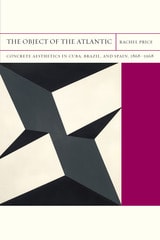
The Object of the Atlantic
Concrete Aesthetics in Cuba, Brazil, and Spain, 1868–1968Rachel Price
Northwestern University Press, 2014
The Object of the Atlantic is a wide-ranging study of the transition from a concern with sovereignty to a concern with things in Iberian Atlantic literature and art produced between 1868 and 1968. Rachel Price uncovers the surprising ways that concrete aesthetics from Cuba, Brazil, and Spain drew not only on global forms of constructivism but also on a history of empire, slavery, and media technologies from the Atlantic world. Analyzing Jose Marti’s notebooks, Joaquim de Sousandrade’s poetry, Ramiro de Maeztu’s essays on things and on slavery, 1920s Cuban literature on economic restructuring, Ferreira Gullar’s theory of the “non-object,” and neoconcrete art, Price shows that the turn to objects—and from these to new media networks—was rooted in the very philosophies of history that helped form the Atlantic world itself.
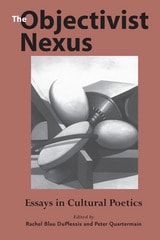
The Objectivist Nexus
Essays in Cultural PoeticsPeter Quartermain
University of Alabama Press, 1999
Outstanding poets and critics present cultural readings of the Objectivist poets, a group whose works have been largely unexamined.
"Objectivist" writers, conjoined through a variety of personal, ideological, and literary-historical links, have, from the late 1920s to the present, attracted emulation and suspicion. Representing a nonsymbolist, postimagist poetics and characterized by a historical, realist, antimythological worldview, Objectivists have retained their outsider status. Despite such status, however, the formal, intellectual, ideological, and ethical concerns of the Objectivist nexus have increasingly influenced poetry and poetics in the United States.
Thus, argue editors Rachel Blau DuPlessis and Peter Quartermain, the time has come for an anthology that unites essential works on Objectivist practices and presents Objectivist writing as an enlargement of the possibilities of poetry rather than as a determinable and definable literary movement. The authors' collective aim is to bring attention to this group of poets and to exemplify and specify cultural readings for poetic texts--readings alert to the material world, politics, society, and history, and readings concerned with the production, dissemination, and reception of poetic texts.
The contributors consider Basil Bunting, Lorine Niedecker, George Oppen, Carl Rakosi, Charles Reznikoff, and Louis Zukofsky within both their historical milieu and our own. The essays insist on poetry as a mode of thought; analyze and evaluate Objectivist politics; focus on the ethical, spiritual, and religious issues raised by certain Objectivist affiliations with Judaism; and explore the dissemination of poetic texts and the vagaries of Objectivist reception. Running throughout the book are two related threads: Objectivist writing as generally a practice aware of its own historical and social contingency and Objectivist writing as a site of complexity, contestation, interrogation, and disagreement.
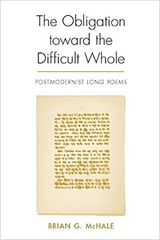
The Obligation Toward the Difficult Whole
Postmodernist Long PoemsBrian McHale
University of Alabama Press, 2003
Addressing subjects as wide-ranging as angelology, the court masque, pop art, caricature, the cult of the ruin, hip-hop, Spense’'s Irish policy, and the aesthetics of silence, Brian McHale pulls varied threads together to identify a repertoire of postmodernist elements characteristic of the long poems he examines.
As critic Jed Rasula explains, “McHale is wonderfully resourceful in changing the subject from chapter to chapter to fit the poems discussed, and while his approach adheres to the conventions of textual exegesis, the chapters really shine as orchestrations of issues. For instance, James Merrill’s The Changing Light at Sandover works unexpectedly well in raising the subject of found poetry and procedural composition; Melvin Tolso’'s Harlem Gallery and Edward Dorn's Gunslinger are effectively paired to demonstrate the period flavor of pastiche; Geoffrey Hill’s Mercian Hymns and Armand Schwerner’s The Tablets explode the modernist fixation with depth; John Ashbery’s work is given a nuanced reading as proto-theory; Letter to an Imaginary Friend by Thomas McGrath provides a lucid backdrop to raise the question of political efficacy in approaching language poet Bruce Andrews; and Susan Howe's The Europe of Trusts is explored for its intertextual tapestry.”
McHale shows how elements from these long poems overlap, interfere, pull in different directions, jar against, and even contradict each other; and he demonstrates how they also echo, amplify, and reinforce each other. They do not slot smoothly together like pieces in a jigsaw puzzle, but they do form (what else?) a difficult whole.
The Occasions of Poetry
Essays in Criticism and AutobiographyThom Gunn
University of Michigan Press, 1999
Thom Gunn is well-known as a poet, and increasingly as a literary critic. The Occasions of Poetry includes insightful critical pieces on writers ranging from William Carlos Williams and Gary Snyder to Thomas Hardy and Robert Duncan. "The occasion in all cases," writes Gunn, "is the starting point, only, of a poem, but it should be a starting point to which the poet must in some sense stay true." The first loyalty of a writer who is "true to his occasions," he writes, must be to the facts of experience.
The book includes five autobiographical essays, which combine to form an engaging account of the author's development as a poet and to chronicle some of the most significant literary currents of recent decades, both in England and America.
Thom Gunn, born in England in 1929, has lived in America since 1954. His books include Shelf Life: Essays, Memoirs, and an Interview; The Man with Night Sweats; Collected Poems; and The Passages of Joy. The Occasions of Poetry was originally published by Faber and Faber.
The Ocean on Fire
Pacific Stories from Nuclear Survivors and Climate ActivistsAnaïs Maurer
Duke University Press, 2024
The Odyssey
Homer, Translated by Rodney Merrill
University of Michigan Press, 2002
This epic began life as the music composed by a "singer of tales," not as words on a page. As such, its meter allows for pleasing variations with a strong basic "beat," thus providing a rhythmic impetus that carries the story swiftly forward. The resulting "music" has important repercussions for the reader's perception of the many repeated elements that provide structure for the poem and bring out significant themes, just as the repetitions in a piece of music do.
This edition of the Odyssey includes selections for further reading, a list of proper names (with a guide to pronunciation), and three maps. It also provides introductory discussions of how the work came into being and was transmitted until it became the work we read, how it is divided into six "performance sessions" of four books each, and how the poem's various themes are developed. Rodney Merrill's Odyssey is thus an ideal edition for students, teachers, and general readers.
The audiobook is available on twelve cassettes, and is read by Rodney Merrill. This version will bring Homer's epic masterpiece to life like never before. Perfect for the car or classroom!
Rodney Merrill is retired and an independent scholar. He has taught at Stanford University, the University of San Francisco, and the University of California, Berkeley.
Thomas R. Walsh, Senior Professor at Occidental College, has written articles on Homeric poetics, with a forthcoming book on anger in Homer.
The Oedipus Casebook
Reading Sophocles' Oedipus the KingMark R. Anspach
Michigan State University Press, 2019
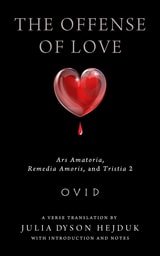
The Offense of Love
Ars Amatoria, Remedia Amoris, and Tristia 2Ovid, A verse translation by Julia D. Hejduk, with introduction and notes
University of Wisconsin Press, 2014
In exile, Ovid composed Sad Things (Tristia), which included a defense of his life and work as brilliant and cheeky as his controversial love manuals. In a poem addressed to Augustus (Tristia 2), he argues, "Since all of life and literature is one long, steamy sex story, why single poor Ovid out?" While seemingly groveling at the emperor's feet, he creates an image of Augustus as capricious tyrant and himself as suffering artist that wins over every reader (except the one to whom it was addressed).
Bringing together translations of the Ars Amatoria, Remedia Amoris, and Tristia 2, Julia Dyson Hejduk's The Offense of Love is the first book to include both the offense and the defense of Ovid's amatory work in a single volume. Hejduk's elegant and accurate translations, helpful notes, and comprehensive introduction will guide readers through Ovid's wickedly witty poetic tour of the literature, mythology, topography, religion, politics, and (of course) sexuality of ancient Rome.
Finalist, National Translation Award, American Literary Translators Association
A Choice Outstanding Academic Book
The Official World
Mark Seltzer
Duke University Press, 2016
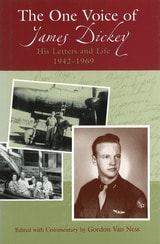
The One Voice of James Dickey
His Letters and Life, 1942-1969Edited & Commentary by Gordon Van Ness
University of Missouri Press, 2003
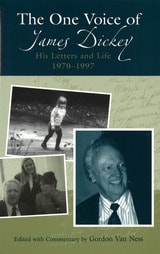
The One Voice of James Dickey
His Letters and Life, 1970-1997Edited & Commentary by Gordon Van Ness
University of Missouri Press, 2005
The One and the Others
Metaphysics, Poetry, and the Antinomies of Plato’s "Parmenides"Andrew Cutrofello
Northwestern University Press, 2026
At the end of Plato’s Parmenides, Parmenides concludes that “whether ‘the One’ is or is not, it and ‘the Others’ both are and are not, and both appear and do not appear, all things in all ways.” Throughout the history of philosophy various attempts have been made to make sense of Plato’s puzzling dialectical exercise. In this ambitious book Andrew Cutrofello shows how Kant and Hegel extended it, how contemporary philosophers, including Graham Priest and Alain Badiou, have reinterpreted it, and how poets such as Dante, Shakespeare, Blake, Wordsworth, and Susan Howe have channeled it. What emerges is an original conception of the history of metaphysics as a series of antinomies, and of metaphysical poetry as a type of antinomianism.
The Only Way Out
The Racial and Sexual Performance of EscapeKatherine Brewer Ball
Duke University Press, 2024