Results by title
664 books match the query 'Ancient & Classical' and 172 start with t
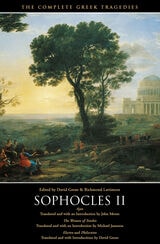
The Complete Greek Tragedies
Sophocles IIEdited by David Grene and Richmond Lattimore
University of Chicago Press, 1969
"This is it. No qualifications. Go out and buy it everybody."—Kenneth Rexroth, The Nation
"The translations deliberately avoid the highly wrought and affectedly poetic; their idiom is contemporary....They have life and speed and suppleness of phrase."—Times Education Supplement
"These translations belong to our time. A keen poetic sensibility repeatedly quickens them; and without this inner fire the most academically flawless rendering is dead."—Warren D. Anderson, American Oxonian
"The critical commentaries and the versions themselves...are fresh, unpretentious, above all, functional."—Commonweal
"Grene is one of the great translators."—Conor Cruise O'Brien, London Sunday Times
"Richmond Lattimore is that rara avis in our age, the classical scholar who is at the same time an accomplished poet."—Dudley Fitts, New York Times Book Review
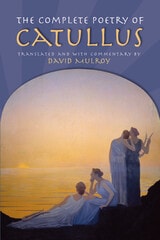
The Complete Poetry of Catullus
Catullus; Translated and with commentary by David Mulroy
University of Wisconsin Press, 2002
Catullus’ life was akin to pulp fiction. In Julius Caesar’s Rome, he engages in a stormy affair with a consul’s wife. He writes her passionate poems of love, hate, and jealousy. The consul, a vehement opponent of Caesar, dies under suspicious circumstances. The merry widow romances numerous young men. Catullus is drawn into politics and becomes a cocky critic of Caesar, writing poems that dub Julius a low-life pig and a pervert. Not surprisingly, soon after, no more is heard of Catullus.
David Mulroy brings to life the witty, poignant, and brutally direct voice of a flesh-and-blood man, a young provincial in the Eternal City, reacting to real people and events in a Rome full of violent conflict among individuals marked by genius and megalomaniacal passions. Mulroy’s lively, rhythmic translations of the poems are enhanced by an introduction and commentary that provide biographical and bibliographical information about Catullus, a history of his times, a discussion of the translations, and definitions and notes that ease the way for anyone who is not a Latin scholar.
The Complete Tragedies, Volume 1
Medea, The Phoenician Women, Phaedra, The Trojan Women, OctaviaLucius Annaeus Seneca
University of Chicago Press, 2017
Edited by world-renowned classicists Elizabeth Asmis, Shadi Bartsch, and Martha C. Nussbaum, the Complete Works of Lucius Annaeus Seneca series offers authoritative, modern English translations of the writings of the Stoic philosopher and playwright (4 BCE–65 CE). The two volumes of The Complete Tragedies present all of his dramas, expertly rendered by preeminent scholars and translators.
This first volume contains Medea, The Phoenician Women, Phaedra, The Trojan Women, and Octavia, the last of which was written in emulation of Senecan tragedies and serves as a unique example of political tragedy. High standards of accuracy, clarity, and style are maintained throughout the translations, which render Seneca into verse with as close a correspondence, line for line, to the original as possible, and with special attention paid to meter and overall flow. In addition, each tragedy is prefaced by an original translator’s introduction offering reflections on the work’s context and meaning. Notes are provided for the reader unfamiliar with the culture and history of classical antiquity. Accordingly, The Complete Tragedies will be of use to a general audience and professionals alike, from the Latinless student to scholars and instructors of comparative literature, classics, philosophy, drama, and more.
The Complete Tragedies, Volume 2
Oedipus, Hercules Mad, Hercules on Oeta, Thyestes, AgamemnonLucius Annaeus Seneca
University of Chicago Press, 2017
Edited by world-renowned classicists Elizabeth Asmis, Shadi Bartsch, and Martha C. Nussbaum, the Complete Works of Lucius Annaeus Seneca offers authoritative, modern English translations of the writings of the Stoic philosopher and playwright (4 BCE–65 CE). The two volumes of The Complete Tragedies presents all of his dramas, expertly rendered by preeminent scholars and translators.
The first volume contains Medea, The Phoenician Women, Phaedra, The Trojan Women, and Octavia, the last of which was written in emulation of Senecan tragedies and serves as a unique example of political tragedy. This second volume includes Oedipus, Hercules Mad, Hercules on Oeta, Thyestes, and Agamemnon. High standards of accuracy, clarity, and style are maintained throughout the translations, which render Seneca into verse with as close a correspondence, line for line, to the original as possible, and with special attention paid to meter and overall flow. In addition, each tragedy is prefaced by an original translator’s introduction offering reflections on the work’s context and meaning. Notes are provided for the reader unfamiliar with the culture and history of classical antiquity. Accordingly, The Complete Tragedies will be of use to a general audience and professionals alike, from the Latinless student to scholars and instructors of comparative literature, classics, philosophy, drama, and more.
The Complete Works
Handbook, Discourses, and FragmentsEpictetus
University of Chicago Press, 2022
“Some things are up to us and some are not.”
Epictetus was born into slavery around the year 50 CE, and, upon being granted his freedom, he set himself up as a philosophy teacher. After being expelled from Rome, he spent the rest of his life living and teaching in Greece. He is now considered the most important exponent of Stoicism, and his surviving work comprises a series of impassioned discourses, delivered live and recorded by his student Arrian, and the Handbook, Arrian’s own take on the heart of Epictetus’s teaching.
In Discourses, Epictetus argues that happiness depends on knowing what is in our power to affect and what is not. Our internal states and our responses to events are up to us, but the events themselves are assigned to us by the benevolent deity, and we should treat them—along with our bodies, possessions, and families—as matters of indifference, simply making the best use of them we can. Together, the Discourses and Handbook constitute a practical guide to moral self-improvement, as Epictetus explains the work and exercises aspirants need to do to enrich and deepen their lives. Edited and translated by renowned scholar Robin Waterfield, this book collects the complete works of Epictetus, bringing to modern readers his insights on how to cope with death, exile, the people around us, the whims of the emperor, fear, illness, and much more.
CUSTOMER NOTE: THE HARDCOVER IS FOR LIBRARIES AND HAS NO JACKET.
The Conquest of Ruins
The Third Reich and the Fall of RomeJulia Hell
University of Chicago Press, 2019
Hell examines centuries of European empire-building—from Charles V in the sixteenth century and Napoleon’s campaigns of the late seventeenth and early eighteenth centuries to the atrocities of Mussolini and the Third Reich in the 1930s and ’40s—and sees a similar fascination with recreating the Roman past in the contemporary image. In every case—particularly that of the Nazi regime—the ruins of Rome seem to represent a mystery to be solved: how could an empire so powerful be brought so low? Hell argues that this fascination with the ruins of greatness expresses a need on the part of would-be conquerors to find something to ward off a similar demise for their particular empire.
The Court of Comedy
Wilfred E. Major
The Ohio State University Press, 2013
The Crisis of Masculinity in the Age of Augustus
Melanie Racette-Campbell
University of Wisconsin Press, 2023
Careful reading of contemporary texts reveals a decades-long process as tumultuous and unsteady as the political events they echoed, one in which multiple and competing strategies for reconceiving the nature of masculinity were tested, employed, discarded, and adopted in a complex public-private discourse. The eventual reconstitution of a definition of Roman manhood was not easily agreed upon. Masculinity in both the Republic and the Empire are well-studied subjects, but by shining a light on the precise moment of transition Racette-Campbell unveils the complexity, contours, and nuances of the Augustan crisis of masculinity.
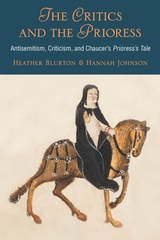
The Critics and the Prioress
Antisemitism, Criticism, and Chaucer's Prioress's TaleHeather Blurton and Hannah Johnson
University of Michigan Press, 2017
The Critics and the Prioress responds to a critical stalemate between the demands of ethics and the entailments of methodology. The book addresses key moments in criticism of the Prioress’s Tale—particularly those that stage an encounter between historicism and ethics—in order to interrogate these critical impasses while suggesting new modes for future encounters. It is an effort to identify, engage, and reframe some significant—and perennially repeated—arguments staked out in this criticism, such as the roles of gender, aesthetics, source studies, and the appropriate relationship between ethics and historicism.
The Critics and the Prioress will be an essential resource for Chaucer scholars researching as well as teaching the Prioress’s Tale. Scholars and students of Middle English literature and medieval culture more generally will also be interested in this book’s rigorous analysis of contemporary scholarly approaches to expressions of antisemitism in Chaucer’s England.
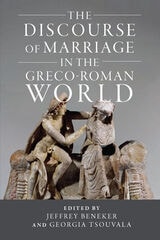
The Discourse of Marriage in the Greco-Roman World
Edited by Jeffrey Beneker and Georgia Tsouvala
University of Wisconsin Press, 2022
Through aesthetically informed and sensitive modes of analysis, these contributors examine a wealth of representations—including violence in weddings and spousal devotion after death. The Discourse of Marriage in the Greco-Roman World demonstrates the varying conceptions of an institution that was central to ancient social and political life—and remains prominent in the modern world. This volume will contribute to scholars' understanding of the era and fascinate anyone interested in historic depictions of marriage and the role and status of women in the late Hellenistic and early Imperial periods.
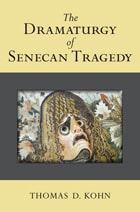
The Dramaturgy of Senecan Tragedy
Thomas D. Kohn
University of Michigan Press, 2013
The first-century Roman tragedies of Seneca, like all ancient drama, do not contain the sort of external stage directions that we are accustomed to today; nevertheless, a careful reading of the plays reveals such stage business as entrances, exits, setting, sound effects, emotions of the characters, etc. The Dramaturgy of Senecan Tragedy teases out these dramaturgical elements in Seneca's work and uses them both to aid in the interpretation of the plays and to show the playwright's artistry.
Thomas D. Kohn provides a detailed overview of the corpus, laying the groundwork for appreciating Seneca's techniques in the individual dramas. Each of the chapters explores an individual tragedy in detail, discussing the dramatis personae and examining how the roles would be distributed among a limited number of actors, as well as the identity of the Chorus. The Dramaturgy of Senecan Tragedymakes a compelling argument for Seneca as an artist and a dramaturg in the true sense of the word: "a maker of drama." Regardless of whether Seneca composed his plays for full-blown theatrical staging, a fictive theater of the mind, or something in between, Kohn demonstrates that he displays a consistency and a careful attentiveness to details of performance. While other scholars have applied this type of performance criticism to individual tragedies or scenes, this is the first comprehensive study of all the plays in twenty-five years, and the first ever to consider not just stagecraft, but also metatheatrical issues such as the significant distribution of roles among a limited number of actors, in addition to the emotional states of the characters. Scholars of classics and theater, along with those looking to stage the plays, will find much of interest in this study.
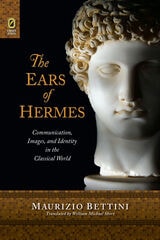
The Drunken Duchess of Vassar
Communication, Images, and Identity in the Classical WorldMaurizio Bettini
The Ohio State University Press, 2011

The Drunken Duchess of Vassar
Grace Harriet Macurdy, Pioneering Feminist Classical ScholarBarbara McManus
The Ohio State University Press, 2017
In this biography, Barbara McManus recovers the intriguing life story of Grace Harriet Macurdy (1866–1946), Professor of Greek at Vassar College and the first woman classicist to focus her scholarship on the lives of ancient Greco-Roman women. Fondly known as “the Drunken Duchess,” although she never drank alcohol, Macurdy came from a poor family with no social, economic, or educational advantages. Moreover, she struggled with disability for decades after becoming almost totally deaf in her early fifties. Yet she became an internationally known Greek scholar with a long list of publications and close friends as renowned as Gilbert Murray and John Masefield.
Through Macurdy’s eyes and experiences, McManus examines significant issues and developments from the late nineteenth to the mid-twentieth century, such as the opening of higher education to women, the erosion of gender and class barriers in the professions, the delicate balancing act between personal and professional life required of women, the marginalized role of women’s colleges in academic politics, and changes in the discipline and profession of Classics in response to the emerging role of women and new social conditions.
The Edda
A Collection of EssaysR.J. Glendinning
University of Manitoba Press, 1983
The Emerging Good in Plato's Philebus
John V. Garner
Northwestern University Press, 2017
John V. Garner convincingly refines previous interpretations and uncovers a profound thesis in the Philebus: genuine learners find value not only in stable being but also in the process of becoming. Further, since genuine learning arises in pluralistic communities where people form and inform one another, those who are truly open to learning are precisely those who actively shape the betterment of humanity.
The Emerging Good in Plato’s "Philebus" thus connects the Philebus’s grand philosophical ideas about the order of values, on the one hand, to its intimate and personal account of the experience of learning, on the other. It shows that this dialogue, while agreeing broadly with themes in more widely studied works by Plato such as the Republic, Gorgias, and Phaedo, also develops a unique way of salvaging the whole of human life, including our ever-changing nature.
The Fables of Phaedrus
Translated by P. F. Widdows
University of Texas Press, 1992
Animal fables are said to have originated with Aesop, a semilegendary Samian slave, but the earliest surviving record of the fables comes from the Latin poet Phaedrus, who introduced the new genre to Latin literature. This verse translation of The Fables is the first in English in more than two hundred years.
In addition to the familiar animal fables, about a quarter of the book includes such diverse material as prologues and epilogues, historical anecdotes, short stories, enlarged proverbs and sayings, comic episodes and folk wisdom, and many incidental glimpses of Greek and Roman life in the classical period.
The Fables also sheds light on the personal history of Phaedrus, who seems to have been an educated slave, eventually granted his freedom by the emperor Augustus. Phaedrus' style is lively, clean, and sparse, though not at the cost of all detail and elaboration. It serves well as a vehicle for his two avowed purposes—to entertain and to give wise counsel for the conduct of life. Like all fabulists, Phaedrus was a moralist, albeit on a modest and popular level.
An excellent introduction by P. F. Widdows provides information about Phaedrus, the history of The Fables, the metric style of the original and of this translation, and something of the place of these fables in Western folklore. The translation is done in a free version of Anglo-Saxon alliterative verse, a form used by W. H. Auden and chosen here to match the popular tone of Phaedrus' Latin verse.
The Fayre Formez of the Pearl Poet
Sandra Pierson Prior
Michigan State University Press, 1996
This book differs from most previous studies of the Pearl poet by treating all of his works as a whole. Prior’s purpose is to identify the underlying poetics of this major body of English poetry. Drawing on both the visual imagery of medieval art (the study includes 18 full-page illustrations) and the verbal imagery of the Bible and other literary sources, Prior shows how the poet’s "fayre formez" are the result of a coherent and self-conscious view of the artist’s craft.
The Fractured Voice
Silence and Power in Imperial Roman LiteratureAmy A. Koenig
University of Wisconsin Press, 2023
In this volume, Amy Koenig deftly confronts the trope of muteness in Imperial Roman literature, arguing that this understanding of silence is incomplete. By unpacking the motif of voicelessness across a wide range of written sources, she shows that the Roman perception of silence was more complicated than a simple binary and that elite male authors used muted or voiceless characters to interrogate the concept of voicelessness in ways that would be taboo in other contexts. Paradoxically, Koenig illustrates that silence could in fact be freeing—that the loss of voice permits an untethering from other social norms and expectations, thus allowing a freedom of expression denied to many of the voiced.
The Fragments of Parmenides
A Critical Text With Introduction and Translation, the Ancient Testimonia and a CommentaryA. H, Coxon
Parmenides Publishing, 2009
With a New Preface by Malcolm Schofield
The Genesis of Lachmann's Method
Sebastiano Timpanaro
University of Chicago Press, 2005
This important work, which brought Timpanaro international repute, now appears in its first English translation. The Genesis of Lachmann's Method examines the origin, development, and validity of Lachmann's model as well as its association with Lachmann himself. It remains a fundamental work on the history and methods of philology, and Glenn W. Most's translation makes this seminal study available to an English-speaking audience. Revealing Timpanaro's extraordinary talent as a textual critic and world-class scholar, this book will be indispensable to classicists, textual critics, biblical scholars, historians of science, and literary theorists.
The Ghosts of the Past
Latin Literature, the Dead, and Rome’s Transition to A PrincipateBasil Dufallo
The Ohio State University Press, 2007
Calling into question boundaries of genre and literary form, Dufallo’s study will revise current understandings of Latin literature as a cultural and performance practice. Works as diverse as Cicero’s speeches, Propertian elegy, Horace’s epodes and satires, and Vergil’s Aeneid appear in a new light as performed texts interacting with other kinds of cultural performance from which they might otherwise seem isolated.
The Gift of Correspondence in Classical Rome
Friendship in Cicero's Ad Familiares and Seneca's Moral EpistlesAmanda Wilcox
University of Wisconsin Press, 2012
Amanda Wilcox offers an innovative approach to two major collections of Roman letters—Cicero’s Ad Familiares and Seneca’s Moral Epistles—informed by modern cross-cultural theories of gift-giving.
By viewing letters and the practice of correspondence as a species of gift exchange, Wilcox provides a nuanced analysis of neglected and misunderstood aspects of Roman epistolary rhetoric and the social dynamics of friendship in Cicero’s correspondence. Turning to Seneca, she shows that he both inherited and reacted against Cicero’s euphemistic rhetoric and social practices, and she analyzes how Seneca transformed the rhetoric of his own letters from an instrument of social negotiation into an idiom for ethical philosophy and self-reflection. Though Cicero and Seneca are often viewed as a study in contrasts, Wilcox extensively compares their letters, underscoring Cicero’s significant influence on Seneca as a prose stylist, philosopher, and public figure.
The Greek Tragedies
Seventeen Plays by Aeschylus, Sophocles, and EuripidesAeschylus, Sophocles, and Euripides
University of Chicago Press, 2025
The most authoritative, accessible, and poetic translations of the Greek Tragedies ever produced, now in one volume!
Drawn from the authoritative third editions of David Grene and Richmond Lattimore’s collections of the complete Greek tragedies, expertly updated by Mark Griffith and Glenn W. Most, this collection brings together seventeen of the greatest surviving plays of ancient Greece. Combining accuracy, poetic immediacy, and clarity of presentation, the masterpieces of Aeschylus, Sophocles, and Euripides have been rendered so compellingly in English that they remain the definitive translations. Each text has been carefully updated to bring it even closer to the ancient Greek original while retaining the vibrancy for which Chicago’s versions are famous.
Alongside the plays, this edition includes an introduction to the life and work of each tragedian; an introduction to each play offering essential information about its first production, plot, and reception through the centuries; and notes addressing textual uncertainties. Featuring lively translations by eminent classicists and authors including Anne Carson, Robert Fitzgerald, David Grene, Richmond Lattimore, Oliver Taplin, Emily Townsend Vermeule, and Elizabeth Wyckoff, this is an indispensable anthology for any reader of the foundational works of Western drama, art, and life.

The House of Atreus
John Lewin
University of Minnesota Press, 1966
The Humblest Sparrow
The Poetry of Venantius FortunatusMichael Roberts
University of Michigan Press, 2010
In The Humblest Sparrow, Michael Roberts illuminates the poetry of the sixth-century bishop and poet Venantius Fortunatus. Often regarded as an important transitional figure, Fortunatus wrote poetry that is seen to bridge the late classical and earlier medieval periods. Written in Latin, his poems combined the influences of classical Latin poets with a medieval tone, giving him a special place in literary history. Yet while interest has been growing in the early Merovingian period, and while the writing of Fortunatus' patron Gregory of Tours has been well studied, Fortunatus himself has often been neglected. This neglect is remedied by this in-depth study, which will appeal to scholars of late antique, early Christian, and medieval Latin poetry. Roberts divides Fortunatus' poetry into three main groups: poetry of praise, hagiographical poetry, and personal poetry. In addition to providing a general survey, Roberts discusses in detail many individual poems and proposes a number of theses on the nature, function, relation to social and linguistic context, and survival of Fortunatus' poetry, as well as the image of the poet created by his work.
The Idols of ISIS
From Assyria to the InternetAaron Tugendhaft
University of Chicago Press, 2020
Beginning with the Islamic State’s claim that the smashed objects were idols of the “age of ignorance,” Aaron Tugendhaft questions whether there can be any political life without idolatry. He then explores the various roles Mesopotamian sculpture has played in European imperial competition, the development of artistic modernism, and the formation of Iraqi national identity, showing how this history reverberates in the choice of the Mosul Museum as performance stage. Finally, he compares the Islamic State’s production of images to the ways in which images circulated in ancient Assyria and asks how digitization has transformed politics in the age of social media. An elegant and accessibly written introduction to the complexities of such events, The Idols of ISIS is ideal for students and readers seeking a richer cultural perspective than the media usually provides.
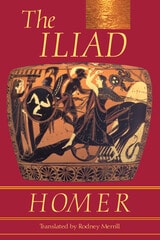
The Iliad
Homer
University of Michigan Press, 2007
nuances of English."
---Stephen G. Daitz, Professor Emeritus of Classics, City University of New York
Rodney Merrill's translation of Homer's Iliad offers a form of English poetry particularly relevant to the epic, producing a strong musical setting that brings many elements of the narrative truly to life. Most notable are the many battle scenes, in which Homer's strong dactylic hexameters make credible the "war-lust" in the deeds of the combatants.
The Iliad of Homer
Translated by Richmond Lattimore
University of Chicago Press, 1951
"Certainly the best modern verse translation."—Gilbert Highet
"This magnificent translation of Homer's epic poem . . . will appeal to admirers of Homer and the classics, and the multitude who always wanted to read the great Iliad but never got around to doing so."—The American Book Collector
"Perhaps closer to Homer in every way than any other version made in English."—Peter Green, The New Republic
"The feat is decisive that it is reasonable to foresee a century or so in which nobody will try again to put the Iliad in English verse."—Robert Fitzgerald
"Each new generation is bound to produce new translations. [Lattimore] has done better with nobility, as well as with accuracy, than any other modern verse translator. In our age we do not often find a fine scholar who is also a genuine poet and who takes the greatest pains over the work of translation."—Hugh Lloyd-Jones, New York Review of Books
"Over the long haul Lattimore's translation is more powerful because its effects are more subtle."—Booklist
"Richmond Lattimore is a fine translator of poetry because he has a poetic voice of his own, authentic and unmistakable and yet capable of remarkable range of modulation. His translations make the English reader aware of the poetry."—Moses Hadas, The New York Times
The Iliad of Homer
Homer
University of Chicago Press, 2011
The epic story of the Trojan War in the most faithful and compelling translation available
"Sing, goddess, the anger of Peleus’ son Achilleus / and its devastation." For sixty years, that's how Homer has begun the Iliad in English, in Richmond Lattimore's faithful translation—the gold standard for generations of students and general readers.
This long-awaited new edition of Lattimore's Iliad is designed to bring the book into the twenty-first century—while leaving the poem as firmly rooted in ancient Greece as ever. Lattimore's elegant, fluent verses—with their memorably phrased heroic epithets and remarkable fidelity to the Greek—remain unchanged, but classicist Richard Martin has added a wealth of supplementary materials designed to aid new generations of readers. A new introduction sets the poem in the wider context of Greek life, warfare, society, and poetry, while line-by-line notes at the back of the volume offer explanations of unfamiliar terms, information about the Greek gods and heroes, and literary appreciation. A glossary and maps round out the book.
The result is a volume that actively invites readers into Homer's poem, helping them to understand fully the worlds in which he and his heroes lived—and thus enabling them to marvel, as so many have for centuries, at Hektor and Ajax, Paris and Helen, and the devastating rage of Achilleus.
The Image of the Poet in Ovid’s Metamorphoses
Barbara Pavlock
University of Wisconsin Press, 2009
The Image of the Poet explores issues central to Ovid’s poetics—the status of the image, the generation of plots, repetition, opposition between refined and inflated epic style, the reliability of the narrative voice, and the interrelation of rhetoric and poetry. The work explores the constructed author and complements recent criticism focusing on the reader in the text.
2009 Outstanding Academic Title, Choice Magazine
The Invention and Gendering of Epicurus
Pamela Gordon
University of Michigan Press, 2012
The school of Greek philosopher Epicurus, which became known as the Garden, famously put great stock in happiness and pleasure. As a philosophical community, and a way of seeing the world, Epicureanism had a centuries-long life in Athens and Rome, as well as across the Mediterranean.
The Invention and Gendering of Epicurusstudies how the Garden's outlook on pleasure captured Greek and Roman imaginations---particularly among non-Epicureans---for generations after its legendary founding. Unsympathetic sources from disparate eras generally focus not on historic personages but on the symbolic Epicurean. And yet the traditions of this imagined Garden, with its disreputable women and unmanly men, give us intermittent glimpses of historical Epicureans and their conceptions of the Epicurean life.
Pamela Gordon suggests how a close hearing and contextualization of anti-Epicurean discourse leads us to a better understanding of the cultural history of Epicureanism. Her primary focus is on sources hostile to the Garden, but her Epicurean-friendly perspective is apparent throughout. Her engagement with ancient anti-Epicurean texts makes more palpable their impact on modern responses to the Garden.
Intended both for students and for scholars of Epicureanism and its response, the volume is organized primarily according to the themes common among Epicurus' detractors. It considers the place of women in Epicurean circles, as well as the role of Epicurean philosophy in Homer and other writers.
The Iphigenia Plays
New Verse TranslationsEuripides, Translated by Rachel Hadas
Northwestern University Press, 2018
At the heart of Iphigenia’s enduring story are an ambitious, opportunistic, and indecisive leader and the daughter whose life he is willing to sacrifice. In The Iphigenia Plays, poet Rachel Hadas offers a new generation of readers a graceful, clear, and powerful translation of Euripides’s two spellbinding (and very different) plays drawn from this legend: Iphigenia in Aulis and Iphigenia among the Taurians.
Even for readers unfamiliar with Greek mythology or drama, these plays are suspenseful, poignant, and haunting. Euripides’s ability to evoke emotion and raise difficult questions has long engaged viewers and readers alike. Taken together, the two plays illuminate timeless human conflicts, showcasing individuals and families ensnared by the fury of war, of politics, of religion, and of ambition. Euripidean characters are always second-guessing themselves; now new readers can also ponder their dilemmas.
Poet and translator Rachel Hadas highlights the lyricism, emotion, and sheer humanity of Euripides’s plays. Mordant humor is here; so are heartbreak and tenderness. Hadas offers an Iphigenia story that resonates with our own troubled times and demonstrates anew the genius of one of the world’s supreme dramatists.
The Iuvenilia of Marc-Antoine Muret
With a translation, introduction, notes, and commentary by Kirk M. Summers
The Ohio State University Press, 2006
A growing interest in the contributions and perspectives of Renaissance authors who wrote in Latin has created an urgent need for accessible modern editions of their works. There is no hope of truly understanding the Renaissance, which, after all, was a revival of ancient learning integrated with an emerging modern world view, without taking into account the large body of work produced by neo-Latin authors. The Iuvenilia of Marc-Antoine Muret helps fill the need for critical editions that provide a general context and interpretation. A major neo-Latin poet, Muret was thoroughly versed in classical literature, mythology, rhetoric, and philosophy. He had inherited centuries of medieval learning and practices, both secular and religious. Muret incorporated the generic innovations of contemporary humanists while referring to current events and figures. In short, he summed up in his own person the body of human endeavor and thinking as it stood in his own time.
Given Muret’s importance, this lively translation by Kirk M. Summers, with an introduction, notes, and commentary, will appeal to classicists, including those interested in the classical tradition, as well as to scholars working on the French and European Renaissance.
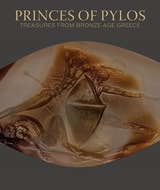
The Kingdom of Pylos
Warrior-Princes of Mycenaean GreeceSharon R. Stocker
J. Paul Getty Trust, The, 2025
Ancient Pylos has long captivated travelers, archaeologists, and historians familiar with Homer’s Iliad and Odyssey and his account of King Nestor, the prudent elder counselor in the Trojan War. Excavations begun in 1939 unearthed the storied Palace of Nestor in Messenia, an epicenter of Mycenaean civilization.
The Kingdom of Pylos features spectacular arts and crafts, many recently excavated at sites across Messenia, including goldwork of unparalleled artistry, masterfully carved sealstones, weapons, and wall paintings. Essays by international scholars examine the latest discoveries, including the Linear B tablets—the earliest written form of the Greek language—which document the political, religious, and economic organization of the prosperous Pylian realm. New research and cutting-edge science cast light on the 2015 find of the grave of the Griffin Warrior, an extraordinary, intact burial that held thousands of artifacts, including the celebrated Pylos Combat Agate, perhaps the finest work of art from the prehistoric Aegean. With over 300 illustrations, this is the first major publication in English to reconstruct the society of Pylos and settlements in its orbit during the Late Bronze Age (1700–1070 BCE).
This volume is published to accompany an exhibition on view at the Archaeological Museum of Messenia in Kalamata from February 15 to April 27, 2025, the J. Paul Getty Museum at the Getty Villa from June 25, 2025, to January 12, 2026, and the Hellenic National Archaeological Museum in Athens from March 1 to June 30, 2026.
The Language of Love
An Interpretation of Plato's PhaedrusStanley Rosen
St. Augustine's Press, 2016
Here Rosen’s argue for the possibility of philosophy or the retrieval of human self-knowledge on the basis of a renewed argument for the partial intelligibility of ordinary experience or, in other words, for the Platonic Ideas. His book on the Symposium was an important contribution to the subsequent sea change in Plato scholarship that returned attention to the dialogue form and to the poetic side of philosophy even in its quarrel with philosophy. That change allowed us search for understanding in the light of the whole, a whole which is otherwise, as Rosen has shown elsewhere, fragmented by the scientism of analytical philosophy or the historicism of “Continental” philosophy.
The Language of Love represents a missing key to Stanley Rosen’s work and, much more significantly, to the rediscovery of philosophy in our time. The title of the book is not merely a play on words. It points to the incommensurability between the constructed or historical nature of language or culture and the pre-discursive apprehension of things that is necessary if speech is to make sense and be understood, as opposed to being mere nonsense.
Among many valuable insights along the way, Rosen unites the dialogue in two parts, treating both eros and rhetoric, showing the linkage between eros and writing, as between myth and analysis. He connects the comic attempt to subject eros to diaeresis in the Phaedrus with the attempt to understand non-being as an eidos in the Sophist. In both cases, the inadequacy of a technical understanding of philosophy returns us to the pre-technical world of ordinary experience.
Rosen’s interpretation is an expression of the Socratic claim that we can’t speak beautifully without knowing the truth and that whatever truth we speak or write is a reflection of the silent invisibility of beauty as the unity of form. However, “Like every good teacher, it does not simply state that link for us to memorize. Instead, we must recollect it.”
The Law of Ancient Athens
David D. Phillips
University of Michigan Press, 2013
The Law of Ancient Athens contains the principal literary and epigraphical sources, in English, for Athenian law in the Archaic and Classical periods, from the first known historical trial (late seventh century) to the fall of the democracy in 322 BCE.
This accessible and important volume is designed for teachers, students, and general readers interested in the ancient Greek world, the history of law, and the history of democracy, an Athenian invention during this period. Offering a comprehensive treatment of Athenian law, it assumes no prior knowledge of the subject and is organized in user-friendly fashion, progressing from the person to the family to property and obligations to the gods and to the state. David D. Phillips has translated all sources into English, and he has added significant introductory and explanatory material.
Topics covered in the book include homicide and wounding; theft; marriage, children, and inheritance; citizenship; contracts and commerce; impiety; treason and other offenses against the state; and sexual offenses including rape and prostitution. The volume’s unique feature is its presentation of the actual primary sources for Athenian laws, with many key or disputed terms rendered in transliterated Greek. The translated sources, together with the topical introductions, notes, and references, will facilitate both research in the field and the teaching of increasingly popular courses on Athenian law and law in the ancient world.
The Life of Adam and Eve in Greek
A Critical EditionJohannes Tromp
SBL Press, 2016
A Brill classic now in paperback from SBL Press
This critical edition of the Life of Adam and Eve in Greek is based on all available manuscripts. In the introduction the history of previous research is summarized, and the extant manuscripts are presented. Next comes a description of the grammatical characteristics of the manuscripts’ texts, followed by a detailed study of the genealogical relationships between them, resulting in a reconstruction of the writing’s history of transmission in Greek. On the basis of all this information, the Greek text of the Life of Adam and Eve in its earliest attainable stage, is established.
Features:
- Illustrations of textual relationships and variants
- Indices for subjects, passages, words in the text, variants, and additions and revisions Full critical apparatus with relevant evidence from the manuscripts
The Lost Second Book of Aristotle's "Poetics"
Walter Watson
University of Chicago Press, 2012
Of all the writings on theory and aesthetics—ancient, medieval, or modern—the most important is indisputably Aristotle’s Poetics, the first philosophical treatise to propound a theory of literature. In the Poetics, Aristotle writes that he will speak of comedy—but there is no further mention of comedy. Aristotle writes also that he will address catharsis and an analysis of what is funny. But he does not actually address any of those ideas. The surviving Poetics is incomplete.
Until today. Here, Walter Watson offers a new interpretation of the lost second book of Aristotle's Poetics. Based on Richard Janko’s philological reconstruction of the epitome, a summary first recovered in 1839 and hotly contested thereafter, Watson mounts a compelling philosophical argument that places the statements of this summary of the Aristotelian text in their true context. Watson renders lucid and complete explanations of Aristotle’s ideas about catharsis, comedy, and a summary account of the different types of poetry, ideas that influenced not only Cicero’s theory of the ridiculous, but also Freud’s theory of jokes, humor, and the comic.
Finally, more than two millennia after it was first written, and after five hundred years of scrutiny, Aristotle’s Poetics is more complete than ever before. Here, at last, Aristotle’s lost second book is found again.
The Masks of Tragedy
Essays on Six Greek DramasBy Thomas G. Rosenmeyer
University of Texas Press, 1963
"What matters about a play is not the extent to which it is like any other play, but the way in which it is different," writes Thomas G. Rosenmeyer. "This is, I suggest, how the ancient audiences received the performances.... My purpose, then, in writing these essays is twofold: ... to devote enough space to the discussion of each play to allow its special tone and texture to emerge without hindrance and at leisure ... and to include in one collection analyses of plays so different from one another that the accent will come to rest on the variety of the tragic experience rather than on any one narrowly defined norm."
Greek tragedy is a vehicle for many different ideas and many different intentions. From the wealth of material that has come down to us the author has chosen six plays for analysis. He reminds us that the plays were written to be seen and heard, and only secondarily to be studied. The listeners expected each play to have a specific objective, and to exhibit its own mood. These the author attempts to recover for us, by listening to what each play, in its own right, has to say. His principal concern is with the tragic diction and the tragic ideas, designed to release certain massive responses in the large theater-going group of ancient Athens. In exploring the characters and the situations of the plays he has chosen, the author transports his reader to the world of fifth-century B.C. Greece, and establishes the relevance of that world to our own experience.
The essays are not introductory in nature. No space is given, for instance, to basic information about the playwrights, the history of Greek drama, or the special features of the Attic stage. Yet the book addresses itself to classicists and nonclassicists alike. The outgrowth of a series of lectures to nonspecialists, its particular appeal is to students of literature and the history of Western thought. Parallels are drawn between the writings of the philosophers and the tragedies, and attention is paid to certain popular Greek beliefs that colored the tragic formulations. Ultimately, however, the approach is not historical but critical; it is the author's intention to demonstrate the beauty and the craftsmanship of the plays under discussion.
The Matter of the Page
Essays in Search of Ancient and Medieval AuthorsShane Butler
University of Wisconsin Press, 2010
Ancient and medieval literary texts often call attention to their existence as physical objects. Shane Butler helps us to understand why. Arguing that writing has always been as much a material struggle as an intellectual one, The Matter of the Page offers timely lessons for the digital age about how creativity works and why literature moves us.
Butler begins with some considerations about the materiality of the literary text, both as a process (the draft) and a product (the book), and he traces the curious history of “the page” from scroll to manuscript codex to printed book and beyond. He then offers a series of unforgettable portraits of authors at work: Thucydides struggling to describe his own diseased body; Vergil ready to burn an epic poem he could not finish; Lucretius wrestling with words even as he fights the madness that will drive him to suicide; Cicero mesmerized by the thought of erasing his entire career; Seneca plumbing the depths of the soul in the wax of his tablets; and Dhuoda, who sees the book she writes as a door, a tunnel, a womb. Butler reveals how the work of writing transformed each of these authors into his or her own first reader, and he explains what this metamorphosis teaches us about how we too should read.
All Greek and Latin quotations are translated into English and technical matters are carefully explained for general readers, with scholarly details in the notes.
The Medieval Risk-Reward Society
Courts, Adventure, and Love in the European Middle AgesWill Hasty
The Ohio State University Press, 2016
The Medieval Risk-Reward Society: Courts, Adventure, and Love in the European Middle Ages takes a descriptive approach to the competitions in religion, politics, and poetry that are constitutive of medieval culture. Culture is considered always to be happening, and to be happening on the cultural cutting edge as competitions for rewards involving the element of chance. This study finds adventure and love—the principal concerns of medieval European romance poetry—to be cultural game changers, and thereby endeavors to make a humanist contribution to the development of a cultural game theory.
The Middle Included
Logos in AristotleAygün, Ömer
Northwestern University Press, 2016
The Middle Included also explores human language in Aristotelian philosophy. After an account of acoustic phenomena and animal communication, Aygün argues that human language for Aristotle is the ability to understand and relay both first-hand experiences and non-first-hand experiences. This definition is key to understanding many core human experiences such as science, history, news media, education, sophistry, and indeed philosophy itself. Logos is thus never associated with any other animal nor with anything divine—it remains strictly and rigorously secular, humane, and yet full of the wonder.
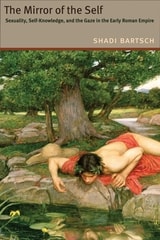
The Mirror of the Self
Sexuality, Self-Knowledge, and the Gaze in the Early Roman EmpireShadi Bartsch
University of Chicago Press, 2006
Weaving together literary theory, philosophy, and social history, Bartsch traces this complex notion of self from Plato’s Greece to Seneca’s Rome. She starts by showing how ancient authors envisioned the mirror as both a tool for ethical self-improvement and, paradoxically, a sign of erotic self-indulgence. Her reading of the Phaedrus, for example, demonstrates that the mirroring gaze in Plato, because of its sexual possibilities, could not be adopted by Roman philosophers and their students. Bartsch goes on to examine the Roman treatment of the ethical and sexual gaze, and she traces how self-knowledge, the philosopher’s body, and the performance of virtue all played a role in shaping the Roman understanding of the nature of selfhood. Culminating in a profoundly original reading of Medea, The Mirror of the Self illustrates how Seneca, in his Stoic quest for self-knowledge, embodies the Roman view, marking a new point in human thought about self-perception.
Bartsch leads readers on a journey that unveils divided selves, moral hypocrisy, and lustful Stoics—and offers fresh insights about seminal works. At once sexy and philosophical, The Mirror of the Self will be required reading for classicists, philosophers, and anthropologists alike.
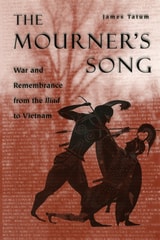
The Mourner's Song
War and Remembrance from the Iliad to VietnamJames Tatum
University of Chicago Press, 2002
Tatum's touchstone throughout is the Iliad, not just one of the earliest war poems, but also one of the most powerful examples of the way poetry can be a tribute to and consolation for what is lost in war. Reading the Iliad alongside later works inspired by war, Tatum reveals how the forms and processes of art convert mourning to memorial. He examines the role of remembrance and the distance from war it requires; the significance of landscape in memorialization; the artifacts of war that fire the imagination; the intimate relationship between war and love and its effects on the ferocity with which soldiers wage battle; and finally, the idea of memorialization itself. Because all survivors suffer the losses of war, Tatum's is a story of both victims and victors, commanders and soldiers, women and men. Photographs of war memorials in Vietnam, France, and the United States beautifully augment his testimonials.
Eloquent and deeply moving, The Mourner's Song will speak to anyone interested in the literature of war and the relevance of the classics to our most pressing contemporary needs.
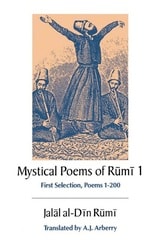
The Mystical Poems of Rumi 1
Jalal al-Din Rumi
University of Chicago Press, 1974
"An excellent introduction to Rumi, the greatest mystical poet of Islam. . . . Rumi's scope, like that of all great poets, is universal—reaching from sensuous luxuriance to the driest irony."—Sherman Goldman, East-West Journal
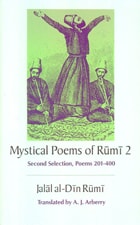
The Mystical Poems of Rumi 2
Second Selection, Poems 201-400Jalal al-Din Rumi
University of Chicago Press, 1991
Rumi, who wrote and preached in Persia during the thirteenth century, is one of history’s most celebrated mystics. His vast body of poetry includes a lengthy epic of religious mysticism, the Mathnavi, and more than three thousand lyrics and odes. A. J. Arberry, who selected four hundred of the lyrics for translation, calls Rumi "one of the world's greatest poets. In profundity of thought, inventiveness of image, and triumphant mastery of language, he stands out as the supreme genius of Islamic mysticism." Arberry’s authoritative translation is one of the few done directly from the original Persian.
A. J. Arberry (1905-69) was professor of Arabic at Cambridge University.

The Myth of Apollo and Daphne from Ovid to Quevedo
Love, Agon, and the GrotesqueMary E. Barnard
Duke University Press, 1987
The Odyssey
Homer
University of Chicago Press, 2025
The most accurate and poetic translation of the world's greatest epic, which is now a film by Academy Award winner Christopher Nolan!
“This may be the best translation of The Odyssey yet."—Edith Hall, The Telegraph
A magnificent feat of translation, hailed by classicists and poets alike as a “momentous achievement”: “thrilling,” “rich and rhythmical,” “superb,” “mesmerizing,” “searingly faithful—yet absolutely original.”
With this edition of Homer’s Odyssey, the celebrated author, critic, and classicist Daniel Mendelsohn brings the great epic to vividly poetic new life. Widely known for his essays on classical literature and culture in The New Yorker and many other publications, Mendelsohn gives us a line-for-line rendering of The Odyssey that is both engrossing as poetry and true to its source. Rejecting the streamlining and modernizing approach of many recent translations, he artfully reproduces the epic’s formal qualities—meter, enjambment, alliteration, assonance—and in so doing restores to Homer’s masterwork its archaic grandeur. Mendelsohn’s expansive six-beat line, far closer to the original than that of other recent translations, allows him to capture each of Homer’s dense verses without sacrificing the amplitude and shadings of the original.
The result is the richest, most ample, most precise, and most musical Odyssey in English, conveying the beauty of its poetry, the excitement of its hero’s adventures, and the profundity of its insights. Supported by an extensive introduction and the fullest notes and commentary currently available, Daniel Mendelsohn’s Odyssey is poised to become the authoritative version of this magnificent and enduringly influential masterpiece.
The Odyssey
Homer
University of Chicago Press, 2025
The most accurate and poetic translation of the world's greatest epic, which is now a film by Academy Award winner Christopher Nolan!
“This may be the best translation of The Odyssey yet."—Edith Hall, The Telegraph
A magnificent feat of translation, hailed by classicists and poets alike as a “momentous achievement”: “thrilling,” “rich and rhythmical,” “superb,” “mesmerizing,” “searingly faithful—yet absolutely original.”
With this edition of Homer’s Odyssey, the celebrated author, critic, and classicist Daniel Mendelsohn brings the great epic to vividly poetic new life. Widely known for his essays on classical literature and culture in The New Yorker and many other publications, Mendelsohn gives us a line-for-line rendering of The Odyssey that is both engrossing as poetry and true to its source. Rejecting the streamlining and modernizing approach of many recent translations, he artfully reproduces the epic’s formal qualities—meter, enjambment, alliteration, assonance—and in so doing restores to Homer’s masterwork its archaic grandeur. Mendelsohn’s expansive six-beat line, far closer to the original than that of other recent translations, allows him to capture each of Homer’s dense verses without sacrificing the amplitude and shadings of the original.
The result is the richest, most ample, most precise, and most musical Odyssey in English, conveying the beauty of its poetry, the excitement of its hero’s adventures, and the profundity of its insights. Supported by an extensive introduction and the fullest notes and commentary currently available, Daniel Mendelsohn’s Odyssey is poised to become the authoritative version of this magnificent and enduringly influential masterpiece.
The Oedipus Casebook
Reading Sophocles' Oedipus the KingMark R. Anspach
Michigan State University Press, 2019