Results by title
1677 books match the query 'Archaeology' and 332 start with t
The Archaeology of Refuge and Recourse
Coast Miwok Resilience and Indigenous Hinterlands in Colonial CaliforniaTsim D. Schneider
University of Arizona Press, 2021
Applying theories of place and landscape, social memory, and mobility to the analysis of six archaeological sites, Tsim D. Schneider argues for a new direction in the archaeology of colonialism. This book offers insight about the critical and ongoing relationships Indigenous people maintained to their homelands despite colonization and systematic destruction of their cultural sites.
Schneider is a citizen of the Federated Indians of Graton Rancheria, the sovereign and federally recognized tribe of Coast Miwok and Southern Pomo people whose ancestral homelands and homewaters are the central focus of The Archaeology of Refuge and Recourse. Viewing this colonial narrative from an Indigenous perspective, Schneider focuses on the nearly one quarter of Coast Miwok people who survived the missions and created outlets within and beyond colonial settlements to resist and endure colonialism.
Fleeing these colonial missions and other establishments and taking refuge around the San Francisco Bay Area, Coast Miwok people sought to protect their identities by remaining connected to culturally and historically significant places. Mobility and a sense of place further enabled Coast Miwok people to find recourse and make decisions about their future through selective participation in colonial projects. In this book, Tsim D. Schneider argues that these distancing and familiarizing efforts contribute to the resilience of Coast Miwok communities and a sense of relevance and belonging to stolen lands and waters. Facing death, violence, and the pervading uncertainty of change, Indigenous people of the Marin Peninsula balanced the pull and persistence of place against the unknown possibilities of a dynamic colonial landscape and the forward-thinking required to survive. History, change, and the future can be read in the story of Coast Miwok people.
The Archaeology of Regional Interaction
Religion, Warfare, and Exchange across the American Southwest and BeyondMichelle Hegmon
University Press of Colorado, 2000
The Archaeology of Regional Interaction surpasses most regional studies, which only focus on settlement patterns or exchange, and considers other forms of interaction, such as intermarriage and the spread of religious practices. Contributors focus especially on understanding the social processes that underlie archaeological evidence of interaction.
The essays in this volume examine what regional systems involve, in terms of political and economic relations, and how they can be identified. One essay by Steven LeBlanc provides a sweeping analysis of conflict, a form of regional interaction that has received relatively little attention in the Southwest until recently. A series of chapters devoted to expanding the coverage beyond the borders of the traditional Southwest examines the surrounding areas, including Nevada and Utah, northern Mexico, and the Plains.The volume also provides a unique treatment of religion - including manifestations such as Flower World Iconography, Medicine Societies, and ceremonial textiles - as a form of regional interrelation.
The Archaeology of Slavery
A Comparative Approach to Captivity and CoercionEdited by Lydia Wilson Marshall
Southern Illinois University Press, 2014
Plantation sites, especially those in the southeastern United States, have long dominated the archaeological study of slavery. These antebellum estates, however, are not representative of the range of geographic locations and time periods in which slavery has occurred. As archaeologists have begun to investigate slavery in more diverse settings, the need for a broader interpretive framework is now clear.
The Archaeology of Slavery: A Comparative Approach to Captivity and Coercion, edited by Lydia Wilson Marshall, develops an interregional and cross-temporal framework for the interpretation of slavery. Contributors consider how to define slavery, identify it in the archaeological record, and study it as a diachronic process from enslavement to emancipation and beyond.
Essays cover the potential material representations of slavery, slave owners’ strategies of coercion and enslaved people’s methods of resisting this coercion, and the legacies of slavery as confronted by formerly enslaved people and their descendants. Among the peoples, sites, and periods examined are a late nineteenth-century Chinese laborer population in Carlin, Nevada; a castle slave habitation at San Domingo and a more elite trading center at nearby Juffure in the Gambia; two eighteenth-century plantations in Dominica; Benin’s Hueda Kingdom in the seventeenth and eighteenth centuries; plantations in Zanzibar; and three fugitive slave sites on Mauritius—an underground lava tunnel, a mountain, and a karst cave.
This essay collection seeks to analyze slavery as a process organized by larger economic and social forces with effects that can be both durable and wide-ranging. It presents a comparative approach that significantly enriches our understanding of slavery.
The Archaeology of Summer Island
Changing Settlement Systems in Northern Lake MichiganDavid S. Brose
University of Michigan Press, 1970
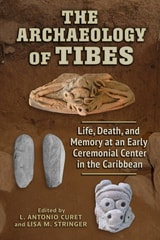
The Archaeology of Tibes
Life, Death, and Memory at an Early Ceremonial Center in the CaribbeanEdited by L. Antonio Curet and Lisa M. Stringer
University of Alabama Press, 2025
A collection of new essays that brings archaeological insights and discoveries at the Tibes Ceremonial Center up to date
The Archaeology of Tibes is a collection of essays offering a fresh analysis of this important ceremonial center. It brings new insights about social structure, illuminating the smaller-scale daily lives of ancient peoples rather than focusing on large-scale chiefdoms.
Tibes is the earliest known (ca. 400 to 1300 CE) ceremonial center in Puerto Rico. It has been the focus of one of the largest and longest-running archaeological programs in the Caribbean. Early researchers interpreted evidence in the area of a shift from dispersed villages to a ceremonial center as suggesting the development of social stratification and accumulation of power. Seen as the seat of an early chiefdom, Tibes served as a model applied broadly across the Greater Antilles.
New discoveries prompted archaeologists to question their original assumptions about ancient Puerto Rico, and later research failed to produce evidence of social stratification at Tibes. The Archaeology of Tibes therefore incorporates updated and wider perspectives on social formation. It considers agency, decisions, and events and the possibility of more than one form of social organization. It also presents a more accurate “humanized” past: the sociological meanings of that space and its significance for the people who created, used, and occupied it and who influenced rituals, social memory, and community.
Summarizing findings from excavations at Tibes after 2010, the collection also reviews the geoarchaeology of the site. Additional essays cover ceramic pastes, lithic production, faunal remains, coral, burials, and rock art. This work will engender discussion and future research by archaeologists across the Caribbean and beyond.
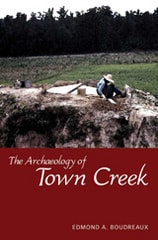
The Archaeology of Town Creek
Edmond A. Boudreaux III
University of Alabama Press, 2007
The sequence of change for public architecture during the Mississippian period may reflect a centralization of political power through time. In the research presented here, some of the community-level assumptions attributed to the appearance of Mississippian mounds are tested against the archaeological record of the Town Creek site—the remains of a town located on the northeastern edge of the Mississippian culture area. In particular, the archaeological record of Town Creek is used to test the idea that the appearance of Mississippian platform mounds was accompanied by the centralization of political authority in the hands of a powerful chief.
A compelling argument has been made that mounds were the seats and symbols of political power within Mississippian societies. While platform mounds have been a part of Southeastern Native American communities since at least 100 B.C., around A.D. 400 leaders in some communities began to place their houses on top of earthen mounds—an act that has been interpreted as an attempt to legitimize personal authority by a community leader through the appropriation of a powerful, traditional, community-oriented symbol. Platform mounds at a number of sites were preceded by a distinctive type of building called an earthlodge—a structure with earth-embanked walls and an entrance indicated by short, parallel wall trenches. Earthlodges in the Southeast have been interpreted as places where a council of community leaders came together to make decisions based on consensus. In contrast to the more inclusive function proposed for premound earthlodges, it has been argued that access to the buildings on top of Mississippian platform mounds was limited to a much smaller subset of the community. If this was the case and if ground-level earthlodges were more accessible than mound-summit structures, then access to leaders and leadership may have decreased through time.
Excavations at the Town Creek archaeological site have shown that the public architecture there follows the earthlodge-to-platform mound sequence that is well known across the South Appalachian subarea of the Mississippian world. The clear changes in public architecture coupled with the extensive exposure of the site's domestic sphere make Town Creek an excellent case study for examining the relationship among changes in public architecture and leadership within a Mississippian society.

The Archaeology of V. Gordon Childe
Contemporary PerspectivesEdited by David R. Harris
University of Chicago Press, 1994
With contributions from such distinguished prehistorians as Kent V. Flannery, David Harris, Leo S. Klejn, John Mulvaney, Colin Renfrew, Michael Rowlands, and Bruce Trigger, The Archaeology of V. Gordon Childe is an attempt to evaluate Childe's achievement from different "partly national" perspectives and to assess how far, and why, his work remains significant today. The contributors examine such persistent themes in Childe's thought as the nature of culture and the role of diffusion in cultural evolution and debate the question of whether Childe anticipated "processual archaeology" in his famous models of the Neolithic and Urban Revolutions. Also included are evaluations of Childe's early career in Australia, his relations with Soviet archaeology, including a previously unknown letter from Childe to Soviet archaeologists, and his impact on American archaeology.
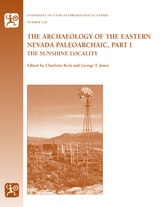
The Archaeology of the Eastern Nevada Paleoarchaic, Part 1
The Sunshine LocalityCharlotte Beck
University of Utah Press, 2009
The Sunshine Locality in the geographic center of the Great Basin has been the focus of scientific research since the mid-1960s. Authors Charlotte Beck and George T. Jones began studies there in 1992 and carried out excavations between 1993 and 1997 with the assistance of Hamilton College Field School. The area has yielded a rich and varied collection of diagnostic lithic tools, including fluted and unfluted lanceolate projectile points and a crescent, and a variety of gravers, scrapers, notches, and other tools common in Paleoindian toolkits across North America.
This volume provides the first comprehensive treatment that combines historical research with the more recent studies. Analysis and interpretations of the stratigraphic sequence in Sunshine Wash are presented, including analyses of sedimentary textures and structure, depositional processes, and chronology. Faunal remains are used to evaluate local and regional environmental changes. Finally, the authors address the nature of the processes that created the archaeological record at Sunshine Locality, its age, and whether artifacts and remains of extinct mammals also recovered at the site are associated. This work begins to answer unresolved questions about the paleoenvironmental resources of the Sunshine Locality.
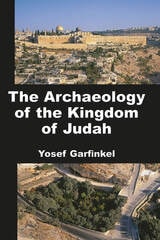
The Archaeology of the Kingdom of Judah
Yosef Garfinkel
SBL Press, 2025
The Archaeology of the Sierra Blanca Region of Southeastern New Mexico
Jane Holden Kelley
University of Michigan Press, 1984
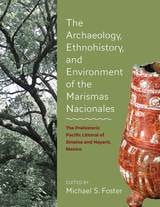
The Archaeology, Ethnohistory, and Environment of the Marismas Nacionales
Michael S. Foster
University of Utah Press, 2017
Between 1967 and 1975 archaeologists from SUNY-Buffalo led a multidisciplinary project in the Marismas Nacionales, a vast, resource-rich estuary and mangrove forest of coastal Sinaloa and Nayarit, west Mexico. Michael Foster and fellow archaeologists provide a much-needed synthesis of these investigations, drawing from previously unpublished data and published reports to provide a comprehensive look at the region.
While in the field, the SUNY team recovered a variety of material artifacts and 248 human remains. Their findings, along with the project’s background, history, and analyses, are detailed in this volume’s thirteen chapters and nine appendices. Also included are supporting geomorphic, environmental, and ethnohistoric studies that establish the context for local human settlement and change. Evidence indicates that as the coastal plain grew, ceramic-bearing agriculturalists moved into the area and participated in far-reaching exchanges of goods and resources. This book makes a significant and lasting contribution to our knowledge of what today remains an understudied region of greater Mesoamerica.
Marismas Burial Descriptions, Supplemental Digital Material
The Archaic Southwest
Foragers in an Arid LandEdited by Bradley J. Vierra
University of Utah Press, 2018

The Archeology of New Hampshire
Exploring 10,000 Years in the Granite StateDavid Starbuck
University of New Hampshire Press, 2006
Several states already boast volumes showcasing their archeological history, but not New Hampshire—until now. David R. Starbuck's volume fills that void. Going beyond standard state guides that focus primarily on prehistoric sites, Starbuck also devotes equal time to historic, industrial, and nautical sites. This approach reflects the thinking of most contemporary archeologists who conduct research at a diverse range of sites.
A veteran of thirty years of field research throughout the Granite State, Starbuck revisits some of his own sites, including excavations at the New England Glassworks in Temple, two prehistoric sites on the Merrimack River, the Joseph Hazeltine pottery workshop outside Concord, the Governor Wentworth Estate in Wolfeboro, and his own long-term survey and excavation project at Canterbury Shaker Village. At the same time, though, Starbuck includes the work of other contemporary New Hampshire archeologists, representative sites of “old-timers” whose digs preceded his arrival, and the investigations of avocational diggers.
Starbuck's introduction offers an anecdotal history of archeological research in New Hampshire through the people who shaped it. Part I discusses discoveries that predate white settlement: the Paleo-Indian Period; the Archaic Period; and the Woodland Period. Part II moves from the seventeenth century to the present. Chapters include historical archeology (forts, farms, potters, Shakers); industrial archeology (mills, factories, railroads, dams, and bridges); and nautical archeology (discoveries in the state's lakes and on the seacoast).
In addition to summarizing some of the more interesting finds, Starbuck includes stories about archeologists and the techniques they have used to glean information from the past. Overall, he provides a lively account of what it is like to practice archeology in a small but dynamic New England state.
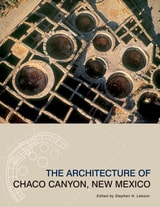
The Architecture of Chaco Canyon, New Mexico
Lekson, Stephen H
University of Utah Press, 2007
The structures of Chaco Canyon, built by native peoples between AD 850 and 1130, are among the most compelling ancient monuments on earth. Recognized as a World Heritage Site, these magnificent ruins are consistently featured in scholarly books and popular media. Yet, like Chaco itself, these buildings are anomalous in Southwestern archaeology and much debated.
In a century of study, our understanding and means of approaching these ruins have grown considerably. Important tree-ring dating, GIS research, and computer imaging point to the need for a new volume on Chaco architecture that unifies older information with the new.
The chapters in this volume focus on Chaco Great Houses and consider three overlapping themes: studies of technology and building types, analyses of architectural change, and readings of the built environment. To aid reconsideration there are over 150 maps, floor plans, elevations, and photos, including a number of color illustrations.
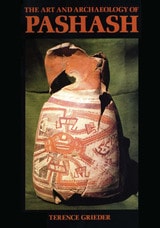
The Art and Archaeology of Pashash
By Terence Grieder
University of Texas Press, 1978
Among the vast treasures discovered in Peru since its conquest by Pizarro, only a small fraction has been excavated scientifically. The Art and Archaeology of Pashash is an account of the discovery and excavation of one of the richest Pre-Columbian burials ever scientifically excavated in Peru. The tomb and its offerings unearthed at Pashash, in the northern Andes, provide new perspectives on the cultural meaning of Andean funerary treasure.
About A.D. 500 the flexed body of an aristocrat was wrapped in cloth and set in a small tomb sealed by a heavy stone. Three separate offerings were put in place during the construction of the funerary temple above the tomb. Near the body were placed about fifty large gold pins with elaborately sculptured heads, the most important set of Peruvian metalwork scientifically recorded in context. Decorated pottery also accompanied the body. Beneath the doorway to the temple chamber above the tomb a second offering was placed, composed of vessels modeled as jaguars, snakes, and dragonlike combinations of the two, with other fine pottery, unfired clay bowls, and stone bowls. The images in this offering represented the theology of a shamanistic religion. A third offering of broken ritual vessels was placed in the earth fill just before the temple floor was built.
This collection of several hundred works of art found together and dated by radiocarbon, related to a stratigraphic sequence for the site as a whole, makes possible a unique history of the art of this highland Andean region. Grieder describes the phases of development and the symbolism of the previously little-known Recuay style of pottery and attributes many works to individuals, illuminating the role of artists and their relations with their patrons. Among the author's discoveries is evidence of the use of potters' wheels and lathes to make ceramic and stone vessels and ritual objects, reversing the long-held contention that these tools were unknown in Pre-Columbian America.
The Art and Archaeology of Pashash will be valuable to specialists in Andean archaeology as well as to those interested in the art and culture of Pre-Columbian America.
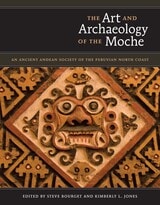
The Art and Archaeology of the Moche
An Ancient Andean Society of the Peruvian North CoastEdited by Steve Bourget and Kimberly L. Jones
University of Texas Press, 2008
Renowned for their monumental architecture and rich visual culture, the Moche inhabited the north coast of Peru during the Early Intermediate Period (AD 100-800). Archaeological discoveries over the past century and the dissemination of Moche artifacts to museums around the world have given rise to a widespread and continually increasing fascination with this complex culture, which expressed its beliefs about the human and supernatural worlds through finely crafted ceramic and metal objects of striking realism and visual sophistication.
In this standard-setting work, an international, multidisciplinary team of scholars who are at the forefront of Moche research present a state-of-the-art overview of Moche culture. The contributors address various issues of Moche society, religion, and material culture based on multiple lines of evidence and methodologies, including iconographic studies, archaeological investigations, and forensic analyses. Some of the articles present the results of long-term studies of major issues in Moche iconography, while others focus on more specifically defined topics such as site studies, the influence of El Niño/Southern Oscillation on Moche society, the nature of Moche warfare and sacrifice, and the role of Moche visual culture in decoding social and political frameworks.
The Arzberger Site
Hughes County, South DakotaAlbert C. Spaulding
University of Michigan Press, 1956
The Asturian of Cantabria
Early Holocene Hunter-Gatherers in Northern SpainGeoffrey A. Clark
University of Arizona Press, 1983
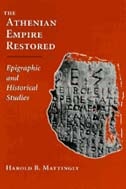
The Athenian Empire Restored
Epigraphic and Historical StudiesHarold B. Mattingly
University of Michigan Press, 1996
This volume collects Harold B. Mattingly's most important essays on the question, and offers them in updated form together with a new introduction and notes, and a concordance of inscriptions. A preface by Mortimer Chambers helps place the volume amid the decades- long controversy about events in and around Athens, and describes the scientific technique that has proven Mattingly's argument.
In the process of establishing a sounder methodology for investigating this crucial period of Greek--and Western--history, Mattingly in these groundbreaking essays turns a beacon of light on many aspects of Greek and Athenian society and history.
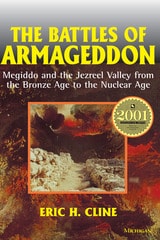
The Battles of Armageddon
Megiddo and the Jezreel Valley from the Bronze Age to the Nuclear AgeEric H. Cline
University of Michigan Press, 2002
> Best Popular Book on Archaeology
--Biblical Archaeology Society
Apocalypse. Judgment Day. The End Time. Armageddon. Students of the Bible know it as the place where the cataclysmic battle between the forces of good and the forces of evil will unfold. Many believe that this battle will take place in the very near future. But few know that Armageddon is a real place--one that has seen more fighting and bloodshed than any other spot on earth.
The name Armageddon is a corruption of the Hebrew phrase Har Megiddo, and it means "Mount of Megiddo." More than thirty bloody conflicts have been fought at the ancient site of Megiddo and adjacent areas of the Jezreel Valley during the past four thousand years. Egyptians, Israelites, Greeks, Muslims, Crusaders, Mongols, British, Germans, Arabs, and Israelis have all fought and died here. The names of the warring leaders reverberate throughout history: Thutmose III, Deborah, Gideon, Saul and Jonathan, Jezebel, Saladin, Napoleon, and Allenby, to name but the most famous. Throughout history Megiddo and the Jezreel Valley have been ground zero for battles that determined the very course of civilization. No wonder that the author of Revelation believed Armageddon, the penultimate battle between good and evil, would also take place here!
The Battles of Armageddon introduces readers to a rich cast of ancient and modern warriors, while bringing together for the first time the wide range of conflicts that have been fought at Megiddo and the Jezreel Valley from the Bronze Age to the Nuclear Age.
Eric H. Cline has participated in more than seventeen seasons of excavation and survey in Israel, Egypt, Jordan, Greece, and the United States. He is currently a Senior Staff Archaeologist at the ongoing excavations of Megiddo.
The Behavioral Ecology of Efe Pygmy Men in the Ituri Forest, Zaire
Robert C. Bailey
University of Michigan Press, 1991
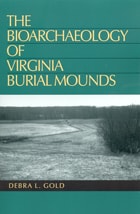
The Bioarchaeology of Virginia Burial Mounds
Debra L. Gold
University of Alabama Press, 2004
Uncovering the stories of Virginia's ancient peoples through the science of bioarchaeology.
By the 14th century more than a dozen accretional burial mounds—reaching heights of 12 to 15 feet—marked the floodplains of interior Virginia. Today, none of these mounds built by the nearly forgotten Monacan Indians remain on the landscape, having been removed over the centuries by a variety of natural and cultural causes. This study uses what remains of the mounds—excavated from the 1890s to the 1980s— to gain a new understanding of the Monacans and to gauge their importance in the realm of the late prehistoric period in the Eastern Woodlands.
Based on osteological examinations of dozens of complete skeletons and thousands of isolated bones and bone fragments, this work constructs information on Monacan demography, diet, health, and mortuary ritual in the 10th through the 15th centuries. The results show an overall pattern of stability and local autonomy among the Late Woodland village societies of interior Virginia in which a mixture of maize farming and the collection of wild food resources were successful for more than 600 years.
This book—uniting biological and cultural aspects of the data for a holistic understanding of everyday life in the period—will be of interest to ethnohistorians, osteologists, bioarchaeologists, and anyone studying Late Woodland, Mississippian, and contact periods, as well as middle range societies, in the Eastern Woodlands.
The Biological and Social Analyses of a Mississippian Cemetery from Southeast Missouri
The Turner Site, 23BU21AThomas K. Black, III
University of Michigan Press, 1979
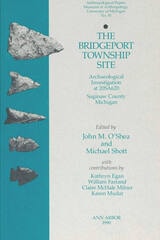
The Bridgeport Township Site
Archaeological Investigation at 20SA620, Saginaw County, MichiganEdited by John M. O'Shea and Michael Shott with contributions by Kathryn Egan, William Farrand, Claire McHale Milner, and Karen Mudar
University of Michigan Press, 1990
The Burial Complexes of the Knight and Norton Mounds in Illinois and Michigan
James B. Griffin, Richard E. Flanders and Paul F. Titterington
University of Michigan Press, 1970
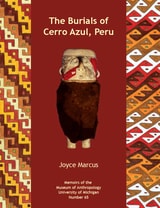
The Burials of Cerro Azul, Peru
Joyce Marcus
University of Michigan Press, 2024
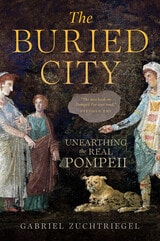
The Buried City
Unearthing the Real PompeiiGabriel Zuchtriegel
University of Chicago Press, 2025
In The Buried City, Gabriel Zuchtriegel takes us on a behind-the-scenes tour of Pompeii and reveals new archaeological finds that are being unearthed at the site’s biggest dig in a generation. As director of the Pompeii Archaeological Park, Zuchtriegel presents a uniquely intimate perspective on this city that was tragically destroyed and frozen in time by the eruption of Mount Vesuvius in 79 CE. Among the ruins, we find unmade beds, dishes left drying, and bodies of victims encased in ash, but Zuchtriegel shows that we’ve only begun to understand this fascinating place, as a third of the site remains unexcavated.
Zuchtriegel leads us into the heart of the city, reconstructing Pompeii as it would have been, showing us who lived there, what mattered to them, and what happened in their final hours. The Buried City reveals the latest discoveries unearthed at Pompeii—including a banquet hall with murals of Greek gods, a fresco of what appears to be a pizza, and the remains of individuals crushed by debris—all buried for almost two thousand years. Zuchtriegel offers a vivid portrait of this World Heritage site as a vibrant and diverse city, connecting us to a past that is much closer than we think and inviting us to reflect on our role as keepers of the site and its history.
The Buried City
Unearthing the Real PompeiiGabriel Zuchtriegel
University of Chicago Press, 2025
The director of the Pompeii Archaeological Park offers a vivid view of daily life in the lost city, shares the latest discoveries, and reflects on preserving heritage.
In The Buried City, Gabriel Zuchtriegel takes us on a behind-the-scenes tour of Pompeii and reveals new archaeological finds that are being unearthed at the site’s biggest dig in a generation. As director of the Pompeii Archaeological Park, Zuchtriegel presents a uniquely intimate perspective on this city that was tragically destroyed and frozen in time by the eruption of Mount Vesuvius in 79 CE. Among the ruins, we find unmade beds, dishes left drying, and bodies of victims encased in ash, but Zuchtriegel shows that we’ve only begun to understand this fascinating place, as a third of the site remains unexcavated.
Zuchtriegel leads us into the heart of the city, reconstructing Pompeii as it would have been, showing us who lived there, what mattered to them, and what happened in their final hours. The Buried City reveals the latest discoveries unearthed at Pompeii—including a banquet hall with murals of Greek gods, a fresco of what appears to be a pizza, and the remains of individuals crushed by debris—all buried for almost two thousand years. Zuchtriegel offers a vivid portrait of this World Heritage site as a vibrant and diverse city, connecting us to a past that is much closer than we think and inviting us to reflect on our role as keepers of the site and its history.
The Caddo Nation
Archaeological and Ethnohistoric PerspectivesBy Timothy K. Perttula
University of Texas Press, 1997
First published in 1992 and now updated with a new preface by the author and a foreword by Thomas R. Hester, "The Caddo Nation" investigates the early contacts between the Caddoan peoples of the present-day Texas, Louisiana, Oklahoma, and Arkansas region and Europeans, including the Spanish, French, and some Euro-Americans.
Perttula's study explores Caddoan cultural change from the perspectives of both archaeological data and historical, ethnographic, and archival records. The work focuses on changes from A.D. 1520 to ca. A.D. 1800 and challenges many long-standing assumptions about the nature of these changes.
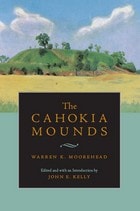
The Cahokia Mounds
Warren King Moorehead, edited and with an introduction by John E. Kelly
University of Alabama Press, 2000
A Dan Josselyn Memorial Publication
Provides a comprehensive collection of Moorehead's investigations of the nation's largest prehistoric mound center
Covering almost fourteen square kilometers in Illinois, Cahokia Mounds State Historic Site is the largest prehistoric mound center in North America and has been designated a World Heritage Site by the United Nations. Built between A.D. 1050 and 1350, Cahokia originally contained the remains of over 100 earthen mounds that were used as places for Native American rituals, homes of chiefs, or elite tombs. Earlier scientists debated whether the mounds were part of the natural landscape, and many were destroyed by urban and industrial development
This book is a report of archaeological investigations conducted at Cahokia from 1921 to 1927 by Warren K. Moorehead, who confirmed that the mounds were built by indigenous peoples and who worked to assure preservation of the site. The volume includes Moorehead's final 1929 report along with portions of two preliminary reports, covering both Cahokia and several surrounding mound groups.
John Kelly's introduction to the book sets Moorehead's investigations in the context of other work conducted at Cahokia prior to the 1920s and afterwards. Kelly reviews Moorehead's work, which employed 19th-century excavation techniques combined with contemporary analytical methods, and explains how Moorehead contended with local social and political pressures.
Moorehead's work represented important excavations at a time when little other similar work was being done in the Midwest. The reissue of his findings gives us a glimpse into an important archaeological effort and helps us better appreciate the prehistoric legacy that he helped preserve.
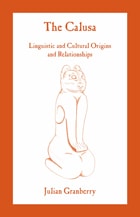
The Calusa
Linguistic and Cultural Origins and RelationshipsJulian Granberry
University of Alabama Press, 2012
Presents a full phonological and morphological analysis of the total corpus of surviving Calusa language data left by a literate Spanish captive held by the Calusa from his early youth to adulthood
The linguistic origins of Native American cultures and the connections between these cultures as traced through language in prehistory remain vexing questions for scholars across multiple disciplines and interests. Native American linguist Julian Granberry defines the Calusa language, formerly spoken in southwestern coastal Florida, and traces its connections to the Tunica language of northeast Louisiana.
Archaeologists, ethnologists, and linguists have long assumed that the Calusa language of southwest Florida was unrelated to any other Native American language. Linguistic data can offer a unique window into a culture’s organization over space and time; however, scholars believed the existing lexical data was insufficient and have not previously attempted to analyze or define Calusa from a linguistic perspective.
In The Calusa: Linguistic and Cultural Origins and Relationships, Granberry presents a full phonological and morphological analysis of the total corpus of surviving Calusa language data left by a literate Spanish captive held by the Calusa from his early youth to adulthood. In addition to further defining the Calusa language, this book presents the hypothesis of language-based cultural connections between the Calusa people and other southeastern Native American cultures, specifically the Tunica. Evidence of such intercultural connections at the linguistic level has important implications for the ongoing study of life among prehistoric people in North America. Consequently, this thoroughly original and meticulously researched volume breaks new ground and will add new perspectives to the broader scholarly knowledge of ancient North American cultures and to debates about their relationships with one another.
The Carnegie Maya III
Carnegie Institution of Washington Notes on Middle American Archaeology and Ethnology, 1940-1957John M. Weeks
University Press of Colorado, 2011
The series began in 1940 as an outlet for information that may have been considered too unimportant, brief, or restricted to be submitted for formal publication. However, these notes are often of great interest to the specialists for whom they are designed and to whom their distribution is restricted. The majority of the essays-most of which are on the Maya-are on archaeological subjects, epigraphy, ethnohistory and ethnography, and linguistics. As few original copies of the Notes series are known to exist in U.S. and Canadian libraries, the book will make these essays easily accessible to students, academics, and researchers in the field.
Purchase of the print book comes with free individual access to the Adobe Digital Editions Carnegie Maya Series Ebook, which contains the complete set of The Carnegie Maya, The Carnegie Maya II, The Carnegie Maya III and The Carnegie Maya IV, thus making hundreds of documents from the Carnegie Institution's Maya program available in one source.
The Carnegie Maya IV
Carnegie Institution of Washington Theoretical Approaches to Problems, 1941-1947John M. Weeks
University Press of Colorado, 2012
Only a few sets of these three contributions to the Theoretical Approaches to Problems series are known to have survived, making The Carnegie Maya IV an essential reference and research resource.
The corresponding ebook, for individual download, contains the complete set of The Carnegie Maya, The Carnegie Maya II, The Carnegie Maya III and The Carnegie Maya IV, thus making hundreds of documents from the Carnegie Institution's Maya program available in one source.
The Casas Grandes World
Curtis Schaafsma
University of Utah Press, 1999
The Casas Grandes World focuses on a remarkable prehistoric culture that extended through parts of present-day Chihuahua, Sonora, New Mexico, Texas, and Arizona, centering on the large Mexican site of Casas Grandes. The thousands of prehistoric sites in this vast area have only recently been considered related to each other, yet it now appears that for more than 200 years, from about AD 1200 to 1425, the people of the region traded with each other, made coursed-adobe pueblos in the desert country, manufactured magnificent pottery, and produced some of the most extraordinary rock art in North America. Casas Grandes was recently designated a World Heritage Site by the United Nations.
During is florescence Casas Grandes served as a conduit or nexus between the Anasazi of the ancient American Southwest and the Mexican civilizations to the south. Using the seminal work of Charles Di Peso as a touchstone, and drawing on significant new archaeological work, this volume offers a reevaluation of the extent, history, and meaning of the great site and its far-reaching connections. It also considers influences on the Hohokam of Arizona and the peoples of west Mexico, positing the existence of a vast sphere of Casas Grandes cultural influence.
The Ceramic Sequence of the Holmul Region, Guatemala
Michael G. Callaghan and Nina Neivens de Estrada
University of Arizona Press, 2016
The Ceramic Sequence of the Holmul Region, Guatemala illustrates the archaeological ceramics of these prehistoric Maya sites in a study that provides a theoretical starting point for answering questions related to mid- and high-level issues of archaeological method and theory in the Maya area and larger Mesoamerica. The researchers’ ceramic sequence, which uses the method of type:variety-mode classification, spans approximately 1,600 years and encompasses nine ceramic complexes and one sub-complex. The highly illustrated book is formatted as a catalog of the types of ceramics in a chronological framework.
The authors undertook this study with three objectives: to create a temporal-spatial framework for archaeological sites in the politically important Holmul region, to relate this framework to other Maya sites, and to use type:variety-mode data to address specific questions of ancient Maya social practice and process during each ceramic complex.
Specific questions addressed in this volume include the adoption of pottery as early as 800 BC at the sites of Holmul and Cival during the Middle Preclassic period, the creation of the first orange polychrome pottery, the ideological and political influence from sites in Mexico during the Early Classic period, and the demographic and political collapse of lowland Maya polities between AD 800 and AD 830.
The Cham of Vietnam
History, Society and ArtEdited by Bruce Lockhart and Tran Ky Phuong
National University of Singapore Press, 2011
The Chattahoochee Chiefdoms
John H. Blitz and Karl G. Lorenz
University of Alabama Press, 2006
As objects from the mounds were unearthed, occasionally illustrated and discussed in print, attention became focused on the aesthetic qualities of the artifacts, the origins of the remains, and the possible relationship to the Creek Indians. Beginning in the 20th century, new concerns emerged as the developing science of archaeology was introduced to the region. As many of the sites became threatened or destroyed by reservoir construction, trained archaeologists initiated extensive excavations of the mounds. Although classification of artifacts and sites into a chronological progression of cultures was the main objective of this effort, a second concern, sometimes more latent than manifest, was the reconstruction of a past way of life. Archaeologists hoped to achieve a better understanding of the sociopolitical organization of the peoples who built the mounds and of how those organizations changed through time.
Contemporary archaeologists, while in agreement on many aspects of the ancient cultures, debate the causes, forms, and degrees of sociopolitical complexity in the ancient Southeast. Do the mounds mark the capitals of political territories? If so, what was the scale and scope of these ancient “provinces”? What manner of society constructed the mound settlements? What was the sociopolitical organization of these long-dead populations? How can archaeologists answer such queries with the mute and sometimes ordinary materials with which they work: pottery, stone tools, organic residues, and the strata of remnant settlements, buildings, and mounds?
The Cherokees of Tuckaleechee Cove
Jon Marcoux
University of Michigan Press, 2012
The Chora of Croton 1
The Neolithic Settlement at Capo AlfiereBy Jon Morter
University of Texas Press, 2010
From 1974 to the present, the Institute of Classical Archaeology (ICA) at the University of Texas at Austin has carried out archaeological excavations and surveys in ancient territories (chorae) in southern Italy. This wide-ranging investigation, which covers a large number of sites and a time period ranging from prehistory to the Middle Ages, has unearthed a wealth of new information about ancient rural economies and cultures in the region. These discoveries will be published in two multivolume series (Metaponto and Croton). This volume on the Neolithic settlement at Capo Alfiere is the first in the Croton series.
The Chora of Croton 1 reports the excavation results of a remarkable Neolithic site at Capo Alfiere on the Ionian coast. Capo Alfiere is one of a very few early inhabitation sites in this area to have been excavated extensively, with a full team of scientific specialists providing interdisciplinary studies on early farming and animal husbandry. It provides comprehensive documentation of the economy, material culture, and way of life in the central Mediterranean in the sixth and fifth millennia BC. Most notable are the remains of a wattle-and-daub hut enclosed within a massive stone wall. Unique for this area, this well-preserved structure may have been used for special purposes such as ritual, as well as for habitation. The presence of Stentinello wares shows that the range of this pottery type extended further east than previously thought and casts new light on the development of ceramics in the area.
The Chora of Metaponto 2
Archaeozoology at Pantanello and Five Other SitesStudies by Sándor Bökönyi and Erika Gál
University of Texas Press, 2010
From 1974 to the present, the Institute of Classical Archaeology at the University of Texas at Austin has carried out archaeological excavations in the ancient territory (chora) of Metaponto, now located in the modern province of Basilicata on the southern coast of Italy. This wide-ranging investigation, which covers a number of sites and a time period ranging from prehistory to the Roman Empire, has unearthed a wealth of new information about the ancient rural economy in southern Italy. These discoveries will be published in a multi-volume series titled The Chora of Metaponto. This volume on archaeozoology—the study of animal remains from archaeological sites—is the second in the series, following The Chora of Metaponto: The Necropoleis (1998).
Archaeozoology at Pantanello and Five Other Sites describes the animal remains found throughout Metaponto and discusses what they reveal about ancient practices of hunting and herding, domestication and importation of new breeds, people's attitudes toward animals, and what animal remains indicate about past environments. A chapter devoted to bird bones, which are a relatively rare find because of their fragility, provides high quality information on the environment and methods of fowling, as well as on the beliefs and symbolism associated with birds. The final chapter covers tools—some simple, others sophisticated and richly decorated—made from animal bones.
The Chora of Metaponto 4
The Late Roman Farmhouse at San BiagioBy Erminia Lapadula
University of Texas Press, 2012
This volume in the Institute of Classical Archaeology's series on rural settlements in the countryside (chora) of Metaponto presents the excavation of the Late Roman farmhouse at San Biagio. Located near the site of an earlier Greek sanctuary, this modest but well-appointed structure was an unexpected find from a period generally marked by large landholdings and monumental villas. Description of earlier periods of occupation (Neolithic and Greek) is followed by a detailed discussion of the farmhouse itself and its historical and socioeconomic context. The catalogs and analyses of finds include impressive deposits of coins from the late third and early fourth centuries AD. Use of virtual reality CAD software has yielded a deeper understanding of the architectural structure and its reconstruction. A remarkable feature is the small bath complex, with its examples of window glass. This study reveals the existence of a small but viable rural social and economic entity and alternative to the traditional image of crisis and decline during the Late Imperial period.
The Chora of Metaponto 5
A Greek Farmhouse at Ponte FabrizioBy Elisa Lanza Catti, Keith Swift and Joseph Coleman Carter
University of Texas Press, 2014
This volume in the Institute of Classical Archaeology’s series on rural settlements in the countryside (chora) of Metaponto is a study of the fourth-century BC farmhouse known as Fattoria Fabrizio, located in the heart of the surveyed chora in the Venella valley (at Ponte Fabrizio). This simple structure richly illustrates the life of fourth-century BC Metapontine farmers of modest means.
Thorough interpretations of the farmhouse structure in its wider historical and socioeconomic contexts are accompanied by comprehensive analyses of the archaeological finds. Among them is detailed evidence for the family cult, a rare archaeological contribution to the study of Greek religion in Magna Grecia. The entire range of local Greek ceramics has been studied, along with a limited number of imports. Together they reveal networks within the chora and trade beyond it, involving indigenous peoples of southern Italy, mainland Greeks, and the wider Mediterranean world. Along with the studies of traditional archaeological finds, archaeobotanical analyses have illuminated the rural economy of the farmhouse and the environment of the adjacent chora. Abundant Archaic pottery also documents an important occupation, during the first great flowering of the chora in the sixth century BC. This study provides an ideal complement to the four volumes of The Chora of Metaponto 3: Archaeological Field Survey—Bradano to Basento and an eloquent example of hundreds of farmhouses of this date identified throughout the chora by their surface remains alone.
The Chora of Metaponto 6
A Greek Settlement at Sant'Angelo VecchioBy Francesca Silvestrelli and Ingrid E. M. Edlund-Berry<br>Joseph Coleman Carter, Series Editor
University of Texas Press, 2016
The sixth volume in the Institute of Classical Archaeology’s series on the rural countryside (chora) of Metaponto is a study of the Greek settlement at Sant’Angelo Vecchio. Located on a slope overlooking the Basento River, the site illustrates the extraordinary variety of settlements and uses of the territory from prehistory through the current day. Excavators brought to light a Late Archaic farmhouse, evidence of a sanctuary near a spring, and a cluster of eight burials of the mid-fifth century BC, but the most impressive remains belong to a production area with kilns. Active in the Hellenistic, Late Republican, and Early Imperial periods, these kilns illuminate important and lesser-known features of production in the chora of a Greek city and also chronicle the occupation of the territory in these periods.
The thorough, diachronic presentation of the evidence from Sant’Angelo Vecchio is complemented by specialist studies on the environment, landscape, and artifacts, which date from prehistory to the post-medieval period. Significantly, the evidence spans the range of Greek site types (farmhouse, necropolis, sanctuary, and production center) as well as the Greek dates (from the Archaic to Early Imperial periods) highlighted during ICA’s survey of the Metapontine chora. In this regard, Chora 6 enhances the four volumes of The Chora of Metaponto 3: Archaeological Field Survey—Bradano to Basento and provides further insight into how sites in the chora interacted throughout its history.
The Chora of Metaponto 7
The Greek Sanctuary at PantanelloBy Joseph Coleman Carter and Keith Swift
University of Texas Press, 2018
The seventh volume in the Institute of Classical Archaeology’s series on the rural countryside (chora) of Metaponto is a study of the Greek sanctuary at Pantanello. The site is the first Greek rural sanctuary in southern Italy that has been fully excavated and exhaustively documented. Its evidence—a massive array of distinctive structural remains and 30,000-plus artifacts and ecofacts—offers unparalleled insights into the development of extra-urban cults in Magna Graecia from the seventh to the fourth centuries BC and the initiation rites that took place within the cults.
Of particular interest are the analyses of the well-preserved botanical and faunal material, which present the fullest record yet of Greek rural sacrificial offerings, crops, and the natural environment of southern Italy and the Greek world. Excavations from 1974 to 2008 revealed three major phases of the sanctuary, ranging from the Archaic to Early Hellenistic periods. The structures include a natural spring as the earliest locus of the cult, an artificial stream (collecting basin) for the spring’s outflow, Archaic and fourth-century BC structures for ritual dining and other cult activities, tantalizing evidence of a Late Archaic Doric temple atop the hill, and a farmhouse and tile factory that postdate the sanctuary’s destruction. The extensive catalogs of material and special studies provide an invaluable opportunity to study the development of Greek material culture between the seventh and third centuries BC, with particular emphasis on votive pottery and figurative terracotta plaques.
The Chronological Position of the Hopewellian Culture in the Eastern United States
James B. Griffin
University of Michigan Press, 1958
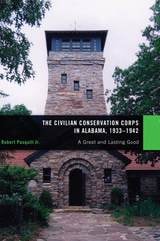
The Civilian Conservation Corps in Alabama, 1933–1942
A Great and Lasting GoodRobert Pasquill Jr.
University of Alabama Press, 2008
The Civilian Conservation Corps was one of the better known and most successful of the New Deal programs following the Great Depression. The causes of the Great Depression have been addressed and debated from a variety of perspectives through the years. However, the effects explained in terms of human suffering leave little room for debate. By March of 1933, there were more than 13.6 million unemployed, and more than 200,000 of them were wandering the country looking for work. Homes and families were fractured. President Roosevelt proposed to put 500,000 unemployed men from cities and towns into the woods to plant trees, reduce fire hazards, clear streams, check erosion, and improve the park system all across America. With unprecedented speed, national legislation was written, passed, and funded, creating a myriad of programs—referred to as alphabet projects—in hopes of generating useful work and necessary paychecks and creating a “great and lasting good” for the American public.
CCC projects in Alabama would initially employ 20,000 men with projects in all 13 state forests and seven state parks. This volume traces in great detail the work projects, the camp living conditions, the daily lives of the enrollees, the administration and management challenges, and the lasting effects of this Neal Deal program in Alabama. Through archives, government documents, and more than 125 interviews with former enrollees of the CCC, Pasquill has recounted the CCC program in Alabama and brought this humanitarian program to life in the Alabama countryside. It was a truly monumental win-win situation emerging from a national and international economic tragedy.
The Cochise Cultural Sequence in Southeastern Arizona
E. B. Sayles
University of Arizona Press, 1983
The Codex and Crafts in Late Antiquity
Georgios Boudalis
Bard Graduate Center, 2018
The Collapse of Ancient States and Civilizations
Edited by Norman Yoffee and George L. Cowgill
University of Arizona Press, 1988
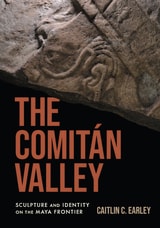
The Comitán Valley
Sculpture and Identity on the Maya FrontierCaitlin C. Earley
University of Texas Press, 2023
A thousand years ago, the Comitán Valley, in the Mexican state of Chiapas, was the western edge of the Maya world. Far from the famous power centers of the Classic period, the valley has been neglected even by specialists. Here, Caitlin C. Earley offers the first comprehensive study of sculpture excavated from the area, showcasing the sophistication and cultural vigor of a region that has largely been ignored.
Supported by the rulers of the valley’s cities, local artists created inventive works that served to construct civic identities. In their depictions of warrior kings, ballgames, rituals, and ancestors, the artists of Comitán made choices that reflected political and religious goals and distinguished the artistic production of the Comitán Valley from that of other Maya locales. After the Maya abandoned their powerful lowland centers, those in Comitán were maintained, a distinction from which Earley draws new insights concerning the Maya collapse. Richly illustrated with never-before-published photographs of sculptures unearthed from key archaeological sites, The Comitán Valley is an illuminating work of art historical recovery and interpretation.