475 books match the query 'Catholic' and 126 start with t

cover of The Long Arm of Papal Authority: Late Medieval Christian Peripheries and Their Communications with the Holy See

The Long Arm of Papal Authority

Late Medieval Christian Peripheries and Their Communications with the Holy See

Gerhard Jaritz

Central European University Press, 2005
The volume contains selected papers from two conferences in 2003, at the University of Bergen (Norway) and at Central European University in Budapest. They deal comparatively with the communication of the Holy See with Northern Europe and Eastern Central Europe in the Late Middle Ages, both areas at the margins of Western Christendom. Special emphasis is placed on analysis of registers in the Apostolic Penitentiary.
[more]
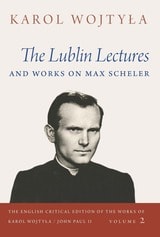
cover of The Lublin Lectures and Works on Max Scheler

The Lublin Lectures and Works on Max Scheler

Karol Wojtyla

Catholic University of America Press, 2023
The Catholic University of America Press is honored to publish the English Critical Edition of the Works of Karol Wojtyła/John Paul II. Under the auspices of an international editorial board, the English Critical Edition will comprise more than 20 volumes, covering all of John Paul’s writings and correspondence in the years before and during his papacy. This collection is essential for several reasons. For one thing, gaining access to the saint’s writings has posed a significant challenge. Except for official papal addresses and documents preserved and disseminated by the Vatican, St. John Paul’s works have been scattered and limited. Many documents need a new translation. Finally, English-language audiences have faced the challenge, even in the case of published texts of dealing with several languages, various translations, and textual idiosyncrasies. The second volume of the series presents Wojtyła’s lectures at the Catholic University of Lublin and his works on Max Scheler. This volume consists of three parts: Karol Wojtyła’s lectures at the Lublin University from 1954 to 1957 (during three academic years); Wojtyła’s articles related to the ethical issues discussed in the Lublin lectures, and his habilitation thesis on Max Scheler from 1953 with other essays related more closely to Scheler’s thought. As was the case with Volume 1, Volume 2 also relies on the original manuscripts and typescripts of Wojtyła’s works. These original texts were compared with the Polish published editions, and the significant differences between them were marked in the scholarly apparatus. Some of the essays in this volume were never published in English, others were never published before.
[more]
cover of The Mass: The Presence of the Sacrifice of the Cross

The Mass

The Presence of the Sacrifice of the Cross

Charles Cardinal Journet

St. Augustine's Press, 2008
[more]
cover of The Mind That Is Catholic: Philosophical and Political Essays

The Mind That Is Catholic

Philosophical and Political Essays

James V. Schall

Catholic University of America Press, 2008
The Mind That Is Catholic, he presents a retrospective collection of his academic and literary essays written in the past fifty years. In each essay, he exemplifies the Catholic mind at its best--seeing the whole, leaving nothing out.
[more]
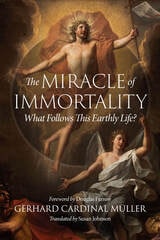
cover of The Miracle of Immortality: What Follows This Earthly Life?

The Miracle of Immortality

What Follows This Earthly Life?

Gerhard Cardinal Muller

Catholic University of America Press, 2026

In The Miracle of Immortality, Gerhard Cardinal Müller tackles some of the great mysteries of human life and hope. The former prefect of the Dicastery for the Doctrine of the Faith is not content merely to present Catholic doc­trine on the afterlife and the last things, although his reflections are always rooted in the teachings and traditions of the Church. Rather, he invites readers to walk with him by the restless sea of human learning, a sea formed by man’s unquenchable thirst for something or someone greater than man himself, by his desire to know the beginning and the end. One who accepts the invitation finds himself in conversation with a mentor whose mind is suffused with scripture and very much sharpened by it. Cherished assumptions are queried or quietly corrected. Slowly but surely he is confronted with the miracle of immortality, without which true happiness is impossible. Cardinal Müller demonstrates in this book that it is entirely possible, and eminently rational, to believe in the miracle of immortality; indeed, that it is ultimately not rational not to believe. The Miracle of Immortality is a work of penetrating theological insight set, chiaroscuro-like, against the darkness of modern and postmodern skepticism. It is at once poetical in spirit and profoundly catechetical in substance, for Müller understands that Christian eschatology cannot be elucidated properly without proclaiming the whole counsel of God. The miracle in question is a miracle for the whole person, accomplished by way of what Paul calls adoption; that is, filiation to the eternal Father through the incarnate Son, effected by the limitless power of the Holy Spirit. It is a miracle that perfects the divine work of creation.
[more]
cover of The Miracles of St. John of Capistran

The Miracles of St. John of Capistran

Stanko Andric

Central European University Press, 2000

Religious history and, in particular, the history of the cult of saints and their miracles has recently become one of the most popular fields of historical investigation. Together with continuing interest in the related ecclesiastic motivations and the well organized craft of hagiography, this new interest might be explained by the marvellously rich details of thousands of witness accounts testifying to the miraculous help they received from the saint in times of desparate need. These accounts provide an unparalleled insight into the history of everyday life and into the various hardships, illnesses, hopes dreams and anxieties during the late medieval and early modern period.

Only two records exist on the history of the medieval Hungarian kingdom- the thirteenth century canonization trial of St. Margaret of Hungary and the miracle collections promoting the canonization of St. John of Capistran, the victorious Crusader at Belgrade in 1456, who died thereafter in Ilok (a city located on the periphery of western Christianity in Croatia). Based on a careful study of the widely scattered manuscripts on Capistranean miracles and with the help of a microscopic philological analysis, the author has managed to reconstruct, for the first time, one of the most complex miracle collections in the history of medieval hagiography.

Covering the recording of the first miracle series by the urban notaries of Ilok, the local hagiographer of Ilok Franciscans (John Geszti), the vicar general of the Hungarian province (Stephen Varsányi), and a number of subsequent editions and amplifications of this material recycling into the canonization campaign of St. John of Capistran and the miracles he himself recorded, The Miracles of St. John of Capistran, is an outstanding debut by a representative of a new generation of Central European medievalists.
[more]
cover of The Modernist as Philosopher: Selected Writings of Marcel Hebert

The Modernist as Philosopher

Selected Writings of Marcel Hebert

C. J. T. Talar

Catholic University of America Press, 2011
This volume, the first to be published in English about Hébert, is essential for a full understanding of Catholic Modernism.
[more]
cover of The Mortara Case and St. Thomas Aquinas's Defense of Jewish Parental Authority: with Original Documents from the Mortara Case: <i>Pro-memoria, Syllabus, Brevi cenni</i>

The Mortara Case and St. Thomas Aquinas's Defense of Jewish Parental Authority

with Original Documents from the Mortara Case: <i>Pro-memoria, Syllabus, Brevi cenni</i>

Matthew Tapie

Catholic University of America Press, 2024
The Mortara case refers to Pope Pius IX’s 1858 removal of a six-year-old Jewish boy, Edgardo Mortara, from his parents in Bologna, Italy. Six years after Edgardo was born, it was reported that the family’s Christian housekeeper had baptized the boy after he had fallen ill as an infant and was allegedly in danger of death. Since canon law and civil law stipulated that a baptized child must be raised Catholic, Pius IX used his power as head of the papal states to remove the boy. In advocating for the return of the child, the Mortaras submitted to the Vatican a two-part document, which appealed to the teachings of Thomas Aquinas against baptism of Jewish children invitis parentibus (against the will of the parents). The papal counsel’s reply denied the request, citing Aquinas’s teaching to argue that Edgardo’s baptism was valid, and that he belonged to the Church. Today, some Catholic theologians defend or at least excuse the Pope’s decision with appeal to the works of Aquinas. Which side had the correct interpretation of Aquinas’s teaching? And how does this answer impact Catholic theology and Catholic Jewish-relations today? The Mortara Case and St. Thomas Aquinas's Defense of Jewish Parental Authority adjudicates the claims of both sides of the debate through an analysis of Aquinas’s teaching as it is interpreted in the Italian and Latin original documents from the 1858 case, which are housed in the Vatican Apostolic Archives, and reproduced here, with facing English translations, for the first time. Tapie demonstrates that, for Aquinas, Jewish parental rights are an order of the natural law, which Aquinas likened to a spiritualis uterus (spiritual womb). Through the metaphor of the spiritual womb, Aquinas merged the Roman institution of parental rights with the theological concept of the natural law. Tapie concludes by examining baptism invitis parentibus in the current Code of Canon Law with attention to the Second Vatican Council’s teaching on religious freedom and the Jewish people.
[more]
cover of The Mystery of Union with God

The Mystery of Union with God

Bernhard Blankenhorn

Catholic University of America Press, 2015
The Mystery of Union with God offers the most extensive, systematic analysis to date of how Albert and Thomas interpreted and transformed the Dionysian Moses "who knows God by unknowing." It shows Albert's and Thomas's philosophical and theological motives to place limits on Dionysian apophatism and to reintegrate mediated knowledge into mystical knowing. The author surfaces many similarities in the two Dominicans' mystical doctrines and exegesis of Dionysius. This work prepares the way for a new consideration of Albert the Great as the father of Rhineland Mysticism. The original presentation of Aquinas's theology of the Spirit's seven gifts breaks new ground in theological scholarship. Finally, the entire book lays out a model for the study of mystical theology from a historical, philosophical and doctrinal perspective.
[more]
cover of The Myth of Pope Joan

The Myth of Pope Joan

Alain Boureau

University of Chicago Press, 2001

In the ninth century, a brilliant young woman named Joan disguised herself as a man so that she could follow her lover into the then-exclusively male world of scholarship. She proved so successful that she ascended the Catholic hierarchy in Rome and was eventually elected pope. Her pontificate lasted two years, until she became pregnant and died after giving birth during a public procession from the Vatican.

Or so the legend goes—a legend that was fabricated sometime in the thirteenth century, according to Alain Boureau, and which has persisted in one form or another down to the present day. In this fascinating saga of belief and rhetoric, politics and religion, Boureau investigates the historical and ecclesiastical circumstances under which the myth of Pope Joan was constructed and the different uses to which it was put over the centuries. He shows, for instance, how Catholic clerics justified the exclusion of women from the papacy and the priesthood by employing the myth in misogynist moral tales, only to find the popess they had created turned against them in anti-Catholic propaganda during the Reformation.
[more]
cover of The Odyssey of a Syriac Christian: A Life of Faith Between East and West

The Odyssey of a Syriac Christian

A Life of Faith Between East and West

Rev. Emmanuel Pataq Siman

Catholic University of America Press, 2026
The author, Emmanuel Pataq Siman, OP, was born on Christmas Day in the Syriac Christian town of Qaraqosh, Iraq. In this book he shares memories of his childhood, of growing up Christian in a Muslim (though secular) Arab society, and of his decision to enter the Dominican order. He shares with the reader the culture shock that attended that decision, his subsequent move to the Convent of Saint Jacques in Paris and, as someone who has experienced life as a member of a religious minority, his admiration for French secularism, or laïcité. He then narrates the history of the Syriac Church, beginning with its roots in ancient Mesopotamia and its close relationship with the Jewish Christian communities of the first century. He observers that the Syriac Church was never politically "established," and therefore was not exposed to imperial amendments in its formative years. And yet, though deprived of state support, the Syriac Church mounted a highly successful missionary effort throughout Central Asia and exercised a decisive influence over the early development of Islam. Siman's book concludes with a first-person, confessionally engaged presentation of the Pentecostal theology that is specific to the Syriac tradition. The result is a book that is eminently readable, yet scholarly, informative, and occasionally provocative. The original French version of the book was awarded the Prix littéraire de l’œuvre d’Orient, which was bestowed on the author beneath the vaults of Notre Dame Cathedral.
[more]
cover of The Office and Authority of the Local Prior in the Order of Saint Augustine

The Office and Authority of the Local Prior in the Order of Saint Augustine

Robert F. Prevost

Catholic University of America Press, 2025
As a young priest, Robert Prevost was sent in 1981 to Rome to study church law at the Pontifical University of Saint Thomas (known as the Angelicum). There he earned a licentiate and composed a doctoral thesis, which made final in 1987. This is that thesis, the first book-length work composed by the man now known as Pope Leo XIV. Specifically, his study— drawing from sources in English, Italian, and Spanish and from medieval history and theology as well as canon law —focused on the role of the prior as the local superior in the Order of St. Augustine. In doing so, he describes a traditional notion of obedience in religious life -- one based on love of the truth and growth in one's inner freedom to pursue holiness. At the center of his reflection are key ideas regarding the common good of the Church; the Eucharistic liturgy at the center of the life of the community; the role of hierarchy and consultation; and mutual respect for the diverse contributions of each person. Present in this text, moreover, is a far-reaching conception of the priesthood characterized by the triple munera: the priestly work of teaching, sanctification, and governance. Central to the whole volume is an Augustinian conception of the spiritual life that focuses on the inward work of grace, the primacy of the love of God, and inward conformity to Christ. The book's preface—composed by eminent theologian and present-day rector of the Angelicum, Fr. Thomas Joseph White, OP—helps frame the work for the wider public interested in it as a privileged window into the mind and heart of Prevost as a young priest, showing how its subject matter has implications for how one thinks about the life of the Catholic Church. There are clearly in this early work central themes regarding the life of Church, the apostolic tradition, and ecclesial authority in the service of the common good, that may well indicate directions and themes in the subsequent life and teaching of the author. Canonists will be drawn to Prevost's analysis of the Constitutions of the Augustinians in light of the then-newly promulgated Code of Canon Law. Historians and theologians alike may enjoy considering parallelisms that occur between this Augustinian vision of the prior and the subsequent unfolding of an Augustinian pontificate. Hopefully the publication of this work will lead to constructive debate about and comprehension of the relation of between the two.
[more]
cover of The One Christ

The One Christ

David Vincent Meconi

Catholic University of America Press, 2013
By treating Augustine's passages on deification both chronologically and constructively, Meconi situates Augustine in a long chorus of Christian pastors and theologians who understand the essence of Christianity as the human person's total and transformative union with God.
[more]
cover of The Opuscula and the Dispute with Pyrrhus: The Theological and Polemical Works

The Opuscula and the Dispute with Pyrrhus

The Theological and Polemical Works

Kevin M. St. Maximus the Confessor

Catholic University of America Press, 2026
Maximus the Confessor (d. 662), regarded by certain of his contemporaries as a sword of division, has become a bridge between East and West in our time. He lived at a time of theological and political upheaval, coming under intense scrutiny from imperial authorities in the final decades of his life. His conflict with Constantinople led him to engage in a theological and polemical campaign to equip his associates around the Mediterranean to respond to certain innovative doctrines. Maximus saw these new teachings as disconnected from the thought of the approved Fathers and theologically linked with prior heresies. This volume contains significant theological and polemical works— The Small Theological and Polemical Works, also known as the Opuscula, and the Dispute with Pyrrhus—refuting monenergism and monotheletism, the notions that Christ had only one activity or only one will. The Small Theological and Polemical Works are offered here for the first time in a complete English translation, built upon critical scholarship from the past century with key additions from Sergey Epifanovich included. Regarded as the most iconic work associated with Maximus, the famed Dispute with Pyrrhus, the deposed Patriarch of Constantinople, took place in Carthage in July 645. The record of this dialogue reflects Maximus’s mature Christology, while it is also a noteworthy prelude to his journey to Rome, where he worked with Pope Martin at the 649 Lateran Synod, uniting their voices and sealing their fates.
[more]
cover of The Origins of Catholic Evolutionism, 1831-1950

The Origins of Catholic Evolutionism, 1831-1950

Kenneth W. Kemp

Catholic University of America Press, 2025
The history of the Catholic Church’s response to evolutionary biology has often been badly misrepresented as antagonistic. In fact, its response is better characterized as a long process of accommodation. This work is a comprehensive introduction to the work of the Catholic scientists and theologians who worked out the details of that accommodation. Few Catholics found the evolutionary origin of plant and animal species theologically objectionable. None thought that evolutionary processes provided a sufficient account of the origin of the first human beings. Catholics differed over whether those processes played a role in the origin of the first human body. Catholic evolutionism began with the work of four nineteenth-century scientists who might be called the pioneers of Catholic evolutionism—Belgian geologist Jean-Baptiste d’Omalius d’Halloy, English anatomist George Mivart, Italian anatomist Filippo De Filippi, and French paleontologist Albert Gaudry. The next generations of Catholic evolutionists, writing in the period from about 1890 -1940, included scientists (Jesuit entomologists Erich Wasmann and Felix Rüschkamp) as well as priests who focused more exclusively on the question of compatibility (Dalmace Leroy, John Zahm, Henry de Dorlodot, and Ernest Messenger). Among the scientists might also be included French paleontologist Pierre Teilhard de Chardin, who made some contributions to the general idea of the compatibility of evolutionary biology and Catholic theology, but who eventually veered off in the direction of a comprehensive evolutionary theology of nature the details of which are beyond the scope of this book. Catholic anti-evolutionists made efforts to have the Church prohibit works of Catholic evolutionism that, in their judgment gave evolutionary processes too great a rôle in the formation of the human body or that relied on problematic principles of hermeneutics. Efforts on the former front were eventually blocked by Pope Pius XI. The first magisterial statement on the question came, however, only in 1950, with Pope Pius XII’s encyclical Humani generis, which provisionally declared the orthodoxy of evolutionary accounts of the origin of the human body. In addition to providing details about Catholic evolutionists and the magisterium, the book also reviews the treatment of the new ideas in Catholic encyclopedias, periodicals, and textbooks. Although written in the first instance as a work of scholarship, the book was also written with attention to the needs of scientists, priests, and members of the general public who are interested in the question.
[more]
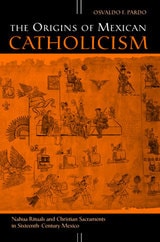
cover of The Origins of Mexican Catholicism: Nahua Rituals and Christian Sacraments in Sixteenth-Century Mexico

The Origins of Mexican Catholicism

Nahua Rituals and Christian Sacraments in Sixteenth-Century Mexico

Osvaldo F. Pardo

University of Michigan Press, 2004

"Pardo's study provides a persuasive criticism of the widespread assumption that the process of Christianization in Mexico can be conceived as the imposition of a complete and fool-proof system that did not accept doubts or compromises. The Origins of Mexican Catholicism will become an invaluable tool for future researchers and enrich future debates on the subject."
---Fernando Cervantes, Bristol University, UK

"Pardo does an excellent job of balancing and contrasting sixteenth-century Catholic theology with Nahua thought and belief."
---John F. Schwaller, University of Minnesota


At first glance, religious conversion may appear to be only a one-way street. When studying sixteenth-century Mexico, one might assume that colonial coercion was the driving force behind the religious conversion of the native population. But The Origins of Mexican Catholicism shows how Spanish missionaries instead drew on existing native ceremonies in order to make Christianity more accessible to the Nahua population whom they were trying to convert.

Osvaldo F. Pardo explains that religious figures not only shaped native thought, but that indigenous rituals had an impact on the religion itself. This work illustrates the complex negotiations that took place in the process of making the Christian sacraments available to the native peoples, and at the same time, forced the missionaries to reexamine the meaning of their sacraments through the eyes of an alien culture.

For Spanish missionaries, ritual not only became a focus of evangelical concern but also opened a window to the social world of the Nahuas. Missionaries were able to delve into the Nahua's notions of self, emotions, and social and cosmic order. By better understanding the sociological aspects of Nahua culture, Christians learned ways to adequately convey their religion through mutual understanding instead of merely colonial oppression.

Given its interdisciplinary approach, this book will be of interest to specialists in Latin American intellectual and literary history, the history of religion, and anthropology, and to anyone interested in cross-cultural processes.
[more]
cover of The Papist Represented: Literature and the English Catholic Community, 1688-1791

The Papist Represented

Literature and the English Catholic Community, 1688-1791

Geremy Carnes

University of Delaware Press, 2017

Most eighteenth-century literary scholarship implicitly or explicitly associates the major developments in English literature and culture during the rise of modernity with a triumphant and increasingly tolerant Protestantism while assuming that the English Catholic community was culturally moribund and disengaged from Protestant society and culture. However, recent work by historians has shown that the English Catholic community was a dynamic and adaptive religious minority, its leaders among the aristocracy cosmopolitan, its intellectuals increasingly attracted to Enlightenment ideals of liberty and skepticism, and its membership growing among the middle and working classes. This community had an impact on the history of the English nation out of all proportion with its size—and yet its own history is glimpsed only dimly, if at all, in most modern accounts of the period.

The Papist Represented reincorporates the history of the English Catholic community into the field of eighteenth-century literary studies. It examines the intersections of literary, religious, and cultural history as they pertain to the slow acceptance by both Protestants and Catholics of the latter group’s permanent minority status. By focusing on the Catholic community’s perspectives and activities, it deepens and complicates our understanding of the cultural processes that contributed to the significant progress of the Catholic emancipation movement over the course of the century. At the same time, it reveals that this community’s anxieties and desires (and the anxieties and desires it provoked in Protestants) fuel some of the most popular and experimental literary works of the century, in forms and modes including closet drama, elegy, the novel, and the Gothic. By returning the Catholic community to eighteenth-century literary history, The Papist Represented challenges the assumption that eighteenth-century literature was a fundamentally Protestant enterprise.

Published by University of Delaware Press. Distributed worldwide by Rutgers University Press.
[more]
cover of The Passion of Love in the <i>Summa Theologiae</i> of Thomas Aquinas

The Passion of Love in the <i>Summa Theologiae</i> of Thomas Aquinas

Daniel Joseph Gordon

Catholic University of America Press, 2023
This book is an introduction to three questions on love according to St. Thomas Aquinas (Summa Theologiae I–II, qq. 26–28). These three questions reflect on the nature of love (q. 26), the causes of love (q. 27), and the effects of love (q. 28). It is thus an introduction to the entire phenomenon of love, both as a bodily passion and an act of the will. The purpose is to present the Thomistic and broadly scholastic account of human and divine love from a philosophical and theological perspective. It aims to be a theological and philosophical study of the topic, useful both for a graduate/professional audience, as part of an undergraduate or graduate course, and perhaps for the educated reader. The thesis of the book is that, contrary to contemporary conceptions, not all loves are created equal. Some loves perfect us and some loves corrupt us. The worth of a love depends on its object and end. St. Thomas thus presents an objective and teleological account of human and divine love that is of philosophical and theological interest. The method is broadly exegetical, presenting a careful reading of the text and supplying the philosophical and theological background which the text of Aquinas assumes. The scope of the work is limited to three questions (ST I–II, qq. 26–28). References to interpretative disputes of Aquinas and references to further resources in the secondary literature will be mostly limited to the footnotes, making the body of the text accessible to more readers.
[more]
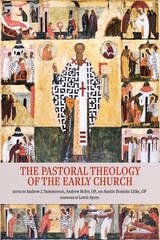
cover of The Pastoral Theology of the Early Church

The Pastoral Theology of the Early Church

Andrew J. Summerson

Catholic University of America Press, 2026
The experience of the pastoral leaders of the Early Church is wide and deep. In loving obedience to Christ’s command to make disciples, they expand into geographical locations both urban and rural, across linguistic and social boundaries. Their views are refined by the fires of martyrdom, purified by asceticism, and perfected by the pressures that the care of souls lays upon them. Their preaching, teaching, and witness is hard won by these experiences. To fail to engage with them impoverishes the Christian imagination that aims to answer the “how” and “why” of pastoral care. The Pastoral Theology of the Early Church proposes a selection of these early guides in pastoral theology for Christian leaders, both present and future. The selection of Greek, Latin, and Syriac authors from the first millennium treats themes as broad as Christian Initiation, the Church’s relationship to public officials, and the care owed to the families of infants who have died. The Pastoral Theology of the Early Church will aid students preparing for ministry and as well as seasoned pastors and pastoral ministers by offering a close look at the early Church’s perennial wisdom in action across differing pastoral contexts. Scholars and interested readers of the early Church will benefit from the surprising, varied situations and themes these leaders tackled head on for the sake of the Gospel.
[more]
cover of The Personalism of John Henry Newman

The Personalism of John Henry Newman

John Crosby

Catholic University of America Press, 2014
In The Personalism of John Henry Newman, Crosby shows the reader how Newman finds the life-giving religious knowledge that he seeks. He explores the "heart" in Newman and explains what Newman was saying when he chose as his cardinal's motto, cor ad cor loquitur (heart speaks to heart). He explains what Newman means in saying that religious truth is transmitted not by argument but by "personal influence."
[more]
cover of The Philosophy of John Henry Newman and Pragmatism: A Comparison

The Philosophy of John Henry Newman and Pragmatism

A Comparison

Marial Corona

Catholic University of America Press, 2023
In recent years, interest in John Henry Newman as a philosopher has gained momentum. This work places his philosophical insights in conversation with philosophers from the pragmatic tradition, particularly with C. S. Peirce, the classical pragmatists, and those who have followed their line, and shows several lines of concurrence. It argues that Newman overcame the modern philosophy of his time by reconnecting to the Aristotelian tradition in a very similar way to how Peirce did it fifty years later and the new pragmatists a century after. Without claiming that Newman is a pragmatist philosopher, pragmatism is used as a foil, or point of access, to delve into Newman’s philosophy and bring forth the richness of his thought while placing him in the canon of philosophy. This approach deepens the understanding of his philosophical contributions and widens their reach to circles that have previously not engaged with him. Further, this study provides a means to understand pragmatism’s resources from a seldom-used vantage point and perhaps appreciate its fruitfulness in a new way. Much emphasis is placed in Newman’s texts that refer to his search for and commitment to the truth. The particular nuances of his thought that are brought to light showcase the effective intellectual resources that his writings contain. Newman does not provide ready-made answers to today’s questions, but the way he analyzes and engages with the quandaries of his time can point us to creative and fruitful ways of engaging with those of our times.
[more]
cover of The Political Economy of Distributism: Property, Liberty, and the Common Good

The Political Economy of Distributism

Property, Liberty, and the Common Good

Alexander William Salter

Catholic University of America Press, 2023
In recent years, prominent scholars, public intellectuals, and politicians have advocated reforming America’s economic model to embrace “common-good capitalism.” Catholic social teaching is a major influence on this movement. Is common-good capitalism compatible with the historical American commitments to private property rights and ordered liberty? What resources from Catholic social teaching can help orient free enterprise towards the common good? This book is the first scholarly inquiry into these exciting new questions. We can better understand common-good capitalism by exploring the political economy of distributism. Formulated in the early 20th century by prominent Catholic intellectuals such as Hilaire Belloc and G.K. Chesterton, distributism emphasizes the importance of widely dispersed property ownership for human flourishing. Distributist thinkers, opposed both to capitalism and socialism, sought a humane approach to politics and economics that reflected the truths of Catholic social teaching. Some of the distributists’ claims about markets and government must be revised in light of contemporary social science. Nevertheless, their political-economic vision contains profound truths about the human condition, which social scientists would be unwise to ignore. Distributism’s insights about the nature of liberty and the social foundations of human dignity can improve ongoing conversations among economists, political scientists, and philosophers. The Political Economy of Distributism explores distributism both as a research program and a blueprint for political-economic reform. As many are reconsidering the relationship between markets and government, this timely book demonstrates the perennial relevance of the Catholic intellectual tradition to public affairs. Academics, public servants, policy experts, and concerned citizens can all benefit from this timely study of common-good capitalism’s prospects.
[more]
cover of The Pope: His Mission and His Task

The Pope

His Mission and His Task

Gerhard Cardinal Muller

Catholic University of America Press, 2021
This book offers an introduction to the theological and historical aspects of the papacy, an office and institution that is unique in this world. Throughout its history up to our present time, the Petrine ministry is both fascinating and challenging to people, both inside and outside the Catholic Church. Gerhard Cardinal Müller speaks from a particular and personal viewpoint, including his experience of working closely with the pope every day as Prefect of the Congregation for the Doctrine of the Faith. He addresses, in particular, those dimensions of the papal office which are crucial for understanding more deeply the pope as a visible principle of the church’s unity. 500 years after the Protestant reformation, the book offers insights into the ecumenical controversies about the papacy throughout the centuries, in their historical context. The book also exposes prejudices and cliches, and points to the authentic foundation of the Petrine ministry.
[more]
cover of The Port Royal New Testament: Jansenists and Vernacular Scripture in Seventeenth-Century France

The Port Royal New Testament

Jansenists and Vernacular Scripture in Seventeenth-Century France

Elizaveta Al-Faradzh

Catholic University of America Press, 2026
This book contributes to the history of early modern Catholicism through a case study of a landmark project in the development of the seventeenth-century French Bible: the Port-Royal translation of the New Testament published in 1667. Produced by theologians based at the monastery of Port-Royal, a major religious and intellectual center associated with Jansenism, this translation became one of the most widely read Catholic Bibles of its age. The study situates the Port-Royal project within the revival of French Catholicism after the Wars of Religion, when the Church, inspired by Tridentine reforms, sought to promote discipline and devotion across all ranks of society. While many theologians resisted direct lay access to Scripture, political pressures, Protestant competition, and developments in the French language created new opportunities for vernacular biblical translation. The Port-Royal New Testament stood out from contemporary efforts by its scope, ambition, and style. Unlike other spiritual schools, the Jansenists placed Scripture at the heart of religious life and promoted its reading as central to devotion. Their translation, polemically defended by Antoine Arnauld (1612-1694), adjusted biblical language to contemporary French, aiming for clarity, elegance, and accessibility. Critics accused the work of echoing Protestant practice, yet its popularity among readers testified to its resonance. Drawing on translation analysis, polemical literature, and the history of the book, this study shows how the Jansenists advanced a program of religious renewal that combined fidelity to Patristic tradition with a modern, stylistically refined vernacular Bible. Their publishing strategies sought to diminish the gap between clergy and laity, dispersing their translation despite the condemnations of religious and political authorities. The Port-Royal New Testament thus emerges as both a devotional resource and a controversial intervention, embodying the Jansenist vision of universal access to the Word of God and leaving a mark on French Catholic culture.
[more]
cover of The Power of Patristic Preaching: The Word in Our Flesh

The Power of Patristic Preaching

The Word in Our Flesh

Andrew Hofer, OP

Catholic University of America Press, 2023
The Word made flesh is manifested in the lives of those dedicated to his proclamation. The Power of Patristic Preaching: The Word in Our Flesh presents seven early preachers who show, by life and speech, the divine Word’s power at work in weak human life. The book is inspired by this question preached by Origen, “For what does it profit if I should say that Jesus has come in that flesh alone which he received from Mary and I should not show also that he has come in this flesh of mine?” In seven chapters, The Power of Patristic Preaching studies the exemplars of Origen for holiness, Ephrem for the humility of repentance, Gregory of Nazianzus for purification and faith, John Chrysostom for the hope of salvation, Augustine for love, Leo the Great for love of the poor and the weak, and Gregory the Great for accepting our own weakness.  With an emphasis on the incarnation, deification through the virtues, and proclamation, The Power of Patristic Preaching serves as a resource for those dedicated to the ministry of the Word (clerical, religious, and lay), and as a text for students of early Christian theology and practices. A Catholic work for a broad ecumenical audience, the book gives a cry from the heart in a suffering Church traveling through a world that is passing away.
[more]
cover of The Predestination of Humans: Augustinus, <i>Tome III, Book IX</i>

The Predestination of Humans

Augustinus, <i>Tome III, Book IX</i>

Cornelius Jansen

Catholic University of America Press, 2022

No other theological text polarized the early modern Catholic world as much as Cornelius Jansen's Augustinus. In it the erudite bishop not only reconstructed St. Augustine's teaching on grace and free will, but also boldly claimed that his views were in line with the Council of Trent and the Society of Jesus. For Jansen the latter had marginalized the Church Father's doctrine on divine predestination by overemphasizing human free will. Published after his death in 1640, Jansen's work drew a large crowd of followers and inspired an Augustinian reform movement. Its papal condemnation unintentionally spread this theology, but stifled an impassionate, academic engagement with the Augustinus. This first-ever translation of some of its central chapters enables historians, philosophers and theologians to finally engage with the founding text of Jansenism.
[more]
cover of The Presence of God and Union with God: Creation, Divine Indwelling Through Grace, Incarnation and the Blessed Vision According to Saint Thomas Aquinas

The Presence of God and Union with God

Creation, Divine Indwelling Through Grace, Incarnation and the Blessed Vision According to Saint Thomas Aquinas

Gilles Emery, OP

Catholic University of America Press, 2027
How can one discover or recover the sense of God’s presence, of living union with God? The Bible speaks to us from beginning to end of God’s presence as Creator and Savior: a presence received, a presence loved, a presence for whose fullness we intensely hope. The liturgy of the Church celebrates God present in Christ and in his Spirit who unite us to the Father. Christian existence is lived in faith by the light of this loving presence of the God who has created us, who has saved us, and who calls us to return to him. This book seeks to ponder God’s presence in its length, depth, and breadth: the presence of God in all his creatures, his presence of indwelling through grace, his presence radiating in the Son’s Incarnation, his presence in the gift of the Holy Spirit, and finally his presence in the blessed vision whereby we shall be united immediately to him. The reader is invited to take a “theological journey” in the school of Saint Thomas Aquinas, a journey in five chapters, which constitute as many stages. The first chapter offers a reflection on the relation that all creatures, including human persons, have with the creating God. The second chapter considers God’s presence in grace: the three divine persons come to abide in the just whom they make their temple. The third chapter is consecrated to Christ Jesus: “In him the whole plenitude of the divinity dwells bodily” (Col 2:9). The fourth chapter turns to the Holy Spirit, considering his presence and the gift of grace. And finally, the fifth and closing chapter deals with the consummation of Christian hope: the union with God in the blessed vision.
[more]
cover of The Priesthood, Mystery of Faith: Priestly Ministry in the Magisterium of John Paul II

The Priesthood, Mystery of Faith

Priestly Ministry in the Magisterium of John Paul II

Nilson Leal de Sa, CB

Catholic University of America Press, 2022
After almost twenty-seven years of his pontificate, what was John Paul II’s legacy regarding the ministerial priesthood? What answers did he give to the questions still surrounding this reality today? Nilson Leal de Sá, CB, examines the pontiff’s twenty-seven letters of Holy Thursday addressed annually to the priests. Unlike some papal documents, which are drafted by many hands, these letters to priests were born of a personal initiative, wherein the pope spoke ab imo pectore (from the depths of his heart), giving a little of himself and his thought. Cardinal Georges-Marie Cottier, theologian emeritus of the Pontifical House and a connoisseur of the texts of the Holy Father, has confirmed that “the Letters of Holy Thursday were written by John Paul II himself.” Leal de Sá has sought in the diversity of the letters of Holy Thursday the major points of the thought of John Paul II on this important topic. The first chapter dwells on the sources of his teaching and emphasizes his use of the Word of God, Tradition, and the conciliar Magisterium. These foundations are the basis of the second chapter, which highlights the priestly identity in the life of the Church. Finally, the third chapter elucidates the specific mission of the priest. The Priesthood, Mystery of Faith presents itself as a real and stimulating synthesis of John Paul II’s thought about the ministerial priesthood in a systematic way. It renews us in the appreciation of the inestimable gift that God makes to the whole Church through the sacrament of the Holy Orders.
[more]
cover of The Privilege of Being Banal: Art, Secularism, and Catholicism in Paris

The Privilege of Being Banal

Art, Secularism, and Catholicism in Paris

Elayne Oliphant

University of Chicago Press, 2021

France, officially, is a secular nation. Yet Catholicism is undeniably a monumental presence, defining the temporal and spatial rhythms of Paris. At the same time, it often fades into the background as nothing more than “heritage.” In a creative inversion, Elayne Oliphant asks in The Privilege of Being Banal what, exactly, is hiding in plain sight? Could the banality of Catholicism actually be a kind of hidden power?

Exploring the violent histories and alternate trajectories effaced through this banal backgrounding of a crucial aspect of French history and culture, this richly textured ethnography lays bare the profound nostalgia that undergirds Catholicism’s circulation in nonreligious sites such as museums, corporate spaces, and political debates. Oliphant’s aim is to unravel the contradictions of religion and secularism and, in the process, show how aesthetics and politics come together in contemporary France to foster the kind of banality that Hannah Arendt warned against: the incapacity to take on another person’s experience of the world. A creative meditation on the power of the taken-for-granted, The Privilege of Being Banal is a landmark study of religion, aesthetics, and public space.
[more]
cover of The Proper of Time: Advent, Christmas, Lent, and Easter, Volume 1

The Proper of Time

Advent, Christmas, Lent, and Easter, Volume 1

Andrew Wadsworth

Catholic University of America Press, 2024
Cantate Domino is a five-volume commentary on the texts of the newly translated hymns of the Liturgy of the Hours. The hymns which recently appeared for the first time as a single corpus of English texts, will be included in the forthcoming USCCB revised edition of the Liturgy of the Hours. The hymns are drawn from among the very finest authors of the first millennium: Ambrose, Prudentius, and Gregory the Great together with later authors such as Thomas Aquinas, Leo XIII, and twentieth century authors who composed new hymns to be used in the psalter and celebration of the saints in the present Universal Calendar. The commentary concentrates on the Latin texts of the Liturgia Horarum, elucidated by the recently approved International Commission on English in the Liturgy (ICEL) translations. Commentaries have been prepared by a team of international scholars who bring both the depth of their knowledge together with the insights of those who have prepared liturgical texts in English during the sixty years of ICEL's existence. Previously unpublished material from ICEL's archives, including documents of the Consilium, which prepared the Latin texts for the liturgical books promulgated after the Second Vatican Council, will appear alongside commentaries which identify and explain biblical, classical, and liturgical allusions in the liturgical texts in a way that is of service to clergy, religious, liturgists, and students of the liturgy as well as the non-specialist reader, and all who seek to pray the Prayer of the Church with greater understanding.
[more]
cover of The Psychology of Character

The Psychology of Character

Rudolf Allers

Catholic University of America Press, 2022
"How we became what we are. There are many explanations. One plausible account is found in the work of Rudolph Allers who writes about the European intellectual landscape from 1850 to the opening decades of the twentieth century...Allers is not alone in recognizing that a true account of human nature may await the recovery of classical antiquity. From Plato and Aristotle, modernity may learn that the immaterial or spiritual component of human nature is not empirically discerned but reasoned to from empirical evidence." - from the foreword by Jude Dougherty
[more]
cover of The Quotable Saint Jerome

The Quotable Saint Jerome

Jerome Saint Jerome

Catholic University of America Press, 2020

Among the illustrious writers of the early Church, Saint Jerome (345-420) had a way with words few could equal. To honor the 1600th anniversary of the death of this patron saint of librarians and Scripture scholars, the Catholic University of America Press is releasing The Quotable Jerome, a well-organized collection of memorable wisdom from this early witness to Catholic truth. While Jerome is known for acerbic wits, editor Justin McClain shows that much of the time, Jerome's writings are instructive and even inspiring. Homilists will easily be able to find what Jerome said on any number of topics--Scripture, the Trinity, the sacraments, persecution, heresy, divine revelation, or chastity--just to name a few. All citations are clearly sourced if the reader wants to pursue the longer passage in question. “I am upset because I am human; I control my tongue because I am a Christian. Anger surges up in my heart, but I do not give vent to it.” - Homilies on the Psalms, Homily 10, Psalm 76 (77) (FOTC 48) “The doer of evil has, indeed, killed his own soul; but the heretic—the liar—has killed as many souls as he has seduced.” - Homilies on the Psalms, Homily 2, Psalm 5 (FOTC 48) “The Church does not consist in walls, but in the truths of her teachings. The Church is there where there is true faith.” - Homilies on the Psalms, Homily 46, Psalm 133 (134) “To err is human, but to lay snares is diabolical.” - Dogmatic and Polemical Works, The Apology Against the Books of Rufinus, Book Three, paragraph 33 (FOTC 53) “So much for what Scripture says; learn now what it means.” - Homilies on the Psalms, Homily 15, Psalm 82 (83) (FOTC 48)
[more]
cover of The Reprobation of Humans and Angels: Augustinus, Tome III, Book X

The Reprobation of Humans and Angels

Augustinus, Tome III, Book X

Cornelius Jansen

Catholic University of America Press, 2026
Cornelius Jansen’s masterful Augustinus (1641) has recently been the center of renewed interest in the theological academic community. After the translation and publication of the chapter Jansen devoted in his work to the topic of predestination of human beings and angels, this is the first ever translation in the English language of the last chapter of the Augustinus, addressing the fate of the reprobates. Jansen illustrated the causes and justice of the divine decision to exclude the damned from the beatific vision by mostly drawing from Augustine’s works. The readers will find that Jansen’s treatment on the subject to be balanced and fair, tracing a middle course between the eschatological optimism of Universalism, which claims that all human beings, and possibly angels as well, will one day be restored to fellowship with God, and the exclusivist soteriology typical of some pre-Vatican II Catholic theology and Evangelicalism. This volume builds upon the translation of some of its central chapters in The Predestination of Humans and Angels, also in the Early Modern Catholic Sources series.
[more]
cover of The Revelation of Your Words: The New Evangelization and the Role of the Seminary Professor of Sacred Scripture

The Revelation of Your Words

The New Evangelization and the Role of the Seminary Professor of Sacred Scripture

Kevin Zilverberg

Saint Paul Seminary Press, 2021
The Revelation of Your Words, a collection of essays, treats the role of the seminary professor of sacred Scripture within the context of the New Evangelization. Some of the essays concern principally the imparting of knowledge and best practices to accomplish this; others concern the fostering of delight in the sacred page and spiritual encounter with God. Although these essays are Catholic, written within a Catholic theological framework and with Catholic seminaries in mind, many of their conclusions can be applied to non-Catholic environments. This book provides insights that, even beyond the seminary, will benefit teachers of the Bible, regardless of their denomination and level of instruction. Readers will encounter the following authors and topics. Peter S. Williamson writes on the implications of the New Evangelization for priestly ministry and for teaching Scripture. Steven C. Smith makes a contribution concerning the role of the seminary professor of sacred Scripture in forming priests. Michael Magee treats the relevance of Johannine irony to the New Evangelization. Stephen Ryan’s chapter takes up the topic of Old Testament Wisdom literature and formation for a New Evangelization. Juana L. Manzo seeks a path to integrate modern and ancient interpretations into the seminary classroom. Kelly Anderson takes up the father of Proverbs 1–9 as a model of spiritual fatherhood for seminary professors. Scott Carl proposes a spiritual reading of sacred Scripture in the twenty-first century. Michael Magee, in his second contribution, writes on the joy of discovery in the Fourth Gospel. James Keating reflects upon the exegete as seminary formator. Finally, André Villeneuve advocates for the teaching of Biblical Hebrew in Catholic seminaries and academic institutions.
[more]
cover of The Rise of Newport’s Catholics: From Colonial Outcasts to Gilded Age Leaders

The Rise of Newport’s Catholics

From Colonial Outcasts to Gilded Age Leaders

John F. Quinn

University of Massachusetts Press, 2024

Honorable Mention, 2025 Catholic Media Association Book Awards

Nineteenth-century New England was a hostile place for Catholics. In Massachusetts a mob torched a convent; in Maine a priest was tarred and feathered; and Rhode Island elected an anti-Catholic Know Nothing governor. “No Irish Need Apply” signs were common.

Newport was different. It was a religiously diverse and tolerant city that welcomed Catholic French troops during the American Revolution. Later, as it became the favored summer retreat for America’s Protestant social elite, Irish Catholics arrived to work in construction jobs, the tourist economy, and the grand Gilded Age cottages. By the end of the century, Newport’s Catholic community was flourishing. Moneyed Catholics acquired their own mansions, an Irish Catholic was mayor, and prominent Protestants were helping Catholic neighbors establish new schools and churches. In this deeply researched study, John F. Quinn delves into this rich Catholic history to discover why nineteenth-century Newport was particularly religiously tolerant and accepting.
[more]
cover of The Ruin of Souls: A Religious History of Italian Catholic Immigrants in the United States (1853-1921)

The Ruin of Souls

A Religious History of Italian Catholic Immigrants in the United States (1853-1921)

Massimo Di Gioacchino

Bridwell Press, 2025

The Ruin of Souls presents a new history of Italian Catholic life in the United States, from the founding of the first Italian Catholic church in the United States in 1853 to the end of the immigration flow as a result of the Emergency Quota Act of 1921. In this book, the product of wide research in American and Roman archives that spans the last twelve years, Di Gioacchino invites the reader to look at the religious history of the Italian Catholic immigrants in the United States not through the lens of their devotional culture, but through the perspective of their ecclesiastical life. More specifically, the book aims to document the efforts, problems, and failures of the Roman Catholic Church of the time to preserve the allegiance of the Italian immigrants in the United States to the Church’s magisterium and authority. 

Strengthened by largely unknown archival documentation and an original historiographic methodology, the work reveals a new political dimension in the religious history of Italian immigrants in the United States and their relationship with the Catholic religious canon. By integrating the analysis of the ecclesial practices of the Italian communities into a far-reaching epistemological reflection, the work also contributes to the continuing discussion of how we study and examine the religious practices of Catholic communities in the modern era. 
[more]
cover of The Silence of Sodom: Homosexuality in Modern Catholicism

The Silence of Sodom

Homosexuality in Modern Catholicism

Mark D. Jordan

University of Chicago Press, 2000

The past decade has seen homosexual scandals in the Catholic Church becoming ever more visible, and the Vatican's directives on homosexuality becoming ever more forceful, begging the question Mark Jordan tries to answer here: how can the Catholic Church be at once so homophobic and so homoerotic? His analysis is a keen and readable study of the tangled relationship between male homosexuality and modern Catholicism.

"[Jordan] has offered glimpses, anecdotal stories, and scholarly observations that are a whole greater than the sum of its parts. . . . If homosexuality is the guest that refuses to leave the table, Jordan has at least shed light on why that is and in the process made the whole issue, including a conflicted Catholic Church, a little more understandable."—Larry B. Stammer, Los Angeles Times

"[Jordan] knows how to present a case, and with apparently effortless clarity he demonstrates the church's double bind and how it affects Vatican rhetoric, the training of priests, and ecclesiastical protectiveness toward an army of closet cases. . . . [T]his book will interest readers of every faith."—Daniel Blue,
Lambda Book Report


A 2000 Lambda Literary Award Finalist
[more]
cover of The Spirit of God: Short Writings on the Holy Spirit

The Spirit of God

Short Writings on the Holy Spirit

Yves Congar

Catholic University of America Press, 2017

Yves Congar was the most significant voice in Catholic pneumatology in the twentieth century. This new collection of short pieces makes his thought accessible to a broad range of readers – scholars, teachers, ecumenists and laity – and thus helps to ensure that an important theological voice, one that influenced many of the documents of the Second Vatican Council, continues to be heard.

The Spirit of God brings together for the first time eight of Yves Congar’s previously untranslated writings on the Holy Spirit composed after Vatican II (from 1969 to 1985). Two of these selections offer general overviews of Congar’s pneumatology, a pneumatology based upon Scripture and the Tradition of the Church, but articulated in conversation with philosophers, ecumenical partners and non-believers. Other articles make clear the historical context of Vatican II’s pneumatology and the Holy Spirit’s crucial influence upon the unfolding of history and upon the moral life, the efficacy of the sacraments and, especially, upon ecclesial life.

The writings in The Spirit of God have been translated and edited by a team of scholars familiar with the work of the French Dominican theologian. An introduction situates each of the writings historically and highlights its theological significance. A bibliography lists Congar’s publications on the Holy Spirit, the major articles and books written about his pneumatology, and the major scholarly resources to which Congar made reference in the notes that accompanied these writings. An index of biblical references and of personal names is also included.
[more]
cover of The Spiritual Formation of Seminarians: Learning to Live in Intimate and Unceasing Union with God

The Spiritual Formation of Seminarians

Learning to Live in Intimate and Unceasing Union with God

James Keating

Catholic University of America Press, 2025
In this book, Deacon James Keating provides an opportunity for one spiritual director to introduce his mind to the minds of other directors with the hope that his ideas may season their own already developed method of direction. The book does not attend to all the possible realities a director may encounter within his or her training or within the daily execution of this ministry. The author wishes to share his approach to directing seminarians by reflecting upon themes and experiences which regularly appear within direction sessions. Spiritual direction certainly has some universal components to it. All directors want their directees to internalize a habit of prayer, to choose a life of remaining with God, to suffer the vulnerability necessary to know divine love and to then embody that love as heralds of the Gospel. But each director approaches his or her directees from within their own skin, from within a personality that is unique, and by way of a formation that reflects the unique attractions of each director and his or her own sufferings, failures, and fidelities. These unique embodiments no one writer can know or capture in a book. And so, this book simply begins a conversation that the author invites other directors to enter and add to according to their own insights. The spiritual life of those in seminary occupies the integrating center of a projected life of priestly ministry. Time needed to secure an interior life of prayer is one of the key reasons the Church demands years of formation before the celibate state is entered. Such a state in life is entered as a testimony to the reality that God lives and loves. In light of such love a man enters seminary to discern if he desires to surrender his whole life in response to God sharing His own. To live as a cleric without a vital interior life leaves a man in a state of meaninglessness. Instilling the virtue of prayer during priestly formation can help assure that celibate priesthood retains its inspiration and meaning throughout the life of a priest. Spiritual directors minister to assist a future priest to secure a lifetime habit of prayer so as to secure his commitment to communicate with the living God.
[more]
cover of The Spiritual Life and Other Writings

The Spiritual Life and Other Writings

Camilla Battista Da Varano

Iter Press, 2023

A new edition of all of de Varano's known works, several of which have never before appeared in English.

Camilla Battista da Varano (1458–1524) was a Franciscan nun and the author of profound spiritual writings in both prose and verse. Raised in the princely household of Camerino in north-central Italy, she put her thorough humanist education to use explaining her own spiritual experience and delivering advice to others. Varano composed ecstatic revelations, prayers, poems, hagiography, spiritual direction, and commentary on convent legislation. She drew on a wide variety of sources, including scripture and Church Fathers, plus popular literature and proverbs. Varano was an erudite woman of considerable complexity, defying many of the commonplace images we associate with religious women of the late fifteenth and early sixteenth centuries.
 
[more]
cover of The Splendor of the Church in Mary: Henri de Lubac, Vatican II, and Marian Ressourcement

The Splendor of the Church in Mary

Henri de Lubac, Vatican II, and Marian Ressourcement

Theresa Marie Chau Nguyen

Catholic University of America Press, 2023
Henri de Lubac, SJ, (1896-1991) is one of the most renowned theologians of the twentieth century. Numerous studies have been undertaken to examine his many contributions to theology, but little attention has been paid to the specific topic of the relationship of the Blessed Virgin Mary and the Church in his writings. This was a topic that gave rise to contentious discussion at the Second Vatican Council, and although the Council fathers approved the integration of Marian doctrine into the Dogmatic Constitution on the Church, this synthesis of Mariology and ecclesiology has been largely neglected in theology today. The Splendor of the Church in Mary retrieves de Lubac’s Marian ecclesiology and revives an understanding and appreciation of its enduring influence at the Vatican Council and beyond. The first part examines de Lubac’s pre-conciliar works which evince a steady biblical and patristic ressourcement of Marian themes. It also explores his writings on Teilhard de Chardin’s Eternal Feminine, Christian mysticism, and Amida Buddhism and discovers in them the essential building blocks of his Marian thought. The second part turns to the Second Vatican Council and post-conciliar developments. Rereading the debates and texts of Lumen Gentium through a Marian lens brings to light the extent of de Lubac’s influence: Méditation sur l’Eglise (1953), his principal work on Mary and the Church, anticipated the structure and content of Lumen Gentium a decade before the Council. De Lubac’s writings provided a theological compass for the Council fathers, and they continue to provide direction and orientation for ecclesiological discourse today. The Splendor of the Church in Mary culminates in a constructive analysis of one of the most pressing pastoral and ecclesiological questions of our times: the question of the relationship of the universal and particular churches. Directly engaging the crucial debate between then-Cardinal Ratzinger and Cardinal Kasper, it proposes that de Lubac’s Mariology effectively offers a new perspective and a refreshing path forward. Attentive to the mystical identification of Mary and the Church, de Lubac’s ressourcement has the potential to re-enchant and advance contemporary theology in new and significant ways.
[more]
cover of The Suffering Servant in Aquinas: Isaiah 53 and Thomas's Theology of Christ's Passion

The Suffering Servant in Aquinas

Isaiah 53 and Thomas's Theology of Christ's Passion

Daniel R. Waldow

Catholic University of America Press, 2024
The “Suffering Servant” text of Isaiah 53 is a perennial topic of debate within Jewish and Christian biblical theology. Is the Suffering Servant an individual, a group, or both? How and why did he suffer? What role did God play in his suffering? How is his suffering related to human salvation? The answers to these questions often divide Jewish and Christian readers of Scripture as well as Christians across different denominations. In particular, Isaiah 53 tends to inform different Christian accounts of the origin, nature, and saving value of Christ’s Passion. The Suffering Servant in Aquinas contributes to the debate on the meaning of Isaiah 53 and its bearing upon the Passion of Christ by examining how St. Thomas Aquinas engaged this biblical text. This book examines every explicit reference to Isaiah 53 that Aquinas makes in his biblical commentaries, Commentary on the Sentences, Summa Theologiae, and Opuscula. It analyzes how and why Aquinas interprets Isaiah 53 in the ways that he does. It focuses especially upon how Aquinas draws upon Isaiah 53 to shed light on the saving mystery of Christ’s Passion. Readers will see how Aquinas articulates the relationship between God’s will and Christ’s suffering, the diverse forms of Christ’s pain, the degree to which the Passion can be considered a “punishment,” and the saving functions of the Passion as example, merit, satisfaction, and sacrifice. This book makes an original contribution to the growing field of Biblical Thomism. It examines Aquinas’s exegetical methods as well as the role of Scripture within his speculative theology. And it properly contextualizes Aquinas’s exegesis by considering the differences between his Latin version of Isaiah 53 and contemporary renderings of Hebrew and Greek versions. Readers will see that Aquinas’s Christological interpretations of Isaiah 53 are both exegetically intriguing and theologically rich.
[more]
cover of The Theology of Louis Massignon

The Theology of Louis Massignon

Christian Krokus

Catholic University of America Press, 2017
In The Theology of Louis Massignon, author Christian Krokus argues that Louis Massignon’s achievements in Christian-Muslim understanding, his activism on behalf of Muslim immigrants, refugees, and Middle Eastern Christians, as well as his developing understanding of Islam must be understood in the light of his Catholic convictions in relation to God, Christ, and the Church. With ample references to primary works, many translated into English for the first time, Krokus offers a comprehensive account of the main points of Massignon’s religious thought that will prove essential to theologians and historians working on questions of Christian-Muslim dialogue, comparative theology, and religious pluralism.
[more]
cover of The Thomistic Response to the Nouvelle Theologie: Concerning the Truth of Dogma and the Nature of Theology

The Thomistic Response to the Nouvelle Theologie

Concerning the Truth of Dogma and the Nature of Theology

Jon Kirwan

Catholic University of America Press, 2023
The Thomistic Response to the Nouvelle Théologie: Concerning the Truth of Dogma and the Nature of Theology retrieves the most important and largely forgotten exchanges in the mid-20th-century debate surrounding ressourcement thinkers. It makes available new translations of works by the leading Thomists in the exchange: Dominican Fathers Reginald Garrigou-Lagrange, Michel Labourdette, Marie-Joseph Nicolas, and Raymond Bruckberger. In addition to a lengthy historical and theological introduction, the volume contains sixteen articles, thirteen of which have never appeared in English. All the major critical responses of the Dominican Thomists to the nouvelle théologie are here presented chronologically according to the primary debates carried on, respectively, in the journals Revue Thomiste and Angelicum. A lengthy introduction describes the unfolding of the entire debate, article by article, and explains and references the ressourcement interventions. Unfortunately, the history of this important debate is largely surrounded by polemics, half-truths, caricatures, and journalistic soundbites. In the articles gathered in this volume, along with the accompanying introduction, the Toulouse and Roman Dominicans speak in their own voice. The central theses that define the two sides of the debate are sympathetically set forth. However, the texts gathered here show the immense lengths to which the Thomists went to initiate an authentic and fraternal theological dialogue with the nouveaux théologiens. Frs. Labourdette and Nicolas repeatedly argued for the importance of ressourcement work: they applauded its historical efforts, and they were generally sympathetic and complementary (although always pointed and persistent in gently expressing their concerns). Even Fr. Garrigou-Lagrange—whose infamous intervention is remembered as being a theological “atomic bomb”—is revealed as being no more guilty of escalation than the Dominicans’ interlocutors in their own responses to him and Fr. Labourdette. This volume will greatly aid in the task of theological and historical reconstruction and will, undoubtedly, assist in a certain rapprochement between the two sides, as the essential texts, concerns, and theological arguments are made available in their entirety to professional and lay anglophone readers.
[more]
cover of The Three Dynamisms of Faith: Searching for Meaning, Fulfillment, and Truth

The Three Dynamisms of Faith

Searching for Meaning, Fulfillment, and Truth

Louis Roy

Catholic University of America Press, 2017
Is the faith journey a matter of reflection, of emotion, or of obedience? Is there valid and convincing evidence that does enable human beings to assent to Jesus Christ and his message? What is the influence of cognitive assumptions and of affective tende
[more]
cover of The Trinitarian Shape of the Eucharist in Medieval Cistercian Theology

The Trinitarian Shape of the Eucharist in Medieval Cistercian Theology

Nathaniel Peters

Catholic University of America Press, 2026
William of Saint-Thierry, Isaac of Stella, and Baldwin of Forde created a distinctly Cistercian body of Eucharistic theology in the twelfth century. In this book, Nathaniel Peters offers a scholarly account of that theology and examines the connection between medieval Trinitarian and Eucharistic theology. These Cistercian authors thought that the character of God as a Trinity of persons united in essence provides the structure of the economy of salvation—especially its turning point, the Eucharist. They saw the Eucharist as the place where the ontological union of the Incarnation becomes intimate, personal, and communal. In the Eucharist, God the Father draws those who receive to himself by uniting them to the body and blood of the Son. This unity brings an increase of unity with the Holy Spirit. Once united to the Son and Spirit, the faithful are united to the Father. The Eucharist also connects the meditation, sacrifices, and offering of their own lives to the life of Christ, with which they are offered to the Father. Chapter 1 examines the thought of William of Saint-Thierry, who has the most developed understanding of Eucharistic presence, conversion, and reception. It also treats the connections William draws between Eucharistic reception and meditation on scripture and the passion of Christ. Chapter 2 treats Isaac of Stella, who uses more intellectualist imagery and imagery of the mystical body of Christ. Chapter 3 studies Baldwin of Forde, who argues that the term transubstantiation best describes Eucharistic conversion and emphasizes reception by faith in the truth about Christ. Chapter 5 offers a brief conclusion, with reference to later thinkers who explore the Trinitarian shape of the Eucharist in similar ways.
[more]
cover of The Trinity: Eternity and Time

The Trinity

Eternity and Time

Thomas G. Weinandy

Sapientia Press of Ave Maria University, 2022
In this book, Thomas G. Weinandy, OFM, Cap., examines the Trinity's eternity in relationship to creation's time, particularly in relation to human persons. Because the persons of the Trinity are subsistent-relations-fully-in-act as the one God, they are immutable as to who they are in relationship to one another. Thus they exist in a timeless manner. Moreover, this volume assesses how the eternal Trinity is personally related to human persons over the course of time, and how human persons are personally related to the persons of the eternal Trinity. In the first part of the book Weinandy treats, in an original and innovative manner, an issue that has been addressed throughout the history of theology, while the second part addresses a related topic that rarely, if ever, has been considered: How does the relationship between the persons of the Trinity and humans change through the saving works of the Trinity - the Incarnation, cross, and Resurrection - and the outpouring of the Holy Spirit? Through faith in the incarnated Son of God, and by participating in the sacraments of baptism and the Eucharist, human persons abide in the risen Jesus. The relationship between eternity and time, in the light of salvation, now takes on a whole new perspective, both epistemologically and ontologically. What will be the relationship between the eternal persons of the Trinity and glorified human beings at the end of time? Time will assume a new heavenly and everlasting dimension. But what will this heavenly novelty be like? The Trinity: Eternity and Time answers these questions and more in a thoroughly philosophical, biblical, and theological manner.
[more]
cover of The Two Wings of Catholic Thought: Essays on Fides et Ratio

The Two Wings of Catholic Thought

Essays on Fides et Ratio

David Ruel Foster

Catholic University of America Press, 2003
The purpose of this volume is to deepen the appreciation for the stereophonic approach to truth that the Holy Father recommends.
[more]
cover of The Unity of Faith: Essays for the Building Up of the Body of Christ

The Unity of Faith

Essays for the Building Up of the Body of Christ

Thomas G. Weinandy

Catholic University of America Press, 2024
In this volume, The Unity of Faith: Essays for the Building Up of the Body of Christ, Thomas G. Weinandy, OFM, Cap., has compiled a theologically significant medley of essays. The title is taken from Ephesians 4:11–13 (“And his gifts were … for building up the body of Christ, until we all attain to the unity of the faith and of the knowledge of the Son of God….”). The “unity of faith” in this book refers both to the interrelation between the truths of the faith, whether Trinitarian, Christological, or ecclesiological, and to unity among those who hold the faith. The first section deals with the Trinity, usually with ecumenical questions in mind, ranging from the question of the filioque to the trinitarian thought of Johnathan Edwards. The second section presents the author’s mature judgments in a topic for which Weinandy has become notable—the impassability of God and the human suffering of Christ. The third looks at other aspects of Christology with the help of patristic writers, but for sake of the contemporary theological milieu. For example, what is the relationship between the Incarnation and soteriology? What is the nature of Christ’s human consciousness and knowledge? How does Paul perceive the primacy of Christ within his Christological hymns? The fourth section turns to the unity between faith and reason. In doing Catholic theology, how do theologians apply reason when contemplating the mysteries of faith? What is the philosophical and theological significance of Pope John Paul II’s encyclical, Fides et Ratio? The final section turns to the life of believers in the unity of faith, with topics such as Henri de Lubac’s contributions to ecclesiology, the sacramentality of the Catholic priesthood, the very delicate issue of the need for conversion and the Jews in relationship to the Church, and the Christian family as a domestic church, taking up the roles of priest, prophet, and king. Weinandy invariably writes in a clear and engaging manner, so much so that these essays will bring to the greater knowledge of God not only academics and students of theology, but also the educated laity.
[more]
cover of The Unity of the Nations

The Unity of the Nations

Joseph Ratzinger

Catholic University of America Press, 2015

What did ancient Christians and pagans believe makes the unity of the nations? Just as he began serving as a major adviser at the Second Vatican Council in 1962, Joseph Ratzinger (the future Pope Benedict XVI) studied this question in lectures delivered at Austria's University of Salzburg. These lectures, originally published in German, are now made available in English in this volume.
[more]