501 books match the query 'Catholic Church' and 125 start with t
cover of The French Revolution Confronts Pius VI: Volume 1: His Writings to Louis XVI, French Cardinals, Bishops, the National Assembly, and the People of France with Special Emphasis on the Civil Constitution of the Clergy

The French Revolution Confronts Pius VI

Volume 1: His Writings to Louis XVI, French Cardinals, Bishops, the National Assembly, and the People of France with Special Emphasis on the Civil Constitution of the Clergy

Jeffrey J. Langan

St. Augustine's Press, 2020

The writings of Pope Pius VI, head of the Catholic Church during the most destructive period of the French Revolution, were compiled in two volumes by M.N.S. Guillon and published in 1798 and 1800. But during the Revolution, the reign of Napoleon, and the various revolutionary movements of the 19th century, there were extraordinary efforts to destroy writings that critiqued the revolutionary ideology. Many books and treatises, if they survived the revolution or the sacking from Napoleon’s armies. To this day, no public copy of Guillon’s work exists in Paris.
    Now, for the first time in English, these works comprising the letters, briefs, and other writings of Pius VI on the French Revolution are available. Volume I treats the first shock of the Revolution and the efforts of the Pope in 1790 and 1791 to oppose the Civil Constitution of the Clergy (which famous revolutionary and shrewd diplomat Talleyrand referred to as “the greatest fault of the National Assembly”). Volume II will be published later, and deals with the aftermath of the Civil Constitution through Pius’s death in exile). Editor and translator Jeffrey Langan presents the materials leading up to and directly connected with these decrees, in which the National Assembly attempted to set up a Catholic Church that would be completely submissive to the demands of the Assembly. Volume I also covers Pius’s efforts to deal with the immediate aftermath of the Constitution after the National Assembly implemented it, including his encyclical, Quod Aliquantum.
    The letters will show how Pius chose to oppose the Civil Constitution. He did so not by a public campaign, for he had no real temporal power to oppose the violence, but by attempting to work personally with Louis XVI and various archbishops in France to articulate what were the points on which he could concede (matters dealing with the political structures of France) and what were the essential points in which he could not concede (matters dealing with the organization of dioceses and appointment of bishops).
    Since the 1980s, with the writings and school that developed around François Furet, as well as Simon Schama’s Citizens, a new debate over the French Revolution has ensued, bringing forth a more objective account of the Revolution, one that avoids an excessively Marxist lens and that brings to light some of its defects and more gruesome parts – the destruction and theft of Church property, and the sadistic methods of torture and killing of priests, nuns, aristocrats, and fellow-revolutionaries. 
    An examination of the writings of Pius VI will not only help set the historical record straight for English-speaking students of the Revolution, it will also aid them to better understand the principles that the Catholic Church employs when confronted with chaotic political change. They will see that the Church has a principled approach to distinguishing, while not separating, the power of the Church and the power of the state. They will also see, as Talleyrand himself also saw, that one of the essential elements that makes the Church the Church is the right to appoint bishops and to discipline its own bishops. The Church herself recognizes that she cannot long survive without this principle that guarantees her unity.
    Pius VI’s efforts were able to keep the Catholic Church intact (though badly bruised) so that she could reconstitute herself and build up a vibrant life in 19th-century France. (He did this in the face of the Church’s prestige having sunk to historic lows; some elites in Europe thought there would be no successor to Pius and jokingly referred to him as “Pius the Last.”) He began a process that led to the restoration of the prestige of the Papacy throughout the world, and he initiated a two-century process that led to the Church finally being able to select bishops without any interference from secular authorities. This had been at least a 1,000-year problem in the history of the Church. By 1990, only two countries of the world, China and Vietnam, were interfering in any significant way in the process that the Church used to select bishops. 
    Pius VI’s papacy, especially during the years of the French Revolution, was a pivotal point for the French Revolution and for the interaction between Church and state in Western history. All freedom-loving people will be happy to read his distinc-tions between the secular power and the spiritual power. His papacy also was important for the internal developments that the Church would make over the next 200 years with respect to its self-understanding of the Papacy and the role of the bishop.
[more]
cover of The Fullness of Divine Worship: The Sacred Liturgy and its Renewal

The Fullness of Divine Worship

The Sacred Liturgy and its Renewal

Uwe Michael Lang

Catholic University of America Press, 2018
This volume offers a selection of essays from the pages of Antiphon: A Journal for Liturgical Renewal, the official organ of the Society for Catholic Liturgy. The Society was founded in 1995 as a multidisciplinary association of Catholic scholars, teachers, pastors, and ecclesiastical professionals in the Anglophone world, with the aim of promoting the scholarly study and practical renewal of the sacred liturgy.
[more]
cover of The Future is Mestizo: Life Where Culture Meet, Revised Edition

The Future is Mestizo

Life Where Culture Meet, Revised Edition

Virgilio Elizondo

University Press of Colorado, 2000
Twelve years after it was first published, The Future is Mestizo is now updated and revised with a new foreword, introduction, and epilogue. This book speaks to the largest demographic change in twentieth-century United States history—the Latinization of music, religion, and culture.
[more]
cover of The Garden of God

The Garden of God

Pope Benedict XVI

Catholic University of America Press, 2014
This book gathers together the audiences, addresses, letters, and homilies of Benedict on a wide-ranging set of topics that deal with the world about us. The major themes and connections he explores are creation and the natural world; the environment, science, and technology; and hunger, poverty, and the earth's resources.
[more]
cover of The Good Road: A K’iche’ Revolutionary Theopolitics

The Good Road

A K’iche’ Revolutionary Theopolitics

Carlota McAllister

Duke University Press, 2026
The Good Road situates Guatemala’s early 1980s Indigenous uprising and the genocide that crushed it within a five-hundred-year history of Indigenous resistance to colonization and exploitation. Drawing on decades of archival and ethnographic research, Carlota McAllister traces the emergence of conciencia, a Spanish word meaning both "consciousness" and "conscience," in a Maya-K’iche’-speaking community called Chupol after the Pan-American highway was built through it in 1956. Foregrounding the role of the Catholic Church in mediating state-Indigenous relations and promoting rural transformation in Cold War–era Guatemala, McAllister shows how Chupolenses came to embrace revolutionary armed struggle as both a moral and political imperative. She argues that Chupol’s participation in revolution unfolded through organizational processes and political concepts animated by longstanding Indigenous theopolitical critiques of the organization of power in the Americas. The Good Road shows how, despite the uprising’s bloody defeat, the theopolitical imperative to build a “good road” forward continues to animate Indigenous politics in twenty-first-century Guatemala.
[more]
cover of The Historical Dimensions of Irish Catholicism

The Historical Dimensions of Irish Catholicism

Emmet J. Larkin

Catholic University of America Press, 1984

In three short essays (first published as articles in The American Historical Review), Larkin analyzes the economic, social, and political context of nineteenth-century Ireland.
[more]
cover of The House of the Lord

The House of the Lord

Steven Smith

Catholic University of America Press, 2017
[more]
cover of The Inconstancy of the Indian Soul: The Encounter of Catholics and Cannibals in 16-century Brazil

The Inconstancy of the Indian Soul

The Encounter of Catholics and Cannibals in 16-century Brazil

Eduardo Viveiros de Castro

Prickly Paradigm Press, 2011

In the mid-sixteenth century, Jesuit missionaries working in what is now Brazil were struck by what they called the inconstancy of the people they met, the indigenous Tupi-speaking tribes of the Atlantic coast. Though the Indians appeared eager to receive the Gospel, they also had a tendency to forget the missionaries’ lessons and “revert” to their natural state of war, cannibalism, and polygamy. This peculiar mixture of acceptance and rejection, compulsion and forgetfulness was incorrectly understood by the priests as a sign of the natives’ incapacity to believe in anything durably.

In this pamphlet, world-renowned Brazilian anthropologist Eduardo Viveiros de Castro situates the Jesuit missionaries’ accounts of the Tupi people in historical perspective, and in the process draws out some startling and insightful implications of their perceived inconstancy in relation to anthropological debates on culture and religion.
[more]
cover of The Indissolubility of Marriage and the Council of Trent

The Indissolubility of Marriage and the Council of Trent

E. Christian Brugger

Catholic University of America Press, 2017
This important volume examines the Catholic Church’s doctrine on the indissolubility of marriage as taught by the 16th century Ecumenical Council of Trent (1545-1563). In the Council’s reply to Reformation challenges on the sacraments, it took up the ques
[more]
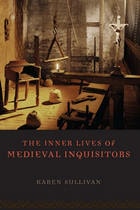
cover of The Inner Lives of Medieval Inquisitors

The Inner Lives of Medieval Inquisitors

Karen Sullivan

University of Chicago Press, 2011

There have been numerous studies in recent decades of the medieval inquisitions, most emphasizing larger social and political circumstances and neglecting the role of the inquisitors themselves. In this volume, Karen Sullivan sheds much-needed light on these individuals and reveals that they had choices—both the choice of whether to play a part in the orthodox repression of heresy and, more frequently, the choice of whether to approach heretics with zeal or with charity.


In successive chapters on key figures in the Middle Ages—Bernard of Clairvaux, Dominic Guzmán, Conrad of Marburg, Peter of Verona, Bernard Gui, Bernard Délicieux, and Nicholas Eymerich—Sullivan shows that it is possible to discern each inquisitor making personal, moral choices as to what course of action he would take. All medieval clerics recognized that the church should first attempt to correct heretics through repeated admonitions and that, if these admonitions failed, it should then move toward excluding them from society. Yet more charitable clerics preferred to wait for conversion, while zealous clerics preferred not to delay too long before sending heretics to the stake. By considering not the external prosecution of heretics during the Middles Ages, but the internal motivations of the preachers and inquisitors who pursued them, as represented in their writings and in those of their peers, The Inner Lives of Medieval Inquisitors explores how it is that the most idealistic of purposes can lead to the justification of such dark ends.
[more]
cover of The Invention of Sodomy in Christian Theology

The Invention of Sodomy in Christian Theology

Mark D. Jordan

University of Chicago Press, 1997

In this startling original work of historical detection, Mark D. Jordan explores the invention of Sodomy by medieval Christendom, examining its conceptual foundations in theology and gauging its impact on Christian sexual ethics both then and now. This book is for everyone involved in the ongoing debate within organized religions and society in general over moral judgments of same-sex eroticism.

"A crucial contribution to our understanding of the tortured and tortuous relationship between men who love men, and the Christian religion—indeed, between our kind and Western society as a whole. . . . The true power of Jordan's study is that it gives back to gay and lesbian people our place in history and that it places before modern theologians and church leaders a detailed history of fear, inconsistency, hatred and oppression that must be faced both intellectually and pastorally."—Michael B. Kelly, Screaming Hyena

"[A] detailed and disturbing tour through the back roads of medieval Christian thought."—Dennis O'Brien, Commonweal

"Being gay and being Catholic are not necessarily incompatible modes of life, Jordan argues. . . . Compelling and deeply learned."—Virginia Quarterly Review
[more]
cover of The Irreducibility of the Human Person: A Catholic Synthesis

The Irreducibility of the Human Person

A Catholic Synthesis

Mark K. Spencer

Catholic University of America Press, 2022
Catholic philosophical anthropologists have defended views of the human person on which we are irreducible to anything non-personal. For example, it is not the case that we are nothing but matter, souls, or parts of society. But many Catholic anthropologies have overlooked ways in which we are irreducible and so have not given an adequate account of the uniqueness of each human person. This book presents a philosophical portrait of human persons that depicts each way in which we are irreducible, with the goal of guiding the reader to perceive, wonder at, and love all the unique features of human persons. It builds this portrait by showing how claims from many strands of the Catholic tradition can be synthesized. These strands include Thomism, Scotism, phenomenology, personalism, nouvelle théologie, analytic philosophy, and Greek and Russian thought. The book focuses on how these traditions’ claims are grounded in experience and on how they help us to perceive irreducible features of persons. While many metaphysical claims about persons are defended, the picture of persons that ultimately emerges is one on which persons are best grasped not through abstract concepts but through aesthetic perception and love, as unique kinds of beauty. This book also explores irreducible features of our subjectivity, senses, intellect, freedom, and affections, and of our souls, bodies, and activities. It includes discussions of divine simplicity and causality, and of the nature of angels, matter, organisms, and artifacts, all of which must be understood to fully grasp our irreducibility. In showing how to synthesize various traditions’ claims, the book also offers new solutions to a number of debates in Catholic philosophy. These include debates over natural law, the natural desire to see God, the separated soul, integralism and personalism, idealist and realist phenomenology, and scholastic accounts of the act of existence.
[more]
cover of The Judgment of the Nations

The Judgment of the Nations

Christopher Dawson

Catholic University of America Press, 2011
Christopher Dawson wrote The Judgment of the Nations in 1942, in the midst of the horrors of World War II.
[more]
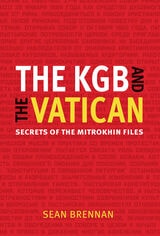
cover of The KGB and the Vatican: Secrets of the Mitrokhin Files

The KGB and the Vatican

Secrets of the Mitrokhin Files

Sean Brennan

Catholic University of America Press, 2022
One of the greatest ironies of the history of Soviet rule is that, for an officially atheistic state, those in the political police and in the Politburo devoted an enormous amount of time and attention to the question of religion. The Soviet government’s policies toward religious institutions in the USSR, and toward religious institutions in the non-Communist world, reflected this, especially when it came to the Vatican and Catholic Churches, both the Latin and Byzantine Rite, in Soviet territory. The KGB and the Vatican consists of the transcripts of KGB records concerning the policies of the Soviet secret police towards the Vatican and the Catholic Church in the Communist world, transcripts provided by KGB archivist and defector Vasili Mitrokhin, from the Second Vatican Council to the election of John Paul II. Among the topics covered include how the Soviet regime viewed the efforts of John XXIII and Paul VI of reaching out to eastern side of the Iron Curtain, the experience of the Roman Catholic Church in Lithuanian Soviet Socialist Republic and the underground Greek Catholic Church in the Ukrainian Soviet Socialist Republic, the religious underground in the key cities of Leningrad and Moscow, and finally the election of John Paul II and its effect on the tumultuous events in Poland in the late 1970s and early 1980s. This valuable primary source collection also contains a historical introduction written by the translator, Sean Brennan, a professor of History at the University of Scranton.
[more]
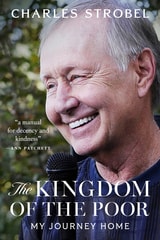
cover of The Kingdom of the Poor: My Journey Home

The Kingdom of the Poor

My Journey Home

Edited by Katie Seigenthaler and Amy Frogge

Vanderbilt University Press, 2024

As Charles Strobel, beloved Nashville priest and champion of the unhoused, reached the end of his life in 2023, he began to contemplate the last message he wanted to leave his family, friends, and community. With the help of his niece, Katie Seigenthaler, and his colleague, Amy Frogge, Strobel began to dictate The Kingdom of the Poor. He wrote, “Mark Twain, the great American folk hero and writer, has said, ‘The two most important days of your life are the day you are born and the day you find out why.’ The following pages help to explain why I was born.”

The “why” of Charlie Strobel’s life, which was devoted to helping those without support systems and homes to call their own, was a simple belief that we are all poor and we are all worthy of love.

The Kingdom of the Poor is the story of the people and experiences that led him to this understanding and inspired him to live his life accordingly.
[more]
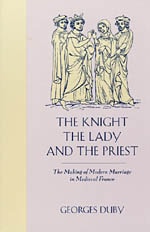
cover of The Knight, the Lady and the Priest: The Making of Modern Marriage in Medieval France

The Knight, the Lady and the Priest

The Making of Modern Marriage in Medieval France

Georges Duby

University of Chicago Press, 1993

This ambitious study sets out to discover what marriage meant in the daily lives of the nobles of the tenth, eleventh, and twelfth centuries. Through entertaining anecdotes, family dramas, and striking quotations, Duby succeeds in bringing his subjects to life, making us feel as if we understand the motives and conflicts of those who inhabited the distant past.

"It is typical of Duby's modest spirit and his book-long concern with the ancient status of beleaguered wives that he ends his study with a plea: 'We must not forget the women. Much has already been said about them. But how much do we really know?' Not everything, certainly, but far more than we did before the author began these charmingly erudite investigations."—Ken Turan, Time

"It is refreshing to find a historian who is always conscious that we simply do not know what or how people thought 1000 years ago. . . . Duby explains the complicated machinations of the medieval churchman and the paterfamilias in a scholarly but lively style."—Sarah Lawson, New Statesman

"Duby has written an extraordinarily rich book—a panoramic view of medieval marriage and the relations between men and women, full of arresting insights and human detail. . . . It is the work of a master historian at the peak of his powers on a subject of central relevance, compulsive and essential reading."—P. Stafford, British History

Georges Duby (1919-1996) was a member of the Académie française and for many years held the distinguished chair in medieval history at the Collège de France. His books include The Three Orders; The Age of Cathedrals; The Knight, the Lady, and the Priest; Love and Marriage in the Middle Ages; and History Continues, all published by the University of Chicago Press.
[more]
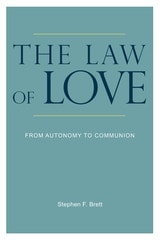
cover of The Law of Love: From Autonomy to Communion

The Law of Love

From Autonomy to Communion

Stephen F. Brett, SSJ

University of Scranton Press, 2010

With an interdisciplinary combination of philosophy, theology, and family law, The Law of Love explores the impact of secular conceptions of autonomy on sexuality and family. Drawing from the thought of Aristotle, Cicero, Augustine, Aquinas, and the modern theologian Servais Pinckaers, Stephen F. Brett argues that the divorce of freedom from virtue has caused cultural relativism, and that a potent and healthy mix of temperance, chastity, and modesty is the antidote. Styled accessibly and quite cleverly with a broader audience in mind, The Law of Love will appeal to intellectuals of all faiths who are interested in facing the ambiguities and problems of contemporary life in a secularized society.
[more]
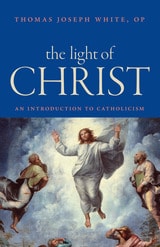
cover of The Light of Christ: An Introduction to Catholicism

The Light of Christ

An Introduction to Catholicism

Thomas Joseph White, OP

Catholic University of America Press, 2017

The Light of Christ provides an accessible presentation of Catholicism that is grounded in traditional theology, but engaged with a host of contemporary questions or objections. Inspired by the theologies of Iranaeus, Thomas Aquinas and John Henry Newman, and rooted in a post-Vatican II context, Fr. Thomas Joseph White presents major doctrines of the Christian religion in a way that is comprehensible for non-specialists: knowledge of God, the mystery of the Trinity, the Incarnation and the atonement, the sacraments and the moral life, eschatology and prayer.

At the same time, The Light of Christ also addresses topics such as evolution, the modern historical study of Jesus and the Bible, and objections to Catholic moral teaching. Touching on the concerns of contemporary readers, Fr. White examines questions such as whether Christianity is compatible with the findings of the modern sciences, do historical Jesus studies disrupt or confirm the teaching of the faith, and does history confirm the antiquity of Catholic claims.

This book serves as an excellent introduction for young professionals with no specialized background in theology who are interested in learning more about Catholicism, or as an introduction to Catholic theology. It will also serve as a helpful text for theology courses in a university context.

As Fr. White states in the book’s introduction: “This is a book that offers itself as a companion. I do not presume to argue the reader into the truths of the Catholic faith, though I will make arguments. My goal is to make explicit in a few broad strokes the shape of Catholicism. I hope to outline its inherent intelligibility or form as a mystery that is at once visible and invisible, ancient and contemporary, mystical and reasonable.”
[more]
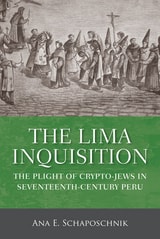
cover of The Lima Inquisition: The Plight of Crypto-Jews in Seventeenth-Century Peru

The Lima Inquisition

The Plight of Crypto-Jews in Seventeenth-Century Peru

Ana E. Schaposchnik

University of Wisconsin Press, 2017

Established in Peru in 1570, the Holy Office of the Inquisition operated there until 1820, prosecuting, torturing, and sentencing alleged heretics. Ana Schaposchnik offers a deeply researched history of the Inquisition's tribunal in the capital city of Lima, with a focus on cases of crypto-Judaism—the secret adherence to Judaism while publicly professing Christianity.

Delving into the records of the tribunal, Schaposchnik brings to light the experiences of individuals on both sides of the process. Some prisoners, she discovers, developed a limited degree of agency as they managed to stall trials or mitigate the most extreme punishments. Training her attention on the accusers, Schaposchnik uncovers the agendas of specific inquisitors in bringing the condemned from the dungeons to the 1639 Auto General de Fe ceremony of public penance and execution. Through this fine-grained study of the tribunal's participants, Schaposchnik finds that the Inquisition sought to discipline and shape culture not so much through frequency of trials or number of sentences as through the potency of individual examples.
[more]
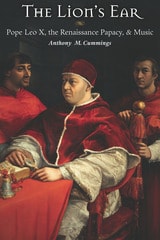
cover of The Lion's Ear: Pope Leo X, the Renaissance Papacy, and Music

The Lion's Ear

Pope Leo X, the Renaissance Papacy, and Music

Anthony M. Cummings

University of Michigan Press, 2022

For centuries, the Renaissance papacy has been celebrated for its generous patronage of the arts. Pope Leo X, son of the legendary Lorenzo "the Magnificent" de'Medici, is widely understood to be one of the greatest patrons of music in European history, and one of the emblematic figures of the Italian Renaissance.

The Lion's Ear is the first full-length scholarly treatment of the musical patronage of a Renaissance pope and provides an evocative picture of the musical life of the pre-Reformation papacy. The various uses of music in early modern Rome---music for public festivals, such as carnival; for the liturgical ceremonies of the Sistine Chapel; to accompany daily dining and festive banqueting; for the celebration of saints' feast days; and for theatrical performances---are vividly described and analyzed and give a detailed understanding of the place of music in the life of one of its most important early modern benefactors.

Anthony M. Cummings takes an interdisciplinary approach to his subject matter, bringing together the history of music, art, philosophy, and ecclesiastical history to locate the music in its broadest and deepest contexts. Through materials such as diplomatic correspondence, the book aims to reconstruct the atmosphere of the musical life in Leo X's court, presenting the subject matter in a way that will appeal to scholars and students of musicology and early modern history.

Art historians, ecclesiastical historians, and specialists from many other disciplines have long produced scholarly findings useful for understanding the pre-Reformation papacy, its alliance with the Italian Renaissance, and the extraordinary artistic legacy of that alliance. Anthony M. Cummings complements that scholarship with his thorough and imaginative account of music's relationship with that vibrant and fascinating culture, the first by a specialist in the musical life of early modern Europe.

[more]
cover of The Long Arm of Papal Authority: Late Medieval Christian Peripheries and Their Communications with the Holy See

The Long Arm of Papal Authority

Late Medieval Christian Peripheries and Their Communications with the Holy See

Gerhard Jaritz

Central European University Press, 2005
The volume contains selected papers from two conferences in 2003, at the University of Bergen (Norway) and at Central European University in Budapest. They deal comparatively with the communication of the Holy See with Northern Europe and Eastern Central Europe in the Late Middle Ages, both areas at the margins of Western Christendom. Special emphasis is placed on analysis of registers in the Apostolic Penitentiary.
[more]
cover of The Mind That Is Catholic: Philosophical and Political Essays

The Mind That Is Catholic

Philosophical and Political Essays

James V. Schall

Catholic University of America Press, 2008
The Mind That Is Catholic, he presents a retrospective collection of his academic and literary essays written in the past fifty years. In each essay, he exemplifies the Catholic mind at its best--seeing the whole, leaving nothing out.
[more]
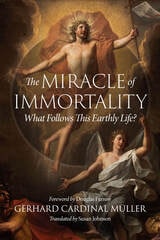
cover of The Miracle of Immortality: What Follows This Earthly Life?

The Miracle of Immortality

What Follows This Earthly Life?

Gerhard Cardinal Muller

Catholic University of America Press, 2026
In The Miracle of Immortality, Gerhard Cardinal Müller tackles some of the great mysteries of human life and hope. The former prefect of the Dicastery for the Doctrine of the Faith is not content merely to present Catholic doc­trine on the afterlife and the last things, although his reflections are always rooted in the teachings and traditions of the Church. Rather, he invites readers to walk with him by the restless sea of human learning, a sea formed by man’s unquenchable thirst for something or someone greater than man himself, by his desire to know the beginning and the end. One who accepts the invitation finds himself in conversation with a mentor whose mind is suffused with scripture and very much sharpened by it. Cherished assumptions are queried or quietly corrected. Slowly but surely he is confronted with the miracle of immortality, without which true happiness is impossible. Cardinal Müller demonstrates in this book that it is entirely possible, and eminently rational, to believe in the miracle of immortality; indeed, that it is ultimately not rational not to believe. The Miracle of Immortality is a work of penetrating theological insight set, chiaroscuro-like, against the darkness of modern and postmodern skepticism. It is at once poetical in spirit and profoundly catechetical in substance, for Müller understands that Christian eschatology cannot be elucidated properly without proclaiming the whole counsel of God. The miracle in question is a miracle for the whole person, accomplished by way of what Paul calls adoption; that is, filiation to the eternal Father through the incarnate Son, effected by the limitless power of the Holy Spirit. It is a miracle that perfects the divine work of creation.
[more]
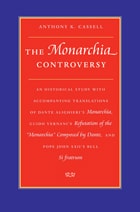
cover of The Monarchia Controversy: An Historical Study with Accompanying Translations of Dante Alighieri's Monarchia, Guido Vernani's Refutation of the "Monarchia" Composed by Dante, and Pope John XXII's Bull Si fratrum

The Monarchia Controversy

An Historical Study with Accompanying Translations of Dante Alighieri's Monarchia, Guido Vernani's Refutation of the "Monarchia" Composed by Dante, and Pope John XXII's Bull Si fratrum

Anthony K. Cassell

Catholic University of America Press, 2004
The Monarchia Controversy provides both the background to the imperial and ecclesiastical machinations that drove Dante Alighieri to begin penning the Monarchia in 1318 and also the subsequent history of the efforts by papal authorities to ban the book after the writer's death
[more]
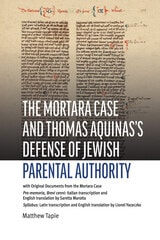
cover of The Mortara Case and St. Thomas Aquinas's Defense of Jewish Parental Authority: with Original Documents from the Mortara Case: <i>Pro-memoria, Syllabus, Brevi cenni</i>

The Mortara Case and St. Thomas Aquinas's Defense of Jewish Parental Authority

with Original Documents from the Mortara Case: <i>Pro-memoria, Syllabus, Brevi cenni</i>

Matthew Tapie

Catholic University of America Press, 2024
The Mortara case refers to Pope Pius IX’s 1858 removal of a six-year-old Jewish boy, Edgardo Mortara, from his parents in Bologna, Italy. Six years after Edgardo was born, it was reported that the family’s Christian housekeeper had baptized the boy after he had fallen ill as an infant and was allegedly in danger of death. Since canon law and civil law stipulated that a baptized child must be raised Catholic, Pius IX used his power as head of the papal states to remove the boy. In advocating for the return of the child, the Mortaras submitted to the Vatican a two-part document, which appealed to the teachings of Thomas Aquinas against baptism of Jewish children invitis parentibus (against the will of the parents). The papal counsel’s reply denied the request, citing Aquinas’s teaching to argue that Edgardo’s baptism was valid, and that he belonged to the Church. Today, some Catholic theologians defend or at least excuse the Pope’s decision with appeal to the works of Aquinas. Which side had the correct interpretation of Aquinas’s teaching? And how does this answer impact Catholic theology and Catholic Jewish-relations today? The Mortara Case and St. Thomas Aquinas's Defense of Jewish Parental Authority adjudicates the claims of both sides of the debate through an analysis of Aquinas’s teaching as it is interpreted in the Italian and Latin original documents from the 1858 case, which are housed in the Vatican Apostolic Archives, and reproduced here, with facing English translations, for the first time. Tapie demonstrates that, for Aquinas, Jewish parental rights are an order of the natural law, which Aquinas likened to a spiritualis uterus (spiritual womb). Through the metaphor of the spiritual womb, Aquinas merged the Roman institution of parental rights with the theological concept of the natural law. Tapie concludes by examining baptism invitis parentibus in the current Code of Canon Law with attention to the Second Vatican Council’s teaching on religious freedom and the Jewish people.
[more]
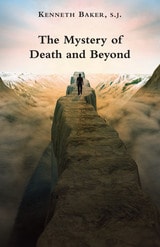
cover of The Mystery of Death and Beyond

The Mystery of Death and Beyond

Kenneth Baker, S.J.

St. Augustine's Press, 2016

The purpose of this little book is to answer certain questions that many people have about the nature of death. Most people feel that there is something wrong about death. We all want to live a happy life and we do not want to die. Life is experienced as something very good and we want to preserve it. But the reality is that man is by nature mortal, which means that he is destined to die sooner or later. The fact is that we begin to die the moment we are conceived in our mother’s womb.
     Man is unlike all other animals, because he has a soul endowed with intelligence and free will. Because man’s soul is spiritual, it is immortal. Death is the separation of that soul from the body; the body decays and returns to the dust from which it was taken, but the soul continues to live and is in the hands of God. But what happens to the soul after death? There are two possibilities—heaven or hell. We know from divine revelation and from the infallible teaching of the Church that the soul after death goes immediately to heaven (perhaps first for a time to purgatory to be totally cleansed and sanctified), or immediately to hell, a state or place of eternal misery.
     The next life is a life without time—it is a perpetual now, with no before and after. It has a beginning but not end. It is also unchangeable, that is, souls in heaven are there forever and they cannot lose it; souls in hell are there forever and they can never be freed from it.
     This is a very serious and certain reality for each one of us. The most important thing we will ever do is to die, and to die in the state of God’s grace so that we are his friends and will be admitted to his presence, which is what is meant by heaven. Therefore we must prepare ourselves to die in the grace of God, which is our ticket to heaven. We do that by doing God’s will for us, which means to keep his commandments, especially to love God above all things and practice love of neighbor.
     This short book will help people think about their death and how important it is for their permanent happiness. It will help them to arrange their life in such a way that they will live it as God wants them to live it and so ultimately obtain eternal life with God because: “no eye has seen, nor ear heard, nor the heart of man conceived, what God has prepared for those who love him” (1 Cor. 2:9).

 
[more]
cover of The Nature of Political Philosophy: And Other Studies and Commentaries

The Nature of Political Philosophy

And Other Studies and Commentaries

James V. Schall

Catholic University of America Press, 2022
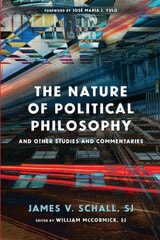
In his final collection of essays, Father Schall explores the life of faith across a dazzling array of subjects, from Martin Luther to bioethics. With his characteristic patience, brilliance, and careful tenacity, Father Schall interrogates profoundly what it means to try to be a citizen of the Kingdom of God in the city of Man. Never shying away from controversy, across 14 articles and 4 book reviews Father Schall investigates the critical themes of his life and scholarship: reason and revelation; the nature of modernity; literature and salvation; metaphysics and politics; and much more. Whether the reader is new to Father Schall or a longtime student, this posthumously-published collection of essays offers a profound meditation on the nature of political philosophy, and particularly what it would mean for Catholicism to offer a political philosophy. From such fundamental considerations, Schall explores ethical, literary and legal themes, displaying his typical breadth and depth of engagement with all that is real. Ultimately, Father Schall leads one on a Socratic enterprise, an education whereby one comes to question for oneself basic assumptions, and to dig deeper into the first principles as they are recalled in the orders of knowledge and being. While Father Schall has passed on to his reward, this collection of essays helps ensure that his lessons continue to guide, challenge and enrich students for generations to come.
[more]
cover of The One Creator God in Thomas Aquinas and Contemporary Theology

The One Creator God in Thomas Aquinas and Contemporary Theology

Michael J. Dodds, OP

Catholic University of America Press, 2020
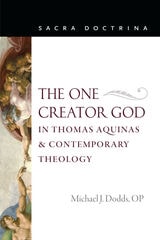
This book provides a fundamental introduction to Aquinas's theology of the One Creator God. Aimed at making that thought accessible to contemporary audiences, it gives a basic explanation of his theology while showing its compatibility with contemporary science and its relevance to current theological issues. Opening with a brief account of Aquinas’s life, it then describes the purpose and nature of the Summa Theologica and gives a short review of current varieties of Thomism. Without neglecting other works, it then focuses primarily on the discussion of the One God in the first part of the Summa Theologica. God's transcendence and immanence is a recurrent theme in that discussion. Evidence of God's immanent causality in the natural world grounds Aquinas's five arguments for the existence of God (the Five Ways) which then open onto God's transcendence. The subsequent discussion of the divine attributes builds on the modes of God's causality established in the Five Ways. It also shows the need for a language of analogy to preserve God's transcendence and prevent us from reducing God to the level of creatures, even as qualities such as "goodness" and "love," which we first know from creatures, are applied to God. The discussion of God's providence and governance establishes that the transcendent Creator God is most intimately present in creation. God acts in all creatures in a way that does not diminish their proper causality, but is rather its source. As there is no contradiction between God's transcendence and immanence, so there is no competition between the primary causality of God and the secondary causality of creatures. Empirical science, which is limited by its method to the secondary causality of creatures, is shown to be compatible with the broader discipline of theology which also embraces the primary causality of the Creator.
[more]
cover of The Origins of Catholic Evolutionism, 1831-1950

The Origins of Catholic Evolutionism, 1831-1950

Kenneth W. Kemp

Catholic University of America Press, 2025
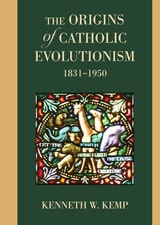
The history of the Catholic Church’s response to evolutionary biology has often been badly misrepresented as antagonistic. In fact, its response is better characterized as a long process of accommodation. This work is a comprehensive introduction to the work of the Catholic scientists and theologians who worked out the details of that accommodation. Few Catholics found the evolutionary origin of plant and animal species theologically objectionable. None thought that evolutionary processes provided a sufficient account of the origin of the first human beings. Catholics differed over whether those processes played a role in the origin of the first human body. Catholic evolutionism began with the work of four nineteenth-century scientists who might be called the pioneers of Catholic evolutionism—Belgian geologist Jean-Baptiste d’Omalius d’Halloy, English anatomist George Mivart, Italian anatomist Filippo De Filippi, and French paleontologist Albert Gaudry. The next generations of Catholic evolutionists, writing in the period from about 1890 -1940, included scientists (Jesuit entomologists Erich Wasmann and Felix Rüschkamp) as well as priests who focused more exclusively on the question of compatibility (Dalmace Leroy, John Zahm, Henry de Dorlodot, and Ernest Messenger). Among the scientists might also be included French paleontologist Pierre Teilhard de Chardin, who made some contributions to the general idea of the compatibility of evolutionary biology and Catholic theology, but who eventually veered off in the direction of a comprehensive evolutionary theology of nature the details of which are beyond the scope of this book. Catholic anti-evolutionists made efforts to have the Church prohibit works of Catholic evolutionism that, in their judgment gave evolutionary processes too great a rôle in the formation of the human body or that relied on problematic principles of hermeneutics. Efforts on the former front were eventually blocked by Pope Pius XI. The first magisterial statement on the question came, however, only in 1950, with Pope Pius XII’s encyclical Humani generis, which provisionally declared the orthodoxy of evolutionary accounts of the origin of the human body. In addition to providing details about Catholic evolutionists and the magisterium, the book also reviews the treatment of the new ideas in Catholic encyclopedias, periodicals, and textbooks. Although written in the first instance as a work of scholarship, the book was also written with attention to the needs of scientists, priests, and members of the general public who are interested in the question.
[more]
cover of The Origins of Catholic Words: A Discursive Dictionary

The Origins of Catholic Words

A Discursive Dictionary

Anthony Lo Bello

Catholic University of America Press, 2020
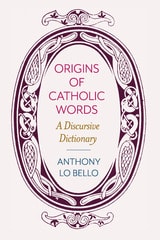
The study of the vocabulary of the Catholic religion may be taken as a definition of the liberal arts. Origins of Catholic Words is a work of reference organized like a lexicon or encyclopedia. There is an entry for each word of importance having to do with the Catholic Church. Anthony Lo Bello gives the etymology of the word, describes what it means, and then adds whatever further discussion he feels is needed; in some cases this amounts to several pages. Lo Bello has assembled, over a number of years, lucid and wide-ranging remarks on the etymology and history of the words that occur in the study of the Catholic religion. A true labor of love, this sophisticated, one-of-a-kind dictionary will delight those who take pleasure in learning. Anyone interested in words and language—indeed, in culture, will find something interesting on every page. This is a book one may read and not just consult. The author has been ecumenical in his choice of authorities. J. B. Bury, Lord Chesterfield, Mandell Creighton, S. R. Driver, Ferdinand Gregorovius, Dr. Johnson, Henry Charles Lea, Bishop Lightfoot, Thomas Babington Macaulay, John Stuart Mill, Henry Hart Milman, Leopold von Ranke, and Bertrand Russell find their places alongside Alban Butler, Denzinger, Ignaz Döllinger the Abbé Duchesne, Adrian Fortescue, Bishop Hefele, Cardinal Gasparri, Msgr. Ronald Knox, Msgr. Horace K. Mann, John Henry Newman, Ludwig von Pastor, Wilfrid Ward, William George Ward, and Evelyn Waugh. There have been many changes in the Catholic Church since 1962, and one of the goals of this book is to describe what will soon be missing from the memories of all living people. Origins of Catholic Words may, Lo Bello hopes, make its small contribution so that the situation not arise, which would convict Newman of error when he wrote, “What the Catholic Church once has had, she never has lost.”
[more]
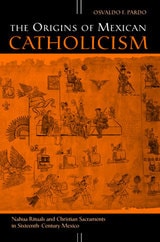
cover of The Origins of Mexican Catholicism: Nahua Rituals and Christian Sacraments in Sixteenth-Century Mexico

The Origins of Mexican Catholicism

Nahua Rituals and Christian Sacraments in Sixteenth-Century Mexico

Osvaldo F. Pardo

University of Michigan Press, 2004

"Pardo's study provides a persuasive criticism of the widespread assumption that the process of Christianization in Mexico can be conceived as the imposition of a complete and fool-proof system that did not accept doubts or compromises. The Origins of Mexican Catholicism will become an invaluable tool for future researchers and enrich future debates on the subject."
---Fernando Cervantes, Bristol University, UK

"Pardo does an excellent job of balancing and contrasting sixteenth-century Catholic theology with Nahua thought and belief."
---John F. Schwaller, University of Minnesota


At first glance, religious conversion may appear to be only a one-way street. When studying sixteenth-century Mexico, one might assume that colonial coercion was the driving force behind the religious conversion of the native population. But The Origins of Mexican Catholicism shows how Spanish missionaries instead drew on existing native ceremonies in order to make Christianity more accessible to the Nahua population whom they were trying to convert.

Osvaldo F. Pardo explains that religious figures not only shaped native thought, but that indigenous rituals had an impact on the religion itself. This work illustrates the complex negotiations that took place in the process of making the Christian sacraments available to the native peoples, and at the same time, forced the missionaries to reexamine the meaning of their sacraments through the eyes of an alien culture.

For Spanish missionaries, ritual not only became a focus of evangelical concern but also opened a window to the social world of the Nahuas. Missionaries were able to delve into the Nahua's notions of self, emotions, and social and cosmic order. By better understanding the sociological aspects of Nahua culture, Christians learned ways to adequately convey their religion through mutual understanding instead of merely colonial oppression.

Given its interdisciplinary approach, this book will be of interest to specialists in Latin American intellectual and literary history, the history of religion, and anthropology, and to anyone interested in cross-cultural processes.
[more]
cover of The Papacy, the Jews, and the Holocaust

The Papacy, the Jews, and the Holocaust

Frank J. Coppa

Catholic University of America Press, 2006
This work not only examines Rome's reaction during the fascist period but delves into the broader historical development and the impact of theological anti-Judaism
[more]
cover of The Pastoral Role of the Roman Catholic Church in Pre-Famine Ireland, 1750–1850

The Pastoral Role of the Roman Catholic Church in Pre-Famine Ireland, 1750–1850

Emmet Larkin

Catholic University of America Press, 2006
[more]
cover of The Philosophy of Jesus

The Philosophy of Jesus

Peter Kreeft

St. Augustine's Press, 2007

Amazingly, no one ever seems to have looked at Jesus as a philosopher, or his teaching as philosophy. Yet no one in history has ever had a more radically new philosophy, or made more of a difference to philosophy, than Jesus. He divided all human history into two, into "B.C." and "A.D."; and the history of philosophy is crucial to human history, since philosophy is crucial to man; so how could He not also divide philosophy?

This book (1) looks at Jesus as a complete human being (as well as divine), therefore also as a philosopher; (2) looks at philosophy as Jesus' pre-modern contemporaries did, as a wisdom, a world-view, and a way of life rather than as a super-science (Descartes, Hegel) or as a servant-science (Hobbes, Hume); and (3) looks at philosophy in light of Jesus rather than at Jesus in light of philosophy. It explores the consequences of Etienne Gilson's point that when St. John brought Christianity and Greek philosophy into contact and identified the Messiah the Jews had most deeply sought with the logos that the Greeks had most deeply sought, nothing happened to Christ but something happened to the logos.

This book explores the most radical revolution in the history of philosophy, the differences Jesus made to metaphysics (the philosophy of being), to epistemology (the philosophy of knowing), to anthropology (the philosophy of man), and to philosophical ethics and politics.

And, besides, it has the greatest ending of any philosophy book in a century.
[more]
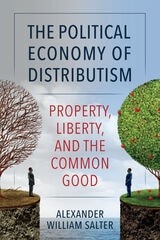
cover of The Political Economy of Distributism: Property, Liberty, and the Common Good

The Political Economy of Distributism

Property, Liberty, and the Common Good

Alexander William Salter

Catholic University of America Press, 2023
In recent years, prominent scholars, public intellectuals, and politicians have advocated reforming America’s economic model to embrace “common-good capitalism.” Catholic social teaching is a major influence on this movement. Is common-good capitalism compatible with the historical American commitments to private property rights and ordered liberty? What resources from Catholic social teaching can help orient free enterprise towards the common good? This book is the first scholarly inquiry into these exciting new questions. We can better understand common-good capitalism by exploring the political economy of distributism. Formulated in the early 20th century by prominent Catholic intellectuals such as Hilaire Belloc and G.K. Chesterton, distributism emphasizes the importance of widely dispersed property ownership for human flourishing. Distributist thinkers, opposed both to capitalism and socialism, sought a humane approach to politics and economics that reflected the truths of Catholic social teaching. Some of the distributists’ claims about markets and government must be revised in light of contemporary social science. Nevertheless, their political-economic vision contains profound truths about the human condition, which social scientists would be unwise to ignore. Distributism’s insights about the nature of liberty and the social foundations of human dignity can improve ongoing conversations among economists, political scientists, and philosophers. The Political Economy of Distributism explores distributism both as a research program and a blueprint for political-economic reform. As many are reconsidering the relationship between markets and government, this timely book demonstrates the perennial relevance of the Catholic intellectual tradition to public affairs. Academics, public servants, policy experts, and concerned citizens can all benefit from this timely study of common-good capitalism’s prospects.
[more]
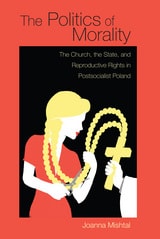
cover of The Politics of Morality: The Church, the State, and Reproductive Rights in Postsocialist Poland

The Politics of Morality

The Church, the State, and Reproductive Rights in Postsocialist Poland

Joanna Mishtal

Ohio University Press, 2015

After the fall of the state socialist regime and the end of martial law in 1989, Polish society experienced both a sense of relief from the tyranny of Soviet control and an expectation that democracy would bring freedom. After this initial wave of enthusiasm, however, political forces that had lain concealed during the state socialist era began to emerge and establish a new religious-nationalist orthodoxy. While Solidarity garnered most of the credit for democratization in Poland, it had worked quietly with the Catholic Church, to which a large majority of Poles at least nominally adhered. As the church emerged as a political force in the Polish Sejm and Senate, it precipitated a rapid erosion of women’s reproductive rights, especially the right to abortion, which had been relatively well established under the former regime.

The Politics of Morality is an anthropological study of this expansion of power by the religious right and its effects on individual rights and social mores. It explores the contradictions of postsocialist democratization in Poland: an emerging democracy on one hand, and a declining tolerance for reproductive rights, women’s rights, and political and religious pluralism on the other. Yet, as this thoroughly researched study shows, women resist these strictures by pursuing abortion illegally, defying religious prohibitions on contraception, and organizing into advocacy groups. As struggles around reproductive rights continue in Poland, these resistances and unofficial practices reveal the sharp limits of religious form of governance.
[more]
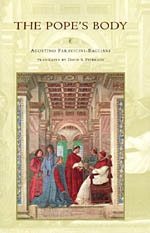
cover of The Pope's Body

The Pope's Body

Agostino Paravicini-Bagliani

University of Chicago Press, 2000

In contrast to the role traditionally fulfilled by secular rulers, the pope has been perceived as an individual person existing in a body subject to decay and death, yet at the same time a corporeal representation of Christ and the Church, eternity and salvation. Using an array of evidence from the eleventh through the fifteenth centuries, Agostino Paravicini- Bagliani addresses this paradox. He studies the rituals, metaphors, and images of the pope's body as they developed over time and shows how they resulted in the expectation that the pope's body be simultaneously physical and metaphorical. Also included is a particular emphasis on the thirteenth century when, during the pontificate of Boniface VIII (1294-1303), the papal court became the focus of medicine and the natural sciences as physicians devised ways to protect the pope's health and prolong his life.

Masterfully translated from the Italian, this engaging history of the pope's body provides a new perspective for readers to understand the papacy, both historically and in our own time.
[more]
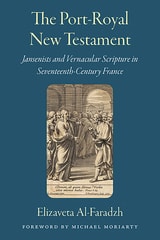
cover of The Port Royal New Testament: Jansenists and Vernacular Scripture in Seventeenth-Century France

The Port Royal New Testament

Jansenists and Vernacular Scripture in Seventeenth-Century France

Elizaveta Al-Faradzh

Catholic University of America Press, 2026
This book contributes to the history of early modern Catholicism through a case study of a landmark project in the development of the seventeenth-century French Bible: the Port-Royal translation of the New Testament published in 1667. Produced by theologians based at the monastery of Port-Royal, a major religious and intellectual center associated with Jansenism, this translation became one of the most widely read Catholic Bibles of its age. The study situates the Port-Royal project within the revival of French Catholicism after the Wars of Religion, when the Church, inspired by Tridentine reforms, sought to promote discipline and devotion across all ranks of society. While many theologians resisted direct lay access to Scripture, political pressures, Protestant competition, and developments in the French language created new opportunities for vernacular biblical translation. The Port-Royal New Testament stood out from contemporary efforts by its scope, ambition, and style. Unlike other spiritual schools, the Jansenists placed Scripture at the heart of religious life and promoted its reading as central to devotion. Their translation, polemically defended by Antoine Arnauld (1612-1694), adjusted biblical language to contemporary French, aiming for clarity, elegance, and accessibility. Critics accused the work of echoing Protestant practice, yet its popularity among readers testified to its resonance. Drawing on translation analysis, polemical literature, and the history of the book, this study shows how the Jansenists advanced a program of religious renewal that combined fidelity to Patristic tradition with a modern, stylistically refined vernacular Bible. Their publishing strategies sought to diminish the gap between clergy and laity, dispersing their translation despite the condemnations of religious and political authorities. The Port-Royal New Testament thus emerges as both a devotional resource and a controversial intervention, embodying the Jansenist vision of universal access to the Word of God and leaving a mark on French Catholic culture.
[more]
cover of The Practice of Catholic Theology

The Practice of Catholic Theology

Paul J. Griffiths

Catholic University of America Press, 2016
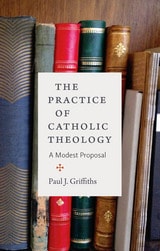
In The Practice of Catholic Theology: A Modest Proposal, Paul J. Griffiths has written a how-to book for Catholic theologians that will both instruct beginners and challenge long-time practitioners to sharpen their understanding of their craft. He defines Catholic theology as the practice of thinking, speaking, and writing about the God of Christian confession; so understood, it's something that anyone can learn to do. Personal sanctity is not required, but as with any other practice, practitioners of this beautiful and elevated thought-performance need to know some things and to develop some skills in order to be able to perform it.
[more]
cover of The Predestination of Humans: Augustinus, <i>Tome III, Book IX</i>

The Predestination of Humans

Augustinus, <i>Tome III, Book IX</i>

Cornelius Jansen

Catholic University of America Press, 2022
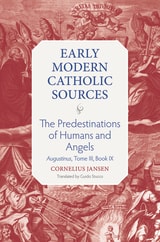
No other theological text polarized the early modern Catholic world as much as Cornelius Jansen's Augustinus. In it the erudite bishop not only reconstructed St. Augustine's teaching on grace and free will, but also boldly claimed that his views were in line with the Council of Trent and the Society of Jesus. For Jansen the latter had marginalized the Church Father's doctrine on divine predestination by overemphasizing human free will. Published after his death in 1640, Jansen's work drew a large crowd of followers and inspired an Augustinian reform movement. Its papal condemnation unintentionally spread this theology, but stifled an impassionate, academic engagement with the Augustinus. This first-ever translation of some of its central chapters enables historians, philosophers and theologians to finally engage with the founding text of Jansenism.
[more]
cover of The Priesthood, Mystery of Faith: Priestly Ministry in the Magisterium of John Paul II

The Priesthood, Mystery of Faith

Priestly Ministry in the Magisterium of John Paul II

Nilson Leal de Sa, CB

Catholic University of America Press, 2022
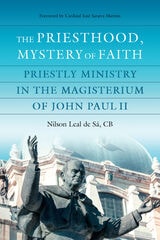
After almost twenty-seven years of his pontificate, what was John Paul II’s legacy regarding the ministerial priesthood? What answers did he give to the questions still surrounding this reality today? Nilson Leal de Sá, CB, examines the pontiff’s twenty-seven letters of Holy Thursday addressed annually to the priests. Unlike some papal documents, which are drafted by many hands, these letters to priests were born of a personal initiative, wherein the pope spoke ab imo pectore (from the depths of his heart), giving a little of himself and his thought. Cardinal Georges-Marie Cottier, theologian emeritus of the Pontifical House and a connoisseur of the texts of the Holy Father, has confirmed that “the Letters of Holy Thursday were written by John Paul II himself.” Leal de Sá has sought in the diversity of the letters of Holy Thursday the major points of the thought of John Paul II on this important topic. The first chapter dwells on the sources of his teaching and emphasizes his use of the Word of God, Tradition, and the conciliar Magisterium. These foundations are the basis of the second chapter, which highlights the priestly identity in the life of the Church. Finally, the third chapter elucidates the specific mission of the priest. The Priesthood, Mystery of Faith presents itself as a real and stimulating synthesis of John Paul II’s thought about the ministerial priesthood in a systematic way. It renews us in the appreciation of the inestimable gift that God makes to the whole Church through the sacrament of the Holy Orders.
[more]
cover of The Privilege of Being Banal: Art, Secularism, and Catholicism in Paris

The Privilege of Being Banal

Art, Secularism, and Catholicism in Paris

Elayne Oliphant

University of Chicago Press, 2021

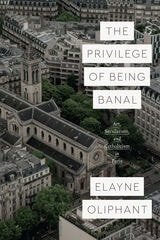
France, officially, is a secular nation. Yet Catholicism is undeniably a monumental presence, defining the temporal and spatial rhythms of Paris. At the same time, it often fades into the background as nothing more than “heritage.” In a creative inversion, Elayne Oliphant asks in The Privilege of Being Banal what, exactly, is hiding in plain sight? Could the banality of Catholicism actually be a kind of hidden power?

Exploring the violent histories and alternate trajectories effaced through this banal backgrounding of a crucial aspect of French history and culture, this richly textured ethnography lays bare the profound nostalgia that undergirds Catholicism’s circulation in nonreligious sites such as museums, corporate spaces, and political debates. Oliphant’s aim is to unravel the contradictions of religion and secularism and, in the process, show how aesthetics and politics come together in contemporary France to foster the kind of banality that Hannah Arendt warned against: the incapacity to take on another person’s experience of the world. A creative meditation on the power of the taken-for-granted, The Privilege of Being Banal is a landmark study of religion, aesthetics, and public space.
[more]
cover of The Proper of Time: Advent, Christmas, Lent, and Easter, Volume 1

The Proper of Time

Advent, Christmas, Lent, and Easter, Volume 1

Andrew Wadsworth

Catholic University of America Press, 2024
Cantate Domino is a five-volume commentary on the texts of the newly translated hymns of the Liturgy of the Hours. The hymns which recently appeared for the first time as a single corpus of English texts, will be included in the forthcoming USCCB revised edition of the Liturgy of the Hours. The hymns are drawn from among the very finest authors of the first millennium: Ambrose, Prudentius, and Gregory the Great together with later authors such as Thomas Aquinas, Leo XIII, and twentieth century authors who composed new hymns to be used in the psalter and celebration of the saints in the present Universal Calendar. The commentary concentrates on the Latin texts of the Liturgia Horarum, elucidated by the recently approved International Commission on English in the Liturgy (ICEL) translations. Commentaries have been prepared by a team of international scholars who bring both the depth of their knowledge together with the insights of those who have prepared liturgical texts in English during the sixty years of ICEL's existence. Previously unpublished material from ICEL's archives, including documents of the Consilium, which prepared the Latin texts for the liturgical books promulgated after the Second Vatican Council, will appear alongside commentaries which identify and explain biblical, classical, and liturgical allusions in the liturgical texts in a way that is of service to clergy, religious, liturgists, and students of the liturgy as well as the non-specialist reader, and all who seek to pray the Prayer of the Church with greater understanding.
[more]
cover of The Quest for God and the Good Life

The Quest for God and the Good Life

Mark T. Miller

Catholic University of America Press, 2013
Throughout this introductory text, progress, decline, and redemption constitute a systematic framework for examining the central terms of Catholic theology, as well as key notions in Lonergan's theology. The book provides a firm foundation for students of Lonergan as well as anyone interested in understanding Catholic theology and applying it to ministry, education, and other fields.
[more]
cover of The Reception of Pragmatism in France and the Rise of Roman Catholic Modernism, 1890-1914

The Reception of Pragmatism in France and the Rise of Roman Catholic Modernism, 1890-1914

David G. Schultenover

Catholic University of America Press, 2009
This collection of essays provides a small revolution in the study of Roman Catholic Modernism, a movement that until now has been largely seen as an episode that underscored institutional Catholicism's isolation from the mainstream intellectual currents of the time.
[more]
cover of The Regensburg Lecture

The Regensburg Lecture

James V. Schall, S.J.

St. Augustine's Press, 2007
[more]
cover of The Revelation of Your Words: The New Evangelization and the Role of the Seminary Professor of Sacred Scripture

The Revelation of Your Words

The New Evangelization and the Role of the Seminary Professor of Sacred Scripture

Kevin Zilverberg

Saint Paul Seminary Press, 2021
The Revelation of Your Words, a collection of essays, treats the role of the seminary professor of sacred Scripture within the context of the New Evangelization. Some of the essays concern principally the imparting of knowledge and best practices to accomplish this; others concern the fostering of delight in the sacred page and spiritual encounter with God. Although these essays are Catholic, written within a Catholic theological framework and with Catholic seminaries in mind, many of their conclusions can be applied to non-Catholic environments. This book provides insights that, even beyond the seminary, will benefit teachers of the Bible, regardless of their denomination and level of instruction. Readers will encounter the following authors and topics. Peter S. Williamson writes on the implications of the New Evangelization for priestly ministry and for teaching Scripture. Steven C. Smith makes a contribution concerning the role of the seminary professor of sacred Scripture in forming priests. Michael Magee treats the relevance of Johannine irony to the New Evangelization. Stephen Ryan’s chapter takes up the topic of Old Testament Wisdom literature and formation for a New Evangelization. Juana L. Manzo seeks a path to integrate modern and ancient interpretations into the seminary classroom. Kelly Anderson takes up the father of Proverbs 1–9 as a model of spiritual fatherhood for seminary professors. Scott Carl proposes a spiritual reading of sacred Scripture in the twenty-first century. Michael Magee, in his second contribution, writes on the joy of discovery in the Fourth Gospel. James Keating reflects upon the exegete as seminary formator. Finally, André Villeneuve advocates for the teaching of Biblical Hebrew in Catholic seminaries and academic institutions.
[more]
cover of The Road to Renewal: Victor Joseph Reed and Oklahoma Catholicism, 1905–1971

The Road to Renewal

Victor Joseph Reed and Oklahoma Catholicism, 1905–1971

Jeremy BONNER

Catholic University of America Press, 2008
The Road to Renewal offers an important contribution to the study of Catholicism in the 1960s. Grounded in thorough archival research, the book breaks new ground in its examination of the implementation of Vatican II at the diocesan level.
[more]
cover of The Sacramental Theology of Marriage: One Flesh in One Spirit

The Sacramental Theology of Marriage

One Flesh in One Spirit

Jose Granados

Catholic University of America Press, 2026
The Sacramental Theology of Marriage offers a comprehensive vision of the dogmatic theology of marriage. It takes into account biblical and patristic sources, the teaching of the Magisterium (with particular emphasis on the Councils of Trent and Vatican II), and the most important contemporary theological contributions. It begins with a vision of the sacrament of mar­riage as the sacrament that integrates the order of creation into the order of sacraments. This dual dimension of marriage justifies the division of the book into two parts: marriage as a sacrament of creation and marriage as a sacrament of redemption instituted by Christ. To describe the coordinates of marriage in creation, the book refers to St. Augustine (the goods of marriage), St. Thomas Aquinas (the ends of marriage), and modern personalism as re­flected in the Second Vatican Council (the gifts of marriage). The book also draws on the theology of St. Bonaventure, who emphasized the institution of marriage by God in creation. The presentation of marriage as a sacrament of the new law is rooted in the way Christ lived the various meanings of the body. Marriage’s foundation in the body and in the experience of love sheds new light on the key milestones of its sacramentality: its matter and form, its signification, the grace it transmits, its liturgy and ministers, its indissolubil­ity, its role in building up the Church, and the path of holiness it opens to the spouses. In all of this, marriage emerges as a pivotal sacrament for articulating Christianity’s relationship to the cosmos and to society. The Sacramental The­ology of Marriage includes modern philosophical and theological explorations of the language of the body and the meaning of love (including the proposal of St. John Paul II). It also outlines the main principles for the pastoral care of marriage and family.
[more]
cover of The Sacred Image East and West

The Sacred Image East and West

Edited by Robert Ousterhout and Leslie Brubaker

University of Illinois Press, 1995

A new generation of American medieval art historians explores how sacred images were perceived during the Middle Ages in Byzantium and Europe. The essays cover a full range of images, including panel paintings, altarpieces, manuscripts, and wall paintings, and a rich variety of socioreligious settings, private, monastic, and imperial. Also examined are the differences between images produced for a single viewer and those produced for communities; images produced for private contemplation or devotion and those functioned within a liturgical setting; and the varying ways in which sacred images affected women and men, religious and secular communities, rulers and ruled.
 
[more]