Results by title
447 books match the query 'Eastern' and 104 start with t
The Prague Spring, 1968
The National Security Archive Navratíl
Central European University Press, 1998
Presented in a highly readable form, the book offers top-level documents from Kremlin Politburo meetings, multi-lateral sessions of the Warsaw Pact leading up to the decision to invade, and even transcriptions of KGB-recorded phone conversations between Leonid Brezhnev and Alexander Dubcek. Once highly classified American documents from the National Security Council, CIA, and other relevant agencies acquired through the U.S. Freedom of Information Act have also been included.
In order to provide a historical and political context, the editors have included an introductory essay for each section of the volume. A chronology, glossary, and bibliography offer further background information for the reader. As members of the commission appointed by Václav Havel to investigate the events of 1967-1970, the editors have a unique Czech-Slovak perspective to offer to foreign audiences.
The Privatization Process in Central Europe
Roman Frydman
Central European University Press, 1993
The Privatization Process in Russia, the Ukraine, and the Baltic States
Roman Frydman
Central European University Press, 1993
The Pãltinis Diary
A Paideic Model in Humanist CultureGabriel Liiceanu
Central European University Press, 2000
The intellectual resistance to totalitarian regimes can take many forms. This remarkable volume portrays one such story of resistance in Romania during the reign of Ceauşescu: that of Constantin Noica, one of the country’s foremost intellectuals.
Noica was an original thinker belonging to the remarkable intellectual generation of important figures such as Mircea Eliade, E. M. Cioran and Eugene Ionescu, but he chose to stay in Romania after the communist takeover when many others fled. Harassed and jailed for six years, Noica retreated to the mountains and gathered around him some brilliant young minds and future talent to challenge and nurture them in a time when communism denied them the materials of true intellectual importance.
This group of students withdrew to Noica’s retreat for intensive philosophical sessions to debate the works of Kant, Plato, Heidegger and discuss humanistic values. The author of this volume Liiceanu, himself a brilliant philosopher, was Noica’s closest disciple and during every meeting he noted every conversation in a diary which came to be known as The Păltiniş Diary. These conversations were secretly published and quickly devoured by intellectuals in Romania who were prepared to sacrifice part of their food provisions to acquire the book. The Păltiniş Diary sold out within a matter of days and because of Secret Police censorship, was not published again in Romania until 1991 by which time Noica had died and the group had disbanded to help with the reconstruction of post-Ceauşescu Romania.
The Păltiniş Diary is a wonderful homage to an intellectual master and to the power of intellect and freedom. The book will be of interest to philosophers, non-philosophers alike, and to anyone who seeks to grasp the true meaning of survival under totalitarian conditions.
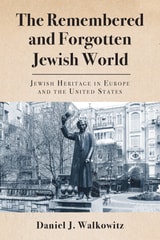
The Remembered and Forgotten Jewish World
Jewish Heritage in Europe and the United StatesDaniel J. Walkowitz
Rutgers University Press, 2018
The Remembered and Forgotten Jewish World investigates the politics of heritage tourism and collective memory. In an account that is part travelogue, part social history, and part family saga, acclaimed historian Daniel J. Walkowitz visits key Jewish museums and heritage sites from Berlin to Belgrade, from Krakow to Kiev, and from Warsaw to New York, to discover which stories of the Jewish experience are told and which are silenced. As he travels to thirteen different locations, participates in tours, displays, and public programs, and gleans insight from local historians, he juxtaposes the historical record with the stories presented in heritage tourism. What he finds raises provocative questions about the heritage tourism industry and its role in determining how we perceive Jewish history and identity. This book offers a unique perspective on the importance of collective memory and the dangers of collective forgetting.
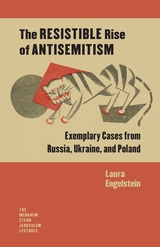
The Resistible Rise of Antisemitism
Exemplary Cases from Russia, Ukraine, and PolandLaura Engelstein
Brandeis University Press, 2020
Antisemitism as a political weapon did not stand unchallenged, even in Eastern Europe, where its consequences were particularly dire. In this region, Jewish leaders mobilized across national borders and in alliance with non-Jewish public figures on behalf of Jewish rights and in opposition to anti-Jewish violence. Antisemites were called to account and forced on the defensive. In Imperial and then Soviet Russia, in newly emerging Poland, and in aspiring Ukraine—notorious in the West as antisemitic hotbeds—antisemitism was sometimes a moral and political liability. These intriguing essays explore the reasons why, and they offer lessons from surprising places on how we can continue to fight antisemitism in our times.

The Restoration of Order
The Normalization of Czechoslovakia 1969–1976Milan Šimecka
Karolinum Press, 2025
In an engaging style, not lacking in irony and detachment, Milan Šimečka describes the process of restoring order and its result—so-called real socialism—in a brilliant analysis of the “normalization” regime in Czechoslovakia that came to power after the Soviet-led invasion that crushed the Prague Spring of 1968. These poignant reflections and essays coincided with Šimečka’s first-hand experience of the consequences of the time’s political and cultural purges.
This second edition of Cold War classics, first written between 1975 and 1977, with a new preface from Martin Šimečka and afterword from Jonathan Bolton, highlights chilling parallels with contemporary political developments and current civic and ethical questions.
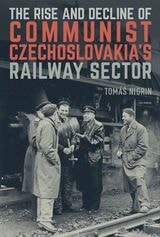
The Rise and Decline of Communist Czechoslovakia´s Railway Sector
Tomáš Nigrin
Central European University Press, 2022
Once the pride of interwar Czechoslovakia, and key during the forced industrialization of the Stalinist period, during the 1970s and 1980s the Czechoslovak railway sector showed the symptoms of the political tiredness and economic exhaustion of the Soviet Bloc. This book examines the failure of central economic planning through the lens of this national transport system.
Based on the presentation of its history and on the detailed scrutiny of the actors, institutions, internal mechanisms, and conditions of the railway sector, the analysis reveals the identities of the real stakeholders in the state administration. This case shows how the country was governed by Communist Party institutions and government ministries, and how developments in the transportation sector—like in every sector—reflected their priorities. Numerous tables with selected statistics underscore the economic analysis and black and white photos offer a glimpse on the technical base of the railway sector.
The book is filled with enlightening comparisons of the Czechoslovak transportation industry with its counterparts in the whole Eastern Bloc. Integration into the Council for Mutual Economic Assistance (Comecon) of the Bloc could have been an asset, yet the records have more to say about conflicts than cooperation.
The Rise and Fall of the International Organization of Journalists Based in Prague 1946–2016
Useful Recollections Part IIIKaarle Nordenstreng
Karolinum Press, 2021
The Rise of Comparative History
Balázs Trencsényi
Central European University Press, 2021
The Road to September 1939
Polish Jews, Zionists, and the Yishuv on the Eve of World War IIJehuda Reinharz and Yaacov Shavit
Brandeis University Press, 2018
The Road to War in Serbia
Trauma and CatharsisNebojša Popov
Central European University Press, 2000
The Yugoslav crisis, with its armed conflict, ethnic cleansing and the reverberating ideas and mindsets, has been going on for more than ten years. The Road to War in Serbia is the first serious assessment to explore the roots of the conflict in the former Yugoslavia. Based on years of research, the authors - all eminent scholars in the field who have lived through these social conflicts - highlight key issues which have to date remained unknown or which have been previously neglected.
The issues dealt with include the institutional frameworks of ethnicity and nationalism; the input of the church, science, literature and sports; specific catalysts of the conflict and the role of the political actors, students, the ruling party and the media.
The Road to War in Serbia will be of great interest to all readers who want to understand why and how the violent option of settling disputes and conflicts on the territory of Yugoslavia is being accepted.
The Romanov Empire and Nationalism
Essays in the Methodology of Historical ResearchAlexei Miller
Central European University Press, 2008
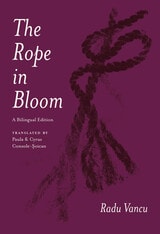
The Rope in Bloom
A Bilingual EditionRadu Vancu
University of Chicago Press, 2026
The first English translation of a Romanian poet’s celebrated and devastating 2012 collection.
In 1997, when he was nineteen, Radu Vancu discovered the body of his father, who had hanged himself in the family home. In the dark years that followed, Vancu turned to literature and self-medication. By 2009, after a decade of “Schopenhauer and vodka” and the publication of seven influential volumes of poetry and essays, Vancu was married, newly sober, and expecting his first child. With these themes in mind—bereavement, love, fatherhood, and poetry—he began writing Frânghia înflorită, or The Rope in Bloom, a poem of Dantesque ambition and scope. Through twenty-four cantos interwoven with prose vignettes, Vancu revisits the scene of the suicide and speaks with the lost soul of his father, who guides and advises him. Each canto begins with the same lines:
What your dead one, what the best-
beloved of your dead loved ones says to you
when you have the heart to dream of him:
Vancu’s verse depicts a nightmare underworld, at once terrible and banal, containing both rivers of blood and family movie nights. Prose vignettes punctuating the book narrate tender years in the early life of a new family. Here, the poet appears in everyday moments, watching cartoons with his son and seeing his wife off to work. Together, the cantos and prose accumulate into a charged collection, where the loss of a father looms over the joy of becoming one.
This volume is the first full-length English translation of Vancu’s work, marking a long-overdue introduction of the poet to anglophone audiences.
The Russian Archipelago at War Against Ukraine
Culture and Contexts 2022–2025Tomáš Glanc
Karolinum Press, 2026
The first sustained cultural analysis of Russia at war that reveals how art, artists, and institutions become actors in conflict.
This book was conceived in wartime, and war stands at its center. It proceeds through an analysis of cultural phenomena and processes that, in one way or another, originated in Russia and bear on the present situation—regardless of where their actors may now reside.
Through a series of case studies, The Russian Archipelago at War Against Ukraine traces how war has entered the realm of art—literature, the visual arts, theater, film, and beyond—and examines the ways in which culture itself becomes a participant in war. What emerges are narratives of resistance and protest, of persecution and prohibition, and emergent forms of underground, but also postures of indifference, resignation, and compliance, including overt loyalty to and support for the ideology and practice of war, its perpetrators, and its objectives.
Underlying this content is a more unsettling question: what aesthetic, cultural-political, moral, and intellectual challenges, consequences, and perhaps even fragile hopes does the horror of war contain?
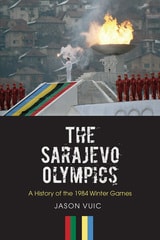
The Sarajevo Olympics
A History of the 1984 Winter GamesJason Vuic
University of Massachusetts Press, 2015
To most observers, the 1984 Winter Olympics in Sarajevo, Yugoslavia, were an unmitigated success. That year, the unlikeliest of candidate cities in the unlikeliest of candidate countries did what many had thought impossible: it hosted an international sports competition at the highest level, housing and feeding hundreds of athletes and thousands of tourists while broadcasting a positive image of socialist Yugoslavia to the world.
The first Winter Games held in a communist country, Sarajevo also marked the first Olympic confrontation of Soviet and American athletes since the U.S. boycott of the 1980 Moscow Summer Games. And the competitions themselves were spectacular and memorable. This was the Olympics of British ice dancers Jayne Torvill and Christopher Dean, American skiers “Wild Bill” Johnson and Debbie Armstrong, and East German skaters Katarina Witt and Karin Enke, not to mention a Soviet hockey team that rebounded from its stunning loss to the Americans at Lake Placid four years earlier to win all seven of its matches.
Yet The Sarajevo Olympics is more than just a history of sport. Jason Vuic also retraces the history of the Olympic movement, analyzes the inner workings of the International Olympic Committee during the troubled 1970s and 1980s, and places the 1984 Winter Games in the context of Cold War geopolitics. The book begins and ends by reminding readers that less than a decade after it hosted the Olympics, the Bosnian city of Sarajevo found itself at the vortex of a bloody and brutal civil war that would end with the dissolution of the multiethnic Yugoslavian state.
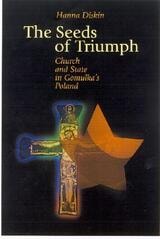
The Seeds of Triumph
Church and State in Gomulka's PolandHannah Diskin
Central European University Press, 2001
The Roman Catholic Church has played a unique role in the history of Poland in the twentieth century: the people and the Church drew closer and closer together during Nazi rule, the Stalinist period and the somewhat milder, though strongly anti-religious and repressive Gomulka regime (1956-1970). The power struggle between the Church and the communist government did in fact play a role in shaping world politics, the Polish Church having been the force behind the opposition movement in Poland. Against this background, a Polish pope appeared and made a major contribution to the collapse of communism.
The Seeds of Triumph, the most comprehensive recent book on the opposition of Church and State in post-war Poland, compares the characteristics and consequences of this relationship during three different periods: the first and second periods of Gomulka's rule, and the Stalinist era between the two Gomulka periods. It examines the balance of power, studying to what degree the Church and other factors in the political environment influenced governmental policy-making. The author disproves the common stereotype, held at the time, that domestic conditions played only a marginal role. In examining the regime's policies, she covers the legal background, the general policy characteristics, the specific policies implemented during the period, and the role of the individual actors, most notably the pivotal role of the two main protagonists, Cardinal Wyszynski and Wladislaw Gomulka.
In her landmark study, Diskin makes a significant contribution to the study of authoritarian systems and greatly enhances our understanding of the centrality of the Church in recent Polish history.
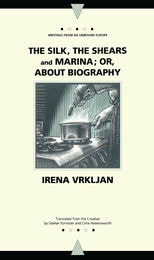
The Silk, the Shears and Marina; or, About Biography
Irena Vrkljan
Northwestern University Press, 1999
These are the first two volumes of the Croatian poet and novelist Irena Vrkljan's lyrical autobiography. Although each novel illuminates the other, they also stand alone as original and independent works of art. In The Silk, the Shears, Vrkljan traces the symbolic and moral significance of her life, and her vision of the fate of women in her mother's time and in her own. Marina continues the intense analysis of the poetic self, using the life of Marina Tsvetaeva to meditate on the processes behind biography.
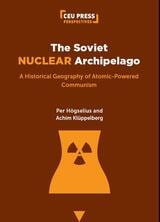
The Soviet Nuclear Archipelago
A Historical Geography of Atomic-Powered CommunismPer Högselius
Central European University Press, 2024
The war in Ukraine, with the exposure of nuclear power stations and the danger of atomic warfare, has made the legacy of the Soviet nuclear sector of critical importance.
The two authors map the Soviet nuclear industry in a shifting historical context, making sense of a complex socio-technical and environmental history. Taking an innovative approach, this book explores the history of atomic power in the former Soviet Union using the spatial dimensions of the nuclear industry as a point of departure. The key concept is that of the archipelago – a network of nuclear facilities spread throughout the Soviet territory, but mutually reliant on each other and densely connected.
The story traces the emergence of nuclear science and technology for military and civilian purposes through to the post-Soviet Russian nuclear corporations as providers of resources and technology. The book explains how nuclear developments in the Soviet Union interacted with processes of environmental and landscape change. The spatial lens offers an analytically fruitful and pedagogically stimulating way to comprehend the nuclear histories of the Soviet Union and its successor states.
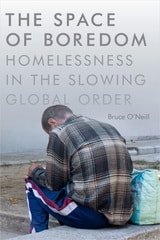
The Space of Boredom
Homelessness in the Slowing Global OrderBruce O'Neill
Duke University Press, 2017
The Struggle for Constitutional Justice in Post-Communist Europe
Herman Schwartz
University of Chicago Press, 2000
"Those who are interested in understanding the behavior of constitutional courts in transitional regimes cannot afford to ignore this important book. . . . [It] is fecund with hypotheses of interest to political scientists, and we are indebted to Professor Schwartz for his comprehensive analysis."—James L. Gibson, Law and Politics Book Review
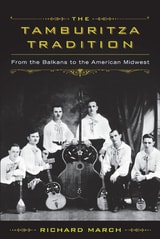
The Tamburitza Tradition
From the Balkans to the American MidwestRichard March
University of Wisconsin Press, 2013
The Town of N
Leonid Dobychin
Northwestern University Press, 1998
The Traffic in Women's Work
East European Migration and the Making of EuropeAnca Parvulescu
University of Chicago Press, 2014
The Trials of Richard Goldstone
Terris, Daniel
Rutgers University Press, 2019
The Trials of Richard Goldstone tells the story of this extraordinary individual and the price he paid for his convictions. It describes how Goldstone, working as a judge in apartheid South Africa, helped to undermine this unjust system and later, at Nelson Mandela’s request, led a commission that investigated cases of racial violence and intimidation. It also considers the international renown he received as the chief United Nations prosecutor for war crimes committed in Rwanda and the former Yugoslavia, the first tribunals to try political and military leaders on charges of genocide. Finally, it explores how Goldstone became a controversial figure in the wake of the Jewish jurist’s powerful, but flawed, investigation of Israel for alleged war crimes in Gaza.
Richard Goldstone’s dramatic life story reveals that even in a world rife with prejudice, nationalism, and contempt for human rights, one courageous man can advance the cause of justice.
The Tsar, The Empire, and The Nation
Dilemmas of Nationalization in Russia's Western Borderlands, 1905-1915Darius Staliunas
Central European University Press, 2021
This collection of essays addresses the challenge of modern nationalism to the tsarist Russian Empire. First appearing on the empire’s western periphery this challenge, was most prevalent in twelve provinces extending from Ukrainian lands in the south to the Baltic provinces in the north, as well as to the Kingdom of Poland.
At issue is whether the late Russian Empire entered World War I as a multiethnic state with many of its age-old mechanisms run by a multiethnic elite, or as a Russian state predominantly managed by ethnic Russians. The tsarist vision of prioritizing loyalty among all subjects over privileging ethnic Russians and discriminating against non-Russians faced a fundamental problem: as soon as the opportunity presented itself, non-Russians would increase their demands and become increasingly separatist.
The authors found that although the imperial government did not really identify with popular Russian nationalism, it sometimes ended up implementing policies promoted by Russian nationalist proponents. Matters addressed include native language education, interconfessional rivalry, the “Jewish question,” the origins of mass tourism in the western provinces, as well as the emergence of Russian nationalist attitudes in the aftermath of the first Russian revolution.
The Value of Labor
The Science of Commodification in Hungary, 1920-1956Martha Lampland
University of Chicago Press, 2016
Lampland trains her eye on the scientific claims of modern economic modeling, using Hungary’s unique vantage point to show how theories, policies, and techniques for commodifying agrarian labor that were born in the capitalist era were adopted by the socialist regime as a scientifically designed wage system on cooperative farms. Paying attention to the specific historical circumstances of Hungary, she explores the ways economists and the abstract notions they traffic in can both shape and be shaped by local conditions, and she compellingly shows how labor can be commodified in the absence of a labor market. The result is a unique account of economic thought that unveils hidden but necessary continuities running through the turbulent twentieth century.
The Vampire
A CasebookEdited by Alan Dundes
University of Wisconsin Press, 1998
Vampires are the most fearsome and fascinating of all creatures of folklore. For the first time, detailed accounts of the vampire and how its tradition developed in different cultures are gathered in one volume by eminent folklorist Alan Dundes. Eleven leading scholars from the fields of Slavic studies, history, anthropology, and psychiatry unearth the true nature of the vampire from its birth in graveyard lore to the modern-day psychiatric patient with a penchant for drinking blood.
The Vampire: A Casebook takes this legend out of the realm of literature and film and back to its dark beginnings in folk traditions. The essays examine the history of the word “vampire;” Romanian vampires; Greek vampires; Serbian vampires; the physical attributes of vampires; the killing of vampires; and the possible psychoanalytic underpinnings of vampires. Much more than simply a scary creature of the human imagination, the vampire has been and continues to haunt the lives of all those who encounter it—in reality or in fiction.
The Village Project
Rural Revitalization in Contemporary BulgariaSarah Craycraft
University of Wisconsin Press, 2026
Since the collapse of socialism, Bulgaria’s population has been on the move—out of rural regions and into cities, or out of the country altogether. Yet today there is a countermovement of young, urban Bulgarians, born around 1989, seeking to repopulate rural villages and reclaim traditional Bulgarian folklife. Though many of these young Bulgarians have no direct experience with a rural lifestyle nor memories of thriving village life, their actions and movements are inspired by a nostalgic vision of the past. And so, beyond a spatial return, this rural revitalization movement speaks to visions of an alternate future, one sparked by dismay with the conditions of contemporary life.
Using ethnographic and folkloristic methods, Sarah Craycraft paints a complex, detailed picture of responses to Europeanization, carried out through neoliberal folklife projects as they collide with ongoing efforts to build a revitalized rural Bulgaria in the ruins of the past. Contextualized within a particular Southeast European nation, the study speaks to broader questions of rural revival, public-facing culture work, intergenerational folklore, and the imbrication of folklore with politics and culture.
The War in Ukraine’s Donbas
Origins, Contexts, and the FutureDavid R. Marples
Central European University Press, 2022
This collective work analyzes the ongoing conflict in Ukraine, providing a coherent picture of Ukraine and Eastern Europe in the period 2013–2020. Giving voice to different social groups, scholarly communities and agencies relevant to Ukraine’s recent history, The War in Ukraine's Donbas goes beyond simplistic media interpretations that limit the analysis to Vladimir Putin and Russian aims to annex Ukraine. Instead, the authors identify the deeper roots linked to the autonomy and history of Donbas as a region. The contributions explore local society and traditions and the alienation from Ukraine caused by the events of Euromaidan, which saw the removal of the Donetsk-based president Viktor Yanukovych. Other chapters address the refugee crisis, the Minsk Accords in 2014 and the impact of the new president Volodymyr Zelensky and his efforts to bring the war to an end by negotiations among Russia, Ukraine, France, and Germany.
The book concludes with four proposals for a durable peace in Donbas: territorial power-sharing; the conversion of rebels into legitimate political parties; amnesty for all participants of the armed conflict; and a transitional period of several years until political institutions are fully re-established.
The Warsaw Uprising of 1944
Wlodzimierz Borodziej
University of Wisconsin Press, 2006
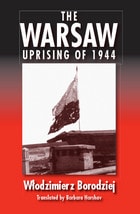
The Warsaw Uprising of 1944 dramatically tells the largely unknown story of the Warsaw resistance movement during World War II. Desperate to free themselves from German military oppression but also hoping to show the advancing Soviets that they could not impose easy rule upon the citizens of Warsaw, the Poles launched an almost hopeless attack against the Germans on August 1, 1944.
Wlodzimierz Borodziej presents an evenhanded account of what is commonly considered the darkest chapter in Polish history during World War II. In only sixty-three days, the Germans razed Warsaw to the ground and 200,000 people, mostly civilians, lost their lives. The result—a heroic and historically pivotal turning point—meant that the Poles would lose both their capital and an entire generation. This concise account of the trauma—little known to English-speaking readers—will appeal to anyone interested in the history of World War II in general and is a must-read for students of Polish history in particular.
The Woman in the Window
Commerce, Consensual Fantasy, and the Quest for Masculine Virtue in the Russian NovelRussell Scott Valentino
The Ohio State University Press, 2014
With chapters on Gogol, Tolstoy, and Dostoevsky as well as Pasternak and Nabokov, The Woman in the Window argues that Russian authors worked through this question via their depictions of “mixed-up men.” Such characters, according to Valentino, reveal that in a world where social reality and personal identity depend on consensual fantasies, the old masculine figure loses its grounding and can easily drift away. Valentino charts a range of masculine character types thrown off stride by the new commercially inflected world: those who embrace blind confidence, those who are split with doubt or guilt, and those who look for an ideal of steadfastness and purity to keep afloat—a woman in a window.
The Writer in Petrograd and the House of Arts
Martha Weitzel Hickey
Northwestern University Press, 2009
Thinking through Transition
Liberal Democracy, Authoritarian Pasts, and Intellectual History in East Central Europe After 1989Michal Kopecek
Central European University Press, 2015
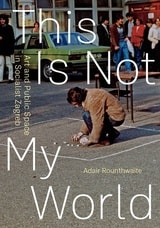
This Is Not My World
Art and Public Space in Socialist ZagrebAdair Rounthwaite
University of Minnesota Press, 2024
A close-up history of the Yugoslav artists who broke down the boundaries between public and private
In the decades leading up to the dissolution of socialist Yugoslavia, a collective of young artists based in Zagreb took to using the city’s public spaces as a platform for radical individual expression. This Is Not My World presents a detailed account of the Group of Six Authors and their circle in the prolific and experimental period from 1975 to 1985, highlighting the friction between public and private that underlied their innovative practices.
Looking to circumvent the rigid bureaucracy of official art institutions, this freewheeling group of conceptual artists and their peers brought artistic activities directly to an unwitting public by staging provocative performances, exhibiting artworks, and interacting with passersby on the streets. Exploring artworks such as Vlasta Delimar’s act of tying herself to a tree in a busy pedestrian area, Željko Jerman’s production of a giant banner declaring “Intimate Inscription” in the city’s central square, and Vlado Martek’s creation of an artwork on a seaside beach using women’s underwear, Adair Rounthwaite examines the work of these artists as a site of tension between the intimacy of artistic expression and the political structure of the public sphere under state socialism.
Whereas many histories of modern and contemporary art in formerly socialist countries tend to be dominated by discussions of ideology and resistance, This Is Not My World focuses its attention on the affective aspects of the group’s activities, using artist interviews and extensive documentation to bring the reader closer to the felt experience of their public interventions. Situating the group’s work within the context of broader developments in conceptualism and theories of the avant-garde, Rounthwaite provides a fresh consideration and newly detailed account of this marginalized episode in global art history.
Through the Poet’s Eye
The Travels of Zagajewski, Herbert, and BrodskyBozena Shallcross
Northwestern University Press, 2009
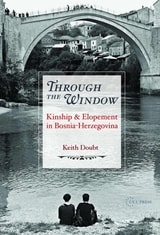
Through the Window
Kinship and Elopement in Bosnia-HerzegovinaKeith Doubt
Central European University Press, 2014
This book is not about war crimes, crimes against humanity, genocide, evil, or the killing of a society. It is about a cultural heritage, something vital to a society as a society, something that was not killed in the previous war, something that is resilient.
Through the Window brings an original perspective to folklore of Bosnians at a certain period of time and the differences and similarities of the three main ethnic groups in Bosnia and Herzegovina. It examines the transethnic character of cultural heritage, against divisions that dominate their tragic recent past.
The monograph focuses in particular on customs shared by different ethnic groups, specifically elopement, and affinal visitation. The elopement is a transformative rite of passage where an unmarried girl becomes a married woman. The affinal visitation, which follows, is a confirmatory ceremony where ritualized customs between families establish in-lawships These customs reflect a transethnic heritage shared by people in Bosnia as a national group, including Bosniaks, Serbs and Croats.

Time Gifts
Zoran Zivkovic
Northwestern University Press, 2000
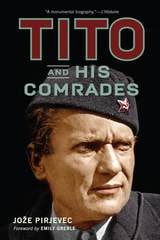
Tito and His Comrades
Jože Pirjevec, Foreword by Emily Greble
University of Wisconsin Press, 2018
With his Partisans he fought Hitler during World War II, and after the war he shrewdly resisted the Soviet Union's grasp. A leader of the non-aligned nations, he long enjoyed a reputation in the West as "the only good Communist" despite a dubious human rights record at home. Jože Pirjevec employs impressive research from archives in eight languages to offer this illuminating, definitive portrait of a complex man in turbulent times.
Pirjevec recounts how Tito, with little schooling but an astute intellect and driving ambition, rose through Communist Party ranks to shape and rule the Yugoslav federation. Surviving multiple assassination attempts by Nazis, Soviet spies, and others, Tito boldly threatened Stalin in return and may have, Pirjevec reveals, contrived Stalin's death. The narrative follows Tito's personal and political life into old age, as the specter of a Soviet invasion haunted him until his death at age eighty-seven. Available in English for the first time, this edition includes new material from Pirjevec and a foreword by Emily Greble.
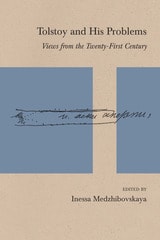
Tolstoy and His Problems
Views from the Twenty-First CenturyEdited by Inessa Medzhibovskaya
Northwestern University Press, 2019
In the broadest sense—with essays on a variety of issues that occupied Tolstoy, such as nihilism, mysticism, social theory, religion, Judaism, education, opera, and Shakespeare—the volume offers a fresh evaluation of Tolstoy's program to reform the ways we live, work, commune with nature and art, practice spirituality, exchange ideas and knowledge, become educated, and speak and think about history and social change.
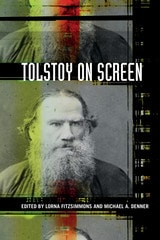
Tolstoy on Screen
Edited by Lorna Fitzsimmons and Michael A. Denner
Northwestern University Press, 2015
Scholarship on screen adaptation has proliferated in recent years, but it has remained largely focused on English- and Romance-language authors. Tolstoy on Screen aims to correct this imbalance with a comprehensive examination of film and television adaptations of Tolstoy’s fiction. Spanning the silent era to the present day, these essays consider well-known as well as neglected works in light of contemporary adaptation and media theory. The book is organized to facilitate a comparative, cross-cultural understanding of the various practices employed in different eras and different countries to bring Tolstoy’s writing to the screen. International in scope and rigorous in analysis, the essays cast new light on Tolstoy’s work and media studies alike.
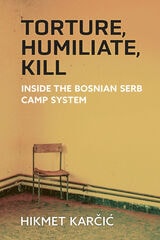
Torture, Humiliate, Kill
Inside the Bosnian Serb Camp SystemHikmet Karcic
University of Michigan Press, 2022
Half a century after the Holocaust, on European soil, Bosnian Serbs orchestrated a system of concentration camps where they subjected their Bosniak Muslim and Bosnian Croat neighbors to torture, abuse, and killing. Foreign journalists exposed the horrors of the camps in the summer of 1992, sparking worldwide outrage. This exposure, however, did not stop the mass atrocities. Hikmet Karčić shows that the use of camps and detention facilities has been a ubiquitous practice in countless wars and genocides in order to achieve the wartime objectives of perpetrators. Although camps have been used for different strategic purposes, their essential functions are always the same: to inflict torture and lasting trauma on the victims.
Torture, Humiliate, Kill develops the author’s collective traumatization theory, which contends that the concentration camps set up by the Bosnian Serb authorities had the primary purpose of inflicting collective trauma on the non-Serb population of Bosnia and Herzegovina. This collective traumatization consisted of excessive use of torture, sexual abuse, humiliation, and killing. The physical and psychological suffering imposed by these methods were seen as a quick and efficient means to establish the Serb “living space.” Karčić argues that this trauma was deliberately intended to deter non-Serbs from ever returning to their pre-war homes. The book centers on multiple examples of experiences at concentration camps in four towns operated by Bosnian Serbs during the war: Prijedor, Bijeljina, Višegrad, and Bileća. Chosen according to their political and geographical position, Karčić demonstrates that these camps were used as tools for the ethno-religious genocidal campaign against non-Serbs. Torture, Humiliate, Kill is a thorough and definitive resource for understanding the function and operation of camps during the Bosnian genocide.
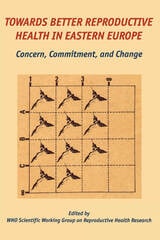
Towards Better Reproductive Health in Eastern Europe
Concern, Commitment, and ChangeWHO Scientific Working Group WHO Scientific Working Group
Central European University Press, 1998
Documenting the latest statistical data on current problems related to reproductive health issues in Central and Eastern Europe, this text explores the reasons for these problems and recommends action based on the scientific evidence for improving reproductive health.
The main issues covered are: declining standards of reproductive health care; rising trends in the incidence of sexually transmitted diseases; low rates of use of modern contraceptives; high rates of induced abortion; high prevalence of infertility; and the needs of adolescents with regard to reproductive health.
Towns between Empires
Good Governance and “Police” in Case Studies from Transylvania, Wallachia, and Moldavia, 1500s–1800sMária Pakucs
Central European University Press, 2025
The chapters in the volume capture the widest possible variety of political and administrative systems in the region. Transylvanian towns were structured and governed similarly to other small Central European urban centers, however significant diversity can be discerned following the Reformation. Moldavian and Wallachian towns in the 18th and 19th century are little known to international scholarship, and the chapters in this volume will fill this gap.
Tragic Encounters
Pushkin and European RomanticismMaksim Hanukai
University of Wisconsin Press, 2023
Many of Pushkin’s works move seamlessly between the closed world of traditional tragedy and the open world of Romantic tragic drama, and yet they follow neither the cathartic program prescribed by Aristotle nor the redemptive mythologies of the Romantics. Instead, the idiosyncratic and artistically mercurial Pushkin seized upon the newly unstable tragic mode to develop multiple, overlapping tragic visions. Providing new, innovative readings of such masterpieces as The Gypsies, Boris Godunov, The Little Tragedies, and The Bronze Horseman, Hanukai sheds light on an unexplored aspect of Pushkin’s work, while also challenging reigning theories about the fate of tragedy in the Romantic period.
Transatlantic Central Europe
Contesting Geography and Redifining Culture beyond the NationJessie Labov
Central European University Press, 2019
Transforming Peasants, Property and Power
The Collectivization of Agriculture in Romania, 1949–1962Dorin Dobrincu
Central European University Press, 2009
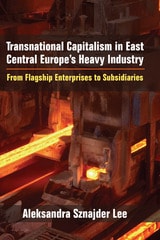
Transnational Capitalism in East Central Europe's Heavy Industry
From Flagship Enterprises to SubsidiariesAleksandra Sznajder Lee
University of Michigan Press, 2016
This book has broad implications for the political economy of reform because it illuminates the political determinants of privatization and the resources used to resist it. In addition, Sznajder Lee sheds new light on why some countries are more likely than others to be subject to external constraints, such as IMF conditionality, and how some allegedly pro-market reformers manage to maintain public ownership over certain industry sectors.
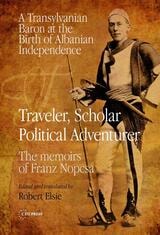
Traveler, Scholar, Political Adventurer
A Transylvanian Baron at the Birth of Albanian Independence: The memoirs of Franz NopcsaFranz Nopcsa
Central European University Press, 2014
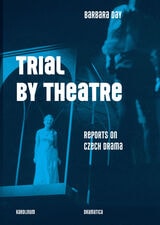
Trial by Theatre
Reports on Czech DramaBarbara Day
Karolinum Press, 2019
Drawing on a range of oral and written sources, as well as her unique personal experience of cultural and historical events in Czechoslovakia from the 1960s to the 1980s, Day offers a sweeping view of Czech theater, its colorful personalities, and international connections. Her story details: the days of the National Awakening in the nineteenth century, when theater took the place of politics, becoming an instrument of national identity in the hands of the revivalists; theater as a symbol of independence during the Nazi occupation; its survival of Socialist Realism and Stalinism and subsequent blossoming in the “Golden Sixties”; and theater’s essential role in Prague Spring and beyond, when for two decades theater operated in provisional spaces like gymnasiums, bars, trade union halls, art galleries, and living rooms. Trial by Theatre culminates in the Velvet Revolution of 1989, a year that saw the installation of Václav Havel—a playwright—as the first post-Communist president of Czechoslovakia.