Results by title
542 books match the query 'Emigration and immigration' and 107 start with t
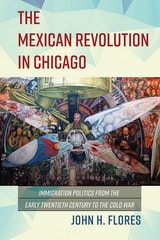
The Mexican Revolution in Chicago
Immigration Politics from the Early Twentieth Century to the Cold WarJohn H Flores
University of Illinois Press, 2018
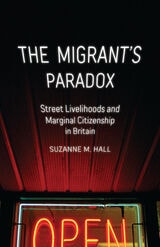
The Migrant's Paradox
Street Livelihoods and Marginal Citizenship in BritainSuzanne M. Hall
University of Minnesota Press, 2021
Connects global migration with urban marginalization, exploring how “race” maps onto place across the globe, state, and street
In this richly observed account of migrant shopkeepers in five cities in the United Kingdom, Suzanne Hall examines the brutal contradictions of sovereignty and capitalism in the formation of street livelihoods in the urban margins. Hall locates The Migrant’s Paradox on streets in the far-flung parts of de-industrialized peripheries, where jobs are hard to come by and the impacts of historic state underinvestment are deeply felt.
Drawing on hundreds of in-person interviews on streets in Birmingham, Bristol, Leicester, London, and Manchester, Hall brings together histories of colonization with current forms of coloniality. Her six-year project spans the combined impacts of the 2008 financial crisis, austerity governance, punitive immigration laws and the Brexit Referendum, and processes of state-sanctioned regeneration. She incorporates the spaces of shops, conference halls, and planning offices to capture how official border talk overlaps with everyday formations of work and belonging on the street.
Original and ambitious, Hall’s work complicates understandings of migrants, demonstrating how migrant journeys and claims to space illuminate the relations between global displacement and urban emplacement. In articulating “a citizenship of the edge” as an adaptive and audacious mode of belonging, she shows how sovereignty and inequality are maintained and refuted.
The Modern Israeli and Palestinian Diasporas
A Comparative ApproachEdited by Nahum Karlinsky
University of Texas Press, 2024
A comparative study of contemporary Israeli and Palestinian diasporas.
Exilic and diasporic experience have become ubiquitous in recent decades. Jews, lacking a homeland, spread to various parts of the world, making the Jewish diaspora paradigmatic. But after the establishment of Israel in 1948, a different kind of diaspora emerged, as more than a tenth of Israeli citizens have chosen to leave their newly established state and resettle. Meanwhile, about half of all Palestinians, including Palestinian citizens of Israel, now reside in exile, predominantly as a result of the ongoing Palestinian-Israeli conflict.
Recognizing that Israeli-Jewish and Palestinian-Arab societies coexist and are engaged in constant relations, Nahum Karlinsky has assembled an impressive array of contributors to explore these diasporas alongside one another and in dialogue with other diasporic communities. The collected essays cover such topics as Palestinian exiles and diasporas, the demographics of today’s Israeli diaspora, immigrant enterprises, transnationalism and development, the unique place of Israeli Jews in the United States, the literature of Palestinian transnationals, and the emergence of Berlin as a queer Israeli-Jewish immigrant enclave.The Modern Israeli and Palestinian Diasporas challenges and reimagines the very notion of a homeland.
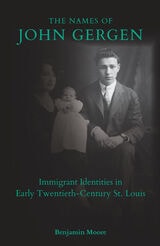
The Names of John Gergen
Immigrant Identities in Early Twentieth-Century St. LouisBenjamin Moore
University of Missouri Press, 2020
Winner of the 2022 Missouri History Book Award
Rescued from the dumpster of a boarded-up house, the yellowing scraps of a young migrant’s schoolwork provided Benjamin Moore with the jumping-off point for this study of migration, memory, and identity. Centering on the compelling story of its eponymous subject, The Names of John Gergen examines the converging governmental and institutional forces that affected the lives of migrants in the industrial neighborhoods of South St. Louis in the early twentieth century. These migrants were Banat Swabians from Torontál County in southern Hungary—they were Catholic, agrarian, and ethnically German.
Between 1900 and 1920, the St. Louis neighborhoods occupied by migrants were sites of efforts by civic authorities and social reformers to counter the perceived threat of foreignness by attempting to Americanize foreign-born residents. At the same time, these neighborhoods saw the strengthening of Banat Swabians’ ethnic identities. Historically, scholars and laypeople have understood migrants in terms of their aspirations and transformations, especially their transformations into Americans. The experiences of John Gergen and his kin, however, suggest that identity at the level of the individual was both more fragmented and more fluid than twentieth-century historians have recognized, subject to a variety of forces that often pulled migrants in multiple directions.

The Nation's Tortured Body
Violence, Representation, and the Formation of a Sikh "Diaspora"Brian Keith Axel
Duke University Press, 2001
Based on ethnographic and archival research conducted by Axel at several sites in India, England, and the United States, the text delineates a theoretical trajectory for thinking about the proliferation of diaspora studies and area studies in America and England. After discussing this trajectory in relation to the colonial and postcolonial movement of Sikhs, Axel analyzes the production and circulation of images of Sikhs around the world, beginning with visual representations of Maharaja Duleep Singh, the last Sikh ruler of Punjab, who died in 1893. He argues that imagery of particular male Sikh bodies has situated—at different times and in different ways—points of mediation between various populations of Sikhs around the world. Most crucially, he describes the torture of Sikhs by Indian police between 1983 and the present and discusses the images of tortured Sikh bodies that have been circulating on the Internet since 1996. Finally, he returns to questions of the homeland, reflecting on what the issues discussed in The Nation's Tortured Body might mean for the ongoing fight for Khalistan.
Specialists in anthropology, history, cultural studies, diaspora studies, and Sikh studies will find much of interest in this important work.
The New Asian Immigration in Los Angeles and Global Restructuring
Paul Ong
Temple University Press, 1994
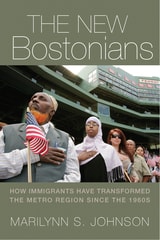
The New Bostonians
How Immigrants Have Transformed the Metro Area since the 1960sMarilynn S. Johnson
University of Massachusetts Press, 2015
How immigrants helped rebuild a city—and redefined what it means to be American
Among the most consequential pieces of Great Society legislation, the Immigration Act of 1965 opened the nation's doors to large-scale immigration from Africa, Asia, and Latin America. A half century later, the impact of the "new immigration" is evident in the transformation of the country's demographics, economy, politics, and culture, particularly in urban America.
In The New Bostonians, Marilynn S. Johnson examines the historical confluence of recent immigration and urban transformation in greater Boston, a region that underwent dramatic decline after World War II. Since the 1980s, the Boston area has experienced an astounding renaissance—a development, she argues, to which immigrants have contributed in numerous ways. From 1970 to 2010, the percentage of foreign-born residents of the city more than doubled, representing far more diversity than earlier waves of immigration. Like the older Irish, Italian, and other European immigrant groups whose labor once powered the region's industrial economy, these newer migrants have been crucial in re-building the population, labor force, and metropolitan landscape of the New Boston, although the fruits of the new prosperity have not been equally shared.
The New Chosen People
Immigrants in the United StatesGuillermina Jasso
Russell Sage Foundation, 1990
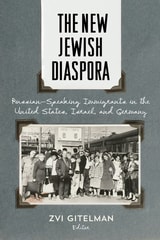
The New Jewish Diaspora
Russian-Speaking Immigrants in the United States, Israel, and GermanyGitelman, Zvi
Rutgers University Press, 2016
The New Second Generation
Alejandro Portes
Russell Sage Foundation, 1996
The New World Inside A Basque Village
The Oiartzun Valley And Its Atlantic Emigrants, 1550-1800Juan Javier Pescador
University of Nevada Press, 2003
An ethnohistory detailing the lives of fifteen generations in a Basque-speaking community in Spain and the result of their diverse contacts with the New World. The Basques’ remarkable role in the establishment and exploitation of Spain’s American empire is well known, but until now the impact of these achievements on the Basque Country itself has received little attention. In this pioneering study, Juan Javier Pescador meticulously examines three centuries of social and economic change in the Oiartzun Valley of Gipuzkoa, a typical Basque peasant community altered by its contacts with the New World.
The Old Country and the New
Essays on Swedes and AmericaH. Arnold Barton
Southern Illinois University Press, 2006
Documenting a rich Scandinavian American culture and ethnic perspective
This notable collection of seventeen essays and six editorials by renowned Swedish American historian H. Arnold Barton was compiled from writings published between 1974 and 2005. The result of three decades of extensive research in the United States and Sweden, The Old Country and the New: Essays on Swedes and America, covers Swedish emigration to North America as well as the history and culture of Swedes in their new country.
In this rich mosaic of American ethnicity and cultural history, Barton analyzes the multifaceted Swedish emigration/immigration story. Essays include a survey of the historiography of emigration from the Scandinavian countries and the Scandinavian immigration to North America, Swedish emigration before 1846, and the Eric-Janssonist religious sect and its colony at Bishop Hill, Illinois.
Because Swedish immigrants were highly literate people, they wrote numerous letters describing their experiences to relatives and friends at home. What these letters related—or omitted—is the subject of another essay. Barton discusses Swedish immigrants who returned permanently to their homeland, affecting both the old country and the new. He also traces relations between the United States and Sweden, post—World War II Swedish immigration, and genealogy as history.
Offering a broad Scandinavian American ethnic perspective, The Old Country and the New appeals to both scholars and lay readers. Sixteen illustrations and a complete bibliography of Barton’s publications on Swedish American history and culture enhance the volume.

The Opium Debate and Chinese Exclusion Laws in the Nineteenth-Century American West
Diana L. Ahmad
University of Nevada Press, 2011
America’s current "war on drugs" is not the nation’s first. In the mid-nineteenth century, opium-smoking was decried as a major social and public health problem, especially in the West. Although China faced its own epidemic of opium addiction, only a very small minority of Chinese immigrants in America were actually involved in the opium business. It was in Anglo communities that the use of opium soon spread and this growing use was deemed a threat to the nation’s entrepreneurial spirit and to its growing mportance as a world economic and military power. The Opium Debate examines how the spread of opium-smoking fueled racism and created demands for the removal of the Chinese from American life. This meticulously researched study of the nineteenth-century drug-abuse crisis reveals the ways moral crusaders linked their antiopium rhetoric to already active demands for Chinese exclusion. Until this time, anti-Chinese propaganda had been dominated by protests against the economic and political impact of Chinese workers and the alleged role of Chinese women as prostitutes. The use of the drug by Anglos added another reason for demonizing Chinese immigrants. Ahmad describes the disparities between Anglo-American perceptions of Chinese immigrants and the somber realities of these people’s lives, especially the role that opium-smoking came to play in the Anglo-American community, mostly among middle- and upper-class women. The book offers a brilliant analysis of the evolution of the Chinese Exclusion Act of 1882, plus important insights into the social history of the nineteenth-century West, the culture of American Victorianism, and the rhetoric of racism in American politics.
The Other Side of the Fence
American Migrants in MexicoBy Sheila Croucher
University of Texas Press, 2009
A growing number of Americans, many of them retirees, are migrating to Mexico's beach resorts, border towns, and picturesque heartland. While considerable attention has been paid to Mexicans who immigrate to the U.S., the reverse scenario receives little scrutiny. Shifting the traditional lens of North American migration, The Other Side of the Fence takes a fascinating look at a demographic trend that presents significant implications for the United States and Mexico.
The first in-depth account of this trend, Sheila Croucher's study describes the cultural, economic, and political lives of these migrants of privilege. Focusing primarily on two towns, San Miguel de Allende in the mountains and Ajijic along the shores of Lake Chapala, Croucher depicts the surprising similarities between immigrant populations on both sides of the border. Few Americans living in Mexico are fluent in the language of their new land, and most continue to practice the culture and celebrate the national holidays of their homeland, maintaining close political, economic, and social ties to the United States while making political demands on Mexico, where they reside.
Accessible, timely, and brimming with eye-opening, often ironic, findings, The Other Side of the Fence brings an important perspective to borderlands debates.
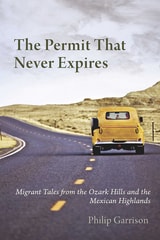
The Permit that Never Expires
Migrant Tales from the Ozark Hills and the Mexican HighlandsBy Philip Garrison
University of Arizona Press, 2010
There is a river, Garrison writes, that runs from Oaxaca to British Columbia. El flujo migratorio, he calls it. The migratory flow. But it isn’t a conventional sort of river. “It is made of neither rock nor water nor wind but only of motion, of momentum. And yet . . . it is the most compelling feature in the entire U.S. West,” he claims. Garrison has his feet planted firmly in the middle of this river of humanity, wondering why America is trying to build a wall along an actual river, the Rio Grande, to keep us separated from the mexicanos. All borders, he writes, exist mostly in the imagination—a point he proves decisively in this delightful book.
Garrison is an award-winning writer and this book shows why. Warm, witty, self-deprecating, and charming (the list could go on), this collection illuminates the lives of these migrants, whether at the local food bank in Ellensburg, Washington, in the streets of Michoacán, or everywhere in between.
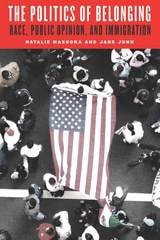
The Politics of Belonging
Race, Public Opinion, and ImmigrationNatalie Masuoka and Jane Junn
University of Chicago Press, 2013
The Politics of Herding Cats
When Congressional Leaders FailJohn Lovett
University of Michigan Press, 2021
The Politics of New Immigrant Destinations
Transatlantic PerspectivesStefanie Chambers
Temple University Press, 2017
Migration to new destinations in Europe and the United States has expanded dramatically over the past few decades. Within these destinations, there is a corresponding greater variety of ethnic, cultural, and/or religious diversity. This timely volume, The Politics of New Immigrant Destinations, considers the challenges posed by this proliferation of diversity for governments, majority populations, and immigrants.
The contributors assess the effectiveness of the policy and political responses that have been spawned by increasing diversity in four types of new immigrant destinations: “intermediate” destination countries—Ireland and Italy; culturally distinct regions experiencing new migration such as Catalonia in Spain or the American South; new destinations within traditional destination countries like the state of Utah and rural towns in England; and “early migration cycle” countries including Latvia and Poland.
The Politics of New Immigrant Destinations examines how these new destinations for immigrants compare to traditional destinations, with respect to their policy responses and success at integrating immigrants, offering perspectives from both immigrants and natives.
Contributors include: Dace Akule, Amado Alarcón, Rhys Andrews, Francesca Campomori, Tiziana Caponio, Scott Decker, Erica Dobbs, Melissa M. Goldsmith, Aleksandra Grzymała-Kazłowska, Claudio A. Holzner, Magdalena Lesińska, Paul Lewis, Helen B. Marrow, Laura Morales, Katia Pilati, Marie Provine, Monica Varsanyi, and the editors.

The Portuguese-Speaking Diaspora
Seven Centuries of Literature and the ArtsBy Darlene J. Sadlier
University of Texas Press, 2016
Long before the concept of “globalization,” the Portuguese constructed a vast empire that extended into Africa, India, Brazil, and mid-Atlantic territories, as well as parts of China, Southeast Asia, and Japan. Using this empire as its starting point and spanning seven centuries and four continents, The Portuguese-Speaking Diaspora examines literary and artistic works about the ensuing diaspora, or the dispersion of people within the Portuguese-speaking world, resulting from colonization, the slave trade, adventure seeking, religious conversion, political exile, forced labor, war, economic migration, and tourism.
Based on a broad array of written and visual materials, including historiography, letters, memoirs, plays, poetry, fiction, cartographic imagery, paintings, photographs, and films, The Portuguese-Speaking Diaspora is the first detailed analysis of the different and sometimes conflicting cultural productions of the imperial diaspora in its heyday and an important context for understanding the more complex and broader-based culture of population travel and displacement from the former colonies to present-day “homelands.” The topics that Darlene J. Sadlier discusses include exploration and settlement by the Portuguese in different parts of the empire; the Black Atlantic slave trade; nineteenth-century travel and Orientalist imaginings; the colonial wars; and the return of populations to Portugal following African independence. A wide-ranging study of the art and literature of these and other diasporic movements, this book is a major contribution to the growing field of Lusophone studies.
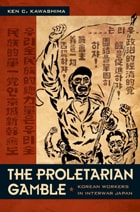
The Proletarian Gamble
Korean Workers in Interwar JapanKen C. Kawashima
Duke University Press, 2009
Kawashima draws on previously unseen archival materials from interwar Japan as he describes how Korean migrants struggled against various recruitment practices, unfair and discriminatory wages, sudden firings, racist housing practices, and excessive bureaucratic red tape. Demonstrating that there was no single Korean “minority,” he reveals how Koreans exploited fellow Koreans and how the stratification of their communities worked to the advantage of state and capital. However, Kawashima also describes how, when migrant workers did organize—as when they became involved in Rōsō (the largest Korean communist labor union in Japan) and in Zenkyō (the Japanese communist labor union)—their diverse struggles were united toward a common goal. In The Proletarian Gamble, his analysis of the Korean migrant workers' experiences opens into a much broader rethinking of the fundamental nature of capitalist commodity economies and the analytical categories of the proletariat, surplus populations, commodification, and state power.
The Red Italians of Monfalcone
Everyday Fascism, Communist Horizons, and the Migration of an Italian Border Community Beyond the Iron CurtainLuke Gramith
University of Wisconsin Press, 2026
Between 1946 and 1948, roughly five thousand ethnic Italians from the northern Adriatic shipbuilding town of Monfalcone relocated to the newly communist Yugoslavia. This rare case of eastward Cold War migration demonstrates how ordinary people conceived of liberation during the transitional years between World War II and the early Cold War—a time when Monfalcone was both the object of competing Italian and Yugoslav territorial claims and the subject of Anglo-American military occupation.
In The Red Italians of Monfalcone, Luke Gramith undertakes a deep and detailed analysis—based on archival sources in Italy, Slovenia, and the United States—of how the Monfalconesi came to understand Fascism and communism through everyday experience and how those emergent ideologies affected and were affected by their migration. In the course of his analysis, Gramith also examines the failure of “defascistization” and how it fueled strong (but ultimately unsuccessful) pro-Yugoslav and communist movements.
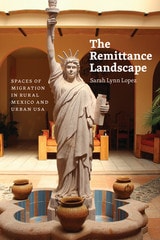
The Remittance Landscape
Spaces of Migration in Rural Mexico and Urban USASarah Lynn Lopez
University of Chicago Press, 2014
Lopez not only identifies a clear correspondence between the flow of remittances and the recent building boom in rural Mexico but also proposes that this construction boom itself motivates migration and changes social and cultural life for migrants and their families. At the same time, migrants are changing the landscapes of cities in the United States: for example, Chicago and Los Angeles are home to buildings explicitly created as headquarters for Mexican workers from several Mexican states such as Jalisco, Michoacán, and Zacatecas. Through careful ethnographic and architectural analysis, and fieldwork on both sides of the border, Lopez brings migrant hometowns to life and positions them within the larger debates about immigration.
The Resilient Self
Gender, Immigration, and Taiwanese AmericansGu, Chien-Juh
Rutgers University Press, 2017
Most of the women immigrated as dependents when their U.S.-educated husbands found professional jobs upon graduation. Constrained by their dependent visas, these women could not work outside of the home during the initial phase of their settlement. The significant contrast of their lives before and after immigration—changing from successful professionals to foreign housewives—generated feelings of boredom, loneliness, and depression. Mourning their lost careers and lacking fulfillment in homemaking, these highly educated immigrant women were forced to redefine the meaning of work and housework, which in time shaped their perceptions of themselves and others in the family, at work, and in the larger community.
The Returned
Former U.S. Migrants’ Lives in Mexico CityClaudia Masferrer
Russell Sage Foundation, 2025
Masferrer, Hamilton, and Denier draw on interviews with former U.S. migrants living in Mexico City to better understand the experience of return migration to urban areas. Each of the migrants they spoke with lived in the United States for long periods with noncitizen status during the last four decades. During this time, U.S. immigration policy became increasingly focused on restriction and enforcement, which made it difficult for migrants to safely move back and forth across the border for work or to visit family without documentation. The authors find that upon their return, migrants in Mexico City felt disoriented and lost and had difficulty adapting to a massive urban environment where there is little support for returnees. They struggled to translate their work experience from their time in the U.S. to find quality jobs. Additionally, many found their family lives upended as they reunited with or formed families in the U.S.. Some found themselves separated from family members still in the U.S. with no ability to legally visit them. Others brought their families back to Mexico, some of whom were U.S. citizens and had never been to Mexico before. They, too, struggled to adapt and integrate to life in Mexico City.
The authors use the experiences of return migrants to discuss policies and practices that would improve their lives and ease their reintegration. To help with the disorientation they experience, returnees proposed ongoing psychological support with mental health professionals who have knowledge and training in the social and legal issues that return migrants face. Return migrants also advocated for policies to enhance skill matching, job creation, and entrepreneurship, as many felt the occupational skills they developed in the U.S. were undervalued in Mexico. To address family separation, returnees argued for legal and policy reform to accommodate family reunification.
The Returned is an illuminating account of the difficulties faced by return migrants and their families in Mexico City.
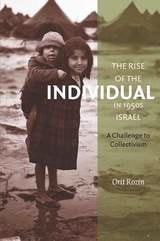
The Rise of the Individual in 1950s Israel
A Challenge to CollectivismOrit Rozin
Brandeis University Press, 2011
The Roles of Immigrants and Foreign Students in US Science, Innovation, and Entrepreneurship
Edited by Ina Ganguli, Shulamit Kahn, and Megan MacGarvie
University of Chicago Press, 2020
The Roots of Polarization
From the Racial Realignment to the Culture WarsNeil A. O'Brian
University of Chicago Press, 2024
A deeply researched account of how battles over civil rights in the 1960s shaped today’s partisan culture wars.
In the late twentieth century, gay rights, immigration, gun control, and abortion debates all burst onto the political scene, scrambling the parties and polarizing the electorate. Neil A. O’Brian traces the origins of today’s political divide on these issues to the 1960s when Democrats and Republicans split over civil rights. It was this partisan polarization over race, he argues, that subsequently shaped partisan fault lines on other culture war issues that persist to this day.
Using public opinion data dating to the 1930s, O’Brian shows that attitudes about civil rights were already linked with a range of other culture war beliefs decades before the parties split on these issues—and much earlier than previous scholarship realized. Challenging a common understanding of partisan polarization as an elite-led phenomenon, The Roots of Polarization argues politicians and interest groups, jockeying for power in the changing party system, seized on these preexisting connections in the mass public to build the parties’ contemporary coalitions.
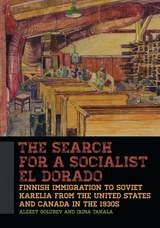
The Search for a Socialist El Dorado
Finnish Immigration to Soviet Karelia from the United States and Canada in the 1930sAlexey Golubev and Irina Takala
Michigan State University Press, 2014
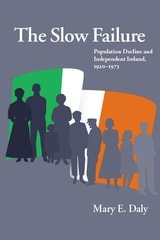
The Slow Failure
Population Decline and Independent Ireland, 1920–1973Mary E. Daly
University of Wisconsin Press, 2006
Today Ireland’s population is rising, immigration outpaces emigration, most families have two or at most three children, and full-time farmers are in steady decline. But the opposite was true for more than a century, from the great famine of the 1840s until the 1960s. Between 1922 and 1966—most of the first fifty years after independence—the population of Ireland was falling, in the 1950s as rapidly as in the 1880s. Mary Daly’s The Slow Failure examines not just the reasons for the decline, but the responses to it by politicians, academics, journalists, churchmen, and others who publicly agonized over their nation’s “slow failure.” Eager to reverse population decline but fearful that economic development would undermine Irish national identity, they fashioned statistical evidence to support ultimately fruitless policies to encourage large, rural farm families. Focusing on both Irish government and society, Daly places Ireland’s population history in the mainstream history of independent Ireland.
Daly’s research reveals how pastoral visions of an ideal Ireland made it virtually impossible to reverse the fall in population. Promoting large families, for example, contributed to late marriages, actually slowing population growth further. The crucial issue of emigration failed to attract serious government attention except during World War II; successive Irish governments refused to provide welfare services for emigrants, leaving that role to the Catholic Church. Daly takes these and other elements of an often-sad story, weaving them into essential reading for understanding modern Irish history
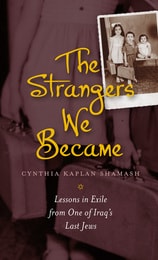
The Strangers We Became
Lessons in Exile from One of Iraq's Last JewsCynthia Kaplan Shamash
Brandeis University Press, 2015
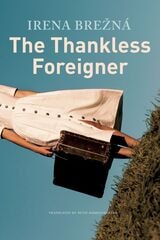
The Thankless Foreigner
Irena Brežná
Seagull Books, 2022
In 1968, in search of a better world, a young person flees her country and ends up in Switzerland, the land of hard cheese. There she’s told not to talk nonsense, or not to “talk cheese,” as they say in the local dialect. Home is where you can grumble, but here you have to be grateful. Her new environs seem unwieldy, aloof, and she rebels against this host country that insists on her following its rules, that won’t let her be herself. But as an interpreter, she meets many others who have ended up here—petty criminals, depressives, hustlers, refugees, victims of exploitation, and others who have gone out of their way to assimilate, people who share a hope that they can make something new of their lives. Gradually she learns to experience the richness of exile and foreignness, to build bridges between cultures. A brilliantly written novel about the search for identity between assimilation and resistance, Irena Brežná’s The Thankless Foreigner is a significant addition to the important literature of immigrant experience.

The Time between Places
Stories That Weave In and Out of Egypt and AmericaPauline Kaldas
University of Arkansas Press, 2010
The Transnational History of a Chinese Family
Immigrant Letters, Family Business, and Reverse MigrationLiu, Haiming
Rutgers University Press, 2005
Family and home are one word—jia—in the Chinese language. Family can be separated and home may be relocated, but jia remains intact. It signifies a system of mutual obligation, lasting responsibility, and cultural values. This strong yet flexible sense of kinship has enabled many Chinese immigrant families to endure long physical separation and accommodate continuities and discontinuities in the process of social mobility.
Based on an analysis of over three thousand family letters and other primary sources, including recently released immigration files from the National Archives and Records Administration, Haiming Liu presents a remarkable transnational history of a Chinese family from the late nineteenth century to the 1970s. For three generations, the family lived between the two worlds. While the immigrant generation worked hard in an herbalist business and asparagus farming, the younger generation crossed back and forth between China and America, pursuing proper education, good careers, and a meaningful life during a difficult period of time for Chinese Americans. When social instability in China and hostile racial environment in America prevented the family from being rooted in either side of the Pacific, transnational family life became a focal point of their social existence.
This well-documented and illustrated family history makes it clear that, for many Chinese immigrant families, migration does not mean a break from the past but the beginning of a new life that incorporates and transcends dual national boundaries. It convincingly shows how transnationalism has become a way of life for Chinese American families.
The Undocumented Everyday
Migrant Lives and the Politics of VisibilityRebecca M. Schreiber
University of Minnesota Press, 2018
Examining how undocumented migrants are using film, video, and other documentary media to challenge surveillance, detention, and deportation
As debates over immigration increasingly become flashpoints of political contention in the United States, a variety of advocacy groups, social service organizations, filmmakers, and artists have provided undocumented migrants with the tools and training to document their experiences.
In The Undocumented Everyday, Rebecca M. Schreiber examines the significance of self-representation by undocumented Mexican and Central American migrants, arguing that by centering their own subjectivity and presence through their use of documentary media, these migrants are effectively challenging intensified regimes of state surveillance and liberal strategies that emphasize visibility as a form of empowerment and inclusion. Schreiber explores documentation as both an aesthetic practice based on the visual conventions of social realism and a state-administered means of identification and control.
As Schreiber shows, by visualizing new ways of belonging not necessarily defined by citizenship, these migrants are remaking documentary media, combining formal visual strategies with those of amateur photography and performative elements to create a mixed-genre aesthetic. In doing so, they make political claims and create new forms of protection for migrant communities experiencing increased surveillance, detention, and deportation.
The Unruly Facts of Race
The Politics of Knowledge Production in the Early Twentieth-Century Immigration DebateSunmin Kim
University of Chicago Press, 2026
Unfortunately, we’re all too familiar with the US’s legacy of maligning immigrants. Some Americans see immigrants as inherently threatening, a blank screen onto which the nation’s worst fears are projected. But this phenomenon is neither timeless nor static. Instead, it arose and transformed alongside the unprecedented arrival of immigrants in the early twentieth century—and the federal government’s response. In The Unruly Facts of Race, sociologist Sunmin Kim explains how American ideas about race and ethnicity were transformed in the early twentieth century as an unintended consequence of anti-immigrant mobilization.
Kim presents a wealth of archival evidence, including the proceedings of the 1907 Dillingham Commission, to reconstruct how competing racialized visions of nationhood evolved in the early twentieth-century immigration debate. Immigration restrictionist politicians believed that the United States should be a White, Anglo-Saxon, and Protestant nation. However, when they mobilized researchers—some of whom were women and/or immigrants—to gather data at a massive scale to rationalize their aims, they were met with unruly facts that did not support their racial project. Newer European immigrants, as the data showed, were not much different from descendants of earlier immigrants from northern Europe. When facts failed to support the vilification of immigrants, exclusionist politicians instead turned to race as a marker of ineluctable difference to justify their aims. This led to a new principle of national belonging: the United States transitioned to a country that encompassed various European groups, including Catholics and Jews, but excluded non-White immigrants, as they were deemed too different to become a part of the nation.
Kim’s analysis shows that throughout US history, the opportunity for belonging for some immigrants was predicated on the exclusion of others. His focus on the role of facts in the early twentieth century provides a refreshing take on why the so-called “nation of immigrants” has always demonized some immigrants while cherishing others, highlighting the selection and control of immigrants as the core principles of the American nation-building project. Amid a vitriolic explosion of American immigration discourse, Kim offers a needed corrective to and context for debates around who belongs in the United States.
The Unwanted
European Refugees From 1St World WarMichael Marrus
Temple University Press, 2001

These Dark Skies
Reckoning with Identity, Violence, and Power from AbroadArianne Zwartjes
University of Iowa Press, 2022
The essays investigate and meditate on a broad array of related topics, including drone strikes, tear gas, and military intervention; the sugar trade, the Dutch blackface celebration of Zwarte Piet, and constructions of whiteness in Europe and the U.S.; and visual arts of Russian avant-garde painters, an Iraqi choreographer living in Belgium, and German choreographer Pina Bausch.
This is a lyrical, timely book deeply salient to the political moment we continue to find ourselves in: a moment of incredible anti-refugee and anti-immigrant sentiment, a moment of xenophobic and misogynistic violence.
They Came to Toil
Newspaper Representations of Mexicans and Immigrants in the Great DepressionBy Melita M. Garza
University of Texas Press, 2018
As the Great Depression gripped the United States in the early 1930s, the Hoover administration sought to preserve jobs for Anglo-Americans by targeting Mexicans, including long-time residents and even US citizens, for deportation. Mexicans comprised more than 46 percent of all people deported between 1930 and 1939, despite being only 1 percent of the US population. In all, about half a million people of Mexican descent were deported to Mexico, a “homeland” many of them had never seen, or returned voluntarily in fear of deportation.
They Came to Toil investigates how the news reporting of this episode in immigration history created frames for representing Mexicans and immigrants that persist to the present. Melita M. Garza sets the story in San Antonio, a city central to the formation of Mexican American identity, and contrasts how the city’s three daily newspapers covered the forced deportations of Mexicans. She shows that the Spanish-language La Prensa not surprisingly provided the fullest and most sympathetic coverage of immigration issues, while the locally owned San Antonio Express and the Hearst chain-owned San Antonio Light varied between supporting Mexican labor and demonizing it. Garza analyzes how these media narratives, particularly in the English-language press, contributed to the racial “othering” of Mexicans and Mexican Americans. Adding an important new chapter to the history of the Long Civil Rights Movement, They Came to Toil brings needed historical context to immigration issues that dominate today’s headlines.
They Came to Wisconsin
Julia Pferdehirt
Wisconsin Historical Society Press, 2002
They Came to Wisconsin presents three themes of the state’s immigrant history: leaving the homeland, making the journey, and enduring the first year of settlement. Journal and diary entries and letters from European groups and oral histories from African American, Latino, Hmong, and Amish sources make this book dynamic and wholly inclusive. They Came to Wisconsin breaks fresh ground in presenting document-centered Wisconsin history to a young audience. More important, these firsthand stories add a real human dimension to history, helping students to compare the experiences of the varied groups who came to Wisconsin in the last two hundred years.
Distributed for the Wisconsin Historical Society Press.
Things Fall Away
Philippine Historical Experience and the Makings of GlobalizationNeferti X. M. Tadiar
Duke University Press, 2009
Tadiar treats the historical experiences articulated in feminist, urban protest, and revolutionary literatures of the 1960s–90s as “cultural software” for the transformation of dominant social relations. She considers feminist literature in relation to the feminization of labor in the 1970s, when between 300,000 and 500,000 prostitutes were working in the areas around U.S. military bases, and in the 1980s and 1990s, when more than five million Filipinas left the country to toil as maids, nannies, nurses, and sex workers. She reads urban protest literature in relation to authoritarian modernization and crony capitalism, and she reevaluates revolutionary literature’s constructions of the heroic revolutionary subject and the messianic masses, probing these social movements’ unexhausted cultural resources for radical change.
Three-Way Street
Jews, Germans, and the TransnationalJay Howard Geller and Leslie Morris, Editors
University of Michigan Press, 2016
Among the first volumes to focus on German-Jewish transnationalism, this interdisciplinary collection spans the fields of history, literature, film, theater, architecture, philosophy, and theology as it examines the lives of significant emigrants. The individuals whose stories are reevaluated include German Jews Ernst Lubitsch, David Einhorn, and Gershom Scholem, the architect Fritz Nathan and filmmaker Helmar Lerski; and eastern European Jews David Bergelson, Der Nister, Jacob Katz, Joseph Soloveitchik, and Abraham Joshua Heschel—figures not normally associated with Germany. Three-Way Street addresses the gap in the scholarly literature as it opens up critical ways of approaching Jewish culture not only in Germany, but also in other locations, from the mid-nineteenth century to the present.

Through Fences
Written by Frederick Luis Aldama and Illustrated by Oscar Garza
The Ohio State University Press, 2024
Honor-winner, 2025 Texas Institute of Letters Jean Flynn Award for Best Young Adult Book
Longlisted, REFORMA National Book Award 2024
Through Fences follows the ups and downs of Latino kids and young adults in the US–Mexico borderlands: San Ysidro, Calexico, McAllen, and back and forth across the border. A young girl's journey north goes wrong, and now she is in a forbidding new place, away from her parents and brother, where she doesn't understand what the adults in green are saying even as she tries to obey their rules. Rocky, one of the few white kids in town, stands by and watches as Miguel is jumped by two of his friends. Maggie and her parents are separated at the border in a tragic accident. Alberto's son doesn't understand his Mexican father's hatred for illegals or his work as a border patrol agent. Alicia is a TikTok influencer who doesn't want to grow up to be a hospital cleaning lady like her mother, but COVID complicates things. Whatever their challenges, the kids, teens, tweens, and adults in these pages are just trying to survive their everyday lives. Vibrantly illustrated by Oscar Garza, each of these short stories brings a different perspective on the perils of living on the border while brown.
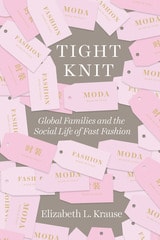
Tight Knit
Global Families and the Social Life of Fast FashionElizabeth L. Krause
University of Chicago Press, 2018
Krause offers a revelatory look into how families involved in the fashion industry are coping with globalization based on longterm research in Prato, the historic hub of textile production in the heart of metropolitan Tuscany. She brings to the fore the tensions—over value, money, beauty, family, care, and belonging—that are reaching a boiling point as the country struggles to deal with the same migration pressures that are triggering backlash all over Europe and North America. Tight Knit tells a fascinating story about the heterogeneity of contemporary capitalism that will interest social scientists, immigration experts, and anyone curious about how globalization is changing the most basic of human conditions—making a living and making a life.
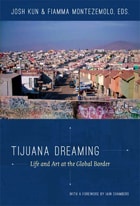
Tijuana Dreaming
Life and Art at the Global BorderJosh Kun and Fiamma Montezemolo, eds.
Duke University Press, 2012
Contributors. Tito Alegría, Humberto Félix Berumen, Roberto Castillo Udiarte, Iain Chambers, Luis Humberto Crosthwaite, Teddy Cruz, Ejival, Tarek Elhaik, Guillermo Fadanelli, Néstor García Canclini, Ingrid Hernández, Jennifer Insley-Pruitt, Kathryn Kopinak, Josh Kun, Jesse Lerner, Fiamma Montezemolo, Rene Peralta, Rafa Saavedra, Lucía Sanromán, Santiago Vaquera-Vásquez, Heriberto Yépez
To Be an Immigrant
Kay Deaux
Russell Sage Foundation, 2006
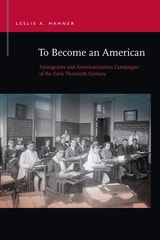
To Become an American
Immigrants and Americanization Campaigns of the Early Twentieth CenturyLeslie A. Hahner
Michigan State University Press, 2017
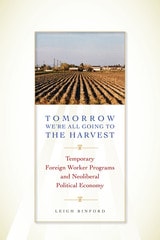
Tomorrow We're All Going to the Harvest
Temporary Foreign Worker Programs and Neoliberal Political EconomyBy Leigh Binford
University of Texas Press, 2013
From its inception in 1966, the Canadian Seasonal Agricultural Worker Program (SAWP) has grown to employ approximately 20,000 workers annually, the majority from Mexico. The program has been hailed as a model that alleviates human rights concerns because, under contract, SAWP workers travel legally, receive health benefits, contribute to pensions, are represented by Canadian consular officials, and rate the program favorably. Tomorrow We’re All Going to the Harvest takes us behind the ideology and examines the daily lives of SAWP workers from Tlaxcala, Mexico (one of the leading sending states), observing the great personal and family price paid in order to experience a temporary rise in a standard of living. The book also observes the disparities of a gutted Mexican countryside versus the flourishing agriculture in Canada, where farm labor demand remains high.
Drawn from extensive surveys and nearly two hundred interviews, ethnographic work in Ontario (destination of over 77 percent of migrants in the author’s sample), and quantitative data, this is much more than a case study; it situates the Tlaxcala-Canada exchange within the broader issues of migration, economics, and cultural currents. Bringing to light the historical genesis of “complementary” labor markets and the contradictory positioning of Mexican government representatives, Leigh Binford also explores the language barriers and nonexistent worker networks in Canada, as well as the physical realities of the work itself, making this book a complete portrait of a provocative segment of migrant labor.
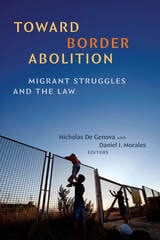
Toward Border Abolition
Migrant Struggles and the LawNicholas De Genova and Daniel I. Morales, editors
Duke University Press, 2026

Tracking Europe
Mobility, Diaspora, and the Politics of LocationGinette Verstraete
Duke University Press, 2009
In demystifying the old and new Europe across a multiplicity of texts, images, media, and cultural practices in various times and locations, Verstraete lays bare a territorial persistence in the European imaginary, one which has been differently tied up with the politics of inclusion and exclusion. Tracking Europe moves from policy papers, cultural tourism, and migration to philosophies of cosmopolitanism, nineteenth-century travel guides, electronic surveillance at the border, virtual pilgrimages to Spain, and artistic interventions in the Balkan region. It is a sustained attempt to situate current developments in Europe within a complex matrix of tourism, migration, and border control, as well as history, poststructuralist theory, and critical media and art projects.

Transatlantic Scots
Edited by Celeste Ray, foreword by James Hunter
University of Alabama Press, 2005
Transatlantic Scots is a multidisciplinary collection that studies the regional organization and varied expressions of the Scottish Heritage movement in the Canadian Maritimes, the Great Lakes, New England, and the American South. From diverse perspectives, authorities in their fields consider the modeling of a Scottish identity that distances heritage celebrants from prevalent visions of whiteness. Considering both hyphenated Scots who celebrate centuries-old transmission of Scottish traditions and those for whom claiming or re-claiming a Scottish identity is recent and voluntary, this book also examines how diaspora themes and Highland imagery repeatedly surface in regional public celebrations and how traditions are continually reinvented through the accumulation of myths. The underlying theoretical message is that ethnicity and heritage survive because of the flexibility of history and tradition.
This work is a lasting contribution to the study of ethnicity and identity, the renegotiation of history and cultural memory into heritage, and the public performance and creation of tradition.