Results by title
3390 books match the query 'Fiction' and 1041 start with t

The Adventures of Lindamira
A Lady of QualityBenjamin Boyce, Editor
University of Minnesota Press, 1949
The Adventures of Lindamira was first published in 1949. Minnesota Archive Editions uses digital technology to make long-unavailable books once again accessible, and are published unaltered from the original University of Minnesota Press editions.
The Adventures of Lindamira, A Lady of Quality. Written by her own hand, to her Friend in the Country. In IV Parts. Revised and Corrected by Mr. Tho. Brown (London, 1702) is a very rare but important and interesting early English novel. This work was reissued in 1713 as The Lover's Secretary: or the Adventures of Lindamira, and again, with the same title, in 1734, 1745, and 1751.
Lindamira is remarkable historically as one of the earliest epistolary novels in English and also as one of the first pieces of extended prose fiction to enter the gap between the risque, realistic romance on one hand and the artificial French romance of court life on the other. The book is entertaining and compares favorably in naturalness, humor, and plausibility with the work of the contemporary Mrs. Behn, Congreve, and even Defoe.
Most historians have been unfamiliar with the work for the good reason that few copies have survived. The British Museum, Yale, University of Pennsylvania, Newberry, and Brown University have copies of the second or later edition. The only known copy of the first edition is in the Library of the University of Minnesota, and it is from this copy of the first edition that the University of Minnesota Press has reprinted this edition.
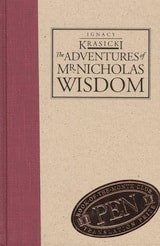
The Adventures of Mr. Nicholas Wisdom
Ignacy Krasicki
Northwestern University Press, 1992
Winner, 1993 PEN Book-of-the-Month Club Translation Prize
Published in 1776 and considered the first Polish novel ever written, The Adventures of Mr. Nicholas Wisdom is a picaresque tale following the naïve title character's coming of age. Having conquered (and fled) sophisticated Warsaw, Nicholas enjoys many adventures across Europe, South America, and the high seas. He finally lands among the natives of an unknown isle who reject his allegedly superior European ways and instead tutor him for an "enlightened" existence. Resonant with Enlightenment ideas, The Adventures of Mr. Nicholas Wisdom provides a sly portrait of the era's Polish society and a fascinating perspective on the broader problems of eighteenth-century European culture.
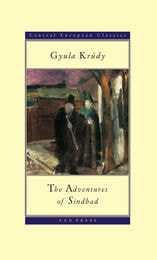
The Adventures of Sindbad
Gyula Krúdy
Central European University Press, 1998
In these marvellously written tales, Sindbad, a voyager in the realms of memory and imagination, travels through the centuries in pursuit of an ideal of love that is directed as much at the feminine essence as at his individual lovers. He is by nature a melancholy sensualist, but whether the women he seduces and loves are projections of his desire, or he of theirs, is a moot question.
These short stories flow without a strict narrative framework Sindbad journeys between the past and the present and is merely a ghost in many of his adventures. Although Sindbad can move through time, it is time that proves his chief enemy, and youth that remains his real love. This deeply autumnal book, full of resonances and associations, is an erotic elegy to the dying Habsburg Empire.
The stories are taken from the omnibus triple-volume Hungarian edition published as The Three Books of Sindbad in Hungary in 1944, which includes The Travels of Sindbad (1912), The Resurrection of Sindbad (1916), and The Youth and Grief of Sindbad (1917).
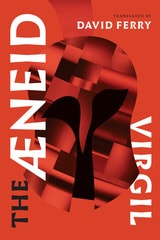
The Aeneid
Virgil
University of Chicago Press, 2017
The paperback and e-book editions include a new introduction by Richard F. Thomas, along with a new glossary of names that makes the book even more accessible for students and for general readers coming to the Aeneid for the first time who may need help acclimating to Virgil’s world.
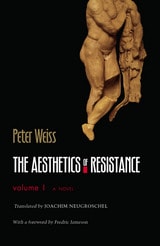
The Aesthetics of Resistance, Volume I
A Novel, Volume 1Peter Weiss
Duke University Press, 2005
Spanning the period from the late 1930s to World War II, this historical novel dramatizes antifascist resistance and the rise and fall of proletarian political parties in Europe. Living in Berlin in 1937, the unnamed narrator and his peers—sixteen- and seventeen-year-old working-class students—seek ways to express their hatred for the Nazi regime. They meet in museums and galleries, and in their discussions they explore the affinity between political resistance and art, the connection at the heart of Weiss’s novel. Weiss suggests that meaning lies in embracing resistance, no matter how intense the oppression, and that we must look to art for new models of political action and social understanding. The novel includes extended meditations on paintings, sculpture, and literature. Moving from the Berlin underground to the front lines of the Spanish Civil War and on to other parts of Europe, the story teems with characters, almost all of whom are based on historical figures. The Aesthetics of Resistance is one of the truly great works of postwar German literature and an essential resource for understanding twentieth-century German history.
The Aesthetics of Resistance, Volume II
A Novel, Volume 2Peter Weiss
Duke University Press, 2020
Volume II, initially published in 1978, opens with the unnamed narrator in Paris after having retreated from the front lines of the Spanish Civil War. From there, he moves on to Stockholm, where he works in a factory, becomes involved with the Communist Party, and meets Bertolt Brecht. Featuring the narrator's extended meditations on paintings, sculpture, and literature, the novel teems with characters, almost all of whom are based on historical figures. Throughout, the narrator explores the affinity between political resistance and art—the connection at the heart of Weiss's novel. Weiss suggests that meaning lies in embracing resistance, no matter how intense the oppression, and that we must look to art for new models of political action and social understanding. The Aesthetics of Resistance is one of the truly great works of postwar German literature and an essential resource for understanding twentieth-century German history.
The Aesthetics of Resistance, Volume III
A Novel, Volume 3Peter Weiss
Duke University Press, 2025
Volume III, initially published in 1981, teems with characters, many of whom are based on historical figures. It commences in May of 1940, as the narrator’s parents flee Nazi forces in Eastern Europe and reunite with their son in Sweden. While in Stockholm, the narrator and other Communist activists living in exile struggle to build structures in the German underground. The story then follows Communist resistance fighter Charlotte Bischoff as she is smuggled to Bremen on a freighter. In Berlin, she contacts the narrator’s friends and joins the Red Orchestra resistance group. Soon, the Gestapo cracks the underground group’s code, arrests a number of its members, and takes them to Plötzensee Prison, where most of them are executed. Featuring the narrator’s meditations on paintings, sculpture, and literature throughout, The Aesthetics of Resistance demonstrates the affinity between political resistance and art. Ultimately, Weiss argues that we must look to art for new models of political action and social understanding.
The Affliction
A Novel in StoriesC. Dale Young
Four Way Books, 2018
The Age of Discovery and Other Stories
Becky Hagenston
The Ohio State University Press, 2021
“These ingenious stories are so funny and sparkling and slyly inventive that their pain catches you by surprise, like a sunburn after a day at the beach.”—Eric Puchner
Winner, 2022 Mississippi Institute for Arts and Letters Prize for Best Fiction
In Becky Hagenston’s fourth collection, the real and the fantastic collide in stories that span from Mississippi to Europe, and from the recent past to the near future. The characters are sex-toy sellers, internet trolls, parents, students, and babysitters—all trying to make sense of a world where nothing is quite what it appears to be. A service robot makes increasingly disturbing requests. A middle school teacher is accused of witchcraft—and realizes the accusations might be true. Two college students devise a way to avoid getting hit on in bars. A baker finds bizarre anomalies in his sourdough. A librarian follows her dead ex-husband through the Atlanta airport. In these stories, men and women confront grief, danger, loneliness, and sometimes—the strangest discovery of all—unexpected joy. Hagenston delivers a collection that is, at its weird and shining heart, about people discovering what—for better or worse—they are capable of.
The Agnostics
Wendy Rawlings
University of Michigan Press, 2007
“Who knows if there’s a God? There’s us, now, and caterpillars and other insects and mulch. So thinks Stephen Wirth as he watches his marriage collapse. Between bouts of alcoholism and attempts to restore a fleet of decrepit boats, Stephen does his best to help his daughters cope with their mother having fallen in love with another woman. But growing up and making sense of the world is something the girls must do on their own, just as for their mother there is no easy way around building a new life. Set on Long Island, The Agnostics follows the Wirths through several decades as they struggle to redefine themselves and their idea of family.
Painting with a fine and delicate brush, Wendy Rawlings reveals her characters’ lives as a series of discrete moments, illuminating the intimate story of one American middle-class family.
The Agony of the Ghost
And Other StoriesHasan Azizul Huq
Seagull Books, 2018
The Agriculture Hall of Fame
StoriesAndrew Malan Milward
University of Massachusetts Press, 2012
These powerful stories limn the complexities and dilemmas of life in Kansas, a state at “the center of the center of America,” as a billboard in one story announces. Andrew Malan Milward explores the less visible aspects of the Kansas experience—where its agrarian past comes into conflict with the harsh present reality of drugs, fundamentalism, and corporatism, relegating its agrarian identity to museums and amusement parks.
Presented in a triptych, the stories in Milward's debut collection range across a varied terrain, from tumbledown rural barns to modern urban hospitals, revealing the secrets contained therein.
The Airship
IncantationsAdam Tipps Weinstein
University of Alabama Press, 2021
A hypnotic tale of a Jewish refugee from Europe and his three years stranded aboard the Vasari
The Airship is the entrancing fictional biography of Nathan Cohen, who was deported from the US in 1912 under the Alien Act and spent the first years of World War I on a passenger ship, shuttled between the US and Argentina. Newspapers called him “The Wandering Jew” and “The Man Without a Country,” speculating he would spend the rest of his life at sea.
Adam Tipps Weinstein provides a wise, rich, nuanced, and mischievous exploration of Cohen’s emigration from Bauska, in the Russian Pale of Settlement, to Las Pampas, in Argentina. The Airship is finally Cohen’s wish for a new line of flight, which he realizes when he launches his beloved Laika, aboard a scavenged hot-air balloon.
Told through a series of incantations—spells, songs, folk tales, ghosts, charms—the book traces Cohen’s biography across time and a great expanse of geography. The concepts of home and homeland are stretched until they break. Was there ever a home? The Airship incants these paradoxes of location, nationality, faith, and belonging in a bordered and borderless world.
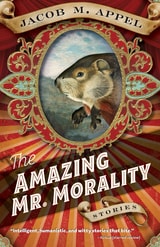
The Amazing Mr. Morality
StoriesJacob M. Appel
West Virginia University Press, 2018
The Amazing Mr. Morality features tenacious men and women whose determination to buck middle-class social convention draws them toward unforeseen challenges. A failed television producer insists upon having a woodchuck relocated from his lawn, only to receive desperate letters in which the woodchuck begs to return. An overconfident ne’er-do-well obtains a lucrative lecture invitation intended for a renowned ornithologist and decides to deliver the speech himself. An innocuous dispute over whether to rename a local street opens up racial fault lines that prove deadly.
The collection concludes with the title novella in which two unscrupulous ethicists, writing rival newspaper columns, seek to unseat each other by addressing questions such as: If you’re going to commit a murder, is it worse to kill when the victim is sleeping or awake?
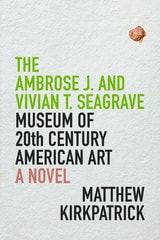
The Ambrose J. and Vivian T. Seagrave Museum of 20th Century American Art
Matthew Kirkpatrick
Acre Books, 2019
A strange museum, an even stranger curator, the deceased artist who haunts him, and the mystery surrounding the museum founders’ daughter, lost at sea as a child . . . The Ambrose J. and Vivian T. Seagrave Museum of 20th Century American Art is by turns a dark comedy, a ghost story, a romance, a whodunit, a family saga, and an exhibition catalog.
Through museum exhibit labels, as well as the interior musings of an elderly visitor wandering through its galleries, the novel’s numerous dramas gradually unfold. We learn of the powerful Seagrave family’s tragic loss of their daughter, the suspicious circumstances surrounding her disappearance during a violent storm, and of the motley conclave of artists (some accomplished, some atrocious) who frequented the Seagrave estate, producing eclectic bodies of work that betray the artists’ own obsessions, losses, and peculiarities. We learn about the curator’s rise to power, his love affair with a deeply troubled ghost—and when a first-time visitor to the museum discovers unexpected connections between the works on exhibit and her painful past, we are plunged into a meditation on the nature of perception, fabrication, memory, and time.
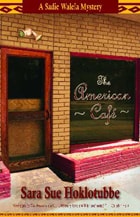
The American Café
Sara Sue Hoklotubbe
University of Arizona Press, 2011
When Sadie Walela decides to pursue her childhood dream of owning a restaurant, she has no idea that murder will be on the menu.
In this second book in the Sadie Walela series, set in the heart of the Cherokee Nation, Sadie discovers life as an entrepreneur is not as easy as she anticipated. On her first day, she is threatened by the town’s resident "crazy" woman and the former owner of the American Café turns up dead, engulfing the café—and Sadie herself—in a cloud of suspicion and unanswered questions.
Drawing on the intuition and perseverance of her Cherokee ancestry, Sadie is determined to get some answers when an old friend unexpectedly turns up to lend a hand. A diverse cast of characters—including a mysterious Creek Indian, a corrupt police chief, an angry Marine home from Iraq, and the victim’s grieving sister and alcoholic niece—all come together to create a multilayered story of denial and deceit.
While striving to untangle relationships and old family secrets, Sadie ends up unraveling far more than a murder.
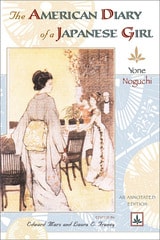
The American Diary of a Japanese Girl
An Annotated EditionYone Noguchi, edited by Edward Marx with Laura E. Franey
Temple University Press, 2007

The American Wife
Elaine Ford
University of Michigan Press, 2009
Of Elaine Ford’s novel, Missed Connections, the Washington Post wrote that it is a work “of small episodes, of precise sentences, of unusual clarity.” That same clarity proves an unsettling force in Ford’s stories, where precision of prose often belies uncertainties hidden beneath. In the title piece, an American woman in England, embroiled in a relationship doomed to fail, discovers how little she understands about her own desires and impulses. In another story, another American wife, abandoned in Greece by her archaeologist husband, struggles to solve a crime no one else believes to have been committed.
Throughout her stories Ford touches on the mysteries that make up our lives. Each story in itself is a masterpiece of such detail and power as to transform the way we see the world.
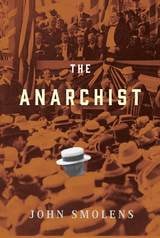
The Anarchist
John Smolens
Michigan State University Press, 2018
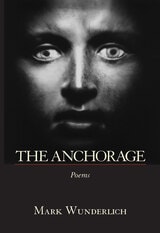
The Anchorage
PoemsMark Wunderlich
University of Massachusetts Press, 1999

The Ant Generator
Elizabeth Harris
University of Iowa Press, 1991
Punctuated with weirdly comic moments, the stories in The Ant Generator reflect Harris's view of the world as a slightly strange place with shifting, dubious boundaries. Men and women encounter the commonplace improbabilities of modern life: a woman who works in an archaeological museum dreams of order but experiences random violence, a bored schoolteacher gets into the Book of World Records by standing on one foot.
In the various interactions of mind and matter in Harris's affecting stories, people try to force their experience into simple shapes, against natural and social opposition, with comic or tragic results. Sometimes their determination to command their own meaning is redemptive and creative; at other times they confront the luminous mystery and unforgiving character of the natural world or the anger of the dispossessed. Harris sensitively creates individuals who respond to the ordinary in extraordinary ways, characters who think in dreams and visions and who, like the author, employ rare gifts.
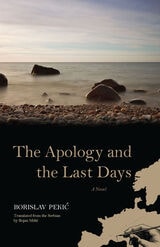
The Apology and the Last Days
A NovelBorislav Pekic
Northwestern University Press, 2012
Originally published in 1975, The Apology and the Last Days is the final volume in a trilogy of novels—also including The Rise and Fall of Icarus Gubelkian and How to Quiet a Vampire—about the aftermath of World War II, by Borislav Pekić, one of the former Yugoslavia’s most important postwar writers. The narrator tells his story from prison, where he is serving time for the murder of a former Nazi official. As the novel unfolds, we learn that the victim was the same person whom the narrator, while a lifeguard during the war, saved from drowning, thus making him vulnerable to charges of collaboration. In this tragicomic tale, Pekić explores eternal questions of fate and individual responsibility.
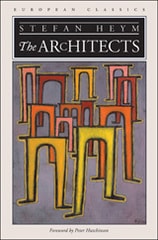
The Architects
Stefan Heym
Northwestern University Press, 2006
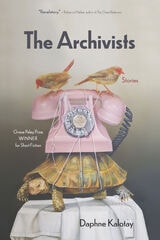
The Archivists
StoriesDaphne Kalotay
Northwestern University Press, 2023
Longlisted for the 2024 Joyce Carol Oates Prize
Longlisted for the 2024 Massachusetts Book Award
The characters in The Archivists are everyday people, but when private losses or the shocks of history set their worlds reeling, they find connection and liberation in surprising, buoyant ways. This vibrant collection brings transcendence, wry humor, and a touch of the uncanny to life’s absurdities and catastrophes—whether the 2008 economic crash, fallout after the 2016 presidential election, gentrification, pandemic lockdown, illness, or the intergenerational impacts of the Holocaust and Communist occupation of Eastern Europe.
A hardheaded realist is confronted by both her mortality and a would-be wizard. A thirteen-year-old girl in 1950s Toronto infiltrates the ranks of Bell Canada. A ninety-nine-year-old woman appears to be invincible. A group hikes in Germany, and a solitary woman is pursued on a walk in New Mexico. These deeply moving stories ingeniously consider issues of identity, history, and memory and our shared search for meaning in an off-kilter world.
The Art of Criticism
Henry James on the Theory and the Practice of FictionHenry James
University of Chicago Press, 1986
The editors have provided what James himself emphasized in his literary criticism—the text's context. Each selection is framed by an editorial commentary and notes which give its biographical, bibliographical, and critical background and cite other references in James' work to the topic discussed. This framework, along with the editors' introduction, gives the reader a sense of the place of these pieces in the history of criticism.
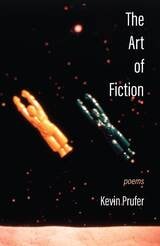
The Art of Fiction
Kevin Prufer
Four Way Books, 2021
In this his eighth collection of poetry (and fifth with Four Way Books), Prufer’s career-spanning talent for estranging the familiar—and also for recording the unthinkable with eerie directness—recurs, enhanced and transformed by the collection’s meta-level attention to the role of fiction in our civic lives. Prufer describes, often through personae, a near future, tracing there the political gambit of Fake News and the role of the imagination in our self-understanding (whether it’s cogent or delusional). Via both satire and direct address (to the point of reader-squeamishness), Prufer aims to understand the ugly-casual atmosphere of our often racialized, pervasive distrust. The Art of Fiction fundamentally understands that fictions are deployed to divide us, and they work: they get under our skin. Prufer powerfully explores the roles of imagination and art in how we explain ourselves to ourselves.
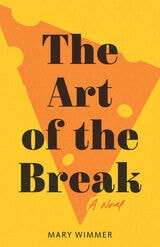
The Art of the Break
Mary Wimmer
University of Wisconsin Press, 2022
Hyperaware of her own childhood losses and the challenges posed by Rick’s PTSD and heavy drinking, Charlie strives to build a stable home for Lucy. Her degree in biochemistry from the University of Wisconsin gives her a leg up, and the quiet joys of working at the cheese vat provide a deep, healing peace that points the way toward happiness.
But Falls River is too narrow-minded to accept a female business owner, and Charlie is ill-prepared for the pettiness and conventions of small-town life. When debts come due, including a lien against her family’s land, she must quickly figure out who is on her side—and how to keep her dreams alive.
The Art of the Novel
Critical PrefacesHenry James
University of Chicago Press, 2011
This collection of prefaces, originally written for the 1909 multi-volume New York Edition of Henry James’s fiction, first appeared in book form in 1934 with an introduction by poet and critic R. P. Blackmur. In his prefaces, James tackles the great problems of fiction writing—character, plot, point of view, inspiration—and explains how he came to write novels such as The Portrait of a Lady and The American. As Blackmur puts it, “criticism has never been more ambitious, nor more useful.”
The latest edition of this influential work includes a foreword by bestselling author Colm Tóibín, whose critically acclaimed novel The Master is told from the point of view of Henry James. As a guide not only to James’s inspiration and execution, but also to his frustrations and triumphs, this volume will be valuable both to students of James’s fiction and to aspiring writers.
The Artistic Censoring of Sexuality
Fantasy and Judgment in the Twentieth Century NovelSusan Mooney
The Ohio State University Press, 2008
Through the twentieth century, from colonial Ireland to the United States, and from Franco's Spain to late Soviet Russia, to include sexuality in a novel signaled social progressiveness and artistic innovation, but also transgression. Certain novelists—such as James Joyce, Vladimir Nabokov, Luis Martín-Santos, and Viktor Erofeev—radicalized the content of the novel by incorporating sexual thoughts, situations, and fantasies and thus portraying repressed areas of social, cultural, political, and mental life.
In The Artistic Censoring of Sexuality: Fantasy and Judgment in the Twentieth-Century Novel, Susan Mooney extensively examines four modernist and postmodernist novels that prompted in their day harsh external censorship because of their sexual content—Ulysses, Lolita, Time of Silence, and Russian Beauty. She shows how motifs of censorship, with all its restrictions, pressures, rules, judgments, and forms of negation, became artistically embedded in the novels' plots, characters, settings, tropes, and themes. These novels contest censorship's status quo and critically explore its processes and power. This study reveals the impact of censorship on literary creation, particularly in relation to the twentieth century's growing interest in sexuality and its discourses.
The Assignment
or, On the Observing of the Observer of the ObserversFriedrich Dürrenmatt
University of Chicago Press, 1988
“The narrative is accelerated from the start. . . . As the novella builds to its horripilating climax, we realize the extent to which all values have thereby been inverted. The Assignment is a parable of hell for an age consumed by images.”—New York Times Book Review
“His most ambitious book . . . dark and devious . . . almost obsessively drawn to mankind’s most fiendish crimes.”—Chicago Tribune
“A tour-de-force . . . mesmerizing.”—Village Voice
The Athenaeum
A NovelRaul Pompeia, Translated from the Portuguese by Renata R. M. Wasserman with an Introduction by César Braga-Pinto
Northwestern University Press, 2015
The Auburn Conference
Tom Piazza
University of Iowa Press, 2023
The Avenue, Clayton City
C. Eric Lincoln
Duke University Press, 1996
In this novel, originally published in 1988, Lincoln creates with deft skill the drama that rises from the lives of the people of Clayton City. In turn amusing, disgusting, enraging, wistful, and, as one hears the secrets hidden deep in their hearts, shocking, they exist in a place whose vibrant personality is itself a unique configuration of geography, relationships, patterns of behavior, and events. It is also a place whose unspoken and hidden power lies in its crushing compulsion to maintain itself as it already is—a power that forces everyone to succumb to an inflexible social order.
The Axe
Ludvik Vaculik
Northwestern University Press, 1994
In late Sixties Czechoslovakia, communist ideology is failing. A disillusioned middle-aged journalist retreats from the politics of Prague to the Moravian countryside of his youth. There he rediscovers the complex relationship with his dead father, a communist crusader. But when the journalist is accused of disgracing his father and his proletariat background, he realizes that he, too, is a leader—and that the stakes are now reversed.

The Aztec Love God
Tony Diaz
University of Alabama Press, 1998
Originally, young Tio wanted to perfect the comic role of the Aztec Love God, his ideal persona. Along the way, he meets Jester, an older, Caucasian comedian who makes Tio an offer he’s like to refuse. Jester offers Tio an opportunity to join his act. The only condition is that he, Tio, has to perform Latino stereotypes. Tio has to decide if he is going to take the blank check for easy thoughts or develop the Aztec Love God on his own.
The Aztec Love God combines humor, politics, and street knowledge. Diaz comes at the reader from all angles. His mixture of styles and influences pushes The Aztec Love God to a multi-multiculturalism.
The Aztec Love God is a vato but not too loco.
The Bachelor of Arts
R. K. Narayan
University of Chicago Press, 1978
Offering rare insight into the complexities of Indian middle-class society, R. K. Narayan traces life in the fictional town of Malgudi. The Dark Room is a searching look at a difficult marriage and a woman who eventually rebels against the demands of being a good and obedient wife. In Mr. Sampath, a newspaper man tries to keep his paper afloat in the face of social and economic changes sweeping India. Narayan writes of youth and young adulthood in the semiautobiographical Swami and Friends and The Bachelor of Arts. Although the ordinary tensions of maturing are heightened by the particular circumstances of pre-partition India, Narayan provides a universal vision of childhood, early love and grief.
"The experience of reading one of his novels is . . . comparable to one's first reaction to the great Russian novels: the fresh realization of the common humanity of all peoples, underlain by a simultaneous sense of strangeness—like one's own reflection seen in a green twilight."—Margaret Parton, New York Herald Tribune
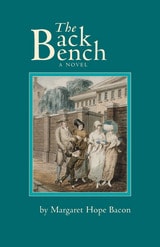
The Back Bench
Margaret Hope Bacon
QuakerPress, 2007
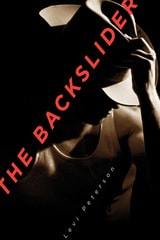
The Backslider
Peterson, Levi
Signature Books, 2013
Frank comes into contact with a host of rural and urban characters. Of central importance is his Lutheran girlfriend, Marianne, whom Frank seduces, begrudgingly marries, and eventually loves. Frank’s extended family is just a generation removed from polygamy and still energized by old-time grudges and deprivations. Along the way Frank encounters a closeted secular humanist, a polygamist prophet, a psychiatrist, a Mason, government employees, college professors, lawyers, and entrepreneurs—all drawn with heightened realism reminiscent of Charles Dickens or the grotesque forms of William Faulkner and Flannery O’Connor.
The story engages readers as it alternates almost imperceptibly between Frank’s naïve consciousness and the more informed awareness of its narrator. It can be read as a love story, a satiric comedy, or a dark and sobering study of self-mutilation. Shifting from one to another, it builds suspense and elicits
complex emotions, among them a profound sense of compassion. More joyous than cynical, it sympathizes deeply with the plight of all of God’s backsliders.
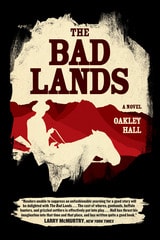
The Bad Lands
A NovelOakley Hall
University of Chicago Press, 2016
An action-packed western from one of the masters of the genre, Oakley Hall’s The Bad Lands blends roundups and rustlers, whorehouses and land grabs, shoot-outs and the threat of hangings in a tale of the war between the cowboys and the cattle barons. But more than this, it is an elegy to the wild beauty of the badlands before the ranchers moved in, chased off the free-rangers, the trappers, and the tribes, and fenced it all in.
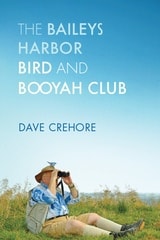
The Baileys Harbor Bird and Booyah Club
Dave Crehore
University of Wisconsin Press, 2012
Open this book and you are in Door County, Wisconsin, strolling down Coot Lake Road—a one-lane, dead-end gravel track just a few miles from Baileys Harbor and the Lake Michigan shore. Along the way you meet George and Helen O’Malley, who are growing old gracefully. Russell, their brave and empathetic golden retriever, wags hello and offers you a paw to shake.
The Olsons and the Berges live just down the road. Bump Olson is the local septic tank pumper and birdwatcher extraordinaire, and Hans Berge, MD, PhD, was at one time the only Norwegian psychiatrist in Chicago—or so he says. In a cottage out by the highway, you may spot Lloyd Barnes, ex–Tennessee state trooper, hound fancier, and local man of mystery. Uncle Petter Sorenson, visiting from Grand Forks, takes the polar bear plunge at Jacksonport. Around the neighborhood you’ll meet Deputy Doug, the flirtatious cellist Debbie Dombrowski, and Italian import Rosa Zamboni.
Dave Crehore’s sketches of life on the Door peninsula also expound on:
• the delights of codfish pizza
• how to insult Canadians
• what to expect at your fiftieth high school reunion
• how to lose a school board election
• the prevention of creeping old-fogyism
• Marilyn, a buxom eight-pound smallmouth bass
• and what goes on in the winter, when no one is there.
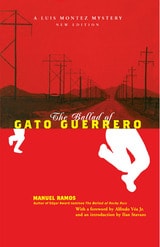
The Ballad of Gato Guerrero
Manuel Ramos
Northwestern University Press, 2003
The answer: his friend, Felix "Gato" Guerrero.
Trouble has always followed the larger-than-life Felix the Cat. Now it has jumped all over him. His girlfriend is the wife of a ruthless local crime lord and in spite of bullets and hit men he won't give her up. His former father-in-law blames him for a family tragedy and is bent on revenge. Worst of all, Felix is determined to remain unaware of the dangers. It's up to Montez-and not for the first time-to step in and save him.
As in his Edgar-nominated The Ballad of Rocky Ruiz, Manuel Ramos immerses readers not only in a thrilling mystery but also in the fascinating Chicano culture of the West. Fast-paced and richly textured, The Ballad of Gato Guerrero is an entertaining addition to the acclaimed Luis Montez mystery series.
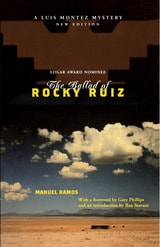
The Ballad of Rocky Ruiz
Manuel Ramos
Northwestern University Press, 2003
Twenty years ago, a gang attacked four Chicano student activists and shot down their leader, Rocky Ruiz. Now the survivors, Montez's former compatriots in the movement, are in danger. One is killed, another beaten, and a third driven into hiding. Enter Teresa Fuentes, a beautiful young lawyer determined to solve the mystery and just as determined to avoid becoming involved with Montez. To save his friends, Montez must reexamine the central event of their shared past-the murder of Rocky Ruiz. Just as difficult, he finds, may be to untangle his feelings for Teresa Fuentes.
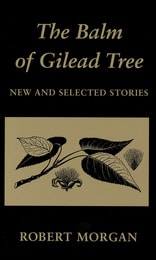
The Balm of Gilead Tree
New and Selected StoriesRobert Morgan
Ohio University Press, 1999
Published in 1999 by Gnomon Press
In The Balm of Gilead Tree, acclaimed author and poet Robert Morgan presents a masterful collection of seventeen short stories—ten new and seven selected from earlier volumes—that illuminate the lives of working-class people in the American South, particularly in the Appalachian region. With lyrical precision and deep empathy, Morgan explores themes of hardship, resilience, and transformation across generations.
From the haunting historical imagination of “The Tracks of Chief de Soto” to the visceral immediacy of “The Ratchet,” where a truck driver faces a terrifying descent with failed brakes, Morgan’s stories are rich in sensory detail and emotional depth. Characters grapple with environmental peril, economic uncertainty, and the quiet dramas of rural life, all rendered with Morgan’s signature clarity and reverence for the natural world.
This collection affirms Morgan’s place as a vital voice in Southern literature, offering readers both the balm of storytelling and the grit of lived experience.

The Bankruptcy
A NovelJúlia Lopes de Almeida
University College London, 2023
Set in the early years of Brazil’s Old Republic after the abolition of slavery, Júlia Lopes de Almeida's The Bankruptcy depicts the rise and fall of a wealthy coffee exporter against a kaleidoscopic background of glamour, poverty, seduction, and financial speculation. The novel introduces readers to a turbulent period in Brazilian history seething with new ideas about democracy, women’s emancipation, and the role of religion in society. Originally published in 1901, its prescient critiques of financial capitalism and the patriarchal family remain relevant today.
In her lifetime, Júlia Lopes de Almeida was compared to Machado de Assis, the most important Brazilian writer of the nineteenth century. She was also considered for the inaugural list of members of the Brazilian Academy of Letters but was excluded because of her gender. In the decades after her death, her work was largely forgotten. This publication, a winner of the English PEN award, includes an introduction to the novel and a translators' preface and accompanies a general rediscovery of her extraordinary body of work in Brazil.
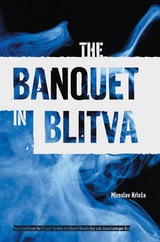
The Banquet in Blitva
Miroslav Krleza
Northwestern University Press, 2004
Miroslav Krleza is considered one of the most important Central European authors of the twentieth century. In his career he was a poet, playwright, screenwriter, novelist, essayist, journalist, and travel writer. He also suffered condemnation as a leftist and a practitioner of modernism and his books were proscribed in the 1930s. The first two books of the trilogy The Banquet in Blitva were written in the thirties and their comments on political, psychological, artistic, and ethical issues earned him the enmity of Yugoslavia's increasingly fascist government. He did not write and publish the third book in the trilogy until 1962.
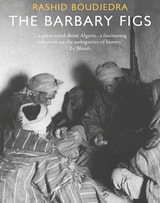
The Barbary Figs
Rashid Boudjedra
Haus Publishing, 2013
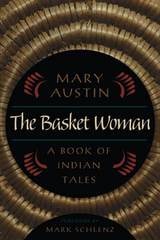
The Basket Woman
A Book Of Indian TalesMary Austin
University of Nevada Press, 1999
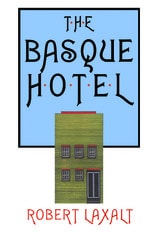
The Basque Hotel
Robert Laxalt
University of Nevada Press, 1993
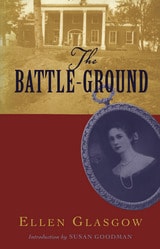
The Battle-Ground
Ellen Glasgow
University of Alabama Press, 2000
Captures the war's human toll and explores its social consequences
The Battle-Ground, Ellen Glasgow's fourth novel, was her first bestseller, with more than 21,000 copies sold in just two weeks. The novel committed her to a project almost unparalleled in American literary history: a novelistic meditation on the South from the decade before the Confederacy to the middle of the 20th century. The Battle-Ground speaks of a South before and during the Civil War in its struggles to become part of a nation still in the making. The overthrow of the aristocratic tradition, the transfer of hereditary power to a rural underclass, the continued disenfranchisement of African Americans, and the evolving status of women--these topics, which came to bind the more than a dozen volumes of Glasgow's self-styled "social history," initially coalesced in The Battle-Ground.
The Battle-Ground conspicuously departs from the tradition of Southern romances popularized by Thomas Nelson Page, and contemporary reviewers praised the book for its historical accuracy. Glasgow, an ardent Anglophile, bragged that military officers in Great Britain studied its descriptions of battle. With her, realism had not only crossed the Atlantic, it had "crossed the Potomac."
But Glasgow never sensationalizes the Civil War, whose bloodiest scenes she flanks with domestic officers, the sharing of rations, the warmth of camp, and reminders of home. Her vision of the war centers less on its corruption or barbarity than on its occasions for small decencies and their power of humanization. Glasgow cannot separate the war from its greater social implications--it is a place, as her title suggests, that tests the soul of a nation as well as individual men and women. The importance of The Battle-Ground in Southern literary history cannot be overemphasized, for Glasgow's reimagining of the Civil War had a profound impact on the next generation of Southern writers, including Allen Tate, Stark Young, and Margaret Mitchell.
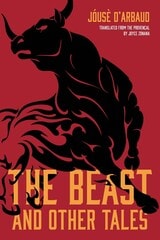
The Beast, and Other Tales
Jóusè d'Arbaud; Translated from the Provençal by Joyce Zonana
Northwestern University Press, 2020
Winner of the Global Humanities Prize
A classic of modern Provençal literature, Jóusè d’Arbaud’s 1926 masterpiece “The Beast of Vacarés” (also known as “The Beast of Vaccarès”) is a haunting parable. Set during the fifteenth century, the tale is narrated by a solitary bull herder—known as a gardian—who stumbles upon a starving creature that is half man, half goat. Terrified, the gardian is nonetheless drawn to the eloquent Beast, a dying demigod who laments the loss of his glorious past even as he wields power over the animals around him. Torn between pity and fear, unable to understand his experiences and afraid he will be condemned for heresy, the gardian records his encounters in a journal, hoping that one day readers will make sense of what he cannot.
Set in the vast, lonely landscape of the Camargue delta, where the Rhône meets the Mediterranean, The Beast seamlessly melds fantasy with naturalistic detail about the region’s flora and fauna. Three additional stories—“The Caraco,” “Pèire Guilhem’s Remorse,” and “The Longline”—explore the lives of twentieth-century gardians in the region. Each man succumbs to fears and social pressure, tragically losing what he most loves.