Results by title
932 books match the query 'Genres & Styles' and 126 start with t
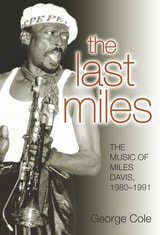
The Last Miles
The Music of Miles Davis, 1980-1991George Cole
University of Michigan Press, 2007
“Cole does for Miles’s late work what Ian MacDonald’s Revolution in the Head does for the Beatles, examining each album in meticulous detail.”
—Time Out
“As with any good musical biography, Cole . . . made me think again about those albums such as Siesta, You’re Under Arrest, and The Man with the Horn that are now stashed in my attic.”
—London Times
“In the flurry of books since [Miles Davis’s] death, none has dealt in depth with the music of this period. Music writer George Cole fills this gap. . . . a rich and rewarding read.”
—Gazette (Montreal)
“A fascinating book.”
—Mojo
“A singular look into the last stage of Davis’s long, somewhat checkered career gained from various sources, which at the same time gives a picture of the modern music business.”
—Midwest Book Review
“There are large chunks of fresh material here. . . . Fill[s] in quite a few gaps and dismisses blanket condemnations of [Miles’s] pop phase.”
—Jazzwise
“Thank you for telling it like it was!”
—Randy Hall, singer and guitarist
“Very moving, emotional material.”
—Gordon Meltzer, Miles’s last road manager and executive producer of Doo-Bop

The Late Great Johnny Ace and the Transition from R&B to Rock 'n' Roll
James M. Salem
University of Illinois Press, 1999
Johnny Ace's crooning style and stirring ballads made him the first postwar African American artist to cross over to a white audience. After a string of R&B hits, Ace released the million-selling "Pledging My Love," a song headed to the top of the charts when the singer accidentally shot himself in his dressing room between sets at a show.
James M. Salem captures the enigmatic, captivating, and influential R&B legend. Venturing from raucous Beale Street to Houston's vibrant Fourth Ward, Salem places Johnny Ace within a multifaceted world of postwar rhythm and blues that included B. B. King, Johnny Otis, Big Mama Thornton, and Gatemouth Brown. Salem also examines how entrepreneur Don D. Robey and his wife Evelyn Johnson promoted Ace to the top of the charts. Yet fame, as always, had a price. Ace's tours on the Chitlin' Circuit meant endless one-night stands and a grueling schedule that kept him on the road 340 days per year.
Comprehensive and filled with anecdotes, The Late Great Johnny Ace and the Transition from R&B to Rock 'n' Roll tells the story of the star who fused black and white styles and changed American popular music forever.
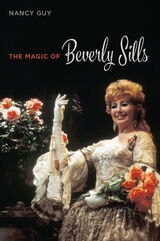
The Magic of Beverly Sills
Nancy Guy
University of Illinois Press, 2015
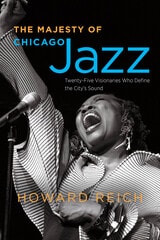
The Majesty of Chicago Jazz
Twenty-Five Visionaries Who Define the City's SoundHoward Reich
University of Chicago Press, 2026
The first book to trace the vast influence of Chicago jazz from its origins to today—from Louis Armstrong and Jelly Roll Morton to Anita O’Day, Herbie Hancock, and the AACM.
Author and Chicago native Howard Reich gives readers a front-row seat to the history of Chicago jazz as it roared forth in jazz clubs, concert halls, and festivals. Reich covered Chicago jazz for more than thirty years as the Chicago Tribune’s staff critic, and in this collection, he argues that jazz as an art form is inconceivable without Chicago. Carefully choosing from among his thousands of articles on jazz, Reich highlights twenty-five of the most important Chicago jazz artists who pushed the art form forward.
The Majesty of Chicago Jazz begins with two New Orleans visionaries who achieved their artistic pinnacles in Chicago in the Roaring Twenties: Jelly Roll Morton and Louis Armstrong. In the decades that followed, Chicago produced an uninterrupted line of innovators: revolutionaries Ahmad Jamal and Sun Ra, iconoclasts Von Freeman and Fred Anderson, populists Herbie Hancock and Ramsey Lewis, chameleons Patricia Barber and Kurt Elling, and the breakthrough band of the Association for the Advancement of Creative Musicians (AACM), among others. Reich offers two pieces on each of the book’s twenty-five visionaries, including profiles, reviews, appreciations, and obituaries. The book concludes with a beginner-friendly discography, perfect for those looking to listen along.
The Majesty of Chicago Jazz is captivating for jazz newcomers and aficionados alike—all are guaranteed to learn something surprising here. With a musician’s ear and a journalist’s expertise, Reich offers listeners a valuable guide to the groundbreaking jazz that has come out of Chicago, a city that remains a fertile breeding ground for musical experimentation.
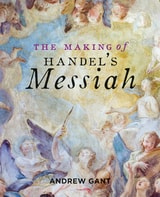
The Making of Handel’s Messiah
Andrew Gant
Bodleian Library Publishing, 2020
Placing Handel’s best-known work in the context of its times, this vivid account charts the composer’s working relationship with his librettist, the gifted but demanding Charles Jennens, and looks at Handel’s varied and evolving company of singers together with his royal patronage. Through examination of the original composition manuscript and Handel’s own conducting score, held in the Bodleian Library’s collection, The Making of Handel’s Messiah sheds new light on the piece’s construction, performance, and reception. Exploring the complex history of one of the most successful pieces of choral music of all time, this volume examines issues around the performance of sacred texts in a non-sacred context, particularly Handel’s collaboration with the men and boys of the Chapel Royal. This book also explores the later reception and performance history of the piece, including the festival performance attended by Haydn, the massed-choir tradition of the Victorian period, and today’s “come-and-sing” events.
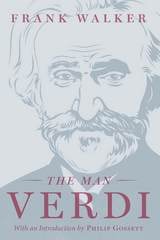
The Man Verdi
Frank Walker
University of Chicago Press, 1982
“Walker focuses on some of the more significant people in Verdi’s life and carefully scrutinizes his relationships with them. His wife, Giuseppina Strepponi; his student and amanuensis, Emanuele Muzio; the conductor who first fully understood Verdi’s mature art, Angelo Mariani; the great prima donna, Teresa Stolz; the incomparable librettist and friend of his old age, Arrigo Boito—each passes before our eyes in Walker’s meticulous reconstruction. As we learn more about them, we learn more about Verdi. We see him through the eyes of his closest friends, we watch his daily activities, his daily thoughts, his habits, his warmth, his domestic tyranny. The myth dissolves and a human being stands before us.”—Philip Gossett, from the introduction
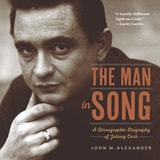
The Man in Song
A Discographic Biography of Johnny CashJohn M. Alexander
University of Arkansas Press, 2018
There have been many books written about Johnny Cash, but The Man in Song is the first to examine Cash’s incredible life through the lens of the songs he wrote and recorded. Music journalist and historian John Alexander has drawn on decades of studying Cash’s music and life, from his difficult depression-era Arkansas childhood through his death in 2003, to tell a life story through songs familiar and obscure. In discovering why Cash wrote a given song or chose to record it, Alexander introduces readers anew to a man whose primary consideration of any song was the difference music makes in people’s lives, and not whether the song would become a hit.
The hits came, of course. Johnny Cash sold more than fifty million albums in forty years, and he holds the distinction of being the only performer inducted into the Rock and Roll Hall of Fame, the Country Music Hall of Fame, the Songwriters Hall of Fame, and the Gospel Music Hall of Fame. The Man in Song connects treasured songs to an incredible life. It explores the intertwined experience and creativity of childhood trauma. It rifles through the discography of a life: Cash’s work with the Tennessee Two at Sam Phillips’s Sun Studios, the unique concept albums Cash recorded for Columbia Records, the spiritual songs, the albums recorded live at prisons, songs about the love of his life, June Carter Cash, songs about murder and death and addiction, songs about ramblers, and even silly songs.
Appropriate for both serious country and folk music enthusiasts and those just learning about this musical legend, The Man in Song will appeal to a fan base spanning generations. Here is a biography for those who first heard “I Walk the Line” in 1956, a younger generation who discovered Cash through songs like his cover of Trent Reznor’s “Hurt,” and everyone in between.

The Many Meanings of Mina
Popular Music Stardom in Post-War ItalyRachel Haworth
Intellect Books, 2022
Mina—or Anna Maria Mazzini—is an Italian popular music icon whose sixty-year career has come to represent a range of diverse meanings. She is one of the best-loved popular music stars in Italy and abroad, with a large fan base across Europe, Asia, and South America. Her career began in the late 1950s and reached its peak in the 1960s and 1970s. Despite having retired from public appearances in the late 1970s, Mina remains iconic to this day. Her star status is exemplary of how stardom is constructed and what it reveals about the society from which it springs. This book explores Mina’s star image and iconic status, tracing the process by which she has come to embody a revelation of the values and ideals of contemporary Italian society.
The Meaning of Soul
Black Music and Resilience since the 1960sEmily J. Lordi
Duke University Press, 2020
The Media Swirl
Politics, Audiovisuality, and AestheticsCarol Vernallis
Duke University Press, 2023
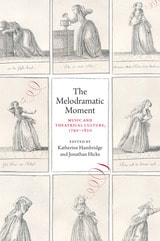
The Melodramatic Moment
Music and Theatrical Culture, 1790–1820Edited by Katherine G Hambridge and Jonathan Hicks
University of Chicago Press, 2018
This anthology proposes to address the sometimes bewilderingly broad understandings of melodrama by insisting on the historical specificity of its genesis on the stage in late-eighteenth-century Europe. Melodrama emerged during this time in the metropolitan centers of London, Paris, Vienna, and Berlin through stage adaptations of classical subjects and gothic novels, and they became famous for their use of passionate expression and spectacular scenery. Yet, as contributors to this volume emphasize, early melodramas also placed sound at center stage, through their distinctive—and often disconcerting—alternations between speech and music. This book draws out the melo of melodrama, showing the crucial dimensions of sound and music for a genre that permeates our dramatic, literary, and cinematic sensibilities today.
A richly interdisciplinary anthology, The Melodramatic Moment will open up new dialogues between musicology and literary and theater studies.
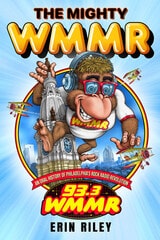
The Mighty WMMR
An Oral History of Philadelphia's Rock Radio RevolutionErin Riley
Temple University Press, 2026
In the early 1980s, the scrappy radio station 93.3 WMMR was on the verge of a major takeover of the Philadelphia airwaves. Erin Riley, who had her finger on the pulse of new artists like Bon Jovi, whose music would define a generation, was hired as the station’s Music Director in 1983.
The Mighty WMMR is Riley’s affectionate and nostalgic oral history of the station’s early years, especially its 1980s heyday, covering everything from the pioneering influence of The Marconi Experiment and the success of The Morning Zoo to how WMMR broke artists like Bruce Springsteen, Billy Joel, and local favorites The Hooters onto the national scene. Featuring anecdotes and memories by beloved on-air personalities including John DeBella, Pierre Robert, and Michael Tearson, Riley chronicles the memorable songs and musicians; concerts, contests, and clubs; and the live broadcasts that marked the height of an unforgettable era in Philadelphia radio.
Riley breezily captures the station’s impact on listeners, which made WMMR a perfect storm of the times, the culture, and the counterculture. The Mighty WMMR is a captivating look back at Philadelphia’s rock history and the station that shaped a city and a generation.
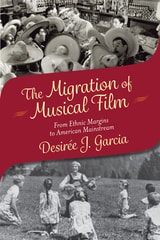
The Migration of Musical Film
From Ethnic Margins to American MainstreamGarcia, Desirée J
Rutgers University Press, 2014
The Migration of Musical Film shows how the folk musical was rooted in the challenges faced by immigrants and migrants who had to adapt to new environments, balancing American individualism with family values and cultural traditions. Uncovering fresh material from film industry archives, Garcia considers how folk musicals were initially marginal productions, designed to appeal to specific minority audiences, and yet introduced themes that were gradually assimilated into the Hollywood mainstream.
No other book offers a comparative historical study of the folk musical, from the first sound films in the 1920s to the genre’s resurgence in the 1970s and 1980s. Using an illustrative rather than comprehensive approach, Garcia focuses on significant moments in the sub-genre and rarely studied films such as Allá en el Rancho Grande along with familiar favorites that drew inspiration from earlier folk musicals—everything from The Wizard of Oz to Zoot Suit. If you think of movie musicals simply as escapist mainstream entertainment, The Migration of Musical Film is sure to leave you singing a different tune.
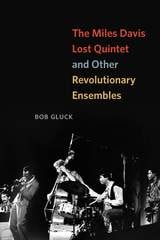
The Miles Davis Lost Quintet and Other Revolutionary Ensembles
Bob Gluck
University of Chicago Press, 2015
Gluck listens deeply to the uneasy tension between this group’s driving rhythmic groove and the sonic and structural openness, surprise, and experimentation they were always pushing toward. There he hears—and outlines—a fascinating web of musical interconnection that brings Davis’s funk-inflected sensibilities into conversation with the avant-garde worlds that players like Ornette Coleman and John Coltrane were developing. Going on to analyze the little-known experimental groups Circle and the Revolutionary Ensemble, Gluck traces deep resonances across a commercial gap between the celebrity Miles Davis and his less famous but profoundly innovative peers. The result is a deeply attuned look at a pivotal moment when once-disparate worlds of American music came together in explosively creative combinations.
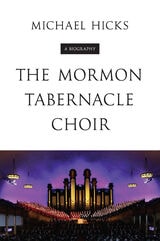
The Mormon Tabernacle Choir
A BiographyMichael Hicks
University of Illinois Press, 2015
Drawing on decades of work observing and researching the Mormon Tabernacle Choir, Michael Hicks examines the personalities, decisions, and controversies that shaped "America's choir." Here is the miraculous story behind the Tabernacle's world-famous acoustics, the anti-Mormonism that greeted early tours, the clashes with Church leaders over repertoire and presentation, the radio-driven boom in popularity, the competing visions of rival conductors, and the Choir's aspiration to be accepted within classical music even as Mormons sought acceptance within American culture at large. Everything from Billboard hits to TV appearances to White House performances paved the way for Mormonism's crossover triumph. Yet, as Hicks shows, such success raised fundamental concerns regarding the Choir's mission, functions, and image.
The Moses Complex
Freud, Schoenberg, Straub/HuilletUte Holl
Diaphanes, 2016
In The Moses Complex, Ute Holl analyzes these major works in detail and deep historical context, synthesizing the complex models of resistance to explore the relationships among media, migration, and politics. Since Moses descended from Sinai with the tablets inscribed with the Ten Commandments, new media and new laws have often emerged simultaneously. Liberation, in particular, has been negotiated through many different cultural media, with psychoanalysis, music, and cinema all describing exodus and exile as a process of force. Offering a dynamic and comprehensive political and cultural theory of migration and violence, The Moses Complex speaks equally well to psychoanalytic, musical, and cinematic thinking as it does to our tendency toward violence in the treatment of migrants today.
The Movie Musical
Desirée J. Garcia
Rutgers University Press, 2021
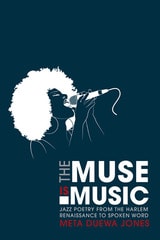
The Muse is Music
Jazz Poetry from the Harlem Renaissance to Spoken WordMeta DuEwa Jones
University of Illinois Press, 2013
This wide-ranging, ambitiously interdisciplinary study traces jazz's influence on African American poetry from the Harlem Renaissance to contemporary spoken word poetry. Examining established poets such as Langston Hughes, Ntozake Shange, and Nathaniel Mackey as well as a generation of up-and-coming contemporary writers and performers, Meta DuEwa Jones highlights the intersections of race, gender, and sexuality within the jazz tradition and its representation in poetry. Applying prosodic analysis to emphasize the musicality of African American poetic performance, she examines the gendered meanings evident in collaborative performances and in the criticism, images, and sounds circulating within jazz cultures.
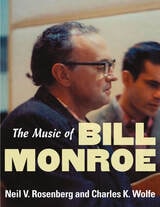
The Music of Bill Monroe
Neil V. Rosenberg and Charles K. Wolfe
University of Illinois Press, 2006
The second part of each chapter presents the discography. Information here includes the session’s place, date, time, and producer; master/matrix numbers, song/tune titles, composer credits, personnel, instruments, and vocals; and catalog/release numbers and reissue data.
The only complete bio-discography of this American musical icon, The Music of Bill Monroe is the starting point for any study of Monroe’s contributions as a composer, interpreter, and performer.
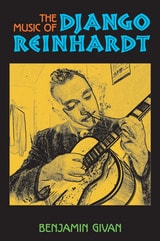
The Music of Django Reinhardt
Benjamin Givan
University of Michigan Press, 2009
"The Music of Django Reinhardt is an impressive contribution to the field of jazz studies. The book offers a penetrating view into the music of one of jazz's most intriguing early figures."
---Keith Waters, coauthor, Jazz: The First Hundred Years
"An important addition to the literature on jazz, Givan's book provides many insights into Reinhardt’s solo building and unorthodox guitar playing; it is richly illustrated with many excellent musical transcriptions."
---Thomas Owens, author of Bebop: The Music and Its Players
"Givan has painstakingly assembled an analytical interpretation of Reinhardt's music that is rigorous, compelling, and illuminating. This book makes a unique contribution to the field of jazz studies and guitar music in general."
---Brian Harker, author of Jazz: An American Journey
When most people think of the great jazz guitarist Django Reinhardt, they conjure up the unusual details of his colorful life: a childhood spent in gypsy encampments outside of Paris; the tragic caravan fire when he was eighteen that rendered his left hand nearly unusable; and his survival during World War II, when gypsies were massacred by the hundreds of thousands. The amazing story of Reinhardt’s life even became the basis for Woody Allen's Sweet and Lowdown.
Yet, it is the music of Django Reinhardt that made him one of the most original guitarists in history. In particular, his partnership with violinist Stéphane Grappelli, in the Quintette du Hot Club de France, brought him international renown and the attention of some of the most important American jazz musicians of the day, including Coleman Hawkins, Benny Carter, and Duke Ellington.
The Music of Django Reinhardt explores the story of the man and his music as never before. Benjamin Givan shows how one of jazz's greatest guitarists created his unparalleled sound. This book is an analytical study of his music, including his process, his improvisational style, and his instrumental technique.
The book features transcriptions from records of the 1920s through the 1950s and includes detailed discussion of selected performances from one of the most important guitarists in history.
Benjamin Givan is Assistant Professor of Music at Skidmore College. His writings on jazz have appeared in scholarly publications such as Current Musicology and the Musical Quarterly, as well as the popular jazz magazine Down Beat. He received his Ph.D. in music theory from Yale University.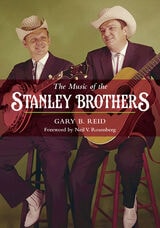
The Music of the Stanley Brothers
Gary B. Reid
University of Illinois Press, 2015
Monumental and indispensable, The Music of the Stanley Brothers provides fans and scholars alike with a guide for immersion in the long career and breathtaking repertoire of two legendary American musicians.
The Musical Comedy Films of Grigorii Aleksandrov
Laughing MattersRimgaila Salys
Intellect Books, 2009
Grigorii Aleksandrov’s musical comedy films, created with composer Isaak Dunaevskii, were the most popular Russian cinema of the 1930s and ’40s. Drawing on studio documents, press materials, and interviews with surviving film crew members, The Musical Comedy Films of Grigorii Aleksandrov presents the untold production history of the films. Salys explores how Aleksandrov’s cinema preserved the paradigms of the American musical, including its comedic tradition, using both to inscribe the foundation myths of the Stalin era in the national consciousness. As the first major study to situate these films in the cultural context of the era, this book will be essential to courses on Russian cinema and Soviet culture.
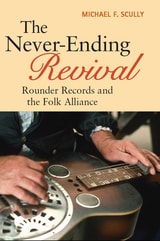
The Never-Ending Revival
Rounder Records and the Folk AllianceMichael F. Scully
University of Illinois Press, 2013
In recent years, there has been an upsurge in interest in "roots music" and "world music," popular forms that fuse contemporary sounds with traditional vernacular styles. In the 1950s and 1960s, the music industry characterized similar sounds simply as "folk music." Focusing on such music since the 1950s, The Never-Ending Revival: Rounder Records and the Folk Alliance analyzes the intrinsic contradictions of a commercialized folk culture. Both Rounder Records and the North American Folk Music and Dance Alliance have sought to make folk music widely available, while simultaneously respecting its defining traditions and unique community atmosphere. By tracing the histories of these organizations, Michael F. Scully examines the ongoing controversy surrounding the profitability of folk music. He explores the lively debates about the difficulty of making commercially accessible music, honoring tradition, and remaining artistically relevant, all without "selling out."
In the late 1950s through the 1960s, the folk music revival pervaded the mainstream music industry, with artists such as Bob Dylan and Joan Baez singing historically or politically informed ballads based on musical forms from Appalachia and the South. In the twenty-first century, the revival continues, and it includes a variety of music derived from Cajun, African American, and Mexican traditions, among many others. Even though the mainstream music industry and media largely ignore the term "folk music," a strong allure based on nostalgia, the desire for community, and a sense of exclusiveness augments an enthusiastic following connected by word-of-mouth, numerous festivals, and the Internet. There are more folk festivals now than there were during the original boom of the 1960s, suggesting that music artists, agents, and record label representatives are striking a successful balance between tradition and profitability. Scully combines rich interviews of music executives and practicing folk musicians with valuable personal experience to reveal how this American subculture remains in a "never-ending revival" based on fluid definitions of folk and folk music.
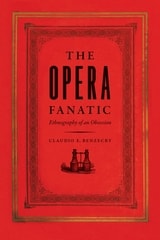
The Opera Fanatic
Ethnography of an ObsessionClaudio E. Benzecry
University of Chicago Press, 2011
Though some dismiss opera as old-fashioned, it shows no sign of disappearing from the world’s stage. So why do audiences continue to flock to it? Given its association with wealth, one might imagine that opera tickets function as a status symbol. But while a desire to hobnob with the upper crust might motivate the occasional operagoer, for hardcore fans the real answer, according to The Opera Fanatic, is passion—they do it for love.
Opera lovers are an intense lot, Claudio E. Benzecry discovers in his look at the fanatics who haunt the legendary Colón Opera House in Buenos Aires, a key site for opera’s globalization. Listening to the fans and their stories, Benzecry hears of two-hundred-mile trips for performances and nightlong camp-outs for tickets, while others testify to a particular opera’s power to move them—whether to song or to tears—no matter how many times they have seen it before. Drawing on his insightful analysis of these acts of love, Benzecry proposes new ways of thinking about people’s relationship to art and shows how, far from merely enhancing aspects of everyday life, art allows us to transcend it.
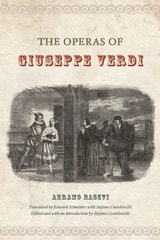
The Operas of Giuseppe Verdi
Abramo Basevi
University of Chicago Press, 2014
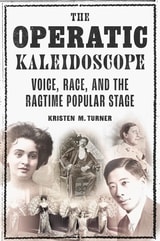
The Operatic Kaleidoscope
Voice, Race, and the Ragtime Popular StageKristen M. Turner
University of Illinois Press, 2026
Turner examines performances ranging from Florenz Ziegfeld’s early Follies to Black vaudeville shows to musical comedies, including everything from celebrity vehicles to obscure productions and overlooked artists. She reveals how opera’s popularity in mass culture illuminates the effects of exclusionary immigration policies, pervasive racial and ethnic inequalities, debates over women’s suffrage, and the imposition of legalized segregation. Performers and creators from many communities—white immigrants, Jewish, Black, and Asian American—strategically deployed operatic allusions and the genre’s characteristic vocal timbre to assert their respectability, challenge stereotypes, and navigate oppressive social structures.
Nuanced and expansive, The Operatic Kaleidoscope explores opera’s role when popular culture grappled with questions of race and citizenship.
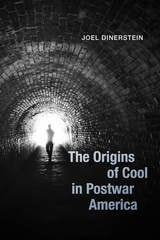
The Origins of Cool in Postwar America
Joel Dinerstein
University of Chicago Press, 2017
Through eye-opening portraits of iconic figures, Dinerstein illuminates the cultural connections and artistic innovations among Lester Young, Humphrey Bogart, Robert Mitchum, Billie Holiday, Frank Sinatra, Jack Kerouac, Albert Camus, Marlon Brando, and James Dean, among others. We eavesdrop on conversations among Jean-Paul Sartre, Simone de Beauvoir, and Miles Davis, and on a forgotten debate between Lorraine Hansberry and Norman Mailer over the "white Negro" and black cool. We come to understand how the cool worlds of Beat writers and Method actors emerged from the intersections of film noir, jazz, and existentialism. Out of this mix, Dinerstein sketches nuanced definitions of cool that unite concepts from African-American and Euro-American culture: the stylish stoicism of the ethical rebel loner; the relaxed intensity of the improvising jazz musician; the effortless, physical grace of the Method actor. To be cool is not to be hip and to be hot is definitely not to be cool.
This is the first work to trace the history of cool during the Cold War by exploring the intersections of film noir, jazz, existential literature, Method acting, blues, and rock and roll. Dinerstein reveals that they came together to create something completely new—and that something is cool.
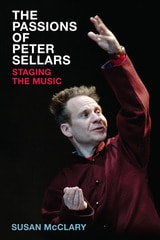
The Passions of Peter Sellars
Staging the MusicSusan McClary
University of Michigan Press, 2019
Many directors leave the musical aspects of opera entirely to the singers and conductor. Sellars, however, immerses himself in the score, and has created a distinctive visual vocabulary to embody musical gesture on stage, drawing on the energies of the music as he shapes characters, ensemble interaction, and large-scale dramatic trajectories. As a leading scholar of gender and music, and the history of opera, Susan McClary is ideally positioned to illuminate Sellars’s goal to address both the social tensions embodied in these operas as well as the spiritual dimensions of operatic performance. McClary considers Sellars’s productions of Mozart’s Le nozze di Figaro, Don Giovanni, and Così fan tutte; Handel’s Theodora; Messiaen’s Saint François d’Assise; John C. Adams’s Nixon in China, The Death of Klinghoffer, El Niño, and Doctor Atomic; Kaija Saariaho’s L’amour de loin, La Passion de Simone, and Only the Sound Remains; Purcell’s The Indian Queen; and Bach’s passions of Saint Matthew and Saint John. Approaching Sellars’s theatrical strategies from a musicological perspective, McClary blends insights from theater, film, and literary scholarship to explore the work of one of the most brilliant living interpreters of opera.
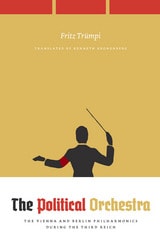
The Political Orchestra
The Vienna and Berlin Philharmonics during the Third ReichFritz Trümpi
University of Chicago Press, 2016
Trümpi looks first at the decades preceding National Socialist rule, when the competing orchestras, whose rivalry mirrored a larger rivalry between Berlin and Vienna, were called on to represent “superior” Austro-German music and were integrated into the administrative and social structures of their respective cities—becoming vulnerable to political manipulation in the process. He then turns to the Nazi period, when the orchestras came to play a major role in cultural policies. As he shows, the philharmonics, in their own unique ways, strengthened National Socialist dominance through their showcasing of Germanic culture in the mass media, performances for troops and the general public, and fictional representations in literature and film. Accompanying these propaganda efforts was an increasing politicization of the orchestras, which ranged from the dismissal of Jewish members to the programming of ideologically appropriate repertory—all in the name of racial and cultural purity.
Richly documented and refreshingly nuanced, The Political Orchestra is a bold exploration of the ties between music and politics under fascism.
The Pop Palimpsest
Intertextuality in Recorded Popular MusicLori Burns and Serge Lacasse, Editors
University of Michigan Press, 2018
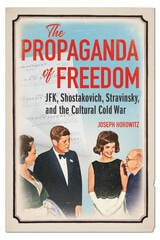
The Propaganda of Freedom
JFK, Shostakovich, Stravinsky, and the Cultural Cold WarJoseph Horowitz
University of Illinois Press, 2023
Eloquently extolled by President John F. Kennedy, the idea that only artists in free societies can produce great art became a bedrock assumption of the Cold War. That this conviction defied centuries of historical evidence--to say nothing of achievements within the Soviet Union--failed to impact impregnable cultural Cold War doctrine.
Joseph Horowitz writes: “That so many fine minds could have cheapened freedom by over-praising it, turning it into a reductionist propaganda mantra, is one measure of the intellectual cost of the Cold War.” He shows how the efforts of the CIA-funded Congress for Cultural Freedom were distorted by an anti-totalitarian “psychology of exile” traceable to its secretary general, the displaced Russian aristocrat/composer Nicolas Nabokov, and to Nabokov’s hero Igor Stravinsky.
In counterpoint, Horowitz investigates personal, social, and political factors that actually shape the creative act. He here focuses on Stravinsky, who in Los Angeles experienced a “freedom not to matter,” and Dmitri Shostakovich, who was both victim and beneficiary of Soviet cultural policies. He also takes a fresh look at cultural exchange and explores paradoxical similarities and differences framing the popularization of classical music in the Soviet Union and the United States. In closing, he assesses the Kennedy administration’s arts advocacy initiatives and their pertinence to today’s fraught American national identity.
Challenging long-entrenched myths, The Propaganda of Freedom newly explores the tangled relationship between the ideology of freedom and ideals of cultural achievement.
The Punk Reader
Research Transmissions from the Local and the GlobalEdited by Mike Dines, Alastair "Gords" Gordon, Paula Guerra, and Russ Bestley
Intellect Books, 2019
The first offering in Intellect’s new Global Punk series, The Punk Reader: Research Transmissions from the Local and the Global is the first edited volume to explore and critically interrogate punk culture in relation to contemporary, radicalized globalization. Documenting disparate international punk scenes, including Mexico, China, Malaysia, and Iran, The Punk Reader is a long-overdue addition to punk studies and a valuable resource for readers seeking to know more about the global influence of punk beyond the 1970s.
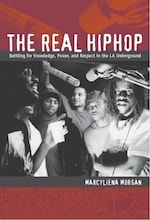
The Real Hiphop
Battling for Knowledge, Power, and Respect in the LA UndergroundMarcyliena Morgan
Duke University Press, 2009
Morgan intersperses her observations with excerpts from interviews and transcripts of freestyle lyrics. Providing a thorough linguistic interpretation of the music, she teases out the cultural antecedents and ideologies embedded in the language, emphases, and wordplay. She discusses the artistic skills and cultural knowledge MCs must acquire to rock the mic, the socialization of hiphop culture’s core and long-term members, and the persistent focus on skills, competition, and evaluation. She brings attention to adults who provided material and moral support to sustain underground hiphop, identifies the ways that women choose to participate in Project Blowed, and vividly renders the dynamics of the workshop’s famous lyrical battles.
The Real Philadelphia Book
Jazz Bridge
Temple University Press, 2022
The Real Philadelphia Book, compiled by Jazz Bridge and editors David Dzubinski and Suzanne Cloud, is a collection of more than 200 original jazz and blues compositions. Arranged alphabetically by song title, the sheet music showcases work by generations of Philadelphia musicians. This volume, which is “what every aspiring jazz musician needs to know,” features tunes from Grammy Award-winners Jimmy Heath, Grover Washington, Jr., and Christian McBride, as well as legends such as Joey DeFrancesco, Ray Bryant, and Robin and Duane Eubanks. Also included are rare compositions by jazz greats Bobby Timmons, Hank Mobley, and Lee Morgan, in addition to music by local luminaries, Rhenda Fearrington, Monnette Sudler, and Kaylé Brecher.
The aim of The Real Philadelphia Book is to help the jazz community make deeper, stronger connections while also formally documenting much of the important music created in the Philadelphia metro area by both well- and lesser-known musicians.
Including an index of composers, The Real Philadelphia Bookwill enhance and add to the rich Philadelphia jazz and blues tradition and make the Philly jazz catalogue more easily available to musicians, jazz students and educators around the world.
The Rhythmic Structure of Music
Grosvenor Cooper and Leonard B. Meyer
University of Chicago Press, 1963
"This is a path-breaking work, important alike to music students and teachers, but it will make profitable reading for performers, too."—New York Times Book Review
"When at some future time theories of rhythm . . . are . . . as well understood, and as much discussed as theories of harmony and counterpoint . . . they will rest in no small measure on the foundations laid by Cooper and Meyer in this provocative dissertation on the rhythmic structure of music."—Notes
". . . . a significant, courageous and, on the whole, successful attempt to deal with a very controversial and neglected subject. Certainly no one who takes the time to read it will emerge from the experience unchanged or unmoved."—Journal of Music Theory
The late GROSVENOR W. COOPER, author of Learning to Listen, was professor of music at the University of California at Santa Cruz.
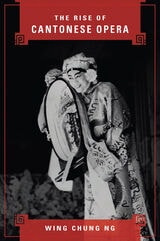
The Rise of Cantonese Opera
Wing Chung Ng
University of Illinois Press, 2015
In the early 1900s, however, Cantonese opera began to capture mass audiences in the commercial theaters of Hong Kong and Guangzhou--a transformation that changed it forever. Wing Chung Ng charts Cantonese opera's confrontations with state power, nationalist discourses, and its challenge to the ascendancy of Peking opera as the country's preeminent "national theatre." Mining vivid oral histories and heretofore untapped archival sources, Ng relates how Cantonese opera evolved from a fundamentally rural tradition into urbanized entertainment distinguished by a reliance on capitalization and celebrity performers. He also expands his analysis to the transnational level, showing how waves of Chinese emigration to Southeast Asia and North America further re-shaped Cantonese opera into a vibrant part of the ethnic Chinese social life and cultural landscape in the many corners of a sprawling diaspora.
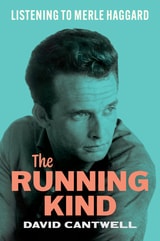
The Running Kind
Listening to Merle HaggardDavid Cantwell
University of Texas Press, 2022
2022 Belmont Award for the Best Book on Country Music, International Country Music Conference/Belmont University
New and expanded biography of one of country music’s most celebrated singer-songwriters.
Merle Haggard enjoyed numerous artistic and professional triumphs, including more than a hundred country hits (thirty-eight at number one), dozens of studio and live album releases, upwards of ten thousand concerts, induction into the Country Music Hall of Fame, and songs covered by artists as diverse as Lynryd Skynyrd, Elvis Costello, Tammy Wynette, Bobby "Blue" Bland, Willie Nelson, the Grateful Dead, and Bob Dylan.
In The Running Kind, a new edition that expands on his earlier analysis and covers Haggard's death and afterlife as an icon of both old-school and modern country music, David Cantwell takes us on a revelatory journey through Haggard’s music and the life and times out of which it came. Covering the breadth of his career, Cantwell focuses especially on the 1960s and 1970s, when Haggard created some of his best-known and most influential music: songs that helped invent the America we live in today. Listening closely to a masterpiece-crowded catalogue (including “Okie from Muskogee,” “Sing Me Back Home,” “Mama Tried,” and “Working Man Blues,” among many more), Cantwell explores the fascinating contradictions—most of all, the desire for freedom in the face of limits set by the world or self-imposed—that define not only Haggard’s music and public persona but the very heart of American culture.
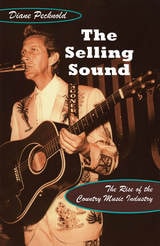
The Selling Sound
The Rise of the Country Music IndustryDiane Pecknold
Duke University Press, 2007
Pecknold draws on sources as diverse as radio advertising journals, fan magazines, Hollywood films, and interviews with industry insiders. Her sweeping social history encompasses the genre’s early days as an adjunct of radio advertising in the 1920s, the friction between Billboard and more genre-oriented trade papers over generating the rankings that shaped radio play lists, the establishment of the Country Music Association, and the influence of rock ‘n’ roll on the trend toward single-genre radio stations. Tracing the rise of a large and influential network of country fan clubs, Pecknold highlights the significant promotional responsibilities assumed by club organizers until the early 1970s, when many of their tasks were taken over by professional publicists.
The Silent Musician
Why Conducting MattersMark Wigglesworth
University of Chicago Press, 2019
The Silent Musician deepens our understanding of what conductors do and why they matter. Neither an instruction manual for conductors, nor a history of conducting, the book instead explores the role of the conductor in noiselessly shaping the music that we hear. Writing in a clever, insightful, and often evocative style, world-renowned conductor Mark Wigglesworth deftly explores the philosophical underpinnings of conducting—from the conductor’s relationship with musicians and the music, to the public and personal responsibilities conductors face—and examines the subtler components of their silent art, which include precision, charisma, diplomacy, and passion. Ultimately, Wigglesworth shows how conductors—by simultaneously keeping time and allowing time to expand—manage to shape ensemble music into an immersive, transformative experience, without ever making a sound.
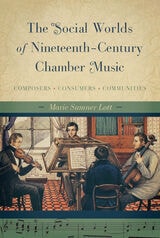
The Social Worlds of Nineteenth-Century Chamber Music
Composers, Consumers, CommunitiesMarie Sumner Lott
University of Illinois Press, 2018
Marie Sumner Lott examines the music available to musical consumers in the nineteenth century, and what that music tells us about their tastes, priorities, and activities. Her social history of chamber music performance places the works of canonic composers such as Schubert, Brahms, and Dvoøák in relation to lesser-known but influential peers. The book explores the dynamic relationships among the active agents involved in the creation of Romantic music and shows how each influenced the others' choices in a rich, collaborative environment. In addition to documenting the ways companies acquired and marketed sheet music, Sumner Lott reveals how the publication and performance of chamber music differed from that of ephemeral piano and song genres or more monumental orchestral and operatic works. Several distinct niche markets existed within the audience for chamber music, and composers created new musical works for their use and enjoyment.
Insightful and groundbreaking, The Social Worlds of Nineteenth-Century Chamber Music revises prevailing views of middle-class influence on nineteenth-century musical style and presents new methods for interpreting the meanings of musical works for musicians both past and present.
The Songs of Van Dyke Parks
Durable GoodsDale Carter
University of Illinois Press, 2027
Embracing the opportunity provided by his collaboration with Beach Boys leader Brian Wilson, the Mississippi-born Parks enjoyed a career whose many bases and low profile gave him space to explore his art. His songs blended musical passion, personal experience, and social concern on albums devoted to significant and timely themes while his broad creative palette enabled him to find inspiration in styles ranging from classical to Appalachian, and musical theater to calypso.
An illuminating portrait of a singular creative voice, The Songs of Van Dyke Parks takes readers inside the songwriting of a resolutely original American artist and his enduring voyage of musical discovery.
The Sounds of Place
Music and the American Cultural LandscapeDenise Von Glahn
University of Illinois Press, 2021
Wide-ranging and astute, The Sounds of Place explores high art music's role in the making of national myth and memory.
The Spirit of This Place
How Music Illuminates the Human SpiritPatrick Summers
University of Chicago Press, 2018
In this soul-searching collection of vignettes, Patrick Summers gives us an adamant, impassioned affirmative. Art, he argues, nurtures freedom of thought, and is more necessary now than ever before.
As artistic director of the Houston Grand Opera, Summers is well positioned to take stock of the limitations of the professional arts world—a world where the conversation revolves almost entirely around financial questions and whose reputation tends toward elitism—and to remind us of art’s fundamental relationship to joy and meaning. Offering a vehement defense of long-form arts in a world with a short attention span, Summers argues that art is spiritual, and that music in particular has the ability to ask spiritual questions, to inspire cathartic pathos, and to express spiritual truths. Summers guides us through his personal encounters with art and music in disparate places, from Houston’s Rothko Chapel to a music classroom in rural China, and reflects on musical works he has conducted all over the world. Assessing the growing canon of new operas performed in American opera houses today, he calls for musical artists to be innovative and brave as opera continues to reinvent itself.
This book is a moving credo elucidating Summers’s belief that the arts, especially music, help us to understand our own humanity as intellectual, aesthetic, and ultimately spiritual.

The Street Is My Pulpit
Hip Hop and Christianity in KenyaMwenda Ntarangwi
University of Illinois Press, 2016
Mwenda Ntarangwi explores the Kenyan hip hop scene through the lens of Juliani's life and career. A born-again Christian, Juliani produces work highlighting the tensions between hip hop's forceful self-expression and a pious approach to public life, even while contesting the basic presumptions of both. In The Street Is My Pulpit, Ntarangwi forges an uncommon collaboration with his subject that offers insights into Juliani's art and goals even as Ntarangwi explores his own religious experience and subjective identity as an ethnographer. What emerges is an original contribution to the scholarship on hip hop's global impact and a passionate study of the music's role in shaping new ways of being Christian in Africa.
The String Quartets of Beethoven
Edited by William Kinderman
University of Illinois Press, 2020
The Tango Machine
Musical Culture in the Age of ExpediencyMorgan James Luker
University of Chicago Press, 2016
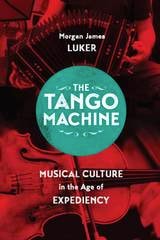
Luker traces the diverse and often contradictory ways tango is used in Argentina in activities ranging from state cultural policy-making to its export abroad as a cultural emblem, from the expanding nonprofit arts sector to tango-themed urban renewal projects. He shows how projects such as these are not peripheral to an otherwise “real” tango—they are the absolutely central means by which the values of this musical culture are cultivated. By richly detailing the interdependence of aesthetic value and the regimes of cultural management, this book sheds light on core conceptual challenges facing critical music scholarship today.
The Temple of Fame and Friendship
Portraits, Music, and History in the C. P. E. Bach CircleAnnette Richards
University of Chicago Press, 2020
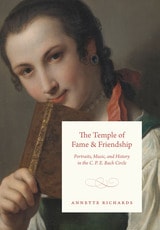
One of the most celebrated German composers of the eighteenth century, C. P. E. Bach spent decades assembling an extensive portrait collection of some four hundred music-related items—from oil paintings to engraved prints. The collection was dispersed after Bach’s death in 1788, but with Annette Richards’s painstaking reconstruction, the portraits once again present a vivid panorama of music history and culture, reanimating the sensibility and humor of Bach’s time. Far more than a mere multitude of faces, Richards argues, the collection was a major part of the composer’s work that sought to establish music as an object of aesthetic, philosophical, and historical study.
The Temple of Fame and Friendship brings C. P. E. Bach’s collection to life, giving readers a sense of what it was like for visitors to tour the portrait gallery and experience music in rooms thick with the faces of friends, colleagues, and forebears. She uses the collection to analyze the “portraitive” aspect of Bach’s music, engaging with the influential theories of Swiss physiognomist Johann Caspar Lavater. She also explores the collection as a mode of cultivating and preserving friendship, connecting this to the culture of remembrance that resonates in Bach’s domestic music. Richards shows how the new music historiography of the late eighteenth century, rich in anecdote, memoir, and verbal portrait, was deeply indebted to portrait collecting and its negotiation between presence and detachment, fact and feeling.
The Texas-Mexican Conjunto
History of a Working-class MusicBy Manuel H. Peña
University of Texas Press, 1985
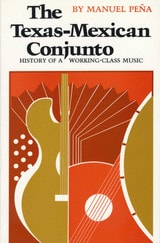
Around 1930, a highly popular and distinctive type of accordion music, commonly known as conjunto, emerged among Texas-Mexicans. Manuel Peña's The Texas-Mexican Con;unto is the first comprehensive study of this unique folk style. The author's exhaustive fieldwork and personal interviews with performers, disc jockeys, dance promoters, recording company owners, and conjunto music lovers provide the crucial connection between an analysis of the music itself and the richness of the culture from which it sprang.
Using an approach that integrates musicological, historical, and sociological methods of analysis, Peña traces the development of the conjunto from its tentative beginnings to its preeminence as a full-blown style by the early 1960s. Biographical sketches of such major early performers as Narciso Martínez (El Huracán del Valle), Santiago Jiménez (El Flaco), Pedro Ayala, Valerio Longoria, Tony de la Rosa, and Paulino Bernal, along with detailed transcriptions of representative compositions, illustrate the various phases of conjunto evolution.
Peña also probes the vital connection between conjunto's emergence as a powerful symbolic expression and the transformation of Texas-Mexican society from a pre-industrial folk group to a community with increasingly divergent socioeconomic classes and ideologies. Of concern throughout the study is the interplay between ethnicity, class, and culture, and Peña's use of methods and theories from a variety of scholarly disciplines enables him to tell the story of conjunto in a manner both engaging and enlightening. This important study will be of interest to all students of Mexican American culture, ethnomusicology, and folklore.
The Theater Will Rock
A History of the Rock Musical, from Hair to HedwigElizabeth L. Wollman
University of Michigan Press, 2010
"A much-needed study of the impact of rock music on the musical theater and its resulting challenges, complexities, failures, and successes. Anyone interested in Broadway will learn a great deal from this book."
---William Everett, author of The Musical: A Research Guide to Musical Theatre
"As Wollman weaves her historical narrative, she compellingly returns to . . . the conflict between the aesthetics and ideologies of rock music and the disciplined and commercial practices of the musical stage."
---Theatre Research International
"This well-written account puts the highs and lows of producing staged rock musicals in New York City into perspective and is well worth reading for the depth of insight it provides."
---Studies in Musical Theatre
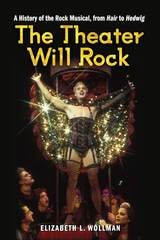
Despite the genre’s influence and fame, there are still some critics who claim that the term “rock musical” is an oxymoron. The relationship between rock and the musical theater has been stormy from the start, and even the comparatively recent success of Rent has done little to convince theater producers that rock musicals are anything but highly risky ventures. Elizabeth L. Wollman explores the reasons behind these problematic connections and looks at the socioeconomic forces that underlie aesthetic decisions. She weighs the influence on the rock musical by mass media, sound, and recording technology, and the economic pressures that have affected New York theater in general over the past three decades. Finally, Wollman offers a meditation on the state of the musical, its relation to rock, and, ultimately, its future.
Packed with candid commentary by members of New York's vibrant theater community, The Theater Will Rock traces the rock musical’s evolution over nearly fifty years, in popular productions such as Hair, The Who's Tommy, Jesus Christ Superstar, The Rocky Horror Picture Show, Little Shop of Horrors, Rent, and Mamma Mia!—and in notable flops such as The Capeman.
Elizabeth L. Wollman is Assistant Professor of Music at Baruch College of the City University of New York.
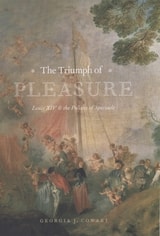
The Triumph of Pleasure
Louis XIV and the Politics of SpectacleGeorgia J. Cowart
University of Chicago Press, 2008
With bold revisionist strokes, Cowart traces this strain of artistic dissent through the comedy-ballets of Jean-Baptiste Lully and Molière, the late operatic works of Lully and the operas of his sons, the opera-ballets of André Campra and his contemporaries, and the related imagery of Antoine Watteau’s well-known painting The Pilgrimage to Cythera. She contends that through a variety of means, including the parody of old-fashioned court entertainments, these works reclaimed traditional allegories for new ideological aims, setting the tone for the Enlightenment. Exploring these arts from the perspective of spectacle as it emerged from the court into the Parisian public sphere, Cowart ultimately situates the ballet and related genres as the missing link between an imagery of propaganda and an imagery of political protest.