Results by title
406 books match the query 'Greece' and 102 start with t
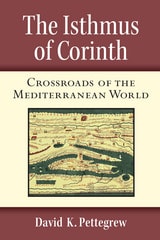
The Isthmus of Corinth
Crossroads of the Mediterranean WorldDavid K. Pettegrew
University of Michigan Press, 2016
David Pettegrew’s book offers a new history of the Isthmus of Corinth from the Romans’ initial presence in Greece during the Hellenistic era to the epic transformations of the Empire in late antiquity. A new interpretation of the extensive literary evidence outlines how the Isthmus became the most famous land bridge of the ancient world, central to maritime interests of Corinth, and a medium for Rome’s conquest, annexation, and administration in the Greek east. A fresh synthesis of archaeological evidence and the results of a recent intensive survey on the Isthmus describe the physical development of fortifications, settlements, harbors, roads, and sanctuaries in the region. The author includes chapters on the classical background of the concept isthmos, the sacking of Corinth and the defeat of the Achaean League, colonization in the Late Roman Republic, the Emperor Nero’s canal project and its failure, the growth of Roman settlement in the territory, and the end of athletic contests at Isthmia. The Isthmus of Corinth offers a powerful case study in the ways that shifting Mediterranean worlds transformed a culturally significant landscape over the course of a millennium.
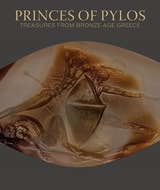
The Kingdom of Pylos
Warrior-Princes of Mycenaean GreeceSharon R. Stocker
J. Paul Getty Trust, The, 2025
Ancient Pylos has long captivated travelers, archaeologists, and historians familiar with Homer’s Iliad and Odyssey and his account of King Nestor, the prudent elder counselor in the Trojan War. Excavations begun in 1939 unearthed the storied Palace of Nestor in Messenia, an epicenter of Mycenaean civilization.
The Kingdom of Pylos features spectacular arts and crafts, many recently excavated at sites across Messenia, including goldwork of unparalleled artistry, masterfully carved sealstones, weapons, and wall paintings. Essays by international scholars examine the latest discoveries, including the Linear B tablets—the earliest written form of the Greek language—which document the political, religious, and economic organization of the prosperous Pylian realm. New research and cutting-edge science cast light on the 2015 find of the grave of the Griffin Warrior, an extraordinary, intact burial that held thousands of artifacts, including the celebrated Pylos Combat Agate, perhaps the finest work of art from the prehistoric Aegean. With over 300 illustrations, this is the first major publication in English to reconstruct the society of Pylos and settlements in its orbit during the Late Bronze Age (1700–1070 BCE).
This volume is published to accompany an exhibition on view at the Archaeological Museum of Messenia in Kalamata from February 15 to April 27, 2025, the J. Paul Getty Museum at the Getty Villa from June 25, 2025, to January 12, 2026, and the Hellenic National Archaeological Museum in Athens from March 1 to June 30, 2026.
The Last Word
Women, Death, and Divination in Inner ManiC. Nadia Seremetakis
University of Chicago Press, 1991
The Law of Ancient Athens
David D. Phillips
University of Michigan Press, 2013
The Law of Ancient Athens contains the principal literary and epigraphical sources, in English, for Athenian law in the Archaic and Classical periods, from the first known historical trial (late seventh century) to the fall of the democracy in 322 BCE.
This accessible and important volume is designed for teachers, students, and general readers interested in the ancient Greek world, the history of law, and the history of democracy, an Athenian invention during this period. Offering a comprehensive treatment of Athenian law, it assumes no prior knowledge of the subject and is organized in user-friendly fashion, progressing from the person to the family to property and obligations to the gods and to the state. David D. Phillips has translated all sources into English, and he has added significant introductory and explanatory material.
Topics covered in the book include homicide and wounding; theft; marriage, children, and inheritance; citizenship; contracts and commerce; impiety; treason and other offenses against the state; and sexual offenses including rape and prostitution. The volume’s unique feature is its presentation of the actual primary sources for Athenian laws, with many key or disputed terms rendered in transliterated Greek. The translated sources, together with the topical introductions, notes, and references, will facilitate both research in the field and the teaching of increasingly popular courses on Athenian law and law in the ancient world.
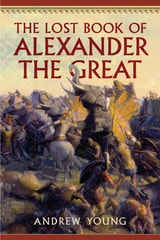
The Lost Book of Alexander the Great
Andrew Young
Westholme Publishing, 2022
Alexander the Great is well known as one of the first great empire builders of the ancient world. Among those fellow Macedonian officers who accompanied Alexander in his epic conquests from Greece to India was Ptolemy Lagides. Ptolemy served alongside Alexander from the Persian defeat at the Battle of Issus in modern-day Turkey and the journey to find the oracle that proclaimed Alexander to be Zeus incarnate, to the Battle of the Hydaspes River in 326 BC that opened India to the West. Following Alexander’s death, Ptolemy gained control of Egypt where he founded the dynasty in his name, created the great library of Alexandria, and was patron of the mathematician Euclid. Sometime during his rule in Egypt, Ptolemy wrote a history of Alexander’s conquests. Although it is probable that Ptolemy enhanced his own importance, sources indicate that it was regarded as an accurate and even-handed account of the campaigns of Alexander. However, Ptolemy’s book was lost—perhaps with the destruction of the library he founded—and not even an original fragment has survived. His book, however, was acknowledged as a primary source of information for later Roman historians.
In The Lost Book of Alexander the Great, Andrew Young explores the world of ancient writings about the Macedonian leader in order to determine whether any of Ptolemy’s writings can be recovered. Inspired by Stephen Greenblatt’s distinguished biography of Shakespeare, Will in the World, and written for the general reader, the author uses literary forensics to suggest which parts of later books about Alexander the Great, most notably the account by Arrian of Nicomedia, might be the words of Ptolemy. In addition to separating later Roman sensibilities from the original Greek of Ptolemy, the author re-creates the famous library of Alexandria, and takes the reader along on Alexander’s conquests as closely as we can to how Ptolemy may have recounted them.
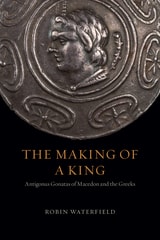
The Making of a King
Antigonus Gonatas of Macedon and the GreeksRobin Waterfield
University of Chicago Press, 2021
In this book, distinguished historian Robin Waterfield draws on his deep understanding of Greek history to bring us into the world of this complicated, splintered empire. He shows how, while Antigonus was confirming his Macedonian rule through constitutional changes, the Greeks were making moves toward independence. Two great confederacies of Greek cities emerged, forming powerful blocs that had the potential to resist the power of Macedon. The Making of a King charts Antigonus’s conflicts with the Greeks and with his perennial enemy, Ptolemy of Egypt. But Antigonus’s diplomatic and military successes were not enough to secure peace, and in his final years he saw his control of Greece whittled away by rebellion and the growing power of the Greek confederacies. Macedon’s lack of firm control over Greece ultimately made it possible for Rome to take its place as the arbiter of the Greeks’ future.
The Making of a King is Waterfield’s third volume about the Greeks in the era after Alexander the Great. Completing the story begun in his previous two books, Dividing the Spoils and Taken at the Flood, it brings Antigonus and his turbulent era to life. With The Making of a King—the first book in more than a century to tell in full the story of Antigonus Gonatas’s reign—this fascinating figure finally receives his due.
The Myths of Fiction
Studies in the Canonical Greek NovelsEdmund P. Cueva
University of Michigan Press, 2004
The tradition of historical literature begun by Herodotus and Thucydides molded the early Greek novel. As the genre evolved, however, Greek novels moved away from their historical roots to become more heavily influenced by mythological traditions. Edmund Cueva's new book examines the literary uses to which the ancient novelists put their mythological material. His work offers a stimulating discussion of myths and their rise to prominence as the key feature of the fully developed Greek novel. He also takes into account the impact of the Roman conquest on the development of the Greek novel, the last true literary creation of the Greek world. The Myths of Fiction will interest scholars of Greek literarure, imperial history, literary myth, intertextuality, and comparative literature.
Edmund Cueva is Associate Professor and Chair of Classics at Xavier University.
The Narcissus and the Pomegranate
An Archaeology of the Homeric Hymn to DemeterAnn Suter
University of Michigan Press, 2002
The author analyzes the traditional language of the hymn and Persephone's retelling of her story to Demeter, arguing that the hymn involves an earlier tale of Demeter and Persephone that predates the seventh century. Suter uses anthropological applications to illustrate that the story of Persephone's abduction does not reflect a female initiation rite into adulthood, as has been argued, but rather an hieros gamos. These methodologies point to the conclusion that Persephone was once a powerful goddess in her own right, independent of Hades and of Demeter as well. To test the accuracy of these possibilities, the book next examines evidence from outside the hymn. Other versions of the two myths in the hymn support the idea that these myths--Persephone's abduction and Demeter's nursing of Demophoön--were once separate and were late combined to create a new story. Evidence from the chief archaeological sites, from vase painting and other artistic forms is provided to enhance the argument. Thus the evidence from outside the hymn supports the conclusions of the textual analyses, giving surprising substantiation that the hymn itself commemorates the early days of the worship of the goddesses as a mother/daughter pair.
This book will be of particular interest to scholars of religious history, art history, archaeology, and literature. It is also accessible to the general reader interested in Greek literature, myths, and religion.
Ann Suter is Associate Professor of Classical Studies, University of Rhode Island.
The Odyssey
Homer, Translated by Rodney Merrill
University of Michigan Press, 2002
This epic began life as the music composed by a "singer of tales," not as words on a page. As such, its meter allows for pleasing variations with a strong basic "beat," thus providing a rhythmic impetus that carries the story swiftly forward. The resulting "music" has important repercussions for the reader's perception of the many repeated elements that provide structure for the poem and bring out significant themes, just as the repetitions in a piece of music do.
This edition of the Odyssey includes selections for further reading, a list of proper names (with a guide to pronunciation), and three maps. It also provides introductory discussions of how the work came into being and was transmitted until it became the work we read, how it is divided into six "performance sessions" of four books each, and how the poem's various themes are developed. Rodney Merrill's Odyssey is thus an ideal edition for students, teachers, and general readers.
The audiobook is available on twelve cassettes, and is read by Rodney Merrill. This version will bring Homer's epic masterpiece to life like never before. Perfect for the car or classroom!
Rodney Merrill is retired and an independent scholar. He has taught at Stanford University, the University of San Francisco, and the University of California, Berkeley.
Thomas R. Walsh, Senior Professor at Occidental College, has written articles on Homeric poetics, with a forthcoming book on anger in Homer.
The Oldest Cuisine in the World
Cooking in MesopotamiaJean Bottéro
University of Chicago Press, 2004
In this intriguing blend of the commonplace and the ancient, Jean Bottéro presents the first extensive look at the delectable secrets of Mesopotamia. Bottéro’s broad perspective takes us inside the religious rites, everyday rituals, attitudes and taboos, and even the detailed preparation techniques involving food and drink in Mesopotamian high culture during the second and third millennia BCE, as the Mesopotamians recorded them.
Offering everything from translated recipes for pigeon and gazelle stews, the contents of medicinal teas and broths, and the origins of ingredients native to the region, this book reveals the cuisine of one of history’s most fascinating societies. Links to the modern world, along with incredible recreations of a rich, ancient culture through its cuisine, make Bottéro’s guide an entertaining and mesmerizing read.
The Oresteia
Agamemnon, Libation Bearers, and The Holy GoddessesAeschylus, A verse translation by David Mulroy, with introduction and notes
University of Wisconsin Press, 2018
This drama of the House of Atreus catches everyone in a bloody net. Queen Clytaemestra of Argos murders her husband Agamemnon. Their son Orestes avenges his father by killing his mother. The Furies, hideous deities who punish the murder of blood kin, pursue Orestes. Into this horrific cycle steps Athena, goddess of wisdom, who establishes the rule of law to replace fatal vengeance. Orestes is tried in court before a jury of Athenians and found not guilty. Athena transforms the Furies into benevolent goddesses and extols the virtue of mercy.
An important historical document as well as gripping entertainment, the Oresteia conveys beliefs and values of the ancient Athenians as they established the world's first great democracy. Aeschylus (525/4–456/5 B.C.E.) was the first of the three great tragic dramatists of ancient Greece, forerunner of Sophocles and Euripides. In this trilogy he created a new dramatic form with characters and plot, infused with spellbinding emotion. David Mulroy's fluid, accessible English translation with its rhyming choral songs does full justice to the meaning and theatricality of the ancient Greek. In an introduction and appendixes, he provides cultural background for modern readers, actors, and students.
The Peloponnesian War
Thucydides
University of Chicago Press, 1989
The classic account of the struggle between Athens and Sparta that has fascinated readers of history for centuries
Thucydides’s account of the war between Athens and Sparta, begun in 431 BCE when the war commenced, is considered by many to be the first work of serious history. Applying then-new standards of evidence, impartiality, and cause and effect—and, crucially, banishing the gods from his tale—Thucydides created a gripping, detailed narrative of the civilization-shaking clash of two imperial powers that brings to life the ancient world and its conflict.
This powerful translation by Thomas Hobbes has long been considered the truest to the original Greek. Hobbes’s eloquent and lucid style captures Thucydides’s use of language in recreating the conflict, as well as Thucydides’s special ability to portray and enliven that led to his revealing accounts of the people and events in that long war: Pericles’s funeral oration, the plague, the civil war in Corcyra, the debate between Cleon and Diodotus over the fate of Mitylene, the Melian Dialogue, and above all the ruin of the Sicilian expedition. Hobbes’s rendering of The Peloponnesian War is one of those rare translations that are works of art in their own right.
David Grene’s notes clarify the few mistranslations of which Hobbes is guilty, the occasional difficulties of Hobbes’s seventeenth-century English, and passages involving facts and circumstances not familiar to those who cannot read Greek. This edition also includes Hobbes’s essay “On the Life and History of Thucydides,” his address to his general readers and dedicatory epistle, and a new Introduction by Grene. Written before Hobbes’s works on political philosophy, this translation sheds light on his later Leviathan and other works and, above all, displays the intensity of the relation between the Greek historian and the seventeenth-century philosopher.
The Phratries of Attica
S. D. Lambert
University of Michigan Press, 1998
The Pocket Epicurean
John Sellars
University of Chicago Press, 2021
As long as there has been human life, we’ve searched for what it means to be happy. More than two thousand years ago, the Greek philosopher Epicurus came to his own conclusion: all we really want in life is pleasure. Though today we tend to associate the word “Epicurean” with indulgence in the form of food and wine, the philosophy of Epicurus was about a life well lived even in the hardest of times. As John Sellars shows in this concise, approachable guide, the ideal life envisioned by Epicurus and his followers was a life much more concerned with mental pleasures and the avoidance of pain. Their goal, in short, was a life of tranquility or contentment.
In The Pocket Epicurean Sellars walks us through the history of Epicureanism, starting with the private garden on the edge of ancient Athens where Epicurus and his students lived in the fourth century BC, and where women were as welcome as men. Sellars then moves on to ancient Rome, where Epicurean influence flourished thanks to the poet Lucretius and his cohort. Throughout the book, Sellars draws on the ideas of Epicurus to offer a constructive way of thinking about the pleasures of friendship and our place in the world.
The Pocket Stoic
John Sellars
University of Chicago Press, 2020
As John Sellars shows in The Pocket Stoic, the popular image of the isolated and unfeeling Stoic hardly does justice to the rich vein of thought that we find in the work of Seneca, Epictetus, and Marcus Aurelius, the three great Roman Stoics. Their works are recognized classics, and for good reason—they speak to some of the perennial issues that face anyone trying to navigate their way through life. These writings, fundamentally, are about how to live—how to understand your place in the world, how to cope when things don’t go well, how to manage your emotions, how to behave toward others, and finally, how to live a good life. To be a Stoic is to recognize that much of the suffering in your life is due to the way you think about things, and that you have the ability to train your mind to look at the world in a new way—to recognize what you can and cannot control and to turn adversity into opportunity.
Concise and accessible, The Pocket Stoic provides a welcome introduction to the lives and thought of the key Stoics. It is also a perfect guide to help you start incorporating the practice of Stoicism into your everyday approach to life.
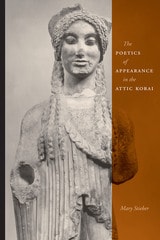
The Poetics of Appearance in the Attic Korai
By Mary Stieber
University of Texas Press, 2004
Some of the loveliest works of Archaic art were the Athenian korai—sculptures of beautiful young women presenting offerings to the goddess Athena that stood on the Acropolis. Sculpted in the sixth and early fifth centuries B.C., they served as votives until Persians sacked the citadel in 480/79 B.C. Subsequently, they were buried as a group and forgotten for nearly twenty-four centuries, until archaeologists excavated them in the 1880s. Today, they are among the treasures of the Acropolis Museum.
Mary Stieber takes a fresh look at the Attic korai in this book. Challenging the longstanding view that the sculptures are generic female images, she persuasively argues that they are instead highly individualized, mimetically realistic representations of Archaic young women, perhaps even portraits of real people. Marshalling a wide array of visual and literary evidence to support her claims, she shows that while the korai lack the naturalism that characterizes later Classical art, they display a wealth and realism of detail that makes it impossible to view them as generic, idealized images. This iconoclastic interpretation of the Attic korai adds a new dimension to our understanding of Archaic art and to the distinction between realism and naturalism in the art of all periods.
The Rabbula Corpus
Comprising the Life of Rabbula, His Correspondence, a Homily Delivered in ConstanRobert R. Phenix Jr.
SBL Press, 2017
A significant new study of Rabbula and Christianity in Edessa
This volume makes available for the first time both the Syriac text and an English translation of every available original composition by Rabbula, the controversial bishop of Edessa (ca. 411–435 CE). It includes a new edition of the Life of Rabbula and other biographical traditions about him, including his conversion from paganism to Christianity. The texts collected in the volume are a valuable source for studying the reception history of biblical themes. In addition, the corpus offers insights into the beginnings of ecclesiastical legislation in the East, charitable work, pilgrimage, ascetic ideals, and church administration. Horn and Phenix examine Rabbula’s contribution to the Christological controversies of the fifth and sixth centuries, including his influence on Cyril of Alexandria in his debate with Theodoret of Cyrrhus and Theodore of Mopsuestia.
Features
- A critical study of the theological, cultural, and historical development of Syriac Christianity
- Thorough historical, theological, and socio-cultural analysis provided for each text
- A previously unidentified Christian Palestinian Aramaic fragment
The Real Life of the Parthenon
Patricia Vigderman
The Ohio State University Press, 2018
Ownership battles over the marbles removed from the Parthenon by Lord Elgin have been rumbling into invective, pleading, and counterclaims for two centuries. The emotional temperature around them is high, and steering across the vast past to safe anchor in a brilliant heritage is tricky. The stories around antiquities become distorted by the pull of ownership, and it is these stories that urge Patricia Vigderman into her own exploration of their inspiring legacy in her compelling extended essay, The Real Life of the Parthenon.
Vigderman’s own journey began at the Parthenon, but curiosity edged her further onto the sea between antiquity and the present. She set out to seek the broken temples and amphorae, the mysterious smiles of archaic sculpture, and the finely hammered gold of a funeral wreath among the jumbled streets of modern Athens, the fertile fields of Sicily, the mozzarella buffalo of Paestum. Guided along the way toward the enduring landscapes and fractured history by archeologists, classicists, historians, and artists—and by the desire they inspire—she was caught by ongoing, contemporary local life among the ruins. Gathering present meaning and resonance for the once and future remains of vanished glory, The Real Life of the Parthenon illuminates an important but shadowy element of our common cultural life: the living dynamic between loss and delight.
The Rhetoric of Seeing in Attic Forensic Oratory
By Peter A. O'Connell
University of Texas Press, 2017
The Roots of Cooperation
Constructing Interstate Alliances in Ancient GreeceNicholas D. Cross
University of Michigan Press, 2026
Nicholas D. Cross’s The Roots of Cooperation reinterprets how the Greeks conceived, enacted, and displayed their alliances, offering a socially grounded understanding of interstate relations in antiquity. Following the international relations model of constructivism, Cross emphasizes the social features of Greek alliances including words used to articulate agreements, ceremonial acts they performed during the formation process, and the symbols they employed to illustrate how the alliances contributed to the creation of shared goals, ideas, and identities. The study covers the proposals for alliances, the articulation of alliance treaties, the ratification of alliances by means of religious ceremonies, the public display of the agreements in visual media, and the implications of terminated alliances. While alliances had political and military objectives, the Greeks represented them as collective and consensual achievements. Relying as much on epigraphic and numismatic evidence as on the literary record, this study recontextualizes interstate activity by analyzing how contemporaries imagined and depicted their formal interstate agreements. The Roots of Cooperation offers fresh insights that go beyond just alliances and can deepen our understanding of interstate relations, broadly speaking, in the ancient world.
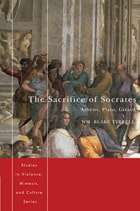
The Sacrifice of Socrates
Athens, Plato, GirardWm. Blake Tyrrell
Michigan State University Press, 2012
When Athenians suffered the shame of having lost a war from their own greed and foolishness, around 404 BCE the public’s blame was directed at Socrates, a man whose unique appearance and behavior, as well as his disapproval of the democracy, made him a ready target. Socrates was subsequently put on trial and sentenced to death. However, as René Girard has pointed out, no individual can be held responsible for a communal crisis. Plato’s Apology depicts Socrates as both the bane and the cure of Greek society, while his Crito shows a sacrificial Socrates, what some might consider a pharmakos figure, the human drug through whom Plato can dispense his philosophical remedies. With tremendous insight and satisfying complexity, this book analyzes classical texts through the lens of Girard’s mimetic mechanism.
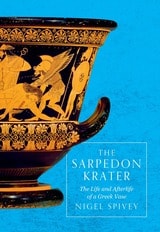
The Sarpedon Krater
The Life and Afterlife of a Greek VaseNigel Spivey
University of Chicago Press, 2019
Spivey takes the reader on a dramatic journey, beginning with the krater’s looting from an Etruscan tomb in 1971 and its acquisition by the Metropolitan Museum of Art, New York, followed by a high-profile lawsuit over its status and its eventual return to Italy. He explains where, how, and why the vase was produced, retrieving what we know about the life and legend of Sarpedon. Spivey also pursues the figural motif of the slain Sarpedon portrayed on the vase and traces how this motif became a standard way of representing the dead and dying in Western art, especially during the Renaissance.
Fascinating and informative, The Sarpedon Krater is a multifaceted introduction to the enduring influence of Greek art on the world.
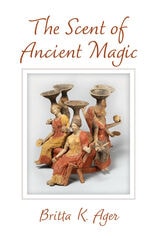
The Scent of Ancient Magic
Britta K. Ager
University of Michigan Press, 2022
The Scent of Ancient Magic explores the complex interconnection of scent and magic in the Greco-Roman world between 800 BCE and CE 600, drawing on ancient literature and the modern study of the senses to examine the sensory depth and richness of ancient magic. Author Britta K. Ager looks at how ancient magicians used scents as part of their spells, to put themselves in the right mindset for an encounter with a god or to attack their enemies through scent. Ager also examines the magicians who appear in ancient fiction, like Medea and Circe, and the more metaphorical ways in which their spells are confused with perfumes and herbs. This book brings together recent scholarship on ancient magic from classical studies and on scent from the interdisciplinary field of sensory studies in order to examine how practicing ancient magicians used scents for ritual purposes, how scent and magic were conceptually related in ancient literature and culture, and how the assumption that strong scents convey powerful effects of various sorts was also found in related areas like ancient medical practices and normative religious ritual.
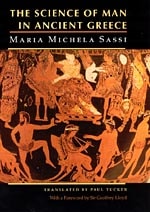
The Science of Man in Ancient Greece
Maria Michela Sassi
University of Chicago Press, 2000
Maria Michela Sassi reconstructs Greek attempts to answer such questions from Homer's day to late antiquity, ranging across physiognomy, ethnography, geography, medicine, and astrology. Sassi demonstrates that in the Greek science of man, empirical observations were inextricably bound up with a prejudiced view of the free Greek male as superior to all others. Thus, because women were assumed to have pale skin from staying indoors too much, Greek biology and medicine sought to explain this feature as an indication of the "cold" nature of women, as opposed to the "hot" constitution of men.
For this English translation, Sassi has rewritten the introduction and updated the text and references throughout, and Sir Geoffrey Lloyd has provided a new foreword.
The Shotgun Method
The Demography of the Ancient Greek City-State CultureMogens Herman Hansen
University of Missouri Press, 2006
Although the polis, or city-state, defined the essence of classical Greek civilization, evidence of its most basic characteristics is woefully inadequate. Now a leading scholar in the evaluation of data from the ancient world sheds new light on how those units were constituted.
The Siege of Tyre
Alexander the Great and the Gateway to EmpireDavid A. Guenther
Westholme Publishing, 2024
The Siege of Tyre: Alexander the Great and the Gateway to Empire by David A. Guenther is the first book-length treatment of this critical and fascinating campaign, featuring catapults, triremes, religious invocations, close combat, and marvels of engineering, including a massive manmade causeway from the mainland to the island. The siege is thoroughly analyzed from the standpoint of what is plausible given the nature of the technology of the time and what we now know of the geology and physical fortifications of ancient Tyre. The book begins with the background leading up to the siege: Alexander’s army, his invasion of Asia Minor, the sieges of Miletus and Halicarnassus, and the battles of the Granicus and Issus. It also describes the culture, people, cities, and economy of ancient Phoenicia to place the story of the siege in a broader context. Critical to the siege were the evolving technologies in the ancient Mediterranean world, including innovations in catapult design, military engineering, and naval architecture. Guenther also takes into account recent scientific discoveries about the geology of the ancient seabed around Tyre and its effect on the siege. Finally, the book points out possible gender-biased views on topics such as sacred temple prostitution among the ancient Phoenicians and the fate of women in besieged cities of the ancient world. An engrossing blend of ancient wonder and historical and technological analysis, The Siege of Tyre is the remarkable story of Alexander the Great’s “masterpiece.”
The Sky Is Our Song
The "Phaenomena" of AratusAratus
University of Chicago Press, 2025
A poetic guide to the heavens, the Phaenomena of Aratus—dating from around 270 BCE—was widely known across the ancient world, second only in fame to the works of Homer. Beginning with an invocation to Zeus, the poem describes the constellations of the northern and southern skies, the celestial sphere, and weather signs. Aratus’s vivid work offered a complete handbook of astronomy, constellations, and weather, and this treatise on the night sky was later translated or adapted by luminaries including Cicero, Virgil, and Ovid. The Phaenomena remained popular throughout the Renaissance and had more than sixty printed editions by the early seventeenth century, but its fame has faded in the modern world.
With this edition, renowned translator and amateur astronomer Stanley Lombardo renders Aratus’s poem in reader-friendly vernacular English verse. Complete with endnotes, an accessible introduction, and astronomically accurate illustrations, The Sky Is Our Song brings this master poet’s celebration of the sky to a twenty-first-century audience, inviting new readers to follow Aratus on a visual journey through star signs, moon phases, weather phenomena, and all wonders of the heavens.
The Slave in Greece and Rome
Jean Andreau and Raymond Descat, translated by Marion Leopold
University of Wisconsin Press, 2012
Jean Andreau and Raymond Descat break new ground in this comparative history of slavery in Greece and Rome. Focusing on slaves’ economic role in society, their crucial contributions to Greek and Roman culture, and their daily and family lives, the authors examine the different ways in which slavery evolved in the two cultures. Accessible to both scholars and students, this book provides a detailed overview of the ancient evidence and the modern debates surrounding the vast and largely invisible populations of enslaved peoples in the classical world.
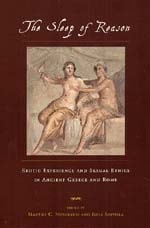
The Sleep of Reason
Erotic Experience and Sexual Ethics in Ancient Greece and RomeEdited by Martha C. Nussbaum and Juha Sihvola
University of Chicago Press, 2002
The Sleep of Reason brings together an international group of philosophers, philologists, literary critics, and historians to consider two questions normally kept separate: how is erotic experience understood in classical texts of various kinds, and what ethical judgments and philosophical arguments are made about sex? From same-sex desire to conjugal love, and from Plato and Aristotle to the Roman Stoic Musonius Rufus, the contributors demonstrate the complexity and diversity of classical sexuality. They also show that the ethics of eros, in both Greece and Rome, shared a number of commonalities: a focus not only on self-mastery, but also on reciprocity; a concern among men not just for penetration and display of their power, but also for being gentle and kind, and for being loved for themselves; and that women and even younger men felt not only gratitude and acceptance, but also joy and sexual desire.
Contributors:
* Eva Cantarella
* Kenneth Dover
* Chris Faraone
* Simon Goldhill
* Stephen Halliwell
* David M. Halperin
* J. Samuel Houser
* Maarit Kaimio
* David Konstan
* David Leitao
* Martha C. Nussbaum
* A. W. Price
* Juha Sihvola
The Soul of the Greeks
An InquiryMichael Davis
University of Chicago Press, 2011
The understanding of the soul in the West has been profoundly shaped by Christianity, and its influence can be seen in certain assumptions often made about the soul: that, for example, if it does exist, it is separable from the body, free, immortal, and potentially pure. The ancient Greeks, however, conceived of the soul quite differently. In this ambitious new work, Michael Davis analyzes works by Homer, Herodotus, Euripides, Plato, and Aristotle to reveal how the ancient Greeks portrayed and understood what he calls “the fully human soul.”
Beginning with Homer’s Iliad, Davis lays out the tension within the soul of Achilles between immortality and life. He then turns to Aristotle’s De Anima and Nicomachean Ethics to explore the consequences of the problem of Achilles across the whole range of the soul’s activity. Moving to Herodotus and Euripides, Davis considers the former’s portrayal of the two extremes of culture—one rooted in stability and tradition, the other in freedom and motion—and explores how they mark the limits of character. Davis then shows how Helen and Iphigeneia among the Taurians serve to provide dramatic examples of Herodotus’s extreme cultures and their consequences for the soul. The book returns to philosophy in the final part, plumbing several Platonic dialogues—the Republic, Cleitophon, Hipparchus, Phaedrus, Euthyphro, and Symposium—to understand the soul’s imperfection in relation to law, justice, tyranny, eros, the gods, and philosophy itself. Davis concludes with Plato’s presentation of the soul of Socrates as self-aware and nontragic, even if it is necessarily alienated and divided against itself.
The Soul of the Greeks thus begins with the imperfect soul as it is manifested in Achilles’ heroic, but tragic, longing and concludes with its nontragic and fuller philosophic expression in the soul of Socrates. But, far from being a historical survey, it is instead a brilliant meditation on what lies at the heart of being human.
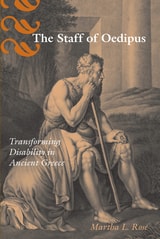
The Staff of Oedipus
Transforming Disability in Ancient GreeceMartha L. Rose
University of Michigan Press, 2013
Ancient Greek images of disability permeate the Western consciousness: Homer, Teiresias, and Oedipus immediately come to mind. But The Staff of Oedipus looks at disability in the ancient world through the lens of disability studies, and reveals that our interpretations of disability in the ancient world are often skewed. These false assumptions in turn lend weight to modern-day discriminatory attitudes toward disability.
Martha L. Rose considers a range of disabilities and the narratives surrounding them. She examines not only ancient literature, but also papyrus, skeletal material, inscriptions, sculpture, and painting, and draws upon modern work, including autobiographies of people with disabilities, medical research, and theoretical work in disability studies. Her study uncovers the realities of daily life for people with disabilities in ancient Greece and challenges the translation of the term adunatos (unable) as "disabled," with all its modern associations.
The Stoic Idea of the City
Malcolm Schofield
University of Chicago Press, 1999
"The account emerges from a jigsaw-puzzle of items from a wide range of authorities, painstakingly pieced together and then annotated in a series of appendixes, the whole executed with fine scholarship, clarity, and good humor."—Times Literary Supplement
The Stranger's Welcome
Oral Theory and the Aesthetics of the Homeric Hospitality SceneSteve Reece
University of Michigan Press, 1993
The Theatricality of Greek Tragedy
Playing Space and ChorusGraham Ley
University of Chicago Press, 2007
Drawing on evidence from the surviving texts of tragedies by Aeschylus, Sophocles, and Euripides, Ley explains how scenes with actors were played in the open ground of the orchestra, often considered as exclusively the dancing place of the chorus. In reviewing what is known of the music and dance of Greek antiquity, Ley goes on to show that in the original productions the experience of the chorus—expressed in song and dance and in interaction with the characters—remained a vital characteristic in the performance of tragedy.
Combining detailed analysis with broader reflections about the nature of ancient Greek tragedy as an art form, this volume—supplemented with a series of illustrative drawings and diagrams—will be a necessary addition to the bookshelf of anyone interested in literature, theater, or classical studies.
The Ties That Bind
The Economic Relationships of Twelve Tebtunis FamiliesEdited by Ryosuke Takahashi
University of London Press, 2021
Tebtunis, an ancient village formerly located in lower Egypt, is one of the most enduring subjects of study from the civilization's Roman era. This fascinating volume details a dozen newly-discovered family papers that have survived from the second century AD. Belonging to families of various different classes, this unique documentation provides a rare opportunity to explore how local elites under Roman rule exploited their wealth in the countryside and interacted with its rural inhabitants.
Ties That Bind is the first book to investigate these family papers holistically, focusing on the economic activities in which the families engaged: land leases, loans in cash and kind, and the employment of managers and laborers on landed estates. This study also addresses strategy and decision-making among both elite families and villagers, the complexity of interfamilial relationships, and the implications of this social networking. This micro-historical study elucidates the diversity of socio-economic life in a village where no single family dominated.
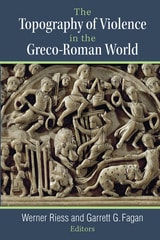
The Topography of Violence in the Greco-Roman World
Werner Riess and Garrett G. Fagan, editors
University of Michigan Press, 2016
The contributors to The Topography of Violence in the Greco-Roman World take on a task not yet addressed in classical scholarship: they examine how topography shaped the perception and interpretation of violence in Greek and Roman antiquity. After an introduction explaining the “spatial turn” in the theoretical study of violence, “paired” chapters review political assassination, the battlefield, violence against women and slaves, and violence at Greek and Roman dinner parties. No other book either adopts the spatial theoretical framework or pairs the examination of different classes of violence in classical antiquity in this way.
Both undergraduate and graduate students of classics, history, and political science will benefit from the collection, as will specialists in those disciplines. The papers are original and stimulating, and they are accessible to the educated general reader with some grounding in classical history.
The Woman and the Lyre
Women Writers in Classical Greece and RomeJane McIntosh Snyder
Southern Illinois University Press, 1989
Beginning with Sappho in the seventh century B.C.E and ending with Egeria in the fifth century C.E., Snyder profiles ancient Greek and Roman women writers, including lyric and elegiac poets and philosophers and other prose writers. The writers are allowed to speak for themselves, with as much translation from their extant works provided in text as possible. In addition to giving readers biographical and cultural context for the writers and their works, Snyder refutes arguments representing prejudicial attitudes about women’s writing found in the scholarly literature. Covering writers from a wide historical span, this volume provides an engaging and informative introduction to the origins of the tradition of women’s writing in the West.
Theater and Society in the Classical World
Ruth Scodel, Editor
University of Michigan Press, 1993
Theater of the People
Spectators and Society in Ancient AthensBy David Kawalko Roselli
University of Texas Press, 2011
Greek drama has been subject to ongoing textual and historical interpretation, but surprisingly little scholarship has examined the people who composed the theater audiences in Athens. Typically, scholars have presupposed an audience of Athenian male citizens viewing dramas created exclusively for themselves—a model that reduces theater to little more than a medium for propaganda. Women's theater attendance remains controversial, and little attention has been paid to the social class and ethnicity of the spectators. Whose theater was it?
Producing the first book-length work on the subject, David Kawalko Roselli draws on archaeological and epigraphic evidence, economic and social history, performance studies, and ancient stories about the theater to offer a wide-ranging study that addresses the contested authority of audiences and their historical constitution. Space, money, the rise of the theater industry, and broader social forces emerge as key factors in this analysis. In repopulating audiences with foreigners, slaves, women, and the poor, this book challenges the basis of orthodox interpretations of Greek drama and places the politically and socially marginal at the heart of the theater. Featuring an analysis of the audiences of Aeschylus, Sophocles, Euripides, Aristophanes, and Menander, Theater of the People brings to life perhaps the most powerful influence on the most prominent dramatic poets of their day.
Theogony and Works and Days
Hesiod
University of Michigan Press, 2006
"This Schlegel-Weinfield translation of Hesiod is superbly crafted: compelling, unforgettable poetry to be read aloud with delight and gratitude."
—Allen Mandelbaum, Endowed Kenan Professor of Humanities, Wake Forest University
"This exciting and unique collaboration between a classical philologist and a poet will not just provide insight into archaic Greek society, but also offer something new: the opportunity to experience the richness of Hesiod's style, language, and modes of thought with remarkable fidelity to the ancient Greek. Weinfield and Schlegel make Hesiod sing."
—Carole Newlands, Classics Department, University of Wisconsin
"Schlegel and Weinfield have produced one of the most remarkable of a current resurgence of translations from the classics, allowing the modern world to hear a poet who may have known Homer. Hesiod’s song makes us understand why the Greeks thought a poet could draw dolphins through the seas or raise the walls of Thebes. Weinfield translates by ear and transfers what he hears to the page, resonant fourteeners, a worthy echo of the past."
Catherine Schlegel is Associate Professor of Classics, University of Notre Dame. Henry Weinfield is Professor and Chair of Liberal Studies, University of Notre Dame, and translator of The Collected Poems of Stephane Mallarme.
Theogony and Works and Days
A New Bilingual EditionHesiod, Translated from the Greek by Kimberly Johnson
Northwestern University Press, 2017
Theoretical Approaches to the Archaeology of Ancient Greece
Manipulating Material CultureLisa C. Nevett, Editor
University of Michigan Press, 2017
An introductory section exploring the emergence and growth of theoretical approaches is followed by examinations of the potential insights these approaches provide. The authors probe some of the meanings attached to ancient objects, townscapes, and cemeteries, for those who created, and used, or inhabited them.
The range of contexts stretches from the early Greek communities during the eighth and seventh centuries BCE, through Athens between the eighth and fifth centuries BCE, and on into present day Turkey and the Levant during the third and second centuries BCE. The authors examine a range of practices, from the creation of individual items such as ceramic vessels and figurines, through to the construction of civic buildings, monuments, and cemeteries. At the same time they interrogate a range of spheres, from craft production, through civic and religious practices, to funerary ritual.
Three Comedies
Aristophanes
University of Michigan Press, 1969
Thucydides Book I
A Students' Grammatical CommentaryH. D. Cameron
University of Michigan Press, 2003
Because Book I is not primarily historical narrative, it inevitably proves difficult for inexperienced readers. Despite the convolutions and density of Thucydides' prose style, no authoritative commentary has been published since the early days of the last century. H. D. Cameron is a renowned expert in Greek and comparative grammar and has written this handbook for all levels of classical students and scholars. His commentary authoritatively accounts for the last one hundred years of evolving grammatical and linguistic theory as they apply to the seminal work of Thucydides.
H. D. Cameron is Professor of Greek and Latin and Director of the Great Books Program at the University of Michigan.
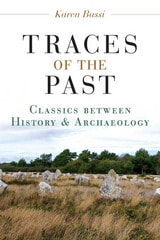
Traces of the Past
Classics between History and ArchaeologyKaren Bassi
University of Michigan Press, 2016
Aimed at classicists, literary scholars, ancient historians, cultural historians, and archaeological theorists, the book combines three areas of research: time as a feature of narrative structure in literary theory; the concept of “the past itself” in the philosophy of history; and the ontological status of material objects in archaeological theory. Each of five central chapters explores how specific protoarchaeological narratives—from the fate of Zeus’ stone in Hesiod’s Theogony to the contest between words and objects in Aristophanes’ Frogs—both expose and attempt to bridge this gap. Throughout, the book serves as a response to Herodotus’ task in writing the Histories, namely, to ensure that “the past deeds of men do not fade with time.”
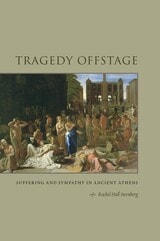
Tragedy Offstage
Suffering and Sympathy in Ancient AthensBy Rachel Hall Sternberg
University of Texas Press, 2006
Humane ideals were central to the image Athenians had of themselves and their city during the classical period. Tragic plays, which formed a part of civic education, often promoted pity and compassion. But it is less clear to what extent Athenians embraced such ideals in daily life. How were they expected to respond, emotionally and pragmatically, to the suffering of other people? Under what circumstances? At what risk to themselves?
In this book, Rachel Hall Sternberg draws on evidence from Greek oratory and historiography of the fifth and fourth centuries BCE to study the moral universe of the ancient Athenians: how citizens may have treated one another in times of adversity, when and how they were expected to help. She develops case studies in five spheres of everyday life: home nursing, the ransom of captives, intervention in street crimes, the long-distance transport of sick and wounded soldiers, and slave torture. Her close reading of selected narratives suggests that Athenians embraced high standards for helping behavior—at least toward relatives, friends, and some fellow citizens. Meanwhile, a subtle discourse of moral obligation strengthened the bonds that held Athenian society together, encouraging individuals to bring their personal behavior into line with the ideals of the city-state.
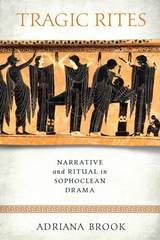
Tragic Rites
Narrative and Ritual in Sophoclean DramaAdriana E. Brook
University of Wisconsin Press, 2018
Employing both modern ritual theory and Aristotle's Poetics, Brook exposes the deep structural analogies between ritual and narrative, the parallels between mistakes in ritual and deviations from the expected in the plot, and the relationship between ritual content and dramatic closure.
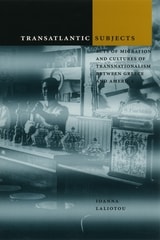
Transatlantic Subjects
Acts of Migration and Cultures of Transnationalism between Greece and AmericaIoanna Laliotou
University of Chicago Press, 2004
According to Ioanna Laliotou, cultural institutions and practices played an important role in the formation of migrant subjectivities. Reconstructing the cultural history of migration, her book points out the relationship between subjectivity formation and cultural practices and performances, such as publishing, reading, acting, storytelling, consuming, imitating, parading, and traveling. Transatlantic Subjects then locates the development of these practices within key sites and institutions of cultural formation, such as migrant and fraternal associations, educational institutions, state agencies and nongovernmental organizations, mental institutions, coffee shops, the church, steamship companies, banks, migration services, and chambers of commerce.
Ultimately, Laliotou explores the complex and situational entanglements of migrancy, cultural nationalism, and the politics of self. Reading against the grain of hegemonic narratives of cultural and migration histories, she reveals how migrancy produced distinctive forms of sociality during the first half of the twentieth century.
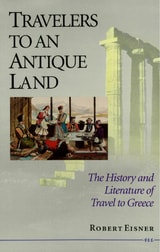
Travelers to an Antique Land
The History and Literature of Travel to GreeceRobert Eisner
University of Michigan Press, 1993
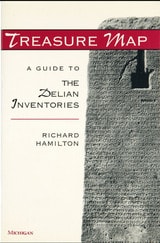
Treasure Map
A Guide to the Delian InventoriesRichard Hamilton
University of Michigan Press, 2015