Results by title
403 books match the query 'Journalism' and 101 start with t

The Newspaper Indian
Native American Identity in the Press, 1820-90John M. Coward
University of Illinois Press, 1999
How newspapers shaped the image of Native Americans
John M. Coward looks at how nineteenth-century newspapers and news making practices shaped the contradictory and still persistent representation of Native Americans. As Coward reveals, journalism failed to describe Indigenous people on their own terms. Instead, reporters chose portrayals that adhered to the norms of the majority white, Anglo-Saxon, Protestant society that read their papers. In addition, Coward shows how journalists turned Native Americans into symbolic and ambiguous figures used to measure American progress.
An in-depth look at the power of the press, The Newspaper Indian provides insight into how journalism wove a skewed idea of Native Americans into the fabric of American life.
The Old Mine Road
Hine, C. G.
Rutgers University Press, 1963
The Opinions of Mankind
Racial Issues, Press, and Propaganda in the Cold WarRichard Lentz and Karla K. Gower
University of Missouri Press, 2011
Throughout this period, the American press provided the foreign media with information about racially charged events in the United States. Such news coverage sometimes put Washington at a disadvantage, making it difficult for government officials to assuage foreign reactions to the injustices occurring on U.S. soil. Yet in other instances, the domestic press helped to promote favorable opinions abroad by articulating themes of racial progress. While still acknowledging racial abuses, these press spokesmen asserted that the situation in America was improving. Such paradoxical messages, both aiding and thwarting the efforts of the U.S. government, are the subject of The Opinions of Mankind: Racial Issues, Press, and Propaganda in the Cold War.
The study, by scholars Richard Lentz and Karla K. Gower, describes and analyzes the news discourse regarding U.S. racial issues from 1946 to 1965. The Opinions of Mankindnot only delves into the dissemination of race-related news to foreign outlets but also explores the impact foreign perceptions of domestic racism had on the U.S. government and its handling of foreign relations during the period. What emerges is an original, insightful contribution to Cold War studies. While other books examine race and foreign affairs during this period of American history, The Opinions of Mankind is the first to approach the subject from the standpoint of press coverage and its impact on world public opinion.
This exhaustively researched and compellingly written volume will appeal to media scholars, political historians, and general readers alike. By taking a unique approach to the study of this period, The Opinions of Mankind presents the workings behind the battles for public opinion that took place between 1946 and 1965.
The Organization of Journalism
Market Models and Practice in a Fraying ProfessionPatrick Ferrucci
University of Illinois Press, 2024
Using rich interviews and participant observation, Patrick Ferrucci examines institutions with funding mechanisms that range from traditional mogul ownership and online-only nonprofits to staff-owned cooperatives and hedge fund control. The variations in market models have frayed the tenets of professionalization, with unique work cultures emerging from each organization’s focus on its mission and the implantation of its own processes and ethical guidelines. As a result, the field of American journalism no longer shares uniform newsgathering practices and a common identity, a break with the past that affects what information we consume today and what the press will become tomorrow.
An inside look at a fracturing profession, The Organization of Journalism illuminates the institution’s expanding impact on newsgathering and the people who practice it.
The Paradox of Connection
How Digital Media Is Transforming Journalistic LaborDiana Bossio, Valérie Bélair-Gagnon, Avery Holton, and Logan Molyneux
University of Illinois Press, 2024
Using a framework of online connection and disconnection, The Paradox of Connection examines how journalists’ practices are formed, negotiated, and maintained in dynamic social media environments. The interactions of journalists with the technological, social, and cultural features of online and social media environments have shaped new values and competencies--and the combination of these factors influence online work practices. Merging case studies with analysis, the authors show how the tactics of online connection and disconnection interact with the complex realities of working in today’s media environments. The result is an insightful portrait of fast-changing journalistic practices and their implications for both audiences and professional identities and norms.
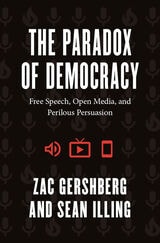
The Paradox of Democracy
Free Speech, Open Media, and Perilous PersuasionZac Gershberg and Sean Illing
University of Chicago Press, 2022
At the heart of democracy lies a contradiction that cannot be resolved, one that has affected free societies since their advent: Though freedom of speech and media has always been a necessary condition of democracy, that very freedom is also its greatest threat. When new forms of communication arrive, they often bolster the practices of democratic politics. But the more accessible the media of a society, the more susceptible that society is to demagoguery, distraction, and spectacle. Tracing the history of media disruption and the various responses to it over time, Zac Gershberg and Sean Illing reveal how these changes have challenged democracy—often with unsettling effects.
The Paradox of Democracy captures the deep connection between communication and political culture, from the ancient art of rhetoric and the revolutionary role of newspapers to liberal broadcast media and the toxic misinformation of the digital public sphere. With clear-eyed analysis, Gershberg and Illing show that our contemporary debates over media, populism, and cancel culture are not too different from the democratic cultural experiences of the past. As we grapple with a fast-changing, hyper-digital world, they prove democracy is always perched precipitously on a razor’s edge, now as ever before.
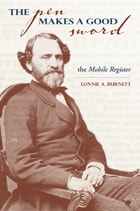
The Pen Makes a Good Sword
John Forsyth of the Mobile RegisterLonnie A. Burnett
University of Alabama Press, 2006
One editor. One era. A pen that cut through history.
This book is a biography of Alabama native John Forsyth Jr. and documents his career as a southern newspaper editor during the antebellum, Civil War, and Reconstruction periods. From 1837 to 1877 Forsyth wrote about many of the most important events of the 19th century. He used his various positions as an editor, Civil War field correspondent, and Reconstruction critic at the MobileRegister to advocate on behalf of both the South and the Democratic Party.
In addition, Forsyth played an active role in the events taking place around him through his political career, as United States Minister to Mexico, state legislator, Confederate Peace Commissioner to the Lincoln administration, staff officer to Braxton Bragg, and twice mayor of the city of Mobile.
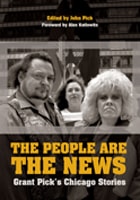
The People Are the News
Grant Pick’s Chicago StoriesJohn Pick
Northwestern University Press, 2009
This distinctive collection features writings from Grant Pick’s long, distinguished career in literary journalism. Pick had a uniquely open eye and ear for people who were in difficult situations, doing extraordinary things, or both. Most of his stories focus on interesting but overlooked Chicagoans, like the struggling owner of a laundrymat on the west side or the successful doctor who, as he faced his own death from cancer, strove to enlighten his colleagues in the field of medicine. As only a lifetime Chicagoan could, he described in tender detail the worlds in which people lived or worked, providing a look not just at one city’s citizens but at humanity as a whole.
Pick’s widow and son curate this showcase of some of his most well-remembered work, such as “The Rag Man of Lincoln Park” and “Brother Bill.” In these and all of his other works, Pick wrote from the front lines, speaking to people whom others might encounter everyday but never really see. He faithfully characterized his subjects, never denying them dignity or value and never judging them. In the mirror he held up to his city, Chicago could see the shared humanity of all its citizens.
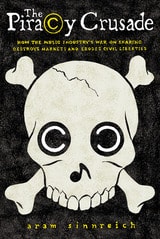
The Piracy Crusade
How the Music Industry's War on Sharing Destroys Markets and Erodes Civil LibertiesAram Sinnreich
University of Massachusetts Press, 2013
In the decade and a half since Napster first emerged, forever changing the face of digital culture, the claim that “internet pirates killed the music industry” has become so ubiquitous that it is treated as common knowledge. Piracy is a scourge on legitimate businesses and hard-working artists, we are told, a “cybercrime” similar to identity fraud or even terrorism.
In The Piracy Crusade, Aram Sinnreich critiques the notion of “piracy” as a myth perpetuated by today's cultural cartels—the handful of companies that dominate the film, software, and especially music industries. As digital networks have permeated our social environment, they have offered vast numbers of people the opportunity to experiment with innovative cultural and entrepreneurial ideas predicated on the belief that information should be shared widely. This has left the media cartels, whose power has historically resided in their ability to restrict the flow of cultural information, with difficult choices: adapt to this new environment, fight the changes tooth and nail, or accept obsolescence. Their decision to fight has resulted in ever stronger copyright laws and the aggressive pursuit of accused infringers.
Yet the most dangerous legacy of this “piracy crusade” is not the damage inflicted on promising start-ups or on well-intentioned civilians caught in the crosshairs of file-sharing litigation. Far more troubling, Sinnreich argues, are the broader implications of copyright laws and global treaties that sacrifice free speech and privacy in the name of combating the phantom of piracy—policies that threaten to undermine the foundations of democratic society.
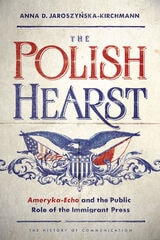
The Polish Hearst
Ameryka-Echo and the Public Role of the Immigrant PressAnna D. Jaroszynska-Kirchmann
University of Illinois Press, 2015
Anna D. Jaroszyńska-Kirchmann mines seven decades' worth of thoughts expressed by Ameryka-Echo readers to chronicle the ethnic press's role in the immigrant experience. Open and unedited debate harkened back to homegrown journalistic traditions, and Jaroszyńska-Kirchmann opens up the nuances of an editorial philosophy that cultivated readers as content creators. As she shows, ethnic publications in the process forged immigrant social networks and pushed notions of education and self-improvement throughout Polonia. Paryski, meanwhile, built a publishing empire that earned him the nickname ""The Polish Hearst.""
Detailed and incisive, The Polish Hearst opens the door on the long-overlooked world of ethnic publishing and the amazing life of one of its towering figures.

The Political Power of the Word
Press and Oratory in Nineteenth-century Latin AmericaEdited by Ivan Jaksic
University of London Press, 2002
The Positive Case for Negative Campaigning
Kyle Mattes and David P. Redlawsk
University of Chicago Press, 2015
The most comprehensive treatment of negative campaigning to date, The Positive Case for Negative Campaigning uses models, surveys, and experiments to show that much of the seeming dislike of negative campaigning can be explained by the way survey questions have been worded. By failing to distinguish between baseless and credible attacks, surveys fail to capture differences in voters’ receptivity. Voters’ responses, the authors argue, vary greatly and can be better explained by the content and believability of the ads than by whether the ads are negative. Mattes and Redlawsk continue on to establish how voters make use of negative information and why it is necessary. Many voters are politically naïve and unlikely to make inferences about candidates’ positions or traits, so the ability of candidates to go on the attack and focus explicitly on information that would not otherwise be available is crucial to voter education.
The Power of Journalists
Nick Robinson, Gary Gibbon, Barbara Speed, and Charlie Beckett
Haus Publishing, 2018
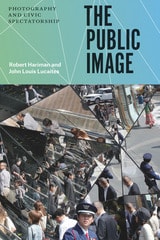
The Public Image
Photography and Civic SpectatorshipRobert Hariman and John Louis Lucaites
University of Chicago Press, 2016
By confronting these conflicted reactions to photography, Robert Hariman and John Louis Lucaites make the case for a fundamental shift in understanding photography and public culture. In place of suspicions about the medium’s capacity for distraction, deception, and manipulation, they suggest how it can provide resources for democratic communication and thoughtful reflection about contemporary social problems.
The key to living well in the image world is to unlock photography from viewing habits that inhibit robust civic spectatorship. Through insightful interpretations of dozens of news images, The Public Image reveals how the artistry of the still image can inform, challenge, and guide reflection regarding endemic violence, environmental degradation, income inequity, and other chronic problems that will define the twenty-first century.
By shifting from conventional suspicions to a renewed encounter with the image, we are challenged to see more deeply on behalf of a richer life for all, and to acknowledge our obligations as spectators who are, crucially, also citizens.
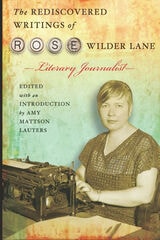
The Rediscovered Writings of Rose Wilder Lane, Literary Journalist
Edited by Amy Mattson Lauters
University of Missouri Press, 2007
This book recovers journalistic work by an American icon for whom scholarly recognition is long overdue. Amy Mattson Lauters introduces readers to Lane’s life through examples of her journalism and argues that her work and career help establish her not only as an author and political rhetorician but also as a literary journalist. Lauters has assembled a collection of rarely seen nonfiction articles that illustrate Lane’s talent as a writer of literary nonfiction, provide on-the-spot views of key moments in American cultural history, and offer sharp commentary on historical events.
Through this collection of Lane’s journalism, dating from early work for Sunset magazine in 1918 to her final piece for Woman’s Day set in 1965 Saigon, Lauters shows how Lane infused her writing with her particular ideology of Americanism and individualism, self-reliance, and freedom from government interference, thereby offering stark commentary on her times. Lane shares her experiences as an extra in a Douglas Fairbanks movie and interviews D.W. Griffith. She reports on average American women struggling to raise a family in wartime and hikes over the Albanian mountains between the world wars. Her own maturing conservative political views provide a lens through which readers can view debates over the draft, war, and women’s citizenship during World War II, and her capstone piece brings us again into a culture torn by war, this time in Southeast Asia.
These writings have not been available to the reading public since they first appeared. They encapsulate important moments for Lane and her times, revealing the woman behind the text, the development of her signature literary style, and her progression as a writer. Lauters’s introduction reveals the flow of Lane’s life and career, offering key insights into women’s history, the literary journalism genre, and American culture in the first half of the twentieth century.
Through these works, readers will discover a writer whose cultural identity was quintessentially American, middle class, midwestern, and simplistic—and who assumed the mantle of custodian to Americanism through women’s arts. The Rediscovered Writings of Rose Wilder Lane traces the extraordinary relationship between one woman and American society over fifty pivotal years and offers readers a treasury of writings to enjoy and discuss.
The Reporter's Environmental Handbook
Third EditionBernadette M West, M. Jane Lewis, Michael R Greenberg, David B. Sachsman, and Renee M. Rogers
Rutgers University Press, 2003
The Reporter's Handbook on Nuclear Materials, Energy & Waste Management
Michael R. Greenberg
Vanderbilt University Press, 2009
Each "brief" is based on interviews with named scientists, engineers, or administrators in a nuclear specialty, and each has been reviewed by a team of independent experts. The objective is not to make a case for or against nuclear-related technologies, but rather to provide definitive background information. (The approach is based on that of The Reporter's Environmental Handbook, published in 1988, which won a special award for journalism from the Sigma Delta Chi Society of professional journalists.)
Other features of the book include: a glossary of hundreds of terms, an introduction to risk assessment, environmental and economic impacts, and public perceptions, an article by an experienced reporter with recommendations about how to cover nuclear issues, quick guides to the history of nuclear power in the United States, important federal legislation and regulations, nuclear position statements, and key organizations, print and electronic resources.
The Return of the Moguls
How Jeff Bezos and John Henry Are Remaking Newspapers for the Twenty-First CenturyDan Kennedy
University Press of New England, 2018
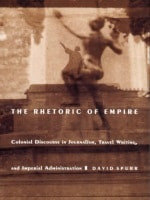
The Rhetoric of Empire
Colonial Discourse in Journalism, Travel Writing, and Imperial AdministrationDavid Spurr
Duke University Press, 1993
Despite historical differences among British, French, and American versions of colonialism, their rhetoric had much in common. The Rhetoric of Empire identifies these shared features—images, figures of speech, and characteristic lines of argument—and explores them in a wide variety of sources. A former correspondent for the United Press International, the author is equally at home with journalism or critical theory, travel writing or official documents, and his discussion is remarkably comprehensive. Ranging from T. E. Lawrence and Isak Dineson to Hemingway and Naipaul, from Time and the New Yorker to the National Geographic and Le Monde, from journalists such as Didion and Sontag to colonial administrators such as Frederick Lugard and Albert Sarraut, this analysis suggests the degree to which certain rhetorical tactics penetrate the popular as well as official colonial and postcolonial discourse.
Finally, Spurr considers the question: Can the language itself—and with it, Western forms of interpretation--be freed of the exercise of colonial power? This ambitious book is an answer of sorts. By exposing the rhetoric of empire, Spurr begins to loosen its hold over discourse about—and between—different cultures.

The Rhetoric of the "Other" Literature
W. Ross Winterowd
Southern Illinois University Press, 1990
Using traditional and contemporary rhetorical theory, Winterowd argues that the fiction-nonfiction division of literature is unjustified and destructive.
He would bridge the gap between literary scholars and rhetoricians by including both fiction (imaginative literature) and nonfiction (literature of fact) in the canon. The actual difference in literary texts, he notes, lies not in their factuality but in their potential for eliciting an aesthetic response.
With speech act and rhetorical theory as a basis, Winterowd argues that presentational literature gains its power on the basis of its ethical and pathetic appeal, not because of its assertions or arguments.
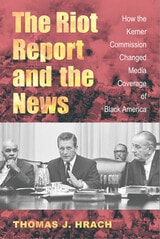
The Riot Report and the News
How the Kerner Commission Changed Media Coverage of Black AmericaThomas J. Hrach
University of Massachusetts Press, 2016
On July 28, 1967, President Lyndon B. Johnson established the National Advisory Commission on Civil Disorders to investigate the causes of unrest in urban black communities during the 1960s. Chaired by Illinois governor Otto Kerner Jr., the commission ominously warned, “Our nation is moving toward two societies, one black, one white—separate and unequal.” And it aimed its sharpest criticism at the mainstream media, concluding: “The press has too long basked in a white world, looking out of it, if at all, with white men's eyes and a white perspective.” Major news media responded by expanding and diversifying their coverage of black communities and increasing the number of African Americans in their newsrooms.
Although much has been written about the Kerner Commission, the analysis has focused primarily on its affect on the American press. In The Riot Report and the News, Thomas J. Hrach instead explores how the commission came to its conclusions, in order to understand why and how its report served as a catalyst for change. Hrach finds that such government criticism of the media can have a long-term and positive influence on the nation, an insight that remains important as the news continues to struggle with how to cover issues of race.
The Rise and Fall of the Associated Negro Press
Claude Barnett's Pan-African News and the Jim Crow ParadoxGerald Horne
University of Illinois Press, 2017
Gerald Horne weaves Barnett's fascinating life story through a groundbreaking history of the ANP, including its deep dedication to Pan-Africanism. An activist force in journalism, Barnett also helped send doctors and teachers to Africa, advised African governments, gave priority to foreign newsgathering, and saw the African American struggle in global terms. Yet Horne also confronts Barnett's contradictions. A member of the African American elite, Barnett's sympathies with black aspirations often clashed with his ethics and a powerful desire to join the upper echelons of business and government. In the end, Barnett's activist success undid his work. Horne traces the dramatic story of the ANP's collapse as the mainstream press, retreating from Jim Crow, finally covered black issues and hired African American journalists.
Revelatory and entertaining, The Rise and Fall of the Associated Negro Press tells the story of a forgotten pioneer and the ambitious black institution he created.
The Rise and Fall of the International Organization of Journalists Based in Prague 1946–2016
Useful Recollections Part IIIKaarle Nordenstreng
Karolinum Press, 2021
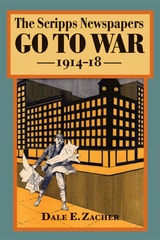
The Scripps Newspapers Go to War, 1914-18
Dale Zacher
University of Illinois Press, 2007
Zacher's account delves into details inside a major newspaper operation during World War I and provides fascinating accounts of its struggles with competition, attending to patriotic duties, and internal editorial dissent. Zacher also looks at war-related issues, considering the newspapers' relationship with President Woodrow Wilson, American neutrality, the move to join the war, and fallout from disillusionment over the actuality of war. As Zacher shows, the progressive spirit and political independence at the Scripps newspapers came under attack and was changed forever during the era.
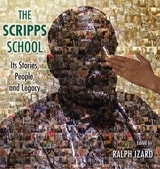
The Scripps School
Its Stories, People, and LegacyRalph Izard
Ohio University Press, 2018
An anecdotal history published on the occasion of the one hundredth anniversary of Ohio University’s renowned E. W. Scripps School of Journalism.
After its founding in 1924, what is now the E. W. Scripps School of Journalism at Ohio University quickly became one of the premier programs in the country. For decades, it has produced leaders who have reached the highest levels of journalism and communication in their careers, and their success is a direct product not only of the education they get in Athens but of the community the school fosters.
In this book, nearly one hundred alumni, faculty, friends, and students offer their stories of life at and after Scripps. The result is a multilayered, inspiring portrait of the school and how it shapes those who pass through its doors. At the same time, The Scripps School gives a nuanced history of journalism education at Ohio University. From covering assassinations and presidential elections to major moments in sports, alumni have documented the unprecedented and the historic, and here they show just how Scripps prepared them to be there.
The Scripps School, edited by former director Ralph Izard, is a love letter to the people and the institution. At a time when journalism is more important than ever, this book humanizes and contextualizes the profession in ways that will resonate in the Scripps community and beyond.
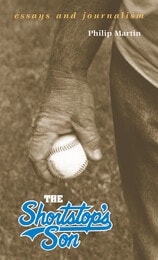
The Shortstop’s Son
Essays and JournalismPhilip Martin
University of Arkansas Press, 1997
Through these varied essays on politics, ethics, music, race, and culture Philip Martin admits “a minor obsession” with what he calls “the American Frolic”—the essential lack of seriousness with which many of us approach the questions inherent in living in a free society. He observes that Americans have been conditioned to react, not to consider; that while we are very good at ripostes and snappy comebacks, at cracking wise and looking smart, we often fail to authentically engage the issues with which we pretend to be most concerned. We inadvertently talk past one another, he says, resorting to cant and partisan boilerplate.
In the essays presented in The Shortstop’s Son, Philip Martin rigorously resists easy labels and rote ideological truths. He pursues more subtle meanings with a commonsense lucidity and a fundamental compassion for humanity. Whether writing about the mythos built upon Bonnie and Clyde’s bullet-ridden Ford or the ignoble death and burial of blues legend Blind Lemon Jefferson, Martin strikes the chord that both moves and informs.
Martin is our critic at large. Deeply engaged in the world of thought and experience, he applies his nimble mind and very human heart to those things which should concern us most. He allows us, through his “obsession” and the clarity of his prose, to experience a new vision, one based in our desire for rich life.
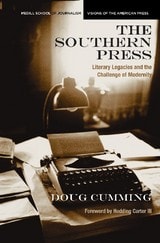
The Southern Press
Literary Legacies and the Challenge of ModernityDoug Cumming
Northwestern University Press, 2009
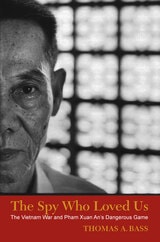
The Spy Who Loved Us
The Vietnam War and Pham Xuan An's Dangerous GameThomas A. Bass
University of Massachusetts Press, 2018
Only after Saigon fell in 1975 did An's colleagues learn that the affable raconteur in their midst, acclaimed as "dean of the Vietnamese press corps," was actually a general in the North Vietnamese Army. In recognition of his tradecraft and his ability to spin military losses—such as the Têt Offensive of 1968—into psychological gains, An was awarded sixteen military medals.
After the book's original publication, WikiLeaks revealed that Thomas A. Bass's account of An's career was distributed to CIA agents as a primer in espionage. Now available in paper with a new preface, An's story remains one of the most gripping to emerge from the era.
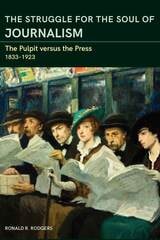
The Struggle for the Soul of Journalism
The Pulpit versus the Press, 1833-1923Ronald R. Rodgers
University of Missouri Press, 2018
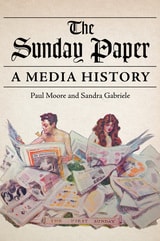
The Sunday Paper
A Media HistoryPaul Moore and Sandra Gabriele
University of Illinois Press, 2022
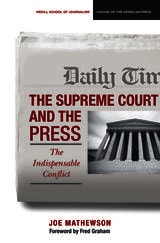
The Supreme Court and the Press
The Indispensable ConflictJoe Mathewson
Northwestern University Press, 2011
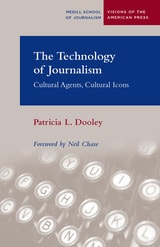
The Technology of Journalism
Cultural Agents, Cultural IconsPatricia L. Dooley
Northwestern University Press, 2007
From the printing press to the telegraph to the camera and beyond, technology has always been tied closely to journalism. In The Technology of Journalism, Patricia L. Dooley proposes a history of news that heeds the social and cultural environments in which both technology and the press emerge and exist.
By placing this history solidly in its cultural context, Dooley can explore the effects of shifts in social, economic, and political systems and the impact of war. One such development with far reaching implications was Matthew Brady’s use of photography during the Civil War. Growth or decline in readership can also influence technological changes in journalism; most recently, the shift toward digital and Web-based journalism has reshaped the press.
Finally, Dooley assesses the legacy and future of print, deciding what happens to print journalism—and all forms of reportage—will depend on the willingness of industry leaders to innovate in ways that will help them connect, through their reporting, to Americans of all ages and walks of life.
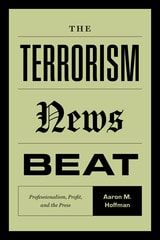
The Terrorism News Beat
Professionalism, Profit, and the PressAaron M. Hoffman
University of Michigan Press, 2025
The Terrorism News Beat engages thinking about terrorism and the news media from the fields of political science, communication, criminology, economics, and sociology using multimethod research involving more than 2,500 newspaper articles published between 1997 and 2018. Chapters analyze the terrorism news beat’s subject matter, language, and coverage of the Oklahoma City Bombing, Olympic Park bombing, 9/11 attacks, DC Sniper case, and Dallas Police shooting. When it comes to language use, Hoffman finds that, rather than giving into the temptation to convey the news in lurid detail, journalists are minimalists. The language used to depict events on the terrorism beat is typically moderate and extreme words like “torture” appear only as necessary. The Terrorism News Beat shows that contrary to claims of sensationalism, the tone of terrorism coverage becomes even more sober during terrorism crises than it is during non-crisis periods and meets journalistic standards for quality.
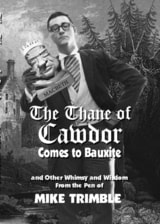
The Thane of Cawdor Comes to Bauxite
And Other Whimsy and Wisdom From the Pen of Mike TrimbleErnie Dumas
Butler Center for Arkansas Studies, 2024
“Although of a relatively scarce breed,” the Arkansas Times observed in the obituary of the itinerant writer it had once employed, “Mike Trimble was Arkansas’s and perhaps the country’s greatest self-deprecating journalist.” Readers will find in this fifty-year inventory of Trimble’s wit and wisdom all the vindication they might seek for that quaint judgment—the rare humble author. Whether he was chronicling, in the 1980s, rising political worthies like the far-into-the-future governors Asa Hutchinson and Mike Beebe, or, more often, the ordinary and feckless people that he encountered every day, befriended, and spent most of his career writing about, Trimble usually found a way, subtly or artlessly, to bring up his own failings, such as identifying the wrong person as the dead woman in an obituary he had written in his earliest days for his first employer, the Texarkana Gazette. Like the yokels in the vaudeville duos Laurel and Hardy, Abbott and Costello, Rowan and Martin, and Fey and Poehler, Trimble’s confessed bumblings were purposeful and studied instruments of his humor.
Arkansas produced more than its quota of weirdos, fabulists, con men, oleaginous politicians, charlatans, creeps, visionaries, and fantastical creatures—from Albert Pike, Arvin the Wino, Dr. Brinkley the Great Depression’s goat-gland sex therapist, Editor Weston, and the salty riverboat queen Ray Dorthy all the way to Say McIntosh and Red the Irish Setter. Mike Trimble, the South’s best and funniest storyteller, put them all down on paper for some of the best reading since Catch-22. Trimble turned humor into art and history into vaudeville.
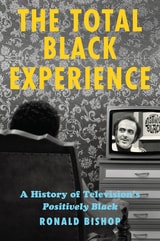
The Total Black Experience
A History of Television’s Positively BlackRonald Bishop
Rutgers University Press, 2026
The Total Black Experience is the first book to chronicle the history and social significance of Positively Black, one of the longest-running public affairs shows in the history of television. Spurred on by the findings of the Kerner Commission, executives at WNBC-TV greenlit the show and turned production over to a small but dedicated team of storytellers who quickly made it their mission to carve out a space for serious and nuanced discussion of issues important to the Black community and to celebrate all aspects of Black culture. They believed that accurate representation of their experiences was a right, not a privilege. The show’s first cohosts included the well-known Harlem-based activist Rev. Eugene Callender and Gus Heningburg, activist, successful consultant and mediator, and advocate for organized labor. Callender had founded Harlem Prep to equip young Black people for college, while Heningburg played a key role in stabilizing life in Newark following the rebellion there in the late 1960s. Both were adept at using the media to reach their constituencies. Combining in-depth interviews with painstaking archival research, The Total Black Experience introduces readers to key members of the Positively Black production team and analyzes thematic shifts in the show’s content. The book celebrates Positively Black’s longevity and challenges readers to explore the current state of Black representation on television.
The U.S.–China Trade War
Global News Framing and Public Opinion in the Digital AgeLouisa Ha
Michigan State University Press, 2022
The Universal Journalist
David Randall
Pluto Press, 2021
The Vanishing Newspaper [2nd Ed]
Saving Journalism in the Information AgePhilip Meyer
University of Missouri Press, 2009
The Victory Album
Reflections on the Good Life after the Good WarPhilip D. Beidler
University of Alabama Press, 2010
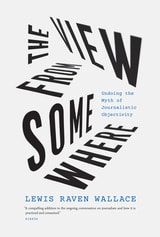
The View from Somewhere
Undoing the Myth of Journalistic ObjectivityLewis Raven Wallace
University of Chicago Press, 2019
In The View from Somewhere, Lewis Raven Wallace dives deep into the history of “objectivity” in journalism and how its been used to gatekeep and silence marginalized writers as far back as Ida B. Wells. At its core, this is a book about fierce journalists who have pursued truth and transparency and sometimes been punished for it—not just by tyrannical governments but by journalistic institutions themselves. He highlights the stories of journalists who question “objectivity” with sensitivity and passion: Desmond Cole of the Toronto Star; New York Times reporter Linda Greenhouse; Pulitzer Prize-winner Rachel Kaadzi Ghansah; Peabody-winning podcaster John Biewen; Guardian correspondent Gary Younge; former Buzzfeed reporter Meredith Talusan; and many others. Wallace also shares his own experiences as a midwestern transgender journalist and activist who was fired from his job as a national reporter for public radio for speaking out against “objectivity” in coverage of Trump and white supremacy.
With insightful steps through history, Wallace stresses that journalists have never been mere passive observers. Using historical and contemporary examples—from lynching in the nineteenth century to transgender issues in the twenty-first—Wallace offers a definitive critique of “objectivity” as a catchall for accurate journalism. He calls for the dismissal of this damaging mythology in order to confront the realities of institutional power, racism, and other forms of oppression and exploitation in the news industry.
The View from Somewhere is a compelling rallying cry against journalist neutrality and for the validity of news told from distinctly subjective voices.
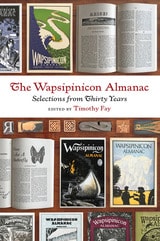
The Wapsipinicon Almanac
Selections from Thirty YearsTimothy Fay
University of Iowa Press, 2023
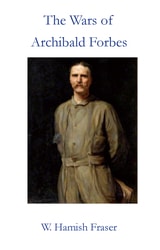
The Wars of Archibald Forbes
W. Hamish Fraser
Aberdeen University Press, 2015
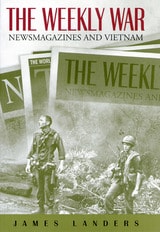
The Weekly War
Newsmagazines and VietnamJames Landers
University of Missouri Press, 2004
The Wired City
Reimagining Journalism and Civic Life in the Post-Newspaper AgeDan Kennedy
University of Massachusetts Press, 2013
Although the Independent is the principal subject of The Wired City, Kennedy examines a number of other online news projects as well, including nonprofit organizations such as Voiceof San Diego and the Connecticut Mirror and for-profit ventures such as the Batavian, Baristanet, and CT News Junkie. Where legacy media such as major city newspapers are cutting back on coverage, entrepreneurs are now moving in to fill at least some of the vacuum.
The Wired City includes the perspectives of journalists, activists, and civic leaders who are actively re-envisioning how journalism can be meaningful in a hyperconnected age of abundant news sources. Kennedy provides deeper context by analyzing the decline of the newspaper industry in recent years and, in the case of those sites choosing such a path, the uneasy relationship between nonprofit status and the First Amendment.
At a time of pessimism over the future of journalism, The Wired City offers hope. What Kennedy documents is not the death of journalism but rather the uncertain and sometimes painful early stages of rebirth.
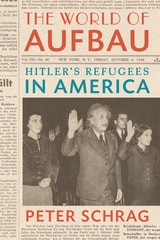
The World of Aufbau
Hitler's Refugees in AmericaPeter Schrag
University of Wisconsin Press, 2019
The book examines the columns and advertisements that chronicled the social and cultural life of that generation and maintained a detailed account of German-speaking cultures in exile. Peter Schrag is the first to present a definitive account of the influential publication that brought postwar refugees together and into the American mainstream.
The World of Mike Royko
Doug Moe
University of Wisconsin Press, 1999
This illustrated biography is the first account of the colorful life of Chicago newspaper columnist Mike Royko, Pulitzer Prize winner, best-selling author, and legendary journalist who personified Chicago in all its rough-edged charm. Drawing on exclusive photos and interviews with Royko’s family and intimates, the book chronicles Royko’s rise from a “flat-above-a-tavern” youth—raised above a bar on Chicago’s Polish northwest side—to one of the best-known names in American journalism.
Readers will get the inside scoop on Royko’s epic battles with Mayor Richard J. Daley and other politicians and his hilarious columns featuring “Slats Grobnik.” They’ll also meet a softer, largely unknown, side of Royko, through the love letters he sent to his wife-to-be from an Air Force base in Washington State.
More than 100 photos—many never before available to the public—capture the man and his times. Millions of readers—in 800 newspapers around the world—followed Royko’s work and life. In The World of Mike Royko—he lives again.
The Writing Life of Hugh Kelly
Politics, Journalism, and Theatre in Late-Eighteenth-Century LondonRobert R. Bataille
Southern Illinois University Press, 2000
Robert R. Bataille demonstrates convincingly that between 1767 and 1777, Anglo-Irish writer Hugh Kelly made major contributions in three areas of British culture: politics, journalism, and theater. Bataille shows how all three activities were integrated in Kelly’s life, suggesting that such interrelationships often existed in the rough and ready London culture during the early reign of King George III.
When he discovered several newspaper campaigns that Kelly orchestrated as a paid political propagandist for George III and his ministers, Bataille understood in part how important Kelly was to his era. In his capacity as propagandist, Kelly defended Hanoverian colonial policies on the eve of the American Revolution, served as a key opponent of the radical Wilkites, and promoted the acceptance of the 1774 Quebec Bill, which established, among other things, the right of the recently defeated French citizens of Quebec to maintain the French language.
A belletristic journalist, Kelly published theater reviews and essays that played a major role in shaping the taste of his era. He wrote in defense of the controversial sentimental drama, and whenever he could, he promoted the major theatrical figure of the age, David Garrick. Under his editorship, the newspaper Public Ledger became a leading source of theater information. Seeking to raise the status of the profession of journalism, he wrote essays and articles that provided his middle-class readers with an insider’s view of the operations of the journalist.
Assessing Kelly’s contributions to the novel and drama, Bataille argues that this powerful journalist stands in the vanguard in the larger struggle against traditional attitudes supporting male superiority and aristocratic privilege. Kelly wrote in favor of gender equality and middle-class respectability, striving to inculcate what modern scholars refer to as the values of sensibility. Bataille also argues, however, that Kelly knew his audience. Instrumental in the rise of professional writing and popular culture, he understood that he had to observe the needs of his audience, detecting cultural trends and using the skills of the rhetorician.
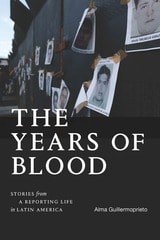
The Years of Blood
Stories from a Reporting Life in Latin AmericaAlma Guillermoprieto
Duke University Press, 2025
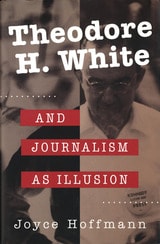
Theodore H. White and Journalism As Illusion
Joyce Hoffmann
University of Missouri Press, 1995
In this groundbreaking study, Joyce Hoffmann examines a critical twenty-five-year period in the work of one of the most influential journalists of the twentieth century. Theodore H. White was already a celebrated reporter when Jacqueline Kennedy summoned him for an exclusive interview in the aftermath of her husband's assassination. With her help, White would preserve what the First Lady claimed had been John F. Kennedy's vision of the New Frontier as an incarnation of that wistful, romantic kingdom--Camelot. Over the years, friends and advisers to Kennedy declared that they had never heard the president speak of Camelot. But White's article, which ran in Life magazine, created a myth that still endures in the popular consciousness.
That story was just one of many by Theodore White that had a lasting impact on the nation. As a correspondent for several of the country's most popular magazines, he covered the crucial events of the 1940s, '50s, and '60s. His best-selling book The Making of the President 1960 changed political reporting forever.
A gifted and likable man with a remarkable skill for ingratiating himself with others, White earned the confidence of key political, military, and diplomatic leaders. First in the Far East, later in Europe, and finally in Washington, D.C., he became a confidant and adviser rather than an adversary to the figures he covered for the news, following a pattern set by elite journalists. Even as he played the impartial reporter, White kept secrets in order to maintain access to his important sources, and he occasionally allowed his subjects, including John F. Kennedy and Nelson Rockefeller, to make changes in his work before publication.
Clinging to the illusion of objectivity, White--like other leading journalists in the postwar years--wrote about the world not as it was but as he believed it ought to be. Hoffmann relates the little-known episode in White's career when he intentionally obscured the truth about Chiang Kai-shek's corrupt and inept Nationalist government because he believed that undermining China's cause would be "a disservice to democracy."
No other book so thoroughly documents how a first-rank journalist can become a political insider and distort the news without losing the gloss of impartiality that is supposed to accompany the profession. Impressively researched, skillfully written, Theodore H. White and Journalism as Illusion is an unflinching look at a key figure in the history of American journalism and at the profession itself.

Towards a Praxis-based Media and Journalism Research
Edited by Leon Barkho
Intellect Books, 2017