Results by title
534 books match the query 'Making' and 112 start with t
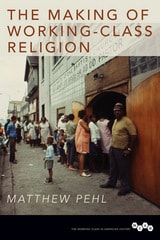
The Making of Working-Class Religion
Matthew Pehl
University of Illinois Press, 2016
Pehl embarks on an integrative view of working-class faith that ranges across boundaries of class, race, denomination, and time. As he shows, workers in the 1910s and 1920s practiced beliefs characterized by emotional expressiveness, alliance with supernatural forces, and incorporation of mass culture's secular diversions into the sacred. That gave way to the more pragmatic class-conscious religion cultures of the New Deal era and, from the late Thirties on, a quilt of secular working-class cultures that coexisted in competitive, though creative, tension. Finally, Pehl shows how the ideology of race eclipsed class in the 1950s and 1960s, and in so doing replaced the class-conscious with the race-conscious in religious cultures throughout the city.
An ambitiously inclusive contribution to a burgeoning field, The Making of Working-Class Religion breaks new ground in the study of solidarity and the sacred in the American heartland.
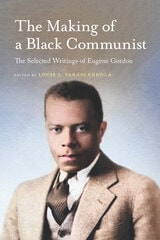
The Making of a Black Communist
The Selected Writings of Eugene GordonLouis J. Parascandola, Editor
University of Massachusetts Press, 2025
Eugene Gordon (1891–1974) was a major writer involved in the development of the burgeoning Black literary scene in Boston in the 1920s, an active player in the Harlem Renaissance, and a longtime member of the Communist Party. Despite his credentials as a reporter, editor, fiction writer, and political activist, he is rarely mentioned in studies of the Harlem Renaissance or Marxist politics. Here, Louis J. Parascandola has pulled together Gordon’s journalism, autobiographical writing, and fiction. This new collection, featuring both previously published pieces from a wide variety of publications as well as material that has never before been published, demonstrates his range and his skill while establishing his importance as a critical voice of his time.
Gordon was born and raised in the South but made his way north at a young age. In Boston, he founded the Saturday Evening Quill Club, an African American literary group that included other notable writers such as Helene Johnson and Dorothy West. He later became editor of and contributor to two major publications coming out of the era: the Messenger and Opportunity: A Journal of Negro Life. As he grew more political, he joined the Communist Party in the 1930s and became editor of and contributor to the New Masses. Scholars looking to research him have struggled to find disparate writings to get a fuller sense of his literary stylings as well as his political commitments. This welcome new volume establishes Gordon as a significant, understudied figure.
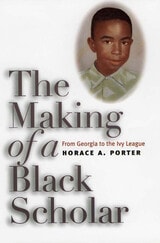
The Making of a Black Scholar
From Georgia to the Ivy LeagueHorace A. Porter
University of Iowa Press, 2003
The Making of a Black Scholar is structured around schools. Porter attends Georgia's segregated black schools until he enters the privileged world of Amherst College. He graduates (spending one semester at Morehouse College) and moves on to graduate study at Yale. He starts his teaching career at Detroit's Wayne State University and spends the 1980s at Dartmouth College and the 1990s at Stanford University.
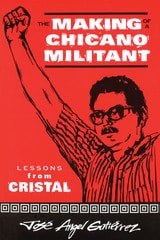
The Making of a Chicano Militant
Lessons from CristalJose Angel Gutierrez
University of Wisconsin Press, 1999
Texas, for years, was a one-party state controlled by white democrats. In 1962, a young eighteen-year-old heard the first rumblings of Chicano community organization in the barrios of Cristal. The rumor in the town was that five Mexican Americans were going to run for all five seats on the city council. But first, poor citizens had to find a way to pay the $1.75 poll tax. Money had to be raised—through bake sales of tamales, cake walks, and dances. So began the political activism of José Angel Gutiérrez.
Gutiérrez's autobiography, The Making of a Chicano Militant, is the first insider's view of the important political and social events within the Mexican American communities in South Texas during the 1960s and 1970s. A controversial and dynamic political figure during the height of the Chicano movement, Gutiérrez offers an absorbing personal account of his life at the forefront of the Mexican-American civil rights movement—first as a Chicano and then as a militant.
Gutiérrez traces the racial, ethnic, economic, and social prejudices facing Chicanos with powerful scenes from his own life: his first summer job as a tortilla maker at the age of eleven, his racially motivated kidnapping as a teenager, and his coming of age in the face of discrimination as a radical organizer in college and graduate school. When Gutiérrez finally returned to Cristal, he helped form the Mexican American Youth Organization and, subsequently the Raza Unida Party to confront issues of ethnic intolerance in his community. His story is soon to be a classic in the developing literature of Mexican American leaders.
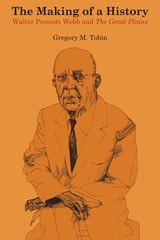
The Making of a History
Walter Prescott Webb and The Great PlainsBy Gregory M. Tobin
University of Texas Press, 1976
Walter Prescott Webb became one of the best known interpreters of the American West following the publication of The Great Plains in 1931. That book remained one of the outstanding studies of the region for decades and attracted considerable attention over the years for its unusual emphasis on the impact of geographic factors on the process of settlement. Using manuscript sources, some of which had not previously been available, Gregory M. Tobin has traced the elements that went into the planning and writing of The Great Plains and that account for its distinctive approach to the writing of a regional history.
Tobin emphasizes two aspects of Webb's life that molded the historian's outlook: his early family life and community connections in West Texas and his admiration for the ideas of scholar Lindley Miller Keasbey. Webb reacted strongly against the assumption that the only cultural values of any real worth emanated from the urban and sophisticated East; he was determined to write the history of his own people in a way that would reveal the scale of their anonymous contribution to American civilization. By reverting to Keasbey's stress on the relationship between natural environment and social institutions, Webb broadened his study to take in what he believed to be a distinct geographic environment. The result was The Great Plains, an assertion of individual and regional identity by a man with a personal stake in establishing the image of a distinctive Plains civilization.
Although The Making of a History is not a full biography of Walter Prescott Webb, it is the first biographically oriented study of a man regarded as one of the twentieth century's major western historians. It places his development within the framework of his intellectual and social setting and, in a sense, subjects his career to the same type of scrutiny that he advocated as the basis of the study of evolving cultures.
The Making of a Human Bomb
An Ethnography of Palestinian ResistanceNasser Abufarha
Duke University Press, 2009
Abufarha draws on the life histories of martyrs, interviews he conducted with their families and members of the groups that sponsored their operations, and examinations of Palestinian literature, art, performance, news stories, and political commentaries. He also assesses data—about the bombers, targets, and fatalities caused—from more than two hundred martyrdom operations carried out by Palestinian groups between 2001 and 2004. Some involved the use of explosive belts or the detonation of cars; others entailed armed attacks against Israeli targets (military and civilian) undertaken with the intent of fighting until death. In addition, he scrutinized suicide attacks executed by Hamas and Islamic Jihad between 1994 and 2000. In his analysis of Palestinian political violence, Abufarha takes into account Palestinians’ understanding of the history of the conflict with Israel, the effects of containment on Palestinians’ everyday lives, the disillusionment created by the Oslo peace process, and reactions to specific forms of Israeli state violence. The Making of a Human Bomb illuminates the Palestinians’ perspective on the conflict with Israel and provides a model for ethnographers seeking to make sense of political violence.
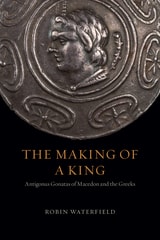
The Making of a King
Antigonus Gonatas of Macedon and the GreeksRobin Waterfield
University of Chicago Press, 2021
In this book, distinguished historian Robin Waterfield draws on his deep understanding of Greek history to bring us into the world of this complicated, splintered empire. He shows how, while Antigonus was confirming his Macedonian rule through constitutional changes, the Greeks were making moves toward independence. Two great confederacies of Greek cities emerged, forming powerful blocs that had the potential to resist the power of Macedon. The Making of a King charts Antigonus’s conflicts with the Greeks and with his perennial enemy, Ptolemy of Egypt. But Antigonus’s diplomatic and military successes were not enough to secure peace, and in his final years he saw his control of Greece whittled away by rebellion and the growing power of the Greek confederacies. Macedon’s lack of firm control over Greece ultimately made it possible for Rome to take its place as the arbiter of the Greeks’ future.
The Making of a King is Waterfield’s third volume about the Greeks in the era after Alexander the Great. Completing the story begun in his previous two books, Dividing the Spoils and Taken at the Flood, it brings Antigonus and his turbulent era to life. With The Making of a King—the first book in more than a century to tell in full the story of Antigonus Gonatas’s reign—this fascinating figure finally receives his due.
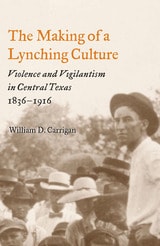
The Making of a Lynching Culture
Violence and Vigilantism in Central Texas, 1836-1916William D. Carrigan
University of Illinois Press, 2006
How a culture of violence legitimized lynching among ordinary people
On May 15, 1916, a crowd of fifteen thousand witnessed the lynching of an eighteen-year-old black farm worker named Jesse Washington. Most central Texans of the time failed to call for the punishment of the mob’s leaders. In The Making of a Lynching Culture, now in paperback, William D. Carrigan seeks to explain not how a fiendish mob could lynch one man but how a culture of violence that nourished this practice could form and endure for so long among ordinary people.
Beginning with the 1836 independence of Texas, The Making of a Lynching Culture reexamines traditional explanations of lynching, including the role of the frontier, economic tensions, and political conflicts. Using a voluminous body of court records, newspaper accounts, oral histories, and other sources, Carrigan shows how notions of justice and historical memory were shaped to glorify violence and foster a culture that legitimized lynching.
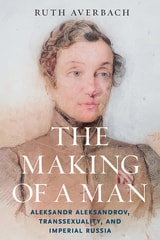
The Making of a Man
Aleksandr Aleksandrov, Transsexuality, and Imperial RussiaRuth Averbach
University of Wisconsin Press, 2026
Aleksandr Aleksandrov was an author and soldier in service of the Russian tsar, active in the Prussian theater of the War of the Fourth Coalition (1806–7) and in the Napoleonic Wars. In scholarship, he is better known by his birth name, Nadezhda Andreevna Durova, and often referred to with the female pronouns bestowed upon him at birth. In this first book-length study of Aleksandrov, Ruth Averbach argues that we should understand this celebrated figure of Imperial Russia, whose sex was legally changed by Tsar Aleksandr I, simply as a man, one whose masculinity was intimately connected to the imperialist cause and Russian nationalism.
For the majority of his life, Aleksandrov lived, wrote, and fought as a man and was recognized as such by most of his contemporaries. This contradicts the dominant position in especially Western feminist scholarship, which understands “Durova” either as a woman so patriotic that she dressed as a man to fight Russia’s wars or as a woman so frustrated by gender restrictions that she dramatically sought to cast them aside. Averbach instead asserts that we should take Aleksandrov at his word and accept his transition as genuine. Doing so allows for fresh interpretations of both his autobiographical writings and his works of fiction, interpretations that Averbach deftly shows have salience not just for a single man’s life but also for how we understand masculinity, imperialism, and nationalism in nineteenth-century Russia more broadly.
The Making of a Mexican American Mayor
Mario Garcia
University of Arizona Press, 1999
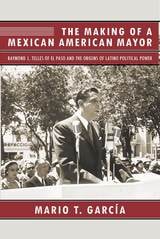
The Making of a Mexican American Mayor
Raymond L. Telles of El Paso and the Origins of Latino Political PowerMario T. García
University of Arizona Press, 2018
In the border metropolis of El Paso, more than half the population is Mexican American, yet this group had been denied effective political representation. Mexican Americans broke this barrier and achieved the “politics of status” through Telles’s stunning 1957 victory. This book captures the excitement of that long-awaited election.
The Making of a Mexican American Mayor also examines Telles’s story as a microcosm of the history of Mexican Americans before and after World War II—the Mexican American Generation. As mayor and ambassador, Telles symbolized this generation’s striving for political participation, and his legacy is evident in the growing number of Latinas/os holding office today.
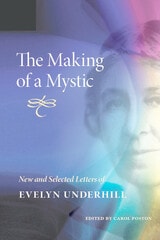
The Making of a Mystic
New and Selected Letters of Evelyn UnderhillEvelyn Underhill. Edited by Carol Poston.
University of Illinois Press, 2010
In time for the centennial celebration of her classic Mysticism, this volume of Underhill's letters will enable readers and researchers to follow her as she reconciled her beliefs with her daily life. The letters reveal her personal and theological development and clarify the relationships that influenced her life and work. Hardly aloof, she enjoyed the interests, mirth, and compassion of close friendships.
Drawing from collections previously unknown to scholars, The Making of a Mystic shows the range of Evelyn Underhill's mind and interests as well as the immense network of her correspondents, including Sir James Frazier and Nobel Prize laureate Rabindranath Tagore. This substantial selection of Underhill's correspondence demonstrates an exceptional scope, beginning with her earliest letters from boarding school to her mother and extending to a letter written to T. S. Eliot from what was to be her deathbed in London in 1941 as the London Blitz raged around her.
The Making of a Nation in the Balkans
Roumen Daskalov
Central European University Press, 2004
The Making of a Sage
A Study in Rabbinic EthicsJonathan Wyn Schofer
University of Wisconsin Press, 2005
Jonathan Schofer offers the first theoretically framed examination of rabbinic ethics in several decades. Centering on one large and influential anthology, The Fathers According to Rabbi Nathan, Jonathan Schofer situates that text within a broader spectrum of rabbinic thought, while at the same time bringing rabbinic thought into dialogue with current scholarship on the self, ethics, theology, and the history of religions.
Notable Selection, Jordan Schnitzer Book Award for Philosophy and Jewish Thought, Association for Jewish Studies
The Making of a Socialist Night
Society, Imagination and Everyday Life in Czechoslovakia 1945-1960Lucie Dusková
Central European University Press, 2026
The Making of a Southerner
William Barclay Napton's Private Civil WarChristopher Phillips
University of Missouri Press, 2008
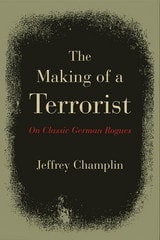
The Making of a Terrorist
On Classic German RoguesJeffrey Champlin
Northwestern University Press, 2014
In The Making of a Terrorist, Jeffrey Champlin examines key figures from three canonical texts from the German-language literature of the late eighteenth and early nineteenth centuries: Goethe’s Gotz von Berlichingen, Schiller’s Die Rauber, and Kleist’s Michael Kohlhaas. Champlin situates these readings within a larger theoretical and historical context, exploring the mechanics, aesthetics, and poetics of terror while explicating the emergence of the terrorist personality in modernity. In engaging and accessible prose, Champlin explores the ethical dimensions of violence and interrogates an ethics of textual violence.
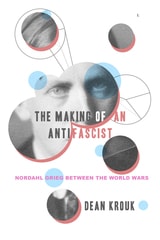
The Making of an Antifascist
Nordahl Grieg between the World WarsDean Krouk
University of Wisconsin Press, 2022
In this comprehensive and accessible book, Dean Krouk examines a significant public figure in Scandinavian literature and a critical period in modern European history through original readings of the political, ethical, and gender issues in Grieg’s works. This volume offers a first-rate analysis of the interwar period’s political and cultural agendas in Scandinavia and Europe leading to the Second World War by examining the rise of fascism, communism, and antifascism. Grieg’s poetry found renewed resonance in Norway following the 2011 far-right domestic terrorist attacks, making insight into his contradictory ideas more crucial than ever. Krouk’s presentation of Grieg’s unexpected ideological tensions will be thought-provoking for many readers in the United States and elsewhere.

The Making of an Artist
Desire, Courage, and CommitmentKristin G. Congdon
Intellect Books, 2018
Powerfully insightful and fully accessible, The Making of an Artist will be an invaluable resource for practicing artists, those just setting out on artistic careers, and art teachers alike.
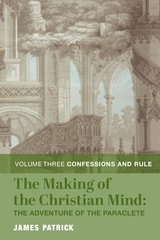
The Making of the Christian Mind
The Adventure of the Paraclete: Vol. 3: Confessions and RuleJames Patrick
St. Augustine's Press, 2022
Patrick's work is both fine scholarship and epic story-telling, a key component to both the education and fascination of the Christian mind, which in turn has shaped the world more deeply than any other influence in human history. "The Christian intellect will guide the heart to the place where the knee can bend and the eye see; the making of the Christian mind will continue from age to age, locating eternal truth in a human history that will endure as God wills so that many may be saved, pointing beyond itself to the reality that thoughts and words represent, making all things new."
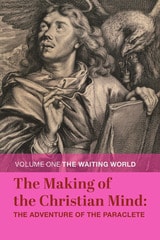
The Making of the Christian Mind
The Adventure of the Paraclete: Volume I: The Waiting WorldJames Patrick
St. Augustine's Press, 2020
This is not a history of dogma or systematic account of the building of doctrine. It is a narrative that follows the major moments wherein the Christian heart so in tune with the Paraclete has rendered the seminal texts and literature of this new culture, from the Didache to the Rule of Saint Benedict and The Consolation of Philosophy. Patrick succeeds in presenting a narrative that reads more like the experience lived by those directly involved in its realization, and although he cannot include every individual accomplishment of the major Christian writers, he illuminates the context in which Christianity was born and how faith grew and allowed itself to be shaped by its participation in the “adventure” and its grasp of objective truth. The Christian mind is, says Patrick, not only inspired and moved by the restless Paraclete, but revolves around the event of Jesus Christ. Christian history is therefore best understood not simply as chronology of events but as the vision of “the new heart in time,” one that strives to be like that of the one who sent the Spirit into history.
Patrick writes with a voice of a teacher, and although this work is very well referenced and accurate he does not intend this work to be a scholarly presentation of data and careful arguments, nor does he include every aspect of this intellectual faith journey of Christianity found in writing. As a comprehensive review, Patrick acknowledges the limitations of his own project to tell a complete story. Nevertheless, The Making of the Christian Mind accomplishes the no less formidable feat of illustrating the vivacious quality of the authentic Christian intellectual life. “Christianity is a survivor, not because it possessed the instruments of power but because, as Jesus of Nazareth said before Pilate, the foundation of the Kingdom is truth, its instruments of conquest are its renewing gifts, its consequences are the substitution of truth for error and ignorance, of faith for skepticism, humility for pride, and of charity and friendship for emulation, all this realized never perfectly but always as possibilities having the power to make all things new.”
This work is divided into three volumes, of which the present work is the first. Highlights of this first volume, The Waiting World, include following revelation as it first moved uncertain hearts to write and then to offer explicit witness. In this first installment, Patrick sets the groundwork for following the faith and history of Israel to Justin Martyr’s great claim that what is true belongs to Christians.
The Making of the Christian Mind
The Adventure of the Paraclete: Volume II: Fire and WitnessJames Patrick
St. Augustine's Press, 2021
The second installment presents the parallel struggle to build heart and mind, as heresy and temporal demands challenge the memory and vitality of what Christians have received. The writing mind in this sense sustains and gives purpose to the heart, pressed under the burden of doubt and worldly expectation. The reader knows that Christianity endures, but how did this happen? Patrick at every turn discloses the role of the Paraclete who remains the unseen protagonist. In this sense, Patrick surprises even those who think they know the story, and no one is safe from being exposed to a bit of the same inspiration that moves the characters in history passed. Indeed, the reader will feel like a part of this same narrative, in a new unwritten chapter but encountering the same Paraclete who has meddled in and marked events with holy breath that even Patrick cannot fully represent.
Highlights of Fire and Witness are Patrick’s presentation of pivotal yet forgotten works such as The Shepherd of Hermes, and his treatment of Origen and Athanasius in their respective social and spiritual contexts. This volume grants the reader a glimpse into a time when resolutions needed to be made and defended with argument, but also with silent witness and the flame of a resolve dimmed not even by death. Patrick’s description of imperial Christianity and the Christian imagination that ultimately fashions the proper image of Christian places is likewise stunning and not to be missed.
The Making of the Hawthorne Subject
Alison Easton
University of Missouri Press, 1996
This comprehensive study of Nathaniel Hawthorne's early writings analyzes the development of Hawthorne's work over the first twenty-five years of his career. Alison Easton studies that process in relation to current critical debates on subjectivity. By examining Hawthorne's novels, sketches, tales, letters, notebooks, reviews, and children's books up to the publication of The Scarlet Letter, Easton shows how Hawthorne tried to understand the complexities of the clash between desire (that which is unrecognized by the social order) and circumstance (the conditions under which one must live in society). The Hawthorne who emerges from this study proves to be a sophisticated theorist of subjectivity, whose project was central to his times.
The author contends that over the first half of his career Hawthorne explored, experimented, and negotiated his way toward a better model of the human subject than the ones that are usually seen as his cultural inheritance. This approach implies a complex, dialectic development in Hawthorne's work, arising from twenty-five years of accumulated experimentation and ongoing debate. Nearly all critics of Hawthorne have ignored this element of development, thus missing the complex evolution of the subject and the revealing intertextual play of meaning that is evident in everything Hawthorne wrote during this period. Easton's study is the first to supply a full chronology for the works written during these years, and the only one to consider in close detail the full and bewilderingly diverse range of his writing throughout this period and to find an overall pattern in the several stages of his intellectual and artistic enterprise.
Easton brings to scholars and students of nineteenth-century American literature a study of Hawthorne's work that is unique in both scope and perspective. The Making of the Hawthorne Subject offers a substantial and original contribution to the way we think about Hawthorne's work and the relationship of the human subject to the social order of mid-nineteenth-century America.
The Making of the Mexican Border
The State, Capitalism, and Society in Nuevo León, 1848-1910By Juan Mora-Torres
University of Texas Press, 2001
The issues that dominate U.S.-Mexico border relations today—integration of economies, policing of boundaries, and the flow of workers from south to north and of capital from north to south—are not recent developments. In this insightful history of the state of Nuevo León, Juan Mora-Torres explores how these processes transformed northern Mexico into a region with distinct economic, political, social, and cultural features that set it apart from the interior of Mexico.
Mora-Torres argues that the years between the establishment of the U.S.-Mexico boundary in 1848 and the outbreak of the Mexican Revolution in 1910 constitute a critical period in Mexican history. The processes of state-building, emergent capitalism, and growing linkages to the United States transformed localities and identities and shaped class formations and struggles in Nuevo León. Monterrey emerged as the leading industrial center and home of the most powerful business elite, while the countryside deteriorated economically, politically, and demographically. By 1910, Mora-Torres concludes, the border states had already assumed much of their modern character: an advanced capitalist economy, some of Mexico's most powerful business groups, and a labor market dependent on massive migrations from central Mexico.
The Making of the Middle Class
Toward a Transnational HistoryA. Ricardo López and Barbara Weinstein, eds.
Duke University Press, 2012
Contributors. Susanne Eineigel, Michael A.Ervin, Iñigo García-Bryce, Enrique Garguin, Simon Gunn, Carol E. Harrison, Franca Iacovetta, Sanjay Joshi, Prashant Kidambi, A. Ricardo López, Gisela Mettele, Marina Moskowitz, Robyn Muncy, Brian Owensby, David S. Parker, Mrinalini Sinha, Mary Kay Vaughan, Daniel J. Walkowitz, Keith David Watenpaugh, Barbara Weinstein, Michael O. West
The Making of the Modern University
Intellectual Transformation and the Marginalization of MoralityJulie A. Reuben
University of Chicago Press, 1996
Based on extensive research at eight universities—Harvard, Yale, Columbia, Johns Hopkins, Chicago, Stanford, Michigan, and California at Berkeley—Reuben examines the aims of university reformers in the context of nineteenth-century ideas about truth. She argues that these educators tried to apply new scientific standards to moral education, but that their modernization efforts ultimately failed. By exploring the complex interaction between institutional and intellectual change, Reuben enhances our understanding of the modern university, the secularization of intellectual life, and the association of scientific objectivity with value-neutrality.
The Making of the New Deal Democrats
Voting Behavior and Realignment in Boston, 1920-1940Gerald H. Gamm
University of Chicago Press, 1990
Almost all previous work on the subject has dealt with large-scale national patterns which make it difficult to pin down the precise processes by which the alignment took place. Gamm's work is most remarkable in that it is a close analysis of shifting voter alignments on the precinct and block level in the city of Boston. His extremely detailed and painstaking work of isolating homogeneous ethnic units over a twenty-year period allows one to trace the voting behavior of the particular ethnic groups that ultimately formed the core of the New Deal realignment."—Sidney Verba, Harvard University

The Making of the Northwest Forest Plan
The Wild Science of Saving Old Growth EcosystemsK. Norman Johnson
Oregon State University Press, 2023
Tree sitters. Logger protests. Dying timber towns. An iconic species on the brink. The Timber Wars consumed the Pacific Northwest in the late 1980s and early1990s and led political leaders to ask scientists for a solution. The Northwest Forest Plan was the result.
For most of the twentieth century, the central theme of federal forest management in the Pacific Northwest had been logging old-growth forests to provide a sustained yield of timber. During the 1970s and 1980s, however, a series of studies by young scientists highlighted the destructive impact of that logging on northern spotted owls, salmon, and the old-growth ecosystem itself.
Combining this new science with newly minted environmental laws like the Endangered Species Act, environmental activists obtained court injunctions to stop old-growth logging on federal land, setting off a titanic struggle in the Pacific Northwest to find a way to accommodate conservation imperatives as well as the logging that provided employment for tens of thousands of people. That effort involved years of controversy and debate, federal courts, five science assessments, Congress, and eventually the president of the United States. It led to creation of the Northwest Forest Plan, which sharply and abruptly shifted the primary goal of federal forestry toward conserving the species and ecosystems of old-growth forests. Scientists went from spectators to planners and guides, employing their latest scientific findings and expertise to create a forest plan for 20 million acres that would satisfy the courts. The largest upheaval in federal forest management in history had occurred, along with a precipitous decline in timber harvest, and there was no going back.
In this book, three of the scientists who helped craft that change tell the story as they know it: the causes, development, adoption, and implementation of the Northwest Forest Plan. The book also incorporates personal reflections from the authors, short commentaries and histories from key figures— including spotted owl expert Eric Forsman—and experiences from managers who implemented the Plan as best they could. Legal expert Susan Jane M. Brown helped interpret court cases and Debora Johnson turned spatial data into maps. The final chapters cover the Plan’s ongoing significance and recommendations for conserving forest and aquatic ecosystems in an era of megafires and climate change.
The Making of the Supply Chain
How Five CSCMP Supply Chain Hall of Famers Shaped the IndustryRemko van Hoek
Epic Books, 2024
In The Making of the Supply Chain, Remko van Hoek explores the stories of five very different supply chain pioneers—George Stephenson, Henry Ford, George Lauer, Elizabeth Dole, and J. B. Hunt—to demonstrate how innovations in supply chain management have changed the world by reshaping how we obtain our products and services.
Van Hoek reflects on these leaders’ seminal achievements in supply chain management, relates their breakthroughs to current best practices and opportunities for the future, and chronicles how other leaders have converted lessons from these Hall of Famers into new breakthroughs.
Informed by his work with the Council of Supply Chain Management Professionals (CSCMP) Supply Chain Hall of Fame,Van Hoek presents these inspiring stories in an engaging and highly accessible style.
The Making of the Unborn Patient
A Social Anatomy of Fetal SurgeryCasper, Monica J
Rutgers University Press, 1998
It is now possible for physicians to recognize that a pregnant woman's fetus is facing life-threatening problems, perform surgery on the fetus, and if it survives, return it to the woman's uterus to finish gestation. Although fetal surgery has existed in various forms for three decades, it is only just beginning to capture the public's imagination. These still largely experimental procedures raise all types of medical, political and ethical questions. Who is the patient? What are the technical difficulties involved in fetal surgery? How do reproductive politics seep into the operating room, and how do medical definitions and meanings flow out of medicine and into other social spheres? How are ethical issues defined in this practice and who defines them? Is fetal surgery the kind of medicine we want? What is involved in reframing fetal surgery as a women's health issue, rather than simply a pediatric concern? In this ethnographic study of the social, cultural and historical aspects of fetal surgery, Monica Casper addresses these questions. The Making of the Unborn Patient examines two important and connected events of the second half of the 20th century: the emergence of fetal surgery as a new medical specialty and the debut of the unborn patient.
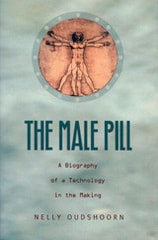
The Male Pill
A Biography of a Technology in the MakingNelly Oudshoorn
Duke University Press, 2003
Oudshoorn emphasizes that the introduction of contraceptives for men depends to a great extent on changing ideas about reproductive responsibility. Initial interest in the male pill, she shows, came from outside the scientific community: from the governments of China and India, which were interested in population control, and from Western feminists, who wanted the responsibilities and health risks associated with contraception shared more equally between the sexes. She documents how in the 1970s, the World Health Organization took the lead in investigating male contraceptives by coordinating an unprecedented, worldwide research network. She chronicles how the search for a male pill required significant reorganization of drug-testing standards and protocols and of the family-planning infrastructure—including founding special clinics for men, creating separate spaces for men within existing clinics, enrolling new professionals, and defining new categories of patients. The Male Pill is ultimately a story as much about the design of masculinities in the last decades of the twentieth century as it is about the development of safe and effective technologies.
The Man Who Broke Reality
Niels Bohr and the Making of Modern PhysicsPhilip Ball
University of Chicago Press, 2026
From the brilliant Philip Ball, a thrilling biography of Nobel Prize–winning Danish physicist Niels Bohr, the most radical quantum mechanician of all.
In the first half of the twentieth century, the tremendous energy locked up in the nucleus of an atom was discovered and then liberated, bringing both the promise of utopia and the threat of apocalypse. The dawn of the nuclear age is often associated with Albert Einstein, whose iconic equation E = mc2 revealed the staggering energy available from radioactive transformation, or with J. Robert Oppenheimer, who led the project at Los Alamos to build the first nuclear bombs. But the person who arguably did more than any other to shape the Promethean era in which we now live was the Danish physicist Niels Bohr.
In The Man Who Broke Reality, renowned science communicator Philip Ball reveals that it was Bohr who first explained the physics of the nuclear atom, and it was his model of the atom’s dense nucleus that enabled scientists to understand how it could be split apart. Ball also shows how Bohr was the central figure in the development of quantum mechanics, the theory of matter and energy that destabilized centuries of thinking not just about the microscopic nature of the world but about physical reality itself.
Bohr’s story is the story of modern physics and its transformative impact on the world. But The Man Who Broke Reality is not merely an intellectual drama. It chronicles a heroic life lived in turbulent times, across two world wars, the Manhattan Project, and the arms race of the Cold War. And it establishes Bohr as one of the most profound, inventive, and iconoclastic thinkers of the twentieth century.
The Man Who Broke Reality
Niels Bohr and the Making of Modern PhysicsPhilip Ball
University of Chicago Press, 2026
From the brilliant Philip Ball, a thrilling biography of Nobel Prize–winning Danish physicist Niels Bohr, the most radical quantum mechanician of all.
In the first half of the twentieth century, the tremendous energy locked up in the nucleus of an atom was discovered and then liberated, bringing both the promise of utopia and the threat of apocalypse. The dawn of the nuclear age is often associated with Albert Einstein, whose iconic equation E = mc2 revealed the staggering energy available from radioactive transformation, or with J. Robert Oppenheimer, who led the project at Los Alamos to build the first nuclear bombs. But the person who arguably did more than any other to shape the Promethean era in which we now live was the Danish physicist Niels Bohr.
In The Man Who Broke Reality, renowned science communicator Philip Ball reveals that it was Bohr who first explained the physics of the nuclear atom, and it was his model of the atom’s dense nucleus that enabled scientists to understand how it could be split apart. Ball also shows how Bohr was the central figure in the development of quantum mechanics, the theory of matter and energy that destabilized centuries of thinking not just about the microscopic nature of the world but about physical reality itself.
Bohr’s story is the story of modern physics and its transformative impact on the world. But The Man Who Broke Reality is not merely an intellectual drama. It chronicles a heroic life lived in turbulent times, across two world wars, the Manhattan Project, and the arms race of the Cold War. And it establishes Bohr as one of the most profound, inventive, and iconoclastic thinkers of the twentieth century.
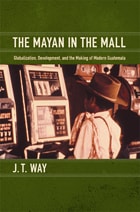
The Mayan in the Mall
Globalization, Development, and the Making of Modern GuatemalaJ. T. Way
Duke University Press, 2012
Using a wide array of historical and contemporary sources, Way explores the multiple intersections of development and individual life, focusing on the construction of social space through successive waves of land reform, urban planning, and economic policy. His explorations move from Guatemala City's poorest neighborhoods and informal economies (run predominantly by women) to a countryside still recovering from civil war and anti-Mayan genocide, and they encompass such artifacts of development as the modernist Pan-American Highway and the postmodern Grand Tikal Futura, a Mayan-themed shopping mall ringed by gated communities and shantytowns. Capitalist development, Way concludes, has dramatically reshaped the country's physical and social landscapes—engendering poverty, ethnic regionalism, and genocidal violence—and positioned Guatemala as a harbinger of globalization's future.
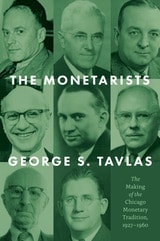
The Monetarists
The Making of the Chicago Monetary Tradition, 1927–1960George S. Tavlas
University of Chicago Press, 2023
The Chicago School of economic thought has been subject to endless generalizations—and mischaracterizations—in contemporary debate. What is often portrayed as a monolithic obsession with markets is, in fact, a nuanced set of economic theories born from decades of research and debate. The Monetarists is a deeply researched history of the monetary policies—and personalities—that codified the Chicago School of monetary thought from the 1930s through the 1960s. These policies can be characterized broadly as monetarism: the belief that prices and interest rates can be kept stable by controlling the amount of money in circulation.
As economist George S. Tavlas makes clear, these ideas were more than just the legacy of Milton Friedman; they were a tradition in theory brought forth by a crucible of minds and debates throughout campus. Through unprecedented mining of archival material, The Monetarists offers the first complete history of one of the twentieth century’s most formative intellectual periods and places. It promises to elevate our understanding of this doctrine and its origins for generations to come.

The Money Mandarins
The Making of a Supranational Economic OrderHoward M. Wachtel
Pluto Press, 1991
The Money Shot
Trash, Class, and the Making of TV Talk ShowsLaura Grindstaff
University of Chicago Press, 2002
From "classy" shows like Oprah to "trashy" shows like Jerry Springer, the key to a talk show's success is what Laura Grindstaff calls the money shot—moments when guests lose control and express joy, sorrow, rage, or remorse on camera. In this new work, Grindstaff takes us behind the scenes of daytime television talk shows, a genre focused on "real" stories told by "ordinary" people. Drawing on extensive interviews with producers and guests, her own attendance of dozens of live tapings around the country, and more than a year's experience working on two nationally televised shows, Grindstaff shows us how producers elicit dramatic performances from guests, why guests agree to participate, and the supporting roles played by studio audiences and experts.
Grindstaff traces the career of the money shot, examining how producers make stars and experts out of ordinary people, in the process reproducing old forms of cultural hierarchy and class inequality even while seeming to challenge them. She argues that the daytime talk show does give voice to people normally excluded from the media spotlight, but it lets them speak only in certain ways and under certain rules and conditions. Working to understand the genre from the inside rather than pass judgment on it from the outside, Grindstaff asks not just what talk shows can tell us about mass media, but also what they reveal about American culture more generally.
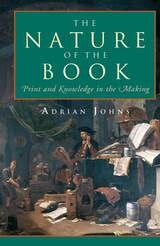
The Nature of the Book
Print and Knowledge in the MakingAdrian Johns
University of Chicago Press, 1998
"A compelling exposition of how authors, printers, booksellers and readers competed for power over the printed page. . . . The richness of Mr. Johns's book lies in the splendid detail he has collected to describe the world of books in the first two centuries after the printing press arrived in England."—Alberto Manguel, Washington Times
"[A] mammoth and stimulating account of the place of print in the history of knowledge. . . . Johns has written a tremendously learned primer."—D. Graham Burnett, New Republic
"A detailed, engrossing, and genuinely eye-opening account of the formative stages of the print culture. . . . This is scholarship at its best."—Merle Rubin, Christian Science Monitor
"The most lucid and persuasive account of the new kind of knowledge produced by print. . . . A work to rank alongside McLuhan."—John Sutherland, The Independent
"Entertainingly written. . . . The most comprehensive account available . . . well documented and engaging."—Ian Maclean, Times Literary Supplement
The New Kingdom of Granada
The Making and Unmaking of Spain's Atlantic EmpireSantiago Muñoz-Arbeláez
Duke University Press, 2025
The Plebeian Republic
The Huanta Rebellion and the Making of the Peruvian State, 1820–1850Cecilia Méndez
Duke University Press, 2005
In addition to official sources such as trial dossiers, census records, tax rolls, wills, and notary and military records, Méndez uses a wide variety of previously unexplored sources produced by the mostly Quechua-speaking rebels. She reveals the Huanta rebellion as a complex interaction of social, linguistic, economic, and political forces. Rejecting ideas of the Andean rebels as passive and reactionary, she depicts the barely literate insurgents as having had a clear idea of national political struggles and contends that most local leaders of the uprising invoked the monarchy as a source of legitimacy but did not espouse it as a political system. She argues that despite their pronouncements of loyalty to the Spanish crown, the rebels’ behavior evinced a political vision that was different from both the colonial regime and the republic that followed it. Eventually, their political practices were subsumed into those of the republican state.
The Poet's Freedom
A Notebook on MakingSusan Stewart
University of Chicago Press, 2011
Why do we need new art? How free is the artist in making? And why is the artist, and particularly the poet, a figure of freedom in Western culture? The MacArthur Award–winning poet and critic Susan Stewart ponders these questions in The Poet’s Freedom. Through a series of evocative essays, she not only argues that freedom is necessary to making and is itself something made, but also shows how artists give rules to their practices and model a self-determination that might serve in other spheres of work.
The Premodern Condition
Medievalism and the Making of TheoryBruce Holsinger
University of Chicago Press, 2005
Holsinger shows that the preoccupation with medieval cultures and practices among Bataille, Derrida, Lacan, Barthes, Bourdieu, and their cohorts was so wide ranging that it merits recognition as one of the most significant epiphenomena of postwar French thought. Not simply an object of nostalgic longing or an occasional source of literary exempla, the medieval epoch was continually mined by these thinkers for specific philosophical vocabularies, social formations, and systems of thought.
To supplement its master thesis, The Premodern Condition also contains original essays by Bataille and Bourdieu—translated here for the first time into English—that testify in various ways to the strange persistence of medievalisms in French postwar avant-garde writings. What results is an important and original work that will be a touchstone for specialists in medieval studies and critical theory alike.
The Pro-War Movement
Domestic Support for the Vietnam War and the Making of Modern American ConservatismSandra Scanlon
University of Massachusetts Press, 2013
In the vast literature on the Vietnam War, much has been written about the antiwar movement and its influence on U.S. policy and politics. In this book, Sandra Scanlon shifts attention to those Americans who supported the war and explores the war's impact on the burgeoning conservative political movement of the 1960s and early 1970s.
Believing the Vietnam War to be a just and necessary cause, the pro-war movement pushed for more direct American military intervention in Southeast Asia throughout the Kennedy administration, lobbied for intensified bombing during the Johnson years, and offered coherent, if divided, endorsements of Nixon's policies of phased withdrawal. Although its political wing was dominated by individuals and organizations associated with Barry Goldwater's presidential bids, the movement incorporated a broad range of interests and groups united by a shared antipathy to the New Deal order and liberal Cold War ideology.
Appealing to patriotism, conservative leaders initially rallied popular support in favor of total victory and later endorsed Nixon's call for “peace with honor.” Yet as the war dragged on with no clear end in sight, internal divisions eroded the confidence of pro-war conservatives in achieving their aims and forced them to reevaluate the political viability of their hardline Cold War rhetoric. Conservatives still managed to make use of grassroots patriotic campaigns to marshal support for the war, particularly among white ethnic workers opposed to the antiwar movement. Yet in so doing, Scanlon concludes, they altered the nature and direction of the conservative agenda in both foreign and domestic policy for years to come.
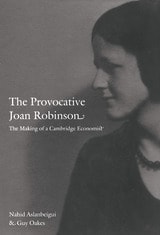
The Provocative Joan Robinson
The Making of a Cambridge EconomistNahid Aslanbeigui and Guy Oakes
Duke University Press, 2009
Aslanbeigui and Oakes demonstrate that Robinson’s professional identity was thoroughly embedded in a local scientific culture in which the Cambridge economists A. C. Pigou, John Maynard Keynes, Dennis Robertson, Piero Sraffa, Richard Kahn (Robinson’s closest friend on the Cambridge faculty), and her husband Austin Robinson were important figures. Although the economists Joan Robinson most admired—Pigou, Keynes, and their mentor Alfred Marshall—had discovered ideas of singular greatness, she was convinced that each had failed to grasp the essential theoretical significance of his own work. She made it her mission to recast their work both to illuminate their major contributions and to redefine a Cambridge tradition of economic thought. Based on the extensive correspondence of Robinson and her colleagues, The Provocative Joan Robinson is the story of a remarkable woman, the intellectual and social world of a legendary group of economists, and the interplay between ideas, ambitions, and disciplinary communities.
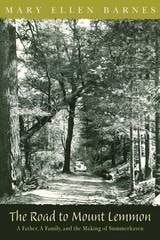
The Road to Mount Lemmon
A Father, A Family, and the Making of SummerhavenMary Ellen Barnes
University of Arizona Press, 2009
The Santa Catalina Mountains first captivated Tony Zimmerman on a 1937 hunting trip. Regard for the alpine beauty must have been in his genes—he was the son of Swiss German immigrants—and by 1940 the Tucson schoolteacher had begun taking his family to Mount Lemmon to spend the summer. Back then, the road up the mountain was a rough two-track dirt road from Oracle, and Summerhaven was nothing but a sleepy cluster of summer cabins. But Tony Zimmerman was to help change all of that.
The Road to Mount Lemmon is a beguiling memoir of the Catalina Mountains told by the daughter of one of the pioneers in the life and development of Mount Lemmon’s communities. Mary Ellen Barnes tells how her father Tony resigned from teaching in 1943 to devote his career to the development of this mountain oasis. He not only sold real estate for long time landowner Randolph Jenks, he even bought the village’s tiny two-room store, installing a sawmill to build a larger store, and built the Mount Lemmon Inn. And as she spins Tony’s personal saga, she also gives readers a glimpse of the Catalinas before Tucson became a boom town, recalling idyllic adventures in wild country and the cowboys, rangers, ranchers, and loggers who worked there.
Barnes tells Tony’s story as if sharing it with family, evoking her father’s personality on every page. The Road to Mount Lemmon is an intimate view of a mountain community over the course of nearly sixty years—a view that few people have shared but one all can appreciate.
The Sign of the Cannibal
Melville and the Making of a Postcolonial ReaderGeoffrey Sanborn
Duke University Press, 1998
Sanborn focuses on the representations of cannibalism in three of Melville’s key texts—Typee, Moby-Dick, and “Benito Cereno.” Drawing on accounts of Pacific voyages from two centuries and virtually the entire corpus of the post-Enlightenment discourse on cannibalism, he shows how Melville used his narratives to work through the ways in which cannibalism had been understood. In so doing, argues Sanborn, Melville sought to move his readers through stages of possible responses to the phenomenon in order to lead them to consider alternatives to established assumptions and conventions—to understand that in the savage they see primarily their own fear and fascination. Melville thus becomes a narrator of the postcolonial encounter as he uncovers the dynamic of dread and menace that marks the Western construction of the “non-savage” human.
Extending the work of Slavoj Zizek and Homi Bhabha while providing significant new insights into the work of Melville, The Sign of the Cannibal represents a breakthrough for students and scholars of postcolonial theory, American literary history, critical anthropology, race, and masculinity.
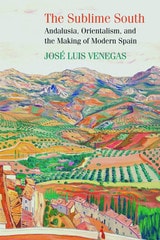
The Sublime South
Andalusia, Orientalism, and the Making of Modern SpainJose Luis Venegas
Northwestern University Press, 2018
The Sublime South: Andalusia, Orientalism, and the Making of Modern Spain is the first systematic study on cultural images of Andalusia as Spain’s “Orient” and the impact they have had on nation-building and modernization since the late nineteenth century. While a wealth of studies have examined how northern Europeans from the Romantic period viewed Spain and Andalusia as Europe’s Orient, little attention has been paid to how contemporary Spanish artists and intellectuals assimilated Romantic legacies to engage in an internal form of orientalism.
José Luis Venegas deftly explores Spain’s shifting engagements with oriental identity and otherness by looking, not just beyond national, ethnic, and racial borders, but at a territory that is institutionally embedded in the nation-state while symbolically placed between inclusion and abjection. The Sublime South shifts the focus and scale of Edward Said’s notion of orientalism by examining how it evolves and manifests transnationally, as the result of European colonialism in Africa and Asia, and intra-nationally, in a European yet orientalized country. Finally, Venegas challenges ethnocentric notions of Iberian cultures and fosters an understanding of the encounters between Western and Muslim cultures beyond opposing, and often mutually negating, essentialisms.
The Traffic in Women's Work
East European Migration and the Making of EuropeAnca Parvulescu
University of Chicago Press, 2014
The World Wide Web of Work
A History in the MakingMarcel van der Linden
University College London, 2023
Global labor history is one of the fastest-growing fields of study worldwide today. This volume assembles a group of contributors from around the world to discuss the core concepts “capitalism” and “workers,” and to refine notions such as “coerced labor,” “household strategies,” and “labor markets.” It explores in new ways the connections between laborers in different parts of the world, arguing that both globalization and modern labor management originated in agriculture in the Global South and were only later introduced in Northern industrial settings. It reveals that nineteenth-century chattel slavery was frequently replaced by other forms of coerced labor, and it reconstructs the twentieth-century attempts of the International Labor Organisation to regulate work standards internationally. The book also pays attention to the relational inequality through which workers in wealthy countries benefit from the exploitation of those in poor countries. The final part addresses workers’ resistance and acquiescence: why collective actions often have unanticipated consequences, why and how workers sometimes organize massive flights from exploitation and oppression, and why proletarian revolutions took place in pre-industrial or industrializing countries but never in fully developed capitalist societies.
The Young Fed
The Banking Crises of the 1920s and the Making of a Lender of Last ResortMark Carlson
University of Chicago Press, 2025
A new history of crisis responses in the central bank’s formative years.
The long-standing description of the Federal Reserve as a “lender of last resort” refers to the central bank’s emergency liquidity provision for financial entities in periods of crisis. As Mark Carlson shows, this function was foundational to how the Fed was designed but has, at times, proven challenging to implement. The Young Fed examines the origins of the Federal Reserve’s emergency liquidity provision which, along with the setting of monetary policy, has become a critical responsibility.
Focusing on the Fed’s response to the financial crises of the 1920s, Carlson documents the formative deliberations of central bank policymakers regarding how to assist banks experiencing distress; the lessons that were learned; and how those lessons shaped subsequent policies. Carlson depicts an early Fed that experimented with a variety of approaches to crises, ranging from bold spectacles featuring cash-filled armored cars to behind-the-scenes interventions to prevent inducing panics or bank runs. The Young Fed weaves previously unpublished material from the Fed archives into a watershed work in American economic history: a deeply sourced account of how the world’s most important central bank became a lender of last resort.