Results by title
753 books match the query 'Race' and 140 start with t
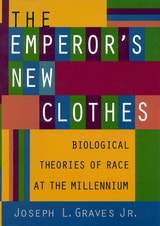
The Emperor's New Clothes
Biological Theories of Race at the MillenniumGraves Jr., Joseph L.
Rutgers University Press, 2003
In this groundbreaking book, Joseph Graves traces the development of biological thought about human genetic diversity. Greek philosophy, social Darwinism, New World colonialism, the eugenics movement, intelligence testing biases, and racial health fallacies are just a few of the topics he addresses. Graves argues that racism has persisted in our society because adequate scientific reasoning has not entered into the equation. He champions the scientific method and explains how we may properly ask scientific questions about the nature of population differentiation and how (if at all) we may correlate that diversity to observed human behavior. He also cautions us to think critically about scientific findings that have historically been misused in controversies over racial differences in intelligence heritability, criminal behavior, disease predisposition, and other traits. According to Graves, this country cannot truly address its racial problems until people understand the empirical evidence behind this truth that separate human races do not exist. With the biological basis for race removed, racism becomes an ideology, one that can and must be deleted.
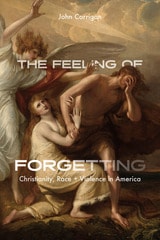
The Feeling of Forgetting
Christianity, Race, and Violence in AmericaJohn Corrigan
University of Chicago Press, 2023
The dual traumas of colonialism and slavery are still felt by Native Americans and African Americans as victims of ongoing violence toward people of color today. In The Feeling of Forgetting, John Corrigan calls attention to the trauma experienced by white Americans as perpetrators of this violence. By tracing memory’s role in American Christianity, Corrigan shows how contemporary white Christian nationalism is motivated by a widespread effort to forget the role race plays in American society. White trauma, Corrigan argues, courses through American culture like an underground river that sometimes bursts forth into brutality, terrorism, and insurrection. Tracing the river to its source is a necessary first step toward healing.
The Feeling of Forgetting
Christianity, Race, and Violence in AmericaJohn Corrigan
University of Chicago Press, 2023
A provocative examination of how religious practices of forgetting drive white Christian nationalism.
The dual traumas of colonialism and slavery are still felt by Native Americans and African Americans as victims of ongoing violence toward people of color today. In The Feeling of Forgetting, John Corrigan calls attention to the trauma experienced by white Americans as perpetrators of this violence. By tracing memory’s role in American Christianity, Corrigan shows how contemporary white Christian nationalism is motivated by a widespread effort to forget the role race plays in American society. White trauma, Corrigan argues, courses through American culture like an underground river that sometimes bursts forth into brutality, terrorism, and insurrection. Tracing the river to its source is a necessary first step toward healing.
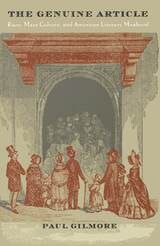
The Genuine Article
Race, Mass Culture, and American Literary ManhoodPaul Gilmore
Duke University Press, 2001
From characters in Indian melodramas and minstrel shows to exhibits in popular museums and daguerrotype galleries, primitive racialized figures circulated as “the genuine article” of manliness in the antebellum United States. Gilmore argues that these figures were manipulated, translated, and adopted not only by canonical authors such as Hawthorne, Thoreau, Cooper, and Melville but also by African American and Native American writers like William Wells Brown and Okah Tubbee. By examining how these cultural notions of race played out in literary texts and helped to construct authorship as a masculine profession, Gilmore makes a unique contribution to theories of class formation in nineteenth-century America.
The Genuine Article will enrich students and scholars of American studies, gender studies, literature, history, sociology, anthropology, popular culture, and race.
The Ghosts of Mark Twain
A Study of Manhood, Race, and the Gothic ImaginationAnn M Ryan
University of Missouri Press, 2025
Ann M. Ryan maps Twain’s resistance to ideals of white masculinity and his occasional capitulation to them. While Twain reflects upon the history of White men—including the intimate memory of his father’s failures and abuses—he also imagines a future in which Black men will gain an authentic voice and agency. Preferring the messy humanity of Mark Twain, Ryan calls into question the “St. Mark” school of criticism, which glosses—among other themes—Twain’s uneasy relation to Black culture. In unpublished works and excised material, Twain conjures memories and specters of Black men that are far from comforting. No longer “friends and allies” like fictive Ol’ Uncle Dan’l; these Black ghosts will settle for revenge if they can’t get justice.
Some of the works considered in The Ghosts of Mark Twain are not widely known: “Which Was It?,” “The United States of Lyncherdom,” No. 44: The Mysterious Stranger, and the Morgan manuscript of Pudd’nhead Wilson. Written into the record of these fragments is Twain’s desire to be a different kind of White man, just as their incomplete nature demonstrates how often he stumbled in that effort. When Jim describes the White and Black spirits hovering over Pap Finn, Twain reveals his own conflicted position in America’s racial history. And as Jim declares to Huck, “A body can’t tell yit which one gwyne to fetch him at de las.’”
The Great White Way
Race and the Broadway MusicalHoffman, Warren
Rutgers University Press, 2014
Broadway musicals are one of America’s most beloved art forms and play to millions of people each year. But what do these shows, which are often thought to be just frothy entertainment, really have to say about our country and who we are as a nation?
The Great White Way is the first book to reveal the racial politics, content, and subtexts that have haunted musicals for almost one hundred years from Show Boat (1927) to The Scottsboro Boys (2011). Musicals mirror their time periods and reflect the political and social issues of their day. Warren Hoffman investigates the thematic content of the Broadway musical and considers how musicals work on a structural level, allowing them to simultaneously present and hide their racial agendas in plain view of their audiences. While the musical is informed by the cultural contributions of African Americans and Jewish immigrants, Hoffman argues that ultimately the history of the American musical is the history of white identity in the United States.
Presented chronologically, The Great White Way shows how perceptions of race altered over time and how musicals dealt with those changes. Hoffman focuses first on shows leading up to and comprising the Golden Age of Broadway (1927–1960s), then turns his attention to the revivals and nostalgic vehicles that defined the final quarter of the twentieth century. He offers entirely new and surprising takes on shows from the American musical canon—Show Boat (1927), Oklahoma! (1943), Annie Get YourGun (1946), The Music Man (1957), West Side Story (1957), A Chorus Line (1975), and 42nd Street (1980), among others.
New archival research on the creators who produced and wrote these shows, including Leonard Bernstein, Jerome Robbins, Stephen Sondheim, and Edward Kleban, will have theater fans and scholars rethinking forever how they view this popular American entertainment.
The Great White Way
Race and the Broadway MusicalWarren Hoffman
Rutgers University Press, 2020
Now in a new second edition, The Great White Way is the first book to reveal the racial politics, content, and subtexts that have haunted musicals for almost one hundred years from Show Boat (1927) to Hamilton (2015). This revised edition includes a new introduction and conclusion, updated chapters, as well as a brand-new chapter that looks at the blockbuster musicals The Book of Mormon and Hamilton.
Musicals mirror their time periods and reflect the political and social issues of their day. Warren Hoffman investigates the thematic content of the Broadway musical and considers how musicals work on a structural level, allowing them to simultaneously present and hide their racial agendas in plain view of their audiences. While the musical is informed by the cultural contributions of African Americans and Jewish immigrants, Hoffman argues that ultimately the history of the American musical is the history of white identity in the United States.
Presented chronologically, The Great White Way shows how perceptions of race altered over time and how musicals dealt with those changes. Hoffman focuses first on shows leading up to and comprising the Golden Age of Broadway (1927–1960s), then turns his attention to the revivals and nostalgic vehicles that defined the final quarter of the twentieth century. He offers entirely new and surprising takes on shows from the American musical canon—Show Boat (1927), Oklahoma! (1943), Annie Get Your Gun (1946), The Music Man (1957), West Side Story (1957), A Chorus Line (1975), and 42nd Street (1980), among others. In addition to a new chapter on Hamilton and The Book of Mormon, this revised edition brings The Great White Way fully into the twenty-first century with an examination of jukebox musicals and the role of off-Broadway and regional theaters in the development of the American musical.
New archival research on the creators who produced and wrote these shows, including Leonard Bernstein, Jerome Robbins, Stephen Sondheim, and Edward Kleban, will have theater fans and scholars rethinking forever how they view this popular American entertainment.
The Heart of Whiteness
Normal Sexuality and Race in America, 1880–1940Julian B. Carter
Duke University Press, 2007
Carter builds her intricate argument from detailed readings of an array of popular texts, focusing on how sex education for children and marital advice for adults provided significant venues for the dissemination of the new ideal of normality. She concludes that because its overt concerns were love, marriage, and babies, normality discourse facilitated white evasiveness about racial inequality. The ostensible focus of “normality” on matters of sexuality provided a superficially race-neutral conceptual structure that whites could and did use to evade engagement with the unequal relations of power that continue to shape American life today.
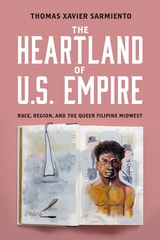
The Heartland of U.S. Empire
Race, Region, and the Queer Filipinx MidwestThomas Xavier Sarmiento
Temple University Press, 2026
Examining Filipinx cultural representations in the Midwest since the early twentieth century, Thomas Sarmiento shrewdly considers the impact of American exceptionalism and U.S. imperialism in a region where white, middle class, heterosexual, and Christian is the norm. The Heartland of U.S. Empire offers a cogent analysis of the 1904 St. Louis World’s Fair and its infamous Philippine Exhibit alongside minor museum displays and archives of Midwesterners in the Philippines. Sarmiento also considers the “exile literature” of Filipino/American writer Bienvenido Santos as well as the TV shows Glee and Superstore, which provide mainstream visibility of the queer Filipinx Midwest.
He employs a queer, decolonial Filipinx methodology that traces how narratives of America’s heartland position Filipinxs in the region as nonnormative due to their racial, gender, sexual, and national statuses. The Heartland of U.S. Empire locates queer Filipinxs in the geographic center of the nation and at the center of cultural narratives, thereby mapping alternative images of diasporic Filipinx identity and experience alongside U.S. regional and national identities, histories, and realities.
In the series Asian American History and Culture
The Hypersexuality of Race
Performing Asian/American Women on Screen and SceneCeline Parreñas Shimizu
Duke University Press, 2007
Shimizu combines theoretical and textual analysis and interviews with artists involved in various productions. She complicates understandings of the controversial portrayals of Asian female sexuality in the popular Broadway musical Miss Saigon by drawing on ethnographic research and interviews with some of the actresses in it. She looks at how three Hollywood Asian/American femme fatales—Anna May Wong, Nancy Kwan, and Lucy Liu—negotiate representations of their sexuality; analyzes 1920s and 1930s stag films in which white women perform as sexualized Asian characters; and considers Asian/American women’s performances in films ranging from the stag pornography of the 1940s to the Internet and video porn of the 1990s. She also reflects on two documentaries depicting Southeast Asian prostitutes and sex tourism, The Good Woman of Bangkok and 101 Asian Debutantes. In her examination of films and videos made by Asian/American feminists, Shimizu describes how female characters in their works reject normative definitions of race, gender, and sexuality, thereby expanding our definitions of racialized sexualities in representation.
The Idea of Race in Latin America, 1870-1940
Edited and with an introduction by Richard Graham
University of Texas Press, 1990
From the mid-nineteenth century until the 1930s, many Latin American leaders faced a difficult dilemma regarding the idea of race. On the one hand, they aspired to an ever-closer connection to Europe and North America, where, during much of this period, "scientific" thought condemned nonwhite races to an inferior category. Yet, with the heterogeneous racial makeup of their societies clearly before them and a growing sense of national identity impelling consideration of national futures, Latin American leaders hesitated. What to do? Whom to believe?
Latin American political and intellectual leaders' sometimes anguished responses to these dilemmas form the subject of The Idea of Race in Latin America. Thomas Skidmore, Aline Helg, and Alan Knight have each contributed chapters that succinctly explore various aspects of the story in Brazil, Argentina, Cuba, and Mexico. While keenly alert to the social and economic differences that distinguish one Latin American society from another, each author has also addressed common issues that Richard Graham ably draws together in a brief introduction. Written in a style that will make it accessible to the undergraduate, this book will appeal as well to the sophisticated scholar.
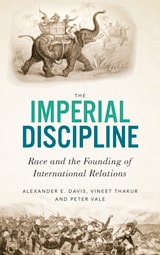
The Imperial Discipline
Race and the Founding of International RelationsAlexander E Davis
Pluto Press, 2021
This book questions the accepted origins of the field of International Relations (IR). Commonly understood to have emerged from the horrors of WW1 with the goal of bringing about world peace, the authors argue that on the contrary, IR came from a somewhat less noble tradition – that of the Round Table.
The Round Table were a network of imperialists emerging in the late 1800s across five key British imperial societies: Australia, Canada, New Zealand, South Africa and India. Their aim was to improve imperial governance, placing the empire into a position to control world affairs. Although they ultimately failed to rearrange world order according to their vision, they did help to build what we now call the discipline of IR.
The Round Table's 'scientific method' for the study of world affairs was rapidly subsumed into each geopolitical context. Through telling this story, the authors recover it, and interrogate its meanings for the discipline of IR today. They show the importance of the Global South to IR's foundations, and argue that IR scholarship in this period was intertwined with imperial racial thought in ways that it should not and cannot forget.

The Indies Diaspora in the Netherlands
Essays on Race, Whiteness, and Identity in Dutch LiteratureAlfred Birney; Translated by Annemarie Toebosch and Marjolein van Pagee
Michigan Publishing Services, 2021
The Inner Life of Race
Souls, Bodies, and the History of Racial PowerLeerom Medovoi
Duke University Press, 2024
The Internal Colony
Race and the American Politics of Global DecolonizationSam Klug
University of Chicago Press, 2025
In The Internal Colony, Sam Klug reveals the central but underappreciated importance of global decolonization to the divergence between mainstream liberalism and the Black freedom movement in postwar America. Klug reconsiders what has long been seen as a matter of primarily domestic policy in light of a series of debates concerning self-determination, postcolonial economic development, and the meanings of colonialism and decolonization. These debates deeply influenced the discord between Black activists and state policymakers and formed a crucial dividing line in national politics in the 1960s and 1970s.
The result is a history that broadens our understanding of ideological formation—particularly how Americans conceptualized racial power and political economy—by revealing a much wider and more dynamic network of influences. Linking intellectual, political, and social movement history, The Internal Colony illuminates how global decolonization transformed the terms of debate over race and social class in the twentieth-century United States.
The Jazz Republic
Music, Race, and American Culture in Weimar GermanyJonathan O. Wipplinger
University of Michigan Press, 2017
The Latina Advantage
Gender, Race, and Political SuccessBy Christina E. Bejarano
University of Texas Press, 2013
Challenging common assumptions and offering new alternatives in the debate over the current political status of women, this data-driven study indicates that minority female political candidates often have a strong advantage over male opponents when seeking political office.
During the first decade of the 21st century, racial/ethnic minority women have made significant strides in U.S. politics, comprising large portions of their respective minority delegations both in Congress and in state legislatures. This trend has been particularly evident in the growing political presence of Latinas, yet scholars have offered no clear explanations for this electoral phenomenon—until now.
In The Latina Advantage, Christina E. Bejarano draws on national public opinion datasets and a close examination of state legislative candidates in Texas and California to demonstrate the new power of the political intersection between race and gender. Underscoring the fact that racial/ethnic minority women form a greater share of minority representatives than do white women among white elected officials, Bejarano provides empirical evidence to substantiate previous theoretical predictions of the strategic advantage in the intersectionality of gender and ethnicity in Latinas. Her evidence indicates that two factors provide the basis for the advantage: increasingly qualified candidates and the softening of perceived racial threat, leading minority female candidates to encounter fewer disadvantages than their male counterparts.
Overturning the findings of classic literature that reinforce stereotypes and describe minority female political candidates as being at a compounded electoral disadvantage, Bejarano brings a crucial new perspective to dialogues about the rapidly shifting face of America’s electorate.

The Latinx Files
Race, Migration, and Space AliensMatthew David Goodwin
Rutgers University Press, 2021
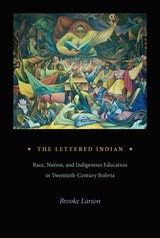
The Lettered Indian
Race, Nation, and Indigenous Education in Twentieth-Century BoliviaBrooke Larson
Duke University Press, 2024
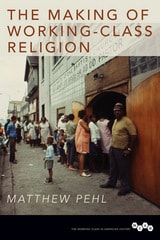
The Making of Working-Class Religion
Matthew Pehl
University of Illinois Press, 2016
Pehl embarks on an integrative view of working-class faith that ranges across boundaries of class, race, denomination, and time. As he shows, workers in the 1910s and 1920s practiced beliefs characterized by emotional expressiveness, alliance with supernatural forces, and incorporation of mass culture's secular diversions into the sacred. That gave way to the more pragmatic class-conscious religion cultures of the New Deal era and, from the late Thirties on, a quilt of secular working-class cultures that coexisted in competitive, though creative, tension. Finally, Pehl shows how the ideology of race eclipsed class in the 1950s and 1960s, and in so doing replaced the class-conscious with the race-conscious in religious cultures throughout the city.
An ambitiously inclusive contribution to a burgeoning field, The Making of Working-Class Religion breaks new ground in the study of solidarity and the sacred in the American heartland.
The Man-Not
Race, Class, Genre, and the Dilemmas of Black ManhoodTommy J. Curry
Temple University Press, 2017
The Before Columbus Foundation 2018 Winner of the AMERICAN BOOK AWARD
Tommy J. Curry’s provocative book The Man-Not is a justification for Black Male Studies. He posits that we should conceptualize the Black male as a victim, oppressed by his sex. The Man-Not, therefore,is a corrective of sorts, offering a concept of Black males that could challenge the existing accounts of Black men and boys desiring the power of white men who oppress them that has been proliferated throughout academic research across disciplines.
Curry argues that Black men struggle with death and suicide, as well as abuse and rape, and their genred existence deserves study and theorization. This book offers intellectual, historical, sociological, and psychological evidence that the analysis of patriarchy offered by mainstream feminism (including Black feminism) does not yet fully understand the role that homoeroticism, sexual violence, and vulnerability play in the deaths and lives of Black males. Curry challenges how we think of and perceive the conditions that actually affect all Black males.
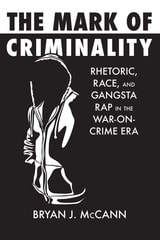
The Mark of Criminality
Rhetoric, Race, and Gangsta Rap in the War-on-Crime EraBryan J. McCann
University of Alabama Press, 2017
In The Mark of Criminality: Rhetoric, Race, and Gangsta Rap in the War-on-Crime Era, Bryan J. McCann argues that gangsta rap should be viewed as more than a damaging reinforcement of an era’s worst racial stereotypes. Rather, he positions the works of key gangsta rap artists, as well as the controversies their work produced, squarely within the law-and-order politics and popular culture of the 1980s and 1990s to reveal a profoundly complex period in American history when the meanings of crime and criminality were incredibly unstable.
At the center of this era—when politicians sought to prove their “tough-on-crime” credentials—was the mark of criminality, a set of discourses that labeled members of predominantly poor, urban, and minority communities as threats to the social order. Through their use of the mark of criminality, public figures implemented extremely harsh penal polices that have helped make the United States the world’s leading jailer of its adult population.
At the same time when politicians like Ronald Reagan, George H. W. Bush, and Bill Clinton and television shows such as COPS and America’s Most Wanted perpetuated images of gang and drug-filled ghettos, gangsta rap burst out of the hip-hop nation, emanating mainly from the predominantly black neighborhoods of South Central Los Angeles. Groups like NWA and solo artists (including Dr. Dre, Snoop Dogg, and Tupac Shakur) became millionaires by marketing the very discourses political and cultural leaders used to justify their war on crime. For these artists, the mark of criminality was a source of power, credibility, and revenue. By understanding gangsta rap as a potent, if deeply imperfect, enactment of the mark of criminality, we can better understand how crime is always a site of struggle over meaning. Furthermore, by underscoring the nimble rhetorical character of criminality, we can learn lessons that may inform efforts to challenge our nation’s failed policies of mass incarceration.
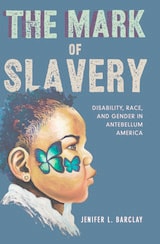
The Mark of Slavery
Disability, Race, and Gender in Antebellum AmericaJenifer L. Barclay
University of Illinois Press, 2021
Time and again, antebellum Americans justified slavery and white supremacy by linking blackness to disability, defectiveness, and dependency. Jenifer L. Barclay examines the ubiquitous narratives that depicted black people with disabilities as pitiable, monstrous, or comical, narratives used not only to defend slavery but argue against it. As she shows, this relationship between ableism and racism impacted racial identities during the antebellum period and played an overlooked role in shaping American history afterward. Barclay also illuminates the everyday lives of the ten percent of enslaved people who lived with disabilities. Devalued by slaveholders as unsound and therefore worthless, these individuals nonetheless carved out an unusual autonomy. Their roles as caregivers, healers, and keepers of memory made them esteemed within their own communities and celebrated figures in song and folklore.
Prescient in its analysis and rich in detail, The Mark of Slavery is a powerful addition to the intertwined histories of disability, slavery, and race.
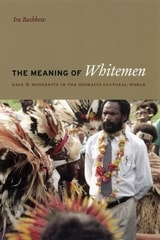
The Meaning of Whitemen
Race and Modernity in the Orokaiva Cultural WorldIra Bashkow
University of Chicago Press, 2006
While Papua New Guinea’s resident white population has been severely reduced due to postcolonial white flight, the whiteman remains a significant racial and cultural other here—not only as an archetype of power and wealth in the modern arena, but also as a foil for people’s evaluations of themselves within vernacular frames of meaning. As Ira Bashkow explains, ideas of self versus other need not always be anti-humanistic or deprecatory, but can be a creative and potentially constructive part of all cultures.
A brilliant analysis of whiteness and race in a non-Western society, The Meaning of Whitemen turns traditional ethnography to the purpose of understanding how others see us.
The Minor Intimacies of Race
Asian Publics in North AmericaChristine Kim
University of Illinois Press, 2016
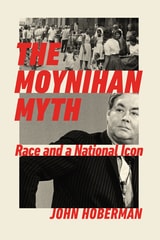
The Moynihan Myth
Race and a National IconJohn Hoberman
University of Illinois Press, 2026
John Hoberman cuts through decades of media adulation and high-profile reverence to illuminate Moynihan’s shortcomings and the Report’s disastrous legacy. As a model of the eloquent scholar-politician, Moynihan answered the demand for a white authority figure to explain Black dysfunction. But his undoubted intellect and gift for language eclipsed a singular lack of qualifications and endowed the Report with an authority it did not deserve. Hoberman delves into the factors that raised Moynihan to the role of race expert while revealing the depths of his naïveté about white racial animosity and how policymakers would use his Report against Black Americans.
Incisive and in-depth, The Moynihan Myth is a long-overdue exposé of a deeply flawed race expert.
The Myth of Human Races
Alain F. Corcos
Michigan State University Press, 1997
The idea that human races exist is a socially constructed myth that has no grounding in science. Regardless of skin, hair, or eye color, stature or physiognomy, we are all of one species. Nonetheless, scientists, social scientists, and pseudo-scientists have, for three centuries, tried vainly to prove that distinctive and separate "races" of humanity exist. These protagonists of race theory have based their flawed research on one or more of five specious assumptions:
- humanity can be classified into groups using identifiable physical characteristics,
- human characteristics are transmitted "through the blood,"
- distinct human physical characteristics are inherited together,
- physical features can be linked to human behavior,
- human groups or "races" are by their very nature unequal and, therefore, they can be ranked in order of intellectual, moral, and cultural superiority.
The Myth of Human Races systematically dispels these fallacies and unravels the web of flawed research that has been woven to demonstrate the superiority of one group of people over another.
The National PTA, Race, and Civic Engagement, 1897–1970
Christine Woyshner
The Ohio State University Press, 2009
The Necropolitical Theater
Race and Immigration on the Contemporary Spanish StageJeffrey K. Coleman
Northwestern University Press, 2020
Coleman identifies an inherent racial hierarchy informed by the legacies of colonization and religious intolerance.
Drawing on theatrical texts, performances, legal documents, interviews, and critical reviews, this book challenges Spanish theater to develop a new theatrical space. Jeffrey K. Coleman proposes a “convivial theater” that portrays immigrants as contributors to the Spanish state and better represents the multicultural reality of the nation today.
The New Electoral Politics of Race
Matthew Justin Streb
University of Alabama Press, 2002
Historically, race has always been at the heart of American politics, and southern politics more specifically. Southern elections revolved almost entirely around racial issues during the 1950s and 1960s as debates raged over integration of schools, voting rights, and busing patterns. The election of George Wallace as governor of Alabama in 1962 underscored the electoral power of ruthless racial rhetoric, not only in Alabama, but throughout the South and the entire country. Almost 40 years later, segregation is no longer legal, tensions between blacks and whites have lessened, and the influx of large numbers of African Americans into the electorate has forced politicians to court black voters.
Matthew Streb finds, however, that although extreme racial rhetoric has disappeared from the modern campaign trail, voters are still polarized along racial lines. By comparing gubernatorial campaigns in four southern and three northern states-Alabama, Georgia, Arkansas, Virginia, Ohio, Iowa, and Massachusetts-the author examines how candidates use, or fail to use, race in their campaign strategies. He demonstrates that race indeed remains a significant factor in American elections, couched in alternative issues, such as affirmative action, profiling, and social welfare.
Streb's analysis of the appeal by politicians for the elite vote and the public vote reveals that class has replaced race as a definitive issue in American politics. This book will, therefore, be important not only to academic libraries and students and scholars of political science, southern history, and civil rights, but also to pollsters, campaign strategists, and state political party officials.
The New Welfare Bureaucrats
Entanglements of Race, Class, and Policy ReformCeleste Watkins-Hayes
University of Chicago Press, 2009
As the recession worsens, more and more Americans must turn to welfare to make ends meet. Once inside the agency, the newly jobless will face a bureaucracy that has undergone massive change since the advent of welfare reform in 1996. A behind-the-scenes look at bureaucracy’s human face, The New Welfare Bureaucrats is a compelling study of welfare officers and how they navigate the increasingly tangled political and emotional terrain of their jobs.
Celeste Watkins-Hayes here reveals how welfare reform engendered a shift in focus for caseworkers from simply providing monetary aid to the much more complex process of helping recipients find work. Now both more intimately involved in their clients’ lives and wielding greater power over their well-being, welfare officers’ racial, class, and professional identities have become increasingly important factors in their work. Based on the author’s extensive fieldwork in two very different communities in the northeast, The New Welfare Bureaucrats is a boon to anyone looking to understand the impact of the institutional and policy changes wrought by welfare reform as well as the subtle social dynamics that shape the way welfare is meted out at the individual level.
The Obligation Mosaic
Race and Social Norms in US Political ParticipationAllison P. Anoll
University of Chicago Press, 2022
In The Obligation Mosaic, Allison P. Anoll shows that the obligations that bring people into the political world—or encourage them to stay away—vary systematically by race in the United States, with broad consequences for representation. Drawing on a rich mix of interviews, surveys, and experiments with Asian, Black, Latino, and White Americans, the book uncovers two common norms that centrally define concepts of obligation: honoring ancestors and helping those in need. Whether these norms lead different groups to politics depends on distinct racial histories and continued patterns of segregation.
Anoll’s findings not only help to explain patterns of participation but also provide a window into opportunities for change, suggesting how activists and parties might better mobilize marginalized citizens.
The Operatic Kaleidoscope
Voice, Race, and the Ragtime Popular StageKristen M. Turner
University of Illinois Press, 2026
Turner examines performances ranging from Florenz Ziegfeld’s early Follies to Black vaudeville shows to musical comedies, including everything from celebrity vehicles to obscure productions and overlooked artists. She reveals how opera’s popularity in mass culture illuminates the effects of exclusionary immigration policies, pervasive racial and ethnic inequalities, debates over women’s suffrage, and the imposition of legalized segregation. Performers and creators from many communities—white immigrants, Jewish, Black, and Asian American—strategically deployed operatic allusions and the genre’s characteristic vocal timbre to assert their respectability, challenge stereotypes, and navigate oppressive social structures.
Nuanced and expansive, The Operatic Kaleidoscope explores opera’s role when popular culture grappled with questions of race and citizenship.
The Ordeal of the Jungle
Race and the Chicago Federation of Labor, 1903–1922David Bates
Southern Illinois University Press, 2019
By organizing workers into neighborhood locals, which connected workplace struggles to ethnic and religious identities, the CFL facilitated a surge in the organization’s membership, particularly among African American workers, and afforded the federation the opportunity to aggressively confront employers. The CFL’s innovative structure, however, was ultimately its demise. Linking union locals to neighborhoods proved to be a form of de facto segregation. Over time union structures, rank-and-file conflicts, and employer resistance combined to turn the union’s hopeful calls for solidarity into animosity and estrangement. Tensions were exacerbated by violent shop floor confrontations and exploded in the bloody 1919 Chicago Race Riot. By the early 1920s, the CFL had collapsed.
The Ordeal of the Jungle explores the choices of a variety of people while showing a complex, overarching interplay of black and white workers and their employers. In addition to analyzing union structures and on-the-ground relations between workers, Bates synthesizes and challenges previous scholarship on interracial organizing to explain the failure of progressive unionism in Chicago.
The Origins of the Dual City
Housing, Race, and Redevelopment in Twentieth-Century ChicagoJoel Rast
University of Chicago Press, 2019
The Paradoxes of Integration
Race, Neighborhood, and Civic Life in Multiethnic AmericaJ. Eric Oliver
University of Chicago Press, 2010
The United States is rapidly changing from a country monochromatically divided between black and white into a multiethnic society. The Paradoxes of Integration helps us to understand America’s racial future by revealing the complex relationships among integration, racial attitudes, and neighborhood life.
J. Eric Oliver demonstrates that the effects of integration differ tremendously, depending on which geographical level one is examining. Living among people of other races in a larger metropolitan area corresponds with greater racial intolerance, particularly for America’s white majority. But when whites, blacks, Latinos, and Asian Americans actually live in integrated neighborhoods, they feel less racial resentment. Paradoxically, this racial tolerance is usually also accompanied by feeling less connected to their community; it is no longer "theirs." Basing its findings on our most advanced means of gauging the impact of social environments on racial attitudes, The Paradoxes of Integration sensitively explores the benefits and at times, heavily borne, costs of integration.

The Passion of Tiger Woods
An Anthropologist Reports on Golf, Race, and Celebrity ScandalOrin Starn
Duke University Press, 2012

The Perfection of Nature
Animals, Breeding, and Race in the RenaissanceMackenzie Cooley
University of Chicago Press, 2022
The Renaissance is celebrated for the belief that individuals could fashion themselves to greatness, but there is a dark undercurrent to this fêted era of history. The same men and women who offered profound advancements in European understanding of the human condition—and laid the foundations of the Scientific Revolution—were also obsessed with controlling that condition and the wider natural world.
Tracing early modern artisanal practice, Mackenzie Cooley shows how the idea of race and theories of inheritance developed through animal breeding in the shadow of the Spanish Empire. While one strand of the Renaissance celebrated a liberal view of human potential, another limited it by biology, reducing man to beast and prince to stud. “Race,” Cooley explains, first referred to animal stock honed through breeding. To those who invented the concept, race was not inflexible, but the fragile result of reproductive work. As the Spanish empire expanded, the concept of race moved from nonhuman to human animals. Cooley reveals how, as the dangerous idea of controlled reproduction was brought to life again and again, a rich, complex, and ever-shifting language of race and breeding was born.
Adding nuance and historical context to discussions of race and human and animal relations, The Perfection of Nature provides a close reading of undertheorized notions of generation and its discontents in the more-than-human world.
The Politics of Belonging
Race, Public Opinion, and ImmigrationNatalie Masuoka and Jane Junn
University of Chicago Press, 2013
The Politics of Collecting
Race and the Aestheticization of PropertyEunsong Kim
Duke University Press, 2024

The Politics of Islamophobia
Race, Power and FantasyDavid Tyrer
Pluto Press, 2013
Despite its emblematic place within contemporary racism and its increasingly important position in defining relations between states and ethnicised minorities, Islamophobia remains a contested, frequently unrecognised and largely under-theorised form of racism.
The Politics of Islamophobia provides a definitive contribution to these debates, offering a theoretically sophisticated account which draws upon a series of substantive case studies to position Islamophobia as an expression of racialised governmentality.
By taking into account connections across different national contexts, and by moving beyond the limiting framing of the war on terror which has dominated recent debates, this book offers a new perspective on the study of Islamophobia.
The Politics of Kinship
Race, Family, GovernanceMark Rifkin
Duke University Press, 2024
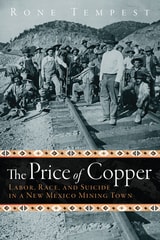
The Price of Copper
Labor, Race and Suicide in a New Mexico Mining TownRone Tempest
University Press of Colorado, 2027
The Price of Copper is a veteran journalist’s unflinching investigation of a family tragedy and long-standing mystery—the sensational 1938 suicide of powerful New Mexico copper mine boss Rone B. Tempest Sr. on the eve of his scheduled testimony before a federal labor board. From this dramatic opening, the book paints a vivid portrait of open-pit copper mining, labor conflicts, and corporate-sponsored racism in company mining towns across the Mountain West from the early years of the twentieth century to the first successes of the civil rights movement in the 1950s.
The author’s paternal grandfather, Rone Tempest Sr., was the general manager of the Chino Copper Mine in Santa Rita, New Mexico, which was owned by the Kennecott Copper Corporation and under investigation over labor practices. His boss was Salt Lake City copper baron and ruthless anti-union strikebreaker Daniel C. Jackling—the “Prophet of Porphyry,” who pioneered the industrial mining of low-grade copper ores by introducing the use of dynamite, steam shovels, rail, and giant mill works. After detailing the saga around Tempest Sr.’s death, the story follows the trajectory of the Chino mine over time, including the rise of predominantly Hispanic labor unions and the advancement of Hispanic workers to senior management roles—gains in civil rights that would have made the labor environment entirely unrecognizable to those fighting for reform in 1938.
A compelling and dramatic history of the great early twentieth-century advances in western copper mining that provided the essential metal needed to electrify the continent and the world, The Price of Copper is a unique personal story that connects to the broader history of copper mining in the West, as well as a valuable social history offering a new narrative about the dynamics of corporate management and giving additional insight into the formation of the “Copper Age” in the United States.
The Prism of Race
The Politics and Ideology of Affirmative Action in BrazilDavid Lehmann
University of Michigan Press, 2018
Brazil has developed a distinctive response to the injustices inflicted by the country’s race relations regime. Despite the mixed racial background of most Brazilians, the state recognizes people’s racial classification according to a simple official scheme in which those self-assigned as black, together with “brown” and “indigenous” (preto-pardo-indigena), can qualify for specially allocated resources, most controversially quota places at public universities. Although this quota system has been somewhat successful, many other issues that disproportionately affect the country’s black population remain unresolved, and systemic policies to reduce structural inequality remain off the agenda.
In The Prism of Race, David Lehmann explores, theoretically and practically, issues of race, the state, social movements, and civil society, and then goes beyond these themes to ask whether Brazilian politics will forever circumvent the severe problems facing the society by co-optation and by tinkering with unjust structures. Lehmann disrupts the paradigm of current scholarly thought on Brazil, placing affirmative action disputes in their political and class context, bringing back the concept of state corporatism, and questioning the strength and independence of Brazilian civil society.
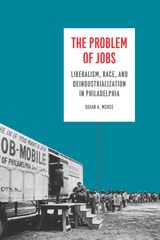
The Problem of Jobs
Liberalism, Race, and Deindustrialization in PhiladelphiaGuian A. McKee
University of Chicago Press, 2008
With a focus on Philadelphia, this volume illuminates the central role of these local political and policy struggles in shaping the fortunes of city and citizen alike. In the process, it tells the remarkable story of how Philadelphia’s policymakers and community activists energetically worked to challenge deindustrialization through an innovative series of job retention initiatives, training programs, inner-city business development projects, and early affirmative action programs. Without ignoring the failure of Philadelphians to combat institutionalized racism, Guian McKee's account of their surprising success draws a portrait of American liberalism that evinces a potency not usually associated with the postwar era. Ultimately interpreting economic decline as an arena for intervention rather than a historical inevitability, The Problem of Jobs serves as a timely reminder of policy’s potential to combat injustice.
The Promise of Youth Anti-Citizenship
Race and Revolt in EducationKevin L. Clay
University of Minnesota Press, 2024
When inclusion into the fold of citizenship is conditioned by a social group’s conceit to ritual violence, humiliation, and exploitation, what can anti-citizenship offer us?
The Promise of Youth Anti-citizenship argues that Black youth and youth of color have been cast as anti-citizens, disenfranchised from the social, political, and economic mainstream of American life. Instead of asking youth to conform to a larger societal structure undergirded by racial capitalism and antiblackness, the volume’s contributors propose that the collective practice of anti-citizenship opens up a liberatory space for youth to challenge the social order.
The chapters cover an array of topics, including Black youth in the charter school experiment in post-Katrina New Orleans; racial capitalism, the queering of ethnicity, and the 1980s Salvadoran migration to South Central Los Angeles; the notion of decolonizing classrooms through Palestinian liberation narratives; and more. Through a range of methodological approaches and conceptual interventions, this collection illuminates how youth negotiate and exercise anti-citizenship as forms of either resistance or refusal in response to coercive patriotism, cultural imperialism, and predatory capitalism.
Contributors: Karlyn Adams-Wiggins, Portland State U; Ariana Brazier; Julio Cammarota, U of Arizona; Michael Davis, U of Wisconsin–Madison; Damaris C. Dunn, U of Georgia; Diana Gamez, U of California, Irvine; Rachel F. Gómez, Virginia Commonwealth U; Luma Hasan; Gabriel Rodriguez, Iowa State U; Christopher R. Rogers, U of Pennsylvania; Damien M. Sojoyner, U of California, Irvine.
The Race of Sound
Listening, Timbre, and Vocality in African American MusicNina Sun Eidsheim
Duke University Press, 2018
The Race to 270
The Electoral College and the Campaign Strategies of 2000 and 2004Daron R. Shaw
University of Chicago Press, 2006
The Electoral College has played an important role in presidential politics since our nation’s founding, but surprisingly little information exists about precisely how it affects campaign strategy. Daron R. Shaw, a scholar who also worked as a strategist in both Bush-Cheney campaigns, has written the first book to go inside the past two presidential elections and reveal how the race to 270 was won—and lost.
Shaw’s nonpartisan study lays out how both the Democrats and the Republicans developed strategies to win decisive electoral votes by targeting specific states and media markets. Drawing on his own experience with Republican battle plans, candidate schedules, and advertising purchases—plus key contacts in the Gore and Kerry camps—Shaw goes on to show that both sides used information on weekly shifts in candidate support to reallocate media buys and schedule appearances. Most importantly, he uses strikingly original research to prove that these carefully constructed plans significantly affected voters’ preferences and opinions—not in huge numbers, but enough to shift critical votes in key battlegrounds.
Bridging the gap between those who study campaigns and those who conduct them, The Race to 270 will provide political scientists and practitioners alike with fresh insights about the new strategies that stem from one of our oldest institutions.
The Racial Imaginary of the Cold War Kitchen
From Sokol’niki Park to Chicago’s South SideKate A. Baldwin
Dartmouth College Press, 2016
The Racial Order
Mustafa Emirbayer and Matthew Desmond
University of Chicago Press, 2015
In the end, this project is not merely about race; it is a theoretical reconsideration of the fundamental problems of order, agency, power, and social justice. The Racial Order is a challenging work of social theory, institutional and cultural analysis, and normative inquiry.