Results by title
461 books match the query 'Teaching' and 111 start with t
Technology in the Language Classroom
What Every New ESL Teacher Needs to KnowMatt Kessler
University of Michigan Press, 2026
Technology in the Language Classroom provides early-career and pre-service second language (L2) instructors with an overview of important issues involved in effectively integrating technology into the L2 classroom. Each chapter provides practical strategies, resources, and application activities to help new teachers gain familiarity with utilizing a variety of digital tools for teaching different skills, including listening, speaking, reading, grammar, vocabulary, and writing. Readers will be encouraged to think critically about the key factors to consider when choosing tools that work for them, their lessons, and their students.
Testing Education
A Teacher's MemoirKathy Greeley
University of Massachusetts Press, 2024
Since the 2002 implementation of No Child Left Behind, the American public education system has been fundamentally changed. Excessive testing, standardized curriculums, destructive demands on children, corporate-style evaluations, and top-down mandates have become the norm. In response, record numbers of demoralized educators have quit, and millions of students have been left educationally impoverished. This troubling transformation has been exhaustively critiqued by scholars and commentators. Yet one crucial voice has been missing, until now.
In Testing Education, Kathy Greeley recounts the impact of education reform from a teacher’s point of view. Based on a teaching career spanning nearly forty years, Greeley details how schools went from learning communities infused with excitement, intellectual stimulation, and joy to sterile spaces of stress, intimidation, and fear. In this ultimately hopeful memoir, Greeley asks us to learn from the past to reimagine the future of public education.
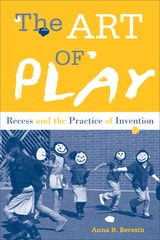
The Art of Play
Recess and the Practice of InventionAnna Beresin
Temple University Press, 2013
What can the art of play teach us about the art of play? Showcasing the paintings of more than one hundred Philadelphia public elementary school children, folklorist Anna Beresin’s innovative book, The Art of Play, presents images and stories that illustrate what children do at recess, and how it makes them feel.
Beresin provides a nuanced, child-centered discussion of the intersections of play, art, and learning. She describes a widespread institutionalized fear of play and expressive art, and the transformative power of simple materials like chalk and paint. Featuring more than 150 paintings and a dozen surreal photographs of masked children enjoying recess, The Art of Play weaves together the diverse voices of kids and working artists with play scholarship.
This book emerged from Recess Access, a service-learning project that donated chalk, ropes, balls, and hoops to nine schools in different sections of Philadelphia. A portion of the proceeds of The Art of Play will support recess advocacy.
The Art of Teaching Speaking
Research and Pedagogy for the ESL/EFL ClassroomKeith S. Folse
University of Michigan Press, 2006
*Which tasks or activities really help build speaking fluency?
*What does the research show regarding speaking activities?
*What mistakes do ESL teachers often make in speaking activity design?
In this highly accessible and practical resource, Keith S. Folse provides a wealth of information to help ESL/EFL teachers design and use speaking tasks that will actually improve students' speaking fluency. The book presents and discusses the relevant research and assessment issues and includes case studies from twenty different settings and classrooms around the world so that readers learn from others about the problems and successes of using various speaking activities.
Teachers will find the chapters on Twenty Successful Activities and Ten Unsuccessful Activities particularly valuable. The successful activities are provided for classroom use and are reproducible. The book also contains five appendixes that explain what teachers need to know about vocabulary, pronunciation, and grammar and how they affect the teaching of speaking. Samples of successful lesson plans and a list of resources useful for teaching speaking are also included.
Keith S. Folse, Ph.D., is Coordinator, TESOL Programs, University of Central Florida (Orlando). He is the author of Vocabulary Myths (University of Michigan Press, 2004) and more than 35 second language textbooks, including texts on grammar, reading, speaking, listening, and writing.
The Case for Contention
Teaching Controversial Issues in American SchoolsJonathan Zimmerman and Emily Robertson
University of Chicago Press, 2017
Zimmerman and Robertson highlight an aspect of American politics that we know all too well: We are terrible at having informed, reasonable debates. We opt instead to hurl insults and accusations at one another or, worse, sit in silence and privately ridicule the other side. Wouldn’t an educational system that focuses on how to have such debates in civil and mutually respectful ways improve our public culture and help us overcome the political impasses that plague us today? To realize such a system, the authors argue that we need to not only better prepare our educators for the teaching of hot-button issues, but also provide them the professional autonomy and legal protection to do so. And we need to know exactly what constitutes a controversy, which is itself a controversial issue. The existence of climate change, for instance, should not be subject to discussion in schools: scientists overwhelmingly agree that it exists. How we prioritize it against other needs, such as economic growth, however—that is worth a debate.
With clarity and common-sense wisdom, Zimmerman and Robertson show that our squeamishness over controversy in the classroom has left our students woefully underserved as future citizens. But they also show that we can fix it: if we all just agree to disagree, in an atmosphere of mutual respect.

The Changing Contexts of Teaching
Edited by Ann Lieberman
University of Chicago Press, 1992
The Chicago Guide to Your Academic Career
A Portable Mentor for Scholars from Graduate School through TenureJohn A. Goldsmith, John Komlos, and Penny Schine Gold
University of Chicago Press, 2001
With a perpetually tight job market in the traditional academic fields, the road to an academic career for many aspiring scholars will often be a rocky and frustrating one. Where can they turn for good, frank answers to their questions? Here, three distinguished scholars—with more than 75 years of combined experience—talk openly about what's good and what's not so good about academia, as a place to work and a way of life.
Written as an informal conversation among colleagues, the book is packed with inside information—about finding a mentor, avoiding pitfalls when writing a dissertation, negotiating the job listings, and much more. The three authors' distinctive opinions and strategies offer the reader multiple perspectives on typical problems. With rare candor and insight, they talk about such tough issues as departmental politics, dual-career marriages, and sexual harassment. Rounding out the discussion are short essays that offer the "inside track" on financing graduate education, publishing the first book, and leaving academia for the corporate world.
This helpful guide is for anyone who has ever wondered what the fascinating and challenging world of academia might hold in store.
Part I - Becoming a Scholar
* Deciding on an Academic Career
* Entering Graduate School
* The Mentor
* Writing a Dissertation
* Landing an Academic Job
Part II - The Academic Profession
* The Life of the Assistant Professor
* Teaching and Research
* Tenure
* Competition in the University System and Outside Offers
* The Personal Side of Academic Life
The Chicago Handbook for Teachers
A Practical Guide to the College ClassroomAlan Brinkley, Betty Dessants, Michael Flamm, Cynthia Fleming, Charles Forcey, and Eric Rothschild
University of Chicago Press, 1999
The Chicago Handbook for Teachers is an extraordinarily helpful guide for all those who face the challenge of putting together material for a course and then making it work. Representing teachers at all stages of their careers, the authors, including distinguished historian Alan Brinkley, offer practical advice for almost any situation a new teacher might face, from preparing a syllabus to managing classroom dynamics. Beginning with a nuts and bolts plan for designing a course, the handbook also explains how to lead a discussion, evaluate your own teaching, deliver an effective lecture, supervise students' writing and research, create and grade exams, and more. Other sections address the less straightforward aspects of teaching, such as dealing with "diversity issues" and knowing where to draw the line in relationships with students. Particularly timely is an up-to-date discussion of when and how best to incorporate the Internet and other electronic resources into your teaching.
Indispensable for graduate students and new teachers, The Chicago Handbook for Teachers is also a useful refresher for the experienced professionals.
The Classrooms All Young Children Need
Lessons in Teaching from Vivian PaleyPatricia M. Cooper
University of Chicago Press, 2009
Teacher and author Vivian Paley is highly regarded by parents, educators, and other professionals for her original insights into such seemingly everyday issues as play, story, gender, and how young children think. In The Classrooms All Young Children Need, Patricia M. Cooper takes a synoptic view of Paley’s many books and articles, charting the evolution of Paley’s thinking while revealing the seminal characteristics of her teaching philosophy. This careful analysis leads Cooper to identify a pedagogical model organized around two complementary principles: a curriculum that promotes play and imagination, and the idea of classrooms as fair places where young children of every color, ability, and disposition are welcome.
With timely attention paid to debates about the reduction in time for play in the early childhood classroom, the role of race in education, and No Child Left Behind, The Classrooms All Young Children Need will be embraced by anyone tasked with teaching our youngest pupils.
The Educated Mind
How Cognitive Tools Shape Our UnderstandingKieran Egan
University of Chicago Press, 1997
"A carefully argued and readable book. . . . Egan proposes a radical change of approach for the whole process of education. . . . There is much in this book to interest and excite those who discuss, research or deliver education."—Ann Fullick, New Scientist
"A compelling vision for today's uncertain educational system."—Library Journal
"Almost anyone involved at any level or in any part of the education system will find this a fascinating book to read."—Dr. Richard Fox, British Journal of Educational Psychology
"A fascinating and provocative study of cultural and linguistic history, and of how various kinds of understanding that can be distinguished in that history are recapitulated in the developing minds of children."—Jonty Driver, New York Times Book Review
The Education of Teachers
Edited by Gary A. Griffin
University of Chicago Press, 1999
The Enduring Classroom
Teaching Then and NowLarry Cuban
University of Chicago Press, 2023
The quality and effectiveness of teaching are a constant subject of discussion within the profession and among the broader public. Most of that conversation focuses on the question of how teachers should teach. In The Enduring Classroom, veteran teacher and scholar of education Larry Cuban explores different questions, ones that just might be more important: How have teachers actually taught? How do they teach now? And what can we learn from both?
Examining both past and present is crucial, Cuban explains. If reformers want teachers to adopt new techniques, they need to understand what teachers are currently doing if they want to have any hope of having their innovations implemented. Cuban takes us into classrooms then and now, using observations from contemporary research as well as a rich historical archive of classroom accounts, along the way asking larger questions about teacher training and the individual motivations of people in the classroom. Do teachers freely choose how to teach, or are they driven by their beliefs and values about teaching and learning? What role do students play in determining how teachers teach? Do teachers teach as they were taught? By asking and answering these and other policy questions with the aid of concrete data about actual classroom practices, Cuban helps us make a crucial step toward creating reforms that could actually improve instruction.
The Fifth Dimension
An After-School Program Built on DiversityMichael Cole
Russell Sage Foundation, 2006
The Golden Shovel Anthology
New Poems Honoring Gwendolyn BrooksPeter Kahn
University of Arkansas Press, 2019
—Claudia Rankine in the New York Times
The Golden Shovel Anthology celebrates the life and work of poet and civil rights icon Gwendolyn Brooks through a dynamic new poetic form, the Golden Shovel, created by National Book Award–winner Terrance Hayes.
An array of writers—including winners of the Pulitzer Prize, the T. S. Eliot Prize, and the National Book Award, as well as a couple of National Poets Laureate—have written poems for this exciting new anthology: Rita Dove, Billy Collins, Danez Smith, Nikki Giovanni, Sharon Olds, Tracy K. Smith, Mark Doty, Sharon Draper, Richard Powers, and Julia Glass are just a few of the contributing poets.
This second edition includes Golden Shovel poems by two winners and six runners-up from an international student poetry competition judged by Nora Brooks Blakely, Gwendolyn Brooks’s daughter. The poems by these eight talented high school students add to Ms. Brooks’s legacy and contribute to the depth and breadth of this anthology.

The Grounded Instruction Librarian
Participating in The Scholarship of Teaching and LearningMelissa Mallon
Assoc of College & Research Libraries, 2019
The Heller Social Impact Case Collection
Reimagining Capitalism through Case-Based LearningEdited by Carole Carlson, Matthew Kriegsman, and Joel Cutcher-Gershenfeld
Brandeis University Press, 2023
At a time of deep and pervasive global challenges, future CEOs and administrators need to apply management principles to social impact cases. Today, top business schools across the country are meeting the moment, teaching courses about socially responsible investing and debating ways companies can stem the effects of climate change.
The case studies collected here are an invaluable resource for today’s students and tomorrow’s leaders. Chapters address an array of business sectors, including consumer goods, finance, health care, higher education, manufacturing, nongovernmental organizations, social services, and transportation. A teacher’s guide is available online to educators.
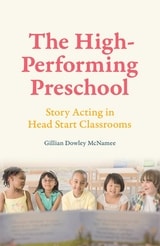
The High-Performing Preschool
Story Acting in Head Start ClassroomsGillian Dowley McNamee
University of Chicago Press, 2015
McNamee outlines how story acting cultivates children’s oral and written language skills. She shows how it creates a crucial opportunity for teachers to guide children inside the interior logic and premises of an idea, and how it fosters the creation of a literary community. Starting with Vygotsky and Paley, McNamee paints a detailed portrait of high-quality preschool teaching, showing how educators can deliver on the promise of Head Start and provide a setting for all young children to become articulate, thoughtful, and literate learners.
The Indispensable Academic Librarian
Teaching and Collaborating for ChangeMichelle Reale
American Library Association, 2018
The Know-Nothing Campaign Against Higher Learning
James Chandler
Prickly Paradigm Press, 2026
Irony and satire in the contemporary American moment.
The second Trump administration has committed itself to upending the knowledge systems and deliberative institutions that have been essential to modern democracy, with the American university—site of scientific research and liberal education—a primary target. In The Know-Nothing Campaign Against Higher Learning, literary and film critic James Chandler spotlights an American tradition of such hostility to intellectual life, especially the nativist movement of the 1850s that persecuted Catholic immigrants from Ireland and Germany. Ironically, Steve Bannon, the self-proclaimed “Know-Nothing vulgarian” who long ago recruited candidate Trump to his anti-intellectual crusade, is himself the great-grandson of an Irish immigrant who would have faced Know-Nothing backlash in that era.
Such dark ironies define our moment, Chandler argues, and they call out not only for intellectual critique but also for satire. Yet in the midst of the MAGA campaign’s calamitous effects on American public discourse, even satire must confront the “kayfabe” practices imported by Trump from professional wrestling, which mix illusion and reality to turn political life into a “spectacle without thought.” Drawing widely on cultural critics from Jonathan Swift and Alexis de Tocqueville to Roland Barthes, Chandler’s pamphlet offers an elegant and bracing account of the MAGA campaign against higher learning and its transformative effects on criticism and democracy itself.
The Math Mafia
How a Persistent Group of Reformers Standardized American EducationEmily T. Hamilton
University of Alabama Press, 2026
How Cold War urgency, academic ambition, and federal power converged to make math the cornerstone of American education policy.
The Math Mafia by Emily T. Hamilton is a historical account of mathematics education reform in twentieth-century America and how that movement played a role in shaping the broader contours of national education policy. Hamilton contends that a cohesive and well-organized community of advocates was instrumental in the rise of standardized testing and curriculum reforms, as well as federal involvement in classrooms, especially during the Cold War. By positioning mathematics as central to national strength and security, these reformers established math education as a key area of federal focus.
The “mafia” at the center of Hamilton’s story includes mathematicians, educators, and researchers from universities, as well as members of government-funded organizations such as the National Science Foundation and various educational psychology circles. Prominent figures such as Edward Begle, who led the School Mathematics Study Group during the “new math” movement, played key roles. Other influential participants include federal education officials, advocates from professional organizations such as the National Council of Teachers of Mathematics, and cognitive scientists, who contributed both research and theoretical frameworks that informed curriculum design and assessment methods.
The Math Mafia offers historians, educators, policymakers, and other interested readers a compelling perspective on the legacy of the math education reforms on federal education policy in the United States and is a welcome contribution to ongoing discourse around “teaching toward the test,” educational equity, school performance, and other hot-button issues in US education today.
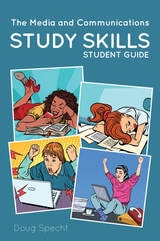
The Media and Communications Study Skills Student Guide
Doug Specht
University of Westminster Press, 2019
All the tips, ideas and advice given to, and requested by, MA students in Media and Communications, are brought together in an easy-to-use accessible guide to help students study most effectively.
Based upon many years of teaching study skills and hundreds of lecture slides and handouts this introduction covers a range of general and generic skills that the author relates specifically towards media and communications studies. As well as the mechanics of writing and presentations, the book also shows how students can work on and engage with the critical and contemplative elements of their degrees whilst retaining motivation and refining timekeeping skills.
Of course the nuts and bolts of reading, writing, listening, seminars and the dreaded dissertation and essays are covered too. In addition advice on referencing, citation and academic style is offered for those with concerns over English grammar and expression.
Aimed primarily at postgraduate students, there is significant crossover with undergraduate work, so this book will also prove of use to upper level undergraduate readers whether using English as a first or second language.
The Mind's Eye
Image and Memory in Writing about TraumaMarian Mesrobian MacCurdy
University of Massachusetts Press, 2007
MacCurdy begins by discussing what trauma is, how traumatic memories are stored and accessed, and how writing affects them. She then focuses on the processes involved in translating traumatic images into narrative form, showing how the same patterns and problems emerge whether the writers are students or professionals. Using examples drawn from the classroom, MacCurdy investigates the beneficial effects of the study of trauma on communities as well as individuals, witnesses as well as writers, and explores the implications of these relationships for the world at large, particularly as they pertain to issues of justice, retribution, and forgiveness.
Throughout the volume the author draws on her own experience as teacher, writer, survivor, and descendant of survivors to explain how one can engage student work on difficult subjects without appropriating the texts or getting lost in the emotions generated by them. She further shows how appropriate safeguards can be put in place to protect both teacher and student writer. The end result of such a pedagogy, MacCurdy demonstrates, is not simply better writers but more integrated people, capable of converting their own losses and griefs into compassion for others.

The Other Tongue
English Across CulturesEdited by Braj B. Kachru
University of Illinois Press, 1992
When The Other Tongue appeared in 1982, it was called "required reading for all those concerned with English teaching in non-native situations, from the classroom teacher to the policy planner", Jowhn Platt, English World-Wide) and "an extremely useful and stimulating collection" (William C. Ritchie, Language). It introduced refreshingly new perspectives for understanding the spread and functions of English around the world.
This dramatically revised volume contains eight new chapters, replacing or updating more than half of the first edition. The Other Tongue is the first attempt to integrate and address provocative issues relevant to a deeper understanding of the forms and functions of English within different sociolinguistic, cross-cultural, and cross-linguistic contexts. The volume discusses linguistic, literary, pedagogical, and attitudinal issues related to world Englishes.
The Pedagogical Contract
The Economies of Teaching and Learning in the Ancient WorldYun Lee Too
University of Michigan Press, 2000
The Radical Case for Teaching Skim Reading in First-Year Writing
Ellen C. Carillo
Utah State University Press, 2025
Data from studies of the lived experiences of undergraduates indicate that students do not need deep reading practices in the majority of their classes across the disciplines and, moreover, that students succeed in their classes by skim reading. Rather than imagining an idealized set of circumstances that allow for sustained deep reading, as does a great deal of the scholarship on reading in writing studies, The Radical Case for Teaching Skim Reading in First-Year Writing argues for teaching students reading practices that will support their success in their college writing assignments rather than those strategies the field believes should support their success.
In our information landscape and our fragile democracy, encouraging skimming as opposed to deep reading may seem like a gamble—this very tendency toward the quick rather than the critical has undoubtedly contributed to the current crisis of mass misinformation. However, teaching students to use skim reading as a strategic tool for purposeful engagement and efficient yet thoughtful information filtering better equips them to navigate the rapidly changing information landscape and manage the fast-paced flow of content from diverse media sources.
The Reading-Writing Connection
Edited by Nancy Nelson and Robert C. Calfee
University of Chicago Press, 1998

The Reflexive Teaching Artist
Collected Wisdom from the Drama/Theatre FieldEdited by Kathryn Dawson and Daniel A. Kelin, II
Intellect Books, 2014
Readers are also offered questions to guide their practical application, charts to complete, and the editors examine the practice of teaching in, through, and about drama and theater.
The Saga of Lucien L. Nunn and Deep Springs College
L. Jackson Newell
University of Utah Press, 2025
In 1891, Nunn, working with Tesla and Westinghouse, pioneered the world’s first commercial production of high-tension alternating current (AC) for long-distance transmission—something Thomas Edison deemed dangerous and irresponsible. After creating the Telluride Power Company, Nunn constructed the state-of-the-art Olmsted Power Plant in Provo Canyon and the Ontario Power Works at Niagara Falls. To support this new technology, he developed an imaginative model of industrial training that became so compelling that he ultimately abandoned his entrepreneurial career to devote his wealth and talents to experimenting with a new model of liberal education. In 1917, Nunn founded Deep Springs College in eastern California. The school remains one of the most daring, progressive, and selective institutions of higher learning in America. Newell examines how Nunn’s radical educational ideas have survived internal and external challenges for nearly a century and explores their relevance today.
The Science of Play
How to Build Playgrounds That Enhance Children's DevelopmentSusan G. Solomon
University Press of New England, 2014
The Second Conversation
Interpretive Authority in the Bible ClassroomZiva R. Hassenfeld
Brandeis University Press, 2024
In The Second Conversation, university professor Ziva R. Hassenfeld returns to the middle school classroom to study her own seventh grade Bible class. The book explores dilemmas of practice she encountered around interpretive authority in the classroom. She analyzes the questions that came up in her teaching within the context of the most influential religious education scholarship, literacy scholarship, sociocultural theory and literary theory. She highlights the importance of two conversations about interpretive rules within the classroom, the first about the text’s meaning, and the second about competing conventions for determining its meaning. Instructors of any type of literature will benefit from Hassenfeld’s study, which offers rich ideas about when and how teachers enforce a classroom’s way of reading or follow a student’s line of inquiry toward more flexible interpretation.
The Signed English Starter
Harry Bornstein
Gallaudet University Press, 1984
The organization of the volume facilitates learning. It provides a basic, functional sign vocabulary; a systematic progression in the use of the 14 sign markers; discussion of the unique features of a manual English system; a glossary of terms; and a page of exercises following each of the 12 chapters in the book. The words have been selected to be of most value to young children.
The Spark of Learning
Energizing the College Classroom with the Science of EmotionSarah Rose Cavanagh
West Virginia University Press, 2016
The Sport Management Educator
Strategies for TeachingEmily Dane-Staples
FiT Publishing, 2023
The value and placement of sport in society is significant and has created an extensive need for qualified practitioners. With over 800 academic programs of sport management in North America alone, there is a great demand for qualified educators in the field. As such, resources to support educational excellence are essential.
The Sport Management Educator: Strategies for Teaching provides a resource for those new to teaching and those seeking to improve instructional skills. Beginning with the fundamentals of brain-based learning, this text builds a strong foundation for teaching in sport management and enhances existing teaching practices and strategies to improve instructional elements such as planning, classroom management, course design, and student engagement.
Author Emily Dane-Staples draws on years of experience, skills, a solid foundation in the science of teaching and learning, and expertise to create this invaluable resource to help current and future sport management educators improve their instructional skills. This definitive source assists new and experienced instructors alike enhance foundational knowledge and improve teaching effectiveness.
The Sport Management Educator chapters focus on course planning, student success and engagement, teaching with technology, classroom management, course reflection and revision, assessment, and more. Practical tools help readers choose instructional options that align with their teaching philosophy, address their students’ needs, and enhance their ability to become more effective, successful educators.
The Student Actor Prepares
Acting for LifeGai Jones
Intellect Books, 2014
The Subject Matters
Classroom Activity in Math and Social StudiesSusan S. Stodolsky
University of Chicago Press, 1988
Stodolsky presents a challenge to educational research. She shows that classroom activities are coherent actions shaped by the instructional context—especially what is taught. Stodolsky contradicts the received view of both teaching and learning as uniform and consistent. Individual teachers arrange instruction very differently, depending on what they are teaching, and students respond to instruction very differently, depending on the structure and demands of the lesson.
The instructional forms used in math classes, a "basic" subject, and social studies classes, an "enrichment" subject, differ even when the same teacher conducts both classes. Social studies classes show more diversity in activities, while math classes are very similar to one another. Greater variety is found in social studies within a given teacher's class and when different teachers' classes are compared. Nevertheless, in the classrooms Stodolsky studied, the range of instructional arrangements is very constricted.
Challenging the "back to basics" movement, Stodolsky's study indicates that, regardless of subject matter, students are more responsive to instruction that requires a higher degree of intellectual complexity and performance, to learning situations that involve them in interaction with their peers, and to active modes of learning. Stodolsky also argues that students develop ideas about how to learn a school subject, such as math, by participating in particular activities tied to instruction in the subject. These conceptions about learning are unplanned but enduring and significant consequences of schooling.
The Subject Matters has important implications for instructional practice and the training, education, and supervision of teachers. Here is a new way of understanding the dynamics of teaching and learning that will transform how we think about schools and how we study them.
The Synergistic Classroom
Interdisciplinary Teaching in the Small College SettingCorey Campion
Rutgers University Press, 2021
Written by faculty engaged in the design and delivery of interdisciplinary courses, programs, and experiential learning opportunities in the small college setting, The Synergistic Classroom addresses the many ways faculty can leverage their institutions' small size and openness to pedagogical experimentation to overcome the challenges of limited institutional resources and enrollment concerns and better prepare students for life and work in the twenty-first century. Taken together, the contributions in this volume invite reflection on a variety of important issues that attend the work of small college faculty committed to expanding student learning across disciplinary boundaries.
The Teaching Guide for English for Dispute Resolution
Mastering Negotiation, Mediation, and Alternative Dispute ResolutionBarrie J. Roberts
University of Michigan Press, 2025
Each chapter of the textbook provides a ready-made lesson plan with a sample dispute, warm-up questions, background readings, follow-up questions, activities, and reflections, and The Teaching Guide supplements each chapter with:
- Support in the form of teaching tips, lesson plans, additional activities or role-plays, assessment suggestions, and resources for further exploration.
- Separate guidance for ESL and Legal English/Business English instructors that helps them select the material and activities best suited to their students’ interests and needs.
- Resources such as sample syllabi and activities with step-by-step instructions that make it easy to start teaching the textbook.
- An online companion site where instructors can download and send activities and role-plays directly to their students.
The Teaching of English
James R. Squire
University of Chicago Press, 1977
The Teaching with Primary Sources Cookbook
Julie M. Porterfield
Assoc of College & Research Libraries, 2021
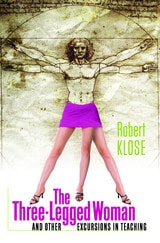
The Three-Legged Woman and Other Excursions in Teaching
Robert Klose
University Press of New England, 2013

The Two Ends of the Log
Learning and Teaching in Today’s CollegeRussell Cooper
University of Minnesota Press, 1958
The Vocation of a Teacher
Rhetorical Occasions, 1967-1988Wayne C. Booth
University of Chicago Press, 1989
"[Booth] is unusually adept at addressing a wide variety of audiences. From deep in the heart of this academic jungle, he shows a clear eye and a firm step."—Alison Friesinger Hill, New York Times Book Review
"A cause for celebration. . . . What an uncommon man is Wayne Booth. What an uncommon book he has provided for our reflection."—James Squire, Educational Leadership
"This book stands as a vigorous reminder of the traditional virtues of the scholar-teacher."—Brian Cox, Times Literary Supplement
Theater Games for the Classroom
A Teacher's HandbookViola Spolin
Northwestern University Press, 1986
The most comprehensive theater instruction guide for all types of students
This best-selling book by Viola Spolin offers the most comprehensive theater instruction for all types of students, from small children to young adults. It includes over 130 theater games, plus exercises and instructional strategies. First developed by Spolin, the originator of modern improvisational theater techniques, these games have been tried and tested for over fifty years.
Theory and Practice
Bite-Sized Activities for Teaching Reading SkillsAviva Katzenell
University of Michigan Press, 2023
There Has to Be a Better Way
Lessons from Former Urban TeachersMawhinney, Lynnette
Rutgers University Press, 2019
Teacher attrition has long been a significant challenge within the field of education. It is a commonly-cited statistic that almost fifty percent of beginning teachers leave the field within their first five years, to the detriment of schools, students, and their own career development. There Has to be a Better Way offers an essential voice in understanding the dynamics of teacher attrition from the perspective of the teachers themselves. Drawing upon in-depth qualitative research with former teachers from urban schools in multiple regions of the United States, Lynnette Mawhinney and Carol R. Rinke identify several themes that uncover the rarely-spoken reasons why teachers so often willingly leave the classroom. The authors go further to provide concrete recommendations for how school administrators can better support their practicing teachers, as well as how teacher educators might enhance preparation for the next generation of educators. Complete with suggested readings and discussion questions, this book serves as an indispensable resource in understanding and building an effective and productive educational workforce for our nation’s students.
Thinking Like a Historian
Rethinking History InstructionNikki Mandell
Wisconsin Historical Society Press, 2008
The contributors to Thinking Like a Historian are experienced historians and educators from elementary through university levels. This philosophical and pedagogical guide to history as a discipline uses published standards of the American Historical Association, the Organization of American Historians, the National Council for History Education, the National History Standards and state standards for Wisconsin and California.
Through the Schoolhouse Door
Folklore, Community, CurrriculumPaddy Bowman and Lynne Hamer
Utah State University Press, 2011
The creative traditions and expressive culture of students' families, neighborhoods, towns, religious communities, and peer groups provide opportunities to extend classrooms, sustain learning beyond school buildings, and better connect students and schools with their communities. Folklorists and educators have long worked together to expand curricula through engagement with local knowledge and informal cultural arts-folk arts in education is a familiar rubric for these programs-but the unrealized potential here, for both the folklore scholar and the teacher, is large. The value folklorists "place on the local, the vernacular, and the aesthetics of daily life does not reverberate" throughout public education, even though, in the words of Paddy Bowman and Lynne Hamer, "connecting young people to family and community members and helping them to develop self-identity are vital to civic well-being and to school success."
Through the Schoolhouse Door offers a collection of experiences from exemplary school programs and the analysis of an expert group of folklorists and educators who are dedicated not only to getting students out the door and into their communities to learn about the folk culture all around them but also to honoring the culture teachers and students bring to the classroom.
Tomorrow's Storytellers Today
A New Generation of Storytellers Assesses the State of the ArtEdited by Kevin D. Cordi, Ph.D.
Parkhurst Brothers, Inc., 2021
• Charles Parrott on truth claims in storytelling today
• Danielle Bellone on the blending of old forms and new audience concerns
• Alison Bergblom Johnson on the storyteller’s relationship to the story
• Cooper Braun on what works and what doesn’t when telling hard or “dark” stories
• Marie Lupine-Durocher and Petronella van Dijk on what wonder tales teach the next generation of storytellers
• Carolina Quiroga-Stultz on storytelling that starts conversations about frontiers and borders
• And eleven more chapters of stories and examination of the art of storytelling in the current era.
The contributors come from many different storytelling traditions as well as many modern subcultures. Their concerns will be of interest to educators, storytellers, art watchers, and cultural thinkers. There is no other book like Tomorrow’s Storytellers Today.
Tools and Tips for Using ELT Materials
A Guide for TeachersRuth Epstein and Mary Ormiston
University of Michigan Press, 2007
The book begins by addressing basic considerations in selecting and designing materials for classroom use. Textbooks themselves are covered in depth, which is very helpful for teachers choosing or assessing a textbook. An abundance of information is provided on how to use written texts from different genres (including teacher- and student-created texts), teacher-created resources, audio-visual aids, computers and the Internet, and how to provide community and service learning.
This resource aims to help instructors choose the most effective, appropriate, and flexible materials for their students and their programs. Teachers and teachers-in-training will find this to be a practical and comprehensive guide to integrating ELT materials and resources into a curriculum.
Touchy Subject
The History and Philosophy of Sex EducationLauren Bialystok and Lisa M. F. Andersen
University of Chicago Press, 2022
In the United States, sex education is more than just an uncomfortable rite of passage: it's a political hobby horse that is increasingly out of touch with young people’s needs. In Touchy Subject, philosopher Lauren Bialystok and historian Lisa M. F. Andersen unpack debates over sex education, explaining why it’s worth fighting for, what points of consensus we can build upon, and what sort of sex education schools should pursue in the future.
Andersen surveys the history of school-based sex education in the United States, describing the key question driving reform in each era. In turn, Bialystok analyzes the controversies over sex education to make sense of the arguments and offer advice about how to make educational choices today. Together, Bialystok and Andersen argue for a novel framework, Democratic Humanistic Sexuality Education, which exceeds the current conception of “comprehensive sex education” while making room for contextual variation. More than giving an honest run-down of the birds and the bees, sex education should respond to the features of young people’s evolving worlds, especially the digital world, and the inequities that put some students at much higher risk of sexual harm than others. Throughout the book, the authors show how sex education has progressed and how the very concept of “progress” remains contestable.