Results by title
28167 books match the query 'History' and 6372 start with t
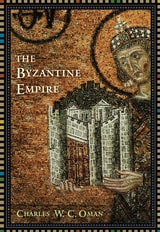
The Byzantine Empire
Charles W. C. Oman
Westholme Publishing, 2009
The Byzantine Empire centered at the city of Constantinople grew from a small Greek colonial village into the capital of the Eastern Roman empire. Ultimately, Byzantium represented what remained of Roman power in late antiquity. Established as the seat of Constantine the Great in 328 AD, the empire grew and matured over the centuries, reaching its pinnacle in the sixth century during the reign of Justinian and his loyal general, Belisarius. In the process of empire building, Byzantium battled the Goths, the Germanic tribes, the Persians, the Lombards, and ultimately the Islamic armies of the Near East. Byzantium remained a buffer against Muslim expansion, and by the time the remnants of the empire and the city of Constantinople were finally conquered by the Ottomans in the fourteenth century, European states to the west were able to resist any further encroachment.
In tracing the empire’s history from its humble beginnings through its ascendancy and final decay, distinguished historian Charles W. C. Oman blends his engaging narrative style with his impeccable command of primary source material. Here, Oman dispels the misconception that the Byzantine court was one plagued by corruption and intrigue—a canard that added “Byzantine” to the English language; instead, Byzantium was one of the most stable governments of late antiquity. Never before reprinted in paperback, The Byzantine Empire is a model of concise popular scholarship.

The Byzantine Empire (Revised Edition)
Robert Browning
Catholic University of America Press, 1992
The Byzantines
Edited by Guglielmo Cavallo
University of Chicago Press, 1997
Through a series of remarkably detailed composite portraits, an international collection of distinguished scholars has created a startlingly clear vision of the Byzantines and their social world. Paupers, peasants, soldiers, teachers, bureaucrats, clerics, emperors, and saints—all are vividly and authentically presented in the context of ordinary Byzantine life. No comparable volume exists that so fascinatingly recovers from the past the men and women of Byzantium, their culture and their lifeways, and their strikingly modern worldview.
The CIA in Ecuador
Marc Becker
Duke University Press, 2021
The Cablevision War
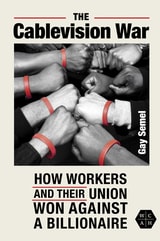
How Workers and Their Union Won Against a BillionaireGay Semel
University of Illinois Press, 2027
Gay Semel draws on her front-line experiences to provide an insider’s look at this bitter labor fight and its implications for unionization across the country. Unwilling to accept the vote, Cablevision, and its CEO James Dolan, used aggressive and illegal tactics like harassing and firing the Brooklyn workers to weaken support for the union. The CWA responded by mobilizing public pressure to push back. As the conflict unfolded, the union found support among community leaders, politicians, and activists. Semel traces the slow and difficult process of winning a first contract and details how courage, unity, and perseverance triumphed over a powerful company.
Dramatic and compelling, The Cablevision War tells the inspiring story of an important victory for workers and the lessons it offers for a revitalized labor movement.

The Cadastral Map in the Service of the State
A History of Property MappingRoger J. P. Kain and Elizabeth Baigent
University of Chicago Press, 1992
The Cadastral Map in the Service of the State, illustrated with 126 maps, traces the development and application of rural property mapping in Europe from the Renaissance through the nineteenth century. Beginning with a review of the roots of cadastral mapping in the Roman Empire, the authors concentrate on the use of cadastral maps in the Netherlands, France, England, the Nordic countries, the German lands, the territories of the Austrian Habsburgs, and the European colonies. During the sixteenth century government institutions began to use maps to secure economic and political bases; by the nineteenth century these maps had become tools for aggressive governmental control of land as tax bases, natural resources, and national territories. This work demonstrates how the seemingly neutral science of cartography became a political instrument for national
interests.
The Cadottes
A Fur Trade Family on Lake SuperiorRobert Silbernagel
Wisconsin Historical Society Press, 2023
The Cadottes
A Fur Trade Family on Lake SuperiorRobert Silbernagel
Wisconsin Historical Society Press, 2026
The Cahokia Mounds
Warren King Moorehead, edited and with an introduction by John E. Kelly
University of Alabama Press, 2000
A Dan Josselyn Memorial Publication
Provides a comprehensive collection of Moorehead's investigations of the nation's largest prehistoric mound center
Covering almost fourteen square kilometers in Illinois, Cahokia Mounds State Historic Site is the largest prehistoric mound center in North America and has been designated a World Heritage Site by the United Nations. Built between A.D. 1050 and 1350, Cahokia originally contained the remains of over 100 earthen mounds that were used as places for Native American rituals, homes of chiefs, or elite tombs. Earlier scientists debated whether the mounds were part of the natural landscape, and many were destroyed by urban and industrial development
This book is a report of archaeological investigations conducted at Cahokia from 1921 to 1927 by Warren K. Moorehead, who confirmed that the mounds were built by indigenous peoples and who worked to assure preservation of the site. The volume includes Moorehead's final 1929 report along with portions of two preliminary reports, covering both Cahokia and several surrounding mound groups.
John Kelly's introduction to the book sets Moorehead's investigations in the context of other work conducted at Cahokia prior to the 1920s and afterwards. Kelly reviews Moorehead's work, which employed 19th-century excavation techniques combined with contemporary analytical methods, and explains how Moorehead contended with local social and political pressures.
Moorehead's work represented important excavations at a time when little other similar work was being done in the Midwest. The reissue of his findings gives us a glimpse into an important archaeological effort and helps us better appreciate the prehistoric legacy that he helped preserve.
The California Days of Ralph Waldo Emerson
Brian C. Wilson
University of Massachusetts Press, 2022
In the spring of 1871, Ralph Waldo Emerson boarded a train in Concord, Massachusetts, bound for a month-and-a-half-long tour of California—an interlude that became one of the highlights of his life. On their journey across the American West, he and his companions would take in breathtaking vistas in the Rockies and along the Pacific Coast, speak with a young John Muir in the Yosemite Valley, stop off in Salt Lake City for a meeting with Brigham Young, and encounter a diversity of communities and cultures that would challenge their Yankee prejudices.
Based on original research employing newly discovered documents, The California Days of Ralph Waldo Emerson maps the public story of this group’s travels onto the private story of Emerson’s final years, as aphasia set in and increasingly robbed him of his words. Engaging and compelling, this travelogue makes it clear that Emerson was still capable of wonder, surprise, and friendship, debunking the presumed darkness of his last decade.
The Call of Conscience
Protestant Clergy and Jews in the NetherlandsJohan Hegeman
Central European University Press, 2026
The Calling of History
Sir Jadunath Sarkar and His Empire of TruthDipesh Chakrabarty
University of Chicago Press, 2015
Through close readings of more than twelve hundred letters to and from Sarkar along with other archival documents, Dipesh Chakrabarty demonstrates that historians in colonial India formulated the basic concepts and practices of the field via vigorous—and at times bitter and hurtful—debates in the public sphere. He furthermore shows that because of its non-technical nature, the discipline as a whole remains susceptible to pressure from both the public and the academy even today. Methodological debates and the changing reputations of scholars like Sarkar, he argues, must therefore be understood within the specific contexts in which particular histories are written.
Insightful and with far-reaching implications for all historians, The Calling of History offers a valuable look at the double life of history and how tensions between its public and private sides played out in a major scholar’s career.
The Calusa
Linguistic and Cultural Origins and RelationshipsJulian Granberry
University of Alabama Press, 2012
Presents a full phonological and morphological analysis of the total corpus of surviving Calusa language data left by a literate Spanish captive held by the Calusa from his early youth to adulthood
The linguistic origins of Native American cultures and the connections between these cultures as traced through language in prehistory remain vexing questions for scholars across multiple disciplines and interests. Native American linguist Julian Granberry defines the Calusa language, formerly spoken in southwestern coastal Florida, and traces its connections to the Tunica language of northeast Louisiana.
Archaeologists, ethnologists, and linguists have long assumed that the Calusa language of southwest Florida was unrelated to any other Native American language. Linguistic data can offer a unique window into a culture’s organization over space and time; however, scholars believed the existing lexical data was insufficient and have not previously attempted to analyze or define Calusa from a linguistic perspective.
In The Calusa: Linguistic and Cultural Origins and Relationships, Granberry presents a full phonological and morphological analysis of the total corpus of surviving Calusa language data left by a literate Spanish captive held by the Calusa from his early youth to adulthood. In addition to further defining the Calusa language, this book presents the hypothesis of language-based cultural connections between the Calusa people and other southeastern Native American cultures, specifically the Tunica. Evidence of such intercultural connections at the linguistic level has important implications for the ongoing study of life among prehistoric people in North America. Consequently, this thoroughly original and meticulously researched volume breaks new ground and will add new perspectives to the broader scholarly knowledge of ancient North American cultures and to debates about their relationships with one another.

The Cambridge Cockpit and the Paradoxes of Fatigue, 1940–1977
David Bloor
University of Chicago Press, 2025
During World War II, members of the Cambridge Psychology Laboratory were commissioned to study pilot fatigue. They set up a Spitfire cockpit in the laboratory, turned it into a piece of laboratory apparatus, and carried out a series of important experiments that appeared to dramatically confirm the dangers of fatigue. Historians of psychology are aware of this episode, but the experiments, the events surrounding them, and the scientific reasoning involved have never been studied in detail. By going into the episode in depth, and by looking behind the scenes at archival material, David Bloor offers an analysis that is both original and more penetrating than anything that has been said before on the topic.
Bloor describes the Cockpit experiments themselves before turning to the theoretical interpretation of the results and the intellectual resources that informed how they were viewed. Bloor then explains a major empirical and theoretical challenge to the Cambridge Cockpit work drawn from a field study of landing accidents apparently showing that fatigue-effects were operationally negligible. Bloor delves into the consequences of this challenge, and the Cambridge reaction to it, in the post-war years. The analysis is deepened by comparison with the corresponding wartime work on fatigue carried out both in Germany and the United States. As the author demonstrates, even today the Cambridge Cockpit experiments pose a challenge to the current understanding of pilot fatigue.

The Camera Does the Rest
How Polaroid Changed PhotographyPeter Buse
University of Chicago Press, 2016
Polaroid was often dismissed as a toy, but Buse takes it seriously, showing how it encouraged photographic play as well as new forms of artistic practice. Drawing on unprecedented access to the archives of the Polaroid Corporation, Buse reveals Polaroid as photography at its most intimate, where the photographer, photograph, and subject sit in close proximity in both time and space—making Polaroid not only the perfect party camera but also the tool for frankly salacious pictures taking.
Along the way, Buse tells the story of the Polaroid Corporation and its ultimately doomed hard-copy wager against the rising tide of digital imaging technology. He explores the continuities and the differences between Polaroid and digital, reflecting on what Polaroid can tell us about how we snap photos today. Richly illustrated, The Camera Does the Rest will delight historians, art critics, analog fanatics, photographers, and all those who miss the thrill of waiting to see what develops.

The Camera as Historian
Amateur Photographers and Historical Imagination, 1885-1918Elizabeth Edwards
Duke University Press, 2012
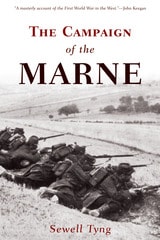
The Campaign of the Marne
Sewell Tyng
Westholme Publishing, 2007
The Definitive Account of the Battle of the Marne, One of World War I's Most Important Events
"A masterly account of the First World War in the West."—John Keegan
"A distinguished piece of historical writing."—Journal of Modern History
"Admirable... clear and interesting."—Foreign Affairs
"Direct and clear... it lays bare a most complicated course of events so that even the layman can follow."—New Republic
Named as One of The 100 Best Nonfiction Books of the Twentieth Century
With diplomacy unraveling during the summer of 1914, Germany swept into Belgium during the first week of August in an audacious attempt to catch France and England off guard. First contemplated after the Franco-Prussian War, the Schlieffen Plan was designed to keep Germany from fighting on two fronts. With a quick and decisive victory over France and its allies to the west, Germany could then confront Russia to the east. Despite the surprise of Germany's initial advance, the plan ultimately failed because it required much more mobile troops than were available at the time - something that would have to await the mechanized blitzkrieg of World War II—allowing France and British Expeditionary Forces to establish a tenacious defense. What followed was a stalemate along the Marne River and the beginning of four long years of destructive trench warfare that would only be lifted by a joint French, British, and American offensive across this same river plain in 1918. In The Campaign of the Marne, the entire genesis of the Schlieffen Plan, its modification, implementation, and the complex series of grueling battles that followed is laid out with the intent to make the entire episode comprehensible to the general reader. Hailed as one of the 100 best nonfiction books of the twentieth century by eminent military historian John Keegan, this is the first time the book has been available since its original publication in 1935.
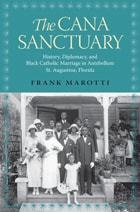
The Cana Sanctuary
History, Diplomacy, and Black Catholic Marriage in Antebellum St. Augustine, FloridaFrank Marotti, Jr.
University of Alabama Press, 2012
In the late seventeenth century a group of about a dozen escaped African slaves from the English colony of Carolina reached the Spanish settlement of St. Augustine. In a diplomatic bid for sanctuary, to avoid extradition and punishment, they requested the sacrament of Catholic baptism from the Spanish Catholic Church. Their negotiations brought about their baptism and with it their liberation. The Cana Sanctuary focuses on what author Frank Marotti terms “folk diplomacy”—political actions conducted by marginalized, non-state sectors of society—in this instance by formerly enslaved African Americans in antebellum East Florida. The book explores the unexpected transformations that occurred in seventeenth- and eighteenth-century St. Augustine as more and more ex-slaves arrived to find their previously disregarded civil rights upheld under sacred codes by an international, nongovernmental, authoritative organization.
With the Catholic Church acting as an equalizing, empowering force for escaped African slaves, the Spanish religious sanctuary policy became part of popular historical consciousness in East Florida. As such, it allowed for continual confrontations between the law of the Church and the law of the South. Tensions like these survived, ultimately lending themselves to an “Afro-Catholicism” sentiment that offered support for antislavery arguments.
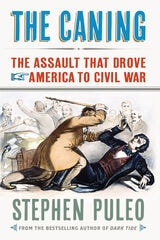
The Caning
The Assault That Drove America to Civil WarStephen Puleo
Westholme Publishing, 2012
Early in the afternoon of May 22, 1856, ardent pro-slavery Congressman Preston S. Brooks of South Carolina strode into the United States Senate Chamber in Washington, D.C., and began beating renowned anti-slavery Senator Charles Sumner with a gold-topped walking cane. Brooks struck again and again—more than thirty times across Sumner’s head, face, and shoulders—until his cane splintered into pieces and the helpless Massachusetts senator, having nearly wrenched his desk from its fixed base, lay unconscious and covered in blood. It was a retaliatory attack. Forty-eight hours earlier, Sumner had concluded a speech on the Senate floor that had spanned two days, during which he vilified Southern slaveowners for violence occurring in Kansas, called Stephen A. Douglas of Illinois a “noise-some, squat, and nameless animal,” and famously charged Brooks’s second cousin, South Carolina Senator Andrew Butler, as having “a mistress. . . who ugly to others, is always lovely to him. . . . I mean, the harlot, Slavery.” Brooks not only shattered his cane during the beating, but also destroyed any pretense of civility between North and South.
One of the most shocking and provocative events in American history, the caning convinced each side that the gulf between them was unbridgeable and that they could no longer discuss their vast differences of opinion regarding slavery on any reasonable level.The Caning: The Assault That Drove America to Civil War tells the incredible story of this transformative event. While Sumner eventually recovered after a lengthy convalescence, compromise had suffered a mortal blow. Moderate voices were drowned out completely; extremist views accelerated, became intractable, and locked both sides on a tragic collision course.
The caning had an enormous impact on the events that followed over the next four years: the meteoric rise of the Republican Party and Abraham Lincoln; the Dred Scott decision; the increasing militancy of abolitionists, notably John Brown’s actions; and the secession of the Southern states and the founding of the Confederacy. As a result of the caning, the country was pushed, inexorably and unstoppably, to war. Many factors conspired to cause the Civil War, but it was the caning that made conflict and disunion unavoidable five years later.

The Cape Herders
A History of the Khoikhoi of Southern AfricaEmile Boonzaier
Ohio University Press, 1996
The Cape Herders provides the first comprehensive picture of the Khoikhoi people. In doing so, it fills a long-standing gap in the resources of Southern African studies, and at a time when interest in the indigenous populations of South Africa is growing daily.
Combining the insights of archaeology, history, and anthropology, this account ranges from the origins of the Khoikhoi in Southern Africa to the contemporary politics of the Namaqualand “reserves.” Its authors have produced a scholarly, yet accessible, book, lavishly illustrated and supplemented with short biographies and fascinating detail.
The Cape Herders explodes a variety of South African myths—not least those surrounding the negative stereotype of the “Hottentot” and those which contribute to the idea that the Khoikhoi are by now “a vanished people.” The story it tells instead is one of enduring interest—the history of a herding people in Southern Africa, its society, economy, and culture, its relationship to the indigenous hunters of the Cape, its encounters with European expeditions, and its subsequent exposure to the first effects of colonization. It is a story of change and adaptation, and it confirms the Khoikhoi’s central role in the making of today’s South Africa.
The Capital Times
A Proudly Radical Newspaper’s Century Long Fight for Justice and for PeaceJohn Nichols
Wisconsin Historical Society Press, 2017
As Madison’s Capital Times marks its 100th anniversary in 2017, editors Dave Zweifel and John Nichols recall the remarkable history of a newspaper that served as the tribune of Robert M. La Follette and the progressive movement, earned the praise of Franklin Delano Roosevelt for its stalwart opposition to fascism, battled Joe McCarthy during the "Red Scare," championed civil rights, women’s rights, and LGBTQ rights, opposed the Vietnam War and the invasion of Iraq, and stood with Russ Feingold when he cast the only US Senate vote against the Patriot Act. The Capital Times did not do this from New York or Washington but from the middle of America, with a readership of farmers, factory workers, teachers, and shopkeepers who stood by The Cap Times when the newspaper was boycotted, investigated, and attacked for its determination.
At a point when journalism is under assault, when newspapers struggle to survive, and "old media" struggles to find its way in a digital age, The Capital Times remains unbowed—still living up to the description Lord Francis Williams, the British newspaper editor, wrote 50 years ago: "The vast majority of American papers are as dull as weed-covered ditch-water; vast Saharas of cheap advertising with occasional oases of editorial matter written to bring happiness to the Chamber of Commerce and pain and irritation to none; the bland leading the bland.… Just here and there are a few relics of the old fighting muckraking tradition of American journalism, like The Capital Times of Madison."
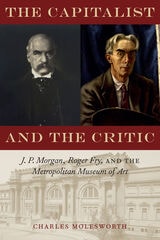
The Capitalist and the Critic
J. P. Morgan, Roger Fry, and the Metropolitan Museum of ArtBy Charles Molesworth
University of Texas Press, 2016
A skillful and fascinating retelling of the often testy relationship between J. P. Morgan and Roger Fry, two men who did more to establish the preeminence of the Metropolitan Museum of Art than any collector and curator before or since.
Shortly after the turn of the twentieth century, the Metropolitan Museum of Art began an ambitious program of collection building and physical expansion that transformed it into one of the world’s foremost museums, an eminence that it has maintained ever since. Two men of singular qualities and accomplishments played key roles in the Met’s transformation—J. P. Morgan, America’s leading financier and a prominent art collector, and Roger Fry, the headstrong English expert in art history who served as the Met’s curator of painting. Their complicated, often contentious relationship embodies and illuminates the myriad tensions between commerce and art, philanthropists and professional staff, that a great museum must negotiate to define and fulfill its mission.
In this masterful, multidisciplinary narrative, Charles Molesworth offers the first in-depth look at how Morgan and Fry helped to mold the cultural legacy of masterpieces of painting and the development of the “encyclopedic” museum. Structuring the book as a joint biography, Molesworth describes how Morgan used his vast wealth to bring European art to an American citizenry, while Fry brought high standards of art history from the world of connoisseurs to a general public. Their clashes over the purpose and functions of the Met, which ultimately led to Fry’s ouster, reveal the forces—personal and societal—that helped to shape the Metropolitan Museum and other major American cultural institutions during the twentieth century.
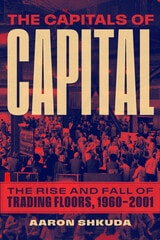
The Capitals of Capital
The Rise and Fall of Trading Floors, 1960–2001Aaron Shkuda
University of Chicago Press, 0
How the transition from physical trading floors to automated ones changed central business districts and urban policy.
Wall Street is defined by the New York Stock Exchange’s headquarters, while the Chicago Board of Trade’s iconic building anchors LaSalle Street in the city’s Loop. These buildings have not moved in a century, but their trading floors have experienced dramatic changes over the past sixty years. While thousands of commuters still work in and around Wall Street, most stocks are traded via computer. Not even the NYSE’s servers are onsite.
The Capitals of Capital charts the rise and dematerialization of stock-exchange trading floors in New York and Chicago, demonstrating how the finance industry has long been entwined with urban planning and development. Aaron Shkuda shows in detail how the industry came to dominate cities both economically and spatially, tracing the demands of firms like Chase Manhattan Bank and the Chicago Mercantile Exchange for larger central facilities, better tax breaks, and other accommodations—until technological developments shifted their priorities from spaces for people to capacity for machines. Shkuda’s history of trading floors reveals financial institutions as change agents in urbanism; through their evolving construction proposals, they forced elected officials, urban planners, architects, and voters to consider the value of trading floors, their significance to a city and its people, and what kind of resources they deserved. Today, as Wall Street towers are converted to apartments and server farms, The Capitals of Capital sheds light on the ever-shifting relationship between the finance industry and urban spaces.

The Capitol Reef Reader
Stephen Trimble
University of Utah Press, 2019
The volume features nearly fifty writers who have anchored their attention and imagination in Utah’s least-known national park. The bedrock elders of Colorado Plateau literature are here (Clarence Dutton, Wallace Stegner, Edward Abbey), as are generations of writers who love this land (including Ellen Meloy, Craig Childs, Charles Bowden, Renny Russell, Ann Zwinger, Gary Ferguson, and Rose Houk). Their pieces are a pleasure to read and each reveals a facet of Capitol Reef’s story, creating a gem of a volume. Editor Stephen Trimble guides and orients with commentary and context.
A visual survey of the park in almost 100 photographs adds another layer to our understanding of this place. Historic photos, pictures from Trimble’s forty-five years of hiking the park, as well as images from master visual artists who have worked in Capitol Reef are included. No other book captures the essence of Capitol Reef like this one.
Part of the National Park Reader series, edited by Lance Newman and David Stanley
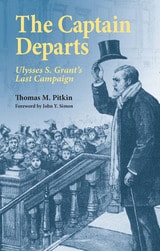
The Captain Departs
Ulysses S. Grant's Last CampaignThomas M. Pitkin. Foreword by John Y. Simon
Southern Illinois University Press, 1973
Early in 1885 Americans learned that General Grant was writing his Memoirs in a desperate race for time against an incurable cancer. Not generally known was the General’s precarious personal finances, made so by imprudent investments, and his gallant effort to provide for his family by his writing. For six months newspaper readers followed the dramatic contest, and the hearts of Americans were touched by the General’s last battle.
Grant’s last year was one of both personal and literary triumph in the midst of tragedy, as Thomas M. Pitkin shows in this memorable and inspiring book. The Memoirs was completed; its remarkable literary quality made ita triumph. Ultimately more than 300,000sets of the two-volume work were sold. And Grant accepted the inevitable with quiet courage, and faded away in a manner sadly familiar to many American families.
Though told without maudlin touches, the story of Grant’s last year will leave few readers emotionally uninvolved, for itis an account of pain and suffering as well as mighty deeds, and truly deserves to be considered the General’s final victory.
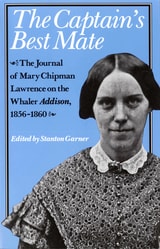
The Captain’s Best Mate
The Journal of Mary Chipman Lawrence on the Whaler Addison, 1856–1860Mary Chipman. Lawrence
University Press of New England, 1986
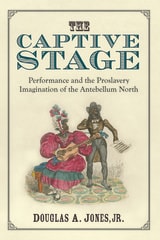
The Captive Stage
Performance and the Proslavery Imagination of the Antebellum NorthDouglas A. Jones, Jr.
University of Michigan Press, 2014
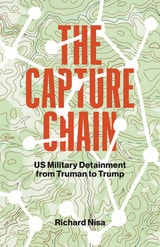
The Capture Chain
US Military Detainment from Truman to TrumpRichard Nisa
University of Minnesota Press, 2027
A penetrating look into the hidden networks of wartime capture, circulation, and detainment by United States military personnel
The Capture Chain offers a detailed history of the United States’ detention practices and the evolving infrastructure designed for the apprehension, control, and transportation of people during times of war. Spanning eight decades and several major conflicts, this work examines the hidden spaces and logistical networks connecting the front lines and prisoner-of-war camps—sites that exist at the fraught intersection of life maintenance and death distribution.
Detailing the routes, protocols, research methods, and technical systems that constitute what Richard Nisa terms the global capture chain, this book underscores how such military architectures have become increasingly sophisticated and technologically advanced since the dawn of the Cold War. Drawing on declassified military documents, diplomatic records from the Geneva Conventions, and memoirs written by soldiers and prisoners, The Capture Chain offers unprecedented insight into this shifting geography of psychological and physical violence.
Using archival research to draw links between behavioral science studies during the Korean War, Vietnam-era computation, and post-9/11 rendition networks and digital biometrics, The Capture Chain introduces new ways of understanding urgent contemporary debates around autonomous warfare, mass surveillance, and detainment. By introducing the capture chain as both a historical object and a methodological lens, Nisa highlights the legal and moral grey area that constitutes the ongoing militarized maintenance of human life.
Retail e-book files for this title are screen-reader friendly with images accompanied by short alt text and/or extended descriptions.
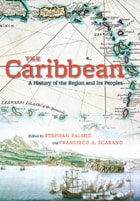
The Caribbean
A History of the Region and Its PeoplesEdited by Stephan Palmié and Francisco A. Scarano
University of Chicago Press, 2011
Combining fertile soils, vital trade routes, and a coveted strategic location, the islands and surrounding continental lowlands of the Caribbean were one of Europe’s earliest and most desirable colonial frontiers. The region was colonized over the course of five centuries by a revolving cast of Spanish, Dutch, French, and English forces, who imported first African slaves and later Asian indentured laborers to help realize the economic promise of sugar, coffee, and tobacco. The Caribbean: A History of the Region and Its Peoples offers an authoritative one-volume survey of this complex and fascinating region.
This groundbreaking work traces the Caribbean from its pre-Columbian state through European contact and colonialism to the rise of U.S. hegemony and the economic turbulence of the twenty-first century. The volume begins with a discussion of the region’s diverse geography and challenging ecology and features an in-depth look at the transatlantic slave trade, including slave culture, resistance, and ultimately emancipation. Later sections treat Caribbean nationalist movements for independence and struggles with dictatorship and socialism, along with intractable problems of poverty, economic stagnation, and migrancy.
Written by a distinguished group of contributors, The Caribbean is an accessible yet thorough introduction to the region’s tumultuous heritage which offers enough nuance to interest scholars across disciplines. In its breadth of coverage and depth of detail, it will be the definitive guide to the region for years to come.
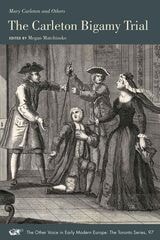
The Carleton Bigamy Trial
Mary Carleton
Iter Press, 2023
Mary Carleton was an ordinary woman from Canterbury who entered historical records when she was accused of bigamy. The seven pamphlets in this edition focus on the bigamy trial of Mary Carleton, in which the accused eloquently defends herself and is ultimately acquitted. Written in the early years of the English Restoration, they demonstrate that narratives presenting what “she said” and what “he said” can reveal, forcefully and painfully, how truth can be fragmented in the different arenas of law, love, and politics. Through their disparate accounts of a marriage gone wrong, these pamphlets reinforce the social status quo even while they radically shatter the very foundations that give it heft. In asking readers to question absolutes, they unmask the precarious relationship between words and the world.
The Carnegie Maya III
Carnegie Institution of Washington Notes on Middle American Archaeology and Ethnology, 1940-1957John M. Weeks
University Press of Colorado, 2011
The series began in 1940 as an outlet for information that may have been considered too unimportant, brief, or restricted to be submitted for formal publication. However, these notes are often of great interest to the specialists for whom they are designed and to whom their distribution is restricted. The majority of the essays-most of which are on the Maya-are on archaeological subjects, epigraphy, ethnohistory and ethnography, and linguistics. As few original copies of the Notes series are known to exist in U.S. and Canadian libraries, the book will make these essays easily accessible to students, academics, and researchers in the field.
Purchase of the print book comes with free individual access to the Adobe Digital Editions Carnegie Maya Series Ebook, which contains the complete set of The Carnegie Maya, The Carnegie Maya II, The Carnegie Maya III and The Carnegie Maya IV, thus making hundreds of documents from the Carnegie Institution's Maya program available in one source.
The Carnegie Maya IV
Carnegie Institution of Washington Theoretical Approaches to Problems, 1941-1947John M. Weeks
University Press of Colorado, 2012
Only a few sets of these three contributions to the Theoretical Approaches to Problems series are known to have survived, making The Carnegie Maya IV an essential reference and research resource.
The corresponding ebook, for individual download, contains the complete set of The Carnegie Maya, The Carnegie Maya II, The Carnegie Maya III and The Carnegie Maya IV, thus making hundreds of documents from the Carnegie Institution's Maya program available in one source.

The Carter Journals
Time Travels in Early U.S. HistoryShane Phipps
Indiana Historical Society Press, 2014

The Case That Never Dies
The Lindbergh KidnappingLloyd C. Gardner
Rutgers University Press, 2004
The Case That NeverDies places the Lindbergh kidnapping, investigation, and trial in the context of the Depression, when many feared the country was on the edge of anarchy. Gardner delves deeply into the aspects of the case that remain confusing to this day, including Lindbergh’s dealings with crime baron Owney Madden, Al Capone’s New York counterpart, as well as the inexplicable exploits of John Condon, a retired schoolteacher who became the prosecution’s best witness. The initial investigation was hampered by Colonel Lindbergh, who insisted that the police not attempt to find the perpetrator because he feared the investigation would endanger his son’s life. He relented only when the child was found dead.
After two years of fruitless searching, Bruno Richard Hauptmann, a German immigrant, was discovered to have some of the ransom money in his possession. Hauptmann was arrested, tried, and sentenced to death. Throughout the book, Gardner pays special attention to the evidence of the case and how it was used and misused in the trial. Whether Hauptmann was guilty or not, Gardner concludes that there was insufficient evidence to convict him of first-degree murder.
Set in historical context, the book offers not only a compelling read, but a powerful vantage point from which to observe the United States in the 1930s as well as contemporary arguments over capital punishment.

The Case That Never Dies
The Lindbergh KidnappingLloyd C. Gardner
Rutgers University Press, 2012
Winner of the 2004 New Jersey Studies Academic Alliance Book Award for Scholarly Non-Fiction | Named a 2005 Honor Book by the New Jersey Council for the Humanities
Essential reading for anyone interested in the most famous American crime of the twentieth century
Since its original publication in 2004, The Case That Never Dies has become the standard account of the Lindbergh kidnapping. Now, in a new afterword, historian Lloyd C. Gardner presents a surprise conclusion based on recently uncovered pieces of evidence that were missing from the initial investigation as well as an evaluation of Charles Lindbergh’s role in the search for the kidnappers. Out of the controversies surrounding the actions of Colonel Lindbergh, Norman Schwarzkopf, commander of the New Jersey State Police, and FBI director J. Edgar Hoover, Gardner presents a well-reasoned argument for what happened on the night of March 1, 1932.
The Case That NeverDies places the Lindbergh kidnapping, investigation, and trial in the context of the Depression, when many feared the country was on the edge of anarchy. Gardner delves deeply into the aspects of the case that remain confusing to this day, including Lindbergh’s dealings with crime baron Owney Madden, Al Capone’s New York counterpart, as well as the inexplicable exploits of John Condon, a retired schoolteacher who became the prosecution’s best witness. The initial investigation was hampered by Colonel Lindbergh, who insisted that the police not attempt to find the perpetrator because he feared the investigation would endanger his son’s life. He relented only when the child was found dead.
After two years of fruitless searching, Bruno Richard Hauptmann, a German immigrant, was discovered to have some of the ransom money in his possession. Hauptmann was arrested, tried, and sentenced to death. Throughout the book, Gardner pays special attention to the evidence of the case and how it was used and misused in the trial. Whether Hauptmann was guilty or not, Gardner concludes that there was insufficient evidence to convict him of first-degree murder.
Set in historical context, the book offers not only a compelling read, but a powerful vantage point from which to observe the United States in the 1930s as well as contemporary arguments over capital punishment.

The Case for Palestine
An International Law PerspectiveJohn Quigley
Duke University Press, 2005
In this volume, Quigley provides a thorough understanding of both sides of the conflict in the context of international law. He contends that the Palestinians have a stronger legal claim to Jerusalem than do the Israelis; that Palestinian refugees should be repatriated to areas including those within the borders of Israel; and that Israel should withdraw from the territory it occupied in 1967. As in his earlier volume, Quigley provides an extensively documented evaluation of the conflict over the last century, discussing the Zionist movement, the League of Nations’ decision to promote a Jewish homeland in Palestine, the 1948 war and creation of Israel, and Israel’s occupation of the West Bank, Gaza Strip, and Golan Heights during the 1967 war.
The Case for the Prosecution in the Ciceronian Era
Michael C. Alexander
University of Michigan Press, 2003

The Case of the Slave-Child, Med
Free Soil in Antislavery BostonKaren Woods Weierman
University of Massachusetts Press, 2019
The Cashaway Psalmody
Transatlantic Religion and Music in Colonial CarolinaStephen A. Marini
University of Illinois Press, 2019
Stephen A. Marini, discoverer of The Cashaway Psalmody, offers the fascinating story of the tunebook and its many meanings. From its musical, literary, and religious origins in England, he moves on to the life of Durham Hills; how Carolina communities used the book; and the Psalmody's significance in understanding how ritual song—transmitted via transatlantic music, lyrics, and sacred singing—shaped the era's development. Marini also uses close musical and textual analyses to provide a critical study that offers music historians and musicologists valuable insights on the Pslamody and its period.
Meticulous in presentation and interdisciplinary in scope, The Cashaway Psalmody unlocks an important source for understanding life in the Lower South in the eighteenth century.
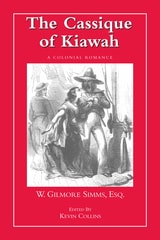
The Cassique of Kiawah
A Colonial RomanceWilliam Gilmore Simms
University of Arkansas Press, 2003
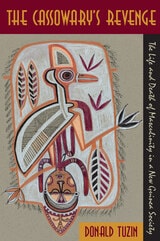
The Cassowary's Revenge
The Life and Death of Masculinity in a New Guinea SocietyDonald Tuzin
University of Chicago Press, 1997
The Cassowary's Revenge is an intimate account of how Ilahita’s men and women think, emote, dream, and explain themselves. Tuzin also explores how the death of masculinity in a remote society raises disturbing implications for gender relations in our own society. In this light Tuzin's book is about men and women in search of how to value one another, and in today's world there is no theme more universal or timely.

The Cast Iron Forest
A Natural and Cultural History of the North American Cross TimbersBy Richard V. Francaviglia
University of Texas Press, 2000
Winner, Friends of the Dallas Public Library Award, Texas Institute of Letters, 2001
A complex mosaic of post oak and blackjack oak forests interspersed with prairies, the Cross Timbers covers a north-south belt of southern Kansas, eastern Oklahoma, and North Central Texas. Home to Native Americans over several thousand years, the Cross Timbers became a barrier to westward expansion in the nineteenth century, until roads and railroads opened it up to farmers and ranchers, coal miners, and modern city developers, all of whom changed its character in far-reaching ways.
This landmark book fully describes the natural environment of the Cross Timbers and the role that people have played in transforming the region. Richard Francaviglia opens with a natural history that discusses the region's geography and geology, vegetation, and climate. He then traces the interaction of people and the landscape, from the earliest Native American inhabitants and European explorers to the developers and residents of today's ever-expanding cities and suburbs. Many historical and contemporary maps and photographs illustrate the text.

The Castaways
How Producers Lost Their Independence and Conjured Up the Outsider SitcomLarry Durst
Rutgers University Press, 2027
In the early 1960s a new style of situation comedy took over primetime as Bewitched, Gilligan’s Island, Gomer Pyle, U.S.M.C., I Dream of Jeannie, My Favorite Martian, and other “Outsider Sitcoms” featuring alien characters disrupting their TV environments shot to the top of the ratings. Departing from a critical approach that understands these series as reflections of the decade’s many social disruptions, The Castaways reveals the programs as emotional responses by their creators to a more personal upheaval: their loss of influence in the broadcast industry. As network executives turned increasingly to audience research, independent producers felt the ability that had been most crucial to their success in broadcasting was being devalued: gut creative intuition. Drawing on memoirs, show treatments, and other original documents, The Castaways uncovers how leading characters on the programs served as emotional proxies for their creators’ fears of industry irrelevance as they were cast out from the corporate halls of power where their series’—and personal—fates were decided.
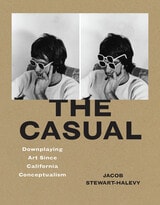
The Casual
Downplaying Art Since California ConceptualismJacob Stewart-Halevy
University of Chicago Press, 2026
Moving away from making objects, and turning instead to staging scenes, the artists associated with California Conceptualism—including Eleanor Antin, John Baldessari, David Lamelas, Tony Ramos, Ilene Segalove, and William Wegman—behaved indifferently toward their art, denied making it and knowing what it was about, and displayed a lack of concern for its future. Their casual attitude and aesthetic transformed relationships between artists, critics, and viewers, separating those who could recognize these practices from those who could not.
Contemporary artists have continued this trajectory, finding new ways to act casually through their “stance.” In the humanities, this term is often taken to mean the beliefs, values, and intentions of authors, and it has offered a useful way to think about how artists position themselves toward their work and audiences. Jacob Stewart-Halevy builds on recent social theory to show how artists, critics, and other members of the art world wield stance to make sense of artworks and their social circumstances, arguing that, through the rise of conceptual art, stance has come to supplement—and in some cases replace—the aesthetic quality of artworks.
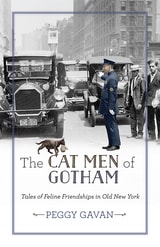
The Cat Men of Gotham
Tales of Feline Friendships in Old New YorkPeggy Gavan
Rutgers University Press, 2019
The nineteenth century was a rough time to be a stray cat in New York City. The city’s human residents dealt with feline overpopulation by gassing unwanted cats or tossing them in rivers. But a few lucky strays were found by a diverse array of men—including firemen, cops, athletes, and politicians—who rescued them from the streets and welcomed them into their homes and hearts.
This book tells the stories of these heroic cat men of Gotham and their beloved feline companions. Not only does it introduce us to some remarkable men, but we get to meet many extraordinary cats as well, from Chinese stowaways prowling the Chelsea Piers to the sole feline survivor of the USS Maine explosion. Among the forty-two profiles, we find many feline Cinderella stories, as humble alley cats achieved renown as sports team mascots, artists’ muses, and even presidential pets.
Sure to appeal to cat fanciers and history fans alike, The Cat Men of Gotham will give you a new appreciation for Old New York and the people and animals who made it their home. As it takes you on a journey through the streets of Manhattan and Brooklyn, it will amuse and astound you with tales of powerful men and their pussycats.
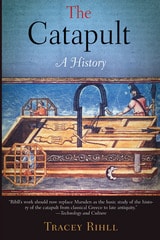
The Catapult
A HistoryTracey Rihll
Westholme Publishing, 2007
The most recognized military device of ancient times and the source of continued fascination and popular appeal, the catapult represented a major shift in the conduct of warfare. The catapult which literally means a device to “hurl [an object] across” was originally a sort of crossbow invented at the beginning of the fourth century B.C. in Syrakuse. Bows soon grew to the length of a modern bus, and in due course a completely new and better power source was invented. Instead of compound bows made of stretched sinew and compressed horn, the energy used to launch an object was stored in twisted ropes made of animal sinews: the torsion catapult had arrived. The torsion catapult quickly became the chief weapon of ancient arsenals and gave armies for the first time a weapon that could strike enemies at a distance with devastating effect, including shooting to and from ships, battering fortifications, and sending projectiles over walls. Catapults of all sizes became part of the regular equipment of the Roman army, and were used for centuries across the length and breadth of the empire to seize territory, and to defend it.
In The Catapult: A History, an authority on this device, historian Tracey Rihll, uses ancient literary sources and the latest archaeological findings to tell the story of this first machine of war. Dispelling any notion that the catapult was precision engineered in the modern sense, the author explains how a robust formulaic design allowed a variety of machines and missiles to be used for particular battlefield conditions or military tasks. Also included are details of the author’s intriguing discovery that there were little personal catapults that were used like rifles. Although the catapult was displaced by the introduction of gunpowder and cannon, this device marks the beginning of mechanized warfare, the hallmark of modern fighting. Complete with line drawings and photographs, The Catapult is a major contribution to the history of technology and conflict.
The Catholic Church and American Culture
Why the Claims of Dan Brown Strike a ChordEric A. Plumer
University of Scranton Press, 2009
More than fifty books debunking the religious claims of The Da Vinci Code have been published. Thisis the first book devoted to the fundamentally more interesting question: if those claims are so unfounded and erroneous, why have they resonated so strongly with millions of intelligent readers and filmgoers?
From the sexual abuse scandal that shook the foundations of the Catholic Church to the 9/11 terrorist attacks that cast a cloud over a troubled nation, Eric Plumer’s The Catholic Church and American Culture: Why the Claims of the DaVinci Code Struck a Chord investigates the contemporary events, ideas, and movements that fostered Dan Brown’s unprecedented dominance of best-seller lists and dinner-table conversation. This ambitious book considers the feminist movement, radical individualism, twelve-step programs, the authority of science and psychology, and other cultural developments that paved the way for The Da Vinci Code craze. It also reflects on the recent publication of the Gnostic Gospels, including the Gospel of Mary Magdalene. Plumer’s engaging book is sure to stimulate further discussion about the role of religion in contemporary life.

The Catholic Church and the Genesis of the Arab-Israeli Conflict
Vatican Diplomacy and Interfaith Relations During the Interwar Period, 1918-1939Bernhard Kronegger
Catholic University of America Press, 2026
The Catholic Enlightenment
A Global AnthologyUlrich L. Lehner
Catholic University of America Press, 2021
The Catholic Tradition
Thomas Langan
University of Missouri Press, 1998
In his Tradition and Authenticity in the Search for Ecumenic Wisdom, Thomas Langan argued that the close interaction of traditions in today's society calls for methodical critical appropriation of the beliefs fostered by the principal traditions. He also promised to demonstrate by example how such appropriation could be accomplished. In The Catholic Tradition, Langan successfully fulfills that vow by showing how a tradition—the Catholic—has shaped his own outlook.
In this comprehensive study, Langan examines the history of the Catholic Church and the origins of its teachings since the Church's conception. Although committed to the Catholic religion, Langan does not obscure the Church's failings as he lays out the fundamentals of the Catholic faith.
He provides insight into the great Christological councils, discusses the differences in the spiritualities of East and West, and portrays the crucial roles that the pope and bishops played during the Middle Ages. He incorporates the thought of Augustine, Aquinas, and medieval Catholicism as he traces the rise and decline of Christian Europe, the great issues raised by the reform: priesthood, the Eucharist, spirituality, and Church structure.
Satan has no greater triumph, Langan asserts, than when Catholics, who are recipients of the Good News of God's universal love, allow selections from their tradition to be turned into sectarianism and ideology. This balanced history of the Church as human reality faces such perversions squarely. But despite betrayals by its own across the centuries, the Catholic tradition, with its origin at Sinai, remains the oldest and largest extant religious institution.
In a last section Langan offers a unique overview of the church's present situation, its strengths and weaknesses, the new movement and the challenge of the "new evangelization."