Results by title
22279 books match the query 'Social Science' and 4007 start with t
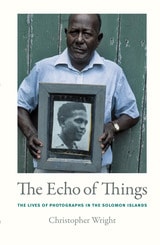
The Echo of Things
The Lives of Photographs in the Solomon IslandsChristopher Wright
Duke University Press, 2013
The Echoes of Trauma
An Oral Historical Study on the Impact of the World War II Mass Incarceration on the Health of Japanese AmericansGwenn M. Jensen
University Press of Colorado, 2026
In Echoes of Trauma, medical anthropologist Gwenn Jensen traces the longitudinal ramifications of racism, the chronic stress of imprisonment in concentration camps, and widespread healthcare inadequacies on the well-being of Japanese American Nisei during WWII and beyond.
Based on ninety oral history interviews conducted between 1995 and 2005, Jensen’s work uncovers long-term health impacts on former incarcerees, relating personal stories of Japanese Americans with archival corroboration of their traumatic experiences of having been made prisoners in their own land. These memories illuminate the betrayal and lifelong consequences of imprisonment not only on physical and psychological health but also including intergenerational trauma passed on to subsequent generations. Echoes of Trauma details these short- and long-term health effects and records the stories of these Americans for posterity.
In the wake of the current political climate, with echoes of this past reverberating, the reexamination of Japanese American incarceration undertaken here underscores the importance of comprehending the fallout from incomprehensible injustice visited upon innocent and law-abiding citizens.
The Ecolaboratory
Environmental Governance and Economic Development in Costa RicaEdited by Robert Fletcher, Brian Dowd-Uribe, and Guntra A. Aistara
University of Arizona Press, 2020
This book explores these challenges, how Costa Rica is responding to them, and the lessons this holds for current and future trends regarding environmental governance and sustainable development. It provides the first comprehensive assessment of successes and challenges as they play out in a variety of sectors, including agricultural development, biodiversity conservation, water management, resource extraction, and climate change policy.
By framing Costa Rica as an “ecolaboratory,” the contributors in this volume examine the lessons learned and offer a path for the future of sustainable development research and policy in Central America and beyond.
The Ecological City
Preserving and Restoring Urban BiodiversityRutherford H. Platt
University of Massachusetts Press, 1994
Interdisciplinary in content as well as approach, this collection of original essays takes a fresh look at the ecology of urban communities. Written by experts from a variety of professions—academic researchers, private and public program managers, and citizen activists—the book explores issues of geography, ecology, landscape architecture, urban forestry, law, and environmental education. Contributions include broad overviews of common problems a well as detailed case studies of specific programs.
Although several contributors are natural scientists, the book focuses on matters of public policy and public-private collaboration. The aim is not only to assess the impact of increasing urbanization on biodiversity, but also to propose new ways of preserving and restoring the balance between the natural and the built environment through planning and design.
The Ecology of Others
Philippe Descola
Prickly Paradigm Press, 2013
Since the end of the nineteenth century, the division between nature and culture has been fundamental to Western thought. In this groundbreaking work, renowned anthropologist Philippe Descola seeks to break down this divide, arguing for a departure from the anthropocentric model and its rigid dualistic conception of nature and culture as distinct phenomena. In its stead, Descola proposes a radical new worldview, in which beings and objects, human and nonhuman, are understood through the complex relationships that they possess with one another.
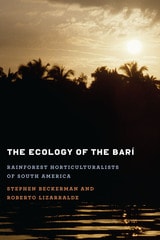
The Ecology of the Barí
Rainforest Horticulturalists of South AmericaBy Stephen Beckerman and Roberto Lizarralde
University of Texas Press, 2013
Inhabiting the rainforest of the southwest Maracaibo Basin, split by the border between Colombia and Venezuela, the Barí have survived centuries of incursions. Anthropologist Roberto Lizarralde began studying the Barí in 1960, when he made the first modern peaceful contact with this previously unreceptive people; he was joined by anthropologist Stephen Beckerman in 1970. The Ecology of the Barí showcases the findings of their singular long-term study.
Detailing the Barí’s relations with natural and social environments, this work presents quantitative subsistence data unmatched elsewhere in anthropological publications. The authors’ lengthy longitudinal fieldwork provided the rare opportunity to study a tribal people before, during, and after their aboriginal patterns of subsistence and reproduction were eroded by the modern world. Of particular interest is the book’s exploration of partible paternity—the widespread belief in lowland South America that a child can have more than one biological father. The study illustrates its quantitative findings with an in-depth biographical sketch of the remarkable life of an individual Barí woman and a history of Barí relations with outsiders, as well as a description of the rainforest environment that has informed all aspects of Barí history for the past five hundred years. Focusing on subsistence, defense, and reproduction, the chapters beautifully capture the Barí’s traditional culture and the loss represented by its substantial transformation over the past half-century.
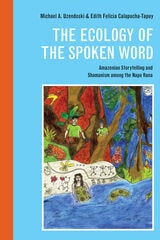
The Ecology of the Spoken Word
Amazonian Storytelling and the Shamanism among the Napo RunaMichael A. Uzendoski and Edith Felicia Calapucha-Tapuy
University of Illinois Press, 2012
This volume offers the first theoretical and experiential translation of Napo Runa mythology in English. Michael A. Uzendoski and Edith Felicia Calapucha-Tapuy present and analyze lowland Quichua speakers in the Napo province of Ecuador through narratives, songs, curing chants, and other oral performances, so readers may come to understand and appreciate Quichua aesthetic expression. Guiding readers into Quichua ways of thinking and being--in which language itself is only a part of a communicative world that includes plants, animals, and the landscape--Uzendoski and Calapucha-Tapuy weave exacting translations into an interpretive argument with theoretical implications for understanding oral traditions, literacy, new technologies, and language. A companion websiteoffers photos, audio files, and videos of original performances illustrates the beauty and complexity of Amazonian Quichua poetic expressions.
The Economic Development of Manchuria
The Rise of a Frontier EconomyKang Chao
University of Michigan Press, 1983

The Economic Effects of Aging in the United States and Japan
Edited by Michael D. Hurd and Naohiro Yashiro
University of Chicago Press, 1997
The most obvious effects will be on social programs such as public pension systems and the provision for medical needs of the elderly. But, the contributors demonstrate, aging will also affect markets for labor, capital, housing, and health care services. It will affect firms through their participation in the demand side of the labor market and through their provisions for pensions. And aging will influence saving rates, the rate of return on assets, the balance of payments, and, most likely, economic growth.
This volume will interest scholars and policy makers concerned with the economics of aging.
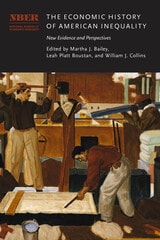
The Economic History of American Inequality
New Evidence and PerspectivesEdited by Martha J. Bailey, Leah Platt Boustan, and William J. Collins
University of Chicago Press, 2025
A meticulous examination of the history and roots of economic inequality within the United States.
This volume refines and extends the economic history literature on economic inequality in the United States. Economic inequality manifests itself on various dimensions, including access to resources and economic security, as well as access to education and opportunities for migration, marriage, and other important life decisions. Measuring inequality and studying its variation over time and in response to economic shocks such as recessions and wars deepen our understanding of how the economy operates and can inform the design of public policies. The studies in this compendium present comprehensive evidence on income distribution during the nineteenth and early twentieth centuries, drawing on new data on wages and prices. They also consider disparities in economic well-being that are reflected in outcomes other than wage and salary income, such as homeownership and marriage. The volume also presents new evidence on the effects of income inequality on social outcomes. It concludes with an intellectual history of “human capital,” a core concept in the economic analysis of the underpinnings of labor market inequality.
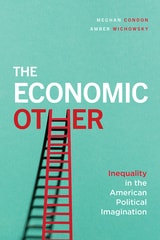
The Economic Other
Inequality in the American Political ImaginationMeghan Condon and Amber Wichowsky
University of Chicago Press, 2020
Through an astute blend of experiments, surveys, and descriptions people offer in their own words, The Economic Other reveals that when less-advantaged Americans compare with the rich, they become more accurate about their own status and want more from government. But American society is structured to prevent upward comparison. In an increasingly divided, anxious nation, opportunities to interact with the country’s richest are shrinking, and people prefer to compare to those below to feel secure. Even when comparison with the rich does occur, many lose confidence in their power to effect change.
Laying bare how social comparisons drive political attitudes, The Economic Other is an essential look at the stubborn plight of inequality and the measures needed to solve it.
The Economic Sociology of Immigration
Essays on Networks, Ethnicity, and EntrepreneurshipAlejandro Portes
Russell Sage Foundation, 1995
The Economics and the Ethics of Constitutional Order
James M. Buchanan
University of Michigan Press, 1991
The Ecosystem Approach in Anthropology serves as a foundational methodology guide for modern ecological and environmental anthropology. The book advocates for a rigorous, integrative approach to studying human societies by framing them as deeply interconnected components of larger biological ecosystems. Moran gathers a diverse cohort of leading researchers to demonstrate how abstract ecosystem concepts can be translated into concrete, empirical field practices across varying environments, ranging from tropical rainforests to arid landscapes. By bridging the gap between cultural anthropology and natural sciences like ecology, soil science, and demography, the volume offers critical frameworks for quantifying energy flows, resource consumption, and human-environmental feedback loops, making it an indispensable resource for analyzing complex social-ecological systems and anthropogenic environmental changes.
The Economics of Poverty Traps
Edited by Christopher B. Barrett, Michael R. Carter, and Jean-Paul Chavas
University of Chicago Press, 2018
The research in this volume explores the hypothesis that poverty is self-reinforcing because the equilibrium behaviors of the poor perpetuate low standards of living. Contributions explore the dynamic, complex processes by which households accumulate assets and increase their productivity and earnings potential, as well as the conditions under which some individuals, groups, and economies struggle to escape poverty. Investigating the full range of phenomena that combine to generate poverty traps—gleaned from behavioral, health, and resource economics as well as the sociology, psychology, and environmental literatures—chapters in this volume also present new evidence that highlights both the insights and the limits of a poverty trap lens.
The framework introduced in this volume provides a robust platform for studying well-being dynamics in developing economies.
The Economization of Life
M. Murphy
Duke University Press, 2017
The Economy of Communist China, 1949–1969
Cheng Chu-yuan
University of Michigan Press, 1971
The Economy of Prostitution in the Roman World
A Study of Social History and the BrothelThomas A. J. McGinn
University of Michigan Press, 2004
The Ecosystem Approach in Anthropology
From Concept to PracticeEmilio F. Moran, Editor
University of Michigan Press, 1990

The Eddie Cantor Story
A Jewish Life in Performance and PoliticsDavid Weinstein
Brandeis University Press, 2017
The Edge of Change
Women in the Twenty-First-Century PressEdited by June O. Nicholson, Pamela J. Creedon, Wanda S. Lloyd, and Pamela J. Jo: Foreword by Ellen Goodman
University of Illinois Press, 2008
Prominent female voices in journalism provide critical perspectives on the challenges women face in today's news organizations, such as connecting with diverse audiences, educating readers about international issues and cultures, maintaining credibility, negotiating media consolidation and corporate pressures, and overcoming the persistent barriers to professional advancement. A powerful and complex assessment of how women are transforming the news industry, The Edge of Change explores how the news industry might implement further reforms aimed at creating a more inclusive journalistic community.
Contributors are Catalina Camia, Kathleen Carroll, Pamela J. Creedon, Paula Lynn Ellis, Helen E. Fisher, Dorothy Butler Gilliam, Ellen Goodman, Sharon Grigsby, Carol Guzy, Kirsten Scharnberg Hampton, Cathy Henkel, Pamela J. Johnson, Jane Kirtley, Jan Leach, Caroline Little, Wanda S. Lloyd, Arlene Notoro Morgan, June O. Nicholson, Geneva Overholser, Marty Petty, Deb Price, Donna M. Reed, Sandra Mims Rowe, Peggy Simpson, Margaret Sullivan, Julia Wallace, and Keven Ann Willey.
The Edge of Islam
Power, Personhood, and Ethnoreligious Boundaries on the Kenya CoastJanet McIntosh
Duke University Press, 2009
The Edge of Islam explores themes as wide-ranging as spirit possession, divination, healing rituals, madness, symbolic pollution, ideologies of money, linguistic code-switching, and syncretism and its alternatives. McIntosh shows how the differing versions of Islam practiced by Swahili and Giriama, and their differing understandings of personhood, have figured in the growing divisions between the two groups. Her ethnographic analysis helps to explain why Giriama view Islam, a supposedly universal religion, as belonging more deeply to certain ethnic groups than to others; why Giriama use Islam in their rituals despite the fact that so many do not consider the religion their own; and how Giriama appropriations of Islam subtly reinforce a distance between the religion and themselves. The Edge of Islam advances understanding of ethnic essentialism, religious plurality, spirit possession, local conceptions of personhood, and the many meanings of “Islam” across cultures.
The Edge of Surrealism
A Roger Caillois ReaderRoger Caillois, Edited by Claudine Frank
Duke University Press, 2003
These thirty-two essays with commentaries strike a balance between Caillois’s political and theoretical writings and between his better known works, such as the popular essays on the praying mantis, myth, and mimicry, and his lesser-known pieces. Presenting several new pieces and drawing on interviews and unpublished correspondence, this book reveals Caillois’s consistent effort to reconcile intellectual rigor and imaginative adventure. Perhaps most importantly, The Edge of Surrealism provides an overdue look at how Caillois’s intellectual project intersected with the work of Georges Bataille and others including Breton, Bachelard, Benjamin, Lacan, and Lévi-Strauss.
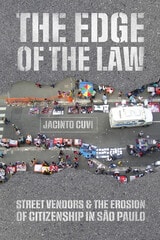
The Edge of the Law
Street Vendors and the Erosion of Citizenship in São PauloJacinto Cuvi
University of Chicago Press, 2025
With a little initiative and very little startup money, an outgoing individual might sell you a number of delights and conveniences familiar to city dwellers—from cold water bottles while you’re sitting in traffic to a popsicle from a cart on a summer afternoon in the park. Such vendors form a significant share of the workforce in São Paulo, Brazil, but their ubiquity belies perpetual struggle. Some have the right to practice their trade; others do not. All of them strive to make it—or stay afloat.
In The Edge of the Law, sociologist Jacinto Cuvi introduces us to the world of street vendors and teases out the relationship between the construction of legality and the experience of citizenship. As São Paulo’s city government undertakes a large-scale plan to cancel street vending licenses and evict street vendors, Cuvi reveals how the rights of informal workers can be revoked or withheld and how the lines can be redrawn between work that is “legal” and work that takes place under constant fear of law enforcement. Alongside the mechanics of disenfranchisement, Cuvi captures the lived experience of criminalization, dissecting the distribution of (shallow) rights among vendors who continually reinvent strategies to eke out a living while dealing with the constraints and pressures of informal citizenship at the edge of the law.
The Edges of the Medieval World
Gerhard Jaritz
Central European University Press, 2009
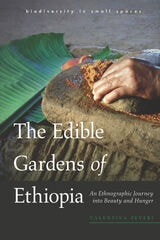
The Edible Gardens of Ethiopia
An Ethnographic Journey into Beauty and HungerValentina Peveri
University of Arizona Press, 2020
The ensete plant is only one among the many “unloved” crops that are marginalized and pushed close to disappearance by the advance of farming modernization and monocultural thinking. And yet its human companions, caught in a symbiotic and sensuous dialogue with the plant, still relate to each exemplar as having individual appearance, sensibility, charisma, and taste, as an epiphany of beauty and prosperity, and even believe that the plant can feel pain. Here a different story is recounted of these human-plant communities, one of reciprocal love at times practiced in an act of secrecy. The plot unfolds from the subversive and tasteful dimensions of gardening for subsistence and cooking in the garden of ensete through reflections on the cultural and edible dimensions of biodiversity to embrace hunger and beauty as absorbing aesthetic experiences in small-scale agriculture. Through this story, the reader will enter the material and spiritual world of ensete and contemplate it as a modest yet inspiring example of hope in rapidly deteriorating landscapes.
Based on prolonged engagement with this “virtuous” plant of southwestern Ethiopia, this book provides a nuanced reading of the ensete ventricosum (avant-)garden and explores how the life in tiny, diverse, and womanly plots offers alternative visions of nature, food policy, and conservation efforts.
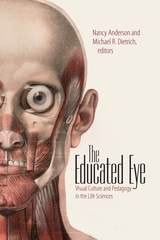
The Educated Eye
Visual Culture and Pedagogy in the Life SciencesEdited by Nancy Anderson
Dartmouth College Press, 2012
The Educated Underclass
Students and the False Promise of Social MobilityGary Roth
Pluto Press, 2019
The dream of social mobility is dying. Where previous generations routinely expected to surpass their parents' level of economic success, prospects for today's young people are increasingly bleak. What role does higher education play in the process? An essential and frightening one, according to author Gary Roth.
The Educated Underclass reveals the structural problems that are helping to create this problem. Gary Roth shows how universities—touted as the best way up the economic ladder for young people—actually reproduce traditional class hierarchies. And as more graduates emerge every year into economies that are no longer creating a steady stream of stable jobs, the odds of landing one decrease—and over-educated people end up scrapping for poorly compensated positions for which they're overqualified. Chapters include:
*Higher education and class
*The overproduction of intelligence
*Class in transition: historical background
*Underemployment through the decades
*Class status and economic instability
*And more!
Roth writes in his Introduction, “Education has become an intermediary institution between a social system that habitually sputters and declines while ever-greater amounts of consumer products are dangled in front of the system’s workforce. The result: a dynamic fraught with all sort of negative possibilities, both socially and psychotically.”
A broadside against the failures of our education system and our economy, Gary Roth’s The Educated Underclass aims to startle us out of our complacency and wake us up to action.
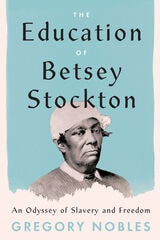
The Education of Betsey Stockton
An Odyssey of Slavery and FreedomGregory Nobles
University of Chicago Press, 2022
The life of Betsey Stockton (ca. 1798–1865) is a remarkable story of a Black woman’s journey from slavery to emancipation, from antebellum New Jersey to the Hawai‘ian Islands, and from her own self-education to a lifetime of teaching others—all told against the backdrop of the early United States’ pervasive racism. It’s a compelling chronicle of a critical time in American history and a testament to the courage and commitment of a woman whose persistence grew into a potent form of resistance.
When Betsey Stockton was a child, she was “given, as a slave” to the household of Rev. Ashbel Green, a prominent pastor and later the president of what is now Princeton University. Although she never went to school, she devoured the books in Green’s library. After being emancipated, she used that education to benefit other people of color, first in Hawai‘i as a missionary, then Philadelphia, and, for the last three decades of her life, Princeton—a college town with a genteel veneer that never fully hid its racial hostility. Betsey Stockton became a revered figure in Princeton’s sizeable Black population, a founder of religious and educational institutions, and a leader engaged in the day-to-day business of building communities.
In this first book-length telling of Betsey Stockton’s story, Gregory Nobles illuminates both a woman and her world, following her around the globe, and showing how a determined individual could challenge her society’s racial obstacles from the ground up. It’s at once a revealing lesson on the struggles of Stockton’s times and a fresh inspiration for our own.
The Education of Mrs. Henry Adams
Eugenia Kaledin
University of Massachusetts Press, 1994
Marian Hooper Adams—Clover, as her friends called her—was an accomplished photographer and a witty, irreverent free spirit who moved easily within the cultural circles of nineteenth-century Boston. Why, then, in 1882, at the age of forty-two, did she swallow a lethal dose of potassium cyanide? And why did her husband of thirteen years fail even to mention her in his autobiography, The Education of Henry Adams?
These and other questions are explored in this first paperback edition of Eugenia Kaledin's pathbreaking biography. The book recreates the intense intellectual, cultural, and moral life of Boston and New England before, during, and after the Civil War and helps us to understand what could drive such a gifted, intelligent, and privileged woman to take her own life. Included is a portfolio of Adams's photographs of her husband and his famous circle.
The Education of Things
Mechanical Literacy in British Children's Literature, 1762–1860Elizabeth Massa Hoiem
University of Massachusetts Press, 2023
Finalist for the 2025 SHARP Book History Book Prize
Winner of the 2025 Justin G. Schiller Prize for Bibliographical Work on Children’s Books from The Bibliographical Society of America
By the close of the eighteenth century, learning to read and write became closely associated with learning about the material world, and a vast array of games and books from the era taught children how to comprehend the physical world of “things.” Examining a diverse archive of popular science books, primers, grammars, toys, manufacturing books, automata, and literature from Maria Edgeworth, Jean-Jacques Rousseau, and Anna Letitia Barbauld, The Education of Things attests that material culture has long been central to children’s literature.
Elizabeth Massa Hoiem argues that the combination of reading and writing with manual tinkering and scientific observation promoted in late eighteenth- and early nineteenth-century Britain produced new forms of “mechanical literacy,” competencies that were essential in an industrial era. As work was repositioned as play, wealthy children were encouraged to do tasks in the classroom that poor children performed for wages, while working-class children honed skills that would be crucial to their social advancement as adults.
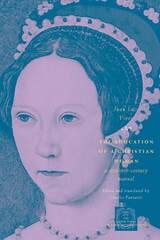
The Education of a Christian Woman
A Sixteenth-Century ManualJuan Luis Vives
University of Chicago Press, 2000
Praised by Erasmus and Thomas More, Vives advocated education for all women, regardless of social class and ability. From childhood through adolescence to marriage and widowhood, this manual offers practical advice as well as philosophical meditation and was recognized soon after publication in 1524 as the most authoritative pronouncement on the universal education of women. Arguing that women were intellectually equal if not superior to men, Vives stressed intellectual companionship in marriage over procreation, and moved beyond the private sphere to show how women's progress was essential for the good of society and state.
The Education of a WASP
Lois M. Stalvey
University of Wisconsin Press, 1989
Brimming with honestly and passion, The Education of a WASP chronicles one white woman's discovery of racism in 1960s America. First published in 1970 and highly acclaimed by reviewers, Lois Stalvey's account is as timely now as it was then. Nearly twenty years later, with ugly racial incidents occurring on college campuses, in neighborhoods, and in workplaces everywhere, her account of personal encounters with racism remains deeply disturbing. Educators and general readers interested in the subtleties of racism will find the story poignant, revealing, and profoundly moving.
“Delightful and horrible, a singular book.” —Choice
“An extraordinarily honest and revealing book that poses the issue: loyalty to one’s ethnic group or loyalty to conscience.” —Publishers Weekly
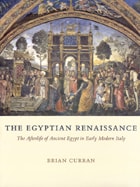
The Egyptian Renaissance
The Afterlife of Ancient Egypt in Early Modern ItalyBrian Curran
University of Chicago Press, 2007
Fascination with ancient Egypt is a recurring theme in Western culture, and here Brian Curran uncovers its deep roots in the Italian Renaissance, which embraced not only classical art and literature but also a variety of other cultures that modern readers don’t tend to associate with early modern Italy. Patrons, artists, and spectators of the period were particularly drawn, Curran shows, to Egyptian antiquity and its artifacts, many of which found their way to Italy in Roman times and exerted an influence every bit as powerful as that of their more familiar Greek and Roman counterparts.
Curran vividly recreates this first wave of European Egyptomania with insightful interpretations of the period’s artistic and literary works. In doing so, he paints a colorful picture of a time in which early moderns made the first efforts to decipher Egyptian hieroglyphs, and popes and princes erected pyramids and other Egyptianate marvels to commemorate their own authority. Demonstrating that the emergence of ancient Egypt as a distinct category of historical knowledge was one of Renaissance humanism’s great accomplishments, Curran’s peerless study will be required reading for Renaissance scholars and anyone interested in the treasures and legacy of ancient Egypt.

The Eighth Day
Social Evolution as the Self-Organization of EnergyBy Richard Newbold Adams
University of Texas Press, 1988
Can human social evolution be described in terms common to other sciences, most specifically, as an energy process? The Eighth Day reflects a conviction that the human trajectory, for all its uniqueness and indeterminism, will never be satisfactorily understood until it is framed in dynamics that are common to all of nature. The problem in doing this, however, lies in ourselves. The major social theories have failed to treat human social evolution as a component of broader natural processes.
The Eighth Day argues that the energy process provides a basis for explaining, comparing, and measuring complex social evolution. Using traditional ecological energy flow studies as background, society is conceived as a self-organization of energy. This perspective enables Adams to analyze society in term of the natural selection of self-organizing energy forms and the trigger processes basic to it. Domestication, civilization, socioeconomic development, and the regulation of contemporary industrial nation-states serve to illustrate the approach. A principal aim is to explore the limitation that energy process imposes on human social evolution as well as to clarify the alternatives that it allows.
Richly informed by contemporary anthropological historicism, sociobiology, and Marxism, The Eighth Day avoids simple reductionism and denies facile ideological categorization. Adams builds on work in nonequilibrium thermodynamics and theoretical biology and brings three decades of his own work to an analysis of human society that demands an extreme materialism in which human thought and action find a central place.

The El Mozote Massacre
Anthropology and Human RightsLeigh Binford
University of Arizona Press, 1996
Such reportage, argues anthropologist Leigh Binford, sustains the perception that the lives of Third World people are only newsworthy when some great tragedy strikes. He critiques the practices of journalists and human rights organizations for their dehumanizing studies of "subjects" and "victims." Binford suggests that such accounts objectify the people involved through statistical analyses and bureaucratic body counts while the news media sensationalize the motives and personalities of the perpetrators.
In relating the story of this tragic event, Binford restores a sense of history and social identity to the fallen people of this Salvadoran village. Drawing on interviews he conducted with El Mozote-area residents, he offers a rich ethnographic and personal account of their lives prior to the tragedy. He provides an overview of the history and culture of the area and tells how such a massacre could have happened, why it was covered up, and why it could happen again.

The El Mozote Massacre
Human Rights and Global Implications Revised and Expanded EditionLeigh Binford
University of Arizona Press, 2016
Almost two decades later, the consequences of the massacre continue to reverberate through the country’s legal and socioeconomic systems. The El Mozote Massacre, 2nd Edition brings together new evidence to address reconstruction, historical memory, and human rights issues resulting from what may be the largest massacre in modern Latin American history.
With a multitude of additions, including three new chapters, an extended chronology, discussion of the hearing and ruling of the Inter-American Court of Human Rights in 2012, and evidence gathered throughout half a dozen field trips made by the author, Binford presents a current perspective on the effects of this tragic moment in history. Thanks to geographically expanded fieldwork, Binford offers critical discussion of postwar social, economic, religious, and social justice in El Mozote, and adds important new regional, national, and global contexts.
The El Mozote Massacre, 2nd Edition maintains the crucial presence of the massacre in human rights discussions for El Salvador, Latin America, and the world.
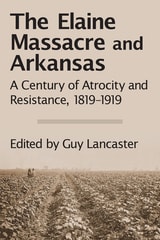
The Elaine Massacre and Arkansas
A Century of Atrocity and Resistance, 1819-1919Guy Lancaster
Butler Center for Arkansas Studies, 2018
We cannot fully understand what happened at Elaine without examining the one hundred years leading up to the massacre. An analysis of the years from 1819, when Arkansas officially became an American territory, to 1919 provides the historical foundation for understanding one of the bloodiest manifestations of racial violence in U.S. history.
During the antebellum years, slaveholders grew paranoid about possible “insurrections,” and after the Civil War and Emancipation, these fears lingered and led to numerous atrocities long before Elaine. At the same time, African Americans—particularly fieldworkers—worked to organize themselves to resist oppression, setting the stage for the farmers’ union that was the target for mob and military wrath during the Elaine Massacre.
These essays provide the larger history necessary for understanding what happened at Elaine in 1919—and thus provide a window into the current state of Arkansas and the nation at large. Contributors include Richard Buckelew, Nancy Snell Griffith, Matthew Hild, Adrienne Jones, Kelly Houston Jones, Cherisse Jones-Branch, Brian K. Mitchell, William H. Pruden III, and Steven Teske.
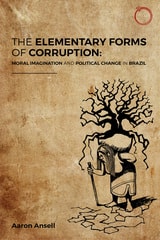
The Elementary Forms of Corruption
Moral Imagination and Political Change in BrazilAaron Ansell
HAU, 2025
The Elementary Forms of Corruption is an ethnographic history of rural Brazilians’ shifting moral imagination in the context of their country’s recent corruption scandals and political crises. The book explores how Brazil’s cosmopolitan models of corruption, both left-wing and right-wing varieties, found their way to a small sertanejo (hinterland) municipality in the northeast, where people understood corruption very differently. Reckoning with both the leftist Workers’ Party, which sought to liberate sertanejos from patron-client relations, and the New Right populists who sought to stamp out the “communists” threatening the patriarchal family, the people of the sertanejo made recourse to older ideas about corruption—such as the betrayal of kinship obligations and communal trust—to decipher and shape national politics.
Challenging the discipline’s current aversion to generalizable, analytic categories that are useful for comparison across cultures or historical periods, The Elementary Forms of Corruption posits a general framework for understanding corruption at its most elementary level: the degradation of a moral gradient through the transgressive rechanneling of those currencies (e.g., gifts, favors) that sustain communal bonds when properly directed.
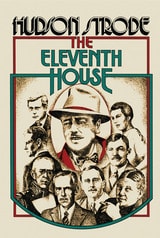
The Eleventh House
MemoirsHudson Strode, Introduction by Don Noble
University of Alabama Press, 1975
Why should Hudson Strode matter to readers today? Because his life was a masterclass in reinvention and a backstage pass to the Jazz Age’s wittiest salons. Strode wasn’t just a professor in Tuscaloosa; he was a cultural impresario who turned a modest Southern life into a global adventure. He taught generations of writers, staged Shakespeare with bravura, and wrote travel books that earned him a knighthood from the King of Sweden.
But the real allure? The gossip. Strode dined with Lady Astor, traded quips with H. L. Mencken, and sipped cocktails with Zelda and Scott Fitzgerald when they were the incandescent couple of the 1920s. He met Hemingway in Cuba, Robinson Jeffers in Carmel, and Isak Dinesen in Denmark—then wrote about them with candor and charm. His memoir brims with stories of literary giants, royal encounters, and the occasional eyebrow-raising escapade (ask him about the brothel in Birmingham).
For contemporary readers, The Eleventh House is both a captivating autobiography and a time capsule of ambition, art, and audacity. Strode’s world—where Southern gentility collided with European modernism and Jazz Age excess—feels startlingly relevant in an era obsessed with reinvention and celebrity culture. If you’ve ever wondered what it was like to gossip with the Fitzgeralds or watch the devil admire himself in a porch mirror, this memoir delivers.
Step inside Hudson Strode’s The Eleventh House. It’s witty, worldly, and just scandalous enough to keep you turning pages.
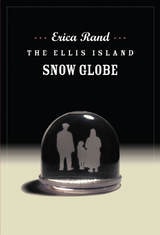
The Ellis Island Snow Globe
Erica Rand
Duke University Press, 2005
Rand notes that portrayals of the Statue of Liberty as a beacon for immigrants tend to suppress the Statue’s connections to people brought to this country by force. She examines what happened to migrants at Ellis Island whose bodies did not match the gender suggested by the clothing they wore. In light of contemporary ideas about safety and security, she examines the “Decide an Immigrant’s Fate” program, which has visitors to Ellis Island act as a 1910 board of inspectors hearing the appeal of an immigrant about to be excluded from the country. Rand is a witty, insightful, and open-minded tour guide, able to synthesize numerous diverse ideas—about tourism, immigration history, sexuality, race, ethnicity, commodity culture, and global capitalism—and to candidly convey her delight in her Ellis Island snow globe. And pen. And lighter. And back scratcher. And golf ball. And glittery pink key chain.
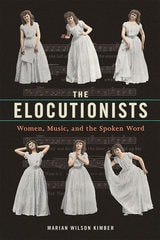
The Elocutionists
Women, Music, and the Spoken WordMarian Wilson Kimber
University of Illinois Press, 2017
Marian Wilson Kimber restores elocution with music to its rightful place in performance history. Gazing through the lenses of gender and genre, Wilson Kimber argues that these female artists transgressed the previous boundaries between private and public domains. Their performances advocated for female agency while also contributing to a new social construction of gender. Elocutionists, proud purveyors of wholesome entertainment, pointedly contrasted their "acceptable" feminine attributes against those of morally suspect actresses. As Wilson Kimber shows, their influence far outlived their heyday. Women, the primary composers of melodramatic compositions, did nothing less than create a tradition that helped shape the history of American music.
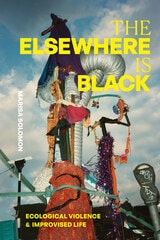
The Elsewhere Is Black
Ecological Violence and Improvised LifeMarisa Solomon
Duke University Press, 2025
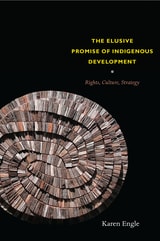
The Elusive Promise of Indigenous Development
Rights, Culture, StrategyKaren Engle
Duke University Press, 2010
Conceiving indigenous rights as cultural rights, Engle argues, has largely displaced or deferred many of the economic and political issues that initially motivated much indigenous advocacy. She contends that by asserting static, essentialized notions of indigenous culture, indigenous rights advocates have often made concessions that threaten to exclude many claimants, force others into norms of cultural cohesion, and limit indigenous economic, political, and territorial autonomy.
Engle explores one use of the right to culture outside the context of indigenous rights, through a discussion of a 1993 Colombian law granting collective land title to certain Afro-descendant communities. Following the aspirations for and disappointments in this law, Engle cautions advocates for marginalized communities against learning the wrong lessons from the recent struggles of indigenous peoples at the international level.
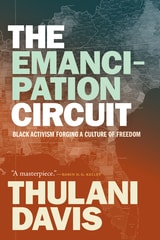
The Emancipation Circuit
Black Activism Forging a Culture of FreedomThulani Davis
Duke University Press, 2022
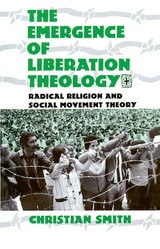
The Emergence of Liberation Theology
Radical Religion and Social Movement TheoryChristian Smith
University of Chicago Press, 1991

The Emergence of Social Space
Rimbaud and the Paris CommuneKristin RossForeword by Terry Eagleton
University of Minnesota Press, 1989
Central to her analysis of the Commune as social space and oppositional culture is a close textual reading of Arthur Rimbaud’s poetry. His poems - a common thread running through the book - are one set of documents among many in Ross’s recreation of the Communard experience. Rimbaud, Paul Lafargue, and the social geographer Elisee Reclus serve as emblematic figures moving within and on the periphery of the Commune; in their resistance to the logic and economy of a capitalist conception of work, in their challenge to work itself as a term of identity, all three posed a threat to the existing order. Ross looks at these and other emancipator notions as aspects of Communard life, each with an analogous strategy in Rimbaud’s poetry. Applying contemporary theory to a wealth of little-known archival material, she has written a fresh, persuasive, and original book.
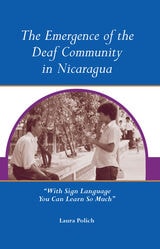
The Emergence of the Deaf Community in Nicaragua
“With Sign Language You Can Learn So Much”Laura Polich
Gallaudet University Press, 2005
The sudden discovery of Nicaraguan Sign Language (NSL) enthralled scholars worldwide who hoped to witness the evolution of a new language. But controversy erupted regarding the validity of NSL as a genuinely spontaneous language created by young children. Laura Polich’s fascinating book recounts her nine-year study of the Deaf community in Nicaragua and her findings about its formation and that of NSL in its wake.
Polich crafted The Emergence of the Deaf Community in Nicaragua from her copious research in Nicaragua’s National Archives, field observations of deaf pupils in 20 special education schools, polls of the teachers for deaf children about their education and knowledge of deafness, a survey of 225 deaf individuals about their backgrounds and living conditions, and interviews with the oldest members of the National Nicaraguan Association of the Deaf.
Polich found that the use of a “standardized” sign language in Nicaragua did not emerge until there was a community of users meeting on a regular basis, especially beyond childhood. The adoption of NSL did not happen suddenly, but took many years and was fed by multiple influences. She also discovered the process that deaf adolescents used to attain their social agency, which gained them recognition by the larger Nicaraguan hearing society. Her book illustrates tremendous changes during the past 60 years, and the truth in one deaf Nicaraguan’s declaration, “With sign language you can learn so much.”
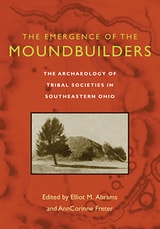
The Emergence of the Moundbuilders
The Archaeology of Tribal Societies in Southeastern OhioElliot M. Abrams
Ohio University Press, 2004
Native American societies, often viewed as unchanging, in fact experienced a rich process of cultural innovation in the millennia prior to recorded history. Societies of the Hocking River Valley in southeastern Ohio, part of the Ohio River Valley, created a tribal organization beginning about 2000 bc.
Edited by Elliot M. Abrams and AnnCorinne Freter, The Emergence of the Moundbuilders: The Archaeology of Tribal Societies in Southeastern Ohio presents the process of tribal formation and change in the region based on analyses of all available archaeological data from the Hocking River Valley. Drawing on the work of scholars in archaeology, anthropology, geography, geology, and botany, the collection addresses tribal society formation through such topics as the first pottery made in the valley, aggregate feasting by nomadic groups, the social context for burying their dead in earthen mounds, the formation of religious ceremonial centers, and the earliest adoption of corn.
Providing the most current research on indigenous societies in the Hocking Valley, The Emergence of the Moundbuilders is distinguished by its broad, comparative overview of tribal life.
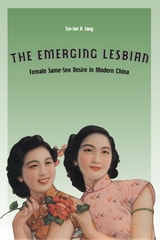
The Emerging Lesbian
Female Same-Sex Desire in Modern ChinaTze-Lan D. Sang
University of Chicago Press, 2003
In this first ever book-length study of Chinese lesbians, Tze-lan D. Sang convincingly ties the debate over female same-sex love in China to the emergence of Chinese modernity. As women's participation in social, economic, and political affairs grew, Sang argues, so too did the societal significance of their romantic and sexual relations. Focusing especially on literature by or about women-preferring women, Sang traces the history of female same-sex relations in China from the late imperial period (1600-1911) through the Republican era (1912-1949). She ends by examining the reemergence of public debate on lesbians in China after Mao and in Taiwan after martial law, including the important roles played by globalization and identity politics.

The Emigrants
George Lamming
University of Michigan Press, 1994
This is the epic journey of a group of West Indians who emigrate to Great Britain in the 1950s in search of educational opportunities unattainable at home. Seeking to redefine themselves in the "mother country," an idealized landscape that they have been taught to revere, the emigrants settle uncomfortably in England's industrial cities. Within two years, ghettoization is firmly in place. The emigrants discover the meaning of their marginality in the British Empire in an environment that is unexpectedly hostile and strange. For some, alienation prompts a new sense of community, a new sense of identity as West Indians. For others, alienation leads to a crisis of confrontation with the law and fugitive status.
There is a wealth of information here about the genesis of the black British community and about the cultural differences between the black British and West Indian/Caribbean.