Results by title
18284 books match the query 'United States' and 3764 start with t
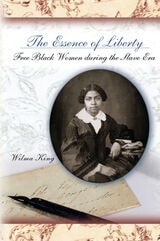
The Essence of Liberty
Free Black Women During the Slave EraWilma King
University of Missouri Press, 2006
The Essence of Liberty blends social, political, and economic history to analyze black women’s experience in both the North and the South, from the colonial period through emancipation. Focusing on class and familial relationships, King examines the myriad sources of freedom for black women to show the many factors that, along with time spent in slavery before emancipation, shaped the meaning of freedom. Her book also raises questions about whether free women were bound to or liberated from gender conventions of their day.
Drawing on a wealth of untapped primary sources—not only legal documents and newspapers but also the diaries, letters, and autobiographical writings of free women—King opens a new window on the world of black women. She examines how they became free, educated themselves, found jobs, maintained self-esteem, and developed social consciousness—even participating in the abolitionist movement. She considers the stance of southern free women toward their enslaved contemporaries and the interactions between previously free and newly freed women after slavery ended. She also looks closely at women’s spirituality, disclosing the dilemma some women faced when they took a stand against men—even black men—in order to follow their spiritual callings.
Throughout this engaging history, King underscores the pernicious constraints that racism placed on the lives of free blacks in spite of the fact that they were not enslaved. The Essence of Liberty shows the importance of studying these women on their own terms, revealing that the essence of freedom is more complex than the mere absence of shackles.
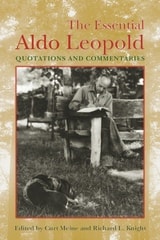
The Essential Aldo Leopold
Quotations and CommentariesEdited by Curt D. Meine and Richard L. Knight
University of Wisconsin Press, 1999
For the first time, the most important quotations of the great conservationist Aldo Leopold, author of A Sand County Almanac, are gathered in one volume. From conservation education to wildlife ecology, from wilderness protection to soil and water conservation, the writings of Aldo Leopold continue to have profound influence on those seeking to understand the earth and its care. Leopold biographer Curt Meine and noted conservation biologist Richard Knight have assembled this comprehensive collection of quotations from Leopold’s extensive and diverse writings, selected and organized to capture the richness and depth of the North American conservation movement.
Prominent biologists, conservationists, historians, and philosophers provide introductory commentaries describing Leopold’s contributions in varied fields and reflecting upon the significance of his work today.
Contributors:
J. Baird Callicott
David Ehrenfeld
Susan L. Flader
Eric T. Freyfogle
Wes Jackson
Paul W. Johnson
Joni L. Kinsey
Richard L. Knight
Gary K. Meffe
Curt Meine
Gary Paul Nabhan
Richard Nelson
Bryan G. Norton
David W. Orr
Edwin P. Pister
Donald Snow
Stanley A. Temple
Jack Ward Thomas
Charles Wilkinson
Terry Tempest Williams
Donald Worster
Joy B. Zedler
The Essential Eldercare Handbook for Nevada
Kim Boyer
University of Nevada Press, 2014
Boyer and Shapiro provide Nevada-specific information\--medical, legal, and financial\--on the wide range of problems that arise during the elder years. Case studies show how a typical family copes with troubles such as failing health or financial cares and what options they have. This guide will help any Nevada resident plan for their own senior years and take care of aging parents, spouses, and other loved ones.
The Essential Guide to Aging in the Twenty-First Century
Mind, Body, and BehaviorDonald H. Kausler, Barry C. Kausler & Jill A. Krupsaw
University of Missouri Press, 2007
For more than a decade, The Graying of America has helped thousands of middle-aged and senior citizens find their way through the thickets and thorns of growing old. Now greatly revised and expanded to include information gleaned from studies of the past five years, this third edition has been retitled to stress its ongoing purpose: conveying a wealth of commonsense information for general readers in nontechnical language.
The book is a storehouse of concise, useful information on the effects of aging on health, the mind, and behavior. Its 588 entries (including 172 new and 150 substantially revised) cover a broad spectrum of topics—from adjusting to retirement to grandparenting, sleep disorders to Alzheimer’s disease. All are directed to the average reader; all stress successful aging and how to accomplish it.
New entries cover such topics as the incidence and causes of frailty, the cognitive benefits of diversified activity, and findings of the Women’s Health Initiative. There is new information on matters like the effects of untreated hearing impairment on spouses and the impact of insufficient exposure to sunlight on sleep, plus new insight into what to look for in searching for a quality nursing home for a loved one.
Also included are results of recent studies on interventions that help to reduce age-related declines in mental and physical health, among them revelations that reports on age-related declines in memory have been skewed by testing errors. And with memory a concern for seniors fearful of declining mental agility, the book tells how to bypass memory problems—such as how to remember where you parked your car—and how physical exercise and challenging mental games can help reduce the risk of dementia. Other “how to avoid” entries offer ways to protect against eye fatigue in computer use, hip fractures when falling, and back injuries while lifting heavy objects.
No other book is so specifically geared to the challenges of how to reduce or even eliminate many of the problems associated with growing old. Aging in the Twenty-First Century can help seniors come to grips with their own aging process—and help younger adults understand what is happening to older family members.
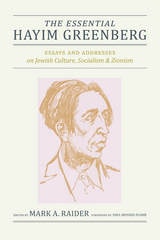
The Essential Hayim Greenberg
Essays and Addresses on Jewish Culture, Socialism, and ZionismHayim Greenberg, Edited and introduced by Mark Raider, Foreword by Paul Mendes-Flohr
University of Alabama Press, 2016
This collection of thoroughly annotated essays, spanning the 1920s to the early 1950s, includes Greenberg’s meditations on socialism and ethics, profiles of polarizing twentieth-century figures (among them Trotsky, Lenin, and Gandhi), and several essays investigating the compatibility of socialism and communism. Greenberg always circles back, however, to the recurring question of how Jews might situate themselves in modernity, both before and after the Holocaust, and how Labor Zionist ideology might reshape the imbalances of Jewish economic life.
Alongside his role as an American Zionist leader, Greenberg maintained a lifelong commitment to the vitality of the Jewish diaspora. Rather than promoting Jewish autonomy and statehood, he argued for fidelity to the Jewish spirit. This volume not only seeks to restore Greenberg to his previous stature in the field of Judaic studies but also to return a vital and authentic voice, long quieted, to the continuing debate over what it means to be Jewish.
The Essential Hayim Greenberg provides an accessible text for scholars, historians, and students of Jewish studies, religion, and theology.
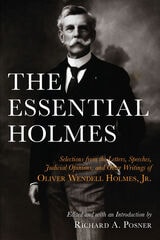
The Essential Holmes
Selections from the Letters, Speeches, Judicial Opinions, and Other Writings of Oliver Wendell Holmes, Jr.Oliver Wendell Holmes
University of Chicago Press, 1992
"A first-rate prose stylist, [Holmes] was perhaps the most quotable of all judges, as this ably edited volume shows."—Washington Post Book World
"Brilliantly edited, lucidly organized, and equipped with a compelling introduction by Judge Posner, [this book] is one of the finest single-volume samplers of any author's work I have seen. . . . Posner has fully captured the acrid tang of him in this masterly anthology."—Terry Teachout, National Review
"Excellent. . . . A worthwhile contribution to current American political/legal discussions."—Library Journal
"The best source for the reader who wants a first serious acquaintance with Holmes."—Thomas C. Grey, New York Review of Books
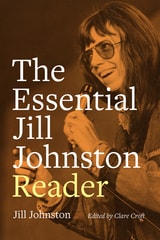
The Essential Jill Johnston Reader
Jill Johnston. Edited by Clare Croft
Duke University Press, 2024

The Essential Lapsit Guide
A Multimedia How-To-Do-It Manual and Programming Guide for Stimulating Literacy Development from 12 to 24 MonthsLinda L. Ernst
American Library Association, 2015
Not just a sourcebook or a reference, but a complete multimedia guide, this innovative, comprehensive resource will help you stimulate the minds of your youngest patrons with rhymes, songs, fingerplays, books, and other creative activities. The engaging materials and methods in this book are equally useful for experienced children's librarians looking for new ideas and new librarians starting to build their own program for the very young. Through researching the latest in early learner and developmental theories, Ernst
- Carefully details the physical, mental, emotional, and social development of children 12 to 24 months
- Guides you through using Lapsit programming to perform effective outreach to all segments of your community
- Shows how to build and maintain effective partnerships with caregivers, child-care providers, early childhood educators, and others
- Offers tips for seeking funding for early childhood services
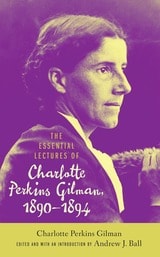
The Essential Lectures of Charlotte Perkins Gilman, 1890–1894
Charlotte Perkins Gilman Edited and with an introduction by Andrew J. Ball
University of Alabama Press, 2024
A foundational archive of Gilman’s early feminist, sociological, and philosophical thought, revealing the origins of a major American intellectual tradition.
The last decades have seen a resurgence of interest in Charlotte Perkins Gilman, now considered among the most important thinkers in US history. She is best known for fiction—such as the classic short story “The Yellow Wall-Paper” (1892)—and nonfiction, including her manifesto Women and Economics (1898), a work of intersectional sociology avant la lettre. Nevertheless, as a young writer, Gilman made her living delivering lectures. One cannot know Gilman without some knowledge of this body of lectures; this book fills that critical gap in Gilman scholarship.
Since the recovery of Charlotte Perkins Gilman began in the late 1960s and continued with the republication of “The Yellow Wall-Paper” in the 1970s, her image in cultural memory has been increasingly celebrated. Andrew J. Ball presents here fifty previously unpublished texts. They trace the development of Gilman’s thoughts on diverse subjects like gender, education, labor, science, theology, and politics—forming an intellectual diary of her growth.
These lectures are not just a testament to Gilman’s personal evolution, but also a crucial contribution to the foundations of American sociology and philosophy. The Essential Lectures of Charlotte Perkins Gilman, 1890–1894 marks a historic moment, unveiling the hidden genius of Gilman's oratory legacy.
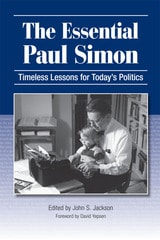
The Essential Paul Simon
Timeless Lessons for Today's PoliticsEdited by John S. Jackson. Foreword by David Yepsen
Southern Illinois University Press, 2012
While Simon covered a broad spectrum of topics in his written works, his mission throughout the years remained the same: to urge his constituents to study and understand issues that affected their daily lives and to make the complexities of politics accessible to the average citizen. An indispensable volume for voters and politicians alike, The Essential Paul Simon compiles some of the most thought-provoking writings from one of the keenest political minds in our nation’s history. Years after their publication, Simon’s eloquent and energetic conversations continue to provide witty, informative guidance through the maze of American politics and inspire the development of spirited public discussion and debate.
Certificate of Excellence from the Illinois State Historical Society, 2013
The Ethics and Politics of Speech
Communication and Rhetoric in the Twentieth CenturyPat J. Gehrke
Southern Illinois University Press, 2009
In The Ethics and Politics of Speech, Pat J. Gehrke provides an accessible yet intensive history of the speech communication discipline during the twentieth century. Drawing on several previously unpublished or unexamined sources—including essays, conference proceedings, and archival documents—Gehrke traces the evolution of communication studies and the dilemmas that often have faced academics in this field. In his examination, Gehrke not only provides fresh perspectives on old models of thinking; he reveals new methods for approaching future studies of ethical and political communication.
Gehrke begins his history with the first half of the twentieth century, discussing the development of a social psychology of speech and an ethics based on scientific principles, and showing the importance of democracy to teaching and scholarship at this time. He then investigates the shift toward philosophical—especially existential—ways of thinking about communication and ethics starting in the 1950s and continuing through the mid-1970s, a period associated with the rise of rhetoric in the discipline. In the chapters covering the last decades of the twentieth century, Gehrke demonstrates how the ethics and politics of communication were directed back onto the practices of scholarship within the discipline, examining the increased use of postmodern and poststructuralist theories, as well as the new trend toward writing original theory, rather than reinterpreting the past. In offering a thorough history of rhetoric studies, Gehrke sets the stage for new questions and arguments, ultimately emphasizing the deeply moral and political implications that by nature embed themselves in the field of communication.
More than simply a history of the discipline's major developments, The Ethics and Politics of Speech is an account of the philosophical and moral struggles that have faced communication scholars throughout the last century. As Gehrke explores the themes and movements within rhetoric and speech studies of the past, he also provides a better understanding of the powerful forces behind the forging of the field. In doing so, he reveals history’s potential to act as a vehicle for further academic innovation in the future.
The Ethics of Oneness
Emerson, Whitman, and the Bhagavad GitaJeremy David Engels
University of Chicago Press, 2021
In The Ethics of Oneness, Jeremy David Engels reads the Bhagavad Gita alongside the works of American thinkers Ralph Waldo Emerson and Walt Whitman. Drawing on this rich combination of traditions, Engels presents the notion that individuals are fundamentally interconnected in their shared divinity. In other words, everything is one. If the lessons of oneness are taken to heart, particularly as they were expressed and celebrated by Whitman, and the ethical challenges of oneness considered seriously, Engels thinks it is possible to counter the pervasive and problematic American ideals of hierarchy, exclusion, violence, and domination.
The Ethnobotanical Laboratory at the University of Michigan
Melvin R. Gilmore
University of Michigan Press, 1932
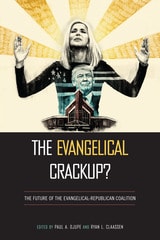
The Evangelical Crackup?
The Future of the Evangelical-Republican CoalitionEdited by Paul Djupe and Ryan L. Claassen
Temple University Press, 2019
Why did Donald Trump attract a record number of white evangelical voters without unified support—and despite nontrivial antipathy from evangelical leaders? The editors and leading scholars that contribute to the timely volume The Evangelical Crackup? answer this question and provide a comprehensive assessment of the status of evangelicals and the Christian Right in the Republican coalition.
The expected “crackup” with the Republican Party never happened. Each chapter in this cogent volume includes analyses of the 2016 election to explain why—and why that is critical. Chapters examine policy priorities, legal advocacy, and evangelical loyalty to the Republican Party; rhetoric, social networks, and evangelical elite influence; and the political implications of movements within evangelicalism, such as young evangelicals, Hispanics, and the Emergent Church movement.
Contributors include: Daniel Bennett, Mark Brockway, Ryan P. Burge, Brian R. Calfano, Jeremy Castle, Kimberly Conger, Daniel A. Cox, Kevin den Dulk, Sarah Allen Gershon, Tobin Grant, Robert P. Jones, Geoffrey Layman, Andrew R. Lewis, Ronald J. McGauvran, Joshua Mitchell, Juhem Navarro-Rivera, Jacob R. Neiheisel, Elizabeth Oldmixon, Adrian D. Pantoja, David Searcy, Anand Edward Sokhey, J. Benjamin Taylor, Robert Wuthnow, and the editors.
The Evolution of American Investigative Journalism
James L. Aucoin
University of Missouri Press, 2007
The Evolution of American Legislatures
Colonies, Territories, and States, 1619-2009Peverill Squire
University of Michigan Press, 2014
The institutional development of American legislatures, beginning with the first colonial assembly of 1619, has been marked by continuity as well as change. Peverill Squire draws upon a wealth of primary sources to document this institutional history. Beginning with the ways in which colonial assemblies followed the precedents of British institutions, Squire traces the fundamental ways they evolved to become distinct. He next charts the formation of the first state legislatures and the Constitutional Congress, describes the creation of territorial and new state legislatures, and examines the institutionalization of state legislatures in the nineteenth century and their professionalization since 1900.
With his conclusion, Squire discusses the historical trajectory of American legislatures and suggests how they might further develop over the coming decades. While Squire's approach will appeal to historians, his focus on the evolution of rules, procedures, and standing committee systems, as well as member salaries, legislative sessions, staff, and facilities, will be valuable to political scientists and legislative scholars.
The Evolution of Calusa
A Nonagricultural Chiefdom of the Southwest Florida CoastRandolph J. Widmer
University of Alabama Press, 1988
The aims of this study are twofold: compile, for the first time, all the archaeological, environmental, and geological data pertinent to the evolution of the aboriginal inhabitants of southwest Florida; and, using this basis, develop a specific, integrated, and dynamic model of cultural adaptation that will serve as a stimulus for hypotheses that go beyond simple culture-historical concerns for future archaeological research in this region.
The Evolution of Investing at the University of Michigan
1817–2016Rafael E. Castilla and William P. Hodgeson
Michigan Publishing Services, 2017

The Evolution of Political Knowledge
THEORY AND INQUIRY IN AMERICAN POLITICSEdited by Edward D. Mansfield and Richard Sisson
The Ohio State University Press, 2003
The Evolution of Retirement
An American Economic History, 1880-1990Dora L. Costa
University of Chicago Press, 1998
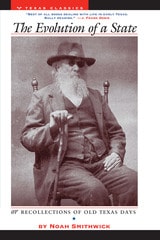
The Evolution of a State, or, Recollections of Old Texas Days
By Noah Smithwick
University of Texas Press, 1983
"I was but a boy in my nineteenth year, and in for adventure when I started out from Hopkinsville, Kentucky, with all my worldly possessions, consisting of a few dollars in money, a change of clothes, and a gun, of course, to seek my fortune in this lazy man's paradise."
Noah Smithwick was an old man, blind and near his ninetieth year, when his daughter recorded these words. He had stayed on in "paradise"—Texas—from 1827 to 1861, when his opposition to secession took him to California. The Evolution of a State is his story of these "old Texas days."
A blacksmith and a tobacco smuggler, Noah Smithwick made weapons for the Battle of Concepción, and he fought in that battle. With Hensley's company, he chased the Mexican army south of the Rio Grande after the Battle of San Jacinto. Twice he served with the Texas Rangers. In quieter times, he was a postmaster and justice of the peace in little Webber's Prairie.
Eyewitness to so much Texas history, Smithwick recounts his life and adventures in a simple, straightforward style, with a wry sense of humor. His keen memory for detail—what the people wore, what they ate, how they worked and played— vividly evokes the sights, sounds, and smells of the frontier.
First published in part by the Dallas Morning News, Smithwick's recollections gained such popularity that they were published in book form, as The Evolution of a State, in 1900. This new edition of a Texas classic makes widely available for the first time in many years this "best of all books dealing with life in early Texas."
The Ex-Prisoner's Dilemma
How Women Negotiate Competing Narratives of Reentry and DesistanceLeverentz, Andrea M
Rutgers University Press, 2014
When a woman leaves prison, she enters a world of competing messages and conflicting advice. Staff from prison, friends, family members, workers at halfway houses and treatment programs all have something to say about who she is, who she should be, and what she should do. The Ex-Prisoner’s Dilemma offers an in-depth, firsthand look at how the former prisoner manages messages about returning to the community.
Over the course of a year, Andrea Leverentz conducted repeated interviews with forty-nine women as they adjusted to life outside of prison and worked to construct new ideas of themselves as former prisoners and as mothers, daughters, sisters, romantic partners, friends, students, and workers. Listening to these women, along with their family members, friends, and co-workers, Leverentz pieces together the narratives they have created to explain their past records and guide their future behavior. She traces where these narratives came from and how they were shaped by factors such as gender, race, maternal status, age, and experiences in prison, halfway houses, and twelve-step programs—factors that in turn shaped the women’s expectations for themselves, and others’ expectations of them. The women’s stories form a powerful picture of the complex, complicated human experience behind dry statistics and policy statements regarding prisoner reentry into society for women, how the experience is different for men and the influence society plays.
With its unique view of how society’s mixed messages play out in ex-prisoners’ lived realities, The Ex-Prisoner’s Dilemma shows the complexity of these women’s experiences within the broad context of the war on drugs and mass incarceration in America. It offers invaluable lessons for helping such women successfully rejoin society.

The Example of Edward Taylor
Karl Keller
University of Massachusetts Press, 1975
The Execution of Private Slovik
William Bradford Huie
Westholme Publishing, 2004
The Execution of Private Slovik
William Bradford Huie
Westholme Publishing, 2020
Seventy-Five Years Ago, the Last American Soldier Who Paid the Ultimate Price for Desertion
A New Edition of the Acclaimed Investigative Story
In August 1944, a drab convoy of raw recruits destined to join the 28th Division lumbered along a windy French road strewn with dead animals, shattered bodies, and burning equipment. One of those draftees was 24-year-old Eddie Slovik, a petty thief from Detroit who had spent his youth in and out of reform schools. Eddie's luck had recently changed, however, with a steady factory job and marriage to a beautiful girl who gave Eddie hope and security for the first time in his life. But their honeymoon—like that of many other wartime newlyweds—was interrupted by the call to service. The convoy came under intense artillery fire, and in the confusion Slovik became separated from his unit. He joined a Canadian outfit and traveled with them before finally reporting to the 28th Division. He carried a rifle but no ammunition. He was assigned to a platoon but walked away. Refusing to kill, Slovik was arrested, court martialed, and condemned to death. Hundreds of soldiers were tried for desertion during World War II and sentenced to die, but only Eddie Slovik paid the price, supposedly as a deterrent, yet word of the nature of his death was never officially released to the public.
In The Execution of Private Slovik, considered to be among the best investigative books ever written, journalist and author William Bradford Huie reconstructs this entire story with the full cooperation of the U.S. Army in order to find out what made Eddie Slovik an unlikely pacifist and why the affair was covered up. Through interviews with those who knew him and the hundreds of letters to his wife, the author reveals a hard luck depression-era kid who when faced with the reality of war realized that he simply could not kill another human being. Throughout, Huie reveals how Eddie Slovik's death has much to tell us about life and duty to one's country. This edition marking the seventy-fifth anniversary of the sentence being carried out, contains a new introduction by the author's daughter.
Praise for The Execution of Private Slovik:
"In the hands of an expert, who writes both passionately and with an almost transparent effort to be fair to all concerned, the story raises questions to which our wisest leaders still lack satisfying answers."
—New York Times
"A remarkable story reported by a master."—W. E. B. Griffin
"Recommended reading for all military historians."—Military Affairs
"Tremendously moving."—The Atlantic
"It is very likely that William Bradford Huie's The Execution of Private Slovikwill long survive the official histories of World War II. It is a big book and Mr. Huie deserves some sort of rich reward for this unburying of an incident of the war which must disturb us all. For Slovik was more than a 'coward.' He not only did not want to die but he did not want to kill, and one must look far in literature for a figure so moving as Private Slovik wandering about Europe not with bullets in his cartridge belt but with writing paper. The question is not 'How might we improve military procedures?' The question is, 'What has happened to love in our world when he who would rather love than kill must die?'"—from a letter to the New York Times
The Exhaustion of Difference
The Politics of Latin American Cultural StudiesAlberto Moreiras
Duke University Press, 2001
What, asks Moreiras, is the function of critical reason in the present moment? What is regionalistic knowledge in the face of globalization? Can regionalistic knowledge be an effective tool for a critique of contemporary reason? What is the specificity of Latin Americanist reflection and how is it situated to deal with these questions? Through examinations of critical regionalism, restitutional excess, the historical genealogy of Latin American subalternism, testimonio literature, and the cultural politics of magical realism, Moreiras argues that while cultural studies is increasingly institutionalized and in danger of reproducing the dominant ideologies of late capitalism, it is also ripe for giving way to projects of theoretical reformulation. Ultimately, he claims, critical reason must abandon its allegiance to aesthetic-historicist projects and the destructive binaries upon which all cultural theories of modernity have been constructed.
The Exhaustion of Difference makes a significant contribution to the rethinking of Latin American cultural studies.
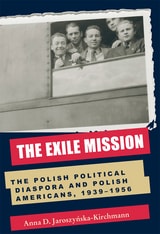
The Exile Mission
The Polish Political Diaspora and Polish Americans, 1939–1956Anna D. Jaroszynska-Kirchmann
Ohio University Press, 2009
At midcentury, two distinct Polish immigrant groups—those Polish Americans who were descendants of economic immigrants from the turn of the twentieth century and the Polish political refugees who chose exile after World War II and the communist takeover in Poland—faced an uneasy challenge to reconcile their concepts of responsibility toward the homeland.
The new arrivals did not consider themselves simply as immigrants, but rather as members of the special category of political refugees. They defined their identity within the framework of the exile mission, an unwritten set of beliefs, goals, and responsibilities, placing patriotic work for Poland at the center of Polish immigrant duties.
In The Exile Mission, an intriguing look at the interplay between the established Polish community and the refugee community, Anna Jaroszyńska–Kirchmann presents a tale of Polish Americans and Polish refugees who, like postwar Polish exile communities all over the world, worked out their own ways to implement the mission’s main goals. Between the outbreak of World War II and 1956, as Professor Jaroszyńska–Kirchmann demonstrates, the exile mission in its most intense form remained at the core of relationships between these two groups.
The Exile Mission is a compelling analysis of the vigorous debate about ethnic identity and immigrant responsibility toward the homeland. It is the first full–length examination of the construction and impact of the exile mission on the interactions between political refugees and established ethnic communities.

The Expanding Vista
American Television in the Kennedy YearsMary Ann Watson
Duke University Press, 1994
The Expendable Future
US Politics and the Protection of Biological DiversityRichard Tobin
Duke University Press, 1990
Drawing on congressional hearing and debates, previously unpublished public opinion surveys, interviews with state officials and employees of the Department of the Interior, and internal documents from this and other government agencies, Tobin provides an in-depth analysis of the policies on endangered species and the policy relationships among the different units of government involved in implementation. He examines the resources that are available for the protection of endangered species and the way in which those resources are matched to the priorities. Tobin also discusses the processes by which species are classified as endangered, how these species’ critical habitats are determined and protected, and the successes, and mostly failures, of current recovery programs.
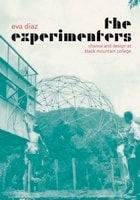
The Experimenters
Chance and Design at Black Mountain CollegeEva Díaz
University of Chicago Press, 2014
Díaz’s focus is on experimentation. Albers, Cage, and Fuller, she shows, taught new models of art making that favored testing procedures rather than personal expression. These methodologies represented incipient directions for postwar art practice, elements of which would be sampled, and often wholly adopted, by Black Mountain students and subsequent practitioners. The resulting works, which interrelate art and life in a way that imbues these projects with crucial relevance, not only reconfigured the relationships among chance, order, and design—they helped redefine what artistic practice was, and could be, for future generations.
Offering a bold, compelling new angle on some of the most widely studied creative figures of modern times, The Experimenters does nothing less than rewrite the story of art in the mid-twentieth century.

The Expert Library
Staffing, Sustaining, And Advancing TheScott Walter
Assoc of College & Research Libraries, 2011
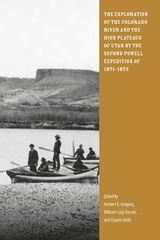
The Exploration of the Colorado River and the High Plateaus of Utah by the Second Powell Expedition of 1871-1872
Herbert E Gregory
University of Utah Press, 2009
Originally published from 1948 to 1949 as volumes sixteen and seventeen of the Utah Historical Quarterly, this volume looks to the larger significance and fruits of the second of Powell’s explorations, a more carefully constituted and better equipped scientific operation, yet one strangely neglected in historical records. Copublished with the Utah State Historical Society.
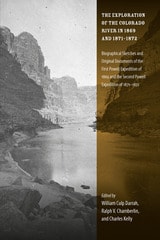
The Exploration of the Colorado River in 1869 and 1871-1872
Biographical Sketches and Original Documents of the First Powell Expedition of 1869 and the Second Powell Expedition of 1871-1872William Culp Darrah
University of Utah Press, 2009
This volume contains the journals of Major John Wesley Powell, George Young Bradley, Walter Henry Powell, and J. C. Sumner. Also included are various letters and notes by the members of the first expedition, and the journal of Francis Marion Bishop from the second expedition. All of the writings offer vivid descriptions of both adventure and of able and energetic scientific field work, and are of enduring interest and importance.

The Explorer's Guide to Death Valley National Park, Second Edition
T. Scott Bryan
University Press of Colorado, 2009
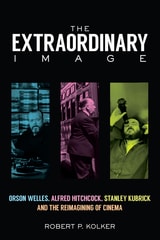
The Extraordinary Image
Orson Welles, Alfred Hitchcock, Stanley Kubrick, and the Reimagining of CinemaKolker, Robert P
Rutgers University Press, 2016
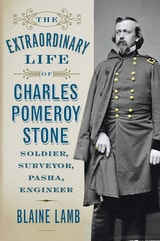
The Extraordinary Life of Charles Pomeroy Stone
Soldier, Surveyor, Pasha, EngineerBlaine Lamb
Westholme Publishing, 2016
In the winter of 1861, as the secession crisis came to a head, an obscure military engineer, Charles Pomeroy Stone, emerged as the rallying point for the defense of Washington, D.C. against rebel attack. He was protector of the newly elected president and right-hand man of the army’s commanding general, General Winfield Scott, under whom he had served with distinction during the Mexican–American War. Nevertheless, with in a year, this same hero sat in a military prison accused of incompetence and possible treason.
Like other Union officers, Stone had the misfortune to run afoul of radical politicians in the nation’s capital who sought to control the war effort by undermining the professional military establishment. Their weapon, the Joint Committee on the Conduct of the War, applied a litmus test of commitment to abolition, loyalty to the Republican Party and battlefield success for the retention and promotion of army commanders. Stone, a Democrat who did not see the conflict as a crusade against slavery, and who lost his only battle, failed on all counts.
Readers of Civil War history know Stone best for his mistreatment at the hands of the Joint Committee.When his name appears, it is almost always in connection with the battle at Ball’s Bluff, Virginia, during which a close associate of Lincoln’s was killed, and its aftermath. His story, however, goes far beyond that engagement. In The Extraordinary Life of Charles Pomeroy Stone: Soldier, Surveyor, Pasha, Engineer that ranges from the Halls of Montezuma to Gold Rush California, and from the pyramids of Egypt to the foot of the Statue of Liberty, historian Blaine Lamb brings to light the many facets of Stone’s remarkable life and career. He weaves into the narrative such characters as Ulysses S. Grant,William Tecumseh Sherman, Abraham Lincoln,Winfield Scott, Alexander von Humboldt, Thaddeus Lowe, Chinese Gordon, Khedive Ismail, and Frederic Auguste Bartholdi. But the center of this tale of nineteenth-century adventure, exploration, war, and intrigue remains Stone himself, a man of honor, steadfast loyalty, and tragic innocence.
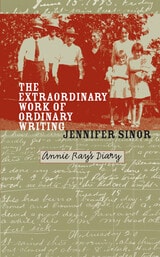
The Extraordinary Work of Ordinary Writing
Annie Ray's DiaryJennifer Sinor
University of Iowa Press, 2002
Exciting and beautifully crafted, The Extraordinary Work of Ordinary Writing provides an entirely new way of viewing “ordinary writing,” the everyday writing we typically ignore or dismiss. It takes as its center the diary of Jennifer Sinor's great-great-great-aunt Annie Ray, a woman who homesteaded in the Dakotas in the late nineteenth century. Diaries such as this have long been ignored by scholars, who prefer instead to focus on diaries with literary features. Reading diaries through this lens gives privileged status to those that are coherently crafted and ignores the very diaries that define the form through their relentless inscription of dailiness.
Annie Ray’s diary is not literary. By considering her ordinary writing as a site of complex and strategic negotiations among the writer, the form of writing, and dominant cultural scripts, Sinor makes visible the extraordinary work of the ordinary writer and the sophistication of these texts. In providing a way to read diaries outside the limits and conventions of literature, she challenges our approaches to other texts as well. Furthermore, because ordinary writing is not crafted for aesthetic reception (in contrast to autobiography proper, memoirs, and literary diaries), it is a productive site for investigating how both writing and culture get made every day.
The book is truly original in its form: nontraditional, storied, creative. Sinor, an accomplished creative writer, includes her own memories as extended metaphors in partnership with critical texts along with excerpts from her aunt's diary. The Extraordinary Work of Ordinary Writing will be a fascinating text for students of creative writing as well as of women's studies and diaries.
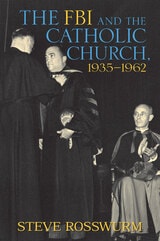
The FBI and the Catholic Church, 1935-1962
Steve Rosswurm
University of Massachusetts Press, 2009
Steve Rosswurm explores the history of that relationship from the turbulent 1930s to the 1960s, when growing Catholic opposition to the Vietnam War led Hoover to distance himself from the Church. Drawing on a vast range of sources, including thousands of pages of previously classified FBI files, Rosswurm pursues his investigation along two parallel tracks. First, he looks at the joint war waged by Hoover and the Catholic hierarchy against forces considered threats to their organizations, values, and nation. Second, he examines how each pursued its own institutional interests with the help of the other.
While opposition to communism was a preoccupation of both institutions, it was not the only passion they shared, according to Rosswurm. Even more important, perhaps, was their fervent commitment to upholding traditional gender roles, particularly the prerogatives of patriarchal authority. When women and men carried out their assigned obligations, they believed, society ran smoothly; when they did not, chaos ensued.
Organized topically, The FBI and the Catholic Church, 1935–1962 looks not only at the shared values and interests of the two institutions, but also at the personal relationships between Hoover and his agents and some of the most influential Catholic prelates of the time. Rosswurm discusses the role played by Edward A. Tamm, the FBI's highest-ranking Catholic, in forging the alliance; the story behind Father John Cronin's 1945 report on the dangers of communism; the spying conducted by Father Edward Conway S.J. on behalf of the FBI while treasurer of the National Committee for Atomic Information; and Monsignor Charles Owen Rice's FBI-aided battle against communists within the CIO.
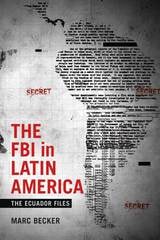
The FBI in Latin America
The Ecuador FilesMarc Becker
Duke University Press, 2017
The Fabulous Future?
America and the World in 2040Morton Schapiro and Gary Saul Morson
Northwestern University Press, 2015
Will the future be one of economic expansion, greater tolerance, liberating inventions, and longer, happier lives? Or do we face economic stagnation, declining quality of life, and a technologically enhanced totalitarianism worse than any yet seen? The Fabulous Future? America and the World in 2040 draws its inspiration from a more optimistic time, and tome, The Fabulous Future: America in 1980, in which Fortune magazine celebrated its twenty-fifth anniversary by publishing the predictions of thought leaders of its time.
In the present volume, the world’s leading specialists from diverse fields project developments in their areas of expertise, from religion and the media to the environment and nanotechnology. Will we be happier, and what exactly does happiness have to do with our economic future? Where is higher education heading and how should it develop? And what is the future of prediction itself? These exciting essays provoke sharper questions, reflect unexpectedly on one another, and testify to our present anxieties about the surprising world to come.
The Face in the Window and Other Alabama Ghostlore
Alan Brown
University of Alabama Press, 1996
True voices, real places, and unforgettable chills: Alabama’s ghost stories, gathered with scholarly care, reveal how memory, history, and belief linger—whispering from bridges, homes, cemeteries, and courthouses statewide today still.
The Face in the Window and Other Alabama Ghostlore is a landmark collection that preserves and brings to life Alabama’s rich tradition of supernatural storytelling. Rather than offering fictional retellings, this book presents ghost stories as they are told—by neighbors, families, students, and elders—rooted firmly in real places and lived experience. Alan Brown captures the voices of Alabamians across generations, revealing how belief, memory, humor, and fear continue to shape the state’s cultural landscape.
The collection is organized by geographic region, spiraling across the state so readers can explore local lore county by county and town by town. Many stories were gathered directly through fieldwork, lectures, and interviews, while others draw on previously unpublished Works Progress Administration materials from the 1930s. Dialect and storytelling style are preserved to maintain authenticity, and scholarly notes are placed at the back to keep the narratives accessible. Brown, a folklorist and former lecturer for the Alabama Humanities Foundation, brings both academic rigor and deep respect for oral tradition to the collection.
This collection will delight readers interested in folklore, Southern history, oral culture, and the supernatural. It is invaluable for scholars and students, irresistible to ghost-story enthusiasts, and especially meaningful for Alabamians eager to see their communities and traditions thoughtfully recorded and remembered.
The Failed Individual
Amid Exclusion, Resistance, and the Pleasure of Non-ConformityEdited by Katharina Motyl and Regina Schober
Campus Verlag, 2017
The Failure of Corporate Law
Fundamental Flaws and Progressive PossibilitiesKent Greenfield
University of Chicago Press, 2007
When used in conjunction with corporations, the term “public” is misleading. Anyone can purchase shares of stock, but public corporations themselves are uninhibited by a sense of societal obligation or strict public oversight. In fact, managers of most large firms are prohibited by law from taking into account the interests of the public in decision making, if doing so hurts shareholders. But this has not always been the case, as until the beginning of the twentieth century, public corporations were deemed to have important civic responsibilities.
With The Failure of Corporate Law, Kent Greenfield hopes to return corporate law to a system in which the public has a greater say in how firms are governed. Greenfield maintains that the laws controlling firms should be much more protective of the public interest and of the corporation’s various stakeholders, such as employees. Only when the law of corporations is evaluated as a branch of public law—as with constitutional law or environmental law—will it be clear what types of changes can be made in corporate governance to improve the common good. Greenfield proposes changes in corporate governance that would enable corporations to meet the progressive goal of creating wealth for society as a whole rather than merely for shareholders and executives.
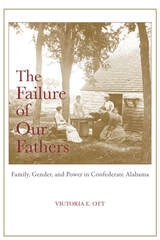
The Failure of Our Fathers
Family, Gender, and Power in Confederate AlabamaVictoria E. Ott
University of Alabama Press, 2023
An in-depth study of non-elite white families in Alabama—from the state’s creation through the end of the Civil War
The Failure of Our Fathers: Family, Gender, and Power in Confederate Alabama examines the evolving position of non-elite white families in Alabama during one of the most pivotal epochs in the state’s history. Drawing on a wide range of personal and public documents reflecting the state’s varied regions and economies, Victoria E. Ott uses gender and family as a lens to examine the yeomanry and poor whites, a constituency that she collectively defines as “common whites,” who identified with the Confederate cause.
Ott provides a nuanced examination of how these Alabamians fit within the antebellum era’s paternalistic social order, eventually identifying with and supporting the Confederate mission to leave the Union and create an independent, slaveholding state. But as the reality of the war slowly set in and the Confederacy began to fray, the increasing dangers families faced led Alabama’s common white men and women to find new avenues to power as a distinct socioeconomic class.
Ott argues that family provided the conceptual framework necessary to understand why common whites supported a war to protect slavery despite having little or no investment in the institution. Going to war meant protecting their families from outsiders who threatened to turn their worlds upside down. Despite class differences, common whites envisioned the Confederacy as a larger family and the state as paternal figures who promised to protect its loyal dependents throughout the conflict. Yet, as the war ravaged many Alabama communities, devotion to the Confederacy seemed less a priority as families faced continued separations, threats of death, and the potential for starvation. The construct of a familial structure that once created a sense of loyalty to the Confederacy now gave them cause to question its leadership. Ott shows how these domestic values rooted in highly gendered concepts ultimately redefined Alabama’s social structure and increased class distinctions after the war.
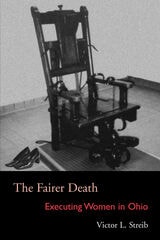
The Fairer Death
Executing Women in OhioVictor L. Streib
Ohio University Press, 2006
Women on death row are such a rarity that, once condemned, they may be ignored and forgotten. Ohio, a typical, middle-of-the-road death penalty state, provides a telling example of this phenomenon. The Fairer Death: Executing Women in Ohio explores Ohio’s experience with the death penalty for women and reflects on what this experience reveals about the death penalty for women throughout the nation.
Victor Streib’s analysis of two centuries of Ohio death penalty legislation and adjudication reveals no obvious exclusion of women or even any recognition of an issue of sex bias. In this respect, Ohio’s justice system exemplifies the subtle and insidious nature of this cultural disparity.
Professor Streib provides detailed descriptions of the cases of the four women actually executed by Ohio since its founding and of the cases of the eleven women sentenced to death in Ohio in the current death penalty era (1973–2005). Some of these cases had a profound impact on death penalty law, but most were routine and drew little attention. A generation later, reversals and commutations have left only one woman on Ohio’s death row.
Although Streib focuses specifically on Ohio, the underlying premise is that Ohio is, in many ways, a typical death penalty state. The Fairer Death provides insight into our national experience, provoking questions about the rationale for the death penalty and the many disparities in its administration.

The Faith Healer of Olive Avenue
StoriesManuel Muñoz and Cherríe Moraga
Northwestern University Press, 2025
From the divergent paths of triplet brothers to a grieving father confronting his mistreatment of his son, these stories interweave a recurring cast of neighborhood characters, many of them in search of escape or release. Lauded for its empathetic portrayals of communities often ignored, The Faith Healer of Olive Avenue won a Whiting Award and an O. Henry Award; it was shortlisted for the Frank O’Connor International Short Story Award as one of the best collections published in English worldwide. A new foreword by author and activist Cherríe Moraga gives testament to Muñoz’s status as “the cartographer of a people.”
The Falcon Experience
A Flight with Chicago’s Field MuseumIllustrations by Peggy Macnamara; Written by Katie Macnamara
Northwestern University Press, 2026
A joyful, educational flight from the halls of Chicago’s Field Museum to the nests of mighty peregrine falcons
Rosie the Tarantula, famous for her adventure in the corridors and collections of Chicago’s celebrated Field Museum of Natural History, is back. This time, Rosie is focused not on spiders, but on falcons! The Falcon Experience brings us with Rosie as she follows Mary Hennen, the museum’s real-life peregrine program director, giving children and parents alike a front-row seat to the lives of these majestic birds and the scientist who cares for them. Rosie learns how falcons fly, hunt, eat, mate, construct nests and raise chicks (via the peregrine webcam!) in unexpected and challenging places in the city. Mary’s teachings also show how humans can be the key to helping our natural environment.
Beautifully illustrated with watercolors by renowned Field Museum artist-in-residence Peggy Macnamara, The Falcon Experience is told by Peggy’s daughter, author and educator Katie Macnamara, in rhyme ideal for reading aloud to children. This keepsake-quality book will delight budding young scientists and their families while providing a colorful, interactive experience with one of Chicago’s foremost cultural institutions.
The Fall and Rise of Freedom of Contract
F. H. Buckley, ed.
Duke University Press, 1999
The 1970s was a decade of regulatory triumphalism in North America, marked by a surge in consumer, securities, and environmental regulation. Legal scholars predicted the “death of contract” and its replacement by regulation and reliance-based theories of liability. Instead, we have witnessed the reemergence of free bargaining norms. This revival can be attributed to the rise of law-and-economics, which laid bare the intellectual failure of anticontractarian theories. Scholars in this school note that consumers are not as helpless as they have been made out to be, and that intrusive legal rules meant ostensibly to help them often leave them worse off. Contract law principles have also been very robust in areas far afield from traditional contract law, and the essays in this volume consider how free bargaining rights might reasonably be extended in tort, property, land-use planning, bankruptcy, and divorce and family law.
This book will be of particular interest to legal scholars and specialists in contract law. Economics and public policy planners will also be challenged by its novel arguments.
Contributors. Gregory S. Alexander, Margaret F. Brinig, F. H. Buckley, Robert Cooter, Steven J. Eagle, Robert C. Ellickson, Richard A. Epstein, William A. Fischel, Michael Klausner, Bruce H. Kobayashi, Geoffrey P. Miller, Timothy J. Muris, Robert H. Nelson, Eric A. Posner, Robert K. Rasmussen, Larry E. Ribstein, Roberta Romano, Paul H. Rubin, Alan Schwartz, Elizabeth S. Scott, Robert E. Scott, Michael J. Trebilcock

The Fall of the US Empire
Global Fault-Lines and the Shifting Imperial OrderVassilis K. Fouskas and Bulent Gokay
Pluto Press, 2012
Whither the US empire? Despite Washington's military supremacy, its economic foundations have been weakening since the Vietnam war – accelerated by the great recession and credit-rating downgrade – and its global authority dented by the quagmires in Iraq and Afghanistan.
In this accessible, punchy text, Vassilis K. Fouskas and Bülent Gökay intervene in the debates that surround the US's status as an Empire. They survey the arguments amongst Marxist and critical scholars, from Immanuel Wallerstein and others who argue that the US is in decline, to those who maintain that it remains a robust superpower. By explaining how America's neo-imperial system of governance has been working since WWII, Fouskas and Gökay link the US's domestic and foreign vulnerabilities.
The Fall of the US Empire argues that the time has come to understand the US empire not by its power but by its systemic vulnerabilities of financialisation, resource depletion and environmental degradation. Its informed and accessible style will have wide appeal to students looking for an introduction to these issues.
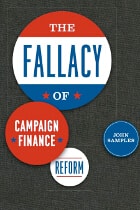
The Fallacy of Campaign Finance Reform
John Samples
University of Chicago Press, 2006
At first glance, campaign finance reform looks like a good idea. McCain-Feingold, for instance, regulates campaigns by prohibiting national political parties from accepting soft money contributions from corporations, labor unions, and wealthy individuals. But are such measures, or any of the numerous and similarly restrictive proposals that have circulated through Washington in recent years, really good for our democracy?
John Samples says no, and here he takes a penetrating look into the premises and consequences of the long crusade against big money in politics. How many Americans, he asks, know that there is little to no evidence that campaign contributions really influence members of Congress? Or that so-called negative political advertising actually improves the democratic process by increasing voter turnout and knowledge? Or that limits on campaign contributions make it harder to run for office, thereby protecting incumbent representatives from losing their seats of power?
Posing tough questions such as these, Samples uncovers numerous fallacies beneath proposals for campaign finance reform. He argues that our most common concerns about money in politics are misplaced because the ideals implicit in our notion of corruption are incoherent or indefensible. The chance to regulate money in politics allows representatives to serve their own interests at a cost to their constituents. And, ironically, this long crusade against the corruption caused by campaign contributions allows public officials to reduce their vulnerability by suppressing electoral competition.
Defying long-held ssumptions and conventional political wisdom, The Fallacy of Campaign Finance Reform is a provocative and decidedly nonpartisan work that will be essential for anyone concerned about the future of American government.