Results by title
1272 books match the query 'Asia' and 289 start with t
The First Anglo-Afghan Wars
A ReaderAntoinette Burton, ed.
Duke University Press, 2014
The First British Trade Expedition to China
Captain Weddell and the Courteen Fleet in Asia and Late Ming CantonNicholas D. Jackson
Hong Kong University Press, 2022
In The First British Trade Expedition to China, Nicholas D. Jackson explores the pioneering British trade expedition to China launched in the late Ming period by Charles I and the Courteen Association. Utilizing the vivid perspective of its commander Captain John Weddell, this study concentrates on the fleet’s adventures in south China between Portuguese Macao and the provincial capital, Guangzhou. Tracing the obscure origins of Sino-British diplomatic and commercial relations back to the late Ming era, Jackson examines the first episodes of Sino-British interaction, exchange, and collision in the seventeenth century. His analysis constitutes a groundbreaking study of early modern British initiatives and enterprises in the coastal areas of south China.
The First and Second Sikh Wars
Reginald George Burton
Westholme Publishing, 2008
The First and Second Sikh Wars of the 1840s were the final battles that secured British domination of the Indian subcontinent for the next century. Noted for both their brutality and sophistication in tactics—with large-scale cavalry clashes, sieges, and artillery and infantry engagements—the wars against the Sikh principalities not only handed control of India to Great Britain, but the defeated Sikh armies ended up becoming some of the most loyal and ablest soldiers of the British Empire. The lessons from these wars also influenced changes in British military policy and strategies, particularly against indigenous peoples. In 1911, the British Army command asked its historical branch in India to prepare a military history of the Sikh Wars. The result, The First and Second Sikh Wars, is a publication rich in detail and analysis and a treasure trove of background information about the British Army in India, Sikh culture at the time, and the battles of Ferozeshah, Aliwal, Chillianwala, and Gujrat. Despite the importance of these wars in the history of both the nineteenth century and the modern era, there are no similar complete narrative accounts of these conflicts available that rely on official records of the period. This facsimile is enhanced by historian Jon Coulston's new introduction and suggestions for further reading.
The Floracrats
State-Sponsored Science and the Failure of the Enlightenment in IndonesiaAndrew Goss
University of Wisconsin Press, 2011
Situated along the line that divides the rich ecologies of Asia and Australia, the Indonesian archipelago is a hotbed for scientific exploration, and scientists from around the world have made key discoveries there. But why do the names of Indonesia’s own scientists rarely appear in the annals of scientific history? In The Floracrats Andrew Goss examines the professional lives of Indonesian naturalists and biologists, to show what happens to science when a powerful state becomes its greatest, and indeed only, patron.
With only one purse to pay for research, Indonesia’s scientists followed a state agenda focused mainly on exploiting the country’s most valuable natural resources—above all its major export crops: quinine, sugar, coffee, tea, rubber, and indigo. The result was a class of botanic bureaucrats that Goss dubs the “floracrats.” Drawing on archives and oral histories, he shows how these scientists strove for the Enlightenment ideal of objective, universal, and useful knowledge, even as they betrayed that ideal by failing to share scientific knowledge with the general public. With each chapter, Goss details the phases of power and the personalities in Indonesia that have struggled with this dilemma, from the early colonial era, through independence, to the modern Indonesian state. Goss shows just how limiting dependence on an all-powerful state can be for a scientific community, no matter how idealistic its individual scientists may be.

The Forbidden Worlds of Haruki Murakami
Matthew Carl Strecher
University of Minnesota Press, 2014
In an “other world” composed of language—it could be a fathomless Martian well, a labyrinthine hotel or forest—a narrative unfolds, and with it the experiences, memories, and dreams that constitute reality for Haruki Murakami’s characters and readers alike. Memories and dreams in turn conjure their magical counterparts—people without names or pasts, fantastic animals, half-animals, and talking machines that traverse the dark psychic underworld of this writer’s extraordinary fiction.
Fervently acclaimed worldwide, Murakami’s wildly imaginative work in many ways remains a mystery, its worlds within worlds uncharted territory. Finally in this book readers will find a map to the strange realm that grounds virtually every aspect of Murakami’s writing. A journey through the enigmatic and baffling innermost mind, a metaphysical dimension where Murakami’s most bizarre scenes and characters lurk, The Forbidden Worlds of Haruki Murakami exposes the psychological and mythological underpinnings of this other world. Matthew Carl Strecher shows how these considerations color Murakami’s depictions of the individual and collective soul, which constantly shift between the tangible and intangible but in this literary landscape are undeniably real.
Through these otherworldly depths The Forbidden Worlds of Haruki Murakami also charts the writer’s vivid “inner world,” whether unconscious or underworld (what some Japanese critics call achiragawa, or “over there”), and its connectivity to language. Strecher covers all of Murakami’s work—including his efforts as a literary journalist—and concludes with the first full-length close reading of the writer’s newest novel, Colorless Tsukuru Tazaki and His Years of Pilgrimage.
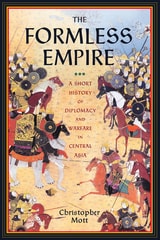
The Formless Empire
A Short History of Diplomacy and Warfare in Central AsiaChristopher Mott
Westholme Publishing, 2015
Central Asia, a vast region extending from eastern Russia and across Kazakhstan, Uzbekistan, Turkmenistan, Afghanistan, Tajikistan, Kyrgystan, Mongolia, and western China, has its own tradition of foreign policy rooted in the ancient nomadic culture of many of its peoples as well as the region’s distinctive geography. From the thundering hooves of Mongol or Cossack cavalry across the steppes to the clanking of tanks on parade in Moscow or Beijing, elements of this system still cast a shadow on the region at the heart of Earth’s largest continent. By tracing the evolution of Central Asian warfare and diplomacy through a series of historical examples, ranging from the ancient Xiongnu people and medieval Mongol Empire to the fall of the Soviet Union, historian Christopher Mott argues that the original system of informal relationships, indirect rule, and rapid military movement did not entirely fade from the region with the eclipse of the nomadic powers during the Middle Ages. In fact, many states like China, Iran, and Russia had already been influenced by nomadic people, and in so doing adapted their own diplomatic and military policies accordingly. The Formless Empire: A Short History of Diplomacy and Warfare in Central Asia is an engaging study of the nature of non-Western imperialism and great-power strategy. In addition, the book demonstrates that regional histories can show us the variety of political possibilities in the past and how they were adapted to changing circumstances—a point made even more important by the rapid changes facing global security and new forms of empire building.
“Christopher Mott’s extremely erudite and wide-ranging examination of the history of Central Asia shows us that we have been far too narrow-minded and Eurocentric in thinking about power and how the global system changes historically. Given the current interest in ‘caliphates’ we need to reflect on the history of the areas of the world that dance to a different historical drum than we do in the West.” —Andrew John Williams, author of France, Britain, and the United States in the Twentieth Century
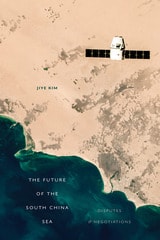
The Future of the South China Sea
Disputes and NegotiationsJiye Kim
University of Michigan Press, 2026
By incorporating negotiation records, such as the 1958 Declaration on China’s Territorial Sea, the 1992 ASEAN Declaration, and the 2005 Tripartite Agreement, Jiye Kim traces how China reshapes its interests into negotiation agendas, providing critical insights into the nation’s diplomacy and making a significant contribution to an existing literature on the South China Sea that has been largely dominated by analyses of great power rivalry. This book sheds light on China’s underlying interests as living and adaptable entities, providing scholars with a detailed, evidence-based understanding of the complexities that define one of the world’s most contested maritime regions.
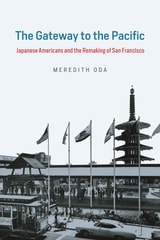
The Gateway to the Pacific
Japanese Americans and the Remaking of San FranciscoMeredith Oda
University of Chicago Press, 2018
Focusing on the development of the Center, Meredith Oda shows how this multilayered story was embedded within a larger story of the changing institutions and ideas that were shaping the city. During these formative decades, Oda argues, San Francisco’s relations with and ideas about Japan were being forged within the intimate, local sites of civic and community life. This shift took many forms, including changes in city leadership, new municipal institutions, and especially transformations in the built environment. Newly friendly relations between Japan and the United States also meant that Japanese Americans found fresh, if highly constrained, job and community prospects just as the city’s African Americans struggled against rising barriers. San Francisco’s story is an inherently local one, but it also a broader story of a city collectively, if not cooperatively, reimagining its place in a global economy.
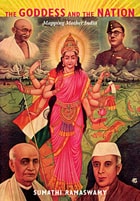
The Goddess and the Nation
Mapping Mother IndiaSumathi Ramaswamy
Duke University Press, 2010
By exploring the mutual entanglement of the scientifically mapped image of India and a (Hindu) mother/goddess, Sumathi Ramaswamy reveals Mother India as a figure who relies on the British colonial mapped image of her dominion to distinguish her from the other goddesses of India, and to guarantee her novel status as embodiment, sign, and symbol of national territory. Providing an exemplary critique of ideologies of gender and the science of cartography, Ramaswamy demonstrates that images do not merely reflect history; they actively make it. In The Goddess and the Nation, she teaches us about pictorial ways of learning the form of the nation, of how to live with it—and ultimately to die for it.
The Government of Mistrust
Illegibility and Bureaucratic Power in Socialist VietnamKen MacLean
University of Wisconsin Press, 2013
The Great Enterprise
Sovereignty and Historiography in Modern KoreaHenry H. Em
Duke University Press, 2013
Surveying historical works written over the course of the twentieth century, Em elucidates the influence of Christian missionaries, as well as the role that Japan's colonial policy played in determining the narrative framework for defining Korea's national past. Em goes on to analyze postcolonial works in which South Korean historians promoted national narratives appropriate for South Korea's place in the U.S.-led Cold War system. Throughout, Em highlights equal sovereignty's creative and productive potential to generate oppositional subjectivities and vital political alternatives.
The Great Separation
The Chinese Cultural Revolution and the Political Origins of OrdoeconomismXiaohong Xu Edited by Roi Livne, Robert Jansen and Yang Zhang
University of Michigan Press, 2026
With a keen attention to how culture and elite conflict shape politics, The Great Separation upends deterministic understandings of the Chinese Cultural Revolution and the market reforms that followed. This ambitious posthumous volume by sociologist Xiaohong Xu turns the existing scholarship on China’s “neoliberalism” on its head by demonstrating that the effort to separate mass politics from economic policy had its origins well before the Reform and Opening-up era.
Over the course of the Cultural Revolution, unfolding factional dynamics and interpretive struggles enabled Chairman Mao and his radical colleagues to mobilize workers to advance their own political goals while neutralizing the masses’ economic demands, symbolically separating the political from the economic. This set the stage for a more thoroughgoing depoliticization of the economy after 1989, when China faced challenges from students and workers whose economic grievances had rapidly morphed into political demands for democracy. The result was what Xu calls ordoeconomism: an ideology that valorizes economic development, rejects mass politics, and views the state as the apolitical guardian of the economy. As Xu demonstrates, while ordoeconomism may share some affinities with neoliberalism, it is a distinctively Chinese approach that must be understood on its own terms.
The Green Archipelago
Forestry in Preindustrial JapanConrad Totman
Ohio University Press, 1998
This inaugural volume in the Ohio University Press Series in Ecology and History is the paperback edition of Conrad Totman’s widely acclaimed study of Japan’s environmental policies over the centuries.
Professor Totman raises the critical question of how Japan’s steeply mountainous woodland has remained biologically healthy despite centuries of intensive exploitation by a dense human population that has always been dependent on wood and other forest products. Mindful that in global terms this has been a rare outcome, and one that bears directly on Japan’s recent experience as an affluent, industrial society, Totman examines the causes, forms, and effects of forest use and management in Japan during the millennium to 1870. He focuses mainly on the centuries after 1600 when the Japanese found themselves driven by their own excesses into programs of woodland protection and regenerative forestry.
The Hidden Force
L. Couperus
University of Massachusetts Press, 1985
The High Road to China
George Bogle, the Panchen Lama, and the First British Expedition to TibetKate Teltscher
Northwestern University Press, 2008
Bogle was able to gain an audience with the Panchen Lama, and in him he found much more than a business partner; the Incarnate Lama was a friendly man who loved to discuss politics, science, art, and culture. Bogle gradually became less of a tourist and less of a colonist, growing comfortable and happy the longer he spent in Tibet even as his mission to open China failed. All the while, he kept a detailed journal—his prose by turn playful, self-deprecating, grandiose, and shrewd—and this revelatory document gives readers an exhilarating front seat to the beginnings of international relationships that exert their effects even now.
Teltscher’s portrayal of Bogle’s unique diplomatic relationship with the holy man is an admission that history is made by people—and people have emotions, flaws, and feelings that enrich and affect history.
The Hindu Tantric World
An OverviewAndré Padoux
University of Chicago Press, 2017
This book offers a clear, well-grounded overview of Tantra that offers substantial new insights for scholars and practitioners. André Padoux opens by detailing the history of Tantra, beginning with its origins, founding texts, and major beliefs. The second part of the book delves more deeply into key concepts relating to the tantric body, mysticism, sex, mantras, sacred geography, and iconography, while the final part considers the practice of Tantra today, both in India and in the West. The result is an authoritative account of Tantra’s history and present place in the world.
The Hispanization of the Philippines
Spanish Aims and Filipino Responses, 1565–1700John Leddy Phelan
University of Wisconsin Press, 1959
After conquest of the Philippine archipelago in the late sixteenth century, Spanish colonizers launched a sweeping social program designed to bring about dramatic religious, political, and economic changes. But the limitations of Spanish colonial resources, together with the reactions of Filipinos themselves, combined to shape the outcome of that effort in unique and unexpected ways, argues John Leddy Phelan. With no wealth in the islands to attract conquistadores, conquest was accomplished largely by missionaries scattered among isolated native villages. Native chieftains served as intermediaries, thus enabling the Filipinos to react selectively to Spanish innovations. The result was a form of hispanization in which the resilient and adaptable Filipinos played a creative part.
The History of Bhutan
Karma Phuntsho
Haus Publishing, 2013
Karma Phuntsho’s The History of Bhutan is the first book to offer a comprehensive history of Bhutan in English. Along with a detailed social and political analysis, it offers substantive discussions of Bhutan’s geography and culture; the result is the clearest, richest account of this nation and its history ever published for general readers.
A 2015 Choice Magazine Outstanding Academic Title Award Winner
The History of Cartography, Volume Two, Book One
Cartography in the Traditional Islamic and South Asian SocietiesEdited by J. B. Harley and David Woodward
University of Chicago Press, 1992
"[The six-volume set] is certain to be the standard reference for all subsequent scholarship. The editors . . . have assembled and analyzed a vast collection of knowledge. . . . If the first volume is an indication, the complete set will be comprehensive and judicious." —John Noble Wilford, New York Times Book Review
"As well as enlarging the mind and lifting the spirits through the sheer magnitude of its endeavor, the collection delights the senses. The illustrations are exquisite: browsing fingers will instinctively alight on the sheaf of maps reproduced on stock slightly thicker than that of the text. The maps are so beguiling in the tantalizing glimpses they offer of other, seemingly incomprehensible, worlds, that the sight of them will stir the connoisseur in even the most-guarded scholar." —Ronald Rees, Geographical Review
"The corpus it brings to light, along with the extensive references, bibliography, and exhaustive appendices containing valuable comments about many of the pieces discussed, together make this book an important resource for the scholar."—Robert Provin, Professional Geographer
"This volume is a landmark of new research and will certainly contribute to further discoveries, translations, interpretations, inventories, more precise dating and the construction of stemmata." —Christian Jacob, Cartographica
"In seeking to characterize the cartography of premodern Islamic and south Asian societies, the editors offer the image of an archipelago of cartographically conscious islands in a silent sea. The research potential which they have revealed is clearly vast and underappreciated, with many islands still to be discovered or enlarged. This important book, does more, therefore, than plug a huge gap in cartographic historiography. It provides the foundation for crosscultural cartographic research in two major world regions."-Jeffrey Stone, Ecumene
The History of Modern Japanese Education
Constructing the National School System, 1872-1890Duke, Benjamin
Rutgers University Press, 2014
The History of Temple University Japan
An Experiment in International EducationRichard Joslyn and Bruce Stronach
Temple University Press, 2023
The authors recount the development of the academic program, the recruitment of students, and the support from Temple that enabled curricular and pedagogical improvement.
They also address the university’s relationships with three Japanese partners, and the financial threats and crises TUJ faced over the decades.
The History of Temple University Japan is not only an important documentation of TUJ, but also a history of U.S.-Japanese relations. What emerges is the significant impact TUJ has had on the thousands of students, faculty, and staff who have been a part of this international academic institution.
The Huawei Model
The Rise of China's Technology GiantYun Wen
University of Illinois Press, 2020
Yun Wen uses the Huawei story as a microcosm to understand China's evolving digital economy and the global rise of the nation's corporate power. Rejecting the idea of the transnational corporation as a static institution, she explains Huawei's formation and restructuring as a historical process replete with contradictions and complex consequences. She places Huawei within the international political economic framework to capture the dynamics of power structure and social relations underlying corporate China's globalization. As she explores the contradictions of Huawei's development, she also shows the ICT firm's complicated interactions with other political-economic forces.
Comprehensive and timely, The Huawei Model offers an essential analysis of China's dynamic development of digital economy and the global technology powerhouse at its core.
The Idea of India
A DialogueGayatri Chakravorty Spivak and Romila Thapar
Seagull Books, 2024
Through a stimulating dialogue, two old friends trace the history of the idea of India through digressions, anecdotes, and observations. Historian Romila Thapar and theorist Gayatri Chakravorty Spivak reflect on the challenges posed by essentialism and exclusion whenever cultures attempt to define and assert themselves. They also emphasize the role of education in fostering a more inclusive and accurate understanding of the nation’s complex history. Their conversation revolves around the narratives that have shaped Indian identity—from Vedic times to the present—and those whose voices and visions for this land remain unheard and unseen.
Ranging from nationalism to religion and beyond, TheIdea of India discusses an urgent question: What does it mean to be an Indian in contemporary society?
The Imperialist Imaginary
Visions of Asia and the Pacific in American CultureJohn Eperjesi
Dartmouth College Press, 2014
The Impotence Epidemic
Men's Medicine and Sexual Desire in Contemporary ChinaEverett Yuehong Zhang
Duke University Press, 2015
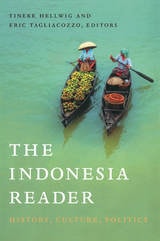
The Indonesia Reader
History, Culture, PoliticsTineke Hellwig and Eric Tagliacozzo, eds.
Duke University Press, 2009
Organized chronologically, the volume addresses early Indonesian civilizations; contact with traders from India, China, and the Arab Middle East; and the European colonization of Indonesia, which culminated in centuries of Dutch rule. Selections offer insight into Japan’s occupation (1942–45), the establishment of an independent Indonesia, and the post-independence era, from Sukarno’s presidency (1945–67), through Suharto’s dictatorial regime (1967–98), to the present Reformasi period. Themes of resistance and activism recur: in a book excerpt decrying the exploitation of Java’s natural wealth by the Dutch; in the writing of Raden Ajeng Kartini (1879–1904), a Javanese princess considered the icon of Indonesian feminism; in a 1978 statement from East Timor objecting to annexation by Indonesia; and in an essay by the founder of Indonesia’s first gay activist group. From fifth-century Sanskrit inscriptions in stone to selections related to the 2002 Bali bombings and the 2004 tsunami, The Indonesia Reader conveys the long history and the cultural, ethnic, and ecological diversity of this far-flung archipelago nation.
The Inner Conflict of Tradition
Essays in Indian Ritual, Kingship, and SocietyJ. C. Heesterman
University of Chicago Press, 1985
The Invention of Madness
State, Society, and the Insane in Modern ChinaEmily Baum
University of Chicago Press, 2018
Focusing on typically marginalized historical actors, including municipal functionaries and the urban poor, The Invention of Madness shifts our attention from the elite desire for modern medical care to the ways in which psychiatric discourses were implemented and redeployed in the midst of everyday life. New meanings and practices of madness, Baum argues, were not just imposed on the Beijing public but continuously invented by a range of people in ways that reflected their own needs and interests. Exhaustively researched and theoretically informed, The Invention of Madness is an innovative contribution to medical history, urban studies, and the social history of twentieth-century China.
The Invention of Religion in Japan
Jason Ananda Josephson Storm
University of Chicago Press, 2012
The Iwakura Embassy, 1871-1873, Volume I
The United States of AmericaKunitake Kume
MHM Limited, 2002
The Iwakura Embassy, 1871-1873, Volume II
BritainKunitake Kume
MHM Limited, 2002
The Iwakura Embassy, 1871-1873, Volume III
Continental Europe, 1Kunitake Kume
MHM Limited, 2002
The Iwakura Embassy, 1871-1873, Volume IV
Continental Europe, 2Kunitake Kume
MHM Limited, 2002
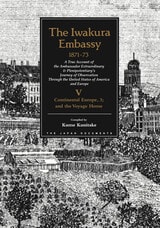
The Iwakura Embassy, 1871-1873, Volume V
Continental Europe, 3; and the Voyage HomeKunitake Kume
MHM Limited, 2002

The Japanese Experience in Indonesia
Selected Memoirs of 1942-1945Anthony Reid
Ohio University Press, 1986
Although the wartime Japanese military administration of Indonesia was critical to the making of modern Indonesia, it remains shrouded in mystery, in part because of the systematic destruction of records following the Japanese surrender. These excerpts from personal memoirs of individual Japanese soldiers and administrators provide unique glimpses of the occupation—from the Japanese landing on Java and the Dutch surrender, to the independence proclamation in Jakarta, to the violence in Surabaya following the Japanese surrender. Through the eyes of Japanese at all levels of responsibility, we see the internal Indonesian turmoil, the struggle toward an independence movement, and the efforts of some Japanese to promote independence, despite the policies of imperial headquarters.
Not only does this collection illuminate modern Indonesian history, it provides students of Japanese history with a feeling for the variety of Japanese responses to the war effort. The Japanese Experience in Indonesia will therefore be of interest to Southeast and East Asian historians and political scientists, as well as to those with a more general interest in World War II.
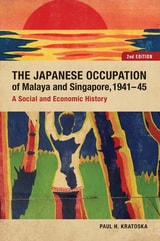
The Japanese Occupation of Malaya and Singapore, 1941-45
A Social and Economic HistoryPaul H. Kratoska
National University of Singapore Press, 2018
Originally published in 1998, The Japanese Occupation of Malaya and Singapore is fully updated with material from newly discovered and recently translated documents and as well as new archival evidence. Kratoska’s work offers a clear depiction of wartime life under foreign occupation, and explains how the legacies of war and occupation shaped the post-war recovery in Malaya and Singapore.
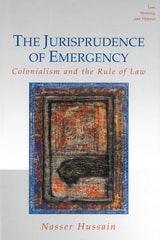
The Jurisprudence of Emergency
Colonialism and the Rule of LawNasser Hussain
University of Michigan Press, 2003
Ever-more-frequent calls for the establishment of a rule of law in the developing world have been oddly paralleled by the increasing use of "exceptional" measures to deal with political crises. To untangle this apparent contradiction, The Jurisprudence of Emergency analyzes the historical uses of a range of emergency powers, such as the suspension of habeas corpus and the use of military tribunals. Nasser Hussain focuses on the relationship between "emergency" and the law to develop a subtle new theory of those moments in which the normative rule of law is suspended.
The Jurisprudence of Emergency examines British colonial rule in India from the late eighteenth to the early twentieth century in order to trace tensions between the ideology of liberty and government by law, which was used to justify the British presence, and the colonizing power's concurrent insistence on a regime of conquest. Hussain argues that the interaction of these competing ideologies exemplifies a conflict central to all Western legal systems—between the universal, rational operation of law on the one hand and the absolute sovereignty of the state on the other. The author uses an impressive array of historical evidence to demonstrate how questions of law and emergency shaped colonial rule, which in turn affected the development of Western legality.
The pathbreaking insights developed in The Jurisprudence of Emergency reevaluate the place of colonialism in modern law by depicting the colonies as influential agents in the interpretation and delineation of Western ideas and practices. Hussain's interdisciplinary approach and subtly shaded revelations will be of interest to historians as well as scholars of legal and political theory.
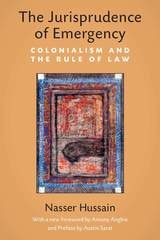
The Jurisprudence of Emergency
Colonialism and the Rule of LawNasser Hussain
University of Michigan Press, 2019
The Jurisprudence of Emergency examines British rule in India from the late eighteenth to the early twentieth century, tracing tensions between the ideology of liberty and government by law used to justify the colonizing power's insistence on a regime of conquest. Nasser Hussain argues that the interaction of these competing ideologies exemplifies a conflict central to all Western legal systems—between the universal, rational operation of law on the one hand and the absolute sovereignty of the state on the other. The author uses an impressive array of historical evidence to demonstrate how questions of law and emergency shaped colonial rule, which in turn affected the development of Western legality.
The pathbreaking insights developed in The Jurisprudence of Emergency reevaluate the place of colonialism in modern law by depicting the colonies as influential agents in the interpretation of Western ideas and practices. Hussain's interdisciplinary approach and subtly shaded revelations will be of interest to historians as well as scholars of legal and political theory.
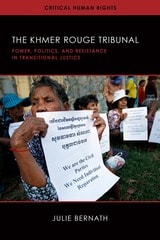
The Khmer Rouge Tribunal
Power, Politics, and Resistance in Transitional JusticeJulie Bernath
University of Wisconsin Press, 2023
Here, Julie Bernath takes a different tack, deliberately decentering the trials in an effort to understand the ECCC in its particular context—and, by extension, the degree to which notions of transitional justice generally must be understood in particular social, cultural, and political contexts. She focuses on “sites of resistance” to the ECCC, including not only members of the elite political class but also citizens who do not, for a variety of tangled reasons, participate in the tribunal—and even resistance from victims of the regime and participants in the trials. Bernath demonstrates that the ECCC both shapes and is shaped by long-term contestation over Cambodia’s social, economic, and political transformations, and thereby argues that transitional justice must be understood locally rather than as a homogenous good that can be implanted by international actors.
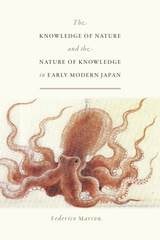
The Knowledge of Nature and the Nature of Knowledge in Early Modern Japan
Federico Marcon
University of Chicago Press, 2015
The first book-length English-language study devoted to the important field of honzogaku, The Knowledge of Nature and the Nature of Knowledge in Early Modern Japan will be an essential text for historians of Japanese and East Asian science, and a fascinating read for anyone interested in the development of science in the early modern era.
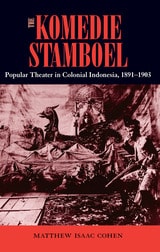
The Komedie Stamboel
Popular Theater in Colonial Indonesia, 1891–1903Matthew Isaac Cohen
Ohio University Press, 2006
Originating in 1891 in the port city of Surabaya, the Komedie Stamboel, or Istanbul-style theater, toured colonial Indonesia, Singapore, and Malaysia by rail and steamship. The company performed musical versions of the Arabian Nights, European fairy tales and operas such as Sleeping Beauty and Aida, as well as Indian and Persian romances, Southeast Asian chronicles, true crime stories, and political allegories. The actors were primarily Eurasians, the original backers were Chinese, and audiences were made up of all races and classes. The Komedie Stamboel explores how this new hybrid theater pointed toward possibilities for the transformation of self in a colonial society and sparked debates on moral behavior and mixed-race politics.
While audiences marveled at spectacles involving white-skinned actors, there were also racial frictions between actors and financiers, sexual scandals, fights among actors and patrons, bankruptcies, imprisonments, and a murder.
Matthew Isaac Cohen's evocative social history situates the Komedie Stamboel in the culture of empire and in late nineteenth-century itinerant entertainment. He shows how the theater was used as a symbol of cross-ethnic integration in postcolonial Indonesia and as an emblem of Eurasian cultural accomplishment by Indische Nederlanders. A pioneering study of nineteenth-century Southeast Asian popular culture, The Komedie Stamboel gives a new picture of the region's arts and culture and explores the interplay of currents in global culture, theatrical innovation, and movement in colonial Indonesia.ABOUT THE AUTHOR---Matthew Isaac Cohen is senior lecturer in Drama and Theatre Studies at Royal Holloway University of London. His articles on Southeast Asian performance have appeared in New Theatre Quarterly, Asian Theatre Journal, Journal of the Royal Asiatic Society, and Archipel. As a practicing shadow puppeteer, he has performed in the United States, Europe, and Asia.
The Korean Popular Culture Reader
Kyung Hyun Kim and Youngmin Choe, eds.
Duke University Press, 2014
Contributors. Jung-hwan Cheon, Michelle Cho, Youngmin Choe, Steven Chung, Katarzyna J. Cwiertka, Stephen Epstein, Olga Fedorenko, Kelly Y. Jeong, Rachael Miyung Joo, Inkyu Kang, Kyu Hyun Kim, Kyung Hyun Kim, Pil Ho Kim, Boduerae Kwon, Regina Yung Lee, Sohl Lee, Jessica Likens, Roald Maliangkay, Youngju Ryu, Hyunjoon Shin, Min-Jung Son, James Turnbull, Travis Workman
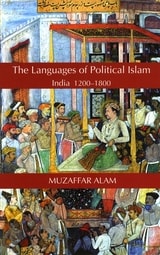
The Languages of Political Islam
India 1200-1800Muzaffar Alam
University of Chicago Press, 2004
Muzaffar Alam shows that the adoption of Arabo-Persian Islam in India changed the manner in which Islamic rule and governance were conducted. Islamic regulation and statecraft in a predominately Hindu country required strategic shifts from the original Islamic injunctions. Islamic principles could not regulate beliefs in a vast country without accepting cultural limitations and limits on the exercise of power. As a result of cultural adaptation, Islam was in the end forced to reinvent its principles for religious rule. Acculturation also forced key Islamic terms to change so fundamentally that Indian Islam could be said to have acquired a character substantially different from the Islam practiced outside of India.

The Last Empire
Thirty Years of Portuguese DecolonizationAntónio Costa Pinto
Intellect Books, 2003
This book is the result of a conference organised by the Contemporary Portuguese Political History Research Centre (CPHRC) and the University of Dundee that took place during September 2000. The purpose of this conference, and the resulting book, was to bring together various experts in the field to analyse and debate the process of Portuguese decolonisation, which was then 25 years old, and the effects of this on the Portuguese themselves. For over one century, the Portuguese state had defined its foreign policy on the basis of its vast empire &endash; this was the root of its 'Atlanticist' vision. The outbreak of war of liberation in its African territories, which were prompted by the new international support for self determination in colonised territories, was a serious threat that undermined the very foundations of the Portuguese state. This book examines the nature of this threat, how the Portuguese state initially attempted to overcome it by force, and how new pressures within Portuguese society were given space to emerge as a consequence of the colonial wars.
This is the first book that takes a multidisciplinary look at both the causes and the consequences of Portuguese decolonisation &endash; and is the only one that places the loss of Portugal's Eastern Empire in the context of the loss of its African Empire. Furthermore, it is the only English language book that relates the process of Portuguese decolonisation with the search for a new Portuguese vision of its place in the world.
This book is intended for anyone who is interested in regime change, decolonisation, political revolutions and the growth and development of the European Union. It will also be useful for those who are interested in contemporary developments in civil society and state ideologies. Given that a large part of the book is dedicated to the process of change in the various countries of the former Portuguese Empire, it will also be of interest to students of Africa. It will be useful to those who study decolonisation processes within the other former European Empires, as it provides comparative detail. The book will be most useful to academic researchers and students of comparative politics and area studies.
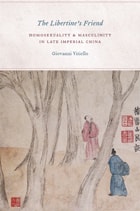
The Libertine's Friend
Homosexuality and Masculinity in Late Imperial ChinaGiovanni Vitiello
University of Chicago Press, 2011
Delving into three hundred years of Chinese literature, from the mid-sixteenth century to the mid-nineteenth, The Libertine’s Friend uncovers the complex and fascinating history of male homosexual and homosocial relations in the late imperial era. Drawing particularly on overlooked works of pornographic fiction, Giovanni Vitiello offers a frank exploration of the importance of same-sex love and eroticism to the evolution of masculinity in China.
Vitiello’s story unfolds chronologically, beginning with the earliest sources on homoeroticism in pre-imperial China and concluding with a look at developments in the twentieth century. Along the way, he identifies a number of recurring characters—for example, the libertine scholar, the chivalric hero, and the lustful monk—and sheds light on a set of key issues, including the social and legal boundaries that regulated sex between men, the rise of male prostitution, and the aesthetics of male beauty. Drawing on this trove of material, Vitiello presents a historical outline of changing notions of male homosexuality in China, revealing the integral part that same-sex desire has played in its culture.

The Limits of Okinawa
Japanese Capitalism, Living Labor, and Theorizations of CommunityWendy Matsumura
Duke University Press, 2015
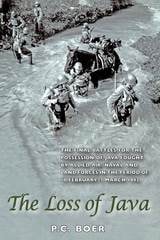
The Loss of Java
The Final Battles for the Possession of Java Fought by Allied Air, Naval and Land Forces in the Period of 18 February - 7 March 1942P.C. Boer
National University of Singapore Press, 2011
P.C. Boer considers whether the assessment of Major General Van Oyen that deploying the Allied air forces might prevent Japanese invasion of Java was realistic, and whether reliance on air power limited the capacity of land and naval forces to repel Japan's advances. The generally accepted idea is that the Allies were ineffective in their fight against the Japanese invaders but in fact the Japanese suffered serious losses. Boer's study shows that Dutch strategy grew out of a carefully-devised plan of defense, and that the battle for Java comprised not one (the Battle of the Java Sea) but four major engagements. However, Japanese commanders at various levels consciously took steps that exposed their forces to great risk but succeeded in putting the Allies under great pressure. In the end the Royal Netherlands East Indies Army (KNIL) and the allied forces capitulated on 8 March 1942.
This book is a translation of Het Verlies Van Java: Een kwestie van Air Power. De eindstrijd om Nederlands-Indie van de geallieerde lucht-, zee- en landstrijdkrschten in de periode van 18 februari t/m 7 maart 1942 (Amsterdam: Bataafsche Leeuw BV for the Koninklijke Militaire Academie, 2006).
The Magic of Concepts
History and the Economic in Twentieth-Century ChinaRebecca E. Karl
Duke University Press, 2017
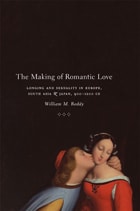
The Making of Romantic Love
Longing and Sexuality in Europe, South Asia, and Japan, 900-1200 CEWilliam M. Reddy
University of Chicago Press, 2012
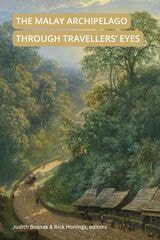
The Malay Archipelago Through Travellers' Eyes
1800–1900Edited by Judith E. Bosnak and Rick Honings
National University of Singapore Press, 2026
A history of colonial encounters in maritime Southeast Asia, through the lens of an underexplored group of nineteenth-century travelogues.
What did nineteenth-century travellers actually see when they journeyed through the Malay Archipelago—and what did they miss? The travelogues penned by British and Dutch explorers reached a wide readership; they have shaped how we imagine this region with their accounts of island kingdoms, volcanic landscapes, and maritime crossroads. Other voices—Javanese nobles venturing beyond their courts, Eurasian tourists navigating between worlds, French administrators, Scandinavian adventurers, Italian naturalists—remained in the shadows.
The Malay Archipelago through Travellers’ Eyes recovers these overlooked perspectives alongside fresh readings of celebrated figures like James Brooke, the “White Rajah” of Sarawak, and the intrepid Isabella Bird. Here we encounter Purwalelana, whose groundbreaking Javanese travelogue in modern prose abandoned centuries of poetic tradition; Kartini, whose letters became a means of traversing boundaries she could not physically cross; and Dé-Lilah, whose Eurasian heritage gave her writing an unsettling double vision. The naturalist Junghuhn scaling Java’s volcanoes, Raffles burnishing British reputation against Dutch rivals, Italian explorers charting New Guinea's coasts—each constructed not only the lands they described but also themselves.
Travel writing has often claimed to offer transparent windows onto foreign worlds. This collection reveals it as something far more interesting: a literature of encounter where imperial ambition, personal identity, and genuine curiosity intertwine. For anyone captivated by the arts of travel and observation, these essays open new ways of reading a genre we thought we knew.