Results by title
1566 books match the query 'Christianity' and 410 start with t
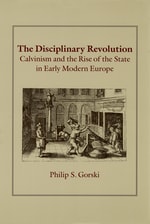
The Disciplinary Revolution
Calvinism and the Rise of the State in Early Modern EuropePhilip S. Gorski
University of Chicago Press, 2003
The Diversity of Religions
A Christian PerspectiveJ. A. DiNoia, O.P.
Catholic University of America Press, 1992
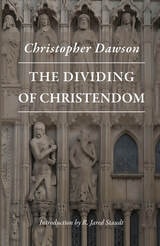
The Dividing of Christendom
Christopher Dawson
Catholic University of America Press, 2026
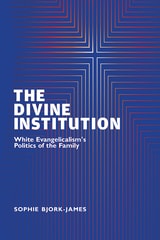
The Divine Institution
White Evangelicalism's Politics of the FamilySophie Bjork-James
Rutgers University Press, 2021
Winner of the Anne Bolin & Gil Herdt Book Prize from the Human Sexuality and Anthropology Interest Group (HSAIG)
The Divine Institution provides an account of how a theology of the family came to dominate a white evangelical tradition in the post-civil rights movement United States, providing a theological corollary to Religious Right politics.
This tradition inherently enforces racial inequality in that it draws moral, religious, and political attention away from problems of racial and economic structural oppression, explaining all social problems as a failure of the individual to achieve the strong gender and sexual identities that ground the nuclear family. The consequences of this theology are both personal suffering for individuals who cannot measure up to prescribed gender and sexual roles, and political support for conservative government policies. Exposure to experiences that undermine the idea that an emphasis on the family is the solution to all social problems is causing a younger generation of white evangelicals to shift away from this narrow theological emphasis and toward a more social justice-oriented theology. The material and political effects of this shift remain to be seen.
The Dry Wood
Caryll Houselander
Catholic University of America Press, 2021
The Early Christian Book (CUA Studies in Early Christianity)
William E. Klingshirn
Catholic University of America Press, 2007
The Earth Will Appear as the Garden of Eden
Essays on Mormon Environmental HistoryJedediah S. Rogers and Matthew C. Godfrey
University of Utah Press, 2018
Since Joseph Smith’s revelations, Mormons have interacted with nature in significant ways—whether perceiving it as a place to find God, uncorrupted spaces in which to build communities to usher in the Second Coming, wildness needing domestication and control, or a world brimming with natural resources to ensure economic well-being. The essays in this volume—written by leading scholars in both environmental history and Mormon history—explore how nature has influenced Mormon beliefs and how these beliefs inform Mormons’ encounters with nature. Introducing overarching environmental ideas, contributors examine specific aspects of nature and Mormon theology to glean new insights into the Mormon experience.

The Education of Phillips Brooks
John F. Woolverton
University of Illinois Press, 1995
The Education of Phillips Brooks probes the formative years of one of the best-known figures of Victorian America's "Gilded Age". Rigorously researched, bringing as yet untapped archival material into play, John F. Woolverton's book is an extremely readable and fascinating look at a gifted, persuasive clergyman and public figure. The sermon Brooks delivered at his Holy Trinity Church in Philadelphia while Abraham Lincoln's body lay in state overnight in Independence Hall was published, making him nationally famous overnight. He also is known for penning the lyrics to "O Little Town of Bethlehem". Although Brooks was not a major theologian, he was nurtured in an atmosphere of serious religious thought. In the crisis era of pre-Civil War America, he sought a religious and cultural ideal in the "perfect manhood" of Jesus Christ and consequently "won a name" for himself, as his slightly envious cousin, Henry Adams, once remarked. Woolverton places Brooks in his cultural context and shows how this religious leader was shaped psychologically and by his times and how those factors helped him forge a spiritual ideal for a troubled nation.
The End of Sacrifice
Religious Transformations in Late AntiquityGuy G. Stroumsa
University of Chicago Press, 2009
The religious transformations that marked late antiquity represent an enigma that has challenged some of the West’s greatest thinkers. But, according to Guy Stroumsa, the oppositions between paganism and Christianity that characterize prevailing theories have endured for too long. Instead of describing this epochal change as an evolution within the Greco-Roman world from polytheism to monotheism, he argues that the cause for this shift can be found not so much around the Mediterranean as in the Near East.
The End of Sacrifice points to the role of Judaism, particularly its inventions of new religious life following the destruction of the Second Temple in 70 CE. The end of animal sacrifice gave rise to new forms of worship, with a concern for personal salvation, scriptural study, rituals like praying and fasting, and the rise of religious communities and monasticism. It is what Christianity learned from Judaism about texts, death, and, above all, sacrifice that allowed it to supersede Greco-Roman religions and, Stroumsa argues, transform religion itself.
A concise and original approach to a much-studied moment in religious history, The End of Sacrifice will be heralded by all scholars of late antiquity.
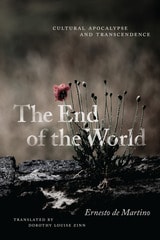
The End of the World
Cultural Apocalypse and TranscendenceErnesto de Martino
University of Chicago Press, 2023
A philosopher, historian of religions, and anthropologist, Ernesto de Martino (1908–1965) produced a body of work that prefigured many ideas and concerns that would later come to animate anthropology. In his writing, we can see the roots of ethnopsychiatry and medical anthropology, discussions of reflexivity and the role of the ethnographer, considerations of social inequality and hegemony from a Gramscian perspective, and an anticipation of the discipline’s “existential turn.” We also find an attentiveness to hope and possibility, despite the gloomy title of his posthumously published book La fine del mondo, or The End of the World. Examining apocalypse as an individual as well as a cultural phenomenon, treating subjects both classic and contemporary and both European and non-Western, ranging across ethnography, history, literature, psychiatry, and philosophy, de Martino probes how we relate to our world and how we might be better subjects and thinkers within it. This new translation offers English-language readers their first chance to engage with de Martino’s masterwork, which continues to appear prescient in the face of the frictions of globalization and environmental devastation.
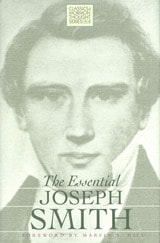
The Essential Joseph Smith
Marvin S. Hill
Signature Books, 1995
Previous, popular editions of Smith’s speeches and writings have edited out the extemporaneous complexities, as well as any deviations from present-day doctrines. Recent academic publications, for their part, have too often camouflaged the text in scholarly apparata. By contrast, this volume brings together a sampling of the prophet’s thinking from New York to Illinois in a complete, unabridged form, utilizing the earliest known sources, without excessive footnoting or commentary. No attempt is made to harmonize disparate, conflicting ideas. Readers can trace the developing, revelatory unfolding of ideas for themselves. They can also enjoy the text without reference to any interpretative agenda. In other words, The Essential Joseph Smith is readable and reliable. Bracketed material and punctuation are added where needed, but the text otherwise speaks for itself. These are Joseph Smith’s own words, his most essential messages.
The Essential Tillich
Paul Tillich
University of Chicago Press, 1999
This volume collects Tillich's best and most important work. Editor F. Forrester Church has structured the book around eight key areas of Tillich's thought, titled: Ultimate Concern; Symbols of Faith; The Protestant Principle; Addressing the Situation; Love, Power, and Justice; The Courage to Be; The Future of Religions; and Living on the Boundary. Through them we get a clear picture of the work of a man whom Church describes as “a man of rare genius and perspecuity, a modern man whose heart was in Jerusalem, whose spirit was with the ancient Greeks, and whose soul was committed to a better future.”
The Ethics of Oneness
Emerson, Whitman, and the Bhagavad GitaJeremy David Engels
University of Chicago Press, 2021
In The Ethics of Oneness, Jeremy David Engels reads the Bhagavad Gita alongside the works of American thinkers Ralph Waldo Emerson and Walt Whitman. Drawing on this rich combination of traditions, Engels presents the notion that individuals are fundamentally interconnected in their shared divinity. In other words, everything is one. If the lessons of oneness are taken to heart, particularly as they were expressed and celebrated by Whitman, and the ethical challenges of oneness considered seriously, Engels thinks it is possible to counter the pervasive and problematic American ideals of hierarchy, exclusion, violence, and domination.
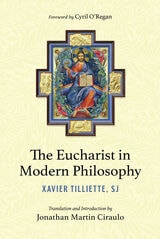
The Eucharist in Modern Philosophy
Xavier Tilliette
Catholic University of America Press, 2022
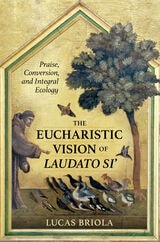
The Eucharistic Vision of Laudato Si
Praise, Conversion, and Integral EcologyLucas Briola
Catholic University of America Press, 2022
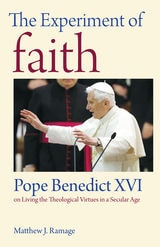
The Experiment of Faith
Pope Benedict XVI on Living the Theological Virtues in a Secular AgeCatholic University of America Press, 2020
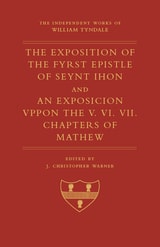
The Exposition of 1 John and An Exposition upon Matthew V-VII
William Tyndale
Catholic University of America Press, 2023
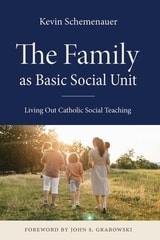
The Family as Basic Social Unit
Living Out Catholic Social TeachingKevin Schemenauer
Catholic University of America Press, 2024
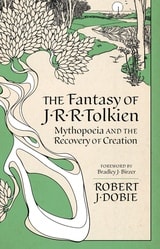
The Fantasy of J.R.R. Tolkien
Mythopeia and the Recovery of CreationRobert J. Dobie, Robert J.
Catholic University of America Press, 2024
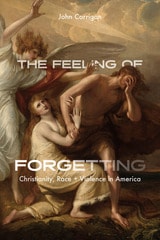
The Feeling of Forgetting
Christianity, Race, and Violence in AmericaJohn Corrigan
University of Chicago Press, 2023
The dual traumas of colonialism and slavery are still felt by Native Americans and African Americans as victims of ongoing violence toward people of color today. In The Feeling of Forgetting, John Corrigan calls attention to the trauma experienced by white Americans as perpetrators of this violence. By tracing memory’s role in American Christianity, Corrigan shows how contemporary white Christian nationalism is motivated by a widespread effort to forget the role race plays in American society. White trauma, Corrigan argues, courses through American culture like an underground river that sometimes bursts forth into brutality, terrorism, and insurrection. Tracing the river to its source is a necessary first step toward healing.
The Feeling of Forgetting
Christianity, Race, and Violence in AmericaJohn Corrigan
University of Chicago Press, 2023
A provocative examination of how religious practices of forgetting drive white Christian nationalism.
The dual traumas of colonialism and slavery are still felt by Native Americans and African Americans as victims of ongoing violence toward people of color today. In The Feeling of Forgetting, John Corrigan calls attention to the trauma experienced by white Americans as perpetrators of this violence. By tracing memory’s role in American Christianity, Corrigan shows how contemporary white Christian nationalism is motivated by a widespread effort to forget the role race plays in American society. White trauma, Corrigan argues, courses through American culture like an underground river that sometimes bursts forth into brutality, terrorism, and insurrection. Tracing the river to its source is a necessary first step toward healing.

The Feminine in Jungian Psychology and in Christian Theology
Ann Belford Ulanov
Northwestern University Press, 1971
Jung focuses on the human person and sees as central its mixture of masculine and feminine elements. In a time when so much is asserted and written about women in society—their rights, roles, identities, needs, and contributions—it is especially significant that Jung asserts the existence of the feminine as a key element, not only in women but in men as well. No less contested are the roles and identities of Christians. Ulanov brings into focus the deep and fascinating connections between theology and psychology.
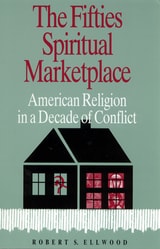
The Fifties Spiritual Marketplace
American Religion in a Decade of ConflictEllwood, Robert S
Rutgers University Press, 1997
A companion to his Sixties Spiritual Awakening, Ellwood explores the major Catholic-Protestant tensions of the decade, the conflict between theology and popular faith, and the underground forms of fifties religiosity like "Beat" Zen, UFO contactees, Thomas Merton monasticism, and the Joseph Campbell / Carl Jung revival of mythology. Ellwood frames his detailed and lively account with the provocative idea of the fifties as a "supply-side" free enterprise spiritual marketplace, with heady competition between religious groups and leaders, and with church attendance at a record high.
In addition to challenging an idealistic fifties cultural milieu, the book analyzes American religious responses to key historical events like the Korean War, McCarthyism, and the civil rights movement, turning a religious lens on the cultural history of the United States.
The First Urban Churches 1
Methodological FoundationsJames R. Harrison
SBL Press, 2015
A fresh look at early urban churches
This collection of essays examines the urban context of early Christian churches in the first-century Roman world. A city-by-city investigation of the early churches in the New Testament clarifies the challenges, threats, and opportunities that urban living provided for early Christians. Readers will come away with a better understanding of how scholars assemble an accurate picture of the cities in which the first Christians flourished.
Features:
- Analysis of urban evidence of the inscriptions, papyri, archaeological remains, coins, and iconography
- Discussion of how to use different types of evidence responsibly
- Outline of what constitutes proper methodological use for establishing a nuanced, informed portrait of ancient urban life
The First Urban Churches 2
Roman CorinthJames R. Harrison
SBL Press, 2016
Investigate the challenges, threats, and opportunities experienced by the early church
Volume two of The First Urban Churches focuses on the urban context of Christian churches in first-century Roman Corinth. An investigation of the material evidence of Corinth helps readers today understand properly the challenges, threats, and opportunities that the early Corinthian believers faced in the city. The essays demonstrate decisively the difference that such an approach makes in grappling with the meaning and context of the Corinthian epistles in the New Testament.
Features:
- Analysis of urban evidence of the inscriptions, papyri, archaeological remains, coins, and iconography
- Proposed reeconstructions of the past and its social, religious, and political significance
- A nuanced, informed portrait of ancient urban life in Corinth
The First Urban Churches 3
EphesusJames R. Harrison
SBL Press, 2018
Investigate the challenges, threats, and opportunities experienced by the early church in Ephesus
The third installment of The First Urban Churches focuses on the urban context of Christian churches in first-century Ephesus. As with previous volumes, contributors illustrate how an investigation of the material evidence will help readers understand properly the challenges, threats, and opportunities that the early Ephesian believers faced in that city. Brad Bitner, James R. Harrison, Michael Haxby, Fredrick J. Long, Guy M. Rogers, Michael Theophilos, Paul Trebilco, and Stephan Witetschek demonstrate decisively the difference that such an approach makes in grappling with the meaning and context of the New Testament writings, particularly Ephesians, Acts, and Revelation.
Features
- Analysis of urban evidence of the inscriptions, papyri, archaeological remains, coins, and iconography
- Proposed reconstructions of the past and its social, religious and political significance
- A nuanced, informed portrait of ancient urban life in Ephesus
The First Urban Churches 4
Roman PhilippiJames R. Harrison
SBL Press, 2018
Investigate the challenges and opportunities experienced by the early church
This fourth installment of The First Urban Churches, edited by James R. Harrison and L. L. Welborn, focuses on the urban context of Christian churches in first-century Roman Philippi. The international team of New Testament and classical scholars contributing to the volume present essays that use inscriptions, papyri, archaeological remains, coins, and iconography to examine the rivalries, imperial context, and ecclesial setting of the Philippian church.
Features:
- Analysis of the material and epigraphic evidence relating to first- and second-century CE Roman Philippi
- Examination of important passages from Philippians within their ancient urban context
- Investigation of the social composition and membership of the Philippian church from the archaeological and documentary evidence
The First Urban Churches 5
Colossae, Hierapolis, and LaodiceaJames R. Harrison
SBL Press, 2019
A fresh examination of early Christianity by an international team of New Testament and classical scholars
Volume 5 of The First Urban Churches investigates the urban context of Christian churches in first-century Roman Colossae, Hierapolis, and Laodicea. Building on the methodologies introduced in the first volume and supplementing the in-depth studies of Corinth, Ephesus, and Philippi (vols. 2-4), essays in this volume challenge readers to reexamine preconceived understandings of the early church and to grapple with the meaning and context of Christianity in its first-century Roman colonial context.
Features:
- Analysis of urban evidence found in inscriptions, papyri, archaeological remains, coins, and iconography
- Proposed reconstructions of the past and its social, religious, and political significance
- A nuanced, informed portrait of ancient urban life in the cities of the Lycus Valley
The First Urban Churches 6
Rome and OstiaJames R. Harrison
SBL Press, 2021
An examination of early Roman Christianity by New Testament and classical scholars
Building on the methodologies introduced in the first volume of The First Urban Churches and supplementing the in-depth studies of Corinth, Ephesus, Philippi, Colossae, Hierapolis, and Laodicea (vols. 2–5), essays in this volume challenge readers to reexamine what we know about the early church within Rome and the port city of Ostia. In the introductory section of the book, James R. Harrison discusses the material and documentary evidence of both cities, which sets the stage for the essays that follow. In the second section, Mary Jane Cuyler, James R. Harrison, Richard Last, Annelies Moeser, Thomas A. Robinson, Michael P. Theophilos, and L. L. Welborn examine a range of topics, including the Ostian Synagogue, Romans 1:2–4 against the backdrop of Julio-Claudian adoption and apotheosis traditions, and the epistle of 1 Clement. In the final section of this volume, Jutta Dresken-Welland and Mark Reasoner engage Peter Lampe’s magnum opus From Paul to Valentinus; Lampe wraps up the section and the volume with a response. Throughout, readers are provided with a rich demonstration of how the material evidence of the city of Rome illuminates the emergence of Roman Christianity, especially in the first century CE.
The First Urban Churches 7
ThessalonicaJames R. Harrison
SBL Press, 2022
The First Urban Churches 7 includes essays focused on the development of early Christianity from the mid-first century through the sixth century CE in the ancient Macedonian city of Thessalonica. An international group of contributors traces the emergence of Thessalonica’s house churches through a close study of the archaeological remains, inscriptions, coins, iconography, and Paul’s two letters to the Thessalonians. After a detailed introduction to the city, including the first comprehensive epigraphic profile of Thessalonica from the Hellenistic age to the Roman Empire, topics discussed include the Roman emperor’s divine honors, coins and inscriptions as sources of imperial propaganda, Thessalonian family bonds, Paul’s apostolic self-image, the role of music at Thessalonica and in early Christianity, and Paul’s response to the Thessalonian Jewish community. Contributors include D. Clint Burnett, Alan H. Cadwallader, Rosemary Canavan, James R. Harrison, Julien M. Ogereau, Isaac T. Soon, Angela Standhartinger, Michael P. Theophilos, and Joel R. White.
The First Urban Churches 8
Galatia and LycaoniaJames R. Harrison
SBL Press, 2025
The First Well
A Bethlehem BoyhoodJabra Ibrahim Jabra
University of Arkansas Press, 1995
The Formation of Affectivity
A Christian ApproachFrancisco Insa
St. Augustine's Press, 2023
The present book aims to respond to this need by addressing the consonance and individuality in human nature, and the ways in which ordering in personality and psychology are
not inhibiting, but potentially liberating and influential. Francisco Insa draws from his medical and theological background, which includes both clinical and pastoral experience, to address all those responsible for the formation of others––including parents, teachers, priests, spiritual directors––and enables them to confront their roles as formators with greater insight and confidence. Insa's guidance through the human personality and its various expressions, the education of the character, growth in maturity, the particularity of each stage of the life cycle, sexuality and celibacy, chastity in the context of post-modern life, and mental illnesses is a landmark presentation of scientific rigor matched with practical application. As often as one says, "My situation is unique,"; the author here responds: "Yes, but special even more than you can express"; Insa is forthright about what can never be lost in human beings, but only recovered when the head and heart are aligned and formed properly.
For as much as this book may help the reader understand himself, it will also render him better understood by others. The Christian approach to the formation of affectivity, as Insa shows, is indispensable to deep and enduring human development, and it is often the only way to identify and mediate interior dissonance and confusion.
The Formation of Christendom
Christopher Dawson
Catholic University of America Press, 2026
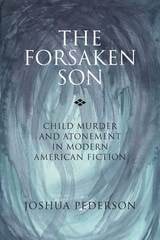
The Forsaken Son
Child Murder and Atonement in Modern American FictionJoshua Pederson
Northwestern University Press, 2015
The Forsaken Son engages the provocative coincidence of the vocabularies of infanticide and Christianity, specifically atonement theology, in six modern American novels: Flannery O’Connor’s The Violent Bear It Away, the first two installments of John Updike’s Rabbit tetralogy, Toni Morrison’s Beloved, Joyce Carol Oates’s My Sister, My Love, and Cormac McCarthy’s Outer Dark.
Christian atonement theology explains why God lets His son be crucified. Yet in recent years, as an increasing number of scholars have come to reject that explanation, the cross reverts from saving grace to trauma—or even crime. More bluntly, without atonement, the cross may be a filicide, in which God forces his son to die for no apparent reason. Pederson argues that the novels about child murder mentioned above likewise give voice to modern skepticism about traditional atonement theology.
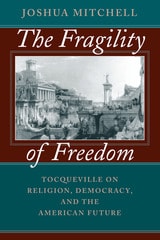
The Fragility of Freedom
Tocqueville on Religion, Democracy, and the American FutureJoshua Mitchell
University of Chicago Press, 1995
Focusing on Democracy in America, The Fragility of Freedom examines Tocqueville's key works and argues that his analysis of democracy is ultimately rooted in an Augustinian view of human psychology. As much a work of political philosophy as of religion, The Fragility of Freedom argues for the importance of a political theology that recognizes moderation.
"An intelligent and sharply drawn portrait of a conservative Toqueville."—Anne C. Rose, Journal of American History
"I recommend this book as one of a very few to approach seriously the sources of Tocqueville's intellectual and moral greatness."—Peter Augustine Lawler, Journal of Politics
"Mitchell ably places Democracy in America in the long conversation of Western political and theological thought."—Wilfred M. McClay, First Things
"Learned and thought-provoking."—Peter Berkowitz, New Republic
The Full Gospel in Zion
A History of Pentecostalism in UtahAlan J. Clark
University of Utah Press, 2022
In The Full Gospel in Zion, Alan J. Clark explores the dynamic history of Pentecostalism in Utah. Although the story of Pentecostalism now spans the globe, there is no previous study of its growth and development among the mountains and valleys of the Beehive State. This book recovers and reveals the identities of the earliest Pentecostal pioneers across the state and places the founding churches within the historical narrative of Utah religion in the twentieth and early twenty-first centuries.
Utah Pentecostals faced difficulties establishing churches and congregations in a region dominated by a Latter-day Saint majority. Pentecostals found that they shared surprising similarities in belief but faced unexpected obstacles in evangelism, as Latter-day Saints did not respond as other Christians did to the Pentecostal message. Clark draws from interviews conducted with church leaders and congregants and from the rich documentary record to show Utah Pentecostals’ perseverance in creating a strong foothold in Utah. His work offers a new look at the diversity and richness of Utah’s religious history.
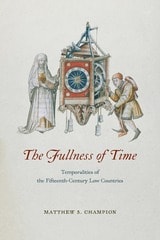
The Fullness of Time
Temporalities of the Fifteenth-Century Low CountriesMatthew S. Champion
University of Chicago Press, 2017
The Fullness of Time asks how the passage of time in the Low Countries was ordered by the rhythms of human action, from the musical life of a cathedral to the measurement of time by clocks and calendars, the work habits of a guildsman to the devotional practices of the laity and religious orders. Through a series of transdisciplinary case studies, it explores the multiple ways that objects, texts and music might themselves be said to engage with, imply, and unsettle time, shaping and forming the lives of the inhabitants of the fifteenth-century Low Countries. Champion reframes the ways historians have traditionally told the history of time, allowing us for the first time to understand the rich and varied interplay of temporalities in the period.
The Galilean Economy in the Time of Jesus
David A. Fiensy
SBL Press, 2013
The Garden of God
Pope Benedict XVI
Catholic University of America Press, 2014
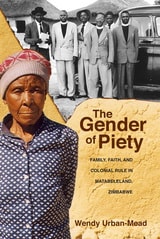
The Gender of Piety
Family, Faith, and Colonial Rule in Matabeleland, ZimbabweWendy Urban-Mead
Ohio University Press, 2015
The Gender of Piety is an intimate history of the Brethren in Christ Church in Zimbabwe, or BICC, as related through six individual life histories that extend from the early colonial years through the first decade after independence. Taken together, these six lives show how men and women of the BICC experienced and sequenced their piety in different ways. Women usually remained tied to the church throughout their lives, while men often had a more strained relationship with it. Church doctrine was not always flexible enough to accommodate expected masculine gender roles, particularly male membership in political and economic institutions or participation in important male communal practices.
The study is based on more than fifteen years of extensive oral history research supported by archival work in Zimbabwe, the United Kingdom, and the United States. The oral accounts make it clear, official versions to the contrary, that the church was led by spiritually powerful women and that maleness and mission-church notions of piety were often incompatible.
The life-history approach illustrates how the tension of gender roles both within and without the church manifested itself in sometimes unexpected ways: for example, how a single family could produce both a legendary woman pastor credited with mediating multiple miracles and a man—her son—who joined the armed wing of the Zimbabwe African People’s Union nationalist political party and fought in Zimbabwe’s liberation war in the 1970s. Investigating the lives of men and women in equal measure, The Gender of Piety uses a gendered interpretive lens to analyze the complex relationship between the church and broader social change in this region of southern Africa.
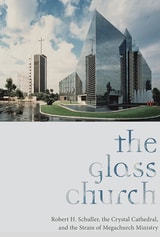
The Glass Church
Robert H. Schuller, the Crystal Cathedral, and the Strain of Megachurch MinistryMark T. Mulder
Rutgers University Press, 2020
Robert H. Schuller’s ministry—including the architectural wonder of the Crystal Cathedral and the polished television broadcast of Hour of Power—cast a broad shadow over American Christianity. Pastors flocked to Southern California to learn Schuller’s techniques. The President of United States invited him sit prominently next to the First Lady at the State of the Union Address. Muhammad Ali asked for the pastor’s autograph. It seemed as if Schuller may have started a second Reformation. And then it all went away. As Schuller’s ministry wrestled with internal turmoil and bankruptcy, his emulators—including Rick Warren, Bill Hybels, and Joel Osteen— nurtured megachurches that seemed to sweep away the Crystal Cathedral as a relic of the twentieth century. How did it come to this?
Certainly, all churches depend on a mix of constituents, charisma, and capital, yet the size and ambition of large churches like Schuller’s Crystal Cathedral exert enormous organizational pressures to continue the flow of people committed to the congregation, to reinforce the spark of charismatic excitement generated by high-profile pastors, and to develop fresh flows of capital funding for maintenance of old projects and launching new initiatives. The constant attention to expand constituencies, boost charisma, and stimulate capital among megachurches produces an especially burdensome strain on their leaders. By orienting an approach to the collapse of the Crystal Cathedral on these three core elements—constituency, charisma, and capital—The Glass Church demonstrates how congregational fragility is greatly accentuated in larger churches, a notion we label megachurch strain, such that the threat of implosion is significantly accentuated by any failures to properly calibrate the inter-relationship among these elements.
The God of Faith and Reason
Robert Sokolowski
Catholic University of America Press, 1995
The Godly Image
Christian Satisfaction in AquinasRomanus Cessario
Catholic University of America Press, 2020
The Good Is Love
The Body and Human Acts in Humanae Vitae and John Paul IIAdrian Reimers
St. Augustine's Press, 2020
Reimers draws upon the encyclical Humanae Vitae and John Paul II’s catechesis known as the theology of the body to respond to the stalled development of moral theology on the issues most crucial to human love and intimacy. “It is time, we are told, for a ‘paradigm shift’ in the Catholic Church’s moral teaching, such shift representing a more pastoral and less dogmatic approach to moral issues,” writes Reimers. His claim that “a paradigm shift in moral theology and philosophy may be valuable––perhaps vital––to scholars who think and write about these sciences and to teachers who communicate moral truth” is not an exhortation to redefine moral truths. Rather, he argues that an approach to contraception, for example, that relies exclusively on natural law is a hackneyed one and often “tedious.”
John Paul II’s series of catechetical addresses known as the theology of the body was originally composed in the 1970s after Paul VI’s encyclical Humanae Vitae. Albeit derived from the writing of an archbishop and not yet pope, Reimers identifies John Paul II’s perspectives on love, sex and contraception as an essential force behind this so-called paradigm shift in continuity with the profound and unchanging truths set forth in Humanae Vitae. As Reimers states, “Moral truths do not change, even if our ways to understand them improve.”
How, then, is our sense of the goodness or badness of contraception meant to be helped by such a development of thought? Ethics grounded philosophically tends to lean toward legalism in the context of moral actions, says Reimers, as it emphasizes conformity to God’s law and largely overlooks “the relationship between moral behavior and the human person’s ultimate end of beatitude with God.” The important principle of the necessarily two-fold description that natural law gives to sex––namely, as unitive and procreative––must not be the authoritative end of the discussion regarding the moral nature of contraception. In an age where technology has given human beings new power it seems there must be new rules as well, and the conquest of procreative acts changes the human perception of the limitations once associated with harmful acts. Herein lies the importance of John Paul II’s catechesis––the goodness or badness of acts is not just concerned with end of a particular act. As Reimers writes, “If we are to understand the complex relationships among love, marriage, and their sexual expression, we must situate these within the context of the end of the human being.”
A position on contraception and human sexuality cannot be comprehensive without a concept of love properly understood. Human acts must bring us closer to sanctity, not to comfort or possession. Holiness is the perfection of love, and its pursuit aims at ultimate beatitude. This end, the truest love human can know, is the end which ultimately condemns contraception once and for all, as “contracepted sex is contrary to holiness.” Reimers unpacks this sometimes difficult truth in eight chapters, which begin with love and conclude with faithfulness to moral norms and a spirituality of marriage.
The arguments surrounding contraception and “good sex” seem to have set the grounds for coherently choosing a side rather than to have succeeded in presenting certain human acts as definitively immoral. As Reimers notes, a natural law position on contraception often fails to employ its greatest ally: the reality of authentic human love and “victory” of the individual in one’s sanctity as achieved through that love. This work will reorient the objectives and claims of the moral debate, as well as influence the popular notion of what love is and what it cannot be. It is an aid to scholars, students and study groups, humanists, and those who seek to deepen the sense of love’s highest physical expression.
The Gospel of Happiness
How Secular Psychology Points to the Wisdom of Christian PracticeChristopher Kaczor
St. Augustine's Press, 2019
Just as Aristotelian metaphysics provided a new basis for the natural theology of Aquinas’s time, so too, positive psychology provides a basis for a natural moral theology in our own time. this book marshals the empirically verifiable findings of positive psychology that show the wisdom of the Christian tradition. Christian warnings about the dangers of greed, coveting a neighbor’s goods (social comparison), and pride find an empirical verification. Likewise, positive psychology vindicates the wisdom of Christian teaching on the importance of forgiveness, of gratitude, of humility, and of serving one’s neighbor. moreover, positive psychology also can be a service to Christian believers by helping them in their struggles with willpower, by providing new motivations for prayer, and by helping them identify their signature strengths. Finally, this book argues, in a variety of ways, that it is folly to think that even the best of psychology can serve as a replacement for Christianity.
The Gospel of John Marrant
Conjuring Christianity in the Black AtlanticAlphonso F. Saville IV
Duke University Press, 2024
The Gospel of the Working Class
Labor's Southern Prophets in New Deal AmericaErik S. Gellman and Jarod Roll
University of Illinois Press, 2011
In this exceptional dual biography and cultural history, Erik S. Gellman and Jarod Roll trace the influence of two southern activist preachers, one black and one white, who used their ministry to organize the working class in the 1930s and 1940s across lines of gender, race, and geography. Owen Whitfield and Claude Williams, along with their wives Zella Whitfield and Joyce Williams, drew on their bedrock religious beliefs to stir ordinary men and women to demand social and economic justice in the eras of the Great Depression, New Deal, and Second World War.
The Grasinski Girls
The Choices They Had and the Choices They MadeMary Patrice Erdmans
Ohio University Press, 2004
The Grasinski Girls were working-class Americans of Polish descent, born in the 1920s and 1930s, who created lives typical of women in their day. They went to high school, married, and had children. For the most part, they stayed home to raise their children. And they were happy doing that. They took care of their appearance and their husbands, who took care of them. Like most women of their generation, they did not join the women’s movement, and today they either reject or shy away from feminism.
Basing her account on interviews with her mother and aunts, Mary Erdmans explores the private lives of these white, Christian women in the post-World War II generation. She compares them, at times, to her own postfeminist generation. Situating these women within the religious routines that shaped their lives, Professor Erdmans explores how gender, class, ethnicity, and religion shaped the choices the Grasinski sisters were given as well as the choices they made. These women are both acted upon and actors; they are privileged and disadvantaged; they resist and surrender; they petition the Lord and accept His will.
The Grasinski Girls examines the complexity of ordinary lives, exposing privileges taken for granted as well as nuances of oppression often overlooked. Erdmans brings rigorous scholarship and familial insight to bear on the realities of twentieth-century working-class white women in America.
The Gridiron Gospel
Faith and College Football in Twentieth-Century AmericaHunter M. Hampton
University of Illinois Press, 2025