Results by title
808 books match the query 'Drama' and 218 start with t

The Oven
An Anti-LectureIlan Stavans
University of Massachusetts Press, 2018
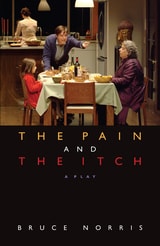
The Pain and the Itch
A PlayBruce Norris
Northwestern University Press, 2008
In this brief but staggering two-act, playwright Norris demonstrates his skill at drawing out the dark truth that lurks beneath the surface of the “perfect” family. His crackling satire takes dead aim at the self-satisfied, left-leaning American upper-middle class and its many self-delusions.
On a winter afternoon, Kelly and Clay—an attractive, prosperous, seemingly happy couple with a four-year-old daughter and a newborn baby—must explain to a visitor the events of the previous Thanksgiving, on which, so it seems, someone or something had been gnawing at the avocados on their kitchen table. In the course of this holiday gathering—attended by Clay’s mother, a well-meaning but clueless first-grade teacher who spouts pointless liberal bromides; his brother, a plastic surgeon with a nihilistic streak and a taste for martinis; and his brother's girlfriend, a sexy Balkan immigrant with a love for all things American (racism included)—the recent past is unearthed along with revelations of failed marriages, fraternal hatred, infidelity and venereal disease, in the form of their daughter’s nasty genital infection. And it’s a comedy. As the story is gradually unfolded to their visitor, a Muslim cab driver, his relationship to the events becomes increasingly clear, as does the emptiness of the family’s supposed benevolence and sensitivity.
With its crashing emotion and cutting humor, this vicious dissection of the comfortable progressive life lays bare the lies that people use to feel righteous even as they veer off a genuinely ethical path.

The Panza Monologues
Written, Compiled, and Collected by Virginia Grise and Irma Mayorga
University of Texas Press, 2014
The Panza Monologues is an original solo performance piece based on women's stories about their panzas—tú sabes—that roll of belly we all try to hide. Written, compiled, and collected by Virginia Grise and Irma Mayorga and fashioned into a tour-de-force solo performance, The Panza Monologues features the words of Chicanas speaking with humor and candor. Their stories boldly place the panza front and center as a symbol that reveals the lurking truths about women's thoughts, lives, loves, abuses, and living conditions.
This second edition of The Panza Monologues presents the performance script in its entirety, as well as a rich supporting cast of dramaturgical and pedagogical materials. These include a narrative history of the play’s development by the playwrights; critical materials that enhance and expand upon the script’s themes and ideas (a short introduction to San Antonio, where the play was developed; playwright autogeographies; and a manifesto on women of color making theater); and a selection of pedagogical and creative ideas, including guidelines and advice for staging a production of the play and for teaching it in the classroom, community-making activities (screenings, hosting “Panza Parties,” community/group discussions), and creative writing activities connected to the play.
The Party Line
A Full-Length PlayRoger L Simon
St. Augustine's Press, 2013
The Past as Present in the Drama of August Wilson
Harry J. Elam, Jr.
University of Michigan Press, 2004
The Performance of Power
Theatrical Discourse and PoliticsSue-Ellen Case
University of Iowa Press, 1991
Recently in the field of theatre studies there has been an increasing amount of debate and dissonance regarding the borders of its territory, its methodologies, subject matter, and scholarly perspectives. The nature of this debate could be termed "political" and, in fact, concerns "the performance of power"—the struggle over power relations embedded in texts, methodologies, and the academy itself.
This striking new collection of nineteen divergent essays represents this performance of power and the way in which the recent convergence of new critical theories with historical studies has politicized the study of the theatre. Neither play text, performance, nor scholarship and teaching can safely reside any longer in the "free," politically neutral, self-signifying realm of the aesthetic. Politicizing theatrical discourse means that both the hermeneutics and the histories of theatre reveal the role of ideology and power dynamics.
New strategies and concepts—and a vital new phase of awareness—appear in these illuminating essays. A variety of historical periods, from the Renaissance through the Victorian and up to the most contemporary work of the Wooster group, illustrate the ways in which contemporary strategies do not require contemporary texts and performances but can combine with historical methods and subjects to produce new theatrical discourse.

The Philadelphia Connection
Conversations with PlaywrightsB. J. Burton
Intellect Books, 2015
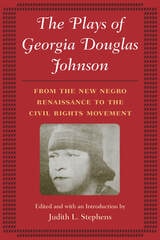
The Plays of Georgia Douglas Johnson
From the New Negro Renaissance to the Civil Rights MovementEdited and with an Introduction by Judith L. Stephens
University of Illinois Press, 2006
Recovering the stage work of one of America's finest black female writers
This volume collects twelve of Georgia Douglas Johnson's one-act plays, including two never-before-published scripts found in the Library of Congress. As an integral part of Washington, D.C.'s, thriving turn-of-the-century literary scene, Johnson hosted regular meetings with Harlem Renaissance writers and other artists, including Countee Cullen, Langston Hughes, May Miller, and Jean Toomer, and was herself considered among the finest writers of the time. Johnson also worked for U.S. government agencies and actively supported women's and minorities' rights.
As a leading authority on Johnson, Judith L. Stephens provides a brief overview of Johnson's career and significance as a playwright; sections on the creative environment in which she worked; her S Street Salon; "The Saturday Nighters," and its significance to the New Negro Theatre; selected photographs; and a discussion of Johnson's genres, themes, and artistic techniques.
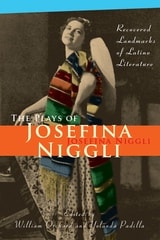
The Plays of Josefina Niggli
Recovered Landmarks of Latino LiteratureJosefina Niggli; Edited by William Orchard and Yolanda Padilla
University of Wisconsin Press, 2007
Although Niggli is perhaps best known for her fiction and folk plays, this anthology recovers her historical dramas, most of which have been long out of print or were never published. These plays are deeply concerned with the aftermath of the 1910 Mexican Revolution, imagining its implications for Mexico, Mexican Americans, and U.S.-Mexico relations. Included are Mexican Silhouettes (1928), Singing Valley (1936), The Cry of Dolores (1936), The Fair God (1936), Soldadera (1938), This is Villa! (1939), and The Ring of General Macias (1943). These works reflect on the making of history and often portray the Revolution through the lens of women’s experiences.
Also included in this volume are an extensive critical introduction to Niggli, a chronology of her life and writings, plus letters and reviews by, to, and about Josefina Niggli. that provide illuminating context for the plays.
The Playwright as Thinker
A Study of Drama in Modern Times, Fourth EditionEric Bentley
University of Minnesota Press, 2010
The Playwright at Work
ConversationsRosemarie Tichler
Northwestern University Press, 2012
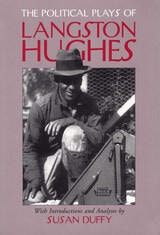
The Political Plays of Langston Hughes
Introductions and Analyses by Susan Duffy
Southern Illinois University Press, 2000
Among the most influential poets of the Harlem Renaissance, Langston Hughes is perhaps best remembered for the innovative use of jazz rhythms in his writing. While his poetry and essays received much public acclaim and scholarly attention, Hughes’ dramas are relatively unknown. Only five of the sixty-three plays Hughes scripted alone or collaboratively have been published (in 1963).
Published here, for the first time, are four of Hughes’ most poignant, poetic, and political dramas, Scottsboro Limited, Harvest (also known as Blood on the Fields), Angelo Herndon Jones, and De Organizer. Each play reflects Hughes’ remarkable professionalism as a playwright as well as his desire to dramatize the social history of the African American experience, especially in the context of the labor movements of the 1930s and their attempts to attract African American workers. Hughes himself counted prominent members of these leftist groups among his close friends and patrons; he formed a theater group with Whittaker Chambers, prompting an FBI investigation of Hughes and his writing in the 1930s. These plays, while easily read as idealistic propaganda pieces for the left, are nonetheless reflective of Hughes’ other more influential and studied works.
The first scholar to offer a systematic study of Hughes’ plays, Susan Duffy provides an informed introduction as well as a detailed analysis of each of the four plays. Duffy also establishes that De Organizer, a collaboration with noted jazz pianist and composer James P. Johnson (who also wrote its score) was indeed performed by the Labor Stage.
By making these forgotten texts available, and by presenting them within a scholarly discussion of 1930s leftist political movements, Duffy seeks to spark a renewed interest in Langston Hughes as an American playwright and political figure.
The Politics Of Life
edited by Velina Hasu Houston
Temple University Press, 1993
This anthology of work by three Asian American women playwrights—Wakako Yamauchi, Genny Lim, and Velina Hasu Houston—features pioneering contemporary writers who have made their mark in regional and ethnic theatres throughout the United States. In her introduction, Houston observes that the Asian American woman playwright is compelled "to mine her soul" and express the angst, fear, and rage that oppression has wrought while maintaining her relationship with America as a good citizen.
The plays are rich with cultural and political substance and have a feminist concern about women's spirit, intellect, and lives. They portray Asian and Asian American women who challenge the cultural and sexual stereotypes of the Asian female. Yamauchi's two plays deal with how easily a country can dishonor its citizens. In "12-1-A," a Japanese American family is incarcerated during World War II in an Arizona camp where Yamauchi herself was interned. "The Chairman's Wife" dramatizes the life of Madame Mao Tse Tung through the lens of events at Tien An Men Square in 1989. Lim's "Bitter Cane" is about the exploitation of Chinese laborers who were recruited to work the Hawaiian sugar cane plantations. In "Asa Ga Kimashita" ("Morning Has Broken"), Houston explores a Japanese woman's interracial romance in postwar Japan and the influence of traditional patriarchy on the lives of Japanese women.
These plays will entertain and enlighten, enrage and profoundly move audiences. With honesty, imagination and courage, each grapples with the politics of life.
In the series Asian American History and Culture, edited by Sucheng Chan, David Palumbo-Liu, Michael Omi, K. Scott Wong, and Linda Trinh Võ.
The Practical Shakespeare
The Plays in Practice and on the PageColin Butler
Ohio University Press, 2005
A comprehensive treatment of Shakespeare’s plays, The Practical Shakespeare: The Plays in Practice and on the Page illuminates for a general audience how and why the plays work so well.
Noting in detail the practical and physical limitations the Bard faced as he worked out the logistics of his plays, Colin Butler demonstrates how Shakespeare incorporated those limitations and turned them to his advantage: his management of entrances and exits; his characterization techniques; his handling of scenes off-stage; his control of audience responses; his organization of major scenes; and his use of prologues and choruses. A different aspect of the plays is covered in each chapter.
Butler draws most of his examples from mainstream plays, such as Macbeth, Othello, and Much Ado about Nothing. He brings special focus to A Midsummer Night’s Dream, which is treated as one of Shakespeare’s most important plays. Butler supports his major points with quotations, so readers can understand an issue even if they are unfamiliar with the particular play being discussed. The author also cross-references the use of dramatic devices in the plays, increasing the reader’s enjoyment and understanding of Shakespeare’s achievements.
Clear, jargon-free, easy-to-use, and comprehensive, The Practical Shakespeare looks at stagecraft and playwriting as conduits for students, teachers, and general audiences to engage with, understand, and appreciate the genius of Shakespeare.
The Public Mirror
Moliere and the Social Commerce of DepictionLarry F. Norman
University of Chicago Press, 1999
Pairing close readings of Molière's comedies with insightful accounts of French social history and aesthetics, Norman shows how Molière conceived of satire as a "public mirror" provoking dynamic exchange and conflict with audience members obsessed with their own images. Drawing on these tensions, Molière portrays characters satirizing one another on stage, with their reactions providing dramatic conflict and propelling comic dialogue. By laying bare his society's system of imagining itself, Molière's satires both enthralled and enraged his original audience and provide us with a crucial key to the classical culture of representation.
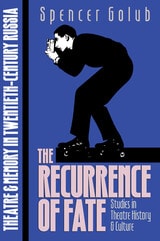
The Recurrence of Fate
Theatre and Memory in Twentieth-Century RussiaSpencer Jay Golub
University of Iowa Press, 1994
How, why, and according to whose definitions and requirements does a culture self-consciously create memory and project its fate? In this remarkable book—the first in English to treat Russian history as theatre and cultural performance—Spencer Golub reveals the performative nature of Russian history in the twentieth century and the romantic imprisonment/self-imprisonment of the creative intelligentsia within this scenario.

The Revealing Moment and Other Plays
Oscar W. Firkins
University of Minnesota Press, 1932
The Revealing Moment and Other Plays was first published in 1932. Minnesota Archive Editions uses digital technology to make long-unavailable books once again accessible, and are published unaltered from the original University of Minnesota Press editions.
"Sparkling wit, brilliancy of phrase, vivid character portrayal, erudition, taste, a delicate sense of proportion, and a genuinely felicitous style"—these are only a few of the critics' judgments on Mr. Ferkins' previously published plays.
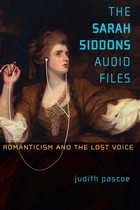
The Sarah Siddons Audio Files
Romanticism and the Lost VoiceJudith Pascoe
University of Michigan Press, 2013
“The theatre scholar’s daunting but irresistible quest to recover some echoes of performance of the past has never been more engagingly presented than in Pascoe’s account of tracing the long-silenced voice of Sarah Siddons. Her report is a warm, witty, and highly informative exploration of the methodology and the pleasures of historical research.”
—Marvin Carlson, author of The Haunted Stage: The Theatre as Memory Machine
During her lifetime (1755–1831), English actress Sarah Siddons was an international celebrity acclaimed for her performances of tragic heroines. We know what she looked like—an endless number of artists asked her to sit for portraits and sculptures—but what of her famous voice, reported to cause audiences to hyperventilate or faint? In The Sarah Siddons Audio Files, Judith Pascoe takes readers on a journey to discover how the actor’s voice actually sounded. In lively and engaging prose, Pascoe retraces her quixotic search, which leads her to enroll in a “Voice for Actors” class, to collect Lady Macbeth voice prints, and to listen more carefully to the soundscape of her life.
Bringing together archival discoveries, sound recording history, and media theory, Pascoe shows how romantic poets’ preoccupation with voices is linked to a larger cultural anxiety about the voice’s ephemerality. The Sarah Siddons Audio Files contributes to a growing body of work on the fascinating history of sound and will engage a broad audience interested in how recording technology has altered human experience.
The School for Lies
A Play Adapted from Molière's The MisanthropeDavid Ives
Northwestern University Press, 2012
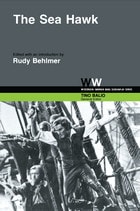
The Sea Hawk
Edited by Rudy Behlmer; Tino T. Balio, Series Editor
University of Wisconsin Press, 1982
This 1940 swashbuckler is one of the best examples of the old Hollywood studio system at work. Scholars and film buffs will learn much about collaborative filmmaking on an exceptionally large scale as Rudy Behlmer traces step-by-step the evolution of The Sea Hawk. The very anti-thesis of an auteur film, The Sea Hawk illustrates the ways in which creative input from just about everyone on the Warner Brothers lot—producers, writers, art directors, director, cameraman, special effects team, editor and composer-conductor—resulted in a film in the familiar Warners house style.
This book includes the complete screenplay.
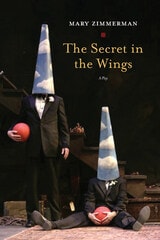
The Secret in the Wings
A PlayMary Zimmerman
Northwestern University Press, 2014
A dark and mysterious homage to lesser-known fairy tales
Mary Zimmerman’s The Secret in the Wings adapts a group of lesser-known fairy tales to create a theatrical work that sets their dark mystery against her signature wit and humor. The framing story concerns a child and the frightening babysitter with whom her parents leave her. As the babysitter reads from a book, the characters in each of the tales materialize, with each tale breaking off just at its bleakest moment before giving way to the next one.
The central tale is told without interruption, after which each previous tale is successively resumed, with each looming disaster averted. As in Zimmerman’s other productions, here she uses costumes, props, sets, and lighting to brilliant effect, creating images and feelings that render the fairy tales in all their elemental and enduring power.
The Sensible Stage
Staging and the Moving ImageEdited by Bridget Crone
Intellect Books, 2017
This revised and expanded edition includes two new chapters that offer an updated look at how these ideas continue to develop in contemporary art practice.
The Shadow of an Ass
Philosophical Choice and Aesthetic Experience in Apuleius' MetamorphosesJeffrey P. Ulrich
University of Michigan Press, 2024
Situating the novel in a long history of philosophical and literary conversations, Ulrich suggests that the Metamorphoses anticipates much of the philosophical burlesque we tend to associate with early modern fiction, from Don Quixote to Lewis Carroll.
The Sixties, Center Stage
Mainstream and Popular Performances in a Turbulent DecadeEdited by James M. Harding and Cindy Rosenthal
University of Michigan Press, 2017
The Soul of Tragedy
Essays on Athenian DramaEdited by Victoria Pedrick and Steven M. Oberhelman
University of Chicago Press, 2005
Exemplary of the nature and scope of this book, the essays range from Simon Goldhill's comparative study of music, gender, and culture to Martha Nussbaum's inspection of "the comic soul." Through the critical lenses of psychoanalysis, gender, social history, and philology, this compilation looks at Greek tragedy's peculiar power to illuminate the workings of the human soul. Structures of tragic meaning, the relationship between character desire and spectator experience, and investigations of tragedy's extraordinary preoccupation with gender reveal the form's emotional core and explain its rapid ascent through the hierarchy of cultural practices in classical Greece. The Soul of Tragedy is a celebration and a model of collaboration that will be essential reading for scholars in classics, literature, and drama.
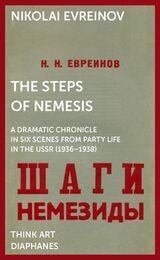
The Steps of Nemesis
A Dramatic Chronicle in Six Scenes from Party Life in the USSR (1936–1938)Nikolai Evreinov
Diaphanes, 2022
In the 1910s the Russian theater director and theorist Nikolai Evreinov (1879–1953) insisted on the theatricalization of life. Twenty years later, Evreinov, who had left Russia in 1924, was in exile in Paris when Stalin staged three elaborate political show trials in Moscow. Evreinov then meticulously read the transcripts of the trials in the Russian-language press, collected material on Nikolai Bukharin and the other defendants, consulted with experts, and finally wrote a play, his response to the staging of a judicial farce. With this response, he also wanted to rehabilitate his idea of the theatricalization of life. After all, the theatricalization of life does not mean performing false confessions, constructing conspiracies, fabricating facts, or casting hired witnesses. In his theatrical theory, Evreinov was careful not to make the theater of life invisible. His play is therefore not a historical reconstruction, but an imaginary look behind the scenes, in which the Stalinist perpetrators confess to the real crime in the end: the theater. Expertly translated into English for the first time by Zachary King, The Steps of Nemesis brings a fascinating play to a whole new world.
The Tempest
William Shakespeare
Arizona Center for Medieval and Renaissance Studies, 2021
Cavander’s translation of The Tempest, which premiered at the Alabama Shakespeare Festival in 2017, was written as part of the Play On! Shakespeare project, an ambitious undertaking from the Oregon Shakespeare Festival that commissioned new translations of 39 Shakespeare plays. These translations present the Bard’s work in language accessible to modern audiences while never losing the beauty of Shakespeare’s verse. Enlisting the talents of a diverse group of contemporary playwrights, screenwriters, and dramaturges from diverse backgrounds, this project reenvisions Shakespeare for the twenty-first century. These volumes make these works available for the first time in print—a new First Folio for a new era.
The Temptation of Innocence in the Dramas of Arthur Miller
Terry Otten
University of Missouri Press, 2002

The The Complete Works of Robert Browning, Volume IV
Browning, Robert
Ohio University Press, 1973
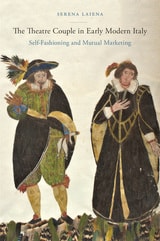
The Theatre Couple in Early Modern Italy
Self-Fashioning and Mutual MarketingSerena Laiena
University of Delaware Press, 2024
Who were the first celebrity couples? How was their success forged? Which forces influenced their self-fashioning and marketing strategies?
These questions are at the core of this study, which looks at the birth of a phenomenon, that of the couple in show business, with a focus on the promotional strategies devised by two professional performers: Giovan Battista Andreini (1576–1654) and Virginia Ramponi (1583–ca.1631). This book examines their artistic path – a deliberately crafted and mutually beneficial joint career – and links it to the historical, social, and cultural context of post-Tridentine Italy. Rooted in a broad research field, encompassing theatre history, Italian studies, celebrity studies, gender studies, and performance studies, The Theatre Couple in Early Modern Italy revises the conventional view of the Italian diva, investigates the deployment of Catholic devotion as a marketing tool, and argues for the importance of the couple system in the history of Commedia dell’Arte, a system that continues to shape celebrity today.
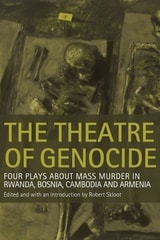
The Theatre of Genocide
Four Plays about Mass Murder in Rwanda, Bosnia, Cambodia, and ArmeniaEdited and with an introduction by Robert Skloot
University of Wisconsin Press, 2008
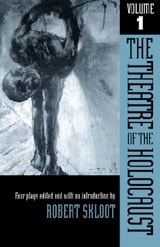
The Theatre of the Holocaust, Volume 1
Four PlaysEdited and with and introduction by Robert Skloot
University of Wisconsin Press, 1982
This volume contains these four plays:
Resort 76 by Shimon Wincelberg
Will the relentless oppression of the starving workers in a ghetto factory destroy their faith in God? Their love of life? Their ability to resist? If a cat is more valuable than a human being, have hope and goodness been eliminated from the world? A moving and terrifying melodrama.
Throne of Straw by Harold and Edith Lieberman
Through the career of Mordechai Chaim Rumkowski, head of the Lodz, Poland Judenrat, we come to understand the horror of “choiceless choice,” of how giving up some to save others was the worst nightmare for those who sought the responsibilities of ghetto leadership. An epic play with music and song.
The Cannibals by George Tabori
The children of murder victims assemble to enact ritually the destruction of their fathers in the presence of two survivors. As the sons become their fathers, the most profound ethical questions of the Holocaust are raised concerning the limits of humanity in a world of absolute evil. A daring tragicomedy.
Who Will Carry the Word? by Charlotte Delbo (translated by Cynthia Haft)
In the austere, degraded setting of a concentration camp, twenty-two French women attempt to keep their sanity and hope as, one by one, they fall victim to the Nazi terror. Will anyone believe the story of the survivors? A poetic drama of resistance and witness.
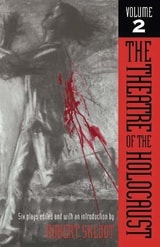
The Theatre of the Holocaust, Volume 2
Six PlaysEdited and with and introduction by Robert Skloot
University of Wisconsin Press, 1999
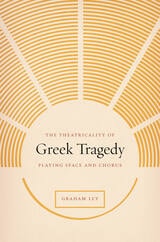
The Theatricality of Greek Tragedy
Playing Space and ChorusGraham Ley
University of Chicago Press, 2007
Drawing on evidence from the surviving texts of tragedies by Aeschylus, Sophocles, and Euripides, Ley explains how scenes with actors were played in the open ground of the orchestra, often considered as exclusively the dancing place of the chorus. In reviewing what is known of the music and dance of Greek antiquity, Ley goes on to show that in the original productions the experience of the chorus—expressed in song and dance and in interaction with the characters—remained a vital characteristic in the performance of tragedy.
Combining detailed analysis with broader reflections about the nature of ancient Greek tragedy as an art form, this volume—supplemented with a series of illustrative drawings and diagrams—will be a necessary addition to the bookshelf of anyone interested in literature, theater, or classical studies.
The Tragedy of King Christophe
Aimé Césaire
Northwestern University Press, 2015
The Tragedy of the Sack of Cabrières
Translated by Charles-Louis Morand-Métivier
Arizona Center for Medieval and Renaissance Studies, 2022
April 1542 saw a massacre of epic proportions in the Luberon, in southeastern France, of its Waldensian population, who had been peacefully living there after they settled in a few centuries before. This massacre foreshadowed the wars of religion, which tore apart the kingdom for almost forty years. The Tragédie du Sac de Cabrières is the only play devoted to these events. This is a critical edition and English translation of the French play. Three critical editions of the play have been published in 1927, 1928, and 1998, and this new edition complements the previous works. This is the first English translation of the play and makes it available to an international audience of scholars and students of the early modern period.
This edition “translates” the moment of the play's creation, the representation of the event, and its importance in the narrative of religious persecutions in sixteenth-century France. It explains how history is dramatized through the creation of the scenic story and scenic play of Cabrières. and how the specific retelling of the events of Cabrières makes this a tool of historical narration, thus allowing the audience to participate in the unfolding of history before their eyes. Therefore, they become part of history, because it is played before their eyes so that they can not only witness it but also propagate the glory of the martyrs for future generations. This is not only a translation and a work of literary scholarship, it is an analysis of the literary, political, and religious production of this period, and a multidisciplinary analysis of Waldensianism in southeastern France.
The Trick of Singularity
"Twelfth Night" and the Performance EditionsLaurie E. Osborne
University of Iowa Press, 1996
In this innovative union of textual studies and performance criticism, Laurie Osborne explores the important ways in which an apparently single, unproblematic text is in fact multiple and various. Through a close analysis of the performance editions of Twelfth Night, she argues that the complex interaction between text and performance establishes a comedy as a work realized within changing social and erotic constructions.
Because it appears in a relatively clean and dated version in the Folio, Twelfth Night seems to be exempt from arguments for variant texts—but there are significant and persistent variations represented in the performance editions. Osborne's careful reading of these provides a crucial bridge linking theatre history and textual criticism. She employs a wide variety of approaches and disciplines—Shakespearean and Renaissance studies, theatre history, gender studies, contemporary literary criticism, and cultural history—to provide a fresh and engaging yet rigorous view.
Although she focuses on Twelfth Night, Osborne's argument applies more broadly to the history of performance and criticism, including a chapter on video versions of the play. Widely read in Shakespearean and Renaissance scholarship, she employs her archival research in promptbooks, the publishing history of the plays, and the history of Shakespearean production to accomplish a major job of scholarly integration and analysis of Shakespearean drama in performance.
The Trojan Women
Euripides
University of Chicago Press, 2013
A stand-alone edition of Euripides’s The Trojan Women, taken from Chicago’s renowned translations of the Greek tragedies.
Drawn from the authoritative third edition of the University of Chicago Press’s Complete Greek Tragedies series, this stand-alone edition presents Richmond Lattimore’s celebrated translation of a play with an antiwar message that continues to inspire and resonate with readers today. The Trojan Women takes place following the conquest of Troy and tells the story of its sole survivors—all women—who have been enslaved by the Greeks. Mourning their families and their fate, they grapple with the trauma they have experienced and contemplate a future far from home.
The aftermath of the Trojan War, while extensively depicted in ancient Greek epic, lyric poetry, and art, is rendered especially powerful through the hands of Euripides. An introduction by Mark Griffith and Glenn W. Most provides essential contextual information about the play’s first production, plot, and reception in antiquity.
The Trustus Plays
The Hammerstone, Drift, and Holy GhostJon Tuttle
Intellect Books, 2009
The Trustus Plays collects three full-length, award-winning performance texts by American playwright Jon Tuttle. Each play was a winner of the national Trustus Playwrights Festival contest and was then produced by the Trustus Theatre in Columbia, South Carolina. The Hammerstone is a comedy about two professors aging gracelessly, Drift is a dark comedy about marriage and divorce, and Holy Ghost is the story of German POWs held in the camps in the American south. Jon Tuttle provides an introduction to the plays, and Trustus founder and artistic director, Jim Thigpen, offers a preface describing Tuttle’s work within the context of the Trustus theatre’s dedication to experimental, edgy social drama.
The Two Gentlemen of Verona
William Shakespeare
Arizona Center for Medieval and Renaissance Studies, 2023
In one of his earliest plays, Two Gentlemen of Verona, Shakespeare began exploring themes of love and friendship that became the focus of some of his greatest works. Amelia Roper’s translation focuses on how the verse sounds—the feeling of the words as spoken by an actor and listened to by an audience. This version offers a new sort of life to the play, letting audiences feel like they’re truly hearing it as Shakespeare’s audience might have more than four hundred years ago.
This translation of Two Gentlemen of Verona was written as part of the Oregon Shakespeare Festival’s Play On! project, which commissioned new translations of thirty-nine Shakespeare plays. These translations present the work of “The Bard” in language accessible to modern audiences while never losing the beauty of Shakespeare’s verse. Enlisting the talents of a diverse group of contemporary playwrights, screenwriters, and dramaturges from diverse backgrounds, this project reenvisions Shakespeare for the twenty-first century. These volumes make these works available for the first time in print—a new First Folio for a new era.
The Two Noble Kinsmen
William Shakespeare
Arizona Center for Medieval and Renaissance Studies, 2021
Playwright, poet, and novelist Tim Slover presents William Shakespeare’s and John Fletcher’s collaboration, The Two Noble Kinsmen, in a modern translation that retains all the wit, romance, and poetry of the original. For his last play, the Bard pulled out all the stops, creating a tragicomedy of heart’s yearning and deadly rivalry, and peopling it with heroes and heroines out of legend, including two of the greatest—and least known—female roles in the entire canon. Fletcher provided the music and dance. Slover brings it all vividly to life with fresh clarity and fiery passion in this new, contemporary version.
This translation was written as part of the Oregon Shakespeare Festival’s Play On! project, which commissioned new translations of thirty-nine Shakespeare plays. These translations present the work of "The Bard" in language accessible to modern audiences while never losing the beauty of Shakespeare’s verse. These volumes make these works available for the first time in print—a new First Folio for a new era.
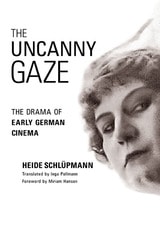
The Uncanny Gaze
The Drama of Early German CinemaHeide Schlupmann. Translated by Inga Pollmann. Foreword by Miriam Hansen.
University of Illinois Press, 2010
Heide Schlüpmann's classic study of early German cinema was published in German as Unheimlichkeit des Blicks: Das Drama des Frühen deutschen Kinos in 1990. For the first time in English, this translation makes available her feminist examination of German cinema and Germany in the sociopolitical context of Wilhelmine society. By examining then-unknown pre-World War I narrative films, this study paints a picture of the conflicted early years of the German cinema. During this period cinema and film production were able to develop independently from the cultural bourgeoisie and relied on those forces excluded from high "culture": technology, business, performers, showmen, and actors. In cinema, the dime novel and kitsch were exhibited for all, and the internationalism of modernity prevailed over the prevailing nationalism of the period.
Featuring a foreword by film scholar Miriam Hansen and a new afterword by Schlüpmann, this volume performs a critical perusal of film commentary and offers an in-depth look at little-known films in early German cinema.
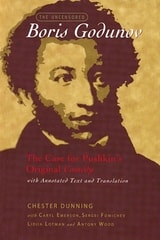
The Uncensored Boris Godunov
The Case for Pushkin's Original ComedyChester Dunning with Caryl Emerson, Sergei Fomichev, Lidiia Lotman, and Antony Wood
University of Wisconsin Press, 2007
Includes the original Russian text and, for the first time, an English translation of that version.
“Antony Wood’s translation is fluent and idiomatic; analyses by Dunning et al. are incisive; and the ‘case’ they make is skillfully argued. . . . Highly recommended.”—Choice
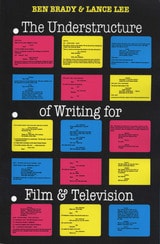
The Understructure of Writing for Film and Television
By Ben Brady and Lance Lee
University of Texas Press, 1988
This unique, comprehensive introduction to screenwriting offers practical advice for the beginning writer, whether college student or freelancer. Based on their experience as professional writers and as teachers in a large, successful screenwriting program at California State University, Northridge, the authors provide a progression of assignments at manageable screenwriting lengths for beginners. They lead students through development of a premise, treatment, stepsheet, and, finally, miniscreenplay—essential elements in writing a longer script.
A major feature of the text is the use of many example scenes from contemporary and classic American films, such as On the Waterfront, Kramer vs. Kramer, The Godfather, The Graduate, Tootsie, and more. Other scenes are drawn from international films and dramatic literature. The criticism of these scenes invites students to develop their own comparative models, while simultaneously providing exposure to the central analytical terms of good dramatic writing.
The authors also place screenwriting within the larger tradition of dramatic writing in order to put the beginning writer in touch with the wealth of art, experience, and practical ideas the drama contains. They provide an up-to-date, practical discussion of marketing and copywriting a screenplay, with addresses of relevant professional societies. Most importantly, they never offer an ill-advised shortcut or restrict students to only one way of thinking about a character, situation, or scene. In The Understructure of Writing for Film & Television, the student's thought and creativity are central.
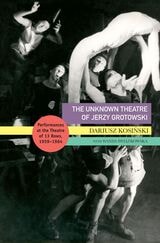
The Unknown Theatre of Jerzy Grotowski
Performances in the Theatre of 13 Rows, 1959–1964Dariusz Kosinski and Wanda Swiatkowska
Seagull Books, 2025
Polish director Jerzy Grotowski (1933–1999) was an international leader in experimental theater who became famous in the late 1960s for his revolutionary approach to audience involvement. This volume is devoted to Grotowski’s early work—the performances he directed in the Theatre of 13 Rows (later Laboratory Theatre of 13 Rows) between 1959 and 1964 when the theater was working in the provincial town Opole in south-western Poland. Having decided to work in his own independent theater, Grotowski moved to Opole in September 1956 and developed his ideas with young, inexperienced actors, creating important performances that foreshadowed his renowned masterpieces of the late 1960s.
In The Unknown Theatre of Jerzy Grotowski, Dariusz Kosiński and Wanda Świątkowska reconstruct, analyze, and interpret each of the nine performances directed by Grotowski over this period: from Orpheus based onJean Cocteau (1959) to Hamlet Study based on Stanisław Wyspiański (1964). Previously mentioned mainly in the context of the development of Grotowski’s method, these performances dealt with important social, political, and philosophical problems of postwar and post-Holocaust Poland. Grotowski also used these performances to experiment with the forces and problems that he later tried to be discreet about, such as sexuality.
Revealing unnoticed and forgotten aspects of Grotowski’s theater, this landmark book presents new materials and perspectives that give fresh life to the study of a genius of twentieth-century theater.
The Unmentionables
A PlayBruce Norris
Northwestern University Press, 2009
The Value of Names and Other Plays
Jeffrey Sweet
Northwestern University Press, 2008
Spanning a quarter of a century, this collection of plays demonstrates author Jeffrey Sweet’s eye for the drama of human relationships. Sweet works with sensitivity and irony to confront both personal politics and the impact of historical change. These nine works, taken together, present a playwright who extends the struggles of his small circles of characters to his audience and humanity in general.
The title work, first mounted in 1982, is a comedy-drama about the aftermath of the blacklist whose continued relevance makes it a frequently produced play today. The family drama Porch suggests larger social changes through the interaction of a small-town shopkeeper and his defiant daughter. The lauded American Enterprise, set in the Chicago of the robber barons, is a song-filled true story about a millionaire whose stubborn idealism leads to disaster. Stay Till Morning is a rueful comedy about sex and accommodation in the Florida Keys. The three plays that grew out of his fascination with the effects of World War II—Berlin ’45, Court-Martial at Fort Devens, and The Action Against Sol Schumann—dramatize the ways in which that conflict transformed private fates. Each script is accompanied by an extended introduction from the playwright as well as complete performance notes.
The Vital Lie
Reality and Illusion in Modern DramaAnthony S. Abbott
University of Alabama Press, 1988
The Vital Lie: Reality and Illusion in Modern Drama is a sweeping inquiry into the stories people tell themselves in order to endure, survive, and belong. Moving from Ibsen and Strindberg to Beckett, Pinter, and beyond, Anthony S. Abbott traces the uneasy traffic between actuality and self-invention that animates modern theater. Rather than offering a simple survey, he uncovers a recurring dramatic predicament: the cognitive dissonance that afflict people when the beliefs they hold about themselves collide with reality.
Anthony S. Abbott writes with the erudite observation of a critic and the curiosity of a participant. His book explores illusion, meaning, and human resilience, a perspective that lends unusual urgency to its readings of canonical playwrights. Abbott's scholarship is expansive without becoming academic in the pejorative sense; his arguments remain animated by large questions about purpose, dignity, and the imaginative structures that sustain ordinary lives.
Ideal for theater devotees, literary historians, students of modernism, philosophy-minded readers, directors, dramaturgs, and anyone fascinated by self-deception, mythmaking, and identity. Admirers of intellectual biography, cultural criticism, existential inquiry, and ambitious cross-author interpretation will find this volume especially rewarding. Those who relish fresh angles on familiar classics will discover a study that is probing, elegant, and unexpectedly memorable.
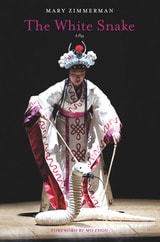
The White Snake
A PlayMary Zimmerman
Northwestern University Press, 2013
The Whiteness Between Us
Early Modern Playbooks of Racial TriangulationNoémie Ndiaye
University of Chicago Press, 2026
A theorization of the representational juxtapositions, frictions, and connections between Black people and other non-white people in early modern European theatre.
Over the course of the seventeenth century, European drama was an important tool for whiteness to imagine itself at the top of an aspirational structure of power relations. Indeed, that structure could only be aspirational at a time when Europeans were profoundly divided along easily racializable religious and ethnic lines, and when their sovereignty was threatened by the Ottoman empire. It was to strengthen this emerging consciousness of racial whiteness, Noémie Ndiaye argues, that European drama engaged in a form of racial triangulation, fitting Muslim, Jewish, Indigenous, Romani, and Asian characters into a spurious black/white racial binary.
Focusing on English, Spanish, and French drama from 1580 to 1715, The Whiteness Between Us shows how plays became a crucial tool to position not only black people but any non-white community in the new racial architecture that white supremacy sought to build. Ndiaye reveals the stage of this era as a space for wish fulfillment, enabling participants to imagine and work towards a whiter future.
The early modern playbooks of racial triangulation that Ndiaye brings to light can and have been reactivated for white supremacist purposes in our own day and age. Partly in response to the contemporary threat of white nationalism, scholars and students have sought to unearth the early modern roots of racial whiteness and white supremacy. Ndiaye’s book participates in this wave of interest, offering several innovations, including its capacious transnational claims.