Results by title
905 books match the query 'Literary' and 299 start with t

The Flat Woman
A NovelVanessa Saunders
University of Alabama Press, 2025
Asks who gets the right to call themselves a good person in a morally bankrupt world
In The Flat Woman, women exclusively are blamed for the climate crisis. Seagulls drop dead from the sky, and the government, instead of taking responsibility, scapegoats a group of female ecoterrorists. When a girl’s mother is incarcerated for climate crimes, she is forced to raise herself alone. As a young woman, she begins a romance with an environmental activist whose passion makes her question her own role in the world. By turns hilarious, deadly serious, and completely absurd, The Flat Woman asks who gets the right to call themselves a good person in a world ripe with disaster.
Driven by complex academic and moral questions, The Flat Woman is certain to appeal to fans of feminist and experimental literature, as well as fans of Margaret Atwood, Renee Gladman, Bhanu Kapil, Maggie Nelson, Kelly Link, and Anne Carson.
The Flock
Mary Austin
University of Nevada Press, 2001
The Flood
A NovelCarol Ascher
Northwestern University Press, 1997
The Fortress
A NovelMesa Selimovic, translated from the Serbian by Edward Dennis Goy and Jasna Levinger-Goy
Northwestern University Press, 1999
Set in Bosnia in the late 1700s, the novel sometimes functions as an artful metaphor for the communist Yugoslavia of Selimovic's day. At other times, the author explores the nuances of Ottoman rule in the Balkans. Muslim Ahmet's sustaining marriage to a young Christian woman provides a multicultural tension that strongly resonates with contemporary readers and sensibilities.
The Foundation Pit
Andrey Platonov
Northwestern University Press, 1994

The Four-Chambered Heart
Anaïs Nin
Ohio University Press, 2023
The Four-Chambered Heart, Anaïs Nin’s 1950 novel, recounts the real-life affair she conducted with café guitarist Gonzalo Moré in 1936. Nin and Moré rented a house-boat on the Seine, and under the pervading influence of the boat’s watchman and Moré’s wife Helba, developed a relationship. Moré; named the boat Nanankepichu, meaning "not really a home."
In the novel, which Nin drew from her experiences on the boat, the characters' sources are clear. Djuna is an embodiment of Nin herself. A young dancer in search of fulfillment, she encapsulates all that the author was striving for at that time. The character of Djuna features in other novels, perhaps weaving a directly autobiographical thread into Nin’s fiction. The gypsy musician, Rango, is therefore Moré, and his invalid wife is Zora. The old watchman is present as a force that, along with Zora, works against the lovers in their quest for happiness.
Nin’s main concern throughout the novel is the "exterior," and how it affects the "interior." Water is a cleverly used theme. “I have no great fear of depths,” says Djuna, “and a great fear of shallow living.” Rango and Djuna’s relationship is, in effect, their effort to remain afloat. Often, Nin employs a stream of consciousness, especially in her flowing analyses of love, life and music, which continues the water image.
Anaïs Nin’s writing is typically exquisite in its detail and texture. She describes Paris: its "black lacquered cobblestones" and "silver filigree trees." The "humid scarfs of fog" on the river, and "the sharp incense of roasted chestnuts" reveal their source through their reality: Nin’s personal experience.

The Four-Chambered Heart
V3 in Nin's Continuous NovelAnaïs Nin
Ohio University Press, 1959
In the novel, which Nin drew from her experiences on the boat, the characters are clearly based. Djuna is an embodiment of Nin herself. A young dancer in search of fulfillment, she encapsulates all that the author was striving for at that time. The character of Djuna features in other novels, perhaps weaving a directly autobiographical thread into Nin’s fiction. The gypsy musician, Rango, is therefore Moré, and his invalid wife is Zora. The old watchman is present as a force which, along with Zora, works against the lovers in their quest for happiness.
Nin’s main concern is the "outside," and how it affects the "interior." Water is a cleverly used theme. “I have no great fear of depths,” says Djuna, “and a great fear of shallow living.” Rango and Djuna’s relationship is, in effect, their effort to remain afloat. Often, Nin employs a stream of consciousness, especially in her flowing analyses of love, life and music, which continues the water image.
Anaïs Nin’s writing is typically exquisite in its detail and texture. She describes Paris: its "black lacquered cobblestones" and "silver filigree trees." The "humid scarfs of fog" on the river, and "the sharp incense of roasted chestnuts" reveal their source through their reality: Nin’s personal experience.
The Ghost Dancers
A NovelAdrian C. Louis
University of Nevada Press, 2021
The Ghost of John Wayne
and Other StoriesRay Gonzalez
University of Arizona Press, 2001
The vast Texas borderland is a place divided, a land of legends and lies, sanctification and sinfulness, history and amnesia, haunted by the ghosts of the oppressed and the forgotten, who still stir beneath the parched fields and shimmering blacktops. It is a realm filled with scorpion eaters and mescal drinkers, cowboys and Indians, Anglos and Chicanos, spirit horses and beat-up pickups, brujos and putas, aching passion and seething rage, apparitions of the Virgin and bodies in the Rio Grande.
In his first collection of short fiction, award-winning poet, editor, and anthologist Ray Gonzalez powerfully evokes both the mystery and the reality of the El Paso border country where he came to manhood.
Here, in a riverbed filled with junked cars and old bones, a young boy is given a dark vision of a fiery future. Under the stones of the Alamo, amid the gift shops and tour buses, the wraiths of fallen soldiers cry out to be remembered. By an ancient burial site at the bottom of a hidden canyon, two lovers come face to face with their own dreams and fears.
In these stories, Ray Gonzalez is a literary alchemist, blending contemporary culture with ancient tradition to give a new voice to the peoples of the border.
The Ghost of Monsieur Scarron
Janet Lewis
Ohio University Press, 2013
This historical novel is the third and final book in American poet and fiction writer Janet Lewis’s Cases of Circumstantial Evidence series, based on legal case studies compiled in the nineteenth century. In The Ghost of Monsieur Scarron, Lewis returns to her beloved France, the setting of The Wife of Martin Guerre, her best-known novel and the first in the series. As Swallow Press executive editor Kevin Haworth relates in a new introduction, Monsieur Scarron shifts the reader into the center of Paris in 1694, during the turbulent reign of the Sun King, Louis XIV. The junction of this time and place gives Monsieur Scarron an intriguing political element not apparent in either The Wife of Martin Guerre or The Trial of Sören Qvist.
The Ghost of Monsieur Scarron begins in a small bookbinder’s shop on a modest Paris street, but inexorably expands to encompass a tumultuous affair, growing social unrest, and the conflicts between a legal system based on oppressive order and a society about to undergo harsh changes. With its domestic drama set against a larger political and historical backdrop, Monsieur Scarron is considered by some critics and readers to be the most intricately layered and fully realized book of Lewis’s long career. Originally published in 1959, Monsieur Scarron has remained in print almost continuously ever since.
The Glance of Countess Hahn-Hahn (down the Danube)
Peter Esterhazy
Northwestern University Press, 1999
In The Glance of Countess Hahn-Hahn (down the Danube), Péter Esterházy tells the story of a professional traveler, commissioned--like Marco Polo by Kublai Khan--to undertake a voyage of discovery and prepare a travelogue. Communicating the details of his journey through terse and surreal telegrams, the Traveller weaves a rich tapestry of narratives, evoking the ethereal past and the precarious present of a disappearing world.
The Goat Bridge
A NovelT. M. McNally
University of Michigan Press, 2005
As he drifts through the countryside, Stephen struggles to resolve the trauma and sorrow of losing his son, and soon the landscape begins to mirror his own inner battles. After a return trip to America fails to heal the rift between himself and the mother of his child, Stephen returns to Sarajevo, where he begins a project to document images of the Bosnian people—not war images, but personal portraits of an embattled nation. There he finds himself falling in love with a German journalist, who helps to heal his ailing body and to overcome his tragic loss.
The Goat Bridge is an unforgettable tale of memory and oblivion, a probing story of loss and redemption, of letting go and holding on, and of the universal human search for meaning. In the end, it is also a love story about finding the wisdom and courage to surrender to one’s own and another’s heart.

The Good Pornographer
Brian Bouldrey
University of Wisconsin Press, 2026
While many have come to view Walace as a bad influence on children, literature, and himself, his impact sweeps across worlds both fantastic and real, resulting in the establishment of a new kingdom in his neglected McMansion, Summerheim. The result is a mock-epic in rehabilitation, starring such friends and enemies as Cal, Walace’s dealer and private jester; Dragon, a porn star turned guidance counselor; Epiphany, a lunch lady and stripper in recovery; her son, Tuffy, planning everyone’s funerals at age nine; Jackal, newly sober and in touch with his emotions for the first time; and Wolf, Walace’s socially withdrawn twin brother and reluctant doppelgänger.
Brian Bouldrey piles on the laughs and absurdity alongside dollops of humanity and sobriety. With brilliant recklessness, he praises and pokes fun at genres, conventions, fandoms, and critics, offering a Deadpool-like exploration of an upside-down world filled with epic quests, epic mistakes, and epic characters.
The Gourmet Club
A SextetTanizaki Jun'ichiro; Translated by Anthony H. Chambers and Paul McCarthy
University of Michigan Press, 2017
The Great Prince Died
A Novel about the Assassination of TrotskyBernard Wolfe
University of Chicago Press, 2015
In The Great Prince Died, Bernard Wolfe offers his lyrical, fictionalized account of Trotsky’s assassination as witnessed through the eyes of an array of characters: the young American student helping to translate the exiled Trotsky’s work (and to guard him), the Mexican police chief, a Rumanian revolutionary, the assassin and his handlers, a poor Mexican “peón,” and Trotsky himself. Drawing on his own experiences working as the exiled Trotsky’s secretary and bodyguard and mixing in digressions on Mexican culture, Stalinist tactics, and Bolshevik history, Wolfe interweaves fantasy and fact, delusion and journalistic reporting to create one of the great political novels of the past century.
The Guiltless
Hermann Broch
Northwestern University Press, 2001
The Guinea Pigs
Ludvik Vaculik
Northwestern University Press, 1986

The Hidden Hand
Or, Capitola the Madcap by E. D. E. N. SouthworthDobson, Joanne
Rutgers University Press, 1988
E.D.E.N. Southworth was one of the most popular and prolific writers of the nineteenth century and her Capitola Black, or Black Cap - a cross-dressing, adventure-seeking girl-woman - was so well-loved that the book was serialized three times between 1859 and 1888 and was dramatized in forty different versions.
When we first meet sharp and witty Capitola she is living among beggars and street urchins, and dressed as a boy because a boy can get work and be safe, whereas a girl is left to starve for want of "proper" employment. Unknown to her, Capitola has a very rich elderly guardian who finds her at a providential moment and takes her back to his palatial mansion where she finds herself "decomposing above ground for want of having my blood stirred." But not to fear. There are bandits, true-loves, evil men, long-lost mothers, and sweet women friends in Capitola's future - not to mention thunder storms, kidnap attempts, and duels.
The pace is fast, the action wonderfully unbelievable. This is escape literature at its nineteenth-century best, with a woman at its center who makes you feel strong, daring, and reckless.
The Hotel
A NovelElizabeth Bowen
University of Chicago Press, 2012
Bowen’s first novel, The Hotel, is a wonderful introduction to her disarming, perceptive style. Following a group of British tourists vacationing on the Italian Riviera during the 1920s, The Hotel explores the social and emotional relationships that develop among the well-heeled residents of the eponymous establishment. When the young Miss Sydney falls under the sway of an older woman, Mrs. Kerr, a sapphic affair simmers right below the surface of Bowen’s writing, creating a rich story that often relies as much on what is left unsaid as what is written on the page. Bowen depicts an intense interpersonal drama with wit and suspense, while playing with and pushing the English language to its boundaries.
The House of Breath
William Goyen
Northwestern University Press, 1999
The House of Returned Echoes
Arnost Lustig
Northwestern University Press, 2001
The House of a Thousand Floors
Jan Weiss
Central European University Press, 2017
The Houseboat Veronica
A NovelJosh Bell
University of Alabama Press, 2024
A witch, a ward, and a houseboat adrift in time—where beauty and terror share the helm.
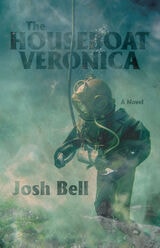
The mysterious houseboat Veronica motors across a postapocalyptic freshwater lake, inhabited by a black-haired witch and her young male ward. They explore an unfolding world of shape-shifting moons, vampire moths, and submerged witch cemeteries—a world where voluntary imprisonment holds its own appeal and the heart yearns for the delicate dance between blood and power, beauty and terror.
Neither a pirate nor a mere witch, she is an artist, a master of water and time who shapes reality with her baffling powers. This lyrical and compelling novel beckons readers to explore the enigmatic depths of its prose, inviting them to traverse the waters of wonder and bewilderment. Embrace the bewitching allure of The Houseboat Veronica and lose yourself in its enchanting embrace.
The Houses of Belgrade
Borislav Pekic
Northwestern University Press, 1994
The Indianness
Twelve StoriesGeeta Kohli
University of Massachusetts Press, 2027
A bold debut story collection about first- and second-generation South Asian Americans coming of age—and coming undone
From Ivy League dormitories and Delhi wedding stages to Roman balconies and North Carolina motels, the twelve stories of The Indianness map the distance between the life a person is expected to build and the one they actually inhabit.
Women anchor the collection: a mother alone in Rome with three young daughters tests the edges of her marriage; a college student arrives at NYU with one rule—save her virginity for an Indian husband—and breaks it before the week is out; a woman manages an abortion alone in a Manhattan clinic, too afraid to tell her husband she was ever pregnant; a former lawyer in Manhattan keeps a diary of a marriage she cannot bring herself to leave. But the men are equally undone: a Harvard-educated lawyer raised in a North Carolina motel confronts a past he can never quite verify; a history teacher in suburban Massachusetts assigns a racist essay, loses his wife, and isn't certain which failure came first; a man raised as a girl until the age of twelve sits with all he has inherited.
The collection challenges the model minority narrative not by dismissing success but by exposing what it costs, moving openly through sex, abortion, marital dissatisfaction, mental health, and sexual violence, and through the silences that live inside families. The Indianness offers a portrait of a community rarely rendered with such interior depth, insisting that South Asian Americans—women and men alike—deserve the same moral complexity, desire, and contradiction long afforded to others in American literary fiction.
The Indies Enterprise
Erik Orsenna
Haus Publishing, 2011
The Inhabited Woman
Gioconda Belli; Translated by Kathleen March
University of Wisconsin Press, 2004
The Wisconsin edition is for sale only in North America.
The Inner Harbour
A Post-Exotic NovelAntoine Volodine
University of Minnesota Press, 2025
A beguiling, perspective-shifting story of obsession and loss set in the grimy, late-colonial decadence of Macau at the end of the twentieth century
In The Inner Harbour, Antoine Volodine focuses his literary investigations away from dystopian futures to a specific place at a particular historical moment: Macau on the eve of the Portuguese colony’s transfer to China. In a seedy flat in one of the city’s slums, a hired assassin named Kotter interrogates Breughel, a writer on the run from a mysterious organization code-named Paradise. Breughel has been hiding out in Macau with his lover, Gloria Vancouver, and a significant sum of the organization’s money. But Gloria is dead and the money spent—or so Breughel claims—and now he lives alone in humid squalor.
With increasing severity, Kotter extracts Breughel’s confessions, but are they truth or subterfuge? Or are the confessions an elaborate work of fiction by a writer aware that they are no longer able to differentiate between memory and fantasy? Volodine brilliantly blurs the levels of narration—between what Breughel tells his interrogator, what he remembers or invents, and the stories he has written, including his accounts of Gloria’s hallucinatory visions of an apocalyptic war between military forces and the “chrysalids.”
Interweaving threads of fiction and truth, lies and hallucinations, The Inner Harbour evokes many of the themes found in Volodine’s other “post-exotic” works: the slippage between dreams and reality, the nightmares of history, the exhaustion of literature and politics, and questions about what it means to be faithful to people or ideas long since vanished. But Volodine also uses the setting of Macau’s late-colonial decadence to explore new sensations of foreignness, alienation, and resignation, all of which coalesce into a nesting doll of narrative that houses an unconventional and tragic love story.
Retail e-book files for this title are screen-reader friendly.
The Inquisitor's Diary
Jeffrey Lewis
Haus Publishing, 2013
“We follow Alonso’s journey as he is dispatched by the Inquisitor General to the country’s northern frontier to root out ‘heresy, apostasy, backsliding.’ . . . This somber work seeks to uncover those subterranean impulses that surge beneath Alonso’s fate.”—Literary Review

The Inspector Barlach Mysteries
The Judge and His Hangman and SuspicionFriedrich Dürrenmatt
University of Chicago Press, 2006

The Islands
A. Alberts
University of Massachusetts Press, 1983
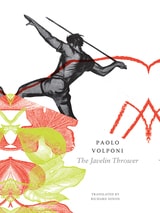
The Javelin Thrower
Paolo Volponi
Seagull Books, 2018
Isolating himself from anyone who might help him understand what he’s feeling, he channels his fury into his javelin, getting better and better until he is a local champion. But his success is fleeting, as wholly confused and caught up in his own anger, he ends up betraying and humiliating his friends. The Javelin Thrower is the story of an erotic education turned tragic, poisoned by the darkness running through Mussolini’s Italy.

The Jewish War and The Victory
Henryk Grynberg
Northwestern University Press, 2001
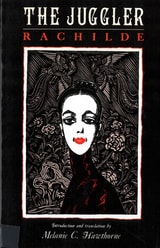
The Juggler
RachildeHawthorne, Melanie C
Rutgers University Press, 1990
The Juggler (La Jongleuse) is a "decadent" novel that was first published in 1900. Its author, Marguerite Vallette-Eymery (1860-1953), who used the pseudonym Rachilde, was a prolific novelist (over sixty works of fiction), playwright, literary critic and reviewer, and a forceful presence in French literary society of her time.
The protagonist of the novel, Eliante Donalger, is in some sense an exaggerated double for her creator--bizarre in appearance, clothing, and interests. Instinctively grasping a medical and psychological truth that the turn-of-the-century scientific world was only beginning to understand, Eliante maintains that there is nothing "natural" about human sexual expression. She claims to be in love with an inanimate (though anthropomorphic and sexually ambiguous) object, a Greek amphora, and the novel traces the rivalry between this faithful partner and an ardent human suitor, a young medical student. It is only through juggling, both literally and metaphorically, that Eliante is able to use her seductive power to maintain desire. The surprise ending challenges the limits of such power in a controversial and surprising twist.
Although Rachilde's work has been neglected in the past, the women's movement and feminist criticism have stimulated renewed interest in her fiction. The Juggler is a major rediscovery.
The Kindness of Strangers
Tom Lutz
University of Iowa Press, 2021
You may never visit these places, but Tom Lutz will do it for you. And while global media may serve up a steady diet of division, violence, oppression, hatred, and strife, The Kindness of Strangers shows that people the world over are much more likely to meet strangers with interest, empathy, welcome, and compassion.
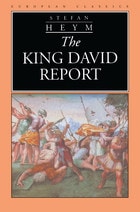
The King David Report
Stefan Heym
Northwestern University Press, 1997
Written by one of Germany's most acclaimed dissident authors, The King David Report is both an analysis of the writer's obligations to truth, and an astute satire on the workings of history and politics in a totalitarian state.
The Kingdom of Strangers
Elias Khoury
University of Arkansas Press, 1996
The Knight and His Shadow
Boubacar Boris Diop
Michigan State University Press, 2015
The Kukotsky Enigma
A NovelLudmila Ulitskaya; Translated from the Russian by Diane Nemec Ignashev
Northwestern University Press, 2016
Translated from the Russian by Diane Nemec Ignashev
The central character in Ludmila Ulitskaya’s celebrated novel The Kukotsky Enigma is a gynecologist contending with Stalin’s prohibition of abortions in 1936. But, in the tradition of Russia’s great family novels, the story encompasses the history of two families and unfolds in Moscow, St. Petersburg, and the ruins of ancient civilizations on the Black Sea. Their lives raise profound questions about family heritage and genetics, nurture and nature, and life and death. In his struggle to maintain his professional integrity and to keep his work from dividing his family, Kukotsky confronts the moral complexity of reproductive science. Winner of the 2001 Russian Booker Prize and the basis for a blockbuster television miniseries, The Kukotsky Enigma is an engrossing, searching novel by one of contemporary literature’s most brilliant writers.

The Land of Green Plums
Herta Muller
Northwestern University Press, 1998
The Language of Birds
Norbert Scheuer
Haus Publishing, 2018
As visceral horrors and everyday banalities of the war threaten to engulf Paul, he, like his great-great-grandfather, finds his very own refuge in Afghanistan’s natural world. In a diary filled with exquisite drawings of birds and ruminations on the life he left behind, Paul describes his experiences living with two comrades who are fighting their own demons and his befriending of an Afghan man, Nassim, as well as his dreams of escaping the restrictive base camp and visiting the shores of a lake visible from the lookout tower. But when he finally reaches the lake one night, he finds himself in the midst of a chain of events that, with his increasingly fragile state of mind, has dramatic—and ultimately heartbreaking—consequences.
A meditative novel that shows a new side to the conflict in Afghanistan, The Language of Birds takes a moving look at the all-too-human costs of war and questions what it truly means to fight for freedom.

The Last Country
Svenja Leiber
Seagull Books, 2017
“Ruven Preuk stands apart from the village, on an August day in 1911, and listens.” Thus begins an epic bildungsroman about the life of Ruven Preuk, son of the wainwright, child of a sleepy village in Germany’s north, where life is both simple and harsh.
Ruven, though, is neither. He has the ability to see sounds, leading him to discover an uncanny gift for the violin. When he meets a talented teacher in the Jewish quarter, Ruven falls under the spell of a prodigious future. But as the twentieth century looms, Ruven’s pursuit of his craft takes a turn. In The Last Country, Svenja Leiber spins a tale that moves from the mansions of a disappearing aristocracy to a communist rebellion, from a joyous village wedding to a Nazi official’s threats, from the First World War to the Second. As the world Ruven knows disappears, the gifted musician must grapple with an important question: to what end has he devoted himself to his art?
Winner of the 2015 Arno Reinfrank Literaturpreis
The Last Days of Mandelstam
Vénus Khoury-Ghata
Seagull Books, 2020
With her sensitive prose and innate sense of drama, French-Lebanese writer Vénus Khoury-Ghata brings Mandelstam back to life and allows him to have the last word—proving that literature is one of the surest means to fight against barbarism.
The Last Days of Publishing
A NovelThomas M. Engelhardt
University of Massachusetts Press, 2005
Koppes, who came of age in the sixties, is an editor slowly running off the rails. In the six episodes of The Last Days of Publishing, he refights the Vietnam War in a Chinese restaurant, discovers that the paleontological is political in a natural history museum, mixes it up with a flamboyant literary agent who went underground decades earlier, and encounters a hippie cultural oligarch on the forty-fifth floor of Multimedia's transnational entertainment headquarters.
Tom Engelhardt, himself a publishing veteran, has produced a tumultuous vision of the new world in which the word finds itself hustling for a living. By turns hilarious, sardonic, and poignant, his novel deftly captures the ways in which publishing, which has long put our world between covers but has seldom been memorialized in fiction, is being transformed.
The Last Flower
A Parable in PicturesJames Thurber
University of Iowa Press, 2007
Civilization has collapsed after World War XII, dogs have deserted their masters, all the groves and gardens have been destroyed, and love has vanished from the earth. Then one day, "a young girl who had never seen a flower chanced to come upon the last one in the world." Written among the sorrow and chaos of war, dedicated to this only child " in the wistful hope that her world will be better than mine." The new printing will feature new scans of Thurber's original 1939 drawings.
The Last Hurrah
A NovelEdwin O'Connor
University of Chicago Press, 2016
Not quite a roman á clef of notorious Boston mayor James Michael Curley, The Last Hurrah tells the story of Skeffington’s final campaign as witnessed through the eyes of his nephew, who learns a great deal about politics as he follows his uncle to fundraisers, wakes, and into smoke-filled rooms, ultimately coming—almost against his will—to admire the man. Adapted into a 1958 film starring Spencer Tracy and directed by John Ford (and which Curley tried to keep from being made), Edwin O’Connor’s opus reveals politics as it really is, and big cities as they really were. An expansive, humorous novel offering deep insight into the Irish-American experience and the ever-changing nature of the political machine, The Last Hurrah reveals political truths still true today: what the cameras capture is just the smiling face of the sometimes sordid business of giving the people what they want.

The Last Syrian
Omar Youssef Souleimane
Seagull Books, 2024
Youssef’s mother has always told him that he is named after the biblical prophet Joseph who had the power of foresight. But when Youssef participated in the first demonstration in Damascus in 2011, he felt that the uprising against the Bashar al-Assad regime after forty years of silence and fear was “a miracle more powerful than that of the prophet.”
While Josephine, a charming young Alawite, gathers in her home a group of youth to fight for their visions of a promising future, a forbidden love story unfolds between two men, Youssef and Mohammad. Meanwhile, young Khalid’s love for Josephine is brutally interrupted by the agents of the oppressive regime. Homosexuality clashes with tradition, emancipation with persecution, and feelings with loyalties, leading to an upheaval that sweeps away the destinies of the young as well as that of an entire nation.
Omar Youssef Souleimane’s eloquent novel is not only a narrative of the Syrian Revolution; it is also a story about inter-generational conflicts, rebellion, and liberation. With intense, poetic prose, he brilliantly captures the indomitable yearning for freedom that, despite all obstacles and setbacks, always survives in a hopeful person’s heart until it’s attained.
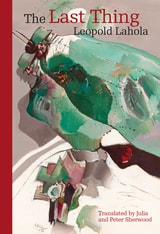
The Last Thing
Leopold Lahola
Karolinum Press, 2025
Slovak Jewish writer Leopold Lahola was able to escape deportation to a concentration camp and fight in the resistance only to find himself forced into exile by the postwar communist regime. He emerged from obscurity during the brief thaw of the Prague Spring, when he was able to return to his homeland and thrive as a playwright and film director. It was also in 1968 that his short story collection The Last Thing appeared in Slovakia. The collection’s title proved sadly prophetic with the author suffering a fatal heart attack in January 1968, just before his 50th birthday and as his short stories finally appeared in book form.
The nine stories which make up The Last Thing range from the prewar rise of fascism and its dangers for the Jewish community through the concentration camps and the partisan fight against the Germans, concluding in the devastating awareness of all that had been lost and destroyed in the war. Lahola is a master of writing outside of conventional tropes, exploring moral ambivalences where others work within the comforts of good versus evil. He punctures the standard historical image of the partisan fighters by depicting their heroism along with their cruelty and pettiness while also showing how often bravery and madness, kindness and stupidity can coexist. Lahola has written a World War II story collection whose translation will offer not only a compelling read but starkly new perspectives on the tragedy and grandeur of that momentous time in history.

The Law of Inheritance
Yasser Abdellatif
Seagull Books, 2018
The symphonic four-part text presents us with narratives of Egyptian identity, a constant knitting and unravelling that moves us back and forth through time, as the reader slides and leaps across the shifting tectonic plates of Abdellatif’s vignettes, his immaculately limpid prose poetry bringing forth the same questions. Nobody quite belongs in Cairo, it seems, but at the same time none of them belongs anywhere else: a relative emigrates from his Nubian village to the Cairo of the 1930s, where Italian fascists chase him through the streets and into a Maltese exile, only for him to return and make his way back South to the homeland he left. Another relative falls into religious esotericism and later madness, spinning away from Cairo and back to the wasteland of a village relocated after it had been flooded by the Aswan Dam. Meanwhile, in the 1990s, students fight security forces and binge on pills amid the dysfunctional remnants of a centralized state whose gravitational pull uprooted their parents and offered the possibility of assimilation into a national identity.
Through the clear sky of Abdellatif’s novel his characters, the spaces they call home, their way-stations, and even the nation that contains them all are a murmuration of starlings, held together and apart forever.
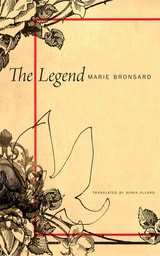
The Legend
Marie Bronsard
Seagull Books, 2013
Egocentric and domineering, Bronsard’s grandmother was once a vibrant and sensual beauty. In Indochina at the end of the Second World War, she thrived in the social life of the French colony, but her young soldier husband sought a quieter existence, finding solace in the companionship of their adolescent daughter, Bronsard’s mother. The consequences of this choice reverberate throughout the family. But far from being an airing of grievance or dirty laundry, Bronsard’s memoir has the air of catharsis—here, the pain, secrets, and comic moments of Bronsard’s family are remembered with gentle humor, understanding, and affection. A wry irony tempers emotion, and it is in these pages that the author, at last, finds it possible to name the woman of the legend and perhaps bring her grandmother a measure of peace.