Results by title
683 books match the query 'Middle East' and 139 start with t
The Search for God's Law
Islamic Jurisprudence in the Writings of Sayf al-Din al-AmidiBernard G Weiss
University of Utah Press, 2011
Weiss’s new introduction provides an overview of Amidi’s jurisprudence that facilitates deeper comprehension of the challenging dialectic of the text. This edition includes an in-depth analysis of the nature of language and the ways in which it mediates the law, while shaping it at the same time. An updated index has been added.

The Second Palestinian Intifada
A Chronicle of a People's StruggleRamzy Baroud
Pluto Press, 2006
Ramzy Baroud is a veteran journalist and former producer for Al-Jazeera TV. This is his comprehensive account of the momentous events of the last five years which shaped the political landscape not only of Palestine and Israel but of the entire Middle East region.
Addressing the most controversial issues, including the alarming escalation in suicide bombings, and the construction of the Separation Wall, he reports on the huge rate of unemployment and hunger in the Occupied Territories -- statistics so critical that NGOs compare their magnitude to African nations such as the Congo. From the brutality of the Israeli army to the ever-compromising nature of the Palestinian Authority, few are spared Baroud’s thoughtful critique.
The book is clear and concise, with one chapter dedicated to the major events of each year, and includes a comprehensive timeline.
The Shadow of God and the Hidden Imam
Religion, Political Order, and Societal Change in Shi'ite Iran from the Beginning to 1890Said Amir Arjomand
University of Chicago Press, 1984
The Sheltered Quarter
A Tale of a Boyhood in MeccaBy Hamza Bogary
University of Texas Press, 1991
Hamza Bogary describes a bygone way of life that has now irreversibly disappeared. He speaks of life in Mecca before the advent of oil. Only partly autobiographical, the memoir is nevertheless rich in remembered detail based on Bogary's early observations of life in Mecca. He has transformed his knowledge into art through his sense of humor, empathy, and remarkable understanding of human nature. This work not only entertains; it also informs its readers about the Arabia of the first half of the twentieth century in a graphic and fascinating way. The narrator, young Muhaisin, deals with various aspects of Arabian culture, including education, pilgrimages, styles of clothing, slavery, public executions, the status of women, and religion. Muhaisin is frank in his language and vivid in his humor. The reader quickly comes to love the charming and mischievous boy in this universal tale.
The Siege of Tyre
Alexander the Great and the Gateway to EmpireDavid A. Guenther
Westholme Publishing, 2024
The Siege of Tyre: Alexander the Great and the Gateway to Empire by David A. Guenther is the first book-length treatment of this critical and fascinating campaign, featuring catapults, triremes, religious invocations, close combat, and marvels of engineering, including a massive manmade causeway from the mainland to the island. The siege is thoroughly analyzed from the standpoint of what is plausible given the nature of the technology of the time and what we now know of the geology and physical fortifications of ancient Tyre. The book begins with the background leading up to the siege: Alexander’s army, his invasion of Asia Minor, the sieges of Miletus and Halicarnassus, and the battles of the Granicus and Issus. It also describes the culture, people, cities, and economy of ancient Phoenicia to place the story of the siege in a broader context. Critical to the siege were the evolving technologies in the ancient Mediterranean world, including innovations in catapult design, military engineering, and naval architecture. Guenther also takes into account recent scientific discoveries about the geology of the ancient seabed around Tyre and its effect on the siege. Finally, the book points out possible gender-biased views on topics such as sacred temple prostitution among the ancient Phoenicians and the fate of women in besieged cities of the ancient world. An engrossing blend of ancient wonder and historical and technological analysis, The Siege of Tyre is the remarkable story of Alexander the Great’s “masterpiece.”
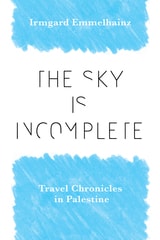
The Sky Is Incomplete
Travel Chronicles in PalestineIrmgard Emmelhainz
Vanderbilt University Press, 2023
In order to render the issue of representation, of speaking on behalf of the Palestinian ordeal in all its complexity, The Sky Is Incomplete is composed as a collage, gathering diary entries, letters, experimental passages, script, poetry, art criticism, political analysis, and other genres to convey an opaque view of the Palestine Question. Beyond representation in the sense of giving testimony or speaking on behalf of the Palestinians, however, the author’s parting point is relational: The Sky Is Incomplete is about encounters—with friends, mentors, interlocutors, lovers, children, activists, and soldiers (Israeli and Palestinian).
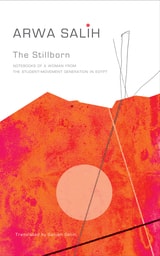
The Stillborn
Notebooks of a Woman from the Student-Movement Generation in EgyptArwa Salih
Seagull Books, 2017
A poignant reckoning with the Marxism of a generation and its militant postcolonial intellectuals.
Arwa Salih was a member of the political bureau of the Egyptian Communist Workers Party, founded in the wake of the Arab–Israeli War and the vibrant Egyptian student movement of the early 1970s. Written more than a decade after Salih quit the party and left political life—and published shortly after she tragically took her own life—The Stillborn offers a devastatingly honest look at the tragic failure of both the national liberation and communist projects in Egypt.
This powerful, unflinching critique speaks not only to and about Salih’s own generation of left-wing activists, but also extends its gaze outward. The Stillborn addresses the broader, still fiercely salient dilemmas of revolutionary politics that continue to echo throughout the developing world in the postcolonial era.
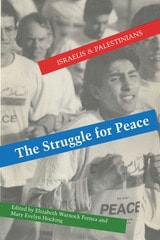
The Struggle for Peace
Israelis and PalestiniansEdited by Elizabeth Warnock Fernea and Mary Evelyn Hocking
University of Texas Press, 1992
The determination of ordinary people to end regional and global conflicts is powerful despite the forces opposing them. The Struggle for Peace explores how average citizens on both sides of the Israeli-Palestinian conflict worked for peace in the late twentieth century. Essays by noted scholars are juxtaposed with profiles of individual Israelis and Palestinians involved in peace activism. What emerges is a unique perspective on the prospects for peace in this troubled area.
Coordinated with a documentary film of the same name, the book is designed as a tool for the study of conflict resolution generally and the Israeli-Palestinian conflict in particular. The twelve original essays deal with the issues from different disciplinary perspectives: political science (Yehoshafat Harkabi, A. R. Norton, Muhammad Muslih, and Robert Vitalis); history (Avraham Zilkha and Joel Beinin); anthropology (Robert Rubinstein); sociology (Salim Tamari); film (Steven Talley); law (Edward Sherman); and international peacekeeping (Christian Harleman). The human side of the struggle is presented through brief biographies and portraits of twenty-five ordinary Israelis and Palestinians involved in peace activities in Israel and the West Bank.
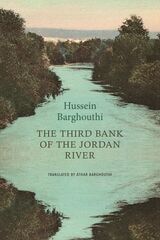
The Third Bank of the Jordan River
Hussein Barghouthi
Seagull Books, 2026
In this profound and evocative novel, acclaimed Palestinian author Hussein Barghouthi invites readers on an extraordinary, youthful journey through a landscape of memory, longing, alienation, and exile. Translated with great sensitivity by his son, Áthar Barghouthi, this deeply personal narrative unfurls as a stream-of-consciousness odyssey, blurring the lines between reality and dream. Haunted by a pervasive sense of loss, the prose, rich with poetic imagery, explores themes of displacement, identity, and the enduring shadows of a contested homeland.
The Third Bank of the Jordan River is a powerful, meditative work that defies conventional boundaries. With unflinching honesty, Barghouthi confronts the political through deeply human stories, capturing the restless search for meaning and the enduring human hunger for connection and freedom.
The Tree Stump
An Arabic Historical NovelSamiha Khrais
Michigan State University Press, 2017
The Turk in America
The Creation of an Enduring PrejudiceJustin McCarthy
University of Utah Press, 2010
Utah Series in Middle East Studies
In The Turk in America, historian Justin McCarthy seeks to explain the historical basis for American prejudice towards Turks in the nineteenth and early twentieth centuries. The volume focuses on fraudulent characterizations of Turks, mostly stemming from an antipathy in Europe and America toward non-Christians, and especially Muslims. Spanning one hundred and fifty years, this history explores the misinformation largely responsible for the negative stereotypes of Turks during this period.
The Turkishness Contract
Baris Ünlü
Temple University Press, 2025
Ünlü uses Critical Race Theory to present a historical–sociological model to examine not only the historical constitution and contemporary functioning of the Turkish nation-state, but also the affective and bodily modalities of being Turkish. He also develops a framework for rethinking the complex relations between the socio-genesis of the Turkish nation and state and the psycho-genesis of the Turkish people, their cognitive habits and emotional orientations, and the structural privileges and unconsciousness strategies of Turkishness.
The Turkishness Contract addresses broader theoretical concerns including histories of colonialism, ethnic/racial social contracts, privilege, Armenian Genocide and the Kurdish question, as well as the unraveling of Turkey’s social contract at a moment of contemporary right-wing authoritarianism.
In the series Critical Race, Indigeneity, and Relationality
The Umayyad Mosque of Damascus
Art, Faith and Empire in Early IslamAlain George
Gingko, 2020
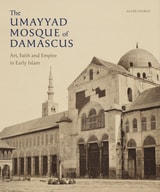
The Umayyad Mosque of Damascus is one of the oldest continuously used religious sites in the world. The mosque we see today was built in 705 CE by the Umayyad caliph al-Walid on top of a fourth-century Christian church that had been erected over a temple of Jupiter. Incredibly, despite the recent war, the mosque has remained almost unscathed, but over the centuries has been continuously rebuilt after damage from earthquakes and fires. In this comprehensive biography of the Umayyad Mosque, Alain George explores a wide range of sources to excavate the dense layers of the mosque’s history, also uncovering what the structure looked like when it was first built with its impressive marble and mosaic-clad walls. George incorporates a range of sources, including new information he found in three previously untranslated poems written at the time the mosque was built, as well as in descriptions left by medieval scholars. He also looks carefully at the many photographs and paintings made by nineteenth-century European travelers, particularly those who recorded the building before the catastrophic fire of 1893.
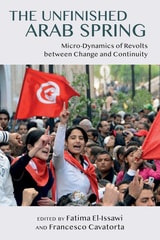
The Unfinished Arab Spring
Micro-Dynamics of Revolts between Change and ContinuityEdited by Fatima El Issawi and Francesco Cavatorta
Gingko, 2020
The United States and the Armenian Genocide
History, Memory, PoliticsJulien Zarifian
Rutgers University Press, 2024
This is the first book to examine how and why the United States refused to acknowledge the Armenian Genocide until the early 2020s. Although the American government expressed sympathy towards the plight of the Armenians in the 1910s and 1920s, historian Julien Zarifian explores how, from the 1960s, a set of geopolitical and institutional factors soon led the United States to adopt a policy of genocide non-recognition which it would cling to for over fifty years, through Republican and Democratic administrations alike. He describes the forces on each side of this issue: activists from the US Armenian diaspora and their allies, challenging Cold War statesmen worried about alienating NATO ally Turkey and dealing with a widespread American reluctance to directly confront the horrors of the past. Drawing from congressional records, rare newspapers, and interviews with lobbyists and decision-makers, he reveals how genocide recognition became such a complex, politically sensitive issue.
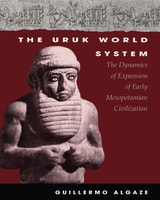
The Uruk World System
The Dynamics of Expansion of Early Mesopotamian CivilizationGuillermo Algaze
University of Chicago Press, 1993
In The Uruk World System, Guillermo Algaze concentrates instead on the unprecedented and wide-ranging process of external expansion that coincided with the rapid initial crystallization of Mesopotamian civilization. He contends that the rise of early Sumerian polities cannot be understood without also taking into account developments in surrounding peripheral areas.
Algaze reviews an extensive body of archaeological evidence for cross-cultural exchange between the nascent city-states in the Mesopotamian lowlands and communities in immediately surrounding areas. He shows that at their very inception the more highly integrated lowland centers succeeded in establishing a variety of isolated, far-flung outposts in areas at the periphery of the Mesopotamian lowlands. Embedded in an alien hinterland characterized by demonstrably less complex societies, the outposts were commonly established at the apex of preexisting regional settlement hierarchies and invariably at focal nodes astride important trade routes. Algaze argues that these early colonial out-posts served as collection points for coveted peripheral resources acquired in exchange for core manufactures and that they reflect an inherently asymmetrical system of economic hegemony that extended far beyond areas under the direct political control of Sumerian polities in southern Mesopotamia. From this he concludes that economic exploitation of less developed peripheral areas was integral to the earliest development of civilization in the ancient Near East.
The Uruk World System
The Dynamics of Expansion of Early Mesopotamian Civilization, Second EditionGuillermo Algaze
University of Chicago Press, 2005
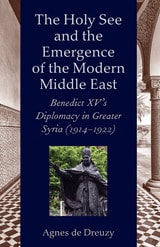
The Vatican and the Emergence of the Modern Middle East
Agnes de Dreuzy
Catholic University of America Press, 2016
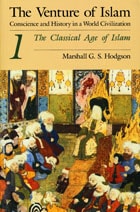
The Venture of Islam, Volume 1
The Classical Age of IslamMarshall G. S. Hodgson
University of Chicago Press, 1974
"This is a nonpareil work, not only because of its command of its subject but also because it demonstrates how, ideally, history should be written."—The New Yorker
Volume 1, The Classical Age of Islam, analyzes the world before Islam, Muhammad's challenge, and the early Muslim state between 625 and 692. Hodgson then discusses the classical civilization of the High Caliphate. The volume also contains a general introduction to the complete work and a foreword by Reuben Smith, who, as Hodgson's colleague and friend, finished the Venture of Islam after the author's death and saw it through to publication.
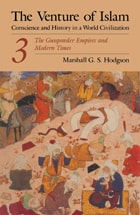
The Venture of Islam, Volume 3
The Gunpowder Empires and Modern TimesMarshall G. S. Hodgson
University of Chicago Press, 1977
In this concluding volume of The Venture of Islam, Hodgson describes the second flowering of Islam: the Safavi, Timuri, and Ottoman empires. The final part of the volume analyzes the widespread Islamic heritage in today's world.
"This is a nonpareil work, not only because of its command of its subject but also because it demonstrates how, ideally, history should be written."—The New Yorker
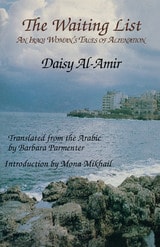
The Waiting List
An Iraqi Woman's Tales of AlienationBy Daisy Al-Amir
University of Texas Press, 1994
Daisy Al-Amir is one of the more visible figures in women's fiction in the Arab world today. This collection of stories, originally published in Lebanon as Ala La'ihat al-Intizar, is the most recent of her five publications. Her stories intimately reflect women's experiences in the chaotic worlds of the Lebanese civil war and the rise of Saadam Hussain as Iraq's leader. Set in Iraq, Cyprus, and Lebanon, the stories shed light on an unusual Middle East refugee experience—that of a cultural refugee, a divorced woman who is educated, affluent, and alone.
Al-Amir is also a poet and novelist, whose sensual prose grows out of a long tradition of Iraqi poetry. But one also finds existential themes in her works, as Al-Amir tries to balance what seems fated and what seems arbitrary in the turbulent world she inhabits. She deals with time and space in a minimalist, surreal style, while studying the disappointments of life through the subjective lens of memory. Honestly facing the absence of family and the instability of place, Al-Amir gives lifelike qualities to the inanimate objects of her rapidly changing world.
In addition to the stories, two examples of the author's experimental poems are included. In her introduction, Mona Mikhail places these stories and poems in the context of contemporary Islamic literature and gender studies.
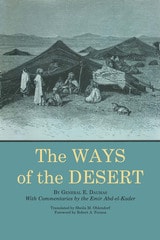
The Ways of the Desert
By General E. Daumas
University of Texas Press, 1971
The Ways of the Desert, translated from the French, offers an introduction to the North African Arab nomads—their way of life, customs, dress, and religion. The companion to this volume, The Horses of the Sahara, provides a detailed description and history of the great breeds of Arab horses. While part of this book is devoted to descriptions of the various animals that are both hunted and used for hunting, its appeal goes well beyond its attraction for those with a special interest in the lore of desert hunt and chase. General Daumas and his major collaborator-informant, the Emir Abd-el-Kader, together provide sensitive insights into the total culture of the North African desert people of the nineteenth century.
Both spiritual and material aspects of desert life are encompassed in this work, which ranges from translations of Arab poetry to descriptions of the uses of the fat and remains of the ostrich. The patterns of conviction and conduct described form an important part of the rich cultural heritage of the modern Maghreb nations.
The way of life described in this book is often presented from what comes very close to being an inside point of view. Occasionally Daumas feels obliged to disapprove of certain practices or beliefs or to criticize his Arab friends, but in large part his underlying sympathy for the Arab people permits his informants to speak clearly through his pen.
General Melchior Joseph Eugene Daumas took part in the conquest of Algeria by France and, for his distinguished service, was named Director of the Bureau of Algerian Affairs in the French Ministry of War. During the campaigns and the occupation that followed, he studied and attempted to understand the native peoples with an objectivity and sympathy unusual among the colonialists of the period. He recorded a way of life that has changed much since the nineteenth century, and much of what he recorded has since been lost. His account, as well as being an important source for the historian and ethnographer, provides for the general reader a fascinating record of the vanishing ways of the desert.
The West Bank Wall
Unmaking PalestineRay Dolphin
Pluto Press, 2006
Israel claims it is a security measure to protect Israeli citizens from terrorist attacks. Opponents point to the serious impact on the rights of Palestinians, depriving them of their land, mobility and access to health and educational services.
This book explores the Palestinian experience of the Wall in their international context. What are the real intentions behind the Israeli security argument? Is it a means of securing territory permanently through an illegal annexation of East Jerusalem? The West Bank Wall is a cutting account of the impact of the wall and how it affects prospects of a future peace in the Middle East.

The Western Bahr Al Ghazal under British Rule, 1898–1956
Mis Af#57Ahmad Alawad Sikainga
Ohio University Press, 1991
The World Is One Place
Native American Poets Visit the Middle EastDiane Glancy
BkMk Press, 2017
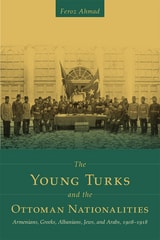
The Young Turks and the Ottoman Nationalities
Armenians, Greeks, Albanians, Jews, and Arabs, 1908–1918Feroz Ahmad
University of Utah Press, 2014
Ahmad holds that nationalism was introduced into the Ottoman Empire during the French Revolution, providing kindling for the struggles that later emerged. Setting the stage with this nineteenth-century background, Ahmad then examines each Ottoman nationality in the wake of the restoration of the Ottoman constitution in 1908. Officially known as the Committee of Union and Progress (CUP), the Young Turks made up a nationalist political party that ruled the Ottoman Empire from 1908 until the end of World War I. Ahmad illuminates the relationships and conflicts between the Young Turks and the Greek, Armenian, Albanian, Jewish, and Arab ethnic groups during this period. Placing these nationalities in their historical context, he shows their relationships not only to the Young Turks but also to one anotherno other single book has attempted to look closely at all of these connections.
Anyone interested in understanding the roots of current-day relations in the Balkans and Middle East will find this book very informative. Clearly organized and written, the book will enlighten both readers and scholars.
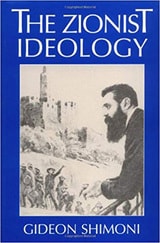
The Zionist Ideology
Gideon Shimoni
Brandeis University Press, 1997
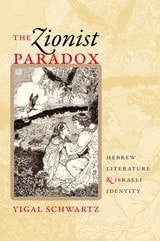
The Zionist Paradox
Hebrew Literature and Israeli IdentityYigal Schwartz
Brandeis University Press, 2014
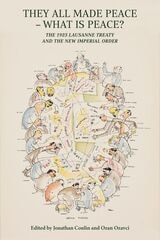
They All Made Peace—What Is Peace?
The 1923 Lausanne Treaty and the New Imperial OrderEdited by Jonathan Conlin and Ozan Ozavci
Gingko, 2023
The last of the post-World War One peace settlements, the 1923 Treaty of Lausanne departed from methods used in the Treaty of Versailles and took on a new peace-making initiative: a forced population exchange that affected one and a half million people. Like its German and Austro-Hungarian allies, the defeated Ottoman Empire had initially been presented with a dictated peace in 1920. In just two years, however, the Kemalist insurgency enabled Turkey to become the first sovereign state in the Middle East, while the Greeks, Armenians, Arabs, Egyptians, Kurds, and other communities previously under the Ottoman Empire sought their own forms of sovereignty.
Featuring historical analysis from multiple perspectives, They All Made Peace, What Is Peace? considers the Lausanne Treaty and its legacy. Chapters investigate British, Turkish, and Soviet designs in the post-Ottoman world, situate the population exchanges relative to other peacemaking efforts, and discuss the economic factors behind the reallocation of Ottoman debt and the management of refugee flows. Further chapters examine Kurdish, Arab, Iranian, Armenian, and other communities that were refused formal accreditation at Lausanne, but which were still forced to live with the consequences, consequences that are still emerging, one hundred years on.
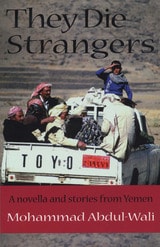
They Die Strangers
By Mohammad Abdul-Wali
University of Texas Press, 2002
They Die Strangers, a novella and thirteen short stories, is the first full-length work of the distinguished Yemeni writer Mohammad Abdul-Wali to appear in English. Abdul-Wali died tragically in an aviation accident, and his stories were collected after his death by the translators Abubaker Bagader and Deborah Akers.
Abdul-Wali was born in Ethiopia of Arab Yemeni parents. His stories, filled with nostalgia and the bitterness of exile, deal with the common experiences of Yemenis like himself who are caught between cultures by the displacements of civil war or labor migration. His characters include women left behind, children raised without fathers, and men returning home after years of absence. He explores the human condition through the eyes of the oppressed and disenfranchised and is particularly sympathetic to the plight of women.
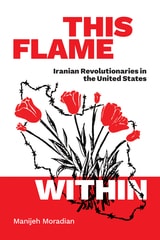
This Flame Within
Iranian Revolutionaries in the United StatesManijeh Moradian
Duke University Press, 2022
This Is Jerusalem Calling
State Radio in Mandate PalestineBy Andrea L. Stanton
University of Texas Press, 2013
Modeled after the BBC, the Palestine Broadcasting Service was launched in 1936 to serve as the national radio station of Mandate Palestine, playing a pivotal role in shaping the culture of the emerging middle class in the region. Despite its significance, the PBS has become nearly forgotten by scholars of twentieth-century Middle Eastern studies. Drawn extensively from British and Israeli archival sources, “This Is Jerusalem Calling” traces the compelling history of the PBS’s twelve years of operation, illuminating crucial aspects of a period when Jewish and Arab national movements simultaneously took form.
Andrea L. Stanton describes the ways in which the mandate government used broadcasting to cater to varied audiences, including rural Arab listeners, in an attempt to promote a “modern” vision of Arab Palestine as an urbane, politically sophisticated region. In addition to programming designed for the education of the peasantry, religious broadcasting was created to appeal to all three main faith communities in Palestine, which ultimately may have had a disintegrating, separatist effect. Stanton’s research brings to light the manifestation of Britain’s attempts to prepare its mandate state for self-governance while supporting the aims of Zionists. While the PBS did not create the conflict between Arab Palestinians and Zionists, the service reflected, articulated, and magnified such tensions during an era when radio broadcasting was becoming a key communication tool for emerging national identities around the globe.
This Thing Called Love
Alawiya Sobh
Seagull Books, 2023
Just before the outbreak of the July 2006 war in Lebanon, a middle-aged woman named Nahla has gone missing. Distraught, besieged, and without any leads, Nahla’s dearest friends—Suad, Azizeh, Hoda, Nadine, and the narrator Alawiya—band together to console one another. They reminisce about the better days of their youth, lifetimes of romantic turmoil, the trouble with love, and their inescapable confrontation with death. Unsure whether Nahla has been killed in the fighting, fled the country, or disappeared into the oblivion of Alzheimer’s, Alawiya pieces together Nahla’s intimate past, simultaneously illuminating the jagged history of modern Lebanon. Through searching discussions with Nahla’s closest confidante Suad, tenacious investigation, and an imaginative effort to reconstruct the life of another, Alawiya might just find a way to bring Nahla back.
In This Thing Called Love, celebrated Lebanese novelist Alawiya Sobh takes the war between Israel and Hizballah as the backdrop for a heart-wrenching story about love, loss, sex, friendship between women, and the universal struggle to come to terms with mortality.
Three Ways to Be Alien
Travails and Encounters in the Early Modern WorldSanjay Subrahmanyam
Brandeis University Press, 2011
To Come to the Land
Immigration and Settlement in 16th-Century Eretz-IsraelAbraham David, translated by Dena Ordan
University of Alabama Press, 1999
To Come to the Land makes available in English a vast body of research,
previously available only in Hebrew, on the early history of the land now
known as Israel.
Abraham David here focuses on the Spanish and Portuguese Jews who fled
the Iberian Peninsula during the 16th century, tracing the beginnings of
Sephardic influence in the land of Israel.
After the Ottoman Turks conquered Syria, Palestine, and Egypt in 1516,
the Ottoman regime, unlike their Mamluk predecessors, encouraged economic
development and settlement throughout the region. This openness to immigration
offered a solution to the crisis Iberian Jews were undergoing as a result
of their expulsion from Spain and the forced conversions in Portugal. Within
a few years of the Ottoman conquest, Jews of Spanish extraction, many of
them clustered in urban areas, dominated the Jewish communities of Eretz-Israel.
In this carefully researched study, David examines the lasting impression
made by these enterprising Jewish settlers on the commercial, social, and
intellectual life of the area under early Ottoman rule. Of particular interest
is his examination of the cities of Jerusalem and Safed and David's succinct
biographies of leading Jewish personalities throughout the region.
This first English translation of a ground-breaking Hebrew work provides
a comprehensive overview of a significant chapter in the history of Israel
and explores some of the factors that brought to it the best minds of the
age. Essential for scholars of late Medieval Jewish history, To Come to
the Land will also be an important resource for scholars of intellectual
history, as it provides background crucial to an understanding of the intellectual
flourishing of the period.
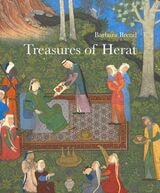
Treasures of Herat
Two Manuscripts of the Khamsah of Nizami in the British LibraryBarbara Brend
Gingko, 2021
With this book, Barbara Brend provides thorough consideration of two celebrated Persian manuscripts housed in the British Library. These two copies of the Khamsah (Quintet) a set of five narrative poems by twelfth-century poet Nizami, a master of allegorical poetry in Persian literature, were produced in Herat in the fifteenth century, one of the greatest periods of Persian painting. Although well known, the manuscripts have never before been written about in relation to each other. Brend tells the story of each poem and the painting that illustrates it, and she formally analyzes the images, placing them in their historical and artistic context.
The images from both highly prized manuscripts are beautifully reproduced in color, and the ownership history of one of the manuscripts—recorded in the form of seal impressions and inscriptions— is also included. Ursula Sims-Williams provides a translation and commentary of these important marks of ownership which identify the Mughal rulers Akbar, Jahangir, Shah Jahan, and Aurangzeb, among many others.
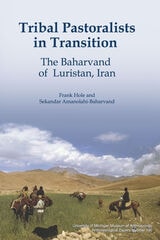
Tribal Pastoralists in Transition
The Baharvand of Luristan, IranFrank Hole and Sekandar Amanolahi-Baharvand
University of Michigan Press, 2021
Supplementary videos (on the migration, weaving, harvesting, and the bazaars) can be found on Fulcrum (fulcrum.org/UMMAA).
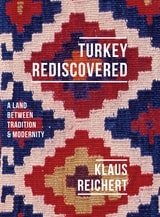
Turkey Rediscovered
A Land between Tradition and ModernityKlaus Reichert
Haus Publishing, 2015
Without a guide and driven only by his own curiosity, Klaus Reichert travels to Anatolia, Istanbul, and the Aegean coast. He explores the strip of land where Adam and Eve are said to have settled after their expulsion from the Garden of Eden, and where Moses struck water from stone. While following in the footsteps of the brilliant architect Mimar Sinan and investigating the mysteries of his mosques, Reichert speaks to an old stonemason and a young teacher, visits one of the last remaining colonies of a rare breed of ibis, and walks the wide expanses surrounding the archaeological sites of western Turkey. Finally, he draws parallels between Kilim weaving, minimal music, and modernity as a whole. Under Reichert’s gaze, what is seen and learned becomes a colorful and provocative collection of images and patterns.
A one-of-a-kind travelogue that touches on Turkey’s traditions, natural history, and political divisions, Turkey Rediscovered shows us a new side to a land we thought we already knew.

Two NATO Allies at the Threshold of War
Parker T. Hart
Duke University Press, 1990
Hart has relied on his own papers from the period, as well as on United Nations sources from the Lyndon B. Johnson Presidential Library, and on the papers of the other key participants in the Crisis, Ambassador to Greece Phillips Talbot, Ambassador to Cyprus Taylor G. Belcher, and Cyrus Vance, to provide a rare play-by-play analysis of the crisis and its resolution.