Results by title
1148 books match the query 'Political Ideologies' and 241 start with t

The Man Who Stayed Behind
Sidney Rittenberg and Amanda Bennett
Duke University Press, 2001
Both a memoir and a documentary history of the Chinese revolution from 1949 through the Cultural Revolution, The Man Who Stayed Behind provides a human perspective on China’s efforts to build a new society. Critical of both his own mistakes and those of the Communist leadership, Rittenberg nevertheless gives an even-handed account of a country that is now free of internal war for the first time in a hundred years.
The Meaning of Liberalism - East and West
Zdenek Suda
Central European University Press, 1999
The Meaning of Liberalism provides a new perspective on the continuing debate about how liberalism should be defined and what it means in countries with an established parliamentary system, particularly in the new democracies of Central and Eastern Europe.
The key question this book addresses is: will the specific experience of communism and its aftermath give birth to a new distinct current of liberal thought, or will it simply enlarge the scope of the Western liberal debate? The authors argue that liberalism cannot be reduced merely to private property and market prices, but needs a very complex set of institutions and corresponding law.
Contributors come from both sides of the former Iron Curtain and they highlight the richness and diversity of liberalism and discuss different perceptions of liberal thinking in the East and West in the post-modern world.
The Military and Politics in Postauthoritarian Chile
Gregory Weeks
University of Alabama Press, 2003
"The Military and Politics in Post-Authoritarian Chile should be read by everyone concerned with the relation between democracy and the armed forces. It is a well-researched, well-written volume that should prove both interesting and useful to scholars and students alike." —Perspectives on Politics
Why have political leaders of developing and authoritarian nations run into so many obstacles as they attempt to establish civilian supremacy over armed forces in the democratization of their countries? This is the question Gregory Weeks poses in his study of Chile from 1990 onward. He explains how the Chilean military has maintained a high level of political influence in the tumultuous aftermath of dictatorial rule by Army General Augusto Pinochet, thus confounding a smooth transition to civilian authority.
Even after the reins of power were officially handed over in 1990, Pinochet continued as commander in chief of the army until 1998, when he took a lifetime seat in the Senate and led the military’s efforts to retain its legal and constitutional prerogatives while limiting civilian oversight of military affairs. This assertion of guardianship by the military has produced a political tug-of-war between it and civilian authorities the two contenders for political primacy in Chile. In addition to recounting the historical background of this situation, Weeks’s study examines where conflict between these two contenders has been most productive and accord has been highest. His findings suggest that formal contacts, conducted through formal institutions, have been the most conducive to civil supremacy and, therefore, the consolidation of democracy.
Based on interviews, government documents, military journals, newspapers, and other archival sources, The Military and Politics in Postauthoritarian Chile describes how presidents, military officers, members of Congress, and judges have interacted since the end of the military regime. With implications for conflict resolution studies, this book will be valuable for Chileanists and policymakers and analysts of Latin American regimes, as well as academic libraries, military historians, social scientists, and students and scholars of Latin American history and politics.

The Money Mandarins
The Making of a Supranational Economic OrderHoward M. Wachtel
Pluto Press, 1991
The Morality of Revolution
Reeducation Camps and the Politics of Punishment in Socialist Mozambique, 1968–1990Benedito Luís Machava
Ohio University Press, 2024
The Moulding of Ukraine
The Constitutional Politics of State FormationKataryna Wolczuk
Central European University Press, 2002

The Muslim Brotherhood
Ideology, History, DescendantsJoas Wagemakers
Amsterdam University Press, 2022
The Mystery of Fascism
David Ramsay Steele's Greatest HitsDavid Ramsay Steele
St. Augustine's Press, 2019
David Ramsay Steele, PhD, is a libertarian writer with a powerful underground reputation for producing caustic, entertaining, knowledgeable, and surprising arguments, often violently at odds with conventional thinking. For the first time, some of Dr. Steele’s “greatest hits” have been brought together in an anthology of provocative essays on a wide range of topics. The essays are divided into two parts, “More Popular than Scholarly” and “More Scholarly than Popular.”
“Scott Adams and the Pinocchio Fallacy,” Steele’s 2018 refutation of the popular claim that we might be living in a “simulated reality,” has been hailed as a totally irresistible debunking of that fallacy as promoted by The Matrix movie and by Scott Adams (among many pundits).
“What Follows from the Non-Existence of Mental Illness?” (2017) preserves the crucial insights of “psychiatric abolitionist” Thomas Szasz, while exposing Szasz’s major misconceptions.
In “The Bigotry of the New Atheism” (2014), Steele, himself an atheist, brings out the intolerant quality of the “New Atheists.” Steele powerfully argues that while “enthusiastic belief systems” may give rise to enormous atrocities, the historical evidence goes against the theory (promoted by Harris, Dawkins, and Hitchens) that these appalling outcomes are more likely when those belief systems include belief in God.
“Taking the JFK Assassination Conspiracy Seriously” (2003) has been reprinted many times, continues to be viewed online many thousands of times, and like many of Steele’s writings, keeps making converts. It is acknowledged to be the most persuasive brief popular statement of the Lone Nut theory.
“The Mystery of Fascism” (2001), which gives this collection its title, is still continually viewed and cited, for its demonstration that fascism arose directly out of far-left revolutionary Marxism and revolutionary syndicalism. Conventional ideologues of both right and left have been provoked by this highly readable piece to start thinking outside the box.
The earliest piece in this collection, “Alice in Wonderland” (1987) is a devastating critique of the Ayn Rand belief system and the Ayn Rand cult.
“Gambling Is Productive and Rational” (1997), mercilessly strips away the loose thinking which favors intolerance and prohibition of gambling. Steele argues that gambling adds to human well-being and ought to be completely legalized everywhere.
Other topics include the recovered memory witch hunt of the 1990s, the benefits of replacing democratic voting with selection of political positions by lottery, the unexpected results of research into the causes of human happiness, the reasons why Dexter (a TV show sympathetic to a psychotic serial killer) was politically “safe,” why economic growth can go on for ever, why the most popular moral argument against eating meat just doesn’t work, how Hillary Clinton could have won the presidency in 2016, why Friedrich Hayek is wrong about social evolution, the inevitable disappearance of market socialism, Robert Nozick’s muddled thinking about economics, and the proper way to view anti-consensus theories such as the Atkins Diet.
The Myth of Democratic Failure
Why Political Institutions Are EfficientDonald A. Wittman
University of Chicago Press, 1995
Wittman first considers the characteristic of efficient markets—informed, rational participants competing for well-defined and easily transferred property rights—and explains how they operate in democratic politics. He then analyzes how specific political institutions are organized to operate efficiently. "Markets" such as the the Congress in the United States, bureaucracies, and pressure groups, he demonstrates, contribute to efficient political outcomes. He also provides a theory of institutional design to explain how these political "markets" arise. Finally, Wittman addresses the methodological shortcomings of analyses of political market failure, and offers his own suggestions for a more effective research strategy.
Ultimately, he demonstrates that nearly all of the arguments claiming that economic markets are efficient apply equally well to democratic political markets; and, conversely, that economic models of political failure are not more valid than the analogous arguments for economic market failure.
The Nationalization of the Masses
Political Symbolism and Mass Movements in Germany from the Napoleonic Wars Through the Third ReichGeorge L. Mosse
University of Wisconsin Press, 2023
The Neopopular Bubble
Speculating on "the People" in Late Modern DemocracyPéter Csigó
Central European University Press, 2017
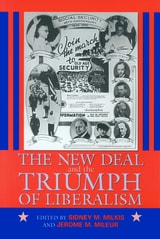
The New Deal and the Triumph of Liberalism
Sidney M. Milkis
University of Massachusetts Press, 2002
For scholars who have studied it, as for many Americans who experienced it firsthand, Franklin Roosevelt's New Deal has long represented a turning point in the modern history of the United States. More than simply a bold program of political change, it marked a critical departure in the governing principles, institutional arrangements, and policies that shape American life.
In this collection of original essays, a distinguished group of political scientists and historians reevaluate the legacy of the New Deal, showing how Roosevelt and his allies forged an enduring public philosophy—modern liberalism—that redefined the relationship of government and governed. Adapting broad principles from the past to the unprecedented circumstances of a worldwide depression, the New Dealers shifted American politics away from its traditional emphasis on self-reliance, private property, and decentralized power. In its place they advocated a new “economic constitutional order”—in effect, a new social contract—in which the government guaranteed protection to individuals against the uncertainties of the marketplace.
Although the contributors differ in their assessment of the successes and failures of New Deal liberalism, all agree that its implications for American political life were profound and far-reaching—in the realm of foreign as well as domestic affairs, for the theory as well as the practice of government. Taken together, the essays offer a fresh look at the many ways the New Deal, in Harry Hopkins's phrase, “made America over.”
In addition to the editors, contributors are William E. Leuchtenburg, Marc Landy, Nelson Lichtenstein, Donald R. Brand, Jyette Klausen, Suzanne Mettler, Ronald Story, Seyom Brown, and Morton Keller.
The New Left and Labor in 1960s
Peter B. Levy
University of Illinois Press, 1994
It is a powerful story: the relationship between the 1960s New Left and organized labor was summed up by hardhats confronting students and others over US involvement in Vietnam. But the real story goes beyond the "Love It or Leave It" signs and melees involving blue-collar types attacking protesters.
Peter B. Levy challenges these images by exploring the complex relationship between the two groups. Early in the 1960s, the New Left and labor had cooperated to fight for civil rights and anti-poverty programs. But diverging opinions on the Vietnam War created a schism that divided these one-time allies. Levy shows how the war, combined with the emergence of the black power movement and the blossoming of the counterculture, drove a permanent wedge between the two sides and produced the polarization that remains to this day.
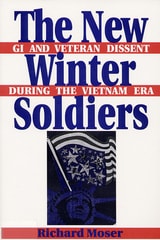
The New Winter Soldiers
GI and Veteran Dissent During the Vietnam EraMoser, Richard
Rutgers University Press, 1996
Richard Moser uses interviews and personal stories of Vietnam veterans to offer a fundamentally new interpretation of the Vietnam War and the antiwar movement. Although the Vietnam War was the most important conflict of recent American history, its decisive battle was not fought in the jungles of Vietnam, or even in the streets of the United States, but rather in the hearts and minds of American soldiers. To a degree unprecedented in American history, soldiers and veterans acted to oppose the very war they waged. Tens of thousands of soldiers and veterans engaged in desperate conflicts with their superiors and opposed the war through peaceful protest, creating a mass movement of dissident organizations and underground newspapers.
Moser shows how the antiwar soldiers lived out the long tradition of the citizen soldier first created in the American Revolution and Civil War. Unlike those great upheavals of the past, the Vietnam War offered no way to fulfill the citizen-soldier's struggle for freedom and justice. Rather than abandoning such ideals, however, tens of thousands abandoned the war effort and instead fulfilled their heroic expectations in the movements for peace and justice. According to Moser, this transformation of warriors into peacemakers is the most important recent development of our military culture.
The struggle for peace took these new winter soldiers into America rather than away from it. Collectively these men and women discovered the continuing potential of American culture to advance the values of freedom, equality, and justice on which the nation was founded.
The Next Conservatism
Paul M. Weyrich and William S. Lind
St. Augustine's Press, 2009
Since November’s election, conservative columnists have filled the op-ed pages with calls for a new conservative agenda. In The Next Conservatism, two of the conservative movement’s best-known thinkers, Paul M. Weyrich and William S. Lind, offer exactly that. More, they offer a new kind of conservative agenda, one that reaches far beyond politics to grapple with the sources of our nation’s cultural decay.
The Next Conservatism recognizes that culture is more powerful than politics. Nevertheless, it offers an engaging menu of political reforms, all under the rubric of “Restore the Republic!” No enthusiasts of Imperial America at home or abroad, Weyrich and Lind seek limited government, jealous guardianship of civil liberties, and a Washington liberated from the power of the New Class, the interests that feed off our nation’s decay. To these frequent conservative themes, Weyrich and Lind offer something new: a warning of a general crisis of legitimacy of the state itself, which can lead to a Hobbesian state of anarchy. How might we save the state while avoiding the jaws of Leviathan? The Next Conservatism offers innovative ways to thread that needle.
Meanwhile, what of America’s culture? Did its decay over the past half-century “just happen”? Weyrich and Lind argue no; rather, much of our degradation was deliberate, the work of the poisonous ideology of cultural Marxism, aka “Political Correctness.” The Next Conservatism takes the reader on a fascinating historical tour of the origins of Political Correctness in the infamous Frankfurt School, a gathering of heretical Marxists whose goal from the outset was the destruction of Western culture.
Weyrich and Lind then proceed to “deconstruct” the left’s program for America, debunking Feminism, “racism,” and environmentalism along the way. Reflecting the thought of Russell Kirk, The Next Conservatism condemns ideologies left and right, calling instead for a return to traditional ways of living, ways that reflect wisdom accumulated generation by generation. Only thus, they argue, can conservatives win a culture war many regard as hopelessly lost.
Old ways, in turn, lead to a Next Conservatism appropriate for hard times. Virtue, Weyrich and Lind offer, is to be found in modest living, not conspicuous consumption. The Next Conservative agenda rejects environmentalism but includes conservation, the return of the family farm, New Urbanism and the revival of such ‘oldies but goodies” as streetcars and passenger trains. A new theme, Retroculture, sums up a conservatism that recognizes that what worked in the past can work again today, and in the future as well. Our ancestors were no fools, the authors suggest, and “Back to the Future!” can serve as a powerful conservative rallying cry.
Having laid the political and cultural groundwork, The Next Conservatism then turns to conservative governance. In foreign policy, the authors call for minimizing foreign entanglements, though with a strong national defense and a military reform to adapt to face Fourth Generation warfare rather than the Second Generation America adheres to. For the economy, the authors call for repairing and expanding our national infrastructure, sound money, and protecting American industry, seeing labor as a potential ally. In both national security and economic security, the authors insist that good governance include moral security; drawing from the New Urbanism, they offer a “moral transect” that allows everyone to do what he wants, but not always where he wants. The public square, they suggest, should be safe for families.
Respecting the careful limits on government power a restored republic would embody, The Next Conservatism calls for redeeming America not through legislation but through a new conservative movement. Unlike the old movement, the next conservative movement would be a league of people who pledged to live their lives by the old rules. While conservatives would remain engaged in politics, they would rely on a vastly more powerful force of example, the examples of lives lived well in traditional ways. This next conservative movement would appeal far beyond the ranks of political conservatives, to all Americans who know that something has gone tragically wrong in the life of our nation.
The Next Conservatism offers a vision of vast sweep, far beyond anything coming out of Washington. At a time when most Americans find life growing more difficult, it proposes a path to a new America that is also the old America, the good, comfortable America we had and have lost.
The Nonconformists
Culture, Politics, and Nationalism in a Serbian Intellectual Circle, 1944-1991Nick Miller
Central European University Press, 2007

The Obsolescence of Human Rights
The Alt-Right, the Pandemic and Science as an Emerging Political CleavageFilip Balunovic
Central European University Press, 2026
The Other Side of the Sixties
Young Americans for Freedom and the Rise of Conservative PoliticsAndrew III, John A
Rutgers University Press, 1997
The Paradox of Democracy
Free Speech, Open Media, and Perilous PersuasionZac Gershberg and Sean Illing
University of Chicago Press, 2022
At the heart of democracy lies a contradiction that cannot be resolved, one that has affected free societies since their advent: Though freedom of speech and media has always been a necessary condition of democracy, that very freedom is also its greatest threat. When new forms of communication arrive, they often bolster the practices of democratic politics. But the more accessible the media of a society, the more susceptible that society is to demagoguery, distraction, and spectacle. Tracing the history of media disruption and the various responses to it over time, Zac Gershberg and Sean Illing reveal how these changes have challenged democracy—often with unsettling effects.
The Paradox of Democracy captures the deep connection between communication and political culture, from the ancient art of rhetoric and the revolutionary role of newspapers to liberal broadcast media and the toxic misinformation of the digital public sphere. With clear-eyed analysis, Gershberg and Illing show that our contemporary debates over media, populism, and cancel culture are not too different from the democratic cultural experiences of the past. As we grapple with a fast-changing, hyper-digital world, they prove democracy is always perched precipitously on a razor’s edge, now as ever before.
The Passing of an Illusion
The Idea of Communism in the Twentieth CenturyFrançois Furet
University of Chicago Press, 1999
"This may well be the most illuminating study ever devoted to the question of appeal exerted not only by Communism but also by the Nazi and other fascist varieties of totalitarianism in this century."—Hilton Kramer, New Criterion
"A subtle, nuanced but gripping study of the most pervasive and destructive illusion in the 20th century." —Kirkus Reviews, starred review
"The Passing of an Illusion . . . is both a profound work of intellectual history that takes its place alongside other great studies of the leftist heresy . . . and a relentless diagnosis of the self-subversive risks that are inherent in democratic regimes. "—Roger Kaplan, Washington Times
" A remarkable book. . . . Stimulating and challenging. . . . A man widely read in several languages, Furet clearly knew his way around 20th-century Europe, even unto the dark alleys that figure on no existing map. "—Mark Falcoff, Commentary
"A history of ideas, this work is not for the faint of heart, yet those who challenge it will discover a signal contribution to the literature of Communism."—Booklist
"Imperious and stunningly confident, grand in conception and expansive in manner, packed with fascinating detail and often incisive judgements."—John Dunn, Times Higher Education Supplement
"The Passing of an Illusion is brilliant, and one would be hard pressed to find better writing of history than the first chapter, which traces the roots of modern political thinking back to the nineteenth century."—J. Arch Getty, Atlantic Monthly
"A brilliant and important book. . . . The publication of the American edition makes accessible to the general reader the most thought-provoking historical assessment of communism in Europe to appear since its collapse."—Jeffrey Herf, Wall Street Journal
François Furet (1927-1997), educator and author, was a Chevalier of the Legion of Honor and was elected, in 1997, to become one of the "Forty Immortals" of the Académie Française, the highest intellectual honor in France. His many books include Interpreting the French Revolution, Marx and the French Revolution, and Revolutionary France. Deborah Furet, his widow, collaborated with him on many projects.
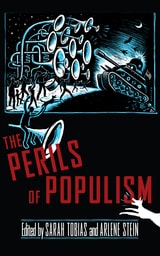
The Perils of Populism
Sarah Tobias
Rutgers University Press, 2022
The Perils of Populism shows how a feminist lens can help diagnose the factors behind the global rise of right-wing populism and teach us how to resist the threat it presents to democracy. Featuring interdisciplinary essays about politics in the United States, the Middle East, Europe, and India from a variety of acclaimed theorists and activists, the volume contributes to a rapidly expanding literature on gender and the far right. Together, these chapters offer a truly intersectional analysis of the problem, addressing everything from how populism has thrived in a “post-truth” era to the ways it appeals to working-class voters looking for an alternative to neoliberalism. Yet the authors also find reasons to be hopeful, as they showcase forms of grassroots feminist activism that challenge right-wing populism by advocating for racial and economic justice.
The Personality of Power
A Theory of Fascism for Anti-fascist LifeBrian Massumi
Duke University Press, 2025
The Philosopher and His Poor
Jacques Rancière
Duke University Press, 2004
Jacques Rancière’s The Philosopher and His Poor meditates on these questions in close readings of major texts of Western thought in which the poor have played a leading role—sometimes as the objects of philosophical analysis, sometimes as illustrations of philosophical argument. Published in France in 1983 and made available here for the first time in English, this consummate study assesses the consequences for Marx, Sartre, and Bourdieu of Plato’s admonition that workers should do “nothing else” than their own work. It offers innovative readings of these thinkers’ struggles to elaborate a philosophy of the poor. Presenting a left critique of Bourdieu, the terms of which are largely unknown to an English-language readership, The Philosopher and His Poor remains remarkably timely twenty years after its initial publication.
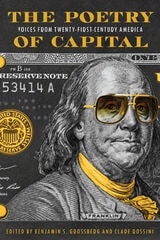
The Poetry of Capital
Voices from Twenty-First-Century AmericaEdited by Benjamin S. Grossberg and Clare Rossini
University of Wisconsin Press, 2021
Editors Benjamin S. Grossberg and Clare Rossini selected poems to reflect broad themes of labor, history and economic forces, social equity, and the environment. In addition, they asked each poet to provide a brief prose comment to introduce their work. Some give broad statements on the nature of wealth in America today; others are intimate, offering insight into how life experiences inform their writing; still others reflect on the art of poetry itself and its unique power to speak to economic pressures of the moment.
Contributors include Mary Jo Bang, Xochiquetzal Candelaria, Alan Chazaro, Mark Doty, Denise Duhamel, Tony Hoagland, Yusef Komunyakaa, Dorianne Laux, Kimiko Hahn, Sharon Olds, George Perreault, Robert Pinsky, Minnie Bruce Pratt, Afaa Michael Weaver, David Wojahn, and others.
The Point is to Change the World
Selected Writings of AndaiyeAlissa Andaiye
Pluto Press, 2020
Through essays, letters and journal entries, Andaiye's thinking on the intersections of gender, race, class and power are profoundly articulated, Caribbean histories emerge, and stories from a life lived at the barricades are revealed. We learn about the early years of the Working People's Alliance, the meaning and impact of the murder of Walter Rodney and the fall of the Grenada Revolution. Throughout, we bear witness to Andaiye's acute understanding of politics rooted in communities and the daily lives of so-called ordinary people.
Featuring forewords by Clem Seecharan and Robin DG Kelley, these texts will become vital tools in our own struggles to 'overturn the power relations which are embedded in every unequal facet of our lives'.

The Polarizers
Postwar Architects of Our Partisan EraSam Rosenfeld
University of Chicago Press, 2017
In The Polarizers, Sam Rosenfeld details why bipartisanship was seen as a problem in the postwar period and how polarization was then cast as the solution. Republicans and Democrats feared that they were becoming too similar, and that a mushy consensus imperiled their agendas and even American democracy itself. Thus began a deliberate move to match ideology with party label—with the toxic results we now endure. Rosenfeld reveals the specific politicians, intellectuals, and operatives who worked together to heighten partisan discord, showing that our system today is not (solely) a product of gradual structural shifts but of deliberate actions motivated by specific agendas. Rosenfeld reveals that the story of Washington’s transformation is both significantly institutional and driven by grassroots influences on both the left and the right.
The Polarizers brilliantly challenges and overturns our conventional narrative about partisanship, but perhaps most importantly, it points us toward a new consensus: if we deliberately created today’s dysfunctional environment, we can deliberately change it.
The Political Centrist
John Lawrence Hill
Vanderbilt University Press, 2009
Centrists reject each of these fragmented and polarized approaches to politics. We believe that government has a role to play in structuring social and economic opportunities and in reinforcing basic moral norms, yet we are deeply troubled by ever-expanding government. We reject libertarianism, left-liberalism, and the various schools of conservatism as a model for government.
Part I of The Political Centrist briefly traces the trajectory of the liberal and conservative traditions. It argues that modern liberalism is an unprincipled fusion of classical liberal and socialist ideals while modern conservatism is an untenable hybrid of economic liberalism and social conservatism. Part II offers a centrist approach to many of the most contentious contemporary political and social issues. Those include:
-- abortion
-- affirmative action
-- the death penalty
-- gay marriage
-- illegal immigration
-- judicial activism
-- the relationship of religion and politics
-- the role of government in the economy

The Politics of American Jews
Herbert F. Weisberg
University of Michigan Press, 2019
Jewish voting is distinctive and paradoxical. Stereotypes about the voting habits of American Jews include that they vote at unusually high levels, that they’re liberal, that they vote for Democratic candidates without regard to their self-interest, and that Israel is their most important issue. Not only are all of those claims wrong, but they obscure aspects of Jews’ voting behavior that are much more interesting.
The Politics of American Jews uncovers new perspectives on Jews’ political choices by analyzing the unprecedented amount of survey data that is now available, including surveys that permit contrasting the voting of Jews with that of comparable non-Jews. The data suggest several mysteries about Jewish voting. While more Jews are Democrats than are liberals, there has not been a previous exploration of why more politically conservative Jews are not Republicans.
A fresh picture of Jews’ political behaviors shows that Jews are no longer politically monolithic. They vote on the basis of their self-interest and their values, but not all Jews share the same self-interest or the same values. While most Jews have incorporated being Democratic and liberal into their political DNA, growing divisions in their ranks suggest a mutation could occur.
The Politics of Authenticity
First-Personal Truths and Democratic ClaimsNina Hagel
University of Chicago Press, 2026
A qualified defense of authenticity claims in contemporary politics.
On both the Left and Right, we see a range of political claims cast in terms of authenticity, from transgender persons seeking recognition of who they truly are to religious business owners requesting exemptions from antidiscrimination laws. For claimants, what is often at stake is an inner self that would be harmed if changed or concealed. At the same time, many scholars are skeptical of authenticity claims, with some worrying that they are too nebulous and inward-looking and others fearing that they contain too much anti-democratic potential. There is also the added difficulty of determining when and on what grounds to accept a claim of authenticity.
Nina Hagel argues that while invoking authenticity has serious risks, it remains a crucial democratic resource. Through an engagement with canonical and contemporary political theorists, and an analysis of current political struggles centering on authenticity, Hagel advances a defense of authenticity’s democratic potential, alongside a practice for interpreting and invoking such claims. While one might assume that this perspective clashes with the post-modern view that there is no true self outside of politics and history, Hagel puts forward a non-essentialist understanding of authenticity that emphasizes subject formation and emancipation. Hagel argues that authenticity claims best support democracy when they collectively steward, rather than overcome, the social powers that shape our identities. We ignore authenticity claims at our peril, since the objects of such claims are the norms and practices that make us who we are.
The Politics of Bitcoin
Software as Right-Wing ExtremismDavid Golumbia
University of Minnesota Press, 2016
Since its introduction in 2009, Bitcoin has been widely promoted as a digital currency that will revolutionize everything from online commerce to the nation-state. Yet supporters of Bitcoin and its blockchain technology subscribe to a form of cyberlibertarianism that depends to a surprising extent on far-right political thought. The Politics of Bitcoin exposes how much of the economic and political thought on which this cryptocurrency is based emerges from ideas that travel the gamut, from Milton Friedman, F.A. Hayek, and Ludwig von Mises to Federal Reserve conspiracy theorists.
Forerunners: Ideas First is a thought-in-process series of breakthrough digital publications. Written between fresh ideas and finished books, Forerunners draws on scholarly work initiated in notable blogs, social media, conference plenaries, journal articles, and the synergy of academic exchange. This is gray literature publishing: where intense thinking, change, and speculation take place in scholarship.

The Politics of Decency
Peter Hennessy and Giles Edwards
Haus Publishing, 2026
A thoughtful examination of how to recenter decency in politics and public life, told through conversations between long-time historian and public servant Peter Hennessy and influential friends, decision makers, and leaders.
Having surveyed eighty years of the UK's political and constitutional journey, Hennessy prepares to bid farewell to public life. And he’s left with one thought: that the essential quality of decency needs to be placed—once again—back at the heart of public life and public discourse. But what does decency look like today, where does it spring from, and how might we all play a role in recentering it in public life? In The Politics of Decency, Hennessy considers such issues alongside a group of people who might pick up his baton. After inviting public servants, colleagues, and those he has long admired, along with younger voices from politics and public life, into his home for conversations about what decency means to them, he reflects on what they have shared with him. Hennessy’s interest in this question springs from a concern about constitutional proprieties, but these conversations range much further afield—from the constitution to service delivery, from schooling to social media. What he hears is both worrying and uplifting: a sense that there is a problem, a real commitment to tackle it, and ideas for how that might be done—and what role all of us can play in doing it.
The Politics of Fear
Joseph R. McCarthy and the SenateRobert Griffith
University of Massachusetts Press, 1970
Winner of the Organization of American Historians’ Frederick Jackson Turner Award
Originally published in 1970, and now a classic in its field, The Politics of Fear traces the rise and fall of one of America’s most notorious political demagogues. Robert Griffith concludes that McCarthy’s enormous power owed less to the force of the senator’s unique personality than to the issues and symbols with which he identified and that McCarthy was the product, not the progenitor, of the postwar politics of anticommunism. For this edition, Griffith has provided a new introduction covering the recent literature on McCarthyism and the changing views on the topic.
The Politics of Hate
How the Christian Right Darkened America's Political SoulAngelia R. Wilson
Temple University Press, 2025
Based on original research, participant observation at events, and data collection, Wilson follows the money to provide a meticulous analysis of how Christian Right political elites operate. She traces the evolutionary development of the Christian Right’s political professionalism and their allegiance to a grand vision that articulates a grammar of war to fulfill their Biblical worldview.
The Politics of Hate demonstrates how Christian Right organizations educate and train networks of soldiers to tactically engage the enemy in local, state, and national legal and political battles. Wilson carefully documents their history of co-belligerency, their strategies of political warfare, and, importantly, the impact of this war that has, over the past fifty years, forever changed American politics.
The Politics of Millennials
Political Beliefs and Policy Preferences of America's Most Diverse GenerationStella M. Rouse and Ashley D. Ross
University of Michigan Press, 2018
The Politics of Numbers
William Alonso
Russell Sage Foundation, 1987
The Politics of Petulance
America in an Age of ImmaturityAlan Wolfe
University of Chicago Press, 2018
Alan Wolfe has an answer. In The Politics of Petulance he argues that the core of our problem isn’t Trump himself—it’s that we are mired in an age of political immaturity. That immaturity is not grounded in any one ideology, nor is it a function of age or education. It’s in an abdication of valuing the character of would-be leaders; it’s in a failure to acknowledge, even welcome the complexity of government and society; and it’s in a loss of the ability to be skeptical without being suspicious. In 2016, many Americans were offered tantalizingly simple answers to complicated problems, and, like children being offered a lunch of Pop Rocks and Coke, they reflexively—and mindlessly—accepted.
The good news, such as it is, is that we’ve been here before. Wolfe reminds us that we know how to grow up and face down Trump and other demagogues. Wolfe reinvigorates the tradition of public engagement exemplified by midcentury intellectuals such as Richard Hofstadter, Reinhold Niebuhr, and Lionel Trilling—and he draws lessons from their battles with McCarthyism and conspiratorial paranoia. Wolfe mounts a powerful case that we can learn from them to forge a new path for political intervention today.
Wolfe has been thinking and writing about American life and politics for decades. He sees this moment as one of real risk. But he’s not throwing up his hands; he’s bracing us. We’ve faced demagogues before. We can find the intellectual maturity to fight back. Yes we can.
The Politics of Social Change
From the Sixties to the Present Through the Eyes of a GenerationLarry M. Bartels and Katherine J. Cramer
University of Chicago Press, 2026
How did we get to this point in American politics? Drawing on insights from an unprecedented decades-long study of ordinary Americans’ political lives, this book tells the story of how, why, and when our politics fractured.
Few time periods have been as defined by waves of monumental social change as the United States during the 1960s. Even today, almost sixty years later, the era is often depicted as a triumph of social progress. Yet, as Larry M. Bartels and Katherine J. Cramer show in The Politics of Social Change, it was Americans’ diverse reactions to the milestone events of the time—from the welcoming, to the fiercely resistant, to the largely oblivious—that planted the seeds of our current political turmoil.
Their masterful analysis draws on a unique historical resource: the longest-running systematic tracking of individual Americans’ political attitudes and behavior ever attempted. The study began in 1965 when researchers interviewed hundreds of high school students across the country and then periodically reinterviewed them over the next three decades. Bartels and Cramer supplement this historical record with in-depth interviews with dozens of the original students, painting a detailed picture of the generation’s individual and collective political development. By tracing the responses of the Class of ’65 to major events of their political lifetimes—including the Civil Rights and Women’s Rights movements, the Vietnam War, the shifting role of religion, escalating economic inequality, immigration, and the rise of Donald Trump—Bartels and Cramer shed new light on the evolution of public opinion and the unsteady progress of American democracy.
The Politics of the Malayan Communist Party from 1930 to 1948
David Lockwood
National University of Singapore Press, 2024
By 1946, the Malayan Communist Party (MCP) had become one of the most successful communist parties in Asia. From its foundation in 1930, it had built up a membership in the thousands, mainly among Chinese and Indian workers in Malaya. When the Japanese arrived, the MCP organized the Malayan People’s Anti-Japanese Army (MPAJA), the only effective resistance force. After the War, when the British returned, the Party launched a legal campaign for independence, but by 1948, the MCP had surrendered its achievements and taken many members underground to launch a disastrous, failed insurrection against the British.
To understand these momentous turns of history, a fresh view is required of the Malayan Communist Party as a political actor. The Politics of the Malayan Communist Party from 1930 to 1948 gives a political history of the Party and explains why the MCP self-destructed in 1948. In particular, David Lockwood questions assumptions that post-war politics led inevitably to armed struggle and questions the accepted narrative of Party Chairman Lai Tek's treachery. This is a revisionist history of a period, and political force, that has left a lasting mark on the politics of Malaya and Singapore.

The Politics of the Minimum Wage
Jerold Waltman
University of Illinois Press, 2000
The minimum wage appears to be a standard economic regulatory measure, yet a politics of symbolism more than anything else defines the political contests that periodically erupt over it. Detractors abhor its corruption of market principles, while supporters see it as a measure of society's symbolic commitment to the poor.
Tracing the history of the minimum wage and exposing its inherent contradictions as a political issue, Jerold Waltman proposes an alternative to the economic arguments that now dominate debates over it. Citing overwhelming public support for the minimum wage as evidence of an enduring civic consciousness and humanitarianism, Waltman advocates recasting the discussion in terms of a political economy of citizenship. Such a perspective would focus on the communal value of work, the need for citizens to have a stake in the community, and the effects of economic inequality on the bonds of common citizenship.
Positioning the minimum wage as a fulcrum for the most basic conflict underlying America's unique combination of democracy and a market economy, The Politics of the Minimum Wage shows how a defense of the minimum wage built on a communal sense of responsibility rests on a strong tradition of civic republicanism and strengthens the hope for a truly democratic society.
The Poverty of Capitalism
Economic Meltdown and the Struggle for What Comes NextJohn Hilary
Pluto Press, 2013
Capitalist growth is widely heralded as the only answer to the crisis still sweeping the global economy. Yet the era of corporate globalisation has been defined by unprecedented levels of inequality and environmental degradation. A return to capitalist growth threatens to exacerbate these problems, not solve them.
In The Poverty of Capitalism, John Hilary reveals the true face of transnational capital in its insatiable drive for expansion and accumulation. He exposes the myth of ‘corporate social responsibility’ (CSR), and highlights key areas of conflict over natural resources, labour rights and food sovereignty.
Hilary also describes the growing popular resistance to corporate power, as well as the new social movements seeking to develop alternatives to capitalism itself. This book will be essential reading for all those concerned with global justice, human rights and equity in the world order.
The Power of Tiananmen
State-Society Relations and the 1989 Beijing Student MovementDingxin Zhao
University of Chicago Press, 2001
Dingxin Zhao's award-winning The Power of Tiananmen is the definitive treatment of these historic events. Along with grassroots tales and interviews with the young men and women who launched the demonstrations, Zhao carries out a penetrating analysis of the many parallel changes in China's state-society relations during the 1980s. Such changes prepared an alienated academy, gave rise to ecology-based student mobilization, restricted government policy choices, and shaped student emotions and public opinion, all of which, Zhao argues, account for the tragic events in Tiananmen.

The Present Colonizes the Past
The Future Forsaken?Romila Thapar
Seagull Books, 2026
Short, rigorous intervention on history-writing in public life.
How does the present reshape what a society chooses to remember as its past? Recent interpretations of India's history have replaced careful inquiry with narratives that mirror contemporary anxieties and ambitions, sidelining the evidence, debate, and plurality that once characterized India’s long intellectual tradition. At stake is a shift from understanding history as a method to treating it as a tool of identity and authority. In The Present Colonizes the Past, Romila Thapar asks: How have cultural and religious identities evolved through interaction rather than isolation? How have dissent and accommodation shaped social change? How have education and public discourse influenced what is accepted as knowledge? And, most urgently, how might weakened institutions and selective pasts redefine our heritage and citizenship?
The Prettier Doll
Rhetoric, Discourse, and Ordinary DemocracyEdited by Karen Tracy, James P. McDaniel and Bruce E. Gronbeck
University of Alabama Press, 2007
The Privatization Process in Central Europe
Roman Frydman
Central European University Press, 1993
The Privatization Process in Russia, the Ukraine, and the Baltic States
Roman Frydman
Central European University Press, 1993
The Production of Modernization
Daniel Lerner, Mass Media, and The Passing of Traditional SocietyAuthored by Hemant Shah
Temple University Press, 2011
Daniel Lerner's 1958 book The Passing of Traditional Society was central in shaping Cold War–era ideas about the use of mass media and culture to promote social and economic progress in postcolonial nations. Based on a study of the effectiveness of propaganda in the Middle East, Lerner’s book claimed that exposure to American media messages could motivate “traditional” people in the postcolonial nations to become “modern” by cultivating empathy for American ideas, goods, and ways of life.
The Production of Modernization examines Lerner’s writings to construct the intellectual trajectory of his thinking about mass media and modernization up to and beyond the publication of his famous book. Shah has written not just an intellectual biography of Lerner but also a history of the discipline he shaped.
The Promise of the Foreign
Nationalism and the Technics of Translation in the Spanish PhilippinesVicente L. Rafael
Duke University Press, 2005
Through close readings of nationalist newspapers and novels, the vernacular theater, and accounts of the 1896 anticolonial revolution, Rafael traces the deep ambivalence with which elite nationalists and lower-class Filipinos alike regarded Castilian. The widespread belief in the potency of Castilian meant that colonial subjects came in contact with a recurring foreignness within their own language and society. Rafael shows how they sought to tap into this uncanny power, seeing in it both the promise of nationhood and a menace to its realization. Tracing the genesis of this promise and the ramifications of its betrayal, Rafael sheds light on the paradox of nationhood arising from the possibilities and risks of translation. By repeatedly opening borders to the arrival of something other and new, translation compels the nation to host foreign presences to which it invariably finds itself held hostage. While this condition is perhaps common to other nations, Rafael shows how its unfolding in the Philippine colony would come to be claimed by Filipinos, as would the names of the dead and their ghostly emanations.

The Pãltinis Diary
A Paideic Model in Humanist CultureGabriel Liiceanu
Central European University Press, 2000
The intellectual resistance to totalitarian regimes can take many forms. This remarkable volume portrays one such story of resistance in Romania during the reign of Ceauşescu: that of Constantin Noica, one of the country’s foremost intellectuals.
Noica was an original thinker belonging to the remarkable intellectual generation of important figures such as Mircea Eliade, E. M. Cioran and Eugene Ionescu, but he chose to stay in Romania after the communist takeover when many others fled. Harassed and jailed for six years, Noica retreated to the mountains and gathered around him some brilliant young minds and future talent to challenge and nurture them in a time when communism denied them the materials of true intellectual importance.
This group of students withdrew to Noica’s retreat for intensive philosophical sessions to debate the works of Kant, Plato, Heidegger and discuss humanistic values. The author of this volume Liiceanu, himself a brilliant philosopher, was Noica’s closest disciple and during every meeting he noted every conversation in a diary which came to be known as The Păltiniş Diary. These conversations were secretly published and quickly devoured by intellectuals in Romania who were prepared to sacrifice part of their food provisions to acquire the book. The Păltiniş Diary sold out within a matter of days and because of Secret Police censorship, was not published again in Romania until 1991 by which time Noica had died and the group had disbanded to help with the reconstruction of post-Ceauşescu Romania.
The Păltiniş Diary is a wonderful homage to an intellectual master and to the power of intellect and freedom. The book will be of interest to philosophers, non-philosophers alike, and to anyone who seeks to grasp the true meaning of survival under totalitarian conditions.
The Rage of Replacement
Far Right Politics and Demographic FearMichael Feola
University of Minnesota Press, 2024
Tracing how the “Great Replacement” narrative has shaped far-right extremism and propelled its dangerous political projects and acts of violence
The “Great Replacement” narrative, which imagines that historic white majorities are being intentionally replaced through immigration policies crafted by global elites, has effectively mobilized racist, nationalist, and nativist movements in the United States and Europe. The Rage of Replacement tracks how this narrative has shaped the politics and worldview of the far right, binding its various camps into a community of rage obsessed with nostalgia for a white-supremacist past.
Showing how the replacement narrative has found significant purchase in recent mainstream discourse through the rise of Trumpism, right-wing media figures like Tucker Carlson, and events such as 2017’s “Unite the Right” rally in Charlottesville, Virginia, Michael Feola diagnoses the dangers this racist theory poses as it shapes the far-right imagination, expands through civil society, and deforms political culture. In particular, he tracks how the replacement narrative has given rise to malignant political strategies designed to “take back” the nation from its perceived enemies—by force if deemed necessary.
Identifying the Great Replacement narrative as a central force behind the rise and expansion of far-right extremism, Feola shows how it has motivated a variety of dangerous political projects in pursuit of illiberal, antidemocratic futures. From calls for the creation of segregated white ethnostates to extremist violence such as the mass shootings in Christchurch, El Paso, and Buffalo, The Rage of Replacement makes clear that replacement theory poses a dire threat to democracy and safety.
The Red Thread
The Passaic Textile StrikeJacob A. Zumoff
Rutgers University Press, 2021