Results by title
28167 books match the query 'History' and 6372 start with t
The Ever-Present Origin
Part One: Foundations Of The Aperspectival WorldJean Gebser
Ohio University Press, 1986
This English translation of Gebser’s major work, Ursprung und Gegenwart (Stuttgart, Deutsche Verlag, 1966), offers certain fundamental insights which should be beneficial to any sensitive scientist and makes it available to the English-speaking world for the recognition it deserves.
“The path which led Gebser to his new and universal perception of the world is, briefly, as follows. In the wake of materialism and social change, man had been described in the early years of our century as the “dead end” of nature. Freud had redefined culture as illness—a result of drive sublimation; Klages had called the spirit (and he was surely speaking of the hypertrophied intellect) the “adversary of the soul,” propounding a return to a life like that of the Pelasgi, the aboriginal inhabitants of Greece; and Spengler had declared the “Demise of the West” during the years following World War I. The consequences of such pessimism continued to proliferate long after its foundations had been superseded.
It was with these foundations—the natural sciences—that Gebser began. As early as Planck it was known that matter was not at all what materialists had believed it to be, and since 1943 Gebser has repeatedly emphasized that the so-called crisis of Western culture was in fact an essential restructuration.…
Gebser has noted two results that are of particular significance: first, the abandonment of materialistic determinism, of a one-sided mechanistic-causal mode of thought; and second, a manifest “urgency of attempts to discover a universal way of observing things, and to overcome the inner division of contemporary man who, as a result of his one-sided rational orientation, thinks only in dualisms.”
Against this background of recent discoveries and conclusions in the natural sciences Gebser discerned the outlines of a potential human universality. He also sensed the necessity to go beyond the confines of this first treatise so as to include the humanities (such as political economics and sociology) as well as the arts in a discussion along similar lines. This was the point of departure of The Ever-Present Origin.
From In memoriam Jean Gebser by Jean Keckeis
The Evolution Wars
A Guide to the DebatesRuse, Michael
Rutgers University Press, 2001
The Evolution Wars draws on history, science, and philosophy to examine the development of evolutionary thought through the past two and a half centuries. It focuses on the debates that have engaged, divided, and ultimately provoked scientists to ponder the origins of organisms—including humankind—paying regard to the nineteenth-century clash over the nature of classification and debates about the fossil record, genetics, and human nature. Much attention is paid to external factors and the underlying motives of scientists.
In these pages you will meet Charles Darwin’s ebullient grandfather Erasmus, the contentious Frenchmen Georges Cuvier and Etienne Geoffroy Stain-Hillaire, new creationist Phillip Johnson, the brilliant J. B. S. Haldane, outspoken Richard Dawkins, and many other stars of the debates.
The Evolution Wars explores the ten greatest controversies surrounding evolution in world history, with emphasis on recent times, including the infamous Scopes trial of the 1920s: the search for human origins and speculation about the “missing link,” spurred by the discovery of “Lucy;” the debate surrounding the new theory of paleontology proposed by Stephen Jay Gould; and the rise of teaching “creation science” in public school as a subject on par with evolution.
Although the author takes a strong stand on the side of evolution, he also shows respect for dissenting viewpoints. Thus, the book is intellectually rewarding not only for evolutionists but also for opponents of evolution theory, especially those who want to see how one of the great ideas of Western civilization resonates through time, both within and beyond the scientific community.
The Evolution of American Investigative Journalism
James L. Aucoin
University of Missouri Press, 2007
The Evolution of American Legislatures
Colonies, Territories, and States, 1619-2009Peverill Squire
University of Michigan Press, 2014
The institutional development of American legislatures, beginning with the first colonial assembly of 1619, has been marked by continuity as well as change. Peverill Squire draws upon a wealth of primary sources to document this institutional history. Beginning with the ways in which colonial assemblies followed the precedents of British institutions, Squire traces the fundamental ways they evolved to become distinct. He next charts the formation of the first state legislatures and the Constitutional Congress, describes the creation of territorial and new state legislatures, and examines the institutionalization of state legislatures in the nineteenth century and their professionalization since 1900.
With his conclusion, Squire discusses the historical trajectory of American legislatures and suggests how they might further develop over the coming decades. While Squire's approach will appeal to historians, his focus on the evolution of rules, procedures, and standing committee systems, as well as member salaries, legislative sessions, staff, and facilities, will be valuable to political scientists and legislative scholars.
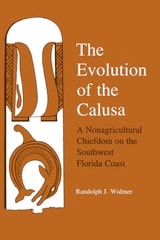
The Evolution of Calusa
A Nonagricultural Chiefdom of the Southwest Florida CoastRandolph J. Widmer
University of Alabama Press, 1988
The aims of this study are twofold: compile, for the first time, all the archaeological, environmental, and geological data pertinent to the evolution of the aboriginal inhabitants of southwest Florida; and, using this basis, develop a specific, integrated, and dynamic model of cultural adaptation that will serve as a stimulus for hypotheses that go beyond simple culture-historical concerns for future archaeological research in this region.
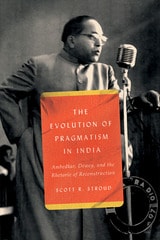
The Evolution of Pragmatism in India
Ambedkar, Dewey, and the Rhetoric of ReconstructionScott R. Stroud
University of Chicago Press, 2023
In The Evolution of Pragmatism in India, Scott R. Stroud delivers a comprehensive exploration of the influence of John Dewey’s pragmatism on Bhimrao Ambedkar, architect of the Republic of India’s constitution. Stroud traces Ambedkar’s development in Dewey’s Columbia University classes in 1913–1916 through his final years in 1950s India when he rewrote the story of Buddhism. Stroud examines pragmatism’s influence not only on the philosophical ideas underpinning Ambedkar’s fight against caste oppression but also how his persuasive techniques drew on pragmatism’s commitment to reconstruction and meliorism. At the same time, Stroud is careful to point out the ways that Ambedkar pushed back against Dewey’s paradigm and developed his own approach to challenges in India. The result is a nuanced study of one of the most important figures in Indian history.
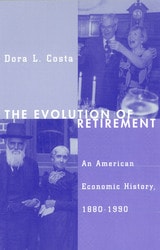
The Evolution of Retirement
An American Economic History, 1880-1990Dora L. Costa
University of Chicago Press, 1998
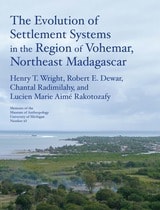
The Evolution of Settlement Systems in the Region of Vohémar, Northeast Madagascar
Henry T. Wright, Robert E. Dewar, Chantal Radimilahy, and Lucien Marie Aimé Rakotozafy
University of Michigan Press, 2021
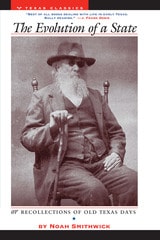
The Evolution of a State, or, Recollections of Old Texas Days
By Noah Smithwick
University of Texas Press, 1983
"I was but a boy in my nineteenth year, and in for adventure when I started out from Hopkinsville, Kentucky, with all my worldly possessions, consisting of a few dollars in money, a change of clothes, and a gun, of course, to seek my fortune in this lazy man's paradise."
Noah Smithwick was an old man, blind and near his ninetieth year, when his daughter recorded these words. He had stayed on in "paradise"—Texas—from 1827 to 1861, when his opposition to secession took him to California. The Evolution of a State is his story of these "old Texas days."
A blacksmith and a tobacco smuggler, Noah Smithwick made weapons for the Battle of Concepción, and he fought in that battle. With Hensley's company, he chased the Mexican army south of the Rio Grande after the Battle of San Jacinto. Twice he served with the Texas Rangers. In quieter times, he was a postmaster and justice of the peace in little Webber's Prairie.
Eyewitness to so much Texas history, Smithwick recounts his life and adventures in a simple, straightforward style, with a wry sense of humor. His keen memory for detail—what the people wore, what they ate, how they worked and played— vividly evokes the sights, sounds, and smells of the frontier.
First published in part by the Dallas Morning News, Smithwick's recollections gained such popularity that they were published in book form, as The Evolution of a State, in 1900. This new edition of a Texas classic makes widely available for the first time in many years this "best of all books dealing with life in early Texas."

The Example of Edward Taylor
Karl Keller
University of Massachusetts Press, 1975
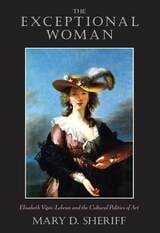
The Exceptional Woman
Elisabeth Vigee-Lebrun and the Cultural Politics of ArtMary D. Sheriff
University of Chicago Press, 1996
In The Exceptional Woman, Mary D. Sheriff uses Vigée-Lebrun's career to explore the contradictory position of "woman-artist" in the moral, philosophical, professional, and medical debates about women in eighteenth-century France. Paying particular attention to painted and textual self-portraits, Sheriff shows how Vigée-Lebrun's images and memoirs undermined the assumptions about "woman" and the strictures imposed on women.
Engaging ancien-régime philosophy, as well as modern feminism, psychoanalysis, literary theory, and art criticism, Sheriff's interpretations of Vigée-Lebrun's paintings challenge us to rethink the work and the world of this controversial woman artist.
The Execution of Private Slovik
William Bradford Huie
Westholme Publishing, 2004
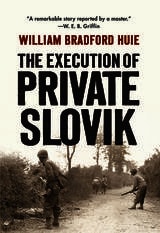
The Execution of Private Slovik
William Bradford Huie
Westholme Publishing, 2020
Seventy-Five Years Ago, the Last American Soldier Who Paid the Ultimate Price for Desertion
A New Edition of the Acclaimed Investigative Story
In August 1944, a drab convoy of raw recruits destined to join the 28th Division lumbered along a windy French road strewn with dead animals, shattered bodies, and burning equipment. One of those draftees was 24-year-old Eddie Slovik, a petty thief from Detroit who had spent his youth in and out of reform schools. Eddie's luck had recently changed, however, with a steady factory job and marriage to a beautiful girl who gave Eddie hope and security for the first time in his life. But their honeymoon—like that of many other wartime newlyweds—was interrupted by the call to service. The convoy came under intense artillery fire, and in the confusion Slovik became separated from his unit. He joined a Canadian outfit and traveled with them before finally reporting to the 28th Division. He carried a rifle but no ammunition. He was assigned to a platoon but walked away. Refusing to kill, Slovik was arrested, court martialed, and condemned to death. Hundreds of soldiers were tried for desertion during World War II and sentenced to die, but only Eddie Slovik paid the price, supposedly as a deterrent, yet word of the nature of his death was never officially released to the public.
In The Execution of Private Slovik, considered to be among the best investigative books ever written, journalist and author William Bradford Huie reconstructs this entire story with the full cooperation of the U.S. Army in order to find out what made Eddie Slovik an unlikely pacifist and why the affair was covered up. Through interviews with those who knew him and the hundreds of letters to his wife, the author reveals a hard luck depression-era kid who when faced with the reality of war realized that he simply could not kill another human being. Throughout, Huie reveals how Eddie Slovik's death has much to tell us about life and duty to one's country. This edition marking the seventy-fifth anniversary of the sentence being carried out, contains a new introduction by the author's daughter.
Praise for The Execution of Private Slovik:
"In the hands of an expert, who writes both passionately and with an almost transparent effort to be fair to all concerned, the story raises questions to which our wisest leaders still lack satisfying answers."
—New York Times
"A remarkable story reported by a master."—W. E. B. Griffin
"Recommended reading for all military historians."—Military Affairs
"Tremendously moving."—The Atlantic
"It is very likely that William Bradford Huie's The Execution of Private Slovikwill long survive the official histories of World War II. It is a big book and Mr. Huie deserves some sort of rich reward for this unburying of an incident of the war which must disturb us all. For Slovik was more than a 'coward.' He not only did not want to die but he did not want to kill, and one must look far in literature for a figure so moving as Private Slovik wandering about Europe not with bullets in his cartridge belt but with writing paper. The question is not 'How might we improve military procedures?' The question is, 'What has happened to love in our world when he who would rather love than kill must die?'"—from a letter to the New York Times

The Exegetical Value of the Masoretic Pointing
Jan Joosten
SBL Press, 2020
The Exhaustion of Difference
The Politics of Latin American Cultural StudiesAlberto Moreiras
Duke University Press, 2001
What, asks Moreiras, is the function of critical reason in the present moment? What is regionalistic knowledge in the face of globalization? Can regionalistic knowledge be an effective tool for a critique of contemporary reason? What is the specificity of Latin Americanist reflection and how is it situated to deal with these questions? Through examinations of critical regionalism, restitutional excess, the historical genealogy of Latin American subalternism, testimonio literature, and the cultural politics of magical realism, Moreiras argues that while cultural studies is increasingly institutionalized and in danger of reproducing the dominant ideologies of late capitalism, it is also ripe for giving way to projects of theoretical reformulation. Ultimately, he claims, critical reason must abandon its allegiance to aesthetic-historicist projects and the destructive binaries upon which all cultural theories of modernity have been constructed.
The Exhaustion of Difference makes a significant contribution to the rethinking of Latin American cultural studies.

The Exile Mission
The Polish Political Diaspora and Polish Americans, 1939–1956Anna D. Jaroszynska-Kirchmann
Ohio University Press, 2009
At midcentury, two distinct Polish immigrant groups—those Polish Americans who were descendants of economic immigrants from the turn of the twentieth century and the Polish political refugees who chose exile after World War II and the communist takeover in Poland—faced an uneasy challenge to reconcile their concepts of responsibility toward the homeland.
The new arrivals did not consider themselves simply as immigrants, but rather as members of the special category of political refugees. They defined their identity within the framework of the exile mission, an unwritten set of beliefs, goals, and responsibilities, placing patriotic work for Poland at the center of Polish immigrant duties.
In The Exile Mission, an intriguing look at the interplay between the established Polish community and the refugee community, Anna Jaroszyńska–Kirchmann presents a tale of Polish Americans and Polish refugees who, like postwar Polish exile communities all over the world, worked out their own ways to implement the mission’s main goals. Between the outbreak of World War II and 1956, as Professor Jaroszyńska–Kirchmann demonstrates, the exile mission in its most intense form remained at the core of relationships between these two groups.
The Exile Mission is a compelling analysis of the vigorous debate about ethnic identity and immigrant responsibility toward the homeland. It is the first full–length examination of the construction and impact of the exile mission on the interactions between political refugees and established ethnic communities.

The Expanding Vista
American Television in the Kennedy YearsMary Ann Watson
Duke University Press, 1994
The Expectation of Justice
France, 1944–1946Megan Koreman
Duke University Press, 2000
As the first social history of the “après -Libération” period from the perspective of ordinary people, Koreman’s study reveals how citizens of these towns expected legal, social, and honorary justice—such as punishment for collaborators, fair food distribution, and formal commemoration of patriots, both living and dead. Although the French expected the Resistance’s Provisional Government to act according to local understandings of justice, its policies often violated local sensibilities by instead pursuing national considerations. Koreman assesses both the citizens’ eventual disillusionment and the social costs of the “Resistencialist myth” propagated by the de Gaulle government in an effort to hold together the fragmented postwar nation. She also suggests that the local demands for justice created by World War II were stifled by the Cold War, since many people in France feared that open opposition to the government would lead to a Communist takeover. This pattern of nationally instituted denial and suppression made it difficult for citizens to deal effectively with memories of wartime suffering and collaborationist betrayal. Now, with the end of the Cold War, says Koreman, memories of postwar injustices are resurfacing, and there is renewed interest in witnessing just and deserved closure.
This social history of memory and reconstruction will engage those interested in history, war and peace issues, contemporary Europe, and the twentieth century.
The Expediency of Culture
Uses of Culture in the Global EraGeorge Yúdice
Duke University Press, 2003
Yúdice contends that a new international division of cultural labor has emerged, combining local difference with transnational administration and investment. This does not mean that today’s increasingly transnational culture—exemplified by the entertainment industries and the so-called global civil society of nongovernmental organizations—is necessarily homogenized. He demonstrates that national and regional differences are still functional, shaping the meaning of phenomena from pop songs to antiracist activism. Yúdice considers a range of sites where identity politics and cultural agency are negotiated in the face of powerful transnational forces. He analyzes appropriations of American funk music as well as a citizen action initiative in Rio de Janeiro to show how global notions such as cultural difference are deployed within specific social fields. He provides a political and cultural economy of a vast and increasingly influential art event— insite a triennial festival extending from San Diego to Tijuana. He also reflects on the city of Miami as one of a number of transnational “cultural corridors” and on the uses of culture in an unstable world where censorship and terrorist acts interrupt the usual channels of capitalist and artistic flows.
The Experiment Must Continue
Medical Research and Ethics in East Africa, 1940–2014Melissa Graboyes
Ohio University Press, 2015
The Experiment Must Continue is a beautifully articulated ethnographic history of medical experimentation in East Africa from 1940 through 2014. In it, Melissa Graboyes combines her training in public health and in history to treat her subject with the dual sensitivities of a medical ethicist and a fine historian. She breathes life into the fascinating histories of research on human subjects, elucidating the hopes of the interventionists and the experiences of the putative beneficiaries.
Historical case studies highlight failed attempts to eliminate tropical diseases, while modern examples delve into ongoing malaria and HIV/AIDS research. Collectively, these show how East Africans have perceived research differently than researchers do and that the active participation of subjects led to the creation of a hybrid ethical form.
By writing an ethnography of the past and a history of the present, Graboyes casts medical experimentation in a new light, and makes the resounding case that we must readjust our dominant ideas of consent, participation, and exploitation. With global implications, this lively book is as relevant for scholars as it is for anyone invested in the place of medicine in society.
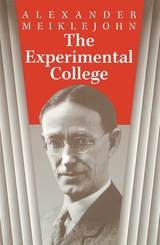
The Experimental College
Alexander Meiklejohn
University of Wisconsin Press, 2001
First published in 1932, The Experimental College is the record of a radical experiment in university education. Established at the University of Wisconsin in Madison in 1927 by innovative educational theorist Alexander Meiklejohn, the "Experimental College" itself was to be a small, intensive, residence-based program within the larger university that provided a core curriculum of liberal education for the first two years of college.
Aimed at finding a method of teaching whereby students would gain "intelligence in the conduct of their own lives," the Experimental College gave students unprecedented freedom. Discarding major requirements, exams, lectures, and mandatory attendance, the program reshaped the student-professor relationship, abolished conventional subject divisions, and attempted to find a new curriculum that moved away from training students in crafts, trades, professions, and traditional scholarship. Meiklejohn and his colleagues attempted instead to broadly connect the democratic ideals and thinking of classical Athens with the dilemmas of daily life in modern industrial America.
The experiment became increasingly controversial within the university, perhaps for reasons related less to pedagogy than to personalities, money, and the bureaucratic realities of a large state university. Meiklejohn’s program closed its doors after only five years, but this book, his final report on the experiment, examines both its failures and its triumphs. This edition brings back into print Meiklejohn’s original, unabridged text, supplemented with a new introduction by Roland L. Guyotte. In an age of increasing fragmentation and specialization of academic studies, The Experimental College remains a useful tool in any examination of the purposes of higher education.
"Alexander Meiklejohn’s significance in the history of American education stems largely from his willingness to put ideas into action. He tested abstract philosophical theories in concrete institutional practice. The Experimental College reveals the dreams as well as the defeats of a deeply idealistic reformer. By asking sharp questions about enduring purposes of liberal democratic education, Meiklejohn presents a message that is meaningful and useful in any age."—Adam Nelson author of Education and Democracy: The Meaning of Alexander Meiklejohn
o A reprint of the unabridged, original 1932 edition
o Published in partnership with the University of Wisconsin–Madison Libraries
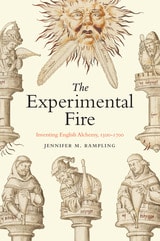
The Experimental Fire
Inventing English Alchemy, 1300–1700Jennifer M. Rampling
University of Chicago Press, 2020
In medieval and early modern Europe, the practice of alchemy promised extraordinary physical transformations. Who would not be amazed to see base metals turned into silver and gold, hard iron into soft water, and deadly poison into elixirs that could heal the human body? To defend such claims, alchemists turned to the past, scouring ancient books for evidence of a lost alchemical heritage and seeking to translate their secret language and obscure imagery into replicable, practical effects.
Tracing the development of alchemy in England over four hundred years, from the beginning of the fourteenth century to the end of the seventeenth, Jennifer M. Rampling illuminates the role of alchemical reading and experimental practice in the broader context of national and scientific history. Using new manuscript sources, she shows how practitioners like George Ripley, John Dee, and Edward Kelley, as well as many previously unknown alchemists, devised new practical approaches to alchemy while seeking the support of English monarchs. By reconstructing their alchemical ideas, practices, and disputes, Rampling reveals how English alchemy was continually reinvented over the space of four centuries, resulting in changes to the science itself. In so doing, The Experimental Fire bridges the intellectual history of chemistry and the wider worlds of early modern patronage, medicine, and science.
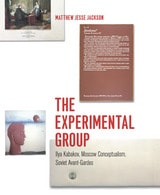
The Experimental Group
Ilya Kabakov, Moscow Conceptualism, Soviet Avant-GardesMatthew Jesse Jackson
University of Chicago Press, 2010
A compelling study of unofficial postwar Soviet art, The Experimental Group takes as its point of departure a subject of strange fascination: the life and work of renowned professional illustrator and conceptual artist Ilya Kabakov.
Kabakov’s art—iconoclastic installations, paintings, illustrations, and texts—delicately experiments with such issues as history, mortality, and disappearance, and here exemplifies a much larger narrative about the work of the artists who rose to prominence just as the Soviet Union began to disintegrate. By placing Kabakov and his conceptualist peers in line with our own contemporary perspective, Matthew Jesse Jackson suggests that the art that emerged in the wake of Stalin belongs neither entirely to its lost communist past nor to a future free from socialist nostalgia. Instead, these artists and their work produced a critical and controversial chapter in the as yet unwritten history of global contemporary art.
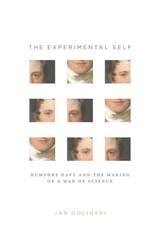
The Experimental Self
Humphry Davy and the Making of a Man of ScienceJan Golinski
University of Chicago Press, 2016
In The Experimental Self, Golinski argues that Davy’s life is best understood as a prolonged process of self-experimentation. He follows Davy from his youthful enthusiasm for physiological experiment through his self-fashioning as a man of science in a period when the path to a scientific career was not as well-trodden as it is today. What emerges is a portrait of Davy as a creative fashioner of his own identity through a lifelong series of experiments in selfhood.
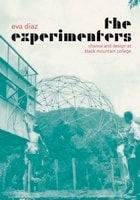
The Experimenters
Chance and Design at Black Mountain CollegeEva Díaz
University of Chicago Press, 2014
Díaz’s focus is on experimentation. Albers, Cage, and Fuller, she shows, taught new models of art making that favored testing procedures rather than personal expression. These methodologies represented incipient directions for postwar art practice, elements of which would be sampled, and often wholly adopted, by Black Mountain students and subsequent practitioners. The resulting works, which interrelate art and life in a way that imbues these projects with crucial relevance, not only reconfigured the relationships among chance, order, and design—they helped redefine what artistic practice was, and could be, for future generations.
Offering a bold, compelling new angle on some of the most widely studied creative figures of modern times, The Experimenters does nothing less than rewrite the story of art in the mid-twentieth century.
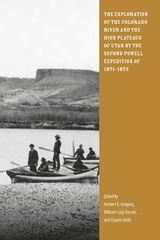
The Exploration of the Colorado River and the High Plateaus of Utah by the Second Powell Expedition of 1871-1872
Herbert E Gregory
University of Utah Press, 2009
Originally published from 1948 to 1949 as volumes sixteen and seventeen of the Utah Historical Quarterly, this volume looks to the larger significance and fruits of the second of Powell’s explorations, a more carefully constituted and better equipped scientific operation, yet one strangely neglected in historical records. Copublished with the Utah State Historical Society.
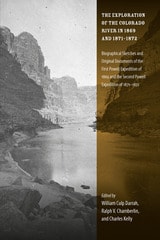
The Exploration of the Colorado River in 1869 and 1871-1872
Biographical Sketches and Original Documents of the First Powell Expedition of 1869 and the Second Powell Expedition of 1871-1872William Culp Darrah
University of Utah Press, 2009
This volume contains the journals of Major John Wesley Powell, George Young Bradley, Walter Henry Powell, and J. C. Sumner. Also included are various letters and notes by the members of the first expedition, and the journal of Francis Marion Bishop from the second expedition. All of the writings offer vivid descriptions of both adventure and of able and energetic scientific field work, and are of enduring interest and importance.
The Exposition of 1 John and An Exposition upon Matthew V-VII
William Tyndale
Catholic University of America Press, 2023
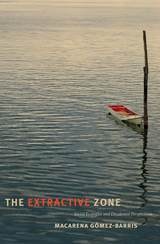
The Extractive Zone
Social Ecologies and Decolonial PerspectivesMacarena Gómez-Barris
Duke University Press, 2017
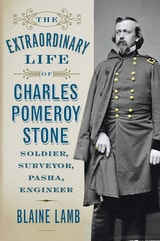
The Extraordinary Life of Charles Pomeroy Stone
Soldier, Surveyor, Pasha, EngineerBlaine Lamb
Westholme Publishing, 2016
In the winter of 1861, as the secession crisis came to a head, an obscure military engineer, Charles Pomeroy Stone, emerged as the rallying point for the defense of Washington, D.C. against rebel attack. He was protector of the newly elected president and right-hand man of the army’s commanding general, General Winfield Scott, under whom he had served with distinction during the Mexican–American War. Nevertheless, with in a year, this same hero sat in a military prison accused of incompetence and possible treason.
Like other Union officers, Stone had the misfortune to run afoul of radical politicians in the nation’s capital who sought to control the war effort by undermining the professional military establishment. Their weapon, the Joint Committee on the Conduct of the War, applied a litmus test of commitment to abolition, loyalty to the Republican Party and battlefield success for the retention and promotion of army commanders. Stone, a Democrat who did not see the conflict as a crusade against slavery, and who lost his only battle, failed on all counts.
Readers of Civil War history know Stone best for his mistreatment at the hands of the Joint Committee.When his name appears, it is almost always in connection with the battle at Ball’s Bluff, Virginia, during which a close associate of Lincoln’s was killed, and its aftermath. His story, however, goes far beyond that engagement. In The Extraordinary Life of Charles Pomeroy Stone: Soldier, Surveyor, Pasha, Engineer that ranges from the Halls of Montezuma to Gold Rush California, and from the pyramids of Egypt to the foot of the Statue of Liberty, historian Blaine Lamb brings to light the many facets of Stone’s remarkable life and career. He weaves into the narrative such characters as Ulysses S. Grant,William Tecumseh Sherman, Abraham Lincoln,Winfield Scott, Alexander von Humboldt, Thaddeus Lowe, Chinese Gordon, Khedive Ismail, and Frederic Auguste Bartholdi. But the center of this tale of nineteenth-century adventure, exploration, war, and intrigue remains Stone himself, a man of honor, steadfast loyalty, and tragic innocence.
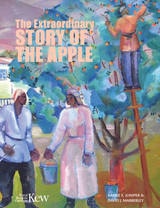
The Extraordinary Story of the Apple
David Mabberley and Barry Juniper
Royal Botanic Gardens, Kew, 2018
Using DNA evidence, Juniper and Mabberley trace the fruit’s geographical journey through time and across countries. They show how the apple has long been one of the most important fruits in the temperate regions of the world, and that it has been beloved since the times of the Persians, Greeks, and Romans. Its reach grew thanks to its reputation as a highly nutritional food source as well as one that is remarkably convenient, as the apple can be stored throughout a harsh winter or easily transported over long distances. The authors also examine the apple’s global influence on human culture. After all, it’s the fruit that played a key role in the fall of Adam and Eve, the inspiration for Newton’s Law of Gravity, and the rise of a tech behemoth.
With a nod to this book’s roots with the Royal Botanic Gardens, Kew, chapters also cover types of apple and apple crops, grafting techniques over time, archaeological discoveries, use as a food and in cider making, as well as the latest research in apple biology. This fascinating book is illustrated throughout with color illustrations, paintings, photographs, and line drawings, and will make the ideal read for gardeners, growers, botanists, historians, archaeologists and zoologists alike. The next time you pluck an apple from a supermarket bushel, you’ll understand the millennia of human—and Ursidae—influences on that humble fruit.
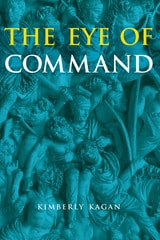
The Eye of Command
Kimberly Kagan
University of Michigan Press, 2006
Challenging Keegan's seminal work, The Eye of Command offers a new approach to studying and narrating battles, based upon an analysis of the works of the Roman military authors Julius Caesar and Ammianus Marcellinus. Kimberly Kagan argues that historians cannot explain a battle's outcome solely on the basis of soldiers' accounts of small-unit actions. A commander's view, exemplified in Caesar's narratives, helps explain the significance of a battle's major events, how they relate to one another and how they lead to a battle's outcome. The "eye of command" approach also answers fundamental questions about the way commanders perceive battles as they fight them-questions modern military historians have largely ignored.
"The Eye of Command is a remarkable book-smart, thoughtful, clear, vigorous, factual but creative, and grounded in the practical. It is at once scholarly and readable, combining classical scholarship and military theory. Rarely have I come across a book that makes two-thousand-year-old events seem so alive."
-Barry Strauss, Professor of History, Cornell University
"In a work well written, concisely presented, and convincingly argued, Kagan uses examples from Caesar's Gallic Wars to challenge John Keegan's focus on lower-echelon experiences of battle in favor of 'The eye of command': a narrative technique emphasizing decisions and events that shape a battle's outcome."
-Dennis Showalter, Professor of History, Colorado College
"To know whether a battle is won or lost is not enough. Kagan's deep analysis of theory and practice points to a new way of understanding complex army-commander and small-unit perspectives that can properly claim the status of history."
-Gordon Williams, Thacher Professor of Latin Emeritus, Yale University
Kimberly Kagan was an Assistant Professor of History at the United States Military Academy between 2000 and 2005. Since then, she has served as a lecturer in International Affairs, History, and the Humanities at Yale University and as an adjunct professor at Georgetown's Edmund A. Walsh School of Foreign Service and at American University's Department of History. She received her Ph.D. in Ancient History from Yale University.
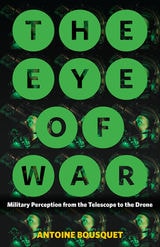
The Eye of War
Military Perception from the Telescope to the DroneAntoine Bousquet
University of Minnesota Press, 2018
How perceptual technologies have shaped the history of war from the Renaissance to the present
From ubiquitous surveillance to drone strikes that put “warheads onto foreheads,” we live in a world of globalized, individualized targeting. The perils are great. In The Eye of War, Antoine Bousquet provides both a sweeping historical overview of military perception technologies and a disquieting lens on a world that is, increasingly, one in which anything or anyone that can be perceived can be destroyed—in which to see is to destroy.
Arguing that modern-day global targeting is dissolving the conventionally bounded spaces of armed conflict, Bousquet shows that over several centuries, a logistical order of militarized perception has come into ascendancy, bringing perception and annihilation into ever-closer alignment. The efforts deployed to evade this deadly visibility have correspondingly intensified, yielding practices of radical concealment that presage a wholesale disappearance of the customary space of the battlefield. Beginning with the Renaissance’s fateful discovery of linear perspective, The Eye of War discloses the entanglement of the sciences and techniques of perception, representation, and localization in the modern era amid the perpetual quest for military superiority. In a survey that ranges from the telescope, aerial photograph, and gridded map to radar, digital imaging, and the geographic information system, Bousquet shows how successive technological systems have profoundly shaped the history of warfare and the experience of soldiering.
A work of grand historical sweep and remarkable analytical power, The Eye of War explores the implications of militarized perception for the character of war in the twenty-first century and the place of human subjects within its increasingly technical armature.
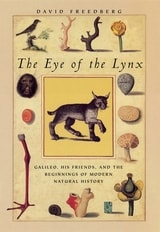
The Eye of the Lynx
Galileo, His Friends, and the Beginnings of Modern Natural HistoryDavid Freedberg
University of Chicago Press, 2003
Founded by Prince Federico Cesi in 1603, the Linceans took as their task nothing less than the documentation and classification of all of nature in pictorial form. In this first book-length study of the Linceans to appear in English, Freedberg focuses especially on their unprecedented use of drawings based on microscopic observation and other new techniques of visualization. Where previous thinkers had classified objects based mainly on similarities of external appearance, the Linceans instead turned increasingly to sectioning, dissection, and observation of internal structures. They applied their new research techniques to an incredible variety of subjects, from the objects in the heavens studied by their most famous (and infamous) member Galileo Galilei—whom they supported at the most critical moments of his career—to the flora and fauna of Mexico, bees, fossils, and the reproduction of plants and fungi. But by demonstrating the inadequacy of surface structures for ordering the world, the Linceans unwittingly planted the seeds for the demise of their own favorite method—visual description-as a mode of scientific classification.
Profusely illustrated and engagingly written, Eye of the Lynx uncovers a crucial episode in the development of visual representation and natural history. And perhaps as important, it offers readers a dazzling array of early modern drawings, from magnificently depicted birds and flowers to frogs in amber, monstrously misshapen citrus fruits, and more.
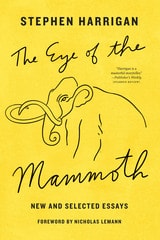
The Eye of the Mammoth
New and Selected EssaysBy Stephen Harrigan; foreword by Nicholas Lemann
University of Texas Press, 2013
History—natural history, human history, and personal history—and place are the cornerstones of The Eye of the Mammoth. Stephen Harrigan's career has taken him from the Alaska Highway to the Chihuahuan Desert, from the casinos of Monaco to his ancestors' village in the Czech Republic. And now, in this new edition, he movingly recounts in "Off Course" a quest to learn all he can about his father, who died in a plane crash six months before he was born.
Harrigan's deceptively straightforward voice belies an intense curiosity about things that, by his own admission, may be "unknowable." Certainly, we are limited in what we can know about the inner life of George Washington, the last days of Davy Crockett, the motives of a caged tiger, or a father we never met, but Harrigan's gift—a gift that has also made him an award-winning novelist—is to bring readers closer to such things, to make them less remote, just as a cave painting in the title essay eerily transmits the living stare of a long-extinct mammoth.
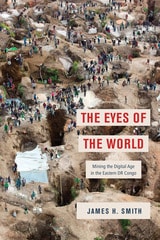
The Eyes of the World
Mining the Digital Age in the Eastern DR CongoJames H. Smith
University of Chicago Press, 2022
The digital devices that, many would argue, define this era exist not only because of Silicon Valley innovations but also because of a burgeoning trade in dense, artisanally mined substances like tantalum, tin, and tungsten. In the tentatively postwar Eastern DR Congo, where many lives have been reoriented around artisanal mining, these minerals are socially dense, fueling movement and innovative collaborations that encompass diverse actors, geographies, temporalities, and dimensions. Focusing on the miners and traders of some of these “digital minerals,” The Eyes of the World examines how Eastern Congolese understand the work in which they are engaged, the forces pitted against them, and the complicated process through which substances in the earth and forest are converted into commodified resources. Smith shows how violent dispossession has fueled a bottom-up social theory that valorizes movement and collaboration—one that directly confronts both private mining companies and the tracking initiatives implemented by international companies aspiring to ensure that the minerals in digital devices are purified of blood.
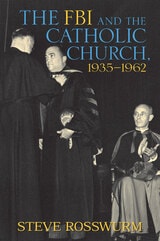
The FBI and the Catholic Church, 1935-1962
Steve Rosswurm
University of Massachusetts Press, 2009
Steve Rosswurm explores the history of that relationship from the turbulent 1930s to the 1960s, when growing Catholic opposition to the Vietnam War led Hoover to distance himself from the Church. Drawing on a vast range of sources, including thousands of pages of previously classified FBI files, Rosswurm pursues his investigation along two parallel tracks. First, he looks at the joint war waged by Hoover and the Catholic hierarchy against forces considered threats to their organizations, values, and nation. Second, he examines how each pursued its own institutional interests with the help of the other.
While opposition to communism was a preoccupation of both institutions, it was not the only passion they shared, according to Rosswurm. Even more important, perhaps, was their fervent commitment to upholding traditional gender roles, particularly the prerogatives of patriarchal authority. When women and men carried out their assigned obligations, they believed, society ran smoothly; when they did not, chaos ensued.
Organized topically, The FBI and the Catholic Church, 1935–1962 looks not only at the shared values and interests of the two institutions, but also at the personal relationships between Hoover and his agents and some of the most influential Catholic prelates of the time. Rosswurm discusses the role played by Edward A. Tamm, the FBI's highest-ranking Catholic, in forging the alliance; the story behind Father John Cronin's 1945 report on the dangers of communism; the spying conducted by Father Edward Conway S.J. on behalf of the FBI while treasurer of the National Committee for Atomic Information; and Monsignor Charles Owen Rice's FBI-aided battle against communists within the CIO.
The FBI in Latin America
The Ecuador FilesMarc Becker
Duke University Press, 2017
The Fable of the Keiretsu
Urban Legends of the Japanese EconomyYoshiro Miwa and J. Mark Ramseyer
University of Chicago Press, 2006
In their insightful analysis, the authors show that the very idea of the keiretsu was created and propagated by Marxist scholars in post-war Japan. Western scholars merely repatriated the legend to show the culturally contingent nature of modern economic analysis. Laying waste to the notion of keiretsu, the authors debunk several related “facts” as well: that Japanese firms maintain special arrangements with a “main bank,” that firms are systematically poorly managed, and that the Japanese government guided post-war growth. In demolishing these long-held assumptions, they offer one of the few reliable chronicles of the realities of Japanese business.
The Fabric of Classical Islamic Culture
A Cognitivist ApproachHouari Touati
University of Chicago Press, 2027
A sweeping account of the evolution of early Islamic culture.
This book argues that early Islamic literature was influenced less by the Qur’an and more by the bureaucratic culture of the Diwan, the secular political system in place long before a written religious culture emerged. As Houari Touati explains, this secular Arab culture quickly outstripped written religious erudition: first, because of the diverse communities who participated in the scholarly networks of the empire; and second, because of the universalizing influence of the period’s Greco-Arabic translation movement. This process of cross-cultural fertilization, Touati recounts, flourished within Islam until the canonization of the Hadith (the official sayings, actions, and sanctions of Muhammad) began to disrupt this dynamic of interchange after the tenth century, without, however, managing to put a definitive end to it. The Fabric of Classical Islamic Culture is a wide-ranging, comparative account of the parallel development of secular and sacred culture that produced the modern Arabic world.
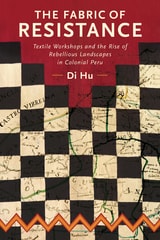
The Fabric of Resistance
Textile Workshops and the Rise of Rebellious Landscapes in Colonial PeruDi Hu
University of Alabama Press, 2022
Textiles as sites of power, production, and rebellion in the early modern Andes.
The Fabric of Resistance: Textile Workshops and the Rise of Rebellious Landscapes in Colonial Peru documents the impact of Spanish colonial institutions of labor on identity and social cohesion in Peru. Through archaeological and historical lines of evidence, Di Hu examines the long-term social conditions that enabled the large-scale rebellions in the late Spanish colonial period in Peru. Hu argues that ordinary people from different backgrounds pushed back against the top-down identity categories imposed by the Spanish colonial government and in the process created a cosmopolitan social landscape that later facilitated broader rebellion.
Hu’s case study is Pomacocha, the site of an important Spanish colonial hacienda (agricultural estate) and obraje (textile workshop). At its height, the latter had more than one hundred working families and sold textiles all over the Andes. Through analysis of this site, Hu explores three main long-term causes of rebellions against Spanish oppression. First, the Spanish colonial economy provided motivation and the social spaces for intercaste (indigenous, African, and mestizo) mixing at textile workshops. Second, new hybrid cultural practices and political solidarity arose there that facilitated the creation of new rebellious identities. Third, the maturation in the eighteenth century of popular folklore that reflected the harsh nature of Spanish labor institutions helped workers from diverse backgrounds gain a systemic understanding of exploitation.
This study provides a fresh archaeological and historical perspectives on the largest and most cosmopolitan indigenous-led rebellions of the Americas. Hu interweaves analyses of society at multiple scales including fine-grained perspectives of social networks, demography, and intimate details of material life in the textile workshop. She examines a wide range of data sources including artifacts, food remains, architectural plans, account books, censuses, court documents, contracts, maps, and land title disputes.
The Fabric of the Heavens
The Development of Astronomy and DynamicsStephen Toulmin and June Goodfield
University of Chicago Press, 1999
Praise for The Fabric of the Heavens:
"I cannot remember when I last went through a book, any book, with such all-devouring zest. What is more, even the most complex technicalities are reduced to a positively crystalline clarity: If I can understand them, anyone can. The Fabric of the Heavens is, in every sense of the word, an eye-opener."—Peter Green, The Yorkshire Post
"Not until the last chapter of the book is [the reader] allowed to think again wholly as a modern man has become accustomed, by common sense, to think. The discipline is admirably suited to the authors' task, and cunningly devised for the reader's edification—and, indeed, for his delight."—Physics Today
Praise for The Architecture of Matter:
"The Architecture of Matter is to be warmly recommended. It is that rare achievement, a lively book which at the same time takes the fullest possible advantage of scholarly knowledge."—Charles C. Gillespie, New York Times Book Review
"One is impressed by the felicity of the examples and by the lively clarity with which significant experiments and ideas are explained. . . . No other history of science is so consistently challenging."—Scientific American
Praise for The Discovery of Time:
"A subject of absorbing interest . . . is presented not as a history of science, but as a chapter in the history of ideas from the ancient Greeks to our own time."—Times Literary Supplement
The Fabulous Future?
America and the World in 2040Morton Schapiro and Gary Saul Morson
Northwestern University Press, 2015
Will the future be one of economic expansion, greater tolerance, liberating inventions, and longer, happier lives? Or do we face economic stagnation, declining quality of life, and a technologically enhanced totalitarianism worse than any yet seen? The Fabulous Future? America and the World in 2040 draws its inspiration from a more optimistic time, and tome, The Fabulous Future: America in 1980, in which Fortune magazine celebrated its twenty-fifth anniversary by publishing the predictions of thought leaders of its time.
In the present volume, the world’s leading specialists from diverse fields project developments in their areas of expertise, from religion and the media to the environment and nanotechnology. Will we be happier, and what exactly does happiness have to do with our economic future? Where is higher education heading and how should it develop? And what is the future of prediction itself? These exciting essays provoke sharper questions, reflect unexpectedly on one another, and testify to our present anxieties about the surprising world to come.
The Face in the Window and Other Alabama Ghostlore
Alan Brown
University of Alabama Press, 1996
True voices, real places, and unforgettable chills: Alabama’s ghost stories, gathered with scholarly care, reveal how memory, history, and belief linger—whispering from bridges, homes, cemeteries, and courthouses statewide today still.
The Face in the Window and Other Alabama Ghostlore is a landmark collection that preserves and brings to life Alabama’s rich tradition of supernatural storytelling. Rather than offering fictional retellings, this book presents ghost stories as they are told—by neighbors, families, students, and elders—rooted firmly in real places and lived experience. Alan Brown captures the voices of Alabamians across generations, revealing how belief, memory, humor, and fear continue to shape the state’s cultural landscape.
The collection is organized by geographic region, spiraling across the state so readers can explore local lore county by county and town by town. Many stories were gathered directly through fieldwork, lectures, and interviews, while others draw on previously unpublished Works Progress Administration materials from the 1930s. Dialect and storytelling style are preserved to maintain authenticity, and scholarly notes are placed at the back to keep the narratives accessible. Brown, a folklorist and former lecturer for the Alabama Humanities Foundation, brings both academic rigor and deep respect for oral tradition to the collection.
This collection will delight readers interested in folklore, Southern history, oral culture, and the supernatural. It is invaluable for scholars and students, irresistible to ghost-story enthusiasts, and especially meaningful for Alabamians eager to see their communities and traditions thoughtfully recorded and remembered.
The Faces of Time
Portrayal of the Past in Old French and Latin Historical Narrative of the Anglo-Norman RegnumJean Blacker
University of Texas Press, 1994
The twelfth century witnessed the sudden appearance and virtual disappearance of an important literary genre—the Old French verse chronicle. These poetic histories of the British kings, which today are treated as fiction, were written contemporaneously with Latin prose narratives, which are regarded as historical accounts. In this pathfinding study, however, Jean Blacker asserts that twelfth-century authors and readers viewed both genres as factual history.
Blacker examines four Old French verse chronicles—Gaimar's Estoire des Engleis (c. 1135), Wace's Roman de Brut (c. 1155) and Roman de Rou (c. 1160–1174), and Benoît de Sainte-Maure's Chronique des Ducs de Normandie (c. 1174–1180) and four Latin narratives—William of Malmesbury's Gesta Regum (c. 1118–1143) and Historia Novella (c. 1140–1143), Orderic Vitalis's Historia Ecclesiastica (c. 1118–1140), and Geoffrey of Monmouth's Historia Regum Britanniae (c. 1138). She compares their similarity in three areas—the authors' stated intentions, their methods of characterization and narrative development, and the possible influences of patronage and audience expectation on the presentation of characters and events.
This exploration reveals remarkable similarity among the texts, including their idealization of historical and even legendary figures, such as King Arthur. It opens fruitful lines of inquiry into the role these writers played in the creation of the Anglo-Norman regnum and suggests that the Old French verse chronicles filled political, psychic, and aesthetic needs unaddressed by Latin historical writing of the period.
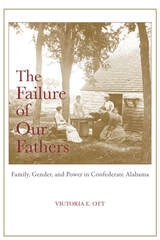
The Failure of Our Fathers
Family, Gender, and Power in Confederate AlabamaVictoria E. Ott
University of Alabama Press, 2023
An in-depth study of non-elite white families in Alabama—from the state’s creation through the end of the Civil War
The Failure of Our Fathers: Family, Gender, and Power in Confederate Alabama examines the evolving position of non-elite white families in Alabama during one of the most pivotal epochs in the state’s history. Drawing on a wide range of personal and public documents reflecting the state’s varied regions and economies, Victoria E. Ott uses gender and family as a lens to examine the yeomanry and poor whites, a constituency that she collectively defines as “common whites,” who identified with the Confederate cause.
Ott provides a nuanced examination of how these Alabamians fit within the antebellum era’s paternalistic social order, eventually identifying with and supporting the Confederate mission to leave the Union and create an independent, slaveholding state. But as the reality of the war slowly set in and the Confederacy began to fray, the increasing dangers families faced led Alabama’s common white men and women to find new avenues to power as a distinct socioeconomic class.
Ott argues that family provided the conceptual framework necessary to understand why common whites supported a war to protect slavery despite having little or no investment in the institution. Going to war meant protecting their families from outsiders who threatened to turn their worlds upside down. Despite class differences, common whites envisioned the Confederacy as a larger family and the state as paternal figures who promised to protect its loyal dependents throughout the conflict. Yet, as the war ravaged many Alabama communities, devotion to the Confederacy seemed less a priority as families faced continued separations, threats of death, and the potential for starvation. The construct of a familial structure that once created a sense of loyalty to the Confederacy now gave them cause to question its leadership. Ott shows how these domestic values rooted in highly gendered concepts ultimately redefined Alabama’s social structure and increased class distinctions after the war.
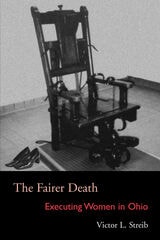
The Fairer Death
Executing Women in OhioVictor L. Streib
Ohio University Press, 2006
Women on death row are such a rarity that, once condemned, they may be ignored and forgotten. Ohio, a typical, middle-of-the-road death penalty state, provides a telling example of this phenomenon. The Fairer Death: Executing Women in Ohio explores Ohio’s experience with the death penalty for women and reflects on what this experience reveals about the death penalty for women throughout the nation.
Victor Streib’s analysis of two centuries of Ohio death penalty legislation and adjudication reveals no obvious exclusion of women or even any recognition of an issue of sex bias. In this respect, Ohio’s justice system exemplifies the subtle and insidious nature of this cultural disparity.
Professor Streib provides detailed descriptions of the cases of the four women actually executed by Ohio since its founding and of the cases of the eleven women sentenced to death in Ohio in the current death penalty era (1973–2005). Some of these cases had a profound impact on death penalty law, but most were routine and drew little attention. A generation later, reversals and commutations have left only one woman on Ohio’s death row.
Although Streib focuses specifically on Ohio, the underlying premise is that Ohio is, in many ways, a typical death penalty state. The Fairer Death provides insight into our national experience, provoking questions about the rationale for the death penalty and the many disparities in its administration.
The Faith of Fallen Jews
Yosef Hayim Yerushalmi and the Writing of Jewish HistoryEdited by David N. Myers and Alexander Kaye
Brandeis University Press, 2013

The Faithful River
Stefan Zeromski
Northwestern University Press, 1999
The Faithful Virgins
E. Polwhele
Iter Press, 2023
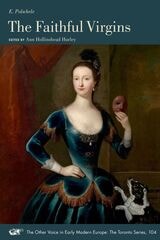
E. Polwhele (c. 1651-c. 1691) was one of the first women to write for the stage in Restoration London. This book presents the first printed edition of Polwhele’s first play, The Faithful Virgins, which until now has existed only in an unsigned manuscript in the Bodleian Library at Oxford University. A tragicomedy apparently performed in London by the Duke's Company ca. 1669–1671, The Faithful Virgins is altogether different in tone from Polwhele's later, better-known prose comedy, The Frolicks; or, The Lawyer Cheated (1671). The introduction to this modern-spelling edition of The Faithful Virgins discusses the play in terms of radical changes in English stage practices following the restoration of the monarchy after England’s civil war and situates Polwhele’s play within the social and political life of seventeenth-century London.