Results by title
22279 books match the query 'Social Science' and 4007 start with t
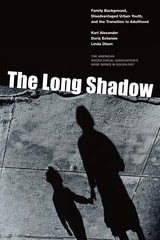
The Long Shadow
Family Background, Disadvantaged Urban Youth, and the Transition to AdulthoodKarl Alexander
Russell Sage Foundation, 2014
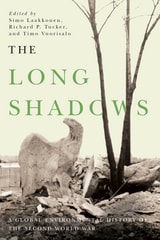
The Long Shadows
A Global Environmental History of the Second World WarSimo Laakkonen
Oregon State University Press, 2017
The Long Shadows is the first book-length work to offer global perspectives on the environmental history of World War II. Based on long-term research, the selected articles represent the best available studies in different fields and countries. With contributions touching on Europe, America, Asia, and Africa, the book has a truly global approach.
While other edited volumes on the environmental history of warfare discuss multiple wars and various time periods, The Long Shadows is devoted exclusively to World War II and its profound and lasting impact on global environments, encompassing polar, temperate and tropical ecological zones. Divided into three main sections, the first offers an introduction to and holistic overview of the War. The second section of the book examines the social and environmental impacts of the conflict, while the third focuses on the history and legacy of resource extraction. A fourth and final section offers conclusions and hypotheses. Numerous themes and topics are explored in these previously unpublished essays, including the new and innovative field of acoustic ecology, the environmental policies of the Third Reich, Japanese imperialism and marine resources, and the control of Typhus fever.
Aimed at researchers and students in the fields of environmental history, military history, and global history, The Long Shadows will also appeal to a general audience interested in the environmental impact of the greatest military conflict in the history of the world.
CONTRIBUTORS
Outi Ampuja
Alla Bolotova
Chris Boyer
Matthew Evenden
Paul Josephson
Simo Laakkonen
Helene Laurent
Carol MacLennan
Gregory Maddox
Ilmo Massa
Evan Mawdsley
Micah Muscolino
William Tsutsui
Richard Tucker
Timo Vuorisalo
Anna-Katharina Wöbse
The Long War on Drugs
Anne L. Foster
Duke University Press, 2023
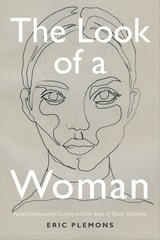
The Look of a Woman
Facial Feminization Surgery and the Aims of Trans- MedicineEric Plemons
Duke University Press, 2017
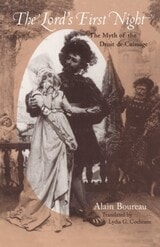
The Lord's First Night
The Myth of the Droit de CuissageAlain Boureau
University of Chicago Press, 1998
But, as Alain Boureau elegantly demonstrates in this book, the droit de cuissage is a myth. Under contextual examination, nearly all the supposed evidence for this custom melts away—yet belief in it has survived for seven hundred years. Boureau shows how each era turned the mythical custom to its own ends. For instance, in the late Middle Ages, monarchists raised the specter of the droit de cuissage to rally public opinion against local lords, and partisans of the French Revolution pointed to it as proof of the corruption of the Ancien Régime.
A fascinating case study of the folklore of sexuality, The Lord's First Night also offers evocative insights into popular (mis)conceptions of the Middle Ages.
On the French edition: "A richly informative study of attitudes to the past and the manipulation of history down the ages."—Peter Linehan, Times Literary Supplement
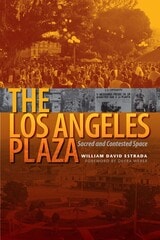
The Los Angeles Plaza
Sacred and Contested SpaceBy William David Estrada
University of Texas Press, 2008
2008 — Gold Award in Californiana – California Book Awards – Commonwealth Club of California
2010 — NACCS Book Award – National Association for Chicana and Chicano Studies
City plazas worldwide are centers of cultural expression and artistic display. They are settings for everyday urban life where daily interactions, economic exchanges, and informal conversations occur, thereby creating a socially meaningful place at the core of a city.
At the heart of historic Los Angeles, the Plaza represents a quintessential public space where real and imagined narratives overlap and provide as many questions as answers about the development of the city and what it means to be an Angeleno. The author, a social and cultural historian who specializes in nineteenth- and early twentieth-century Los Angeles, is well suited to explore the complex history and modern-day relevance of the Los Angeles Plaza. From its indigenous and colonial origins to the present day, Estrada explores the subject from an interdisciplinary and multiethnic perspective, delving into the pages of local newspapers, diaries and letters, and the personal memories of former and present Plaza residents, in order to examine the spatial and social dimensions of the Plaza over an extended period of time.
The author contributes to the growing historiography of Los Angeles by providing a groundbreaking analysis of the original core of the city that covers a long span of time, space, and social relations. He examines the impact of change on the lives of ordinary people in a specific place, and how this change reflects the larger story of the city.
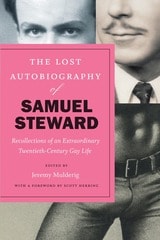
The Lost Autobiography of Samuel Steward
Recollections of an Extraordinary Twentieth-Century Gay LifeSamuel Steward
University of Chicago Press, 2018
The story of this life would undoubtedly have been a sensation if it had reached publication. But after finishing a 110,000-word draft in 1979, Steward lost interest in the project and subsequently published only a slim volume of selections from his manuscript.
In The Lost Autobiography of Samuel Steward, Jeremy Mulderig has integrated Steward’s truncated published text with the text of the original manuscript to create the first extended version of Steward’s autobiography to appear in print—the first sensational, fascinating, and ultimately enlightening story of his many lives told in his own words. The product of a rigorous line-by-line comparison of these two sources and a thoughtful editing of their contents, Mulderig’s thoroughly annotated text is more complete and coherent than either source alone while also remaining faithful to Steward’s style and voice, to his engaging self-deprecation and his droll sense of humor. Compellingly readable and often unexpectedly funny, this newly discovered story of a gay life full of wildly improbable—but nonetheless true—events is destined to become a landmark queer autobiography from the twentieth century.
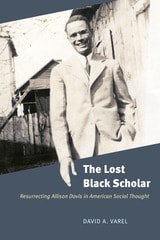
The Lost Black Scholar
Resurrecting Allison Davis in American Social ThoughtDavid A. Varel
University of Chicago Press, 2018
In The Lost Black Scholar, David A. Varel tells Davis’s compelling story, showing how a combination of institutional racism, disciplinary eclecticism, and iconoclastic thinking effectively sidelined him as an intellectual. A close look at Davis’s career sheds light not only on the racial politics of the academy but also the costs of being an innovator outside of the mainstream. Equally important, Varel argues that Davis exemplifies how black scholars led the way in advancing American social thought. Even though he was rarely acknowledged for it, Davis refuted scientific racism and laid bare the environmental roots of human difference more deftly than most of his white peers, by pushing social science in bold new directions. Varel shows how Davis effectively helped to lay the groundwork for the civil rights movement.
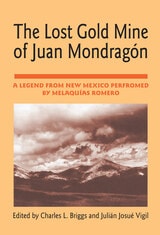
The Lost Gold Mine of Juan Mondragón
A Legend from New Mexico performed by Melaquías RomeroEdited by Charles L. Briggs and Julián Josué Vigil
University of Arizona Press, 1990
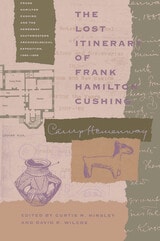
The Lost Itinerary of Frank Hamilton Cushing
Curtis M. Hinsley
University of Arizona Press, 2002
This second installment of a multivolume work on the Hemenway Expedition focuses on a report written by Cushing—at the request of the expedition's board of directors—to serve as vindication for the expedition, the worst personal and professional failure of his life. Reconstructed between 1891 and 1893 by Cushing from field notes, diaries, jottings, and memories, it provides an account of the origins and early months of the expedition. Hidden in several archives for a century, the Itinerary is assembled and presented here for the first time.
A vivid account of the first attempt at scientific excavatons in the Southwest, Cushing's Itinerary is both an exciting tale of travel through the region and an intellectual adventure story that sheds important light on the human past at Hohokam sites in Arizona's Salt River Valley, where Cushing sought to prove his hypothesis concerning the ancestral "Lost Ones" of the Zuñis. It initiates the construction of an ethnological approach to archaeology, which drew upon an unprecedented knowledge of a southwestern Pueblo tribe and use of that knowledge in the interpretation of archaeological sites.
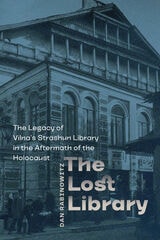
The Lost Library
The Legacy of Vilna's Strashun Library in the Aftermath of the HolocaustDan Rabinowitz
Brandeis University Press, 2018
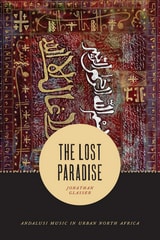
The Lost Paradise
Andalusi Music in Urban North AfricaJonathan Glasser
University of Chicago Press, 2016
Through a historical and ethnographic account of the Andalusi music of Algiers, Tlemcen, and their Algerian and Moroccan borderlands since the end of the nineteenth century, Glasser shows how anxiety about Andalusi music’s disappearance has emerged from within the practice itself and come to be central to its ethos. The result is a sophisticated examination of musical survival and transformation that is also a meditation on temporality, labor, colonialism and nationalism, and the relationship of the living to the dead.
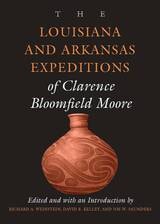
The Louisiana and Arkansas Expeditions of Clarence Bloomfield Moore
Clarence Bloomfield Moore
University of Alabama Press, 2004
A Dan Josselyn Memorial Publication
The ninth and final volume in the C.B. Moore reprint series that covers archaeological discoveries along North American Waterways.
Clarence B. Moore (1852-1936), a wealthy Philadelphia socialite, paper company heir, and photographer, made the archaeology of the Southeast his passion. Beginning in the 1870s, Moore systematically explored prehistoric sites along the major waterways of the region, from the Ohio River south to Florida and as far west as Texas, publishing his findings, at his own expense, with the Academy of Natural Sciences of Philadelphia.
This volume, the final in a series of nine, includes Moore’s investigations along waterways of Arkansas and Louisiana—the Ouachita, Red, Saline, Black, Tensas, and Atchafalaya Rivers—in three complete field sessions ending in 1909, 1912, and 1913. He located and mapped more than 185 mounds and cemeteries. Artifacts recovered in this territory, such as ceramic effigy pots, earthenware pipes, arrowheads, celts, and projectile points, include some of the most important ones discovered by Moore in his 47 years of excavating. Included in this volume is a CD containing the 69 color illustrations from all the original expedition volumes.
The elaborate earthwork of Poverty Point, located in West Carroll Parish, Louisiana, is perhaps the most remarkable archaeological site presented in the volume. In some cases, Moore documented sites along the tributaries that have since been destroyed by river action or looters. In other cases, the National Register of Historic Sites and concerned landowners in Arkansas and Louisiana have preserved the record of aboriginal peoples and their life ways that was first illuminated by Moore's sophisticated study.

The Love Surgeon
A Story of Trust, Harm, and the Limits of Medical RegulationSarah B. Rodriguez
Rutgers University Press, 2020
It would be easy to dismiss Dr. Burt as a monstrous aberration, a modern-day Dr. Frankenstein. Yet as medical historian Sarah Rodriguez reveals, that’s not the whole story. The Love Surgeon asks tough questions about Burt’s heinous acts and what they reveal about the failures of the medical establishment: How was he able to perform an untested surgical procedure? Why wasn’t he obliged to get informed consent from his patients? And why did it take his peers so long to take action?
The Love Surgeon is both a medical horror story and a cautionary tale about the limits of professional self-regulation.
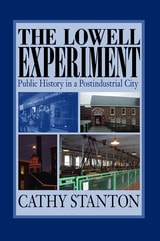
The Lowell Experiment
Public History in a Postindustrial CityCathy Stanton
University of Massachusetts Press, 2006
In the early nineteenth century, Lowell, Massachusetts, was widely studied and emulated as a model for capitalist industrial development. One of the first cities in the United States to experience the ravages of deindustrialization, it was also among the first places in the world to turn to its own industrial and ethnic history as a tool for reinventing itself in the emerging postindustrial economy. The Lowell Experiment explores how history and culture have been used to remake Lowell and how historians have played a crucial yet ambiguous role in that process.
The book focuses on Lowell National Historical Park, the flagship project of Lowell's new cultural economy. When it was created in 1978, the park broke new ground with its sweeping reinterpretations of labor, immigrant, and women's history. It served as a test site for the ideas of practitioners in the new field of public history—a field that links the work of professionally trained historians with many different kinds of projects in the public realm.
The Lowell Experiment takes an anthropological approach to public history in Lowell, showing it as a complex cultural performance shaped by local memory, the imperatives of economic redevelopment, and tourist rituals—all serving to locate the park's audiences and workers more securely within a changing and uncertain new economy characterized by growing inequalities and new exclusions.
The paradoxical dual role of Lowell's public historians as both interpreters of and contributors to that new economy raises important questions about the challenges and limitations facing academically trained scholars in contemporary American culture. As a long-standing and well-known example of “culture-led re-development,” Lowell offers an outstanding site for exploring questions of concern to those in the fields of public and urban history, urban planning, and tourism studies.
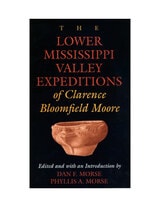
The Lower Mississippi Valley Expeditions of Clarence Bloomfield Moore
Clarence Bloomfield Moore
University of Alabama Press, 1998
A Dan Josselyn Memorial Publication
C. B. Moore's investigations of the Lower Mississippi Valley are here collected in a one-volume facsimile edition.
Like many other natural scientists from the Victorian era, Clarence Bloomfield Moore (1852-1917) lived several lives—adventurer, paper company executive, archaeologist; however, Moore is chiefly remembered for the twenty-five years he spent investigating and documenting archaeological sites along every navigable waterway in the southeastern United States.
Moore's surveys were and are impressive, and he earned lasting respect from archaeological researchers in the South by publishing, mostly at his own expense, all of the data he recovered. This volume includes works that describe data from Moore's expeditions that were key to the early recognition and preservation of major archaeological sites—Toltec, Parkin, Mound City, and Wicklife, among them—in the lower Mississippi River Valley. This and companion volumes stand today as the defining database for every area in which he worked.
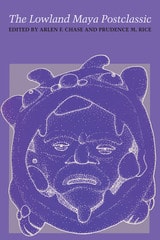
The Lowland Maya Postclassic
Edited by Arlen F. Chase and Prudence M. Rice
University of Texas Press, 1985
This collection represents a major step forward in understanding the era from the end of Classic Maya civilization to the Spanish conquest.
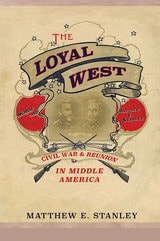
The Loyal West
Civil War and Reunion in Middle AmericaMatthew E. Stanley
University of Illinois Press, 2017
Matthew E. Stanley's intimate study explores the Civil War, Reconstruction, and sectional reunion in this bellwether region. Using the lives of area soldiers and officers as a lens, Stanley reveals a place and a strain of collective memory that was anti-rebel, anti-eastern, and anti-black in its attitudes--one that came to be at the forefront of the northern retreat from Reconstruction and toward white reunion. The Lower Middle West's embrace of black exclusion laws, origination of the Copperhead movement, backlash against liberalizing war measures, and rejection of Reconstruction were all pivotal to broader American politics. And the region's legacies of white supremacy--from racialized labor violence to sundown towns to lynching--found malignant expression nationwide, intersecting with how Loyal Westerners remembered the war.
A daring challenge to traditional narratives of section and commemoration, The Loyal West taps into a powerful and fascinating wellspring of Civil War identity and memory.
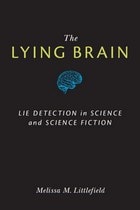
The Lying Brain
Lie Detection in Science and Science FictionMelissa M. Littlefield
University of Michigan Press, 2011
"The Lying Brain is a study to take seriously. Its argument is timely, clear, and of particular importance to the enlargement of our understanding of the relationships among science studies, literary studies, and technology studies."
---Ronald Schleifer, University of Oklahoma
Real and imagined machines, including mental microscopes, thought translators, and polygraphs, have long promised to detect deception in human beings. Now, via fMRI and EEG, neuroscientists seem to have found what scientists, lawyers, and law enforcement officials have sought for over a century: foolproof lie detection. But are these new lie detection technologies any different from their predecessors? The Lying Brain is the first book to explore the cultural history of an array of lie detection technologies: their ideological assumptions, the scientific and fictional literatures that create and market them, and the literacies required for their interpretation.
By examining a rich archive of materials about lie detection---from science to science fiction---The Lying Brain demonstrates the interconnections of science, literature, and popular culture in the development and dissemination of deception detection in the American cultural imagination. As Melissa Littlefield demonstrates, neuroscience is not building a more accurate lie detector; it is simply recycling centuries-old ideologies about deception and its detection.
Cover art: "Human Brain" © Denis Barbulet, courtesy of Shutterstock.com
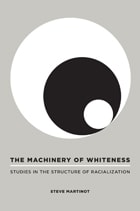
The Machinery of Whiteness
Studies in the Structure of RacializationAuthored by Steve Martinot
Temple University Press, 2010
In this follow up to his book, The Rule of Racialization—which considered the way class structure is formed in the U.S.—Steve Martinot now examines how the structures of racialization reside at the core of all social, cultural, and political institutions in the U.S. In The Machinery of Whiteness, Martinot examines how race and racism are produced in the United States, analyzing the politics of racialization, and the preponderance of racial segregation and racial deprivation that have kept the U.S. a white dominated society throughout its history. Martinot dedicates this work to expunging white supremacy from the earth.
The Machinery of Whiteness investigates how “whiteness” came to be as foundational to the process that then produced the modern concept of race. Martinot addresses the instrumentalization of women as a necessary step in its formation, furthering the debates regarding the relationships of race and gender. And he addresses U.S. international interventionism, the anti-immigrant movements, and white racist populism to describe the political forms that white supremacy takes.
Martinot puts these together to analyze the underlying cultural structures of racialization that have driven and conditioned the resurgence of white supremacy and white entitlement in the wake of the Civil Rights movements. This book is a call to transform the cultural structures of the U.S. to make justice and democracy, which depend on inclusion and not segregation, possible.
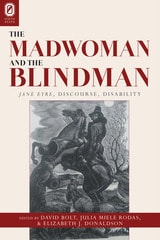
The Madwoman and the Blindman
Jane Eyre, Discourse, DisabilityEdited by David Bolt, Julia Miele Rodas, and Elizabeth J. Donaldson
The Ohio State University Press, 2012
The Maestro, the Magistrate and the Mathematician
A NovelTendai Huchu
Ohio University Press, 2016

The Magic Hour
Film At Fin De SiecleJ. Hoberman
Temple University Press, 2003
The Magic Key
The Educational Journey of Mexican Americans from K-12 to College and BeyondEdited by Ruth Enid Zambrana and Sylvia Hurtado
University of Texas Press, 2015
Mexican Americans comprise the largest subgroup of Latina/os, and their path to education can be a difficult one. Yet just as this group is often marginalized, so are their stories, and relatively few studies have chronicled the educational trajectory of Mexican American men and women. In this interdisciplinary collection, editors Zambrana and Hurtado have brought together research studies that reveal new ways to understand how and why members of this subgroup have succeeded and how the facilitators of success in higher education have changed or remained the same.
The Magic Key’s four sections explain the context of Mexican American higher education issues, provide conceptual understandings, explore contemporary college experiences, and offer implications for educational policy and future practices. Using historical and contemporary data as well as new conceptual apparatuses, the authors in this collection create a comparative, nuanced approach that brings Mexican Americans’ lived experiences into the dominant discourse of social science and education. This diverse set of studies presents both quantitative and qualitative data by gender to examine trends of generations of Mexican American college students, provides information on perceptions of welcoming university climates, and proffers insights on emergent issues in the field of higher education for this population. Professors and students across disciplines will find this volume indispensable for its insights on the Mexican American educational experience, both past and present.
The Main Stalk
A Synthesis of Navajo PhilosophyJohn R. Farella
University of Arizona Press, 1984
"This is a stimulating book. Essentially, it criticizes previous discussions of Navajo religion and philosophy for greatly underestimating their complexity and sophistication. . . . What the author discovers in Navajo thought is that the key concepts are interrelated in a grand, moral, ethical, philosophic, and cosmic unity." —American Anthropologist
"Discredits dualists, both non-Indian and Indian, who see simplistic oppositions of Good and Evil in Navajo culture and philosophy. The concept of walking in beauty, as related to the proper growth of the corn plant, unifies the book, and Farella does some impressive cross-cultural linguistic analysis to derive practical and ceremonial applications of these central Navajo metaphors. . . . This is one of the better books on Indian religion." —Choice

The Makah Indians
A Study of an Indian Tribe in Modern American SocietyElizabeth Colson
University of Minnesota Press, 1953
The Makah Indians was first published in 1953. Minnesota Archive Editions uses digital technology to make long-unavailable books once again accessible, and are published unaltered from the original University of Minnesota Press editions.
Elizabeth Colson lived for a year among the Makah Indians at their reservation at Neah Bay, Washington, while engaged in the field work for this fascinating anthropological study. During that time she made friends with many of the tribe. She shared in their daily living and in their festivities. She listened with an understanding ear to their problems, to their rambling conversations, as well as to their replies in formal interviews.
The result is a richly detailed description of how an American Indian group lives in modern society and an acute analysis of their social problems and adjustments.
The author describes the land of the Makah, explains the origin of the tribe, and portrays their characteristic traits. In sections on the Makah and the Whites and the Makah and the Outer World, she analyzes group relationships. In another section, she describes the internal tribal rivalries that stem from the Makah tradition. Finally, she discusses the religious concepts and practices.
Anthropologists will find the study of primary importance. It is significant to social scientists in other fields as well and to all readers who are concerned about race relations and the special problems of the American Indian. In chronicling the effects of the U.S. Indian Service on one tribe, the book treats an important aspect of American social history.
The Make-Believe Space
Affective Geography in a Postwar PolityYael Navaro-Yashin
Duke University Press, 2012
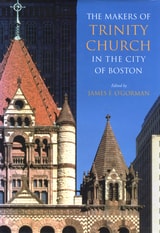
The Makers of Trinity Church in the City of Boston
James F. O'Gorman
University of Massachusetts Press, 2004
While critics often speak of the church as Richardson's creation, this collection of essays, written by leading scholars in the field, recognizes and assesses the individual contributions of the rector, Phillips Brooks; the chairman of the building committee, Robert Treat Paine; the builder, O. W. Norcross; and the decorator, John La Farge, as well as Richardson. The book includes the first study of the furnishings of the interior by the architect's office and features chapters on the stained glass designers Sarah Wyman Whitman and Margaret Redmond, as well as the architect Charles D. Maginnis, whose remodeling of the chancel in the 1930s brought the building to its full glory. These architectural collaborators are rarely given the recognition they receive here, although the absence of any one of them would have produced a very different result. Such omissions would have significantly diminished this towering landmark of America's cultural heritage.
In addition to the editor, contributors to the volume include Keith Bakker, David B. Chesebrough, Kathleen A. Curran, Erica Hirshler, Keith N. Morgan, Thomas M. Paine, Virginia Chieffo Raguin, Milda B. Richardson, Theodore E. Stebbins Jr., and Charles A. Vandersee.

The Making and Meaning of Hospital Policy in the United States and Canada
Terry Boychuk
University of Michigan Press, 1999
The Making and Unmaking of Whiteness
Birgit Brander Rasmussen, Eric Klinenberg, Irene J. Nexica, and Matt Wray, eds.
Duke University Press, 2001
With essays devoted to theories of racial domination, comparative global racisms, and transnational white identity, the geographical reach of the volume is significant and broad. Dalton Conley writes on “How I Learned to Be White.” Allan Bérubé discusses the intersection of gay identity and whiteness, and Mab Segrest describes the spiritual price white people pay for living in a system of white supremacy. Other pieces examine the utility of whiteness as a critical term for social analysis and contextualize different attempts at antiracist activism. In a razor-sharp introduction, the editors not only raise provocative questions about the intellectual, social, and political goals of those interested in the study of whiteness but assess several of the topic’s major recurrent themes: the visibility of whiteness (or the lack thereof); the “emptiness” of whiteness as a category of identification; and conceptions of whiteness as a structural privilege, a harbinger of violence, or an institutionalization of European imperialism.
Contributors. William Aal, Allan Bérubé, Birgit Brander Rasmussen, Dalton Conley, Troy Duster, Ruth Frankenberg, John Hartigan Jr., Eric Klinenberg, Eric Lott, Irene J. Nexica, Michael Omi, Jasbir Kaur Puar, Mab Segrest, Vron Ware, Howard Winant, Matt Wray
The Making and Unmaking of the Haya Lived World
Consumption, Commoditization, and Everyday PracticeBrad Weiss
Duke University Press, 1996
Grounded in a richly detailed ethnography of Haya practice, Weiss’s analysis considers the symbolic qualities and values embedded in goods and transactions across a wide range of cultural activity: agricultural practice and food preparation, the body’s experience of epidemic disease from AIDS to the infant affliction of “plastic teeth,” and long-standing forms of social movement and migration. Weiss emphasizes how Haya images of consumption describe the relationship between their local community and the global economy. Throughout, he demonstrates that particular commodities and more general market processes are always material and meaningful forces with the potential for creativity as well as disruption in Haya social life. By calling attention to the productive dimensions of this spatial and temporal world, his work highlights the importance of human agency in not only the Haya but any sociocultural order.
Offering a significant contribution to the anthropological theories of practice, embodiment, and agency, and enriching our understanding of the lives of a rural African people, The Making and Unmaking of the Haya Lived World will interest historians, anthropologists, ethnographers, and scholars of cultural studies.
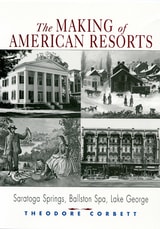
The Making of American Resorts
Saratoga Springs, Ballston Spa, and Lake GeorgeCorbett, Theodore
Rutgers University Press, 2001
The Making of Arab Americans
From Syrian Nationalism to U.S. CitizenshipBy Hani J. Bawardi
University of Texas Press, 2014
The Making of Brazil's Black Mecca
Bahia ReconsideredScott Ickes
Michigan State University Press, 2018
The Making of Chicana/o Studies
In the Trenches of AcademeAcuña, Rodolfo F
Rutgers University Press, 2011
The Making of Chicana/o Studies traces the philosophy and historical development of the field of Chicana/o studies from precursor movements to the Civil Rights era to today, focusing its lens on the political machinations in higher education that sought to destroy the discipline. As a renowned leader, activist, scholar, and founding member of the movement to establish this curriculum in the California State University system, which serves as a model for the rest of the country, Rodolfo F. Acuña has, for more than forty years, battled the trend in academia to deprive this group of its academic presence.
The book assesses the development of Chicana/o studies (an area of studies that has even more value today than at its inception)--myths about its epistemological foundations have remained uncontested. Acuña sets the record straight, challenging those in the academy who would fold the discipline into Latino studies, shadow it under the dubious umbrella of ethnic studies, or eliminate it altogether.
Building the largest Chicana/o studies program in the nation was no easy feat, especially in an atmosphere of academic contention. In this remarkable account, Acuña reveals how California State University, Northridge, was instrumental in developing an area of study that offers more than 166 sections per semester, taught by 26 tenured and 45 part-time instructors. He provides vignettes of successful programs across the country and offers contemporary educators and students a game plan--the mechanics for creating a successful Chicana/o studies discipline--and a comprehensive index of current Chicana/o studies programs nationwide.
Latinas/os, of which Mexican Americans are nearly seventy percent, comprise a complex sector of society projected to be just shy of thirty percent of the nation's population by 2050. The Making of Chicana/o Studies identifies what went wrong in the history of Chicana/o studies and offers tangible solutions for the future.
The Making of Lawyers' Careers
Inequality and Opportunity in the American Legal ProfessionRobert L. Nelson, Ronit Dinovitzer, Bryant G. Garth, Joyce S. Sterling, David B. Wilkins, Meghan Dawe, and Ethan Michelson
University of Chicago Press, 2023
An unprecedented account of social stratification within the US legal profession.
How do race, class, gender, and law school status condition the career trajectories of lawyers? And how do professionals then navigate these parameters?
The Making of Lawyers’ Careers provides an unprecedented account of the last two decades of the legal profession in the US, offering a data-backed look at the structure of the profession and the inequalities that early-career lawyers face across race, gender, and class distinctions. Starting in 2000, the authors collected over 10,000 survey responses from more than 5,000 lawyers, following these lawyers through the first twenty years of their careers. They also interviewed more than two hundred lawyers and drew insights from their individual stories, contextualizing data with theory and close attention to the features of a market-driven legal profession.
Their findings show that lawyers’ careers both reflect and reproduce inequalities within society writ large. They also reveal how individuals exercise agency despite these constraints.
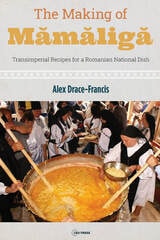
The Making of Mamaliga
Transimperial Recipes for a Romanian National DishAlex Drace-Francis
Central European University Press, 2022
Mămăligă, maize porridge or polenta, is a universally consumed dish in Romania and a prominent national symbol. But its unusual history has rarely been told. Alex Drace-Francis surveys the arrival and spread of maize cultivation in Romanian lands from Ottoman times to the eve of the First World War, and also the image of mămăligă in art and popular culture. Drawing on a rich array of sources and with many new findings, Drace-Francis shows how the making of mămăligă has been shaped by global economic forces and overlapping imperial systems of war and trade.
The story of maize and mămăligă provides an accessible way to revisit many key questions of Romanian and broader regional history. More generally, the book links the history of production, consumption, and representation. Analyses of recipes, literary and popular depictions, and key vocabulary complete the work.
The Making of Modern Nevada
Hal Rothman
University of Nevada Press, 2010
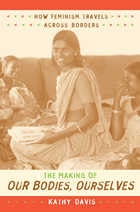
The Making of Our Bodies, Ourselves
How Feminism Travels across BordersKathy Davis
Duke University Press, 2007
Kathy Davis tells the story of this remarkable book’s global circulation. Based on interviews with members of the Boston Women’s Health Book Collective, the group of women who created Our Bodies, Ourselves, as well as responses to the book from readers, and discussions with translators from Latin America, Egypt, Thailand, China, Eastern Europe, Francophone Africa, and many other countries and regions, Davis shows why Our Bodies, Ourselves could never have been so influential if it had been just a popular manual on women’s health. It was precisely the book’s distinctive epistemology, inviting women to use their own experiences as resources for producing situated, critical knowledge about their bodies and health, that allowed the book to speak to so many women within and outside the United States. Davis provides a grounded analysis of how feminist knowledge and political practice actually travel, and she shows how the process of transforming Our Bodies, Ourselves offers a glimpse of a truly transnational feminism, one that joins the acknowledgment of difference and diversity among women in different locations with critical reflexivity and political empowerment.
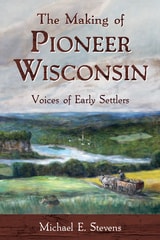
The Making of Pioneer Wisconsin
Voices of Early SettlersMichael E. Stevens
Wisconsin Historical Society Press, 2018
The Making of Pioneer Wisconsin provides a unique and intimate glimpse into the lives of these early settlers, as they describe what it felt like to be a teenager in a wagon heading west or an isolated young wife living far from her friends and family. Woven together with context provided by historian Michael E. Stevens, these first-person accounts form a fascinating narrative that deepens our ability to understand and empathize with Wisconsin’s early pioneers.
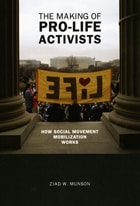
The Making of Pro-life Activists
How Social Movement Mobilization WorksZiad W. Munson
University of Chicago Press, 2008
Through extensive interviews and detailed studies of pro-life organizations across the nation, Munson makes the startling discovery that many activists join up before they develop strong beliefs about abortion—in fact, some are even pro-choice prior to their mobilization. Therefore, Munson concludes, commitment to an issue is often a consequence rather than a cause of activism.
The Making of Pro-life Activists provides a compelling new model of how people become activists while also offering a penetrating analysis of the complex relationship between religion, politics, and the pro-life movement. Policy makers, activists on both sides of the issue, and anyone seeking to understand how social movements take shape will find this book essential.
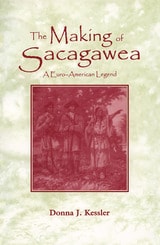
The Making of Sacagawea
A Euro-American LegendDonna Barbie Kessler
University of Alabama Press, 1998
Kessler supplies both the biography of a legend and an explanation of why that legend has endured.
Sacagawea is one of the most renowned figures of the American West. A member of the Shoshone tribe, she was captured by the Hidatsas as a child and eventually became one of the wives of a French fur trader, Toussaint Charbonneau. In 1805 Charbonneau joined Lewis and Clark as the expedition's interpreter. Sacagawea was the only woman to participate in this important mission, and some claim that she served as a guide when the expedition reached the upper Missouri River and the mountainous region.
Although much has been written about the historical importance of Sacagawea in connection with the expedition, no one has explored why her story has endured so successfully in Euro-American culture. In an examination of representative texts (including histories, works of fiction, plays, films, and the visual arts) from 1805 to the present, Kessler charts the evolution and transformation of the legend over two centuries and demonstrates that Sacagawea has persisted as a Euro-American legend because her story exemplified critical elements of America's foundation myths-especially the concept of manifest destiny. Kessler also shows how the Sacagawea legend was flexible within its mythic framework and was used to address cultural issues specific to different time periods, including suffrage for women, taboos against miscegenation, and modern feminism.
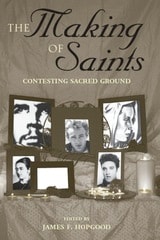
The Making of Saints
Contesting Sacred GroundEdited by James F. Hopgood
University of Alabama Press, 2005
Celebrities and popular icons are increasingly ubiquitous figures of a 21st century postmodern world. Some, in death, blur age-old distinctions of sanctification and trespass on sacred ground long held exclusively by religious saints. An emerging continuum is transforming that sacred arena and raising a number of important issues, including the nature of the relationships between the worshipped and the worshipful and the types of institutions that sustain them.
The Making of Saints: Contesting Sacred Ground investigates a number of religious leaders, healers, folk saints, and popular icons in seeking to identify their commonalities and discover how they speak to the same inner yearnings of human beings for gods and heroes. Issues of social relations, love, emotion, charisma, power, and sanctification are addressed by the contributors. Analyses of hagiographies, biographies, media, control of space, pilgrimage, and acts of devotion provide the bases for the authors' explorations of these issues. Among the sanctified included for analysis are the folk saints El Nino Fidencio and Teresa Urrea; the charismatic rabbis Baba Sali, Baba Baruch, and Ifargan; King Chulalongkorn of Thailand; two political figures, Evita Peron and Che Guevara; and three celebrities: James Dean, Elvis Presley, and Japanese rock star HIDE.
The contributors challenge notions of what is sacred and who may be sanctified, and argue that a broadening of views is needed to accommodate and appreciate emerging contemporary realities.

The Making of Terrorism
Michel Wieviorka
University of Chicago Press, 1993
Wieviorka demonstrates that the truly terrorist actor has become alienated both from the collective movement and society. The actor turns to the blind violence when he finds himself cut off from the very ideology which legitimates his actions. Pure terrorism, Wieviorka concludes, is more than simply a break between those who use it and those it targets; it is also a relationship—between the individual and the collective he represents—which has been rendered unrealistic or artificial. Thus, terrorist violence should be understood not as the desperate act of a faltering movement but as a substitute for a movement which has fallen away from the ideology in which it was forged.
For the revelations it offers on the roots and motivations of terrorism, for its innovative methods, and for its useful comparative analysis of terrorist groups in recent history, The Making of Terrorism will be an important resource across many disciplines for anyone interested in terrorism or political violence.
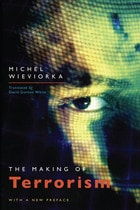
The Making of Terrorism
Michel Wieviorka
University of Chicago Press, 2004
The Making of a Human Bomb
An Ethnography of Palestinian ResistanceNasser Abufarha
Duke University Press, 2009
Abufarha draws on the life histories of martyrs, interviews he conducted with their families and members of the groups that sponsored their operations, and examinations of Palestinian literature, art, performance, news stories, and political commentaries. He also assesses data—about the bombers, targets, and fatalities caused—from more than two hundred martyrdom operations carried out by Palestinian groups between 2001 and 2004. Some involved the use of explosive belts or the detonation of cars; others entailed armed attacks against Israeli targets (military and civilian) undertaken with the intent of fighting until death. In addition, he scrutinized suicide attacks executed by Hamas and Islamic Jihad between 1994 and 2000. In his analysis of Palestinian political violence, Abufarha takes into account Palestinians’ understanding of the history of the conflict with Israel, the effects of containment on Palestinians’ everyday lives, the disillusionment created by the Oslo peace process, and reactions to specific forms of Israeli state violence. The Making of a Human Bomb illuminates the Palestinians’ perspective on the conflict with Israel and provides a model for ethnographers seeking to make sense of political violence.
The Making of a Lynching Culture
Violence and Vigilantism in Central Texas, 1836-1916William D. Carrigan
University of Illinois Press, 2006
How a culture of violence legitimized lynching among ordinary people
On May 15, 1916, a crowd of fifteen thousand witnessed the lynching of an eighteen-year-old black farm worker named Jesse Washington. Most central Texans of the time failed to call for the punishment of the mob’s leaders. In The Making of a Lynching Culture, now in paperback, William D. Carrigan seeks to explain not how a fiendish mob could lynch one man but how a culture of violence that nourished this practice could form and endure for so long among ordinary people.
Beginning with the 1836 independence of Texas, The Making of a Lynching Culture reexamines traditional explanations of lynching, including the role of the frontier, economic tensions, and political conflicts. Using a voluminous body of court records, newspaper accounts, oral histories, and other sources, Carrigan shows how notions of justice and historical memory were shaped to glorify violence and foster a culture that legitimized lynching.
The Making of a Man
Aleksandr Aleksandrov, Transsexuality, and Imperial RussiaRuth Averbach
University of Wisconsin Press, 2026
Aleksandr Aleksandrov was an author and soldier in service of the Russian tsar, active in the Prussian theater of the War of the Fourth Coalition (1806–7) and in the Napoleonic Wars. In scholarship, he is better known by his birth name, Nadezhda Andreevna Durova, and often referred to with the female pronouns bestowed upon him at birth. In this first book-length study of Aleksandrov, Ruth Averbach argues that we should understand this celebrated figure of Imperial Russia, whose sex was legally changed by Tsar Aleksandr I, simply as a man, one whose masculinity was intimately connected to the imperialist cause and Russian nationalism.
For the majority of his life, Aleksandrov lived, wrote, and fought as a man and was recognized as such by most of his contemporaries. This contradicts the dominant position in especially Western feminist scholarship, which understands “Durova” either as a woman so patriotic that she dressed as a man to fight Russia’s wars or as a woman so frustrated by gender restrictions that she dramatically sought to cast them aside. Averbach instead asserts that we should take Aleksandrov at his word and accept his transition as genuine. Doing so allows for fresh interpretations of both his autobiographical writings and his works of fiction, interpretations that Averbach deftly shows have salience not just for a single man’s life but also for how we understand masculinity, imperialism, and nationalism in nineteenth-century Russia more broadly.
The Making of a Mexican American Mayor
Raymond L. Telles of El Paso and the Origins of Latino Political PowerMario T. García
University of Arizona Press, 2018
In the border metropolis of El Paso, more than half the population is Mexican American, yet this group had been denied effective political representation. Mexican Americans broke this barrier and achieved the “politics of status” through Telles’s stunning 1957 victory. This book captures the excitement of that long-awaited election.
The Making of a Mexican American Mayor also examines Telles’s story as a microcosm of the history of Mexican Americans before and after World War II—the Mexican American Generation. As mayor and ambassador, Telles symbolized this generation’s striving for political participation, and his legacy is evident in the growing number of Latinas/os holding office today.
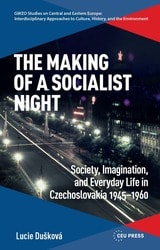
The Making of a Socialist Night
Society, Imagination and Everyday Life in Czechoslovakia 1945-1960Lucie Dusková
Central European University Press, 2026