Results by title
1038 books match the query 'Economic conditions' and 212 start with t
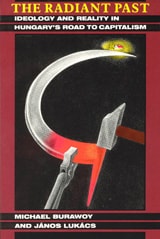
The Radiant Past
Ideology and Reality in Hungary's Road to CapitalismMichael Burawoy and János Lukács
University of Chicago Press, 1992
Michael Burawoy and Janos Lukacs consider this question from the standpoint of the Hungarian working class. Between 1983 and 1990 the authors carried out intensive studies in two core Hungarian industries, machine building and steel production, to produce the first extended participant-observation study of work and politics in state socialism.
"A fascinating and engagingly written eyewitness report on proletarian life in the waning years of goulash communism. . . . A richly rewarding book, one that should interest political scientists in a variety of subfields, from area specialists and comparativists to political economists, as well as those interested in Marxist and post-Marxist theory."—Elizabeth Kiss, American Political Science Review
"A very rich book. . . . It does not merely offer another theory of transition, but also presents a clear interpretive scheme, combined with sociological theory and vivid ethnographic description."—Ireneusz Bialecki, Contemporary Sociology
"Its informed skepticism of post-Communist liberal euphoria, its concern for workers, and its fine ethnographic details make this work valuable."—"àkos Róna-Tas, American Journal of Sociology

The Rainy Season
Three Lives in the New South AfricaMaggie Messitt
University of Iowa Press, 2015
The Rainy Season tells the stories of three generations in the Rainbow Nation one decade after its first democratic elections. This multi-threaded narrative follows Regina, a tapestry weaver in her sixties, standing at the crossroads where her Catholic faith and the AIDS pandemic crash; Thoko, a middle-aged sangoma (traditional healer) taking steps to turn her shebeen into a fully licensed tavern; and Dankie, a young man taking his matriculation exams, coming of age as one of Mandela’s Children, the first academic class educated entirely under democratic governance.
Home to Shangaan, Sotho, and Mozambican Tsonga families, Rooiboklaagte sits in a village where an outdoor butchery occupies an old petrol station and a funeral parlor sits in the attached garage. It’s a place where an AIDS education center sits across the street from a West African doctor selling cures for the pandemic. It’s where BMWs park outside of crumbling cement homes, and the availability of water changes with the day of the week. As the land shifts from dusty winter blond to lush summer green and back again, the duration of northeastern South Africa’s rainy season, Regina, Thoko, and Dankie all face the challenges and possibilities of the new South Africa.
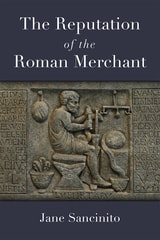
The Reputation of the Roman Merchant
Jane Sancinito
University of Michigan Press, 2024
The Response to Industrialism, 1885-1914
Samuel P. Hays
University of Chicago Press, 1995
Hays draws on the vast knowledge of America's urban and social history that has been developed over the last thirty-eight years to make the second edition an unusually well-rounded study. He enhances the original coverage of politics, labor, and business with new accounts of the growth of cities, the rise of modern values, cultural conflicts with Native Americans and foreign nations, and changing roles for women, African-Americans, education, religion, medicine, law, and leisure. The result is a tightly woven portrait of America in transition that underscores the effects of impersonal market forces and greater personal freedom on individuals and chronicles such changes as the rise of social inequality, shifting power, in the legal system, the expansion of the federal government, and the formation of the Populist, Progressive, and Socialist parties.
The Response to Industrialism, 1885-1914
Samuel P. Hays
University of Chicago Press, 1995
In this new edition, Samuel P. Hays expands the scope of his pioneering account of the ways in which Americans reacted to industrialism during its early years from 1885 to 1914. Hays now deepens his coverage of cultural transformations in a study well known for its concise treatment of political and economic movements.
Hays draws on the vast knowledge of America's urban and social history that has been developed over the last thirty-eight years to make the second edition an unusually well-rounded study. He enhances the original coverage of politics, labor, and business with new accounts of the growth of cities, the rise of modern values, cultural conflicts with Native Americans and foreign nations, and changing roles for women, African-Americans, education, religion, medicine, law, and leisure. The result is a tightly woven portrait of America in transition that underscores the effects of impersonal market forces and greater personal freedom on individuals and chronicles such changes as the rise of social inequality, shifting power, in the legal system, the expansion of the federal government, and the formation of the Populist, Progressive, and Socialist parties.
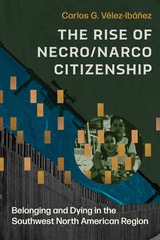
The Rise of Necro/Narco Citizenship
Belonging and Dying in the Southwest North American RegionCarlos G. Vélez-Ibáñez
University of Arizona Press, 2025
Carlos G. Vélez-Ibáñez’s latest work, The Rise of Necro/Narco Citizenship investigates the intricate and often harrowing dynamics that define the borderlands between the United States, Mexico, and beyond. This groundbreaking book provides a comprehensive cultural, economic, social, and political-ecological analysis, illustrating how various forms of violence and militarization have reshaped the daily lives and identities of the region’s inhabitants. Through meticulous ethnographic fieldwork, extensive archival research, and rigorous statistical data, Vélez-Ibáñez exposes the deeply entrenched networks of exploitation and conflict that have emerged in response to global capitalism’s pressures.
Vélez-Ibáñez builds on theorization about necrocitizenship to introduce the concept of necro/narco citizenship, which argues that pervasive violence and socioeconomic disruptions create a unique form of existence on both sides of the border. The author examines the dislocation of thousands, the persistent threat of violence, and the ways in which these forces compel individuals to navigate a reality steeped in addiction, self-destruction, and civil deterioration. This book reveals the transnational networks and the morally compromised political economies that sustain them, offering readers an unflinching look at the cost of survival in this tumultuous region.
This essential volume is not only a critical addition to the field of anthropology but also an invaluable resource for those interested in the sociopolitical landscape of the U.S.-Mexico border. Vélez-Ibáñez’s insights will resonate with scholars, students, and policymakers alike. The Rise of Necro/Narco Citizenship challenges us to rethink the narratives of violence, militarization, and resistance that define our understanding of the Southwest North American Region.
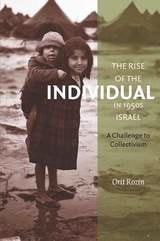
The Rise of the Individual in 1950s Israel
A Challenge to CollectivismOrit Rozin
Brandeis University Press, 2011
The Roaring Nineties
Can Full Employment Be Sustained?Alan B. Krueger
Russell Sage Foundation, 2001
The Ruptures Of American Capital
Women Of Color Feminism And The Culture Of Immigrant LaborGrace Kyungwon Hong
University of Minnesota Press, 2006
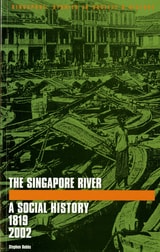
The Singapore River
A Social History, 1819-2002Stephen Dobbs
National University of Singapore Press, 2013
The Small-Town Midwest
Resilience and Hope in the Twenty-First CenturyJulianne Couch
University of Iowa Press, 2016
The people featured live—by choice or circumstances—in one of nine small communities in five states in the Midwest and Great Plains: Iowa, Kansas, Missouri, Nebraska, and Wyoming. Daily they witness people moving out, heading to more urban areas, small businesses closing down, connected infrastructure drying up, entrepreneurs becoming discouraged, and more people thinking about leaving. This is the story we hear in the news, the story told by abandoned farms, consolidated schools, and boarded-up Main Streets.
But it’s not the whole story. As Couch found in her travels throughout the Midwest, many people long to return to these towns, places where they may have deep family roots or where they can enjoy short commutes, familiar neighbors, and proximity to rural and wild places. And many of the residents of small midwestern towns are not just accepting the trend toward urbanization with a sigh. They are betting that the tide of rural population loss can’t go out forever, and they’re backing those bets with creatively repurposed schools, entrepreneurial innovation, and community commitment. From Bellevue, Iowa, to Centennial, Wyoming, the region’s small-town residents remain both hopeful and resilient.
The Southern States Since The War
Robert Somers
University of Alabama Press, 1965
Somers was fifty-eight years of age when he landed in America in the fall of 1870. His long-time newspaper career and his interest in social and economic matters had prepared him in a very special way to study the South, where the whole way of life had been so lately wracked by war. He was a keen and objective observer, modest and restrained in criticism and praise. On the whole he was optimistic for the future of the South. Although apparently a Southern sympathizer during the War, he was able to subordinate this sympathy and give a fair, detached, and balanced appraisal of economic life, politics and race relations. His interest in politics was confined in the main to their effect on the economic and social phases of the South's welfare.
Since his trip to America was not sponsored by “any Association, mercantile or political,” he was at liberty to record conditions as he saw them. Many of the accounts of conditions in the South in this period may be classified as promotional literature. State bureaus of immigration and agriculture, land companies, railroads and other interested groups hired agents to make favorable reports on cheap lands, on opportunities for industrial enterprise, deposits of minerals and the existence of other natural resources. They exaggerated economic opportunities and favorable political, cultural, and social conditions. Somers, on the other hand, was a true traveler, in the pay of no organization and with no axe to grind. He was particularly interested in economic and social matters: cotton and sugar culture, Negroes, railroads, natural resources, labor, industry, immigration and education. Since an analysis of the South’s economy was Somers’ major objective, his book made an extraordinarily valuable contribution to the history of the South during Reconstruction.
The Space of Boredom
Homelessness in the Slowing Global OrderBruce O'Neill
Duke University Press, 2017

The Story of Coal and Iron in Alabama
Ethel Armes
University of Alabama Press, 2011
“The principal authority for the general treatment of the history of coal, and of iron and steel, in
Alabama is the work of Miss Ethel Armes. The Story of Coal and Iron in Alabama is a comprehensive
and scholarly work portraying in attractive style the growth of the mineral industries in its
relation to the development of the state and of the South, in preparation of which the author spent
more than five years.”
—Thomas McAdory Owen, History of Alabama and Dictionary of Alabama Biography
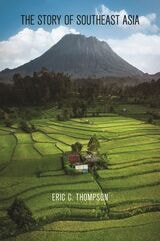
The Story of Southeast Asia
Edited by Eric Thompson
National University of Singapore Press, 2024
The oldest figurative cave paintings in the world are found on the island of Sulawesi in Indonesia. Hand stencils and animals painted some 45,000 years ago attest to a long history of human creativity. The Story of Southeast Asia tells how the peoples of the region have crafted their diverse societies and cultures over thousands of years. Southeast Asia has been a remarkable crossroads of global connections for millennia. Whereas other regions have been defined by centralizing forces, Southeast Asia’s story is one of complex networks of trade, ideas, and social relationships. Southeast Asians have created, localized, and remade their own cultural values by drawing on influences from around the world.
Marshalling the latest literature from anthropology, archaeology, history, and other disciplines, Eric C. Thompson highlights broad themes that cut across history: including the making—and evasion—of states, adoption of diverse religious practices, tolerance and flexibility regarding gender, processes of forging modern identities, struggles over sovereignty, and the making of modern nations in a postcolonial world. This readable, single-volume history reckons with the narrative pull of familiar colonial and national perspectives but maintains a regional and deep-historical focus. It will be a stimulating read for scholars as well as students and newcomers to Southeast Asian history.

The Struggle for Food Sovereignty
Alternative Development and the Renewal of Peasant Societies TodayEdited by Remy Herrera and Kin Chi Lau
Pluto Press, 2015

The Struggle of Non-Sovereign Caribbean Territories
Neoliberalism since the French Antillean Uprisings of 2009H. Adlai Murdoch
Rutgers University Press, 2021
The Technology of Transition
Science and Technology Policies for Transition CountriesDavid A. Dyker
Central European University Press, 1997
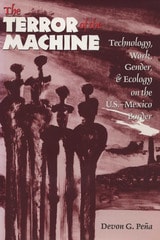
The Terror of the Machine
Technology, Work, Gender, and Ecology on the U.S.-Mexico BorderBy Devon G. Peña
University of Texas Press, 1995
Born of thirteen years of field research, this interdisciplinary work explores the complex intersections of technology, class, gender, and ecology in the transnational milieu of Mexico's maquiladoras, foreign-owned assembly plants located along the U.S. border.
Devon Peña examines workplace and community struggles from the perspective of the women who work in the maquiladoras. He describes the workers' struggles for workplace democracy, social justice, and sustainable development. He also observes the circulation of struggle from the factory to the community, highlighting the efforts to establish worker-owned cooperatives in the border region during the 1970s and 1980s.
Female maquila workers are typically portrayed as passive, apolitical, and easily exploited. This book, however, presents an opposing view, investigating the "subaltern life of the shop floor"—the workers' informal methods of resistance to hazardous conditions, sexual harassment, and managerial tyranny. Using survey research, oral history, discourse analysis, and site ethnography, the author develops a cogent critique of labor-process theory, a critique grounded on his extensive study of actual workplace politics in the maquiladoras.
The Terror of the Machine is a trenchant analysis of the political, cultural, and environmental effects of maquila industrialization and an eloquent and persuasive call for alternatives in the direction of ecologically sustainable and culturally appropriate modes of development.
The Transformation of Authorship in America
Grantland S. Rice
University of Chicago Press, 1997
Rice shows that the rigorous censorship practiced by Puritan authorities conferred an implicit prestige on texts as civic interventions, helping to foster a vigorous and indigenous tradition of sociopolitical criticism. With special attention to the sudden emergence of the novel in post-revolutionary America, Rice reveals how the emergence of economic liberalism undermined the earlier tradition of political writing by transforming American authorship from an expression of individual civic conscience to a market-oriented profession.
Includes discussions of the writings of Benjamin Franklin, Michel-Guillaume-Jean de Crèvecoeur, and Hugh Henry Brackenridge.
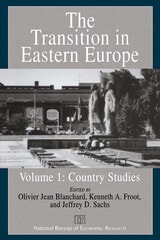
The Transition in Eastern Europe, Volume 1
Edited by Olivier Jean Blanchard, Kenneth A. Froot, and Jeffrey D. Sachs
University of Chicago Press, 1994
Volume 1, Country Studies, gives an in-depth, country-by-country analysis of various reform experiences, including historical backgrounds and discussions of policies and results to date. The countries analyzed are Poland, Czechoslovakia, Hungary, eastern Germany, Slovenia, and Russia. Written by leading economists, some of whom helped shape local and national reforms, this volume identifies common progress, common difficulties, and tentative solutions to the problems of economic transition.
Volume 2, Restructuring, focuses on specific issues of transition, including how to design labor market institutions, privatization, new fiscal structures, and bankruptcy laws; how to reorganize foreign trade; and how to promote foreign direct investment. The articles, written by experts in the field, will be of direct help to those involved in the transition process.
These volumes provide a standard reference on economic transition in the region for policymakers in Eastern Europe and in western countries, for international agencies concerned with the transition process, and for anyone interested in learning about the dramatic changes that have recently occurred in Eastern Europe.
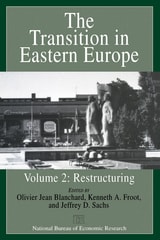
The Transition in Eastern Europe, Volume 2
RestructuringEdited by Olivier Jean Blanchard, Kenneth A. Froot, and Jeffrey D. Sachs
University of Chicago Press, 1994
Volume 1, Country Studies, gives an in-depth, country-by-country analysis of various reform experiences, including historical backgrounds and discussions of policies and results to date. The countries analyzed are Poland, Czechoslovakia, Hungary, eastern Germany, Slovenia, and Russia. Written by leading economists, some of whom helped shape local and national reforms, this volume identifies common progress, common difficulties, and tentative solutions to the problems of economic transition.
Volume 2, Restructuring, focuses on specific issues of transition, including how to design labor market institutions, privatization, new fiscal structures, and bankruptcy laws; how to reorganize foreign trade; and how to promote foreign direct investment. The articles, written by experts in the field, will be of direct help to those involved in the transition process.
These volumes provide a standard reference on economic transition in the region for policymakers in Eastern Europe and in western countries, for international agencies concerned with the transition process, and for anyone interested in learning about the dramatic changes that have recently occurred in Eastern Europe.
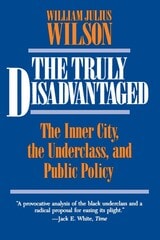
The Truly Disadvantaged
The Inner City, the Underclass, and Public PolicyWilliam Julius Wilson
University of Chicago Press, 1987
"'Must reading' for civil-rights leaders, leaders of advocacy organizations for the poor, and for elected officials in our major urban centers."—Bernard C. Watson, Journal of Negro Education
"Required reading for anyone, presidential candidate or private citizen, who really wants to address the growing plight of the black urban underclass."—David J. Garrow, Washington Post Book World
Selected by the editors of the New York Times Book Review as one of the sixteen best books of 1987.
Winner of the 1988 C. Wright Mills Award of the Society for the Study of Social Problems.
The Truly Disadvantaged
The Inner City, the Underclass, and Public Policy, Second EditionWilliam Julius Wilson
University of Chicago Press, 2012
Renowned American sociologist William Julius Wilson takes a look at the social transformation of inner city ghettos, offering a sharp evaluation of the convergence of race and poverty. Rejecting both conservative and liberal interpretations of life in the inner city, Wilson offers essential information and a number of solutions to policymakers. The Truly Disadvantaged is a wide-ranging examination, looking at the relationship between race, employment, and education from the 1950s onwards, with surprising and provocative findings. This second edition also includes a new afterword from Wilson himself that brings the book up to date and offers fresh insight into its findings.
“The Truly Disadvantaged should spur critical thinking in many quarters about the causes and possible remedies for inner city poverty. As policymakers grapple with the problems of an enlarged underclass they—as well as community leaders and all concerned Americans of all races—would be advised to examine Mr. Wilson's incisive analysis.”—Robert Greenstein, New York Times Book Review
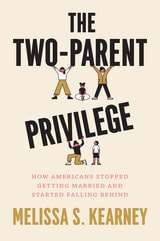
The Two-Parent Privilege
How Americans Stopped Getting Married and Started Falling BehindMelissa S. Kearney
University of Chicago Press, 2023
In The Two-Parent Privilege, Melissa S. Kearney makes a provocative, data-driven case for marriage by showing how the institution’s decline has led to a host of economic woes—problems that have fractured American society and rendered vulnerable populations even more vulnerable. Eschewing the religious and values-based arguments that have long dominated this conversation, Kearney shows how the greatest impacts of marriage are, in fact, economic: when two adults marry, their economic and household lives improve, offering a host of benefits not only for the married adults but for their children. Studies show that these effects are today starker, and more unevenly distributed, than ever before. Kearney examines the underlying causes of the marriage decline in the US and draws lessons for how the US can reverse this trend to ensure the country’s future prosperity.
Based on more than a decade of economic research, including her original work, Kearney shows that a household that includes two married parents—holding steady among upper-class adults, increasingly rare among most everyone else—functions as an economic vehicle that advantages some children over others. As these trends of marriage and class continue, the compounding effects on inequality and opportunity grow increasingly dire. Their effects include not just children’s behavioral and educational outcomes, but a surprisingly devastating effect on adult men, whose role in the workforce and society appears intractably damaged by the emerging economics of America’s new social norms.
For many, the two-parent home may be an old-fashioned symbol of the idyllic American dream. But The Two-Parent Privilege makes it clear that marriage, for all its challenges and faults, may be our best path to a more equitable future. By confronting the critical role that family makeup plays in shaping children’s lives and futures, Kearney offers a critical assessment of what a decline in marriage means for an economy and a society—and what we must do to change course.
The Ukrainian Challenge
Reforming Labour Market and Social PolicyILO-CEET ILO-CEET
Central European University Press, 1995
The Underclass Question
Bill Lawson
Temple University Press, 1992
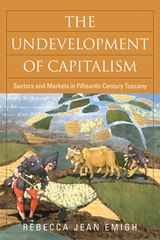
The Undevelopment of Capitalism
Sectors and Markets in Fifteenth-Century TuscanyRebecca Jean Emigh
Temple University Press, 2008
As a lucid explanation of capitalism that turns back the clock even further on its birth, The Undevelopment of Capitalism makes a significant contribution to the studies of capitalism, historical sociology, and theories of markets as economic and cultural institutions.
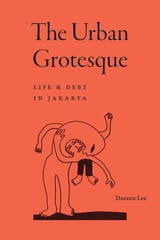
The Urban Grotesque
Life and Debt in JakartaDoreen Lee
Duke University Press, 2025
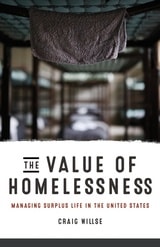
The Value of Homelessness
Managing Surplus Life in the United StatesCraig Willse
University of Minnesota Press, 2015
It is all too easy to assume that social service programs respond to homelessness, seeking to prevent and understand it. The Value of Homelessness, however, argues that homelessness today is an effect of social services and sciences, which shape not only what counts as such but what will?or ultimately won’t?be done about it.
Through a history of U.S. housing insecurity from the 1930s to the present, Craig Willse traces the emergence and consolidation of a homeless services industry. How to most efficiently allocate resources to control ongoing insecurity has become the goal, he shows, rather than how to eradicate the social, economic, and political bases of housing needs. Drawing on his own years of work in homeless advocacy and activist settings, as well as interviews conducted with program managers, counselors, and staff at homeless services organizations in New York, Los Angeles, San Francisco, and Seattle, Willse provides the first analysis of how housing insecurity becomes organized as a governable social problem.
An unprecedented and powerful historical account of the development of contemporary ideas about homelessness and how to manage homelessness, The Value of Homelessness offers new ways for students and scholars of social work, urban inequality, racial capitalism, and political theory to comprehend the central role of homelessness in governance and economy today.
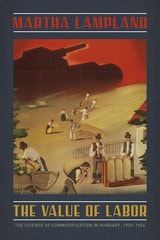
The Value of Labor
The Science of Commodification in Hungary, 1920-1956Martha Lampland
University of Chicago Press, 2016
Lampland trains her eye on the scientific claims of modern economic modeling, using Hungary’s unique vantage point to show how theories, policies, and techniques for commodifying agrarian labor that were born in the capitalist era were adopted by the socialist regime as a scientifically designed wage system on cooperative farms. Paying attention to the specific historical circumstances of Hungary, she explores the ways economists and the abstract notions they traffic in can both shape and be shaped by local conditions, and she compellingly shows how labor can be commodified in the absence of a labor market. The result is a unique account of economic thought that unveils hidden but necessary continuities running through the turbulent twentieth century.
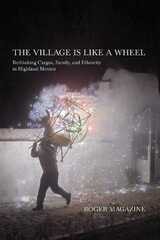
The Village Is Like a Wheel
Rethinking Cargos, Family, and Ethnicity in Highland MexicoRoger Magazine
University of Arizona Press, 2012
According to Magazine, where Western anthropologists often assume that persons are individuals capable of acting on their own to produce things, rural highland Mexicans see persons as inherently interdependent and in need of others even to act. He utilizes the term “active subjectivity” to denote the fact that what they produce in others is not simply action but also a subjective state or attitude of willingness to perform the action.
The author’s goals are to improve understandings of rural highland Mexicans’ lives and to contribute to a broader disciplinary effort aimed at revealing the cultural specificity or ethnocentricity of our supposedly universally applicable concepts and theories.
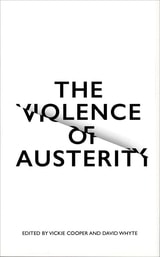
The Violence of Austerity
Edited by David Whyte and Vickie Cooper
Pluto Press, 2017
In The Violence of Austerity, David Whyte and Vickie Cooper bring together the passionate voices of campaigners and academics to show that rather than stimulating economic growth, austerity policies have led to a dismantling of the social systems that operated as a buffer against economic hardship. Chapters from major contributors—including Danny Dorling, Mary O’Hara and Rizwaan Sabir—show how austerity is a form of institutional violence more socially harmful and far-reaching than other more politicized and publicized forms of violence, such as terrorism or gun violence. Contributors expose highly significant cases of this institutional violence driven by public sector cuts: police attacks on the homeless, violent evictions of the rented sector, risks faced by people on workfare, and more. The Violence of Austerity is a devastating, authoritative study of the myriad ways austerity policies harm people in Britain that will resonate with anyone concerned with the increasing power of the political elite and the future of social welfare.

The Visual Is Political
Feminist Photography and Countercultural Activity in 1970s BritainNa'ama Klorman-Eraqi
Rutgers University Press, 2019

The Welfare State and Beyond
Success and Problems in ScandinaviaGunnar Heckscher
University of Minnesota Press, 1984
The Welfare State and Beyond was first published in 1984. Minnesota Archive Editions uses digital technology to make long-unavailable books once again accessible, and are published unaltered from the original University of Minnesota Press editions.
The welfare state emerged in a number of industrialized countries after the First World War as a middle ground between capitalism and socialism. The aim of architects of the welfare state was to abolish the injustices and hardships that accompanied capitalism and to do so without wholesale social or economic revolution. Establishment of the welfare state created something close to euphoria among many observers; it was, it seemed, the answer to many, if not all, troubling social questions. But it eventually became obvious that this type of society was not immune to problems.
In The Welfare State and Beyond Gunnar Heckscher examines four Nordic countries—Denmark, Finland, Norway, and Sweden—not to either criticize or defend the welfare state but to shed some light on a number of questions: Has the welfare state achieved what it attempted? Are the results generally held to be satisfactory? What important problems remain unsolved and what types of solutions have been proposed? Although Heckscher has been associated with the Conservative party in Sweden, his objective, clear-eyed analysis cites both the accomplishments of the welfare state and the troubling problems that still await resolution.
The Welfare State in Transition
Reforming the Swedish ModelEdited by Richard B. Freeman, Robert H. Topel, and Birgitta Swedenborg
University of Chicago Press, 1997
This volume presents ten essays that examine Sweden's economic problems from a U.S. perspective. Exploring such diverse topics as income equalization and efficiency, welfare and tax policy, wage determination and unemployment, and international competitiveness and growth, they consider how Sweden's welfare state succeeded in eliminating poverty and became a role model for other countries. They then reflect on Sweden's past economic problems, such as the increase in government spending and the fall in industrial productivity, warning of problems to come. Finally they review the consequences of the collapse of Sweden's economy in the early 1990s, exploring the implications of its efforts to reform its welfare state and reestablish a healthy economy.
This volume will be of interest to policymakers and analysts, social scientists, and economists interested in welfare states.
The Well-Being of the Elderly in Asia
A Four-Country Comparative StudyAlbert I. Hermalin, Editor
University of Michigan Press, 2010

The Wintu and Their Neighbors
A Very Small World-System in Northern CaliforniaChristopher Chase-Dunn
University of Arizona Press, 1998
Chase-Dunn and Mann argue that Immanuel Wallerstein's world-systems perspective, originally applied only to the study of modern capitalistic societies, can also be applied to the study of the social, economic, and political relationships in small stateless societies. They contend that, despite the fact that the Wintu appear on the surface to have been a household-based society, this indigenous group was in fact involved in a myriad of networks of interaction, which resulted in intermarriage and which extended for many miles around the region. These networks, which were not based on the economic dominance of one society over another—a concept fundamental to Wallerstein's world-systems theory—led to the eventual expansion of the Wintu as a cultural group.
Thus, despite the fact that the Wintu did not behave like a modern society—lacking wealth accumulation, class distinctions, and cultural dominance—Chase-Dunn and Mann insist that the Wintu were involved in a world-system and argue, therefore, that the concept of the "minisystem" should be discarded. They urge other scholars to employ this comparative world-systems perspective in their research on stateless societies.
Themes in the Economics of Aging
Edited by David A. Wise
University of Chicago Press, 2001
This volume begins by looking at the implications of private and public personal retirement plans, focusing in particular on the impact of 401(k) programs on retirement strategies in light of potential social security reform and factors such as annuitization and on asset accumulation. Next, the often-observed relationship between health and wealth is dissected from two different perspectives and correlated with striking increases in health-care spending over the past two decades, despite the improved health of older populations. The volume concludes with an investigation of the retirement effects of various social security provisions in both U.S. and German systems.
This carefully developed collection expands the current investigative focus and broadens the dialogue on a rapidly growing area of social and economic concern.
Themes of Indigenous Acculturation in Northwest Mexico
Edited by Thomas B. Hinton and Phil C. Weigand
University of Arizona Press, 1981

Theories of Dependent Foreign Policy and the Case of Ecuador in the 1980s
Jeanne A. K. Hey
Ohio University Press, 1995
How do economic weakness and dependence influence foreign policy decisions and behavior in third world countries? Theories in Dependent Foreign Policy examines six foreign policy theories: compliance, consensus, counterdependence, realism, leader preferences and domestic politics, and each is applied to a series of case studies of Ecuador’s foreign policy during the 1980s under two regimes: Osvaldo Hurtado (1981-1984) and his successor León Febres Cordero (1984-1988).
Hey shows that Ecuador during this period represented the third world in many ways. It was a new democracy, having just emerged from years of military rule, extremely indebted to the West, and dependent on primary product export economy that relied heavily on importers, especially the United States.
Jeanne Hey finds that some of the most popular and enduring theories in western research, such as realism and compliance, poorly account for Ecuadorian foreign policy. She explains that poor countries like Ecuador have substantial foreign policy latitude in the diplomatic area. Drawing on archival research and interviews with policy makers including Presidents Hurtado and Febres Cordero, Dr. Hey convincingly argues that many of the traditional foreign policy theories do not “fit” dependent states, and inadequately account for the complexity of foreign policy in the third world.
There Used to Be Order
Life on the Copperbelt after the Privatisation of the Zambia Consolidated Copper MinesPatience Mususa
University of Michigan Press, 2021

There's Hope for the World
The Memoir of Birmingham, Alabama's First African American MayorRichard Arrington
University of Alabama Press, 2008
On a sultry September morning in 1955, a young African American man, the son of share croppers, boarded a Greyhound bus in Birmingham, Alabama, to leave his home state for the first time in his life. He was headed for the University of Detroit on a teaching scholarship from MilesCollege. Richard Arrington could not have guessed then that his future as a teacher would be postponed for decades by big-city politics--and that he would serve a record-setting five terms as chief executive of Alabama’s largest city.
Under Arrington’s leadership, Birmingham rebuilt itself from a foundering, steel-driven industrial center to one of the most diversified metropolitan areas in the Southeast, with an economy fueled by health care, biomedical research, engineering, telecommunications, and banking. As mayor, Arrington’s economic legacy is impressive. When he left office, Birmingham boasted a record number of jobs and the lowest unemployment rate in its history. Additionally, Birmingham had built the strongest tax base in Alabama, expanded its city limits by 60 square miles, reduced crime to its lowest level in 25 years, and funded a $260 million school construction program. Today Birmingham is financially sound and is the only city in the Southeast with a $100 million endowment fund.
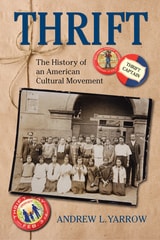
Thrift
The History of an American Cultural MovementAndrew L. Yarrow
University of Massachusetts Press, 2014
In this lively and engaging book, Andrew L. Yarrow tells the story of a national movement that promoted an amalgam of values and practices ranging from self-control, money management, and efficiency to conservation, generosity, and planning for the future—all under the rubric of “thrift.” Emerging in tandem and in tension with the first flowerings of consumer society, the thrift movement flourished during the 1910s and 1920s and then lingered on the outskirts of American culture from the Depression to the prosperous mid-twentieth century.
The movement brought together a diverse array of social actors with widely divergent agendas—the YMCA, the Boy and Girl Scouts, temperance crusaders, and others seeking to strengthen the moral fiber of urban young men and boys in particular, and to tamp down the appeal of radicalism. It also attracted credit union and other progressive activists wanting to empower the working class economically, bankers desiring to broaden their customer base, conservationists and efficiency proponents denouncing “waste,” and government leaders, school teachers, and economists who believed that encouraging saving was in the economic interests of both individuals and the nation.
A post–World War II culture that centered on spending and pleasure made the early-twentieth-century thrift messages seem outdated. Nonetheless, echoes of thrift can be found in currently popular ideas of “sustainability,” “stewardship,” and “simplicity” and in efforts to curtail public and private debt.

Tied to the Great Packing Machine
The Midwest and MeatpackingWilson J. Warren
University of Iowa Press, 2007
Writing from the vantage point of twenty-five years of extensive research, Warren analyzes the evolution of the packing industry from its early period, dominated by the big terminal markets, through the development of new marketing and technical innovations that transformed the ways animals were gathered, slaughtered, and processed and the final products were distributed. In addition, he concentrates on such cultural impacts as ethnic and racial variations, labor unions, gender issues, and changes in Americans’ attitudes toward the ethics of animal slaughter and patterns of meat consumption and such environmental problems as site-point pollution and microbe contamination, ending with a stimulating discussion of the future of American meatpacking.
Providing an excellent and well-referenced analysis within a regional and temporal framework that ensures a fresh perspective, Tied to the Great Packing Machine is a dynamic narrative that contributes to a fuller understanding of the historical context and contemporary concerns of an extremely important industry.

Tijuana Dreaming
Life and Art at the Global BorderJosh Kun and Fiamma Montezemolo, eds.
Duke University Press, 2012
Contributors. Tito Alegría, Humberto Félix Berumen, Roberto Castillo Udiarte, Iain Chambers, Luis Humberto Crosthwaite, Teddy Cruz, Ejival, Tarek Elhaik, Guillermo Fadanelli, Néstor García Canclini, Ingrid Hernández, Jennifer Insley-Pruitt, Kathryn Kopinak, Josh Kun, Jesse Lerner, Fiamma Montezemolo, Rene Peralta, Rafa Saavedra, Lucía Sanromán, Santiago Vaquera-Vásquez, Heriberto Yépez
Topics in the Economics of Aging
Edited by David A. Wise
University of Chicago Press, 1992

Toward Camden
Mercy Romero
Duke University Press, 2021
Duke University Press Scholars of Color First Book Award recipient
Toward One Oregon
Rural-Urban Interdependence and the Evolution of a StateMichael Hibbard
Oregon State University Press, 2011
Trade and Structural Change in Pacific Asia
Edited by Colin I. Bradford Jr. and William H. Branson
University of Chicago Press, 1987
Themes in the research reported here includes the sectoral composition of output and trade; rates of structural change in production and exports and their relation to economic growth; the effect of abundant resource endowments on industrialization and manufactured exports; the nature of the mix between active government policies and market forces; and the balance between demand-determined and supply-determined industrialization and exports. Many of the issues explored have important implications for United States foreign economic policy, and the volume includes a look at the basic economic and political forces influencing shifts in United States trade policy in the postwar period.
A timely and informative analysis, the volume probes the causes and consequences of economic growth in Pacific Asia, focusing on the interaction of exports of manufactured goods and the developmental process. The results reported contribute to ongoing research in structural change and economic policy and will be important to economists working on empirical patters in international trade and the process of economic development.