Results by title
884 books match the query 'Historical' and 243 start with t
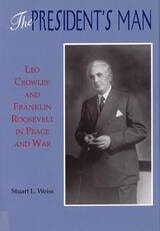
The President's Man
Leo Crowley and Franklin Roosevelt in Peace and WarStuart L. Weiss
Southern Illinois University Press, 1996
Leo Crowley has been known only as the administrator condemned by President Truman for cutting off Soviet lend-lease after V-E Day. Stuart L. Weiss revises this view while exploring Crowley’s long, significant state and federal career, emphasizing his service as Franklin D. Roosevelt’s man for all seasons.
Weiss deals effectively with Crowley’s flaws and virtues as well as those of the administrations he served. Crowley was confirmed as chair of the FDIC in 1934 despite a charge, unknown to President Roosevelt, that Crowley had committed fraud as a banker in Wisconsin. Crowley then served with distinction for more than eleven years as the administration twice buried a 1935 Treasury Department report that, had it been handed to Wisconsin authorities, could have sent him to prison: Roosevelt valued Crowley’s political and administrative talents too highly to allow that to happen.
In 1939, Roosevelt, anxious to have business support for stopping the Axis powers, encouraged Crowley to take the chair of a holding company about to be prosecuted by the SEC. After Pearl Harbor, like priorities prompted the president first to name Crowley alien property custodian, then chair of the Board of Economic Warfare to supplant Roosevelt’s politically troublesome vice president, and, finally, foreign economic administrator, the person responsible for civilian lend-lease activity
In this vibrant biography, Weiss furnishes the reader with detailed portraits of a man faithful to his president even when he disagreed with him and of a president willing to do what he felt was necessary for the good of the country.
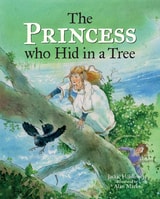
The Princess who Hid in a Tree
An Anglo-Saxon StoryJackie Holderness
Bodleian Library Publishing, 2019
With stunning illustrations by award-winning artist Alan Marks, the legend of Saint Frideswide, patron saint of Oxford, is retold for young children as a tale of adventure, courage in the face of danger, friendship, and kindness, with a few surprises along the way.
The Prohibited
A NovelMatt Goldman
University of Minnesota Press, 2026
A family, their liquor store, and the clash of the Eighteenth and Nineteenth Amendments in 1920s St. Paul
The Kaner brothers were getting by well enough running Kaner’s Fine Wine and Spirits in St. Paul, Minnesota, until Prohibition took effect in January 1920. With their liquor store shuttered, Red, Isaac, and Lewis are left to forge new livelihoods, their paths taking turns distinct as their personalities. All of the Kaners have secrets of their own—from a clandestine lover to a joyless marriage to an entanglement with the mob—but when it comes down to it, the family will do just about anything for each other, and they’re going to have to prove it.
The Prohibited follows the Kaner family in the wake of the Eighteenth Amendment. Isaac finds unlikely means to stay close to the family trade, becoming a rabbi (or someone the Feds believe is a rabbi, anyway) to exploit a loophole that allows men of the cloth to sell sacramental wine. Lewis takes the opportunity to pursue his lifelong dream of being a playwright, managing to secure the funds to produce a staged reading of his new play, albeit from an unlikely source. And Red is secretly happy to find himself working in a haberdashery, though he resents his wife’s suffragist allegiance and resulting support of Prohibition. Meanwhile, Red’s children bring challenges of their own: tough, quick-thinking Rose is working odd jobs to send herself to medical school and trying to fix her brother’s mess with the mob, something carefree Willie can’t seem to grasp is deadly serious. Tangled up in the Kaners’ story is Pearl Holgerson. After a tragic event up north, she has finally found community in the Rondo neighborhood in St. Paul, but she has a score to settle with Willie and just might get to him before the mob does.
Based loosely on Matt Goldman’s family history, The Prohibited brings to life 1920s St. Paul, a haven for bootleggers, gangsters, and bank robbers, but also home to many ordinary folks navigating a remarkable new social order. With his signature wry wit, Goldman presents an engrossing character study of a family testing their bonds, leaving their lives irrevocably changed.
Retail e-book files for this title are screen-reader friendly.

The Quiet Hero
A Life of Ryan WhiteNelson Price
Indiana Historical Society Press, 2015

The Railroad Tycoon Who Built Chicago
A Biography of William B. OgdenJack Harpster
Southern Illinois University Press, 2009
William Butler Ogden was a pioneer railroad magnate, one of the earliest founders and developers of the city of Chicago, and an important influence on U.S. westward expansion. His career as a businessman stretched from the streets of Chicago to the wilds of the Wisconsin lumber forests, from the iron mines of Pennsylvania to the financial capitals in New York and beyond. Jack Harpster’s The Railroad Tycoon Who Built Chicago: A Biography of William B. Ogden is the first chronicle of one of the most notable figures in nineteenth-century America.
Harpster traces the life of Ogden from his early experiences as a boy and young businessman in upstate New York to his migration to Chicago, where he invested in land, canal construction, and steamboat companies. He became Chicago’s first mayor, built the city’s first railway system, and suffered through the Great Chicago Fire. His diverse business interests included real estate, land development, city planning, urban transportation, manufacturing, beer brewing, mining, and banking, to name a few. Harpster, however, does not simply focus on Ogden’s role as business mogul; he delves into the heart and soul of the man himself.
The Railroad Tycoon Who Built Chicago is a meticulously researched and nuanced biography set against the backdrop of the historical and societal themes of the nineteenth century. It is a sweeping story about one man’s impact on the birth of commerce in America. Ogden’s private life proves to be as varied and interesting as his public persona, and Harpster weaves the two into a colorful tapestry of a life well and usefully lived.
The Raj Quartet, Volume 1
The Jewel in the CrownPaul Scott
University of Chicago Press, 1976
No set of novels so richly recreates the last days of India under British rule—"two nations locked in an imperial embrace"—as Paul Scott's historical tour de force, The Raj Quartet. The Jewel in the Crown opens in 1942 as the British fear both Japanese invasion and Indian demands for independence. On the night after the Indian Congress Party votes to support Ghandi, riots break out and an ambitious police sergeant arrests a young Indian for the alleged rape of the woman they both love.
The Raj Quartet, Volume 2
The Day of the ScorpionPaul Scott
University of Chicago Press, 1998
In The Day of the Scorpion, Scott draws us deeper in to his epic of India at the close of World War II. With force and subtlety, he recreates both private ambition and perversity, and the politics of an entire subcontinent at a turning point in history.
As the scorpion, encircled by a ring of fire, will sting itself to death, so does the British raj hasten its own destruction when threatened by the flames of Indian independence. Brutal repression and imprisonment of India's leaders cannot still the cry for home rule. And in the midst of chaos, the English Laytons withdraw from a world they no longer know to seek solace in denial, drink, and madness.
The Raj Quartet, Volume 3
The Towers of SilencePaul Scott
University of Chicago Press, 1998
India, 1943: In a regimental hill station, the ladies of Pankot struggle to preserve the genteel façade of British society amid the debris of a vanishing empire and World War II. A retired missionary, Barbara Batchelor, bears witness to the connections between many human dramas; the love between Daphne Manner and Hari Kumar; the desperate grief an old teacher feels for an India she cannot rescue; and the cruelty of Captain Ronald Merrick, Susan Layton's future husband.
The Raj Quartet, Volume 4
A Division of SpoilsPaul Scott
University of Chicago Press, 1998
After exploiting India's divisions for years, the British depart in such haste that no one is prepared for the Hindu-Muslim riots of 1947. The twilight of the raj turns bloody. Against the backdrop of the violent partition of India and Pakistan, A Division of the Spoils illuminates one last bittersweet romance, revealing the divided loyalties of the British as they flee, retreat from, or cling to India.
The Realm Of Prester John
Robert Silverberg
Ohio University Press, 1996
In this modern account of the genesis of a great medieval myth, celebrated science fiction author Robert Silverberg’s explores the mysterious origins of Prester John, the astonishing Christian potentate of the East.
Prester John was a legendary figure who cast a powerful spell over Latin Christendom for almost five centuries. Rumors of the warrior-king-prelate’s fabulous realms first reached Europe in the eleventh century and quickly assumed an exalted status alongside such fabled wonders as El Dorado, The Fountain of Youth, and the Holy Grail.
The defeat of a Moslem Turkish tribe by a Buddhist Chinese warlord seems to have been the unlikely historical nugget around which the Prester John myth grew, but contributions to this strange saga have also been traced all around the globe to the Apostle Thomas' apocryphal preaching in India, to the actual existence of small colonies of Nestorian schismatics in central Asia, and even to Genghis Khan.
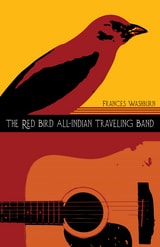
The Red Bird All-Indian Traveling Band
Frances Washburn
University of Arizona Press, 2014
The Red Bird All-Indian Traveling Band is part mystery, part community chronicle. Shaped by a cast of skillfully drawn characters, all of whom at one time or another are potential suspects, at the core of the story is smart and compassionate Sissy. Four years past high school, Sissy’s wry humor punctuates descriptions of reservation life as she learns more about Ames’s potential killer, and as she embarks on a personal search for ways to buck expectations and leave rural South Dakota to attend college.
Ames’s death is just an example of the undercurrents of violence and passions that run through this fast-moving novel of singing, loving, and fighting. Following Sissy as she unravels the mystery of both Buffalo Ames’s death and her own future, The Red Bird All-Indian Traveling Band is the story of Indian Country on the verge of historic change and a woman unwilling to let change pass her by.
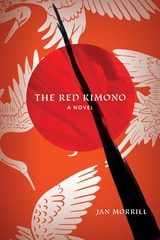
The Red Kimono
A NovelJan Morrill
University of Arkansas Press, 2013
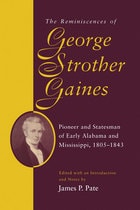
The Reminiscences of George Strother Gaines
Pioneer and Statesman of Early Alabama and Mississippi, 1805–1843George Strother Gaines
University of Alabama Press, 1998
One man’s remarkable account of nation‑building, Native diplomacy, and the making of the early American South.
The Reminiscences of George Strother Gaines: Pioneer and Statesman of Early Alabama and Mississippi, 1805–1843 offers one of the most vivid, irreplaceable firsthand accounts of the American Southeast during its most transformative decades. Edited and expertly contextualized by historian James P. Pate, this volume gathers Gaines’s dictated memoirs, rare letters, early newspaper publications, oral-history interviews, and extensive editorial notes to illuminate a world on the cusp of monumental change.
George Strother Gaines was no ordinary frontier figure. Trusted by U.S. officials and Choctaw leaders alike, he played central roles as federal factor at the Choctaw Trading House, a key intermediary during treaty negotiations, a primary organizer of the first Choctaw removal, a banker and state senator in newly formed Alabama, and later a driving force behind the Mobile & Ohio Railroad. His reminiscences reveal intimate knowledge of the region’s political development, frontier economy, Native diplomacy, and daily life. They are written in a strikingly elegant “Addisonian” style praised even in his own lifetime.
This edition’s special features—including detailed maps, illustrations, genealogical material, and a robust scholarly introduction—make it the most comprehensive and authoritative presentation of Gaines’s writings ever published. It not only preserves his voice but situates him within the broader historical forces reshaping the Gulf South and Native nations in the nineteenth century.
Ideal readers include:
• Historians of Alabama, Mississippi, and the early American South
• Scholars of Native American and Choctaw/Chickasaw history
• Readers of frontier, antebellum, or political history
• Genealogists and local-history enthusiasts
• Anyone seeking an engaging, elegantly written window into the early Southeast
This is a foundational text for understanding the region’s past—and a compelling story told by one of its most influential witnesses.
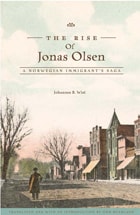
The Rise of Jonas Olsen
A Norwegian Immigrant’s SagaJohannes Wist
University of Minnesota Press, 2005
The Rise of Jonas Olsen is at once an immigrant novel, business novel, political novel, and a western, offering a rich and panoramic view of Scandinavian immigrant life in the Upper Midwest. Wist combines realism and satire to depict the role Norwegian Americans played in the economic, political, and cultural life of the Upper Midwest.
Originally published serially in the Norwegian-language newspaper the Decorah Posten in the 1920s, The Rise of Jonas Olsen illustrates an immigrant’s struggle to preserve his identity and heritage while striving to become fully accepted as an American.
Johannes B. Wist (1864–1923) was a journalist and editor of the Decorah Posten from 1900 to 1923.
Orm Øverland is professor of American literature at the University of Bergen, Norway, and the author of The Western Home: A Literary History of Norwegian America and Immigrant Minds, American Identities: Making the United States Home, 1870-1930.
Todd W. Nichol is editor of the Norwegian-American Historical Association publication program.
Published in cooperation with the Norwegian-American Historical Association.
The Road Home
The Ukrainian Trilogy, Part 3Józef Lobodowski
Central European University Press, 2026
Set amid the violence and social disintegration of the revolutionary period, there is no hatred in Lobodowski's work. Instead, it offers a vivid and nuanced portrayal of the Kuban, a multinational area in the northwestern Caucasus near the Sea of Azov, as a landscape where brutality and compassion coexist. Within spaces marked by deprivation and upheaval, bonds of loyalty, honor, and care emerge in unexpected ways, and strangers become protectors and guides.This volume presents a powerful meditation on endurance, identity, and the persistence of humanity in an age of collapse.
The Roads of My Relations
Devon A. Mihesuah
University of Arizona Press, 2001
"I've traveled a lot of roads, but never alone. My relations are with me," says Billie McKenney, one of the matriarchs of the complex family of Choctaws searching for peace as the white world rapidly encroaches on their tribal land, politics, and values. In her first collection of stories, Native American writer Devon A. Mihesuah chronicles the lives of several generations of a close-knit Choctaw family as they are forced from their traditional homeland in nineteenth-century Mississippi and endure unspeakable sorrows during their journey before settling in southeastern Oklahoma.
Blending family lore, stark realism, and vivid imagination, The Roads of My Relations relays a strong sense of Choctaw culture and world view in absorbing tales of history and legend. Unfolding through the voices and actions of family members, confused half-bloods, and unlikely heroes—not all of them living or even human—the stories tell of the horrors of forced removal, the turbulence of post Civil War Indian Territory, the terrifying violence suffered at the hands of immortal Crow witches, and the family's ultimate survival against forces of evil. Time-traveling ghosts, mysterious medicine men, and eerie shape-shifters share the pages with proud matriarchs, mischievous schoolgirls, and loving siblings.
Together, these interwoven stories express the strength and persistence of a tribe whose identity and pride have survived the disruptions of colonialism. With The Roads of My Relations, Devon A. Mihesuah has created a universal and timeless exploration of heritage, spirituality, and the importance of preserving and passing on tradition.
The Roma - A Minority in Europe
Historical, Political and Social PerspectivesYehuda Bauer
Central European University Press, 2007
The main issues arising from the encounter between Roma people and surrounding European society since the time of their arrival in Medieval Europe until today are discussed in this work. The history of their persecution and genocide during the Nazi era, in particular, is central to the present volume. Significantly, some authors sought to emphasize the continuing history of prejudice and persecution, which reached a peak during the Nazi era and persisted after the war. Current questions of social integration in Europe, as well as that of ethnic definition and the construction of ethnic-national identity constitute another principal pillar of the book. The complexity of issues involved, such as collective memory, myth-making and social constructionism, trigger intense debate among researchers dealing with Romani studies.
The Safe House
A NovelChristophe Boltanski
University of Chicago Press, 2017
When the Nazis came, Étienne Boltanski divorced his wife and walked out the front door, never to be seen again during the war. So far as the outside world knew, the Jewish doctor had fled. The truth was that he had sneaked back to hide in a secret crawl space at the heart of the house. There he lived for the duration of the war. With the Liberation, Étienne finally emerged, but he and his family were changed forever—anxious, reclusive, yet proudly eccentric. Their lives were spent, amid Bohemian disarray and lingering wartime fears, in the mansion’s recesses or packed comically into the protective cocoon of a Fiat.
That house (and its vehicular appendage) is at the heart of Christophe Boltanski’s ingeniously structured, lightly fictionalized account of his grandparents and their extended family. The novel unfolds room by room—each chapter opening with a floorplan—introducing us to the characters who occupy each room, including the narrator’s grandmother—a woman of “savage appetites”—and his uncle Christian, whose haunted artworks would one day make him famous. “The house was a palace,” Boltanski writes, “and they lived like hobos.” Rejecting convention as they’d rejected the outside world, the family never celebrated birthdays or even marked the passage of time, living instead in permanent stasis, ever more closely bonded to the house itself.
The Safe House was a literary sensation when published in France in 2015 and won the Prix de Prix, France’s most prestigious book prize. A French-language film adaptation, La cache, was released in 2025 from director Lionel Baier. With hints of Oulipian playfulness and an atmosphere of dark humor, The Safe House is an unforgettable portrait of a self-imprisoned family.
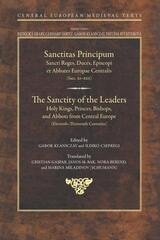
The Sanctity of the Leaders
Holy Kings, Princes, Bishops and Abbots from Central Europe (11th to 13th Centuries)Gábor Klaniczay
Central European University Press, 2023
The latest title in the Central European Medieval Texts series contains the lives of saints who were canonized in the eleventh through thirteenth centuries in the newly Christianized countries of Central and Eastern Europe (Bohemia, Poland, Hungary, and Dalmatia). A rejoinder to the earlier volume in the series, the Saints of the Christianization Age of Central Europe (CEMT, Vol. 6), containing hermits, missionaries, and martyrs, this second volume of hagiography is dominated by political or ecclesiastical leaders who became saintly patrons of their region and were highly venerated throughout the Middle Ages.
The legends in the volume present the two Hungarian holy kings Stephen and Ladislas, the holy duke Emeric, the Czech holy abbot Prokop of Sázava, three bishops, the Venetian-Hungarian Gellért of Csanád, the Polish Stanislas of Cracow (both martyrs), and the Dalmatian holy bishop Saint John of Trogir. Each “vita” is published in Latin original with an English translation and with prefaces discussing the textual tradition.
Saints’ lives have been recognized as an invaluable source of information on social and economic history, the history of mentalities and everyday life, cultural history, and, above all, as a special genre with crucial importance and prevalence in medieval literature.
The Scent of the Gods
Fiona Cheong
University of Illinois Press, 2010
The Schoolmaster's Daughter
John Smolens
Michigan State University Press, 2019
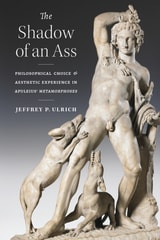
The Shadow of an Ass
Philosophical Choice and Aesthetic Experience in Apuleius' MetamorphosesJeffrey P. Ulrich
University of Michigan Press, 2024
Situating the novel in a long history of philosophical and literary conversations, Ulrich suggests that the Metamorphoses anticipates much of the philosophical burlesque we tend to associate with early modern fiction, from Don Quixote to Lewis Carroll.
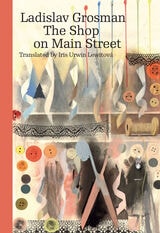
The Shop on Main Street
Ladislav Grosman
Karolinum Press, 2019
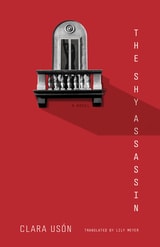
The Shy Assassin
A NovelClara Usón; translated from Spanish by Lily Meyer
Vanderbilt University Press, 2025
In September 1977, Sandra Mozarowsky—a seventeen-year-old Spanish erotic film actress and purported lover of King Juan Carlos I—died after leaping from her fourth-floor balcony in Madrid. The mysterious circumstances surrounding her death drew immediate public interest and generated conspiracy theories. Was her death a suicide? A covert murder? A cry for help? In The Shy Assassin, award-winning Spanish novelist Clara Usón uses the tragic death of Mozarowsky to provide a powerful philosophical meditation on suicide and the turbulent years of the Spanish transition to democracy. Playfully drawing upon the work of philosophers like Ludwig Wittgenstein and Jean-Paul Sartre, Usón weaves together her own experiences as a rebellious teenager with those of Mozarowsky with great power and emotion. Winner of the prestigious Sor Juana Inés de la Cruz Prize, Usón’s novel is a funny, provocative, and deeply entertaining look at Spanish culture during a time of historic political and cultural change.
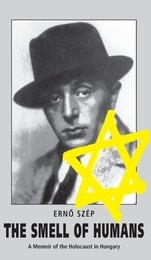
The Smell of Humans
A Memoir of the Holocaust in HungaryErno Szép
Central European University Press, 1994
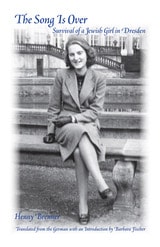
The Song Is Over
A Jewish Girl in DresdenHenny Brenner
University of Alabama Press, 2010

The Sorrowful Eyes Of Hannah Karajich
Ivan Olbracht
Central European University Press, 1999
The Sorrowful Eyes of Hannah Karajich is a lyrical, deeply moving story of love and the pain of emancipation, set in the now vanished world of rural East European Jewish village life. Hanna is the most beautiful girl in all Polona, a Hasidic community in the remote province of Sub-Carpathian Ruthenia. Involvement in the exciting new movement of Zionism takes her away to a commune in a nearby town. But there she meets and falls in love with the strangely named Ivo Karajich: a Jew, yet not a Jew. The agonizing drama that follows, plants into her beautiful almond-shaped eyes the hard grain of sorrow that her children, too, will inherit.
Olbracht's novella is both a great love story and a marvellous portrait of a world that modernity threatened and Hitler destroyed.
The Sovereigns
A Jewish Family in the German CountrysideEric Lucas
Northwestern University Press, 2001
But anti-Semites, under the protection of the Nazi regime, began to settle old scores, and targeted the economically successful rural Jews. New laws stripped Jewish meat dealers of their rights, and Aryan competitors eagerly forced them aside. That was only the beginning. In the Holocaust that followed, some members of the family escaped. Others did not.
The Species Maker
A NovelKristin Johnson
University of Alabama Press, 2021
A historical novel about the role of science in modern life, set against the backdrop of the 1925 Scopes Trial.
When William Jennings Bryan began a campaign to get evolution out of American schools in the 1920s, entomologist Martin Sullivan sought refuge from the tumult in his research. Although the theory of evolution provides the foundation for his scientific work, he prefers the careful methods of observation and classification to the passion of public debate. But when Martin takes a job teaching college biology in Seattle, he finds it increasingly difficult to retreat to the haven of science. His students are taking sides in the debate over whether religion and evolution can be reconciled. Socialists are using evolution to justify revolution. Politicians are citing Darwin in defense of anti-immigration laws. And Martin’s own colleagues are insisting that only eugenic reforms will save the world. As anti-evolution legislation spreads across the country and passions flare on all sides, the effort to apply science to marriage laws and mate choice even begins to touch the lives of those he loves. By the time the state of Tennessee puts John T. Scopes on trial for teaching evolution in the summer of 1925, Martin can no longer ignore the debates that surround him and must take a stand in the fight over the role of science in American society.
Although set a hundred years ago, The Species Maker wrestles with many issues that continue to confront scientists and science watchers in the present day. Kristin Johnson draws on her experiences in the classroom and extensive knowledge of the history of science to depict what it might have been like for a careful scientist to watch the heated debates over teaching evolution in the United States in the 1920s.
Visit www.thespeciesmaker.com for supplemental material including historical essays, links to online primary sources, a glossary, and guiding questions useful for the classroom or book clubs.
The Stable Boy
The First Witness Tells His StoryShirley A. Taylor
Parkhurst Brothers, Inc., 2012
"Shirley Taylor's story gives readers and hearers insight into the town of Bethlehem at the time of the birth of Christ. Wendell Hall's illustrations help us imagine that scene wonderfully. The young homeless boy touches our hearts and imaginations. Not just for children, this is a read aloud book for all ages." - Lauretta Phillips, Storyteller, Author, Radio & TV Host
The State of Southern Illinois
An Illustrated HistoryHerbert K. Russell
Southern Illinois University Press, 2012
Superior Achievement, Illinois State Historical Society, 2013
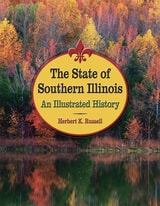
In The State of Southern Illinois: An Illustrated History, Herbert K. Russell offers fresh interpretations of a number of important aspects of Southern Illinois history. Focusing on the area known as “Egypt,” the region south of U.S. Route 50 from Salem south to Cairo, he begins his book with the earliest geologic formations and follows Southern Illinois’s history into the twenty-first century. The volume is richly illustrated with maps and photographs, mostly in color, that highlight the informative and straightforward text.
Perhaps most notable is the author’s use of dozens of heretofore neglected sources to dispel the myth that Southern Illinois is merely an extension of Dixie. He corrects the popular impressions that slavery was introduced by early settlers from the South and that a majority of Southern Illinoisans wished to secede. Furthermore, he presents the first in-depth discussion of twelve pre–Civil War, free black communities located in the region. He also identifies the roles coal mining, labor violence, gangsters, and the media played in establishing the area’s image. He concludes optimistically, unveiling a twenty-first-century Southern Illinois filled with myriad attractions and opportunities for citizens and tourists alike.
The State of Southern Illinois is the most accurate all-encompassing volume of history on this unique area that often regards itself as a state within a state. It offers an entirely new perspective on race relations, provides insightful information on the cultural divide between north and south in Illinois, and pays tribute to an often neglected and misunderstood region of this multidimensional state, all against a stunning visual backdrop.

The Steam and Diesel Era in Wheeling, West Virginia
Photographs by J. J. Young Jr.Nicholas Fry
West Virginia University Press, 2016
For nearly seventy years, John J. Young Jr. photographed railroads. With unparalleled scope and span, he documented the impact and beauty of railways in American life from 1936 to 2004.
As a child during the Great Depression, J. J. Young Jr. began to photograph railroads in Wheeling, West Virginia. This book collects over one hundred fifty of those images—some unpublished until now—documenting the railroads of Wheeling and the surrounding area from the 1930s until the 1960s.
The photographs within this book highlight the major railroads of Wheeling: the Baltimore & Ohio, the Pennsylvania, the Wheeling & Lake Erie, the Pittsburgh & West Virginia, the New York Central, and the industrial and interurban rail lines that crisscrossed the region. These images capture the routine activities of trains that carried passengers and freight to and from the city and its industries, as well as more unusual traffic, such as a circus-advertising car, the General Motors Train of Tomorrow, and the 1947 American Freedom Train.
The Strange Death of Mistress Coffin
Robert J. Begiebing
University Press of New England, 2012
The Strange and True Tale of Horace Wells, Surgeon Dentist
A NovelMichael Downs
Acre Books, 2018
But that discovery would also thrust Wells into scandals that threatened his reputation, his family, and his sanity—hardships and triumphs that resonate in today’s struggles with what hurts us and what we take to stop the hurt.
In this novel, Michael Downs mines the gaps in the historical record and imagines the motivations and mysteries behind Wells’s morbid fascination with pain, as well as the price he and his wife, Elizabeth, paid—first through his obsession, then his addiction.
The book is a love story, but also a story of what love can’t redeem; of narcotic dreams and waking insanity; of humbug and miracle; of pain’s destruction and what pains can never be eased. Following Wells throughout New England and across the ocean to Paris, the novel immerses the reader in the nineteenth century, conveying through rich physical description and telling dialogue the tragic life of a dentist who gave everything to rid the world of suffering.

The Sturdy Oak
A Composite Novel of American PoliticsElizabeth Jordan
Ohio University Press, 1998
In the spring of 1916, as the workers for woman suffrage were laying plans for another attack on the bastions of male supremacy, the idea for The Sturdy Oak was born. Based on the rules of an old parlor game, wherein one person begins a narrative, another continues it, and another follows, this collaborative effort by the leading writers of the day, such as Fannie Hurst, Dorothy Canfield, and Kathleen Norris, is a satiric look at the gender roles of the time.
There is much in The Sturdy Oak that reflects the New York campaign for suffrage of 1916–1917. The setting is the fictional city of Whitewater in upstate New York. Idealistic reformers are pitted against a ruthless political machine, and the traditional picture of man as “the sturdy oak” supporting woman, “the clinging vine,” is ridiculed in the portrayal of an engaging couple, George and Genevieve Remington. Nonetheless, the purpose of the book is not primarily ridicule but reform, and the reader is taken through the steps by which a confirmed anti-suffragist is gradually transformed into a supporter of the suffrage cause.
Beyond its historical interest, The Sturdy Oak is imbued with a political and social currency that makes it applicable even today. And because of the skill of the writers of this composite novel, even eight decades after its initial publication The Sturdy Oak is still, as the New York Times said in 1917, “irresistibly readable.”
The Tale of the Missing Man
A NovelManzoor Ahtesham, translated from the Hindi by Jason Grunebaum and Ulrike Stark
Northwestern University Press, 2018
The Tale of the Missing Man (Dastan-e Lapata) is a milestone in Indo-Muslim literature. A refreshingly playful novel, it explores modern Muslim life in the wake of the 1947 partition of India and Pakistan. Zamir Ahmad Khan suffers from a mix of alienation, guilt, and postmodern anxiety that defies diagnosis. His wife abandons him to his reflections about his childhood, writing, ill-fated affairs, and his hometown, Bhopal, as he attempts to unravel the lies that brought him to his current state (while weaving new ones).
A novel of a heroic quest gone awry, The Tale of the Missing Man artfully twists the conventions of the Urdu romance, or dastan, tradition, where heroes chase brave exploits that are invariably rewarded by love. The hero of Ahtesham’s tale, living in the fast-changing city of Bhopal during the 1970s and ’80s, suffers an identity crisis of epic proportions: he is lost, missing, and unknown both to himself and to others. The result is a twofold quest in which the fate of protagonist and writer become inextricably and ironically linked. The lost hero sets out in search of himself, while the author goes in search of the lost hero, his fictionalized alter ego.
New York magazine cited the book as one of “the world's best untranslated novels.” In addition to raising important questions about Muslim identity, Ahtesham offers a very funny and thoroughly self-reflective commentary on the modern author’s difficulties in writing autobiography.
The Global Humanities Translation Prize is awarded annually to a previously unpublished translation that strikes the delicate balance between scholarly rigor, aesthetic grace, and general readability, as judged by a rotating committee of Northwestern faculty, distinguished international scholars, writers, and public intellectuals. The Prize is organized by the Global Humanities Initiative, which is jointly supported by Northwestern University’s Buffett Institute for Global Studies and Kaplan Institute for the Humanities.
The Tears
Pascal Quignard
Seagull Books, 2023
The Tears is, at one level, a novel about the turbulent lives of twins, the sons of Charlemagne’s daughter Bertha. The studious and scholarly Nithard succeeds his father Angilbert as lay abbot of the Abbey of Saint Riquier in Normandy and accompanies his cousin the emperor Charles the Bald on his military campaigns. His twin brother Hartnid strikes out boldly for more exotic parts—including, eventually, Baghdad—in a seemingly deranged quest to track down the elusive female face that haunts his dreams. Yet this novel of intersecting historical threads and patches of poetic reimagining is crisscrossed by a host of other themes: the enigmatic joys afforded by nature, the intimate relation between living creatures which literature has since earliest times depicted, and the mysterious power of contingent events that have shaped entire cultures—including the birth of the French language itself. This heady brew of medieval chronicle, miraculous folktale, and speculative reconstruction of history further strengthens Pascal Quignard’s status as one of France’s most imaginative contemporary writers.
The Teeth of the Souls
A NovelSteve Yates
Moon City Press, 2015
The story begins just after the Civil War when Leighton Shea Morkan, son of Irish immigrants, marries Patricia Grünhaagen Weitzer, daughter of a German banking family. Yet he can’t let go of his childhood love and wartime confidante, the house hand and former slave, Judith. Both unions produce children, one a shrouded secret, and one the heir to the Morkan legacy: the limestone quarries of Springfield, Missouri, and the bloody past, what Judith calls “The Teeth of the Souls.”
Grounded in broad historical research and spanning Missouri’s reconstruction, vigilantism, and fall from grace, The Teeth of the Souls chronicles the violent melding of immigrant strains—Irish, German, Scots-Irish, and African American—into the fabric of the Ozarks.
The Thickets
Józef Lobodowski
Central European University Press, 2026
In The Thickets, Lobodowski paints a stark, unforgettable portrait of the turmoil that engulfed the former Russian Empire after the fall of the Tsar and Kerensky’s government. For Stas, once a student at a classical gymnasium, survival now means peddling contraband on the black market. Through his eyes, the reader is plunged into the chaos of war, revolution, and occupation—rendered with visceral power and human urgency.
The Tiger in the Attic
Memories of the Kindertransport and Growing Up EnglishEdith Milton
University of Chicago Press, 2006
In this illuminating chronicle, Edith describes how she struggled to fit in and to conquer self-doubts about her German identity. Her realistic portrayal of the seemingly mundane yet historically momentous details of daily life during World War II slowly reveals istelf as a hopeful story about the kindness and generosity of strangers. She paints an account rich with colorful characters and intense relationships, uncanny close calls and unnerving bouts of luck that led to survival. Edith's journey between cultures continues with her final passage to America—yet another chapter in her life that required adjustment to a new world—allowing her, as she narrates it here, to visit her past as an exile all over again.
The Tiger in the Attic is a literary gem from a skilled fiction writer, the story of a thoughtful and observant child growing up against the backdrop of the most dangerous and decisive moment in modern European history. Offering a unique perspective on Holocaust studies, this book is both an exceptional and universal story of a young German-Jewish girl caught between worlds.
“Milton is brilliant at the small stroke . . . as well as broader ones.”—Alana Newhouse, New York Times Book Review
The Toughest Kid We Knew
The Old New West: A Personal HistoryFrank Bergon
University of Nevada Press, 2020
The Travels of Increase Joseph
A Historical Novel about a Pioneer PreacherJerry Apps
University of Wisconsin Press, 2010
Link Lake, Wisconsin, 1852: Preacher Increase Link and the Standalone Fellowship settle near a lake that they name in his honor. Increase’s gifted tongue calls people to his mission to protect the land: “Unless we take care of the land we shall all perish.” To finance the fellowship activities, Increase sells his special cure-all tonic—fifty cents per bottle!
Inspired by actual events that took place in upstate New York and Wisconsin in the mid-nineteenth century, The Travels of Increase Joseph is the first in Jerry Apps’s series set in fictional Ames County, Wisconsin. The four novels in the series—which also includes In a Pickle, Blue Shadows Farm, and the forthcoming Cranberry Red—all take place around Link Lake at different points in history. They convey Apps’s deep knowledge of rural life and his own concern for land stewardship.
The Tree of Life, Book One
On the Brink of the Precipice, 1939Chava Rosenfarb
University of Wisconsin Press, 2004
Winner of the 1972 J. J. Segal Prize and the 1979 Manger Prize for Yiddish Literature
The Tree of Life, Book Three
The Cattle Cars Are Waiting, 1942–1944Chava Rosenfarb
University of Wisconsin Press, 2006
The third volume in this powerful trilogy, The Cattle Cars Are Waiting follows the tragic fate of the inhabitants of the ghetto. Chava Rosenfarb, herself a survivor of the Lodz Ghetto, Auschwitz, and Bergen-Belsen, draws on her own history to create characters who struggle daily to retain a sense of humanity and dignity despite the physical and psychological effects of ghetto life. Although the novel depicts horrendous experiences, the light of faith in the human spirit shines through every page.
Winner, Georges Bugnet Award for Best Novel, Writers Guild of Alberta
The Tree of Life, Book Two
From the Depths I Call You, 1940–1942Chava Rosenfarb
University of Wisconsin Press, 2005
This volume describes the lives of the novel’s protagonists in the Lodz Ghetto at the beginning of World War II. Chava Rosenfarb, herself a survivor of the Lodz Ghetto, Auschwitz, and Bergen-Belsen, draws on her own history to create realistic characters who struggle daily to retain a sense of humanity and dignity despite the physical and psychological effects of ghetto life. Although horrendous experiences are depicted, the light of faith in the human spirit shines through this novel’s every page.
The Trial of Sören Qvist
Janet Lewis
Ohio University Press, 2013
Originally published in 1947, The Trial of Sören Qvist has been praised by a number of critics for its intriguing plot and Janet Lewis’s powerful writing. And in the introduction to this new edition, Swallow Press executive editor and author Kevin Haworth calls attention to the contemporary feeling of the story—despite its having been written more than fifty years ago and set several hundred years in the past. As in Lewis’s best-known novel, The Wife of Martin Guerre, the plot derives from Samuel March Phillips’s nineteenth-century study, Famous Cases of Circumstantial Evidence, in which this British legal historian considered the trial of Pastor Sören Qvist to be the most striking case.
The Troubled Life of Peter Burnett
Oregon Pioneer and First Governor of CaliforniaR. Gregory Nokes
Oregon State University Press, 2018
It was one heck of a resume. Yet with the exception of the wagon road to California, in none of these roles was Burnett considered successful or well remembered. Indeed, he resigned from many of his most important positions, including the governorship, where he was widely perceived a failure.
Burnett’s weakness was that he refused to take advice from others. He insisted on marching to his own drum, even when it led to some terrible decisions. A former slaveholder, he could never seem to get beyond his single-minded goal of banning blacks and other minorities from the West.
The Troubled Life of Peter Burnett is the first full-length biography of this complicated character. Historians, scholars, and general readers with an interest in Western history will welcome R. Gregory Nokes’ accessible and deeply researched account.
The Twilight of Rome's Papal Nobility
The Life of Agnese Borghese Boncompagni LudovisiUgo Boncompagni Ludovisi (1856–1935)
Rutgers University Press, 2025
First privately published in 1921, The Twilight of Rome's Papal Nobility provides an intimate look at a family who grew up accustomed to almost unimaginable wealth, power, and glamour. A descendant of two popes, Ugo Boncompagni Ludovisi recounts the life story of his mother Agnese, who was raised in a palace full of priceless artwork, including pieces by Caravaggio and Michelangelo. We get a window into Agnese's private life—her girlhood, marriage, and raising of several children—as her public life becomes increasingly tumultuous amid the family’s struggles to retain its property. A tender elegy to a bygone era, Boncompagni Ludovisi's story provides a unique perspective on Italian history and Rome’s urban redevelopment.
The Unhappy Medium
Spiritualism and the Life of Margaret FoxBy Earl Wesley Fornell; Drawings by Lowell Collins
University of Texas Press, 1964
“Here, Mr. Split-Foot, do as I do!” exclaimed the child, and the spirits obeyed her command. Thus, in 1848, thirteen-year-old Margaret Fox inaugurated the age of spiritualism. Those early spirit manifestations in a humble New York farmhouse were “but the beginning of a grand seance which for the next half century was to see persons returned from the dead walking upon the earth, mingling freely with mortal Americans. Ceremonies were performed which united in wedlock the living and the dead; ghostly schoolboys returned from the land of the spirits to revisit their old schoolhouses, upsetting the dignity of earthly classrooms . . . Drivers of owl horsecars . . . were intrigued by beautiful female spirits who rode their cars at night and promptly vanished if approached for a fare.”
The colorful career of Margaret Fox, the most famous medium of the era and the “fountainhead” of the cult of spiritualism, attracted the attention of the most prominent public figures of the day. For P. T. Barnum, this phenomenon was another novelty to present to the American public. Horace Greeley took a personal interest in Margaret and her sister; he gave the movement extensive publicity. Lincoln often invited Margaret Fox and other mediums to the White House for seances, during which attempts were made to invoke the spirit of the Lincolns’ dead son. Members of Congress, judges, and intellectuals of the day were well acquainted with her and with the spiritualist movement.
The course of this spirit invasion and the many and varied means by which men communicated with dwellers of the other world are the subjects of this volume. With Margaret Fox the spirits spoke by rapping on floor and furniture. With others they communicated by writing on slates, by touching with ghostly hands, by moving furniture (one medium was so popular that his furniture followed him about like a pack of dogs). Some spirits spoke directly through the mouths of entranced mediums. And some were so bold—or so talented—that they were able to materialize in the flesh before properly receptive groups of people—and happy indeed was the devotee who received a warm embrace from a lovely young spirit lady or a handsome ghostly gentleman during such a materialization.
The spirits who thus displayed their interest in this mortal world soon came to have a considerable influence over whole segments of the American population. For some, spiritualism was a comforting means of maintaining contact with loved ones now departed. For others it was a religion, a blessed aid on the road to salvation. For still others it provided practical assistance with more earthly problems. Many found in it intriguing puzzles for scientific investigation. And for the whole country it provided a constant source of excitement, interest, and entertainment.
Written in spritely prose and permeated with a grave humor, this account of nineteenth-century spiritualism will be equally satisfying to the casual reader interested in a good story, and to the scholar seeking serious social history.
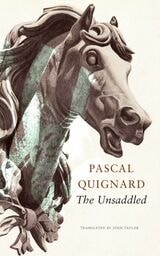
The Unsaddled
Pascal Quignard
Seagull Books, 2023
In Pascal Quignard’s writing, philology hunts for wild game in a dark forest. The Unsaddled, which features horses as its central figure, is no exception. Taking off from puns, multifarious imagery, and metaphorical meanings—“to be baffled,” “to be thrown”—that the book’s title provides, Quignard focuses on life-changing moments. We meet George Sand (whose father died after being thrown from his horse), Saint Paul, Abelard, Agrippa d’Aubigné, and countless other writers, philosophers, theologians, or kings who fell off their horses—not to forget Jean-Jacques Rousseau, who was knocked over by a dog. Being “unsaddled” can also be associated, as Quignard shows in regard to Nietzsche, with an “overturning” of values. Scenes of war, hunting, “fleeing” or sexuality—“When lovers have a horse ride, they gallop in another world”—come before our eyes, each time from those unsettling vantage points that Quignard knows how to find. As ever, he ranges far and wide in his intense quest, taking examples from across human history, from the neolithic age to his own childhood memories of postwar Le Havre in northern France.