Results by title
998 books match the query 'Life' and 223 start with t
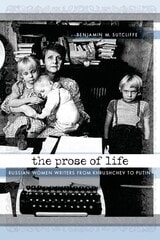
The Prose of Life
Russian Women Writers from Khrushchev to PutinBenjamin M. Sutcliffe
University of Wisconsin Press, 2009
A focus on the representation of everyday life in women’s prose reveals that a first generation of female writers (Natal’ia Baranskaia, Irina Grekova) both legitimated and limited their successors (Liudmila Petrushevskaia, Tat’iana Tolstaia, Liudmila Ulitskaia, and Svetlana Vasilenko) in their choice of literary topics. The Prose of Life traces the development, and intriguing ruptures, of recent Russian women’s prose, becoming a must-read for readers interested in Russian literature and gender studies.
2009 Outstanding Academic Title, Choice Magazine
The Quiet Hero
A Life of Ryan WhiteNelson Price
Indiana Historical Society Press, 2015
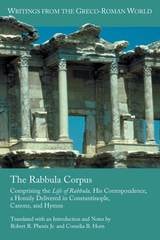
The Rabbula Corpus
Comprising the Life of Rabbula, His Correspondence, a Homily Delivered in ConstanRobert R. Phenix Jr.
SBL Press, 2017
A significant new study of Rabbula and Christianity in Edessa
This volume makes available for the first time both the Syriac text and an English translation of every available original composition by Rabbula, the controversial bishop of Edessa (ca. 411–435 CE). It includes a new edition of the Life of Rabbula and other biographical traditions about him, including his conversion from paganism to Christianity. The texts collected in the volume are a valuable source for studying the reception history of biblical themes. In addition, the corpus offers insights into the beginnings of ecclesiastical legislation in the East, charitable work, pilgrimage, ascetic ideals, and church administration. Horn and Phenix examine Rabbula’s contribution to the Christological controversies of the fifth and sixth centuries, including his influence on Cyril of Alexandria in his debate with Theodoret of Cyrrhus and Theodore of Mopsuestia.
Features
- A critical study of the theological, cultural, and historical development of Syriac Christianity
- Thorough historical, theological, and socio-cultural analysis provided for each text
- A previously unidentified Christian Palestinian Aramaic fragment
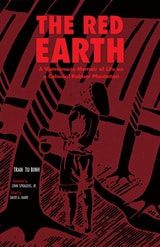
The Red Earth
A Vietnamese Memoir of Life on a Colonial Rubber PlantationBinh Tu Tran
Ohio University Press, 1985
Phu Rieng was one of many French rubber plantations in colonial Vietnam; Tran Tu Binh was one of 17,606 laborers brought to work there in 1927, and his memoir is a straightforward, emotionally searing account of how one Vietnamese youth became involved in revolutionary politics. The connection between this early experience and later activities of the author becomes clear as we learn that Tran Tu Binh survived imprisonment on Con Son island to help engineer the general uprising in Hanoi in 1945.
The Red Earth is the first of dozens of such works by veterans of the 1924–45 struggle in Vietnam to be published in English translation. It is important reading for all those interested in the many-faceted history of modern Vietnam and of communism in the non-Western world.
The Relevance of Philosophy to Life
John Lachs
Vanderbilt University Press, 1995
The River of Life
Sustainable Practices of Native Americans and Indigenous PeoplesMichael E. Marchand
Michigan State University Press, 2014
The Romantic Conception of Life
Science and Philosophy in the Age of GoetheRobert J. Richards
University of Chicago Press, 2002
Integrating Romantic literature, science, and philosophy with an intimate knowledge of the individuals involved—from Goethe and the brothers Schlegel to Humboldt and Friedrich and Caroline Schelling—Richards demonstrates how their tempestuous lives shaped their ideas as profoundly as their intellectual and cultural heritage. He focuses especially on how Romantic concepts of the self, as well as aesthetic and moral considerations—all tempered by personal relationships—altered scientific representations of nature. Although historians have long considered Romanticism at best a minor tributary to scientific thought, Richards moves it to the center of the main currents of nineteenth-century biology, culminating in the conception of nature that underlies Darwin's evolutionary theory.
Uniting the personal and poetic aspects of philosophy and science in a way that the German Romantics themselves would have honored, The Romantic Conception of Life alters how we look at Romanticism and nineteenth-century biology.
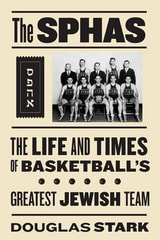
The SPHAS
The Life and Times of Basketball's Greatest Jewish TeamAuthored by Doug Stark
Temple University Press, 2011
Founded in 1918, the South Philadelphia Hebrew Association's basketball team, known as the SPHAS, was a top squad in the American Basketball League-capturing seven championships in thirteen seasons-until it disbanded in 1959. In The SPHAS, the first book to chronicle the history of this team and its numerous achievements, Douglas Stark uses rare and noteworthy images of players and memorabilia as well as interviews and anecdotes to recall how players like Inky Lautman, Cy Kaselman, and Shikey Gotthoffer fought racial stereotypes of weakness and inferiority while spreading the game's popularity. Team owner Eddie Gottlieb and Temple University coach Harry Litwack, among others profiled here, began their remarkable careers with the SPHAS.
Stark explores the significance of basketball to the Jewish community during the game's early years, when Jewish players dominated the sport and a distinct American Jewish identity was on the rise. At a time when basketball teams were split along ethnic lines, the SPHAS represented the Philadelphia Jewish community. The SPHAS is an inspiring and heartfelt tale of the team on and off the court.
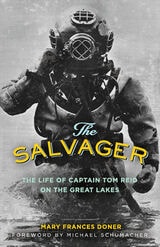
The Salvager
The Life of Captain Tom Reid on the Great LakesMary Frances Doner
University of Minnesota Press, 2017
First published in 1958, The Salvager is both a narrative history of Great Lakes shipping disasters of 1880–1950 and the life story of Captain Thomas Reid, who operated one of the region’s largest salvaging companies during that era.
The treacherous shoals, unpredictable storms, and sub-zero temperatures of the Great Lakes have always posed special hazards to mariners—particularly before the advent of modern navigational technologies—and offered ample opportunity for an enterprising sailor to build a salvage business up from nothing. Designing much of his equipment himself and honing a keen eye for the risks and rewards of various catastrophes, Captain Reid rose from humble beginnings and developed salvaging into a science. Using the actual records of the Reid Wrecking and Towing Company as well as Reid’s personal logs and letters, Mary Frances Doner deftly tells the stories not only of the maritime disasters and the wrecking adventures that followed, but also of those waiting back on shore for their loved ones to return.
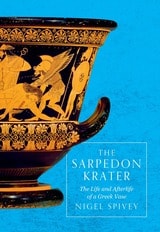
The Sarpedon Krater
The Life and Afterlife of a Greek VaseNigel Spivey
University of Chicago Press, 2019
Spivey takes the reader on a dramatic journey, beginning with the krater’s looting from an Etruscan tomb in 1971 and its acquisition by the Metropolitan Museum of Art, New York, followed by a high-profile lawsuit over its status and its eventual return to Italy. He explains where, how, and why the vase was produced, retrieving what we know about the life and legend of Sarpedon. Spivey also pursues the figural motif of the slain Sarpedon portrayed on the vase and traces how this motif became a standard way of representing the dead and dying in Western art, especially during the Renaissance.
Fascinating and informative, The Sarpedon Krater is a multifaceted introduction to the enduring influence of Greek art on the world.

The Script of Life in Modern Society
Entry into Adulthood in a Changing WorldMarlis Buchmann
University of Chicago Press, 1989
The Secret Trust of Aspasia Cruvellier Mirault
The Life and Trials of a Free Woman of Color in Antebellum GeorgiaJanice L. Sumler-Edmond
University of Arkansas Press, 2008
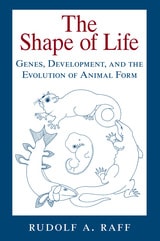
The Shape of Life
Genes, Development, and the Evolution of Animal FormRudolf A. Raff
University of Chicago Press, 1996
Raff uses the evolution of animal body plans to exemplify the interplay between developmental mechanisms and evolutionary patterns. Animal body plans emerged half a billion years ago. Evolution within these body plans during this span of time has resulted in the tremendous diversity of living animal forms.
Raff argues for an integrated approach to the study of the intertwined roles of development and evolution involving phylogenetic, comparative, and functional biology. This new synthesis will interest not only scientists working in these areas, but also paleontologists, zoologists, morphologists, molecular biologists, and geneticists.
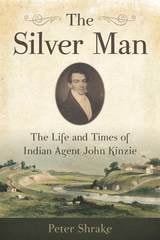
The Silver Man
The Life and Times of Indian Agent John KinziePeter Shrake
Wisconsin Historical Society Press, 2016
In The Silver Man: The Life and Times of John Kinzie, readers witness the dramatic changes that swept the Wisconsin frontier in the early and mid-1800s, through the life of Indian agent John Harris Kinzie. From the War of 1812 and the monopoly of the American Fur Company, to the Black Hawk War and the forced removal of thousands of Ho-Chunk people from their native lands—John Kinzie’s experience gives us a front-row seat to a pivotal time in the history of the American Midwest.
As an Indian agent at Fort Winnebago—in what is now Portage, Wisconsin—John Kinzie served the Ho-Chunk people during a time of turbulent change, as the tribe faced increasing attacks on its cultural existence and very sovereignty, and struggled to come to terms with American advancement into the upper Midwest. The story of the Ho-Chunk Nation continues today, as the tribe continues to rebuild its cultural presence in its native homeland.
Through John Kinzie’s story, we gain a broader view of the world in which he lived—a world that, in no small part, forms a foundation for the world in which we live today.

The Six-Minute Memoir
Fifty-Five Short Essays on LifeMary Helen Stefaniak
University of Iowa Press, 2022
What’s more, writing prompts at the end of the book invite readers to search their own lives for such moments—the kind that could be forgotten but instead are turned, by the gift of perspective and perfectly chosen detail, into treasure. The Six-Minute Memoir encourages people to tell their own stories even if they think they don’t have the kind of story that belongs in a memoir.

The Socialist Way of Life in Siberia
Transformation in BuryatiaMelissa Chakars
Central European University Press, 2014
The Socratic Way of Life
Xenophon’s “Memorabilia”Thomas L. Pangle
University of Chicago Press, 2018
In the first part of the book, Pangle analyzes Xenophon’s defense of Socrates against the two charges of injustice upon which he was convicted by democratic Athens: impiety and corruption of the youth. In the second part, Pangle analyzes Xenophon’s account of how Socrates’s life as a whole was just, in the sense of helping through his teaching a wide range of people. Socrates taught by never ceasing to raise, and to progress in answering, the fundamental and enduring civic questions: what is pious and impious, noble and ignoble, just and unjust, genuine statesmanship and genuine citizenship. Inspired by Hegel’s and Nietzsche’s assessments of Xenophon as the true voice of Socrates, The Socratic Way of Life establishes the Memorabilia as the groundwork of all subsequent political philosophy.

The Soldier's Friend
A Life of Ernie PyleRay E. Boomhower
Indiana Historical Society Press, 2006
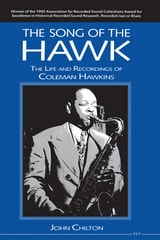
The Song of the Hawk
The Life and Recordings of Coleman HawkinsJohn Chilton
University of Michigan Press, 1993

The Spirits of Bad Men Made Perfect
The Life and Diary of Confederate Artillerist William Ellis JonesConstance Hall Jones
Southern Illinois University Press, 2020
In 1865 Jones returned to his prewar printing trade in Richmond, and his lasting reputation stems from his namesake publishing company’s role in the creation and dissemination of much of the Lost Cause ideology. Unlike the pro-Confederate books and pamphlets Jones published—primary among them the Southern Historical Society Papers—his diary shows the mindset of an unenthusiastic soldier. In a model of contextualization, Constance Hall Jones shows how her ancestor came to embrace an uncritical veneration of the army’s leadership and to promulgate a mythology created by veterans and their descendants who refused to face the amorality of their cause.
Jones brackets the soldier’s diary with rich, biographical detail, profiling his friends and relatives and providing insight into his childhood and post-war years. In doing so, she offers one of the first serious investigations into the experience of a Welsh immigrant family loyal to the Confederacy and makes a significant contribution to our understanding of Civil War–era Richmond and the nineteenth-century publishing industry. Invitingly written, The Spirits of Bad Men Made Perfect is an engaging life-and-times story that will appeal to historians and general readers alike.
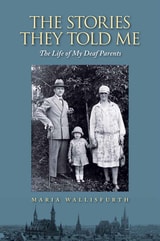
The Stories They Told Me
The Life of My Deaf ParentsMaria Wallisfurth
Gallaudet University Press, 2017
Despite their dissimilar backgrounds and the political circumstances that roiled their lives, the author’s parents showed great love for each other and their only daughter. The Stories They Told Me is a richly detailed document of time and place and a rare account of deaf lives during this era.
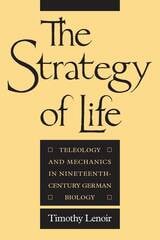
The Strategy of Life
Teleology and Mechanics in Nineteenth-Century German BiologyTimothy Lenoir
University of Chicago Press, 1989
Strongly influenced by Immanuel Kant, the biologists' approach combined a sophisticated teleology with mechanistic theories and sparked bitter controversies with the rival programs, mechanistic reductionism and Darwinism. Although temporarily eclipsed by these two approaches, the morphological tradition, Lenoir argues, was not vanquished in the field of scientific debate. It contributed to pathbreaking research in areas such as comparative anatomy, embryology, paleontology, and biogeography.

The Structures of the Life World
Alfred Schutz and Thomas Luckmann
Northwestern University Press, 1989

The Structures of the Life World
Alfred Schutz and Thomas Luckmann
Northwestern University Press, 1973
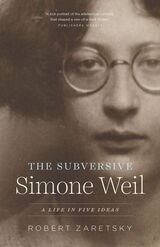
The Subversive Simone Weil
A Life in Five IdeasRobert Zaretsky
University of Chicago Press, 2021
Though Weil published little during her life, after her death, thanks largely to the efforts of Albert Camus, hundreds of pages of her manuscripts were published to critical and popular acclaim. While many seekers have been attracted to Weil’s religious thought, Robert Zaretsky gives us a different Weil, exploring her insights into politics and ethics, and showing us a new side of Weil that balances her contradictions—the rigorous rationalist who also had her own brand of Catholic mysticism; the revolutionary with a soft spot for anarchism yet who believed in the hierarchy of labor; and the humanitarian who emphasized human needs and obligations over human rights. Reflecting on the relationship between thought and action in Weil’s life, The Subversive Simone Weil honors the complexity of Weil’s thought and speaks to why it matters and continues to fascinate readers today.
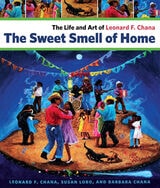
The Sweet Smell of Home
The Life and Art of Leonard F. ChanaLeonard F. Chana, Susan Lobo, and Barbara Chana
University of Arizona Press, 2009
He began his career by creating cards and soon was lending his art to posters and logos for many community-based Native organizations. Winning recognition from these groups, his work was soon actively sought by them. Chana’s work also appears on the covers and as interior art in a number of books on southwestern and American Indian topics.
The Sweet Smell of Home is an autobiographical work, written in Chana’s own voice that unfolds through oral history interviews with anthropologist Susan Lobo. Chana imparts the story of his upbringing and starting down the path toward a career as an artist. Balancing humor with a keen eye for cultural detail, he tells us about life both on and off the reservation.
Eighty pieces of art—26 in color—grace the text, and Chana explains both the impetus for and the evolution of each piece. Leonard Chana was a people’s artist who celebrated the extraordinary heroism of common people’s lives. The Sweet Smell of Home now celebrates this unique artist whose words and art illuminate not only his own remarkable life, but also the land and lives of the Tohono O’odham people
The Sword & the Pen
A Life of Lew WallaceRay E. Boomhower
Indiana Historical Society Press, 2005

The Syrian Revolution
Between the Politics of Life and the Geopolitics of DeathYasser Munif
Pluto Press, 2020
Having lived in Syria for over fifteen years, Yasser Munif is expert in exploring the micropolitics of revolutionary forces. He uncovers how cities are managed, how precious food is distributed and how underground resistance thrives in regions controlled by regime forces. In contrast, the macropolitics of the elite Syrian regime are undemocratic, destructive and counter-revolutionary. Regional powers, Western elites, as well as international institutions choose this macropolitical lens to apprehend the Syrian conflict. By doing so, they also choose to ignore the revolutionaries' struggles.
By looking at the interplay between the two sides, case studies of Aleppo and Manbij and numerous firsthand interviews, Yasser Munif shows us that this macro and geopolitical authoritarianism only brings death, and that by looking at the smaller picture - the local, the grassroots, the revolutionaries - we can see the politics of life emerge.
The Things That Really Matter
Philosophical Conversations on the Cornerstones of LifeMichael Hauskeller
University College London, 2022
While rooted in academic discourse, The Things That Really Matter comprehensively explores the most fundamental aspects of human life in approachable, non-technical language, adding fresh perspectives and new arguments and considerations that are designed to stimulate further debate. It features a series of conversations about the things in our life that we all, in one way or another, wrestle with if we are at all concerned about what kind of world we live in and what our role in it is: things like birth, age, and death, good and evil, the meaning of life, the nature of the self and the role the body plays for our identity, our gendered existence, love and faith, free will, beauty, and our experience of the sacred.
Situating abstract ideas in concrete experience, The Things That Really Matter encourages the reader to participate in an open-ended dialogue involving a variety of thinkers with different backgrounds and orientations. Lively and accessible, it shows thinking as a process and a collaborative endeavor that benefits from our talking to each other rather than against each other, featuring real conversations, where ideas are explored, tested, changed, and occasionally dropped. It is thinking in motion, personal yet universal.
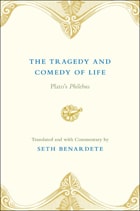
The Tragedy and Comedy of Life
Plato's PhilebusPlato
University of Chicago Press, 1993
In The Tragedy and Comedy of Life, Seth Benardete focuses on the idea of the good in what is widely regarded as one of Plato's most challenging and complex dialogues, the Philebus. Traditionally the Philebus is interpreted as affirming the doctrine that the good resides in thought and mind rather than in pleasure or the body. Benardete challenges this view, arguing that Socrates vindicates the life of the mind over the life of pleasure not by separating the two and advocating a strict asceticism, but by mixing pleasure and pain with mind in such a way that the philosophic life emerges as the only possible human life.
Benardete combines a probing and challenging commentary that subtly mirrors and illuminates the complexities of this dialogue with the finest English translation of the Philebus yet available. The result is a work that will be of great value to classicists, philosophers, and political theorists alike.
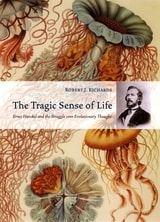
The Tragic Sense of Life
Ernst Haeckel and the Struggle over Evolutionary ThoughtRobert J. Richards
University of Chicago Press, 2008
Prior to the First World War, more people learned of evolutionary theory from the voluminous writings of Charles Darwin’s foremost champion in Germany, Ernst Haeckel (1834–1919), than from any other source, including the writings of Darwin himself. But, with detractors ranging from paleontologist Stephen Jay Gould to modern-day creationists and advocates of intelligent design, Haeckel is better known as a divisive figure than as a pioneering biologist. Robert J. Richards’s intellectual biography rehabilitates Haeckel, providing the most accurate measure of his science and art yet written, as well as a moving account of Haeckel’s eventful life.
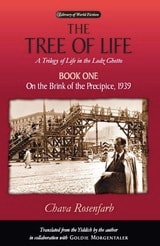
The Tree of Life, Book One
On the Brink of the Precipice, 1939Chava Rosenfarb
University of Wisconsin Press, 2004
Winner of the 1972 J. J. Segal Prize and the 1979 Manger Prize for Yiddish Literature
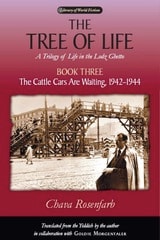
The Tree of Life, Book Three
The Cattle Cars Are Waiting, 1942–1944Chava Rosenfarb
University of Wisconsin Press, 2006
The third volume in this powerful trilogy, The Cattle Cars Are Waiting follows the tragic fate of the inhabitants of the ghetto. Chava Rosenfarb, herself a survivor of the Lodz Ghetto, Auschwitz, and Bergen-Belsen, draws on her own history to create characters who struggle daily to retain a sense of humanity and dignity despite the physical and psychological effects of ghetto life. Although the novel depicts horrendous experiences, the light of faith in the human spirit shines through every page.
Winner, Georges Bugnet Award for Best Novel, Writers Guild of Alberta
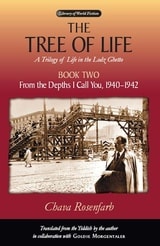
The Tree of Life, Book Two
From the Depths I Call You, 1940–1942Chava Rosenfarb
University of Wisconsin Press, 2005
This volume describes the lives of the novel’s protagonists in the Lodz Ghetto at the beginning of World War II. Chava Rosenfarb, herself a survivor of the Lodz Ghetto, Auschwitz, and Bergen-Belsen, draws on her own history to create realistic characters who struggle daily to retain a sense of humanity and dignity despite the physical and psychological effects of ghetto life. Although horrendous experiences are depicted, the light of faith in the human spirit shines through this novel’s every page.
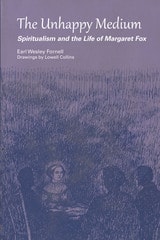
The Unhappy Medium
Spiritualism and the Life of Margaret FoxBy Earl Wesley Fornell; Drawings by Lowell Collins
University of Texas Press, 1964
“Here, Mr. Split-Foot, do as I do!” exclaimed the child, and the spirits obeyed her command. Thus, in 1848, thirteen-year-old Margaret Fox inaugurated the age of spiritualism. Those early spirit manifestations in a humble New York farmhouse were “but the beginning of a grand seance which for the next half century was to see persons returned from the dead walking upon the earth, mingling freely with mortal Americans. Ceremonies were performed which united in wedlock the living and the dead; ghostly schoolboys returned from the land of the spirits to revisit their old schoolhouses, upsetting the dignity of earthly classrooms . . . Drivers of owl horsecars . . . were intrigued by beautiful female spirits who rode their cars at night and promptly vanished if approached for a fare.”
The colorful career of Margaret Fox, the most famous medium of the era and the “fountainhead” of the cult of spiritualism, attracted the attention of the most prominent public figures of the day. For P. T. Barnum, this phenomenon was another novelty to present to the American public. Horace Greeley took a personal interest in Margaret and her sister; he gave the movement extensive publicity. Lincoln often invited Margaret Fox and other mediums to the White House for seances, during which attempts were made to invoke the spirit of the Lincolns’ dead son. Members of Congress, judges, and intellectuals of the day were well acquainted with her and with the spiritualist movement.
The course of this spirit invasion and the many and varied means by which men communicated with dwellers of the other world are the subjects of this volume. With Margaret Fox the spirits spoke by rapping on floor and furniture. With others they communicated by writing on slates, by touching with ghostly hands, by moving furniture (one medium was so popular that his furniture followed him about like a pack of dogs). Some spirits spoke directly through the mouths of entranced mediums. And some were so bold—or so talented—that they were able to materialize in the flesh before properly receptive groups of people—and happy indeed was the devotee who received a warm embrace from a lovely young spirit lady or a handsome ghostly gentleman during such a materialization.
The spirits who thus displayed their interest in this mortal world soon came to have a considerable influence over whole segments of the American population. For some, spiritualism was a comforting means of maintaining contact with loved ones now departed. For others it was a religion, a blessed aid on the road to salvation. For still others it provided practical assistance with more earthly problems. Many found in it intriguing puzzles for scientific investigation. And for the whole country it provided a constant source of excitement, interest, and entertainment.
Written in spritely prose and permeated with a grave humor, this account of nineteenth-century spiritualism will be equally satisfying to the casual reader interested in a good story, and to the scholar seeking serious social history.
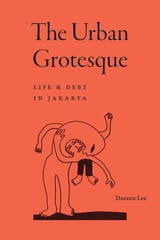
The Urban Grotesque
Life and Debt in JakartaDoreen Lee
Duke University Press, 2025
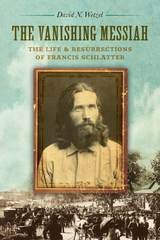
The Vanishing Messiah
The Life and Resurrections of Francis SchlatterDavid N. Wetzel
University of Iowa Press, 2016
Or did it?
Within hours of the announcement of Schlatter’s found remains, a long-haired man emerged in Cleveland to say that he was Francis Schlatter, and the next twenty-five years, several others claimed to be Denver’s great healer. In The Vanishing Messiah, a modern researcher painstakingly pieces together evidence from letters, newspaper reports, hospital records, mug shots, and published reminiscences of the healer to find out what really happened to Francis Schlatter after he left Denver in the middle of the night in November 1895. In doing so, David N. Wetzel uncovers a historical puzzle of lies, deception, and betrayal, and offers a tantalizing look into a nineteenth-century messiah and his twentieth-century reincarnations—one of whom may have been the healer himself.
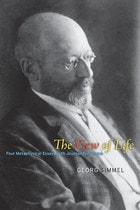
The View of Life
Four Metaphysical Essays with Journal AphorismsGeorg Simmel
University of Chicago Press, 2010
Published in 1918, The View of Life is Georg Simmel’s final work. Famously deemed “the brightest man in Europe” by George Santayana, Simmel addressed diverse topics across his essayistic writings, which influenced scholars in aesthetics, epistemology, and sociology. Nevertheless, certain core issues emerged over the course of his career—the genesis, structure, and transcendence of social and cultural forms, and the nature and conditions of authentic individuality, including the role of mindfulness regarding mortality. Composed not long before his death, The View of Life was, Simmel wrote, his “testament,” a capstone work of profound metaphysical inquiry intended to formulate his conception of life in its entirety.
Now Anglophone readers can at last read in full the work that shaped the argument of Heidegger’s Being and Time and whose extraordinary impact on European intellectual life between the wars was extolled by Jürgen Habermas. Presented alongside these seminal essays are aphoristic fragments from Simmel’s last journal, providing a beguiling look into the mind of one of the twentieth century’s greatest thinkers.
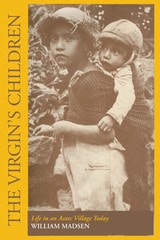
The Virgin's Children
Life in an Aztec Village TodayBy William Madsen
University of Texas Press, 1960
An absorbing account of the descendants of the ancient Aztecs and of the survival of their culture into the twentieth century in the Valley of Mexico is presented in this fascinating volume. Focusing on San Francisco Tecospa—a village of some eight hundred Indians who still spoke Nahuatl, whose lives were dominated by supernaturalism, and who observed with only slight modification much of their Aztec heritage—this story bears out the anthropological principle that innovations are most likely to be accepted when they are useful, communicable, and compatible with established tradition.
Nowhere is the Indian genius for combining the old and the new better exemplified than in the story of how the Virgin of Guadalupe came to fulfill the role formerly played by the pagan goddess Tonantzin and of how Christian saints replaced the Aztec gods. At the time of this study, the Tecospans still called the Catholic Virgin Tonantzin, but their concept of the mother goddess had changed profoundly since Aztec times.
Tonantzin the Pagan, a hideous goddess with claws on her hands and feet and with snakes entwining her face, wore a necklace of hearts, hands, and skulls to represent her insatiable appetite for corpses. Tonantzin the Catholic—also called Guadalupe—is a beautiful and benevolent mother deity who repeatedly stays God’s anger against her Mexican children and answers the prayers of the poorest Indian, with no thought of return.
In Tecospa the road to social recognition lay in the performance of religious works, and the neglect of ritual obligation subjected both the individual and the community to the anger of supernaturals who punished with illness or other misfortune. Religion was inextricably a part of every phase of life, and it is the whole life of the Aztecan that is recorded here: fiesta, clothing, food, agricultural practices, courtship, marriage, pregnancy and childbirth, death, witchcraft and its cures, medical practices and attitudes, houses and home life, ethics, and the hot-cold complex that classifies everything in the Tecospan universe from God to Bromo-Seltzer.
With a marked simplicity of style and language William Madsen has produced a profoundly significant anthropological study that is delightful reading from the first sentence to the last. The drawings, the work of a ten-year-old Tecospan lad, are remarkable for their penetrating insight into the culture.
The Voice of the River
A NovelMelanie Rae Thon
University of Alabama Press, 2011
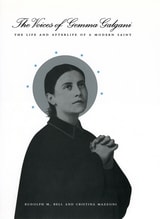
The Voices of Gemma Galgani
The Life and Afterlife of a Modern SaintRudolph M. Bell and Cristina Mazzoni
University of Chicago Press, 2002
Gemma Galgani was the first person who lived in the twentieth century to become a saint. Born in Lucca to a pharmacist and his wife, Gemma died of tuberculosis at the young age of twenty-five after a life of intense personal spirituality. Jesus caressed her as lovers do; the Virgin Mary was her affectionate Mom; Brother Gabriel playfully teased her about whether she preferred his visits to those of Jesus; and she even received all of Christ's wounds in her hands, feet, and side. At the same time, she was mocked by her family and labeled a hysteric by doctors and the local bishop. Her trials and the intimate details of her supernatural encounters—the voices of Gemma Galgani—are revealed here in this marvelous book by Rudolph M. Bell and Cristina Mazzoni.
Bell and Mazzoni have chosen and translated the most important of Gemma's words: her autobiographical account of her childhood, her diary, and key selections from her "ecstasies" and letters. Gemma emerges as a very modern saint indeed: confident, grandiose, manipulative, childish, admired, and with this book, no longer forgotten. Following Gemma's own voice, Bell carefully contextualizes her life and passion and explores her afterlife, specifically the complicated process of her canonization. Mazzoni closes the book with a "Saint's Alphabet" that finds, through Gemma's voice, spiritual meaning for women in the twenty-first century.
Far more than the reinvigoration of a neglected historical figure, The Voices of Gemma Galgani is a portrait of a complex girl-woman caught between the medieval and the modern and a potent reminder of spirituality in a supposedly secular age.
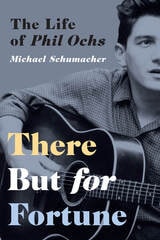
There But for Fortune
The Life of Phil OchsMichael Schumacher
University of Minnesota Press, 2018
The life and influence of singer Phil Ochs
Phil Ochs burst onto the American music scene just as the popularity of folk music was breaking through on the national consciousness. Along with friend and rival Bob Dylan, Ochs wrote some of the most compelling topical music of his time. In There But for Fortune, Michael Schumacher explores the life and career of a singer, songwriter, and political activist whose music resonates today as much as it applied to a divided country a half-century ago. His politically charged songs were covered by Pete Seeger; Joan Baez; Gordon Lightfoot; Peter, Paul and Mary; and a host of others, and such songs as “I Ain’t Marching Anymore” and “The War Is Over” became anthems of the anti–Vietnam War movement. He seemed to be performing everywhere, from concerts on college campuses to huge demonstrations, culminating with an appearance at the Democratic National Convention in Chicago in 1968.
But as this biography illustrates in painstaking detail, Ochs suffered from a dark side that gravely affected his life and music. Diagnosed as manic depressive, he shifted between incredible highs and debilitating lows that ultimately drove him to suicide at age 36. To piece together his life story, Schumacher interviewed Ochs’s friends, family members, and fellow musicians; examined his journals and scrapbooks; and even scrutinized his FBI files. While Phil Ochs’s life might have been plagued by downturn and tragedies, his music is an enduring call to activism and fighting for a better future.
There Used to Be Order
Life on the Copperbelt after the Privatisation of the Zambia Consolidated Copper MinesPatience Mususa
University of Michigan Press, 2021
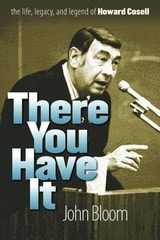
There You Have It
The Life, Legacy, and Legend of Howard CosellJohn Bloom
University of Massachusetts Press, 2010
Raised in Brooklyn in a middle-class Jewish family, Cosell carried with him a deeply ingrained sense of social justice. Yet early on he abandoned plans for a legal career to become a pioneer in sports broadcasting, first in radio and then in television. The first white TV reporter to address the former Cassius Clay by his chosen Muslim name, Cosell was also the first sportscaster to conduct locker room interviews with professional athletes, using a tape recorder purchased with his own money. At the 1968 Olympics in Mexico City, he not only defended the fisted "Black Power" salutes of American track medalists John Carlos and Tommie Smith, but he publicly excoriated Olympic Committee chairman Avery Brundage for "hypocritical," racist policies. He was also instrumental in launching ABC's Monday Night Football, a prime-time sports program that evolved into an American cultural institution.
Yet while Cosell took courageous stands on behalf of civil rights and other causes, he could be remarkably blind to the inconsistencies in his own life. In this way, John Bloom argues, he embodied contradictions that still resonate widely in American society today.
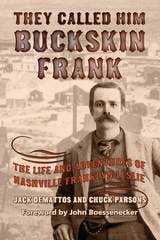
They Called Him Buckskin Frank
The Life and Adventures of Nashville Franklyn LeslieJack DeMattos
University of North Texas Press, 2018
They Live on The Land
Life in an Open Country Southern CommunityPaul W. Terry
University of Alabama Press, 1993
—Florida Historical Quarterly
"One of the finest examples of the genre of the community survey. . . The book is remarkably free of special pleading. And every chapter is paced with fascinating data and insights. The University of Alabama Prss is to be congratulated for reissuing this splendid community study; the volume fits the description of a classic. And Clarence L. Mohr's introduction alone is worth the price of the volume."
—Journal of Southwest Georgia History
Thinking with Shakespeare
Essays on Politics and LifeJulia Reinhard Lupton
University of Chicago Press, 2011
Thoreau in His Own Time
A Biographical Chronicle of His Life, Drawn from Recollections, Interviews, and Memoirs by Family, Friends, and AssociatesSandra Harbert Petrulionis
University of Iowa Press, 2012
The forty-nine recollections gathered in Thoreau in His Own Time demonstrate that it was those who knew him personally, rather than his contemporary literati, who most prized Thoreau’s message, but even those who disparaged him respected his unabashed example of an unconventional life. Included are comments by Ralph Waldo Emerson—friend, mentor, Walden landlord, and progenitor of the spin on Thoreau’s posthumous reputation; Nathaniel Hawthorne, who could not compliment Thoreau without simultaneously denigrating him; and John Weiss, whose extended commentary on Thoreau’s spirituality reflects unusual tolerance. Selections from the correspondence of Caroline Healey Dall, Maria Thoreau, Sophia Hawthorne, Sarah Alden Bradford Ripley, and Amanda Mather amplify our understanding of the ways in which nineteenth-century women viewed Thoreau. An excerpt by John Burroughs, who alternately honored and condemned Thoreau, asserts his view that Thoreau was ever searching for the unattainable.
The dozens of primary sources in this crisply edited collection illustrate the complexity of Thoreau’s iconoclastic singularity in a way that no one biographer could. Each entry is introduced by a headnote that places the selection in historical and cultural context. Petrulionis’s comprehensive introduction and her detailed chronology of personal and literary events in Thoreau’s life provide a lively and informative gateway to the entries themselves. The collaborative biography that Petrulionis creates in Thoreau in His Own Time contextualizes the strikingly divergent views held by his contemporaries and highlights the reasons behind his profound legacy.
Threads from the Web of Life & The Shark and the Jellyfish
Stories in Natural HistoryStephen Daubert
Vanderbilt University Press, 2019
One niche moves across a world of flowers that reaches its earliest peak bloom in the low valleys and then peaks later among the slopes of the foothills—a rolling habitat. Another hop-scotches across the ocean floor, compelling its occupants to migrate from the fallen body of one dead whale to the next. Yet another appears in the aftermath of typhoons, requiring its inhabitants to search the tropical coastline for the latest storm landfall.
These tales are filled with no less intrigue than other literary works, but they transpire out of the sight of most readers. Once known only to ecologists, in Threads from the Web of Life and The Shark and the Jellyfish, available for the first time in a single deluxe paperback, these stories become accessible to everyone with an interest in natural history.
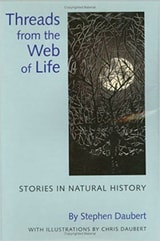
Threads from the Web of Life
Stories in Natural HistoryStephen Daubert
Vanderbilt University Press, 2006
In sixteen stories Steve Daubert pulls the reader into the mystery and immediacy of ecological processes spanning a range from microscopic to tectonic, from microscopic to cosmic forces. Each tale brings the reader into the moment to witness an episode of survival in the wild first-hand. The material is presented on a level of intimacy and detail not usually encountered in other styles of natural history writing.
These creative non-fiction stories provide not just a bird's eye view (though that's true for the owls, warblers, condors, and hummingbirds in the book), but a wasp's eye view, a mouse's, a sea turtle's, a squid's. Sometimes the focus is as small as the detritus on the forest floor, or a single beat of the wing of a gull. Other stories range across evolutionary time. From whales and dinosaurs to creatures invisible to the naked eye, author and illustrator bring to life the dynamic interplay of living, evolving creatures and the natural forces that have shaped their worlds.
The book includes chapter notes that document the scientific basis for each story and describe the controversies still surrounding some of them -- a splendid resource for families to read and share.