Results by title
1445 books match the query 'Life Sciences' and 386 start with t
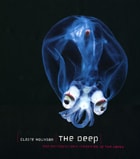
The Deep
The Extraordinary Creatures of the AbyssClaire Nouvian
University of Chicago Press, 2007
On dry land, most organisms are confined to the surface, or at most to altitudes of a hundred meters—the height of the tallest trees. In the oceans, though, living space has both vertical and horizontal dimensions: with an average depth of 3800 meters, the oceans offer 99% of the space on Earth where life can develop. And the deep sea, which has been immersed in total darkness since the dawn of time, occupies 85% of ocean space, forming the planet’s largest habitat. Yet these depths abound with mystery. The deep sea is mostly uncharted—only about 5 percent of the seafloor has been mapped with any reasonable degree of detail—and we know very little about the creatures that call it home. Current estimates about the number of species yet to be found vary between ten and thirty million. The deep sea no longer has anything to prove; it is without doubt Earth’s largest reservoir of life.
Combining the latest scientific discoveries with astonishing color imagery, The Deep takes readers on a voyage into the darkest realms of the ocean. Revealing nature’s oddest and most mesmerizing creatures in crystalline detail, The Deep features more than two hundred color photographs of terrifying sea monsters, living fossils, and ethereal bioluminescent creatures, some photographed here for the very first time. Accompanying these breathtaking photographs are contributions from some of the world’s most respected researchers that examine the biology of deep-sea organisms, the ecology of deep-sea habitats, and the history of deep-sea exploration.
An unforgettable visual and scientific tour of the teeming abyss, The Deep celebrates the incredible diversity of life on Earth and will captivate anyone intrigued by the unseen—and unimaginable—creatures of the deep sea.
The Deer and the Tiger
George B. Schaller
University of Chicago Press, 1984
The Demise of Diversity
Loss and ExtinctionJosef Reichholf
Haus Publishing, 2009
The Demon in the Machine
How Hidden Webs of Information Are Solving the Mystery of LifePaul Davies
University of Chicago Press, 1991
A Financial Times, Sunday Times, and Telegraph Best Science Book of the Year
What is life? For generations, scientists have struggled to make sense of this fundamental question, for life really does look like magic: even a humble bacterium accomplishes things so dazzling that no human engineer can match it. Huge advances in molecular biology over the past few decades have served only to deepen the mystery.
In this penetrating and wide-ranging book, world-renowned physicist and science communicator Paul Davies searches for answers in a field so new and fast-moving that it lacks a name; it is a domain where biology, computing, logic, chemistry, quantum physics, and nanotechnology intersect. At the heart of these diverse fields, Davies explains, is the concept of information: a quantity which has the power to unify biology with physics, transform technology and medicine, and force us to fundamentally reconsider what it means to be alive—even illuminating the age-old question of whether we are alone in the universe.
From life’s murky origins to the microscopic engines that run the cells of our bodies, The Demon in the Machine journeys across an astounding landscape of cutting-edge science. Weaving together cancer and consciousness, two-headed worms and bird navigation, Davies reveals how biological organisms garner and process information to conjure order out of chaos, opening a window onto the secret of life itself.
The Desert Bighorn
Its Life History, Ecology, and ManagementGale Monson
University of Arizona Press, 1980
"An intelligently researched and fully documented analysis of this noble rock-climber's life history, and ecology, and the human management of this nearly impossible-to-manage wilderness species." —American Field
"An outstanding and comprehensive work." —Books of the Southwest
"There is quite simply nothing else around that can tell you anywhere near as much about desert sheep, by anywhere near so distinguished a crew of authors." —Safari
The Desert Grassland
Edited by Mitchel P. McClaran and Thomas R. Van Devender
University of Arizona Press, 1995
Leading experts in geography, biology, botany, zoology, and geoscience present new research on the desert grassland and review a vast amount of earlier work. They reveal that present-day grasses once grew in the ice-age forests that existed in these areas before the climate dried and the trees vanished and how the intensity and frequency of fire can influence the plant and animal species of the grassland. They also document how the influence of humans—from Amerindians to contemporary ranchers, public land managers, and real estate developers—has changed the relative abundance of woody and herbaceous species and how the introduction of new plants and domesticated animals to the area has also affected biodiversity. The book concludes with a review of the attempts, both failed and successful, to reestablish plants in desert grasslands affected by overgrazing, drought, and farm abandonment.
Meticulously researched and copiously illustrated, The Desert Grassland is a major contribution to ecological literature. For advanced lay readers as well as students and scholars of history, geography, and ecology, it will be a standard reference work for years to come.
The Devil’s Cormorant
A Natural HistoryRichard J. King
University Press of New England, 2014
The Diagnosis of Plant Diseases
Rubert B. Streets, Sr.
University of Arizona Press, 1984
Drawing on the knowledge, research, and experience of university and industry plant pathologists, this manual will guide everyone—researchers, teachers, personnel from federal and state agencies, plant nursery staff, hobbyist gardeners, or anyone else who works with plants—to better plant-disease work and less time spent in learning diagnostic procedures.
In this manual for rapid and accurate diagnosis, control, and prevention of plant diseases, Dr. Rubert B. Streets has not only developed a practical field and laboratory guide for plant-disease diagnosis, but also articulated a vision for the role of the plant pathologist: a careful observer, a dedicated practitioner who embraces the personal challenge of identifying plant diseases—and a questioner.
With 44 years of distinguished post-doctoral experience in many areas of his field, Dr. Rupert B. Streets, Sr., is best known for his research on the control of Texas root rot in field crops, tree crops, and ornamentals; diseases of dates, citrus, and guar; brown rot of stone fruits and roses; his selection of flax resistance to wilt; the serology of citrus viruses; and the use of antibiotics for the control of crown gall and fire blight. Joining the University of Arizona faculty in 1924, Dr. Streets served for eight years as head of the department of Plant Pathology and taught courses at every level, instructing students on the identification and control of plant diseases.
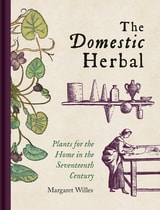
The Domestic Herbal
Plants for the Home in the Seventeenth CenturyMargaret Willes
Bodleian Library Publishing, 2020
In the seventeenth century most English households had gardens. These gardens were not merely ornamental; even the most elaborate and fashionable gardens had areas set aside for growing herbs, fruit, vegetables, and flowers for domestic use. Meanwhile, more modest households considered a functional garden to be a vital tool for the survival of the house and family. The seventeenth century was also a period of exciting introductions of plants from overseas, which could be used in all manner of recipes.
Using manuscript household manuals, recipe books, and printed herbals, The Domestic Herbal takes the reader on a tour of the productive garden and of the various parts of the house—kitchens and service rooms, living rooms and bedrooms—to show how these plants were used for cooking and brewing, medicines and cosmetics, in the making and care of clothes, and to keep rooms fresh, fragrant, and decorated. Recipes used by seventeenth-century households for preparations such as flower syrups, snail water, and wormwood ale are also included. A brief herbal gives descriptions of plants both familiar and less known to today’s readers, including the herbs used for common tasks like dyeing and brewing, and those that held a particular cultural importance in the seventeenth century. Featuring exquisite colored illustrations from John Gerard’s herbal book of 1597 as well as prints, archival material, and manuscripts, this book provides an intriguing and original focus on the domestic history of Stuart England.
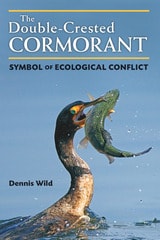
The Double-Crested Cormorant
Symbol of Ecological ConflictDennis Wild
University of Michigan Press, 2012
This is the story of the survival, recovery, astonishing success, and controversial status of the double-crested cormorant. After surviving near extinction driven by DDT and other contaminants from the 1940s through the early 1970s, the cormorant has made an unprecedented comeback from mere dozens to a population in the millions, bringing the bird again into direct conflict with humans. Hated for its colonial nesting behavior; the changes it brings to landscapes; and especially its competition with commercial and sports fishers, fisheries, and fish farmers throughout the Great Lakes and Mississippi Delta regions, the cormorant continues to be persecuted by various means, including the shotgun.
In The Double-Crested Cormorant, Dennis Wild brings together the biological, social, legal, and international aspects of the cormorant's world to give a complete and balanced view of one of the Great Lakes' and perhaps North America's most misunderstood species. In addition to taking a detailed look at the complex natural history of the cormorant, the book explores the implications of congressional acts and international treaties, the workings and philosophies of state and federal wildlife agencies, the unrelenting efforts of aquaculture and fishing interests to "cull" cormorant numbers to "acceptable" levels, and the reactions and visions of conservation groups. Wild examines both popular preconceptions about cormorants (what kinds of fish they eat and how much) and the effectiveness of ongoing efforts to control the cormorant population. Finally, the book delves into the question of climate and terrain changes, their consequences for cormorants, the new territories to which the birds must adapt, and the conflicts this species is likely to face going forward.

The Eagle's Nest
Natural History and American Ideas, 1812-1842Charlotte M. Porter
University of Alabama Press, 1986
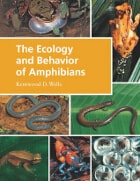
The Ecology and Behavior of Amphibians
Kentwood D. Wells
University of Chicago Press, 2007
Consisting of more than six thousand species, amphibians are more diverse than mammals and are found on every continent save Antarctica. Despite the abundance and diversity of these animals, many aspects of the biology of amphibians remain unstudied or misunderstood. The Ecology and Behavior of Amphibians aims to fill this gap in the literature on this remarkable taxon. It is a celebration of the diversity of amphibian life and the ecological and behavioral adaptations that have made it a successful component of terrestrial and aquatic ecosystems.
Synthesizing seventy years of research on amphibian biology, Kentwood D. Wells addresses all major areas of inquiry, including phylogeny, classification, and morphology; aspects of physiological ecology such as water and temperature relations, respiration, metabolism, and energetics; movements and orientation; communication and social behavior; reproduction and parental care; ecology and behavior of amphibian larvae and ecological aspects of metamorphosis; ecological impact of predation on amphibian populations and antipredator defenses; and aspects of amphibian community ecology. With an eye towards modern concerns, The Ecology and Behavior of Amphibians concludes with a chapter devoted to amphibian conservation.
An unprecedented scholarly contribution to amphibian biology, this book is eagerly anticipated among specialists.
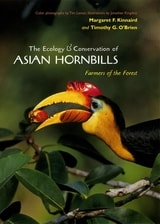
The Ecology and Conservation of Asian Hornbills
Farmers of the ForestMargaret F. Kinnaird and Timothy G. O'Brien
University of Chicago Press, 2008
Building on fourteen years of research, Margaret F. Kinnaird and Timothy G. O’Brien offer in Ecology and Conservation of Asian Hornbills the most up-to-date information on the evolution, reproduction, feeding ecology, and movement patterns of thirty-one species of Asian hornbills. The authors address questions of ecological functionality, ecosystem services, and keystone relationships, as well as the disturbing influence of forest loss and fragmentation on hornbills. Complemented by superb full-color images by renowned photographer Tim Laman that provide rare glimpses of hornbills in their native habitat and black-and-white illustrations by Jonathan Kingdon that highlight the intriguing aspects of hornbill behavior, Ecology and Conservation of Asian Hornbills will stand tall in the pantheon of natural history studies for years to come.
The Ecology and Evolution of Ant-Plant Interactions
Victor Rico-Gray and Paulo S. Oliveira
University of Chicago Press, 2007
Ants are probably the most dominant insect group on Earth, representing ten to fifteen percent of animal biomass in terrestrial ecosystems. Flowering plants, meanwhile, owe their evolutionary success to an array of interspecific interactions—such as pollination, seed dispersal, and herbivory—that have helped to shape their great diversity. The Ecology and Evolution of Ant-Plant Interactions brings together findings from the scientific literature on the coevolution of ants and plants to provide a better understanding of the unparalleled success of these two remarkable groups, of interspecific interactions in general, and ultimately of terrestrial biological communities.
The Ecology and Evolution of Ant-Plant Interactions synthesizes the dynamics of ant-plant interactions, including the sources of variation in their outcomes. Victor Rico-Gray and Paulo S. Oliveira capture both the emerging appreciation of the importance of these interactions within ecosystems and the developing approaches that place studies of these interactions into a broader ecological and evolutionary context. The collaboration of two internationally renowned scientists, The Ecology and Evolution of Ant-Plant Interactions will become a standard reference for understanding the complex interactions between these two taxa.
The Ecology of Desert Communities
Edited by Gary A. Polis
University of Arizona Press, 1991
"This book is not just about deserts; it is an update of the contributions that research in desert systems is making to community ecology. . . This book will provide a useful reference for desert ecologists, as well as indicate critical directions where progress needs to be made."—Ecology
"This important book fills a significant gap in previous syntheses by presenting a detailed series of reviews of current understanding of community patterns and structure in desert environments. . . . Each chapter is thorough and well written and . . . closes with a discussion of suggested future research. . . . [T]hese ideas will do much to focus interest on the importance of desert systems in understanding community. Thus, this book has interest well beyond desert ecologists alone."—BioScience
"Valuable reading and reference for ecology students, teachers and researchers."—Quarterly Review of Biology
The Ecology of Ecologists
Harnessing Diverse Approaches for a Stronger ScienceJeremy Fox
University of Chicago Press, 2025
Open any ecology textbook, and you will find a heterogeneous mix of material that puzzles many newcomers. How do levels of organization from individual organisms to ecosystems, abstract concepts like food webs and biodiversity, and applied topics, like climate change and conservation, all fit together? New ecological research can be equally puzzling. Ecology journals publish studies using different methods in different study systems to ask different questions and achieve different goals. Is this all really Ecology? Yes, ecologist Jeremy Fox says in this eye-opening book. Ecology contains multitudes, and that is its power. In an essential book for all ecologists, Fox builds on insights developed in his popular blog, Dynamic Ecology, to argue that it is better for a scientific discipline to be messy than monolithic.
Analyzing and accessibly explaining a broad range of scientific literature, Fox shows that ecology grew from disparate sources with profoundly different motivations, methods, and goals. We see the differences in those origins reflected in today’s research, in the pull between those who want to establish ecological laws akin to physical ones and those who see ecology’s value as inherent in its species- or system-specific case studies. Neither group, Fox argues, is doing ecology wrong. Instead, he says, the strength of this science—as in most ecological systems—is diversity. It is good when two ecologists look at similar problems differently. We now need the community to know enough about those different approaches to improve how they work together.
The Ecology of Invasions by Animals and Plants
Charles S. Elton
University of Chicago Press, 2000
Much as Rachel Carson's Silent Spring was a call to action against the pesticides that were devastating bird populations, Charles S. Elton's classic The Ecology of Invasions by Animals and Plants sounded an early warning about an environmental catastrophe that has become all too familiar today—the invasion of nonnative species. From kudzu to zebra mussels to Asian long-horned beetles, nonnative species are colonizing new habitats around the world at an alarming rate thanks to accidental and intentional human intervention. One of the leading causes of extinctions of native animals and plants, invasive species also wreak severe economic havoc, causing $79 billion worth of damage in the United States alone.
Elton explains the devastating effects that invasive species can have on local ecosystems in clear, concise language and with numerous examples. The first book on invasion biology, and still the most cited, Elton's masterpiece provides an accessible, engaging introduction to one of the most important environmental crises of our time.
The Ecology of Place
Contributions of Place-Based Research to Ecological UnderstandingEdited by Ian Billick and Mary V. Price
University of Chicago Press, 2010
Ecologists can spend a lifetime researching a small patch of the earth, studying the interactions between organisms and the environment, and exploring the roles those interactions play in determining distribution, abundance, and evolutionary change. With so few ecologists and so many systems to study, generalizations are essential. But how do you extrapolate knowledge about a well-studied area and apply it elsewhere?
Through a range of original essays written by eminent ecologists and naturalists, The Ecology of Place explores how place-focused research yields exportable general knowledge as well as practical local knowledge, and how society can facilitate ecological understanding by investing in field sites, place-centered databases, interdisciplinary collaborations, and field-oriented education programs that emphasize natural history. This unique patchwork of case-study narratives, philosophical musings, and historical analyses is tied together with commentaries from editors Ian Billick and Mary Price that develop and synthesize common threads. The result is a unique volume rich with all-too-rare insights into how science is actually done, as told by scientists themselves.
The Edible Gardens of Ethiopia
An Ethnographic Journey into Beauty and HungerValentina Peveri
University of Arizona Press, 2020
The ensete plant is only one among the many “unloved” crops that are marginalized and pushed close to disappearance by the advance of farming modernization and monocultural thinking. And yet its human companions, caught in a symbiotic and sensuous dialogue with the plant, still relate to each exemplar as having individual appearance, sensibility, charisma, and taste, as an epiphany of beauty and prosperity, and even believe that the plant can feel pain. Here a different story is recounted of these human-plant communities, one of reciprocal love at times practiced in an act of secrecy. The plot unfolds from the subversive and tasteful dimensions of gardening for subsistence and cooking in the garden of ensete through reflections on the cultural and edible dimensions of biodiversity to embrace hunger and beauty as absorbing aesthetic experiences in small-scale agriculture. Through this story, the reader will enter the material and spiritual world of ensete and contemplate it as a modest yet inspiring example of hope in rapidly deteriorating landscapes.
Based on prolonged engagement with this “virtuous” plant of southwestern Ethiopia, this book provides a nuanced reading of the ensete ventricosum (avant-)garden and explores how the life in tiny, diverse, and womanly plots offers alternative visions of nature, food policy, and conservation efforts.
The Educated Eye
Visual Culture and Pedagogy in the Life SciencesEdited by Nancy Anderson
Dartmouth College Press, 2012
The Elephant in the Room
How to Stop Making Ourselves and Other Animals SickLiz Kalaugher
University of Chicago Press, 2025
When new diseases spread, news reports often focus on wildlife culprits—rodents, monkeys and mpox; bats and COVID-19; waterfowl and avian flu; or mosquitoes and Zika. But, in this urgent and engaging book, we see it often works the other way around—humans have caused diseases in other animals countless times, through travel and transport, the changes we impose on our environment, and global warming. With science journalist Liz Kalaugher as our guide, we meet the wildlife we have harmed and the experts now studying the crosscurrents between humans, other animals, and health.
Herds of buffalo in Kenya, cloned ferrets in Colorado, and frogs shipped worldwide as living pregnancy tests for humans, all help Kalaugher dive into the murky backstories behind wildlife epidemics past and present. We learn that military conflict likely contributed to the spread of rinderpest, or cattle plague, throughout Africa, devastating pastoral communities. That crowded poultry farms may create virulent new forms of bird flu that spill back into the wild. And that West Nile virus—which affects not only birds and humans, but other animals, including horses, skunks, and squirrels—is spreading as global temperatures rise.
Expanding today’s discussions of environmental protection to include illness and its impact, Kalaugher both sounds the alarm and explores ways to stop the emergence and spread of wildlife diseases. These solutions start with a simple lesson: when we protect other animals, we protect ourselves.
The Elephant's Secret Sense
The Hidden Life of the Wild Herds of AfricaCaitlin O'Connell
University of Chicago Press, 2008
This compelling odyssey of scientific discovery is also a frank account of fieldwork in a poverty-stricken, war-ravaged country. In her attempts to study an elephant community, O’Connell encounters corrupt government bureaucrats, deadly lions and rhinos, poachers, farmers fighting for arable land, and profoundly ineffective approaches to wildlife conservation. The Elephant’s Secret Sense is ultimately a story of intellectual courage in the face of seemingly insurmountable obstacles.
“I was transported by the author’s superbly sensuous descriptions of her years spent studying the animals. . . . Conjures a high-class nature documentary film in prose.”—Steven Poole, Guardian
“A ride as rough and astonishing as the roads of the African floodplain.”—Joan Keener, Entertainment Weekly
“A successful combination of science and soulfulness, explaining her groundbreaking theory of how elephants use seismic communication. . . . O’Connell’s account is studded with sympathetic insights and well-turned phrases.”—Publishers Weekly
“This fascinating book reads like a fast-paced detective story of a scientific discovery and adventure set in contemporary Africa. . . . By the end, O’Connell takes her rightful place among the leading biographers of the African elephant.”—Iain Douglas-Hamilton, author of Among the Elephants
The Ellesmere Wolves
Behavior and Ecology in the High ArcticL. David Mech, Morgan Anderson, and H. Dean Cluff
University of Chicago Press, 2025
For parts of twenty-four summers, wolf biologist L. David Mech lived with a group of wolves on Ellesmere Island, some six hundred miles from the North Pole. Elsewhere, most wolves flee from even the scent of humans, but these animals, evolving relatively free from human persecution, are unafraid. Having already spent twenty-eight years studying other populations of wolves more remotely by aircraft, snow-tracking, live-trapping, and radio-tracking, Mech was primed to join their activities up close and record their interactions with each other. This book tells the remarkable story of what Mech—and the researchers who followed him—have learned while living among the wolves.
The Ellesmere wolves were so unconcerned with Mech’s presence that they allowed him to camp near their den and to sit on his all-terrain vehicle as he observed them, watching packs as large as seven adults and six pups go about their normal activities. In these extraordinarily close quarters, a pup untying his bootlace or an adult sniffing his gloved hand was just part of daily life. Mech accompanied the wolves on their travels and watched as they hunted muskoxen and arctic hares. By achieving the same kind of intimacy with his wild hosts’ every action that we might experience living with domesticated dogs, Mech gained new insights into common but rarely studied behaviors like pup feeding, food caching, howling, and scent-marking. After Mech’s time at Ellesmere ended, his coauthors and fellow wolf researchers Morgan Anderson and H. Dean Cluff spent parts of four summers studying the wolves via radio collars, further illuminating the creatures’ movements and ecology. This book synthesizes their findings, offering both a compelling scientific overview of the animals’ behavior—from hunting to living in packs to rearing pups—and a tale of adventure and survival in the Arctic.
The Emperor's New Clothes
Biological Theories of Race at the MillenniumGraves Jr., Joseph L.
Rutgers University Press, 2003
In this groundbreaking book, Joseph Graves traces the development of biological thought about human genetic diversity. Greek philosophy, social Darwinism, New World colonialism, the eugenics movement, intelligence testing biases, and racial health fallacies are just a few of the topics he addresses. Graves argues that racism has persisted in our society because adequate scientific reasoning has not entered into the equation. He champions the scientific method and explains how we may properly ask scientific questions about the nature of population differentiation and how (if at all) we may correlate that diversity to observed human behavior. He also cautions us to think critically about scientific findings that have historically been misused in controversies over racial differences in intelligence heritability, criminal behavior, disease predisposition, and other traits. According to Graves, this country cannot truly address its racial problems until people understand the empirical evidence behind this truth that separate human races do not exist. With the biological basis for race removed, racism becomes an ideology, one that can and must be deleted.
The Enlightened Gene
Biology, Buddhism, and the Convergence that Explains the WorldArri Eisen and Yungdrung Konchok
University Press of New England, 2017
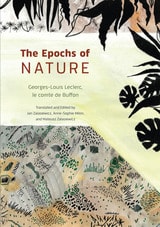
The Epochs of Nature
Georges-Louis Leclerc, le comte de Buffon
University of Chicago Press, 2018
In seven epochs, Buffon reveals the main features of an evolving Earth, from its hard rock substrate to the sedimentary layers on top, from the minerals and fossils found within these layers to volcanoes, earthquakes, and rises and falls in sea level—and he even touches on age-old mysteries like why the sun shines. In one of many moments of striking scientific prescience, Buffon details evidence for species extinction a generation before Cuvier’s more famous assertion of the phenomenon. His seventh and final epoch does nothing less than offer the first geological glimpse of the idea that humans are altering the very foundations of the Earth—an idea of remarkable resonance as we debate the designation of another epoch: the Anthropocene. Also featuring Buffon’s extensive “Notes Justificatives,” in which he offers further evidence to support his assertions (and discusses vanished monstrous North American beasts—what we know as mastodons—as well as the potential existence of human giants), plus an enlightening introduction by editor and translator Jan Zalasiewicz and historians of science Sverker Sörlin, Libby Robin, and Jacques Grinevald, this extraordinary new translation revives Buffon’s quite literally groundbreaking work for a new age.
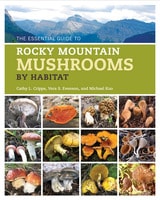
The Essential Guide to Rocky Mountain Mushrooms by Habitat
Cathy Cripps, Vera Evenson, and Michael Kuo
University of Illinois Press, 2016
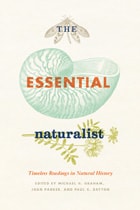
The Essential Naturalist
Timeless Readings in Natural HistoryEdited by Michael H. Graham, Joan Parker, and Paul K. Dayton
University of Chicago Press, 2011
Like nearly every area of scholarly inquiry today, the biological sciences are broken into increasingly narrow fields and subfields, its practitioners divided into ecologists, evolutionary biologists, taxonomists, paleontologists, and much more. But all these splintered pieces have their origins in the larger field of natural history—and in this era where climate change and relentless population growth are irrevocably altering the world around us, perhaps it’s time to step back and take a new, fresh look at the larger picture.
The Essential Naturalist offers exactly that: a wide-ranging, eclectic collection of writings from more than eight centuries of observations of the natural world, from Leeuwenhoek to E. O. Wilson, from von Humboldt to Rachel Carson. Featuring commentaries by practicing scientists that offer personal accounts of the importance of the long tradition of natural history writing to their current research, the volume serves simultaneously as an overview of the field’s long history and as an inspirational starting point for new explorations, for trained scientists and amateur enthusiasts alike.
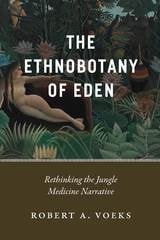
The Ethnobotany of Eden
Rethinking the Jungle Medicine NarrativeRobert A. Voeks
University of Chicago Press, 2018
By exploring the interconnected worlds of anthropology, botany, and geography, Voeks shows that well-intentioned scientists and environmentalists originally crafted the jungle narrative with the primary goal of saving the world’s tropical rainforests from destruction. It was a strategy deployed to address a pressing environmental problem, one that appeared at a propitious point in history just as the Western world was taking a more globalized view of environmental issues. And yet, although supported by science and its practitioners, the story was also underpinned by a persuasive mix of myth, sentimentality, and nostalgia for a long-lost tropical Eden. Resurrecting the fascinating history of plant prospecting in the tropics, from the colonial era to the present day, The Ethnobotany of Eden rewrites with modern science the degradation narrative we’ve built up around tropical forests, revealing the entangled origins of our fables of forest cures.
The Evidence for Evolution
Alan R. Rogers
University of Chicago Press, 2011
According to polling data, most Americans doubt that evolution is a real phenomenon. And it’s no wonder that so many are skeptical: many of today’s biology courses and textbooks dwell on the mechanisms of evolution—natural selection, genetic drift, and gene flow—but say little about the evidence that evolution happens at all. How do we know that species change? Has there really been enough time for evolution to operate?
With The Evidence for Evolution, Alan R. Rogers provides an elegant, straightforward text that details the evidence for evolution. Rogers covers different levels of evolution, from within-species changes, which are much less challenging to see and believe, to much larger ones, say, from fish to amphibian, or from land mammal to whale. For each case, he supplies numerous lines of evidence to illustrate the changes, including fossils, DNA, and radioactive isotopes. His comprehensive treatment stresses recent advances in knowledge but also recounts the give and take between skeptical scientists who first asked “how can we be sure” and then marshaled scientific evidence to attain certainty. The Evidence for Evolution is a valuable addition to the literature on evolution and will be essential to introductory courses in the life sciences.
The Evolution Myth
or, The Genes Cry Out Their Urgent Song, Mister Darwin Got It WrongJirí Mejsnar
Karolinum Press, 2014
The author’s second objective is to use biology to explain why evolution cannot have taken place in the way that is most commonly assumed. Mejsnar builds his case around gene stability and on the sophisticated modern techniques for gene manipulation, the complexity of which make these modified genes inaccessible to nature. Development of life on Earth is a discontinuous, saltatory progression that results in stages following from preceding latent periods in which new forms suddenly appear and possess new types of genome. This, the author argues, is difficult to reconcile with the hypothesis of continuous biological evolution based on the natural selection of random variations.
Taking a new approach to a much-debated subject, Mejsnar distills complex information into a readable style. The result is a book that is sure to get readers talking.
The Evolution Wars
A Guide to the DebatesRuse, Michael
Rutgers University Press, 2001
The Evolution Wars draws on history, science, and philosophy to examine the development of evolutionary thought through the past two and a half centuries. It focuses on the debates that have engaged, divided, and ultimately provoked scientists to ponder the origins of organisms—including humankind—paying regard to the nineteenth-century clash over the nature of classification and debates about the fossil record, genetics, and human nature. Much attention is paid to external factors and the underlying motives of scientists.
In these pages you will meet Charles Darwin’s ebullient grandfather Erasmus, the contentious Frenchmen Georges Cuvier and Etienne Geoffroy Stain-Hillaire, new creationist Phillip Johnson, the brilliant J. B. S. Haldane, outspoken Richard Dawkins, and many other stars of the debates.
The Evolution Wars explores the ten greatest controversies surrounding evolution in world history, with emphasis on recent times, including the infamous Scopes trial of the 1920s: the search for human origins and speculation about the “missing link,” spurred by the discovery of “Lucy;” the debate surrounding the new theory of paleontology proposed by Stephen Jay Gould; and the rise of teaching “creation science” in public school as a subject on par with evolution.
Although the author takes a strong stand on the side of evolution, he also shows respect for dissenting viewpoints. Thus, the book is intellectually rewarding not only for evolutionists but also for opponents of evolution theory, especially those who want to see how one of the great ideas of Western civilization resonates through time, both within and beyond the scientific community.
The Evolution of Cetacean Societies
Uncovering the Social Complexity of Whales and DolphinsEdited by Darren P. Croft, Andrew D. Foote, Ellen C. Garland, and Stephanie L. King
University of Chicago Press, 2026
Cetaceans—whales, dolphins, and porpoises—represent an evolutionary peak with respect to their advanced cognitive capacities; flexible communication systems; and structured, multilevel societies. Indeed, the social lives of whales and dolphins have long fascinated scientists and the public alike. The Evolution of Cetacean Societies provides a comprehensive overview of the significant advancements made in studying cetacean behavior and ecology over the last twenty-five years, focusing on our growing understanding of these animals’ complex social lives.
Bringing together scientists from multiple disciplines, the volume summarizes key innovations and progress related to studying cetacean societies’ cultural and genetic basis, their complex social structures, their use of cooperation and patterns of social conflict, and their significant interactions with humans. Each chapter provides an in-depth account of the social lives of whales and dolphins, incorporating the latest cutting-edge research from genomics, communication, network analysis, and animal culture to explain how these animals form societies, maintain relationships, and share information. The final chapters focus on the existential threats facing these diverse and charismatic species, how human-cetacean interactions have shaped our perceptions, and what scientists can learn from their diverse social lives by championing researcher diversity in marine mammal science. The result is an essential and forward-looking book that both contextualizes the lessons of the past two decades and questions the challenges these enigmatic species might face in the future.
Published in 2000 by Chicago, Cetacean Societies: Field Studies of Dolphins and Whales, edited by Janet Mann, Richard C. Connor, Peter Tyack, and Hal Whitehead, inspired a generation of marine biologists. In this new volume, Darren P. Croft, Andrew D. Foote, Ellen C. Garland, and Stephanie L. King—all respected cetacean researchers—offer a worthy successor.
The Evolution of Primate Societies
Edited by John C. Mitani, Josep Call, Peter M. Kappeler, Ryne A. Palombit, and Joan B. Silk
University of Chicago Press, 2012
In 1987, the University of Chicago Press published Primate Societies, the standard reference in the field of primate behavior for an entire generation of students and scientists. But in the twenty-five years since its publication, new theories and research techniques for studying the Primate order have been developed, debated, and tested, forcing scientists to revise their understanding of our closest living relatives.
Intended as a sequel to Primate Societies, The Evolution of Primate Societies compiles thirty-one chapters that review the current state of knowledge regarding the behavior of nonhuman primates. Chapters are written by the leading authorities in the field and organized around four major adaptive problems primates face as they strive to grow, maintain themselves, and reproduce in the wild. The inclusion of chapters on the behavior of humans at the end of each major section represents one particularly novel aspect of the book, and it will remind readers what we can learn about ourselves through research on nonhuman primates. The final section highlights some of the innovative and cutting-edge research designed to reveal the similarities and differences between nonhuman and human primate cognition. The Evolution of Primate Societies will be every bit the landmark publication its predecessor has been.
The Evolutionary Biology of Plants
Karl J. Niklas
University of Chicago Press, 1997
After presenting key evolutionary principles, Niklas recounts the saga of plant life from its origins to the radiation of the flowering plants. To investigate how living plants might have evolved, Niklas conducts a series of computer-generated "walks" on fitness "landscapes," arriving at hypothetical forms of plant life strikingly similar to those of today and the distant past. He concludes with an extended consideration of molecular biology and paleontology. An excellent overview for undergraduates, this book will also challenge graduate students and researchers.
The Evolutionary Origins of Life and Death
Pierre M. Durand
University of Chicago Press, 2021
These two processes have been studied from philosophical, theoretical, experimental, and genomic angles, but no one has yet integrated the information from these various disciplines. In this work, Durand synthesizes cellular studies of life and death looking at the origin of life and the evolutionary significance of programmed cellular death. The exciting and unexpected outcome of Durand’s analysis is the realization that life and death exhibit features of coevolution. The evolution of more complex cellular life depended on the coadaptation between traits that promote life and those that promote death. In an ironic twist, it becomes clear that, in many circumstances, programmed cell death is essential for sustaining life.
The Expression of the Emotions in Man and Animals
Charles Darwin
University of Chicago Press, 1965
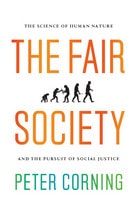
The Fair Society
The Science of Human Nature and the Pursuit of Social JusticePeter Corning
University of Chicago Press, 2011
We’ve been told, again and again, that life is unfair. But what if we’re wrong simply to resign ourselves to this situation? What if we have the power—and more, the duty—to change society for the better?
We do. And our very nature inclines us to do so. That’s the provocative argument Peter Corning makes in The Fair Society. Drawing on the evidence from our evolutionary history and the emergent science of human nature, Corning shows that we have an innate sense of fairness. While these impulses can easily be subverted by greed and demagoguery, they can also be harnessed for good. Corning brings together the latest findings from the behavioral and biological sciences to help us understand how to move beyond the Madoffs and Enrons in our midst in order to lay the foundation for a new social contract—a Biosocial Contract built on a deep understanding of human nature and a commitment to fairness. He then proposes a sweeping set of economic and political reforms based on three principles of fairness—equality, equity, and reciprocity—that together could transform our society and our world.
At this crisis point for capitalism, Corning reveals that the proper response to bank bailouts and financial chicanery isn’t to get mad—it’s to get fair.
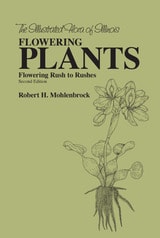
The Flowering Plants
Flowering Rush to RushesRobert H. Mohlenbrock
Southern Illinois University Press, 2006
The second edition of Flowering Plants: Flowering Rush to Rushes offers new material, including a preface, seventeen new illustrations of the additional species now known from Illinois, a revised list of illustrations, and an appendix of the additions and changes since 1970 in the identification, classification, and location of the plants included in the first edition. This new edition of the first volume in the multi-volume series of The Illustrated Flora of Illinois—which provides a working reference for the identification and classification of these plant forms in the state—includes flowering rushes, arrowheads, pondweeds, naiads, duckweeds, cattails, bur reeds, spiderworts, and rushes.
In his introduction, Robert H. Mohlenbrock defines terms and procedures used in the identification and classification of this group of flowering plants referred to as monocotyledons—plants that produce upon germination a single cotyledon or seed-leaf and are often identified by their tall, slender, grass-like leaves. He outlines the life histories and morphologies of the representative monocots and illustrates the plants’ habits and frequencies in Illinois.
Geared to the amateur as well as the professional botanist, the volume includes a glossary of definitions and identification keys to classify the plants according to order, family, genus, and species. The identifying characteristics of each descending class are also given in detail. The morphology of each species is outlined along with data on frequency of occurrence, related soil and climate conditions, and history of past collections. Among the 125 illustrations are detailed sketches of the important features of each species and maps indicating the geographical locations of each species in Illinois.
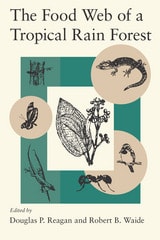
The Food Web of a Tropical Rain Forest
Edited by Douglas P. Reagan and Robert B. Waide
University of Chicago Press, 1996
This volume helps fill the gap by presenting a comprehensive description and analysis of the animal community of the tropical rain forest at El Verde, Puerto Rico. Building on more than a decade of field research, the contributors weave the complex strands of information about the energy flow within the forest—who eats whom—into a powerful tool for understanding community dynamics known as a food web. This systematic approach to organizing the natural histories of the many species at El Verde also reveals basic patterns and processes common to all rain forests, making this book a valuable contribution for anyone concerned with studying and protecting these fragile ecosystems.
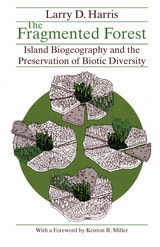
The Fragmented Forest
Island Biogeography Theory and the Preservation of Biotic DiversityLarry D. Harris
University of Chicago Press, 1984
"Harris pulls together many threads of biological thinking about islands and their effect on plant and animal survival and evolution. He weaves these threads into a model for managing forest lands in a manner that might serve both our short-term economic and social needs as well as what some people feel is our ancient charge to be steward of all parts of creation."—American Forests
Winner of the 1986 Wildlife Society Publication Award

The Gardener's Guide to Prairie Plants
Neil Diboll and Hilary Cox
University of Chicago Press, 2023
The Gardener’s Guide to Prairie Plants is the one-stop compendium for all gardeners aspiring to use native prairie plants in their gardens. Neil Diboll and Hilary Cox—two renowned prairie gardeners—compile more than four decades’ worth of research to offer a wide-ranging and definitive reference for starting and maintaining prairie and meadow gardens and restorations. Alongside detailed synopses of plant life cycles, meticulous range maps, and sweeping overviews of natural history, Diboll and Cox also include photographs of 148 prairie plants in every stage of development, from seedling to seedhead. North America’s grasslands once stretched from the Blue Ridge to the Rocky Mountains, and from Texas to Manitoba, blanketing the mid-continent with ecologically important, garden-worthy, native species. This book provides all the inspiration and information necessary for eager native planters from across the country to welcome these plants back to their landscapes. The Gardener’s Guide to Prairie Plants is a must-have reference for gardeners, restorationists, and every flora fan with a passion for native plants, prairies and meadows.
The Gene
From Genetics to PostgenomicsHans-Jörg Rheinberger and Staffan Müller-Wille
University of Chicago Press, 2018
The time could not be better, therefore, for Hans-Jörg Rheinberger and Staffan Müller-Wille's magisterial history of the concept of the gene. Though the gene has long been the central organizing theme of biology, both conceptually and as an object of study, Rheinberger and Müller-Wille conclude that we have never even had a universally accepted, stable definition of it. Rather, the concept has been in continual flux—a state that, they contend, is typical of historically important and productive scientific concepts. It is that very openness to change and manipulation, the authors argue, that made it so useful: its very mutability enabled it to be useful while the technologies and approaches used to study and theorize about it changed dramatically.
The Genesis Quest
The Geniuses and Eccentrics on a Journey to Uncover the Origin of Life on EarthMichael Marshall
University of Chicago Press, 2020
How did life begin? Why are we here? These are some of the most profound questions we can ask.
For almost a century, a small band of eccentric scientists has struggled to answer these questions and explain one of the greatest mysteries of all: how and why life began on Earth. There are many different proposals, and each idea has attracted passionate believers who promote it with an almost religious fervor, as well as detractors who reject it with equal passion.
But the quest to unravel life’s genesis is not just a story of big ideas. It is also a compelling human story, rich in personalities, conflicts, and surprising twists and turns. Along the way, the journey takes in some of the greatest discoveries in modern biology, from evolution and cells to DNA and life’s family tree. It is also a search whose end may finally be in sight.
In The Genesis Quest, Michael Marshall shows how the quest to understand life’s beginning is also a journey to discover the true nature of life, and by extension our place in the universe.
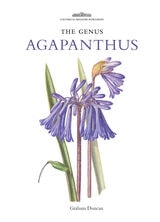
The Genus Agapanthus
Graham Duncan
Royal Botanic Gardens, Kew, 2021
Renowned for its stunning blue flowers, agapanthus—sometimes known as the blue lily or lily of the Nile—is a group of rhizomatous plants native to southern Africa. First cultivated in the Netherlands in the late seventeenth century, it rose to prominence as a conservatory plant in England during the eighteenth and nineteenth centuries after certain varieties were found to be hardy enough to withstand the colder climate of the British Isles. Graham Duncan’s The Genus Agapanthus provides both a revised classification of this plant group and a superbly illustrated celebration of their unique beauty. Featuring new watercolors from South African artist Elbe Joubert and color photographs showing the species in their spectacular and varied natural habitats, the book also highlights a selection of more than 150 of the most notable agapanthus cultivars from growers across Europe, Africa, and Oceania. The agapanthus’s natural history is spotlighted as well, with comprehensive descriptions of each species, maps of their global distribution, and information on how to successfully cultivate, propagate, and care for them. This book’s blend of science, horticulture, and art makes it essential for all varieties of plant lovers.
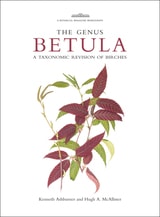
The Genus Betula
A Taxonomic Revision of BirchesKenneth Ashburner and Hugh McAllister
Royal Botanic Gardens, Kew, 2013
The Genus Betula covers all known birches found in North America, Europe, and Asia, along with keys for accurate identification. Chapters include a look at the breeding, cultivation, conservation, and morphology of all species, including several little-known species wonderful for garden and landscape use. The authors present previously unpublished data on recent molecular work and fossils, providing a cytotaxonomic and phylogeographic revision of the Betula genus. The book is accompanied by exquisite specimens of botanical art, including full-color paintings by Josephine Hague, making it a valuable tool for arboriculturists as well as professional and amateur gardeners.
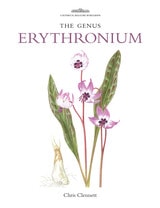
The Genus Erythronium
Chris Clennet
Royal Botanic Gardens, Kew, 2014
The Genus Erythronium details all twenty-nine currently identified species, all based on the most current research, including brand-new information on morphology and DNA. Captivating botanical illustrations and photographs fill the book and an extensive key allows easy identification of each species. Chapters covering phytogeography, morphology, cultivation, and conservation, as well as guidance on rating plants, come together to make this an essential, comprehensive volume.
The Genus Lachenalia
Graham Duncan
Royal Botanic Gardens, Kew, 2012
The Genus Lentinus
A World MonographDavid N. Pegler
Royal Botanic Gardens, Kew, 1983
The Genus Macaranga - a Prodromus
Timothy C. Whitmore
Royal Botanic Gardens, Kew, 2008