Results by title
3785 books match the query 'Poetry' and 833 start with t
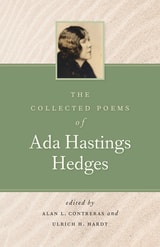
The Collected Poems of Ada Hastings Hedges
Ada Hastings Hedges
Oregon State University Press, 2020
Except for a twelve-year sojourn in southeastern Oregon and two years in Los Angeles, Hedges lived in Portland from 1910 until her death in 1980. She was assistant editor at Binfords & Mort Publishers and a supervising editor in the Works Progress Administration. She taught briefly at Warner Pacific College in the 1960s.
Hedges wrote in a style notable for precision, clarity, and smoothness of line. More than half of her poems in this collection are sonnets. A poet of the city as well as the desert, her work offers a compelling perspective on mid-century Portland life. In 1933 she published her only book, Desert Poems. That collection is reprinted here in its entirety, along with scores of additional poems published in a wide variety of venues, making this the first comprehensive collection of Hedges’s work.
A detailed introduction by the editors and annotations to the text provide information about revisions, publication dates, and notable features. Also included is an essay by Hedges asking “Can Poetry Be Taught?” In her afterword, Oregon poet Ingrid Wendt writes of her admiration for Hedges’s “fierceness of spirit, lack of sentimentality, and complex vision.”
For readers interested in women’s literature, Pacific Northwest poetry, and the literature of Eastern Oregon, this volume reintroduces a compelling regional voice.
The Collected Poems of John Ciardi
John Ciardi
University of Arkansas Press, 1997
The Collected Poems of Sterling A. Brown
Sterling A. Brown
Northwestern University Press, 1996
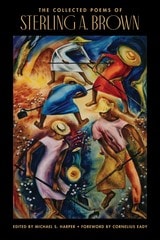
The Collected Poems of Sterling A. Brown
Sterling A. Brown; Edited by Michael S. Harper; With a New Foreword by Cornelius Eady
Northwestern University Press, 2020
Edited by the late distinguished poet Michael S. Harper, this classic collection includes a new foreword by award-winning poet Cornelius Eady and the original introduction by Michael S. Harper, as well as introductions to Southern Road by James Weldon Johnson and Sterling Stuckey. The result is a tour de force by one of the most distinctive poets in American letters.
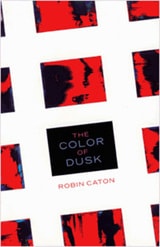
The Color of Dusk
Robin Caton
Omnidawn, 2001
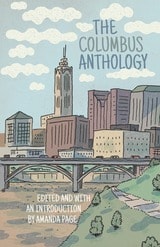
The Columbus Anthology
Amanda Page
The Ohio State University Press, 2020
Race, sports, the endless squeeze of gentrification, the city’s booming literary and comics scenes, its reputation as a haven for queer life, the sometimes devastating differences in perspective among black and white, native and transplant residents—and more than one tribute to Buckeye Donuts—make this anthology a challenging and an energizing read. From Hanif Abdurraqib’s sparkling and urgent portrait of Columbus’s vital immigrant culture as experienced through Crew games to Nick Dekker’s insights into breakfast as a vehicle for getting to know a city to the poetry of Maggie Smith and Ruth Awad, the pieces gathered here show us a Columbus far more textured than any test marketer could dream up.
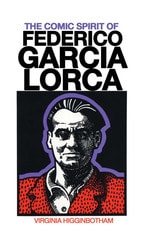
The Comic Spirit of Federico Garcia Lorca
By Virginia Higginbotham
University of Texas Press, 1976
During the years since his death, Federico García Lorca, Spain's best-known twentieth-century poet and playwright, has generally been considered a writer of tragedy. Three of his major plays are fatalistic stories of suffering and death, and his poetry is filled with dread. Yet most of Lorca's dramatic production consists of comedies and farces. Throughout his poetry and prose, as well as in his most somber plays, runs an undercurrent of humor—dark irony and satire—that is in no way contradictory to his tragic view of life. On the contrary, as Virginia Higginbotham demonstrates, through humor Lorca defines, intensifies, and tries to come to terms with what he sees as the essentially hopeless condition of humankind.
Although Lorca's comic moments and techniques have been discussed in isolated articles, the importance of humor has largely been ignored in the fundamental studies of his work. Higginbotham is concerned with Lorca's total output: lyric poetry, tragicomedies and farces, avant-garde prose and plays, puppet farces, and master plays. She describes Lorca's place in the mainstream of the Spanish theater and shows his relationship to some relevant non-Spanish dramatists. Furthermore, she discusses ways in which Lorca's work anticipates the modern theater of the absurd. The result is a comprehensive study of an important, but previously ignored, aspect of Lorca's work.
The Comic Spirit of Federico García Lorca includes a Lorca chronology and an extensive bibliography.

The Common
Gail Mazur
University of Chicago Press, 1995
Desire, ambition, devotion, and devastating loss are all subjects for Mazur's clear-eyed poems, which resonate with the contradictions between the body's yearning and the mind's acknowledgment of the consequences of our choices. In a poetry driven by unrelenting questioning, Mazur tries, in Rilke's worlds, "to love the questions themselves."
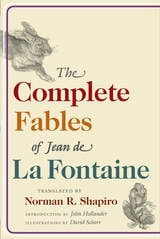
The Complete Fables of Jean de La Fontaine
Jean de La Fontaine
University of Illinois Press, 2007
Told in an elegant style, Jean de la Fontaine's (1621-95) charming animal fables depict sly foxes and scheming cats, vain birds and greedy wolves, all of which subtly express his penetrating insights into French society and the beasts found in all of us. Norman R. Shapiro has been translating La Fontaine's fables for over twenty years, capturing the original work's lively mix of plain and archaic language. This newly complete translation is destined to set the English standard for this work.
Awarded the Lewis Galantière Prize by the American Translators Association, 2008.
The Complete Fables of Jean de la Fontaine
Jean de la Fontaine, edited and with a rhymed verse translation by Norman B. Spector
Northwestern University Press, 1988
The Complete Greek Tragedies
Euripides IEdited by David Grene and Richmond Lattimore
University of Chicago Press, 1955
The Complete Perfectionist
A Poetics of WorkJuan Ramón Jiménez
Swan Isle Press, 2011
Few have written more memorably about the work of poetry and the poetics of work than Juan Ramón Jiménez, winner of a Nobel Prize and discerning teacher of an entire generation of Spanish poets. In this series of aphorisms, Jiménez brings together the elements of perfect work, both in writing and in other realms. Among these elements—the wellsprings of any kind of creation—are instinct and inspiration, memory and forgetting, silence and noise, love and regret.
The Complete Poems of Michelangelo
Michelangelo
University of Chicago Press, 1998
"Wonderful. . . . Nims gives us Michelangelo whole: the polymorphous love sonneteer, the political allegorist, and the solitary singer of madrigals."—Kirkus Reviews
"A splendid, fresh and eloquent translation. . . . Nims, an eminent poet and among the best translators of our time, conveys the full meaning and message of Michelangelo's love sonnets and religious poems in fluently rhymed, metrical forms."—St. Louis Post-Dispatch
"The best so far. . . . Nims is best at capturing the sound and sense of Michelangelo's poetic vocabulary."—Choice
"Surely the most compelling translations of Michelangelo currently available in English."—Ronald L. Martinez, Washington Times
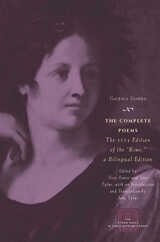
The Complete Poems
The 1554 Edition of the "Rime," a Bilingual EditionGaspara Stampa
University of Chicago Press, 2010
Gaspara Stampa (1523?-1554) is one of the finest female poets ever to write in Italian. Although she was lauded for her singing during her lifetime, her success and critical reputation as a poet emerged only after her verse was republished in the early eighteenth century. Her poetry runs the gamut of human emotion, ranging from ecstasy over a consummated love affair to despair at its end. While these tormented works and their multiple male addressees have led to speculation that Stampa may have been one of Venice’s famous courtesans, they can also be read as a rebuttal of typical assumptions about women’s roles. Championed by Rainer Maria Rilke, among others, she has more recently been celebrated by feminist scholars for her distinctive and original voice and her challenge to convention.
The first complete translation of Stampa into English, this volume collects all of her passionate and lyrical verse. It is also the first modern critical edition of her poems, and in restoring the original sequence of the 1554 text, it allows readers the opportunity to encounter Stampa as she intended. Jane Tylus renders Stampa’s verse in precise and graceful English translations, allowing a new generation of students and scholars of poetry, Renaissance literature, and music history to rediscover this incipiently modern Italian poet.
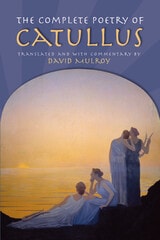
The Complete Poetry of Catullus
Catullus; Translated and with commentary by David Mulroy
University of Wisconsin Press, 2002
Catullus’ life was akin to pulp fiction. In Julius Caesar’s Rome, he engages in a stormy affair with a consul’s wife. He writes her passionate poems of love, hate, and jealousy. The consul, a vehement opponent of Caesar, dies under suspicious circumstances. The merry widow romances numerous young men. Catullus is drawn into politics and becomes a cocky critic of Caesar, writing poems that dub Julius a low-life pig and a pervert. Not surprisingly, soon after, no more is heard of Catullus.
David Mulroy brings to life the witty, poignant, and brutally direct voice of a flesh-and-blood man, a young provincial in the Eternal City, reacting to real people and events in a Rome full of violent conflict among individuals marked by genius and megalomaniacal passions. Mulroy’s lively, rhythmic translations of the poems are enhanced by an introduction and commentary that provide biographical and bibliographical information about Catullus, a history of his times, a discussion of the translations, and definitions and notes that ease the way for anyone who is not a Latin scholar.
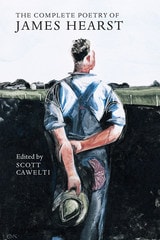
The Complete Poetry of James Hearst
James Hearst
University of Iowa Press, 2001

The Complete Works of Robert Browning Volume I
With Variant Readings And AnnotationsRobert Browning
Ohio University Press, 1969
In seventeen volumes, copublished with Baylor University, this acclaimed series features annotated texts of all of Robert Browning’s known writing. The series encompasses autobiography as well as influences bearing on Browning’s life and career and aspects of Victorian thought and culture.
Volume I contains two dramatic poems, Pauline; A Fragment of a Confession and Paracelsus, along with a sonnet, “Eyes Calm Beside Thee.” Pauline was written in 1832 and published in March 1833, London: Saunders and Otley, Conduit Street.
Browning’s principal source material for Paracelsus was Frederick Bitiskius’s edition of the works of Paracelsus, the early Renaissance alchemist, mystic, and physician; as well as the article on Paracelsus in the Biographie Universelle. E. D. H. Johnson wrote that in Paracelsus, “Browning first attacks the problem of communication, while still insisting on the primacy of the intuitions over the rational intellect. Paracelsus is a study of intellectual pride and its humbling.”
As always in this acclaimed series, a complete record of textual variants is provided, as well as extensive explanatory notes.
The Complete Works of Robert Browning Volume VIII
With Variant Readings and AnnotationsRobert Browning
Ohio University Press, 1988
The Complete Works of Robert Browning, Volume II
With Variant Readings And AnnotationsRobert Browning
Ohio University Press, 1971
In seventeen volumes, copublished with Baylor University, this acclaimed series features annotated texts of all of Robert Browning’s known writing. The series encompasses autobiography as well as influences bearing on Browning’s life and career and aspects of Victorian thought and culture.
Volume II contains Browning’s play, Strafford: An Historical Tragedy (1837), and the long poem, Sordello (1840). Strafford was Browning’s first play, based on the tragic life of Thomas Wentworth, Earl of Strafford. The editors note that the play had only four performances, “undoubtedly due… to its esoteric subject and bad acting.” Sordello is a fictionalized version of the life of Sordello da Goito, a 13th century Italian troubadour. The poem itself was famously known for being “difficult.”
As always in this acclaimed series, a complete record of textual variants is provided, as well as extensive explanatory notes.
The Complete Works of Robert Browning, Volume III
With Variant Readings And AnnotationsRobert Browning
Ohio University Press, 1972
In seventeen volumes, copublished with Baylor University, this acclaimed series features annotated texts of all of Robert Browning’s known writing. The series encompasses autobiography as well as influences bearing on Browning’s life and career and aspects of Victorian thought and culture.
Volume III contains Browning’s dramatic piece, Pippa Passes (1841), which Arthur Symons said was “Browning’s most perfect work”; another play King Victor and King Charles; A Tragedy, which Browning described as “the first artistic consequence of what Voltaire termed ‘a terrible event without consequences‘“; the “Essay on Chatterton,” which appeared anonymously in the Foreign Quarterly Review in July, 1842; the play The Return of the Druses: A Tragedy (1843); and the short pieces of Dramatic Lyrics, which contain some of Browning’s finest and most popular works such as “My Last Duchess,” “The Soliloquy of the Spanish Cloister,” and “The Pied Piper of Hamelin.”
As always in this acclaimed series, a complete record of textual variants is provided, as well as extensive explanatory notes.
The Complete Works of Robert Browning, Volume IX
With Variant Readings and AnnotationsRobert Browning
Ohio University Press, 1990
The Complete Works of Robert Browning, Volume V
With Variant Readings and AnnotationsRoma A. King Jr.
Ohio University Press, 1981
The Complete Works of Robert Browning, Volume VI
With Variant Readings and AnnotationsRobert Browning
Ohio University Press, 1996
In seventeen volumes, copublished with Baylor University, this acclaimed series features annotated texts of all of Robert Browning’s known writing. The series encompasses autobiography as well as influences bearing on Browning’s life and career and aspects of Victorian thought and culture.
The sixth in the projected seventeen-volume work, this volume covers the second half of Men and Women (1855), perhaps Browning’s most famous collection, and the entirety of Dramatis Personae (1864), the first book Browning produced after the death of Elizabeth Barrett Browning in 1861.
Men and Women II contains several great dramatic poems on which Browning’s reputation still depends, including “Andrea del Sarto,” “Saul,” and “Cleon.” It also includes the more intimate and personal works “The Guardian Angel” and “One Word More,” as well as the mysterious “Women and Roses.” The Brownings‘ shared interests in Renaissance art and nineteenth-century Italian politics inform the challenging “Old Pictures in Florence.”
The publication of Dramatis Personae was a key event in the rapid rise of Browning’s fame in the 1860s, though the collection is marked by a welter of conflicting impulses that arose after the poet left Italy and his married life behind. The classic monologues “Rabbi Ben Ezra” and “Abt Vogler” are here, but beside them Browning placed the nearly surreal “Caliban upon Setebos” and the achingly self-regarding “James Lee’s Wife,” one of the volume’s handful of dramatic lyrics about betrayed or failed relationships. Also included are “A Death in the Desert,” which contributed to the intense Victorian debate about scriptural validity and religious authority; and “Mr Sludge, ’The Medium,‘” Browning’s ferocious, pyrotechnic exposé of a spiritualist fraud.
As always in this acclaimed series, a complete record of textual variants is provided, as well as extensive explanatory notes.
The Complete Works of Robert Browning, Volume VII
With Variant Readings and AnnotationsRobert Browning
Ohio University Press, 1985
The first complete edition of the works of Robert Browning with variant readings and annotations contains: 1. The entire contents of the first editions of Browning’s work; 2. All prefaces and dedications which Browning wrote for his own works and for those of Elizabeth Barrett Browning and others; 3. The two prose essays: The Essay on Chatterton and The Essay on Shelley; 4. The front matter and tables of contents of each of the collected editions (1849, 1863, 1865, 1868, 1888–1889) which Browning himself saw through the press; 5 Poems by Browning published during his lifetime but not collected by him; 9. Poems not published during Browning’s lifetime which have come to light since his death; 7. John Forster’s Thomas Wentworth, Earl of Strafford to which Browning contributed significantly, though to what precise extent has not been determined.
The edition provides a full apparatus, including variant readings and annotations.
The Complete Works of Robert Browning, Volume X
With Variant Readings and AnnotationsRobert Browning
Ohio University Press, 1999
Browning began a poem on Louis Napoleon in 1860, but not until after the fall of the Second Empire in 1870 did he attempt a full-scale portrait of the French emperor. As an exercise in self-justification, Prince Hohenstiel-Schwangau falls into a familiar sub-genre of Browning's dramatic monologues. The most intriguing aspect of the poem lies in its biographical importance: the character and career of Napoleon III was a topic of sustained, sharp disagreement between Robert and Elizabeth Browning.
As always in this acclaimed series, a complete record of textual variants is provided, as well as extensive explanatory notes.
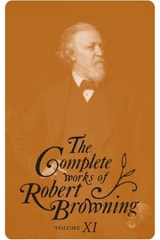
The Complete Works of Robert Browning, Volume XI
With Variant Readings and AnnotationsRobert Browning
Ohio University Press, 2008
In seventeen volumes, copublished with Baylor University, this acclaimed series features annotated texts of all of Robert Browning’s known writing. The series encompasses autobiography as well as influences bearing on Browning’s life and career and aspects of Victorian thought and culture.
Volume XI of The Complete Works of Robert Browning contains two strikingly disparate long poems from the 1870s, Fifine at the Fair and Red Cotton Night-Cap Country. In Fifine at the Fair, Browning creates an idiosyncratic version of the Don Juan figure, a distinctly post-Romantic and intellectual Don Juan who derives little from any literary predecessor. The legendary character is realized in a modern French setting, the village of Pornic, a favorite vacation spot for Browning. The poem is a sustained exercise in self-justification and casuistry, with Don Juan persuading himself that he can reconcile his love of his wife with his carnal love for a gipsy girl.
Though Red Cotton Night-Cap Country is similarly concerned with a struggle between spirit and flesh, the poem is entirely based in contemporary events. Using newspaper accounts and legal documents, Browning tells the strange and shocking tale of a rich and devout Frenchman who throws himself from the roof of his chateau, convinced that heaven will deliver him from death. Upon the question of his sanity hinges the disposition of his considerable estate, and the poet traces the claims and counterclaims to their settlement in court only a few months before he wrote the poem.
As always in this series of critical editions, a complete record of textual variants is provided, as well as extensive explanatory notes.
The Complete Works of Robert Browning, Volume XIII
With Variant Readings and AnnotationsRobert Browning
Ohio University Press, 1995
The Complete Works of Robert Browning, Volume XIV
With Variant Readings and AnnotationsRobert Browning
Ohio University Press, 2003
In seventeen volumes, copublished with Baylor University, this acclaimed series features annotated texts of all of Robert Browning’s known writing. The series encompasses autobiography as well as influences bearing on Browning’s life and career and aspects of Victorian thought and culture.
Volume XIV of The Complete Works of Robert Browning records a transition in the poet’s career. With The Agamemnon of Aeschylus (1877), Browning ended his experiments with classical sources, creating his “transcript” — not quite a translation — of the Greek original and providing an intriguing explanation for his approach. La Saisiaz, the deeply personal expression of Browning’s shock at the sudden death of a dear friend, was published in 1878 with The Two Poets of Croisic, an extended ironic meditation on literary fame. Browning’s collection of six poems under the title Dramatic Idyls (1879) marks the poet’s return to the dramatic forms he perfected in Men and Women and Dramatis Personae, and a revival of his interest in the psychology of motives.
As always in this acclaimed series, a complete record of textual variants is provided, as well as extensive explanatory notes.
The Complete Works of Robert Browning, Volume XVI
With Variant Readings and AnnotationsRobert Browning
Ohio University Press, 1998
In seventeen volumes, copublished with Baylor University, this acclaimed series features annotated texts of all of Robert Browning’s known writing. The series encompasses autobiography as well as influences bearing on Browning’s life and career and aspects of Victorian thought and culture.
Robert Browning wrote Parleyings with Certain People of Importance in Their Day in his seventy-third year. The work is a capstone to the poet’s long career, encompassing autobiography as well as influences bearing on the poet’s life and career and on Victorian thought and culture in general. One of Browning’s most complex works, Parleyings is also a work essential to understanding his genius and career as a whole. The Ohio/Baylor Browning edition offers keys to the complexity and interest of Parleyings through a definitive, emended text, full annotations for allusions both explicit and implicit in the text, and variant readings for the manuscript and all editions revised by Browning during his lifetime.
In form and structure, Parleyings is a series of seven poems written in Browning’s own voice and addressed to figures influential in his development. The series is framed by a prologue and an epilogue, the whole amounting to some 3,500 lines. The poems are a formal contrast and a pendant to the great series of linked dramatic monologues in The Ring and the Book. They demonstrate the zest for innovation possessed by the master of the dramatic monologue in his ripe maturity. Interested readers as well as students and scholars of Browning will find a rich field of poetry and a critical mass of resources in Volume XVI of the Ohio/Baylor Browning edition.
As always in this acclaimed series, a complete record of textual variants is provided, as well as extensive explanatory notes.
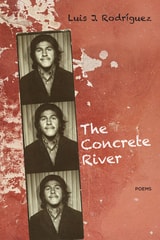
The Concrete River
PoemsLuis J. Rodríguez
Northwestern University Press, 1995
The Concrete River is a collection of poems by poet laureate of Los Angeles Luis Rodríguez. They illuminate the gritty idiosyncrasies of immigrant life in urban barrios spanning Los Angeles to Chicago to Harlem. Rodríguez lends powerful voices to those struggling to keep the gas on, to find work, and to keep love. Populated by a vibrant cast of characters, ranging from the drugged, to the eccentric, to the heartbroken, Rodríguez’s poems protest capitalism, violence, and exploitation while reveling in the potential of compassion.
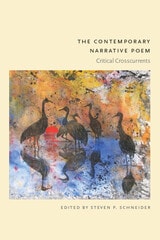
The Contemporary Narrative Poem
Critical CrosscurrentsSteven P. Schneider
University of Iowa Press, 2012
The answers they supply will engage every poet and student of poetry.
The Counterpunch (and Other Horizontal Poems)/El contragolpe (y otros poemas horizontales)
Juan Carlos Flores
University of Alabama Press, 2016
Mapping contemporary Cuba through the architecture of poetry and place.
Alamar, the home of award-winning Cuban poet Juan Carlos Flores, is the setting for his collection, The Counterpunch and Other Horizontal Poems) / El contragolpe (y otros poemas horizontales). Constructed as a self-help community in eastern Havana, Alamar is the largest housing complex in the world. Flores’s highly structured texts, organized into “art galleries,” present prose paintings of a big place in very small form.
Flores builds a poetic landscape with repeating structures that mirror Alamar’s five-floor walkups. Exploring life and dream on the flat surfaces of the poems, he gives fleeting glimpses of perception and survival at the urban margins. As the poet ages, so ages Alamar itself. Yet both find renewal through poetry.
The eighty poems in this bilingual edition offer the first English translation of a complete Flores collection. It will also be of interest to Spanish-language readers seeking access to Cuban literature abroad. Award-winning scholar and translator Kristin Dykstra has compiled an introduction in which she presents Flores, his literary contexts, and references in his poems. Because Flores made specific requests regarding translation, fascinating notes also clarify and expound on choices Dykstra makes in the English version.
The Courtesy
Alan Shapiro
University of Chicago Press, 1983
"The Courtesy is really an admirable book: it shows up the unreality of a lot of the other poetry one reads, dealing honestly and with that perversity which is a sign of thoughfulness, with the slight but heavy matter of our everyday defeats."—Michael Hoffman, Poetry Nation Review

The Cowherd's Son
Rajiv Mohabir
Tupelo Press, 2017
The Cracks Between What We Are and What We Are Supposed to Be
Essays and InterviewsHarryette Mullen
University of Alabama Press, 2012
The Cracks Between What We Are and What We Are Supposed to Be forms an extended consideration not only of Harryette Mullen’s own work, methods, and interests as a poet, but also of issues of central importance to African American poetry and language, women’s voices, and the future of poetry.
Together, these essays and interviews highlight the impulses and influences that drive Mullen’s work as a poet and thinker, and suggest unique possibilities for the future of poetic language and its role as an instrument of identity and power.
The Creative Crone
Aging and the Poetry of May Sarton and Adrienne RichSylvia Henneberg
University of Missouri Press, 2010
The Cultural Politics of Slam Poetry
Race, Identity, and the Performance of Popular Verse in AmericaSusan B. A. Somers-Willett
University of Michigan Press, 2010
"For a lucid and thorough 'real-world' analysis of the movement from the ground-up--including its history, aesthetics, and culture, there is surely no better place to start than Somers-Willett's trailblazing book."
--- Jerome Sala, Pleiades
"Finally, a clear, accurate, and thoroughly researched examination of slam poetry, a movement begun in 1984 by a mixed bag of nobody poets in Chicago. At conception, slam poetry espoused universal humanistic ideals and a broad spectrum of participants, and especially welcome is the book's analysis of how commercial marketing forces succeeded in narrowing public perception of slam to the factionalized politics of race and identity. The author's knowledge of American slam at the national level is solid and more authentic than many of the slammers who claim to be."
---Marc Kelly Smith, founder/creator of the International Poetry Slam movement
The cultural phenomenon known as slam poetry was born some twenty years ago in white working-class Chicago barrooms. Since then, the raucous competitions have spread internationally, launching a number of annual tournaments, inspiring a generation of young poets, and spawning a commercial empire in which poetry and hip-hop merge.
The Cultural Politics of Slam Poetry is the first critical book to take an in-depth look at slam, shedding light on the relationships that slam poets build with their audiences through race and identity performance and revealing how poets come to celebrate (and at times exploit) the politics of difference in American culture.
With a special focus on African American poets, Susan B. A. Somers-Willett explores the pros and cons of identity representation in the commercial arena of spoken word poetry and, in doing so, situates slam within a history of verse performance, from blackface minstrelsy to Def Poetry. What's revealed is a race-based dynamic of authenticity lying at the heart of American culture. Rather than being mere reflections of culture, Somers-Willett argues, slams are culture---sites where identities and political values get publicly refigured and exchanged between poets and audiences.
Susan B. A. Somers-Willett is a decade-long veteran of slam and teaches creative writing and poetics as an Assistant Professor of English at Montclair State University. She is the author of two books of poetry, Quiver and Roam. Visit the author's website at: http://www.susansw.com/.
Photo by Jennifer Lacy.
The Cultural Production of Matthew Arnold
Antony H. Harrison
Ohio University Press, 2009
The career of Matthew Arnold as an eminent poet and the preeminent critic of his generation constitutes a remarkable historical spectacle orchestrated by a host of powerful Victorian cultural institutions.
The Cultural Production of Matthew Arnold investigates these constructions by situating Arnold’s poetry in a number of contexts that partially shaped it. Such analysis revises our understanding of the formation of the elite (and elitist) male literary-intellectual subject during the 1840s and 1850s, as Arnold attempts self-definition and strives simultaneously to move toward a position of ideological influence upon intellectual institutions that were contested sites of economic, social, and political power in his era.
Antony H. Harrison reopens discussion of selected works by Arnold in order to make visible some of their crucial sociohistorical, intertextual, and political components. Only by doing so can we ultimately view the cultural work of Arnold “steadily and … whole,” and in a fashion that actually eschews this mystifying premise of all Arnoldian inquiry which, by the early twentieth century, had become wholly naturalized in the academy as ideology.
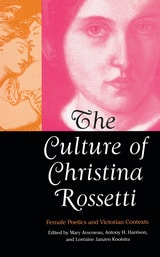
The Culture of Christina Rossetti
Female Poetics and Victorian ContextsMary Arseneau
Ohio University Press, 1999
The Culture of Christina Rossetti explores a “new” Christina Rossetti as she emerges from the scrutiny of the particular historical and cultural context in which she lived and wrote. The essays in this collection demonstrate how the recluse, saint, and renunciatory spinster of former studies was in fact an active participant in her society’s attempt to grapple with new developments in aesthetics, theology, science, economics, and politics.
The volume examines Rossetti’s poetry, fiction, and nonfiction from a variety of theoretical and critical perspectives in order to reevaluate her place in the Victorian world of art, literature, and ideas. The essays offer a radical rethinking of her best-known poems, retrieve neglected works, establish the diversity of her writing, and reposition Rossetti within a canon continually under formation.
Contributing to the ongoing retrieval of the nineteenth-century woman poet, The Culture of Christina Rossetti highlights Rossetti’s responses to both male and female literary traditions and explores her incorporation and revision of literary influences from medieval Italian sources to contemporary writers.
The Cumulus Effect
J. Mae Barizo
Four Way Books, 2015
The Cure of Poetry in an Age of Prose
Moral Essays on the Poet's CallingMary Kinzie
University of Chicago Press, 1993
A distinguished poet and critic, Kinzie assesses poetry's situation during the past twenty-five years. Ours, she contends, is literally a prosaic age, not only in the popularity of prose genres but in the resultant compromises with truth and elegance in literature. In essays on "the rhapsodic fallacy," confessionalism, and the romance of perceptual response, Kinzie diagnoses some of the trends that diminish the poet's flexibility. Conversely, she also considers individual poets—Randall Jarrell, Elizabeth Bishop, Howard Nemerov, Seamus Heaney, and John Ashbery—who have found ingenious ways of averting the risks of prosaism and preserving the special character of poetry.
Focusing on poet Louise Bogan and novelist J. M. Coetzee, Kinzie identifies a crucial and curative overlap between the practices of great prose-writing and great poetry. In conclusion, she suggests a new approach for teaching writers of poetry and fiction. Forcefully argued, these essays will be widely read and debated among critics and poets alike.
The Darkness of the Present
Poetics, Anachronism, and the AnomalySteve McCaffery
University of Alabama Press, 2012
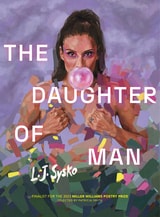
The Daughter of Man
L. J. Sysko
University of Arkansas Press, 2023
"This whip-smart collection is a playful celebration of feminine power.”
—Publisher’s Weekly
"What a beautiful book.”
—Ross Gay
"With the verve of Alice Fulton and the panache of Gerald Stern, Sysko keens into the canon, a welcome voice. Sing, indeed, heavenly muse.”
—Alan Michael Parker
Finalist for the 2023 Miller Williams Poetry Prize
Selected by Patricia Smith
The Daughter of Man follows its unorthodox heroine as she transforms from maiden to warrior—then to queen, maven, and crone—against the backdrop of suburban America from the 1980s to today. In this bold reframing of the hero’s journey, L. J. Sysko serves up biting social commentary and humorous, unsparing self-critique while enlisting an eccentric cast that includes Betsy Ross as sex worker, Dolly Parton as raptor, and a bemused MILF who exchanges glances with a young man at a gas station. Sysko’s revisions of René Magritte’s modernist icon The Son of Man and the paintings of baroque artist Artemisia Gentileschi, whose extraordinary talent was nearly eclipsed after she took her rapist to trial, loom large in this multifaceted portrait of womanhood. With uncommon force, The Daughter of Man confronts misogyny and violence, even as it bursts with nostalgia, lust, and poignant humor.
The Day Underneath the Day
C. Dale Young
Northwestern University Press, 2001
Gifted with a vivid and exact skill, C. Dale Young's writing resembles an intricate anatomy lesson. His powers of observation probe the small energies of the natural world. Again and again the ordinary details of life transform themselves under the delicate pressure of his words--the movement of birds' wings, the color and texture of tropical flowers, the study of the ocean waves, the "scalpel of light" cutting through the beginning of the day. The language of Young's poems evokes an ultimate sense of place through a gorgeous marriage of tone and diction that echoes James Merrill and Amy Clampitt. As he meticulously maps out human passions and emotions, he explores both the surfaces and depths of everything that he surveys. His confident and polished verse unfolds intricate layers of landscape, seeking the order that lies beneath the unruly patterns of our lives.
The Day of Shelly's Death
The Poetry and Ethnography of GriefRenato Rosaldo
Duke University Press, 2014
The Day's Hard Edge
PoemsJose A. Rodriguez
Northwestern University Press, 2024
In his fourth poetry collection, José Antonio Rodríguez investigates how one constructs a relationship to the self, to community, and to poetry itself. The Day's Hard Edge is composed of three sections, the first of which situates the reader in the speaker’s world, one marked by multiple forms of trauma. Here are the contours of the Texas/Mexico borderlands where the speaker’s initial sense of self and community emerges. The second section broadens in scope and considers the potential and limitations of poetry as a site for meaning-making. The third section brings the speaker to a new understanding of the poem as it relates to the transformative and destabilizing experience of trauma. Ultimately this book lays bare an individual and, in doing so, shows how poetry acts as a place of succor and vulnerability for one’s very identity. Together these poems explore what it means to be queer, immigrant, and Chicano.
The Dead Alive and Busy
Alan Shapiro
University of Chicago Press, 2000
Praise for Alan Shapiro: "Shapiro is a shrewd and sympathetic moralist. He never trivializes his subjects with high-minded flourishes or stylistic gimmicks."—J. D. McClatchy, New York Times Book Review
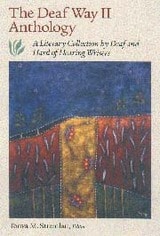
The Deaf Way II Anthology
A Literary Collection by Deaf and Hard of Hearing WritersTonya M. Stremlau
Gallaudet University Press, 2002
In July 2002, the second Deaf Way Conference and Festival took place at Gallaudet University in Washington, D.C., attracting more than 5,000 people worldwide. Researchers, artists, performers, and others converged to create a singular blend of scholarship and social interaction, which inspired The Deaf Way II Anthology.
The Deaf Way II Anthology brings together stellar contributions by 16 international writers who are deaf or hard of hearing. This remarkable collection features poetry, essays, short stories, and one play, all of which offer thought-provoking perspectives on elements from the personal universes of these gifted authors. Many are American writers well-known for their past publications, such as Douglas Bullard, Willy Conley, Christopher Heuer, and Raymond Luczak, while the outstanding work of John Lee Clark, volume editor Tonya Stremlau, Melissa Whalen, and several others have been collected for the first time in this volume. The international contributions further distinguish this anthology, ranging from poetry by Romanian Carmen Cristiu, verse by Sibylle Gurtner May from Switzerland, to a play by Nigerian Sotonwa Opeoluwa.
All of the writers showcased in The Deaf Way II Anthology portray the Deaf experience with unmatched authenticity, presenting a perfect introduction to the Deaf world. Simultaneously, their work demonstrates that deaf and hard of hearing people can write at the highest aesthetic level and offer invaluable insights on the complete human spectrum.

The Declarable Future
Jennifer Boyden
University of Wisconsin Press, 2013
Finalist, Stafford/Hall Award for Poetry, Oregon Book Awards
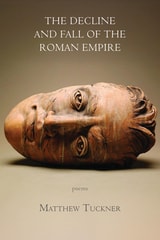
The Decline and Fall of the Roman Empire
Matthew Tuckner
Four Way Books, 2025
The Decline and Fall of the Roman Empire is a book-length sequence of 53 poems with identical eponymous titles. Heartbreaking and searingly lucid, this debut collection from poet Matthew Tuckner chronicles his best friend's illness and subsequent death from cancer. Its brilliance is not only in recognizing the vastness and particularity of grief — how the loss of a beloved is so personally all encompassing that it splits time irrevocably, separating our personal history into distinct eras of before and after as the governing principles of our lives crumble — but also in joining the discrete experience of one person's sickness to a carcinogenic imperial core, the late-capitalist global order that ensnares all people in toxic landscapes that make us sick.
Describing a trip to Japan, Tuckner evokes the brute force of appetite alongside the delicacy of life as he recalls "memories of its greedy koi fish, a ceramic bowl / of goji berries perfectly balanced on a tree branch." Beholden to a ticking clock, we catalogue, becoming evidentiary and encyclopedic in our impulses. "We fatten the time until it bursts into artifacts: / sixteen photographs of a single puddle // taking shape in the red glow of your darkroom." In borrowing the title of Edward Gibbon's seminal 6-volume history, Tuckner anchors the associative detours of his sprawling intellect and executes a stunning metacommentary on his own lyrics: time collapses every era into a spattering of sentences, tyrannical as it forcibly converts the present to the past, and yet the barbarous recursion of human feeling resists oblivion, evoking the eternity of emotional significance. Tuckner's shrewd balance of irony and tenderness make this cerebral inversion possible: this friendship is the poet's canon event, the Rome at which every road in his mind arrives, and yet it is also the singular dialect that will not cede to death's subsuming lingua franca.
Damien Hirst's taxidermy art, The John Keats House, superfund sites in Rome, NY, the 2023 Ohio Train Derailment, a children's book titled Oil Spill! — these poems travel widely in their topics to understand the specific ravages of disease on the human body, and in turn, the ravages of human beings on the planet. Its trenchant criticism isn't pessimistic, though — its redemption is the restorative, unending love that made these elegies possible. Equally gutted and mesmerized by our infinite, arbitrary ability to discern meaning in mess, these poems ask us to bear witness to what we can develop if we will sit in the darkness. To read the photo essay of a storm's aftermath. It tells an ancient story that becomes brand new, the one about "a puddle you glimpsed the moon in & stopped for. // A puddle that was just plain rain until it fell."