Results by title
1201 books match the query 'Race relations' and 209 start with t

The Secret Trust of Aspasia Cruvellier Mirault
The Life and Trials of a Free Woman of Color in Antebellum GeorgiaJanice L. Sumler-Edmond
University of Arkansas Press, 2008
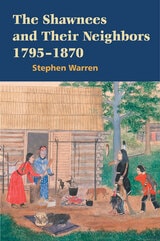
The Shawnees and Their Neighbors, 1795-1870
Stephen Warren
University of Illinois Press, 2004
Until recently, historians have assumed that Central Algonquians derive from politically unified tribes, but by analyzing the crucial role that individuals, institutions, and policies played in shaping modern tribal governments, Warren reveals a messier, more complicated history of migration and conflict. Ultimately, Warren establishes that the form of the modern Shawnee "tribe" was coerced in accordance with the U.S. government's desire for an entity with whom to do business, rather than as a natural development of traditional Shawnee ways.
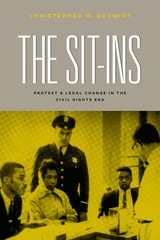
The Sit-Ins
Protest and Legal Change in the Civil Rights EraChristopher W. Schmidt
University of Chicago Press, 2018
The Sit-Ins tells the story of the student lunch counter protests and the national debate they sparked over the meaning of the constitutional right of all Americans to equal protection of the law. Christopher W. Schmidt describes how behind the now-iconic scenes of African American college students sitting in quiet defiance at “whites only” lunch counters lies a series of underappreciated legal dilemmas—about the meaning of the Constitution, the capacity of legal institutions to remedy different forms of injustice, and the relationship between legal reform and social change. The students’ actions initiated a national conversation over whether the Constitution’s equal protection clause extended to the activities of private businesses that served the general public. The courts, the traditional focal point for accounts of constitutional disputes, played an important but ultimately secondary role in this story. The great victory of the sit-in movement came not in the Supreme Court, but in Congress, with the passage of the Civil Rights Act of 1964, landmark legislation that recognized the right African American students had claimed for themselves four years earlier. The Sit-Ins invites a broader understanding of how Americans contest and construct the meaning of their Constitution.
The Soiling of Old Glory
The Story of a Photograph That Shocked AmericaLouis P. Masur
Brandeis University Press, 2024
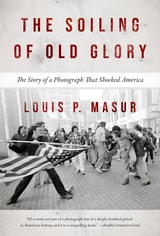
In 1976, Boston was bitterly divided over a court order to desegregate its public schools. Plans to bus students between predominantly white and Black neighborhoods stoked backlash and heated protests. Photojournalist Stanley Forman was covering one such demonstration at City Hall when he captured an indelible image: a white protester attacking a Black attorney with the American flag. A second white man grabs at the victim, appearing to assist the assailant.
The photo appeared in newspapers across the nation and went on to win the Pulitzer Prize. In The Soiling of Old Glory, esteemed historian Louis P. Masur reveals what happened the day of the assault and the ways these events reverberated long afterward. He interviews the men involved: Forman, who took the photo; Ted Landsmark, a Black, Yale-educated attorney and an activist; Joseph Rakes, the white protester lunging with the flag, a disaffected student; and Jim Kelly, a local politician who opposed busing, but who helped Landsmark to his feet after protesters knocked him to the ground. The photo, Masur discovers, holds more complexities than initially meet the eye. The flag never made contact with the victim, for example, and Kelly was attempting to protect Landsmark, not hurt him.
Masur delves into the history behind Boston’s efforts to desegregate the schools and the anti-busing protests that shook the city. He examines photography’s power to move, inform, and persuade us, as well as the assumptions we each bring to an image as viewers. And he delves into the flag, to explore how other artists and photographers have shaped, bolstered, or challenged its patriotic significance.
Gripping and deeply researched, The Soiling of Old Glory shows how a disturbing event, frozen on a film, impacted Boston and the nation. In an age of renewed calls for visual literacy and disagreements about the flag’s meaning, Masur’s history, now updated with a new foreword by Ted Landsmark and a new preface by the author, is as relevant as ever.
The Sorcery of Color
Identity, Race, and Gender in BrazilElisa Larkin Nascimento
Temple University Press, 2009
Originally published in 2003 in Portuguese, The Sorcery of Color argues that there are longstanding and deeply-rooted relationships between racial and gender inequalities in Brazil. In this pioneering book, Elisa Larkin Nascimento examines the social and cultural movements that have attempted, since the early twentieth century, to challenge and eradicate these conjoined inequalities.
The book's title describes the social sleight-of-hand that disguises the realities of Brazilian racial inequity. According to Nascimento, anyone who speaks of racism—or merely refers to another person as black—traditionally is seen as racist. The only acceptably non-racist attitude is silence. At the same time, Afro-Brazilian culture and history have been so overshadowed by the idea of a general "Brazilian identity" that to call attention to them is also to risk being labeled racist.
Incorporating leading international scholarship on Pan Africanism and Afrocentric philosophy with the writing of Brazilian scholars, Nascimento presents a compelling feminist argument against the prevailing policy that denies the importance of race in favor of a purposefully vague concept of ethnicity confused with color.

The Southern Debate over Slavery
Volume 1: Petitions to Southern Legislatures, 1778-1864Edited by Loren Schweninger
University of Illinois Press, 2001
These petitions, filed by slaveholders and nonslaveholders, slaves and free blacks, women and men, abolitionists and staunch defenders of slavery, constitute a uniquely important primary source. Petitioners were compelled to present the most accurate and fully documented case they could, since their claims would be subject to public scrutiny and legal verification. Unlike the many reminiscences and autobiographies of the period, these petitions record with great immediacy and minute detail the dynamics, common understandings, and legal restrictions and parameters that shaped southern society during this period.
Arranged chronologically, with their original spelling and idiosyncratic phraseology intact, these documents reveal the grim and brutal nature of human bondage, the fears of whites who lived among large concentrations of blacks, and the workings of the complicated legal system designed to control blacks. They tell about the yearning of bondspeople to gain their freedom, the attitudes of freed blacks who were forced to leave the South, and the efforts of African Americans to overcome harsh and restrictive laws. They also underscore the unique situation of free women of color and the reliance of manumitted (formally freed) blacks on their former owners for protection, travel passes, guardianship papers, and reference letters.
Astonishingly intimate and frank,The Southern Debate over Slavery illuminates how slavery penetrated nearly every aspect of southern life and how various groups of southerners responded to the difficulties they confronted as a result of living in a slave society.
The Southern Debate over Slavery
Volume 2: Petitions to Southern County Courts, 1775-1867Edited by Loren Schweninger
University of Illinois Press, 2007
An incomparably rich source of period information, the second volume of The Southern Debate over Slavery offers a representative and extraordinary sampling of the thousands of petitions about issues of race and slavery that southerners submitted to county courts between the American Revolution and Civil War. These petitions, filed by slaveholders and nonslaveholders, slaves and free blacks, women and men, abolitionists and staunch defenders of slavery, constitute a uniquely important primary source. The collection records with great immediacy and minute detail the dynamics and legal restrictions that shaped southern society.
The Specter and the Speculative
Afterlives and Archives in the African DiasporaMae G. Henderson
Rutgers University Press, 2024
The State You See
How Government Visibility Creates Political Distrust and Racial InequalityAaron J. Rosenthal
University of Michigan Press, 2023
The State You See uncovers a racial gap in the way the American government appears in people’s lives. It makes it clear that public policy changes over the last fifty years have driven all Americans to distrust the government that they see in their lives, even though Americans of different races are not seeing the same kind of government.
For white people, these policy changes have involved a rising number of generous benefits submerged within America’s tax code, which taken together cost the government more than Social Security and Medicare combined. Political attention focused on this has helped make welfare and taxes more visible representations of government for white Americans. As a result, white people are left with the misperception that government does nothing for them, apart from take their tax money to spend on welfare. Distrust of government is the result. For people of color, distrust is also rampant but for different reasons. Over the last fifty years, America has witnessed increasingly overbearing policing and swelling incarceration numbers. These changes have disproportionately impacted communities of color, helping to make the criminal legal system a unique visible manifestation of government in these communities.
While distrust of government emerges in both cases, these different roots lead to different consequences. White people are mobilized into politics by their distrust, feeling that they must speak up in order to reclaim their misspent tax dollars. In contrast, people of color are pushed away from government due to a belief that engaging in American elections will yield the same kind of unresponsiveness and violence that comes from interactions with the police. The result is a perpetuation of the same kind of racial inequality that has always been present in American democracy. The State You See is essential reading for anyone interested in understanding how the American government engages in subtle forms of discrimination and how it continues to uphold racial inequality in the present day.

The Stories Whiteness Tells Itself
Racial Myths and Our American NarrativesDavid Mura
University of Minnesota Press, 2022
Uncovering the pernicious narratives white people create to justify white supremacy and sustain racist oppression
The police murders of two Black men, Philando Castile and George Floyd, frame this searing exploration of the historical and fictional narratives that white America tells itself to justify and maintain white supremacy. From the country’s founding through the summer of Black Lives Matter in 2020, David Mura unmasks how white stories about race attempt to erase the brutality of the past and underpin systemic racism in the present.
Intertwining history, literature, ethics, and the deeply personal, Mura looks back to foundational narratives of white supremacy (Jefferson’s defense of slavery, Lincoln’s frequently minimized racism, and the establishment of Jim Crow) to show how white identity is based on shared belief in the pernicious myths, false histories, and racially segregated fictions that allow whites to deny their culpability in past atrocities and current inequities. White supremacy always insists white knowledge is superior to Black knowledge, Mura argues, and this belief dismisses the truths embodied in Black narratives.
Mura turns to literature, comparing the white savior portrayal of the film Amistad to the novelization of its script by the Black novelist Alexs Pate, which focuses on its African protagonists; depictions of slavery in Faulkner and Morrison; and race’s absence in the fiction of Jonathan Franzen and its inescapable presence in works by ZZ Packer, tracing the construction of Whiteness to willfully distorted portraits of race in America. In James Baldwin’s essays, Mura finds a response to this racial distortion and a way for Blacks and other BIPOC people to heal from the wounds of racism.
Taking readers beyond apology, contrition, or sadness, Mura attends to the persistent trauma racism has exacted and lays bare how deeply we need to change our racial narratives—what white people must do—to dissolve the myth of Whiteness and fully acknowledge the stories and experiences of Black Americans.
The Sum Of Our Parts
Mixed-Heritage Asian AmericansTeresa Williams-Leon
Temple University Press, 2001
In the U.S., discussions of race generally center on matters of black and white; Asian Americans usually figure in conversations about race as an undifferentiated ethnic group or as exotic Eurasians. The contributors to this book disrupt the standard discussions by considering people of mixed Asian ethnicities. They also pay particular attention to non-white multiracial identities to decenter whiteness and reflect the experience of individuals or communities who are considered a minority within a minority. With an entire section devoted to the Asian diaspora, The Sum of Our Parts suggests that questions of multiracial and multiethnic identity are surfacing around the globe. This timely and provocative collection articulates them for social scientists and students.
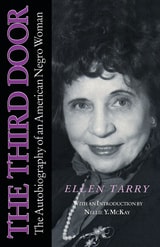
The Third Door
The Autobiography of an American Negro WomanEllen Tarry
University of Alabama Press, 1992
Tarry relates her life against the background of a changing American society
In pursuit of her dream of becoming a writer, Tarry moved to New York, where she worked for black newspapers and became acquainted with some of the prominent black artists and writers of the day, particularly Claude McKay and James Weldon Johnson. Her devotion to the church found expression in social work activities, first in Harlem, then in Chicago, and, during World War II, in Anniston, Alabama, where she directed a USO for black soldiers stationed at Fort McClellan. Tarry wrote several books for young readers, including biographies of James Weldon Johnson and Pierre Toussaint. She continued her social work career after the war and now lives in New York.
The Third Space of Sovereignty
The Postcolonial Politics of U.S.–Indigenous RelationsKevin Bruyneel
University of Minnesota Press, 2007
The imposition of modern American colonial rule has defined U.S.–indigenous relations since the time of the American Civil War. In resistance, Kevin Bruyneel asserts, indigenous political actors work across American spatial and temporal boundaries, demanding rights and resources from the government while also challenging the imposition of colonial rule over their lives. This resistance engenders what he calls a “third space of sovereignty,” which resides neither inside nor outside the U.S. political system but rather exists on its boundaries, exposing both the practices and limitations of American colonial rule.
The Third Space of Sovereignty offers fresh insights on such topics as the crucial importance of the formal end of treaty-making in 1871, indigenous responses to the prospect of U.S. citizenship in the 1920s, native politics during the tumultuous civil rights era of the 1960s, the question of indigenousness in the special election of California’s governor in 2003, and the current issues surrounding gaming and casinos.
In this engaging and provocative work, Bruyneel shows how native political actors have effectively contested the narrow limits that the United States has imposed on indigenous people’s ability to define their identity and to develop economically and politically on their own terms.
Kevin Bruyneel is assistant professor of politics at Babson College.
The Toni Morrison Book Club
Juda Bennett
University of Wisconsin Press, 2020
Framing their book club around collective secrets, the group bears witness to how Morrison’s works and words can propel us forward while we sit with uncomfortable questions about race, gender, and identity. How do we make space for black vulnerability in the face of white supremacy and internalized self-loathing? How do historical novels speak to us now about the delicate seams that hold black minds and bodies together?
This slim and brilliant confessional offers a radical vision for book clubs as sites of self-discovery and communal healing. The Toni Morrison Book Club insists that we find ourselves in fiction and think of Morrison as a spiritual guide to our most difficult thoughts and ideas about American literature and life.
The Tourist State
Performing Leisure, Liberalism, and Race in New ZealandMargaret Werry
University of Minnesota Press, 2011
No longer the dreary sheep farm at the end of the world, the New Zealand of the new millennium is a hot global ticket, heralded for its bicultural dynamism, laid-back lifestyle, and scenery extraordinary enough to pass for Tolkien’s Middle Earth. How this image was crafted is the story The Tourist State tells. In a series of narratives that address the embodied dimensions of biopolitics and explore the collision of race, performance, and the cultural poetics of the state, Margaret Werry exposes the real drama behind the new New Zealand, revealing how a nation was sold to the world—and to itself.
The story stretches back to the so-called Liberal Era at the beginning of the twentieth century, in which the young settler colony touted itself as the social laboratory of the world. Focusing on where tourism and liberal governmentality coincide, The Tourist State takes us from military diplomacy at the dawn of the American Pacific to the exotic blandishments of Broadway and Coney Island, from landscape preservation to health reform and town planning, from blockbuster film to knowledge economy policy.
Weaving together interpretive history, performance ethnography, and cultural criticism, Werry offers new ways to think about race and indigeneity—and about the role of human agency in state-making.
The Truly Disadvantaged
The Inner City, the Underclass, and Public PolicyWilliam Julius Wilson
University of Chicago Press, 1987
"'Must reading' for civil-rights leaders, leaders of advocacy organizations for the poor, and for elected officials in our major urban centers."—Bernard C. Watson, Journal of Negro Education
"Required reading for anyone, presidential candidate or private citizen, who really wants to address the growing plight of the black urban underclass."—David J. Garrow, Washington Post Book World
Selected by the editors of the New York Times Book Review as one of the sixteen best books of 1987.
Winner of the 1988 C. Wright Mills Award of the Society for the Study of Social Problems.
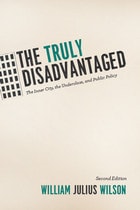
The Truly Disadvantaged
The Inner City, the Underclass, and Public Policy, Second EditionWilliam Julius Wilson
University of Chicago Press, 2012
Renowned American sociologist William Julius Wilson takes a look at the social transformation of inner city ghettos, offering a sharp evaluation of the convergence of race and poverty. Rejecting both conservative and liberal interpretations of life in the inner city, Wilson offers essential information and a number of solutions to policymakers. The Truly Disadvantaged is a wide-ranging examination, looking at the relationship between race, employment, and education from the 1950s onwards, with surprising and provocative findings. This second edition also includes a new afterword from Wilson himself that brings the book up to date and offers fresh insight into its findings.
“The Truly Disadvantaged should spur critical thinking in many quarters about the causes and possible remedies for inner city poverty. As policymakers grapple with the problems of an enlarged underclass they—as well as community leaders and all concerned Americans of all races—would be advised to examine Mr. Wilson's incisive analysis.”—Robert Greenstein, New York Times Book Review
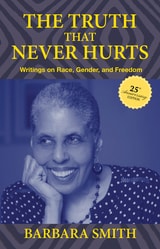
The Truth That Never Hurts 25th anniversary edition
Writings on Race, Gender, and FreedomBarbara Smith
Rutgers University Press, 2024
Barbara Smith has been doing groundbreaking work since the early 1970s, describing a Black feminism for Black women. Her work in Black women's literary traditions; in examining the sexual politics of the lives of women of color; in representing the lives of Black lesbians and gay men; and in making connections between race, class, sexuality and gender is gathered in The Truth That Never Hurts. This collection contains some of her major essays on Black women's literature, Black lesbian writing, racism in the women's movement, Black-Jewish relations, and homophobia in the Black community. Her forays into these areas ignited dialogue about topics that few other writers were addressing at the time, and which, sadly, remain pertinent to this day. This twenty-fifth anniversary edition, in a beautiful new package, also contains the essays from the original about the 1968 Chicago convention demonstrations; attacks on the NEA; the Anita Hill-Clarence Thomas Senate hearings; and police brutality against Rodney King and Abner Louima, which, after twenty-five years, still have the urgency they did when they were first written.
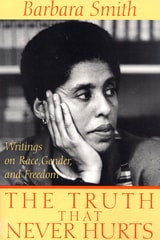
The Truth That Never Hurts
Writings on Race, Gender, and FreedomSmith, Barbara
Rutgers University Press, 2000
Smith’s essay “Toward a Black Feminist Criticism,” is often cited as a major catalyst in opening the field of black women’s literature. Pieces about racism in the women’s movement, black and Jewish relations, and homophobia in the Black community have ignited dialogue about topics that few other writers address. The collection also brings together topical political commentaries on the 1968 Chicago convention demonstrations; attacks on the NEA; the Anita Hill–Clarence Thomas Senate hearings; and police brutality against Rodney King and Abner Louima. It also includes a never-before-published personal essay on racial violence and the bonds between black women that make it possible to survive.
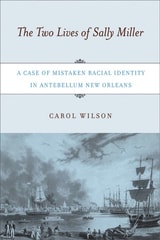
The Two Lives of Sally Miller
A Case of Mistaken Racial Identity in Antebellum New OrleansWilson, Carol
Rutgers University Press, 2007
In 1843, the Louisiana Supreme Court heard the case of a slave named Sally Miller, who claimed to have been born a free white person in Germany. Sally, a very light-skinned slave girl working in a New Orleans caf, might not have known she had a case were it not for a woman who recognized her as Salom Muller, with whom she had emigrated from Germany over twenty years earlier. Sally decided to sue for her freedom, and was ultimately freed, despite strong evidence contrary to her claim.
In The Two Lives of Sally Miller, Carol Wilson explores this fascinating legal case and its reflection on broader questions about race, society, and law in the antebellum South. Why did a court system known for its extreme bias against African Americans help to free a woman who was believed by many to be a black slave? Wilson explains that while the notion of white enslavement was shocking, it was easier for society to acknowledge that possibility than the alternative-an African slave who deceived whites and triumphed over the system.
The University Against Itself
The NYU Strike and the Future of the Academic Workplaceedited by Monika Krause, Mary Nolan, Michael Palm and Andrew Ross
Temple University Press, 2008
All of the contributors were either participants in the NYU strike -- graduate students, faculty, and organizers -- or are nationally recognized as writers on academic labor. They are deeply troubled by the ramifications of corporatizing universities. Here they spell out their concerns, offering lessons from one historic strike as well as cautions about the future of all universities.
Contributors include: Stanley Aronowitz, Barbara Bowen, Andrew Cornell, Ashley Dawson, Stephen Duncombe, Steve Fletcher, Greg Grandin, Adam Green, Kitty Krupat, Gordon Lafer, Micki McGee, Sarah Nash, Cary Nelson, Matthew Osypowski, Ed Ott, Ellen Schrecker, Susan Valentine, and the editors.
The Unruly Facts of Race
The Politics of Knowledge Production in the Early Twentieth-Century Immigration DebateSunmin Kim
University of Chicago Press, 2026
Unfortunately, we’re all too familiar with the US’s legacy of maligning immigrants. Some Americans see immigrants as inherently threatening, a blank screen onto which the nation’s worst fears are projected. But this phenomenon is neither timeless nor static. Instead, it arose and transformed alongside the unprecedented arrival of immigrants in the early twentieth century—and the federal government’s response. In The Unruly Facts of Race, sociologist Sunmin Kim explains how American ideas about race and ethnicity were transformed in the early twentieth century as an unintended consequence of anti-immigrant mobilization.
Kim presents a wealth of archival evidence, including the proceedings of the 1907 Dillingham Commission, to reconstruct how competing racialized visions of nationhood evolved in the early twentieth-century immigration debate. Immigration restrictionist politicians believed that the United States should be a White, Anglo-Saxon, and Protestant nation. However, when they mobilized researchers—some of whom were women and/or immigrants—to gather data at a massive scale to rationalize their aims, they were met with unruly facts that did not support their racial project. Newer European immigrants, as the data showed, were not much different from descendants of earlier immigrants from northern Europe. When facts failed to support the vilification of immigrants, exclusionist politicians instead turned to race as a marker of ineluctable difference to justify their aims. This led to a new principle of national belonging: the United States transitioned to a country that encompassed various European groups, including Catholics and Jews, but excluded non-White immigrants, as they were deemed too different to become a part of the nation.
Kim’s analysis shows that throughout US history, the opportunity for belonging for some immigrants was predicated on the exclusion of others. His focus on the role of facts in the early twentieth century provides a refreshing take on why the so-called “nation of immigrants” has always demonized some immigrants while cherishing others, highlighting the selection and control of immigrants as the core principles of the American nation-building project. Amid a vitriolic explosion of American immigration discourse, Kim offers a needed corrective to and context for debates around who belongs in the United States.
The Unsteady March
The Rise and Decline of Racial Equality in AmericaPhilip A. Klinkner and Rogers M. Smith
University of Chicago Press, 1999
"[An] unflinching portrait of the leviathan of American race relations. . . . This important book should be read by all who aspire to create a more perfect union."—Publishers Weekly, starred review
"Could it be that our unswerving belief in the power of our core values to produce racial equality is nothing but a comforting myth? That is the main argument put forth by Philip Klinkner and Rogers Smith . . . The Unsteady March is disturbing because it calls into question our cherished national belief and does so convincingly. . . . [It] is beautifully written, and the social history it provides is illuminating and penetrating."—Aldon Morris, American Journal of Sociology
Winner of the Horace Mann Bond Award of the W.E.B. Du Bois Institute for Afro-American Research at Harvard University.
The Urban Voter
Group Conflict and Mayoral Voting Behavior in American CitiesKaren M. Kaufmann
University of Michigan Press, 2004
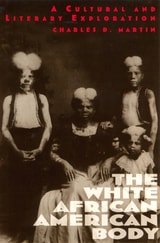
The White African American Body
Martin, Charles D.
Rutgers University Press, 2002
Blacks with white skin. Since colonial times, showmen have exhibited the bodies of African Americans with white or gradually whitening skin in taverns, dime museums, and circus sideshows. The term "white Negro" has served to describe an individual born with albinism as well as those who have vitiligo, a disorder that robs the skin of its pigment in ever-growing patches. In The White African American Body, Charles D. Martin examines the proliferation of the image of the white Negro in American popular culture, from the late eighteenth century to the present day.
This enigmatic figure highlights the folly of the belief in immutable racial differences. If skin is a race marker, what does it mean for blacks literally to be white? What does this say not only about blacks but also about whites? Scientists have probed this mystery, philosophers have pondered its meaning, and artists have profited from the sale of images of these puzzling figures.
Lavishly illustratedwith many rarely seen photographsThe White African American Body shows how the white Negro occupied, and still occupies, the precarious position between white and black, and how this figure remains resilient in American culture.
The White Welfare State
The Racialization of U.S. Welfare PolicyDeborah E. Ward
University of Michigan Press, 2005
"In The White Welfare State, Deborah Ward assembles a powerful array of documentary and statistical evidence to reveal the mechanisms, centrality, and deep historical continuity of racial exclusion in modern 'welfare' provision in the United States. Bringing unparalleled scrutiny to the provisions and implementation of state-level mothers' pensions, she argues persuasively that racialized patterns of welfare administration were firmly entrenched in this Progressive Era legislation, only to be adopted and reinforced in the New Deal welfare state. With rigorous and clear-eyed analysis, she pushes us to confront the singular role of race in welfare's development, from its early 20th-century origins to its official demise at century's end."
--Alice O'Connor, University of California at Santa Barbara
"This is a richly informative and arresting work. The White Welfare State will force a reevaluation of the role racism has played as a fundamental feature in even the most progressive features of the American welfare state. Written elegantly, this book will provoke a wide-ranging discussion among social scientists, historians, and students of public policy."
--Ira Katznelson, Ruggles Professor of Political Science and History, Columbia University
"This book offers an original and absorbing account of early policies that shaped the course of the American welfare state. It extends yet challenges extant interpretations and expands our understanding of the interconnections of race and class issues in the U.S., and American political development more broadly."
--Rodney Hero, University of Notre Dame
The World Before Racism
An Art StoryLisa E. Farrington
The Artist Book Foundation, 2025
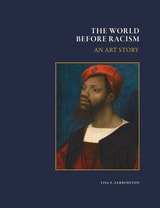
Utilizing works of art as a primary source, Lisa Farrington's research in The World Before Racism conclusively answers the questions: Who invented racism? When? And why?
The term racism is understood to mean that race is the principal determinant of specific human traits and capacities and that due to racial differences, one race is inherently superior to all others. Over time, racism has commonly referenced the notion that the White race is superior to all others, fostering prejudice and discrimination. In The World Before Racism: An Art Story, author and art historian Lisa Farrington meticulously examines the intersection of art, history, and race, using original works of art as primary source materials to support her premise that racism is a construct, invented in the mid-1700s, to support the financial, political, and religious structures of European colonialism.
Using art from ancient Egypt, classical Greece, and the Roman Empire, through Medieval Europe and the colonization of the New World, to the art of the present day—sources that cannot be easily altered, edited, or selectively translated—Farrington expertly examines the intricate interplay between the Black and White races, how they saw and understood each other over the centuries. The artworks serve as powerful voices, precisely conveying the artist’s intended messages. The goal of The World Before Racism is to present irrefutable evidence that the ideology of racism is unfounded, unsupported, unjustified, and destined to fade away like so many other archaic and erroneous ideas.
The World in a City
Multiethnic Radicalism in Early Twentieth-Century Los AngelesDavid M. Struthers
University of Illinois Press, 2019
David M. Struthers draws on the anarchist concept of affinity to explore the radicalism of Los Angeles's interracial working class from 1900 to 1930. Uneven economic development created precarious employment and living conditions for laborers. The resulting worker mobility led to coalitions that, inevitably, remained short lived. As Struthers shows, affinity helps us understand how individual cooperative actions shaped and reshaped these alliances. It also reveals social practices of resistance that are often too unstructured or episodic for historians to capture. What emerges is an untold history of Los Angeles and a revolutionary movement that, through myriad successes and failures, produced powerful examples of racial cooperation.
Theatres of Struggle and the End of Apartheid
Belinda Bozzoli
Ohio University Press, 2004
A compelling study of the origins and trajectory of one of the legendary black uprisings against apartheid, Theatres of Struggle and the End of Apartheid draws on insights gained from the literature on collective action and social movements. It delves into the Alexandra Rebellion of 1986 to reveal its inner workings.
Belinda Bozzoli’s aim is to examine how the residents of Alexandra, a poverty-stricken segregated township in Johannesburg, manipulated and overturned the meanings of space, time, and power in their sequestered world. She explains how they used political theater to convey, stage, and dramatize their struggle and how young and old residents generated differing ideologies and tactics, giving rise to a distinct form of generational politics.
Theatres of Struggle and the End of Apartheid asks the reader to enter into the world of the rebels and to confront the moral complexity and social duress they experienced as they invented new social forms and violently attacked old ones. It is an important study of collective action that will be of great interest to sociologists and to scholars of Africa, particularly to those interested in the antiapartheid struggle.
Theorizing Discrimination in an Era of Contested Prejudice
Discrimination in the United StatesSamuel Roundfield Lucas
Temple University Press, 2009
Despite several decades of attention, there is still no consensus on the effects of racial or sexual discrimination in the United States. In this landmark work, the well-known sociologist Samuel Lucas shows how discrimination is not simply an action that one person performs in relation to another individual, but something far more insidious: a pervasive dynamic that permeates the environment in which we live and work.
Challenging existing literature on the subject, Lucas makes a clear distinction between prejudice and discrimination. He maintains that when an era of “condoned exploitation” ended, the era of “contested prejudice,” as he terms it, began. He argues that the great strides made in the 1950s and 1960s repudiated prejudice, but not discrimination. Drawing on critical race theory, feminist theory, and a critique of dominant perspectives in the social sciences and law, Lucas offers a new understanding of racial and sexual discrimination that can guide our actions and laws into a more just future.
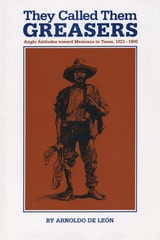
They Called Them Greasers
Anglo Attitudes toward Mexicans in Texas, 1821–1900by Arnoldo De León
University of Texas Press, 1983
Tension between Anglos and Tejanos has existed in the Lone Star State since the earliest settlements. Such antagonism has produced friction between the two peoples, and whites have expressed their hostility toward Mexican Americans unabashedly and at times violently.
This seminal work in the historical literature of race relations in Texas examines the attitudes of whites toward Mexicans in nineteenth-century Texas. For some, it will be disturbing reading. But its unpleasant revelations are based on extensive and thoughtful research into Texas' past. The result is important reading not merely for historians but for all who are concerned with the history of ethnic relations in our state.
They Called Them Greasers argues forcefully that many who have written about Texas's past—including such luminaries as Walter Prescott Webb, Eugene C. Barker, and Rupert N. Richardson—have exhibited, in fact and interpretation, both deficiencies of research and detectable bias when their work has dealt with Anglo-Mexican relations. De León asserts that these historians overlooled an austere Anglo moral code which saw the morality of Tejanos as "defective" and that they described without censure a society that permitted traditional violence to continue because that violence allowed Anglos to keep ethnic minorities "in their place."
De León's approach is psychohistorical. Many Anglos in nineteenth-century Texas saw Tejanos as lazy, lewd, un-American, subhuman. In De León's view, these attitudes were the product of a conviction that dark-skinned people were racially and culturally inferior, of a desire to see in others qualities that Anglos preferred not to see in themselves, and of a need to associate Mexicans with disorder so as to justify their continued subjugation.
Thicker Than Blood
How Racial Statistics LieTukufu Zuberi
University of Minnesota Press, 2003
A hard-hitting investigation of the racist uses of statistics—now in paperback!
Tukufu Zuberi offers a concise account of the historical connections between the development of the idea of race and the birth of social statistics. Zuberi describes how race-differentiated data are misinterpreted in the social sciences and asks searching questions about the ways racial statistics are used. He argues that statistical analysis can and must be deracialized, and that this deracialization is essential to the goal of achieving social justice for all.
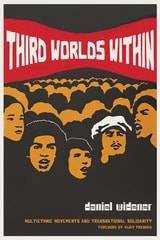
Third Worlds Within
Multiethnic Movements and Transnational SolidarityDaniel Widener
Duke University Press, 2024
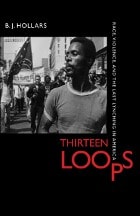
Thirteen Loops
Race, Violence, and the Last Lynching in AmericaB. J. Hollars
University of Alabama Press, 2011
The death of Vaudine Maddox—and the lynchings that followed—serves as a cautionary tale about the violence that occurred in the same region nearly fifty-years later, highlighting the cowardice, ignorance, and happenstance that sustained a culture of racial intolerance far into the future.Nearly half a century later, after a black bank robber was acquitted for the murder of police Sergeant Gene Ballard, two Klansmen took it upon themselves to exact revenge on an innocent victim--nineteen-year-old African American Michael Donald. Donald's murder--deemed the last lynching in America--reignited the race debate in America and culminated in a courtroom drama in which the United Klans of America were at long last put on trial.
While tracing the relationships among these murders, B. J. Hollars's research led him deep into the heart of Alabama’s racial, political, and legal landscapes. A work of literary journalism, Thirteen Loops draws upon rarely examined primary sources, court documents, newspaper reports, and first-hand accounts in an effort to unravel the twisted tale of a pair of interconnected murders that forever altered United States' race relations.
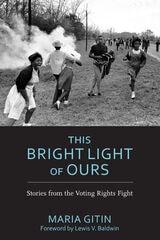
This Bright Light of Ours
Stories from the Voting Rights FightMaria Gitin
University of Alabama Press, 2014
Combining memoir with oral history, creates a vivid and searing portrait of the Freedom Summer of 1965.
This Bright Light of Ours offers a tightly focused insider’s view of the community-based activism that was the heart of the civil rights movement. A celebration of grassroots heroes, this book details through first-person accounts the contributions of ordinary people who formed the nonviolent army that won the fight for voting rights.
Combining memoir and oral history, Maria Gitin fills a vital gap in civil rights history by focusing on the neglected Freedom Summer of 1965 when hundreds of college students joined forces with local black leaders to register thousands of new black voters in the rural South. Gitin was an idealistic nineteen-year-old college freshman from a small farming community north of San Francisco who felt called to action when she saw televised images of brutal attacks on peaceful demonstrators during Bloody Sunday, in Selma, Alabama.
Atypical among white civil rights volunteers, Gitin came from a rural low-income family. She raised funds to attend an intensive orientation in Atlanta featuring now-legendary civil rights leaders. Her detailed letters include the first narrative account of this orientation and the only in-depth field report from a teenage Summer Community Organization and Political Education (SCOPE) project participant.
Gitin details the dangerous life of civil rights activists in Wilcox County, Alabama, where she was assigned. She tells of threats and arrests, but also of forming deep friendships and of falling in love. More than four decades later, Gitin returned to Wilcox County to revisit the people and places that she could never forget and to discover their views of the “outside agitators” who had come to their community. Through conversational interviews with more than fifty Wilcox County residents and former civil rights workers, she has created a channel for the voices of these unheralded heroes who formed the backbone of the civil rights movement.
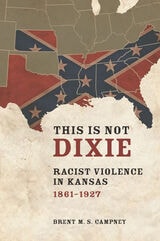
This Is Not Dixie
Racist Violence in Kansas, 1861-1927Brent M.S. Campney
University of Illinois Press, 2018
This Land Was Mexican Once
Histories of Resistance from Northern CaliforniaBy Linda Heidenreich
University of Texas Press, 2007
The territory of Napa County, California, contains more than grapevines. The deepest roots belong to Wappo-speaking peoples, a group whose history has since been buried by the stories of Spanish colonizers, Californios (today's Latinos), African Americans, Chinese immigrants, and Euro Americans. Napa's history clearly is one of co-existence; yet, its schoolbooks tell a linear story that climaxes with the arrival of Euro Americans. In "This Land was Mexican Once," Linda Heidenreich excavates Napa's subaltern voices and histories to tell a complex, textured local history with important implications for the larger American West, as well.
Heidenreich is part of a new generation of scholars who are challenging not only the old, Euro-American depiction of California, but also the linear method of historical storytelling—a method that inevitably favors the last man writing. She first maps the overlapping histories that comprise Napa's past, then examines how the current version came to dominate—or even erase—earlier events. So while history, in Heidenreich's words, may be "the stuff of nation-building," it can also be "the stuff of resistance." Chapters are interspersed with "source breaks"—raw primary sources that speak for themselves and interrupt the linear, Euro-American telling of Napa's history. Such an inclusive approach inherently acknowledges the connections Napa's peoples have to the rest of the region, for the linear history that marginalizes minorities is not unique to Napa. Latinos, for instance, have populated the American West for centuries, and are still shaping its future. In the end, "This Land was Mexican Once" is more than the story of Napa, it is a multidimensional model for reflecting a multicultural past.
Thomas Goode Jones
Race, Politics, and Justice in the New SouthBrent J. Aucoin
University of Alabama Press, 2016
Thomas Goode Jones of Alabama is the first comprehensive biography of a key Alabama politician and federal jurist whose life and times embody the conflicts and transformations in the Deep South between the Civil War and World War I.
A man who both represented and differed from his class, Thomas Goode Jones offers contemporary readers and scholars an ideal subject of study to understand a period of southern history that still shapes American life today. Often overshadowed by the pharaonic antebellum period, the Civil War, and the luminous heights of the civil rights movement, the deceptively placid decades at the turn of the century were, in fact, a period when southerners fiercely debated the course of the South’s future. In tracing Jones’s career, Brent J. Aucoin offers vivid accounts of the great events and trends of that pivotal period: Reconstruction, the birth of the “Solid South,” the Populist Revolt, and the establishment of racial disenfranchisement and segregation.
Born in 1844, Jones served in the Confederate army and after the war identified as a conservative “Bourbon” Democrat. He served as Alabama's governor from 1890 to 1894 and as a federal judge from 1901 until his death in 1914. As a veteran, politician, and judge, Jones embodied numerous roles in the shifting political landscape of the South.
Jones was not, however, a reflexive conformist and sometimes pursued policies at odds with his party. Jones’s rhetoric and support of African American civil rights were exceptional and earned him truculent criticism from unrepentant racist factions in his party. His support was so fearless that it inspired Booker T. Washington to recommend Jones to Republican president Theodore Roosevelt as a federal judge. On the bench, Jones garnered national attention for his efforts to end peonage and lynching, and yet he also enabled the establishment of legalized segregation in Alabama, confounding attempts easily to categorize him as an odious reactionary or fearless progressive.
Through Survivors' Eyes
From the Sixties to the Greensboro MassacreSally Avery Bermanzohn
Vanderbilt University Press, 2003
In passionate first-person accounts, Through Survivors' Eyes tells the story of six remarkable people who set out to change the world. The survivors came of age as the "protest generation," joining the social movements of the 1960s and 1970s. They marched for civil rights, against war, for textile and healthcare workers, and for black power and women's liberation. As the mass mobilizations waned in the mid-1970s, they searched for a way to continue their activism, studied Marxism, and became communists.
Nelson Johnson, who grew up on a farm in eastern North Carolina in a family proud of its African American heritage, settled in Greensboro in the 1960s and became a leader of the Black Liberation Movement and a decade later the founder of the Faith Community Church. Willena Cannon, the daughter of black sharecroppers, witnessed a KKK murder as a child and was spurred to a life of activism. Her son, Kwame Cannon, was only ten when he saw the Greensboro killings. Marty Nathan, who grew up the daughter of a Midwestern union organizer and came to the South to attend medical school, lost her husband to the Klan/Nazi gunfire. Paul Bermanzohn, the son of Jewish Holocaust survivors, was permanently injured during the shootings. Sally Avery Bermanzohn, a child of the New York suburbs who came south to join the Civil Rights Movement, watched in horror as her friends were killed and her husband was wounded.
Through Survivors' Eyes is the story of people who abandoned conventional lives to become civil rights activists and then revolutionaries. It is about blacks and whites who united against Klan/Nazi terror, and then had to overcome unbearable hardship, and persist in seeking justice. It is also a story of one divided southern community, from the protests of black college students of the late 1960s to the convening this January of a Truth and Community Reconciliation Project (on the South African model) intended to reassess the Massacre.
To Heal the Scourge of Prejudice
The Life and Writings of Hosea EastonHosea Easton
University of Massachusetts Press, 1999
How did racial prejudice originate and why has it been so deeply rooted in American culture? What have been the long-term effects of prejudice on the intellectual, communal, and psychological resources of African Americans? How might the nightmare of racial domination be truly brought to an end? Still pertinent today, these were among the key questions addressed more than a century and a half ago by Hosea Easton (1799–1837), an important yet long neglected activist and intellectual.
A black minister from New England, Easton rose to prominence during the 1820s and 1830s by joining in the struggle of free African Americans to resist southern slavery and secure racial equality. From this experience he developed a deep understanding of the problem of "race" in the United States and became a trenchant critic of white supremacy and its devastating consequences. This volume brings back into print the only extended writings of Easton that have survived into our time: his insightful, almost prescient A Treatise on the Intellectual Character, and the Civil and Political Condition of the Colored People of the U. States, first published in 1837; and his passionate 1828 Thanksgiving Day “Address.” The book also provides a biographical portrait of Easton and his family, drawn from primary documents as well as secondary sources in the areas of biography, genealogy, and social history.
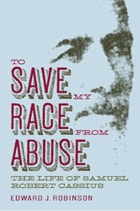
To Save My Race from Abuse
The Life of Samuel Robert CassiusEdward J. Robinson
University of Alabama Press, 2009
Samuel Robert Cassius was born to a slave mother and a white father in Virginia in 1853 and became a member of the Restorationist Movement (Disciples of Christ) while a coal miner in Indiana. For the rest of his long life (he died in 1931 at age 78), Cassius was an active evangelist, prolific publicist, dedicated leader of black Disciples, and an outspoken and uncompromising opponent of racism in religion and society.
An indefatigable preacher, Cassius ranged throughout the Midwest, California, and the southwestern states, founding and encouraging black Stone-Campbell Restorationist congregations. After entering the Oklahoma Territory in 1891, he worked for three decades as an educator, newspaper editor, social activist, postmaster, and Justice of the Peace. Because he consistently incorporated social and racial issues into his religious writings, Cassius often found himself at odds with whites in the Stone-Campbell Movement, the very people he relied on for monetary support. He advocated a Booker T. Washington-style self-help ethos while at the same time firmly resisting racism wherever he encountered it. Largely invisible in a world dominated by such towering figures as Washington, Frederick Douglass, Ida B. Wells, and W. E. B. DuBois, Cassius lived a life of virtual obscurity beyond the circle of the Stone-Campbell Movement. His story is important because, as a racial militant and separatist, he presaged the schism that would engulf and fracture the Churches of Christ in the 1960s, when blacks and whites went their separate ways and formed two distinct groups in one religious fellowship.
By combing through a plethora of primary sources that Cassius left behind in both religious and nonreligious journals, Edward J. Robinson has successfully reconstructed and recaptured the essence of Cassius’ complex and extraordinary life. This book offers the first full-length study of a man of remarkable attainment despite daily obstacles and resistance.
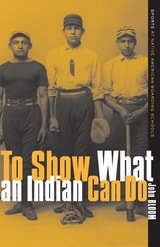
To Show What an Indian Can Do
Sports at Native American Boarding SchoolsJohn Bloom
University of Minnesota Press, 2005
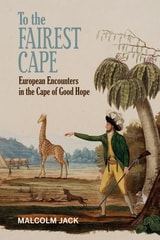
To the Fairest Cape
European Encounters in the Cape of Good HopeJack, Malcolm
Bucknell University Press, 2019
Published by Bucknell University Press. Distributed worldwide by Rutgers University Press.
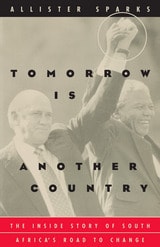
Tomorrow Is Another Country
The Inside Story of South Africa's Road to ChangeAllister Sparks
University of Chicago Press, 1996
"A gripping, fast-paced, authoritative account of the long and mostly secret negotiations that brought South Africa's bitter conflict to its near-miraculous end. Sparks's description of these talks sometimes brings a lump to one's throat. He shows how the participants' deep mutual suspicion was gradually replaced by excitement at the prospect of making a momentous agreement—and also by the dawning realization that the people on the other side were human beings, perhaps even decent human beings."—Adam Hochschild, New York Times Book Review
"A splendid and original history. . . . Sparks's skillful weaving of myriad strands—Mandela's secret sessions with the committee, the clandestine talks in England between the African National Congress and the government, the back-channel communications between Mandela and the A.N.C. in exile, the trepidation of Botha and the apparent transformation of his successor, De Klerk—possesses the drama and intrigue of a diplomatic whodunit."—Richard Stengel, Time
"Sparks offers many reasons for hope, but the most profound of them is the story this book tells."—Jacob Weisberg, Washington Post
"The most riveting of the many [accounts] that have been published about the end of apartheid."—The Economist

Torn
Asian/white Life and the Intimacy of ViolenceAnna M. Moncada Storti
Duke University Press, 2026
Toward a Global Idea of Race
Denise Ferreira da Silva
University of Minnesota Press, 2007
In this far-ranging and penetrating work, Denise Ferreira da Silva asks why, after more than five hundred years of violence perpetrated by Europeans against people of color, is there no ethical outrage?
Rejecting the prevailing view that social categories of difference such as race and culture operate solely as principles of exclusion, Silva presents a critique of modern thought that shows how racial knowledge and power produce global space. Looking at the United States and Brazil, she argues that modern subjects are formed in philosophical accounts that presume two ontological moments—historicity and globality—which are refigured in the concepts of the nation and the racial, respectively. By displacing historicity’s ontological prerogative, Silva proposes that the notion of racial difference governs the present global power configuration because it institutes moral regions not covered by the leading post-Enlightenment ethical ideals—namely, universality and self-determination.
By introducing a view of the racial as the signifier of globality,Toward a Global Idea of Race provides a new basis for the investigation of past and present modern social processes and contexts of subjection.
Denise Ferreira da Silva is associate professor of ethnic studies at University of California, San Diego.
Town and Country
Race Relations in an Urban-Rural Context, Arkansas, 1865–1905John Graves
University of Arkansas Press, 1990
A thoroughly researched and extensively documented look at race relations in Arkansas druing the forty years after the Civil War, Town and Country focuses on the gradual adjustment of black and white Arkansans to the new status of the freedman, in both society and law, after generations of practicing the racial etiquette of slavery.
John Graves examines the influences of the established agrarian culture on the developing racial practices of the urban centers, where many blacks living in the towns were able to gain prominence as doctors, lawyers, successful entrepreneurs, and political leaders. Despite the tension, conflict, and disputes within and between the voice of the government and the voice of the people in an arduous journey toward compromise, Arkansas was one of the most progressive states during Reconstruction in desegregating its people.
Town and Country makes a significant contribution to the history of the postwar South and its complex engagement with the race issue.
Trajectories of Empire
Transhispanic Reflections on the African DiasporaJerome C. Branche
Vanderbilt University Press, 2022
The book’s chapters explore what Blackness means in the so-called racial democracies of Brazil and Cuba today. Among the historical narratives and themes it covers are the role of medical science in the objectification and nullification of Black female personhood during slavery in nineteenth-century Brazil; the protocols of portraiture in the colonial period that, in including enslaved individuals, pictorially highlight and freeze their supposed inferiority vis-à-vis their owners; and those aspects of discourse that promote colonial capture and oppression in terms of evangelization and the saving of souls, or simply create the discursive template as early as the fifteenth century, for their continued alienation and marginalization across generations.
Trajectories of Empire’s contributions come from the fields of literary criticism, visual culture, history, anthropology, popular culture (rap), and cultural studies. As the product of an interdisciplinary collective, this book will be of interest to scholars in Iberian or Hispanic studies, Africana studies, postcolonial studies, and transatlantic studies, as well as the general public.
Traveling without Moving
Essays from a Black Woman Trying to Survive in AmericaTaiyon J. Coleman
University of Minnesota Press, 2024
A stunning lyrical commentary on the constructions of race, gender, and class in the fraught nexus of a Black woman’s personal experience and cultural history
The Fair Housing Act passed in 1968, and more than fifty years later, yours seems to be the only Black family on your block in Minneapolis. You and your Black African husband, both college graduates, make less money than some White people with a felony record and no high school diploma. You’re the only Black student in your graduate program. You just aren’t working hard enough. You’re too sensitive. Sandra Bland? George Floyd? Don't take everything so personally. Amid the White smiles of Minnesota Nice and the Minnesota Paradox—the insidious racism of an ostensibly inclusive place to live—what do you do? If you’re Taiyon J. Coleman, you write.
In Traveling without Moving, Coleman shares intimate essays from her life: her childhood in Chicago—growing up in poverty with four siblings and a single mother—and the empowering decision to leave her first marriage. She writes about being the only Black student in a prestigious and predominantly White creative writing program, about institutional racism and implicit bias in writing instruction, about the violent legacies of racism in the U.S. housing market, about the maternal health disparities seen across the country and their implication in her own miscarriage. She explores what it means to write her story and that of her family—an act at once a responsibility and a privilege—bringing forth the inherent contradictions between American ideals and Black reality.
Using a powerful blend of perspectives that move between a first-person lens of lived experience and a wider-ranging critique of U.S. culture, policy, and academia, Coleman’s writing evinces how a Black woman in America is always on the run, always Harriet Tubman, traveling with her babies in tow, seeking safety, desperate to survive, thrive, and finally find freedom.
Retail e-book files for this title are screen-reader friendly.
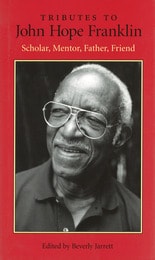
Tributes to John Hope Franklin
Scholar, Mentor, Father, FriendEdited by Beverly Jarrett
University of Missouri Press, 2003