Results by title
1927 books match the query 'Technology & Engineering' and 270 start with t
The Mangle in Practice
Science, Society, and BecomingAndrew Pickering and Keith Guzik, eds.
Duke University Press, 2008
The Mangle in Practice opens with a fresh introduction to the mangle by Pickering. Several contributors then present empirical studies that demonstrate the mangle’s applicability to topics as diverse as pig farming, Chinese medicine, economic theory, and domestic-violence policing. Other contributors offer examples of the mangle in action: real-world practices that implement a self-consciously “mangle-ish” stance in environmental management and software development. Further essays discuss the mangle as philosophy and social theory. As Pickering argues in the preface, the mangle points to a shift in interpretive sensibilities that makes visible a world of de-centered becoming. This volume demonstrates the viability, coherence, and promise of such a shift, not only in science and technology studies, but in the social sciences and humanities more generally.
Contributors: Lisa Asplen, Dawn Coppin, Adrian Franklin, Keith Guzik, Casper Bruun Jensen,Yiannis Koutalos, Brian Marick, Randi Markussen, Andrew Pickering, Volker Scheid, Esther-Mirjam Sent, Carol Steiner, Maxim Waldstein
The Mapping of New Spain
Indigenous Cartography and the Maps of the Relaciones GeograficasBarbara E. Mundy
University of Chicago Press, 1996
"Its contribution to its specific field is both significant and original. . . . It is a pure pleasure to read." —Sabine MacCormack, Isis
"Mundy has done a fine job of balancing the artistic interpretation of the maps with the larger historical context within which they were drawn. . . . This is an important work." —John F. Schwaller, Sixteenth Century Journal
"This beautiful book opens a Pandora's box in the most positive sense, for it provokes the reconsideration of several long-held opinions about Spanish colonialism and its effects on Native American culture." —Susan Schroeder, American Historical Review
The Mars Project
Wernher Von Braun
University of Illinois Press, 1953
Today von Braun is recognized as the person most responsible for laying the groundwork for public acceptance of America's space program. When President Bush directed NASA in 1989 to prepare plans for an orbiting space station, lunar research bases, and human exploration of Mars, he was largely echoing what von Braun proposed in The Mars Project.
The Metal Life Car
The Inventor, the Impostor, and the Business of LifesavingGeorge E. Buker
University of Alabama Press, 2008
Engineering the battlefield—one armored advance at a time.
For centuries sailing vessels crept along the coastline, ready to flee ashore in case of danger or trouble; this worked well until weather or poor sailing drove these ships against an unforgiving coast. Saviors and salvors (often the same people) struggled to rescue both humans and cargo, often with results as tragic for them as for the sailors and passengers.
Joseph Francis (b. Boston, Massachusetts, 1801) was an inventor who also had the ability to organize a business to produce his inventions and the salesmanship to sell his products. His metal lifeboats, first used in survey expeditions in Asia Minor and Central America, came into demand among the world’s merchant marine, the U.S. Navy, and the U.S. Revenue Service. His corrugated “life car” was the keystone to development of the U.S. Life-Saving Service. Francis’s metal bateaux and lifeboats played an important role in the Third Seminole War in Florida. His metal pontoon army wagons served in the trans-Mississippi campaigns against the Indians.
In Europe, he was acclaimed as a genius and sold patent rights to shipyards in Liverpool and the Woolwich Arsenal in England, Le Havre seaport in France, in the free city of Hamburg, and in the Russian Empire. But while Francis was busy in Europe, Captain Douglass Ottinger, U.S. Revenue Marine Service, claimed to be the inventor of Francis’s life car and obtained support in the U.S. Congress and the Patent Office for his claim. Francis had to battle for decades to prove his rights, and Americans remained generally unfamiliar with his devices, thereby condemning Civil War armies to inferior copies while Europe was using, and acclaiming, his inventions.
The Missing Link
West European Neutrals and Regional SecurityRichard E. Bissell and Curt Gasteyger, eds.
Duke University Press, 1990
The Most Powerful Idea in the World
A Story of Steam, Industry, and InventionWilliam Rosen
University of Chicago Press, 2012
This bracing history uses the earth-shaking development of the steam engine to show how the very idea of intellectual property was essential to the entire Industrial Revolution.
Hardly a week passes without some high-profile court case that features intellectual property at its center. But how did the belief that one could own an idea come about? And how did that belief change the way humankind lives and works?
William Rosen, author of Justinian's Flea, seeks to answer these questions and more with The Most Powerful Idea in the World. A lively and passionate study of the engineering and scientific breakthroughs that led to the steam engine, this book argues that the very notion of intellectual property drove not only the invention of the steam engine but also the entire Industrial Revolution: history’s first sustained era of economic improvement. To do so, Rosen conjures up an eccentric cast of characters, including the legal philosophers who enabled most the inventive society in millennia, and the scientists and inventors—Thomas Newcomen, Robert Boyle, and James Watt—who helped to create and perfect the steam engine over the centuries. With wit and wide-ranging curiosity, Rosen explores the power of creativity, capital, and collaboration in the brilliant engineering of the steam engine and how this power source, which fueled factories, ships, and railroads, changed human history.
Deeply informative and never dull, Rosen's account of one of the most important inventions made by humans is a rollicking ride through history, with careful scholarship and fast-paced prose in equal measure.
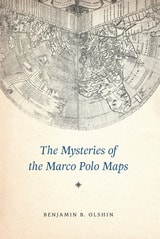
The Mysteries of the Marco Polo Maps
Benjamin B. Olshin
University of Chicago Press, 2014
In The Mysteries of the Marco Polo Maps, historian of cartography Benjamin B. Olshin offers the first credible book-length analysis of these artifacts, charting their course from obscure origins in the private collection of Italian-American immigrant Marcian Rossi in the 1930s; to investigations of their authenticity by the Library of Congress, J. Edgar Hoover, and the FBI; to the work of the late cartographic scholar Leo Bagrow; to Olshin’s own efforts to track down and study the Rossi maps, all but one of which are in the possession of Rossi’s great-grandson Jeffrey Pendergraft. Are the maps forgeries, facsimiles, or modernized copies? Did Marco Polo’s daughters—whose names appear on several of the artifacts—preserve in them geographic information about Asia first recorded by their father? Or did they inherit maps created by him? Did Marco Polo entrust the maps to Admiral Ruggero Sanseverino, who has links to Rossi’s family line? Or, if the maps have no connection to Marco Polo, who made them, when, and why?
Regardless of the maps’ provenance, Olshin’s tale—stretching from the remote reaches of the northern Pacific to early Chinese legends—takes readers on a journey confounding yet fascinating, offering insights into Italian history, the age of exploration, and the wonders of cartography.
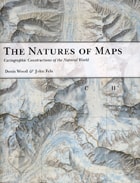
The Natures of Maps
Cartographic Constructions of the Natural WorldDenis Wood and John Fels
University of Chicago Press, 2008
To answer that question, the authors turn to a category of maps with a particularly strong reputation for objectivity: maps of nature. From depictions of species habitats and bird migrations to portrayals of the wilds of the Grand Canyon and the reaches of the Milky Way, such maps are usually presumed—even by users who should know better—to be strictly scientific. Yet by drawing our attention to every aspect of these maps’ self-presentation, from place names to titles and legends, the authors reveal the way that each piece of information collaborates in a disguised effort to mount an argument about reality. Without our realizing it, those arguments can then come to define our very relationship to the natural world—determining whether we see ourselves as humble hikers or rampaging despoilers, participants or observers, consumers or stewards.
Richly illustrated, and crafted in vivid and witty prose, The Natures of Maps will enlighten and entertain map aficionados, scholars, and armchair navigators alike. You’ll never be able to look at Google Maps quite the same way again.

The New American Cinema
Jon Lewis, ed.
Duke University Press, 1998
The essays are divided into three sections: "Movies and Money," "Cinema and Culture," and "Independents and Independence." The first section focuses on the economics of the industry and analyzes the connection between the film business and the finished product. Topics include a look at the economic conditions that made the seventies’ auteur renaissance possible, the distribution of studio and independent films, and the recent spate of mergers and acquisitions that have come to characterize the new Hollywood. The second part of The New American Cinema deals with the political and cultural significance of war and Vietnam films (Platoon, Apocalypse Now, Born on the Fourth of July); "male rampage" films (Rambo, Lethal Weapon, Die Hard); women’s psychothrillers (The Silence of the Lambs); special effects pictures (2001: A Space Odyssey, Star Wars); and historical re-presentations (Oliver Stone’s JFK). The final section casts a keen eye on films produced and exhibited outside the commercial mainstream, examining the financial realities of "indie" films; the influence of independent filmmaker John Cassavetes on Coppola, Altman, and Scorsese; the stereotyping of African Americans in mainstream cinema; and the films of independent women filmmakers.
The New Political Sociology of Science
Institutions, Networks, and PowerEdited by Scott Frickel and Kelly Moore
University of Wisconsin Press, 2015

The Nicaraguan Constitution of 1987
English Translation and CommentaryKenneth J. Mijeski
Ohio University Press, 1991
This volume of seven essays on the 1987 Nicaraguan constitution does not accept a priori the judgment that Latin American constitutions are as fragile as egg shells, easily broken and discarded if found to be inconvenient to the interests of the rulers. Rather, they are viewed as being central to understanding political life in contemporary Nicaragua.
The perspectives of the analysts and their conclusions are not consensual. They prohibit glib and facile general conclusions. Some find the constitution to be nothing more than a façade for arbitrary and capricious rule; others that the document reflects clear commitments to the democratic rule of law. Thus far the implementation of the constitution has resulted in the peaceful transition of power from the Sandinistas to the National Opposition Union.
The Nine Pillars of Technologies for Industry 4.0
Wai Yie Leong
The Institution of Engineering and Technology, 2021

The Obsolescence of the Human
Günther Anders
University of Minnesota Press, 2025
Now available in English—one of the twentieth century’s most important works on the philosophy of technology
With this first English translation of influential German philosopher Günther Anders’s 1956 masterpiece of critical theory, The Obsolescence of the Human, a new generation of readers can now engage with his prescient and haunting vision of a “world without us” dominated by technology.
Looking at technological events such as the detonation of the nuclear bomb and the arrival of televisions in our living rooms, Anders advances a warning of what humanity looks like in a world where it has surrendered all agency. He outlines the new emotional landscapes that shape our relationship to increasingly capable technology, including Promethean shame, the human sense of unease our own superior technological innovations can instill. Confronting the growing gap between what we can collectively create and what we can individually comprehend, Anders speculates on the trajectory of a developing technological world that rapidly exceeds our ability to control or even foresee its negative consequences.
The Obsolescence of the Human prefigures contemporary posthumanist discourse and is eerily predictive of current debates around automation, global warming, and artificial intelligence. Providing new ways to conceptualize the intersection of technology and emotion, it offers groundbreaking frameworks for future-oriented ethics. Radical in both its stylistic experimentation and its theoretical insights, this new translation presents a cautionary tale regarding the human capacity to usher in its own destruction.
Retail e-book files for this title are screen-reader friendly with images accompanied by short alt text and/or extended descriptions.

The Pacific Northwest Coast
Living with the Shores of Oregon and WashingtonPaul D. Komar
Duke University Press, 1998
In this guide, Paul D. Komar, one of the nation’s leading coastal oceanographers, examines the lessons taught by ages of geological and cultural history. With explanations of the area’s geological evolution, including natural shoreline erosion and sea-cliff landsliding, Komar details human interaction with the coast: erosion caused by early settlers, the development and destruction of Bayocean Spit, the disastrous effects caused by the 1982–1983 El Niño, and the notorious failure of a construction project on the picturesqueæbut unstableæbluffs at Jump-Off Joe. Emphasizing the actual and potential harm to human projects and to the natural heritage of the coast, Komar provides the knowledge necessary for finding a safe home near the shore while preserving the beauty that draws us to it.
The Perfection of Nature
Animals, Breeding, and Race in the RenaissanceMackenzie Cooley
University of Chicago Press, 2022
The Renaissance is celebrated for the belief that individuals could fashion themselves to greatness, but there is a dark undercurrent to this fêted era of history. The same men and women who offered profound advancements in European understanding of the human condition—and laid the foundations of the Scientific Revolution—were also obsessed with controlling that condition and the wider natural world.
Tracing early modern artisanal practice, Mackenzie Cooley shows how the idea of race and theories of inheritance developed through animal breeding in the shadow of the Spanish Empire. While one strand of the Renaissance celebrated a liberal view of human potential, another limited it by biology, reducing man to beast and prince to stud. “Race,” Cooley explains, first referred to animal stock honed through breeding. To those who invented the concept, race was not inflexible, but the fragile result of reproductive work. As the Spanish empire expanded, the concept of race moved from nonhuman to human animals. Cooley reveals how, as the dangerous idea of controlled reproduction was brought to life again and again, a rich, complex, and ever-shifting language of race and breeding was born.
Adding nuance and historical context to discussions of race and human and animal relations, The Perfection of Nature provides a close reading of undertheorized notions of generation and its discontents in the more-than-human world.
The Philosopher of Palo Alto
Mark Weiser, Xerox PARC, and the Original Internet of ThingsJohn Tinnell
University of Chicago Press, 2023
When developers and critics trace the roots of today’s Internet of Things—our smart gadgets and smart cities—they may single out the same creative source: Mark Weiser (1952–99), the first chief technology officer at Xerox PARC and the so-called “father of ubiquitous computing.” But Weiser, who died young at age 46 in 1999, would be heartbroken if he had lived to see the ways we use technology today. As John Tinnell shows in this thought-provoking narrative, Weiser was an outlier in Silicon Valley. A computer scientist whose first love was philosophy, he relished debates about the machine’s ultimate purpose. Good technology, Weiser argued, should not mine our experiences for saleable data or demand our attention; rather, it should quietly boost our intuition as we move through the world.
Informed by deep archival research and interviews with Weiser’s family and colleagues, The Philosopher of Palo Alto chronicles Weiser’s struggle to initiate a new era of computing. Working in the shadows of the dot-com boom, Weiser and his collaborators made Xerox PARC headquarters the site of a grand experiment. Throughout the building, they embedded software into all sorts of objects—coffeepots, pens, energy systems, ID badges—imbuing them with interactive features. Their push to integrate the digital and the physical soon caught on. Microsoft’s Bill Gates flagged Weiser’s Scientific American article “The Computer for the 21st Century” as a must-read. Yet, as more tech leaders warmed to his vision, Weiser grew alarmed about where they wished to take it.
In this fascinating story of an innovator and a big idea, Tinnell crafts a poignant and critical history of today’s Internet of Things. At the heart of the narrative is Weiser’s desire for deeper connection, which animated his life and inspired his notion of what technology at its best could be.

The Physics and Technology of Semiconductor Devices
David K. Ferry
The Institution of Engineering and Technology, 2026
The Platform Economy
How Japan Transformed the Consumer InternetMarc Steinberg
University of Minnesota Press, 2019
Offering a deeper understanding of today’s internet media and the management theory behind it
Platforms are everywhere. From social media to chat, streaming, credit cards, and even bookstores, it seems like almost everything can be described as a platform. In The Platform Economy, Marc Steinberg argues that the “platformization” of capitalism has transformed everything, and it is imperative that we have a historically precise, robust understanding of this widespread concept.
Taking Japan as the key site for global platformization, Steinberg delves into that nation’s unique technological and managerial trajectory, in the process systematically examining every facet of the elusive word platform. Among the untold stories revealed here is that of the 1999 iPhone precursor, the i-mode: the world’s first widespread mobile internet platform, which became a blueprint for Apple and Google’s later dominance of the mobile market. Steinberg also charts the rise of social gaming giants GREE and Mobage, chat tools KakaoTalk, WeChat, and LINE, and video streaming site Niconico Video, as well as the development of platform theory in Japan, as part of a wider transformation of managerial theory to account for platforms as mediators of cultural life.
Analyzing platforms’ immense impact on contemporary media such as video streaming, music, and gaming, The Platform Economy fills in neglected parts of the platform story. In narrating the rise and fall of Japanese platforms, and the enduring legacy of Japanese platform theory, this book sheds light on contemporary tech titans like Facebook, Google, Apple, and Netflix, and their platform-mediated transformation of contemporary life—it is essential reading for anyone wanting to understand what capitalism is today and where it is headed.
The Poem Electric
Technology and the American LyricSeth Perlow
University of Minnesota Press, 2018
An enlightening examination of the relationship between poetry and the information technologies increasingly used to read and write it
Many poets and their readers believe poetry helps us escape straightforward, logical ways of thinking. But what happens when poems confront the extraordinarily rational information technologies that are everywhere in the academy, not to mention everyday life?
Examining a broad array of electronics—including the radio, telephone, tape recorder, Cold War–era computers, and modern-day web browsers—Seth Perlow considers how these technologies transform poems that we don’t normally consider “digital.” From fetishistic attachments to digital images of Emily Dickinson’s manuscripts to Jackson Mac Low’s appropriation of a huge book of random numbers originally used to design thermonuclear weapons, these investigations take Perlow through a revealingly eclectic array of work, offering both exciting new voices and reevaluations of poets we thought we knew.
With close readings of Gertrude Stein, Frank O’Hara, Amiri Baraka, and many others, The Poem Electric constructs a distinctive lineage of experimental writers, from the 1860s to today. Ultimately, Perlow mounts an important investigation into how electronic media allows us to distinguish poetic thought from rationalism. Posing a necessary challenge to the privilege of information in the digital humanities, The Poem Electric develops new ways of reading poetry, alongside and against the electronic equipment that is now ubiquitous in our world.
The Political Mapping of Cyberspace
Jeremy W. Crampton
University of Chicago Press, 2003
Using concepts and methods derived from the work of Michel Foucault, Crampton outlines a new mapping of cyberspace to help define the role of space in virtual worlds and to provide constructive ways in which humans can exist in another spatial dimension. He delineates the critical role maps play in constructing the medium as an object of knowledge and demonstrates that by processes of mapping we come to understand cyberspace. Maps, he argues, shape political thinking about cyberspace, and he deploys in-depth case studies of crime mapping, security maintenance, and geo-surveillance to show how we map ourselves onto cyberspace, inexorably, and indelibly.
Offering a powerful reinterpretation of technology and contemporary life, this innovative book will be an essential touchstone for the study of cartography and cyberspace in the twenty-first century.
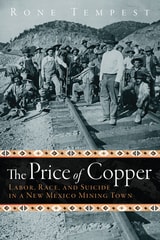
The Price of Copper
Labor, Race and Suicide in a New Mexico Mining TownRone Tempest
University Press of Colorado, 2027
The Price of Copper is a veteran journalist’s unflinching investigation of a family tragedy and long-standing mystery—the sensational 1938 suicide of powerful New Mexico copper mine boss Rone B. Tempest Sr. on the eve of his scheduled testimony before a federal labor board. From this dramatic opening, the book paints a vivid portrait of open-pit copper mining, labor conflicts, and corporate-sponsored racism in company mining towns across the Mountain West from the early years of the twentieth century to the first successes of the civil rights movement in the 1950s.
The author’s paternal grandfather, Rone Tempest Sr., was the general manager of the Chino Copper Mine in Santa Rita, New Mexico, which was owned by the Kennecott Copper Corporation and under investigation over labor practices. His boss was Salt Lake City copper baron and ruthless anti-union strikebreaker Daniel C. Jackling—the “Prophet of Porphyry,” who pioneered the industrial mining of low-grade copper ores by introducing the use of dynamite, steam shovels, rail, and giant mill works. After detailing the saga around Tempest Sr.’s death, the story follows the trajectory of the Chino mine over time, including the rise of predominantly Hispanic labor unions and the advancement of Hispanic workers to senior management roles—gains in civil rights that would have made the labor environment entirely unrecognizable to those fighting for reform in 1938.
A compelling and dramatic history of the great early twentieth-century advances in western copper mining that provided the essential metal needed to electrify the continent and the world, The Price of Copper is a unique personal story that connects to the broader history of copper mining in the West, as well as a valuable social history offering a new narrative about the dynamics of corporate management and giving additional insight into the formation of the “Copper Age” in the United States.
The Price of Nuclear Power
Uranium Communities and Environmental JusticeMalin, Stephanie A.
Rutgers University Press, 2015

The Profit of the Earth
The Global Seeds of American AgricultureCourtney Fullilove
University of Chicago Press, 2017
Organized into three thematic parts, The Profit of the Earth is a narrative history of the collection, circulation, and preservation of seeds. Fullilove begins with the political economy of agricultural improvement, recovering the efforts of the US Patent Office and the nascent US Department of Agriculture to import seeds and cuttings for free distribution to American farmers. She then turns to immigrant agricultural knowledge, exploring how public and private institutions attempting to boost midwestern wheat yields drew on the resources of willing and unwilling settlers. Last, she explores the impact of these cereal monocultures on biocultural diversity, chronicling a fin-de-siècle Ohio pharmacist’s attempt to source Purple Coneflower from the diminishing prairie. Through these captivating narratives of improvisation, appropriation, and loss, Fullilove explores contradictions between ideologies of property rights and common use that persist in national and international development—ultimately challenging readers to rethink fantasies of global agriculture’s past and future.
The Recombinant University
Genetic Engineering and the Emergence of Stanford BiotechnologyDoogab Yi
University of Chicago Press, 2015
Bay Area scientists, university administrators, and government officials were fascinated by and increasingly engaged in the economic and political opportunities associated with the privatization of academic research. Yi uncovers how the attempts made by Stanford scientists and administrators to demonstrate the relevance of academic research were increasingly mediated by capitalistic conceptions of knowledge, medical innovation, and the public interest. Their interventions resulted in legal shifts and moral realignments that encouraged the privatization of academic research for public benefit. The Recombinant University brings to life the hybrid origin story of biotechnology and the ways the academic culture of science has changed in tandem with the early commercialization of recombinant DNA technology.
The Red Atlas
How the Soviet Union Secretly Mapped the WorldJohn Davies and Alexander J. Kent
University of Chicago Press, 2017
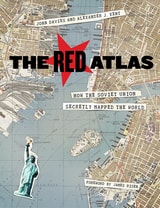
From 1950 to 1990, the Soviet Army conducted a global topographic mapping program, creating large-scale maps for much of the world that included a diversity of detail that would have supported a full range of military planning. For big cities like New York, DC, and London to towns like Pontiac, MI and Galveston, TX, the Soviets gathered enough information to create street-level maps. What they chose to include on these maps can seem obvious like locations of factories and ports, or more surprising, such as building heights, road widths, and bridge capacities. Some of the detail suggests early satellite technology, while other specifics, like detailed depictions of depths and channels around rivers and harbors, could only have been gained by actual Soviet feet on the ground. The Red Atlas includes over 350 extracts from these incredible Cold War maps, exploring their provenance and cartographic techniques as well as what they can tell us about their makers and the Soviet initiatives that were going on all around us.
A fantastic historical document of an era that sometimes seems less distant, The Red Atlas offers an uncanny view of the world through the eyes of Soviet strategists and spies.
The Refracted Muse
Literature and Optics in Early Modern SpainEnrique Garcia Santo-Tomas
University of Chicago Press, 2017
While Spain is often thought to have taken little notice of the Scientific Revolution, García Santo-Tomás tells a different story, one that reveals Golden Age Spanish literature to be in close dialogue with the New Science. Drawing on the work of writers such as Cervantes, Lope de Vega, Calderón de la Barca, and Quevedo, he helps us trace the influence of science and discovery on the rapidly developing and highly playful genre of the novel. Indeed, García Santo-Tomás makes a strong case that the rise of the novel cannot be fully understood without taking into account its relationship to the scientific discoveries of the period.
The Republic of Color
Science, Perception, and the Making of Modern AmericaMichael Rossi
University of Chicago Press, 2019
For a nation in the grip of profound economic, cultural, and demographic crises, the standardization of color became a means of social reform—a way of sculpting the American population into one more amenable to the needs of the emerging industrial order. Delineating color was also a way to characterize the vagaries of human nature, and to create ideal structures through which those humans would act in a newly modern American republic. Michael Rossi’s compelling history goes far beyond the culture of the visual to show readers how the control and regulation of color shaped the social contours of modern America—and redefined the way we see the world.

The Rise of Women Farmers and Sustainable Agriculture
Carolyn Sachs, Mary Barbercheck, Kathryn Braiser, Nancy Ellen Kiernan, Anna Rachel Terman
University of Iowa Press, 2016
Pulling down the barriers that women face requires organizations and institutions to become informed by what the authors call a feminist agrifood systems theory (FAST). This framework values women’s ways of knowing and working in agriculture: emphasizing personal, economic, and environmental sustainability, creating connections through the food system, and developing networks that emphasize collaboration and peer-to-peer education. The creation and growth of a specific organization, the Pennsylvania Women’s Agricultural Network, offers a blueprint for others seeking to incorporate a feminist agrifood systems approach into agricultural programming. The theory has the potential to shift how farmers, agricultural professionals, and anyone else interested in farming think about gender and sustainability, as well as to change how feminist scholars and theorists think about agriculture.
The Roar and the Silence
A History of Virginia City and the Comstock LodeRonald M. James
University of Nevada Press, 1998
The Role of 6G and Beyond on the Road to Net-Zero Carbon
Muhammad Ali Imran
The Institution of Engineering and Technology, 2023
The Romantic Machine
Utopian Science and Technology after NapoleonJohn Tresch
University of Chicago Press, 2012
In the years immediately following Napoleon’s defeat, French thinkers in all fields set their minds to the problem of how to recover from the long upheavals that had been set into motion by the French Revolution. Many challenged the Enlightenment’s emphasis on mechanics and questioned the rising power of machines, seeking a return to the organic unity of an earlier age and triggering the artistic and philosophical movement of romanticism. Previous scholars have viewed romanticism and industrialization in opposition, but in this groundbreaking volume John Tresch reveals how thoroughly entwined science and the arts were in early nineteenth-century France and how they worked together to unite a fractured society.
Focusing on a set of celebrated technologies, including steam engines, electromagnetic and geophysical instruments, early photography, and mass-scale printing, Tresch looks at how new conceptions of energy, instrumentality, and association fueled such diverse developments as fantastic literature, popular astronomy, grand opera, positivism, utopian socialism, and the Revolution of 1848. He shows that those who attempted to fuse organicism and mechanism in various ways, including Alexander von Humboldt and Auguste Comte, charted a road not taken that resonates today.
Essential reading for historians of science, intellectual and cultural historians of Europe, and literary and art historians, The Romantic Machine is poised to profoundly alter our understanding of the scientific and cultural landscape of the early nineteenth century.
The Scars of Project 459
The Environmental Story of the Lake of the OzarksTraci Angel
University of Arkansas Press, 2014
The School of the Americas
Military Training and Political Violence in the AmericasLesley Gill
Duke University Press, 2004
Based on her unprecedented level of access to the School of the Americas, Gill describes the School’s mission and training methods and reveals how its students, alumni, and officers perceive themselves in relation to the dirty wars that have raged across Latin America. Assessing the School’s role in U.S. empire-building, she shows how Latin America’s brightest and most ambitious military officers are indoctrinated into a stark good-versus-evil worldview, seduced by consumer society and the “American dream,” and enlisted as proxies in Washington’s war against drugs and “subversion.”
The Science of Energy
A Cultural History of Energy Physics in Victorian BritainCrosbie Smith
University of Chicago Press, 1999
Replacing the language and concepts of classical mechanics with terms such as "actual" and "potential" energy, the North British group conducted their revolution in physics so astutely and vigorously that the concept of "energy"—a valuable commodity in the early days of industrialization—became their intellectual property. Smith skillfully places this revolution in its scientific and cultural context, exploring the actual creation of scientific knowledge during one of the most significant episodes in the history of physics.
The Scientific Revolution
Steven Shapin
University of Chicago Press, 2018
“An excellent book.”—Anthony Gottlieb, New York Times Book Review
“Timely and highly readable. . . . A book which every scientist curious about our predecessors should read.”—Trevor Pinch, New Scientist
“Shapin's account is informed, nuanced, and articulated with clarity. . . . This is not to attack or devalue science but to reveal its richness as the human endeavor that it most surely is. . . . Shapin's book is an impressive achievement.”—David C. Lindberg, Science
“It's hard to believe that there could be a more accessible, informed or concise account. . . . The Scientific Revolution should be a set text in all the disciplines. And in all the indisciplines, too.”—Adam Phillips, London Review of Books
The Scientific-Military State
How Enlightened Engineers Reinvented Early American GovernmentSveinn M. Jóhannesson
University of Chicago Press, 2026
In The Scientific-Military State, Sveinn M. Jóhannesson charts the emergence of a new kind of governance in early-nineteenth-century America: the scientific-military state. Federal officials used mathematics, science, and other forms of enlightened knowledge to launch the nation’s very first experiments in scientific education and expert administration. These figures forged a new intellectual elite that socially elevated itself above ordinary soldiers, workers, and civilians and reshaped the military state itself beyond familiar models of standing army or militia. Originating primarily from the US Military Academy at West Point, these experts, who were often engineers, debated statecraft, analyzed topography, designed fortifications, manufactured weapons, built infrastructure, and exercised military power as the United States spread across the continent. But the even deeper result was a transformed relationship between the government and its citizens, one that echoes today.
The Sheep Book
A Handbook for the Modern Shepherd, Revised and UpdatedRon Parker
Ohio University Press, 2001

The Sky on Fire
The First Battle of Britain, 1917-1918Raymond H. Fredette
University of Alabama Press, 2005
The forgotten air campaign that gave birth to modern air power.
A fascinating examination of the strategies and uses of air power in the First World War, Sky on Fire covers not only developments in military hardware and tactics but also how public policy and political considerations shaped the ways air power was deployed. Providing an excellent balance of data and statistics as well as human insights, Fredette’s book is essential reading for readers interested in the air power, both historically and in contemporary conflicts.
The Social Life of Biometrics
George C Grinnell
Rutgers University Press, 2020

The Soviet Nuclear Archipelago
A Historical Geography of Atomic-Powered CommunismPer Högselius
Central European University Press, 2024
The war in Ukraine, with the exposure of nuclear power stations and the danger of atomic warfare, has made the legacy of the Soviet nuclear sector of critical importance.
The two authors map the Soviet nuclear industry in a shifting historical context, making sense of a complex socio-technical and environmental history. Taking an innovative approach, this book explores the history of atomic power in the former Soviet Union using the spatial dimensions of the nuclear industry as a point of departure. The key concept is that of the archipelago – a network of nuclear facilities spread throughout the Soviet territory, but mutually reliant on each other and densely connected.
The story traces the emergence of nuclear science and technology for military and civilian purposes through to the post-Soviet Russian nuclear corporations as providers of resources and technology. The book explains how nuclear developments in the Soviet Union interacted with processes of environmental and landscape change. The spatial lens offers an analytically fruitful and pedagogically stimulating way to comprehend the nuclear histories of the Soviet Union and its successor states.
The Stars of Mauna Kea
Building Giant Telescopes on Hawai‘i’s Most Revered MountainPascal Marichalar
University of Chicago Press, 2026
The inside account of how astronomers were able to build the world’s largest observatories on Hawai‘i’s most revered mountain.
In July 2019, a demonstration erupted on Hawai‘i Island to prevent the construction of the Thirty Meter Telescope, which, if built, would be one of the largest and most advanced ground-based telescopes in the world. For months, thousands of people camped on the access road leading to the proposed location: Mauna Kea, a dormant volcano, the highest point in Hawai‘i, and a sacred site for Native Hawaiians. The standoff in 2019 was not the first. For decades, activists had resisted attempts to build the TMT and its predecessors. Even so, many astronomers were startled by opposition to the TMT and the discoveries it promised. Astronomers were focused on the stars; Native Hawaiians and environmentalists were concerned about not only the sky, but also the land.
The Stars of Mauna Kea traces the history of astronomy on Hawai‘i Island, shedding new light on why scientists were granted access to the volcano in the first place. Beginning in 1959, when Hawai‘i became the fiftieth US state, it chronicles the ways astronomers benefited from Hawai‘i’s colonial past to gain free and exclusive land use rights on what had long been the archipelago’s most revered mountain. Drawing on unprecedented archival research and extensive interviews, Pascal Marichalar carefully charts the course of astronomical development on Mauna Kea. He describes the devastating tsunami that led a local businessman to contact scientists just as a renowned astronomer was scouting for places to observe the stars; the controversial authority the University of Hawai‘i assumed over the volcano after 1964; the environmental opposition to the first large international project, the Canada-France-Hawai‘i Telescope; and the resistance to telescope development that became a major focus of the Hawaiian sovereignty movement. Marichalar introduces readers to scientists working on Mauna Kea, as well as the people living in the mountain’s shadow, including key opposition figures involved in recent events.
Like the dark matter that holds together rotating galaxies, the colonial forces that have shaped Hawai‘i exert a gravitational pull on the science undertaken on the volcano’s summit. The Stars of Mauna Kea brings readers inside an ongoing debate over the morality of scientific research conducted on contested ground.
The State, Popular Mobilisation and Gold Mining in Mongolia
Shaping ‘Neo-Liberal’ PoliciesDulam Bumochir
University College London, 2020

The Steger Homestead Kitchen
Simple Recipes for an Abundant LifeWill Steger
University of Minnesota Press, 2021
Personal and simple, earthy and warm—recipes and stories from the Steger Wilderness Center in Minnesota’s north woods
The Steger Homestead Kitchen is an inspiring and down-to-earth collection of meals and memories gathered at the Homestead, the home of the Arctic explorer and environmental activist Will Steger, located in the north woods near Ely, Minnesota. Founded in 1988, the Steger Wilderness Center was established to model viable carbon-neutral solutions, teach ecological stewardship, and address climate change. In her role as the Homestead’s chef, Will’s niece Rita Mae creates delicious and hearty meals that become a cornerstone experience for visitors from all over the world, nourishing them as they learn and share their visions for a healthy and abundant future.
Now, with this new book, home chefs can make Rita Mae’s simple, hearty meals to share around their own homestead tables. Interwoven with dozens of mouth-watering recipes—for generous breakfasts (Almond Berry Griddlecakes), warming lunches (Northwoods Mushroom Wild Rice Soup), elegant dinners (Spatchcock Chicken with Blueberry Maple Glaze), desserts (Very Carrot Cake), and snacks (Steger Wilderness Bars)—are Will Steger’s exhilarating stories of epic adventures exploring the Earth’s most remote and endangered regions.
The Steger Homestead Kitchen opens up the Wilderness Center’s hospitality, its heart and hearth, providing the practical advice and inspiration to cook up a good life in harmony with nature.

The Struggle for Unity
Colour television, the formative yearsRussell W. Burns
The Institution of Engineering and Technology, 2008
The Switch
An Off and On History of Digital HumansJason Puskar
University of Minnesota Press, 2024
From the telegraph to the touchscreen, how the development of binary switching transformed everyday life and changed the shape of human agency
The Switch traces the sudden rise of a technology that has transformed everyday life for billions of people: the binary switch. By chronicling the rapid growth of binary switching since the mid-nineteenth century, Jason Puskar contends that there is no human activity as common today as pushing a button or flipping a switch—the deceptively simple act of turning something on or off. More than a technical history, The Switch offers a cultural and political analysis of how reducing so much human action to binary alternatives has profoundly reshaped modern society.
Analyzing this history, Puskar charts the rapid shift from analog to digital across a range of devices—keyboards, cameras, guns, light switches, computers, game controls, even the “nuclear button”—to understand how nineteenth-century techniques continue to influence today’s pervasive digital technologies. In contexts that include musical performance, finger counting, machine writing, voting methods, and immersive play, Puskar shows how the switch to switching led to radically new forms of action and thought.
The innovative analysis in The Switch makes clear that binary inputs have altered human agency by making choice instantaneous, effort minimal, and effects more far-reaching than ever. In the process, it concludes, switching also fosters forms of individualism that, though empowering for many, also preserve a legacy of inequality and even domination.

The Switching Function
Analysis of power electronic circuitsC.C. Marouchos
The Institution of Engineering and Technology, 2006
The TVs of Tomorrow
How RCA’s Flat-Screen Dreams Led to the First LCDsBenjamin Gross
University of Chicago Press, 2018
Half a century later, RCA’s dreams have become a reality, and liquid crystals are the basis of a multibillion-dollar global industry. Yet the company responsible for producing the first LCDs was unable to capitalize upon its invention. In The TVs of Tomorrow, Benjamin Gross explains this contradiction by examining the history of flat-panel display research at RCA from the perspective of the chemists, physicists, electrical engineers, and technicians at the company’s central laboratory in Princeton, New Jersey.
Drawing upon laboratory notebooks, internal reports, and interviews with key participants, Gross reconstructs the development of the LCD and situates it alongside other efforts to create a thin, lightweight replacement for the television picture tube. He shows how RCA researchers mobilized their technical expertise to secure support for their projects. He also highlights the challenges associated with the commercialization of liquid crystals at RCA and Optel—the RCA spin-off that ultimately manufactured the first LCD wristwatch. The TVs of Tomorrow is a detailed portrait of American innovation during the Cold War, which confirms that success in the electronics industry hinges upon input from both the laboratory and the boardroom.
The Technical Image
A History of Styles in Scientific ImageryEdited by Horst Bredekamp, Vera Dünkel, and Birgit Schneider
University of Chicago Press, 2015
Opening with a set of key questions about artistic representation in science, technology, and medicine, The Technical Image then investigates historical case studies focusing on specific images, such as James Watson’s models of genes, drawings of Darwin’s finches, and images of early modern musical automata. These case studies in turn are used to illustrate broad themes ranging from “Digital Images” to “Objectivity and Evidence” and to define and elaborate upon fundamental terms in the field. Taken as a whole, this collection will provide analytical tools for the interpretation and application of scientific and technological imagery.
The Technology of Drawing
Image and Industry in the Early United StatesElizabeth Bacon Eager
University of Chicago Press, 2026
A richly illustrated study of how technical drawing shaped culture in the early United States.
With The Technology of Drawing, Elizabeth Bacon Eager explores the importance of manual skill and graphic literacy in the emergence of American industry, offering readers a new lens through which to view the visual culture of the early United States. Focused on questions of materiality and process, the book traces the development of drawing as a technology and argues for it as an embodied way of thinking and knowing, revealing the significance of such knowledge in the construction of both scientific and social authority. Through close analysis of materials, including construction drawings, mechanical treatises, cartographic surveys, and patent drawings, many of which have never been published before, Eager presents a history of American art focused on materiality and process through the view of the mechanic rather than the fine artist.
Reaching beyond the traditional boundaries of art historical study to engage objects rarely considered as art, The Technology of Drawing treats the technical image as a site of extraordinary creativity, in which eighteenth- and nineteenth-century Americans across the social spectrum negotiated critical concepts of identity, invention, and authorship with a remarkable degree of material intelligence and visual sophistication.
The Tizard Mission
The Top-Secret Operation That Changed the Course of World War IIStephen Phelps
Westholme Publishing, 2010
Alone Against Germany, Britain Gave America Its Most Astonishing Secrets
In August 1940, a German invasion of Britain looked inevitable. Luftwaffe bombers were pounding British cities, France had surrendered, and the Low Countries were under German control. Although sympathetic to Britain’s plight, the United States remained staunchly neutral. Unknown to the rest of the world, Britain’s brightest scientific and military minds had been working on futuristic technology for a decade, including radar and jet propulsion. While the great value of radar to locate and identify objects at long distance and at night or in bad weather was appreciated, at the time it was thought that practical radar required a room-sized device for generating an effective signal. Now, suddenly, British scientists had something extraordinary—the cavity magnetron, a generator hundreds of times more powerful than any other in use and small enough to be held in the hand. With the British economy and industry reeling from the war, Winston Churchill gambled on an unorthodox plan: a team of scientists and engineers would travel under cover to the United States and give the still-neutral Americans the best of Britain’s military secrets. It was hoped that in exchange the United States would provide financial and manufacturing support—which might even lead to their official entry into the war.
The Tizard Mission, named for its leader Sir Henry Tizard, steamed across the Atlantic carrying a suitcase-sized metal deed box. Designed to sink in the event the ship was torpedoed by a U-boat, the box contained details of the Whittle jet engine, research for an atomic bomb, and a precious cavity magnetron. The Americans proved to be astonished, receptive, and efficient: Bell Telephone produced the first thirty magnetrons in October 1940, and over a million by the end of the war. With this device, both warships and aircraft could carry war-winning radar. But Britain did not only give America military secrets, these same technologies would produce a fortune for postwar commercial industries, with the magnetron being the key component to the microwave oven. In The Tizard Mission: The Top-Secret Operation That Changed the Course of World War II, Stephen Phelps reveals how the Tizard Mission was the turning point in the technological war, giving Britain the weapons it desperately needed and laying the groundwork for both the Special Relationship and much of the United States’s postwar economic boom, an effect that still resonates today.