Results by title
18284 books match the query 'United States' and 3764 start with t
The Ordeal of the Jungle
Race and the Chicago Federation of Labor, 1903–1922David Bates
Southern Illinois University Press, 2019
By organizing workers into neighborhood locals, which connected workplace struggles to ethnic and religious identities, the CFL facilitated a surge in the organization’s membership, particularly among African American workers, and afforded the federation the opportunity to aggressively confront employers. The CFL’s innovative structure, however, was ultimately its demise. Linking union locals to neighborhoods proved to be a form of de facto segregation. Over time union structures, rank-and-file conflicts, and employer resistance combined to turn the union’s hopeful calls for solidarity into animosity and estrangement. Tensions were exacerbated by violent shop floor confrontations and exploded in the bloody 1919 Chicago Race Riot. By the early 1920s, the CFL had collapsed.
The Ordeal of the Jungle explores the choices of a variety of people while showing a complex, overarching interplay of black and white workers and their employers. In addition to analyzing union structures and on-the-ground relations between workers, Bates synthesizes and challenges previous scholarship on interracial organizing to explain the failure of progressive unionism in Chicago.
The Organization of Journalism
Market Models and Practice in a Fraying ProfessionPatrick Ferrucci
University of Illinois Press, 2024
Using rich interviews and participant observation, Patrick Ferrucci examines institutions with funding mechanisms that range from traditional mogul ownership and online-only nonprofits to staff-owned cooperatives and hedge fund control. The variations in market models have frayed the tenets of professionalization, with unique work cultures emerging from each organization’s focus on its mission and the implantation of its own processes and ethical guidelines. As a result, the field of American journalism no longer shares uniform newsgathering practices and a common identity, a break with the past that affects what information we consume today and what the press will become tomorrow.
An inside look at a fracturing profession, The Organization of Journalism illuminates the institution’s expanding impact on newsgathering and the people who practice it.
The Oriental Obscene
Violence and Racial Fantasies in the Vietnam EraSylvia Shin Huey Chong
Duke University Press, 2011

The Origin and Development of Scholarly Historical Periodicals
Margaret F. Stieg
University of Alabama Press, 2005
"This is a pioneering study and represents a major undertaking. . . . Stieg succeeds in making intelligible the diffuse and highly diversified nature of the historical periodical. At minimum, this title should be required reading of all history graduate students in methodology courses. Many senior historians would also benefit from a review of its contents. . . . Information and library science students specializing in scholarly communication should digest the entire study." —Journal of Education for Library and Information Science

The Origin and Distribution of Birds in Coastal Alaska and British Columbia
The Lost Manuscript of Ornithologist Harry S. SwarthChristopher W. Swarth
Oregon State University Press, 2022
In 2019, Christopher Swarth, Harry’s grandson and a scientist in his own right, discovered the forgotten manuscript. This book includes the original unpublished manuscript, accompanied by contextual essays from contemporary ornithologists who examine the impact and relevance of Swarth’s research on coastal bird diversity, fox sparrow migration, and the systematic puzzle of the timberline sparrow. Expedition maps display field camps and exploration routes, and species checklists illustrate the variety of birds observed at key field sites. To bring additional color and insight, The Origin and Distribution of Birds in Coastal Alaska and British Columbia also includes excerpts from Harry Swarth’s field notes, a comprehensive list of Harry Swarth’s publications, and a glossary with historic and contemporary bird names. Naturalists, ornithologists, birders, and all those who want to learn more about the natural history of the region will delight in the rediscovery of this long-lost treasure.
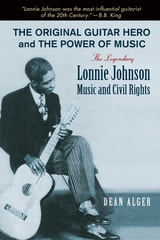
The Original Guitar Hero and the Power of Music
The Legendary Lonnie Johnson, Music, and Civil RightsDean Alger
University of North Texas Press, 2014
The Original Rush Limbaugh
Lawyer, Legislator, and Civil LibertarianDennis K. Boman
University of Missouri Press, 2012

The Origins and Rise of Associate Degree Nursing Education
Patricia T. Haase
Duke University Press, 1990
Advocates have long contended that the associate degree nurse is vital to the American health care system. This study, funded by the W. K. Kellogg Foundation, confirms this view. In recent years the Foundation has invested more than $6.1 million in the development of the ADN, awarded by junior and community colleges. Many participants in the ADN projects for the Kellogg Foundation have noted that, despite the importance of the ADN and the controversy about its place in nursing education, the literature is scattered and hard to identity. The Origins and Rise of Associate Degree Nursing Education and the companion bibliography will provide much-needed information to educators, hospital and nursing administrators, nursing leaders, and public policy makers—all of whom must cope with the growing nursing shortage and increasingly difficult issues in health policy and administration.
The Origins of Bioethics
Remembering When Medicine Went WrongJohn A. Lynch
Michigan State University Press, 2019
The Origins of Cool in Postwar America
Joel Dinerstein
University of Chicago Press, 2017
Through eye-opening portraits of iconic figures, Dinerstein illuminates the cultural connections and artistic innovations among Lester Young, Humphrey Bogart, Robert Mitchum, Billie Holiday, Frank Sinatra, Jack Kerouac, Albert Camus, Marlon Brando, and James Dean, among others. We eavesdrop on conversations among Jean-Paul Sartre, Simone de Beauvoir, and Miles Davis, and on a forgotten debate between Lorraine Hansberry and Norman Mailer over the "white Negro" and black cool. We come to understand how the cool worlds of Beat writers and Method actors emerged from the intersections of film noir, jazz, and existentialism. Out of this mix, Dinerstein sketches nuanced definitions of cool that unite concepts from African-American and Euro-American culture: the stylish stoicism of the ethical rebel loner; the relaxed intensity of the improvising jazz musician; the effortless, physical grace of the Method actor. To be cool is not to be hip and to be hot is definitely not to be cool.
This is the first work to trace the history of cool during the Cold War by exploring the intersections of film noir, jazz, existential literature, Method acting, blues, and rock and roll. Dinerstein reveals that they came together to create something completely new—and that something is cool.
The Origins of the Dual City
Housing, Race, and Redevelopment in Twentieth-Century ChicagoJoel Rast
University of Chicago Press, 2019
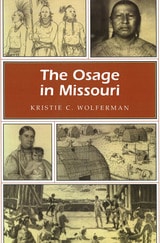
The Osage in Missouri
Kristie C. Wolferman
University of Missouri Press, 1997
On November 10, 1808, the American militia and the chiefs from the Little Osage and Big Osage nations celebrated. Fort Osage, built on a Missouri River bluff 250 miles west of St. Louis, was officially opened on that date, and the Osage Indians signed a treaty with the Americans written by Governor Meriwether Lewis.
Fort Osage, intended as a citadel for the opening of the great American West, was also to function as a trading post for the Osage Nation. It was President Jefferson's hope that Fort Osage and other fort-trading posts would not only keep peace on the frontier but would also begin a new era in relations between Native Americans and the United States. For a short time, the fort did provide the Osage with a place to trade their furs. It also offered them limited protection from the many other tribes who were their enemies. However, the Osage chiefs discovered very quickly that the fort was small consolation for the lands they had given up by signing the treaty.
In this well-written and very readable work, Kristie C. Wolferman traces the history of the Osage Nation from its origins to its forced departure from Missouri. She demonstrates the ways in which the Osage culture changed with each new encounter of the Osage with Europeans. The Osage had already experienced many contacts with the white man before Fort Osage came to be. They had encountered French trader-trappers, explorers, missionaries, Spanish administrators, and early settlers. Their lives had been changed by the influx of white disease, by the use of European trade goods and weapons, and by the political control of Spanish, French, and American governments. As a result, the Fort Osage experiment came too late to establish lasting good relations between the white men and the Indians.
The Osage in Missouri suggests that the white men could never understand the Osage way of life, nor the Osage the white men's way. But Osage culture, greatly altered by Europeans and Americans, would never be the same again. The Osage would be forced to sacrifice most of their traditions and beliefs, as well as their homeland, on the way to becoming "civilized."

The Other Americans in Paris
Businessmen, Countesses, Wayward Youth, 1880-1941Nancy L. Green
University of Chicago Press, 2014
Nancy L. Green thus introduces us for the first time to a long-forgotten part of the American overseas population—predecessors to today’s expats—while exploring the politics of citizenship and the business relationships, love lives, and wealth (and poverty for some) of Americans who staked their claim to the City of Light. The Other Americans in Paris shows that elite migration is a part of migration tout court and that debates over “Americanization” have deep roots in the twentieth century.
The Other Arab-Israeli Conflict
Making America's Middle East Policy, from Truman to ReaganSteven L. Spiegel
University of Chicago Press, 1985
The Other Brahmins
Boston's Black Upper Class 1750-1950Adelaide Cromwell
University of Arkansas Press, 1995
Adelaide Cromwell’s pioneering work explores race and the social caste system in an atypical northern environment over a period of two centuries. Based on scholarly sources, interviews, and questionnaires, the study identifies those blacks in Boston who exercised political, economic, and social leadership from the end of the eighteenth century to the middle of the twentieth. The central focus is a comparison of black and white upper-class women in the 1940s.
This rare look at a black social microcosm not located in the South is seminal and timely. Because it concludes at a critical period in American history, The Other Brahmins paints a colorful backdrop for evaluating subsequent changes in urban sociology and stratification. In a groundbreaking study, Cromwell effectively challenges the simplistic notions of hierarchy as they pertain to race.
The Other California
The Great Central Valley In Life And LettersGerald W. Haslam
University of Nevada Press, 1993
Oildale native, Gerald Haslam, doesn’t like it when folks dismiss the Central Valley as boring and flat. In this collection of essays, he argues that it is California’s heartland and economic hub. In addition, the valley has produced a crop of gifted writers. These nineteen essays range from reminiscences of childhood and adolescence to a portrait of Mexican-Americans and their position in the Valley’s society to a moving essay about having the author’s aging father come to live with the family. Even if you have never lived in the Valley, reading this book will give you an entirely new perspective the next time you drive into it.

The Other Fifties
Interrogating Midcentury American IconsJoel Foreman
University of Illinois Press, 1997
conventional norms and values. Brushing away the haze of an era, The Other Fifties will help readers understand the decade not as placid or repressed, but as a time when emancipatory desires struggled to articulate themselves.
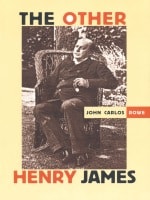
The Other Henry James
John Carlos Rowe
Duke University Press, 1998
Rowe traces a particular development in James’s work, showing how in his early writings James criticized women’s rights, same-sex relations, and other social and political trends now identified with modern culture; how he ambivalently explored these aspects of modernity in his writings of the 1880s; and, later, how he increasingly identified with such modernity in his heretofore largely ignored or marginally treated fiction of the 1890s. Building on recent scholarship that has shown James to be more anxious about gender roles, more conflicted, and more marginal a figure than previously thought, Rowe argues that James—through his treatment of women, children, and gays—indicts the values and conventions of the bourgeoisie. He shows how James confronts social changes in gender roles, sexual preferences, national affiliations, and racial and ethnic identifications in such important novels as The American, The Tragic Muse, What Maisie Knew, and In the Cage, and in such neglected short fiction as “The Last of the Valerii,” “The Death of the Lion,” and “The Middle Years.”
Positioning James’s work within an interpretive context that pits the social and political anxieties of his day against the imperatives of an aesthetic ideology, The Other Henry James will engage scholars, students, and teachers of American literature and culture, gay literature, and queer theory.
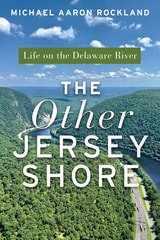
The Other Jersey Shore
Life on the Delaware RiverMichael Aaron Rockland
Rutgers University Press, 2024
The Other Jersey Shore takes readers on a personal tour of the New Jersey portion of the Delaware River and its surroundings. You will learn about the role that the river played in human history, including Washington’s four crossings of the Delaware during the Revolutionary War. And you will also learn about the ecological history of the river itself, once one of the most polluted waterways in the country and now one of the cleanest, providing drinking water for 17 million people. Michael Aaron Rockland, a long-time New Jersey resident, shows readers his very favorite spots along the Delaware, including the pristine waterfalls and wilderness in the Delaware Water Gap recreation area. Along the way, he shares engrossing stories and surprising facts about the river that literally defines western New Jersey.
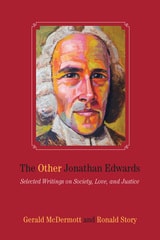
The Other Jonathan Edwards
Selected Writings on Society, Love, and JusticeGerald McDermott
University of Massachusetts Press, 2015
Widely regarded as perhaps America's greatest theologian, Jonathan Edwards still suffers the stereotype of hellfire preacher obsessed with God's wrath. In this anthology, Gerald McDermott and Ronald Story seek to correct that common view by showing that Edwards was also a compassionate, socially conscious minister of the first order.
Through a selection of sermons and primary writings, McDermott and Story reveal an Edwards who preached love toward all humanity regardless of belief or appearance; who demanded private and public charity to the poor; who criticized hard-hearted business dealings as impious and socially destructive; and who condemned envy and status-seeking as anti-Christian and anti-community. This “other” Jonathan Edwards preached about grace and the love of God but also about responsive constitutional government, the iniquities of hypocrisy and corruption, and the nature of wise leadership. He acknowledged the need for national defense but left room for popular revolt from tyranny. He anticipated a millennial age of peace and prosperity and believed that people should live in the world as they would live through grace in heaven.
Jonathan Edwards was, in sum, a worldly as well as spiritual reformer who resisted the materialistic, acquisitive, and individualistic currents of American culture. For these reasons, McDermott and Story think he may have lessons to teach us today.
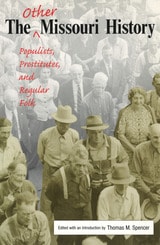
The Other Missouri History
Populists, Prostitutes, and Regular FolkEdited & Intro by Thomas M. Spencer
University of Missouri Press, 2005
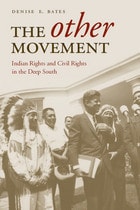
The Other Movement
Indian Rights and Civil Rights in the Deep SouthDenise E. Bates
University of Alabama Press, 2022
Examines the most visible outcome of the Southern Indian Rights Movement: state Indian affairs commissions
In recalling political activism in the post-World War II South, rarely does one consider the political activities of American Indians as they responded to desegregation, the passing of the Civil Rights Acts, and the restructuring of the American political party system. Native leaders and activists across the South created a social and political movement all their own, which drew public attention to the problems of discrimination, poverty, unemployment, low educational attainment, and poor living conditions in tribal communities.
While tribal-state relationships have historically been characterized as tense, most southern tribes—particularly non-federally recognized ones—found that Indian affairs commissions offered them a unique position in which to negotiate power. Although individual tribal leaders experienced isolated victories and generated some support through the 1950s and 1960s, the creation of the inter-tribal state commissions in the 1970s and 1980s elevated the movement to a more prominent political level. Through the formalization of tribal-state relationships, Indian communities forged strong networks with local, state, and national agencies while advocating for cultural preservation and revitalization, economic development, and the implementation of community services.
This book looks specifically at Alabama and Louisiana, places of intensive political activity during the civil rights era and increasing Indian visibility and tribal reorganization in the decades that followed. Between 1960 and 1990, U.S. census records show that Alabama’s Indian population swelled by a factor of twelve and Louisiana’s by a factor of five. Thus, in addition to serving as excellent examples of the national trend of a rising Indian population, the two states make interesting case studies because their Indian commissions brought formerly disconnected groups, each with different goals and needs, together for the first time, creating an assortment of alliances and divisions.
The Other One
StoriesHasanthika Sirisena
University of Massachusetts Press, 2016
Set in Sri Lanka and America, the ten short stories in this debut collection feature characters struggling to contend with the brutality of a decades-long civil war while also seeking security, love, and hope. The characters are students, accountants, soldiers, servants. They are immigrants and strivers. They are each forced to make sometimes comic, sometimes tragic, choices. What they share, despite what they've endured, is the sustaining power of human connection.
An excerpt from the book:
“All I want to know is when you are coming? When are you bringing my sons, my family?”
She watched as a gecko, tinier than normal, skittered across the far wall. It disappeared into a small crack. The room was very hot, and she hadn't turned on the ceiling fan so that the family could save a little money. She took a handkerchief from her nightstand and wiped the beads of sweat from her forehead and the back of her neck.
“I can't leave malli alone here. He's making progress but—”
“It will be for two years only. Then you can sponsor him.”
“The lawyer says it's not so easy.”
“He's a grown man. Let the government take him. The government did this to malli. Let the government pay the price for his care.”
Even though there was no chance that her brother Ranjith could hear her, Anoja dropped her voice. “Malli is all alone here. He has nobody but aiya and me.”
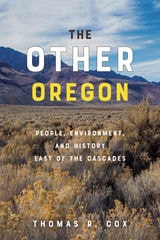
The Other Oregon
People, Environment, and History East of the CascadesThomas R. Cox
Oregon State University Press, 2019
With a staggering variety of landscapes, from high desert to alpine peaks, Oregon east of the Cascades encompasses seventeen counties and two time zones. Although this vast region defies generalization, its history is distinct from the rest of Oregon. The interrelationship between its people and the land has always been central, but that relationship has evolved and changed over time. Regional economies that were once largely exploitive and dedicated to commodity exports have slowly moved toward the husbanding of resources and to broader and deeper appreciations.
Historian Thomas Cox reveals the complexity of interactions between the people of Eastern Oregon, the land, natural resources, and one another, demonstrating how the region’s history speaks to larger American issues. The 2016 occupation of the Malheur National Wildlife Refuge, covered in detail within these pages, further reveals the relevance of Eastern Oregon to the larger world.
Written in clear and engaging prose and informed by extensive research, The Other Oregon will be a valuable resource for anyone interested in the environment, social change, and the relationships among the diverse people who make up Oregon society east of the Cascades. It will appeal to area residents and visitors, students of the American West, environmental historians, biologists, land managers, and anyone with an abiding interest in the region.
The Other Presences
Reading Literature Other-Wise after the Transnational Turn in American StudiesFlorian Tatschner
Dartmouth College Press, 2019
The Other Public Lands
Preservation, Extraction, and Politics on the Fifty States' Natural Resource LandsSteven Davis
Temple University Press, 2025
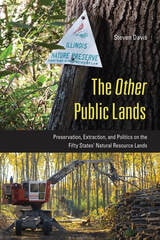
The Other Public Lands looks at both differences and common patterns in state land management, including the structure of natural resource agencies. Davis examines the privatization and commercialization of state parks, and the tensions between recreation, revenue and the preservation of biodiversity and natural landscapes. He also raises issues about equity, access, appropriate development, and ecological health. Chapters review state forests, state wildlife management areas, and school trust lands. In addition, the roles of interest groups, the courts, and agency culture and behavior are compared and analyzed both between states and the federal government and between states with differing approaches to specific issues.
As there has been a demand to transfer at least some federal lands to the states, The Other Public Lands concludes with an appraisal of whether states could handle this transfer and goes on to suggest ways to ensure adequate access in an era of increased demand.
The Other Side of Grief
The Home Front and the Aftermath in American Narratives of the Vietnam WarMaureen Ryan
University of Massachusetts Press, 2008
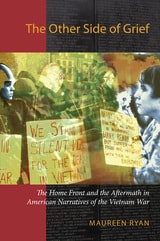
The lingering aftereffects of the Vietnam War resonate to this day throughout American society: in foreign policy, in attitudes about the military and war generally, and in the contemporary lives of members of the so-called baby boom generation who came of age during the 1960s and early 1970s. While the best-known personal accounts of the war tend to center on the experience of combat, Maureen Ryan's The Other Side of Grief examines the often overlooked narratives—novels, short stories, memoirs, and films—that document the war's impact on the home front.
In analyzing the accounts of Vietnam veterans, women as well as men, Ryan focuses on the process of readjustment, on how the war continued to insinuate itself into their lives, their families, and their communities long after they returned home. She looks at the writings of women whose husbands, lovers, brothers, and sons served in Vietnam and whose own lives were transformed as a result. She also appraises the experiences of the POWs who came to be embraced as the war's only heroes; the ordeal of Vietnamese refugees who fled their “American War” to new lives in the United States; and the influential movement created by those who committed themselves to protesting the war.
The end result of Ryan's investigations is a cogent synthesis of the vast narrative literature generated by the Vietnam War and its aftermath. Together those stories powerfully demonstrate how deeply the legacies of the war penetrated American culture and continue to reverberate still.
The Other Side of Silence
Sign Language and the Deaf Community in AmericaArden Neisser
Gallaudet University Press, 1983
Arden Neisser’s classic book on American Sign Language (ASL) and the Deaf community is again available, with a new prologue. The Other Side of Silence explores the Deaf community through telling interviews and research from across the country.
In widely varying encounters, Neisser heard Deaf individuals recall how their teachers suppressed ASL, how linguists foster conflicting theories, and how various institutions of the deaf dilute ASL to suit hearing patrons. This seminal book reveals the warmth, creativity, and resilience of Deaf people, and offers an update of the community today.
The Other Side of the Coin
Public Opinion toward Social Tax ExpendituresChristopher G. Faricy
Russell Sage Foundation, 2021
Tax expenditures seek to accomplish many of the goals of direct government expenditures, but they distribute money indirectly, through tax refunds or reductions in taxable income, rather than direct payments on goods and services or benefits. They tend to privilege market-based solutions to social problems such as employer-based tax subsidies for purchasing health insurance versus government-provided health insurance. Drawing on nationally representative surveys and survey experiments, Ellis and Faricy show that social welfare policies designed as tax expenditures, as opposed to direct spending on social welfare programs, are widely popular with the general public. Contrary to previous research suggesting that recipients of these subsidies are often unaware of indirect government aid—sometimes called “the hidden welfare state”—Ellis and Faricy find that citizens are well aware of them and act in their economic self-interest in supporting tax breaks for social welfare purposes. The authors find that many people view the beneficiaries of social tax expenditures to be more deserving of government aid than recipients of direct public social programs, indicating that how government benefits are delivered affects people’s views of recipients’ worthiness. Importantly, tax expenditures are more likely to appeal to citizens with anti-government attitudes, low levels of trust in government, or racial prejudices. As a result, social spending conducted through the tax code is likely to be far more popular than direct government spending on public programs that have the same goals.
The first empirical examination of the broad popularity of tax expenditures, The Other Side of the Coin provides compelling insights into constructing a politically feasible—and potentially bipartisan—way to expand the scope of the American welfare state.

The Other Side of the Fence
American Migrants in MexicoBy Sheila Croucher
University of Texas Press, 2009
A growing number of Americans, many of them retirees, are migrating to Mexico's beach resorts, border towns, and picturesque heartland. While considerable attention has been paid to Mexicans who immigrate to the U.S., the reverse scenario receives little scrutiny. Shifting the traditional lens of North American migration, The Other Side of the Fence takes a fascinating look at a demographic trend that presents significant implications for the United States and Mexico.
The first in-depth account of this trend, Sheila Croucher's study describes the cultural, economic, and political lives of these migrants of privilege. Focusing primarily on two towns, San Miguel de Allende in the mountains and Ajijic along the shores of Lake Chapala, Croucher depicts the surprising similarities between immigrant populations on both sides of the border. Few Americans living in Mexico are fluent in the language of their new land, and most continue to practice the culture and celebrate the national holidays of their homeland, maintaining close political, economic, and social ties to the United States while making political demands on Mexico, where they reside.
Accessible, timely, and brimming with eye-opening, often ironic, findings, The Other Side of the Fence brings an important perspective to borderlands debates.
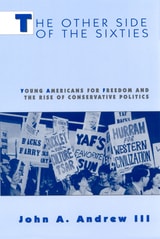
The Other Side of the Sixties
Young Americans for Freedom and the Rise of Conservative PoliticsAndrew III, John A
Rutgers University Press, 1997
The Other Texas Frontier
By Harry Huntt Ransom; edited by Hazel H. Ransom; foreword by John Graves
University of Texas Press, 1984
“One is tempted to say that wherever there was a frontier in America there was a counterfrontier and that the main purpose of this counterfrontier was not only to help man grow or dig or catch or kill his livng but also to put this man in communication with the traditions of his kind and thereby secure to his descendants the benefits of the free mind.” —Harry Huntt Ransom
The reflections of Harry Huntt Ransom (1908–1976) in The Other Texas Frontier present an alternative to the stereotypical picture of the brash, blustery heroes of the Texas frontier. Here, in six highly readable essays, Ransom posits a thesis of the counterfrontier: a quiet settling of the land by thoughtful, undramatic citizens who, he says, were the other Texans—the Texans without guns. Three of the essays are profiles of gifted men from Texas’ nineteenth century: Ashbel Smith, physician, diplomat, and first president of the Board of Regents of the University of Texas; Sherman Goodwin, physician, horticulturalist, bibliophile (and Ransom’s own grandfather); and Swante Palm, Swedish immigrant, bibliographer, and generous patron of the University of Texas libraries.
Harry Huntt Ransom, one of Texas’ most accomplished men of letters and for forty-one years an integral part of the University of Texas System as professor, dean, president, and chancellor, leaves an extraordinary legacy to Texas for both his educational and literary service. Though educated out of state, he returned to his native Texas after completion of his PhD at Yale to teach, research, and write in the fields of copyright law, literary history, and bibliography. As founder of the Humanities Research Center, he was squarely in the tradition of the men he was writing about.
Compiled and edited after Ransom’s death by his wife, Hazel H. Ransom, the literary sketches of The Other Texas Frontier form a book that Ransom himself had outlined but had not completed.
The Other Trail of Tears
The Removal of the Ohio IndiansMary Stockwell
Westholme Publishing, 2015
The Indian Removal Act of 1830 was the culmination of the United States’ policy to force native populations to relocate west of the Mississippi River. The most well-known episode in the eviction of American Indians in the East was the notorious “Trail of Tears” along which Southeastern Indians were driven from their homes in Georgia, Alabama, and Mississippi to reservations in present-day Oklahoma. But the struggle in the South was part of a wider story that reaches back in time to the closing months of the War of 1812, back through many states—most notably Ohio—and into the lives of so many tribes, including the Delaware, Seneca, Shawnee, Ottawa, and Wyandot (Huron). They, too, were forced to depart from their homes in the Ohio Country to Kansas and Oklahoma. The Other Trail of Tears: The Removal of the Ohio Indians by award-winning historian Mary Stockwell tells the story of this region’s historic tribes as they struggled following the death of Tecumseh and the unraveling of his tribal confederacy in 1813. At the peace negotiations in Ghent in 1814, Great Britain was unable to secure a permanent homeland for the tribes in Ohio setting the stage for further treaties with the United States and encroachment by settlers. Over the course of three decades the Ohio Indians were forced to move to the West, with the Wyandot people ceding their last remaining lands in Ohio to the U.S. Government in the early 1850s. The book chronicles the history of Ohio’s Indians and their interactions with settlers and U.S. agents in the years leading up to their official removal, and sheds light on the complexities of the process, with both individual tribes and the United States taking advantage of opportunities at different times. It is also the story of how the native tribes tried to come to terms with the fast pace of change on America’s western frontier and the inevitable loss of their traditional homelands. While the tribes often disagreed with one another, they attempted to move toward the best possible future for all their people against the relentless press of settlers and limited time.
The Outlaws of Cave-in-Rock
Otto A. Rothert. Foreword by Robert Clark
Southern Illinois University Press, 1996
Exceptionally rare and valued by book collectors, Otto A. Rothert’s riveting saga of the outlaws and scoundrels of Cave-in-Rock chronicles the adventures of an audacious cast of river pirates and highwaymen who operated in and around the famous Ohio River cavern from 1795 through 1820 (adventures featured in Disney’s Davy Crockett and the film How the West Was Won). Once sporting the enticing sign "Liquor Vault and House for Entertainment," this beautiful cavern location decoyed the unsuspecting by offering a venue for food, drink, and rest.
Compellingly lively, The Outlaws of Cave-in-Rock is nonetheless the work of a scholar, a historian who documents his findings and leaves a detailed bibliographical trail. Presenting many eyewitness accounts, Rothert supplies the lore and legend of the colorful villains of Cave-in-Rock. Always maintaining the difference between stories he tells with historical authority and those that are pure speculation, Rothert provides both a fascinating narrative and a valuable regional history.
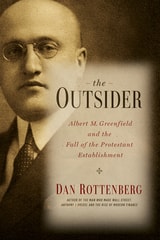
The Outsider
Albert M. Greenfield and the Fall of the Protestant EstablishmentDan Rottenberg
Temple University Press, 2018
In The Outsider, veteran journalist and best-selling author Dan Rottenberg deftly chronicles the astonishing rises, falls, and countless reinventions of this savvy businessman. Greenfield's power allowed him to cross social, religious, and ethnic boundaries with impunity. He alarmed Philadelphia's conservative business and social leaders-Christians and Jews alike-some of whom plotted his downfall.
In this engaging account of Greenfield's fascinating life, Rottenberg demonstrates the extent to which one uniquely brilliant and energetic man pushed the boundaries of society's limitations on individual potential. The Outsider provides a microcosmic look at three twentieth-century upheavals: the rise of Jews as a crucial American business force, the decline of America's Protestant establishment, and the transformation of American cities.
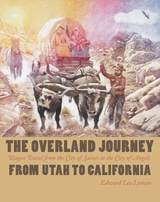
The Overland Journey From Utah To California
Wagon Travel From The City Of Saints To The City Of AngelsEdward Leo Lyman
University of Nevada Press, 2008
The wagon trail between Salt Lake City and Los Angeles is one of the most important and least-known elements of nineteenth-century Western migration. Known as the Southern Route, it included the western half of the Old Spanish Trail and was favored because it could be used for travel and freighting year-round. It was, however, likely the most difficult route that pioneers traveled with any consistency, following not rivers but leading from one--sometimes dubious--desert watering place to the next and offering few havens for the sick, weary, or unfortunate. Historian Edward Leo Lyman has provided the first history of the complete Southern Route and of the people who developed and used it. Based on extensive research in primary sources--including many early travelers’ accounts--and on Lyman’s own investigation of the route and its branches, the book discusses the exploration and development of the Old Spanish Trail, its horse thieves and traders, including Jed Smith and Kit Carson, along with government explorere John C. Frémont. Developing the old pack mule trail as a wagon road between Salt Lake City and Los Angeles, miners heading for the California gold fields first used the route extensively. Mormon missionaries and the colonizers of San Bernardino and other communities also traveled that way, as did a wide array of mail carriers, soldiers and world travelers. Later, a steady stream of Anglo-American emigrants seeking new homes or fortunes in California shared the road with a surprising number of freight wagon operators. The trail passed through the territories of numerous Native American peoples, and contacts with them--both friendly and hostile--played a significant role in the experiences of travelers and in the fates of Native American cultures in this region. Lyman’s discussions of Mormon-Indian relations and of the infamous Mountain Meadows Massacre offer fresh and important analyses of these vital aspects of the westward movement.
The Ozarks in Missouri History
Discoveries in an American RegionEdited by Lynn Morrow
University of Missouri Press, 2013

The Ozarks
Land and LifeMilton D. Rafferty
University of Arkansas Press, 2001

The PLA Reader for Public Library Directors and Managers
American Library Association, 2009

The Pacific Northwest Coast
Living with the Shores of Oregon and WashingtonPaul D. Komar
Duke University Press, 1998
In this guide, Paul D. Komar, one of the nation’s leading coastal oceanographers, examines the lessons taught by ages of geological and cultural history. With explanations of the area’s geological evolution, including natural shoreline erosion and sea-cliff landsliding, Komar details human interaction with the coast: erosion caused by early settlers, the development and destruction of Bayocean Spit, the disastrous effects caused by the 1982–1983 El Niño, and the notorious failure of a construction project on the picturesqueæbut unstableæbluffs at Jump-Off Joe. Emphasizing the actual and potential harm to human projects and to the natural heritage of the coast, Komar provides the knowledge necessary for finding a safe home near the shore while preserving the beauty that draws us to it.
The Packhorseman
Charles Hudson
University of Alabama Press, 2009
The Paddy Camps
The Irish of Lowell, 1821-61Brian C. Mitchell
University of Illinois Press, 1988
The dramatic story of the fights and compromises that shaped an Irish community
Disdained by many Yankee residents as Catholic lowlifes, the growing Irish population of the Lowell, Massachusetts, “paddy camps” in the nineteenth century proved a tempting source of cheap labor for local mill owners, who took advantage of the immigrants’ proximity to exploit them to the fullest. Displaced by their cheaper labor, other workers blamed the Irish for job losses and added to their plight through repression and segregation.
Now in paperback and featuring a new preface, Brian C. Mitchell’s The Paddy Camps demonstrates how the Irish community in Lowell overcame adversity to develop strong religious institutions, an increased political presence, and a sense of common traditions.
The Paleo-Indian Occupation of the Holcombe Beach
James E. Fitting, Jerry DeVisscher and Edward J. Wahla
University of Michigan Press, 1966
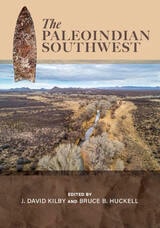
The Paleoindian Southwest
Edited by J. David Kilby and Bruce B. Huckell
University of Utah Press, 2025
The North American Southwest looms large in American archaeology, well known for the agricultural societies that dominated its austere landscape in later times. However, the traces of its earliest occupants, Native American ancestors who shared the ancient landscape with mammoth and giant bison toward the end of the last Ice Age, remain more obscure.
The Paleoindian Southwest provides the first comprehensive overview focused on the earliest human occupants of the Southwest, exploring past investigations, the current state of research, and directions for future discovery. Experts in the field examine individual archaeological sites—some classic and some newly discovered—as well as broader patterns of human behavior across varied regions of both the United States and Mexico. Chapter authors present new and unexpected discoveries, ranging from a gomphothere kill to fossil footprints, pushing the boundaries of the Paleoindian period and investigating nontraditional archaeological data. This collection is a critical resource and landmark volume for those interested in Southwest prehistory, Paleoindian archaeology, and Ice Age human ecology.
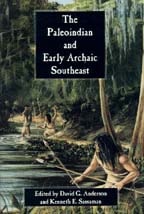
The Paleoindian and Early Archaic Southeast
Edited by David G. Anderson and Kenneth E. Sassaman
University of Alabama Press, 1996
The southeastern United States has one of the richest records of early human settlement of any area of North America. This book provides the first state-by-state summary of Paleoindian and Early Archaic research from the region, together with an appraisal of models developed to interpret the data. It summarizes what we know of the peoples who lived in the Southeast more than 8,000 years ago—when giant ice sheets covered the northern part of the continent, and such mammals as elephants, saber-toothed tigers, and ground sloths roamed the landscape. Extensively illustrated, this benchmark collection of essays on the state of Paleoindian and Early Archaic research in the Southeast will guide future studies on the subject of the region's first inhabitants for years to come.
Divided in three parts, the volume includes:
Part I: Modeling Paleoindian and Early Archaic Lifeways in the Southeast
Environmental and Chronological Considerations, David G. Anderson, Lisa D. O'Steen, and Kenneth E. Sassaman
Modeling Paleoindian and Early Archaic Settlement in the Southeast: A Historical Perspective, David G. Anderson and Kenneth E. Sassaman
Models of Paleoindian and Early Archaic Settlement in the Lower Southeast, David G. Anderson
Early Archaic Settlement in the South Carolina Coastal Plain, Kenneth E. Sassaman
Raw Material Availability and Early Archaic Settlement in the Southeast, I. Randolph Daniel Jr.
Paleoindian and Early Archaic Settlement along the Oconee Drainage, Lisa D. O'Steen
Haw River Revisited: Implications for Modeling Terminal Late Glacial and Early Holocene Hunter-Gatherer Settlement Systems in the Southeast, John S. Cable
Early Archiac Settlement and Technology: Lessons from Tellico, Larry R. Kimball
Paleoindians Near the Edge: A Virginia Perspective, Michael F. Johnson
Part II: The Regional Record
The Need for a Regional Perspective, Kenneth E. Sassaman and David G. Anderson
Paleoindian and Early Archaic Research in the South Carolina Area, David G. Anderson and Kenneth E. Sassaman
The Taylor Site: An Early Occupation in Central South Carolina, James L. Michie
Paleoindian and Early Archaic Research in Tennessee, John B. Boster and Mark R. Norton
A Synopsis of Paleoindian and Early Archaic Research in Alabama, Eugene M. Futato
Statified Late Pleistocene and Early Holocene Deposits at Dust Cave, Northwestern Alabama, Boyce N. Driskell
Bone and Ivory Tools from Submerged Paleoindian Sites in Florida, James S. Dunbar and S. David Webb
Paleoindian and Early Archaic Data from Mississippi, Samuel O. McGahey
Early and Middle Paleoindian Sites in the Northeastern Arkansas Region, J. Christopher Gillam
Part III: Commentary
A Framework for the Paleoindian/Early Archaic Transition, Joel Gunn
Modeling Communities and Other Thankless Tasks, Dena F. Dincauze
An Arkansas View, Dan F. Morse
Comments, Henry T. Wright

The Pandemic Divide
How COVID Increased Inequality in AmericaGwendolyn L. Wright, Lucas Hubbard, and William A. Darrity, editors
Duke University Press, 2022
Contributors. Fenaba Addo, Steve Amendum, Leslie Babinski, Sandra Barnes, Mary T. Bassett, Keisha Bentley-Edwards, Kisha Daniels, William A. Darity Jr., Melania DiPietro, Jane Dokko, Fiona Greig, Adam Hollowell, Lucas Hubbard, Damon Jones, Steve Knotek, Arvind Krishnamurthy, Henry Clay McKoy Jr., N. Joyce Payne, Erica Phillips, Eugene Richardson, Paul Robbins, Jung Sakong, Marta Sánchez, Melissa Scott, Kristen Stephens, Joe Trotter, Chris Wheat, Gwendolyn L. Wright
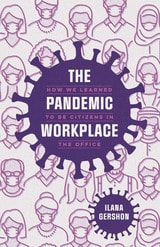
The Pandemic Workplace
How We Learned to Be Citizens in the OfficeIlana Gershon
University of Chicago Press, 2024
In The Pandemic Workplace, anthropologist Ilana Gershon turns her attention to the US workplace and how it changed—and changed us—during the pandemic. She argues that the unprecedented organizational challenges of the pandemic forced us to radically reexamine our attitudes about work and to think more deeply about how values clash in the workplace. These changes also led us as workers to engage more with the contracts that bind us as we rethought when and how we allow others to tell us what to do.
Based on over two hundred interviews, Gershon’s book reveals how negotiating these tensions during the pandemic made the workplace into a laboratory for democratic living—the key place where Americans are learning how to develop effective political strategies and think about the common good. Exploring the explicit and unspoken ways we are governed (and govern others) at work, this accessible book shows how the workplace teaches us to be democratic citizens.
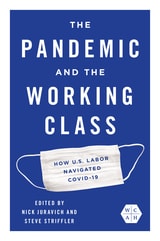
The Pandemic and the Working Class
How US Labor Navigated COVID-19Edited by Nick Juravich and Steve Striffler
University of Illinois Press, 2025
Nick Juravich and Steve Striffler edit a collection that examines the effects of the pandemic on workers. Sections of the book focus on specific impacts and government efforts to restructure the economy; the dramatic effect of the pandemic on the hospitality industry; educators’ response on behalf of themselves and their students; frontline healthcare workers; and the innovative forms of labor organizing that emerged during and after COVID.
Contributors: Carlos Aramayo, Kathleen Brown, Sandrine Etienne, Ismael García-Colón, Puya Gerami, Maura Hagan, Connor Harney, Devan Hawkins, Leigh Howard, Marian Moser Jones, Doris Joy, Nick Juravich, Eric Larson, Kathryn M. Meyer, Samir Sonti, Steve Striffler, Lia Warner, Andrew B. Wolf, and Jennifer Zelnick
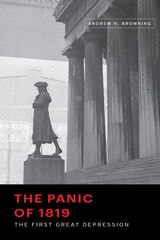
The Panic of 1819
The First Great DepressionAndrew H. Browning
University of Missouri Press, 2024
The Panic introduced Americans to the new phenomenon of boom and bust, changed the country's attitudes towards wealth and poverty, spurred the political movement that became Jacksonian Democracy, and helped create the sectional divide that would lead to the Civil War. Although it stands as one of the turning points of American history, few Americans today have heard of the Panic of 1819, with the result that we continue to ignore its lessons—and repeat its mistakes.
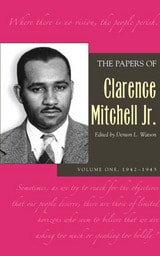
The Papers of Clarence Mitchell Jr., Volume I
1942–1943Clarence Mitchell Jr.
Ohio University Press, 2005
Clarence Mitchell Jr. was the driving force in the movement for passage of civil rights laws in America. The foundation for Mitchell’s struggle was laid during his tenure at the Fair Employment Practice Committee, where he led implementation of President Roosevelt’s policy barring racial discrimination in employment in the national defense and war industry programs. Mitchell’s FEPC reports and memoranda chart the beginning of the modern civil rights movement.
The first two volumes of a projected five-volume documentary edition of The Papers of Clarence Mitchell Jr. illuminate the FEPC’s work as a federal affirmative-action agency and the government’s struggle to enforce the nation’s antidiscrimination policy in industry, federal agencies, and labor unions.
Subsequent volumes will trace Mitchell’s successive enlistment of seven presidents in establishing and enforcing a permanent national nondiscrimination policy. Through his efforts, Congress passed the 1957, 1960, and 1964 Civil Rights Acts prohibiting discrimination in public accommodations, federal spending, and employment based on race, color, sex, and national origin; the 1965 Voting Rights Act; and the 1968 Fair Housing Act.
Editor Denton L. Watson introduces and annotates Mitchell’s writings, providing context and insight for students and scholars of civil rights history, government, law, and sociology.