Results by title
28167 books match the query 'History' and 6372 start with t
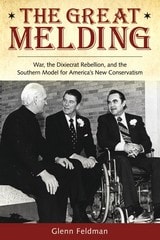
The Great Melding
War, the Dixiecrat Rebellion, and the Southern Model for America's New ConservatismGlenn Feldman
University of Alabama Press, 2015
CHOICE OUTSTANDING ACADEMIC TITLE
Tracing the Southern Origins of Modern American Conservatism.
Audacious in its scope, subtle in its analysis, and persuasive in its arguments, The Great Melding is the second book in Glenn Feldman’s magisterial recounting of the South’s transformation from a Reconstruction-era citadel of Democratic Party inertia to a cauldron of GOP agitation. In this pioneering study, Feldman shows how the transitional years after World War II, the Dixiecrat episode, and the early 1950s formed a pivotal sequence of events that altered America’s political landscape in profound, fundamental, and unexpected ways.
Feldman’s landmark work The Irony of the Solid South dismantled the myth of the New Deal consensus, proving it to be only a fleeting alliance of fissiparous factions; The Great Melding further examines how the South broke away from that consensus. Exploring issues of race and white supremacy, Feldman documents and explains the roles of economics, religion, and emotive appeals to patriotism in southern voting patterns. His probing and original analysis includes a discussion of the limits of southern liberalism and a fresh examination of the Dixiecrat Revolt of 1948.
Feldman convincingly argues that the Dixiecrats—often dismissed as a transitory footnote in American politics—served as a template for the modern conservative movement. Now a predictable Republican stronghold, Alabama at the time was viewed by national political strategists as a battleground and bellwether. Masterfully synthesizing a vast range of sources, Feldman shows that Alabama was then one of the few states where voters made unpredictable choices between the competing ideologies of the Democrats, Republicans, and Dixiecrats.
Writing in his lively and provocative style, Feldman demonstrates that the events he recounts in Alabama between 1942 and Dwight Eisenhower’s 1952 election encapsulate a rare moment of fluidity in American politics, one in which the New Deal consensus shattered and the Democratic and Republican parties fought off a third-party revolt only to find themselves irrevocably altered by their success. The Great Melding will fascinate historians, political scientists, political strategists, and readers of political nonfiction.
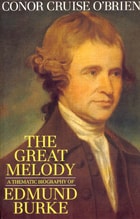
The Great Melody
A Thematic Biography of Edmund BurkeConor Cruise O'Brien
University of Chicago Press, 1992
"In bringing Burke to our attention, Mr. O'Brien has brought back a lost treasure. The Great Melody is a brilliant work of narrative sweep and analytical depth. Conor Cruise O'Brien on Edmund Burke is a literary gift to political thought."—John Patrick Diggins, New York Times Book Review
"Serious readers of history are in for a treat: a book by the greatest living Irishman on the greatest Irishman who ever lived. . . . O'Brien's study is not merely a reconstruction of a fascinating man and period. It is also a tract for the times. . . . I cannot remember another time when I finished a book of more than 600 pages wishing it were longer."—Paul Johnson, The Independent
"The Great Melody combines superb biography and fascinating history with a profound understanding of political philosophy."—Former President Richard Nixon
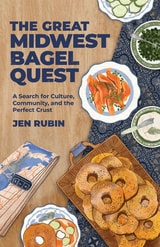
The Great Midwest Bagel Quest
A Search for Culture, Community, and the Perfect CrustJen Rubin
Wisconsin Historical Society Press, 2027
One woman’s quest for a great bagel becomes a poignant pursuit of culture and belonging.
Bagels have always been Jen Rubin’s cultural comfort food. Born and raised in New York City, she grew up on family gatherings anchored by sprawling bagel spreads. But after moving to Wisconsin thirty years ago, she struggled to maintain ties to her Jewish heritage—including a bagel worthy of her New York upbringing. When her mother’s death leads her to revisit her roots, Rubin embarks on a deeply personal mission: to discover whether the Midwest can produce a quality, authentic bagel. What begins as a search for comfort and connection becomes an enlightening exploration of food, identity, and belonging.
In The Great Midwest Bagel Quest, Rubin visits Chicago and St. Louis, Detroit and Ann Arbor, the Twin Cities, and Madison and Milwaukee—with a couple of side trips to New York City—sampling dozens of bagels, meeting artisan bakers, and exploring the histories of Jewish communities across the region. Along the way, she challenges the assumption that the Midwest has never produced truly authentic bagels.
Blending memoir, culinary history, travel narrative, and cultural reporting, Rubin uncovers a rich but overlooked bagel tradition while reflecting on her own complicated relationship with home. As she traces the evolution of the bagel from Jewish immigrant staple to mass-market commodity to the innovative artisanal varieties being produced today, she begins to see an evolution in her own relationship to her Jewish and familial traditions.
Warm, witty, and illuminating, The Great Midwest Bagel Quest is a fresh contribution to food writing that will appeal to readers of culinary history, immigrant history, and memoir. Most of all, it is a celebration of how food creates and sustains community—and how the search for the perfect bagel can lead us back to our true selves.
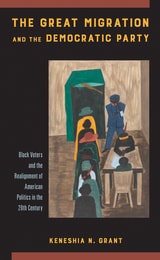
The Great Migration and the Democratic Party
Black Voters and the Realignment of American Politics in the 20th CenturyKeneshia N. Grant
Temple University Press, 2020
Where Black people live has long been an important determinant of their ability to participate in political processes. The Great Migration significantly changed the way Democratic Party elites interacted with Black communities in northern cities, Detroit, New York, and Chicago. Many white Democratic politicians came to believe the growing pool of Black voters could help them reach their electoral goals—and these politicians often changed their campaign strategies and positions to secure Black support. Furthermore, Black migrants were able to participate in politics because there were fewer barriers to Black political participations outside the South.
The Great Migration and the Democratic Party frames the Great Migration as an important economic and social event that also had serious political consequences. Keneshia Grant created one of the first listings of Black elected officials that classifies them based on their status as participants in the Great Migration. She also describes some of the policy/political concerns of the migrants. The Great Migration and the Democratic Party lays the groundwork for ways of thinking about the contemporary impact of Black migration on American politics.
The Great Name
Ancient Egyptian Royal TitularyRonald J. Leprohon
SBL Press, 2013
The Great Paleolithic War
How Science Forged an Understanding of America's Ice Age PastDavid J. Meltzer
University of Chicago Press, 2015
In The Great Paleolithic War, David J. Meltzer tells the story of a scientific quest that set off one of the longest-running feuds in the history of American anthropology, one so vicious at times that anthropologists were deliberately frightened away from investigating potential sites. Through his book, we come to understand how and why this controversy developed and stubbornly persisted for as long as it did; and how, in the process, it revolutionized American archaeology.
The Great Peshtigo Fire
An Eyewitness AccountPeter Pernin
Wisconsin Historical Society Press, 1999
The Great Peshtigo Fire
Stories and Science from America’s Deadliest FireScott Knickelbine
Wisconsin Historical Society Press, 2012
On the night of October 8, 1871, a whirlwind of fire swept through northeastern Wisconsin, destroying the bustling frontier town of Peshtigo. Trees, buildings, and people burst into flames. Metal melted. Sand turned into glass. People thought the end of the world had come. When the “tornado of fire” was over, 2,500 people were dead, and Peshtigo was nothing but a smoking ruin. It was the deadliest wildfire in U.S. history.
The Great Peshtigo Fire: Stories and Science from America’s Deadliest Firestorm explores the history, science, and legacy of the 1871 Peshtigo Fire at a fourth-grade reading level. Readers will learn about the history of settlement, agriculture, and forestry in 19th-century Wisconsin. This illuminating text covers a diverse range of topics that will enrich the reader’s understanding of the Peshtigo Fire, including the building and land-use practices of the time that made the area ripe for such a fire, the weather patterns that fostered widespread fires throughout the upper Midwest in the summer and fall of 1871, and exciting first-person accounts that vividly bring the `victims’ stories to life. Connections made between the Peshtigo Fire and the history of fire prevention in the United States encourage critical thinking about issues that remain controversial to this day, such as planned burns and housing development restrictions near forested areas. The Great Peshtigo Fire: Stories and Science from America’s Deadliest Firestorm will inform and captivate its readers as it journeys through the horrifying history of the Peshtigo Fire.
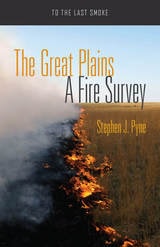
The Great Plains
A Fire SurveyStephen J. Pyne
University of Arizona Press, 2017
Early descriptions of the Great Plains often focus on a vast, grassy expanse that was either burnt or burning. The scene continued to burn until the land was plowed under or grazed away and broken by innumerable roads and towns. Yet, where the original landscape has persisted, so has fire, and where people have sought to restore something of that original setting, they have had to reinstate fire. This has required the persistence or creation of a fire culture, which in turn inspired schools of science and art that make the Great Plains today a regional hearth for American fire.
Volume 5 of To the Last Smoke introduces a region that once lay at the geographic heart of American fire, and today promises to reclaim something of that heritage. After all these years, the Great Plains continue to bear witness to how fires can shape contemporary life, and vice versa. In this collection of essays, Stephen J. Pyne explores how this once most regularly and widely burned province of North America, composed of various subregions and peoples, has been shaped by the flames contained within it and what fire, both tame and feral, might mean for the future of its landscapes.
Included in this volume:
- How wildland and rural fire have changed from the 19th century to the 21st century
- How fire is managed in the nation’s historic tallgrass prairies, from Texas to South Dakota, from Illinois to Nebraska
- How fire connects with other themes of Great Plains life and culture
- How and why Texas has returned to the national narrative of landscape fire
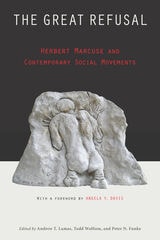
The Great Refusal
Herbert Marcuse and Contemporary Social MovementsAndrew Lamas
Temple University Press, 2016
Herbert Marcuse examined the subjective and material conditions of radical social change and developed the "Great Refusal," a radical concept of "the protest against that which is." The editors and contributors to the exciting new volume The Great Refusal provide an analysis of contemporary social movements around the world with particular reference to Marcuse's revolutionary concept. The book also engages-and puts Marcuse in critical dialogue with-major theorists including Slavoj Žižek and Michel Foucault, among others.
The chapters in this book analyze different elements and locations of the contemporary wave of struggle, drawing on the work and vision of Marcuse in order to reveal, with a historical perspective, the present moment of resistance. Essays seek to understand recent uprisings-such as the Zapatistas in Mexico, the Arab Spring, and the Occupy movement-in the context of Marcuse's powerful conceptual apparatus.
The Great Refusal also charts contemporary social movements against global warming, mass incarceration, police brutality, white supremacy, militarization, technological development, and more, to provide insights that advance our understanding of resistance today.
Contributors include: Kevin B. Anderson, Stanley Aronowitz, Joan Braune, Jenny Chan, Angela Y. Davis, Arnold L. Farr, Andrew Feenberg, Michael Forman, Christian Fuchs, Stefan Gandler, Christian Garland, Toorjo Ghose, Imaculada Kangussu, George Katsiaficas, Douglas Kellner, Sarah Lynn Kleeb, Filip Kovacevic, Lauren Langman, Heather Love, Peter Marcuse, Martin J. Beck Matuštík, Russell Rockwell, AK Thompson, Marcelo Vieta, and the editors.

The Great Reporters
David Randall
Pluto Press, 2005
This unique book is the first to try and answer this question. Author David Randall searched nearly two centuries of newspapers and magazines, consulted editors and journalism experts worldwide, and the result is The Great Reporters---13 in-depth profiles of the best journalists who ever lived. They include nine Americans and four Britons, ten men and three women, whose lives were full of adventure, wit, and the considerable ingenuity required to bring the story home. Among chapters are those on the reporter who:
Booked himself onto a ship likely to be sunk by the Germans so he could report its torpedoing Was called out to a multiple shooting, who interviewed 50 witnesses, went back to the office, and wrote a Pulitzer Prize-winning story of 4,000 words in two and a half hours Was deemed useless by her teacher but who went on to become the greatest crime reporter in history Wrote a story that changed the map of Europe Out-bluffed a top Soviet official to get into Russia so he could cover the appalling famine there Feigned madness to get herself locked up in an asylum so she could expose its terrible conditions Was the best ever to apply words to newsprint Became a national hero in America because he stood up for the little guy and his war reporting told it like it really was At the age of 63, and after three major operations, went under-cover in Iran so she could report on the regime's repression Was nearly fired for fouling up his first major assignment, but went on to shock his nation with his courageous war reporting Wrote faster than anyone who could write better and better than anyone who could write faster Single-handedly took on the tobacco industry Said no to William Randolph Hearst
Each profile tells of the reporter's life and his or her major stories, how they were obtained, and their impact. Packed with anecdotes, and inspiring accounts of difficulties overcome, the book quotes extensively from each reporter's work. It also includes an essay on the history of reporting, charting the technologies, economics, and attitudes that made it the way it is---from the invention of the telegraph to the Internet. The Great Reporters is not just the story of 13 remarkable people, it is the story of how society's information hunter-gatherers succeed in bringing us all what we need to know.
The Great Salt Lake
Dale L. Morgan
University of Utah Press, 2002
Approached as history, geography, geology, or high adventure, The Great Salt Lake is fascinating reading. From the first Americans, through mountain men, religious empires, railroads, and resorts, the remnant of ancient Lake Bonneville has been a nexus for human history, uniting a haunting beauty with raw desolation, 'strangely removed from common experience.'
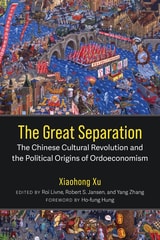
The Great Separation
The Chinese Cultural Revolution and the Political Origins of OrdoeconomismXiaohong Xu Edited by Roi Livne, Robert Jansen and Yang Zhang
University of Michigan Press, 2026
With a keen attention to how culture and elite conflict shape politics, The Great Separation upends deterministic understandings of the Chinese Cultural Revolution and the market reforms that followed. This ambitious posthumous volume by sociologist Xiaohong Xu turns the existing scholarship on China’s “neoliberalism” on its head by demonstrating that the effort to separate mass politics from economic policy had its origins well before the Reform and Opening-up era.
Over the course of the Cultural Revolution, unfolding factional dynamics and interpretive struggles enabled Chairman Mao and his radical colleagues to mobilize workers to advance their own political goals while neutralizing the masses’ economic demands, symbolically separating the political from the economic. This set the stage for a more thoroughgoing depoliticization of the economy after 1989, when China faced challenges from students and workers whose economic grievances had rapidly morphed into political demands for democracy. The result was what Xu calls ordoeconomism: an ideology that valorizes economic development, rejects mass politics, and views the state as the apolitical guardian of the economy. As Xu demonstrates, while ordoeconomism may share some affinities with neoliberalism, it is a distinctively Chinese approach that must be understood on its own terms.
The Great Siege of Malta
The Epic Battle between the Ottoman Empire and the Knights of St. JohnBruce Ware Allen
University Press of New England, 2017
The Great Society and the High Tide of Liberalism
Sidney M. Milkis
University of Massachusetts Press, 2005
In this volume of original essays, a distinguished group of scholars and activists reassess the mixed legacy of this third major reform period of the last century. They examine not only the policies and programs that were part of LBJ's Great Society, but also the underlying ideological and political shifts that changed the nature of liberalism. Some of the essays focus on Lyndon Johnson himself and the institution of the modern presidency, others on specific reform measures, and still others on the impact of these initiatives in the decades that followed. Perspectives, methodologies, and conclusions differ, yet all of the contributors agree that the Great Society represented an important chapter in the story of the American republic and its ongoing struggle to reconcile the power of the state with the rights of individuals—a struggle that has continued into the twenty-first century.
In addition to the editors, contributors include Henry J. Abraham, Brian Balogh, Rosalyn Baxandall, Edward Berkowitz, Eileen Boris, Richard A. Cloward, Hugh Davis Graham, Hugh Heclo, Frederick Hess, William E. Leuchtenburg, Nelson Lichtenstein, Patrick McGuinn, Wilson Carey McWilliams, R. Shep Melnick, Frances Fox Piven, and David M. Shribman.
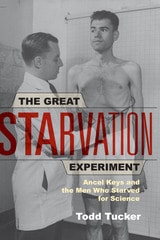
The Great Starvation Experiment
Ancel Keys and the Men Who Starved for ScienceTodd Tucker
University of Minnesota Press, 2007
“The Great Starvation Experiment is wide-ranging, weaving progress in the war into the day-to-day suffering of the hungry volunteers.” —Saint Paul Pioneer Press
“Fascinating . . .” —Minneapolis Star Tribune
Near the end of World War II, thirty-six conscientious objectors volunteered to be systematically starved for renowned scientist Ancel Keys’s study at the University of Minnesota in the basement of Memorial Stadium. Aimed to benefit relief efforts in war-ravaged Europe and Asia, the study sought the best way to rehabilitate starving citizens. Tucker captures a lost moment in American history—a time when stanch idealism and a deep willingness to sacrifice trumped even basic human needs.
“Tucker provides a fascinating and moving history of the experiment, centering on the lives and experiences of the volunteers and the formidable obstacles they overcame. Tucker tells the story with verve and economy. . . . Keys, his experiment and his 36 starving men form a compelling combination.” —Publishers Weekly
Todd Tucker is the author of several books, including Notre Dame vs. the Klan: How the Fighting Irish Defeated the Ku Klux Klan (2004). He served on the legendary Navy submarine USS Alabama before moving to Valparaiso, Indiana.
The Great Strikes of 1877
Edited by David O. Stowell
University of Illinois Press, 2007
A spectacular example of collective protest, the Great Strike of 1877--actually a sequence of related actions--was America's first national strike and the first major strike against the railroad industry. In some places, non-railroad workers also abandoned city businesses, creating one of the nation's first general strikes. Mobilizing hundreds of thousands of workers, the Great Strikes of 1877 transformed the nation's political landscape, shifting the primary political focus from Reconstruction to labor, capital, and the changing role of the state.
Probing essays by distinguished historians explore the social, political, regional, and ethnic landscape of the Great Strikes of 1877: long-term effects on state militias and national guard units; ethnic and class characterization of strikers; pictorial representations of poor laborers in the press; organizational strategies employed by railroad workers; participation by blacks; violence against Chinese immigrants; and the developing tension between capitalism and racial equality in the United States.
Contributors: Joshua Brown, Steven J. Hoffman, Michael Kazin, David Miller, Richard Schneirov, David O. Stowell, and Shelton Stromquist.
The Great Syrian Revolt and the Rise of Arab Nationalism
By Michael Provence
University of Texas Press, 2005
The Great Syrian Revolt of 1925 was the largest and longest-lasting anti-colonial insurgency in the inter-war Arab East. Mobilizing peasants, workers, and army veterans, rather than urban elites and nationalist intellectuals, it was the first mass movement against colonial rule in the Middle East. The revolt failed to liberate Syria from French occupation, but it provided a model of popular nationalism and resistance that remains potent in the Middle East today. Each subsequent Arab uprising against foreign rule has repeated the language and tactics of the Great Syrian Revolt.
In this work, Michael Provence uses newly released secret colonial intelligence sources, neglected memoirs, and popular memory to tell the story of the revolt from the perspective of its participants. He shows how Ottoman-subsidized military education created a generation of leaders of modest background who came to rebel against both the French Mandate rulers of Syria and the Syrian intellectuals and landowners who helped the colonial regime to function. This new popular nationalism was unprecedented in the Arab world. Provence shows compellingly that the Great Syrian Revolt was a formative event in shaping the modern Middle East.
The Great Television Race
A History of the American Television Industry, 1925-1941Joseph H. Udelson
University of Alabama Press, 1989
The Great Texas Stamp Collection
How Some Stubborn Texas Confederate Postmasters, a Handful of Determined Texas Stamp Collectors, and a Few of the World's Greatest Philatelists Created, Discovered, and Preserved Some of the World's Most Valuable Postage StampsBy Charles W. Deaton
University of Texas Press, 2012
Among the many difficulties the newly formed Confederate States of America endured in the summer of 1861 was the failure of its post office department to provide sufficient numbers of that item most crucial to its service: the postage stamp. Faced with the resulting din of customer complaints, a handful of industrious Texas postmasters solved the problem by simply making their own homemade stamps.
In this thoroughly researched history of these rare and highly coveted stamps, The Great Texas Stamp Collection traces their journey from creation through their rediscovery years later by local, and then international, stamp collectors—a journey that culminated in the sale of a few pieces at a recent auction in New York that fetched more than $250,000. Weaving the larger contexts of Texas and U.S. postal history together with individual tales of greed, intrigue, forgery, and discovery, Deaton’s book is rich with characters from European royalty to early stamp dealers to common criminals, while also providing detailed examinations of the stamps themselves, including a complete census of the stamps now known as the Texas Confederate Postmasters’ Provisionals.
Appealing at once to devoted philatelists, Texas and U.S. history buffs, and amateur collectors of all kinds, The Great Texas Stamp Collection offers a unique vantage point from which to view our history as well as the very nature of collecting.
The Great Texas Wind Rush
How George Bush, Ann Richards, and a Bunch of Tinkerers Helped the Oil and Gas State Win the Race to Wind PowerBy Kate Galbraith and Asher Price
University of Texas Press, 2013
In the late 1990s, West Texas was full of rundown towns and pumpjacks, aging reminders of the oil rush of an earlier era. Today, the towns are thriving as 300-foot-tall wind turbines tower above those pumpjacks. Wind energy has become Texas’s latest boom, with the Lone Star State now leading the nation. How did this dramatic transformation happen in a place that fights federal environmental policies at every turn? In The Great Texas Wind Rush, environmental reporters Kate Galbraith and Asher Price tell the compelling story of a group of unlikely dreamers and innovators, politicos and profiteers.
The tale spans a generation and more, and it begins with the early wind pioneers, precocious idealists who saw opportunity after the 1970s oil crisis. Operating in an economy accustomed to exploiting natural resources and always looking for the next big thing, their ideas eventually led to surprising partnerships between entrepreneurs and environmentalists, as everyone from Enron executives to T. Boone Pickens, as well as Ann Richards, George W. Bush and Rick Perry, ended up backing the new technology. In this down-to-earth account, the authors explain the policies and science that propelled the “windcatters” to reap the great harvest of Texas wind. They also explore what the future holds for this relentless resource that is changing the face of Texas energy.

The Great Transformation
The Contribution of German-Jewish Exiles to British CultureJeremy Adler
University of London Press, 2019
The Great Tree and the Summer Sun
Survivance and Futurity in the Narragansett CountryMack H. Scott III
University of Massachusetts Press, 2027
Documenting the long struggle of the Narragansett Nation to protect their land, sovereignty, and future
On a hot mid-July morning in 2003, members of the Narragansett Nation formed an impromptu human shield. They assembled to protect what they understood to be sacred and sovereign land. On the other side of the road stood dozens of local police officers and more than twenty state troopers, acting on direct orders from Rhode Island Governor Donald L. Carcieri to forcibly close a smoke shop the state claimed was operating illegally. It was a flashpoint in a long, drawn-out, and continuing struggle—one that historian Mack H. Scott III, himself a member of the Narragansett Nation, has spent his career documenting.
In The Great Tree and the Summer Sun, Scott tells the story of his people: the largest and most influential Indigenous community in the Dawnland, the coastal New England region his ancestors have called home for centuries. The Narragansett, whom the sachem Miantonomo described as “a great tree,” have endured nearly 400 years of mostly adversarial relations with their non-Indigenous neighbors—despite the mythology of Rhode Island’s benevolent founding and its supposed social egalitarianism.
Scott explores the long durée of local cross-cultural interactions that hardened hearts, minds, and viewpoints, not just in Rhode Island, but throughout Turtle Island (North America), as Natives and newcomers struggled to reconstitute and redefine themselves within a contested landscape. Commencing in the seventeenth century and concluding in the twenty-first, this episodic historical survey foregrounds the varied experiences of members of the Great Tree as they negotiated the realities of the Summer Sun—settler colonialism—to ensure that their futures remained irrepressible.
The Great Upheaval
Women and Nation in Postwar NigeriaJudith A. Byfield
Ohio University Press, 2021
The Great War Comes to Wisconsin
Sacrifice, Patriotism, and Free Speech in a Time of CrisisRichard L. Pifer
Wisconsin Historical Society Press, 2017
Instead of a comprehensive history of the battlefield, this book captures the homefront experience: the political debates over war policy, the worry over loved ones fighting overseas, the countless everyday sacrifices, and the impact of a wartime hysteria that drove dissent underground. It also includes the voices of soldiers from Wisconsin’s famed 32nd Division, through extensively quoted letters and newspaper accounts. Immerse yourself in the Wisconsin experience during World War I—a conflict that demonstrated America’s great capacity for sacrifice and generosity, but also for prejudice, intolerance, and injustice.
The Great War in the Air
Military Aviation from 1909 to 1921John H. Morrow, Jr.
University of Alabama Press, 2009
"For the general reader as well as the specialist, Morrow's history of the development and significance of airpower during WWI will be considered definitive. He compares the military, technological, and industrial aspects of the air services of the major powers--France, Germany, England, Italy, Austria-Hungary, and the United States--and reveals how, by means of superior production (particularly French engine manufacture), the Allies prevailed in the air war."--Publishers Weekly
"Morrow's encyclopedic examination of aviation's part in World War I concentrates on aircraft engine and airframe production, but the emotional content of contemporary accounts rises to the surface to put a human face on the brutal use of an infant technology. . . . a serious yet readable history of this vital part of the conflict, meant for any reader."--Library Journal
"A comprehensive study of the totality of the air war in its military, political, industrial, and cultural aspects distinguish this book from other treatments of military aviation during this period. . . . Morrow's efforts have yielded new insights into the evolution of military aviation and corrected previous oversights. The author's attention to developments in production and logistics, as well as events at the front, provide the most complete understanding of the development of air power and its role in the Great War."--American Historical Review
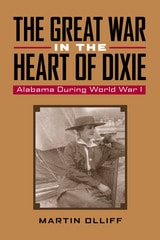
The Great War in the Heart of Dixie
Alabama During World War IMartin T. Olliff
University of Alabama Press, 2008
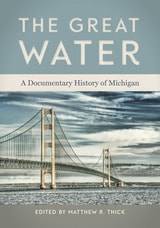
The Great Water
A Documentary History of MichiganMatthew R Thick
Michigan State University Press, 2018
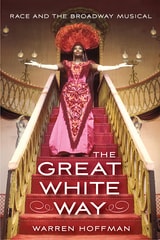
The Great White Way
Race and the Broadway MusicalHoffman, Warren
Rutgers University Press, 2014
Broadway musicals are one of America’s most beloved art forms and play to millions of people each year. But what do these shows, which are often thought to be just frothy entertainment, really have to say about our country and who we are as a nation?
The Great White Way is the first book to reveal the racial politics, content, and subtexts that have haunted musicals for almost one hundred years from Show Boat (1927) to The Scottsboro Boys (2011). Musicals mirror their time periods and reflect the political and social issues of their day. Warren Hoffman investigates the thematic content of the Broadway musical and considers how musicals work on a structural level, allowing them to simultaneously present and hide their racial agendas in plain view of their audiences. While the musical is informed by the cultural contributions of African Americans and Jewish immigrants, Hoffman argues that ultimately the history of the American musical is the history of white identity in the United States.
Presented chronologically, The Great White Way shows how perceptions of race altered over time and how musicals dealt with those changes. Hoffman focuses first on shows leading up to and comprising the Golden Age of Broadway (1927–1960s), then turns his attention to the revivals and nostalgic vehicles that defined the final quarter of the twentieth century. He offers entirely new and surprising takes on shows from the American musical canon—Show Boat (1927), Oklahoma! (1943), Annie Get YourGun (1946), The Music Man (1957), West Side Story (1957), A Chorus Line (1975), and 42nd Street (1980), among others.
New archival research on the creators who produced and wrote these shows, including Leonard Bernstein, Jerome Robbins, Stephen Sondheim, and Edward Kleban, will have theater fans and scholars rethinking forever how they view this popular American entertainment.
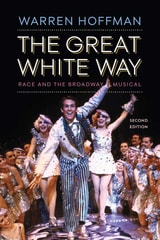
The Great White Way
Race and the Broadway MusicalWarren Hoffman
Rutgers University Press, 2020
Now in a new second edition, The Great White Way is the first book to reveal the racial politics, content, and subtexts that have haunted musicals for almost one hundred years from Show Boat (1927) to Hamilton (2015). This revised edition includes a new introduction and conclusion, updated chapters, as well as a brand-new chapter that looks at the blockbuster musicals The Book of Mormon and Hamilton.
Musicals mirror their time periods and reflect the political and social issues of their day. Warren Hoffman investigates the thematic content of the Broadway musical and considers how musicals work on a structural level, allowing them to simultaneously present and hide their racial agendas in plain view of their audiences. While the musical is informed by the cultural contributions of African Americans and Jewish immigrants, Hoffman argues that ultimately the history of the American musical is the history of white identity in the United States.
Presented chronologically, The Great White Way shows how perceptions of race altered over time and how musicals dealt with those changes. Hoffman focuses first on shows leading up to and comprising the Golden Age of Broadway (1927–1960s), then turns his attention to the revivals and nostalgic vehicles that defined the final quarter of the twentieth century. He offers entirely new and surprising takes on shows from the American musical canon—Show Boat (1927), Oklahoma! (1943), Annie Get Your Gun (1946), The Music Man (1957), West Side Story (1957), A Chorus Line (1975), and 42nd Street (1980), among others. In addition to a new chapter on Hamilton and The Book of Mormon, this revised edition brings The Great White Way fully into the twenty-first century with an examination of jukebox musicals and the role of off-Broadway and regional theaters in the development of the American musical.
New archival research on the creators who produced and wrote these shows, including Leonard Bernstein, Jerome Robbins, Stephen Sondheim, and Edward Kleban, will have theater fans and scholars rethinking forever how they view this popular American entertainment.
The Great William
Writers Reading ShakespeareTheodore Leinwand
University of Chicago Press, 2016
Theodore Leinwand builds impressively detailed accounts of these writers’ experiences through their marginalia, lectures, letters, journals, and reading notes. We learn why Woolf associated reading Shakespeare with her brother Thoby, and what Ginsberg meant when referring to the mouth feel of Shakespeare’s verse. From Hughes’s attempts to find a “skeleton key” to all of Shakespeare’s plays to Berryman’s tormented efforts to edit King Lear, Leinwand reveals the palpable energy and conviction with which these seven writers engaged with Shakespeare, their moments of utter self-confidence and profound vexation. In uncovering these intense public and private reactions, The Great William connects major writers’ hitherto unremarked scenes of reading Shakespeare with our own.
The Great Woman Singer
Gender and Voice in Puerto Rican MusicLicia Fiol-Matta
Duke University Press, 2017
The Greater Good
Media, Family Removal, and TVA Dam Construction in North AlabamaLaura Beth Daws and Susan L. Brinson
University of Alabama Press, 2019
For poverty-stricken families in the Tennessee River Valley during the Great Depression, news of President Franklin D. Roosevelt’s New Deal plans to create the Tennessee Valley Authority—bringing the promise of jobs, soil conservation, and electricity—offered hope for a better life. The TVA dams would flood a considerable amount of land on the riverbanks, however, forcing many families to relocate. In exchange for this sacrifice for the “greater good,” these families were promised “fair market value” for their land. As the first geographic location to benefit from the electricity provided by TVA, the people of North Alabama had much to gain, but also much to lose.
In The Greater Good: Media, Family Removal, and TVA Dam Construction in North Alabama Laura Beth Daws and Susan L. Brinson describe the region’s preexisting conditions, analyze the effects of relocation, and argue that local newspapers had a significant impact in promoting the TVA’s agenda. The authors contend that it was principally through newspapers that local residents learned about the TVA and the process and reasons for relocation. Newspapers of the day encouraged regional cooperation by creating an overwhelmingly positive image of the TVA, emphasizing its economic benefits and disregarding many of the details of removal.
Using mostly primary research, the volume addresses two key questions: What happened to relocated families after they sacrificed their homes, lifestyles, and communities in the name of progress? And what role did mediated communication play in both the TVA’s family relocation process and the greater movement for the public to accept the TVA’s presence in their lives? The Greater Good offers a unique window into the larger impact of the New Deal in the South. Until now, most research on the TVA was focused on organizational development rather than on families, with little attention paid to the role of the media in garnering acceptance of a government-enforced relocation.
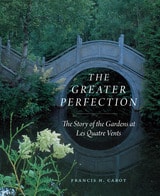
The Greater Perfection
The Story of the Gardens at Les Quatre VentsFrancis H. Cabot
University of Chicago Press, 2023
Featured in the 2018 film The Gardener, Les Quatre Vents in Charlevoix County, Quebec, has been acclaimed as the most aesthetically satisfying and horticulturally exciting landscape experience in North America. This twenty-acre garden seamlessly combines traditional and novel elements into a splendid composition, adorned with unexpected touches and perfectly compatible with its natural surroundings.
The Greater Perfection, first published in 2001, illustrates the delights, diversions, and surprises that await the garden’s visitors. Francis H. Cabot’s account of the challenges he faced in developing Les Quatre Vents reveals the fascinating process behind the creation of a world-class garden that has become a mecca for horticultural enthusiasts around the globe. Winner of the 2003 Annual Literature Award of the Council on Botanical and Horticultural Libraries and featuring stunning full-color images by five leading garden photographers, The Greater Perfection is one of the most beautiful books on gardens to appear in years. This new printing includes a foreword by Marianne Cabot Welch, Cabot’s daughter, that further contextualizes the gardens and explores how a place rooted in the past can confront the future.
The Greater San Rafael Swell
Honoring Tradition and Preserving Storied LandsStephen E. Strom and Jonathan T. Bailey
University of Arizona Press, 2022
Natural and human history come together in The Greater San Rafael Swell, which spans much of Emery County in Utah. Authors Stephen Strom and Jonathan Bailey paint a multi-faceted picture of a singular place through photographs, along with descriptions of geology, paleontology, archaeology, history, and dozens of interviews with individuals who devoted more than two decades to developing a shared vision of the future of both the Swell and the County. At its core, the book relates the important story of how a coalition of ranchers, miners, off-road enthusiasts, conservationists, recreationists, and Native American tribal nations worked together for nearly 25 years to forge and pass the Emery County Public Lands Management Act in 2019.
This book chronicles hopeful stories for our times: how citizens of Emery and three other counties in the rural West worked to resolve perhaps the most volatile issue in the region – the future of public lands. Both their successes and the processes by which they found common ground serve as beacons in today’s uncertain landscape – beacons that can illuminate paths toward rebuilding our shared democracy from the ground up.
The Greatest Ballpark Ever
Ebbets Field and the Story of the Brooklyn DodgersMcGee, Bob
Rutgers University Press, 2005
In this lively story of sports, politics, and the talented, hilarious, and charming characters associated with the Brooklyn Dodgers, Bob McGee chronicles the ballpark's vibrant history from the drawing board to the wrecking ball, beginning with Charley Ebbets and the heralded opening in 1913, on through the eras that followed. McGee weaves a story about how Ebbets Field's architectural details, notable flaws, and striking facade brought Brooklyn and its team together in ways that allowed each to define the other.
Drawing on original interviews and letters, as well as published and archival sources, The Greatest Ballpark Ever explores the struggle of Charley Ebbets to build Ebbets Field, the days of Wilbert Robinson's early pennant winners, the eras of the Daffiness Boys, Larry MacPhail, and Branch Rickey, the tumultuous field leadership of Leo the Lip, the fiery triumph of Jackie Robinson, the golden days of the Boys of Summer, and Walter O'Malley's ignominious departure.
With humor and passion, The Greatest Ballpark Ever lets readers relive a day in the raucous ballpark with its quirky angles and its bent right-field wall, with the characters and events that have become part of the nation's folklore.
The Greatest Killer
Smallpox in HistoryDonald R. Hopkins
University of Chicago Press, 2002
In The Greatest Killer, Donald R. Hopkins provides a fascinating account of smallpox and its role in human history. Starting with its origins 10,000 years ago in Africa or Asia, Hopkins follows the disease through the ancient and modern worlds, showing how smallpox removed or temporarily incapacitated heads of state, halted or exacerbated wars, and devastated populations that had never been exposed to the disease. In Hopkins's history, smallpox was one of the most dangerous-and influential-factors that shaped the course of world events.
The Greatest Menace
Organized Crime in Cold War AmericaLee Bernstein
University of Massachusetts Press, 2002
The term Cold War has long been associated with the “red menace” of communism at home and abroad. Yet as Lee Bernstein shows in this illuminating study, during the 1950s the threat posed by organized crime preoccupied Americans at least as much as the fear of communist subversion. At the beginning of the decade, the televised hearings of Senator Estes Kefauver's crime committee, focusing on colorful mob figures such as Lucky Luciano and Frank Costello, attracted far more attention than the spy trial of Julius and Ethel Rosenberg. In the years that followed, public concern about gangsters and racketeering continued unabated, even after the anticommunist fever of McCarthyism had begun to subside.
Drawing on a broad range of evidence, from government records to films, television shows, and pulp novels, Bernstein explains how the campaign against organized crime, like the crusade against communism, reflected deep social and political anxieties. Just as the inquisitions of Senator McCarthy fed on popular fears of international conspiracy and alien infiltration, the anticrime investigations of the 1950s raised the specter of a foreign-based criminal cartel—the Sicilian Mafia— preying on a vulnerable American public. In both cases, the association of the foreign-born with criminal or un-American activity led to the creation of state and local citizens committees and to calls for new restrictions on immigration. Labor unions also came under attack, particularly after the McClellan Committee and its chief counsel, Robert F. Kennedy, claimed to have found a link between the International Brotherhood of Teamsters, led by Jimmy Hoffa, and the Mafia.
As Bernstein points out, despite significant changes in the way organized crime actually operated, and despite repeated protests from Italian Americans, the popular image of the sinister gangster persisted, because it served a more profound need. In an era marked by widespread uncertainty and rapid social change, the fight against a common enemy, real or imagined, helped forge a Cold War consensus across shifting lines of race, class, and ethnicity by redefining what it meant to be an American.
The Greatest Scientific Gamble
A Story of Impossible Odds, Rival Scientists, and the Atomic BombMichael Joseloff
Michigan State University Press, 2026
During World War II, a group of physicists who had once been close friends found themselves on opposite sides of a deadly race. German scientist Werner Heisenberg and American physicists Robert Oppenheimer, Enrico Fermi, and Sam Goudsmit were all leading figures in nuclear research. But after the attack on Pearl Harbor, their shared passion for science turned into a high-stakes competition to build the world’s first atomic bomb—a weapon that could determine the outcome of the war. Heisenberg had a two-year head start, and the possibility that Nazi Germany might beat the Allies to the bomb terrified American scientists. The Manhattan Project, led by U.S. Army General Leslie Groves, became a massive effort to catch up. Fear of Heisenberg haunted Manhattan Project scientists. At one point, Groves even approved plans to bomb Heisenberg’s lab and assassinate him to stop Germany’s progress. Meanwhile, Sam Goudsmit led a secret military unit tasked with tracking down Heisenberg and uncovering the truth about the Nazi nuclear program. What they found would surprise everyone. The Greatest Scientific Gamble tells the dramatic and little-known story of how personal relationships, wartime fear, and scientific ambition collided in the race to unlock the power of the atom.
The Greatest and the Grandest Act
The Civil Rights Act of 1866 from Reconstruction to TodayEdited by Christian G. Samito
Southern Illinois University Press, 2018
Essays examine the history and legal ramifications of the act and highlight competing impulses within it, including the often-neglected Section 9, which allows the president to use the nation’s military in its enforcement; an investigation of how the Thirteenth Amendment operated to overturn the Dred Scott case; and New England’s role in the passage of the act. The act is analyzed as it operated in several states such as Kentucky, Missouri, and South Carolina during Reconstruction. There is also a consideration of the act and its interpretation by the Supreme Court in its first decades. Other essays include a discussion of the act in terms of contract rights and in the context of the post–World War II civil rights era as well as an analysis of the act’s backward-looking and forward-looking nature.
The Greco-Egyptian Magical Formularies
Libraries, Books, and Individual RecipesEdited by Christopher A. Faraone and Sofía Torallas Tovar
University of Michigan Press, 2022
In Greco-Roman Egypt, recipes for magical undertaking, called magical formularies, commonly existed for love potions, curses, attempts to best business rivals—many of the same challenges that modern people might face. In The Greco-Egyptian Magical Formularies: Libraries, Books, and Individual Recipes, volume editors Christopher Faraone and Sofia Torallas Tovar present a series of essays by scholars involved in a multiyear project to reedit and translate the various magical handbooks that were inscribed in the Roman period in the Greek or Egyptian languages. For the first time, the material remains of these papyrus rolls and codices are closely examined, revealing important information about the production of books in Egypt, the scribal culture in which they were produced, and the traffic in single recipes copied from them. Especially important for historians of the book and the Christian Bible are new insights in the historical shift from roll to codex, complicated methods of inscribing the bilingual papyri (in which the Greek script is written left to right and the demotic script right to left), and the new realization that several of the longest extant handbooks are clearly compilations of two or more shorter handbooks, which may have come from different places. The essays also reexamine and rethink the idea that these handbooks came from the personal libraries of practicing magicians or temple scriptoria, in one case going so far as to suggest that two of the handbooks had literary pretensions of a sort and were designed to be read for pleasure rather than for quotidian use in making magical recipes.

The Greeks
Edited by Jean-Pierre Vernant
University of Chicago Press, 1995
The Greeks offers the most complete portraits available of typical Greek personages from Athens to Sparta, Arcadia, Thessaly and Epirus to the city-states of Asia Minor, to the colonies of the Black Sea, southern Italy, and Sicily. Looking at the citizen, the religious believer, the soldier, the servant, the peasant, and others, they show what—in the Greek relationships with the divine, with nature, with others, and with the self—made him "different" in his ways of acting, thinking, and feeling.
The contributors to this volume are Jean-Pierre Vernant, Claude Mosse, Yvon Garlan, Giuseppe Cambiano, Luciano Canfora, James Redfield, Charles Segal, Oswyn Murray, Mario Vegetti, and Philippe Borgeaud.
The Green Ages
Medieval Innovations in SustainabilityAnnette Kehnel
Brandeis University Press, 2024
In The Green Ages, historian Annette Kehnel explores sustainability initiatives from the Middle Ages, highlighting communities that operated a barter trade system on the Monte Subiaco in Italy, sustainable fishing at Lake Constance, common lands in the United Kingdom, transient grazing among Alpine shepherds in the south of France, and bridges built by crowdfunding in Avignon. Kehnel takes these medieval examples and applies their practical lessons to the modern world to prove that we can live sustainably—we’ve done it before!
From the garden economy in the mythical-sounding City of Ladies to early microcredit banks, Kehnel uncovers a world at odds with our understanding of the typical medieval existence. Premodern history is full of inspiring examples and concepts ripe for rediscovery, and we urgently need them as today’s challenges—finite resources, the twilight of consumerism, and growing inequality—threaten what we have come to think of as a modern way of living sustainably. This is a stimulating and revelatory look at a past that has the power to change our future.
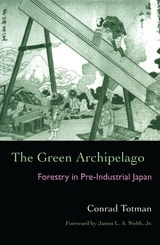
The Green Archipelago
Forestry in Preindustrial JapanConrad Totman
Ohio University Press, 1998
This inaugural volume in the Ohio University Press Series in Ecology and History is the paperback edition of Conrad Totman’s widely acclaimed study of Japan’s environmental policies over the centuries.
Professor Totman raises the critical question of how Japan’s steeply mountainous woodland has remained biologically healthy despite centuries of intensive exploitation by a dense human population that has always been dependent on wood and other forest products. Mindful that in global terms this has been a rare outcome, and one that bears directly on Japan’s recent experience as an affluent, industrial society, Totman examines the causes, forms, and effects of forest use and management in Japan during the millennium to 1870. He focuses mainly on the centuries after 1600 when the Japanese found themselves driven by their own excesses into programs of woodland protection and regenerative forestry.
The Green Bloc
Neo-avant-garde Art and Ecology under SocialismMaja Fowkes
Central European University Press, 2015
The Green Hour
A Natural History of HomeAlison Townsend
University of Wisconsin Press, 2021
With sparkling, lyrical prose, The Green Hour undulates effortlessly through time like a red-winged blackbird. Inspired by five beloved settings—eastern Pennsylvania, Vermont, California, western Oregon, and the spot atop the Wisconsin hill where she now resides—Townsend considers the role that place plays in shaping the self. She reveals the ways that a fresh perspective or new experience in any environment can incite wonder, build unexpected connections, and provide solace or salvation.
Mesmerizingly attentive to nature—its beauty, its fragility, and its redeeming powers—she asks what it means to live in community with wilderness and to allow our identities to be shaped by our interactions with it: our story as its story.
The Green Republic
A Conservation History of Costa RicaBy Sterling Evans
University of Texas Press, 1999
With over 25 percent of its land set aside in national parks and other protected areas, Costa Rica is renowned worldwide as "the green republic." In this very readable history of conservation in Costa Rica, Sterling Evans explores the establishment of the country's national park system as a response to the rapid destruction of its tropical ecosystems due to the expansion of export-related agriculture.
Drawing on interviews with key players in the conservation movement, as well as archival research, Evans traces the emergence of a conservation ethic among Costa Ricans and the tangible forms it has taken. In Part I, he describes the development of the national park system and "the grand contradiction" that conservation occurred simultaneously with massive deforestation in unprotected areas. In Part II, he examines other aspects of Costa Rica's conservation experience, including the important roles played by environmental education and nongovernmental organizations, campesino and indigenous movements, ecotourism, and the work of the National Biodiversity Institute.
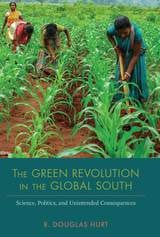
The Green Revolution in the Global South
Science, Politics, and Unintended ConsequencesR. Douglas Hurt
University of Alabama Press, 2020
The Green Revolution was devised to increase agricultural production worldwide, particularly in the developing world. Agriculturalists employed anhydrous ammonia and other fertilizing agents, mechanical tilling, hybridized seeds, pesticides, herbicides, and a multitude of other techniques to increase yields and feed a mushrooming human population that would otherwise suffer starvation as the world’s food supply dwindled.
In The Green Revolution in the Global South: Science, Politics, and Unintended Consequences, R. Douglas Hurt demonstrates that the Green Revolution did not turn out as neatly as scientists predicted. When its methods and products were imported to places like Indonesia and Nigeria, or even replicated indigenously, the result was a tumultuous impact on a society’s functioning. A range of factors—including cultural practices, ethnic and religious barriers, cost and availability of new technologies, climate, rainfall and aridity, soil quality, the scale of landholdings, political policies and opportunism, the rise of industrial farms, civil unrest, indigenous diseases, and corruption—entered into the Green Revolution calculus, producing a series of unintended consequences that varied from place to place. As the Green Revolution played out over time, these consequences rippled throughout societies, affecting environments, economies, political structures, and countless human lives.
Analyzing change over time, almost decade by decade, Hurt shows that the Green Revolution was driven by the state as well as science. Rather than acknowledge the vast problems with the Green Revolution or explore other models, Hurt argues, scientists and political leaders doubled down and repeated the same missteps in the name of humanity and food security. In tracing the permutations of modern science’s impact on international agricultural systems, Hurt documents how, beyond increasing yields, the Green Revolution affected social orders, politics, and lifestyles in every place its methods were applied—usually far more than once.
The Greenlining of Staten Island
Environmental Preservation and Racial Segregation, 1945–1995Patrick D. Nugent
University of Chicago Press, 2026
Illuminates how borough residents, urban planners, and politicians used environmental policy to cement a racially restrictive landscape.
Though it was once home to the world’s largest landfill, today Staten Island boasts thousands of acres of parklands, dozens of public-private conservation arrangements, and four ecological zoning districts. In this book, Patrick D. Nugent details the political forces that gave rise to this wealth of greenery in a famously dense city. He demonstrates how postwar economic and political trajectories intersected in the 1960s with the rising consciousness of environmentalism to create a distinctive laboratory in Staten Island, where white communities and politicians heeded the rising call for the preservation of green space—but often as a tool to maintain racial segregation. Ecological zoning, public-private park management, conservation easement, environmental litigation, and other strategies created a lush, discriminatory landscape. Nugent refers to these policies as greenlining.
The Greenlining of Staten Island shows that the political and environmental history of Staten Island is key to understanding how environmentalism has been used to reinforce racial discrimination, not just in New York City, but nationwide. By the mid-1970s, conservationists had embraced urban planning that preserved low-density housing districts and bolstered the sprawling and segregated landscape that took shape in metropolitan America over the coming decades. In exploring the gap between the modern environmental movement’s ambitious goals and its tangible outcomes, Nugent excavates important lessons for contemporary city dwellers debating zoning reform and planning for climate change’s impending effects.
The Gridiron Gospel
Faith and College Football in Twentieth-Century AmericaHunter M. Hampton
University of Illinois Press, 2025