Results by title
28167 books match the query 'History' and 6372 start with t

The Heritage
A Daughter's Memoir Of Louis BromfieldEllen Bromfield Geld
Ohio University Press, 1999
This lively, outspoken, and affectionate memoir preserves all things Louis Bromfield fought for or against in a life marked by surging vitality and gusto. He came from an Ohio family whose roots were in the land before the land was lost. He had his father's love of the land, and from his willful mother a hunger to know the world. From the New York City of theaters, concerts, parties, and novels, and a life in France that his success allowed, he finally returned to Ohio and established a new order for his family and friends, and for his followers, a new orbit into which they were drawn.
Ellen Bromfield Geld wrote a memoir of the man who was Louis Bromfield, father and friend, tyrant and “Boss,” alive always to whatever was worth responding to in people and in places, yet complex and lonely as a writer must essentially be to work at his craft. Now revived in paperback thirty-five years after its first publication, The Heritage remains a moving tribute and the recreation of a remarkable human being.
The Hermeneutics of Original Argument
Demonstration, Dialectic, RhetoricP. Christopher Smith
Northwestern University Press, 1998
The Hero and the City
An Interpretation of Sophocles' Oedipus at ColonusJoseph P. Wilson
University of Michigan Press, 2003
Joseph P. Wilson is Professor of Foreign Languages at the University of Scranton.
The Hero and the Victim
Narratives of Criminality in Iraq War FictionGregory Brazeal
Lever Press, 2024
The emphasis on soldier criminality in Iraq War fiction can be partly explained by the rise of moral cosmopolitanism and its blurring of the traditional conceptual lines between war and crime. The anti-war literature of the twentieth century often presented fallen soldiers on both sides equally as victims and viewed the distinction between heroes and villains as part of the illusion that battlefield experience strips away. Written in the long shadow of Nuremberg, Iraq War fiction grapples with the possibility that the soldiers on one’s own side may not be the heroes in the story, or even the victims, but participants in a wrong, and perhaps even complicit in crimes. The Hero and the Victim contributes to the ongoing, public reexamination of American traditions by confronting a topic that has, up to now, been largely untouched: the moral celebration of military service.
The Hero and the Victim explores the theme of soldier criminality through close readings of several works by American authors, including Kevin Powers’s The Yellow Birds, Phil Klay’s Redeployment, Helen Benedict’s Sand Queen, Chris Kyle’s American Sniper, and Roy Scranton’s War Porn. This volume will be an essential text for students of American literature, historians of war culture, and any scholar interested in representations of the Iraq War.
The Hero in Transition
Ray B. Browne
University of Wisconsin Press, 1983
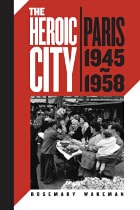
The Heroic City
Paris, 1945-1958Rosemary Wakeman
University of Chicago Press, 2009
The Heroic City is a sparkling account of the fate of Paris’s public spaces in the years following Nazi occupation and joyful liberation. Countering the traditional narrative that Paris’s public landscape became sterile and dehumanized in the 1940s and ’50s, Rosemary Wakeman instead finds that the city’s streets overflowed with ritual, drama, and spectacle. With frequent strikes and protests, young people and students on parade, North Africans arriving in the capital of the French empire, and radio and television shows broadcast live from the streets, Paris continued to be vital terrain.
Wakeman analyzes the public life of the city from a variety of perspectives. A reemergence of traditional customs led to the return of festivals, street dances, and fun fairs, while violent protests and political marches, the housing crisis, and the struggle over decolonization signaled the political realities of postwar France. The work of urban planners and architects, the output of filmmakers and intellectuals, and the day-to-day experiences of residents from all walks of life come together in this vibrant portrait of a flamboyant and transformative moment in the life of the City of Light.
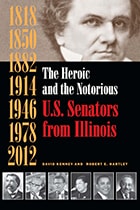
The Heroic and the Notorious
U.S. Senators from IllinoisDavid Kenney and Robert E. Hartley
Southern Illinois University Press, 2012
This sweeping survey constitutes the first comprehensive treatment of the men and women who have been chosen to represent Illinois in the United States Senate from 1818 to the present day. David Kenney and Robert E. Hartley underscore nearly two centuries of Illinois history with these biographical and political portraits, compiling an incomparably rich resource for students, scholars, teachers, journalists, historians, politicians, and any Illinoisan interested in the state’s senatorial heritage.
Originally published as An Uncertain Tradition: U.S. Senators From Illinois 1818–2003, this second edition brings readers up to date with new material on Paul Simon, Richard Durbin, and Peter Fitzgerald, as well as completely new sections on Roland Burris, Barack Obama, and Illinois’s newest senator, Mark Kirk. This fresh and careful study of the shifting set of political issues Illinois’s senators encountered over time is illuminated by the lives of participants in the politics of choice and service in the Senate. Kenney and Hartley offer incisive commentary on the quality of Senate service in each case, as well as timeline graphs relating to the succession of individuals in each of the two sequences of service, the geographical distribution of senators within the state, and the variations in party voting for Senate candidates. Rigorously documented and supremely readable, this convenient reference volume is enhanced by portraits of many of the senators.
The Hibernensis
Book 1: A Study and EditionRoy Flechner
Catholic University of America Press, 2019
Widely recognized as the single most important source for the history of the church in early medieval Ireland, the Hibernensis is also our best index for knowing what books were available in Ireland at the time of its compilation: it consists of excerpted material from the Bible, Church Fathers and doctors, hagiography, church histories, chronicles, wisdom texts, and insular normative material unattested elsewhere. This in addition to the staple sources of canonical collections, comprising the acta of church councils and papal letters. Altogether there are forty-two cited authors and 135 cited texts. But unlike previous canonical collections, the contents of the Hibernensis are not simply derivative: they have been modified and systematically organised, offering an important insight into the manner in which contemporary clerical scholars attempted to define, interpret, and codify law for the use of a growing Christian society.
The Hibernensis
Book 2: Translation, Commentary, and IndexesRoy Flechner
Catholic University of America Press, 2019
Widely recognized as the single most important source for the history of the church in early medieval Ireland, the Hibernensis is also our best index for knowing what books were available in Ireland at the time of its compilation: it consists of excerpted material from the Bible, Church Fathers and doctors, hagiography, church histories, chronicles, wisdom texts, and insular normative material unattested elsewhere. This in addition to the staple sources of canonical collections, comprising the acta of church councils and papal letters. Altogether there are forty-two cited authors and 135 cited texts. But unlike previous canonical collections, the contents of the Hibernensis are not simply derivative: they have been modified and systematically organised, offering an important insight into the manner in which contemporary clerical scholars attempted to define, interpret, and codify law for the use of a growing Christian society.
The Hidden 1970s
Histories of RadicalismBerger, Dan
Rutgers University Press, 2010
This powerful collection is a compelling assessment of left-wing social movements in a period many have described as dominated by conservatism or confusion. Scholars examine critical and largely buried legacies of the 1970s. The decade of Nixon's fall and Reagan's rise also saw widespread indigenous militancy, prisoner uprisings, transnational campaigns for self-determination, pacifism, and queer theories of play as political action. Contributors focus on diverse topics, including the internationalization of Black Power and Native sovereignty, organizing for Puerto Rican independence among Latinos and whites, and women's self-defense. Essays and ideas trace the roots of struggles from the 1960s through the 1970s, providing fascinating insight into the myriad ways that radical social movements shaped American political culture in the 1970s and the many ways they continue to do so today.

The Hidden Famine
Hunger, Poverty and Sectarianism in Belfast 1840-50Christine Kinealy and Gerard Mac Atasney
Pluto Press, 2000
The Hidden Force
L. Couperus
University of Massachusetts Press, 1985
The Hidden Game of Football
A Revolutionary Approach to the Game and Its StatisticsBob Carroll, Pete Palmer, and John Thorn
University of Chicago Press, 2023
Data analytics have revolutionized football. With play sheets informed by advanced statistical analysis, today’s coaches pass more, kick less, and go for more two-point or fourth-down conversions than ever before. In 1988, sportswriters Bob Carroll, Pete Palmer, and John Thorn proposed just this style of play in The Hidden Game of Football, but at the time baffled readers scoffed at such a heartless approach to the game. Football was the ultimate team sport and unlike baseball could not be reduced to pure probabilities. Nevertheless, the book developed a cult following among analysts who, inspired by its unorthodox methods, went on to develop the core metrics of football analytics used today: win probability, expected points, QBR, and more. With a new preface by Thorn and Palmer and a new foreword by Football Outsiders’s Aaron Schatz, The Hidden Game of Football remains an essential resource for armchair coaches, fantasy managers, and fans of all stripes.
The Hidden History of Capoeira
A Collision of Cultures in the Brazilian Battle DanceBy Maya Talmon-Chvaicer
University of Texas Press, 2007
Capoeira, a Brazilian battle dance and national sport, has become popular all over the world. First brought to Brazil by African slaves and first documented in the late eighteenth century, capoeira has undergone many transformations as it has diffused throughout Brazilian society and beyond, taking on a multiplicity of meanings for those who participate in it and for the societies in which it is practiced. In this book, Maya Talmon-Chvaicer combines cultural history with anthropological research to offer an in-depth study of the development and meaning of capoeira, starting with the African cultures in which it originated and continuing up to the present day.
Using a wealth of primary sources, Talmon-Chvaicer analyzes the outlooks on life, symbols, and rituals of the three major cultures that inspired capoeira—the Congolese (the historic area known today as Congo-Angola), the Yoruban, and the Catholic Portuguese cultures. As she traces the evolution of capoeira through successive historical eras, Talmon-Chvaicer maintains a dual perspective, depicting capoeira as it was experienced, observed, and understood by both Europeans and Africans, as well as by their descendants. This dual perspective uncovers many covert aspects of capoeira that have been repressed by the dominant Brazilian culture.
This rich study reclaims the African origins and meanings of capoeira, while also acknowledging the many ways in which Catholic-Christian culture has contributed to it. The book will be fascinating reading not only for scholars but also for capoeira participants who may not know the deeper spiritual meanings of the customs, amulets, and rituals of this jogo da vida, "game of life."
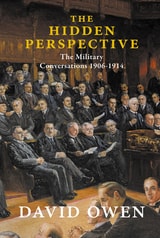
The Hidden Perspective
The Military Conversations 1906-1914David Owen
Haus Publishing, 2014
Using contemporary historical documents, David Owen, himself a former foreign secretary, shows how the foreign office’s underlying belief in Britain’s moral obligation to send troops to the Continent influenced political decision-making and helped create the impression that war was inevitable. Had Britain’s diplomatic and naval strategy been handled more skillfully during these years, Owen contends, the carnage of World War I might have been prevented altogether.
The High Middle Ages
Kari Elisabeth Børresen
SBL Press, 2015
An international collection of ecumenical, gender-sensitive interpretations
The latest volume in the Bible and Women series examines the relationship between women and the Bible's reception in the centuries of the High and Late Middle Ages in Europe. Contributors bring a variety of new insights to questions of how women of the Bible were treated in literary, mystical, and doctrinal texts as well as in art and music. Though the Bible was used to legitimize the subordination of women to men and to exclude them from power, during this period women produced works of theology and biblical interpretation. Contributors include Gemma Avenoza, Marina Benedetti, Dinora Corsi, Maria Laura Giordano, Elisabeth Gössmann, Maria Leticia Sánchez Hernández, Hildegund Keul, Linda Maria Koldau, Martina Kreidler-Kos, Rita Librandi, Gary Macy, Constant J. Mews, Magda Motté, Rosa María Parrinello, María Isabel Toro Pascua, Claudia Poggi, Carmel Posa, Marina Santini, Valeria Ferrari Schiefer, Andrea Taschl-Erber, Adriana Valerio, and Paola Vitolo.
Features
- Essays on the treatment of women in commentaries and didactic moral literature written by men
- Close study of women as scholars and interpreters of the Bible from the twelfth through the fifteen centuries
- Twenty-one essays from twenty-three scholars from around the world
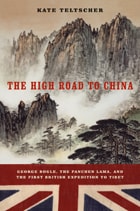
The High Road to China
George Bogle, the Panchen Lama, and the First British Expedition to TibetKate Teltscher
Northwestern University Press, 2008
Bogle was able to gain an audience with the Panchen Lama, and in him he found much more than a business partner; the Incarnate Lama was a friendly man who loved to discuss politics, science, art, and culture. Bogle gradually became less of a tourist and less of a colonist, growing comfortable and happy the longer he spent in Tibet even as his mission to open China failed. All the while, he kept a detailed journal—his prose by turn playful, self-deprecating, grandiose, and shrewd—and this revelatory document gives readers an exhilarating front seat to the beginnings of international relationships that exert their effects even now.
Teltscher’s portrayal of Bogle’s unique diplomatic relationship with the holy man is an admission that history is made by people—and people have emotions, flaws, and feelings that enrich and affect history.

The High School
Sports, Spirit, and Citizens, 1903-2024Michael A. Messner
Rutgers University Press, 2025
In The High School, acclaimed sociologist Michael A. Messner reads through 120 years of El Gabilan, the yearbook from his own alma mater, Salinas High School in California, where his father taught and coached. Treating the yearbooks as a historical archive, Messner makes surprising discoveries about the school he thought he knew so well. For example, over fifty years before Title IX, the earliest yearbooks gave equal spotlights to boys’ and girls’ athletics, while the cheerleaders were all boys.
Tracing American life and culture from 1903 to 2024, Messner illuminates shifts in social practices at his high school that reflect broader changes in American culture across the twentieth century. The High School spotlights how the meanings and iconography of certain activities have changed radically over the decades, even as the “sports spirit complex”—involving athletes, cheerleaders, band members, and community boosters—has remained a central part of the high school experience. By exploring evolving sports cultures, socioeconomic conditions, racial demographics, and gender norms, Messner offers a fresh perspective on a defining feature of American teenage life.
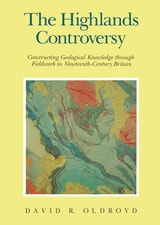
The Highlands Controversy
Constructing Geological Knowledge through Fieldwork in Nineteenth-Century BritainDavid R. Oldroyd
University of Chicago Press, 1990
Oldroyd uses archival material and his own extensive reconstruction of the nineteenth-century fieldwork in a case study showing how detailed maps and sections made it possible to understand the exceptionally complex geological structure of the Highlands
An invaluable addition to the history of geology, The Highlands Controversy also makes important contributions to our understanding of the social and conceptual processes of scientific work, especially in times of heated dispute.
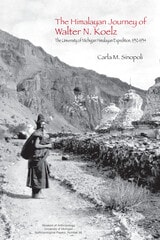
The Himalayan Journey of Walter N. Koelz
The University of Michigan Himalayan ExpeditionCarla M. Sinopoli
University of Michigan Press, 2013
In the fall of 1932, University of Michigan naturalist Walter N. Koelz traveled to northwest India to lead a scientific collecting expedition in the rugged Himalayan regions of Western Tibet. Some eighteen months later he returned to the United States with a remarkable collection of biological specimens and an array of objects—Buddhist paintings, ritual objects, textiles, and household goods—acquired from monasteries, households, and merchants. This book presents the diary entries Koelz wrote at the end of each day throughout his expedition, recounting in detail each day’s travels, bookended by a chapter contextualizing his acquisition of sacred Buddhist objects and an appendix that presents previously unpublished thangka paintings that he collected.
The Hindered Hand
John Cullen Gruesser
University of Delaware Press, 0
Between 1899 and 1908, five long works of fiction by the Nashville-based Black Baptist minister Sutton E. Griggs appeared in print in which he examined the interrelationships among race, politics, economics, gender, culture, religion, violence, and empire, making him the most prolific African American novelist at the turn of the twentieth century, a time at which the civil rights and the very existence of African Americans, especially those in the South, were increasingly in jeopardy.
Brought out by Griggs’s own Orion Publishing Company in three distinct printings in 1905 and 1906, The Hindered Hand; or, the Reign of the Repressionist addresses the author’s key themes of amalgamation, emigration, armed resistance, and US overseas expansion; includes a melodramatic love story; and features two of the most sensational scenes in early African American fiction—a harrowingly graphic lynching of an innocent black couple based on actual events and the elaboration of a plot to wipe out white Southerners by introducing yellow fever germs into the water supply.
Written in response to Thomas Dixon’s recently published race-baiting novel The Leopard’s Spots, Griggs’s book depicts the remnants of the old Southern planter class, the racial crisis threatening the South and the North, the social ferment of the time, the changing roles of women, and the thwarted aspirations of a trio of African American veterans following the war against Spain. This scholarly edition of the novel, providing newly discovered biographical information and copious historical context, makes a significant contribution to African American literary scholarship.
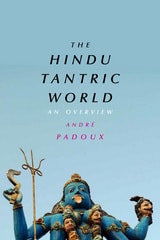
The Hindu Tantric World
An OverviewAndré Padoux
University of Chicago Press, 2017
This book offers a clear, well-grounded overview of Tantra that offers substantial new insights for scholars and practitioners. André Padoux opens by detailing the history of Tantra, beginning with its origins, founding texts, and major beliefs. The second part of the book delves more deeply into key concepts relating to the tantric body, mysticism, sex, mantras, sacred geography, and iconography, while the final part considers the practice of Tantra today, both in India and in the West. The result is an authoritative account of Tantra’s history and present place in the world.
The Hirschfeld Archives
Violence, Death, and Modern Queer CultureHeike Bauer
Temple University Press, 2017
Influential sexologist and activist Magnus Hirschfeld founded Berlin’s Institute of Sexual Sciences in 1919 as a home and workplace to study homosexual rights activism and support transgender people. It was destroyed by the Nazis in 1933. This episode in history prompted Heike Bauer to ask, Is violence an intrinsic part of modern queer culture? The Hirschfeld Archives answers this critical question by examining the violence that shaped queer existence in the first part of the twentieth century.
Hirschfeld himself escaped the Nazis, and many of his papers and publications survived. Bauer examines his accounts of same-sex life from published and unpublished writings, as well as books, articles, diaries, films, photographs and other visual materials, to scrutinize how violence—including persecution, death and suicide—shaped the development of homosexual rights and political activism.
The Hirschfeld Archives brings these fragments of queer experience together to reveal many unknown and interesting accounts of LGBTQ life in the early twentieth century, but also to illuminate the fact that homosexual rights politics were haunted from the beginning by racism, colonial brutality, and gender violence.
The Hispanization of the Philippines
Spanish Aims and Filipino Responses, 1565–1700John Leddy Phelan
University of Wisconsin Press, 1959
After conquest of the Philippine archipelago in the late sixteenth century, Spanish colonizers launched a sweeping social program designed to bring about dramatic religious, political, and economic changes. But the limitations of Spanish colonial resources, together with the reactions of Filipinos themselves, combined to shape the outcome of that effort in unique and unexpected ways, argues John Leddy Phelan. With no wealth in the islands to attract conquistadores, conquest was accomplished largely by missionaries scattered among isolated native villages. Native chieftains served as intermediaries, thus enabling the Filipinos to react selectively to Spanish innovations. The result was a form of hispanization in which the resilient and adaptable Filipinos played a creative part.

The Historian and Believer
The Morality of Historical Knowledge and Christian BeliefVan A. Harvey
University of Illinois Press, 1952
theology--available again!
"As a critic of the contemporary
theological scene, Van Harvey has few, if any, competitors. This is nowhere
clearer than in The Historian and the Believer . . . the classic
discussion of its topic. Rich in insight and penetrating in argument,
it is one book that belongs in the library of every theologian and seminarian."
-- Schubert M. Ogden, author of Doing Theology Today
Is it possible to be both
a historian and a Christian? Van Harvey's classic The Historian and
the Believer posed that question when it was first published.
In this printing, the author
has provided a new introduction in which he reflects on how he would reframe
his original argument in order to bring out more fully the basic theological
intention underlying his view that Christian faith cannot rest on dubious
historical claims.
From reviews of the first
edition:
"Probably the most interesting
piece of American theological writing to appear this year." -- John
Reumann, Union Seminary Quarterly Review
The Historian behind the History
Conversations with Southern HistoriansMegan L. Bever
University of Alabama Press, 2014
The historians and their main topics include:
Richard J. M. Blackett on antebellum and African American history
Dan T. Carter on Reconstruction, Civil Rights, and George Wallace
Pete Daniel on the New Deal and the Cold War South
Laura F. Edwards on the Early Republic, the Civil War, Reconstruction, and women’s history
William W. Freehling on the antebellum South
Gary W. Gallagher on the Civil War
Glenda Elizabeth Gilmore on Jim Crow
James M. McPherson on the Civil War
Theodore Rosengarten on the Depression
J. Mills Thornton III on the antebellum South
In his introduction, award-winning author and historian George C. Rable draws together the multifaceted themes of these interviews, offering a compelling overview of the nature of the field. Edited by Megan L. Bever and Scott A. Suarez, The Historian behind the History offers critical insights about the craft and professional life of the historian.
The Historian's Lincoln
Pseudohistory, Psychohistory, and HistoryEdited by Gabor S. Boritt
University of Illinois Press, 1988
Winner of the Barondess/Lincoln Award of the Civil War Round Table of New York, 1989
"For Lincoln specialists, The Historian's Lincoln deepens and sharpens familiar arguments. For nonspecialists, it is the most efficient and enjoyable way to 'get right' with Lincoln." -- Robert E. McGlone, Pennsylvania Magazine of History and Biography
"Provides an excursion to the frontiers of Lincoln scholarship, and insight into the passions of those who labor there. . . . Rarely do the products of a scholarly symposium so richly deserve placement on public and academic library shelves." -- John Y. Simon, Choice
"Authoritative, well written, and spiced by informed debate. In short, Lincoln's depth and height as a figure in history are well measured by this distinguished volume, not only in its several parts and authors, but also as a whole." -- Robert V. Bruce, author of Lincoln and the Tools of War
The Historic Turn in the Human Sciences
Terrence J. McDonald, Editor
University of Michigan Press, 1996
The Historical Construction of National Consciousness
Selected WritingsJeno Szucs
Central European University Press, 2022
A long essay entitled Three Historical Regions of Europe, appearing first in a samizdat volume in Budapest in 1980, instantly put its author into the forefront of the transnational debate on Central Europe, alongside such intellectual luminaries as Milan Kundera and Czesław Miłosz. The present volume offers English-language readers a rich selection of the depth and breadth of the legacy of Jenő Szűcs (1928–1988).
The selection documents Szűcs’s seminal contribution to many contemporary debates in historical anthropology, nationalism studies, and conceptual history. It contains his key texts on the history of national consciousness and patterns of collective identity, as well as medieval and early modern political thought. The works published here, most of them previously unavailable in English, provide a sophisticated analysis of a wide range of subjects from the myths of origins of Hungarians before Christianization to the political and religious ideology of the Dózsa peasant uprising in 1514, the medieval roots of civil society, or the revival of ethnic nationalism during the communist era. The volume, with an introduction by the editors locating Szűcs in a transnational context, offers a unique insight into the complex and sensitive debate on national identity in post-1945 East Central Europe.
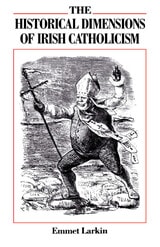
The Historical Dimensions of Irish Catholicism
Emmet J. Larkin
Catholic University of America Press, 1984
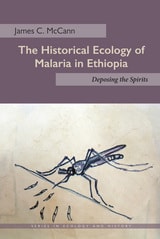
The Historical Ecology of Malaria in Ethiopia
Deposing the SpiritsJames C. McCann
Ohio University Press, 2015
Malaria is an infectious disease like no other: it is a dynamic force of nature and Africa’s most deadly and debilitating malady. James C. McCann tells the story of malaria in human, narrative terms and explains the history and ecology of the disease through the science of landscape change. All malaria is local. Instead of examining the disease at global or continental scale, McCann investigates malaria’s adaptation and persistence in a single region, Ethiopia, over time and at several contrasting sites.
Malaria has evolved along with humankind and has adapted to even modern-day technological efforts to eradicate it or to control its movement. Insecticides, such as DDT, drug prophylaxis, development of experimental vaccines, and even molecular-level genetic manipulation have proven to be only temporary fixes. The failure of each stand-alone solution suggests the necessity of a comprehensive ecological understanding of malaria, its transmission, and its persistence, one that accepts its complexity and its local dynamism as fundamental features.
The story of this disease in Ethiopia includes heroes, heroines, witches, spirits—and a very clever insect—as well as the efforts of scientists in entomology, agroecology, parasitology, and epidemiology. Ethiopia is an ideal case for studying the historical human culture of illness, the dynamism of nature’s disease ecology, and its complexity within malaria.
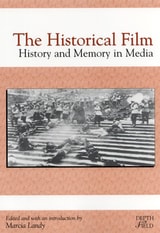
The Historical Film
History and Memory in MediaLandy, Marcia
Rutgers University Press, 2000
What is history? How do we represent it? How do our notions of history change over time? The essays in The Historical Film: History and Memory in Media probe the roles that cinema and television play in altering and complicating our understanding of historical events.
The book brings together representative examples of how both media critics and historians write about history as it is created and disseminated through film and television. The essays explore what is at stake culturally and politically in media history and how this form of history-making is different from traditional historiography. The volume is divided into four parts--Regarding History; History as Trauma; History, Fiction, and Postcolonial Memory; and History and Television--that progressively deepen our understanding of just how complex the issues are. Essays by top scholars analyze many different kinds of film: historical film, documentary, costume drama, and heritage films. The section on television is equally broad, examining phenomena as diverse as news broadcasts and Ken Burns's documentary The Civil War.
Contributors are Mbye Cham, George F. Custen, Mary Ann Doane, Richard Dienst, Taylor Downing, Gary Edgerton, Naomi Greene, Miriam Bratu Hansen, Sue Harper, Sumiko Higashi, Anton Kaes, Marcia Landy, Shawn Rosenheim, Robert A. Rosenstone, Pierre Sorlin, Maria Wyke, and Ismail Xavier.
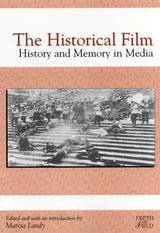
The Historical Film
History and Memory in MediaLandy, Marcia
Rutgers University Press, 2000
What is history? How do we represent it? How do our notions of history change over time? The essays in The Historical Film: History and Memory in Media probe the roles that cinema and television play in altering and complicating our understanding of historical events.
The book brings together representative examples of how both media critics and historians write about history as it is created and disseminated through film and television. The essays explore what is at stake culturally and politically in media history and how this form of history-making is different from traditional historiography. The volume is divided into four parts--Regarding History; History as Trauma; History, Fiction, and Postcolonial Memory; and History and Television--that progressively deepen our understanding of just how complex the issues are. Essays by top scholars analyze many different kinds of film: historical film, documentary, costume drama, and heritage films. The section on television is equally broad, examining phenomena as diverse as news broadcasts and Ken Burns's documentary The Civil War.
Contributors are Mbye Cham, George F. Custen, Mary Ann Doane, Richard Dienst, Taylor Downing, Gary Edgerton, Naomi Greene, Miriam Bratu Hansen, Sue Harper, Sumiko Higashi, Anton Kaes, Marcia Landy, Shawn Rosenheim, Robert A. Rosenstone, Pierre Sorlin, Maria Wyke, and Ismail Xavier.
The Historical Renaissance
New Essays on Tudor and Stuart Literature and CultureEdited by Heather Dubrow and Richard Strier
University of Chicago Press, 1988
The volume includes studies of mid-Tudor culture as well as of Elizabethan and Stuart periods.
The Histories of HIVs
The Emergence of the Multiple Viruses That Caused the AIDS EpidemicsWilliam H. Schneider
Ohio University Press, 2021
This new collection of essays on HIV viruses spans disciplines to topple popular narratives about the origins of the AIDS pandemic and the impact of the disease on public health policy.
With a death toll in the tens of millions, the AIDS pandemic was one of the worst medical disasters of the past century. The disease was identified in 1981, at the height of miraculous postwar medical achievements, including effective antibiotics, breakthrough advances in heart surgery and transplantations, and cheap, safe vaccines—smallpox had been eradicated just a few years earlier. Arriving as they did during this era of confidence in modern medicine, the HIV epidemics shook the public’s faith in health science. Despite subsequent success in identifying, testing, and treating AIDS, the emergence of epidemics and outbreaks of Ebola, Zika, and the novel coronaviruses (SARS and COVID-19) are stark reminders that such confidence in modern medicine is not likely to be restored until the emergence of these viruses is better understood.
This collection combines the work of major social science and humanities scholars with that of virologists and epidemiologists to provide a broader understanding of the historical, social, and cultural circumstances that produced the pandemic. The authors argue that the emergence of the HIV viruses and their epidemic spread were not the result of a random mutation but rather broader new influences whose impact depended upon a combination of specific circumstances at different places and times. The viruses emerged and were transmitted according to population movement and urbanization, changes in sexual relations, new medical procedures, and war. In this way, the AIDS pandemic was not a chance natural occurrence, but a human-made disaster.
Essays by: Ernest M. Drucker, Tamara Giles-Vernick, Ch. Didier Gondola, Guillaume Lachenal, Amandine Lauro, Preston A. Marx, Stephanie Rupp, François Simon, Jorge Varanda
The Historiography of Communism
Michael E. Brown
Temple University Press, 2008
The History
Herodotus
University of Chicago Press, 1988
Here is the historian, investigating and judging what he has seen, heard, and read, and seeking out the true causes and consequences of the great deeds of the past. In his History, the war between the Greeks and Persians, the origins of their enmity, and all the more general features of the civilizations of the world of his day are seen as a unity and expressed as the vision of one man who as a child lived through the last of the great acts in this universal drama.
In Grene's remarkable translation and commentary, we see the historian as a storyteller, combining through his own narration the skeletal "historical" facts and the imaginative reality toward which his story reaches. Herodotus emerges in all his charm and complexity as a writer and the first historian in the Western tradition, perhaps unique in the way he has seen the interrelation of fact and fantasy.

The History Of Breathing
Alison Grimaldi Donahue
Diaphanes, 2025
The Etruscan language knew no blank spaces, no breaks between words. Its texture resembled an uninterrupted flow of speech—more singing than speaking, more form than content. Only in the dictum of the pause and the meaningful fragmentation of the breath does language become comprehensible rhythmic expression. In a world full of slogans and catchphrases, Allison Grimaldi Donahue defends the poetological demand of sound over content. The History of Breathing weaves linguistics and poetry, verse and song, meaning and sound into a dense narrative about breathing, rhythm, and the gaps in language that allow words to take on meaning in the first place.
In the tradition of such poets as Charles Olsen, Alice Notley, and Sappho, Grimaldi Donahue’s poetry connects the history of breath and language with narratives about the discovery and loss of our own voice.
The History Of Islam In Africa
Nehemia Levtzion
Ohio University Press, 2000
A CHOICE Outstanding Academic Title
The history of the Islamic faith on the continent of Africa spans fourteen centuries. For the first time in a single volume, The History of Islam in Africa presents a detailed historic mapping of the cultural, political, geographic, and religious past of this significant presence on a continent-wide scale. Bringing together two dozen leading scholars, this comprehensive work treats the historical development of the religion in each major region and examines its effects.
Without assuming prior knowledge of the subject on the part of its readers, The History of Islam in Africa is broken down into discrete areas, each devoted to a particular place or theme and each written by experts in that particular arena. The introductory chapters examine the principal “gateways” from abroad through which Islam traditionally has influenced Africans. The following two parts present overviews of Islamic history in West Africa and the Sudanic zone, and in subequatorial Africa. In the final section, the authors discuss important themes that have had an impact on Muslim communities in Africa.
Designed as both a reference and a text, The History of Islam in Africa will be an essential tool for libraries, scholars, and students of this growing field.
Contributors: Edward A. Alpers, René A. Bravmann, Abdin Chande, Eric Charry, Allan Christelow, Roberta Ann Dunbar, Kenneth W. Harrow, Lansiné Kaba, Lidwien Kapteijns, Nehemia Levtzion, William F. S. Miles, David Owusu-Ansah, M. N. Pearson, Randall L. Pouwels, Stefan Reichmuth, David Robinson, Peter von Sivers, Robert C.-H. Shell, Jay Spaulding, David C. Sperling with Jose H. Kagabo, Jean-Louis Triaud, Knut S. Vikør, John O. Voll, and Ivor Wilks
The History Of The Comstock Lode
Grant H. Smith
University of Nevada Press, 1998
The History and Archaeology of Phoenicia
Hélène Sader
SBL Press, 2019
An insightful historical account of Phoenicia that illustrates its cities, culture, and daily life
Hélène Sader presents the history and archaeology of Phoenicia based on the available contemporary written sources and the results of archaeological excavations in Phoenicia proper. Sader explores the origin of the term Phoenicia; the political and geographical history of the city-states Arwad, Byblos, Sidon, and Tyre; and topography, climate, and natural resources of the Phoenician homeland. Her limited focus on Phoenicia proper, in contrast to previous studies that included information from Phoenician colonies, presents the bare realities of the opportunities and difficulties shaping Phoenician life. Sader’s evaluation and synthesis of the evidence offers a corrective to the common assumption of a unified Phoenician kingdom.
Features
- Historical as well as modern maps with the locations of all relevant archaeological sites
- Faunal and floral analyses that shed light on the Phoenician diet
- Petrographic analysis of pottery that sheds light on trading patterns and developments
The History and Power of Writing
Henri-Jean Martin
University of Chicago Press, 1994
Traversing four millennia, Martin offers a chronicle of writing as a cultural system, a means of communication, and a history of technologies. He shows how the written word originated, how it spread, and how it figured in the evolution of civilization. Using as his center the role of printing in making the written way of thinking dominant, Martin examines the interactions of individuals and cultures to produce new forms of "writing" in the many senses of authorship, language rendition, and script.
Martin looks at how much the development of writing owed to practical necessity, and how much to religious and social systems of symbols. He describes the precursors to writing and reveals their place in early civilization as mnemonic devices in service of the spoken word. The tenacity of the oral tradition plays a surprisingly important part in this story, Martin notes, and even as late as the eighteenth century educated individuals were trained in classical rhetoric and preferred to rely on the arts of memory. Finally, Martin discusses the changes to writing wrought by the electronic revolution, offering invaluable insights into the influence these new technologies have had on children born into the computer age.
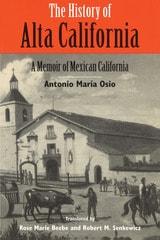
The History of Alta California
A Memoir of Mexican CaliforniaAntonio María Osio, Translated, Edited, and Annotated by Rose Marie Beebe and Robert M. Senkewicz
University of Wisconsin Press, 1996
Osio wrote his History in 1851, conveying with immediacy and detail the years of the U.S.-Mexican War of 1846–1848 and the social upheaval that followed. As he witnesses California’s territorial transition from Mexico to the United States, he recalls with pride the achievements of Mexican California in earlier decades and writes critically of the onset of U.S. influence and imperialism. Unable to endure life as foreigners in their home of twenty-seven years, Osio and his family left Alta California for Mexico in 1852.
Osio’s account predates by a quarter century the better-known reminiscences of Mariano Guadalupe Vallejo and Juan Bautista Alvarado and the memoirs of Californios dictated to Hubert Howe Bancroft’s staff in the 1870s. Editors Rose Marie Beebe and Robert M. Senkewicz have provided an accurate, complete translation of Osio’s original manuscript, and their helpful introduction and notes offer further details of Osio’s life and of society in Alta California.

The History of American Homeopathy
From Rational Medicine to Holistic Health CareHaller, John S
Rutgers University Press, 2009
The History of American Homeopathy traces the rise of lay practitioners in shaping homeopathy as a healing system and its relationship to other forms of complementary and alternative medicine in an age when conventional biomedicine remains the dominant form. Representing the most current and up-to-date history of American homeopathy, readers will benefit from John S. Haller Jr.'s comprehensive explanation of complementary medicine within the American social, scientific, religious, and philosophic traditions.
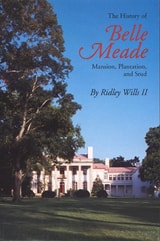
The History of Belle Meade
Mansion, Plantation, and StudRidley Wills
Vanderbilt University Press, 1991
During the latter half of the nineteenth century, Belle Meade became probably the most important nursery for Thoroughbred race horses in America. Since that time, virtually every Kentucky Derby winner can trace its lineage back to Belle Meade. Belle Meade also holds a place in American history as a stage for the comings and goings of great people and events. Weaving together family and regional history, Wills provides his reader with a fascinating account of the land, people, buildings, and horses that for a century made Belle Meade a significant focal point for Tennessee and the South.
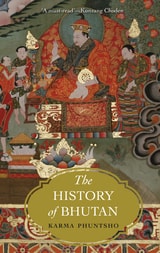
The History of Bhutan
Karma Phuntsho
Haus Publishing, 2013
Karma Phuntsho’s The History of Bhutan is the first book to offer a comprehensive history of Bhutan in English. Along with a detailed social and political analysis, it offers substantive discussions of Bhutan’s geography and culture; the result is the clearest, richest account of this nation and its history ever published for general readers.
A 2015 Choice Magazine Outstanding Academic Title Award Winner
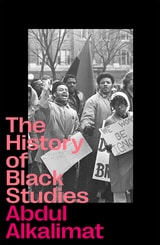
The History of Black Studies
Abdul Alkalimat
Pluto Press, 2021
A surge of African American enrolment and student activism brought Black Studies to many US campuses in the 1960s. Sixty years later, Black Studies programs are taught at more than 1,300 universities worldwide. This book is the first history of how that happened.
Black Studies founder and movement veteran Abdul Alkalimat offers a comprehensive history of the discipline that will become a key reference for generations to come. Structured in three broadly chronological sections - Black Studies as intellectual history; as social movement; and as academic profession - the book demonstrates how Black people themselves established the field long before its institutionalization in university programs.
At its heart, Black Studies is profoundly political. Black Power, the New Communist Movement, the Black women’s and students’ movements – each step in the journey for Black liberation influenced and was influenced by this revolutionary discipline.
The History of Blood Transfusion in Sub-Saharan Africa
William H. Schneider
Ohio University Press, 2013
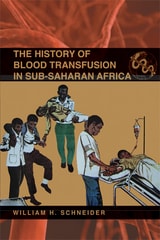
This first extensive study of the practice of blood transfusion in Africa traces the history of one of the most important therapies in modern medicine from the period of colonial rule to independence and the AIDS epidemic. The introduction of transfusion held great promise for improving health, but like most new medical practices, transfusion needed to be adapted to the needs of sub-Saharan Africa, for which there was no analogous treatment in traditional African medicine.
This otherwise beneficent medical procedure also created a “royal road” for microorganisms, and thus played a central part in the emergence of human immune viruses in epidemic form. As with more developed health care systems, blood transfusion practices in sub-Saharan Africa were incapable of detecting the emergence of HIV. As a result, given the wide use of transfusion, it became an important pathway for the initial spread of AIDS. Yet African health officials were not without means to understand and respond to the new danger, thanks to forty years of experience and a framework of appreciating long-standing health risks. The response to this risk, detailed in this book, yields important insight into the history of epidemics and HIV/AIDS.
Drawing on research from colonial-era governments, European Red Cross societies, independent African governments, and directly from health officers themselves, this book is the only historical study of the practice of blood transfusion in Africa.
The History of Brazil, 1500–1627
Frei Vicente do Salvador, Translated by Timothy J. Coates, Foreword by Alida C. Metcalf
Tagus Press, 2022
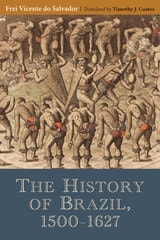
Written during the early seventeenth century, Frei Vicente do Salvador’s The History of Brazil: 1500–1627 offers a unique account of this volatile and dynamic period and holds the distinction of being the first history of Brazil written by a Brazilian. With sections devoted to natural, social, and political history, this expansive volume serves as a rich primary source, detailing the successes and failures of colonial governance, interactions with a diversity of Native peoples, and disputes between the Portuguese and the French and Dutch. As an eyewitness to many of the events he describes, Frei Vincente offers unparalleled access to the incidents, social customs, and personalities at play in colonial Brazil.