Results by title
5550 books match the query 'Biography & Autobiography' and 1006 start with t
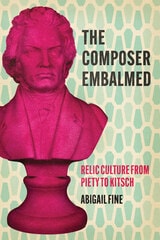
The Composer Embalmed
Relic Culture from Piety to KitschAbigail Fine
University of Chicago Press, 2025
During the nineteenth century, music institutions promoted artworks they deemed timeless and made composers into figureheads of a lasting Western canon. Alongside this institutional face of the canon was a more intimate impulse to preserve, touch, and embrace the residues of the dead. In Germany and Austria between 1870 and 1930, music lovers venerated the bodies, houses, and belongings of composers as relics, shrines, and talismans. In The Composer Embalmed, Abigail Fine documents the vernacular and eccentric ways that composers have been remembered.
Fine navigates a wealth of unknown archival material to recover the stories of devotees: from pilgrims who felt time stop in historic houses to music-loving doctors who made skulls into sacred specimens, dilettantes who displayed Beethoven’s mask as a relic of the “beautiful death,” and interwar critics of those dilettantes who disparaged piety as a false religion, a kitsch replica. In isolation, these practices may look like simple acts of affection. But in the aggregate, Fine asserts, acts of devotion constituted what we might broadly understand as relic culture—a culture that sought to possess the body of the departed genius, and that superimposed habits of anthropological collecting onto artifacts of Austro-German heritage. By excavating objects, ephemera, amateur lyric, visitors’ books, letters, and travelogues, The Composer Embalmed reveals the underbelly of the canon, where guilty pleasures blur the boundary between sanctity and desecration.
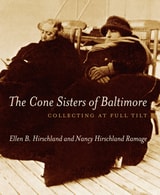
The Cone Sisters of Baltimore
Collecting at Full TiltEllen B. Hirschland
Northwestern University Press, 2008
This richly illustrated biography documents their lives from a unique perspective: that of their great-niece, who wrote this book with her daughter. Ellen B. Hirschland and Nancy Hirschland Ramage delve into Claribel’s and Etta’s world, following the sisters through letters and personal stories as they travel to meet some of the artists whose works would turn their adjoining apartments into a gallery. They bought art by Manet, Gauguin, and Cézanne, as well as of Picasso and Matisse, whom they came to know well. The sisters’ experiences in Paris from 1901 through the 1920s provide an exceptional view of the bright artistic ferment in the city at that time. They were two Victorian women from Baltimore buying avant-garde masterpieces, attending salons with friends Gertrude and Leo Stein, and building a collection that would initially enrage the conservative people around them. Only with time would their keen eyes and unwavering taste prove them right.
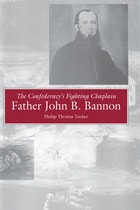
The Confederacy's Fighting Chaplain
Father John B. BannonPhillip Thomas Tucker
University of Alabama Press, 1992
The Confederacy’s Fighting Chaplain is the remarkable story of the Irishman who brought the Bible and his own resourcefulness and daring to both the battlefield and the diplomatic field—a story that has been largely ignored for more than 130 years. The biography of John B. Bannon also chronicles the forgotten Southerners—the Irish immigrants of the Confederacy—whose colorful and crucial role in the Civil War has been seriously neglected.
The Confessions and Correspondence, Including the Letters to Malesherbes
Jean-Jacques Rousseau
Dartmouth College Press, 1998
The Conquest of The Illinois
George Rogers Clark. Foreword by Rand Burnette
Southern Illinois University Press, 2001
Written only a decade after George Rogers Clark’s conquest of Illinois, this firsthand account shows the region as it existed in the 1770s, explains how British occupation affected Kentucky settlers, and exhibits Clark’s enormous diplomatic skills in convincing the French settlers and Indians along the rivers of Illinois that they were better off under the jurisdiction of the Americans rather than the British. In his new foreword to this book, Rand Burnette refers to Clark as a psychologist and an expert in human relations.
Believing the British responsible for Indian raids on the people of Kentucky, Clark determined to capture that area, which was claimed by his home state of Virginia. “His plan, which he presented to Governor Patrick Henry,” Burnette notes, “was to take possession of the Illinois country by defeating the British at Kaskaskia, win the support of the French in that area, and thus control both the Mississippi and the Ohio Rivers. The British support of the Indians, who raided the Kentucky settlements from the Illinois country, would be at an end.”
Clark’s stirring narrative—written between 1789 and 1791 and covering 1773–1779—chronicles the events in the Old Northwest in the second half of the eighteenth century. Life on the frontier was dangerous and uncertain at this time. As Clark points out and Milo Milton Quaife underlines in his footnotes, death came to many at the hands of Indians or in military battles and skirmishes.
First published in 1920 and long out of print, the Quaife edition of Clark’s The Conquest of The Illinois reprinted here is for the modern reader superior to the original. First, Quaife provided an index. Equally important for modern readers, he standardized Clark’s spelling. (Clark had little formal education, and his spelling was even more eccentric than that found in a typical eighteenth-century account.) Finally, Quaife’s footnotes often include biographical sketches of the people in the book.
The Conscience of a Lawyer
Clifford J. Durr and American Civil Liberties, 1899–1975John A. Salmond
University of Alabama Press, 1990
A powerful portrait of principle and protest in the life of a Southern lawyer who stood for civil liberties.
Clifford Judkins Durr was an Alabama lawyer who played an important role in defending activists and other accused of disloyalty during the New Deal and McCarthy eras. His uncompromising commitment to civil liberties and civic decency caused him to often take unpopular positions.
In 1933, Durr moved to Washington to work as a lawyer for the Reconstruction Finance Corporation, a creation of Roosevelt’s new Democratic administration, becoming a dedicated New Dealer in the process. He was then appointed by President Franklin D. Roosevelt to the Federal Communications Commission (FCC), a politically sensitive position as FDR sought to counter the increasing power and concentration of broadcasters, many of whom were opponents of the New Deal. Durr resigned from the FCC in 1948 and after brief employment with the National Farmers Union in Colorado, the Durrs eventually returned to Montgomery, Alabama in the hope of returning to a more prosperous, less controversial life.
Durr continued to practice in Montgomery as counsel for black citizens whose rights had been violated and ultimately, in December, 1955, when police arrested Rosa Parks for refusing to give her bus seat to a white man he stepped in and lent his extensive legal prowess to her case and the continuing quest for civil rights. Closing his firm in 1964 Durr began to lecture in the United States and abroad. He died at his grandfather's farm in 1975.

The Correspondence of Edmund Burke, Volume X
IndexEdmund Burke
University of Chicago Press, 1978
The Correspondence of Hannah Arendt and Gershom Scholem
Hannah Arendt and Gershom Scholem
University of Chicago Press, 2017
Arendt and Scholem met in 1932 in Berlin and quickly bonded over their mutual admiration for and friendship with Walter Benjamin. They began exchanging letters in 1939, and their lively correspondence continued until 1963, when Scholem’s vehement disagreement with Arendt’s Eichmann in Jerusalem led to a rupture that would last until Arendt’s death a dozen years later. The years of their friendship, however, yielded a remarkably rich bounty of letters: together, they try to come to terms with being both German and Jewish, the place and legacy of Germany before and after the Holocaust, the question of what it means to be Jewish in a post-Holocaust world, and more. Walter Benjamin is a constant presence, as his life and tragic death are emblematic of the very questions that preoccupied the pair. Like any collection of letters, however, the book also has its share of lighter moments: accounts of travels, gossipy dinner parties, and the quotidian details that make up life even in the shadow of war and loss.
In a world that continues to struggle with questions of nationalism, identity, and difference, Arendt and Scholem remain crucial thinkers. This volume offers us a way to see them, and the development of their thought, anew.
The Correspondence of Walter Benjamin, 1910-1940
Walter Benjamin
University of Chicago Press, 1994
A powerful, mesmerizing collection of letters from one of the most important intellectuals and writers of the twentieth century
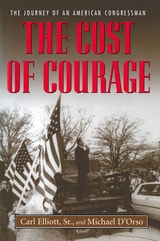
The Cost of Courage
The Journey of an American CongressmanCarl Elliott
University of Alabama Press, 2001
This deeply moving story chronicles the tenacity and vision that carried Carl Elliott from the hills of northwest Alabama to eight distinguished terms in the United States House of Representatives.
Born in a log cabin on a tenant farm in 1913, Carl Elliott worked his way through The University of Alabama during the Great Depression and was elected to Congress in 1948. With a no-nonsense philosophy of fairness and equal opportunity, he established himself as one of the most effective members of the House of Representatives during the 1950s. He was a progressive Democrat and he fought hard for the dirt farmers and coal miners he grew up with and who sent him to Congress.
In an era when racial segregationists dominated southern politics, Elliott worked with many of the important political leaders of the 20th century, including Presidents Truman, Eisenhower, and Kennedy and powerful House Speaker Sam Rayburn. He was instrumental in passing the National Defense Education Act of 1958, which continues to provide college loans to more than 20 million Americans. But his brave stand against racism and George Wallace in the 1966 Alabama gubernatorial race ruined him professionally (he never returned to elected office) and financially (he cashed in his congressional pension to help fund the campaign). Even as a destitute invalid in his old age, however, Elliott kept his dignity and integrity intact.
The life story of Carl Elliott is full of humor and wry wisdom and explains how he made his way across a stage as big as America, influencing its politics and future, and then emerged, belatedly, as an unsung hero of the fight for civil rights and equality.
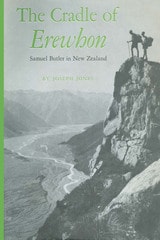
The Cradle of Erewhon
Samuel Butler in New ZealandBy Joseph Jones
University of Texas Press, 1959
In 1859, Samuel Butler, a young Cantabrigian out of joint with his family, with the church, and with the times, left England to hew out his own path in New Zealand. At the end of just five years he returned, with a modest fortune in money and an immense fortune in ideas. For out of this self-imposed exile came Erewhon, one of the world's masterpieces of satire, which contained the germ of Butler's intellectual output for the next twenty years.
The Cradle of Erewhon is an examination and interpretation of the special ways in which these few crucial years affected Butler's life and work, particularly Erewhon and Erewhon Revisited. It shows us Butler the sheep farmer, explorer, and mountain climber, as well as Butler the newcomer to "The Colonies," accepting—and accepted by—his intellectual peers in the unpioneerlike little city of Christchurch, sharpening and disciplining his mind through his controversial contributions to the Christchurch Press. But more importantly, the book suggests the depth to which New Zealand penetrated the man and reveals new facets of influence hitherto unnoticed in Erewhon and Erewhon Revisited. The Southern Alps ("Oh, Wonderful! Wonderful! so lonely and so solemn"), the perilous rivers and passes, the character and customs of the Maoris—all these blend to afford new insights into a complex book. Butler was not the first to create an imaginary world as asylum from the harsh realities of this one (Vergil did the same in the Eclogues), nor was he the first, even in his own time, to protest against the machine as the enslaver of man, but his became the clearest and the freshest voice.
On the biographical side, The Cradle of Erewhon offers new evidence for reappraising the man who for so long has been a psychological and literary puzzle. Why, for instance, did he repudiate his first-born book, A First Year in Canterbury Settlement? And why, once safely away from the entanglements of London, did he voluntarily return to them? Answers to these and other Butlerian riddles are suggested in the engrossing account of the satirist's sojourn in the Antipodes.
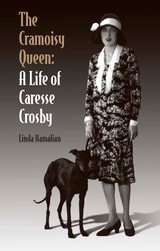
The Cramoisy Queen
A Life of Caresse CrosbyLinda Hamalian
Southern Illinois University Press, 2009
Caresse Crosby rejected the culturally prescribed roles for women of her era and background in search of an independent, creative, and socially responsible life. Poet, memoirist, advocate of women’s rights and the peace movement, Crosby published and promoted modern writers and artists such as Hart Crane, Dorothy Parker, Salvador Dalí, and Romare Bearden. She also earned a place in the world of fashion by patenting one of the earliest versions of the brassiere.
Behind her public success was a chaotic life: three marriages, two divorces, the suicide of her husband Harry Crosby, strained relationships with her children, and legal confrontations over efforts to establish a center for world peace. As the first biographer to consider both the literary and social contexts of Crosby’s life, Linda Hamalian details Crosby’s professional accomplishments and her personal struggles. The Cramoisy Queen: A Life of Caresse Crosby also measures the impact of small presses on modernist literature and draws connections between key writers and artists of the era.
In addition to securing a place for Crosby in modern literary and cultural history, The Cramoisy Queen: A Life of Caresse Crosby contributes to the field of textual studies, specifically the complexities of integrating autobiography and correspondence into biography. Enhanced by thirty-two illustrations, the volume appeals to a wide range of readers, including literary critics, cultural historians, biographers, and gender studies specialists.
The Crime of Galileo
Giorgio de Santillana
University of Chicago Press, 1955

The Cross Timbers
Memories of a North Texas BoyhoodBy Edward Everett Dale
University of Texas Press, 1966
The activities of a young boy on a small farm in the Texas Cross Timbers during the 1880s seem especially distant today. No one can remember the adventure of a sixteen-and-a-half-mile journey, which consumed the greater part of a day; or hurried predawn dressing in a frosty cold loft while the fragrance of a hearty breakfast wafted upward through the floor cracks; or a two-room schoolhouse, where the last half of Friday afternoon was given over to “speaking pieces” or to spelling and ciphering matches.
Through the recollections of Edward Everett Dale we are able to view a pattern of life in rural America now gone forever. For The Cross Timbers is a story which, with but a few minor variations, could have been told about a vast number of small boys on farms cleared from the virgin forests in the timbered regions of many states.
After presenting a brief introduction to the members of the Dale family and the plant, animal, and bird life of the Lower Cross Timbers countryside, the author describes his boyhood of a past century. He tells of his home, its furnishings, and the food served there, as well as the neighbors and relatives who come to visit. We learn of the superstitions, the humorous homespun expressions, the mores of early rural Texans. We hunt and fish with young Master Dale in the thick woods and along the clear creeks. Pioneer life demanded much hard work, but not to the exclusion of a diverting social life—both of which included the youngsters, as the author so graphically relates. Dale tells us also of the religious and secular education of the era, showing the significance of the home in supplementing these two influences.
Anyone reading this volume must be impressed by the great differences in the lifeways of rural children today and of those of the end of the nineteenth century.
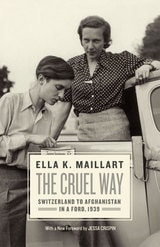
The Cruel Way
Switzerland to Afghanistan in a Ford, 1939Ella K. Maillart
University of Chicago Press, 2013
While the core of the book is the journey itself and their interactions with people oppressed by political conflict and poverty, towards the end of the trip the women’s increasingly troubled relationship takes center stage. By then the glamorous, androgynous Schwarzenbach, whose own account of the trip can be found in All the Roads Are Open, is fighting a losing battle with her own drug addiction, and Maillart’s frustrated attempts to cure her show the profound depth of their relationship.
Complete with thirteen of Maillart’s own photographs from the journey, The Cruel Way is a classic of travel writing, and its protagonists are as gripping and fearless as any in literature.

The Culinarians
Lives and Careers from the First Age of American Fine DiningDavid S. Shields
University of Chicago Press, 2017
This fascinating culinarian is John Dabney (1821–1900), who was born a slave, but later built an enterprising catering business. Dabney is just one of 175 influential cooks and restaurateurs profiled by David S. Shields in The Culinarians, a beautifully produced encyclopedic history of the rise of professional cooking in America from the early republic to Prohibition.
Shields’s concise biographies include the legendary Julien, founder in 1793 of America’s first restaurant, Boston’s Restorator; and Louis Diat and Oscar of the Waldorf, the men most responsible for keeping the ideal of fine dining alive between the World Wars. Though many of the gastronomic pioneers gathered here are less well known, their diverse influence on American dining should not be overlooked—plus, their stories are truly entertaining. We meet an African American oyster dealer who became the Congressional caterer, and, thus, a powerful broker of political patronage; a French chef who was a culinary savant of vegetables and drove the rise of California cuisine in the 1870s; and a rotund Philadelphia confectioner who prevailed in a culinary contest with a rival in New York by staging what many believed to be the greatest American meal of the nineteenth century. He later grew wealthy selling ice cream to the masses. Shields also introduces us to a French chef who brought haute cuisine to wealthy prospectors and a black restaurateur who hosted a reconciliation dinner for black and white citizens at the close of the Civil War in Charleston.
Altogether, Culinarians is a delightful compendium of charcuterie-makers, pastry-pipers, caterers, railroad chefs, and cooking school matrons—not to mention drunks, temperance converts, and gangsters—who all had a hand in creating the first age of American fine dining and its legacy of conviviality and innovation that continues today.
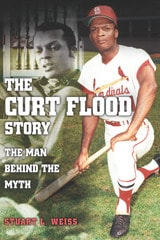
The Curt Flood Story
The Man behind the MythStuart L. Weiss
University of Missouri Press, 2018
Curt Flood, former star center fielder for the St. Louis Cardinals, is a hero to many for selflessly sacrificing his career to challenge the legality of baseball’s reserve system. Although he lost his case before the Supreme Court, he has become for many a martyr in the eventually successful battle for free agency. Sportswriters and fans alike have helped to paint a picture of Flood as a larger-than-life figure, a portrait that, unhappily, cannot stand closer inspection. This book reveals the real Curt Flood—more man than myth.
Flood stirred up a hornet’s nest by refusing to be traded from the Cardinals to the Philadelphia Phillies after the 1969 season, arguing that Major League Baseball’s reserve system reduced him to the status of bondage. Flood decided to resist a system in which his contract could be traded without his consent and in which he was not at liberty to negotiate his services in an open market. Stuart Weiss examines the man behind the decision, exploring the span of Flood’s life and shedding light on his relationships with those who helped shape his determination to sue baseball and providing a new perspective on the lawsuit that found its way to the U.S. Supreme Court.
Although a superb player, Flood was known to be temperamental and sensitive; in suing Major League Baseball he transformed his grievances against the Cardinals front office into an attack on how the business of big-league ball was conducted. Weiss shows that Flood was far from the stereotypical “dumb jock” but was rather a proud, multifaceted black man in a business run by white moguls. By illuminating Flood’s private side, rarely seen by the public, he reveals how Flood misled a gullible press on a regular basis and how his 1971 memoir, The Way It Is, didn’t tell it the way it really was.
Drawing on previously untapped sources, Weiss examines more fully and deeply than other writers the complexities of Flood’s decision to pursue his lawsuit—and demonstrates that the picture of Flood as a martyr for free agency is a myth. He suggests why, of all the players traded or sold through the years, it was Flood who brought this challenge. Weiss also explains how Flood’s battle against the reserve system cannot be understood in isolation from the personal experiences that precipitated it, such as his youth in a dysfunctional home, his troubled first marriage, his financial problems, and his unwavering commitment to the Cardinals.
The Curt Flood Story is a realistic account of an eloquent man who presented a warm, even vulnerable, face to the public as well as to friends, while hiding his inner furies. It shows that Flood was neither a hero nor a martyr but a victim of unique circumstances and his own life.
The Curve of Life
Correspondence of Heinz Kohut, 1923-1981Heinz Kohut
University of Chicago Press, 1994
The Curve of Life reveals Kohut's private and public life through a unique collection of lively and thoughtful correspondence with colleagues, public figures, family, and close friends. Over 300 never-before-published letters, drawn from Kohut's private files and from colleagues, cover Kohut's life from his native Austria in the 1930s until his death in 1981. Because many of his letters were so substantive, this rich collection clarifies Kohut's landmark published works. In letters to such diverse personalities as Anna Freud and Bruno Walter, Kohut meditated on some of the most intriguing psychoanalytic questions of the day—the nature of psychological cure, the relationship between doctor and patient, and the role of the Oedipus complex in psychoanalysis. The correspondence also reveals Kohut's lively interest in literature, music, history, and culture, as well as his deep and often contentious involvement in the politics of the psychoanalytic movement.
Kohut discussed his theories in letters to August Aichhorn, Heinz Hartmann, the Surgeon General, and even Jacqueline Kennedy, and the responses, some published here for the first time, prompted him to explore his ideas from a variety of perspectives. A letter from Anna Freud provoked Kohut to respond this way:
"What you had to say gave me great pleasure, and your approval was a welcome support amidst the inescapable insecurities under pressure to which we are all exposed. Strangely enough, it was not the discussion of scientific contributions and other statements that I had sent to you but the very last, parting sentence of your letter which gave me the most food for thought. You sent me your best wishes for the presidency of the American Psychoanalytic Association, and expressed the hope that '...this office permits opportunity for some revolutionary moves.'"
The Curve of Life illuminates the evolution of Kohut's theory of the psychology of the self, and provides a rare glimpse into the institutional and intellectual history of psychoanalysis in the last half of this century. These letters will fascinate not only scholars in psychoanalysis, but also those in the humanities, social sciences, and even theology, as well as general readers curious about the private thoughts of a towering figure in intellectual life.
The Cybernetic Brain
Sketches of Another FutureAndrew Pickering
University of Chicago Press, 2010
The Cybernetic Brain explores a largely forgotten group of British thinkers, including Grey Walter, Ross Ashby, Gregory Bateson, R. D. Laing, Stafford Beer, and Gordon Pask, and their singular work in a dazzling array of fields. Psychiatry, engineering, management, politics, music, architecture, education, tantric yoga, the Beats, and the sixties counterculture all come into play as Pickering follows the history of cybernetics’ impact on the world, from contemporary robotics and complexity theory to the Chilean economy under Salvador Allende. What underpins this fascinating history, Pickering contends, is a shared but unconventional vision of the world as ultimately unknowable, a place where genuine novelty is always emerging. And thus, Pickering avers, the history of cybernetics provides us with an imaginative model of open-ended experimentation in stark opposition to the modern urge to achieve domination over nature and each other.
The Daley Show
Inside the Transformative Reign of Chicago's Richard M. DaleyForrest Claypool; Foreword by David Axelrod
University of Illinois Press, 2024
American cities once had mayors who actually governed.
For twenty-two years, Richard M. Daley ran Chicago with the type of authority that is unthinkable today. He reshaped downtown, triggered a jobs boom, delivered the iconic Millennium Park, turned around troubled public schools, and slashed violent crime to 40-year lows. He outfoxed Republican legislators to retain control of O’Hare Airport and expand it into the nation’s premier international aviation hub. Leveraging carefully built national political ties, he sidelined a powerful nemesis to tear down Chicago’s infamous public housing projects.
Rebuilding parts of his father’s legendary political machine through brazen (and illegal) patronage deals, he centralized power to a remarkable degree, cut deals behind closed doors, racked up piles of debt, and made long-term bets whose consequences are still unfolding.
This is not simply a biography. It is a challenge to contemporary urban orthodoxy:
Do cities thrive because of strong, decisive leaders—or despite them?
Through vivid storytelling, this book exposes how Daley consolidated power, aligned business and labor, navigated crises, survived damaging scandals, and imposed discipline on a sprawling city. It dares readers to reconsider what kind of leadership modern American cities truly need.
The Dancing Bees
Karl von Frisch and the Discovery of the Honeybee LanguageTania Munz
University of Chicago Press, 2016
The Dancing Bees draws on previously unexplored archival sources in order to reveal von Frisch’s full story, including how the Nazi government in 1940 determined that he was one-quarter Jewish, revoked his teaching privileges, and sought to prevent him from working altogether until circumstances intervened. In the 1940s, bee populations throughout Europe were facing the devastating effects of a plague (just as they are today), and because the bees were essential to the pollination of crops, von Frisch’s research was deemed critical to maintaining the food supply of a nation at war. The bees, as von Frisch put it years later, saved his life. Munz not only explores von Frisch’s complicated career in the Third Reich, she looks closely at the legacy of his work and the later debates about the significance of the bee language and the science of animal communication.
This first in-depth biography of von Frisch paints a complex and nuanced portrait of a scientist at work under Nazi rule. The Dancing Bees will be welcomed by anyone seeking to better understand not only this chapter of the history of science but also the peculiar waggles of our garden visitors.
The Dark Days of Abraham Lincoln's Widow, as Revealed by Her Own Letters
Myra Helmer Pritchard, edited and annotated by Jason Emerson
Southern Illinois University Press, 2011
Written in 1927 but barred from timely publication by the Lincoln family, The Dark Days of Abraham Lincoln's Widow, as Revealed by Her Own Letters is based on nearly two dozen intimate letters written between Mary Lincoln and her close friend Myra Bradwell mainly during the former's 1875 incarceration in an insane asylum. By the 1920s most accounts of Mrs. Lincoln focused on her negative qualities and dismissed her as "crazy." Bradwell's granddaughter Myra Helmer Pritchard wrote this distinctly sympathetic manuscript at the behest of her mother, who wished to vindicate Mary Lincoln in the public eye by printing the private correspondence. Pritchard fervently defends Mrs. Lincoln's conduct and sanity, arguing that she was not insane but rather the victim of an overzealous son who had his mother committed.
The manuscript and letters were thought to have been destroyed, but fortunately the Lincolns' family lawyer stored copies in a trunk, where historian Jason Emerson discovered them in 2005. While leaving the manuscript intact, Emerson has enhanced it with an introduction and detailed annotations. He fills in factual gaps; provides background on names, places, and dates; and analyzes Pritchard's interpretations, making clear where she was right and where her passion to protect Mrs. Lincoln led to less than meticulous research and incorrect conclusions. This volume features an easy-to-follow format that showcases Pritchard's text on the left-hand pages and Emerson's insightful annotations on the right-hand pages.
Following one of the most revered and reviled, famous and infamous of the First Ladies, this book provides a unique perspective of Mrs. Lincoln's post-White House years, with an emphasis on her commitment to a sanitarium. Emerson's contributions make this volume a valuable addition to the study of the Lincoln family. This fascinating work gives today's Lincoln enthusiasts the chance to read this intriguing interpretation of the former First Lady that predates nearly every other book written about her.
The Dark Eclipse
Reflections on Suicide and AbsenceA.W. Barnes
Bucknell University Press, 2019
Published by Bucknell University Press. Distributed worldwide by Rutgers University Press.
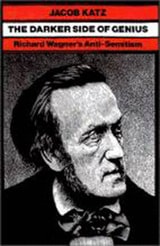
The Darker Side of Genius
Richard Wagner’s Anti-SemitismJacob. Katz
University Press of New England, 2002

The Darkrooms of Edith Tudor-Hart
Stories of a LifePeter Stephan Jungk
Haus Publishing, 2026
A portrait of one of Britain's foremost documentary photographers—and her long career as a Soviet agent.
Why did you get yourself into this, Edith? Was it all worth it?
Born and raised in a liberal Jewish family in Vienna, Edith Tudor-Hart’s legacy is defined by her pioneering social photography and her pivotal role in the recruitment of Kim Philby as a Soviet agent. Arrested for her involvement with socialist groups, Edith immigrated to England in 1933 to escape political and religious persecution. There, her photography came to reflect her socialist ideals, and her clandestine work for the Soviet Union meant she would spend the rest of her life under the suspicion and close surveillance of MI5.
The Darkrooms of Edith Tudor-Hart is the culmination of Peter Stephan Jungk’s enduring fascination with his cousin’s life. His vivid portrait reveals a woman whose life was shrouded in secrecy and whom—in his confession to MI5 a decade before Edith’s death—the Soviet spy Anthony Blunt called ‘the grandmother of us all.’
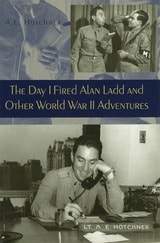
The Day I Fired Alan Ladd and Other World War II Adventures
A. E. Hotchner
University of Missouri Press, 2002
"To perform heroically in a perilous situation is one thing, but I found that, in my case, the real difficulty was in getting myself into a spot where heroism was possible. Nobody on latrine duty ever got the Medal of Honor."
The Day I Wasn't There
Helene Cixous
Northwestern University Press, 2006
Cixous's elusive writing bears all the trademarks of her poetic, provocative style, vivid with word play, intense feeling and a stream-of-consciousness that moves freely over time and place. The narrator's mother claims not to remember what happened, and the brother tries to fill in some gaps in the story. By the end of the book we understand the significance of the title: one day Cixous's mother returned to the clinic to find the baby on the brink of death. Rather than attempt to save him she chose to end his suffering.
By closing the door to the imaginary clinic at the end, the narrator at last resolves the feelings of guilt and realizes that each human being has a fate they must endure. Informed by psychoanalytical theory, and always brutally honest, The Day I Wasn't There is above all an intimate study of a woman's inner landscape.
The Day of Shelly's Death
The Poetry and Ethnography of GriefRenato Rosaldo
Duke University Press, 2014
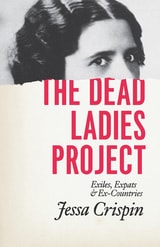
The Dead Ladies Project
Exiles, Expats, and Ex-CountriesJessa Crispin
University of Chicago Press, 2015
The Dead Ladies Project is an account of that journey—but it’s also much, much more. Fascinated by exile, Crispin travels an itinerary of key locations in its literary map, of places that have drawn writers who needed to break free from their origins and start afresh. As she reflects on William James struggling through despair in Berlin, Nora Barnacle dependant on and dependable for James Joyce in Trieste, Maud Gonne fomenting revolution and fostering myth in Dublin, or Igor Stravinsky starting over from nothing in Switzerland, Crispin interweaves biography, incisive literary analysis, and personal experience into a rich meditation on the complicated interactions of place, personality, and society that can make escape and reinvention such an attractive, even intoxicating proposition.
Personal and profane, funny and fervent, The Dead Ladies Project ranges from the nineteenth century to the present, from historical figures to brand-new hangovers, in search, ultimately, of an answer to a bedrock question: How does a person decide how to live their life?
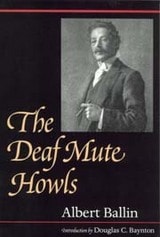
The Deaf Mute Howls
Albert Ballin
Gallaudet University Press, 1998
Originally published in 1930, The Deaf Mute Howls flew in the face of the accepted practice of teaching deaf children to speak and read lips while prohibiting the use of sign language. The sharp observations in Albert Ballin’s remarkable book detail his experiences (and those of others) at a late 19th-century residential school for deaf students and his frustrations as an adult seeking acceptance in the majority hearing society.
The Deaf Mute Howls charts the ambiguous attitudes of deaf people toward themselves at this time. Ballin himself makes matter-of-fact use of terms now considered disparaging, such as “deaf-mute,” and he frequently rues the “atrophying” of the parts of his brain necessary for language acquisition. At the same time, he rails against the loss of opportunity for deaf people, and he commandingly shifts the burden of blame to hearing people unwilling to learn the “Universal Sign Language,” his solution to the communication problems of society. From his lively encounters with Alexander Graham Bell (whose desire to close residential schools he surprisingly supports) to his enthrallment with the film industry, Ballin’s highly readable book offers an appealing look at the deaf world during his richly colored lifetime.
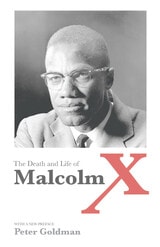
The Death and Life of Malcolm X
Peter Goldman
University of Illinois Press, 2013
The Death of the Child Valerio Marcello
Margaret L. King
University of Chicago Press, 1994
This child, scion of a family of power and privilege at Venice's time of greatness, left his father in a state of despair so profound and so public that it occasioned an outpouring of consoling letters, orations, treatises, and poems. In these documents, we find a firsthand account, richly colored by humanist conventions and expectations, of the life of the fifteenth-century boy, the passionate devotion of his father, the feelings of his brothers and sisters, the striking absence of his mother. The father's story is here as well: the career of a Venetian nobleman and scholar, patron and soldier, a participant in Venice's struggle for dominion in the north of Italy.
Through these sources also King traces the cultural trends that made Marcello's century famous. Her work enlarges our view of the literature of consolation, which had a distinctive tradition in Venice, and shifting attitudes toward death from the late Middle Ages onward.
For the depth and acuity of its insights into political, cultural, and private life in fifteenth-century Venice, this book will be essential reading for students of the Renaissance. For the grace and drama of its storytelling, it will be savored by anyone who wishes to look into life and death in a palace, and a city, long ago.
The Deeds of Count Roger of Calabria and Sicily and of His Brother Duke Robert Guisc
Kenneth Baxter Wolf
University of Michigan Press, 2005
Geoffrey Malaterra's Deeds of Count Roger is the most important extant account of the Norman conquest of Muslim Silicy (1061-91). This volume includes a translation of the Latin original as well as an introduction, notes, and maps.
The Deeds of Count Roger fills a gap in the primary literature pertaining to the earliest phase of Latin Christian expansion at the expense of Islam, since the Norman conquests in Sicily were more or less contemporary with the First Crusade and the beginnings of the Spanish Reconquista. The account also illustrates the complexity of medieval historical writing, with Malaterra on the one hand praising the Normans for their military achievements and on the other subtly criticising the "lust for domination" that inspired them.
Kenneth Baxter Wolf is Professor of History at Pomona College.
The Demise of Yugoslavia
A Political MemoirStipe Mesic
Central European University Press, 2004

The Dervish Bowl
The Many Lives of Arminius VambéryAnabel Loyd
Haus Publishing, 2025
Who was Arminius Vámbéry? A poverty-stricken, Jewish autodidact; a linguist, traveler, and writer—or a sometime Zionist, inspiration for Dracula’s nemesis, and British secret agent? Vámbéry wrote his own story many times over, and it was these often highly embroidered accounts of journeys through Persia and Central Asia that saw him acclaimed in Victorian England as an intrepid explorer and daring adventurer. Against the backdrop of the “Great Game,” in which Russia and Britain jostled for territory, influence, and control of the borders and gateways to India and its wealth, Vámbéry played the roles of hero and double-dealer, of fascinated witness and imperialist charlatan.
The Dervish Bowl is the story of these competing narratives and a compelling investigation of both the ever-changing persona Vámbéry created for himself and the man who emerges from his private correspondence and the accounts of both his friends and his enemies, many of whom were themselves major players in the geopolitical adventures of the volatile nineteenth century—a time when Britain’s ambitions for her empire were at their height, yet nothing and no one was quite as they seemed.
The Desert Year
Joseph Wood Krutch
University of Iowa Press, 1952
Now back in print, Joseph Wood Krutch’s Burroughs Award–winning The Desert Year is as beautiful as it is philosophically profound. Although Krutch—often called the Cactus Walden—came to the desert relatively late in his life, his curiosity and delight in his surroundings abound throughout The Desert Year, whether he is marveling at the majesty of the endless dry sea, at flowers carpeting the desert floor, or at the unexpected appearance of an army of frogs after a heavy rain.
Krutch’s trenchant observations about life prospering in the hostile environment of Arizona’s Sonoran Desert turn to weighty questions about humanity and the precariousness of our existence, putting lie to Western denials of mind in the “lower” forms of life: “Let us not say that this animal or even this plant has ‘become adapted’ to desert conditions. Let us say rather that they have all shown courage and ingenuity in making the best of the world as they found it. And let us remember that if to use such terms in connection with them is a fallacy then it can only be somewhat less a fallacy to use the same terms in connection with ourselves.”
This edition contains 33 exacting drawings by noted illustrator Rudolf Freund. Closely tied to Krutch’s uncluttered text, the drawings tell a story of ineffable beauty.
The Desperate Diplomat
Saburo Kurusu's Memoir of the Weeks before Pearl HarborEdited by J. Garry Clifford and Masako R. Okura
University of Missouri Press, 2014
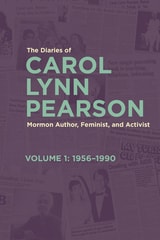
The Diaries of Carol Lynn Pearson—Mormon Author, Feminist, and Activist
Volume 1: 1956–1990Pearson, Carol Lynn
Signature Books, 2025
“I feel somehow that of all the writing I am doing, my diary is the most important.” So wrote the beloved and bestselling author, poet, and playwright Carol Lynn Pearson in her 1979 diary. Several years before, she recorded, “I feel the imperative of history. . . . Add that to my being a household word to many and I cannot escape the feeling that in many years there might be a number of people interested in these pages.” That time has now come.
Unbeknownst to almost everyone but herself, Pearson kept a near-daily diary since she was a teenager, recording her remarkable story in the context of twentieth- and twenty-first-century Mormon America. In this first of a four-volume series, Pearson chronicles her love for her church but also her troubling experiences and concerns with its patriarchy, historic doctrine of polygamy, omission of a feminine divine, and homophobia. Readers will rejoice with her as her first book of poetry, Beginnings, sells an astonishing 150,000+ copies and puts her on the map in the 1960s, empathize with her as she watches her church help kill the Equal Rights Amendment in the 1970s, and mourn with her as her mixed-orientation marriage ends and she cares for her former husband in her home as he dies of AIDS in the 1980s. The sensitive-girl-turned-strong-woman who emerges in these diaries insists that we move from patriarchy into partnership, change our destructive policies towards Queer people, and invite God the Mother back into our heavenly family.
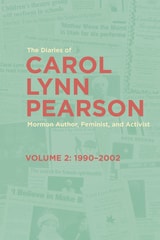
The Diaries of Carol Lynn Pearson—Mormon Author, Feminist, and Activist
Volume 2: 1990–2002Pearson, Carol Lynn
Signature Books, 2026
Of these years of her life, poet, writer, and feminist Carol Lynn Pearson says, “The plot thickens, as all good plots do. My life and your life—if we are brave enough—move into areas that we had not anticipated. We feel sometimes that we want to run back to safer ground, but life has decided otherwise and so we take those next steps. Volume two of my diaries gives us a closeup of the years 1990 to 2002, bringing us an abundance of both joy and distress.”
Throughout the 1990s, Pearson records and laments her church’s efforts to punish scholars and activists while celebrating the success of her books and one-woman play, Mother Wove the Morning. Along the way, she comforts the suffering, endures terrible personal loss, and witnesses the fall of the Twin Towers on 9/11. “Bless everyone who fights for what is right,” she writes. Few have fought harder than Carol Lynn Pearson.
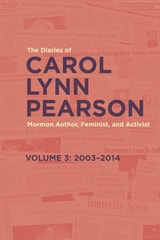
The Diaries of Carol Lynn Pearson—Mormon Author, Feminist, and Activist
Volume 3: 2003–2014Pearson, Carol Lynn
Signature Books, 2026
Proposition 8, the 2008 California ballot initiative that overturned the state’s legalization of same-sex marriage, looms large in volume 3 of Carol Lynn Pearson’s diaries. The intense lobbying in favor of the measure by the Church of Jesus Christ of Latter-day Saints caused widespread protests against the church and rifts within congregations, families, and friendships that felt like they might never heal. Pearson documented it all.
When she learned through friends close to church leaders that members of the First Presidency and Quorum of Twelve Apostles were shocked by the backlash, she wondered, “How do 15 prophets, seers, and revelators not see this coming when the rest of us did?”
A lifelong feminist, Pearson’s diaries also reveal her concerns for gender equality. She chronicles her observations of Ordain Women, a movement by a group of Latter-day Saint feminists who lobbied to change the church’s all-male priesthood. At the end of this volume, Pearson takes on yet another issue: the ongoing Mormon doctrine that polygamy is practiced in the eternities. Pearson heard from thousands of women who feared that they would be forced to share their husbands in the afterlife. The pain of these women propelled her forward into her next book project, challenging the doctrine of “eternal polygamy.”
Even as she faced her own struggles, Pearson buoyed up those around her. She took phone calls, answered letters, and comforted visitors who were hurting because of the church’s policies. She was, for many, a symbol of hope.

The Diaries of Carol Lynn Pearson—Mormon Author, Feminist, and Activist
Volume 4: 2014–2024Pearson, Carol Lynn
Signature Books, 2026
This fourth and final volume of The Diaries of Carol Lynn Pearson is full of contradictions as it covers turbulent world events and intimate details in her life. Pearson remains a beacon of light and hope for many, even as she struggles with her own sorrows.
She embarks on a new project that consumes her: the Latter-day Saint doctrine that polygamy will exist in the afterlife. Pearson also continues to document contemporaneous events in the modern history of the Church of Jesus Christ of Latter-day Saints, including the church’s November 2015 policy that discriminated against LGBTQ+ members and their children. She has both a grassroots perspective as a member of a California congregation and special insight into the decisions of LDS leadership, thanks to friends who keep her informed of what’s happening at the highest levels of the church.
Through it all, Pearson mourns when she says goodbye to longtime friends who die. In July 2026, after she completed her diary project, death finally came for Carol Lynn Pearson after 86 years. Her unique voice cannot be replicated.
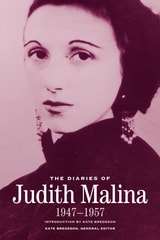
The Diaries of Judith Malina
1947-1957Judith Malina, Kate Bredeson
Northwestern University Press, 2026
Judith Malina’s newly restored diaries from a critical early decade in her personal, artistic, and political development
Judith Malina’s diaries from 1947 to 1957 are brought back into print in this volume, which charts her cofounding of The Living Theatre with husband and lifelong artistic partner Julian Beck. In these diaries, she narrates her developing political commitments and her expansive collaborations and personal relationships, as well as a moving account of her time in prison with activist Dorothy Day. This new edition features Kate Bredeson’s comprehensive introduction, which offers a detailed examination of Malina’s life and work in this period, along with additional historical context of these years and never-before-published photographs from Malina’s personal archives.
The Diaries of Judith Malina is a four-volume set that publishes for the first time together the edited diaries of radical theater director, actor, and activist Judith Malina from 1947 to 1971, the most influential period of her remarkable and storied career. A committed anarchist and pacifist, Malina made theater as a way to stoke revolutionary action. Her diaries showcase her political and social observations, cultural commentary, self-reflection, and wit. This expertly prepared set invites us to recognize Malina for her accomplishments not only as an artist and an activist but as one of the great literary diarists.
The Diaries of Judith Malina
1958-1968Judith Malina, Kate Bredeson, Tom Walker
Northwestern University Press, 2026
A previously unpublished volume of diaries recording Judith Malina’s extraordinary life and career in a moment of cultural revolution
Judith Malina’s diaries from the pivotal years of 1958 to 1968 are presented here in print for the first time. Meticulously edited and with an essential introduction by Kate Bredeson that offers a detailed discussion of Malina’s life and works during this period, the volume includes additional historical context and never-before-published photographs from Malina’s personal archives, as well as an illuminating foreword by Living Theatre archivist and longtime company member Tom Walker. This decade covers some of the most important years of Malina’s life and in the history of The Living Theatre, from career-defining productions of The Connection and The Brig to the company’s self-imposed European exile, when they created their signature works, including Paradise Now, Antigone, and Frankenstein.
The Diaries of Judith Malina is a four-volume set that publishes for the first time together the edited diaries of radical theater director, actor, and activist Judith Malina from 1947 to 1971, the most influential period of her remarkable and storied career. A committed anarchist and pacifist, Malina made theater as a way to engage in revolutionary action. Her diaries showcase her political and social observations, cultural commentary, self-reflection, and wit. This expertly prepared set invites us to recognize Malina for her accomplishments not only as an artist and an activist but as one of the great literary diarists.

The Diaries of Judith Malina
1968-1969Judith Malina, Kate Bredeson
Northwestern University Press, 2026
A newly restored edition of Judith Malina’s legendary diaries narrating a key moment of social, political, and cultural upheaval
Originally published by Judith Malina as The Enormous Despair, this slim, gripping collection of diaries from a pivotal period between 1968 and 1969 follows The Living Theatre’s return to the United States after their years of self-exile in Europe, their increasing notoriety and frequent arrests, and their cross-country touring. In these pages, Malina wrestles with the company’s artistic and political efforts during a moment of societal crisis and grapples with their future. Kate Bredeson’s introduction contextualizes Malina’s life and work in this period, while additional historical context and never-before-published photographs add new detail and depth to a stirring account of American social and political history.
The Diaries of Judith Malina is a four-volume set that publishes for the first time together the edited diaries of radical theater director, actor, and activist Judith Malina from 1947 to 1971, the most influential period of her remarkable and storied career. A committed anarchist and pacifist, Malina made theater as a way to engage in revolutionary action. Her diaries showcase her political and social observations, her cultural commentary, her self-reflection, and her wit. This expertly prepared set invites us to recognize Malina for her accomplishments not only as an artist and an activist but as one of the great literary diarists.
The Diaries of Judith Malina
1969-1971Judith Malina, Kate Bredeson, Ilion Troya
Northwestern University Press, 2026
Judith Malina’s never-before-published diaries describing a period of profound personal and professional transformation
The years 1969 to 1971 saw The Living Theatre’s greatest rupture, reckoning with its desire to leave its defining productions from the 1960s behind and move forward with new artistic works and practices. In these previously unpublished diaries, Judith Malina recounts these pivotal years, describing her transformative time in Brazil, including her experiences of daily life in jail while awaiting trial with her company members. This meticulously edited volume includes Kate Bredeson’s introduction, examining Malina’s life and work in this period, as well as additional historical context and never-before-published photographs. Living Theatre member Ilion Troya offers a foreword that provides new context for understanding the volume’s historical significance.
The Diaries of Judith Malina is a four-volume set that publishes for the first time together the edited diaries of radical theater director, actor, and activist Judith Malina from 1947 to 1971, the most influential period of her remarkable and storied career. A committed anarchist and pacifist, Malina made theater as a way to engage in revolutionary action. Her diaries showcase her political and social observations, cultural commentary, self-reflection, and wit. This expertly prepared set invites us to recognize Malina for her accomplishments not only as an artist and an activist but as one of the great literary diarists.
The Diary of Olga Romanov
Royal Witness to the Russian RevolutionHelen Azar
Westholme Publishing, 2014
The Diary of Vaslav Nijinsky
Vaslav Nijinsky
University of Illinois Press, 2006
A uniquely personal record of a great artist’s experience of mental illness
In his prime, Vaslav Nijinsky (1889-1950) was the most celebrated man in Western ballet--a virtuoso and a dramatic dancer such as European and American audiences had never seen before. After his triumphs in such works as The Specter of the Rose and Petrouchka, he set out to make ballets of his own, and with his Afternoon of a Faun and The Rite of Spring, created within a year of each other, he became ballet’s first modernist choreographer.
For six weeks in early 1919, as his tie to reality was giving way, Nijinsky kept a diary--the only sustained daily record we have, by a major artist, of the experience of entering psychosis. In some entries he is filled with hope. He is God; he will save the world. In other entries, he falls into a black despair. He is dogged by sexual obsessions and grief over World War I. Furthermore, he is afraid that he is going insane.
The diary was first published in 1936, in a version heavily bowdlerized by Nijinsky’s wife. The new edition, translated by Kyril FitzLyon, is the first complete and accurate English rendering of this searing document. In her introduction, noted dance critic Joan Acocella tells Nijinsky’s story and places it in the context of early European modernism.
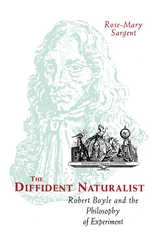
The Diffident Naturalist
Robert Boyle and the Philosophy of ExperimentRose-Mary Sargent
University of Chicago Press, 1995
Sargent examines the philosophical, legal, experimental, and religious traditions—among them English common law, alchemy, medicine, and Christianity—that played a part in shaping Boyle's experimental thought and practice. The roots of his philosophy in his early life and education, in his religious ideals, and in the work of his predecessors—particularly Bacon, Descartes, and Galileo—are fully explored, as are the possible influences of his social and intellectual circle. Drawing on the full range of Boyle's published works, as well as on his unpublished notebooks and manuscripts, Sargent shows how these diverse influences were transformed and incorporated into Boyle's views on and practice of experiment.
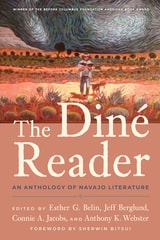
The Diné Reader
An Anthology of Navajo LiteratureEdited by Esther G. Belin, Jeff Berglund, Connie A. Jacobs, and Anthony K. Webster; Foreword by Sherwin Bitsui
University of Arizona Press, 2021
The Diné Reader: An Anthology of Navajo Literature is unprecedented. It showcases the breadth, depth, and diversity of Diné creative artists and their poetry, fiction, and nonfiction prose.This wide-ranging anthology brings together writers who offer perspectives that span generations and perspectives on life and Diné history. The collected works display a rich variety of and creativity in themes: home and history; contemporary concerns about identity, historical trauma, and loss of language; and economic and environmental inequalities.
The Diné Reader developed as a way to demonstrate both the power of Diné literary artistry and the persistence of the Navajo people. The volume opens with a foreword by poet Sherwin Bitsui, who offers insight into the importance of writing to the Navajo people. The editors then introduce the volume by detailing the literary history of the Diné people, establishing the context for the tremendous diversity of the works that follow, which includes free verse, sestinas, limericks, haiku, prose poems, creative nonfiction, mixed genres, and oral traditions reshaped into the written word.
This volume combines an array of literature with illuminating interviews, biographies, and photographs of the featured Diné writers and artists. A valuable resource to educators, literature enthusiasts, and beyond, this anthology is a much-needed showcase of Diné writers and their compelling work. The volume also includes a chronology of important dates in Diné history by Jennifer Nez Denetdale, as well as resources for teachers, students, and general readers by Michael Thompson. The Diné Reader is an exciting convergence of Navajo writers and artists with scholars and educators.
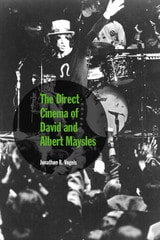
The Direct Cinema of David and Albert Maysles
Jonathan B. Vogels
Southern Illinois University Press, 2005
Boldly signifying the cultural issues of the 1960s and 1970s in groundbreaking pieces such as Grey Gardens, Gimme Shelter, and Showman, filmmakers and brothers David and Albert Maysles used an approach to documentary film that involved spontaneous observation of naturally occurring events. With no rehearsed footage and no preconceived plots, their revolutionary work eschewed the authoritative voice-over narrator, didactic scripts, and the traditional problem-and-solution format used by the majority of their predecessors in the genre and duly influenced subsequent directors in both fiction and nonfiction film. Their collaboration from 1962 until David’s death in 1987 wrought thirteen major works in which the brothers critiqued the concept of celebrity with unglamorous footage of iconic figures, explored how commercialism hinders communication, and questioned the possibility of seeing anything clearly in a world abounding with both real and constructed images.
Jonathan B. Vogels outlines how the Maysles brothers blended a unique amalgam of direct cinema characteristics, a modern humanist aesthetic, and a collaborative working process that included other directors and editors. Looking at the films as both shapers and reflections of American culture, he points out that the works offer insights into a wide range of contemporary topics including materialism, celebrity, modern art, and the American family. In addition to describing the changes in technology that made direct cinema possible, Vogels provides careful, scene-by-scene analyses that allow for a consideration of the Maysles brothers’ films as films, a tactic not frequently employed in nonfiction film studies.