4531 books match the query 'Cultural & Ethnic Studies' and 804 start with t
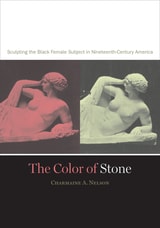
cover of The Color of Stone: Sculpting the Black Female Subject in Nineteenth-Century America

The Color of Stone

Sculpting the Black Female Subject in Nineteenth-Century America

Charmaine A. Nelson

University of Minnesota Press, 2007

Nineteenth-century neoclassical sculpture was a highly politicized international movement. Based in Rome, many expatriate American sculptors created works that represented black female subjects in compelling and problematic ways. Rejecting pigment as dangerous and sensual, adherence to white marble abandoned the racialization of the black body by skin color.

In The Color of Stone, Charmaine A. Nelson brilliantly analyzes a key, but often neglected, aspect of neoclassical sculpture—color. Considering three major works—Hiram Powers’s Greek Slave, William Wetmore Story’s Cleopatra, and Edmonia Lewis’s Death of Cleopatra—she explores the intersection of race, sex, and class to reveal the meanings each work holds in terms of colonial histories of visual representation as well as issues of artistic production, identity, and subjectivity. She also juxtaposes these sculptures with other types of art to scrutinize prevalent racial discourses and to examine how the black female subject was made visible in high art.

By establishing the centrality of race within the discussion of neoclassical sculpture, Nelson provides a model for a black feminist art history that at once questions and destabilizes canonical texts.

Charmaine A. Nelson is assistant professor of art history at McGill University.
[more]
cover of The Colored Aristocracy of St. Louis

The Colored Aristocracy of St. Louis

Cyprian Clamorgan, Edited & Intro by Julie Winch

University of Missouri Press, 2018

In 1858, Cyprian Clamorgan wrote a brief but immensely readable book entitled The Colored Aristocracy of St. Louis. The grandson of a white voyageur and a mulatto woman, he was himself a member of the "colored aristocracy." In a setting where the vast majority of African Americans were slaves, and where those who were free generally lived in abject poverty, Clamorgan's "aristocrats" were exceptional people. Wealthy, educated, and articulate, these men and women occupied a "middle ground." Their material advantages removed them from the mass of African Americans, but their race barred them from membership in white society.

The Colored Aristocracy of St. Louis is both a serious analysis of the social and legal disabilities under which African Americans of all classes labored and a settling of old scores. Somewhat malicious, Clamorgan enjoyed pointing out the foibles of his friends and enemies, but his book had a serious message as well. "He endeavored to convince white Americans that race was not an absolute, that the black community was not a monolith, that class, education, and especially wealth, should count for something."

Despite its fascinating insights into antebellum St. Louis, Clamorgan's book has been virtually ignored since its initial publication. Using deeds, church records, court cases, and other primary sources, Winch reacquaints readers with this important book and establishes its place in the context of African American history. This annotated edition of The Colored Aristocracy of St. Louis includes an introductory essay on African Americans in St. Louis before the Civil War, as well as an account of the lives of the author and the members of his remarkable family—a family that was truly at the heart of the city's "colored aristocracy" for four generations.

A witty and perceptive commentary on race and class, The Colored Aristocracy of St. Louis is a remarkable story about a largely forgotten segment of nineteenth-century society. Scholars and general readers alike will appreciate Clamorgan's insights into one of antebellum America's most important communities.
[more]
cover of The Company We Keep: Interracial Friendships and Romantic Relationships from Adolescence to Adulthood

The Company We Keep

Interracial Friendships and Romantic Relationships from Adolescence to Adulthood

Grace Kao

Russell Sage Foundation, 2019

With hate crimes on the rise and social movements like Black Lives Matter bringing increased attention to the issue of police brutality, the American public continues to be divided by issues of race. How do adolescents and young adults form friendships and romantic relationships that bridge the racial divide? In The Company We Keep, sociologists Grace Kao, Kara Joyner, and Kelly Stamper Balistreri examine how race, gender, socioeconomic status, and other factors affect the formation of interracial friendships and romantic relationships among youth. They highlight two factors that increase the likelihood of interracial romantic relationships in young adulthood: attending a diverse school and having an interracial friendship or romance in adolescence.

While research on interracial social ties has often focused on whites and blacks, Hispanics are the largest minority group and Asian Americans are the fastest growing racial group in the United States. The Company We Keep examines friendships and romantic relationships among blacks, whites, Hispanics, and Asian Americans to better understand the full spectrum of contemporary race relations. Using data from the National Longitudinal Study of Adolescent to Adult Health, the authors explore the social ties of more than 15,000 individuals from their first survey responses as middle and high school students in the mid-1990s through young adulthood nearly fifteen years later. They find that while approval for interracial marriages has increased and is nearly universal among young people, interracial friendships and romantic relationships remain relatively rare, especially for whites and blacks. Black women are particularly disadvantaged in forming interracial romantic relationships, while Asian men are disadvantaged in the formation of any romantic relationships, both as adolescents and as young adults. They also find that people in same-sex romantic relationships are more likely to have partners from a different racial group than are people in different-sex relationships. The authors pay close attention to how the formation of interracial friendships and romantic relationships depends on opportunities for interracial contact. They find that the number of students choosing different-race friends and romantic partners is greater in schools that are more racially diverse, indicating that school segregation has a profound impact on young people’s social ties.

Kao, Joyner, and Balistreri analyze the ways school diversity and adolescent interracial contact intersect to lay the groundwork for interracial relationships in young adulthood. The Company We Keep provides compelling insights and hope for the future of living and loving across racial divides.
[more]
cover of The Congressional Black Caucus, Minority Voting Rights, and the U.S. Supreme Court

The Congressional Black Caucus, Minority Voting Rights, and the U.S. Supreme Court

Christina R. Rivers

University of Michigan Press, 2014

Both the U.S. Supreme Court and the Congressional Black Caucus (CBC) claim to advocate minority political interests, yet they disagree over the intent and scope of the Voting Rights Act (VRA), as well as the interpretation of the equal protection clause of the 14th Amendment. Whereas the Court promotes color-blind policies, the CBC advocates race-based remedies. Setting this debate in the context of the history of black political thought, Rivers examines a series of high-profile districting cases, from Rodgers v. Lodge (1982) through NAMUDNO v. Holder (2009). She evaluates the competing approaches to racial equality and concludes, surprisingly, that an originalist, race-conscious interpretation of the 14th Amendment, along with a revised states' rights position regarding electoral districting, may better serve minority political interests.
[more]
cover of The Conjure Woman

The Conjure Woman

Charles W. Chesnutt

University of Michigan Press, 1969
First published in 1899, these folk tales within a tale provide commentary on the social attitudes of the period
[more]
cover of The Conjure Woman and Other Conjure Tales

The Conjure Woman and Other Conjure Tales

Charles W. Chesnutt

Duke University Press, 1993

The stories in The Conjure Woman were Charles W. Chesnutt's first great literary success, and since their initial publication in 1899 they have come to be seen as some of the most remarkable works of African American literature from the Emancipation through the Harlem Renaissance. Lesser known, though, is that the The Conjure Woman, as first published by Houghton Mifflin, was not wholly Chesnutt's creation but a work shaped and selected by his editors. This edition reassembles for the first time all of Chesnutt's work in the conjure tale genre, the entire imaginative feat of which the published Conjure Woman forms a part. It allows the reader to see how the original volume was created, how an African American author negotiated with the tastes of the dominant literary culture of the late nineteenth century, and how that culture both promoted and delimited his work.
In the tradition of Uncle Remus, the conjure tale listens in on a poor black southerner, speaking strong dialect, as he recounts a local incident to a transplanted northerner for the northerner's enlightenment and edification. But in Chesnutt's hands the tradition is transformed. No longer a reactionary flight of nostalgia for the antebellum South, the stories in this book celebrate and at the same time question the folk culture they so pungently portray, and ultimately convey the pleasures and anxieties of a world in transition. Written in the late nineteenth century, a time of enormous growth and change for a country only recently reunited in peace, these stories act as the uneasy meeting ground for the culture of northern capitalism, professionalism, and Christianity and the underdeveloped southern economy, a kind of colonial Third World whose power is manifest in life charms, magic spells, and ha'nts, all embodied by the ruling figure of the conjure woman.
Humorous, heart-breaking, lyrical, and wise, these stories make clear why the fiction of Charles W. Chesnutt has continued to captivate audiences for a century.

[more]
cover of The Conjure-Man Dies: A Mystery Tale of Dark Harlem

The Conjure-Man Dies

A Mystery Tale of Dark Harlem

Rudolph Fisher

University of Michigan Press, 1992
The first known mystery written by an African-American, set in 1930s Harlem
[more]
cover of The Conscript: A Novel of Libya’s Anticolonial War

The Conscript

A Novel of Libya’s Anticolonial War

Gebreyesus Hailu

Ohio University Press, 2013
Eloquent and thought-provoking, this classic novel by the Eritrean novelist Gebreyesus Hailu, written in Tigrinya in 1927 and published in 1950, is one of the earliest novels written in an African language and will have a major impact on the reception and critical appraisal of African literature. The Conscript depicts, with irony and controlled anger, the staggering experiences of the Eritrean ascari, soldiers conscripted to fight in Libya by the Italian colonial army against the nationalist Libyan forces fighting for their freedom from Italy’s colonial rule. Anticipating midcentury thinkers Frantz Fanon and Aimé Césaire, Hailu paints a devastating portrait of Italian colonialism. Some of the most poignant passages of the novel include the awakening of the novel’s hero, Tuquabo, to his ironic predicament of being both under colonial rule and the instrument of suppressing the colonized Libyans. The novel’s remarkable descriptions of the battlefield awe the reader with mesmerizing images, both disturbing and tender, of the Libyan landscape—with its vast desert sands, oases, horsemen, foot soldiers, and the brutalities of war—uncannily recalled in the satellite images that were brought to the homes of millions of viewers around the globe in 2011, during the country’s uprising against its former leader, Colonel Gaddafi.
[more]
cover of The Cost of Inclusion: How Student Conformity Leads to Inequality on College Campuses

The Cost of Inclusion

How Student Conformity Leads to Inequality on College Campuses

Blake R. Silver

University of Chicago Press, 2020

Young people are told that college is a place where they will “find themselves” by engaging with diversity and making friendships that will last a lifetime. This vision of an inclusive, diverse social experience is a fundamental part of the image colleges sell potential students. But what really happens when students arrive on campus and enter this new social world? The Cost of Inclusion delves into this rich moment to explore the ways students seek out a sense of belonging and the sacrifices they make to fit in.

Blake R. Silver spent a year immersed in student life at a large public university. He trained with the Cardio Club, hung out with the Learning Community, and hosted service events with the Volunteer Collective. Through these day-to-day interactions, he witnessed how students sought belonging and built their social worlds on campus. Over time, Silver realized that these students only achieved inclusion at significant cost. To fit in among new peers, they clung to or were pushed into raced and gendered cultural assumptions about behavior, becoming “the cool guy,” “the nice girl,” “the funny one,” “the leader,” “the intellectual,” or “the mom of the group.” Instead of developing dynamic identities, they crafted and adhered to a cookie-cutter self, one that was rigid and two-dimensional. Silver found that these students were ill-prepared for the challenges of a diverse college campus, and that they had little guidance from their university on how to navigate the trials of social engagement or the pressures to conform. While colleges are focused on increasing the diversity of their enrolled student body, Silver’s findings show that they need to take a hard look at how they are failing to support inclusion once students arrive on campus.
[more]
cover of The Cost of Inclusion: How Student Conformity Leads to Inequality on College Campuses

The Cost of Inclusion

How Student Conformity Leads to Inequality on College Campuses

Blake R. Silver

University of Chicago Press, 2020

This is an auto-narrated audiobook version of this book. 

Young people are told that college is a place where they will “find themselves” by engaging with diversity and making friendships that will last a lifetime. This vision of an inclusive, diverse social experience is a fundamental part of the image colleges sell potential students. But what really happens when students arrive on campus and enter this new social world? The Cost of Inclusion delves into this rich moment to explore the ways students seek out a sense of belonging and the sacrifices they make to fit in.

Blake R. Silver spent a year immersed in student life at a large public university. He trained with the Cardio Club, hung out with the Learning Community, and hosted service events with the Volunteer Collective. Through these day-to-day interactions, he witnessed how students sought belonging and built their social worlds on campus. Over time, Silver realized that these students only achieved inclusion at significant cost. To fit in among new peers, they clung to or were pushed into raced and gendered cultural assumptions about behavior, becoming “the cool guy,” “the nice girl,” “the funny one,” “the leader,” “the intellectual,” or “the mom of the group.” Instead of developing dynamic identities, they crafted and adhered to a cookie-cutter self, one that was rigid and two-dimensional. Silver found that these students were ill-prepared for the challenges of a diverse college campus, and that they had little guidance from their university on how to navigate the trials of social engagement or the pressures to conform. While colleges are focused on increasing the diversity of their enrolled student body, Silver’s findings show that they need to take a hard look at how they are failing to support inclusion once students arrive on campus.
[more]
cover of The Courteous Power: Japan and Southeast Asia in the Indo-Pacific Era

The Courteous Power

Japan and Southeast Asia in the Indo-Pacific Era

John D. Ciorciari and Kiyoteru Tsutsui, editors

University of Michigan Press, 2021

The Courteous Power seeks to provide a nuanced view of the current relationship between Japan and Southeast Asia. Much of the current scholarship on East–Southeast Asian engagement has focused on the multidimensional chess game playing out between China and Japan, as the dominant post-imperialist powers. Alternatively, there has been renewed attention on ASEAN and other Southeast Asian–centered initiatives, explicitly minimizing the influence of East Asia in the region. Given the urgency of understanding the careful balance in the Indo-Pacific region, this volume brings together scholars to examine the history and current engagement from a variety of perspectives, ranging from economic and political, to the cultural and technological, while also focusing more clearly on the specific relationship between the region and Japan.
[more]
cover of The Creative Underclass: Youth, Race, and the Gentrifying City

The Creative Underclass

Youth, Race, and the Gentrifying City

Tyler Denmead

Duke University Press, 2019
As an undergraduate at Brown University, Tyler Denmead founded New Urban Arts, a nationally recognized arts and humanities program primarily for young people of color in Providence, Rhode Island. Along with its positive impact, New Urban Arts, under his leadership, became entangled in Providence's urban renewal efforts that harmed the very youth it served. As in many deindustrialized cities, Providence's leaders viewed arts, culture, and creativity as a means to drive property development and attract young, educated, and affluent white people, such as Denmead, to economically and culturally kick-start the city. In The Creative Underclass, Denmead critically examines how New Urban Arts and similar organizations can become enmeshed in circumstances where young people, including himself, become visible once the city can leverage their creativity to benefit economic revitalization and gentrification. He points to the creative cultural practices that young people of color from low-income communities use to resist their subjectification as members of an underclass, which, along with redistributive economic policies, can be deployed as an effective means with which to both oppose gentrification and better serve the youth who have become emblematic of urban creativity.
[more]
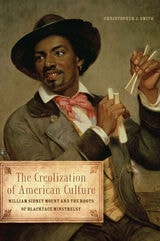
cover of The Creolization of American Culture: William Sidney Mount and the Roots of Blackface Minstrelsy

The Creolization of American Culture

William Sidney Mount and the Roots of Blackface Minstrelsy

Christopher J. Smith

University of Illinois Press, 2014
The Creolization of American Culture examines the artworks, letters, sketchbooks, music collection, and biography of the painter William Sidney Mount (1807–1868) as a lens through which to see the multiethnic antebellum world that gave birth to blackface minstrelsy. As a young man living in the multiethnic working-class community of New York's Lower East Side, Mount took part in the black-white musical interchange his paintings depict. An avid musician and tune collector as well as an artist, he was the among the first to depict vernacular fiddlers, banjo players, and dancers precisely and sympathetically. His close observations and meticulous renderings provide rich evidence of performance techniques and class-inflected paths of musical apprenticeship that connected white and black practitioners.
 
Looking closely at the bodies and instruments Mount depicts in his paintings as well as other ephemera, Christopher J. Smith traces the performance practices of African American and Anglo-European music-and-dance traditions while recovering the sounds of that world. Further, Smith uses Mount's depictions of black and white music-making to open up fresh perspectives on cross-ethnic cultural transference in Northern and urban contexts, showing how rivers, waterfronts, and other sites of interracial interaction shaped musical practices by transporting musical culture from the South to the North and back. The "Africanization" of Anglo-Celtic tunes created minstrelsy's musical "creole synthesis," a body of melodic and rhythmic vocabularies, repertoires, tunes, and musical techniques that became the foundation of American popular music.
 
Reading Mount's renderings of black and white musicians against a background of historical sites and practices of cross-racial interaction, Smith offers a sophisticated interrogation and reinterpretation of minstrelsy, significantly broadening historical views of black-white musical exchange.
[more]
cover of The Cristal Experiment: A Chicano Struggle for Community Control

The Cristal Experiment

A Chicano Struggle for Community Control

Armando Navarro

University of Wisconsin Press, 1998

Amidst the turbulence and militancy of the 1960s and early 1970s, the Mexicano population of the dusty agricultural town of Crystal City, Texas (Cristal in Spanish), staged two electoral revolts, each time winning control of the city council and school board. The landmark city council victory in 1963 was a first for Mexican Americans in South Texas, and Cristal—the “spinach capital of the world”—became for a time the political capital of the Chicano Movement.
     In The Cristal Experiment, Armando Navarro presents the most comprehensive examination to date of the rise of the Chicano political movement in Cristal, its successes and conflicts (both internal and external), and its eventual decline. He looks particularly at the larger and more successful “Second Revolt” in 1970 and its aftermath up to 1981, examining the political, economic, educational, and social changes for Mexicanos that resulted. Drawing upon nearly 100 interviews, a wealth of secondary materials, and his own experiences as a political organizer in the Chicano Movement, Navarro offers a shrewd and insightful analysis not only of the events in Cristal, but also of the workings of local politics generally, the politics of community control, and the factors inherent in the American political system that lead to the self-destruction of political movements. As both a political scientist and an organizer, he outlines important lessons to be learned from what happened in Cristal and to the Chicano Movement.

[more]
cover of The Crucible: An Autobiography by Colonel Yay, Filipina American Guerrilla

The Crucible

An Autobiography by Colonel Yay, Filipina American Guerrilla

Cruz, Denise

Rutgers University Press, 2010

On December 8, 1941, as the Pacific War reached the Philippines, Yay Panlilio, a Filipina-Irish American, faced a question with no easy answer: How could she contribute to the war?

In this 1950 memoir, The Crucible: An Autobiography by Colonel Yay, Filipina American Guerrilla, Panlilio narrates her experience as a journalist, triple agent, leader in the Philippine resistance against the Japanese, and lover of the guerrilla general Marcos V. Augustin. From the war-torn streets of Japanese-occupied Manila, to battlegrounds in the countryside, and the rural farmlands of central California, Panlilio blends wry commentary, rigorous journalistic detail, and popular romance.

Weaving together appearances by Douglas MacArthur and Carlos Romulo with dangerous espionage networks, this work provides an insightful perspective on the war. The Crucible invites readers to see new intersections in Filipina/o, Asian American, and American literature studies, and Denise Cruz's introduction imparts key biographical, historical, and cultural contexts to that purpose.
[more]
cover of The Crusade for Justice: Chicano Militancy and the Government's War on Dissent

The Crusade for Justice

Chicano Militancy and the Government's War on Dissent

Ernesto B. Vigil

University of Wisconsin Press, 1999

This definitive account of the Chicano movement in 1960s Denver reveals the intolerance and brutality that inspired and accompanied the urban Chicano organization known as the Crusade for Justice.  Ernesto Vigil, an expert in the discourse of radical movements of this time, joined the Crusade as a young draft resistor where he met Rodolfo “Corky” Gonzales, the founder of the CFJ. Vigil follows the movement chronologically from Gonzales’s early attempts to fight discrimination as a participant in local democratic politics to his radical stance as an organizer outside mainstream politics.
    Drawing extensively upon FBI documentation that became available under the Freedom of Information Act, Vigil exposes massive surveillance of the Crusade for Justice by federal agents and local police and the damaging effects of such methods on ethnic liberation movements. Vigil complements these documents and the story of Gonzales’s development as a radical with the story of his personal involvement in the movement. The Crusade for Justice describes one of the most important Chicano organizations against prejudice.
[more]
cover of The Cry of the Senses: Listening to Latinx and Caribbean Poetics

The Cry of the Senses

Listening to Latinx and Caribbean Poetics

Ren Ellis Neyra

Duke University Press, 2020
In The Cry of the Senses, Ren Ellis Neyra examines the imaginative possibility for sound and poetics to foster new modes of sensorial solidarity in the Caribbean Americas. Weaving together the black radical tradition with Caribbean and Latinx performance, cinema, music, and literature, Ellis Neyra highlights the ways Latinx and Caribbean sonic practices challenge antiblack, colonial, post-Enlightenment, and humanist epistemologies. They locate and address the sonic in its myriad manifestations—across genres and forms, in a legal trial, and in the art and writing of Xandra Ibarra, the Fania All-Stars, Beatriz Santiago Muñoz, Édouard Glissant, and Eduardo Corral—while demonstrating how it operates as a raucous form of diasporic dissent and connectivity. Throughout, Ellis Neyra emphasizes Caribbean and Latinx sensorial practices while attuning readers to the many forms of blackness and queerness. Tracking the sonic through their method of multisensorial, poetic listening, Ellis Neyra shows how attending to the senses can inspire alternate, ethical ways of collective listening and being.
[more]
cover of The Cubans of Union City: Immigrants and Exiles in a New Jersey Community

The Cubans of Union City

Immigrants and Exiles in a New Jersey Community

Yolanda Prieto

Temple University Press, 2009

As a result of the conflicts between Cuba and the United States, especially after 1959, Cubans immigrated in great numbers. Most stayed in Miami, but many headed north to Union City, making it second only to Miami in its concentration of Cubans. In The Cubans of Union City, Yolanda Prieto discusses why Cubans were drawn to this particular city and how the local economy and organizations developed. Central aspects of this story are the roles of women, religion, political culture, and the fact of exile itself. 

As a member of this community and a participant in many of its activities, Prieto speaks with special authority about its demographic uniqueness. Far from being a snapshot of the community, The Cubans of Union City conveys an ongoing research agenda extending over more than twenty years, from 1959 to the 1980s. As a long-term observer who was also a resident, Prieto offers a unique and insightful view of the dynamics of this community’s evolution.
[more]
cover of The Cultural Revolution: 1967 in Review

The Cultural Revolution

1967 in Review

Michel Oksenberg, Carl Riskin, Robert A. Scalapino, and Ezra F. Vogel; with an Introduction by Alexander Eckstein

University of Michigan Press, 1968

The Chinese Communist system was from its very inception based on an inherent contradiction and tension, and the Cultural Revolution is the latest and most violent manifestation of that contradiction. Built into the very structure of the system was an inner conflict between the desiderata, the imperatives, and the requirements that technocratic modernization on the one hand and Maoist values and strategy on the other.
The Cultural Revolution collects four papers prepared for a research conference on the topic convened by the University of Michigan Center for Chinese Studies in March 1968. Michel Oksenberg opens the volume by examining the impact of the Cultural Revolution on occupational groups including peasants, industrial managers and workers, intellectuals, students, party and government officials, and the military. Carl Riskin is concerned with the economic effects of the revolution, taking up production trends in agriculture and industry, movements in foreign trade, and implications of Masoist economic policies for China’s economic growth. Robert A. Scalapino turns to China’s foreign policy behavior during this period, arguing that Chinese Communists in general, and Mao in particular, formed foreign policy with a curious combination of cosmic, utopian internationalism and practical ethnocentrism rooted both in Chinese tradition and Communist experience. Ezra F. Vogel closes the volume by exploring the structure of the conflict, the struggles between factions, and the character of those factions.
[more]
cover of The Culture of the Quake: The Great Kanto Earthquake and Taisho Japan

The Culture of the Quake

The Great Kanto Earthquake and Taisho Japan

Alex Bates

University of Michigan Press, 2015
The Culture of the Quake is first and foremost an exploration of Taishō-era narrative fiction. Every major film studio produced earthquake films, and authors from I-novelists to modernists, proletarian writers to popular fiction writers wrote something on the earthquake. In every case pre-existing attitudes toward their work shaped the way these people represented the earthquake, and yet the overwhelming destruction and mass suffering also posed particular challenges in representation. How could one show the pain without exploitation? Other scholars have looked at some of these groups of writers or filmmakers individually, but there are no studies looking at how they each tackled a similar subject.
The Great Kanto Earthquake is an understudied event that has only recently caught the attention of scholars. By focusing on the way it was represented in high and low culture, The Culture of the Quake gives insight into how people experienced the disaster and how they interpreted it in the years following. This book should be of interest to scholars of Japanese and Asian literature, film, culture, and history, and scholars of disaster studies.
[more]
cover of The Cunning of Recognition: Indigenous Alterities and the Making of Australian Multiculturalism

The Cunning of Recognition

Indigenous Alterities and the Making of Australian Multiculturalism

Elizabeth A. Povinelli

Duke University Press, 2002

The Cunning of Recognition is an exploration of liberal multiculturalism from the perspective of Australian indigenous social life. Elizabeth A. Povinelli argues that the multicultural legacy of colonialism perpetuates unequal systems of power, not by demanding that colonized subjects identify with their colonizers but by demanding that they identify with an impossible standard of authentic traditional culture.
Povinelli draws on seventeen years of ethnographic research among northwest coast indigenous people and her own experience participating in land claims, as well as on public records, legal debates, and anthropological archives to examine how multicultural forms of recognition work to reinforce liberal regimes rather than to open them up to a true cultural democracy. The Cunning of Recognition argues that the inequity of liberal forms of multiculturalism arises not from its weak ethical commitment to difference but from its strongest vision of a new national cohesion. In the end, Australia is revealed as an exemplary site for studying the social effects of the liberal multicultural imaginary: much earlier than the United States and in response to very different geopolitical conditions, Australian nationalism renounced the ideal of a unitary European tradition and embraced cultural and social diversity.
While addressing larger theoretical debates in critical anthropology, political theory, cultural studies, and liberal theory, The Cunning of Recognition demonstrates that the impact of the globalization of liberal forms of government can only be truly understood by examining its concrete—and not just philosophical—effects on the world.
[more]
cover of The Currency of Truth: Newsmaking and the Late-Socialist Imaginaries of China's Digital Era

The Currency of Truth

Newsmaking and the Late-Socialist Imaginaries of China's Digital Era

Emily H. C. Chua

University of Michigan Press, 2023

China’s news sector is a place where newsmakers, advertising executives, company bosses, and Party officials engage one another in contingent and evolving arrangements that run from cooperation and collaboration to manipulation and betrayal. Drawing on long-term ethnographic fieldwork with journalists, editors, and executives at a newspaper in Guangzhou, The Currency of Truth brings its readers into the lives of the people who write, publish, and profit from news in this milieu. The book shows that far from working as mere cogs in a Party propaganda machine, these individuals are immersed in fluidly shifting networks of formal and informal relationships, which they carefully navigate to pursue diverse goals.

In The Currency of Truth, Emily H. C. Chua argues that news in China works less as a medium of mass communication than as a kind of currency as industry players make and use news articles to create agreements, build connections, and protect and advance their positions against one another. Looking at the ethical and professional principles that well-intentioned and civically minded journalists strive to uphold, and the challenges and doubts that they grapple with in the process, Chua brings her findings into conversation around “post-truth” news and the “crisis” of professional journalism in the West.  The book encourages readers to rethink contemporary news, arguing that rather than setting out from the assumption that news works either to inform or deceive its publics, we should explore the “post-public” social and political imaginaries emerging among today’s newsmakers and remaking the terms of their practice.

[more]
cover of The Curt Flood Story: The Man behind the Myth

The Curt Flood Story

The Man behind the Myth

Stuart L. Weiss

University of Missouri Press, 2018

Curt Flood, former star center fielder for the St. Louis Cardinals, is a hero to many for selflessly sacrificing his career to challenge the legality of baseball’s reserve system. Although he lost his case before the Supreme Court, he has become for many a martyr in the eventually successful battle for free agency. Sportswriters and fans alike have helped to paint a picture of Flood as a larger-than-life figure, a portrait that, unhappily, cannot stand closer inspection. This book reveals the real Curt Flood—more man than myth.

Flood stirred up a hornet’s nest by refusing to be traded from the Cardinals to the Philadelphia Phillies after the 1969 season, arguing that Major League Baseball’s reserve system reduced him to the status of bondage. Flood decided to resist a system in which his contract could be traded without his consent and in which he was not at liberty to negotiate his services in an open market. Stuart Weiss examines the man behind the decision, exploring the span of Flood’s life and shedding light on his relationships with those who helped shape his determination to sue baseball and providing a new perspective on the lawsuit that found its way to the U.S. Supreme Court.

Although a superb player, Flood was known to be temperamental and sensitive; in suing Major League Baseball he transformed his grievances against the Cardinals front office into an attack on how the business of big-league ball was conducted. Weiss shows that Flood was far from the stereotypical “dumb jock” but was rather a proud, multifaceted black man in a business run by white moguls. By illuminating Flood’s private side, rarely seen by the public, he reveals how Flood misled a gullible press on a regular basis and how his 1971 memoir, The Way It Is, didn’t tell it the way it really was.

Drawing on previously untapped sources, Weiss examines more fully and deeply than other writers the complexities of Flood’s decision to pursue his lawsuit—and demonstrates that the picture of Flood as a martyr for free agency is a myth. He suggests why, of all the players traded or sold through the years, it was Flood who brought this challenge. Weiss also explains how Flood’s battle against the reserve system cannot be understood in isolation from the personal experiences that precipitated it, such as his youth in a dysfunctional home, his troubled first marriage, his financial problems, and his unwavering commitment to the Cardinals.

The Curt Flood Story is a realistic account of an eloquent man who presented a warm, even vulnerable, face to the public as well as to friends, while hiding his inner furies. It shows that Flood was neither a hero nor a martyr but a victim of unique circumstances and his own life.
[more]
cover of The Cybernetic Border: Drones, Technology, and Intrusion

The Cybernetic Border

Drones, Technology, and Intrusion

Iván Chaar López

Duke University Press, 2024

In The Cybernetic Border, Iván Chaar López argues that the settler US nation requires the production and targeting of a racialized enemy that threatens the empire. The cybernetic border is organized through practices of data capture, storage, processing, circulation, and communication that police bodies and constitute the nation as a bounded, territorial space. Chaar López historicizes the US government’s use of border enforcement technologies on Mexicans, Arabs, and Muslims from the mid-twentieth century to the present, showing how data systems are presented as solutions to unauthorized border crossing. Contrary to enduring fantasies of the purported neutrality of drones, smart walls, artificial intelligence, and biometric technologies, the cybernetic border represents the consolidation of calculation and automation in the exercise of racialized violence. Chaar López draws on corporate, military, and government records, promotional documents and films, technical reports, news reporting, surveillance footage, and activist and artist practices. These materials reveal how logics of enmity are embedded into information infrastructures that shape border control and modern sovereignty.
[more]
cover of The Czech Reader: History, Culture, Politics

The Czech Reader

History, Culture, Politics

Jan Bazant, Nina Bazantová, and Frances Starn, eds.

Duke University Press, 2010
The Czech Reader brings together more than 150 primary texts and illustrations to convey the dramatic history of the Czechs, from the emergence of the Czech state in the tenth century, through the creation of Czechoslovakia in 1918 and the Czech Republic in 1993, into the twenty-first century. The Czechs have preserved their language, traditions, and customs, despite their incorporation into the Holy Roman Empire, the Habsburg Empire, the Austro-Hungarian Empire, the Third Reich, and the Eastern Bloc. Organized chronologically, the selections in The Czech Reader include the letter to the Czech people written by the religious reformer and national hero Jan Hus in 1415, and Charter 77, the fundamental document of an influential anticommunist initiative launched in 1977 in reaction to the arrest of the Plastic People of the Universe, an underground rock band. There is a speech given in 1941 by Reinhard Heydrich, a senior Nazi official and Deputy Reich Protector of Bohemia and Moravia, as well as one written by Václav Havel in 1984 for an occasion abroad, but read by the Czech-born British dramatist Tom Stoppard, since Havel, the dissident playwright and future national leader, was not allowed to leave Czechoslovakia. Among the songs, poems, folklore, fiction, plays, paintings, and photographs of monuments and architectural landmarks are “Let Us Rejoice,” the most famous chorus from Bedřich Smetana’s comic opera The Bartered Bride; a letter the composer Antonín Dvořák sent from New York, where he directed the National Conservatory of Music in the 1890s; a story by Franz Kafka; and an excerpt from Milan Kundera’s The Joke. Intended for travelers, students, and scholars alike, The Czech Reader is a rich introduction to the turbulent history and resilient culture of the Czech people.
[more]
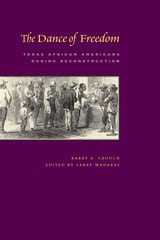
cover of The Dance of Freedom: Texas African Americans during Reconstruction

The Dance of Freedom

Texas African Americans during Reconstruction

By Barry Crouch

University of Texas Press, 2007

This anthology brings together the late Barry A. Crouch's most important articles on the African American experience in Texas during Reconstruction. Grouped topically, the essays explore what freedom meant to the newly emancipated, how white Texans reacted to the freed slaves, and how Freedmen's Bureau agents and African American politicians worked to improve the lot of ordinary African American Texans. The volume also contains Crouch's seminal review of Reconstruction historiography, "Unmanacling Texas Reconstruction: A Twenty-Year Perspective." The introductory pieces by Arnoldo De Leon and Larry Madaras recapitulate Barry Crouch's scholarly career and pay tribute to his stature in the field of Reconstruction history.
[more]
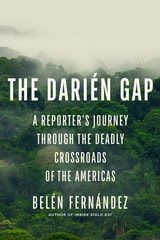
cover of The Darién Gap: A Reporter's Journey through the Deadly Crossroads of the Americas

The Darién Gap

A Reporter's Journey through the Deadly Crossroads of the Americas

Belén Fernández

Rutgers University Press, 2025

The narrow Darién Gap, the only land bridge connecting South and Central America, encompasses a spectacularly hostile jungle, covered in steep mountains, dense rainforests, and flood-prone marshes. Known in Spanish as el infierno verde, or “the green hell,” it is one of the most inhospitable places in the world. Its terrain is too treacherous for roads, yet hundreds of thousands of refuge seekers contend with its horrors every year in the hopes of reaching the United States, still some three thousand miles away. And of the countless who set out for the border, an untold number never arrive.
 
In this book, journalist Belén Fernández travels through the Darién Gap to report on the dehumanizing and deadly stretch of land that has become a mass graveyard for migrants. Fernández’s journey brings her into contact with refuge seekers, people smugglers, law enforcement officials, and many more whose stories bring life to a place overwhelmingly associated with death. Combining history, on-the-ground reporting, travelogue, memoir, and searing politico-economic analysis, she shines light on a largely made-in-the-USA crisis that has come to define our modern era.
 
Engrossing and heartrending, The Darién Gap is a poignant and compassionate indictment of structural inequality and institutionalized inhumanity in a world where the have-nots must risk death for a chance at a better life—or any life at all.
[more]
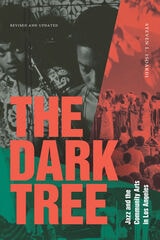
cover of The Dark Tree: Jazz and the Community Arts in Los Angeles

The Dark Tree

Jazz and the Community Arts in Los Angeles

Steven L. Isoardi

Duke University Press, 2023
In the early 1960s, pianist Horace Tapscott gave up a successful career in Lionel Hampton’s band and returned to his home in Los Angeles to found the Pan Afrikan Peoples Arkestra, a community arts group that focused on providing community-oriented jazz and jazz training. Over the course of almost forty years, the Arkestra, together with the related Union of God’s Musicians and Artists Ascension collective, was at the forefront of the vital community-based arts movement in Black Los Angeles. Some three hundred artists—musicians, vocalists, poets, playwrights, painters, sculptors, and graphic artists—passed through these organizations, many ultimately remaining within the community and others moving on to achieve international fame. In The Dark Tree, Steven L. Isoardi draws on one hundred in-depth interviews with the Arkestra’s participants to tell the history of the important and largely overlooked community arts movement of Black Los Angeles. This revised and updated edition brings the story of the Arkestra up to date, as its ethos and aesthetic remain vital forces in jazz and popular music to this day.
[more]
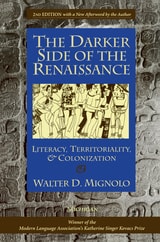
cover of The Darker Side of the Renaissance: Literacy, Territoriality, & Colonization, 2nd Edition

The Darker Side of the Renaissance

Literacy, Territoriality, & Colonization, 2nd Edition

Walter D. Mignolo

University of Michigan Press, 2003

The Darker Side of the Renaissance weaves together literature, semiotics, history, historiography, cartography, and cultural theory to examine the role of language in the colonization of the New World. Exploring the many connections among writing, social organization, and political control, including how alphabetic writing is linked with the exercise of power, Walter D. Mignolo claims that European forms of literacy were at the heart of New World colonization. It has long been acknowledged that Amerindians were at a disadvantage in facing European invaders because native cultures did not employ the same kind of texts (hence "knowledge") that the Europeans valued. Yet no one but Mignolo has so thoroughly examined either the process or the implications of conquest and destruction through language. The book continues to challenge commonplace understandings of New World history and to stimulate new colonial and postcolonial scholarship.
Walter D. Mignolo is Professor in the Department of Romance Studies and the Program in Literature, Duke University.
[more]
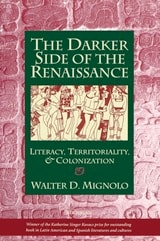
cover of The Darker Side of the Renaissance: Literacy, Territoriality, and Colonization

The Darker Side of the Renaissance

Literacy, Territoriality, and Colonization

Walter D. Mignolo

University of Michigan Press, 1995
Winner of the Modern Language Association's Katherine Singer Kovacs Prize.
The Darker Side of the Renaissance weaves together literature, semiotics, history, historiography, cartography, geography, and cultural theory to examine the role of language in the colonization of the New World.
Walter D. Mignolo locates the privileging of European forms of literacy at the heart of New World colonization. He examines how alphabetic writing is linked with the exercise of power, what role "the book" has played in colonial relations, and the many connections between writing, social organization, and political control. It has long been acknowledged that Amerindians were at a disadvantage in facing European invaders because native cultures did not employ the same kind of texts (hence "knowledge") that were validated by the Europeans. Yet no study until this one has so thoroughly analyzed either the process or the implications of conquest and destruction through sign systems.
Starting with the contrasts between Amerindian and European writing systems, Mignolo moves through such topics as the development of Spanish grammar, the different understandings of the book as object and text, principles of genre in history-writing, and an analysis of linguistic descriptions and mapping techniques in relation to the construction of territoriality and understandings of cultural space.
The Darker Side of the Renaissance will significantly challenge commonplace understandings of New World history. More importantly, it will continue to stimulate and provide models for new colonial and post-colonial scholarship.
". . . a contribution to Renaissance studies of the first order. The field will have to reckon with it for years to come, for it will unquestionably become the point of departure for discussion not only on the foundations and achievements of the Renaissance but also on the effects and influences on colonized cultures." -- Journal of Hispanic/ Latino Theology
Walter D. Mignolo is Professor in the Department of Romance Studies and the Program in Literature, Duke University.
[more]
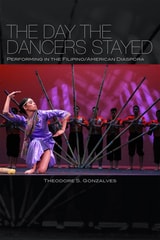
cover of The Day the Dancers Stayed: Performing in the Filipino/American Diaspora

The Day the Dancers Stayed

Performing in the Filipino/American Diaspora

Theodore S. Gonzalves

Temple University Press, 2009

Pilipino Cultural Nights at American campuses have been a rite of passage for youth culture and a source of local community pride since the 1980s. Through performances—and parodies of them—these celebrations of national identity through music, dance, and theatrical narratives reemphasize what it means to be Filipino American. In The Day the Dancers Stayed, scholar and performer Theodore Gonzalves uses interviews and participant observer techniques to consider the relationship between the invention of performance repertoire and the development of diasporic identification.

Gonzalves traces a genealogy of performance repertoire from the 1930s to the present. Culture nights serve several functions: as exercises in nostalgia, celebrations of rigid community entertainment, and occasionally forums for political intervention. Taking up more recent parodies of Pilipino Cultural Nights, Gonzalves discusses how the rebellious spirit that enlivened the original seditious performances has been stifled.
[more]
cover of The Deaf Way: Perspectives from the International Conference on Deaf Culture

The Deaf Way

Perspectives from the International Conference on Deaf Culture

Carol J. Erting

Gallaudet University Press, 1994
The Deaf Way documents the vast scholarly and artistic endeavors that took place in July 1989 when more than 6,000 deaf people from around the world met at Gallaudet University to celebrate Deaf culture. More than 150 articles by world-renowned experts examine every aspect of Deaf life in societies across the globe. This outstanding volume is divided into ten distinct sections: Deaf Culture Around the World, Deaf History, The Study of Sign Language in Society, Diversity in the Deaf Community, Deaf Clubs and Sports, The Deaf Child in the Family, Education, Deaf/Hearing Interaction, Deaf People and the Arts, and Deaf People and Human Rights Issues.
[more]
cover of The Death and Life of Chinese Civil Society

The Death and Life of Chinese Civil Society

Mujun Zhou

University of Michigan Press, 2026

The Death and Life of Chinese Civil Society examines how a group of Chinese intellectual elites referred to as the liberals or ziyou pai edified the civil society project beginning in the 1990s to build an independent space to constrain state power, increase political participation, and promote China’s democratization. In the early 2000s, activists in movements such as the environmental and the AIDS movements identified with the liberals and regarded their activism as part of the project of building civil society. However, since the late 2000s the liberals’ influence has gradually declined. In prominent social movements in the 2010s such as the labor and feminist movements, activists have openly criticized the liberal interpretation of civil society and regarded liberals’ civil society agenda as irrelevant. 

Mujun Zhou employs the concept of interstitial space, or the space where the exercise of power has not been fully institutionalized, to examine the history of the civil society project over the past three decades and its changing relationship with other social movements. Zhou suggests that by advocating for civil society the liberals gained allies and thematized many social problems rising during China’s economic reform; however, liberals’ activism also produced new forms of power inequalities.
 
[more]
cover of The Death and Life of Malcolm X

The Death and Life of Malcolm X

Peter Goldman

University of Illinois Press, 2013

The Death and Life of Malcolm X provides a dramatic portrait of one of the most important black leaders of the twentieth century. Focusing on Malcolm X's rise to prominence and the final year of his life, the book details his rift with the Nation of Islam and its leader, Elijah Muhammad, leading to death threats and eventually assassination at the hands of a death squad. In a new preface for this edition, Peter Goldman reflects on the forty years since the book's first publication and considers new information based on FBI surveillance that has since come to light.
[more]
cover of The Death-Bound-Subject: Richard Wright's Archaeology of Death

The Death-Bound-Subject

Richard Wright's Archaeology of Death

Abdul R. JanMohamed

Duke University Press, 2005

During the 1940s, in response to the charge that his writing was filled with violence, Richard Wright replied that the manner came from the matter, that the “relationship of the American Negro to the American scene [was] essentially violent,” and that he could deny neither the violence he had witnessed nor his own existence as a product of racial violence. Abdul R. JanMohamed provides extraordinary insight into Wright’s position in this first study to explain the fundamental ideological and political functions of the threat of lynching in Wright’s work and thought. JanMohamed argues that Wright’s oeuvre is a systematic and thorough investigation of what he calls the death-bound-subject, the subject who is formed from infancy onward by the imminent threat of death. He shows that with each successive work, Wright delved further into the question of how living under a constant menace of physical violence affected his protagonists and how they might “free” themselves by overcoming their fear of death and redeploying death as the ground for their struggle.

Drawing on psychoanalytic, Marxist, and phenomenological analyses, and on Orlando Patterson’s notion of social death, JanMohamed develops comprehensive, insightful, and original close readings of Wright’s major publications: his short-story collection Uncle Tom’s Children; his novels Native Son, The Outsider, Savage Holiday, and The Long Dream; and his autobiography Black Boy/American Hunger. The Death-Bound-Subject is a stunning reevaluation of the work of a major twentieth-century American writer, but it is also much more. In demonstrating how deeply the threat of death is involved in the formation of black subjectivity, JanMohamed develops a methodology for understanding the presence of the death-bound-subject in African American literature and culture from the earliest slave narratives forward.
[more]
cover of The Decline in Marriage Among African Americans: Causes, Consequences, and Policy Implications

The Decline in Marriage Among African Americans

Causes, Consequences, and Policy Implications

M. Belinda Tucker

Russell Sage Foundation, 1995
In a time when the American family has undergone dramatic evolution, change among African Americans has been particularly rapid and acute. African Americans now marry later than any other major ethnic group, and while in earlier decades nearly 95 percent of black women eventually married, today 30 percent are expected to remain single. The black divorcee rate has increased nearly five-fold over the last thirty years, and is double the rate of the general population. The result, according to The Decline in Marriage Among African Americans, is a greater share of family responsibilities being borne by women, an increased vulnerability to poverty and violence, and an erosion of community ties. The original, often controversial, research presented in this book links marital decline to a pivotal drop in the pool of marriageable black males. Increased joblessness has robbed many black men of their economic viability, rendering them not only less desirable as mates, but also less inclined to take on the responsibility of marriage. Higher death rates resulting from disease, poor health care, and violent crime, as well as evergrowing incarceration rates, have further depleted the male population. Editors M. Belinda Tucker and Claudia Mitchell-Kernan and the contributors take a hard look at the effects of chronic economic instability and cultural attitudes toward the male role as family provider. Their cogent historical analyses suggest that the influence of external circumstances over marriage preferences stems in large part from the profoundly damaging experience of slavery. This book firmly positions declining marriage within an ominous cycle of economic and social erosion. The authors propose policies for relieving the problems associated the changing marital behavior, focusing on support for single parent families, public education, and increased employment for African American men.
[more]
cover of The Declining Significance of Race: Blacks and Changing American Institutions, Third Edition

The Declining Significance of Race

Blacks and Changing American Institutions, Third Edition

William Julius Wilson

University of Chicago Press, 2012

When first published in 1980, The Declining Significance of Race immediately sparked controversy with its contentious thesis that race was becoming less of a deciding factor in the life chances of black Americans than class. This new edition of the seminal book includes a new afterword in which William Julius Wilson not only reflects on the debate surrounding the book, but also presents a provocative discussion of race, class, and social policy.

“The intellectual strength of this book lies in his capacity to integrate disparate findings from historical studies, social theory and research on contemporary trends into a complex and original synthesis that challenges widespread assumptions about the cause of black disadvantage and the way to remove it.”—Paul Starr, New York Times Book Review

“This publication is easily one of the most erudite and sober diagnoses of the American black situation. Students of race relations and anybody in a policy-making position cannot afford to bypass this study.”—Ernest Manheim, Sociology
[more]
cover of The Decolonized Eye: Filipino American Art and Performance

The Decolonized Eye

Filipino American Art and Performance

Sarita Echavez See

University of Minnesota Press, 2009

From the late 1980s to the present, artists of Filipino descent in the United States have produced a challenging and creative movement. In The Decolonized Eye, Sarita Echavez See shows how these artists have engaged with the complex aftermath of U.S. colonialism in the Philippines.

Focusing on artists working in New York and California, See examines the overlapping artistic and aesthetic practices and concerns of filmmaker Angel Shaw, painter Manuel Ocampo, installation artist Paul Pfeiffer, comedian Rex Navarrete, performance artist Nicky Paraiso, and sculptor Reanne Estrada to explain the reasons for their strangely shadowy presence in American culture and scholarship. Offering an interpretation of their creations that accounts for their queer, decolonizing strategies of camp, mimesis, and humor, See reveals the conditions of possibility that constitute this contemporary archive.

By analyzing art, performance, and visual culture, The Decolonized Eye illuminates the unexpected consequences of America's amnesia over its imperial history.
[more]
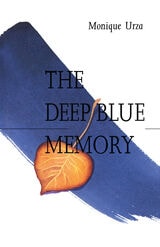
cover of The Deep Blue Memory

The Deep Blue Memory

Monique Laxalt Urza

University of Nevada Press, 1993
Monique Laxalt Urza's first novel is an intimate portrait of a second-generation Basque-American who struggles to reconcile her memories of the simplicity of the past with the reality of change in the present. The Deep Blue Memory is a fictionalized story of immigration told from the point of view of the granddaughter of Basque immigrant grandparents and daughter of a prominent first-generation family. The Deep Blue Memory addresses themes central to all of human existence. In particular, the book examines the eternal human search for identity that at the level of the first generation is forward-looking, but at the level of the grandchildren of immigrants, too often looks backward, clinging to images of a remembered past. The Deep Blue Memory treats the elements of time and knowledge, and of art and reality, as being intertwined. More than about any specific character, this book is about family—its make-up, its complexity, and its delicateness when resettled in America, the land of cataclysmic change.
[more]
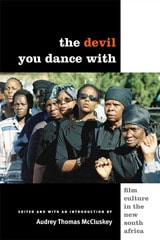
cover of The Devil You Dance With: Film Culture in the New South Africa

The Devil You Dance With

Film Culture in the New South Africa

Edited and with an Introduction by Audrey McCluskey

University of Illinois Press, 2008

South African film culture, like so much of its public life, has undergone a tremendous transformation during its first decade of democracy. Filmmakers, once in exile, banned, or severely restricted, have returned home; subjects once outlawed by the apparatchiks of apartheid are now fair game; and a new crop of insurgent filmmakers are coming to the fore.

This extraordinary volume presents twenty-five in-depth interviews with established and emerging South African filmmakers, collected and edited by Audrey Thomas McCluskey. The interviews capture the filmmakers’ spirit, energy, and ambition as they attempt to give birth to a film culture that reflects the heart and aspirations of their diverse and emergent nation. The collection includes a biographical profile of each filmmaker, as well an introductory essay by McCluskey, pointing to the themes, as well as creative differences and similarities, among the filmmakers.
[more]
cover of The Dialectics of Legal Repression: Black Rebels Before the American Criminal Courts

The Dialectics of Legal Repression

Black Rebels Before the American Criminal Courts

Isaac D. Balbus

Russell Sage Foundation, 2015

Less than 2 percent of some 4000 adults prosecuted for participating in the bloodiest ghetto revolt of this generation served any time in jail as a result of their conviction and sentencing. Why? Why, in contrast, did the majority of those arrested following a brief and minor confrontation with police in a different city receive far harsher treatment than ordinarily meted out for comparable offenses in "normal" times? What do these incidents tell us about the nature of legal repression in the American state? No coherent theory of political repression in the liberal state exists today. Neither the liberal view of repression as "anomaly" nor the radical view of repression as "fascist core" appears to come to grips with the distinctive characteristics of legal repression in the liberal state. This book attempts to arrive at a more adequate understanding of these "distinctive characteristics" by means of a detailed analysis of the legal response to the most serious violent challenge to the existing political order since the Great Depression—the black ghetto revolts between 1964 and 1968. Using police and court records, and extensive interviews with judges, defense attorneys, prosecutors, and detention officials, Professor Balbus provides a complete reconstruction of the response of the criminal courts of Los Angeles, Detroit, and Chicago to the "civil disorders" that occurred in these cities. What emerges is a disturbing picture of the relationship between court systems and participants and the local political environments in which they operate.
[more]
cover of The Dianshizhai Pictorial: Shanghai Urban Life, 1884–1898

The Dianshizhai Pictorial

Shanghai Urban Life, 1884–1898

Ye Xiaoqing

University of Michigan Press, 2003
While twentieth-century Shanghai has received extensive scholarly treatment, the nineteenth century has remained understudied, even though it encompasses the first half-century of Shanghai's growth as a treaty port and the early years of Chinese-foreign contact. Published in the last quarter of the nineteenth century, the Dianshizhai Pictorial provides a record of the new urban popular culture that emerged in Shanghai's foreign settlements during this period.
In this study, Ye Xiaoqing provides a comprehensive view into the Dianshizhai's detailed illustrations of everyday life at home, in commercial establishments, and in Shanghai's public areas. Her introduction to more than one hundred drawings points to the social background, lifestyle, and intellectual outlook of the Dianshizhai's literati writers and artists, the weakness of gentry control in the foreign settlements, and the commercialization and “modern” material culture that made Shanghai distinctive. The drawings and commentaries of the Dianshizhai contrast the settlements with “traditional” culture and urban life in the adjacent Chinese city and vividly convey items of interest—from the quotidian to the bizarre—highlighting local fascination with and anxiety at the rapid changes in Shanghai's increasingly cosmopolitan society.
[more]
cover of The Diasporic Condition: Ethnographic Explorations of the Lebanese in the World

The Diasporic Condition

Ethnographic Explorations of the Lebanese in the World

Ghassan Hage

University of Chicago Press, 2021

Bridging the gap between migration studies and the anthropological tradition, Ghassan Hage illustrates that transnationality and its attendant cultural consequences are not necessarily at odds with classic theory.

In The Diasporic Condition, Ghassan Hage engages with the diasporic Lebanese community as a shared lifeworld, defining a common cultural milieu that transcends spatial and temporal distance—a collective mode of being here termed the “diasporic condition.” Encompassing a complicated transnational terrain, Hage’s long-term ethnography takes us from Mehj and Jalleh in Lebanon to Europe, Australia, South America, and North America, analyzing how Lebanese migrants and their families have established themselves in their new homes while remaining socially, economically, and politically related to Lebanon and to each other.
 
At the heart of The Diasporic Condition lies a critical anthropological question: How does the study of a particular sociocultural phenomenon expand our knowledge of modes of existing in the world? As Hage establishes what he terms the “lenticular condition,” he breaks down the boundaries between “us” and “them,” “here” and “there,” showing that this convergent mode of existence increasingly defines everyone’s everyday life. 

[more]
cover of The Difference Aesthetics Makes: On the Humanities “After Man”

The Difference Aesthetics Makes

On the Humanities “After Man”

Kandice Chuh

Duke University Press, 2019
In The Difference Aesthetics Makes cultural critic Kandice Chuh asks what the humanities might be and do if organized around what she calls “illiberal humanism” instead of around the Western European tradition of liberal humanism that undergirds the humanities in their received form. Recognizing that the liberal humanities contribute to the reproduction of the subjugation that accompanies liberalism's definition of the human, Chuh argues that instead of defending the humanities, as has been widely called for in recent years, we should radically remake them. Chuh proposes that the work of artists and writers like Lan Samantha Chang, Carrie Mae Weems, Langston Hughes, Leslie Marmon Silko, Allan deSouza, Monique Truong, and others brings to bear ways of being and knowing that delegitimize liberal humanism in favor of more robust, capacious, and worldly senses of the human and the humanities. Chuh presents the aesthetics of illiberal humanism as vital to the creation of sensibilities and worlds capable of making life and lives flourish.
[more]
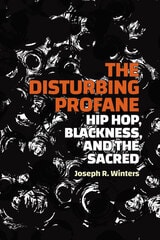
cover of The Disturbing Profane: Hip Hop, Blackness, and the Sacred

The Disturbing Profane

Hip Hop, Blackness, and the Sacred

Joseph R. Winters

Duke University Press, 2025
In The Disturbing Profane, Joseph R. Winters explores how hip hop’s religiosity is found in qualities associated with the dark sacred. Rather than purity and wholeness, this expression of the sacred signifies death and pleasure, opacity and contamination, exorbitance and anguish. Winters brings religious studies, black studies, black feminist thought, and critical theory to bear on hip hop to trouble distinctions between the sacred and the profane. He shows how artists like Notorious B.I.G., Lauryn Hill, Kendrick Lamar, Lupe Fiasco, and Nicki Minaj undermine stable meanings of the sacred to reveal listeners’ investments in unpleasant realities. Hip hop opens its audience to a volatile notion of the sacred and the unruly qualities of blackness. Moreover, Winters demonstrates that hip hop’s dark sacrality makes it inseparable from its expression of, participation in, and resistance to the antiblack and black gendered violence that organizes the social world. 
[more]
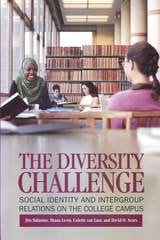
cover of The Diversity Challenge: Social Identity and Intergroup Relations on the College Campus

The Diversity Challenge

Social Identity and Intergroup Relations on the College Campus

James Sidanius

Russell Sage Foundation, 2008
College campuses provide ideal natural settings for studying diversity: they allow us to see what happens when students of all different backgrounds sit side by side in classrooms, live together in residence halls, and interact in one social space. By opening a window onto the experiences and evolving identities of individuals in these exceptionally diverse environments, we can gain a better understanding of the possibilities and challenges we face as a multicultural nation. The Diversity Challenge—the largest and most comprehensive study to date on college campus diversity—synthesizes over five years' worth of research by an interdisciplinary team of experts to explore how a highly diverse environment and policies that promote cultural diversity affect social relations, identity formation, and a variety of racial and political attitudes. The result is a fascinating case study of the ways in which individuals grow and groups interact in a world where ethnic and racial difference is the norm. The authors of The Diversity Challenge followed 2,000 UCLA students for five years in order to see how diversity affects identities, attitudes, and group conflicts over time. They found that racial prejudice generally decreased with exposure to the ethnically diverse college environment. Students who were randomly assigned to roommates of a different ethnicity developed more favorable attitudes toward students of different backgrounds, and the same associations held for friendship and dating patterns. By contrast, students who interacted mainly with others of similar backgrounds were more likely to exhibit bias toward others and perceive discrimination against their group. Likewise, the authors found that involvement in ethnically segregated student organizations sharpened perceptions of discrimination and aggravated conflict between groups. The Diversity Challenge also reports compelling new evidence that a strong ethnic identity can coexist with a larger community identity: students from all ethnic groups were equally likely to identify themselves as a part of the broader UCLA community. Overall, the authors note that on many measures, the racial and political attitudes of the students were remarkably consistent throughout the five year study. But the transformations that did take place provide us with a wealth of information on how diversity affects individuals, groups, and the cohesion of a community. Theoretically informed and empirically grounded, The Diversity Challenge is an illuminating and provocative portrait of one of the most diverse college campuses in the nation. The story of multicultural UCLA has significant and far-reaching implications for our nation, as we face similar challenges—and opportunities—on a much larger scale.
[more]
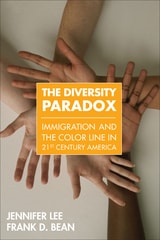
cover of The Diversity Paradox: Immigration and the Color Line in Twenty-First Century America

The Diversity Paradox

Immigration and the Color Line in Twenty-First Century America

Jennifer Lee

Russell Sage Foundation, 2010
African Americans grappled with Jim Crow segregation until it was legally overturned in the 1960s. In subsequent decades, the country witnessed a new wave of immigration from Asia and Latin America—forever changing the face of American society and making it more racially diverse than ever before. In The Diversity Paradox, authors Jennifer Lee and Frank Bean take these two poles of American collective identity—the legacy of slavery and immigration—and ask if today's immigrants are destined to become racialized minorities akin to African Americans or if their incorporation into U.S. society will more closely resemble that of their European predecessors. They also tackle the vexing question of whether America's new racial diversity is helping to erode the tenacious black/white color line. The Diversity Paradox uses population-based analyses and in-depth interviews to examine patterns of intermarriage and multiracial identification among Asians, Latinos, and African Americans. Lee and Bean analyze where the color line—and the economic and social advantage it demarcates—is drawn today and on what side these new arrivals fall. They show that Asians and Latinos with mixed ancestry are not constrained by strict racial categories. Racial status often shifts according to situation. Individuals can choose to identify along ethnic lines or as white, and their decisions are rarely questioned by outsiders or institutions. These groups also intermarry at higher rates, which is viewed as part of the process of becoming "American" and a form of upward social mobility. African Americans, in contrast, intermarry at significantly lower rates than Asians and Latinos. Further, multiracial blacks often choose not to identify as such and are typically perceived as being black only—underscoring the stigma attached to being African American and the entrenchment of the "one-drop" rule. Asians and Latinos are successfully disengaging their national origins from the concept of race—like European immigrants before them—and these patterns are most evident in racially diverse parts of the country. For the first time in 2000, the U.S. Census enabled multiracial Americans to identify themselves as belonging to more than one race. Eight years later, multiracial Barack Obama was elected as the 44th President of the United States. For many, these events give credibility to the claim that the death knell has been sounded for institutionalized racial exclusion. The Diversity Paradox is an extensive and eloquent examination of how contemporary immigration and the country's new diversity are redefining the boundaries of race. The book also lays bare the powerful reality that as the old black/white color line fades a new one may well be emerging—with many African Americans still on the other side.
[more]
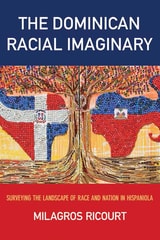
cover of The Dominican Racial Imaginary: Surveying the Landscape of Race and Nation in Hispaniola

The Dominican Racial Imaginary

Surveying the Landscape of Race and Nation in Hispaniola

Ricourt, Milagros

Rutgers University Press, 2016

Honorable mention, 2017 Gordon K. and Sybil Lewis Award from the Caribbean Studies Association

This book begins with a simple question: why do so many Dominicans deny the African components of their DNA, culture, and history? 
 
Seeking answers, Milagros Ricourt uncovers a complex and often contradictory Dominican racial imaginary. Observing how Dominicans have traditionally identified in opposition to their neighbors on the island of Hispaniola—Haitians of African descent—she finds that the Dominican Republic’s social elite has long propagated a national creation myth that conceives of the Dominican as a perfect hybrid of native islanders and Spanish settlers. Yet as she pores through rare historical documents, interviews contemporary Dominicans, and recalls her own childhood memories of life on the island, Ricourt encounters persistent challenges to this myth. Through fieldwork at the Dominican-Haitian border, she gives a firsthand look at how Dominicans are resisting the official account of their national identity and instead embracing the African influence that has always been part of their cultural heritage.  
 
Building on the work of theorists ranging from Edward Said to Édouard Glissant, this book expands our understanding of how national and racial imaginaries develop, why they persist, and how they might be subverted. As it confronts Hispaniola’s dark legacies of slavery and colonial oppression, The Dominican Racial Imaginary also delivers an inspiring message on how multicultural communities might cooperate to disrupt the enduring power of white supremacy. 
 
[more]
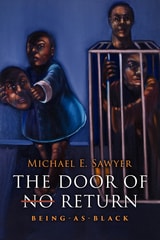
cover of The Door of No Return: Being-As-Black

The Door of No Return

Being-As-Black

Michael E. Sawyer

Temple University Press, 2026

In The Door of No Return, Michael E. Sawyer presents a bold work of speculative theory and philosophy that explores how Black people bring the future into being—and what existence in that future looks like. He considers what people of African descent face and the proper response to the situation. He introduces the idea of Being-As-Black as a response and questions the overarching ethos that will be the guide to a beneficial resolution.

Using critical theory and philosophy, Sawyer decouples Black identity and Black philosophy from White and Western frames by building on Toni Morrison’s ideas of Black Thought and encouraging an understanding of Black Self-Consciousness and Black Self-Identity on Black terms. The Door of No Return uses music, literature, visual art, and a variety of physical disciplines to imagine a world that differs from one that confounds the positive formation of Black Self-Consciousness under the coercive regime of white supremacy and Anti-Black racism.

[more]
cover of The Duplex Nature of Indigeneity: Navigating Identity in the Ahuehuepan Diaspora

The Duplex Nature of Indigeneity

Navigating Identity in the Ahuehuepan Diaspora

Frans J. Schryer

University Press of Colorado, 2025

The Duplex Nature of Indigeneity is a detailed ethnography centered on Ahuehuepan, a Mexican town in the Alto Balsas region of the state of Guerrero, where an exodus of more than half the population to the United States and other parts of Mexico has altered both livelihoods and social identities. Frans Schryer traces the people, including families and descendants, who locate their identity in the Alto Balsas—a place some of them may never have seen.
 
Using a variety of sources, perspectives, and methods, Schryer takes a duplexity approach, which allows understanding the complexity of social reality and its complementary nature—it identifies fields, clusters, and layers as interconnected components of social life. The innovative methods consist of the combination of ethnographic description and an ethnohistorical census that provides information on every person going back to approximately 1850. That census is further examined with the use of inferential and non-inferential statistical techniques, archival research in locations not normally accessible to scholars, Facebook, phone interviews conducted over several years, and help from Nahuatl-speaking people whose perspectives on the findings generate additional information and insights.
 
Unique in this presentation, which dips into the lives of generations of people to draw insight on those who lay claim to transnational Indigeneity, Schryer’s work contributes to research and theoretical discussion in the field of migration and globalization studies through a close examination of one Indigenous community over the course of many years, utilizing a mix of qualitative and quantitative research methods in anthropology.
 
[more]