Results by title
18284 books match the query 'United States' and 3764 start with t
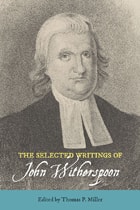
The Selected Writings of John Witherspoon
Edited by Thomas P. Miller
Southern Illinois University Press, 1990

The Selena Reader
Remembering the Queen of TejanoEdited by Larissa M. Mercado-López and Yndalecio Isaac Hinojosa
University of Texas Press, 2026
A literary collection honoring and memorializing Selena, the Queen of Tejano.
Thirty years after her death, Selena Quintanilla-Pérez remains a cherished figure of Mexican American popular culture, her music and celebrity resounding across the decades. This unique collection of creative and scholarly works traces Selena’s lasting impact as an entertainer and focal point of community and identity.
Assembling essays, memoir, short stories, and poems, The Selena Reader memorializes a beloved singer while also exploring the politics and personal meaning of what we remember. Selena’s devoted admirers tell us what they took from her lyrics and stage presence, the official and fan tributes, and the media and products she inspired. In one essay, Tejana coming-of-age is sharply refracted through the prism of Selena’s art and social status. Another piece considers how Selena’s body and distinctive clothing have shaped the author’s sense of queer self. Honey Avila (aka Honey Andrews), the renowned Selena impersonator, shares vivid recollections of her hero. A father and daughter describe how their conversations about Selena changed their relationship and contributed to Chicana feminist consciousness in their lives. All told, this anthology amplifies the gratitude of generations who have loved, and learned from, Selena.
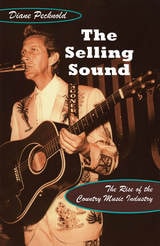
The Selling Sound
The Rise of the Country Music IndustryDiane Pecknold
Duke University Press, 2007
Pecknold draws on sources as diverse as radio advertising journals, fan magazines, Hollywood films, and interviews with industry insiders. Her sweeping social history encompasses the genre’s early days as an adjunct of radio advertising in the 1920s, the friction between Billboard and more genre-oriented trade papers over generating the rankings that shaped radio play lists, the establishment of the Country Music Association, and the influence of rock ‘n’ roll on the trend toward single-genre radio stations. Tracing the rise of a large and influential network of country fan clubs, Pecknold highlights the significant promotional responsibilities assumed by club organizers until the early 1970s, when many of their tasks were taken over by professional publicists.

The Senses of Nonsense
Alison Rieke
University of Iowa Press, 1992
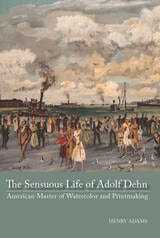
The Sensuous Life of Adolf Dehn
American Master of Watercolor and PrintmakingHenry Adams
University of Missouri Press, 2020
In this wide-ranging biography, Henry Adams explores how a once central figure can come to be forgotten. Noting that Dehn’s watercolor Spring in Central Park has been widely reproduced on calendars, postcards, and other Metropolitan Museum of Art souvenirs, Adams asks why it is that some artists are celebrated as key figures while others, even those who created images that form an integral part of our visual culture, are relatively unknown. With his account of the life of the prolific and influential Dehn, and a look at the circles of artists and writers in which Dehn moved, Adams helps to fill in what he calls the “secret or subterranean history of art.”

The Sequoia and Kings Canyon Reader
Edited by William C. Tweed
University of Utah Press, 2027
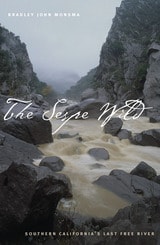
The Sespe Wild
Southern California'S Last Free RiverBradley John Monsma
University of Nevada Press, 2007
The Seventies Now
Culture as SurveillanceStephen Paul Miller
Duke University Press, 1999
The concept of surveillance and its attendant social ramifications have been powerful agents in U.S. culture for many decades, but in describing how during the 1970s Americans learned to “survey” themselves, Miller shines surprising new light on such subjects as the women’s movement, voting rights enforcement, the Ford presidency, and environmental legislation. He illuminates the significance of what he terms “microperiods” and analyzes relevant themes in many of the decade’s major films—such as The Deer Hunter, Network, Jaws, Star Wars, and Apocalypse Now—and in the literature of writers including John Ashbery, Toni Morrison, Adrienne Rich, and Sam Shepard. In discussing the reverberations of the 1969 Stonewall riots, technological innovations, the philosophy of Michel Foucault, and a host of documents and incidents, Miller shows how the 1970s marked an important period of transition, indeed a time of many transitions, to the world we confront at the end of the millennium.
The Seventies Now will interest students and scholars of cultural studies, American history, theories of technology, film and literature, visual arts, and gay and lesbian studies.

The Sex Education Debates
Nancy Kendall
University of Chicago Press, 2012

The Shape of Utopia
The Architecture of Radical Reform in Nineteenth-Century AmericaIrene Cheng
University of Minnesota Press, 2023
How nineteenth-century social reformers devised a new set of radical blueprints for society
In the middle of the nineteenth century, a utopian impulse flourished in the United States through the circulation of architectural and urban plans predicated on geometrically distinct designs. Though the majority of such plans remained unrealized, The Shape of Utopia emphasizes the enduring importance of these radical propositions and their ability to visualize alternatives to what was then a newly emerging capitalist nation.
Drawing diagrammatic plans for structures such as octagonal houses, a hexagonal anarchist city, and circular centers of equitable commerce, these various architectural utopians applied geometric forms to envision a more just and harmonious society. Highlighting the inherent political capacity of architecture, Irene Cheng showcases how these visionary planners used their blueprints as persuasive visual rhetoric that could mobilize others to share in their aspirations for a better world.
Offering an extensive and uniquely focused view of mid-nineteenth-century America’s rapidly changing cultural landscape, this book examines these utopian plans within the context of significant economic and technological transformation, encompassing movements such as phrenology, anarchism, and spiritualism. Engaging equally with architectural history, visual culture studies, and U.S. history, The Shape of Utopia documents a pivotal moment in American history when ordinary people ardently believed in the potential to reshape society.
The Shaping of American Liberalism
The Debates over Ratification, Nullification, and SlaveryDavid F. Ericson
University of Chicago Press, 1993
Focusing on three critical debates in American history—the debate between Anti-Federalists and Federalists over the ratification of the Constitution; the debate between the national republicans and the states-rights republicans over the nullification of the tariff; and the Lincoln-Douglas debates over slavery and pluralist democracy—Ericson shows that republicanism, rather than being opposed to liberalism, is in fact an offshoot of it. His descriptions of republicanism and pluralism represent the poles of an evolving tradition of liberal ideas in America: the former championing the claims of the public sphere, general welfare, and civic virtue; the latter protecting the rights of the individual to liberty, property, and privacy.
Republicanism and pluralism are therefore more properly understood as two sets of competing ideas that evolved from common roots. Ericson concludes that although republican themes persist in American politics, the profound transformations brought about by the Civil War made the ascendancy of pluralism virtually inevitable.
This highly original discussion of the relation between liberalism and republicanism—the central concern of much of the recent scholarship in American political thought—will be important reading for those interested in American politics, history, and culture.

The Shattered Mirror
Representations of Women in Mexican LiteratureBy María Elena de Valdés
University of Texas Press, 1998
Popular images of women in Mexico—conveyed through literature and, more recently, film and television—were long restricted to either the stereotypically submissive wife and mother or the demonized fallen woman. But new representations of women and their roles in Mexican society have shattered the ideological mirrors that reflected these images. This book explores this major change in the literary representation of women in Mexico.
María Elena de Valdés enters into a selective and hard-hitting examination of literary representation in its social context and a contestatory engagement of both the literary text and its place in the social reality of Mexico. Some of the topics she considers are Carlos Fuentes and the subversion of the social codes for women; the poetic ties between Sor Juana Inés de la Cruz and Octavio Paz; questions of female identity in the writings of Rosario Castellanos, Luisa Josefina Hernández, María Luisa Puga, and Elena Poniatowska; the Chicana writing of Sandra Cisneros; and the postmodern celebration—without reprobation—of being a woman in Laura Esquivel's Like Water for Chocolate.
The Shawnees and Their Neighbors, 1795-1870
Stephen Warren
University of Illinois Press, 2004
Until recently, historians have assumed that Central Algonquians derive from politically unified tribes, but by analyzing the crucial role that individuals, institutions, and policies played in shaping modern tribal governments, Warren reveals a messier, more complicated history of migration and conflict. Ultimately, Warren establishes that the form of the modern Shawnee "tribe" was coerced in accordance with the U.S. government's desire for an entity with whom to do business, rather than as a natural development of traditional Shawnee ways.
The Shiloh Campaign
Edited by Steven E. Woodworth
Southern Illinois University Press, 2009
Some 100,000 soldiers fought in the April 1862 battle of Shiloh, and nearly 20,000 men were killed or wounded; more Americans died on that Tennessee battlefield than had died in all the nation’s previous wars combined. In the first book in his new series, Steven E. Woodworth has brought together a group of superb historians to reassess this significant battleandprovide in-depth analyses of key aspects of the campaign and its aftermath.
The eight talented contributors dissect the campaign’s fundamental events, many of which have not received adequate attention before now. John R. Lundberg examines the role of Albert Sidney Johnston, the prized Confederate commander who recovered impressively after a less-than-stellar performance at forts Henry and Donelson only to die at Shiloh; Alexander Mendoza analyzes the crucial, and perhaps decisive, struggle to defend the Union’s left; Timothy B. Smith investigates the persistent legend that the Hornet’s Nest was the spot of the hottest fighting at Shiloh; Steven E. Woodworth follows Lew Wallace’s controversial march to the battlefield and shows why Ulysses S. Grant never forgave him; Gary D. Joiner provides the deepest analysis available of action by the Union gunboats; Grady McWhineydescribes P. G. T. Beauregard’s decision to stop the first day’s attack and takes issue with his claim of victory; and Charles D. Grear shows the battle’s impact on Confederate soldiers, many of whom did not consider the battle a defeat for their side. In the final chapter, Brooks D. Simpson analyzes how command relationships—specifically the interactions among Grant, Henry Halleck, William T. Sherman, and Abraham Lincoln—affected the campaign and debunks commonly held beliefs about Grant’s reactions to Shiloh’s aftermath.
The Shiloh Campaign will enhance readers’ understanding of a pivotal battle that helped unlock the western theater to Union conquest. It is sure to inspire further study of and debate about one of the American Civil War’s momentous campaigns.

The Shipwreck of Their Hopes
The Battles for ChattanoogaPeter Cozzens
University of Illinois Press, 1994
Civil War enthusiasts will welcome this concluding volume of Peter Cozzens's highly praised trilogy on the Civil War in the West.
The battle around Chattanooga in the late fall of 1863 were among the most decisive of the Civil War, opening the Deep South to the Union and setting the stage for the Atlanta campaign and the March to the Sea. After Chattanooga, the principal Confederate army in the West fought without spirit or hope of victory. Cozzens's comprehensive account details movements of individual regiments, even as it reveals the larger impact of the campaign on the outcome of the war.
In The Shipwreck of Their Hopes, Cozzens draws on his acclaimed storytelling skills and exhaustive research efforts to fully chronicle one of the South's most humiliating defeats. As in his earlier books, he brings to life the officers and enlisted men who fought the war.
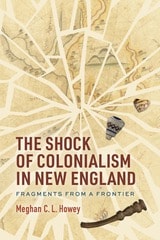
The Shock of Colonialism in New England
Fragments from a FrontierMeghan C. L. Howey
University of Alabama Press, 2025
Explores the untold impacts of colonialism in New England through diverse colonist lives, Indigenous encounters, and environmental legacies.
In The Shock of Colonialism in New England, archaeologist Meghan C. L. Howey uses excavations in the seventeenth-century colonial frontier of the Great Bay Estuary/P8bagok in today’s New Hampshire to trace the connection between European global colonialism and the planetary climate crises. Howey shows how this landscape holds forgotten stories of what it meant to live through the shock of colonialism.
These stories reveal an unexpected diversity and dynamism among English colonists, multifaceted encounters with Indigenous peoples, and lasting environmental damage from labor-intensive industries. Early Euro-American maps and stunning archaeological finds, such as a broken pickaxe embedded in a hearth, and a historical marker for the Oyster River “Massacre” of 1694 complicate our limited views of a shared past.
The reality of English colonialism in the dispossession of Indigenous lands and its wake is not commemorated. Howey’s work is a powerful corrective that traces the rise of intergenerational colonial wealth made possible by land commodified as property, the increased labor required to work newly opened land, the importation of indentured Scots and enslaved Africans to provide that labor, and the resulting degradation of the natural environment. Through Howey’s insights into the stories they tell, these fragments from a frontier can help contemporary readers better understand the past as they seek a more just and sustainable future.
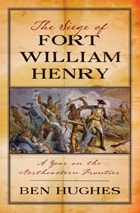
The Siege of Fort William Henry
A Year on the Northeastern FrontierBen Hughes
Westholme Publishing, 2012
Immortalized in The Last of the Mohicans, the True Story of a Pivotal Battle in the British and French War for the North American Continent
The opening years of the French and Indian War were disastrous for the British. In 1755 General Braddock’s troops were routed at the Battle of Monongahela and by the middle of 1756 Fort Oswego on Lake Ontario had fallen. Hindered by quarrelsome provincial councils, incompetent generals, and the redcoats’ inability to adapt to wilderness warfare, Britain was losing the war. In 1757 the 35th Regiment of Foot stepped into the breach. A poorly trained assortment of conscripts, old soldiers, and convicted criminals led by Lieutenant Colonel George Monro, the regiment was destined to take center stage in the most controversial event of the war. Fort William Henry on the southern shore of New York’s Lake George was a key fortification supporting British interests along the frontier with French America. Monro and his regiment occupied the fort in the spring of 1757 while Britain planned its attack on the key French fortress at Louisbourg, Nova Scotia. Learning that most of Britain’s military resources were allocated to Louisbourg, the French launched a campaign along the weakened frontier. French Commander Louis-Joseph de Montcalm and his American Indian allies laid siege to Fort William Henry; Monro could not hold out and was forced to surrender. As part of the terms, the British regiment, colonial militia, and their camp followers would be allowed safe passage to nearby Fort Edward. The French watched in horror, however, as their Indian allies attacked the British column after it left the fort, an episode that sparked outrage and changed the tactics of the war.
Seen through the eyes of participants such as Louis Antoine de Bougainville, a scholarly young aide-de-camp, Jabez Fitch, an amiable Connecticut sergeant, and Kisensik, a proud Nipissing chief whose father once met Louis XIV in the marbled halls of Versailles, The Siege of Fort William Henry: A Year on the Northeastern Frontier uses contemporary newspaper reports, official documents, private letters, and published memoirs to bring the narrative to life. From Indian councils on the banks of the Saint Lawrence River and bustling military camps in northern New York to the narrative’s bloody denouement on the shores of Lake George, the reader is immersed in the colorful, yet brutal world of eighteenth-century northeastern America.
The Sign of the Burger
Mcdonald'S And The Culture Of PowerJoe Kincheloe
Temple University Press, 2002
"I didn't want to remain a hick from the mountains... In my cultural naivete I saw McDonald's as a place somehow where modern culture capital could be dispensed. Keeping these memories in mind as years later I monitored scores of conversations about the Golden Arches in the late 1990's, it became apparent that McDonald's is still considered a marker of a modern identity."
So begins a complicated journey into the power of one of the most recognizable signs of American capitalism: The Golden Arches. The Sign of the Burger examines how McDonald's captures our imagination: as a shorthand for explaining the power of American culture; as a symbol of the strength of consumerism; as a bellwether for the condition of labor in a globalized economy; and often, for better or worse, a powerful educational tool that often defines the nature of culture for hundreds of millions the world over.
While many books have offered simple complaints of the power of McDonald's, Joe Kincheloe explores the real ways McDonald's affects us. We see him as a young boy in Appalachia, watching the Golden Arches going up as the—hopeful—arrival of the modern into his rural world. And we travel with him around the world to see how this approach of the modern affects other people, either through excitement or through attempts at resisting McDonald's power, often in unfortunate ways. Through it all, Kincheloe makes clear, with lucidity and depth, the fact that McDonald's growth will in many ways determine both the nature of accepting and protesting its ever-expanding presence in our global world.
postamble();
The Sign of the Cannibal
Melville and the Making of a Postcolonial ReaderGeoffrey Sanborn
Duke University Press, 1998
Sanborn focuses on the representations of cannibalism in three of Melville’s key texts—Typee, Moby-Dick, and “Benito Cereno.” Drawing on accounts of Pacific voyages from two centuries and virtually the entire corpus of the post-Enlightenment discourse on cannibalism, he shows how Melville used his narratives to work through the ways in which cannibalism had been understood. In so doing, argues Sanborn, Melville sought to move his readers through stages of possible responses to the phenomenon in order to lead them to consider alternatives to established assumptions and conventions—to understand that in the savage they see primarily their own fear and fascination. Melville thus becomes a narrator of the postcolonial encounter as he uncovers the dynamic of dread and menace that marks the Western construction of the “non-savage” human.
Extending the work of Slavoj Zizek and Homi Bhabha while providing significant new insights into the work of Melville, The Sign of the Cannibal represents a breakthrough for students and scholars of postcolonial theory, American literary history, critical anthropology, race, and masculinity.
The Silent Guns of Two Octobers
Kennedy and Khrushchev Play the Double GameTheodore Voorhees, Jr.
University of Michigan Press, 2020
The Silent Guns of Two Octobers uses new as well as previously under-appreciated documentary evidence to link the Cuban Missile Crisis to the Checkpoint Charlie tank standoff to achieve the impossible—craft a new, thoughtful, original analysis of a political showdown everyone thought they knew everything about. Ultimately the book concludes that much of the Cold War rhetoric the leaders employed was mere posturing; in reality neither had any intention of starting a nuclear war. Theodore Voorhees reexamines Khrushchev’s and Kennedy’s leadership, decision, and rhetoric in light of the new documentary evidence available. Voorhees examines the impact of John F. Kennedy's domestic political concerns about his upcoming first midterm elections on his handling of the Cuban Missile Crisis through his use of back-channel dealings with Khrushchev during the lead-up to the crisis and in the closing days when the two leaders managed to reach a settlement.

The Silent Guns of Two Octobers
Kennedy and Khrushchev Play the Double GameTheodore Voorhees, Jr.
University of Michigan Press, 2021
The Silent Guns of Two Octobers uses new as well as previously under-appreciated documentary evidence to link the Cuban Missile Crisis to the Checkpoint Charlie tank standoff to achieve the impossible—craft a new, thoughtful, original analysis of a political showdown everyone thought they knew everything about. Ultimately the book concludes that much of the Cold War rhetoric the leaders employed was mere posturing; in reality neither had any intention of starting a nuclear war. Theodore Voorhees reexamines Khrushchev’s and Kennedy’s leadership, decision, and rhetoric in light of the new documentary evidence available. Voorhees examines the impact of John F. Kennedy's domestic political concerns about his upcoming first midterm elections on his handling of the Cuban Missile Crisis through his use of back-channel dealings with Khrushchev during the lead-up to the crisis and in the closing days when the two leaders managed to reach a settlement.
The Silver Man
The Life and Times of Indian Agent John KinziePeter Shrake
Wisconsin Historical Society Press, 2016
In The Silver Man: The Life and Times of John Kinzie, readers witness the dramatic changes that swept the Wisconsin frontier in the early and mid-1800s, through the life of Indian agent John Harris Kinzie. From the War of 1812 and the monopoly of the American Fur Company, to the Black Hawk War and the forced removal of thousands of Ho-Chunk people from their native lands—John Kinzie’s experience gives us a front-row seat to a pivotal time in the history of the American Midwest.
As an Indian agent at Fort Winnebago—in what is now Portage, Wisconsin—John Kinzie served the Ho-Chunk people during a time of turbulent change, as the tribe faced increasing attacks on its cultural existence and very sovereignty, and struggled to come to terms with American advancement into the upper Midwest. The story of the Ho-Chunk Nation continues today, as the tribe continues to rebuild its cultural presence in its native homeland.
Through John Kinzie’s story, we gain a broader view of the world in which he lived—a world that, in no small part, forms a foundation for the world in which we live today.
The Silver State, 3rd Edition
Nevada'S Heritage ReinterpretedJames W. Hulse
University of Nevada Press, 2004
The Sit-Ins
Protest and Legal Change in the Civil Rights EraChristopher W. Schmidt
University of Chicago Press, 2018
The Sit-Ins tells the story of the student lunch counter protests and the national debate they sparked over the meaning of the constitutional right of all Americans to equal protection of the law. Christopher W. Schmidt describes how behind the now-iconic scenes of African American college students sitting in quiet defiance at “whites only” lunch counters lies a series of underappreciated legal dilemmas—about the meaning of the Constitution, the capacity of legal institutions to remedy different forms of injustice, and the relationship between legal reform and social change. The students’ actions initiated a national conversation over whether the Constitution’s equal protection clause extended to the activities of private businesses that served the general public. The courts, the traditional focal point for accounts of constitutional disputes, played an important but ultimately secondary role in this story. The great victory of the sit-in movement came not in the Supreme Court, but in Congress, with the passage of the Civil Rights Act of 1964, landmark legislation that recognized the right African American students had claimed for themselves four years earlier. The Sit-Ins invites a broader understanding of how Americans contest and construct the meaning of their Constitution.
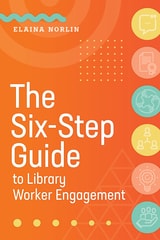
The Six-Step Guide to Library Worker Engagement
Elaina Norlin
American Library Association, 2021
Gallup’s 2019 State of the American Workplace Report found that 70 percent of employees are disengaged at work. Why is worker engagement so important? Engaged workers lead to engaged libraries — vibrant institutions that nurture their workers’ dedication, creativity, and innovation so they can serve their communities most effectively. This guide walks library managers and administrators through concrete steps to change their organization’s culture so that it fosters worker engagement, using first-hand accounts from library staff to illustrate both successes and failures. Readers will discover
- why libraries often fall short at hiring good leadership and ways to develop better recruitment strategies moving forward;
- how lack of trust pushes workplace culture towards incivility, hostility, and lower morale, and what library leaders can do to rebuild it;
- methods for using recognition and praise as tools for sustaining a positive work environment;
- the rationale for eliminating annual performance reviews in favor of less formal one-on-one conversations and “just in time” continuous feedback;
- the secrets behind high performing teams, strategies to support dysfunctional teams, and tips on how to develop remote teamwork; and
- why viewing diversity, equity, and inclusion (DEI) as separate from workplace culture is counterproductive, since it is actually the positive result of a strong foundation, with advice on combating the factors that contribute to low retention rates of BIPOC librarians.

The Sizzler
George Sisler, Baseball's Forgotten GreatRick Huhn
University of Missouri Press, 2013
During his illustrious career he was a .340 hitter, twice achieving the rare feat of hitting more than .400. His 257 hits in 1920 is still the record for the “modern” era. Considered by many to be one of the game’s most skillful first basemen, he was the first at his position to be inducted into the National Baseball Hall of Fame. Yet unlike many of his peers who became household names, Sisler has faded from baseball’s collective consciousness.
Now in The Sizzler, this “legendary player without a legend” gets the treatment he deserves. Rick Huhn presents the story of one of baseball’s least appreciated players and studies why his status became so diminished. Huhn argues that the answer lies somewhere amid the tenor of Sisler’s times, his own character and demeanor, the kinds of individuals who are chosen as our sports heroes, and the complex definition of fame itself.
In a society obsessed with exposing the underbellies of its heroes, Sisler’s lack of a dark side may explain why less has been written about him than others. Although Sisler was a shy, serious sort who often shunned publicity, his story is filled with its own share of controversy and drama, from a lengthy struggle among major-league moguls for his contractual rights—a battle that helped change the structure of organized baseball forever—to a job-threatening eye disorder he developed during the peak of his career and popularity.
By including excerpts from Sisler’s unpublished memoir, as well as references to the national and international events that took place during his heyday, Huhn reveals the full picture of this family man who overcame great obstacles, stood on high principles, and left his mark on a game he affected in a positive way for fifty-eight years.

The Skull Collectors
Race, Science, and America's Unburied DeadAnn Fabian
University of Chicago Press, 2010
When Philadelphia naturalist Samuel George Morton died in 1851, no one cut off his head, boiled away its flesh, and added his grinning skull to a collection of crania. It would have been strange, but perhaps fitting, had Morton’s skull wound up in a collector’s cabinet, for Morton himself had collected hundreds of skulls over the course of a long career. Friends, diplomats, doctors, soldiers, and fellow naturalists sent him skulls they gathered from battlefields and burial grounds across America and around the world.
With The Skull Collectors, eminent historian Ann Fabian resurrects that popular and scientific movement, telling the strange—and at times gruesome—story of Morton, his contemporaries, and their search for a scientific foundation for racial difference. From cranial measurements and museum shelves to heads on stakes, bloody battlefields, and the “rascally pleasure” of grave robbing, Fabian paints a lively picture of scientific inquiry in service of an agenda of racial superiority, and of a society coming to grips with both the deadly implications of manifest destiny and the mass slaughter of the Civil War. Even as she vividly recreates the past, Fabian also deftly traces the continuing implications of this history, from lingering traces of scientific racism to debates over the return of the remains of Native Americans that are held by museums to this day.
Full of anecdotes, oddities, and insights, The Skull Collectors takes readers on a darkly fascinating trip down a little-visited but surprisingly important byway of American history.
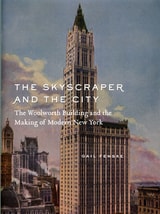
The Skyscraper and the City
The Woolworth Building and the Making of Modern New YorkGail Fenske
University of Chicago Press, 2008
Fenske shows here that the building’s multiplicity of meanings reflected the cultural contradictions that defined New York City’s modernity. For Frank Woolworth—founder of the famous five-and-dime store chain—the building served as a towering trademark, for advocates of the City Beautiful movement it suggested a majestic hotel de ville, for technological enthusiasts it represented the boldest of experiments in vertical construction, and for tenants it provided an evocative setting for high-style consumption. Tourists, meanwhile, experienced a spectacular sightseeing destination and avant-garde artists discovered a twentieth-century future. In emphasizing this faceted significance, Fenske illuminates the process of conceiving, financing, and constructing skyscrapers as well as the mass phenomena of consumerism, marketing, news media, and urban spectatorship that surround them.
As the representative example of the skyscraper as a “cathedral of commerce,” the Woolworth Building remains a commanding presence in the skyline of lower Manhattan, and the generously illustrated Skyscraper and the City is a worthy testament to its importance in American culture.
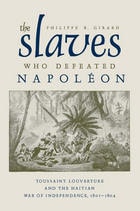
The Slaves Who Defeated Napoléon
Toussaint Louverture and the Haitian War of Independence, 1801–1804Philippe R. Girard
University of Alabama Press, 2011
A deeply researched and definitive account of the climactic battle at the end of the Haitian Revolution
Among the many rebellions against European colonial empires, the Haitian Revolution against France is among the most dramatic and complex. Having begun in 1791 as France was in the throes of its own young revolution, the conflict reached its dramatic climax when Napoleon dispatched a heavily armed expeditionary force led by his brother-in-law Charles Leclerc to re-establish slavery and the sugar economy that had so enriched France. Philippe Girard’s Slaves Who Defeated Napoleon is a deeply researched and engrossing account of this invasion and its spectacular defeat.
For this ambitious account, Philippe Girard has studied not only primary records in Haiti itself but also rare documents from nineteen public and private archives and research libraries in French, U.S., British, and Spanish collections. His more inclusive approach provides a fuller, more accurate and detailed narrative. He reveals not only key military movements, but also less-known aspects like the activities of U.S. merchants, in-fighting within Napoleon’s government, and communication between both sides and other European powers. Girard fills the work with unforgettable stories of those who led or were caught up in the war, people like poorly armed Black soldiers who ambushed Bonaparte’s columns, French child drummers, Jewish bankers in Kingston, weapon smugglers from Quaker Philadelphia, Polish artillerists, and mixed-raced people struggling to preserve their freedom against both Black and white opponents.
Transcending pat ideological and racial categories, the book brings into focus an Atlantic society at the crossroads of African and European influences, where Haitian rebels fought France while embracing its ideals.
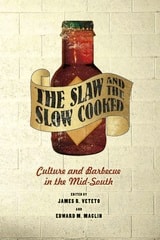
The Slaw and the Slow Cooked
Culture and Barbecue in the Mid-SouthJames R. Veteto
Vanderbilt University Press, 2011
In developing the book, Veteto and Maclin cast a wide net for divergent approaches. Food writer John Edge introduces us to Jones Bar-B-Q Diner in Marianna, Arkansas, a possibly century-old restaurant serving top-notch pork and simultaneously challenging race and class boundaries. Kristen Bradley-Shurtz explores the 150-plus-year tradition of the St. Patrick's Irish Picnic in McEwen, Tennessee. And no barbecue book would be complete without an insider's story, provided here by Jonathan Deutsch's "embedded" reporting inside a competitive barbecue team. Veteto and Maclin conclude with a glimpse into the future of barbecue culture: online, in the smoker, and fresh from the farm.
The Slaw and the Slow Cooked stands as a challenge to barbecue aficionados and a statement on the Mid-South's important place at the table. Intended for food lovers, anthropologists, and sociologists alike, The Slaw and the Slow Cooked demonstrates barbecue's status as a common language of the South.
The Slumbering Masses
Sleep, Medicine, and Modern American LifeMatthew J. Wolf-Meyer
University of Minnesota Press, 2016
Americans spend billions of dollars every year on drugs, therapy, and other remedies trying to get a good night’s sleep. Anxieties about not getting enough sleep and the impact of sleeplessness on productivity, health, and happiness pervade medical opinion, the workplace, and popular culture. In The Slumbering Masses, Matthew J. Wolf-Meyer addresses the phenomenon of sleep and sleeplessness in the United States, tracing the influence of medicine and industrial capitalism on the sleeping habits of Americans from the nineteenth century to the present.
Before the introduction of factory shift work, Americans enjoyed a range of sleeping practices, most commonly two nightly periods of rest supplemented by daytime naps. The new sleeping regimen—eight uninterrupted hours of sleep at night—led to the pathologization of other ways of sleeping. Arguing that the current model of sleep is rooted not in biology but in industrial capitalism’s relentless need for productivity, The Slumbering Masses examines so-called Z-drugs that promote sleep, the use of both legal and illicit stimulants to combat sleepiness, and the contemporary politics of time. Wolf-Meyer concludes by exploring the extremes of sleep, from cases of perpetual sleeplessness and the use of the sleepwalking defense in criminal courts to military experiments with ultra-short periods of sleep.
Drawing on untapped archival sources and long-term ethnographic research with people who both experience and treat sleep abnormalities, Wolf-Meyer analyzes and sharply critiques how sleep and its supposed disorders are understood and treated. By recognizing the variety and limits of sleep, he contends, we can establish more flexible expectations about sleep and, ultimately, subvert the damage of sleep pathology and industrial control on our lives.

The Slumbering Volcano
American Slave Ship Revolts and the Production of Rebellious MasculinityMaggie Montesinos Sale
Duke University Press, 1997
This comparison of narrative response with written public reaction to the actual revolts allows Sale to investigate the precise manner in which public opinion regarding definitions of liberty evolved over this crucial period of time between the Revolutionary and Civil Wars. Mapping the ways in which unequally empowered groups claimed and transformed statements associated with the discourse of national identity, Sale succeeds in recovering a historically informed sense of the discursive and activist options available to people of another era.
In its demonstration of how the United States has been uniquely shaped by its dual status as both an imperial and a postcolonial power, this study on the discourse of natural rights and national identity in the pre-Civil War United States will interest students and scholars of American studies, African American studies, gender studies, and American history and literature.

The Small And Rural Academic L Library
Leveraging ResourcesKaetrena Davis Kendrick
Assoc of College & Research Libraries, 2016
The Smoke of the Gods
A Social History of TobaccoEric Burns
Temple University Press, 2006
The Snake Fence
Janet Olshewsky
QuakerPress, 2012

The Snodgrass Site of the Powers Phase of Southeast Missouri
James E. Price and James B. Griffin
University of Michigan Press, 1979
The Snyders Mounds and Five Other Mound Groups in Calhoun County, Illinois
David P. Braun, James B. Griffin and Paul F. Titterington
University of Michigan Press, 1982
The Social Benefits of Education
Jere R. Behrman and Nevzer Stacey, Editors
University of Michigan Press, 1997
The Social Citizen
Peer Networks and Political BehaviorBetsy Sinclair
University of Chicago Press, 2012

The Social Gospel
Religion and Reform in Changing AmericaRonald White
Temple University Press, 1975
The Social Order of a Frontier Community
Jacksonville, Illinois, 1825-70Don Harrison Doyle
University of Illinois Press, 1978
"A well-conceived and well-argued book that is essential reading for those interested in the study of community building." --Journal of American History
"This study is important for both frontier and urban historians. It is well written, thoroughly documented, and illustrated in an informative manner. One may hope that future studies of other nineteenth century American towns will be completed with the competence and style of this excellent volume." --The Old Northwest
"For one who has lived in Jacksonville as I have, reading this book stirred fond memories and answered lingering questions about this town. . . . As a capsule study of an unusual Illinois community renowned for its past, Doyle's book makes for fascinating reading." --Civil War History
The Social Organization of Schooling
Larry V. Hedges
Russell Sage Foundation, 2005

The Social Organization of Sexuality
Sexual Practices in the United StatesEdward O. Laumann, John H. Gagnon, Robert T. Michael, and Stuart Michaels
University of Chicago Press, 1994
"The most comprehensive U.S. sex survey ever." —USA Today
"The findings from this survey, the first in decades to provide detailed insights about the sexual behavior of a representative sample of Americans, will have a profound impact on how policy makers tackle a number of pressing health problems." —Alison Bass, The Boston Globe
"A fat, sophisticated, and sperm-freezingly serious volume. . . . This book is not in the business of giving us a good time. It is in the business of asking three thousand four hundred and thirty-two other people whether they had a good time, and exactly what they did to make it so good." —Anthony Lane, The New Yorker
New York Times Book Review Notable Book of the Year
The Social Organization of the Western Apache
Grenville Goodwin; Preface by Keith H. Basso
University of Arizona Press, 1969
The Social Organization of the Western Apache is still one of the most comprehensive descriptions of the social life of an American Indian tribe. Grenville Goodwin knew the Western Apache better than any other ethnographer who ever lived. And he wrote about them from the conviction that his knowledge was important—not only for specialists interested in the tribes of the Southwest, but for all anthropologists concerned with the structure and operation of primitive social systems.
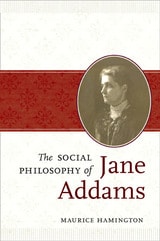
The Social Philosophy of Jane Addams
Maurice Hamington
University of Illinois Press, 2009
Although there has been a resurgence of scholarly interest in Jane Addams, much of the recent literature has dwelt more on her extraordinary and pioneering life than on the philosophical contribution of her twelve books and hundreds of published articles. This study is the first book-length work to focus entirely on Addams as a philosopher, a moral and political theorist who was steeped in the classic American Pragmatist tradition but who transcended that tradition to emphasize the significance of gender, race, and class.
Exploring Addams's contribution to epistemology, ethics, and feminist theory, Maurice Hamington sets the intellectual framework for Addams's social philosophy by discussing her influences, her particular brand of feminism, and finally her unique analytical perspective, which she described as "sympathetic knowledge." The book also investigates how Addams applied her social philosophy to issues of politics, women's rights, prostitution, business ethics, education, and religion.
Addams's philosophical work remains relevant to current feminist ethical discourse, and The Social Philosophy of Jane Addams leads to an understanding of a cosmopolitan theorist who eschewed ideological stances in favor of intermediary steps toward social progress.
The Social Production of Urban Space
By M. Gottdiener
University of Texas Press, 1994
From reviews of the first edition:
"This is perhaps the best theoretically oriented book by a United States urban sociologist since the work of Firey, Hawley, and Sjoberg in the 1940s and 1950s.... Gottdiener is on the cutting edge of urban theoretical work today." —Joe R. Feagin, Contemporary Sociology
Since its first publication in 1985, The Social Production of Urban Space has become a landmark work in urban studies. In this second edition, M. Gottdiener assesses important new theoretical models of urban space—and their shortcomings—including the global perspective, the flexible accumulation school, postmodernism, the new international division of labor, and the "growth machine" perspective.
Going beyond the limitations of these and older theories, Gottdiener proposes a model of urban growth that accounts for the deconcentration away from the central city that began in the United States in the 1920s and continues today. Sociologists, political scientists, economists, geographers, and urban planners will find his interdisciplinary approach to urban science invaluable, as it is currently the most comprehensive treatment of European and American work in these related fields.
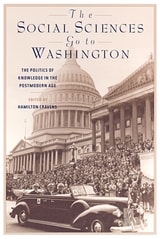
The Social Sciences Go to Washington
The Politics of Knowledge in the Postmodern AgeEdited by Hamilton Cravens
Rutgers University Press, 2003
What happens when the allegedly value-free social sciences enter the national political arena? In The Social Sciences Go to Washington, scholars examine the effects of the massive influx of sociologists, demographers, economists, educators, and others to the federal advisory process in the postwar period. Essays look at how these social scientists sought to change existing policies in welfare, public health, urban policy, national defense, environmental policy, and science and technology policy, and the ways they tried to influence future policies.
Policymakers have been troubled that followers of postmodernism have questioned the legitimacy of scientific and political authority to speak for the desires of social groups. As the social sciences increasingly become expressions of individual preferences, the contributors ask, how can they continue to be used to set public policy for us all?
This collection is a useful resource for anyone studying the relationship between science and the government in the postwar years.
The Sociology of Housing
How Homes Shape Our Social LivesEdited by Brian J. McCabe and Eva Rosen
University of Chicago Press, 2023
In 1947, the president of the American Sociological Association, Louis Wirth, argued for the importance of housing as a field of sociological research. Now, seventy-five years later, the sociology of housing has still not developed as a distinct subfield, leaving efforts to understand housing’s place in society to other disciplines, such as economics and urban planning. With this volume, the editors and contributors solidify the importance of housing studies within the discipline of sociology by tackling topics like racial segregation, housing instability, the supply of affordable housing, and the process of eviction. In doing so, they showcase the very best traditions of sociology: they draw on diverse methodologies, present unique field sites and data sources, and foreground a range of theoretical approaches to elucidate the relationships between contemporary housing, public policy, and key social outcomes.
The Sociology of Housing is a landmark volume that will be used by researchers and students alike to define this growing subfield, map continued directions for research, and center sociologists in interdisciplinary conversations about housing.
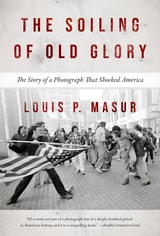
The Soiling of Old Glory
The Story of a Photograph That Shocked AmericaLouis P. Masur
Brandeis University Press, 2024
In 1976, Boston was bitterly divided over a court order to desegregate its public schools. Plans to bus students between predominantly white and Black neighborhoods stoked backlash and heated protests. Photojournalist Stanley Forman was covering one such demonstration at City Hall when he captured an indelible image: a white protester attacking a Black attorney with the American flag. A second white man grabs at the victim, appearing to assist the assailant.
The photo appeared in newspapers across the nation and went on to win the Pulitzer Prize. In The Soiling of Old Glory, esteemed historian Louis P. Masur reveals what happened the day of the assault and the ways these events reverberated long afterward. He interviews the men involved: Forman, who took the photo; Ted Landsmark, a Black, Yale-educated attorney and an activist; Joseph Rakes, the white protester lunging with the flag, a disaffected student; and Jim Kelly, a local politician who opposed busing, but who helped Landsmark to his feet after protesters knocked him to the ground. The photo, Masur discovers, holds more complexities than initially meet the eye. The flag never made contact with the victim, for example, and Kelly was attempting to protect Landsmark, not hurt him.
Masur delves into the history behind Boston’s efforts to desegregate the schools and the anti-busing protests that shook the city. He examines photography’s power to move, inform, and persuade us, as well as the assumptions we each bring to an image as viewers. And he delves into the flag, to explore how other artists and photographers have shaped, bolstered, or challenged its patriotic significance.
Gripping and deeply researched, The Soiling of Old Glory shows how a disturbing event, frozen on a film, impacted Boston and the nation. In an age of renewed calls for visual literacy and disagreements about the flag’s meaning, Masur’s history, now updated with a new foreword by Ted Landsmark and a new preface by the author, is as relevant as ever.
The Solaris Effect
Art and Artifice in Contemporary American FilmBy Steven Dillon
University of Texas Press, 2006
What do contemporary American movies and directors have to say about the relationship between nature and art? How do science fiction films like Steven Spielberg's A.I. and Darren Aronofsky's π represent the apparent oppositions between nature and culture, wild and tame?
Steven Dillon's intriguing new volume surveys American cinema from 1990 to 2002 with substantial descriptions of sixty films, emphasizing small-budget independent American film. Directors studied include Steven Soderbergh, Darren Aronofsky, Todd Haynes, Harmony Korine, and Gus Van Sant, as well as more canonical figures like Martin Scorcese, Robert Altman, David Lynch, and Steven Spielberg. The book takes its title and inspiration from Andrei Tarkovsky's 1972 film Solaris, a science fiction ghost story that relentlessly explores the relationship between the powers of nature and art. The author argues that American film has the best chance of aesthetic success when it acknowledges that a film is actually a film. The best American movies tell an endless ghost story, as they perform the agonizing nearness and distance of the cinematic image.
This groundbreaking commentary examines the rarely seen bridge between select American film directors and their typically more adventurous European counterparts. Filmmakers such as Lynch and Soderbergh are cross-cut together with Tarkovsky and the great French director, Jean-Luc Godard, in order to test the limits and possibilities of American film. Both enthusiastically cinephilic and fiercely critical, this book puts a decade of U.S. film in its global place, as part of an ongoing conversation on nature and art.