Results by title
1861 books match the query 'Social life and customs' and 358 start with t

The Secret Trust of Aspasia Cruvellier Mirault
The Life and Trials of a Free Woman of Color in Antebellum GeorgiaJanice L. Sumler-Edmond
University of Arkansas Press, 2008

The Seventies Now
Culture as SurveillanceStephen Paul Miller
Duke University Press, 1999
The concept of surveillance and its attendant social ramifications have been powerful agents in U.S. culture for many decades, but in describing how during the 1970s Americans learned to “survey” themselves, Miller shines surprising new light on such subjects as the women’s movement, voting rights enforcement, the Ford presidency, and environmental legislation. He illuminates the significance of what he terms “microperiods” and analyzes relevant themes in many of the decade’s major films—such as The Deer Hunter, Network, Jaws, Star Wars, and Apocalypse Now—and in the literature of writers including John Ashbery, Toni Morrison, Adrienne Rich, and Sam Shepard. In discussing the reverberations of the 1969 Stonewall riots, technological innovations, the philosophy of Michel Foucault, and a host of documents and incidents, Miller shows how the 1970s marked an important period of transition, indeed a time of many transitions, to the world we confront at the end of the millennium.
The Seventies Now will interest students and scholars of cultural studies, American history, theories of technology, film and literature, visual arts, and gay and lesbian studies.
The Silver Cradle
Las Posadas, Los Pastores, and Other Mexican American TraditionsBy Julia Nott Waugh
University of Texas Press, 1955
Originally published in 1955, The Silver Cradle is the story of a year in the life of the Mexican American people of San Antonio, Texas. During the 1950s, Julia Nott Waugh recorded the performances of such seasonal and religious traditions as Las Posadas, Los Pastores, Las Calaveras, the Blessing of the Animals, the liturgical observances of Holy Week, and festivities of el diez y seis de septiembre (Mexican Independence Day), among others.
Although years have passed and many of the details of observances have changed, the festival calendar and the joy and sincerity of the Mexican American people in honoring its customs and obligations have not disappeared. Now, in fact, a much wider population shares and appreciates the pageantry preserved for us by people like Graciana Reyes, in whose prized silver cradle the Christ Child slept every year at Christmas, and like Doroteo Domínguez, whose annual devotion to presenting a thousand-year-old pastoral epic in his back yard was legendary.
Waugh has done much more than just open a window onto a charming past. She has captured for us one of the true gifts of our Mexican American heritage—the willingness to ritually celebrate the passage of time and to embellish the occasions with sensitivity and fervor. This book will appeal to the general reader as well as to those interested in folk traditions and Mexican American culture.
The Slaw and the Slow Cooked
Culture and Barbecue in the Mid-SouthJames R. Veteto
Vanderbilt University Press, 2011
In developing the book, Veteto and Maclin cast a wide net for divergent approaches. Food writer John Edge introduces us to Jones Bar-B-Q Diner in Marianna, Arkansas, a possibly century-old restaurant serving top-notch pork and simultaneously challenging race and class boundaries. Kristen Bradley-Shurtz explores the 150-plus-year tradition of the St. Patrick's Irish Picnic in McEwen, Tennessee. And no barbecue book would be complete without an insider's story, provided here by Jonathan Deutsch's "embedded" reporting inside a competitive barbecue team. Veteto and Maclin conclude with a glimpse into the future of barbecue culture: online, in the smoker, and fresh from the farm.
The Slaw and the Slow Cooked stands as a challenge to barbecue aficionados and a statement on the Mid-South's important place at the table. Intended for food lovers, anthropologists, and sociologists alike, The Slaw and the Slow Cooked demonstrates barbecue's status as a common language of the South.
The Social Roots Of Basque Nationalism
Alfonso Pérez-Agote
University of Nevada Press, 2006
Translated by Cameron Watson and William A. Douglass. Foreword by William A. Douglass. The Basque people have preserved their ethnic identity and sense of themselves as a separate community despite centuries of repression, diaspora, and economic and social upheaval—one of the most remarkable achievements in the history of the phenomenon we call nationalism. In The Social Roots of Basque Nationalism, sociologist Alfonso Pérez-Agote addresses the social mechanisms that Basques employed to sustain their ethnic identity under the Franco Regime and demonstrates how persecution actually encouraged the extension of Basque nationalist consciousness. He also reveals how state political pressure radicalized one element of the Basque-nationalist movement, resulting in the formation of ETA, an armed terrorist wing that itself became a mechanism for extending nationalist consciousness. Finally, he examines the subsequent changes in Basque nationalism following Franco’s death and the extension of democracy in Spain, which resulted in the institutionalization of the movement into an autonomous political power. This work is based in part on interviews and polls with informants in the Basque Country and abroad, eliciting such data as the role that family, education, social contacts, and religious environment play in the evolution of political attitudes; the place of violence in the Basque world view and contemporary political culture; regional variations in Basque nationalism; and the factors that contributed to the resilience of Basque nationalism in adapting to new historical conditions. The result is a sophisticated discussion of the various ways in which Basque social reality is constituted and how this reality helps to create political culture. Because Pérez-Agote situates his discussion within the broader frameworks of ethnic identity, group dynamics, and the nature of nationalism, the book makes a significant contribution not only to our understanding of the Basques but to the broader study of the evolution of nationalism and the nation-state, political violence, and the complicated transition of any society from dictatorship to democracy.

The Socialist Way of Life in Siberia
Transformation in BuryatiaMelissa Chakars
Central European University Press, 2014

The Sovereigns
A Jewish Family in the German CountrysideEric Lucas
Northwestern University Press, 2001
But anti-Semites, under the protection of the Nazi regime, began to settle old scores, and targeted the economically successful rural Jews. New laws stripped Jewish meat dealers of their rights, and Aryan competitors eagerly forced them aside. That was only the beginning. In the Holocaust that followed, some members of the family escaped. Others did not.
The Spectacular City, Mexico, and Colonial Hispanic Literary Culture
By Stephanie Merrim
University of Texas Press, 2010
Winner, Katherine Singer Kovacs Prize, Modern Language Association, 2010
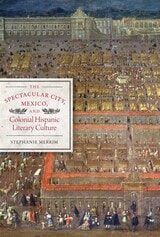
The Spectacular City, Mexico, and Colonial Hispanic Literary Culture tracks the three spectacular forces of New World literary culture—cities, festivals, and wonder—from the sixteenth to the seventeenth century, from the Old World to the New, and from Mexico to Colombia, Peru, and Bolivia. It treats a multitude of imperialist and anti-imperialist texts in depth, including poetry, drama, protofiction, historiography, and journalism. While several of the landmark authors studied, including Hernán Cortés and Sor Juana Inés de la Cruz, are familiar, others have received remarkably little critical attention. Similarly, in spotlighting creole writers, Merrim reveals an intertextual tradition in Mexico that spans two centuries. Because the spectacular city reaches its peak in the seventeenth century, Merrim's book also theorizes and details the spirited work of the New World Baroque. The result is the rich examination of a trajectory that leads from the Renaissance ordered city to the energetic revolts of the spectacular city and the New World Baroque.
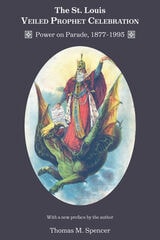
The St. Louis Veiled Prophet Celebration
Power on Parade, 1877-1995Thomas M. Spencer
University of Missouri Press, 2021
The Veiled Prophet organization has been a vital institution in St. Louis for more than a century. Founded in March 1878 by a group of prominent St. Louis businessmen, the organization was fashioned after the New Orleans Carnival society the Mystick Krewe of Comus. In The St. Louis Veiled Prophet Celebration, Thomas Spencer explores the social and cultural functions of the organization's annual celebration—the Veiled Prophet parade and ball—and traces the shifts that occurred over the years in its cultural meaning and importance. Although scholars have researched the more pluralistic parades of the eighteenth and early nineteenth centuries, very little has been done to examine the elite-dominated parades of the late nineteenth and twentieth centuries. This study shows how pluralistic parades ceased to exist in St. Louis and why the upper echelon felt it was so important to end them.
Spencer shows that the celebration originated as the business elite's response to the St. Louis general strike of 1877. Symbolically gaining control of the streets, the elites presented St. Louis history and American history by tracing the triumphs of great men—men who happened to be the Veiled Prophet members' ancestors. The parade, therefore, was intended to awe the masses toward passivity with its symbolic show of power. The members believed that they were helping to boost St. Louis economically and culturally by enticing visitors from the surrounding communities. They also felt that the parades provided the spectators with advice on morals and social issues and distracted them from less desirable behavior like drinking and carousing.
From 1900 to 1965 the celebration continued to include educational and historical elements; thereafter, it began to resemble the commercialized leisure that was increasingly becoming a part of everyday life. The biggest change occurred in the period from 1965 to 1980, when the protests of civil rights groups led many St. Louisans to view the parade and ball as wasteful conspicuous consumption that was often subsidized with taxpayers' money. With membership dropping and the news media giving the organization little notice, it soon began to wither. In response, the leaders of the Veiled Prophet organization decided to have a "VP Fair" over the Fourth of July weekend. The 1990s brought even more changes, and the members began to view the celebration as a way to unite the St. Louis community, with all of its diversity, rather than as a chance to boost the city or teach cultural values. The St. Louis Veiled Prophet Celebration is a valuable addition not only to the cultural history of Missouri and St. Louis but also to recent scholarship on urban culture, city politics, and the history of public celebrations in America.
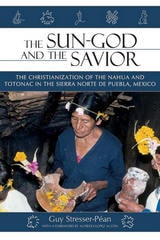
The Sun God and the Savior
The Christianization of the Nahua and Totonac in the Sierra Norte de Puebla, MexicoGuy Stresser-Péan
University Press of Colorado, 2009
The first English translation of Guy Stresser-Péan's tour-de-force presents two decades of fieldwork in the Sierra Norte de Puebla, Mexico, where native pre-Hispanic pagan beliefs blended with traditional Catholic evangelization from the sixteenth century and the more recent intrusion of modernism.
The Indians of the Sierra Norte de Puebla are deeply devoted to Christianity, but their devotion is seamlessly combined with pagan customs, resulting in a hybrid belief system that is not wholly indigenous, yet not wholly Christian. The syncretism practiced here has led the Totonac and Nahua people to identify Christ with the Sun God, a belief expressed symbolically in ritual practices such as the Dance of the Voladores.
Spanning the four centuries from the earliest systematic campaign against Nahua ritual practices - Zumárraga's idolatry trials of 1536-1540 - to the twentieth century, Stresser-Péan contextualizes Nahua and Totonac ritual practices as a series of responses to Christian evangelization and the social reproduction of traditional ritual practices. The Sun God and the Savior is a monumental work on the ethnographic and historical knowledge of the peoples of the Sierra Norte.
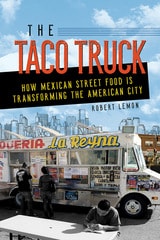
The Taco Truck
How Mexican Street Food Is Transforming the American CityRobert Lemon
University of Illinois Press, 2019
Drawing on interviews with taco truck workers and his own skills as a geographer, Robert Lemon illuminates new truths about foodways, community, and the unexpected places where ethnicity, class, and culture meet. Lemon focuses on the San Francisco Bay Area, Sacramento, and Columbus, Ohio, to show how the arrival of taco trucks challenge preconceived ideas of urban planning even as cities use them to reinvent whole neighborhoods. As Lemon charts the relationships between food practices and city spaces, he uncovers the many ways residents and politicians alike contest, celebrate, and influence not only where your favorite truck parks, but what's on the menu.
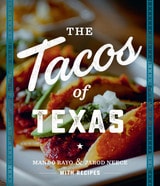
The Tacos of Texas
By Mando Rayo and Jarod Neece
University of Texas Press, 2016
Rooted in tradición mexicana and infused with Texas food culture, tacos are some of Texans’ all-time favorite foods. In The Tacos of Texas, the taco journalists Mando Rayo and Jarod Neece take us on a muy sabroso taco tour around the state as they discover the traditions, recipes, stories, and personalities behind puffy tacos in San Antonio, trompo tacos in Dallas, breakfast tacos in Austin, carnitas tacos in El Paso, fish tacos in Corpus Christi, barbacoa in the Rio Grande Valley, and much more.
Starting with the basics—tortillas, fillings, and salsas—and how to make, order, and eat tacos, the authors highlight ten taco cities/regions of Texas. For each place, they describe what makes the tacos distinctive, name their top five places to eat, and listen to the locals tell their taco stories. They hear from restaurant owners, taqueros, abuelitas, chefs, and patrons—both well-known and everyday folks—who talk about their local taco history and culture while sharing authentic recipes and recommendations for the best taco purveyors.
Whether you can’t imagine a day without tacos or you’re just learning your way around the trailers, trucks, and taqueros that make tacos happen, The Tacos of Texas is the indispensable guidebook, cookbook, and testimonio.

The Tallons
William March
University of Alabama Press, 1964
In The Tallons, the second novel in the "Pearl County" series, March tells the story of two farm boys, Andrew and Jim Tallon. Their placid and predictable life is upended by a girl from Georgia, Myrtle Bickerstaff. The conflict which engulfs these three arises from a series of carefully chosen and extraordinarily telling incidents to a dramatic climax which will be remembered long after the book is set aside. March framed the novel as "a study in paranoia" and to the end of his life considered it one of his strongest works.
The Taste for Civilization
Food, Politics, and Civil SocietyJanet A. Flammang
University of Illinois Press, 2009
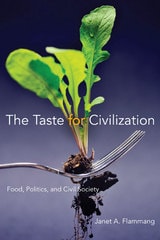
This book explores the idea that table activities--the mealtime rituals of food preparation, serving, and dining--lay the foundation for a proper education on the value of civility, the importance of the common good, and what it means to be a good citizen. The arts of conversation and diplomatic speech are learned and practiced at tables, and a political history of food practices recasts thoughtfulness and generosity as virtues that enhance civil society and democracy. In our industrialized and profit-centered culture, however, foodwork is devalued and civility is eroding.
Looking at the field of American civility, Janet A. Flammang addresses the gendered responsibilities for foodwork's civilizing functions and argues that any formulation of "civil society" must consider food practices and the household. To allow space for practicing civility, generosity, and thoughtfulness through everyday foodwork, Americans must challenge the norms of unbridled consumerism, work-life balance, and domesticity and caregiving. Connecting political theory with the quotidian activities of the dinner table, Flammang discusses practical ideas from the "delicious revolution" and Slow Food movement to illustrate how civic activities are linked to foodwork, and she points to farmers' markets and gardens in communities, schools, and jails as sites for strengthening civil society and degendering foodwork.

The Texanist
Fine Advice on Living in TexasBy David Courtney and Jack Unruh
University of Texas Press, 2017
The Texanist, Texas Monthly’s perennially popular back-page column, has become the magazine’s most-read feature. With an inimitable style and an unassailable wholesomeness, columnist David Courtney has counseled many a well-intentioned Texan, native or wannabe, on how to properly conduct him- or herself. Until the July 2016 issue, an original illustration by the late award-winning artist Jack Unruh, depicting the Texanist in a situation described in the column, accompanied the Texanist’s sage wisdom. Unruh’s peerless illustrations displayed a sly wit that paired perfectly with Courtney’s humorous ripostes.
The Texanist gathers several dozen of Unruh’s most unforgettable illustrations, along with the fascinating, perplexing, and even downright weird questions that inspired them. Curing the curious, exorcizing bedevilment, and orienting the disoriented, the Texanist advises on such things as: Is it wrong to wear your football team’s jersey to church? When out at a dancehall, do you need to stick with the one that brung ya? Is it real Tex-Mex if it’s served with a side of black beans? Can one have too many Texas-themed tattoos? The Texanist addresses all of these important subjects and more. Whether you heed the good guidance, or just enjoy the whimsical illustrations, The Texanist will both entertain and educate you.

The Thane of Cawdor Comes to Bauxite
And Other Whimsy and Wisdom From the Pen of Mike TrimbleErnie Dumas
Butler Center for Arkansas Studies, 2024
“Although of a relatively scarce breed,” the Arkansas Times observed in the obituary of the itinerant writer it had once employed, “Mike Trimble was Arkansas’s and perhaps the country’s greatest self-deprecating journalist.” Readers will find in this fifty-year inventory of Trimble’s wit and wisdom all the vindication they might seek for that quaint judgment—the rare humble author. Whether he was chronicling, in the 1980s, rising political worthies like the far-into-the-future governors Asa Hutchinson and Mike Beebe, or, more often, the ordinary and feckless people that he encountered every day, befriended, and spent most of his career writing about, Trimble usually found a way, subtly or artlessly, to bring up his own failings, such as identifying the wrong person as the dead woman in an obituary he had written in his earliest days for his first employer, the Texarkana Gazette. Like the yokels in the vaudeville duos Laurel and Hardy, Abbott and Costello, Rowan and Martin, and Fey and Poehler, Trimble’s confessed bumblings were purposeful and studied instruments of his humor.
Arkansas produced more than its quota of weirdos, fabulists, con men, oleaginous politicians, charlatans, creeps, visionaries, and fantastical creatures—from Albert Pike, Arvin the Wino, Dr. Brinkley the Great Depression’s goat-gland sex therapist, Editor Weston, and the salty riverboat queen Ray Dorthy all the way to Say McIntosh and Red the Irish Setter. Mike Trimble, the South’s best and funniest storyteller, put them all down on paper for some of the best reading since Catch-22. Trimble turned humor into art and history into vaudeville.
The Tongue Is Fire
South African Storytellers and ApartheidHarold E. Scheub
University of Wisconsin Press, 1996
With tape-recorder and camera in hand, Scheub registered the testaments of Swati, Xhosa, Ndebele, and Zulu storytellers, farming people who lived in the remote reaches of rural South Africa. While young people fought in the streets of Soweto and South African writers made the world aware of apartheid’s evils, the rural storytellers resisted apartheid in their own way, using myth and metaphor to preserve their traditions and confront their oppressors. For more than 20 years, Scheub kept the promise he made to the storytellers to publish his translations of their stories only when freedom came to South Africa. The Tongue Is Fire presents these voices of South African oral tradition—the historians, the poets, the epic-performers, the myth-makers—documenting their enduring faith in the power of the word to sustain tradition in the face of determined efforts to distort or eliminate it. These texts are a tribute to the storytellers who have always, in periods of crisis, exercised their art to inspire their own people.
The Toughest Kid We Knew
The Old New West: A Personal HistoryFrank Bergon
University of Nevada Press, 2020

The Travels of Reverend Olafur Egilsson
Karl Smari Hreinsson
Catholic University of America Press, 2016
The Tree That Bends
Discourse, Power, and the Survival of Maskoki PeoplePatricia Riles Wickman
University of Alabama Press, 1999
In her compelling and controversial arguments, Wickman rejects the myths that erase Native Americans from Florida through the agency of Spaniards and diseases and make the area an empty frontier awaiting American expansion. Through research on both sides of the Atlantic and extensive oral history interviews among the Seminoles of Florida and Oklahoma, Wickman shatters current theories about the origins of the people encountered by the Spaniards and presents, for the first time ever, the Native American perspective. She describes the genesis of the groups known today as Creek, Seminole, and Miccosukee—the Maskoki peoples—and traces their common Mississippian heritage, affirming their claims to continuous habitation of the Southeast and Florida. Her work exposes the rhetoric of conquest and replaces it with the rhetoric of survival.
An important cross-disciplinary work, The Tree That Bends reveals the flexibility of the Maskoki people and the sociocultural mechanisms that allowed them to survive the pressures introduced at contact. Their world was capable of incorporating the New without destroying the Old, and their descendants not only survive today but also succeed as a discrete culture as a result.

The Two Taríacuris and the Early Colonial and Prehispanic Past of Michoacán
David L. Haskell
University Press of Colorado, 2018
Informed by theoretical approaches to narrative, historicity, structure, and agency developed by cultural and historical anthropologists, Haskell demonstrates that the author of the Relación de Michoacán shaped, and was shaped by, a culturally distinct conceptualization and experience of the time in which the past and the present are mutually informing. The book asks, How reliable are past accounts of events when these accounts are removed from the events they describe? How do the personal agendas of past chroniclers and their informants shape our present understanding of their cultural history? How do we interpret chronicles such as the Relación de Michoacán on multiple levels? It also demonstrates that answers to these questions are possible when attention is paid to the context of narrative production and the narratives themselves are read closely.
The Two Taríacuris and the Early Colonial and Prehispanic Past of Michoacán makes a significant contribution to the scholarship on indigenous experience and its cultural manifestations in Early Colonial period Central Mexico and the anthropological literature on historicity and narrative. It will be of interest to Mesoamerican specialists of all disciplines, cultural and historical anthropologists, and theorists and critics of narrative.

The Ultimate Chicago Pizza Guide
A History of Squares & Slices in the Windy CitySteve Dolinsky
Northwestern University Press, 2021
Enter renowned food journalist Steve Dolinsky. He embarked on a memorable quest for his first book, Pizza City, USA: 101 Reasons Why Chicago Is America’s Greatest Pizza Town, tasting more than 185 pizzas all over the region. For his follow-up, Dolinsky focuses on the city’s pizzerias, while still honoring a few suburban stalwarts.
This user-friendly guide is organized by pizza style—including thin, tavern, artisan, Neapolitan, deep-dish, stuffed, by-the-slice, Roman, and Detroit—so you can find the right recommendation for every family member, visitor, and occasion. Dolinsky highlights his favorites, offers a pizza lover’s glossary so you can order like a pro, and shows you every pie he ate, so you can compare notes and cook up your next pizza night. With recipes, local beer pairings, gluten-free options, and more, The Ultimate Chicago Pizza Guide is an essential resource both for locals and for visitors in search of a serious pizza getaway.

The Un-Natural State
Arkansas and the Queer SouthBrock Thompson
University of Arkansas Press, 2010
The Uncoiling Python
South African Storytellers and ResistanceHarold Scheub
Ohio University Press, 2010
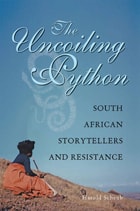
There are many collections of African oral traditions, but few as carefully organized as The Uncoiling Python. Harold Scheub, one of the world’s leading scholars of African oral traditions and folklore, explores the ways in which oral traditions have served to combat and subvert colonial domination in South Africa. From the time colonial forces first came to southern Africa in 1487, oral and written traditions have been a bulwark against what became 350 years of colonial rule, characterized by the racist policies of apartheid. The Uncoiling Python: South African Storytellers and Resistance is the first in-depth study of oral tradition as a means of survival.
In open insurrections and other subversive activities Africans resisted the daily humiliations of colonial rule, but perhaps the most effective and least apparent expression of subversion was through indigenous storytelling and poetic traditions. Harold Scheub has collected the stories and poetry of the Xhosa, Zulu, Swati, and Ndebele peoples to present a fascinating analysis of how the apparently harmless tellers of tales and creators of poetry acted as front-line soldiers.
The Unedited Diaries of Carolina Maria De Jesus
Levine, Robert M
Rutgers University Press, 1998
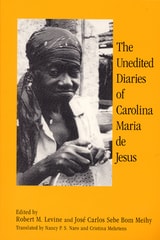
Carolina Maria de Jesus' book, Quarto de Despejo (The Trash Room), depicted the harsh life of the slums, but it also spoke of the author's pride in her blackness, her high moral standards, and her patriotism. More than a million copies of her diary are believed to have been sold worldwide. Yet many Brazilians refused to believe that someone like de Jesus could have written such a diary, with its complicated words (some of them misused) and often lyrical phrasing as she discussed world events. Doubters prefer to believe the book was either written by Audáulio Dantas, the enterprising newspaper reporter who discovered her, or that Dantas rewrote it so substantially that her book is a fraud. With the cooperation of de Jesus' daughter, recent research shows that although Dantas deleted considerable portions of the diary (as well as a second one), every word was de Jesus'.
But Dantas did "create" a different Carolina from the woman who coped with her harsh life by putting things down on paper. This book sets the record straight by providing detailed translations of de Jesus' unedited diaries and explains why Brazilian elites were motivated to obscure her true personality and present her as something she was not. It is not only about the writer but about Brazil as recorded by her sarcastic pen. The diary entries in this book span from 1958 to 1966, five years beyond text previously known to exist. They show de Jesus as she was, preserving her Joycean stream-of-consciousness language and her pithy characterizations.
The Unruly Dead
Spirits, Memory, and State Formation in Timor-LesteLia Kent
University of Wisconsin Press, 2024
With generous, careful ethnography and incisive analysis, Kent challenges comfortable, linear narratives of transitional justice and argues that this memory work is reshaping the East Timorese social and political order—a process in which the dead are active, and sometimes disruptive, participants. Community ties and even the landscape itself are imbued with their presence and demands, and the horrific scale of mass death in recent times—at least a third of the population perished during the Indonesian occupation—means Timor-Leste’s dead have real, significant power in the country’s efforts to remember, recover, and reestablish itself.
The Upshaws of County Line
An American FamilyRichard Orton
University of North Texas Press, 2014

The Utility of Splendor
Ceremony, Social Life, and Architecture at the Court of Bavaria, 1600-1800Samuel John Klingensmith
University of Chicago Press, 1993
Drawing on a broad range of sources, including building documents, correspondence, diaries, and court regulations, Klingensmith investigates the intricacies of Bavarian court practice and shows that Versailles was only one among several influences on German palace planning. Klingensmith offers a cogent, detailed understanding of the relations between architectural spaces and the ceremonial, social, and private life that both required and used them. Handsomely illustrated with photographs and plans, The Utility of Splendor will appeal to anyone interested in how life was lived among the nobility during the last centuries of the old regime.
Samuel John Klingensmith (1949-1986) was assistant professor of art history at Tulane University.
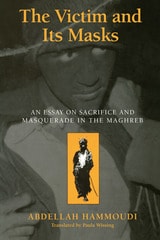
The Victim and its Masks
An Essay on Sacrifice and Masquerade in the MaghrebAbdellah Hammoudi
University of Chicago Press, 1993

The Victorian Eye
A Political History of Light and Vision in Britain, 1800-1910Chris Otter
University of Chicago Press, 2008
The Victorian Eye’s innovative interdisciplinary approach—and generous illustrations—will captivate a range of readers interested in the history of modern Britain, visual culture, technology, and urbanization.

The Victory Album
Reflections on the Good Life after the Good WarPhilip D. Beidler
University of Alabama Press, 2010
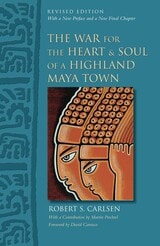
The War for the Heart and Soul of a Highland Maya Town
Revised EditionBy Robert S. Carlsen, with a contribution by Martín Prechtel
University of Texas Press, 2011
This compelling ethnography explores the issue of cultural continuity and change as it has unfolded in the representative Guatemala Mayan town Santiago Atitlán. Drawing on multiple sources, Robert S. Carlsen argues that local Mayan culture survived the Spanish Conquest remarkably intact and continued to play a defining role for much of the following five centuries. He also shows how the twentieth-century consolidation of the Guatemalan state steadily eroded the capacity of the local Mayas to adapt to change and ultimately caused some factions to reject—even demonize—their own history and culture. At the same time, he explains how, after a decade of military occupation known as la violencia, Santiago Atitlán stood up in unity to the Guatemalan Army in 1990 and forced it to leave town.
This new edition looks at how Santiago Atitlán has fared since the expulsion of the army. Carlsen explains that, initially, there was hope that the renewed unity that had served the town so well would continue. He argues that such hopes have been undermined by multiple sources, often with bizarre outcomes. Among the factors he examines are the impact of transnational crime, particularly gangs with ties to Los Angeles; the rise of vigilantism and its relation to renewed religious factionalism; the related brutal murders of followers of the traditional Mayan religion; and the apocalyptic fervor underlying these events.

The Watchful Gods And Other Stories
Walter Van Tilburg Clark
University of Nevada Press, 2004
Critic John R. Milton once said that Walter Van Tilburg Clark "did perhaps more than anyone else to define (in his fiction) the mode of perception, the acquisition of knowledge, and the style which we tend to call Western." In 1950, Walter Van Tilburg Clark, author of the acclaimed novel The Ox-Bow Incident, published a collection of short stories that had already won distinction in various national magazines. The collection was well received by reviewers, and subsequent critics have noted that these stories reflect both Clark’s literary power and the major concerns of his novels: the interior and intuitive complexities of good and evil, and the fragile, intricate web that connects humankind to the rest of the natural world.
A foreword by Ann Ronald, one of the West’s most astute literary critics, sets the stories into the context of Clark’s oeuvre and illuminates the way they reveal crucial characteristics of this writer’s imagination.
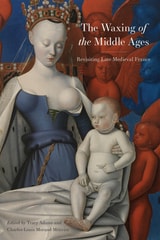
The Waxing of the Middle Ages
Revisiting Late Medieval FranceCharles-Louis Morand-Métivier
University of Delaware Press, 2023
The Waxing of the Middle Ages sets out to provide a rich, complex, and diverse study of these developments and to reassert that late medieval France is crucial in its own right. The collection argues for an approach that views the late medieval period not as an afterthought, or a blind spot, but as a period that is key in understanding the fluidity of time, traditions, culture, and history. Each essay explores some “cultural form,” to borrow Huizinga’s expression, to expose the false divide that has dominated modern scholarship.
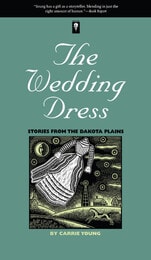
The Wedding Dress
Stories From The Dakota PlainsCarrie Young
University of Iowa Press, 1992
These finely wrought stories unfold in the Dakotas during the struggling pioneer days and bone-dry landscape of the thirties as well as the verdant years that followed, where the nighttime plains are bathed by softly radiant harvest moons shining down from dazzling northern skies. Young's absorbing narratives begin with the pleasant sense of “Once upon a time…” anticipation, but the firmly sketched details, warm humor, and vivid characterizations reveal an unanticipated and satisfying realism.
The haunting title story is about a beautiful and tragic pioneer woman and her wedding dress; her gown takes on a life of its own and turns into an enduring symbol for the grace and compassion of homesteading women on the plains. In “Bank Night,” a hired hand working during the midst of the Depression wins $250 at the movies, careening him into a single night of notoriety that becomes a legend in its time. “The Nights of Ragna Rundhaug” tells the tale of a woman who wants only to be left alone with her white dog, Vittehund, and her crocheting but instead is propelled into a life of midwifery “because there was no one else to do it.” The babies have predilection for arriving during blizzards and always at night, when she must be transported across the dark plains by frantic husbands who have fortified themselves with strong drink and headstrong horses.
All the stories in The Wedding Dress are linked by the enigmatic Nordic characters who people them and by the skill with which Young draws them. Emotions run so deep that they are seldom able to surface; when they do the interaction is extraordinarily luminous, both for the characters themselves and for the fortunate reader. The Wedding Dress is for all readers, young and old.
The Westo Indians
Slave Traders of the Early Colonial SouthEric E. Bowne
University of Alabama Press, 2005
A comprehensive study that rescues the Westo from obscurity.
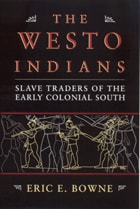
The Westo Indians, who lived in the Savannah River region during the second half of the 17th century, are mentioned in few primary documents and only infrequently in secondary literature. There are no known Westo archaeological sites; no artifacts can be linked to the group; and no more than a single word of their language is known to us today. Yet, from the extant evidence, it is believed that the Westos, who migrated from around Lake Erie by 1656, had a profound effect on the development of the colonial South.
This volume reproduces excerpts from all 19 documents that indisputably reference the Westos, although the Europeans referred to them by a variety of names. Most of the information was written by Lords Proprietors who never met the Westos, or by a handful of Carolinians who did. But the author is able to chart a highly plausible history of this Native group who, for a period, thrived on the Southern frontier.
The narrative traces their northeastern origins and how the Erie conflicts with the Five Nations Iroquois in the Beaver Wars forced them southward, where they found new economic opportunities in the lucrative slave trade. At the height of their influence, between 1659 and 1680, it is believed the Westos captured and sold several thousand Indians from Spanish Florida, often trading them for guns. Eventually, their military advantage over the Indians of the lower South was compromised by the rise of powerful confederacies of native peoples, who could acquire equivalent firearms from the Europeans. Even though the aggressive Westos declined, they had influenced profound change in the Southeast. They furthered the demise of chiefly organization, helped to shift the emphasis from agricultural to hunting economies, and influenced the dramatic decrease in the number and diversity of native polities.
The Wigwam and the Cabin
The Arkansas EditionWilliam G. Simms
University of Arkansas Press, 2001
The Wintu and Their Neighbors
A Very Small World-System in Northern CaliforniaChristopher Chase-Dunn
University of Arizona Press, 1998
Chase-Dunn and Mann argue that Immanuel Wallerstein's world-systems perspective, originally applied only to the study of modern capitalistic societies, can also be applied to the study of the social, economic, and political relationships in small stateless societies. They contend that, despite the fact that the Wintu appear on the surface to have been a household-based society, this indigenous group was in fact involved in a myriad of networks of interaction, which resulted in intermarriage and which extended for many miles around the region. These networks, which were not based on the economic dominance of one society over another—a concept fundamental to Wallerstein's world-systems theory—led to the eventual expansion of the Wintu as a cultural group.
Thus, despite the fact that the Wintu did not behave like a modern society—lacking wealth accumulation, class distinctions, and cultural dominance—Chase-Dunn and Mann insist that the Wintu were involved in a world-system and argue, therefore, that the concept of the "minisystem" should be discarded. They urge other scholars to employ this comparative world-systems perspective in their research on stateless societies.

The World Turned
Essays on Gay History, Politics, and CultureJohn D Emilio
Duke University Press, 2002
In this collection of essays, D’Emilio brings his historian’s eye to bear on these profound changes in American society, culture, and politics. He explores the career of Bayard Rustin, a civil rights leader and pacifist who was openly gay a generation before almost everyone else; the legacy of radical gay and lesbian liberation; the influence of AIDS activist and writer Larry Kramer; the scapegoating of gays and lesbians by the Christian Right; the gay-gene controversy and the debate over whether people are "born gay"; and the explosion of attention focused on queer families. He illuminates the historical roots of contemporary debates over identity politics and explains why the gay community has become, over the last decade, such a visible part of American life.
The World of Kate Roberts
Selected Stories, 1925-1981Joseph Clancy
Temple University Press, 1991
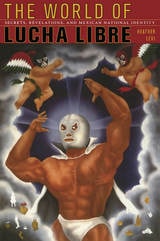
The World of Lucha Libre
Secrets, Revelations, and Mexican National IdentityHeather Levi
Duke University Press, 2008
Levi considers lucha libre in light of scholarship about sport, modernization, and the formation of the Mexican nation-state, and in connection to professional wrestling in the United States. She examines the role of secrecy in wrestling, the relationship between wrestlers and the characters they embody, and the meanings of the masks worn by luchadors. She discusses male wrestlers who perform masculine roles, those who cross-dress and perform feminine roles, and female wrestlers who wrestle each other. Investigating the relationship between lucha libre and the mass media, she highlights the history of the sport’s engagement with television: it was televised briefly in the early 1950s, but not again until 1991. Finally, Levi traces the circulation of lucha libre symbols in avant-garde artistic movements and its appropriation in left-wing political discourse. The World of Lucha Libre shows how a sport imported from the United States in the 1930s came to be an iconic symbol of Mexican cultural authenticity.
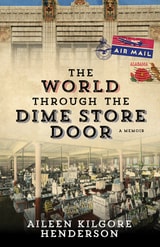
The World through the Dime Store Door
A MemoirAileen Kilgore Henderson
University of Alabama Press, 2020
A coming-of-age memoir evoking farm, mining, and small-town life in Alabama’s Tuscaloosa County as the world transitions from the Great Depression to World War II.
In the 1930s, the rural South was in the throes of the Great Depression. Farm life was monotonous and hard, but a timid yet curious teenager thought it worth recording. Aileen Kilgore Henderson kept a chronicle of her family’s daily struggles in Tuscaloosa County alongside events in the wider world she gleaned from shortwave radio and the occasional newspaper. She wrote about Howard Hughes’s round-the-world flight and her horror at the rise to power in Germany of a bizarre politician named Adolf Hitler. Henderson longed to join the vast world beyond the farm, but feared leaving the refuge of her family and beloved animals.
Yet, with her father’s encouragement, she did leave, becoming a clerk in the Kress dime store in downtown Tuscaloosa. Despite long workdays and a lengthy bus commute, she continued to record her observations and experiences in her diary, for every day at the dime store was interesting and exciting for an observant young woman who found herself considering new ideas and different points of view.
Drawing on her diary entries from the 1930s and early 1940s, Henderson recollects a time of sweeping change for Tuscaloosa and the South. The World through the Dime Store Door is a personal and engaging account of a Southern town and its environs in transition told through the eyes of a poor young woman with only a high school education but gifted with a lively mind and an openness to life.

The Wound of the Name
Abdelkébir Khatibi and Matt Reeck
Northwestern University Press, 2025
Winner of the Global Humanities Translation Prize
Abdelkébir Khatibi’s The Wound of the Name (1974) is a classic work of North African critical theory that seeks to decolonize French ways of looking at and writing about Maghreb cultures. Writing at the height of French semiotics’ popularity and prestige, Khatibi proposes intersemiotics as a study of signs that pass through related but different cultural geographies, times, and expressions. Proverbs, tattoos, the rhetoric of lovemaking, calligraphy, and oral storytelling show a circulation of cultural signifiers over, across, and against borders. Signs are not stagnant; meaning is not fixed. Khatibi’s intent is in keeping with his emergent double critique, which aims to redefine not only European understanding of North African culture but also North African self-understanding, by freeing it from the anthropological mandates of the modern colonial era as well as from the retrenched theocratic models that were characteristic of North African postcolonial states.
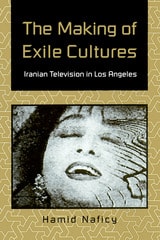
The making of exile cultures
Iranian television in Los AngelesHamid. Naficy
University of Minnesota Press, 1993
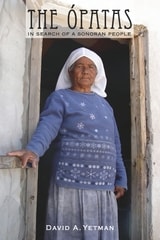
The Ópatas
In Search of a Sonoran PeopleDavid A. Yetman
University of Arizona Press, 2010
David Yetman, a leading ethnobotanist who has traveled extensively in Sonora, consulted more than two hundred archival sources to answer this question. The result is an accessible ethnohistory of the Ópatas, one that embraces historical complexity with an eye toward Opatan strategies of resistance and assimilation. Yetman’s account takes us through the Opatans’ initial encounters with the conquistadors, their resettlement in Jesuit missions, clashes with Apaches, their recruitment as miners, and several failed rebellions, and ultimately arrives at an explanation for their “disappearance.”
Yetman’s account is bolstered by conversations with present-day residents of the Opatería and includes a valuable appendix on the languages of the Opatería by linguistic anthropologist David Shaul. One of the few studies devoted exclusively to this indigenous group, The Ópatas: In Search of a Sonoran People marks a significant contribution to the literature on the history of the greater Southwest.
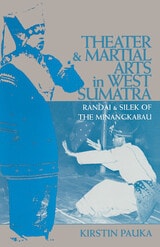
Theater and Martial Arts in West Sumatra
Randai and Silek of the MinangkabauKirstin Pauka
Ohio University Press, 1998
Randai, the popular folk theater tradition of the Minangkabau ethnic group in West Sumatra, has evolved to include influences of martial arts, storytelling, and folk songs. Theater and Martial Arts in West Sumatra describes the origin, development, and cultural background of randai and highlights two recent developments: the emergence of female performers and modern staging techniques.
This book also explores the indigenous martial arts form silek, a vital part of randai today. The strong presence of silek is illustrated in the martial focus of the stories that are told through randai, in its movement repertoire, and even in its costumes and musical accompaniment. As Kirstin Pauka shows, randai, firmly rooted in silek and Minangkabau tradition, is an intriguing mirror of the Minangkabau culture.

Theatres of the Body
Dance and Discourse in Antebellum PhiladelphiaLynn Matluck Brooks
Temple University Press, 2025
Reviewing print culture in the 1840s, Brooks shows how newspapers, magazines, and popular fiction provided documentation of dancing in Philadelphia as well as the responses of dance commentators, practitioners, and moralists. Theatres of the Body also considers the interplay of science with dance in the 1850s, which impacted both dance practices and reception.
Providing an expansive historiography of these significant contributions to dance in the United States, Brooks deepens our understanding of antebellum culture and history.
Their Determination to Remain
A Cherokee Community's Resistance to the Trail of Tears in North CarolinaLance Greene
University of Alabama Press, 2023
The remarkable story of a North Carolina Cherokee community who avoided forced removal on the Trail of Tears
During the 1838 forced Cherokee removal by the US government, a number of close-knit Cherokee communities in the Southern Appalachian Mountains refused to relinquish their homelands, towns, and way of life. Using a variety of tactics, hundreds of Cherokees avoided the encroaching US Army and remained in the region.
In his book Their Determination to Remain: A Cherokee Community’s Resistance to the Trail of Tears in North Carolina, Lance Greene explores the lives of wealthy plantation owners Betty and John Welch who lived on the southwestern edge of the Cherokee Nation. John was Cherokee and Betty was White. Although few Cherokees in the region participated in slavery, the Welches held nine African Americans in bondage.
During removal, the Welches assisted roughly 100 Cherokees hiding in the steep mountains. Afterward, they provided land for these Cherokees to rebuild a new community, Welch’s Town. Betty became a wealthy and powerful plantation mistress because her husband could no longer own land. Members of Welch’s Town experienced a transitional period in which they had no formal tribal government or clear citizenship yet felt secure enough to reestablish a townhouse, stickball fields, and dance grounds.
Greene’s innovative study uses an interdisciplinary approach, incorporating historical narrative and archaeological data, to examine how and why the Welches and members of Welch’s Town avoided expulsion and reestablished their ways of life in the midst of a growing White population who resented a continued Cherokee presence. The Welch strategy included Betty’s leadership in demonstrating outwardly their participation in modern Western lifestyles, including enslavement, as John maintained a hidden space—within the boundaries of their land—for the continuation of traditional Cherokee cultural practices. Their Determination to Remain explores the complexities of race and gender in this region of the antebellum South and the real impacts of racism on the community.
Theorizing Self in Samoa
Emotions, Genders, and SexualitiesJeannette Marie Mageo
University of Michigan Press, 1998

There's a Disco Ball Between Us
A Theory of Black Gay LifeJafari S. Allen
Duke University Press, 2021