Results by title
4155 books match the query 'State & Local' and 925 start with t

The Ellis Island Snow Globe
Erica Rand
Duke University Press, 2005
Rand notes that portrayals of the Statue of Liberty as a beacon for immigrants tend to suppress the Statue’s connections to people brought to this country by force. She examines what happened to migrants at Ellis Island whose bodies did not match the gender suggested by the clothing they wore. In light of contemporary ideas about safety and security, she examines the “Decide an Immigrant’s Fate” program, which has visitors to Ellis Island act as a 1910 board of inspectors hearing the appeal of an immigrant about to be excluded from the country. Rand is a witty, insightful, and open-minded tour guide, able to synthesize numerous diverse ideas—about tourism, immigration history, sexuality, race, ethnicity, commodity culture, and global capitalism—and to candidly convey her delight in her Ellis Island snow globe. And pen. And lighter. And back scratcher. And golf ball. And glittery pink key chain.
The Emerald Horizon
The History of Nature in IowaCornelia F. Mutel
University of Iowa Press, 2008
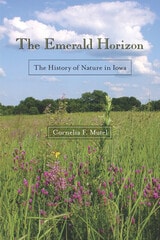
In The Emerald Horizon, Cornelia Mutel combines lyrical writing with meticulous scientific research to portray the environmental past, present, and future of Iowa. In doing so, she ties all of Iowa's natural features into one comprehensive whole.
Since so much of the tallgrass state has been transformed into an agricultural landscape, Mutel focuses on understanding today's natural environment by understanding yesterday's changes. After summarizing the geological, archaeological, and ecological features that shaped Iowa's modern landscape, she recreates the once-wild native communities that existed prior to Euroamerican settlement. Next she examines the dramatic changes that overtook native plant and animal communities as Iowa's prairies, woodlands, and wetlands were transformed. Finally she presents realistic techniques for restoring native species and ecological processes as well as a broad variety of ways in which Iowans can reconnect with the natural world. Throughout, in addition to the many illustrations commissioned for this book, she offers careful scientific exposition, a strong sense of respect for the land, and encouragement to protect the future by learning from the past.
The "emerald prairie" that "gleamed and shone to the horizon's edge," as botanist Thomas Macbride described it in 1895, has vanished. Cornelia Mutel's passionate dedication to restoring this damaged landscape—and by extension the transformed landscape of the entire Corn Belt—invigorates her blend of natural history and human history. Believing that citizens who are knowledgeable about native species, communities, and ecological processes will better care for them, she gives us hope—and sound suggestions—for the future.

The Encyclopedia of Chicago
Edited by James R. Grossman, Ann Durkin Keating, and Janice L. Reiff
University of Chicago Press, 2004
Developed by the Newberry Library with the cooperation of the Chicago Historical Society, The Encyclopedia of Chicago is the definitive historical reference on metropolitan Chicago. More than a decade in the making, the Encyclopedia brings together hundreds of historians, journalists, and experts on everything from airlines to Zoroastrians to explore all aspects of the rich world of Chicagoland, from its geological prehistory to the present.
The main alphabetical section of the Encyclopedia, comprising more than 1,400 entries, covers the full range of Chicago's neighborhoods, suburbs, and ethnic groups, as well as the city's cultural institutions, technology and science, architecture, religions, immigration, transportation, business history, labor, music, health and medicine, and hundreds of other topics. The Encyclopedia has the widest geographical reach of any city encyclopedia of its kind, encompassing eight of the region's counties, including suburbs. Nearly 400 thumbnail maps pinpoint Chicago neighborhoods and suburban municipalities; these maps are complemented by hundreds of black-and-white and color photographs and thematic maps that bring the history of metropolitan Chicago to life. Additionally, contributors have provided lengthy interpretive essays—woven into the alphabetical section but set off graphically—that take a long view of such topics as the built environment, literary images of Chicago, and the city's often legendary and passionate sports culture.
The Encyclopedia also offers a comprehensive biographical dictionary of more than 2,000 individuals important to Chicago history and a detailed listing of approximately 250 of the city's historically significant business enterprises. A color insert features a timeline of Chicago history and photo essays exploring nine pivotal years in this history.
The Encyclopedia of Chicago is one of the most significant historical projects undertaken in the last twenty years, and it has everything in it to engage the most curious historian as well as settle the most boisterous barroom dispute. If you think you know how Chicago got its name, if you have always wondered how the Chicago Fire actually started and how it spread, if you have ever marveled at the Sears Tower or the reversal of the Chicago River—if you have affection, admiration, and appreciation for this City of the Big Shoulders, this Wild Onion, this Urbs in Horto, then The Encyclopedia of Chicago is for you.
The End of American Lynching
Ashraf H. A. Rushdy
Rutgers University Press, 2012
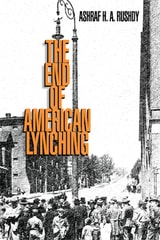
The End of American Lynching questions how we think about the dynamics of lynching, what lynchings mean to the society in which they occur, how lynching is defined, and the circumstances that lead to lynching. Ashraf H. A. Rushdy looks at three lynchings over the course of the twentieth century—one in Coatesville, Pennsylvania, in 1911, one in Marion, Indiana, in 1930, and one in Jasper, Texas, in 1998—to see how Americans developed two distinct ways of thinking and talking about this act before and after the 1930s.
One way takes seriously the legal and moral concept of complicity as a way to understand the dynamics of a lynching; this way of thinking can give us new perceptions into the meaning of mobs and the lynching photographs in which we find them. Another way, which developed in the 1940s and continues to influence us today, uses a strategy of denial to claim that lynchings have ended. Rushdy examines how the denial of lynching emerged and developed, providing insight into how and why we talk about lynching the way we do at the dawn of the twenty-first century. In doing so, he forces us to confront our responsibilities as American citizens and as human beings.
The End of Eden
Agrarian Spaces and the Rise of the California Social NovelTerry Beers
University of Nevada Press, 2018
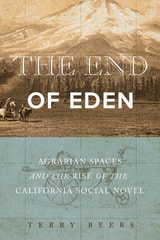
Drawing on history and cultural theory, The End of Eden traces the rise of the California social novel, its embrace of the agrarian dream, and its ambivalence about technology and the development it enables. It relies on various cultural conceptions of space, among them, the American Public Land Survey (the source of the “grid” allotments shaping homestead claims), Mexican-era diseños, and Native American traditions that defined a fluid relationship between human beings and the land.
This animation of four California social novels of the late eighteenth and early nineteenth centuries demonstrates how conflicts over space and place signify cultural conflict. It is deeply informed by the author’s understanding of historical land issues. The works include Joaquin Miller’s Unwritten History: Life Amongst the Modocs, Helen Hunt Jackson’s Ramona, Frank Norris’ The Octopus, and Mary Austin’s The Ford.
Miller’s Unwritten History: Life Amongst the Modocs and Jackson’s Ramona examine the tragic but inevitable consequences for native people of making space—inhabited already by Native American and Hispanic populations—safe for Americans who pursue the agrarian dream without regard to its effects upon those who claim prior tenure on the land. Norris’ The Octopus and Austin’s The Ford examine the murkier story of trying to preserve or to reclaim the agrarian dream when confronted by the unchecked materialist interests of American capitalism.
A wide-reaching interdisciplinary approach to various cultural conceptions of space, The End of Eden provides a crucial understanding of the conflicts depicted in social novels that lament the ways in which land is allocated and developed, the ways in which American agrarianism—and its promise of local, sustainable land use—is undermined, and how it applies to contemporary California. In an era where California confronts, yet again, the complicated patterns of land use: fracking, water use and water rights, coastal regulation and management, and agribusiness, this groundbreaking work provides an ever-relevant context.

The Essential Eldercare Handbook for Nevada
Kim Boyer
University of Nevada Press, 2014
Boyer and Shapiro provide Nevada-specific information\--medical, legal, and financial\--on the wide range of problems that arise during the elder years. Case studies show how a typical family copes with troubles such as failing health or financial cares and what options they have. This guide will help any Nevada resident plan for their own senior years and take care of aging parents, spouses, and other loved ones.
The Ethnobotanical Laboratory at the University of Michigan
Melvin R. Gilmore
University of Michigan Press, 1932
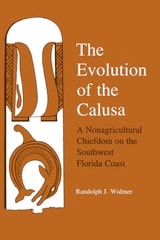
The Evolution of Calusa
A Nonagricultural Chiefdom of the Southwest Florida CoastRandolph J. Widmer
University of Alabama Press, 1988
The aims of this study are twofold: compile, for the first time, all the archaeological, environmental, and geological data pertinent to the evolution of the aboriginal inhabitants of southwest Florida; and, using this basis, develop a specific, integrated, and dynamic model of cultural adaptation that will serve as a stimulus for hypotheses that go beyond simple culture-historical concerns for future archaeological research in this region.
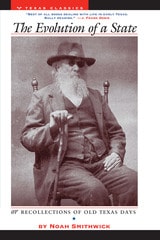
The Evolution of a State, or, Recollections of Old Texas Days
By Noah Smithwick
University of Texas Press, 1983
"I was but a boy in my nineteenth year, and in for adventure when I started out from Hopkinsville, Kentucky, with all my worldly possessions, consisting of a few dollars in money, a change of clothes, and a gun, of course, to seek my fortune in this lazy man's paradise."
Noah Smithwick was an old man, blind and near his ninetieth year, when his daughter recorded these words. He had stayed on in "paradise"—Texas—from 1827 to 1861, when his opposition to secession took him to California. The Evolution of a State is his story of these "old Texas days."
A blacksmith and a tobacco smuggler, Noah Smithwick made weapons for the Battle of Concepción, and he fought in that battle. With Hensley's company, he chased the Mexican army south of the Rio Grande after the Battle of San Jacinto. Twice he served with the Texas Rangers. In quieter times, he was a postmaster and justice of the peace in little Webber's Prairie.
Eyewitness to so much Texas history, Smithwick recounts his life and adventures in a simple, straightforward style, with a wry sense of humor. His keen memory for detail—what the people wore, what they ate, how they worked and played— vividly evokes the sights, sounds, and smells of the frontier.
First published in part by the Dallas Morning News, Smithwick's recollections gained such popularity that they were published in book form, as The Evolution of a State, in 1900. This new edition of a Texas classic makes widely available for the first time in many years this "best of all books dealing with life in early Texas."
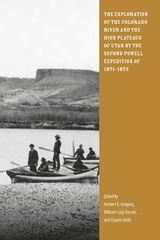
The Exploration of the Colorado River and the High Plateaus of Utah by the Second Powell Expedition of 1871-1872
Herbert E Gregory
University of Utah Press, 2009
Originally published from 1948 to 1949 as volumes sixteen and seventeen of the Utah Historical Quarterly, this volume looks to the larger significance and fruits of the second of Powell’s explorations, a more carefully constituted and better equipped scientific operation, yet one strangely neglected in historical records. Copublished with the Utah State Historical Society.
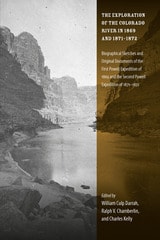
The Exploration of the Colorado River in 1869 and 1871-1872
Biographical Sketches and Original Documents of the First Powell Expedition of 1869 and the Second Powell Expedition of 1871-1872William Culp Darrah
University of Utah Press, 2009
This volume contains the journals of Major John Wesley Powell, George Young Bradley, Walter Henry Powell, and J. C. Sumner. Also included are various letters and notes by the members of the first expedition, and the journal of Francis Marion Bishop from the second expedition. All of the writings offer vivid descriptions of both adventure and of able and energetic scientific field work, and are of enduring interest and importance.

The Face in the Window and Other Alabama Ghostlore
Alan Brown
University of Alabama Press, 1996
True voices, real places, and unforgettable chills: Alabama’s ghost stories, gathered with scholarly care, reveal how memory, history, and belief linger—whispering from bridges, homes, cemeteries, and courthouses statewide today still.
The Face in the Window and Other Alabama Ghostlore is a landmark collection that preserves and brings to life Alabama’s rich tradition of supernatural storytelling. Rather than offering fictional retellings, this book presents ghost stories as they are told—by neighbors, families, students, and elders—rooted firmly in real places and lived experience. Alan Brown captures the voices of Alabamians across generations, revealing how belief, memory, humor, and fear continue to shape the state’s cultural landscape.
The collection is organized by geographic region, spiraling across the state so readers can explore local lore county by county and town by town. Many stories were gathered directly through fieldwork, lectures, and interviews, while others draw on previously unpublished Works Progress Administration materials from the 1930s. Dialect and storytelling style are preserved to maintain authenticity, and scholarly notes are placed at the back to keep the narratives accessible. Brown, a folklorist and former lecturer for the Alabama Humanities Foundation, brings both academic rigor and deep respect for oral tradition to the collection.
This collection will delight readers interested in folklore, Southern history, oral culture, and the supernatural. It is invaluable for scholars and students, irresistible to ghost-story enthusiasts, and especially meaningful for Alabamians eager to see their communities and traditions thoughtfully recorded and remembered.
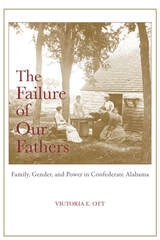
The Failure of Our Fathers
Family, Gender, and Power in Confederate AlabamaVictoria E. Ott
University of Alabama Press, 2023
An in-depth study of non-elite white families in Alabama—from the state’s creation through the end of the Civil War
The Failure of Our Fathers: Family, Gender, and Power in Confederate Alabama examines the evolving position of non-elite white families in Alabama during one of the most pivotal epochs in the state’s history. Drawing on a wide range of personal and public documents reflecting the state’s varied regions and economies, Victoria E. Ott uses gender and family as a lens to examine the yeomanry and poor whites, a constituency that she collectively defines as “common whites,” who identified with the Confederate cause.
Ott provides a nuanced examination of how these Alabamians fit within the antebellum era’s paternalistic social order, eventually identifying with and supporting the Confederate mission to leave the Union and create an independent, slaveholding state. But as the reality of the war slowly set in and the Confederacy began to fray, the increasing dangers families faced led Alabama’s common white men and women to find new avenues to power as a distinct socioeconomic class.
Ott argues that family provided the conceptual framework necessary to understand why common whites supported a war to protect slavery despite having little or no investment in the institution. Going to war meant protecting their families from outsiders who threatened to turn their worlds upside down. Despite class differences, common whites envisioned the Confederacy as a larger family and the state as paternal figures who promised to protect its loyal dependents throughout the conflict. Yet, as the war ravaged many Alabama communities, devotion to the Confederacy seemed less a priority as families faced continued separations, threats of death, and the potential for starvation. The construct of a familial structure that once created a sense of loyalty to the Confederacy now gave them cause to question its leadership. Ott shows how these domestic values rooted in highly gendered concepts ultimately redefined Alabama’s social structure and increased class distinctions after the war.

The Fairer Death
Executing Women in OhioVictor L. Streib
Ohio University Press, 2006
Women on death row are such a rarity that, once condemned, they may be ignored and forgotten. Ohio, a typical, middle-of-the-road death penalty state, provides a telling example of this phenomenon. The Fairer Death: Executing Women in Ohio explores Ohio’s experience with the death penalty for women and reflects on what this experience reveals about the death penalty for women throughout the nation.
Victor Streib’s analysis of two centuries of Ohio death penalty legislation and adjudication reveals no obvious exclusion of women or even any recognition of an issue of sex bias. In this respect, Ohio’s justice system exemplifies the subtle and insidious nature of this cultural disparity.
Professor Streib provides detailed descriptions of the cases of the four women actually executed by Ohio since its founding and of the cases of the eleven women sentenced to death in Ohio in the current death penalty era (1973–2005). Some of these cases had a profound impact on death penalty law, but most were routine and drew little attention. A generation later, reversals and commutations have left only one woman on Ohio’s death row.
Although Streib focuses specifically on Ohio, the underlying premise is that Ohio is, in many ways, a typical death penalty state. The Fairer Death provides insight into our national experience, provoking questions about the rationale for the death penalty and the many disparities in its administration.
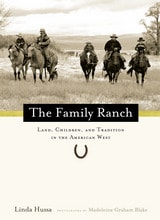
The Family Ranch
Land, Children, and Tradition in the American WestLinda Hussa
University of Nevada Press, 2010
Ranch families in the twenty-first century face many challenges, from competition with government-subsidized agribusiness corporations to tax laws that encourage development over agriculture and prevent the smooth transfer of land from one generation to the next. As a stabilizing force in the American West, ranch families play a critical role in our country, perhaps more so today than ever before, yet their stories have rarely been told. They contribute to our nation with the food they raise, the environments they protect, and the resources they manage, and they preserve our western heritage while holding the West open for the rest of us. In The Family Ranch, award-winning author Linda Hussa offers readers a personal, inside view into the lives of six diverse ranching families and the land that shapes their days and nights. Photographer Madeleine Graham Blake provides engaging and often moving images that portray each family at work and at play. With chapters on the critical issues that face each of them—from grazing rights and water use, to children's education and the emerging rural marketplace—these family profiles are set in a larger context. This is family ranching as it is now, a tracing of how it always was, but made far more complex in modern times. By combining their traditions with the tools of modern technology, these people strengthen the ideal of family and give the business of ranching a vibrant and viable future.The Family Ranch is rich in remarkable stories of what happens when parents, children, work, and nature come together for a lifetime of commitment. It speaks to urban and rural people in important ways, illuminating the realities of the western ranch and the people who make their living, and their lives, on it. Essential reading for people who love the West and care about its future. The Family Ranch inspires thoughts about tradition, values, and responsibility that are applicable to all communities.

The Farm on Badger Creek
Memories of a Midwest GirlhoodPeggy Prilaman Marxen
Wisconsin Historical Society Press, 2021

The Farm
Life Inside a Women's PrisonAndi Rierden
University of Massachusetts Press, 1997
Written by a journalist, this book depicts the day-to-day struggles and concerns of inmates a the Connecticut Correctional Institution in Niantic (renamed the Janet S. York correctional Institution), the state's only prison for women. Build in 1917 as a work farm for prostitutes, unwed mothers, and other women of allegedly immoral character, “the Farm,” as it is still called, has long served as a barometer of prevailing social attitudes toward women.
In the summer of 1992, Andi Rierden obtained permission from the warden at Niantic to conduct research on life inside the institution. During the next three and a half years, she spent more than fifteen hundred hours among the women, recording interviews, strolling the grounds with inmates and corrections officers, sharing meals, attending classes and group counseling sessions, and tracking former inmates after their release.
The stories these women tell shed light ton a wide range of issues, from the effects of more stringent drug laws and sentences to the rise of violence among inmates. In the process it becomes clear that the ideal of rehabilitation has been largely abandoned and replaced by a belief in punishment and retribution.
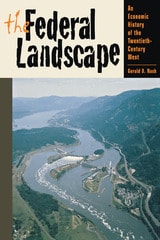
The Federal Landscape
An Economic History of the Twentieth-Century WestGerald D. Nash
University of Arizona Press, 1999
Historian Gerald D. Nash has written the first account of the epic growth of the economy of the American West during the twentieth century, showing how national interests shaped the West over the course of the past hundred years. In a book written for a broad readership, he tells the story of how America’s hinterland became the most dynamic and rapidly growing part of the country.
The Federal Landscape relates how in the nineteenth century the West was largely developed by individual enterprise but how in the twentieth Washington, D.C., became the central player in shaping the region. Nash traces the development of this process during the Progressive Era, World War I, the New Deal, World War II, the affluent postwar years, and the cold-war economy of the 1950s. He analyzes the growth of western cities and the emergence of environmental issues in the 1960s, the growth of a vibrant Mexican-U.S. border economy, and the impact of large-scale immigration from Latin America and Asia at century’s end.
Although specialists have studied many particular facets of western growth, Nash has written the only book to provide a much-needed overview of the subject. By addressing subjects as diverse as public policy, economic development, environmental and urban issues, and questions of race, class, and gender, he puts the entire federal landscape in perspective and shows how the West was really won.
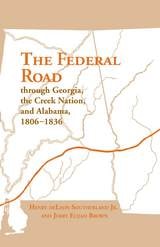
The Federal Road Through Georgia, the Creek Nation, and Alabama, 1806–1836
Henry deLeon Southerland
University of Alabama Press, 1990
The Federal Road was a major influence in settlement of the Mississippi Territory during the period between the Louisiana Purchase and removal of the Creek Indians

The Fertile Earth and the Ordered Cosmos
Reflections on the Newark Earthworks and World HeritageEdited by M. Elizabeth Weiser, Timothy R. W. Jordan, and Richard D. Shiels
The Ohio State University Press, 2023
The lush photos and wide-ranging essays of The Fertile Earth and the Ordered Cosmos honor this significance, not only to the global community but to local individuals and scholars who have developed intimate connections to the Earthworks. In sharing their experiences with this ancient site, public historians, archaeologists, physicists, architects, and others—including local and Indigenous voices—continue the work of nearly two hundred years of citizen efforts to protect and make accessible the Newark Earthworks after centuries of stewardship by Indigenous people. The resulting volume serves as a rich primer on the site for those unfamiliar with its history and a beautifully produced tribute for those who are already acquainted with its wonders.

The Fifth Border State
Slavery, Emancipation, and the Formation of West Virginia, 1829–1872Scott A. MacKenzie
West Virginia University Press, 2023
One of the first new interpretations of West Virginia’s origins in over a century—and one that corrects previous histories’ tendency to minimize support for slavery in the state’s founding.
Every history of West Virginia’s creation in 1863 explains the event in similar ways: at the start of the Civil War, political, social, cultural, and economic differences with eastern Virginia motivated the northwestern counties to resist secession from the Union and seek their independence from the rest of the state. In The Fifth Border State, Scott A. MacKenzie offers the first new interpretation of the topic in over a century—one that corrects earlier histories’ tendency to minimize support for slavery in the state’s founding.
Employing previously unused sources and reexamining existing ones, MacKenzie argues that West Virginia experienced the Civil War in the same ways as the border states of Missouri, Kentucky, Maryland, and Delaware. Like these northernmost slave states, northwestern Virginia supported the institution of slavery out of proportion to the actual presence of enslavement there. The people who became West Virginians built a new state first to protect slavery, but radical Unionists and escaping slaves forced emancipation on the statehood movement. MacKenzie shows how conservatives and radicals clashed over Black freedom, correcting many myths about West Virginia’s origins and making The Fifth Border State an important addition to the literature in Appalachian and Civil War history.

The First Chouteaus
RIVER BARONS OF EARLY ST. LOUISWilliam E. Foley and C. David Rice
University of Illinois Press, 1983
For more than half a century, Auguste and Pierre Chouteau dominated trade and enterprise in the Mississippi Valley. In their various roles as merchants, Indian traders, bankers, land speculators, governmental advisors, public officials, and community leaders, the Chouteau brothers exerted a tremendous influence on westward expansion. This is the first full account of their lives and illustrious careers.
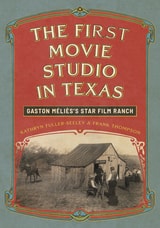
The First Movie Studio in Texas
Gaston Méliès's Star Film RanchKathryn Fuller-Seeley and Frank Thompson
University of Texas Press, 2026
The story of the Star Film Ranch and its pioneering crew, who created the first “authentic” Westerns filmed in Texas.
In 1910, the Méliès Star Film Company of Manhattan set up a moving-picture studio outside San Antonio, the first in Texas. Determined to make the most authentic Westerns possible, the company filmed there for a little over a year. In that brief time, it created more than seventy single-reel films, leaving a lasting mark on moviemaking.
Film historians Kathryn Fuller-Seeley and Frank Thompson return to a moment when on-location filmmaking was emerging as an artform. We meet producer Gaston Méliès, older brother of early-cinema legend Georges Méliès, and his cast and crew of young innovators, old hands, and genuine cowboys—like seventeen-year-old Edith Storey, the tomboy star who helped to ignite modern celebrity culture, and Francis Ford, who learned the art of film directing on the job and mentored his younger brother, Hollywood legend John Ford. The First Movie Studio in Texas traces the company’s trials and accomplishments, its influence on the depiction of race and gender in Western filmmaking, its surviving works, and its crowning achievement: The Immortal Alamo (1911), the earliest cinematic depiction of that famous battle.
Finally recovered from the shadows, the forgotten Méliès brother proves to be one of the key founders of the Western myth on screen.
The First Primary
New Hampshire's Outsize Role in Presidential NominationsDavid W. Moore
University of New Hampshire Press, 2015
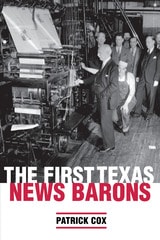
The First Texas News Barons
By Patrick Cox
University of Texas Press, 2005
Newspaper publishers played a crucial role in transforming Texas into a modern state. By promoting expanded industrialization and urbanization, as well as a more modern image of Texas as a southwestern, rather than southern, state, news barons in the early decades of the twentieth century laid the groundwork for the enormous economic growth and social changes that followed World War II. Yet their contribution to the modernization of Texas is largely unrecognized.
This book investigates how newspaper owners such as A. H. Belo and George B. Dealey of the Dallas Morning News, Edwin Kiest of the Dallas Times Herald, William P. Hobby and Oveta Culp Hobby of the Houston Post, Jesse H. Jones and Marcellus Foster of the Houston Chronicle, and Amon G. Carter Sr. of the Fort Worth Star-Telegram paved the way for the modern state of Texas. Patrick Cox explores how these news barons identified the needs of the state and set out to attract the private investors and public funding that would boost the state's civic and military infrastructure, oil and gas industries, real estate market, and agricultural production. He shows how newspaper owners used events such as the Texas Centennial to promote tourism and create a uniquely Texan identity for the state. To balance the record, Cox also demonstrates that the news barons downplayed the interests of significant groups of Texans, including minorities, the poor and underemployed, union members, and a majority of women.
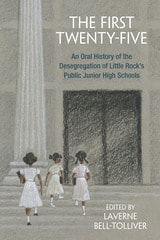
The First Twenty-Five
An Oral History of the Desegregation of Little Rock’s Public Junior High SchoolsLaVerne Bell-Tolliver
University of Arkansas Press, 2018
“It was one of those periods that you got through, as opposed to enjoyed. It wasn’t an environment that . . . was nurturing, so you shut it out. You just got through it. You just took it a day at a time. You excelled if you could. You did your best. You felt as though the eyes of the community were on you.”—Glenda Wilson, East Side Junior High
Much has been written about the historical desegregation of Little Rock Central High School by nine African American students in 1957. History has been silent, however, about the students who desegregated Little Rock’s five public junior high schools—East Side, Forest Heights, Pulaski Heights, Southwest, and West Side—in 1961 and 1962.
The First Twenty-Five gathers the personal stories of these students some fifty years later. They recall what it was like to break down long-standing racial barriers while in their early teens—a developmental stage that often brings emotional vulnerability. In their own words, these individuals share what they saw, heard, and felt as children on the front lines of the civil rights movement, providing insight about this important time in Little Rock, and how these often painful events from their childhoods affected the rest of their lives.
The Fishing Line
A History of the Grand Rapids & Indiana RailroadGraydon M. Meints
Michigan State University Press, 2018

The Fixers
Devolution, Development, and Civil Society in Newark, 1960-1990Julia Rabig
University of Chicago Press, 2016
Rabig argues that fixers play dual roles. They support resistance, but also mediation; they fight for reform, but also more radical and far-reaching alternatives; they rally others to a collective cause, but sometimes they broker factions. Fixers reflect longer traditions of organizing while responding to the demands of their times. In so doing, they end up fixing (like a fixative) a new and enduring pattern of activist strategies, reforms, and institutional expectations—a pattern we continue to see today.

The Follinglo Dog Book
A Norwegian Pioneer Story from IowaPeder Gustav Tjernagel
University of Iowa Press, 1999
The Follinglo Dog Book both is and is not about dogs. The dogs are certainly here: from Milla to Chip the Third, we encounter a procession of heroic if often unfortunate creatures who, along with their immigrant masters, led a hard life on the nineteenth-century American frontier. However, if you pick up this book thinking it will offer a heartwarming read about canine experiences, you will find yourself reinformed by the way it unfolds.
Instead, these are the stories of a Norwegian pioneer family that came in 1860 to settle the Iowa prairie on a homestead called Follinglo Farm in Story County, Iowa. In the Tjernagels' experience one may read a chronicle of the state, the region, and the nation. Arriving in Iowa in what was still the age of wooden equipment and animal power, the Tjernagels witnessed each successive revolution on the land. They built homes and barns, cultivated the land, and encountered every manner of natural disaster from prairie fires to blizzards. Through all the struggles and setbacks, Peder Gustav Tjernagel's stories sparkle with boyhood pranks and adventures, in which the family dogs frequently play a role.
Readers will discover a wonderful cast of Norwegian relatives and neighbors, including a Herculean uncle, Store Per (Big Pete), who could lift a cow by its horns; a mysterious aunt, Stora Fastero (Big Sister), whose arrival signaled that a baby was soon to be born; and Elling Eilson, the walking Lutheran apostle. And, of course, there are the dogs who shepherd, protect, and even baby-sit the residents of Follinglo Farm.
The Ford Century in Minnesota
Brian McMahon
University of Minnesota Press, 2016
In 1903, before the Ford Motor Company was even incorporated, Stephen Tenvoorde signed a contract to sell “Fordmobiles” at his bicycle shop in St. Cloud, Minnesota. Four generations later, the Tenvoorde family still operates what is now the oldest Ford dealership in the world. Brian McMahon chronicles how the fortunes of the company and the state became intertwined during that century.
Ford assembled Model T cars in the world’s tallest automobile plant in Minneapolis and a three-story structure in St. Paul—both still standing. These factories quickly became functionally obsolete after the development of the moveable assembly line. The hunt for a new site to build a modern, single-story plant stirred intense rivalry between Minneapolis and St. Paul. Henry Ford took a rare personal interest in the search and selected a 125-acre parcel in St. Paul overlooking the recently built High Dam on the Mississippi River, which allowed for navigation and hydroelectric power. The Twin Cities Assembly Plant would go on to manufacture millions of cars, trucks, tractors, and military vehicles until its closure in 2011.
Henry Ford’s large-scale experiments with every aspect of the industrial economy sent ripples and shockwaves through the lives of Minnesotans—management and assembly line workers, dealers and customers, families and communities. First-person accounts of more than forty retired auto workers share what it was like to work at Ford—from the early years of the Minneapolis plant to the final hours of the Twin Cities Assembly Plant in St. Paul. McMahon documents the company’s transformation—through the Depression, the rise of the United Auto Workers Union, World War II, women joining the workforce, competition from imported cars, globalization, outsourcing, and the closing of the plant.
This publication was made possible in part by the people of Minnesota through a grant funded by an appropriation to the Minnesota Historical Society from the Minnesota Arts and Cultural Heritage Fund. Any views, findings, opinions, conclusions or recommendations expressed in this publication are those of the authors and do not necessarily represent those of the State of Minnesota, the Minnesota Historical Society, or the Minnesota Historic Resources Advisory Committee.
The Forests of Michigan
Donald I. Dickmann and Larry A. Leefers
University of Michigan Press, 2003
No book currently on bookstore shelves explores, as The Forests of Michigan does, the natural history, ecology, management, economic importance, and use of the rich and varied forests that cover about half of the state's 36.3 million acres. The authors look at the forests, where they are, how they got to be, and their present-day usage, using the story of Michigan forests as a backdrop for the state's history, including its archaeology.
The Forests of Michigan explores how the forests came back after the great Wisconsin glacier began to recede over 12,000 years ago, and how they recovered from the onslaught of unrestrained logging and wildfire that, beginning in the mid-1800s, virtually wiped them out. The emphasis of the book is on sustaining for the long term the forests of the state, with a view of sustainability that builds not only upon the lessons learned from native peoples' attitude and use of trees but also on the latest scientific principles of forest ecology and management.
Generously illustrated and written in an engaging style, The Forests of Michigan sees the forest and the trees, offering both education and delight. "As forest scientists," the authors note, "we opted for a hearty serving of meat and potatoes; anyone who reads this book with the intention of learning something will not be disappointed. Nonetheless, we do include some anecdotal desserts, too."
Donald I. Dickmann is Professor of Forestry at Michigan State University and holds a doctorate from the University of Wisconsin. He is the author of The Culture of Poplars. Larry A. Leefers is Associate Professor in the Department of Forestry at Michigan State University. He holds a doctorate from Michigan State University.

The Formative Period in Alabama, 1815-1828
Thomas Abernethy, with an introduction by David T. Morgan
University of Alabama Press, 1995
The Formative Period in Alabama, 1815-1828 is a beautifully crafted history of the evolution of the state written by Thomas Perkins Abernethy in 1922. The work shows how Alabama grew out of the Mississippi Territory and discusses the economic and political development during the years just before and just after Alabama became a state.
The Fort Ancient Aspect
James Bennett Griffin
University of Michigan Press, 1943
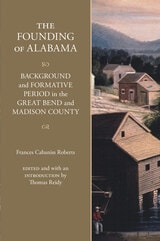
The Founding of Alabama
Background and Formative Period in the Great Bend and Madison CountyFrances Cabaniss Roberts, edited and introduced by Thomas Reidy
University of Alabama Press, 2020
The most thorough history of Alabama’s Madison County region, widely available for the first time
The 1956 dissertation by Frances Cabaniss Roberts is a classic text on Alabama history that continues to be cited by southern historians. Roberts was the first woman to earn a PhD from the University of Alabama’s history department. In the 1950s, she was the only full-time faculty member at what is now the University of Alabama in Huntsville, where she was appointed chair of the history department in 1966.
Roberts’s dissertation, “Background and Formative Period in the Great Bend and Madison County,” remains the most thorough history of the region yet produced. While certainly a product of its era, Roberts work is visionary in its own way and offers a useful look at Alabama’s rise to statehood. Thomas Reidy, editor of this edition, has kept Roberts’s words intact except for correction of minor typographical errors and helpful additions to the notes and citations. His introduction describes both the value of Roberts’s decades of service to UAH and the importance of her dissertation over time. While highlighting the great intrinsic value of Roberts’s research and writing, Reidy also notes its significance in demonstrating how the practice of history—its methods, priorities, and values—has evolved over the intervening decades.
In her examination of Madison County, Roberts spotlights exemplars of civic performance and good community behavior, giving readers one of the earliest accountings of the antebellum southern middle class. Unlike many historians of her time, Roberts displays an interest in both the “common folks” and leaders who built the region—rural and urban—and created the institutions that shaped Madison County. She examines the contributions of merchants, shopkeepers, lawyers, doctors, architects, craftsmen, planters, farmers, elected and appointed officials, board members, and entrepreneurs.
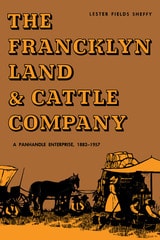
The Francklyn Land & Cattle Company
A Panhandle Enterprise, 1882-1957By Lester Fields Sheffy
University of Texas Press, 1963
An intensive study of a large Texas ranch, particularly of its business and financial aspects, in which the author has utilized many company records and firsthand accounts by the men who were engaged in the difficult task of establishing and maintaining a major cattle and land operation in wild, relatively isolated, semidesert country.
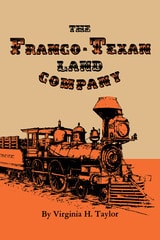
The Franco-Texan Land Company
By Virginia H. Taylor
University of Texas Press, 1969
The Franco-Texan Land Company was formed, ostensibly, by the French bondholders of the Memphis, El Paso, and Pacific Railroad in an attempt to salvage their investments through sale of lands in the railroad's Texas land grant. Most of the land company's wealth, however, went into the pockets of unscrupulous local managers and directors, and another railroad eventually built a road across Texas along the Memphis, El Paso, and Pacific right of way.
Despite their unsavory histories, the land company and its railroad parent played an important part in the development of Northwest Texas. Virginia Taylor's account of their activities furthers the study of the role of land companies in the settlement of the United States and adds interesting sidelights on one of the immigrant groups that left the imprint of Europe on frontier Texas.
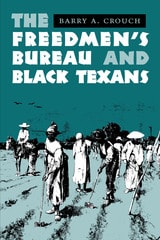
The Freedmen's Bureau and Black Texans
By Barry A. Crouch
University of Texas Press, 1992

The Freedom Quilting Bee
Folk Art and the Civil Rights MovementNancy Callahan
University of Alabama Press, 2005
The original book on the renowned Freedom quilters of Gee's Bend - stitching justice, one quilt at a time.
In December of 1965, the year of the Selma-to-Montgomery march, a white Episcopal priest driving through a desperately poor, primarily black section of Wilcox County found himself at a great bend of the Alabama River. He noticed a cabin clothesline from which were hanging three magnificent quilts unlike any he had ever seen. They were of strong, bold colors in original, op-art patterns—the same art style then fashionable in New York City and other cultural centers. An idea was born and within weeks took on life, in the form of the Freedom Quilting Bee, a handcraft cooperative of black women artisans who would become acclaimed throughout the nation.

The French in Texas
History, Migration, CultureEdited by François Lagarde
University of Texas Press, 2003
2005 — San Antonio Conservation Society Citation
Original articles that explore the French presence and influence on Texas history, arts, education, religion, and business.
The flag of France is one of the six flags that have flown over Texas, but all that many people know about the French presence in Texas is the ill-fated explorer Cavelier de La Salle, fabled pirate Jean Laffite, or Cajun music and food. Yet the French have made lasting contributions to Texas history and culture that deserve to be widely known and appreciated. In this book, François Lagarde and thirteen other experts present original articles that explore the French presence and influence on Texas history, arts, education, religion, and business from the arrival of La Salle in 1685 to 2002.
Each article covers an important figure or event in the France-Texas story. The historical articles thoroughly investigate early French colonists and explorers, the French pirates and privateers, the Bonapartists of Champ-d'Asile, the French at the Alamo, Dubois de Saligny and French recognition of the Republic of Texas, the nineteenth-century utopists of Icaria and Reunion, and the French Catholic missions. Other articles deal with French immigration in Texas, including the founding of Castroville, Cajuns in Texas, and the French economic presence in Texas today (the first such study ever published). The remaining articles look at painters Théodore and Marie Gentilz, sculptor Raoul Josset, French architecture in Texas, French travelers from Théodore Pavie to Simone de Beauvoir who have written on Texas, and the French heritage in Texas education. More than seventy color and black-and-white illustrations complement the text.

The French-Canadian Heritage in New England
Gerard J. Brault
University Press of New England, 1986
The Frontier in American History
Frederick Jackson Turner
University of Arizona Press, 1986

The Fundamental Institution
Poverty, Social Welfare, and Agriculture in American Poor FarmsMegan Birk
University of Illinois Press, 2022
In-depth and innovative, The Fundamental Institution offers an overdue portrait of rural social welfare in the United States.

The Fur Trade Revisited
Selected Papers of the Sixth North American Fur Trade Conference, Mackinac Island, Michigan, 1991Jo-Anne Fisk
Michigan State University Press, 1994
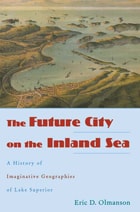
The Future City on the Inland Sea
A History of Imaginative Geographies of Lake SuperiorEric D. Olmanson
Ohio University Press, 2007
Winner of the AAG’s John Brinckerhoff Jackson Prize
Winner of the Great Lakes American Studies Association/Ohio University Press Book Award
Throughout the nineteenth century, the southern shores of Lake Superior held great promise for developers imagining the next great metropolis. These new territories were seen as expanses to be filled, first with romantic visions, then with scientific images, and later with vistas designed to entice settlement and economic development. The Future City on the Inland Sea describes the attempts of explorers under government, commercial, or scientific sponsorship to project their imaginative visions on a region where the future did not happen as planned.
Author Eric D. Olmanson takes a fresh look at the settlements in the vicinity of Chequamegon Bay and the Apostle Islands by analyzing the texts and images left by the missionaries, geologists, ordinance surveyors, newspaper editors, and boosters. The Future City on the Inland Sea shows how new visions of the place absorbed and replaced the old ones, eventually producing what might be called for the first time “a region.”
More than a regional geography, The Future City on the Inland Sea is an appraisal of these early efforts to meld geographies of physical nature with those of human ideals, a demonstration of how thoroughly and paradoxically those two realms are entangled.
The Galveston Era
The Texas Crescent on the Eve of SecessionBy Earl Wesley Fornell
University of Texas Press, 1961
The "Queen City" of Texas they called her—or the "Octopus of the Gulf." Galveston from 1845 to 1860 was the center of culture in Texas—or the monster with an economic strangle hold on all Texas trade. It was a gracious city with wide paved streets, impressive buildings, and neat gardens; yet it was also a pestilence-ridden place where no sanitary code was ever enforced and where one in every two children died before reaching maturity. Its citizens, avid for culture and knowledge, attended concerts and plays in great numbers and exhibited an eager interest in science and history; yet they could not be brought to support the school system. Galveston was a city where no person in need was ever left uncared for, where the sick and needy—strangers or friends—were succoured; yet no free Negro was safe from legalized abduction and forced enslavement, and the city served as a center for the revived African slave trade.
Earl Fornell makes the charming, colorful, cosmopolitan, contradictory city of Galveston the focal point of his study of the Texas Gulf Coast on the eve of the Civil War. The years 1845-1860 were crucial for this area; during that period the economy became more and more dependent upon slave labor, and thus the stage was set for secession.
Dr. Fornell describes with clarity the interrelated events, the decisions, and the conflicts that went into the development of Galveston and the Texas Gulf Coast during these years. He portrays the people and their way of life. He introduces us to some of the notables who helped to shape the destiny of Texas: Sam Houston, the old general; Lorenzo Sherwood, the golden-tongued propounder of radical economic doctrines; Willard Richardson, Hamilton Stuart, Ferdinand Flake, and Edward Cushing, the newspapermen whose writing both reflected and guided the thought of their fellow citizens; Arthur Lynn, the British consul whose observing and compassionate nature brought him onto the stage of Galveston history with striking frequency and whose voluminous letters provide a rich source for historical details; and William Ballinger, a minor player on the stage but one whose conscience and interests mirrored those of many other thoughtful Galvestonians.
Always present, affecting and affected by virtually every aspect of life on the Coast, the slave-labor problem grew ever more acute as the expanding railroad system laid more and more of the land open for development. Dr. Fornell shows with keen insight how it eventually forced Texans into a position where conflict with the federal government was unavoidable and the decision to secede from the Union inevitable.
The late Earl W. Fornell, a native of Wisconsin, held B.A. and M.A. degrees in political science from the New School for Social Research, the M.A. degree in political history from Columbia University, and the Ph.D. degree in political history from Rice University. He taught at Columbia, Amarillo College, Rice, and Lamar State College of Technology.
The Garnsey Spring Campsite
Late Prehistoric Occupation in Southeastern New MexicoWilliam J. Parry and John D. Speth
University of Michigan Press, 1984

The Gateway to the Pacific
Japanese Americans and the Remaking of San FranciscoMeredith Oda
University of Chicago Press, 2018
Focusing on the development of the Center, Meredith Oda shows how this multilayered story was embedded within a larger story of the changing institutions and ideas that were shaping the city. During these formative decades, Oda argues, San Francisco’s relations with and ideas about Japan were being forged within the intimate, local sites of civic and community life. This shift took many forms, including changes in city leadership, new municipal institutions, and especially transformations in the built environment. Newly friendly relations between Japan and the United States also meant that Japanese Americans found fresh, if highly constrained, job and community prospects just as the city’s African Americans struggled against rising barriers. San Francisco’s story is an inherently local one, but it also a broader story of a city collectively, if not cooperatively, reimagining its place in a global economy.

The Gee Years, 2007–2013
Herbert B. Asher
The Ohio State University Press, 2022
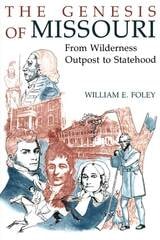
The Genesis of Missouri
From Wilderness Outpost to StatehoodWilliam E. Foley
University of Missouri Press, 1989
The story of the blending of diverse cultures in a land rich in resources and beauty is an extraordinary one. In this account, the pioneer hunters, trappers, and traders who roamed the Ozark hills and the boatmen who traded on the Missouri and Mississippi Rivers take their place beside the small coterie of St. Louisans whose wealth and influence enabled them to dominate the region politically and economically. Especially appealing for many readers will be the attention Foley gives to common Missourians, to the status of women and blacks, and to Indian-white relations.
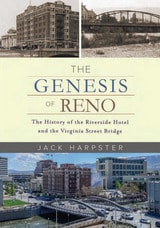
The Genesis of Reno
The History of the Riverside Hotel and the Virginia Street BridgeJack Harpster
University of Nevada Press, 2016