Results by title
5448 books match the query 'History and criticism' and 1116 start with t
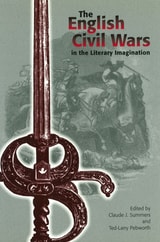
The English Civil Wars in the Literary Imagination
Edited by Claude J. Summers & Ted-Larry Pebworth
University of Missouri Press, 1999
The English civil wars loom large in seventeenth-century history and literature. This period, which culminated in the execution of a king, the dismantling of the Established Church, the inauguration of a commonwealth, and the assumption of rule by a lord protector, was one of profound change and disequilibrium. Focusing on writers as major as Milton, Marvell, Herrick, and Vaughan, and as misunderstood as Fane, Overton, and the poet Eliza, the fifteen essays in this collection discuss not only the representation of the civil wars but also the ways in which the civil wars were anticipated, refigured, and refracted in the century's literary imagination.
Although all of the essays are historically grounded and critically based, they vary widely in their historical perspectives and critical techniques, as well as in their scope and area of concentration. Six of the essays are on Royalist literary figures, six are on figures traditionally associated with the Parliamentarian side of the civil wars, two consider both, and the remaining essay examines how Royalist writers refashioned a puritan literary trope.
Unified through the contributors' concentration on "moderate" voices and their recurrent concerns with the ambiguities of literary response, The English Civil Wars in the Literary Imagination provides an important understanding of the English civil wars' manifold and sometimes indirect presence in the literature of the period.
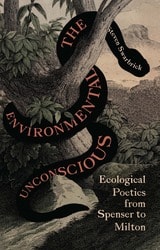
The Environmental Unconscious
Ecological Poetics from Spenser to MiltonSteven Swarbrick
University of Minnesota Press, 2023
Bringing psychoanalysis to bear on the diagnosis of ecological crisis
Why has psychoanalysis long been kept at the margins of environmental criticism despite the many theories of eco-Marxism, queer ecology, and eco-deconstruction available today? What is unique, possibly even traumatic, about eco-psychoanalysis? The Environmental Unconscious addresses these questions as it provides an innovative and theoretical account of environmental loss focused on the counterintuitive forms of enjoyment that early modern poetry and psychoanalysis jointly theorize.
Steven Swarbrick urges literary critics and environmental scholars fluent in the new materialism to rethink notions of entanglement, animacy, and consciousness raising. He introduces concepts from psychoanalysis as keys to understanding the force of early modern ecopoetics. Through close readings of Edmund Spenser, Walter Ralegh, Andrew Marvell, and John Milton, he reveals a world of matter that is not merely hyperconnected, as in the new materialism, but porous and off-kilter. And yet the loss these poets reveal is central to the enjoyment their works offer—and that nature offers.
As insightful as it is engaging, The Environmental Unconscious offers a provocative challenge to ecocriticism that, under the current regime of fossil capitalism in which everything solid interconnects, a new theory of disconnection is desperately needed. Tracing the propulsive force of the environmental unconscious from the early modern period to Freudian and post-Freudian theories of desire, Swarbrick not only puts nature on the couch in this book but also renews the psychoanalytic toolkit in light of environmental collapse.
The Epic Catalogue
List Form and Reception from Beowulf to Paradise LostEva von Contzen
The Ohio State University Press, 2026
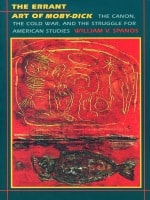
The Errant Art of Moby-Dick
The Canon, the Cold War, and the Struggle for American StudiesWilliam V. Spanos
Duke University Press, 1995
Combining Heideggerian ontology with a sociopolitical perspective derived primarily from Foucault, the reading of Moby-Dick that forms the center of this book demonstrates that the traditional identification of Melville’s novel as a "romance" renders it complicitous in the discourse of the Cold War. At the same time, Spanos shows how New Americanist criticism overlooks the degree to which Moby-Dick anticipates not only America’s self-representation as the savior of the world against communism, but also the emergent postmodern and anti-imperial discourse deployed against such an image. Spanos’s critique reveals the extraordinary relevance of Melville’s novel as a post-Cold War text, foreshadowing not only the self-destructive end of the historical formation of the American cultural identity in the genocidal assault on Vietnam, but also the reactionary labeling of the current era as "the end of history."
This provocative and challenging study presents not only a new view of the development of literary history in the United States, but a devastating critique of the genealogy of ideology in the American cultural establishment.
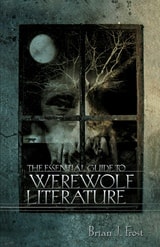
The Essential Guide to Werewolf Literature
Brian J. Frost
University of Wisconsin Press, 2003
Frost’s analysis encompasses fanciful medieval beliefs, popular works by Victorian authors, scholarly treatises and medical papers, and short stories from pulp magazines of the 1930s and 1940s. Revealing the complex nature of the werewolf phenomenon and its tremendous and continuing influence, The Essential Guide to Werewolf Literature is destined to become a standard reference on the subject.
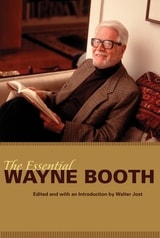
The Essential Wayne Booth
Wayne C. Booth
University of Chicago Press, 2006
While Booth’s work was formative to the study of literature, his essential writings have never been collected in a single volume—until now. Selected by Walter Jost in collaboration with Booth himself, the texts anthologized here present a picture of this indispensable critic’s contributions to literary and rhetorical studies. The selections range from memorable readings of Macbeth, Jane Austen, George Eliot, and Henry James to engagements with Booth’s intellectual heroes, such as Richard McKeon and Mikhail Bakhtin. But rhetoric, Booth’s abiding concern as a critic and thinker, provides the organizing principle of the anthology. The Essential Wayne Booth illuminates the scope of Booth’s rhetorical inquiry: the entire range of resources that human beings share for producing effects on one another. Whether about metaphors for our friendship with books or the two cultures of science and religion, the texts collected here always return to the techniques and ethics of our ways of communicating with each other—that is, to rhetoric.
The Essential Wayne Booth is a capstone to Booth's long career and an eloquent reminder of the ways in which criticism can make us alive to the arts of writing, talking, and listening.
The Ethics and Poetics of Alterity in Asian American Poetry
Xiaojing Zhou
University of Iowa Press, 2006
Poetry by Asian American writers has had a significant impact on the landscape of contemporary American poetry, and a book-length critical treatment of Asian American poetry is long overdue. In this groundbreaking book, Xiaojing Zhou demonstrates how many Asian American poets transform the conventional “I” of lyric poetry—based on the traditional Western concept of the self and the Cartesian “I”—to enact a more ethical relationship between the “I” and its others.
Drawing on Emmanuel Levinas’s idea of the ethics of alterity—which argues that an ethical relation to the other is one that acknowledges the irreducibility of otherness—Zhou offers a reconceptualization of both self and other. Taking difference as a source of creativity and turning it into a form of resistance and a critical intervention, Asian American poets engage with broader issues than the merely poetic. They confront social injustice against the other and call critical attention to a concept of otherness which differs fundamentally from that underlying racism, sexism, and colonialism. By locating the ethical and political questions of otherness in language, discourse, aesthetics, and everyday encounters, Asian American poets help advance critical studies in race, gender, and popular culture as well as in poetry.
The Ethics and Poetics of Alterity is not limited, however, to literary studies: it is an invaluable response to the questions raised by increasingly globalized encounters across many kinds of boundaries.
The Poets
Marilyn Chin, Kimiko Hahn, Myung Mi Kim, Li Young Lee, Timothy Liu, David Mura, and John Yau

The Ethics of Autobiography
Replacing the Subject in Modern SpainAngel G. Loureiro
Vanderbilt University Press, 2000
To address this oversight, Loureiro draws from his own experiences as well as from a wide range of previous theoretical works on autobiography, especially from the writings of Emmanuel Levinas, who believed that the self does not begin as a self-positing consciousness but as a response to an address from the other. On this basis, Loureiro then brilliantly traces the complex interplays between the political, discursive, rhetorical, and ethical dimensions of autobiography.
After laying out these theoretical foundations, Loureiro puts them to work in analyzing four of the most fascinating autobiographies written by Spanish exiles: The Life of Joseph Blanco White, who lived from 1775 to 1841, Memoria de la Melancolia by Maria Teresa Leon (1904-1988), Coto vedado and En los reinos de taifa by Juan Goytisolo (born 1931), and Literature or Life by Jorge Semprun (born 1923). The lives of these authors, all of whom were exiled for political reasons, were disrupted by some of the most crucial events in Spain's tortuous road to modernity and democracy.
The book closes with a discussion of why there have been so few critical examinations of autobiographies written in modern Spain. Loureiro proposes that, even in today's Spain, stifling social and political forces smother ethical responsibility, which is an essential ingredient in creating autobiographies that dare to be more than a humdrum inventory of personal recollections. Only in exile have Spanish authors seemed able to find the conditions to write their lives in a truly responsible manner. This answer to a call that grounds the subject in an other is ultimately the only form of truth available in autobiography.
The Ethics of Persuasion
Derrida's Rhetorical LegaciesBrooke Rollins
The Ohio State University Press, 2020
Drawing on Derrida’s (non)definition of ethics and his pointed accounts of performativity, Rollins argues that this vital ethical component of many ancient theories, practices, and pedagogies of persuasion has been undertheorized for more than two millennia. Through deconstructive readings of some of these texts, she shows us that we are not simply sovereign beings who both wield and guard against linguistic techniques of rule. Our persuasive endeavors, rather, are made possible by an ethics—an always prior encounter with otherness that interrupts self-presence.
The Ethics of Swagger
Prizewinning African American Novels, 1977–1993Michael DeRell Hill
The Ohio State University Press, 2013
The Ethics of Witnessing
The Holocaust in Polish Writers' Diaries from Warsaw, 1939-1945Rachel Feldhay Brenner
Northwestern University Press, 2014
Winner, 2015 USC Book Award in Literary and Cultural Studies, for outstanding monograph published on Russia, Eastern Europe or Eurasia in the fields of literary and cultural studies
The Ethics of Witnessing investigates the reactions of five important Polish diaristswriters—Jaroslaw Iwaszkiewicz, Maria Dabrowska, Aurelia Wylezynska, Zofia Nalkowska, and Stanislaw Rembek—during the period when the Nazis persecuted and murdered Warsaw’s Jewish population. The responses to the Holocaust of these prominent prewar authors extended from insistence on empathic interaction with victims to resentful detachment from Jewish suffering. Whereas some defied the dehumanization of the Jews and endeavored to maintain intersubjective relationships with the victims they attempted to rescue, others selfdeceptively evaded the Jewish plight. The Ethics of Witnessing examines the extent to which ideologies of humanism and nationalism informed the diarists’ perceptions, proposing that the reality of the Final Solution exposed the limits of both orientations and ultimately destroyed the ethical landscape shaped by the Enlightenment tradition, which promised the equality and fellowship of all human beings.
The Ethos of Drama
Rhetorical Theory and Dramatic WorthRobert L. King
Catholic University of America Press, 2010
The Ethos of Romance at the Turn of the Century
By William J. Scheick
University of Texas Press, 1994
The romance genre was a popular literary form among writers and readers in the nineteenth and early twentieth centuries, but since then it has often been dismissed as juvenile, unmodern, improper, or subversive. In this study, William J. Scheick seeks to recover the place of romance in fin-de-siècle England and America; to distinguish among its subgenres of eventuary, aesthetic, and ethical romance; and to reinstate ethical romance as a major mode of artistic expression.
Scheick argues that the narrative maneuvers of ethical romance dissolve the boundary between fiction and fact. In contrast to eventuary romances, which offer easily consumed entertainment, or aesthetic romances, which urge upon readers a passive appreciation of a wondrous work of art, ethical romances potentially disorient and reorient their readers concerning some metaphysical insight hidden within the commonplace. They prompt readers to question what is real and what is true, and to ponder the wonder of life and the text of the self, there to detect what the reader might do in the art of his or her own life
The authors whose works Scheick discusses are Nathaniel Hawthorne, H. Rider Haggard, Henry James, C. J. Cutcliffe Hyne, H. G. Wells, John Kendrick Bangs, Gilbert K. Chesterton, Richard Harding Davis, Stephen Crane, Mary Austin, Jack London, Robert Louis Stevenson, Mary Cholmondeley, and Rudyard Kipling. This wide selection expands the canon to include writers and works that highly merit re-reading by a new generation.
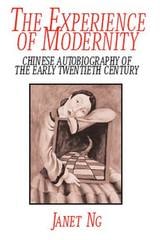
The Experience of Modernity
Chinese Autobiography of the Early Twentieth CenturyJanet Ng
University of Michigan Press, 2003
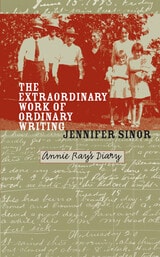
The Extraordinary Work of Ordinary Writing
Annie Ray's DiaryJennifer Sinor
University of Iowa Press, 2002
Exciting and beautifully crafted, The Extraordinary Work of Ordinary Writing provides an entirely new way of viewing “ordinary writing,” the everyday writing we typically ignore or dismiss. It takes as its center the diary of Jennifer Sinor's great-great-great-aunt Annie Ray, a woman who homesteaded in the Dakotas in the late nineteenth century. Diaries such as this have long been ignored by scholars, who prefer instead to focus on diaries with literary features. Reading diaries through this lens gives privileged status to those that are coherently crafted and ignores the very diaries that define the form through their relentless inscription of dailiness.
Annie Ray’s diary is not literary. By considering her ordinary writing as a site of complex and strategic negotiations among the writer, the form of writing, and dominant cultural scripts, Sinor makes visible the extraordinary work of the ordinary writer and the sophistication of these texts. In providing a way to read diaries outside the limits and conventions of literature, she challenges our approaches to other texts as well. Furthermore, because ordinary writing is not crafted for aesthetic reception (in contrast to autobiography proper, memoirs, and literary diaries), it is a productive site for investigating how both writing and culture get made every day.
The book is truly original in its form: nontraditional, storied, creative. Sinor, an accomplished creative writer, includes her own memories as extended metaphors in partnership with critical texts along with excerpts from her aunt's diary. The Extraordinary Work of Ordinary Writing will be a fascinating text for students of creative writing as well as of women's studies and diaries.
The Faces of Time
Portrayal of the Past in Old French and Latin Historical Narrative of the Anglo-Norman RegnumJean Blacker
University of Texas Press, 1994
The twelfth century witnessed the sudden appearance and virtual disappearance of an important literary genre—the Old French verse chronicle. These poetic histories of the British kings, which today are treated as fiction, were written contemporaneously with Latin prose narratives, which are regarded as historical accounts. In this pathfinding study, however, Jean Blacker asserts that twelfth-century authors and readers viewed both genres as factual history.
Blacker examines four Old French verse chronicles—Gaimar's Estoire des Engleis (c. 1135), Wace's Roman de Brut (c. 1155) and Roman de Rou (c. 1160–1174), and Benoît de Sainte-Maure's Chronique des Ducs de Normandie (c. 1174–1180) and four Latin narratives—William of Malmesbury's Gesta Regum (c. 1118–1143) and Historia Novella (c. 1140–1143), Orderic Vitalis's Historia Ecclesiastica (c. 1118–1140), and Geoffrey of Monmouth's Historia Regum Britanniae (c. 1138). She compares their similarity in three areas—the authors' stated intentions, their methods of characterization and narrative development, and the possible influences of patronage and audience expectation on the presentation of characters and events.
This exploration reveals remarkable similarity among the texts, including their idealization of historical and even legendary figures, such as King Arthur. It opens fruitful lines of inquiry into the role these writers played in the creation of the Anglo-Norman regnum and suggests that the Old French verse chronicles filled political, psychic, and aesthetic needs unaddressed by Latin historical writing of the period.

The Fallen Angel
Chastity, Class and Women's Reading, 1835–1880Sally Mitchell
University of Wisconsin Press, 1981
This book discusses the figure of the unchaste woman in a wide range of fiction written between 1835 and 1880; serious novels by Dickens, Mrs. Gaskell, Meredith, and George Eliot; popular novels that provided light reading for middle-class women (including books by Dinah Craik, Rhoda Broughton, and Ouida); sensational fiction; propaganda for social reform; and stories in cheap periodicals such as the Family Herald and the London Journal, which reached a different and far wider audience than either serious or popular novels.
The Familiar Letter as a Literary Genre in the Age of Pushkin
William Mills Todd III
Northwestern University Press, 1999
The Fan Fiction Studies Reader
Karen Hellekson and Kristina Busse
University of Iowa Press, 2014
Organized into four thematic sections, the essays address fan-created works as literary artifacts; the relationship between fandom, identity, and feminism; fandom and affect; and the role of creativity and performance in fan activities. Considered as literary artifacts, fan works pose important questions about the nature of authorship, the meaning of “originality,” and modes of transmission. Sociologically, fan fiction is and long has been a mostly female enterprise, from the fanzines of the 1960s to online forums today, and this fact has shaped its themes and its standing among fans. The questions of how and why people become fans, and what the difference is between liking something and being a fan of it, have also drawn considerable scholarly attention, as has the question of how fans perform their fannish identities for diverse audiences.
Thanks to the overlap between fan studies and other disciplines related to popular and cultural studies—including social, digital, and transmedia studies—an increasing number of scholars are turning to fan studies to engage their students. Fan fiction is the most extensively explored aspect of fan works and fan engagement, and so studies of it can often serve as a basis for addressing other aspects of fandom. These classic essays introduce the field’s key questions and some of its major figures. Those new to the field or in search of context for their own research will find this reader an invaluable resource.
The Fantasy of J.R.R. Tolkien
Mythopeia and the Recovery of CreationRobert J. Dobie, Robert J.
Catholic University of America Press, 2024
The Fate of Difficulty in the Poetry of Our Time
Edited by Charles Altieri and Nicholas D. Nace
Northwestern University Press, 2017
The essays in this volume include poets writing on the works of a younger generation (Lyn Hejinian on Paolo Javier, Bob Perelman on Rachel Zolf, Roberto Tejada on Rosa Alcalá), influential writers addressing the work of peers (Ben Lerner on Maggie Nelson, Michael W. Clune on Aaron Kunin), critics making imaginative leaps to encompass challenging work (Brian M. Reed on Sherwin Bitsui, Siobhan Philips on Juliana Spahr), and younger scholars coming to terms with poets who continue to govern new poetic experimentation (Joseph Jeon on Myung Mi Kim, Lytle Shaw on Lisa Robertson).
In pairings that are both intuitive (Marjorie Perloff on Craig Dworkin) and unexpected (Langdon Hammer on Srikanth Reddy), The Fate of Difficulty in the Poetry of Our Time illuminates the myriad pathways and strategies for exploring difficult poetry of the present.

The Fate of the Self
German Writers and French TheoryStanley Corngold
Duke University Press, 1994
The Fayre Formez of the Pearl Poet
Sandra Pierson Prior
Michigan State University Press, 1996
This book differs from most previous studies of the Pearl poet by treating all of his works as a whole. Prior’s purpose is to identify the underlying poetics of this major body of English poetry. Drawing on both the visual imagery of medieval art (the study includes 18 full-page illustrations) and the verbal imagery of the Bible and other literary sources, Prior shows how the poet’s "fayre formez" are the result of a coherent and self-conscious view of the artist’s craft.
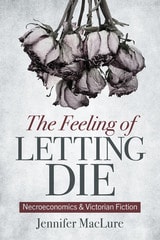
The Feeling of Letting Die
Necroeconomics and Victorian FictionJennifer MacLure
The Ohio State University Press, 2023
In The Feeling of Letting Die, Jennifer MacLure explores how Victorian novels depict the feelings that both fuel and are produced by an economic system that lets some people die in service of the free market. MacLure argues that Victorian authors present capitalism’s death function as a sticking point, a series of contradictions, and a problem to solve as characters grapple with systems that allow, demand, and cause the deaths of their less fortunate fellows.
Utilizing Achille Mbembe’s theorization of necropolitics, MacLure uses the term “necroeconomics,” positioning Victorian authors—even those who were deeply committed to liberal capitalism—as hyperaware of capitalism’s death function. Examining both canonical and lesser-known works by Elizabeth Gaskell, Harriet Martineau, Charles Dickens, William Morris, and George Eliot, The Feeling of Letting Die shows capitalism as not straightforwardly imposed via economic policy but instead as a system functioning through the emotions and desires of the human beings who enact it. In doing so, MacLure reveals how emotion functions as both the legitimating epistemic mode of capitalism and its most salient threat.
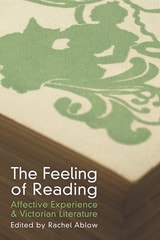
The Feeling of Reading
Affective Experience and Victorian LiteratureEdited by Rachel Ablow
University of Michigan Press, 2010
"A terrifically engaging collection of essays, which exemplifies the very best recent work in the history of reading and affect. The distinguished contributors explore ‘the feeling of reading' throughout Victorian literature, showing how a broad range of works---novels, lyrics, critical essays---not only represent but also analyze and evoke the surprisingly varied experience of immersing oneself in a book. It's rare to encounter a collection of such consistently high quality: the feeling of reading it is one of rich and manifold pleasure."
---James Eli Adams, Columbia University
"This gathering of state-of-the-art work generates a convincing and compelling vision of the emerging state of the field."
---Daniel Hack, University of Michigan
The Feeling of Reading is the first collection to address how we think of reading today through a focus on Victorian reading practices and the individual experience of reading in the nineteenth century. It brings together essays from some of the most established writers in the field with contributions from younger scholars to provide new ways of thinking about this definitive moment. The collection moves from the general to the particular: from excavations of the material and intellectual conditions of Victorian reading to the consequences of such excavations in readings of individual texts. All of the contributors engage the crucial critical question of the shaping of readerly feeling. In addition, they address a set of interlocking issues central to understanding Victorian reading: Kate Flint explores the material and social settings of reading; Nicholas Dames and Leah Price consider the concrete realities of books and periodicals; and the consequences of the mass circulation of texts are explored by Flint, John Plotz, and Rachel Ablow. The temporality of consumption appears in the contribution of Dames as well as those of Catherine Robson and Herbert F. Tucker, who also address the implications of meter; and Ablow, Plotz, Stephen Arata, and Garrett Stewart investigate the notion of identification.
Rachel Ablow is Associate Professor at the University at Buffalo, State University of New York.
Cover design and art by Julian Montague

The Female Autograph
Theory and Practice of Autobiography from the Tenth to the Twentieth CenturyEdited by Domna C. Stanton
University of Chicago Press, 1987
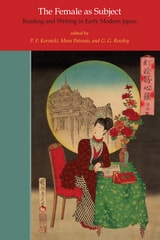
The Female as Subject
Reading and Writing in Early Modern JapanP. F. Kornicki, Mara Patessio, and G. G. Rowley, Editors
University of Michigan Press, 2010
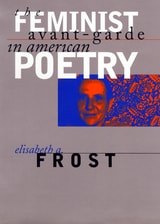
The Feminist Avant-Garde In American Poetry
Elisabeth A. Frost
University of Iowa Press, 2005
The Feminist Avant-Garde in American Poetry offers a historical and theoretical account of avant-garde women poets in America from the 1910s through the 1990s and asserts an alternative tradition to the predominantly male-dominated avant-garde movements. Elisabeth Frost argues that this alternative lineage distinguishes itself by its feminism and its ambivalence toward existing avant-garde projects; she also thoroughly explores feminist avant-garde poets' debts and contributions to their male counterparts.
The Feminization of Famine
Expressions of the Inexpressible?Margaret Kelleher
Duke University Press, 1997
Kelleher begins with a critical reading of the novels and short stories written about the Irish famine over the last 150 years, from the novels of William Carleton and Anthony Trollope to the writings of Liam O’Flaherty and John Banville. She then moves on to unveil a lesser-known body of literature—works written by women. This literature is read in the context of a rich variety of other sources, including eye-witness accounts, memoirs, journalistic accounts, and famine historiography. Concluding with a reading of the twentieth-century accounts of the famine in Bengal, this book reveals how gendered representations have played a crucial role in defining notions of famine.
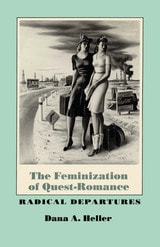
The Feminization of Quest-Romance
Radical DeparturesBy Dana A. Heller
University of Texas Press, 1990
What happens when a woman dares to imagine herself a hero? Questing, she sets out for unknown regions. Lighting a torch, she elicits from the darkness stories never told or heard before. The woman hero sails against the tides of great legends that recount the adventures of heroic men, legends deemed universal, timeless, and essential to our understanding of the natural order that holds us and completes us in its spiral. Yet these myths and rituals do not fulfill her need for an empowering self-image nor do they grant her the mobility she requires to imagine, enact, and represent her quest for authentic self-knowledge.
The Feminization of Quest-Romance proposes that a female quest is a revolutionary step in both literary and cultural terms. Indeed, despite the difficulty that women writers face in challenging myths, rituals, psychological theories, and literary conventions deemed universal by a culture that exalts masculine ideals and universalizes male experience, a number of revolutionary texts have come into existence in the second half of the twentieth century by such American women writers as Jean Stafford, Mary McCarthy, Anne Moody, Marilynne Robinson, and Mona Simpson, all of them working to redefine the literary portrayal of American women's quests. They work, in part, by presenting questing female characters who refuse to accept the roles accorded them by restrictive social norms, even if it means sacrificing themselves in the name of rebellion. In later texts, female heroes survive their "lighting out" experiences to explore diverse alternatives to the limiting roles that have circumscribed female development.
This study of The Mountain Lion, Memories of a Catholic Girlhood, Coming of Age in Mississippi, Housekeeping, and Anywhere but Here identifies transformations of the quest-romance that support a viable theory of female development and offer literary patterns that challenge the male monopoly on transformative knowledge and heroic action.
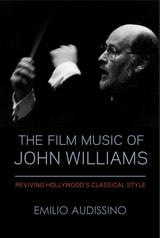
The Film Music of John Williams
Reviving Hollywood's Classical StyleEmilio Audissino
University of Wisconsin Press, 2021
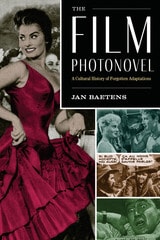
The Film Photonovel
A Cultural History of Forgotten AdaptationsBy Jan Baetens
University of Texas Press, 2019
Discarded by archivists and disregarded by scholars despite its cultural impact on post–World War II Europe, the film photonovel represents a unique crossroads. This hybrid medium presented popular films in a magazine format that joined film stills or set pictures with captions and dialogue balloons to re-create a cinematic story, producing a tremendously popular blend of cinema and text that supported more than two dozen weekly or monthly publications.
Illuminating a long-overlooked ‘lowbrow’ medium with a significant social impact, The Film Photonovel studies the history of the format as a hybrid of film novelizations, drawn novels, and nonfilm photonovels. While the field of adaptation studies has tended to focus on literary adaptations, this book explores how the juxtaposition of words and pictures functioned in this format and how page layout and photo cropping could affect reading. Finally, the book follows the film photonovel's brief history in Latin America and the United States. Adding an important dimension to the interactions between filmmakers and their audiences, this work fills a gap in the study of transnational movie culture.
The Fin-de-Siècle Poem
English Literary Culture and the 1890sJoseph Bristow
Ohio University Press, 2005
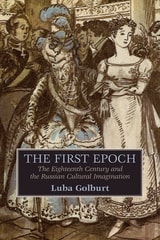
The First Epoch
The Eighteenth Century and the Russian Cultural ImaginationLuba Golburt
University of Wisconsin Press, 2014
Why did nineteenth-century Russians put the eighteenth century so quickly behind them? How does a meaningful present become a seemingly meaningless past? Interpreting texts by Lomonosov, Derzhavin, Pushkin, Viazemsky, Turgenev, Tolstoy, and others, Golburt finds surprising answers, in the process innovatively analyzing the rise of periodization and epochal consciousness, the formation of canon, and the writing of literary history.
Winner, Marc Raeff Book Prize, Eighteenth-Century Russian Studies Association
Winner, Heldt Prize for the Best Book by a Woman in Slavic/Eastern European/Eurasian Studies, Association for Women in Slavic Studies
Winner, Best Book in Literary and Cultural Studies, American Association of Teachers of Slavic and Eastern European Languages

The Florida Room
Alexandra T. Vazquez
Duke University Press, 2022
The Flowering Thorn
International Ballad StudiesThomas McKean
Utah State University Press, 2003
The flowering thorn expresses the dual nature of the ballad: at once a distinctive expression of European tradition, but also somewhat tricky to approach from a scholarly perspective, requiring a range of disciplines to illuminate its rich composition. Most of this latter quality has to do with the very features that characterize ballads... or narrative songs. These include an appearance of fragmentation; a wide range of cultural and social referents; complex, evocative symbolic language; and variation. The notable multiformity of meaning, text and tune is mirrored in scholarship, too. The Flowering Thorn is therefore wide ranging, with articles written by world authorities from the fields of folklore, history, literature, and ethnology, employing a variety of methodologies—structuralism to functionalism, repertoire studies to geographical explorations of cultural movement and change. The twenty-five selected contributions represent the latest trends in ballad scholarship, embracing the multi-disciplinary nature of the field today. The essays have their origins in the 1999 International Ballad Conference of the Kommission fur Volksdichtung (KfV), which focused particularly on ballads and social context; performance and repertoire; genre, motif, and classification. The revised, tailored, and expanded essays are divided into five sections—the interpretation of narrative song; structure and motif; context, version, and transmission; regions, reprints, and repertoires; and the mediating collector's offering a range of examples from fifteen different cultures, ten of them drawing on languages other than English, resulting in a series of personal journeys to the heart of one of Europe's richest, most enduring cultural creations. —Thomas McKean, from the Introduction
CONTRIBUTORS: Mary Anne Alburger, David Atkinson, Julia C. Bishop, Valentina Bold, Katherine Campbell, Nicolae Constantinescu, Luisa Del Giudice, Sheila Douglas, David G. Engle, Frances J. Fischer, Simon Furey, Vic Gammon, Marjetka Golez-Kaucic, Pauline Greenhill, Cozette Griffin-Kremer, J. J. Dias Marques, William Bernard McCarthy, Isabelle Peere, Gerald Porter, James Porter, Roger de V. Renwick, Sigrid Rieuwerts, Michèle Simonsen, Larry Syndergaard, Stefaan Top, Larysa Vakhnina, Lynn Wollstadt
The Flowers of Tarbes
or, Terror in LiteratureJean Paulhan
University of Illinois Press, 2005
The Footsteps of Israel
Understanding Jews in Anglo-Saxon EnglandAndrew P. Scheil
University of Michigan Press, 2004
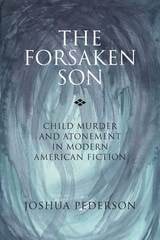
The Forsaken Son
Child Murder and Atonement in Modern American FictionJoshua Pederson
Northwestern University Press, 2015
The Forsaken Son engages the provocative coincidence of the vocabularies of infanticide and Christianity, specifically atonement theology, in six modern American novels: Flannery O’Connor’s The Violent Bear It Away, the first two installments of John Updike’s Rabbit tetralogy, Toni Morrison’s Beloved, Joyce Carol Oates’s My Sister, My Love, and Cormac McCarthy’s Outer Dark.
Christian atonement theology explains why God lets His son be crucified. Yet in recent years, as an increasing number of scholars have come to reject that explanation, the cross reverts from saving grace to trauma—or even crime. More bluntly, without atonement, the cross may be a filicide, in which God forces his son to die for no apparent reason. Pederson argues that the novels about child murder mentioned above likewise give voice to modern skepticism about traditional atonement theology.
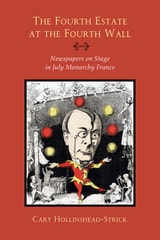
The Fourth Estate at the Fourth Wall
Newspapers on Stage in July Monarchy FranceCary Hollinshead-Strick
Northwestern University Press, 2019
July Monarchy plays, which provided affordable entertainment to a broad section of the public, constitute a large, nearly untapped reservoir of commentary on the arrival of the forty-franc press. Vaudevilles and comedies ask whether journalism that benefits from advertisement can be unbiased. Dramas explore whether threatening to spread false news is an acceptable way for journalists to exercise their influence. Hollinshead-Strick uses both plays and novels to show that despite their claims to enlighten their readers, newspapers were often accused of obscuring public access to information. Balzac’s interventions in this media sphere reveal his utopian views on print technology. Nerval’s and Pyat’s demonstrate the nefarious impact that corrupt theater critics could have on authors and on the public alike.
Scholars of press and media studies, French literature, theater, and nineteenth-century literature more generally will find this book a valuable introduction to a cross-genre debate about press publicity that remains surprisingly resonant today.
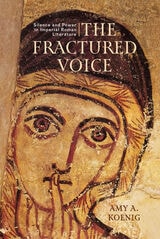
The Fractured Voice
Silence and Power in Imperial Roman LiteratureAmy A. Koenig
University of Wisconsin Press, 2023
In this volume, Amy Koenig deftly confronts the trope of muteness in Imperial Roman literature, arguing that this understanding of silence is incomplete. By unpacking the motif of voicelessness across a wide range of written sources, she shows that the Roman perception of silence was more complicated than a simple binary and that elite male authors used muted or voiceless characters to interrogate the concept of voicelessness in ways that would be taboo in other contexts. Paradoxically, Koenig illustrates that silence could in fact be freeing—that the loss of voice permits an untethering from other social norms and expectations, thus allowing a freedom of expression denied to many of the voiced.

The Fragility of Manhood
Hawthorne, Freud, and the Politics of GenderDavid Greven
The Ohio State University Press, 2012
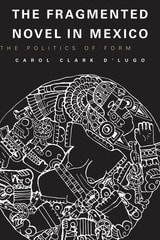
The Fragmented Novel in Mexico
The Politics of FormBy Carol Clark D'Lugo
University of Texas Press, 1997
From Mariano Azuela's 1915 novel Los de abajo to Rosamaría Roffiel's Amora of 1989, fragmented narrative has been one of the defining features of innovative Mexican fiction in the twentieth century. In this innovative study, Carol Clark D'Lugo examines fragmentation as a literary strategy that reflects the social and political fissures within modern Mexican society and introduces readers to a more participatory reading of texts.
D'Lugo traces defining moments in the development of Mexican fiction and the role fragmentation plays in each. Some of the topics she covers are nationalist literature of the 1930s and 1940s, self-referential novels of the 1950s that focus on the process of reading and writing, the works of Carlos Fuentes, novels of La Onda that came out of rebellious 1960s Mexican youth culture, gay and lesbian fiction, and recent women's writings.
With its sophisticated theoretical methodology that encompasses literature and society, this book serves as an admirable survey of the twentieth-century Mexican novel. It will be important reading for students of Latin American culture and history as well as literature.
The Freedom to Remember
Narrative, Slavery, and Gender in Contemporary Black Women's FictionMitchell, Angelyn
Rutgers University Press, 2002
The Freedom to Remember examines contemporary literary revisions of slavery in the United States by black women writers. The narratives at the center of this book include: Octavia E. Butler’s Kindred, Sherley Anne Williams’s Dessa Rose, Toni Morrison’s Beloved, J. California Cooper’s Family, and Lorene Cary’s The Price of a Child.
Recent studies have investigated these works only from the standpoint of victimization. Angelyn Mitchell changes the conceptualization of these narratives, focusing on the theme of freedom, not slavery, defining these works as “liberatory narratives.” These works create a space to problematize the slavery/freedom dichotomy from which contemporary black women writers have the “safe” vantage point to reveal aspects of enslavement that their ancestors could not examine. The nineteenth-century female emancipatory narrative, by contrast, was written to aid the cause of abolition by revealing the unspeakable realitiesof slavery. Mitchell shows how the liberatory narrative functions to emancipate its readers from the legacies of slavery in American society: by facilitating a deeper discussion of the issues and by making them new through illumination and interrogation.
The French Atlantic Triangle
Literature and Culture of the Slave TradeChristopher L. Miller
Duke University Press, 2008
Miller offers a historical introduction to the cultural and economic dynamics of the French slave trade, and he shows how Enlightenment thinkers such as Montesquieu and Voltaire mused about the enslavement of Africans, while Rousseau ignored it. He follows the twists and turns of attitude regarding the slave trade through the works of late-eighteenth- and early-nineteenth-century French writers, including Olympe de Gouges, Madame de Staël, Madame de Duras, Prosper Mérimée, and Eugène Sue. For these authors, the slave trade was variously an object of sentiment, a moral conundrum, or an entertaining high-seas “adventure.” Turning to twentieth-century literature and film, Miller describes how artists from Africa and the Caribbean—including the writers Aimé Césaire, Maryse Condé, and Edouard Glissant, and the filmmakers Ousmane Sembene, Guy Deslauriers, and Roger Gnoan M’Bala—have confronted the aftermath of France’s slave trade, attempting to bridge the gaps between silence and disclosure, forgetfulness and memory.
The Frontiers of Women's Writing
Women's Narratives and the Rhetoric of Westward ExpansionBrigitte Georgi-Findlay
University of Arizona Press, 1996
Brigitte Georgi-Findlay presents a range of writings that reflects the diversity of the western experience. Beginning with the narratives of Caroline Kirkland and other women of the early frontier, she reviews the diaries of the overland trails; letters and journals of the wives of army officers during the Indian wars; professional writings, focusing largely on travel, by women such as Caroline Leighton from the regional publishing cultures that emerged in the Far West during the last quarter of the century; and late-nineteenth- and early-twentieth-century accounts of missionaries and teachers on Indian reservations. Most of the writers were white, literate women who asserted their own kind of cultural authority over the lands and people they encountered. Their accounts are not only set in relation to a masculine frontier myth but also investigated for clues about their own involvement with territorial expansion. By exploring the various ways in which women writers actively contributed to and at times rejected the development of a national narrative of territorial expansion based on empire building and colonization, the author shows how their accounts are implicated in expansionist processes at the same time that they formulate positions of innocence and detachment.
Georgi-Findlay has drawn on American studies scholarship, feminist criticism, and studies of colonial discourse to examine the strategies of women's representation in writing about the West in ways that most theorists have not. She critiques generally accepted stereotypes and assumptions--both about women's writing and its difference of view in particular, and about frontier discourse and the rhetoric of westward expansion in general--as she offers a significant contribution to literary studies of the West that will challenge scholars across a wide range of disciplines.
The Fugitive's Properties
Law and the Poetics of PossessionStephen M. Best
University of Chicago Press, 2004
Best also argues that legal principles dealing with fugitives and indebted persons provided a sophisticated precursor to intellectual property law as it dealt with rights in appearance, expression, and other abstract aspects of personhood. In this conception of property as fleeting, indeed fugitive, American law preserved for much of the rest of the century slavery's most pressing legal imperative: the production of personhood as a market commodity. By revealing the paradoxes of this relationship between fugitive slave law and intellectual property law, Best helps us to understand how race achieved much of its force in the American cultural imagination. A work of ambitious scope and compelling cross-connections, The Fugitive's Properties sets new agendas for scholars of American literature and legal culture.
The Future of Illusion
Political Theology and Early Modern TextsVictoria Kahn
University of Chicago Press, 2013
Kahn draws on theorists such as Carl Schmitt, Leo Strauss, Walter Benjamin, and Hannah Arendt and their readings of Shakespeare, Hobbes, Machiavelli, and Spinoza to illustrate that the dialogue between these modern and early modern figures can help us rethink the contemporary problem of political theology. Twentieth-century critics, she shows, saw the early modern period as a break from the older form of political theology that entailed the theological legitimization of the state. Rather, the period signaled a new emphasis on a secular notion of human agency and a new preoccupation with the ways art and fiction intersected the terrain of religion.
The Gaucho Genre
A Treatise on the MotherlandJosefina Ludmer
Duke University Press, 2002
By examining the formation of a genre whose origins predated the consolidation of Argentina as a nation-state but that gained significance only after the country's independence, Ludmer elucidates the relationship of literature to the state, as well as the complex positionings of gender within the struggle for independence. She develops a sociological investigation of “outsider” culture through close textual analyses of works by Hidalgo, Ascasubi, Del Campo, Hernandez, Sarmiento, and Borges. This inquiry culminates in the assertion that language, marked as it is by the collisions of high and low culture, constitutes the central issue of Latin American modernization and modernism. Extensive annotation renders this edition of Ludmer's seminal study easily accessible for a North American audience.
The Gaucho Genre’s far-reaching implications will make it valuable reading for a varied audience. While teachers and students of Latin American literature and criticism will find it an important resource, it will also interest those concerned with the processes of nation-building or in the complex intersections of dominant and marginal voices.
The Gendering of Men, 1600–1750
The English PhallusThomas A. King
University of Wisconsin Press, 2004
Taking on nothing less than the formation of modern genders and sexualities, Thomas A. King develops a history of the political and performative struggles that produced both normative and queer masculinities in the seventeenth and eighteenth centuries. The result is a major contribution to gender studies, gay studies, and theater and performance history.
The Gendering of Men, 1600–1750 traces the transition from a society based on alliance, which had subordinated all men, women, and boys to higher ranked males, to one founded in sexuality, through which men have embodied their claims to personal and political privacy. King proposes that the male body is a performative production marking men’s resistance to their subjection within patriarchy and sovereignty. Emphasizing that categories of gender must come under historical analysis, The Gendering of Men explores men’s particpation in an ongoing struggle for access to a universal manliness transcending other biological and social differentials.
This is volume one of two projected volumes.