Results by title
4743 books match the query 'Religion' and 1168 start with t
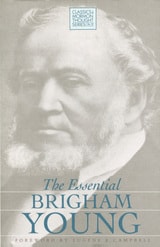
The Essential Brigham Young
Eugene E. Campbell
Signature Books, 1992
Self-educated and preoccupied with the day-to-day business of his widespread empire, Young rarely found time to read. But he delivered hundreds of lively, extemporaneous sermons which blended common sense with theological speculation. Such homespun treatises carried an immediacy that was absent from the philosophically-oriented studies of his ecclesiastical colleague Orson Pratt, though, at the same time, Young’s speeches could be unfocused and contradictory.
Several of the more controversial teachings that Young promulgated—Adam-as-God, divine omniscience, and blood atonement—have sparked considerable debate since they were first uttered more than one hundred years ago. “Will you love your brothers and sisters likewise,” he once asked, “when they have committed a sin that cannot be atoned for without the shedding of their blood? Will you love that man or woman well enough to shed their blood?”
Other favorite topics were the “personality of God,” “election and reprobation,” and “the resurrection.” His sermons usually begin in a chatty way: “I remarked last Sunday that I had not felt much like preaching,” or “When I contemplate the subject of salvation, and rise before a congregation to speak upon that all-important matter, it has been but a few times in my life that I could see a beginning point to it, or a stopping place.” Readers will find themselves drawn into the rhythm of Young’s rhetoric in the same way as his original hearers were.
The Essential Hayim Greenberg
Essays and Addresses on Jewish Culture, Socialism, and ZionismHayim Greenberg, Edited and introduced by Mark Raider, Foreword by Paul Mendes-Flohr
University of Alabama Press, 2016
This collection of thoroughly annotated essays, spanning the 1920s to the early 1950s, includes Greenberg’s meditations on socialism and ethics, profiles of polarizing twentieth-century figures (among them Trotsky, Lenin, and Gandhi), and several essays investigating the compatibility of socialism and communism. Greenberg always circles back, however, to the recurring question of how Jews might situate themselves in modernity, both before and after the Holocaust, and how Labor Zionist ideology might reshape the imbalances of Jewish economic life.
Alongside his role as an American Zionist leader, Greenberg maintained a lifelong commitment to the vitality of the Jewish diaspora. Rather than promoting Jewish autonomy and statehood, he argued for fidelity to the Jewish spirit. This volume not only seeks to restore Greenberg to his previous stature in the field of Judaic studies but also to return a vital and authentic voice, long quieted, to the continuing debate over what it means to be Jewish.
The Essential Hayim Greenberg provides an accessible text for scholars, historians, and students of Jewish studies, religion, and theology.
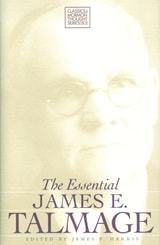
The Essential James E. Talmage
James P. Harris
Signature Books, 1997
This was not the first time that Talmage had been of service to his church. As a geology professor, he was consulted about underground ventilation options for the Salt Lake Tabernacle and about the scientific evidence for organic evolution, which he cautiously promoted. At the church president’s request, Talmage also delivered a series of lectures on church theology which would form the basis for his later influential books.
Not that Talmage was unaccustomed to controversy. When his book, The Articles of Faith, first appeared, he was accused of “apostasy” and narrowly escaped church sanction. When he read from an advance text of Jesus the Christ in general conference, some leaders objected to the doctrinal content and had the offending paragraphs excised from the published conference proceedings.
Scholars have noted that much of Talmage’s work reflects the thinking of his day, particularly in his reliance on Frederick Farrar’s Life of Christ and in his portrayal of a so-called “Victorian Jesus.” But as James P. Harris observes, Talmage also “supplemented the biblical narrative with modern revelation” and produced “a source of information and inspiration to church members worldwide.”
The Essential James E. Talmage includes some of the apostle’s lesser-known works. For Talmage’s more popular writings, the editor has included relevant diary entries and material omitted from later editions. Readers will appreciate the process by which these seminal works were produced and the character of the man who composed them.
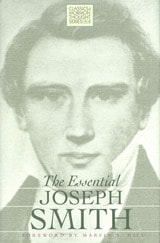
The Essential Joseph Smith
Marvin S. Hill
Signature Books, 1995
Previous, popular editions of Smith’s speeches and writings have edited out the extemporaneous complexities, as well as any deviations from present-day doctrines. Recent academic publications, for their part, have too often camouflaged the text in scholarly apparata. By contrast, this volume brings together a sampling of the prophet’s thinking from New York to Illinois in a complete, unabridged form, utilizing the earliest known sources, without excessive footnoting or commentary. No attempt is made to harmonize disparate, conflicting ideas. Readers can trace the developing, revelatory unfolding of ideas for themselves. They can also enjoy the text without reference to any interpretative agenda. In other words, The Essential Joseph Smith is readable and reliable. Bracketed material and punctuation are added where needed, but the text otherwise speaks for itself. These are Joseph Smith’s own words, his most essential messages.
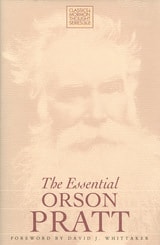
The Essential Orson Pratt
David J. Whittaker
Signature Books, 1991
Born in Henderson, New York, Pratt was a contemporary of Joseph Smith, who, like his successor Brigham Young, often depended on Pratt’s rhetorical skills and scientific eclecticism in presenting the Mormon message to the outside world. Since Pratt was a member of the leading Quorum of Twelve Apostles, many of his works were published in pamphlet form for proselytizing purposes. His rudimentary mathematical talents were also relied on to help navigate the first party of pioneers to the Great Salt Lake Valley. He was the first Mormon to enter the valley—three days before Young.
A stubborn and fiercely independent intellectual, Pratt also clashed with Smith over polygamy and with Young over the nature of God and the origin of the soul. Their arguments eventually led Young in 1875 to demote him within the quorum, reducing his chances of succeeding to the church presidency. Pratt suffered from diabetes, and his final years were plagued by illness. He died in Utah at the age of seventy. Nevertheless, his influence has continued.
Pratt was the first to write and publish an account of Smith’s famous “first vision,” and he authored one of the earliest confessions of Mormon doctrine, which Smith later used in composing his own “Articles of Faith.” Pratt edited the Latter-day Saints’ Millennial Star, The New York Messenger, The Seer, and The Prophetic Almanac, the latter consisting of astrological observations, folk wisdom, theological essays, and one of the first LDS statements that humans could become gods.
Pratt’s most controversial speculation was that atoms, then thought to be indestructible and indivisible, were intelligent, self-conscious, sentient, self-propelled particles which bonded together to form colonies in the shape of plants, minerals, animals, humans, and gods, and which were tutored over time in the “great school of the universe.” His writing was thus a unique blend of biblical and pseudo-scientific philosophy. Twentieth-century reprints of his works have tended to overlook his more controversial ideas and emphasized the less radical ones. In the present compilation, care has been taken to remain faithful to the originals, leaving nothing out.
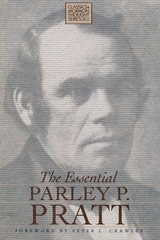
The Essential Parley P. Pratt
Peter L. Crawley
Signature Books, 1990
Best known for his fiery apologetic writings such as A Voice of Warning (1837), Key to the Science of Theology (1855), and for his autobiography which was published posthumously in 1874 by his son, who wrote most of it, Pratt nevertheless defined Mormon doctrine and theology for much of the nineteenth century. He was killed in 1857 in Arkansas by the estranged husband of one of his polygamous wives. The husband, an outsider, did not share Pratt’s and other Mormons’ contempt for civil authority over marriage.
The Essential Supernatural
A Dialogical Study in Kierkegaard and BlondelMaurice Ashley Agbaw-Ebai
St. Augustine's Press, 2022
Like these philosophers who have preceded him, Agbaw-Ebai exhorts us to never allow the sense of our relation to the supernatural as a settled matter. The philosophy of religion we have inherited does not protect us from having to confront our own subjectivity with autonomy: to be God without God and against God, or to be God with and through God.
The Essential Tillich
Paul Tillich
University of Chicago Press, 1999
This volume collects Tillich's best and most important work. Editor F. Forrester Church has structured the book around eight key areas of Tillich's thought, titled: Ultimate Concern; Symbols of Faith; The Protestant Principle; Addressing the Situation; Love, Power, and Justice; The Courage to Be; The Future of Religions; and Living on the Boundary. Through them we get a clear picture of the work of a man whom Church describes as “a man of rare genius and perspecuity, a modern man whose heart was in Jerusalem, whose spirit was with the ancient Greeks, and whose soul was committed to a better future.”
The Essential Worldwide Laws of Life
Sir John Templeton
Templeton Press, 2012
What does it mean to live a good life?
The major scriptures of the world, various schools of philosophical thought, storytellers, scientists, artists, and historians have all offered answers to this question. Surprisingly, these answers are common among nearly all sources. Famed investor and philanthropist Sir John Templeton called these commonalities the “laws of life.”
Templeton gathers the best of these teachings in The Essential Worldwide Laws of Life. This handsome volume shows readers of all ages, from all parts of the world, how to make their lives more joyous and useful by learning the universal truths that transcend time and culture.
Each law is presented in an essay format, with stories, commentary, and quotations to illustrate its importance. The material is designed to inspire the reader to put these laws into practice and to enjoy the rewarding life that will result.
The Eternal Present of Sport
Rethinking Sport and ReligionDaniel A. Grano
Temple University Press, 2017
Grano asserts that it is precisely through sport’s highest religious ideals that controversies are taking shape and constituting points of political and social rupture. He examines issues of transcendence, “legacy”—e.g., “greatest ever,” or “all-time”—and “witnessing” through instant replay, which undermine institutional authority. Grano also reflects on elite athletes representing especially powerful embodiments of religious and social conflict, including around issues related to gender, sexuality, ability doping, traumatic brain injury, and institutional greed.
Elite sport is in a period of profound crisis. It is through the ideals Grano analyzes that we can imagine a radically alternative future for elite sport.
The Ethical Case against Animal Experiments
Andrew Linzey, Clair Linzey
University of Illinois Press, 2018
The Ethical Case against Animal Experiments begins with the Oxford Centre for Animal Ethics's groundbreaking and comprehensive ethical critique of the practice of animal experiments. A second section offers original writings that engage with, and elaborate on, aspects of the Oxford Centre report. The essayists explore historical, philosophical, and personal perspectives that range from animal experiments in classical times to the place of necessity in animal research to one researcher's painful journey from researcher to opponent.
A devastating look at a contemporary moral crisis, The Ethical Case against Animal Experiments melds logic and compassion to mount a powerful challenge to human cruelty.
The Ethics of Oneness
Emerson, Whitman, and the Bhagavad GitaJeremy David Engels
University of Chicago Press, 2021
In The Ethics of Oneness, Jeremy David Engels reads the Bhagavad Gita alongside the works of American thinkers Ralph Waldo Emerson and Walt Whitman. Drawing on this rich combination of traditions, Engels presents the notion that individuals are fundamentally interconnected in their shared divinity. In other words, everything is one. If the lessons of oneness are taken to heart, particularly as they were expressed and celebrated by Whitman, and the ethical challenges of oneness considered seriously, Engels thinks it is possible to counter the pervasive and problematic American ideals of hierarchy, exclusion, violence, and domination.
The Ethos of the Christian Heart
Reading Veritatis SplendorAdrian Reimers
St. Augustine's Press, 2024
One of the most studied and critiqued documents of the papal magisterium is largely spoken of with regards to moral theology and the refutation of modern error. Yet Adrian Reimers points out that, as affirmed by this encyclical, the moral life is itself a realm of love and freedom, a place of intimacy with the Creator as much as interaction with others. Reimers is eager to show that the Encyclical is more innovative than it looks, just as morality is not just about the correction of error. It is not content to defend the traditional positions; it traces the paths of a profound renewal in the presentation of Catholic morality. "We would gladly say that it performs a kind of discreet revolution in the conception of Christian morality, affecting the very bases that support it."
The publication of Veritatis Splendor met with vigorous opposition and even rejection within the Catholic theological community. But in Veritatis Splendor John Paul II addresses these contemporary conceptions, including dissention, coming to grips with the roots of the modern errors that have resulted in the loss of transcendence. However, the scope of Veritatis Splendor is far broader than evil and judgment of sin. The pope addresses such issues as conscience, intrinsically evil acts, and the theory of fundamental freedom. Inevitably, these discussions revolve around how to conceive the nature of the human act and the conception of natural law.
This present work examines this encyclical against the backdrop of the philosophers with whom Karol Wojtyła engaged in his own philosophical project. Of central concern to Wojtyła throughout his career were the nature and prerogatives of the human person. Among his most frequent modern interlocutors were David Hume, Immanuel Kant, the utilitarian school, and Max Scheler. The program of Wojtyła’s philosophical corpus is to present an alternative account of the human person to that which has marked the post-Enlightenment world. Having shared in the sufferings of his native Poland under the Nazi occupation and then as a scholar working in Communist Poland, Wojtyła was keenly aware of the forms of materialism which formed the environment of his own life and work. He offers not only his own analyses but also provides a model for engaging with the contemporary culture.
Veritatis Splendor is a timeless examination of human, personal acts that challenges the post-modern conception of morality, love, and freedom. Reimers reorients this presentation for contemporary readers and invites readers who may have missed this foundational treatment to incorporate it into the questions and issues of our own times.
The Eucharist in Modern Philosophy
Xavier Tilliette
Catholic University of America Press, 2022
The Eucharistic Vision of Laudato Si
Praise, Conversion, and Integral EcologyLucas Briola
Catholic University of America Press, 2022
The Evangelical Crackup?
The Future of the Evangelical-Republican CoalitionEdited by Paul Djupe and Ryan L. Claassen
Temple University Press, 2019
Why did Donald Trump attract a record number of white evangelical voters without unified support—and despite nontrivial antipathy from evangelical leaders? The editors and leading scholars that contribute to the timely volume The Evangelical Crackup? answer this question and provide a comprehensive assessment of the status of evangelicals and the Christian Right in the Republican coalition.
The expected “crackup” with the Republican Party never happened. Each chapter in this cogent volume includes analyses of the 2016 election to explain why—and why that is critical. Chapters examine policy priorities, legal advocacy, and evangelical loyalty to the Republican Party; rhetoric, social networks, and evangelical elite influence; and the political implications of movements within evangelicalism, such as young evangelicals, Hispanics, and the Emergent Church movement.
Contributors include: Daniel Bennett, Mark Brockway, Ryan P. Burge, Brian R. Calfano, Jeremy Castle, Kimberly Conger, Daniel A. Cox, Kevin den Dulk, Sarah Allen Gershon, Tobin Grant, Robert P. Jones, Geoffrey Layman, Andrew R. Lewis, Ronald J. McGauvran, Joshua Mitchell, Juhem Navarro-Rivera, Jacob R. Neiheisel, Elizabeth Oldmixon, Adrian D. Pantoja, David Searcy, Anand Edward Sokhey, J. Benjamin Taylor, Robert Wuthnow, and the editors.

The Exegetical Value of the Masoretic Pointing
Jan Joosten
SBL Press, 2020
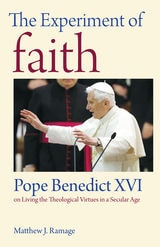
The Experiment of Faith
Pope Benedict XVI on Living the Theological Virtues in a Secular AgeCatholic University of America Press, 2020
The Exposition of 1 John and An Exposition upon Matthew V-VII
William Tyndale
Catholic University of America Press, 2023
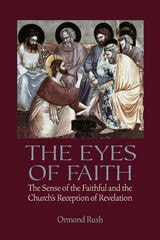
The Eyes of Faith
The Sense of the Faithful and the Church's Reception of RevelationOrmond Rush
Catholic University of America Press, 2009
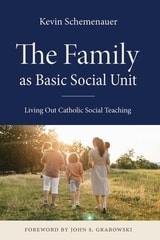
The Family as Basic Social Unit
Living Out Catholic Social TeachingKevin Schemenauer
Catholic University of America Press, 2024
The Fantasy of J.R.R. Tolkien
Mythopeia and the Recovery of CreationRobert J. Dobie, Robert J.
Catholic University of America Press, 2024
The Fatal Embrace
Jews and the StateBenjamin Ginsberg
University of Chicago Press, 1993
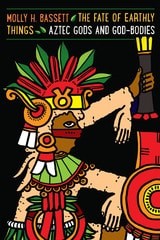
The Fate of Earthly Things
Aztec Gods and God-BodiesBy Molly H. Bassett
University of Texas Press, 2015
Following their first contact in 1519, accounts of Aztecs identifying Spaniards as gods proliferated. But what exactly did the Aztecs mean by a “god” (teotl), and how could human beings become gods or take on godlike properties? This sophisticated, interdisciplinary study analyzes three concepts that are foundational to Aztec religion—teotl (god), teixiptla (localized embodiment of a god), and tlaquimilolli (sacred bundles containing precious objects)—to shed new light on the Aztec understanding of how spiritual beings take on form and agency in the material world.
In The Fate of Earthly Things, Molly Bassett draws on ethnographic fieldwork, linguistic analyses, visual culture, and ritual studies to explore what ritual practices such as human sacrifice and the manufacture of deity embodiments (including humans who became gods), material effigies, and sacred bundles meant to the Aztecs. She analyzes the Aztec belief that wearing the flayed skin of a sacrificial victim during a sacred rite could transform a priest into an embodiment of a god or goddess, as well as how figurines and sacred bundles could become localized embodiments of gods. Without arguing for unbroken continuity between the Aztecs and modern speakers of Nahuatl, Bassett also describes contemporary rituals in which indigenous Mexicans who preserve costumbres (traditions) incorporate totiotzin (gods) made from paper into their daily lives. This research allows us to understand a religious imagination that found life in death and believed that deity embodiments became animate through the ritual binding of blood, skin, and bone.

The Fate of Rural Hell
Asceticism and Desire in Buddhist Thailand, New EditionBenedict Anderson
Seagull Books, 2016
A new edition of Benedict Anderson's masterpiece of political and social interpretation, which asks what a rural Thai “hell temple” reveals about Buddhism and modern life.
In 1975, political scientist Benedict Anderson encountered Wat Phai Rong Wua, a vast temple complex conceived by the monk Luang Phor Khom. Built as a cautionary museum, it uses striking tableaux, hell scenes, didactic statues, and eclectic displays, to imagine karmic consequence and to draw steady flows of Thai visitors.
Returning to the temple over several decades, Anderson treats the site as a travelogue, an ethnographic puzzle, and a social commentary. He asks what kinds of piety, hierarchy, and desire are staged there, and what local community sustains it. The temple also becomes his lens on how capitalism and rural change reshape religious practice in Thailand.
The Fathers of the Church in Christian Theology
Catholic University of America Press, 2019

The Feast of the Sorcerer
Practices of Consciousness and PowerBruce Kapferer
University of Chicago Press, 1997
Kapferer focuses on sorcery among Sinhalese Buddhists in Sri Lanka to explore how the art of sorcery is in fact deeply connected to social practices and lived experiences such as birth, death, sickness, and war. He describes in great detail the central ritual of exorcism, a study which opens up new avenues of thought that challenge anthropological approaches to such topics as the psychological forces of emotion and the dynamics of power. Overcoming both "orientalist" bias and postmodern permissiveness, Kapferer compellingly reframes sorcery as a pragmatic, conscious practice which, through its dynamic of destruction and creation, makes it possible for humans to reconstruct repeatedly their relation to the world.
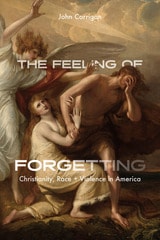
The Feeling of Forgetting
Christianity, Race, and Violence in AmericaJohn Corrigan
University of Chicago Press, 2023
The dual traumas of colonialism and slavery are still felt by Native Americans and African Americans as victims of ongoing violence toward people of color today. In The Feeling of Forgetting, John Corrigan calls attention to the trauma experienced by white Americans as perpetrators of this violence. By tracing memory’s role in American Christianity, Corrigan shows how contemporary white Christian nationalism is motivated by a widespread effort to forget the role race plays in American society. White trauma, Corrigan argues, courses through American culture like an underground river that sometimes bursts forth into brutality, terrorism, and insurrection. Tracing the river to its source is a necessary first step toward healing.
The Feeling of Forgetting
Christianity, Race, and Violence in AmericaJohn Corrigan
University of Chicago Press, 2023
A provocative examination of how religious practices of forgetting drive white Christian nationalism.
The dual traumas of colonialism and slavery are still felt by Native Americans and African Americans as victims of ongoing violence toward people of color today. In The Feeling of Forgetting, John Corrigan calls attention to the trauma experienced by white Americans as perpetrators of this violence. By tracing memory’s role in American Christianity, Corrigan shows how contemporary white Christian nationalism is motivated by a widespread effort to forget the role race plays in American society. White trauma, Corrigan argues, courses through American culture like an underground river that sometimes bursts forth into brutality, terrorism, and insurrection. Tracing the river to its source is a necessary first step toward healing.
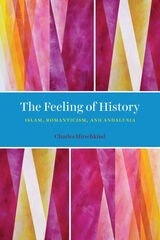
The Feeling of History
Islam, Romanticism, and AndalusiaCharles Hirschkind
University of Chicago Press, 2021
Against this xenophobic tendency, The Feeling of History examines the idea of Andalucismo—a modern tradition founded on the principle that contemporary Andalusia is connected in vitally important ways with medieval Islamic Iberia. Charles Hirschkind explores the works and lives of writers, thinkers, poets, artists, and activists, and he shows how, taken together, they constitute an Andalusian sensorium. Hirschkind also carefully traces the various itineraries of Andalucismo, from colonial and anticolonial efforts to contemporary movements supporting immigrant rights. The Feeling of History offers a nuanced view into the way people experience their own past, while also bearing witness to a philosophy of engaging the Middle East that experiments with alternative futures.
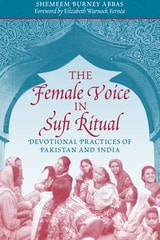
The Female Voice in Sufi Ritual
Devotional Practices of Pakistan and IndiaBy Shemeem Burney Abbas
University of Texas Press, 2002
The female voice plays a more central role in Sufi ritual, especially in the singing of devotional poetry, than in almost any other area of Muslim culture. Female singers perform sufiana-kalam, or mystical poetry, at Sufi shrines and in concerts, folk festivals, and domestic life, while male singers assume the female voice when singing the myths of heroines in qawwali and sufiana-kalam. Yet, despite the centrality of the female voice in Sufi practice throughout South Asia and the Middle East, it has received little scholarly attention and is largely unknown in the West.
This book presents the first in-depth study of the female voice in Sufi practice in the subcontinent of Pakistan and India. Shemeem Burney Abbas investigates the rituals at the Sufi shrines and looks at women's participation in them, as well as male performers' use of the female voice. The strengths of the book are her use of interviews with both prominent and grassroots female and male musicians and her transliteration of audio- and videotaped performances. Through them, she draws vital connections between oral culture and the written Sufi poetry that the musicians sing for their audiences. This research clarifies why the female voice is so important in Sufi practice and underscores the many contributions of women to Sufism and its rituals.
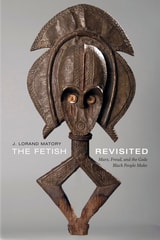
The Fetish Revisited
Marx, Freud, and the Gods Black People MakeJ. Lorand Matory
Duke University Press, 2018
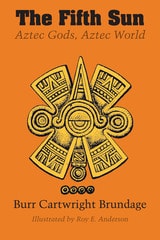
The Fifth Sun
Aztec Gods, Aztec WorldBy Burr Cartwright Brundage
University of Texas Press, 1979
The ancient Aztecs dwelt at the center of a dazzling and complex cosmos. From this position they were acutely receptive to the demands of their gods. The Fifth Sun represents a dramatic overview of the Aztec conception of the universe and the gods who populated it—Quetzalcoatl, the Plumed Serpent; Tezcatlipoca, the Smoking Mirror; and Huitzilopochtli, the Southern Hummingbird. Burr Cartwright Brundage explores the myths behind these and others in the Aztec pantheon in a way that illuminates both the human and the divine in Aztec life.
The cult of human sacrifice is a pervasive theme in this study. It is a concept that permeated Aztec mythology and was the central preoccupation of the aggressive Aztec state. Another particularly interesting belief explored here is the “mask pool,” whereby gods could exchange regalia and, thus, identities.
This vivid and eminently readable study also covers the use of hallucinogens; cannibalism; the calendars of ancient Mexico; tlachtli, the life-and-death ball game; the flower wars; divine transfiguration; and the evolution of the war god of the Mexica. A splendid introduction to Aztec religion, The Fifth Sun also contains insights for specialists in ethnohistory, mythology, and religion.
The Fifties Spiritual Marketplace
American Religion in a Decade of ConflictEllwood, Robert S
Rutgers University Press, 1997
A companion to his Sixties Spiritual Awakening, Ellwood explores the major Catholic-Protestant tensions of the decade, the conflict between theology and popular faith, and the underground forms of fifties religiosity like "Beat" Zen, UFO contactees, Thomas Merton monasticism, and the Joseph Campbell / Carl Jung revival of mythology. Ellwood frames his detailed and lively account with the provocative idea of the fifties as a "supply-side" free enterprise spiritual marketplace, with heady competition between religious groups and leaders, and with church attendance at a record high.
In addition to challenging an idealistic fifties cultural milieu, the book analyzes American religious responses to key historical events like the Korean War, McCarthyism, and the civil rights movement, turning a religious lens on the cultural history of the United States.
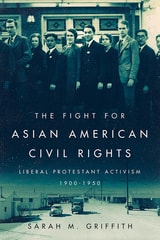
The Fight for Asian American Civil Rights
Liberal Protestant Activism, 1900-1950Sarah M Griffith
University of Illinois Press, 2018
The Figural Jew
Politics and Identity in Postwar French ThoughtSarah Hammerschlag
University of Chicago Press, 2010
The rootless Jew, wandering disconnected from history, homeland, and nature, was often the target of early twentieth-century nationalist rhetoric aimed against modern culture. But following World War II, a number of prominent French philosophers recast this maligned figure in positive terms, and in so doing transformed postwar conceptions of politics and identity.
Sarah Hammerschlag explores this figure of the Jew from its prewar usage to its resuscitation by Jean-Paul Sartre, Emmanuel Levinas, Maurice Blanchot, and Jacques Derrida. Sartre and Levinas idealized the Jew’s rootlessness in order to rethink the foundations of political identity. Blanchot and Derrida, in turn, used the figure of the Jew to call into question the very nature of group identification. By chronicling this evolution in thinking, Hammerschlag ultimately reveals how the figural Jew can function as a critical mechanism that exposes the political dangers of mythic allegiance, whether couched in universalizing or particularizing terms.
Both an intellectual history and a philosophical argument, The Figural Jew will set the agenda for all further consideration of Jewish identity, modern Jewish thought, and continental philosophy.
The Fire in the Equations
Science Religion & Search For GodKitty Ferguson
Templeton Press, 2004
“ In this beautifully and intelligently written book, Ferguson not only reports on some of the intellectual tremors jolting the world of thinking women and men, but also considers the basic questions with penetrating analysis, yet at a very readable level. . . . An excellent book.” —Choice
Heralded for its readability and scholarship, The Fire in the Equations offers a fascinating discussion of scientific discoveries and their impact on our beliefs. The book’s title is derived from Dr. Stephen Hawking’s pondering, “What is it that breathes fire into the equations and makes a universe for them to describe?”
Originally published in the U.S. in 1995, it provides an excursion through new theories of quantum physics and cosmology, ranging from the nature of time, the big bang, the “unreasonable effectiveness” of mathematics, laws of nature, and their possible relation to God, chaos theory, black holes, Heisenberg’s uncertainty principle, particle physics, Darwin's theory of evolution, and the role of God in all these equations. It even raises such questions as “how God might answer prayers” from the point of view of physics.
While she gives no absolute answers, Kitty Ferguson takes the reader through a world of paradoxes and improbabilities, explaining how believing in a pre-determined universe and free will as a theory of human behavior is possible. She concludes that what we know about science doesn't necessarily make God inevitable, but does not rule God out either.
The First Apology, The Second Apology, Dialogue with Trypho, Exhortation to the Greeks, Discourse to the Greeks, The Monarchy or The Rule of God
Saint Justin Martyr
Catholic University of America Press, 1965
The First Fifty Years
A Jubilee in Prose and Poetry Honoring Women RabbisRabbi Sue Levi Elwell, Jessica Greenbaum, Rabbi Hara E. Person
Central Conference of American Rabbis, 2023
The ordination of Rabbi Sally J. Priesand in 1972 was a watershed moment in Jewish history. In The First Fifty Years, contributors from across the Jewish and gender spectrums reflect on the meaning of this moment and the ensuing decades, both personally and for the Jewish community. In short pieces of new prose, authors—many of them pioneering rabbis—share stories, insights, analysis, and celebrations of women in the rabbinate. These are intertwined with a wealth of poetry that poignantly captures the spirit of this anniversary. The volume is a deep, heartfelt tribute to women rabbis and their indelible impact on all of us.
The First Urban Churches 1
Methodological FoundationsJames R. Harrison
SBL Press, 2015
A fresh look at early urban churches
This collection of essays examines the urban context of early Christian churches in the first-century Roman world. A city-by-city investigation of the early churches in the New Testament clarifies the challenges, threats, and opportunities that urban living provided for early Christians. Readers will come away with a better understanding of how scholars assemble an accurate picture of the cities in which the first Christians flourished.
Features:
- Analysis of urban evidence of the inscriptions, papyri, archaeological remains, coins, and iconography
- Discussion of how to use different types of evidence responsibly
- Outline of what constitutes proper methodological use for establishing a nuanced, informed portrait of ancient urban life
The First Urban Churches 2
Roman CorinthJames R. Harrison
SBL Press, 2016
Investigate the challenges, threats, and opportunities experienced by the early church
Volume two of The First Urban Churches focuses on the urban context of Christian churches in first-century Roman Corinth. An investigation of the material evidence of Corinth helps readers today understand properly the challenges, threats, and opportunities that the early Corinthian believers faced in the city. The essays demonstrate decisively the difference that such an approach makes in grappling with the meaning and context of the Corinthian epistles in the New Testament.
Features:
- Analysis of urban evidence of the inscriptions, papyri, archaeological remains, coins, and iconography
- Proposed reeconstructions of the past and its social, religious, and political significance
- A nuanced, informed portrait of ancient urban life in Corinth
The First Urban Churches 3
EphesusJames R. Harrison
SBL Press, 2018
Investigate the challenges, threats, and opportunities experienced by the early church in Ephesus
The third installment of The First Urban Churches focuses on the urban context of Christian churches in first-century Ephesus. As with previous volumes, contributors illustrate how an investigation of the material evidence will help readers understand properly the challenges, threats, and opportunities that the early Ephesian believers faced in that city. Brad Bitner, James R. Harrison, Michael Haxby, Fredrick J. Long, Guy M. Rogers, Michael Theophilos, Paul Trebilco, and Stephan Witetschek demonstrate decisively the difference that such an approach makes in grappling with the meaning and context of the New Testament writings, particularly Ephesians, Acts, and Revelation.
Features
- Analysis of urban evidence of the inscriptions, papyri, archaeological remains, coins, and iconography
- Proposed reconstructions of the past and its social, religious and political significance
- A nuanced, informed portrait of ancient urban life in Ephesus
The First Urban Churches 4
Roman PhilippiJames R. Harrison
SBL Press, 2018
Investigate the challenges and opportunities experienced by the early church
This fourth installment of The First Urban Churches, edited by James R. Harrison and L. L. Welborn, focuses on the urban context of Christian churches in first-century Roman Philippi. The international team of New Testament and classical scholars contributing to the volume present essays that use inscriptions, papyri, archaeological remains, coins, and iconography to examine the rivalries, imperial context, and ecclesial setting of the Philippian church.
Features:
- Analysis of the material and epigraphic evidence relating to first- and second-century CE Roman Philippi
- Examination of important passages from Philippians within their ancient urban context
- Investigation of the social composition and membership of the Philippian church from the archaeological and documentary evidence
The First Urban Churches 5
Colossae, Hierapolis, and LaodiceaJames R. Harrison
SBL Press, 2019
A fresh examination of early Christianity by an international team of New Testament and classical scholars
Volume 5 of The First Urban Churches investigates the urban context of Christian churches in first-century Roman Colossae, Hierapolis, and Laodicea. Building on the methodologies introduced in the first volume and supplementing the in-depth studies of Corinth, Ephesus, and Philippi (vols. 2-4), essays in this volume challenge readers to reexamine preconceived understandings of the early church and to grapple with the meaning and context of Christianity in its first-century Roman colonial context.
Features:
- Analysis of urban evidence found in inscriptions, papyri, archaeological remains, coins, and iconography
- Proposed reconstructions of the past and its social, religious, and political significance
- A nuanced, informed portrait of ancient urban life in the cities of the Lycus Valley
The First Urban Churches 6
Rome and OstiaJames R. Harrison
SBL Press, 2021
An examination of early Roman Christianity by New Testament and classical scholars
Building on the methodologies introduced in the first volume of The First Urban Churches and supplementing the in-depth studies of Corinth, Ephesus, Philippi, Colossae, Hierapolis, and Laodicea (vols. 2–5), essays in this volume challenge readers to reexamine what we know about the early church within Rome and the port city of Ostia. In the introductory section of the book, James R. Harrison discusses the material and documentary evidence of both cities, which sets the stage for the essays that follow. In the second section, Mary Jane Cuyler, James R. Harrison, Richard Last, Annelies Moeser, Thomas A. Robinson, Michael P. Theophilos, and L. L. Welborn examine a range of topics, including the Ostian Synagogue, Romans 1:2–4 against the backdrop of Julio-Claudian adoption and apotheosis traditions, and the epistle of 1 Clement. In the final section of this volume, Jutta Dresken-Welland and Mark Reasoner engage Peter Lampe’s magnum opus From Paul to Valentinus; Lampe wraps up the section and the volume with a response. Throughout, readers are provided with a rich demonstration of how the material evidence of the city of Rome illuminates the emergence of Roman Christianity, especially in the first century CE.
The First Urban Churches 7
ThessalonicaJames R. Harrison
SBL Press, 2022
The First Urban Churches 7 includes essays focused on the development of early Christianity from the mid-first century through the sixth century CE in the ancient Macedonian city of Thessalonica. An international group of contributors traces the emergence of Thessalonica’s house churches through a close study of the archaeological remains, inscriptions, coins, iconography, and Paul’s two letters to the Thessalonians. After a detailed introduction to the city, including the first comprehensive epigraphic profile of Thessalonica from the Hellenistic age to the Roman Empire, topics discussed include the Roman emperor’s divine honors, coins and inscriptions as sources of imperial propaganda, Thessalonian family bonds, Paul’s apostolic self-image, the role of music at Thessalonica and in early Christianity, and Paul’s response to the Thessalonian Jewish community. Contributors include D. Clint Burnett, Alan H. Cadwallader, Rosemary Canavan, James R. Harrison, Julien M. Ogereau, Isaac T. Soon, Angela Standhartinger, Michael P. Theophilos, and Joel R. White.
The First Urban Churches 8
Galatia and LycaoniaJames R. Harrison
SBL Press, 2025
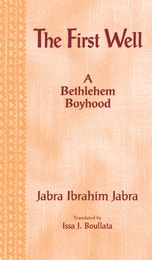
The First Well
A Bethlehem BoyhoodJabra Ibrahim Jabra
University of Arkansas Press, 1995
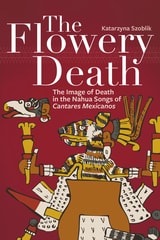
The Flowery Death
The Image of Death in the Nahua Songs of Cantares MexicanosKatarzyna Szoblik
University Press of Colorado, 2026
The Flowery Death is a groundbreaking exploration of xochimiquiztli, or “flowery death,” a central concept in the pre-Hispanic Nahua worldview. In the highly militarized societies of the Valley of Mexico, dying in honor of the gods—on the battlefield, in ritual sacrifice, or in childbirth—was not only a social expectation but also a path to spiritual glory. While this idea appears throughout colonial sources, previous studies have relied largely on the writings of Bernardino de Sahagún and other European chroniclers, whose perspectives often simplify or distort Indigenous understandings.
Drawing on the rich oral tradition preserved in the sixteenth-century manuscript Cantares Mexicanos, this book provides one of the first English translations of these songs since John Bierhorst’s 1985 translation. It combines paleographic fidelity, literal English translation, and detailed interpretation, revealing the metaphor- and symbol-rich meanings behind the songs. The book is divided into two interrelated parts: The first reconstructs the Nahua worldview, contextualizing war, death, and sacrifice through myths, chronicles, and visual sources; the second presents selected songs, offering readers the tools to understand their metaphors, historical references, and symbolic language, making the work both a scholarly reference and an accessible guide for students and enthusiasts.
By examining the cultural, religious, and social significance of xochimiquiztli, The Flowery Death provides fresh insights into Nahua ideology, gender roles, and collective memory. It is essential reading for anyone interested in Mesoamerican culture, early colonial history, and the power of Indigenous oral traditions.
The Footsteps of Israel
Understanding Jews in Anglo-Saxon EnglandAndrew P. Scheil
University of Michigan Press, 2004