Results by title
28167 books match the query 'History' and 6372 start with t

The Ordering of Time
From the Ancient Computus to the Modern ComputerArno Borst
University of Chicago Press, 1993
Arno Borst examines the various ways that time has been calculated by numbers and measured by instruments over several centuries, from the computus—an ancient method of determining times and dates—to the present-day computer. In a wide-ranging discussion, he analyzes the classical Greek concepts of divine, natural, and human time; the universal time of ancient Rome; the Easter cycle of the Middle Ages; the development of the mechanical clock in the fourteenth and fifteenth centuries; early modern chronology; and twentieth-century data processing.
Borst argues that although many centuries and countless different instruments—sundials, horologia, abaci, astrolabes, calendars, and calculating machines—separate the medieval computus from the modern computer, each generation has had to answer the same question: how can we make the best use of our available time to improve our lives? The computer, he suggests, is merely a new instrument employed for an ancient purpose.
Lively and accessible, The Ordering of Time will be welcomed by students and researchers in social and cultural history, the history of science and mathematics, as well as anyone interested in the history of time and numbers.
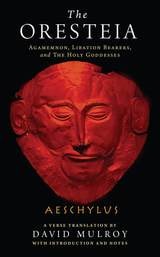
The Oresteia
Agamemnon, Libation Bearers, and The Holy GoddessesAeschylus, A verse translation by David Mulroy, with introduction and notes
University of Wisconsin Press, 2018
This drama of the House of Atreus catches everyone in a bloody net. Queen Clytaemestra of Argos murders her husband Agamemnon. Their son Orestes avenges his father by killing his mother. The Furies, hideous deities who punish the murder of blood kin, pursue Orestes. Into this horrific cycle steps Athena, goddess of wisdom, who establishes the rule of law to replace fatal vengeance. Orestes is tried in court before a jury of Athenians and found not guilty. Athena transforms the Furies into benevolent goddesses and extols the virtue of mercy.
An important historical document as well as gripping entertainment, the Oresteia conveys beliefs and values of the ancient Athenians as they established the world's first great democracy. Aeschylus (525/4–456/5 B.C.E.) was the first of the three great tragic dramatists of ancient Greece, forerunner of Sophocles and Euripides. In this trilogy he created a new dramatic form with characters and plot, infused with spellbinding emotion. David Mulroy's fluid, accessible English translation with its rhyming choral songs does full justice to the meaning and theatricality of the ancient Greek. In an introduction and appendixes, he provides cultural background for modern readers, actors, and students.

The Organ in Manitoba
A History of the Instruments, the Builders, and the PlayersJames B. Hartman
University of Manitoba Press, 1997

The Organs of J.S. Bach
A HandbookChristoph Wolff and Markus Zepf
University of Illinois Press, 2012
The Oriental Obscene
Violence and Racial Fantasies in the Vietnam EraSylvia Shin Huey Chong
Duke University Press, 2011

The Origin and Development of Scholarly Historical Periodicals
Margaret F. Stieg
University of Alabama Press, 2005
"This is a pioneering study and represents a major undertaking. . . . Stieg succeeds in making intelligible the diffuse and highly diversified nature of the historical periodical. At minimum, this title should be required reading of all history graduate students in methodology courses. Many senior historians would also benefit from a review of its contents. . . . Information and library science students specializing in scholarly communication should digest the entire study." —Journal of Education for Library and Information Science
The Origin and Development of the Pueblo Katsina Cult
E. Charles Adams
University of Arizona Press, 1991

The Origin and Distribution of Birds in Coastal Alaska and British Columbia
The Lost Manuscript of Ornithologist Harry S. SwarthChristopher W. Swarth
Oregon State University Press, 2022
In 2019, Christopher Swarth, Harry’s grandson and a scientist in his own right, discovered the forgotten manuscript. This book includes the original unpublished manuscript, accompanied by contextual essays from contemporary ornithologists who examine the impact and relevance of Swarth’s research on coastal bird diversity, fox sparrow migration, and the systematic puzzle of the timberline sparrow. Expedition maps display field camps and exploration routes, and species checklists illustrate the variety of birds observed at key field sites. To bring additional color and insight, The Origin and Distribution of Birds in Coastal Alaska and British Columbia also includes excerpts from Harry Swarth’s field notes, a comprehensive list of Harry Swarth’s publications, and a glossary with historic and contemporary bird names. Naturalists, ornithologists, birders, and all those who want to learn more about the natural history of the region will delight in the rediscovery of this long-lost treasure.

The Origin of the Fighter Aircraft
Jon Guttman
Westholme Publishing, 2009
From Scouts to Balloon-busters, the Emergence of Air-to-Air Combat in World War I
When World War I began in August 1914, the airplane had already proven its worth as an intelligence gathering “eye-in-the-sky.” These scouting aircraft soon became indispensable to armies on both sides, and the attempt to drive enemy planes away began in earnest. Local air superiority was incorporated into battlefield strategy, and the use of aircraft to conduct offensive operations would change warfare as dramatically as the first firearms 300 years before. By the end of 1915, the basic formula of the armed scout settled on a single-seater with a machine gun synchronized to fire through its propeller blades. This heavily armed aircraft became the first true fighter plane whose primary function was to destroy enemy aircraft, whether scouts, balloons, bombers, or other fighters. A new glamorized “knight of the air” was born: the ace, a fighter pilot who brought down five or more opponents. From 1916 on, as the combatants relied on airplanes more, flying tactics and strategy—including mass formations—were developed for what would become a deadly struggle for complete air superiority. By 1918, the final year of the war, air battles could be as sprawling as those on the ground.
In The Origin of the Fighter Aircraft, historian Jon Guttman tells the engrossing story of how one of the most amazing inventions became a integral component of warfare. Balancing technical description, personalities, and battle accounts, the author demonstrates that by the end of World War I most of the fundamentals for modern aerial combat had been established.
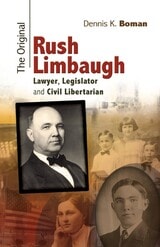
The Original Rush Limbaugh
Lawyer, Legislator, and Civil LibertarianDennis K. Boman
University of Missouri Press, 2012
The Origins Of Postcommunist Elites
From Prague Spring To The Breakup Of CzechoslovakiaGil Eyal
University of Minnesota Press, 2003
How is it that Czechoslovakia’s separation into two countries in 1993 was accomplished so peacefully—especially when compared with the experiences of its neighbors Russia and Yugoslavia? This book provides a sociological answer to this question—and an empirical explanation for the breakup of Czechoslovakia—by tracing the political processes begun in the Prague Spring of 1968.
Gil Eyal’s main argument is that Czechoslovakia’s breakup was caused by a struggle between two fractions of what sociologists call the “new class,” which consisted primarily of intellectuals and technocrats. Focusing on the process of polarization that created these two distinct political elites, Eyal shows how, in response to the events of the ill-fated Prague Spring, Czech and Slovak members of the “new class” embarked on divergent paths and developed radically different, even opposed, identities, worldviews, and interests. Unlike most accounts of postcommunist nationalist conflict, this book suggests that what bound together each of these fractions—and what differentiated each from the other—were not national identities and nationalist sentiments per se, but their distinctive visions of the social role of intellectuals.

The Origins and Rise of Associate Degree Nursing Education
Patricia T. Haase
Duke University Press, 1990
Advocates have long contended that the associate degree nurse is vital to the American health care system. This study, funded by the W. K. Kellogg Foundation, confirms this view. In recent years the Foundation has invested more than $6.1 million in the development of the ADN, awarded by junior and community colleges. Many participants in the ADN projects for the Kellogg Foundation have noted that, despite the importance of the ADN and the controversy about its place in nursing education, the literature is scattered and hard to identity. The Origins and Rise of Associate Degree Nursing Education and the companion bibliography will provide much-needed information to educators, hospital and nursing administrators, nursing leaders, and public policy makers—all of whom must cope with the growing nursing shortage and increasingly difficult issues in health policy and administration.
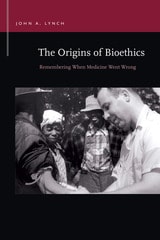
The Origins of Bioethics
Remembering When Medicine Went WrongJohn A. Lynch
Michigan State University Press, 2019
The Origins of Catholic Evolutionism, 1831-1950
Kenneth W. Kemp
Catholic University of America Press, 2025
The Origins of Christian Democracy
Politics and Confession in Modern GermanyMaria D. Mitchell
University of Michigan Press, 2012
This book is a pioneering contribution to the history of the founding of the West German political system after the Second World War. The political cooperation between Catholics and Protestants that resulted in the formation of the Christian Democratic Union (CDU) in occupied and early West Germany represented a significant change from a long history of hostility in confessional relations. Given that the CDU went on to dominate politics in West Germany well into the 1960s, Maria D. Mitchell argues that an understanding of what made this interconfessional party possible is crucial to an exploration of German history in the postwar period. She examines the political history of party formation as well as the religious beliefs and motivations that shaped the party's philosophy and positions. She provides an authoritative guide to the complex processes of maneuvering and negotiation that produced the CDU during 1945-46. The full range of political possibilities is discussed, including the suppressed alternatives to the Adenauer/Erhard axis that eventually defined the party's trajectory during the 1950s and the abortive Christian Socialism associated with Jacob Kaiser.
The Origins of Cool in Postwar America
Joel Dinerstein
University of Chicago Press, 2017
Through eye-opening portraits of iconic figures, Dinerstein illuminates the cultural connections and artistic innovations among Lester Young, Humphrey Bogart, Robert Mitchum, Billie Holiday, Frank Sinatra, Jack Kerouac, Albert Camus, Marlon Brando, and James Dean, among others. We eavesdrop on conversations among Jean-Paul Sartre, Simone de Beauvoir, and Miles Davis, and on a forgotten debate between Lorraine Hansberry and Norman Mailer over the "white Negro" and black cool. We come to understand how the cool worlds of Beat writers and Method actors emerged from the intersections of film noir, jazz, and existentialism. Out of this mix, Dinerstein sketches nuanced definitions of cool that unite concepts from African-American and Euro-American culture: the stylish stoicism of the ethical rebel loner; the relaxed intensity of the improvising jazz musician; the effortless, physical grace of the Method actor. To be cool is not to be hip and to be hot is definitely not to be cool.
This is the first work to trace the history of cool during the Cold War by exploring the intersections of film noir, jazz, existential literature, Method acting, blues, and rock and roll. Dinerstein reveals that they came together to create something completely new—and that something is cool.
The Origins of Israel, 1882–1948
A Documentary HistoryEran Kaplan
University of Wisconsin Press, 2011
In 1880 the Jewish community in Palestine encompassed some 20,000 Orthodox Jews; within sixty-five years it was transformed into a secular proto-state with well-developed political, military, and economic institutions, a vigorous Hebrew-language culture, and some 600,000 inhabitants. The Origins of Israel, 1882–1948: A Documentary History chronicles the making of modern Israel before statehood, providing in English the texts of original sources (many translated from Hebrew and other languages) accompanied by extensive introductions and commentaries from the volume editors.
This sourcebook assembles a diverse array of 62 documents, many of them unabridged, to convey the ferment, dissent, energy, and anxiety that permeated the Zionist project from its inception to the creation of the modern nation of Israel. Focusing primarily on social, economic, and cultural history rather than Zionist thought and diplomacy, the texts are organized in themed chapters. They present the views of Zionists from many political and religious camps, factory workers, farm women, militants, intellectuals promoting the Hebrew language and arts—as well as views of ultra-Orthodox anti-Zionists. The volume includes important unabridged documents from the origins of the Arab-Israeli conflict that are often cited but are rarely read in full. The editors, Eran Kaplan and Derek J. Penslar, provide both primary texts and informative notes and commentary, giving readers the opportunity to encounter voices from history and make judgments for themselves about matters of world-historical significance.
Best Special Interest Books, selected by the Public Library Reviewers
Best Books for General Audiences, selected by the American Association of School Librarians
The Origins of Japanese Trade Supremacy
Development and Technology in Asia from 1540 to the Pacific WarChristopher Howe
University of Chicago Press, 1996
"Thoughtful, well-organized, and lucidly written and reflects many years of painstaking research in different literatures."—Business Horizons
"The best analysis yet in English of the role of technology in Japan's emergence as a global economic power."—David J. Jeremy, Technology and Culture
"An important addition to Japanese economic history and the concept of creating relative advantage in trade."—Richard Rice, Journal of Asian Studies
"No other work in English approaches Christopher Howe's combination of a sweeping historical perspective with a comprehensive yet in-depth analysis of factors underlying Japan's pre-1940 economic 'miracle.' . . . [An] illuminating study."—Steven J. Ericson, American Historical Review
The Origins of Mexican Catholicism
Nahua Rituals and Christian Sacraments in Sixteenth-Century MexicoOsvaldo F. Pardo
University of Michigan Press, 2004
---Fernando Cervantes, Bristol University, UK
"Pardo does an excellent job of balancing and contrasting sixteenth-century Catholic theology with Nahua thought and belief."
---John F. Schwaller, University of Minnesota
At first glance, religious conversion may appear to be only a one-way street. When studying sixteenth-century Mexico, one might assume that colonial coercion was the driving force behind the religious conversion of the native population. But The Origins of Mexican Catholicism shows how Spanish missionaries instead drew on existing native ceremonies in order to make Christianity more accessible to the Nahua population whom they were trying to convert.
Osvaldo F. Pardo explains that religious figures not only shaped native thought, but that indigenous rituals had an impact on the religion itself. This work illustrates the complex negotiations that took place in the process of making the Christian sacraments available to the native peoples, and at the same time, forced the missionaries to reexamine the meaning of their sacraments through the eyes of an alien culture.
For Spanish missionaries, ritual not only became a focus of evangelical concern but also opened a window to the social world of the Nahuas. Missionaries were able to delve into the Nahua's notions of self, emotions, and social and cosmic order. By better understanding the sociological aspects of Nahua culture, Christians learned ways to adequately convey their religion through mutual understanding instead of merely colonial oppression.
Given its interdisciplinary approach, this book will be of interest to specialists in Latin American intellectual and literary history, the history of religion, and anthropology, and to anyone interested in cross-cultural processes.
The Origins of Modern Polish Democracy
M. B. B. Biskupski
Ohio University Press, 2010
The Origins of Modern Polish Democracy is a series of closely integrated essays that traces the idea of democracy in Polish thought and practice. It begins with the transformative events of the mid-nineteenth century, which witnessed revolutionary developments in the socioeconomic and demographic structure of Poland, and continues through changes that marked the postcommunist era of free Poland.
The idea of democracy survived in Poland through long periods of foreign occupation, the trials of two world wars, and years of Communist subjugation. Whether in Poland itself or among exiles, Polish speculation about the creation of a liberal-democratic Poland has been central to modern Polish political thought. This volume is unique in that is traces the evolution of the idea of democracy, both during the periods when Poland was an independent country—1918-1939—and during the periods of foreign occupation before 1918 through World War II and the Communist era. For those periods when Poland was not free, the volume discusses how the idea of democracy evolved among exile and underground Polish circles.
This important work is the only single-volume English-language history of modern Polish democratic thought and parliamentary systems and represents the latest scholarly research by leading specialists from Europe and North America.
The Origins of Russian Literary Theory
Folklore, Philology, FormJessica Merrill
Northwestern University Press, 2022
The Origins of Russian Literary Theory reconstructs lost Formalist theories of authorship, of the psychology of narrative structure, and of the social spread of poetic innovations. According to these theories, literary form is always a product of human psychology and cultural history. By recontextualizing Russian Formalism within this philological paradigm, the book highlights the aspects of Formalism’s legacy that speak to the priorities of twenty-first-century literary studies.

The Origins of Scottish Nationhood
Neil Davidson
Pluto Press, 2000
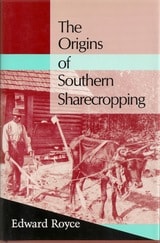
The Origins of Southern Sharecropping
Edward Royce
Temple University Press, 1993
Vivid primary accounts of post-Civil War life by planters and freed slaves complement this study of the rise of southern sharecropping. Edward Royce employs both historical and sociological methods to probe the question of why slavery was replaced by sharecropping rather than by some other labor arrangement. His detailed analysis illuminates conflicts between labor and capital as one group struggles to preserve the plantation system while the other pursues a quest for land and autonomy.
Royce contends that southern sharecropping occurred through a "constriction of possibilities," that it was shaped by default rather than orchestrated by economic reconstruction by white landowners and black laborers.
Highlighting the conflict-ridden nature of the process of social change, The Origins of Southern Sharecropping includes rich descriptions of the plantation system and gang labor, the freed slaves' dream of forty acres and a mule, the black colonization movement, the Freedman's Bureau, and racial relations after the war.
In the series Labor and Social Change, edited by Paula Rayman and Carmen Sirianni.

The Origins of Southwestern Agriculture
R. G. Matson
University of Arizona Press, 1991

The Origins of Theoretical Population Genetics
With a New AfterwordWilliam B. Provine
University of Chicago Press, 2001
The Origins of Violence
Religion, History and GenocideJohn Docker
Pluto Press, 2008
Genocide is commonly understood to be a terrible aberration in human behaviour, performed by evil, murderous regimes such as the Nazis and dictators like Suharto and Pinochet. John Docker argues that the roots of genocide go far deeper into human nature than most people realise.
Genocide features widely in the Bible, the literature of ancient Greece and Rome, and debates about the Enlightenment. These texts are studied in depth to trace the origins of violence through time and across civilisations. Developing the groundbreaking work of Raphaël Lemkin, who invented the term 'genocide', Docker guides us from the dawn of agricultural society, through classical civilisation to the present, showing that violence between groups has been integral to all periods of history.
This revealing book will be of great interest to those wishing to understand the roots of genocide and why it persists in the modern age.
The Origins of the Authoritarian Welfare State in Prussia
Conservatives, Bureaucracy, and the Social Question, 1815-70Hermann Beck
University of Michigan Press, 1997

The Origins of the British Labour Party
J.H. Stewart Reid
University of Minnesota Press, 1955
The Origins of the British Labour Party was first published in 1955. Minnesota Archive Editions uses digital technology to make long-unavailable books once again accessible, and are published unaltered from the original University of Minnesota Press editions.
What were the social and economic forces in England that gave rise to the British Labour Party? How did the party function in its formative years? How does the British labor movement compare with its American counterpart? If American labor enters politics as a separate party, is it likely to adopt a program resembling the socialism of the British Party?
Professor Reid's detailed account of the origins and development of the British Labour Party lays the groundwork for answers to questions like these, questions that are pertinent to the social and political issues of America as well as England. Since the appearance of a body of organized labor is a phenomenon occasioned by the process of industrialization, and since that process began in Great Britain almost a century earlier than on the American continent, the student of labor politics may well ponder whether something similar to the British experience lies ahead for America.
Professor Reid describes the conditions that brought about a specifically labor party, tells how it was established, and traces its first 20 years as a parliamentary party. He shows that the party began as an alliance of diverse forces having in common only the conviction that neither the Liberal nor the Conservative party would tackle such issues as housing, minimum wages, or unemployment insurance. He makes clear that, in working to achieve these short-term goals, the varied elements that made up the party finally worked out the peculiar compromise on policy and philosophy that is the basis of the British Labour Party today.
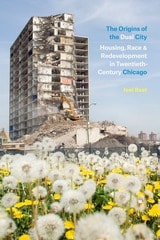
The Origins of the Dual City
Housing, Race, and Redevelopment in Twentieth-Century ChicagoJoel Rast
University of Chicago Press, 2019
The Origins of the State in Italy, 1300-1600
Edited by Julius Kirshner
University of Chicago Press, 1996
The Origins of the State in Italy, 1300-1600 represents the best in American, British, and Italian scholarship and offers a valuable and critical overview of the key problems of the emergence of the state in Europe. Some of the topics covered include the political legitimacy of the aborning regional states, the changing legal culture, the conflict between church and state, the forces shaping public finances, and the creation of the Italian League.
The eight essays in this collection originally appeared in the Journal of Modern History. Contributors include Roberto Bizzocchi, Giorgio Chittolini, Trevor Dean, Riccardo Fubini, Elena Fasano Guarini, Aldo Mazzacane, Anthony Molho, and Pierangelo Schiera. This volume will appeal to historians, historical sociologists, and historians of political thought.
The Origins of the Welfare State
Women, Work, and the French RevolutionLisa DiCaprio
University of Illinois Press, 2005
Women workers and the revolutionary origins of the modern welfare state
In May 1790, the French National Assembly created spinning workshops (ateliers de filature) for thousands of unemployed women in Paris. These ateliers disclose new aspects of the process which transformed Old Regime charity into revolutionary welfare initiatives characterized by secularization, centralization, and entitlements based on citizenship. This study is the first to examine women and the welfare state in its formative period at a time when modern concepts of human rights were elaborated.
In The Origins of the Welfare State, Lisa DiCaprio reveals how the women working in the ateliers, municipal welfare officials, and the national government vied to define the meaning of revolutionary welfare throughout the Revolution. Presenting demands for improved wages and working conditions to a wide array of revolutionary officials, the women workers exercised their rights as "passive citizens" capaciously and shaped the meanings of work, welfare, and citizenship. Looking backward to the Old Regime and forward to the nineteenth century, this study explores the interventionist spirit that characterized liberalism in the eighteenth century and serves as a bridge to the history of entitlements in the nineteenth and twentieth centuries.
The Orphaned Imagination
Melancholy and Commodity Culture in English RomanticismGuinn Batten
Duke University Press, 1998
Building on the theoretical insights of Slavoj Zizek, Judith Butler, Julia Kristeva, and Eve Kosofsky Sedgwick, Batten interweaves the discourses of psychoanalysis, economics, biography, sexuality, melancholy, value, and exchange to question accepted ideas of how Romantic poetry works. She asserts that poetic labor is in fact paradigmatic of the kinds of production—and the kinds of desire—that capitalist culture renders invisible. If symbolic exchange, in cash or in words, requires the surrender of a beloved object, if healthy mourning requires an orphan to “work through” emotional loss through the consolation of art or a love for the living, then the rebellious Romantic poet, Batten contends, possessed unique insight into the alternative authority of a poetic language that renounced a culture of denial. Batten urges that scholars move beyond critical approaches condemning allegedly regressive forms of pleasure, recognizing that they, too, are haunted by melancholic attachments to dead poets as they conduct their work.
The Orphaned Imagination will interest anyone concerned with the claims of the English Romantic poets to a distinctive, valuable form of knowledge and those who may wonder about the power of contemporary theory to illuminate a traditional field.
The Orphans of Byzantium
Child Welfare in the Christian EmpireTimothy S. Miller
Catholic University of America Press, 2003

The Orwell Mystique
A Study in Male IdeologyDaphne Patai
University of Massachusetts Press, 1984
The Orwell Mystique: A Study in Male Ideology is a pioneering work of feminist literary criticism that subjects the life and writing of George Orwell (1903–1950) to a sustained and rigorous feminist analysis. Published in 1984—the same year as the famous date in Orwell's most celebrated dystopian novel—the book examines all of Orwell's major novels, essays, and journalism and argues that his widely celebrated reputation for moral authority and plain-speaking democratic decency is fundamentally undercut by a pervasive and condescending attitude toward women.
Author Daphne Patai contends that Orwell's work is saturated with a male ideology so deeply embedded as to be largely invisible to mainstream criticism, which had long treated Orwell as an exemplar of intellectual honesty and political courage while overlooking the gender assumptions that structure his writing. Drawing on feminist theory and close textual analysis, Patai systematically traces the ways in which Orwell's androcentrism—his tendency to place men and male experience at the center of human life—shapes not only his fiction but also his essays, autobiographical writings, and political commentary.
The book is organized around a series of thematic and textual investigations. An introductory chapter establishes what Patai calls “the Orwell myth”—the cultural phenomenon by which Orwell's personal authority as a moral and political guide has been constructed and sustained. Subsequent chapters examine specific dimensions of Orwell's work and biography, including his experience of empire and the masculine codes embedded in his writings about colonialism; his treatments of vagabondage, manual labor, and working-class masculinity (notably in works such as Down and Out in Paris and London and The Road to Wigan Pier); and the androcentrism running through Nineteen Eighty-Four, in which Patai argues that the novel's treatment of women, sexuality, and the body reflects deeply patriarchal assumptions. The book also addresses Orwell's essays and journalism, situating his gender ideology within the broader context of mid-twentieth-century British patriarchal culture.
At the time of its publication, The Orwell Mystique was one of the first book-length feminist examinations of Orwell, and it generated significant scholarly debate. It remains an important and frequently cited work in both Orwell studies and feminist literary criticism.
The Osage Rose
Tom Holm
University of Arizona Press, 2008
Life is looking easy for J. D. Daugherty, a crusty ex-cop who has set up his own PI firm in Tulsa, Oklahoma, just after World War I. J. D. expects to make a straightforward living off the intrigues of the city’s wealthy socialites, but then Rose Chichester, a privileged young white woman, runs off with Tommy Ruffle, a young Indian who is heir to Osage oil. Hired by Rose’s father to track down the young pair, J. D. and his associate, a Cherokee named Hoolie Smith, find themselves caught in the cross fire of a deadly scheme. When Tommy turns up murdered and with Rose still missing, J. D. and Hoolie must navigate a twisting maze of deception, race riots, and gun battles in their unrelenting search for the truth—a search that ultimately leads to an intimate secret no one suspected.
Tom Holm writes a true private-eye mystery, yet he entwines the story’s layers of conspiracy and deceit with the realities of prejudice and hatred that existed during the early years of Oklahoma statehood. Rooted firmly in its time, Holm’s well-researched novel tells a complex and compelling story of individuals struggling to find justice at any cost in a world still caught between modernity and its Wild West legacy.
The Osage in Missouri
Kristie C. Wolferman
University of Missouri Press, 1997
On November 10, 1808, the American militia and the chiefs from the Little Osage and Big Osage nations celebrated. Fort Osage, built on a Missouri River bluff 250 miles west of St. Louis, was officially opened on that date, and the Osage Indians signed a treaty with the Americans written by Governor Meriwether Lewis.
Fort Osage, intended as a citadel for the opening of the great American West, was also to function as a trading post for the Osage Nation. It was President Jefferson's hope that Fort Osage and other fort-trading posts would not only keep peace on the frontier but would also begin a new era in relations between Native Americans and the United States. For a short time, the fort did provide the Osage with a place to trade their furs. It also offered them limited protection from the many other tribes who were their enemies. However, the Osage chiefs discovered very quickly that the fort was small consolation for the lands they had given up by signing the treaty.
In this well-written and very readable work, Kristie C. Wolferman traces the history of the Osage Nation from its origins to its forced departure from Missouri. She demonstrates the ways in which the Osage culture changed with each new encounter of the Osage with Europeans. The Osage had already experienced many contacts with the white man before Fort Osage came to be. They had encountered French trader-trappers, explorers, missionaries, Spanish administrators, and early settlers. Their lives had been changed by the influx of white disease, by the use of European trade goods and weapons, and by the political control of Spanish, French, and American governments. As a result, the Fort Osage experiment came too late to establish lasting good relations between the white men and the Indians.
The Osage in Missouri suggests that the white men could never understand the Osage way of life, nor the Osage the white men's way. But Osage culture, greatly altered by Europeans and Americans, would never be the same again. The Osage would be forced to sacrifice most of their traditions and beliefs, as well as their homeland, on the way to becoming "civilized."
The Osage
An Ethnohistorical Study of Hegemony on the Prairie-PlainsWillard H. Rollings
University of Missouri Press, 1995
The Osage Indians were a powerful group of Native Americans who lived along the prairies and plains of present-day Kansas, Missouri, Oklahoma, and Arkansas. The Osage: An Ethnohistorical Study of Hegemony on the Prairie-Plains, now available in paper, shows how the Osage formed and maintained political, economic, and social control over a large portion of the central United States for more than 150 years.
The Other Air Force
U.S. Efforts to Reshape Middle Eastern Media Since 9/11Sienkiewicz, Matt
Rutgers University Press, 2016
As it seeks to win the hearts and minds of citizens in the Muslim world, the United States has poured millions of dollars into local television and radio programming, hoping to generate pro-American currents on Middle Eastern airwaves. However, as this fascinating new book shows, the Middle Eastern media producers who rely on these funds are hardly puppets on an American string, but instead contribute their own political and creative agendas while working within U.S. restrictions.

The Other Americans in Paris
Businessmen, Countesses, Wayward Youth, 1880-1941Nancy L. Green
University of Chicago Press, 2014
Nancy L. Green thus introduces us for the first time to a long-forgotten part of the American overseas population—predecessors to today’s expats—while exploring the politics of citizenship and the business relationships, love lives, and wealth (and poverty for some) of Americans who staked their claim to the City of Light. The Other Americans in Paris shows that elite migration is a part of migration tout court and that debates over “Americanization” have deep roots in the twentieth century.

The Other Arab-Israeli Conflict
Making America's Middle East Policy, from Truman to ReaganSteven L. Spiegel
University of Chicago Press, 1985
The Other Boston Busing Story
What's Won and Lost Across the Boundary LineSusan E. Eaton
Brandeis University Press, 2020
The Other Brahmins
Boston's Black Upper Class 1750-1950Adelaide Cromwell
University of Arkansas Press, 1995
Adelaide Cromwell’s pioneering work explores race and the social caste system in an atypical northern environment over a period of two centuries. Based on scholarly sources, interviews, and questionnaires, the study identifies those blacks in Boston who exercised political, economic, and social leadership from the end of the eighteenth century to the middle of the twentieth. The central focus is a comparison of black and white upper-class women in the 1940s.
This rare look at a black social microcosm not located in the South is seminal and timely. Because it concludes at a critical period in American history, The Other Brahmins paints a colorful backdrop for evaluating subsequent changes in urban sociology and stratification. In a groundbreaking study, Cromwell effectively challenges the simplistic notions of hierarchy as they pertain to race.
The Other California
The Great Central Valley In Life And LettersGerald W. Haslam
University of Nevada Press, 1993
Oildale native, Gerald Haslam, doesn’t like it when folks dismiss the Central Valley as boring and flat. In this collection of essays, he argues that it is California’s heartland and economic hub. In addition, the valley has produced a crop of gifted writers. These nineteen essays range from reminiscences of childhood and adolescence to a portrait of Mexican-Americans and their position in the Valley’s society to a moving essay about having the author’s aging father come to live with the family. Even if you have never lived in the Valley, reading this book will give you an entirely new perspective the next time you drive into it.

The Other Dark Matter
The Science and Business of Turning Waste into Wealth and HealthLina Zeldovich
University of Chicago Press, 2021
The average person produces about four hundred pounds of excrement a year. More than seven billion people live on this planet. Holy crap!
Because of the diseases it spreads, we have learned to distance ourselves from our waste, but the long line of engineering marvels we’ve created to do so—from Roman sewage systems and medieval latrines to the immense, computerized treatment plants we use today—has also done considerable damage to the earth’s ecology. Now scientists tell us: we’ve been wasting our waste. When recycled correctly, this resource, cheap and widely available, can be converted into a sustainable energy source, act as an organic fertilizer, provide effective medicinal therapy for antibiotic-resistant bacterial infection, and much more.
In clear and engaging prose that draws on her extensive research and interviews, Lina Zeldovich documents the massive redistribution of nutrients and sanitation inequities across the globe. She profiles the pioneers of poop upcycling, from startups in African villages to innovators in American cities that convert sewage into fertilizer, biogas, crude oil, and even life-saving medicine. She breaks taboos surrounding sewage disposal and shows how hygienic waste repurposing can help battle climate change, reduce acid rain, and eliminate toxic algal blooms. Ultimately, she implores us to use our innate organic power for the greater good. Don’t just sit there and let it go to waste.
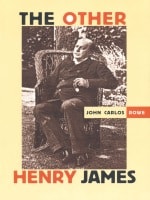
The Other Henry James
John Carlos Rowe
Duke University Press, 1998
Rowe traces a particular development in James’s work, showing how in his early writings James criticized women’s rights, same-sex relations, and other social and political trends now identified with modern culture; how he ambivalently explored these aspects of modernity in his writings of the 1880s; and, later, how he increasingly identified with such modernity in his heretofore largely ignored or marginally treated fiction of the 1890s. Building on recent scholarship that has shown James to be more anxious about gender roles, more conflicted, and more marginal a figure than previously thought, Rowe argues that James—through his treatment of women, children, and gays—indicts the values and conventions of the bourgeoisie. He shows how James confronts social changes in gender roles, sexual preferences, national affiliations, and racial and ethnic identifications in such important novels as The American, The Tragic Muse, What Maisie Knew, and In the Cage, and in such neglected short fiction as “The Last of the Valerii,” “The Death of the Lion,” and “The Middle Years.”
Positioning James’s work within an interpretive context that pits the social and political anxieties of his day against the imperatives of an aesthetic ideology, The Other Henry James will engage scholars, students, and teachers of American literature and culture, gay literature, and queer theory.

The Other Jersey Shore
Life on the Delaware RiverMichael Aaron Rockland
Rutgers University Press, 2024
The Other Jersey Shore takes readers on a personal tour of the New Jersey portion of the Delaware River and its surroundings. You will learn about the role that the river played in human history, including Washington’s four crossings of the Delaware during the Revolutionary War. And you will also learn about the ecological history of the river itself, once one of the most polluted waterways in the country and now one of the cleanest, providing drinking water for 17 million people. Michael Aaron Rockland, a long-time New Jersey resident, shows readers his very favorite spots along the Delaware, including the pristine waterfalls and wilderness in the Delaware Water Gap recreation area. Along the way, he shares engrossing stories and surprising facts about the river that literally defines western New Jersey.
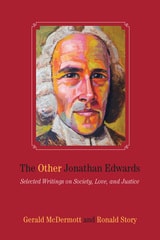
The Other Jonathan Edwards
Selected Writings on Society, Love, and JusticeGerald McDermott
University of Massachusetts Press, 2015
Widely regarded as perhaps America's greatest theologian, Jonathan Edwards still suffers the stereotype of hellfire preacher obsessed with God's wrath. In this anthology, Gerald McDermott and Ronald Story seek to correct that common view by showing that Edwards was also a compassionate, socially conscious minister of the first order.
Through a selection of sermons and primary writings, McDermott and Story reveal an Edwards who preached love toward all humanity regardless of belief or appearance; who demanded private and public charity to the poor; who criticized hard-hearted business dealings as impious and socially destructive; and who condemned envy and status-seeking as anti-Christian and anti-community. This “other” Jonathan Edwards preached about grace and the love of God but also about responsive constitutional government, the iniquities of hypocrisy and corruption, and the nature of wise leadership. He acknowledged the need for national defense but left room for popular revolt from tyranny. He anticipated a millennial age of peace and prosperity and believed that people should live in the world as they would live through grace in heaven.
Jonathan Edwards was, in sum, a worldly as well as spiritual reformer who resisted the materialistic, acquisitive, and individualistic currents of American culture. For these reasons, McDermott and Story think he may have lessons to teach us today.
The Other Missouri History
Populists, Prostitutes, and Regular FolkEdited & Intro by Thomas M. Spencer
University of Missouri Press, 2005
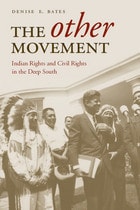
The Other Movement
Indian Rights and Civil Rights in the Deep SouthDenise E. Bates
University of Alabama Press, 2022
Examines the most visible outcome of the Southern Indian Rights Movement: state Indian affairs commissions
In recalling political activism in the post-World War II South, rarely does one consider the political activities of American Indians as they responded to desegregation, the passing of the Civil Rights Acts, and the restructuring of the American political party system. Native leaders and activists across the South created a social and political movement all their own, which drew public attention to the problems of discrimination, poverty, unemployment, low educational attainment, and poor living conditions in tribal communities.
While tribal-state relationships have historically been characterized as tense, most southern tribes—particularly non-federally recognized ones—found that Indian affairs commissions offered them a unique position in which to negotiate power. Although individual tribal leaders experienced isolated victories and generated some support through the 1950s and 1960s, the creation of the inter-tribal state commissions in the 1970s and 1980s elevated the movement to a more prominent political level. Through the formalization of tribal-state relationships, Indian communities forged strong networks with local, state, and national agencies while advocating for cultural preservation and revitalization, economic development, and the implementation of community services.
This book looks specifically at Alabama and Louisiana, places of intensive political activity during the civil rights era and increasing Indian visibility and tribal reorganization in the decades that followed. Between 1960 and 1990, U.S. census records show that Alabama’s Indian population swelled by a factor of twelve and Louisiana’s by a factor of five. Thus, in addition to serving as excellent examples of the national trend of a rising Indian population, the two states make interesting case studies because their Indian commissions brought formerly disconnected groups, each with different goals and needs, together for the first time, creating an assortment of alliances and divisions.

The Other Oregon
People, Environment, and History East of the CascadesThomas R. Cox
Oregon State University Press, 2019
With a staggering variety of landscapes, from high desert to alpine peaks, Oregon east of the Cascades encompasses seventeen counties and two time zones. Although this vast region defies generalization, its history is distinct from the rest of Oregon. The interrelationship between its people and the land has always been central, but that relationship has evolved and changed over time. Regional economies that were once largely exploitive and dedicated to commodity exports have slowly moved toward the husbanding of resources and to broader and deeper appreciations.
Historian Thomas Cox reveals the complexity of interactions between the people of Eastern Oregon, the land, natural resources, and one another, demonstrating how the region’s history speaks to larger American issues. The 2016 occupation of the Malheur National Wildlife Refuge, covered in detail within these pages, further reveals the relevance of Eastern Oregon to the larger world.
Written in clear and engaging prose and informed by extensive research, The Other Oregon will be a valuable resource for anyone interested in the environment, social change, and the relationships among the diverse people who make up Oregon society east of the Cascades. It will appeal to area residents and visitors, students of the American West, environmental historians, biologists, land managers, and anyone with an abiding interest in the region.