Results by title
3390 books match the query 'Fiction' and 1041 start with t
The Guiltless
Hermann Broch
Northwestern University Press, 2001
The Guinea Pigs
Ludvik Vaculik
Northwestern University Press, 1986

The Guy We Didn't Invite to the Orgy
and other storiesDavid Ebenbach
University of Massachusetts Press, 2017
There was one guy we didn't invite to the orgy. We invited everyone else: Solaire because she's crazy and John and Walt because they're both so good-looking and they're dating anyway, and we invited Amy because everybody just loves Amy. We even invited Miranda just because she's the jealous type, and since her sister was in town we threw the door open to her sister, too. But there was this one guy we didn't invite.
The stories in The Guy We Didn't Invite to the Orgy—funny, surprising, compassionate, true to life—are about people navigating the trickiest of landscapes: a world full of other people. Each of these characters wants to know, in her or his own way, given the crazy ups and downs and ins and outs of relationships, is it better to go it alone, or is it better to try to carve out a place for yourself, whatever it takes?
The Habit of Lying
Sacrificial Studies in Literature, Philosophy, and Fashion TheoryJohn Vignaux Smyth
Duke University Press, 2002
With recourse to Rene Girard, Paul de Man, Theodor Adorno, Leo Strauss, and other theoreticians not usually considered together, Smyth arrives at some surprising conclusions about the connections between lying, mimesis, sacrifice, sadomasochism, and the sacred, among other central subjects. Arguing that the relation between lying and truthtelling has been characterized in the West by sharply sacrificial features, he begins with a critique of the philosophies of lying espoused by Kant and Sissela Bok, then concludes that the problem of truth and lies leads to the further problem of the relation between law and arbitrariness as well as to the relation between rationality and unanimity. Constructively criticizing the work of such philosophers as Bertrand Russell, Ludwig Wittgenstein, Richard Rorty, and Nelson Goodman, Smyth shows how these problems occur comparably in fiction theory and how Paul de Man’s definition of fiction as arbitrariness finds confirmation in analytic philosophy. Through the novels of Defoe, Stendhal, and Beckett—with topics ranging from Defoe’s treatment of lies, fiction, and obscenity to Beckett’s treatment of the anus and the sacred—Smyth demonstrates how these texts generalize the issues of mendacity, concealment, and sacrificial arbitrariness in Girard’s sense to almost every aspect of experience, fiction theory, and cultural life. The final section of the book, taking its cue from Shakespeare, elaborates a sacrificial view of the history of fashion and dress concealment.
The Hairdresser of Harare
A NovelTendai Huchu
Ohio University Press, 2015
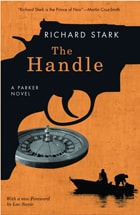
The Handle
A Parker NovelRichard Stark
University of Chicago Press, 2009
Parker takes down a whole illegal casino in this action-packed entry in the classic hard-boiled crime series
Richard Stark's Parker novels are the hardest of hard-boiled, classic crime novels where the heists are huge, the body counts are high, and the bad guys usually win.
The Parker novels have been a huge influence on countless writers and filmmakers, including Quentin Tarantino, Stephen King, George Pelecanos, Colson Whitehead, Lucy Sante, John Banville, and many more. Their stripped-down language and hard-as-nails amorality create an unforgettable world where the next score could be the big one, but your next mistake could also be your last. There's nothing else like them.
In The Handle, Parker is enlisted by the mob to knock off an island casino guarded by speedboats and heavies, forty miles from the Texas coast. Working with his trusted colleague Alan Grofield, but dealing with double-crosses and double-dealings by others from the word go, Parker knows the line between success and failure on this score would be exactly the length of the barrel of a .38.
The Handywoman Stories
Lenore McComas Coberly
Ohio University Press, 2002
Sometimes it's possible to pick up a book and hear the words being spoken by the characters as if you were sitting across the table from them. This is the sensation you'll have as you read through The Handywoman Stories by Lenore McComas Coberly.
Whether the story describes the civil defense preparations of a small West Virginia town in World War II, the same town years later dealing with an influx of hippies, or the return of a woman to her roots after decades up north, the voices are convincing and true. “I nearly got kicked in the head by a cow before I learned that if you use your full strength pulling milk, you won’t get much milk,” says one. “To see Zevelda the way she was that Sunday is, well, not something you're very likely to see,” says another.
The Handywoman Stories themselves are driven by characters shaped by the place they have lived most all of their lives. They deal with economic depression, mine and war deaths, the arrogance of community leaders, and what might have been, but was not, a stultifying environment. Their tools are astonishing resourcefulness, steadfast friendship, and always humor.
Lenore McComas Coberly has woven together a bittersweet community of strong Appalachian women and men in this remarkable collection. Moving and joyful, these stories are made from the stuff of life.
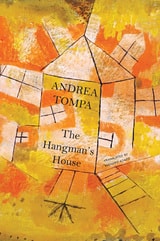
The Hangman's House
Andrea Tompa
Seagull Books, 2020
Our narrator, a teenage “Girl,” observes life through tangled, almost interminable sentences, trying to understand and process the many questions in her life: why her family is falling apart; why her mother has three jobs; why her father becomes an alcoholic; why her grandmother dreams of “Hungarian times”; and, most troubling, why there is persecution all around. Brutal though the times are, Girl’s narration is far from a mere indictment. It is suffused with love, tenderness and irony.
Written by a woman and featuring a young woman narrator, The Hangman's House focuses intently on how women play the principal roles in holding together the resilient fabric of society. Evocative of the celebrated wry humor that distinguishes the best of Hungarian literature, Tompa’s novel is a tour de force that will introduce a brilliant writer to English-language readers.
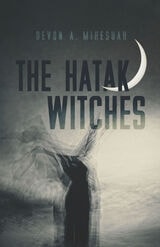
The Hatak Witches
Devon A. Mihesuah
University of Arizona Press, 2021
Monique discovers that a portion of an ancient and deformed skeleton had also been stolen from the neglected museum archives. Her uncle, the spiritual leader Leroy Bear Red Ears, concludes that the stolen remains are those of Hatak haksi, a witch and the matriarch of the Crow family, a group of shape-shifting Choctaws who plan to reestablish themselves as the powerful creatures they were when the tribe lived in Mississippi. Monique, Leroy, and Chris must stop the Crows, but to their dread, the entities have retreated to the dark and treacherous hollow in the center of Chalakwa Ranch. The murderous shape-shifters believe the enormous wild hogs, poisonous snakes, and other creatures of the hollow might form an adequate defense for Hatak haksi.
But what no one counts on is the unexpected appearance and power of the Old Ones who guard the lands of the Choctaw afterlife. Blending tribal beliefs and myths into a modern context, The Hatak Witches continues the storyline of Choctaw cosmology and cultural survival that are prominent in Devon A. Mihesuah’s award-winning novel, The Roads of My Relations.
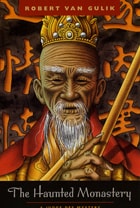
The Haunted Monastery
A Judge Dee MysteryRobert van Gulik
University of Chicago Press, 1961
A delightfully clever and cozy mystery starring the beloved detective Judge Dee, whom the Los Angeles Times ranked with Sherlock Holmes
Judge Dee and his entourage, seeking refuge from a mountain storm, become trapped in a Taoist monastery, where the Abbott Jade mysteriously dies after delivering an ecstatic sermon. The monks call it a supernatural experience, but the judge calls it murder. Recalling the allegedly accidental deaths of three young women in the same monastery, Judge Dee seeks clues in the eyes of a cat to solve cases of impersonation and murder. A painting by one of the victims reveals the truth about the killings, propelling the judge on a quest for justice and revenge.
The Hawk Is Hungry and Other Stories
D'Arcy McNickle; Edited by Birgit Hans
University of Arizona Press, 1992
CONTENTS
The Reservation
Hard Riding
En roulant ma boule, roulant...
Meat for God
Snowfall
Train Time
Montana
The Hawk Is Hungry
Debt of Gratitude
Newcomers
Man's Work
Going to School
The City
Manhattan Wedlock
Let the War Be Fought
In the Alien Corn
Six Beautiful in Paris
The Silver Locket

The Healer
Marek Vadas
Seagull Books, 2023
The stories comprising The Healer, Marek Vadas’s first collection, which was originally published in 2006, are steeped in the culture, rituals, and traditions of Africa, blurring the boundaries between dream and reality and peopled with characters whose gender, shape, skin color or even memories may change at a stroke. Nevertheless, Vadas refuses to exoticize this world, and many of the stories, told in pared-down language, blend mythical elements with realistic depictions of harsh living conditions, economic deprivation, and colonial oppression. The narratives unfold from the perspective of their protagonists—children (often orphaned), and men struggling to make ends meet and trying in vain to resist the allure of strong women endowed with magic powers. As a Slovak writer focusing on the African continent, Vadas is a rare voice that helps to build bridges between very different cultures, and now his writing is introduced to the global anglophone readership.
The Hidden Force
L. Couperus
University of Massachusetts Press, 1985
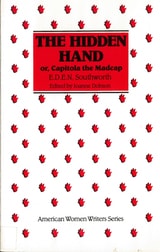
The Hidden Hand
Or, Capitola the Madcap by E. D. E. N. SouthworthDobson, Joanne
Rutgers University Press, 1988
E.D.E.N. Southworth was one of the most popular and prolific writers of the nineteenth century and her Capitola Black, or Black Cap - a cross-dressing, adventure-seeking girl-woman - was so well-loved that the book was serialized three times between 1859 and 1888 and was dramatized in forty different versions.
When we first meet sharp and witty Capitola she is living among beggars and street urchins, and dressed as a boy because a boy can get work and be safe, whereas a girl is left to starve for want of "proper" employment. Unknown to her, Capitola has a very rich elderly guardian who finds her at a providential moment and takes her back to his palatial mansion where she finds herself "decomposing above ground for want of having my blood stirred." But not to fear. There are bandits, true-loves, evil men, long-lost mothers, and sweet women friends in Capitola's future - not to mention thunder storms, kidnap attempts, and duels.
The pace is fast, the action wonderfully unbelievable. This is escape literature at its nineteenth-century best, with a woman at its center who makes you feel strong, daring, and reckless.
The Hidden Hand
Or, Capitola the Madcap by E. D. E. N. SouthworthDobson, Joanne
Rutgers University Press, 1988
The Hindered Hand
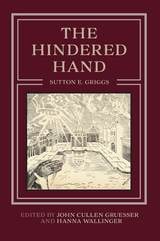
Sutton E. Griggs
West Virginia University Press, 2017
Written in response to Thomas Dixon’s recently published race-baiting novel The Leopard’s Spots, Griggs’s book depicts the remnants of the old Southern planter class, the racial crisis threatening the South and the North, the social ferment of the time, the changing roles of women, and the thwarted aspirations of a trio of African American veterans following the war against Spain. This scholarly edition of the novel, providing newly discovered biographical information and copious historical context, makes a significant contribution to African American literary scholarship.
The Holocaust Averted
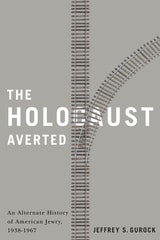
An Alternate History of American Jewry, 1938-1967Gurock, Jeffrey S
Rutgers University Press, 2015
This alternate history—where, among many scenarios, Hitler is assassinated, Japan does not bomb Pearl Harbor, and Franklin Delano Roosevelt is succeeded after two terms by Robert A. Taft—does cause us to review and better appreciate history. As Gurock tells his tale, he concludes every chapter with a short section that describes what actually happened and, thus, further educates the reader.
The Home of the Drowned
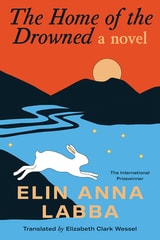
A NovelElin Anna Labba
University of Minnesota Press, 2026
The haunting, multigenerational saga of a family of Sámi women fighting the devastation of their way of life
Nothing is true, and everything is true; poetry will never hurt more than what has happened. Every summer, Iŋgá, her mother Rávdná, and her Aunt Ánne travel west to their village on the lake. But the summer Iŋgá is thirteen, they arrive to find their home and possessions have disappeared under water, the land flooded by a dam built to supply hydropower to a society that has continually stolen from them.
The Home of the Drowned follows these women’s fortunes over forty years—from 1942 to 1982—as the water their people have lived near for centuries is transformed into a menacing force that threatens all they hold dear. Defying the authorities, Rávdná decides to build a proper house on the lake to replace what was lost, becoming an unlikely activist even as her actions isolate her family from the rest of the community. Meanwhile, Ánne’s health is in decline, and a concerned Iŋgá merely longs to live like everyone else—an impossible wish when the Swedish state is relentlessly drowning her world.
Drawing on her own family’s history of forced relocation and violent colonial dispossession, Elin Anna Labba’s debut novel brings Sámi history to the fore through this intimate story. In poetic prose deftly translated by Elizabeth Clark Wessel, she reveals connections between land, water, and people that hauntingly reverberate with the question: what is it that makes a home?
Retail e-book files for this title are screen-reader friendly.
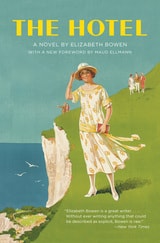
The Hotel
A NovelElizabeth Bowen
University of Chicago Press, 2012
Bowen’s first novel, The Hotel, is a wonderful introduction to her disarming, perceptive style. Following a group of British tourists vacationing on the Italian Riviera during the 1920s, The Hotel explores the social and emotional relationships that develop among the well-heeled residents of the eponymous establishment. When the young Miss Sydney falls under the sway of an older woman, Mrs. Kerr, a sapphic affair simmers right below the surface of Bowen’s writing, creating a rich story that often relies as much on what is left unsaid as what is written on the page. Bowen depicts an intense interpersonal drama with wit and suspense, while playing with and pushing the English language to its boundaries.

The Hounds of Spring
Lucy Cummin
Tupelo Press, 2018
The Hour Between Dog and Wolf
Silke Scheuermann
Seagull Books, 2018
A young woman who has been living abroad returns to her hometown of Frankfurt am Main in Germany. Her sister Ines—a beautiful, impetuous painter—who still lives there, soon appears and promptly asks for financial help. But the returning sister knew this was coming—it is how their relationship has always worked. And this time, she’s determined that that will change.
But our plans don’t always hold up to the surprises presented by life—and when the sister finds herself about to drift into an affair with Ines’s lover, the two women grow unexpectedly closer. The Hour Between Dog and Wolf is a tale of disorientation in a modern, fundamentally rootless society that has become increasingly erratic and self-absorbed—it is a powerful exploration of the difficulties of intimacy and addiction.
The Hours and the Minutes
Alfonz Bednár
Karolinum Press, 2025
The Hours and The Minutes was first published in Bratislava in 1956, the year of Nikita Khrushchev’s “secret speech,” in which the Soviet leader formally acknowledged Stalin’s tyranny and opened the way for political reform throughout the Eastern Bloc. Alfonz Bednár’s writing was one of the first free of nationalist and communist propaganda, rejecting earlier ideologization of life by both the fascist right and Stalinist left and finding more empathetic ways to explore the complexity of human experience. His novellas defy traditional heroic depictions and portray the human individual, his relations, and morality as the subject of history rather than a utopian, collectivist ideology.
In these five novellas, Bednár is preoccupied with the insensitive, even inhuman, rootless, and amoral modernity that the war and Communist Party import into traditional Slovak life. The destruction of the traditional Slovak countryside during the twentieth century through modernization and urbanization, and with it a particular approach to life, forms his central theme. His spare, epic style and devotion to plot and dynamic narration render The Hours and The Minutes a genuine and gripping read.
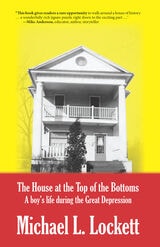
The House at the Top of the Bottoms
A Depression-Era StoryMichael L. Lockett
Parkhurst Brothers, Inc., 2021
The House of Breath
William Goyen
Northwestern University Press, 1999
The House of Returned Echoes
Arnost Lustig
Northwestern University Press, 2001
The House of a Thousand Floors
Jan Weiss
Central European University Press, 2017
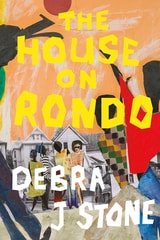
The House on Rondo
Debra J Stone
University of Minnesota Press, 2025
A young girl reckons with the demolition of a Black Saint Paul neighborhood to make way for the Interstate in the early 1960s
When thirteen-year-old Zenobia has to leave her friends and spend the summer at Grandma’s while Mama recovers from a stroke, life seems so unfair. But then the eviction letters start arriving throughout her grandparents’ neighborhood, and white men chalk arrows to mark the gas and water lines, and a new world of unfairness unfolds before her. It’s 1963, and Zenobia’s grandparents’ house on Rondo Avenue in Saint Paul—like all the homes in this thriving Black community—is targeted for demolition to make way for the new Interstate Highway 94.
As Zenobia gradually learns about what’s planned for the Rondo neighborhood and what this means for everyone who lives there, she discovers how her story is intertwined with the history of her family, all the way back to Great Grandma Zenobia and the secrets Grandma Essie held close about the reason for her light skin. With the destruction of the neighborhood looming, Zenobia takes a stand on behalf of her community, joining her no-nonsense neighbor, onetime cowgirl Mrs. Ruby Pearl, in a protest and ultimately getting arrested. Though Zenobia is grounded for a month, her punishment seems of little consequence in comparison to what is happening all around her. Even though the demolition continues, she is proud to discover the power and connection in protesting injustice.
The House on Rondo captures the heartbreak, resistance, and resilience that marks a community sacrificed in the name of progress—a “progress” that never seems to favor Black families and neighborhoods and that haunts cities like Saint Paul to this day. As Zenobia learns what can be destroyed and what cannot, her story teaches us that joy, community, and love persist, even amid violence and loss.
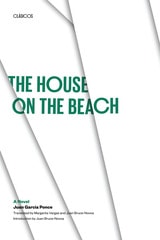
The House on the Beach
A NovelBy Juan García Ponce
University of Texas Press, 1994
Like waves ebbing and flowing, love surges and subsides among four friends who share a vacation at the house on the beach. As they navigate the seas of love and friendship, jealousy and unfaithfulness, Elena, Marta, Eduardo, and Rafael are swept up in the opposing currents that flow between security and personal freedom, marriage and sexual liberation, family and work, provincial and city life, and traditional and unconventional gender roles.
This deceptively simple novel, published in Mexico in 1966 as La casa en la playa and here translated into English for the first time, is an important work by one of Mexico's, and indeed Latin America's, major writers of the twentieth century. Juan García Ponce helped Mexican arts and letters break out of the ossified styles and themes of the post-Revolutionary "Mexican School" with works that explore the conflict between individual desire and the demands of family and work. Written at a turning point in his career, The House on the Beach foreshadows his embrace of the erotic encounter as a means of undermining rigid, socially constructed personal identity. It supports feminist views and probes deeply into the contradictions, backwardness, and progress of modern Mexican society.
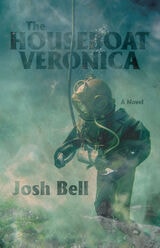
The Houseboat Veronica
A NovelJosh Bell
University of Alabama Press, 2024
A witch, a ward, and a houseboat adrift in time—where beauty and terror share the helm.
The mysterious houseboat Veronica motors across a postapocalyptic freshwater lake, inhabited by a black-haired witch and her young male ward. They explore an unfolding world of shape-shifting moons, vampire moths, and submerged witch cemeteries—a world where voluntary imprisonment holds its own appeal and the heart yearns for the delicate dance between blood and power, beauty and terror.
Neither a pirate nor a mere witch, she is an artist, a master of water and time who shapes reality with her baffling powers. This lyrical and compelling novel beckons readers to explore the enigmatic depths of its prose, inviting them to traverse the waters of wonder and bewilderment. Embrace the bewitching allure of The Houseboat Veronica and lose yourself in its enchanting embrace.
The Houses of Belgrade
Borislav Pekic
Northwestern University Press, 1994
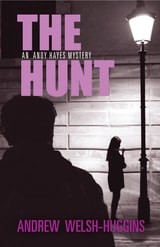
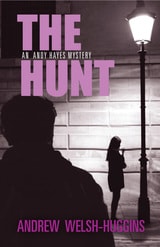
The Hunt
An Andy Hayes MysteryAndrew Welsh-Huggins
Ohio University Press, 2017
As a serial killer stalks prostitutes in Columbus, Ohio, a distraught brother asks private investigator Andy Hayes to find his sister before it’s too late. In a deadly race against time, Andy soon learns he’s not the only person hunting Jessica Byrnes, but he may be the only one who wants her alive. Byrnes hasn’t been seen in weeks following a downward slide that started as a runaway teenager and may have ended permanently on the streets.
Assisting Andy is ex-prostitute Theresa Sullivan. She now works at St. Andrew’s, the mission church run by Andy’s pal the Reverend Roy Roberts, who is less than keen on Theresa reliving the memories that nearly killed her. A local congresswoman making headlines with her work against human trafficking puts pressure on Andy to solve the case, while the police don’t want him near their exhaustive search for the murderer. At the same time, Andy’s hunt for Jessica exposes the buying and selling of trafficked women across the region. Looming over Andy’s increasingly desperate search is the shadow of his most dangerous adversary yet.
The Hunt
An Andy Hayes MysteryAndrew Welsh-Huggins
Ohio University Press, 2017
As a serial killer stalks prostitutes in Columbus, Ohio, a distraught brother asks private investigator Andy Hayes to find his sister before it’s too late. In a deadly race against time, Andy soon learns he’s not the only person hunting Jessica Byrnes, but he may be the only one who wants her alive. Byrnes hasn’t been seen in weeks following a downward slide that started as a runaway teenager and may have ended permanently on the streets.
Assisting Andy is ex-prostitute Theresa Sullivan. She now works at St. Andrew’s, the mission church run by Andy’s pal the Reverend Roy Roberts, who is less than keen on Theresa reliving the memories that nearly killed her. A local congresswoman making headlines with her work against human trafficking puts pressure on Andy to solve the case, while the police don’t want him near their exhaustive search for the murderer. At the same time, Andy’s hunt for Jessica exposes the buying and selling of trafficked women across the region. Looming over Andy’s increasingly desperate search is the shadow of his most dangerous adversary yet.
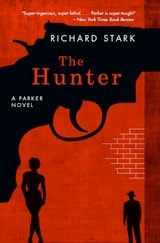
The Hunter
A Parker NovelRichard Stark
University of Chicago Press, 1962
Richard Stark's Parker novels are the hardest of hard-boiled, classic crime novels where the heists are huge, the body counts are high, and the bad guys usually win.
The Parker novels have been a huge influence on countless writers and filmmakers, including Quentin Tarantino, Stephen King, George Pelecanos, Colson Whitehead, Lucy Sante, John Banville, and many more. Their stripped-down language and hard-as-nails amorality create an unforgettable world where the next score could be the big one, but your next mistake could also be your last. There's nothing else like them.
The Hunter is where it all begin. It opens with Parker's woman shooting him just above the belt and leaving him for dead. She and his partner torch the house, with Parker in it, and take the money he had helped them steal. It all went down just the way they'd planned, except for one thing: Parker didn't die.
From there, our ruthless antihero roars into New York City, seeking revenge on the woman who betrayed him and on the man who took his money, stealing and scamming his way to redemption. The volume that kickstarted Parker's half-century career of larceny—and inspired the classic 1967 motion picture Point Blank, starring Lee Marvin—The Hunter is as thrilling today as it was when it was first published. Pick up your first Parker novel and you won't stop until you're read them all.
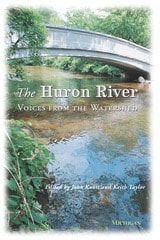
The Huron River
Voices from the WatershedJohn Knott and Keith Taylor, Editors
University of Michigan Press, 2000
"The Huron River . . . was called 'Cos-scut-e-nong Sebee'. . . . [It] is a beautiful, transparent stream, passing alternatively through rich bottoms, openings, plains, and sloping woodlands, covered with heavy timber."
---History of Washtenaw County, Michigan, 1881
The Huron River---stretching 130 miles through three counties---has inspired numerous writers throughout the nineteenth and twentieth centuries. Contained here is a collection of new poems, essays, and stories, accompanied by maps, photographs, and illustrations that celebrate the Huron River. Over twenty locally and nationally known literary figures, including Alice Fulton and Charles Baxter, have contributed to this volume. In addition, the work of biologists, naturalists, and even an arche-ologist have been included to give a richer sense of the physical and cultural environment.
Each of these writers reminds us that our lives are more intertwined with the river and its watershed than we might think. The Huron River opens with these words: "Watersheds are the oldest and most durable markers of place. . . . These boundaries affect our lives by defining our natural environment, not only its topography but its soils, its plant and animal life, and to some extent its weather. The water that sustains most of us is the water that flows through our local watershed."
And the river's strength is wondrous unto itself. "The water will always be there, and it will always find its way down," writer Gary Snyder tells us. The river is sometimes visible, sometimes not; yet it "is alive and well under the city streets, running in giant culverts."
John Knott is Professor of English, University of Michigan. After working as a bookseller for twenty years, Keith Taylor now teaches writing part-time for the University of Michigan and works as a freelance writer.
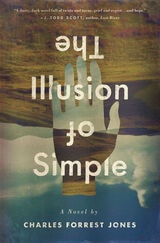
The Illusion of Simple
Charles Forrest Jones
University of Iowa Press, 2022
In a dry Kansas riverbed, a troop of young girls finds a human hand. This discovery leads Billy Spire, the tough and broken sheriff of Ewing County, to investigate and confront the depths of his community and of himself: the racism, the dying economy, the lies and truths of friendship, grievances of the past and present, and even his own injured marriage.
But like any town where people still breathe, there is also love and hope and the possibility of redemption. To flyover folks, Ewing County appears nothing more than a handful of empty streets amid crop circles and the meandering, depleted Arkansas River. But the truth of this place—the interwoven lives and stories—is anything but simple.
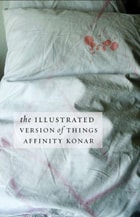
The Illustrated Version of Things
Affinity Konar
University of Alabama Press, 2009
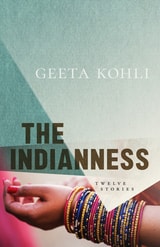
The Indianness
Twelve StoriesGeeta Kohli
University of Massachusetts Press, 2027
A bold debut story collection about first- and second-generation South Asian Americans coming of age—and coming undone
From Ivy League dormitories and Delhi wedding stages to Roman balconies and North Carolina motels, the twelve stories of The Indianness map the distance between the life a person is expected to build and the one they actually inhabit.
Women anchor the collection: a mother alone in Rome with three young daughters tests the edges of her marriage; a college student arrives at NYU with one rule—save her virginity for an Indian husband—and breaks it before the week is out; a woman manages an abortion alone in a Manhattan clinic, too afraid to tell her husband she was ever pregnant; a former lawyer in Manhattan keeps a diary of a marriage she cannot bring herself to leave. But the men are equally undone: a Harvard-educated lawyer raised in a North Carolina motel confronts a past he can never quite verify; a history teacher in suburban Massachusetts assigns a racist essay, loses his wife, and isn't certain which failure came first; a man raised as a girl until the age of twelve sits with all he has inherited.
The collection challenges the model minority narrative not by dismissing success but by exposing what it costs, moving openly through sex, abortion, marital dissatisfaction, mental health, and sexual violence, and through the silences that live inside families. The Indianness offers a portrait of a community rarely rendered with such interior depth, insisting that South Asian Americans—women and men alike—deserve the same moral complexity, desire, and contradiction long afforded to others in American literary fiction.
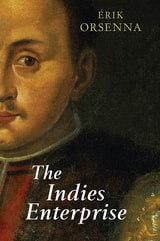
The Indies Enterprise
Erik Orsenna
Haus Publishing, 2011
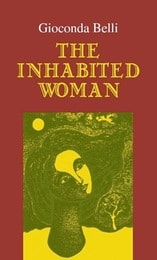
The Inhabited Woman
Gioconda Belli; Translated by Kathleen March
University of Wisconsin Press, 2004
The Wisconsin edition is for sale only in North America.
The Initials of the Earth
Jesús Díaz
Duke University Press, 2006
Originally written in the 1970s, then rewritten and published simultaneously in Havana and Madrid in 1987, The Initials of the Earth spans the tumultuous years from the 1950s until the 1970s, encompassing the Revolution and its immediate aftermath. The novel opens as the protagonist, Carlos Pérez Cifredo, sits down to fill out a questionnaire for readmission to the Cuban Communist Party. It closes with Carlos standing before a panel of Party members charged with assessing his merit as an “exemplary worker.” The chapters between relate Carlos’s experiences of the pre- and postrevolutionary era. His family is torn apart as some members reject the Revolution and flee the country while others, including Carlos, choose to stay. He witnesses key events including the Bay of Pigs invasion, the Cuban missile crisis, and the economically disastrous sugar harvest of 1970. Throughout the novel, Díaz vividly renders Cuban culture through humor, slogans, and slang; Afro-Cuban religion; and references to popular music, movies, and comics.
This edition of The Initials of the Earth includes a bibliography and filmography of Diaz’s works and a timeline of the major events of the Cuban revolutionary period. In his epilogue, the Cuban writer Ambrosio Fornet reflects on Díaz’s surprising 1992 renunciation of the Revolution, their decades-long friendship, and the novel’s reception, structure, and place within Cuban literary history.
The Inner Harbour
A Post-Exotic NovelAntoine Volodine
University of Minnesota Press, 2025
A beguiling, perspective-shifting story of obsession and loss set in the grimy, late-colonial decadence of Macau at the end of the twentieth century
In The Inner Harbour, Antoine Volodine focuses his literary investigations away from dystopian futures to a specific place at a particular historical moment: Macau on the eve of the Portuguese colony’s transfer to China. In a seedy flat in one of the city’s slums, a hired assassin named Kotter interrogates Breughel, a writer on the run from a mysterious organization code-named Paradise. Breughel has been hiding out in Macau with his lover, Gloria Vancouver, and a significant sum of the organization’s money. But Gloria is dead and the money spent—or so Breughel claims—and now he lives alone in humid squalor.
With increasing severity, Kotter extracts Breughel’s confessions, but are they truth or subterfuge? Or are the confessions an elaborate work of fiction by a writer aware that they are no longer able to differentiate between memory and fantasy? Volodine brilliantly blurs the levels of narration—between what Breughel tells his interrogator, what he remembers or invents, and the stories he has written, including his accounts of Gloria’s hallucinatory visions of an apocalyptic war between military forces and the “chrysalids.”
Interweaving threads of fiction and truth, lies and hallucinations, The Inner Harbour evokes many of the themes found in Volodine’s other “post-exotic” works: the slippage between dreams and reality, the nightmares of history, the exhaustion of literature and politics, and questions about what it means to be faithful to people or ideas long since vanished. But Volodine also uses the setting of Macau’s late-colonial decadence to explore new sensations of foreignness, alienation, and resignation, all of which coalesce into a nesting doll of narrative that houses an unconventional and tragic love story.
Retail e-book files for this title are screen-reader friendly.
The Inquisitor's Diary
Jeffrey Lewis
Haus Publishing, 2013
“We follow Alonso’s journey as he is dispatched by the Inquisitor General to the country’s northern frontier to root out ‘heresy, apostasy, backsliding.’ . . . This somber work seeks to uncover those subterranean impulses that surge beneath Alonso’s fate.”—Literary Review
The Inquisitor's Tongue
A NovelAlan Singer
University of Alabama Press, 2012
Alan Singer’s riveting new novel, The Inquisitor’s Tongue, reimagines the Spanish Inquisition as a world in which spiritual horrors and acts of violence are the birth pangs of otherwise unimaginable identities.

The Inspector Barlach Mysteries
The Judge and His Hangman and SuspicionFriedrich Dürrenmatt
University of Chicago Press, 2006
The Invasion
Janet Lewis
Michigan State University Press, 2000
The Invasion, a novel originally published in 1932, marked the debut of historical novelist Janet Lewis, who went on to write numerous poems and short stories as well as the novels The Wife of Martin Guerre and The Trial of Soren Quist. Lewis grew up in the Lake country of the Old Northwest and The Invasion is based on family stories she heard as a child.The Invasion displays well-researched historical accuracy, an innate understanding of and feeling for Native American culture enhanced by the author's fluency in the Ojibway language, and an economy of style that is remarkable for a first novel.
In 1790, John Johnston, a cultivated young Irishman, came to the far corner of the Northwest Territory to make his fortune intending to spend only a year. Instead he married Ozhah-guscoday- wayquay (The Woman of the Glade), daughter of the Ojibway chief Waub- ojeeg, and settled on the St. Mary's River. Together they founded a family that was loved, respected, and famous throughout the region for honesty, fairness, and hospitality. Their home was the center of culture for the area and for every visiting traveler, Native American or white. The Invasion chronicles a time when one culture violently supplanted another even as it depicts a family that blends two cultures together.
Henry Rowe Schoolcraft considered the Johnston family his most valued connection to the Native American population. He eventually married Jane Johnston, daughter of John and The Woman of the Glade, and remain close to her entire family. In his diary, Schoolcraft wrote of the Johnstons, "I have in fact stumbled, as it were, on the only family in Northwest America who could in Indian lore have acted as my guide, philosopher, and friend."
The Invisible World
John Smolens
Michigan State University Press, 2017
After Sam's mother dies and is cremated, her ashes are stolen. Believing that his father is responsible, Sam pursues the man he has not seen in years. He discovers that he is not the only one searching for his father—federal agents, a disgraced politician, a retired Boston cop, and several journalists join the chase.
“The Invisible World is more than a first-rate political thriller,” says The Boston Globe. “It’s an absorbing tale of alienation and loss, and the ramifications of a rootless, troubled family.” What Sam Adams ultimately discovers is that the shadowy realm of conspiracies conjures a world of hidden truths and intrigue in which the familiar is the most mysterious force of all.
The Iowa Award
The Best Stories from Twenty YearsFrank Conroy
University of Iowa Press, 1992
The Iowa Award
The Best Stories, 1991-2000Frank Conroy
University of Iowa Press, 2001
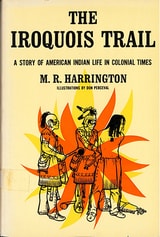
The Iroquois Trail
Dickon among the Onondagas and SenecasM. R. Harrington
Rutgers University Press, 1965
As Dickon and his companions travel the Iroquois Trail in search of his Lenape brother, Little-Bear, they learn the ways of the Onondagas, Senecas, Mohawks, Oneidas, and Cayugas. Dickon tells his own story, describing the day-to-day activities in the villages along the trail—their ways of making clothing, weapons, household articles, and ornaments, and how they hunt, cook, travel, and worship. He meets Hiawatha, Deganawide, Jigonsasay, and other Indian leaders. His tale is accompanied by line drawings that vividly portray the art of making baskets, moccasins, bows and arrows, clothing, and other everday articles. These illustrations are done by Don Perceval, a renowned artist and specialist on Indians.
The Island of Hermaphrodites
Translated by Kathleen Perry Long
Arizona Center for Medieval and Renaissance Studies, 2025
A scandalous and subversive satire, Island of Hermaphrodites skewers the decadence and corruption of early seventeenth-century French society with razor-sharp wit. Published anonymously in 1605, this daring Menippean satire created an uproar for its irreverent portrayal of the French court, critique of absolute monarchy, and radical questioning of gender and power. A blend of political critique and biting humor, the novel follows an imagined land of aristocratic excess, where opulent feasts, elaborate fashion, and absurd rituals mask the deeper instability of a society built on privilege and deception.
Republished throughout the eighteenth century and connected to the intellectual ferment leading up to the French Revolution, Island of Hermaphrodites remains a strikingly modern indictment of unchecked power and economic exploitation. In its first full English translation, Kathleen P. Long offers new audiences a satirical romp through a world of absurdist power—one that feels politically salient today.